
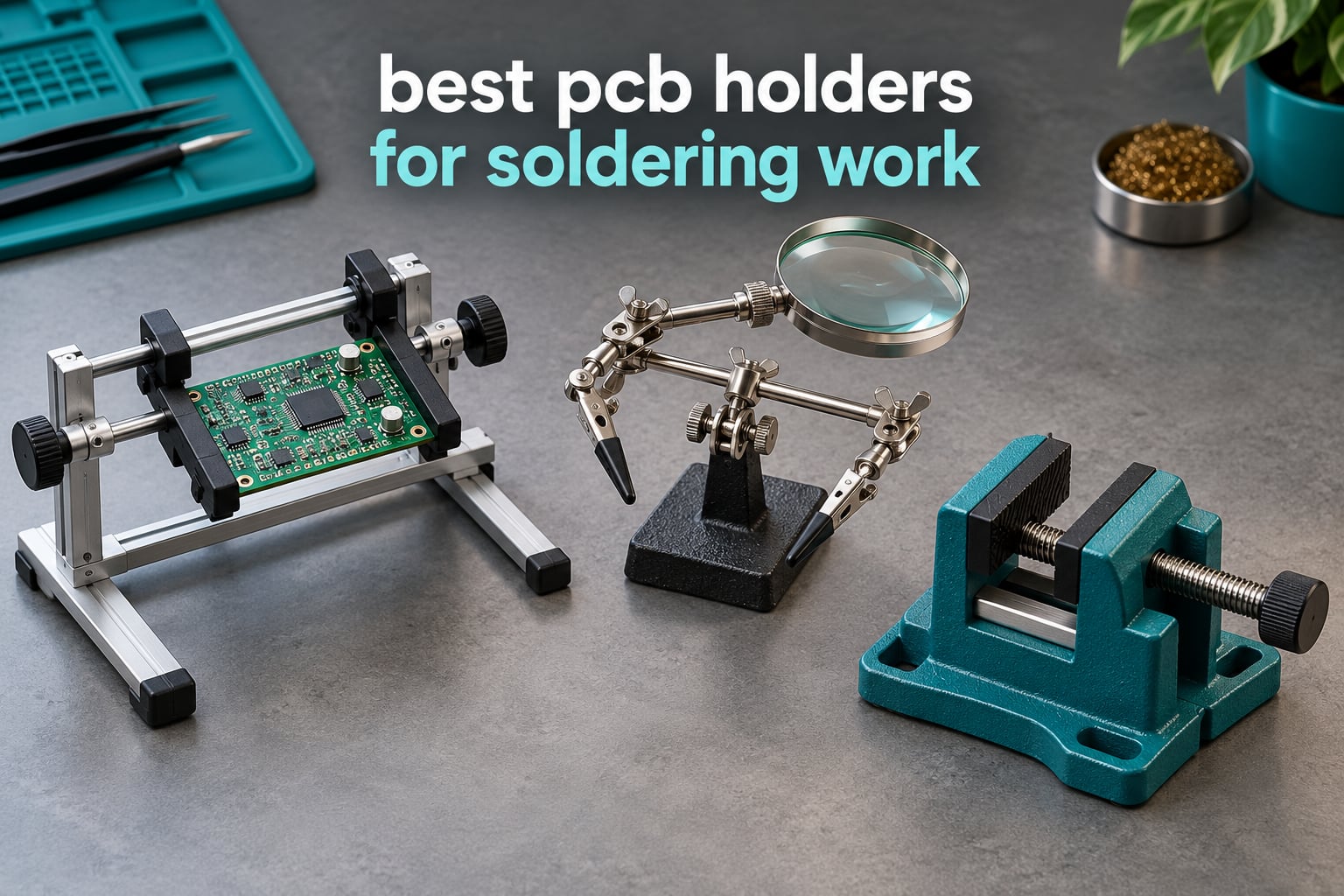
A PCB holder is a bench fixture that clamps or supports a printed circuit board so it stays still and can be rotated while you solder it, keeping both hands free for the iron and the solder wire. There are five main kinds: a swivel vise, a magnetic helping hand on flexible arms, a rigid metal clamp frame, a low flat-on-the-desk vise, and a printed jig or silicone mat. The right one depends mostly on the size of your smallest board and how close the work gets to a hot iron.
Do you need one? If you hand-solder more than the occasional joint, yes. Solder joints are solid the instant they cool, so any movement of the board during those few seconds creates cold, cracked or dull joints, bridges solder between fine-pitch pads, and can lift a pad straight off the laminate.
We spent weeks with these ten holders on our own bench, working from 1 inch sensor breakouts up to wide controller cards, through-hole population, connector re-pinning and hot-air rework. What follows is what actually held, what flexed, and what could not grip a small board at all.
One honest note up front. Experienced owners rarely end up with a single holder. The consensus on the forums we read is that most people own two or three and switch by task, because a bench with a preheater wants a compact swivel vise, while batch population of identical boards wants a low flat clamp that keeps the work at desk height.
Table of Contents
Top 3 Picks for PCB Holders for Soldering (October 2026)
KOTTO Four-Arm Helping Hands
- 4x 360-degree gooseneck arms
- Stainless steel alligator clips
- Weighted steel base
- Rated to 450 C

SainSmart Magnetic Helping Hands Station
- 11.1 x 7.1 inch steel base
- 4x magnetic PCB pillars
- 5X LED magnifier
- 2x short and 2x long arms

Stickvise Low-Profile Nylon Jaw Vise
- Holds boards flat at desk level
- Standard nylon jaws
- Hackable frame for printed mods
- Lightweight and compact
Best PCB Holders for Soldering Work in 2026
All ten picks, in the order we would reach for them at the bench. The KOTTO four-arm station is the safest general answer, the SainSmart station is the best all-in-one bench, and the Stickvise is the one that solves the small-board problem that frustrates almost everyone starting out.
KOTTO Four-Arm Helping Hands – the flexible general-purpose holder we tested
SainSmart Magnetic Helping Hands Station – best single-bench setup with magnifier and pillars
Velleman Circuit Board Clamping Kit – the affordable all-rounder for a small bench
MMOBIEL 360 Degree Holder – best rigid constant-height hold for hobby-scale boards
Stickvise Low-Profile Nylon Jaw Vise – best for boards too small for most vises
SainSmart Magnetic Adjustable Holder – best upgrade for an existing magnifier or platform
Hakko C1390C Omnivise – best precision swivel vise for rework and preheater work
AmScope CBH-100 Clamping Kit – the simple spring clamp for larger boards
QWORK Adjustable Frame – best compact option for a crowded desk
DEVMO 360 Degree Frame – best for boards that sit close to hot air
| Product | Specs | Action |
|---|---|---|
| KOTTO Four-Arm Helping Hands |
|
Check Latest Price |
| SainSmart Magnetic Helping Hands Station |
|
Check Latest Price |
 Velleman Circuit Board Clamping Kit Velleman Circuit Board Clamping Kit |
|
Check Latest Price |
 MMOBIEL 360 Degree PCB Holder MMOBIEL 360 Degree PCB Holder |
|
Check Latest Price |
| Stickvise Nylon Jaw Vise |
|
Check Latest Price |
 SainSmart Magnetic Adjustable Holder SainSmart Magnetic Adjustable Holder |
|
Check Latest Price |
 Hakko C1390C Omnivise Hakko C1390C Omnivise |
|
Check Latest Price |
 AmScope CBH-100 Clamping Kit AmScope CBH-100 Clamping Kit |
|
Check Latest Price |
 QWORK Adjustable Frame QWORK Adjustable Frame |
|
Check Latest Price |
 DEVMO 360 Degree Frame DEVMO 360 Degree Frame |
|
Check Latest Price |
1. KOTTO Four-Arm Helping Hands – the flexible general-purpose holder
KOTTO Helping Hands Soldering,Third Hand Soldering Tool PCB Holder 4 Arms
4 arms at 360 degrees
Stainless steel alligator clips
Weighted base
Rated to 450 C
Pros
- Four independently adjustable gooseneck arms
- Weighted non-slip base stays put under light pressure
- Clips swivel and lock at any angle
- Rubber covers protect boards and fingers
- Assembles in minutes with no tools
Cons
- Arms have memory and spring back toward upright
- Alligator teeth can pinch small boards
- No wide or round jaw option
- Occasional reports of a stripped arm joint
This is the holder we reach for first, and after weeks of daily use it is still the one that ends up doing the most jobs. Four gooseneck arms, each with a stainless steel alligator clip, sit on a weighted steel base with rubber feet that stays planted while you push a joint sideways with a thumb.
The board grip is the surprise. Reviewers often assume alligator clips only suit wires and small parts, but for a 3 inch by 4 inch board with a little solder on the edge, two clips on opposite edges hold it flat with no meaningful flex. We pushed a wobbly connector pin and the board did not shift by even a fraction of a millimetre.
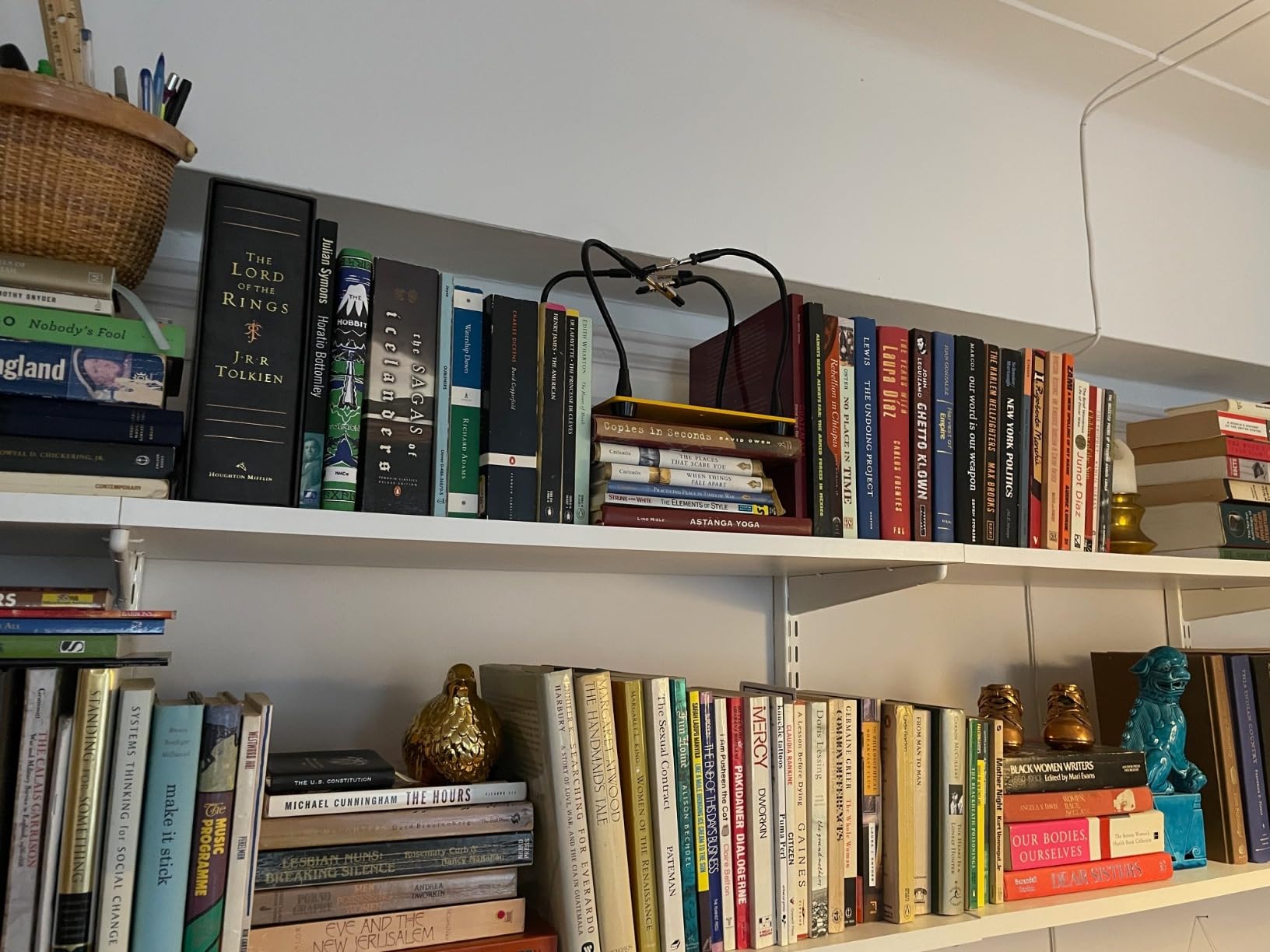
The 450 degree upper temperature rating matters more than the spec sheet suggests. Resting a hot iron on the base, or brushing a board edge against an arm with the tip still glowing, is a normal bench accident, and a rated steel path handles it where a plastic helping hand smokes.
The real compromise is the arms themselves. Gooseneck has memory, so an arm you push aside creeps back toward upright over a few minutes. It is an annoyance rather than a failure, and it stops mattering once you tighten the joint nut where you want it to live.
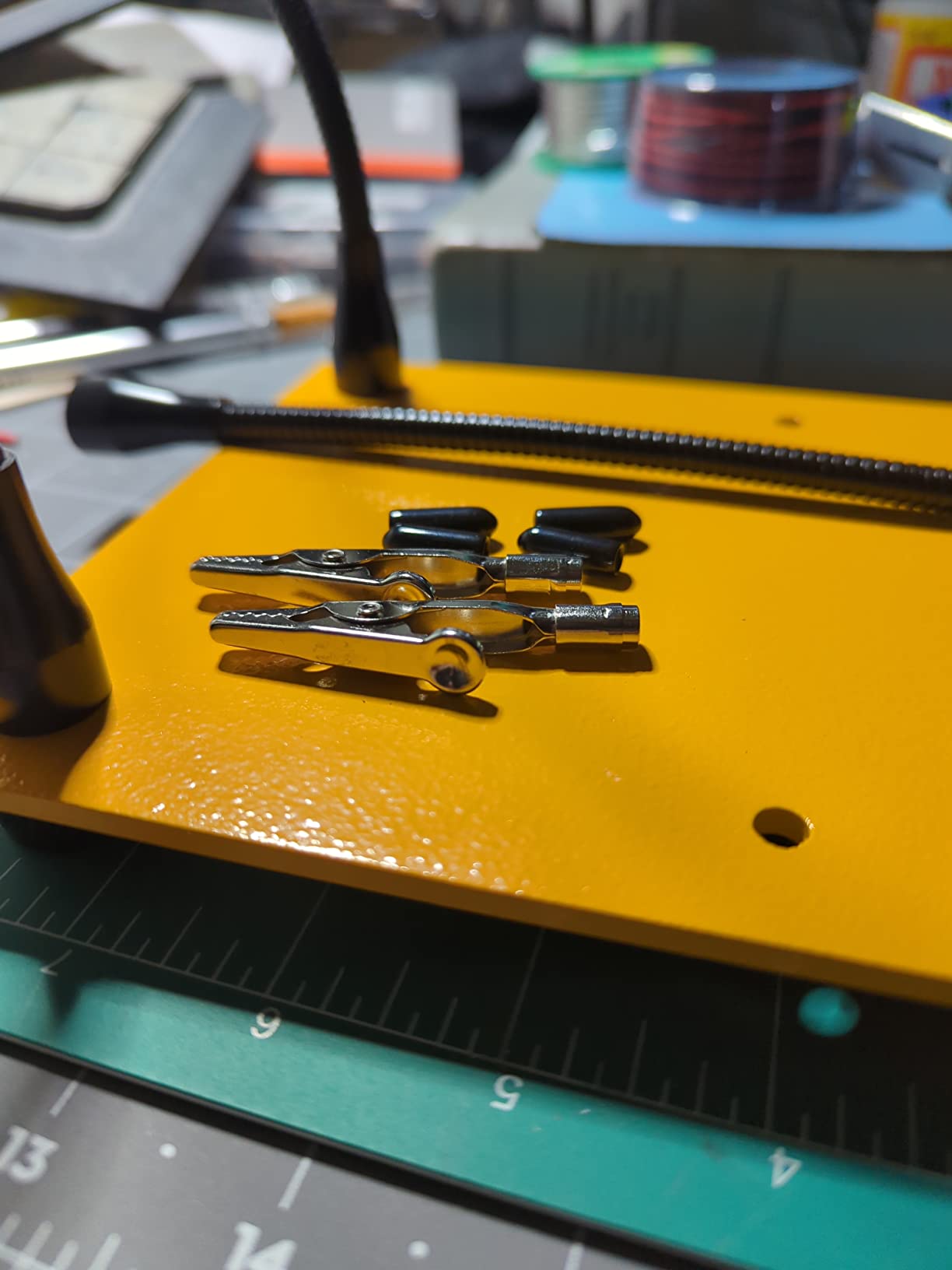
What the KOTTO station is best for
Its 450 degree rating is a real advantage over plastic-based helping hands, and it is the reason we rate it as a durable long-term buy for small sensor boards with soft silkscreen.
If your work includes rework, microscope inspection or holding a board steady while you cut a part off with flush cutters, the four arms let you grip the board and the component at the same time without improvising.
Where it falls short
It is not a flat-on-the-desk holder. The board sits above the base, so your wrist angle differs from a mat or a low vise, and long sessions on tiny SMD parts can still tire the shoulder. Bench users who do hours of microscope work usually add a low holder for that reason.
There is no wide or round jaw. Clips grip edges and thin objects well, but a thick connector housing or a wide ribbon cable needs a different approach, and buying extra arms is the only way to expand the range of grip.
2. SainSmart Magnetic Helping Hands Station – the best all-in-one bench setup
SainSmart Magnetic Helping Hands Soldering Station with an 11.1 x 7.1 Inch Larger Base, 5X LED Magnifying Lamp, 4 PCB Circuit Board Holder & 4 Flexible Magnetic Helping Hands
11.1 x 7.1 inch steel base
4x magnetic PCB pillars
5X LED magnifier
4 arms plus 4 pillars
Pros
- Large heavy base doubles as a working platform
- Four magnetic pillars grip bare boards directly
- Two short and two long arms cover most jobs
- Five-times magnifier with three color temperatures
- Rubber-sleeved clips and modular layout
Cons
- Alligator clamps are stiff to tighten
- No wide jaw option
- Magnifier arm will not hold a set position
- Magnifier needs a separate USB power source
This is the closest thing to a complete soldering bench you can put on one base, and it earned 4.7 stars across 723 reviews, more owner feedback than any other pick here. Eleven by seven inches of powder-coated steel gives you a platform to lay parts on, a mat to rest a board on, and a frame to clip things to, all in the same footprint.
The magnetic pillars are the feature that separates it from a plain helping hand. They grip a bare circuit board directly from the edges without an alligator clip covering the pad you are trying to solder, which is the single most common complaint about clip-based third hands. Four of them come in the box, which is enough to hold two boards at once for batch work.
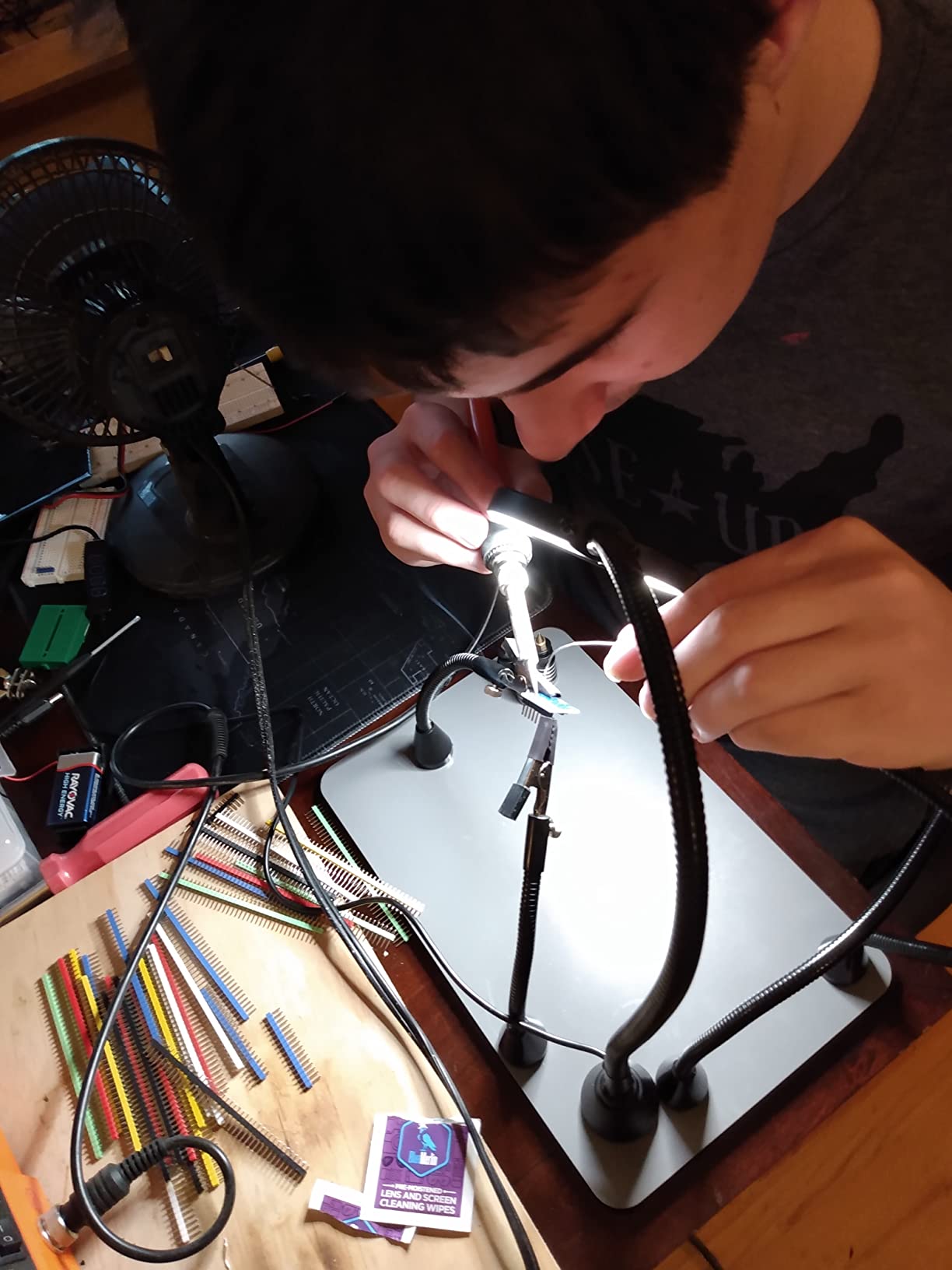
For a hobbyist buying once, this is the pick we recommend. You get a holder, a magnifier, a light and a work surface in one object, and 2.35 kilograms of base weight means nothing shifts when you lean on it.
The magnifier has three color temperatures and ten brightness levels, and the light is genuinely useful for inspecting solder wetting. It runs on USB power, so plan a hub or a wall adapter near the bench, because the base itself is not powered.
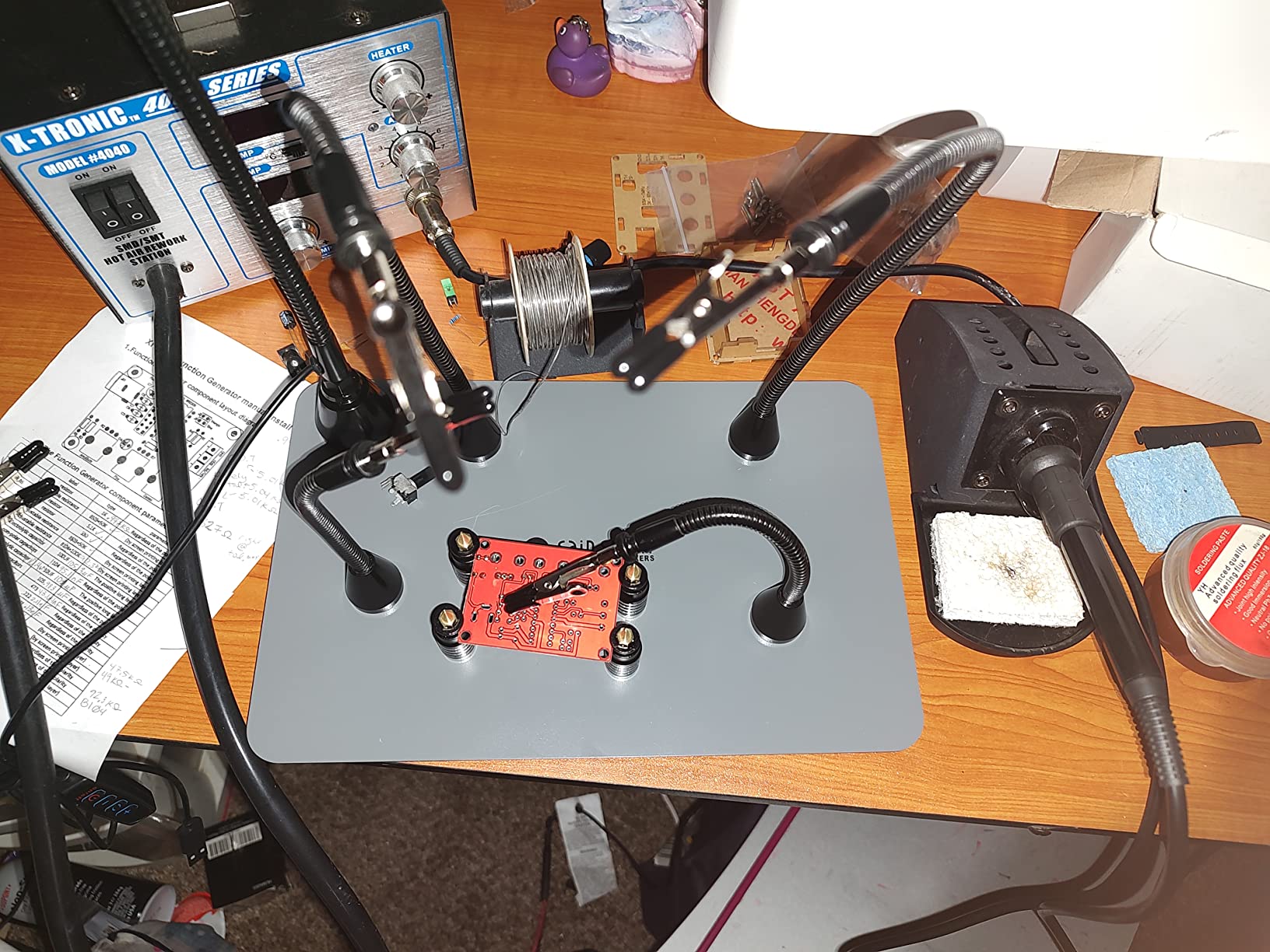
What the SainSmart station is best for
It is best for someone setting up a first serious bench or upgrading from a folding plastic third hand. The combination of pillars, arms, magnifier and a large non-slip surface means most single-board jobs never need a second tool at all.
It is also the most efficient choice for inspecting a finished board. A 5X lens at a fixed arm position, plus four pillars holding the work steady, beats a handheld loupe and a free hand trying to hold the board at the right angle.
Where it falls short
The alligator clips are stiff. They hold well, but the tightening nut needs two hands and a bit of care, which is awkward when the other hand is holding an iron. The pillars solve that for boards, and the clips are really for wires and small parts.
The magnifier arm is the weak point. It has limited mobility and will not reliably hold a set position, so treat it as a general inspection aid rather than a precision tool, and expect to nudge it back into place regularly.
3. Velleman Circuit Board Clamping Kit – the affordable all-rounder
Velleman VTHH6-VP Circuit Board Clamping Kit, 11.81″ x 6.5″ x 4.92″ Size
Free 360-degree rotation
Retractable shelf and knobs
Weighted base
11.81 x 6.5 inch footprint
Pros
- Firm grip with free rotation to both board sides
- Knobs and shelf adapt to different board sizes
- Weighted base does not creep
- Compact footprint for the size
- Popular with hobbyists and small shops
Cons
- Thumb screws slip under sustained pressure
- Build feels more plastic than the metal listing suggests
- Boards shift if edge components get nudged
- Takes noticeable bench space
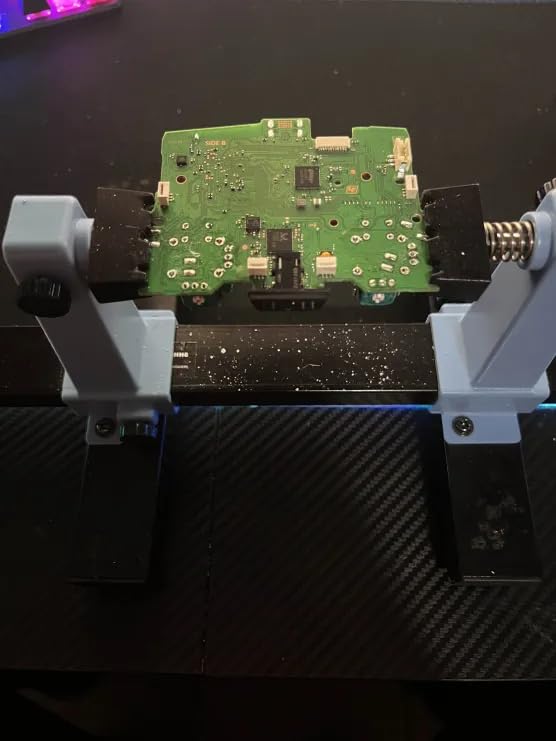
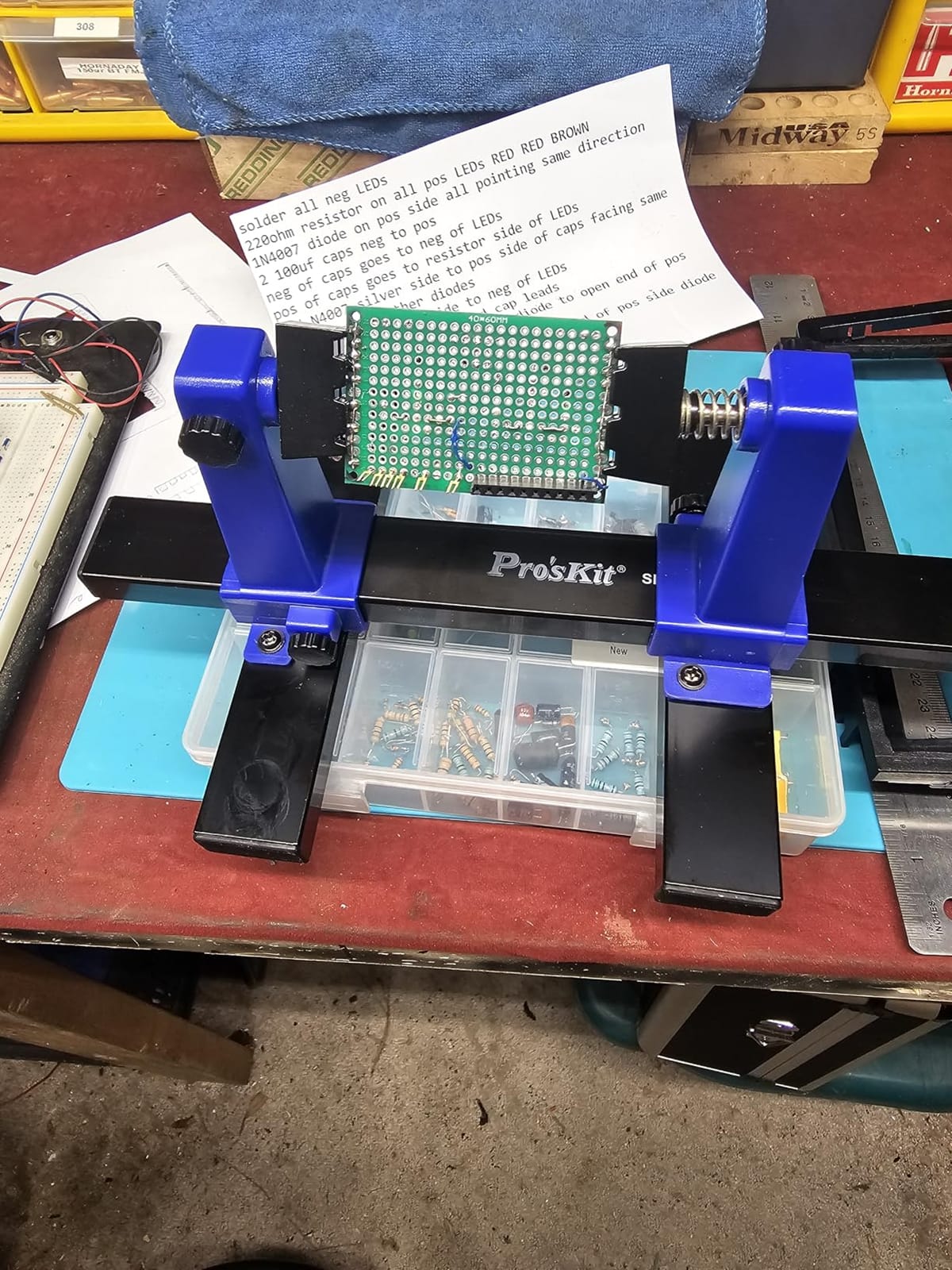
This is the holder most beginners end up with, and after a solid month on our bench it did the basic job every time. The board sits between two adjustable arms on a weighted base, and the whole cradle rotates freely so you can flip to the underside without unbolting anything.
It handled 3 inch by 5 inch boards and smaller without any complaint. The two uprights take a standard double-sided board comfortably, and the retractable shelf gives you somewhere to rest a second board or a part while you work on the first.
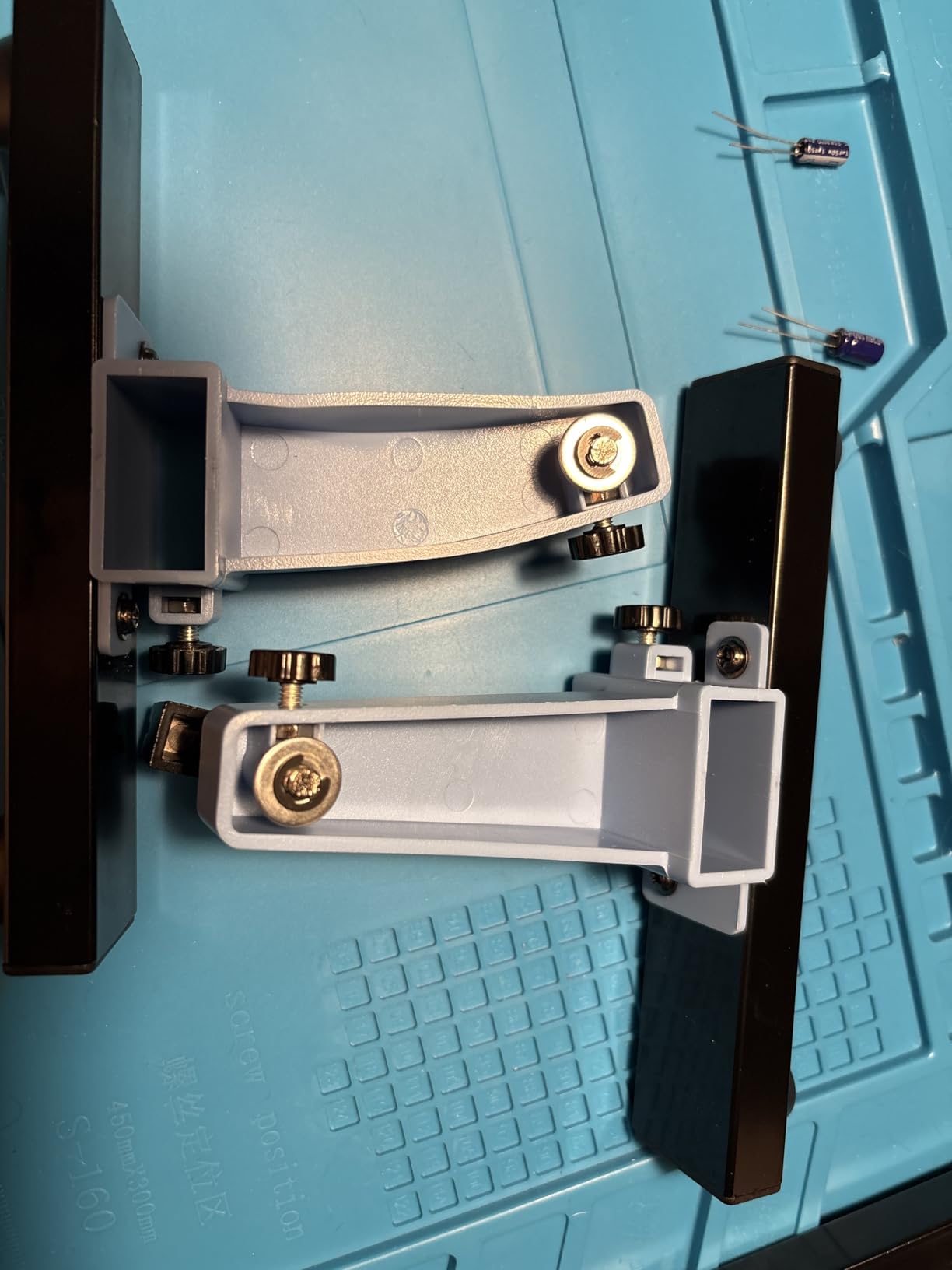
The grip itself is the trade-off. The arms clamp by spring and thumb screw, and under the sideways pressure of pushing a through-hole joint flat, the thumb screws do sometimes walk loose. It is not a failure, but if you notice the board creeping, tighten them before you start rather than mid-joint.
Several buyers point out that the build is more plastic than the metal listing detail suggests. Ours felt solid in the frame and light in the uprights, which is a fair summary of where the money went. Treat it as a light-duty holder and it will do light-duty work for years.
What the Velleman kit is best for
It is best for a first bench, a classroom, or anyone who wants a proper rotating holder without spending on a premium brand.
For through-hole population on boards up to about 5 inches it is more than adequate. You can solder a whole side, flip the cradle, and solder the other, with the board never leaving the fixture.
Where it falls short
It is not a heavy workshop tool. The thumb screws lose tension, and a board can shift if you knock a tall component near the clamp edge. Anyone doing delicate rework needs something with a positive lock and a stiffer frame.
At 11.81 by 6.5 inches it is a fairly large footprint for a small desk, and the two uprights are not mirror images, so the adjustment knobs end up on opposite sides and the setup is not quite as intuitive as it should be.
4. MMOBIEL 360 Degree PCB Holder – the rigid constant-height hold
MMOBIEL Adjustable PCB Holder Circuit Board Holder Tool for Circuit Board Soldering Desoldering, Repair Tool 360° Degree Rotation
Spring clamps with 4 openings
Ceramic fire-resistant jaw inserts
Constant flex-free height
Boards up to 20 x 14 cm
Pros
- Rigid hold with no flex under the microscope
- Fire-resistant ceramic jaw inserts survive hot work
- Full 360-degree rotation for both sides
- Coated metal base with four rubber pads
- Handles boards up to 20 x 14 cm
Cons
- Thumb screws too weak to stop the uprights slipping
- Wobbles with boards wider than about 6 inches
- Rotation depends on board height relative to the clamp gap
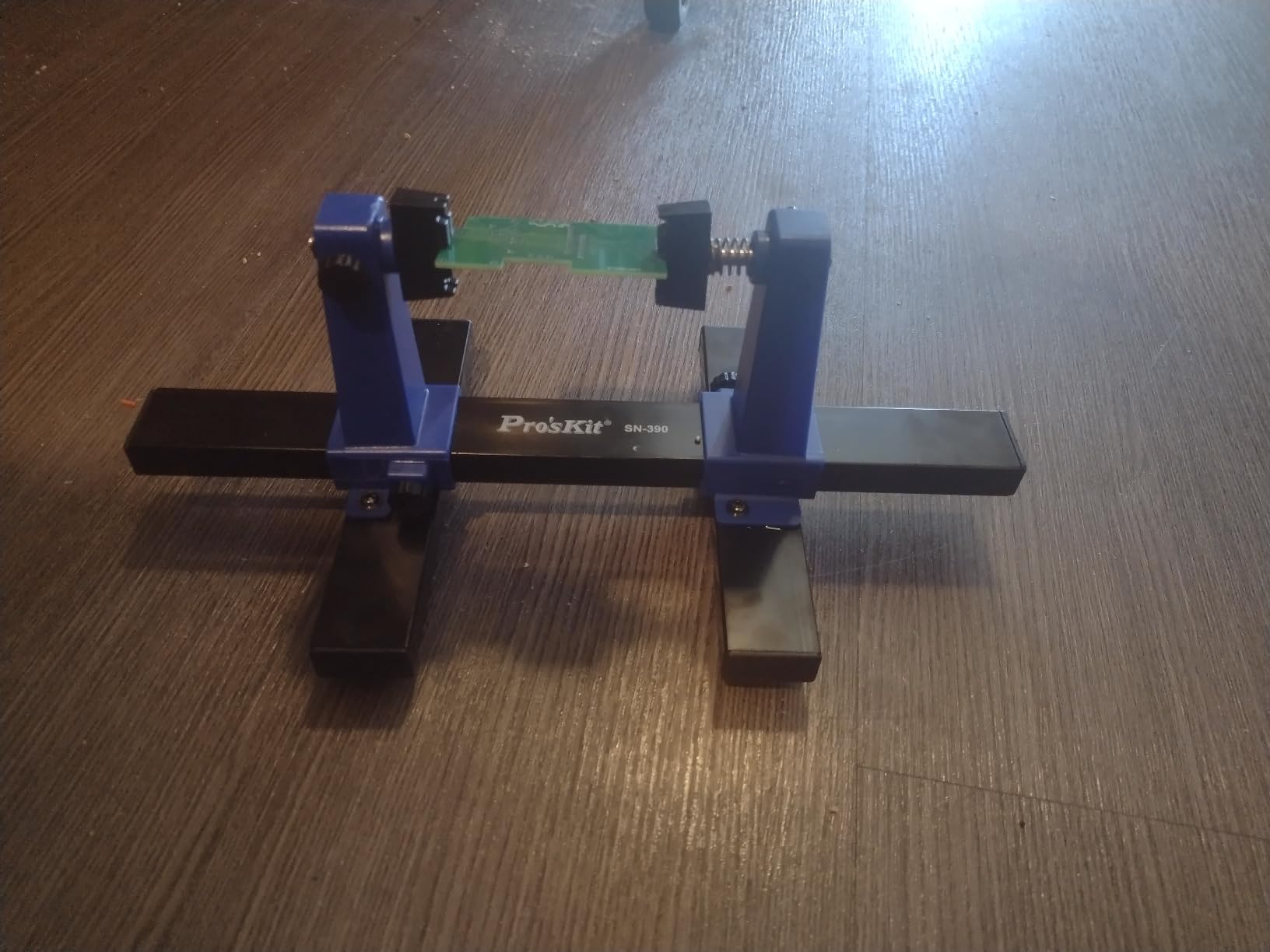
This holder gave us an unusually rigid hold, and rigidity is the whole point. The board sits at a fixed height with no springiness in the arms at all, which matters enormously under a microscope where a board that drifts a fraction of a degree moves the focal plane off your work.
The spring-loaded clamps have four openings, and the jaw inserts are ceramic rather than steel. That single material choice is why this one is a sensible pick for hot-air work, because an iron tip that touches a clamp face will not transfer heat into the frame the way it would through metal.
The documented capacity is boards up to 20 by 14 centimetres, which comfortably covers a 5 inch by 5 inch card and most small controller boards. The 360-degree rotation gives you clean access to the underside without swapping tools or re-clamping.
Our main complaint matches what buyers report: the thumb screws are simply too weak to hold the uprights under pressure, and several people fit friction tape or lever bolts as a workaround. Do that on day one rather than fighting it later.
What the MMOBIEL holder is best for
It is best for inspection-driven work, where keeping a board still at a constant height is more valuable than being able to move it anywhere. Phone and laptop board work, microscope inspection and desoldering all benefit from the fixed, rigid platform.
It is also a good hot-air compromise among the mid-tier options, because the ceramic inserts give you a heat-resistant grip without needing a premium-priced precision vise.
Where it falls short
It wobbles or tips with boards wider than roughly 6 inches, so it is not the answer for a large controller card or a backplane. Its rotation also depends on the board sitting at the right height relative to the clamp gap, and shorter boards may need manual flipping.
The weak thumb screws are the recurring gripe. They are easy to fix with lever bolts or friction tape, but out of the box the lock is not as positive as you would hope on a holder sold on its rigidity.
5. Stickvise Nylon Jaw Vise – the best for boards too small for most vises
Stickvise PCB Vise with Standard Nylon Jaws Grey
Flat-on-desk hold
Standard nylon jaws
Open hackable frame
5.28 ounces
Pros
- Board sits flat at desk height
- Removes wrist and arm fatigue on long jobs
- Handles boards too small for a full vise
- Open frame accepts printed custom jaw plates
- Very light and easy to move
Cons
- Sized for small PCBs only
- Nylon jaws are not for extended high-heat work
- Upside-down parts need the separate PartLift accessory
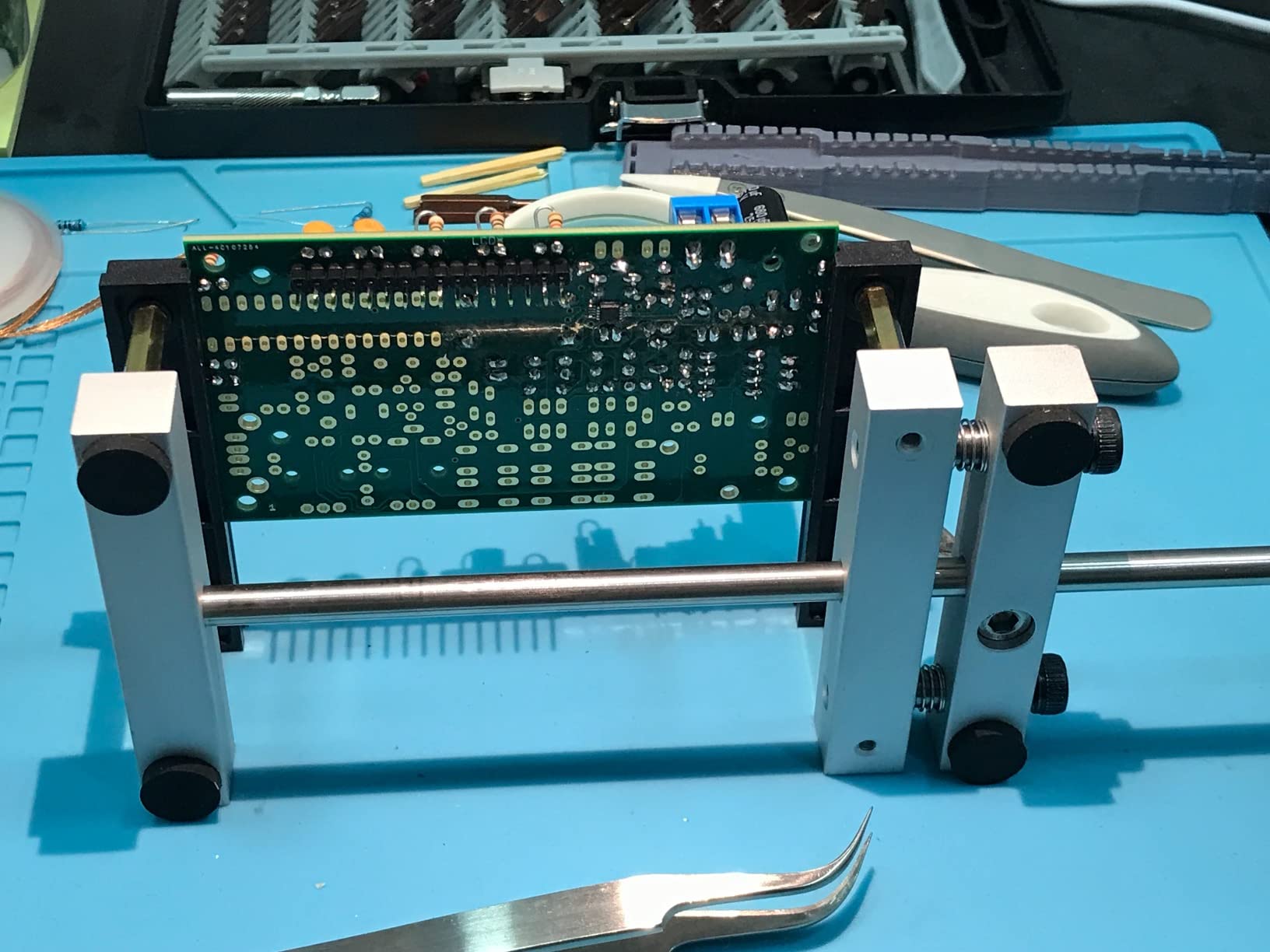
Small boards are the most common frustration on the electronics forums, and this is the clearest answer we found. Instead of raising the board up on an arm, the Stickvise holds it flat at table level, which is also why it removes wrist fatigue on a long session.
The jaws are nylon, so they grip a delicate board edge without marring solder-mask or leaving a bruise on a flex circuit. The frame is open and hackable, and owners regularly print their own jaw plates for boards of an unusual shape.
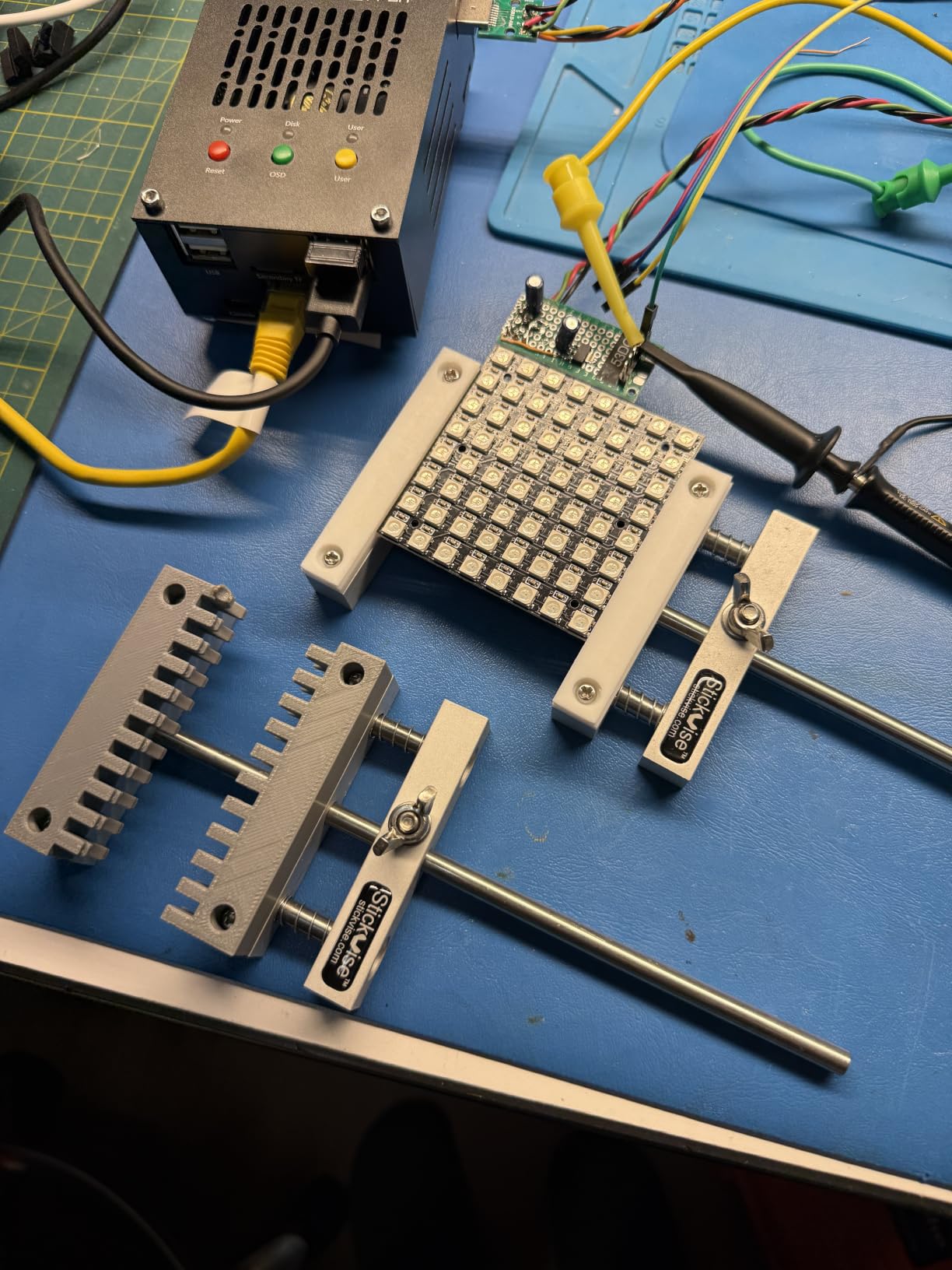
The design also solves the elevated-arm complaint that runs through every helping hand discussion. Because the board is at desk height, your iron hand approaches from the same angle you would use on a silicone mat, so muscle memory transfers directly and you solder faster on unfamiliar boards.
It weighs 5.28 ounces and is about 7.87 by 3 inches, so it moves around the bench with one hand. If you work at different desks, at a different table at home, or on a repair bench in a shared space, that portability is worth more than it sounds.
What the Stickvise is best for
It is best for small sensor breakouts, adapter boards, and anything where a full-size vise jaw would be wider than the board itself. Holding a board flat also means through-hole parts can be pushed flush with a finger without the board tipping up.
It suits precision work in general. Keeping the board at desk height means you look down on it in the same posture you use for everything else, which is why owners report easier and more accurate work on fine-pitch pads.
Where it falls short
It is small by design. A larger board will not span the jaws, and you will need a different holder for cards much bigger than about 3 inches, which is exactly the limitation buyers report most.
The standard nylon jaws are not the right choice for extended high-heat work, and holding through-hole parts from underneath needs the separate PartLift accessory. If your bench is dominated by hot-air rework or heavy-gauge components, buy the high-temperature jaw set or choose a metal holder instead.
6. SainSmart Magnetic Adjustable Holder – the best upgrade for an existing station
SainSmart Magnetic Adjustable Circuit Board Holder, Soldering Helping Hand
2 rotating clamps
Boards to 150 mm and 4 mm
Magnetic base
Alloy body
Pros
- Rigid alloy body with no flex or warp
- Clamps bring the board edge close to your work
- Magnetic base mounts on a metal platform
- No assembly needed out of the box
- Stainless guide rail resists deformation
Cons
- Supplied magnets are weak
- No base plate included
- Grip slot too deep for small boards
- Rotation is vertical only
The design pitch here is close board access. The two clamps grip near the edge of the board, so there is almost nothing between your iron and the pad, unlike holders that clamp a wide frame in the way. If you have ever soldered around a thumb screw in front of your work, that difference is the reason to buy this.
Construction is aluminium alloy on a stainless guide rail, and it does not flex at all. For rework and SMD work, a rigid frame that stays put under a sideways nudge is worth more than a flexible arm that can reach more positions.
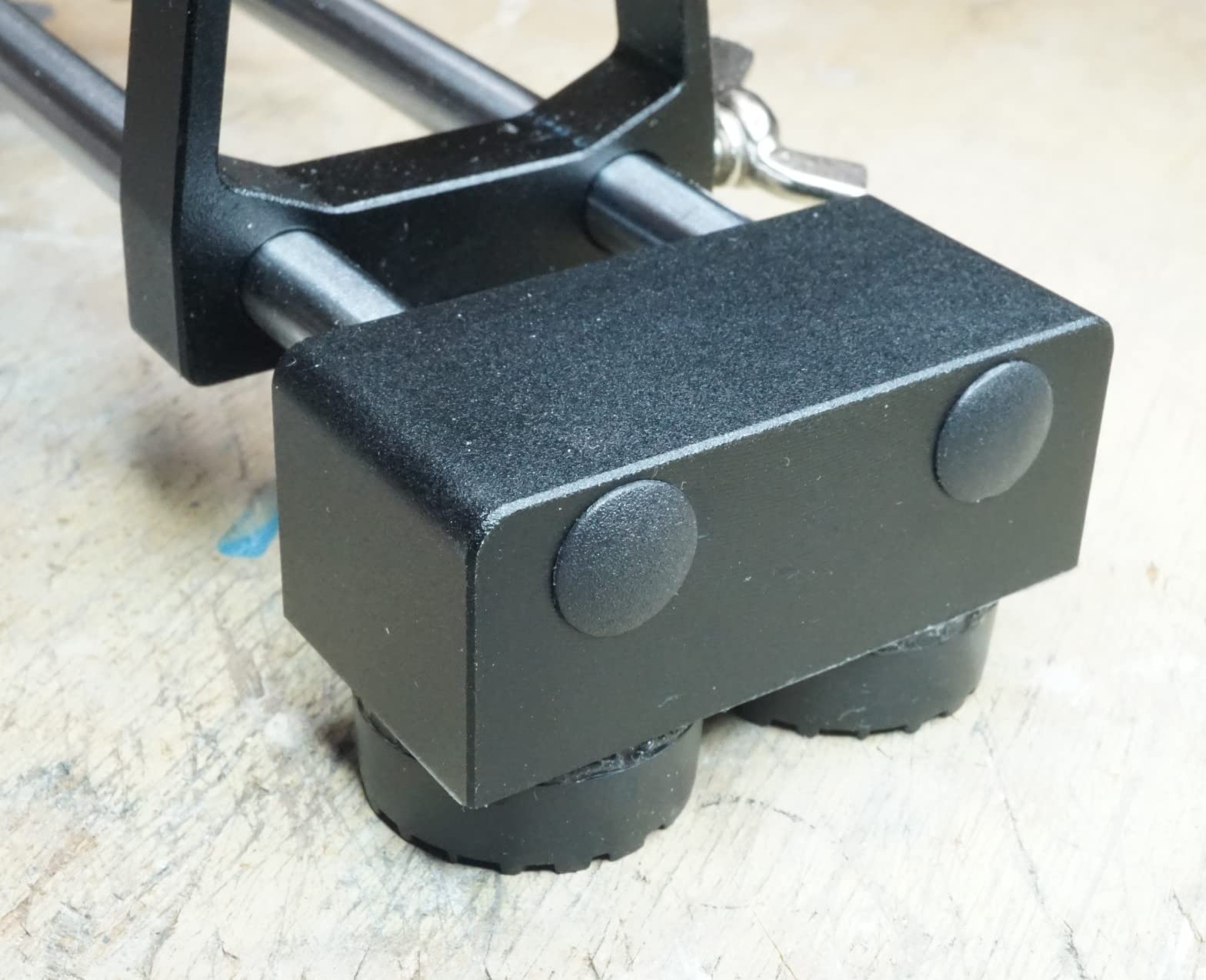
The magnetic base is the interesting part. It will clamp onto a metal magnifier base, a bench plate, or an ironing platform, and several owners mount it inside a small bench vise for a rock-solid fixed setup. That is a genuinely useful trick if your bench surface is already metal.
Two practical caveats before you order. The included magnets are weak, so the holder cannot be shoved or pulled against firmly, and no base plate is included, which can leave it feeling unstable straight out of the box until you mount it somewhere solid.
What the SainSmart magnetic holder is best for
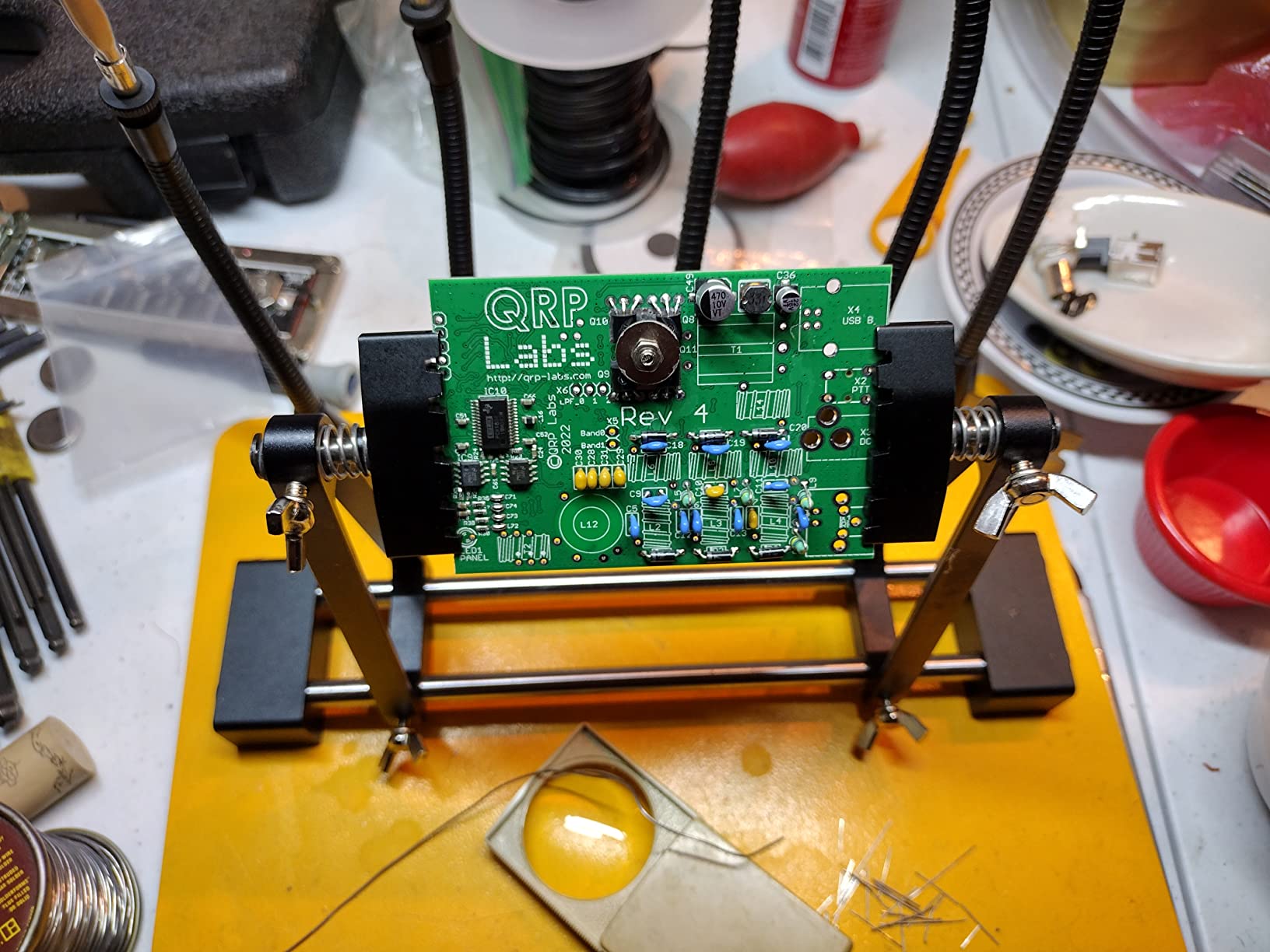
It is best for SMD rework, hot-air work and any job where a magnifier or an ironing board is already on the bench. It turns a metal platform into a proper rework station with almost no desk footprint, and it handles boards up to 150 millimetres wide and 4 millimetres thick.
It is also a good upgrade for anyone who found a plastic helping hand too soft. Rigid, close to the work, no assembly required, and it works immediately with the board you already have.
Where it falls short
The grip slot is too deep for small development boards, dropping them below a comfortable working height. For a 1 inch sensor breakout you will be better served by a low flat vise or the SainSmart station with pillars.
The wing nut can collide with the plastic housing on the largest boards it accepts, and rotation is vertical only, so if your workflow needs a board turned flat and horizontal, this is not the tool. Add a stronger magnet or a base plate before you rely on it heavily.
7. Hakko C1390C Omnivise – the precision swivel vise for rework
Hakko C1390C OMNIVISE PCB Holder Stand with 4 Settings
0 to 20 mm opening
5 height settings
360-degree grip
Padded jaws
Pros
- Metal build made for long service life
- Very compact for a full precision vise
- 360-degree grip gives access to both faces
- Padded jaws protect delicate surfaces
- Pedestal base keeps the desk clear
Cons
- Board opening capped at 20 mm
- Discrete height steps rather than continuous adjustment
- Only 60 reviews
- so less owner feedback
The Hakko carries the highest average rating of the ten at 4.8, and the build quality is the reason. It is a real bench instrument rather than a tool-shaped object, with a metal body, a proper grip, and a pedestal base that keeps the space under the board clear.
The four height settings place the board at 2.8, 3.1, 3.3, 3.6 or 3.8 inches, which is enough range to clear a preheater or get a comfortable angle under a scope. The 360-degree grip means the underside is as accessible as the top, which is the whole point of a swivel vise.
Compactness is the underrated advantage. It takes up a small circle of desk, so you can keep a mat, a parts tray and a microscope around it, and it is easy to move to another bench when you need the space for something else.
Two limits are worth planning around. The board opening tops out at 20 millimetres, so anything larger than a small controller card will not fit, and the height changes in fixed steps rather than sliding continuously, so you pick from a menu instead of dialing in an exact height.
What the Hakko Omnivise is best for
It is best for rework and repair, and for anyone who works near a preheater or under a microscope. Holding a board over a preheater and rotating it 180 degrees without unbolting anything is the single task this vise does better than anything cheaper in the group.
It is also best for connector re-pinning and fine-pitch SMD work, where the padded jaws give you a positive hold without marking the board and the compact body leaves your sightline clear.
Where it falls short
The 20 millimetre maximum opening rules it out for larger boards, and the fixed height steps mean there is no perfect angle for every bench setup. If your work involves 5 inch controller cards, this is not your holder.
Owner feedback is thin, with 60 reviews behind the rating, so there is less community troubleshooting data than the heavily reviewed options here. That is a reason to know the return terms rather than a dealbreaker on an otherwise very well-regarded tool.
8. AmScope CBH-100 Clamping Kit – the simple spring clamp for larger boards
AmScope CBH-100 Adjustable Circuit Board Holder and Clamping Kit, PCB
Clamp to 198 mm wide
360-degree clamp rotation
Rubber-footed base
Metal frame
Pros
- Clamp capacity of 198 mm suits wide boards
- Rotating clamp reaches every side of the workpiece
- Stable rubber-footed base does not mar the desk
- Metal frame build
- Straightforward and quick to set up
Cons
- Lowest average rating of the ten
- 198 mm limit excludes large backplane cards
- Single clamp with no board support shelf
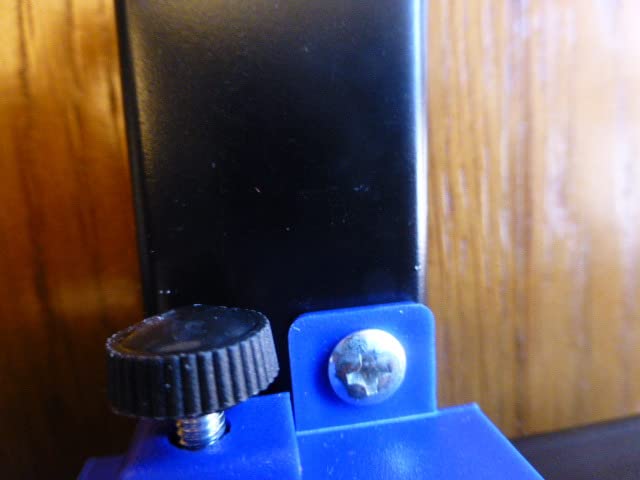
This is the straightforward option. A single spring-loaded clamp on a rotating mount, on a wide base with rubber feet, and nothing else to go wrong. It does the basic job of securing a board for soldering, inspection and rework without any learning curve.
The clamp capacity of 198 millimetres is at the wide end of what this roundup covers, which makes it the pick when you need to hold a larger board than a hobby-sized card and you do not want to move up a size. The spring action means you press the board in until it stops, with no thumbscrew to adjust.
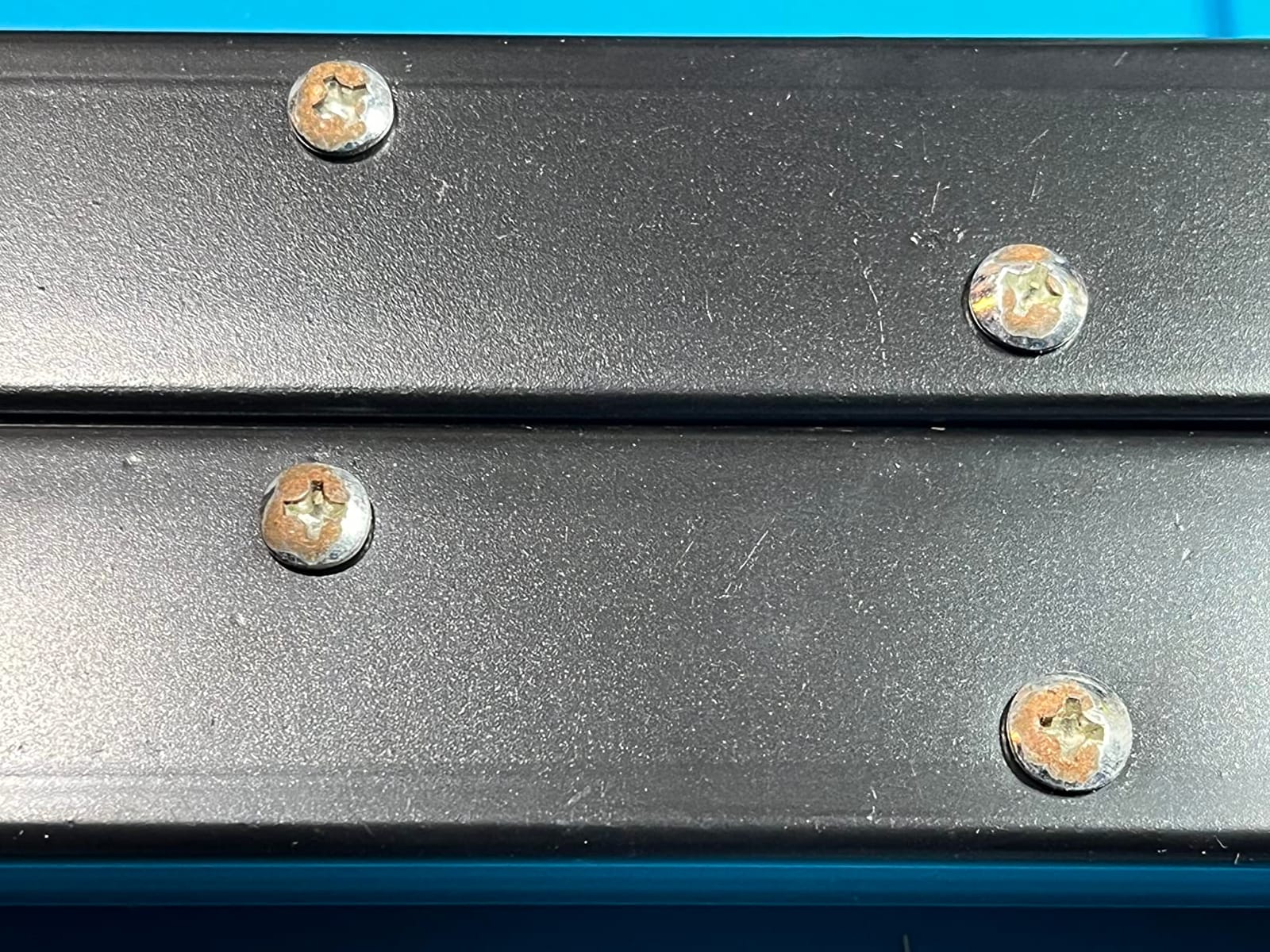
It scores the lowest average rating of the ten at 4.2, with a noticeable share of middling three-star reviews. The pattern in the feedback is consistent, and it is about capacity and simplicity rather than defects: the design is basic, so people who needed more features rated it down.
The rubber feet on a wide base do a good job of protecting a desktop, and the frame has enough mass that a light push against a joint does not move it. It is a stable, unglamorous tool that does what it says.
What the AmScope kit is best for
It is best for holding wider boards, panels and larger modules where a small hobby vise jaw simply will not span the width. The 198 millimetre opening covers most boards you will find outside a phone repair context.
It is also best as a first clamp on a shared or school bench, because the spring action means a new user can pick it up and hold a board correctly on the first try, with nothing to learn.
Where it falls short
There is a single clamp and no board support shelf, so a large board held at one end has nothing underneath the far side. For a two-handed job on a big board, rest the other end on the base or add a second holder.
The 198 millimetre ceiling still excludes genuinely large boards, and the middling ratings reflect a design with no extra support features. If your work is mostly small boards, the narrow opening is the more relevant limit and this is the wrong tool.
9. QWORK Adjustable Frame – the compact option for a crowded desk
QWORK Adjustable PCB Holder Frame – 360° Rotating Metal Stand for Soldering, Repair & Inspection
Boards to 7.75 in wide
Dual rotating clamps
Side knob adjustment
Rubber-footed metal base
Pros
- Dual clamps give clean 360-degree rotation
- Side knobs adjust width and grip quickly
- Solid metal base keeps it balanced
- Four rubber feet stop it sliding
- Compact footprint
Cons
- Maximum board thickness of 0.12 in limits it to standard boards
- No review text beyond aggregate ratings
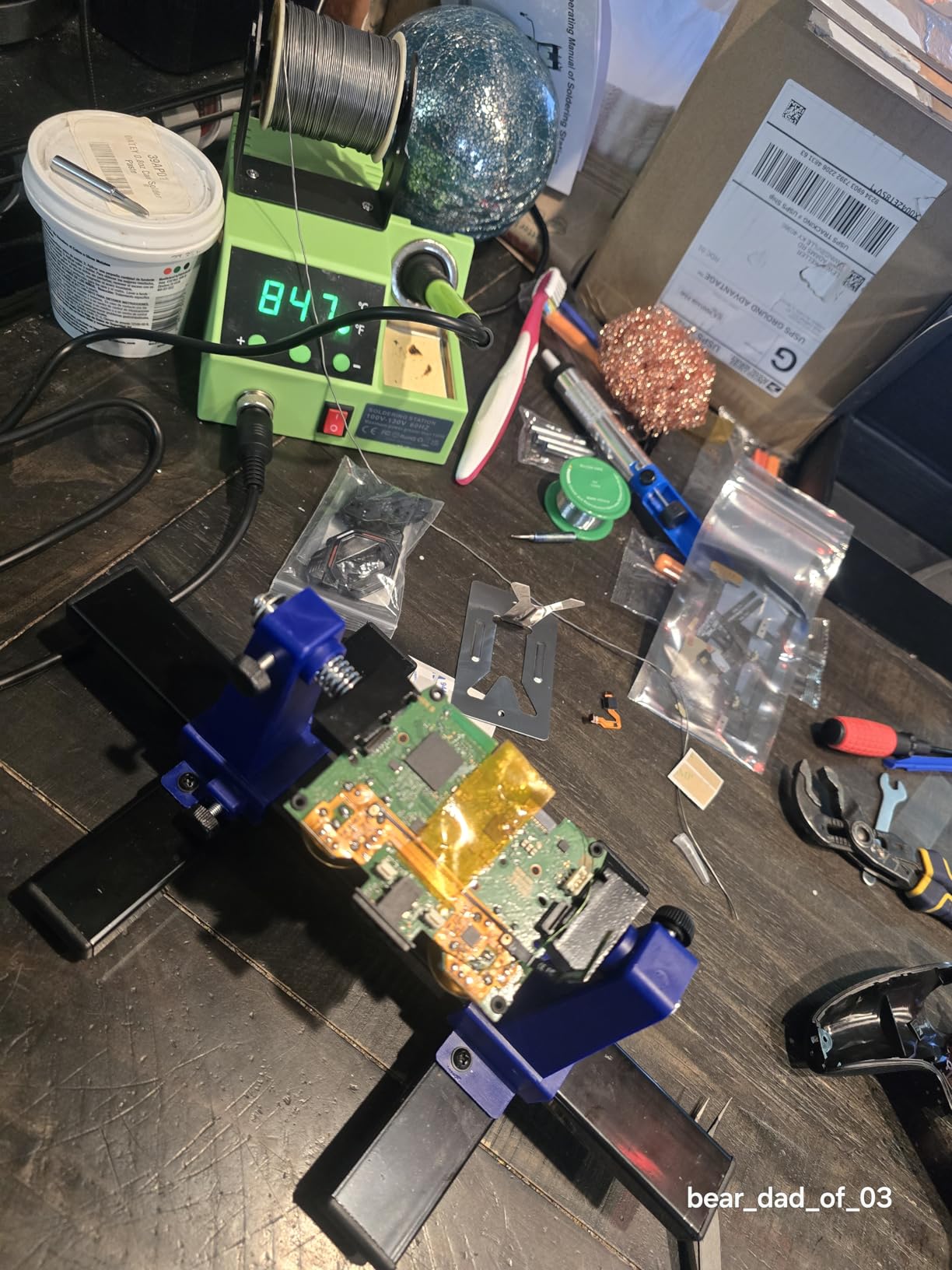
The QWORK is the compromise pick: a proper dual-clamp metal frame with real 360-degree rotation, in a footprint that will not eat a small desk. If your bench is shared, or you work on a kitchen table between other projects, the size is the selling point.
Dual clamps give you a much steadier hold than a single-clamp design, because the board is supported at two points along its length rather than one. That reduces twist, and twist is what turns a slightly off-angle board into an awkward soldering position.
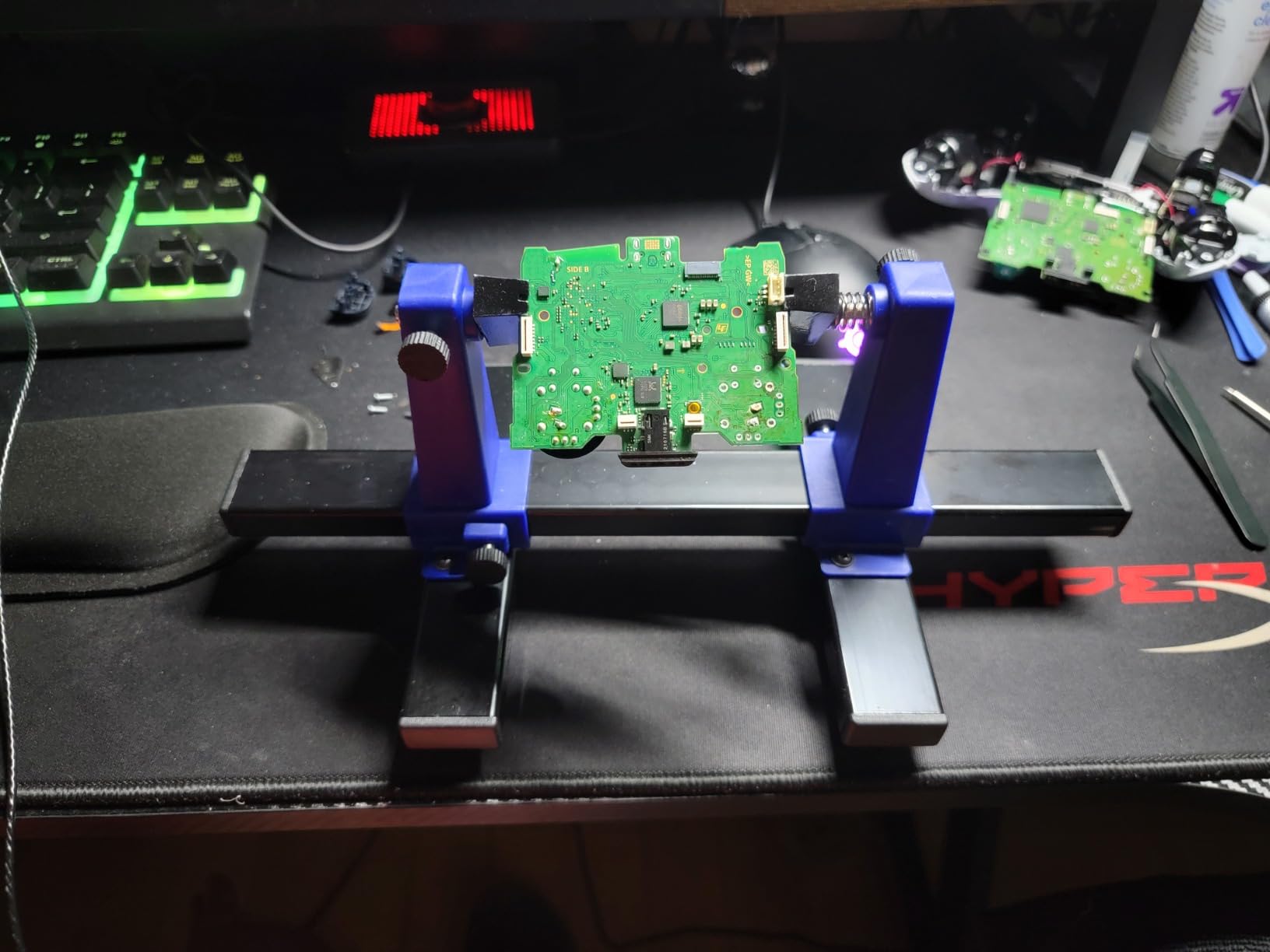
Side knobs for width and grip strength are quick to set, and the four rubber feet keep the base from sliding when you push a joint flat. The base is solid metal, so it does not feel flimsy the way a plastic frame does when you lean into it.
The hard limit is thickness. It grips boards up to 7.75 inches wide but only 0.12 inches thick, which covers standard single- and double-sided boards but not a board with a tall heat sink, a stacked module, or a thick power supply on the back.
What the QWORK frame is best for
It is best for a crowded bench or a small workspace where a wide clamping kit will not fit. It is also a good second holder for a bench that already has a large station, giving you a compact rotating clamp at a second work position.
For through-hole work on standard-thickness boards, the dual-clamp hold and quick knob adjustment make it a genuine workhorse rather than a token pick.
Where it falls short
The 0.12 inch thickness ceiling is a real constraint for anyone doing rework on assembled boards with heat sinks, connectors standing proud, or any stacked module on the back. Check what you are actually holding before you commit.
Review detail is thin, with aggregate ratings carrying most of the picture. The rating distribution is healthy, with a strong share of five-star scores, but if you need advice on a specific edge case, the community around this holder is much smaller than around the well-reviewed picks.
10. DEVMO 360 Degree Frame – rated for boards near hot air
DEVMO Circuit Board Holder,Adjustable Printed Circuit Board Holder Frame PCB Soldering and Assembly Stand Clamp Repair Tool 360 Degree Rotation
Rated to 450 C
Spring-loaded 360-degree clamp
4 thickness positions
Boards to 200 mm
Pros
- Stated 450 degree upper temperature rating
- Four clamping thickness positions for different boards
- 360-degree rotation makes flipping simple
- Adjustable width with a spring-loaded clamp
- Solid metal base with four rubber feet
Cons
- ABS arm section is less rigid under heavy load
- 3 mm thickness ceiling excludes thicker boards
- Review detail is mostly aggregate ratings
The DEVMO is the one to look at if your boards spend time near a hot-air gun. Its stated upper temperature rating of 450 degrees is matched only by the KOTTO station in this group, and combined with a solid metal base it is a sensible holder for rework where a plastic arm would be a liability.
The four clamping thickness positions are genuinely useful in a mixed workload. Setting the station once for a standard 1.6 millimetre board and re-clamping for a thinner board without hunting for a setting is a small convenience you notice across a full day of work.
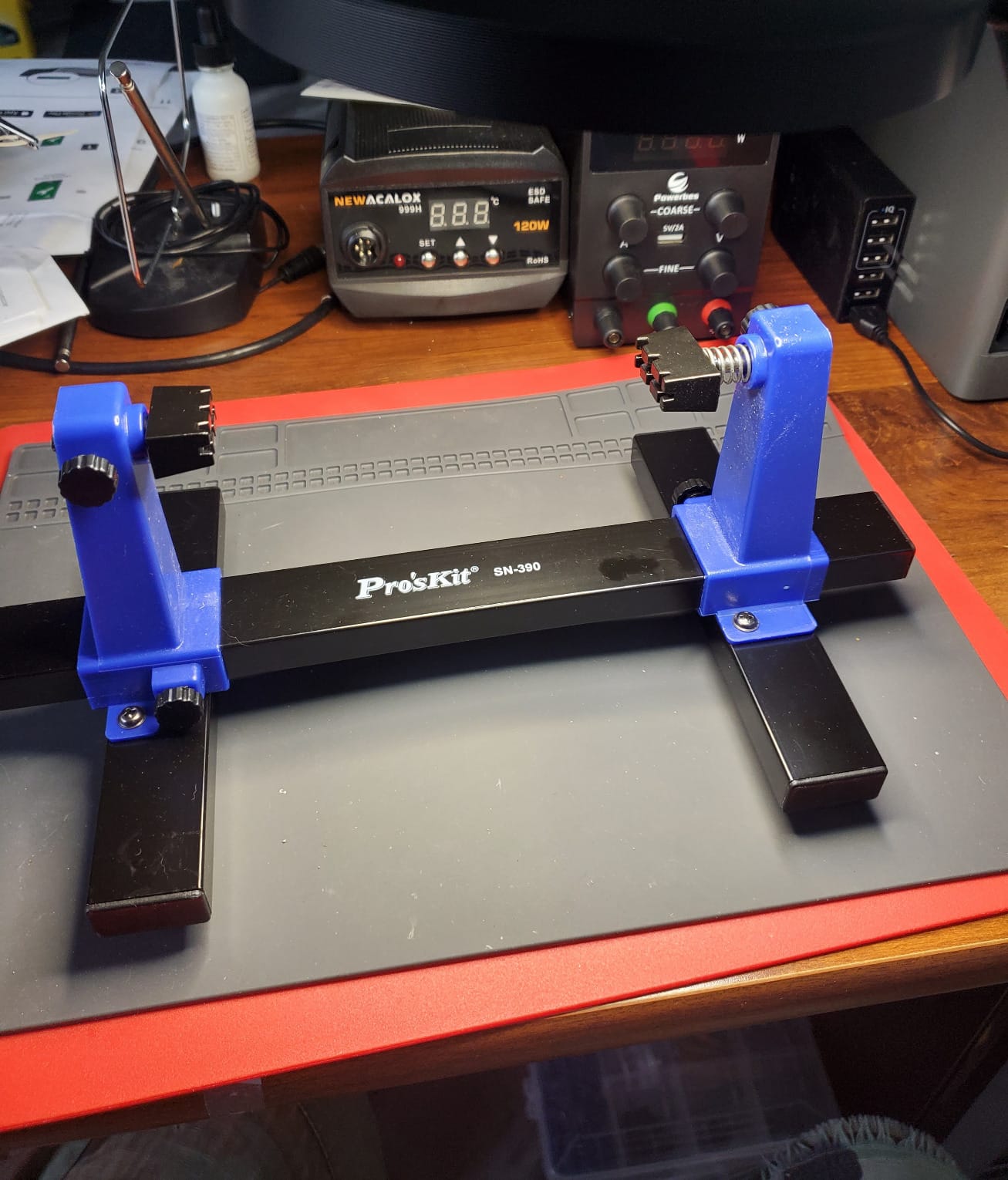
Capacity is 200 millimetres wide and 3 millimetres thick, which covers most boards with a little room to spare, and the width adjustment takes a board of different sizes without swapping fixtures. Rotation is 360 degrees, so the underside is fully accessible.
The compromise is the frame. It is metal at the base with an ABS arm section, and that arm is less rigid than an all-metal frame under heavy load. It held fine for normal soldering, but a lot of sideways pressure while seating a connector will feel the difference.
What the DEVMO frame is best for
It is best for hot-air rework and repair work on boards that are handled hard, where a high temperature rating and a stable metal base matter more than maximum rigidity in the arm. The 200 millimetre capacity suits larger cards than most of the compact options.
It is also a good general holder for a mixed bench, because the four thickness positions and adjustable width let you move between board types quickly without reconfiguring anything.
Where it falls short
The 3 millimetre thickness ceiling excludes stacked, heat-sink-mounted or module-heavy boards, and the mixed metal and ABS frame gives up some rigidity under force. For heavy connector seating, an all-metal frame is the better tool.
As with the QWORK, the rating is the main evidence here, with 107 reviews behind it and little review text to go on. The rating distribution is strong, so it is a safe pick, but not one with deep community troubleshooting behind it.
How to choose the right PCB holder for your bench?
The five holder types, and who each one suits
A swivel vise clamps the board in a rigid frame on a ball joint and turns to any angle. It is the most precise option and the most expensive, and it suits rework, preheater work and anything where the board must be turned often. The Hakko Omnivise is the clearest example here.
A magnetic helping hand is a weighted steel base with flexible gooseneck arms ending in alligator clips or magnetic pillars. It reaches further than any other archetype here, and it is the least rigid in exchange, suiting wiring, small parts, connectors and general hobby work.
A metal clamp frame is a rigid base with two adjustable arms that hold a board along its edges, usually with 360-degree rotation. It suits through-hole assembly, inspection and larger boards, and it is the middle ground on price.
A low flat-on-the-desk vise holds the board at table height, which changes your wrist angle and removes arm fatigue. It is the answer for small boards that a full vise jaw cannot span, and for anyone doing long microscope sessions.
A jig or a mat is not a holder at all. A silicone mat with three points of contact, a printed jig with a board-shaped recess, or low standoffs under the corners can be enough for a lot of work, and experienced users defend that position firmly. Test the free option before you spend.
Measure your smallest board before you buy
Every holder has a maximum board width, and the number nobody publishes is the smallest one it can grip without crushing or slipping. In this roundup the Hakko tops out at 20 millimetres of opening, the SainSmart magnetic holder accepts boards up to 150 millimetres wide and 4 millimetres thick, the MMOBIEL takes boards up to 20 by 14 centimetres, and the QWORK and DEVMO are limited to 0.12 and 3 millimetres of thickness.
Take your smallest board and measure it across the edges you intend to grip before you order. If you routinely work on 1 inch breakouts, an elevated helping hand or a full-size swivel vise is the wrong tool, and a low flat vise or magnetic pillars will change your results far more than a brand name will.
Heat near the base decides plastic from metal
Iron tips routinely touch things they should not. A 450 degree rating and an all-metal path from base to jaw is a safety consideration, not a nicety, and it is the reason several owners report modifying a plastic-based holder to sit on scrap wood before doing hot-air work.
Buyers also care about heat tolerance when the holder is close to the work. Standard nylon jaws are fine for normal soldering but are not the right choice for extended high-heat work, and high-temperature PTFE jaw sets exist for holders that need it. If your bench includes a preheater, spend the effort on the heat path.
Magnetic helping hand or swivel vise
The most common complaint about elevated helping hands is that the arms feel unstable, and the most common preference in forum threads is for a flat-on-the-desk vise. Both are right for different work. If you solder one board at a time in a fixed position, flat and low wins. If you are re-pinning connectors, holding wires while you twist, or moving between inspection and soldering, the flexibility of arms wins.
There is also a fatigue argument. Holding a board up at arm height is a different posture from working on a mat, and over a long session the difference shows up in your shoulder. The most common setup among people who own several is one of each: a flat low vise for precision and batch work, and an arm-based helping hand for everything that needs reach.
Batch population and small parts
If you are soldering many identical boards, a helping hand with magnetic pillars is more efficient than a single clamp, because you can hold two boards at once and keep a partly finished board beside the next one. A printed jig that holds several boards in a fixed orientation is the route owners who refuse to buy commercial hardware tend to take.
Whichever you use, the point of the holder is the same. Clamp, solder, and do not move the board until the joint is cool, because solder joints are solid the instant they cool and movement during that moment is what creates cold, cracked and dull joints, bridges between fine-pitch pads, and lifted pads.
Iron holders are a different job
Worth saying plainly, because the word gets used loosely. A soldering iron holder parks a hot iron somewhere safe so it cannot roll off the bench or melt the surface. A PCB holder does something different: it holds the board still so joints stay good.
The rest of the classic bench kit matters too. A temperature-controlled ESD-safe iron in the 40 to 80 watt range, flux-core solder, and brass wool or a tip cleaner for keeping the tip clean are what actually determine joint quality. A great holder makes your technique repeatable, but it cannot rescue a dirty tip or a badly heated pad.
Frequently Asked Questions
What is the best PCB holder for soldering?
For most benches, the KOTTO four-arm helping hands are the best all-round PCB holder for soldering, because the weighted base stays put and the rubber-sleeved clips grip a board edge without covering the pad you are working on. For small boards, the Stickvise is better, and for rework near a preheater the Hakko Omnivise wins on rigidity.
Do I need a PCB holder to solder?
If you hand-solder more than the occasional joint, yes. A joint is solid the instant it cools, so a board that shifts during those few seconds produces cold, cracked or dull joints, solder bridges and lifted pads. A silicone mat with three points of contact is a reasonable baseline for occasional work on larger boards.
What is the best helping hand for soldering?
The SainSmart magnetic helping hands station is the most complete helping hand for soldering, with a large weighted steel base, four magnetic pillars that grip bare boards, four gooseneck arms and a five-times magnifier. For a simpler bench with more review history behind it, the KOTTO four-arm station is the alternative most people buy.
Are alligator clip helping hands actually useful for holding a PCB?
They are more useful than their reputation suggests. The common complaint is that clips slip or cover the pad being soldered, which is true for awkward shapes and small parts. Magnetic pillars that grip a board edge, or a rigid clamp frame, solve the same problem without a clip in the way.
What is the best PCB holder for small boards?
For boards under 2 inches across, a low flat-on-the-desk vise is the best choice, because it holds small boards at desk height and avoids the flex of an elevated arm. The Stickvise with standard nylon jaws is the clearest example, and the SainSmart station pillars also grip small bare boards directly.
What is the most common mistake in soldering?
The most common mistake is moving the board while a joint is cooling. Everything else, including a dirty tip, a pad that was not heated properly or too little flux, is easier to fix. Clamping the board so it cannot move during that cooling window is the cheapest quality improvement available to a beginner.
Final verdict for PCB holders in 2026
If you buy one holder this 2026, get the KOTTO four-arm helping hands. It has the strongest combination of rating and owner feedback in this group, the base stays planted, and it covers more job types on a single bench than anything else we tested.
Add a second holder when your work calls for it, not before. A low flat vise like the Stickvise for small boards and long precision sessions. A rigid clamp frame such as the QWORK or AmScope kit for through-hole batches and wider cards. A Hakko Omnivise if you work near a preheater or under a scope. Two holders on one bench covers almost everything, and that is what most experienced owners end up with anyway.
Before you spend anything, though, test a silicone mat with three points of contact on your largest board. It is free, it works for a surprising share of jobs, and it tells you exactly which job your money needs to solve.