
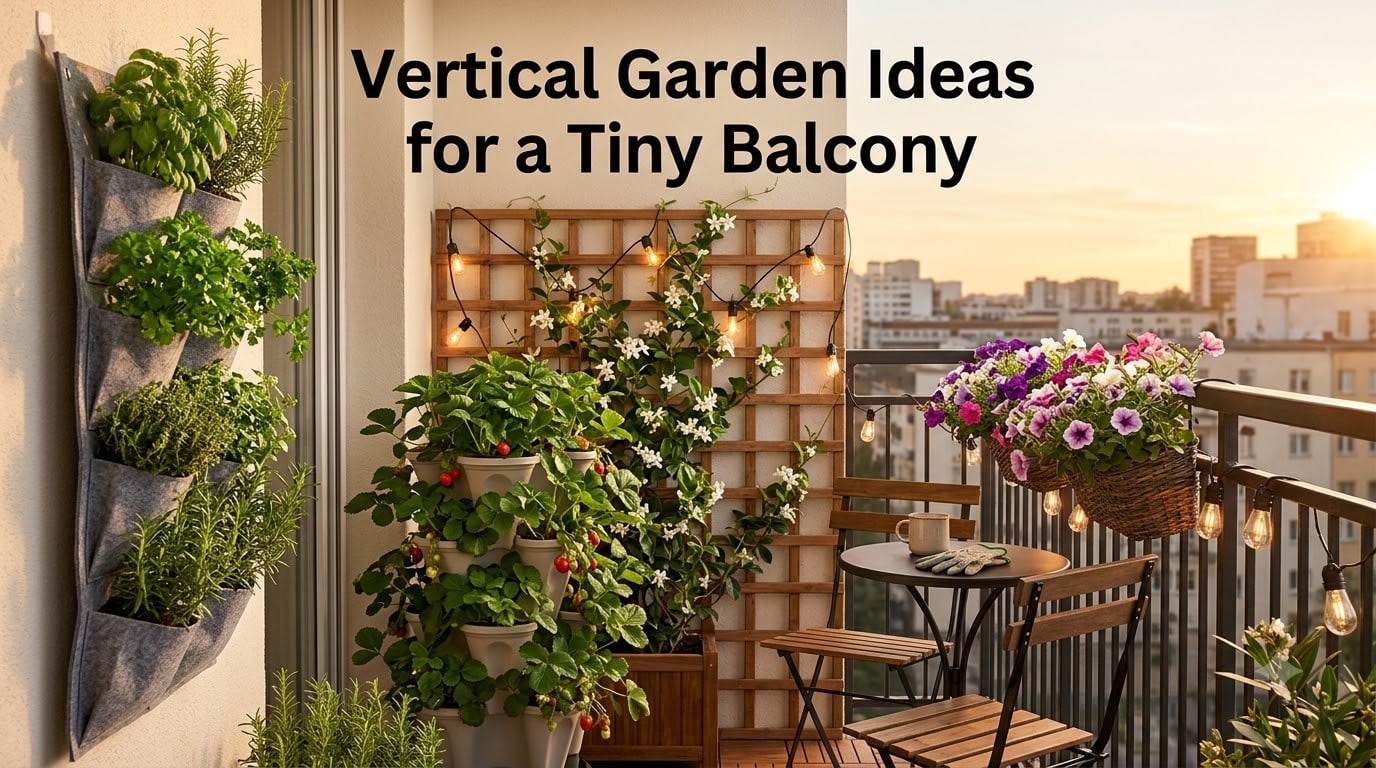
If you have ever looked at your tiny balcony and thought “there is no room for plants here,” I have good news. A vertical garden can turn even the smallest concrete slab into a green retreat. I have spent the last few years helping apartment dwellers transform 30-square-foot balconies into herb gardens, flower walls, and edible jungles that produce real harvests.
The vertical garden ideas for a tiny balcony I share below come from hands-on builds, renter-friendly upgrades, and lessons learned from readers who garden on balconies as small as 4 by 6 feet. You will find five reliable setups, the best plants to grow, and exactly how to start without drilling holes your landlord forbids.
Table of Contents
What Is a Vertical Garden?
A vertical garden is a way to grow plants up rather than out, using wall-mounted planters, pocket gardens, tiered towers, trellises, or hanging baskets to stack greenery vertically. On a tiny balcony, this approach lets you grow herbs, flowers, and even vegetables in just a few square feet of floor space. It also creates a living privacy screen that softens railings and walls.
I define a small balcony vertical garden as any setup that lifts plants off the floor. That includes planters screwed to walls, planters clamped to railings, planters stacked in towers, and planters suspended from above. The strategy is the same in every case: grow up, save floor space, and turn bare walls into productive surfaces.
Quick-Pick Ideas: 5 Best Vertical Garden Setups for a Tiny Balcony
You do not need to commit to one system. Here are five small balcony vertical garden ideas I have tested and would recommend to anyone starting out.
- Wall-mounted planters and pocket gardens: Fabric or felt pockets that hang on a wall or fence, perfect for shallow-rooted herbs and trailing flowers.
- Tiered tower planters: Stackable planters that rotate around a central pole, ideal for strawberries, lettuce, and compact herbs in a single footprint.
- Hanging baskets and railing planters: Containers suspended from above or clamped over railings, the easiest setup for renters because nothing gets drilled.
- Trellis with climbing plants: A grid or netting that lets vines climb upward to create a green curtain or privacy screen.
- DIY pallet or ladder vertical garden: A reclaimed wood pallet or old ladder leaned against a wall, holding pots in every rung or gap.
Idea Matrix: Comparing Vertical Garden Setups at a Glance
Below is a side-by-side look at the five ideas above. Use it to match your space, sunlight, and skill level.
| Idea | Best For | Space Needed | Difficulty | Top Plant Picks |
|---|---|---|---|---|
| Wall-mounted and pocket gardens | Shaded walls and blank fences | 1 wall, 3 to 6 feet tall | Easy to medium | Herbs, pothos, ferns, succulents |
| Tiered tower planters | Sunny corners and edible beds | 2 by 2 feet of floor space | Medium | Strawberries, lettuce, basil, mint |
| Hanging baskets and railing planters | Renters and small balconies | Railing or overhead hook | Easy | Trailing petunias, strawberries, herbs |
| Trellis with climbing plants | Privacy screens and sun-facing walls | 1 wall plus a 4 to 6 foot trellis | Medium | Jasmine, ivy, sweet peas, cucumbers |
| DIY pallet or ladder vertical garden | Budget builds on a blank wall | One pallet or ladder, leaning | Medium to hard | Herbs, succulents, small flowers |
Idea 1: Wall-Mounted Planters and Pocket Gardens
Wall planters solve the problem of bare walls on a tiny balcony. A pocket planter is a fabric or felt panel with several planting slots sewn into it. You hang it from one hook or a few screws, fill each pocket with potting mix, and plant shallow-rooted crops directly into the pockets.
For my own balcony, I used a 4-pocket felt planter on a shaded wall and grew mint, parsley, thyme, and trailing ivy. Watering was simple: a quick spray from a watering can over every pocket once a day in summer, twice a week in spring and fall. The fabric held moisture well, and the roots stayed cool in partial shade.
Best Plants for Wall Planters
Choose plants with shallow roots and modest water needs. The strongest performers in pocket planters I have tried are herbs like thyme, oregano, and chives, plus ornamentals like lobelia, alyssum, and creeping Jenny. Succulents also thrive in fabric pockets because the material drains quickly.
Renter-Friendly Wall Planter Tips
Most landlords will not allow drilling into exterior walls. A freestanding privacy screen or a tension rod between two balcony walls lets you hang a pocket planter without a single screw. Look for planters rated for outdoor use so the felt does not break down in rain.
Idea 2: Tiered Tower Planters
A tiered tower planter stacks several pots vertically around a central pole. Each level rotates or shifts to catch sunlight, and water drains from the top down through every tier. You can buy ready-made towers or build your own with stacked nursery pots and a center pipe.
In one summer, I grew 12 strawberry plants in a 2-foot-wide tower and harvested about 4 pounds of fruit. Lettuce and spinach did equally well in the middle tiers where the soil stayed cooler. Basil and mint grew like weeds in the top tier with full sun.
Why Tiered Towers Work on Tiny Balconies
They concentrate production into a tiny footprint. A 2 by 2 foot tower can hold 20 to 30 plants across five or six tiers, which is the same yield you would expect from a 4 by 8 foot ground bed. The vertical layering also creates airflow, which reduces mildew on damp leaves.
Idea 3: Hanging Baskets and Railing Planters
Hanging baskets are the easiest vertical garden idea for renters. You hang them from an overhead beam, a balcony hook, or a shepherd’s hook that sits on the floor. Railing planters clip directly over the top of a metal or wooden railing, with the planter body hanging on the outside and the soil inside the rail.
I use railing planters for trailing petunias, lobelia, and strawberries on my own balcony. They turn the railing itself into a flowering border. Hanging baskets above the floor free up walking space and create a layered look from floor to ceiling.
Watering and Wind Considerations
Hanging baskets dry out fast, especially in summer wind. Plan to water them daily during heat waves, every other day in mild weather. In high-rise balconies, wind can shred leaves and dry out plants in hours, so choose wind-tolerant plants like geraniums, lantana, and ornamental grasses for exposed positions.
Idea 4: Trellis with Climbing Plants
A trellis is a frame, mesh, or netting that climbing plants grow up. You can buy wood, metal, or plastic trellises, or build one from bamboo stakes tied in a grid. On a tiny balcony, a trellis does double duty: it grows edible vines up a wall and creates a privacy screen that hides the view of neighboring buildings.
I trained sweet peas and jasmine up a 6-foot trellis on a west-facing wall and was rewarded with fragrant flowers and a private green curtain that blocked the afternoon sun. Cucumbers, pole beans, and climbing nasturtiums are edible options for sunny walls, while ivy and pothos thrive on shaded sides.
Privacy Screen Use Case
If privacy is the main goal, plant dense climbers like star jasmine, English ivy, or climbing hydrangea. For a fast-growing seasonal screen, plant morning glory, scarlet runner beans, or climbing nasturtiums. All three cover a 6-foot trellis in a single growing season.
Idea 5: DIY Pallet or Ladder Vertical Garden
A reclaimed wood pallet or an old wooden ladder can be leaned against a wall and used as a vertical planter. Pallets have gaps between slats that hold soil and small pots perfectly. Ladders have rungs that support pots at different heights.
I built a pallet planter with landscape fabric stapled to the back and bottom of each gap, then filled the cavities with potting mix and planted succulents, herbs, and small annuals. Total cost was about 40 dollars and an afternoon of work. The key is sealing the wood with a non-toxic outdoor sealant to prevent rot.
Cost Breakdown for a DIY Pallet Garden
The cheapest setup uses one free pallet, a roll of landscape fabric, a staple gun, and one bag of lightweight potting mix. Add 6 to 10 small plants and you have a complete vertical garden for under 50 dollars. If you want a cleaner look, sand and stain the pallet first, which adds about 20 dollars in materials.
Idea 6: Hanging Herb Garden
An herb garden is the most rewarding edible vertical garden for a tiny balcony. Herbs are compact, fast-growing, and produce harvests all summer. You can grow them in wall planters, tiered towers, hanging baskets, or pallet gardens. The system matters less than the sunlight.
I keep a six-pocket herb planter on my kitchen-facing wall, planted with basil, parsley, cilantro, chives, thyme, and rosemary. I snip fresh herbs for dinner four or five nights a week. Even a 4-pocket planter grows enough basil for weekly pesto.
Best Herbs for Vertical Balcony Gardens
Basil, parsley, cilantro, chives, and mint are the easiest five herbs for beginners. They tolerate a wide range of sunlight and water conditions. Thyme and oregano handle drought. Rosemary prefers full sun and drier soil. Mint is so aggressive it should always be planted in its own container to avoid crowding out neighbors.
How to Start a Vertical Garden on a Tiny Balcony (Step-by-Step)
Starting a vertical garden on a small balcony is a weekend project when you have a clear plan. Here is the exact process I walk every friend through.
Step 1: Assess Sunlight and Wind
Track the sun on your balcony for a full day before buying anything. Note which walls and railings get direct sun, partial sun, or full shade. Also note where the wind hits hardest: corners, open railings, and upper floors are wind tunnels that dry plants faster.
Step 2: Measure and Pick a System
Measure your balcony width, depth, and the height of walls and railings. Match your space to the ideas above. A 4 by 6 foot balcony can fit one tiered tower, two hanging baskets, and one wall-mounted pocket planter without crowding the door.
Step 3: Gather Lightweight Containers and Soil
Use plastic or fabric containers rather than terracotta to reduce weight on the balcony floor. Fill them with a lightweight potting mix, never garden soil, which compacts and suffocates roots in containers.
Step 4: Plant and Install
Plant herbs and greens in cool weather, flowers and tomatoes in warm weather. Hang or mount your chosen system after planting so you do not disturb roots. Water thoroughly until water runs out the drainage holes.
Step 5: Maintain a Watering Rhythm
Vertical gardens dry out faster than ground beds. Check soil moisture daily by sticking a finger an inch into the soil. Water when the top inch feels dry, more often in summer, less in cool weather.
Best Plants for a Tiny Balcony Vertical Garden
The right plant list depends on sunlight. I have grown the following plants with reliable results across all five vertical garden ideas.
- Herbs: Basil, parsley, cilantro, chives, thyme, oregano, mint, rosemary.
- Leafy greens: Lettuce, spinach, arugula, kale, Swiss chard, all of which handle partial shade.
- Fruiting plants: Strawberries in towers, cherry tomatoes in tall planters, peppers in fabric pots.
- Flowers: Petunias, lobelia, geraniums, alyssum, marigolds, nasturtiums.
- Climbers: Sweet peas, jasmine, ivy, morning glory, climbing nasturtiums.
- Pollinator picks: Lavender, salvia, bee balm, and coneflower attract bees and butterflies to high-rise gardens that rarely get pollinator visitors.
- Wind-resistant picks: Ornamental grasses, sedums, lantana, and geraniums stand up to strong gusts on upper-floor balconies.
How to Choose the Right Vertical Garden System
Matching the system to your conditions avoids wasted money and dead plants. Run through these four factors before you commit to a setup.
Sunlight Exposure
Full sun (6+ hours) suits herbs, tomatoes, peppers, strawberries, and most flowers. Partial shade (3 to 6 hours) suits lettuce, spinach, parsley, mint, and many ornamentals. Full shade (under 3 hours) limits you to leafy greens and shade-tolerant ornamentals like ferns, ivy, and pothos.
Wind Exposure
Upper-floor and corner balconies face steady wind. Choose compact plants, secure pots with brackets, and avoid tall towers that catch gusts. Heavy containers and windbreak trellises lined with ivy or grass protect more delicate plants behind them.
Weight Limits and Structural Safety
Most balcony slabs are rated for at least 60 pounds per square foot, but always check your building rules before loading soil and water into heavy containers. Use lightweight potting mix, plastic or fabric pots, and spread weight over the whole floor rather than concentrating it in one corner.
Renter Rules and No-Drill Options
Freestanding planters, railing planters, hanging baskets, leaning ladders, and tension-rod pocket planters need no drilling. They are perfect for renters who cannot modify the building. Always check your lease before mounting anything permanent.
Watering, Soil, and Maintenance Tips
A vertical garden needs slightly more care than a ground bed because pots dry out faster and nutrients wash out with drainage water. A few habits keep everything thriving.
Watering Schedule
Check soil moisture with your finger every day in summer, every two days in spring and fall. Water deeply until water runs out the drainage holes. Self-watering planters with a reservoir extend the gap between waterings by two to three days, useful for busy gardeners or dry climates.
Lightweight Soil Mix
Use a potting mix labeled for containers, never garden soil. Mix in perlite or coconut coir to improve drainage and reduce weight. Refresh the top 2 inches of soil each season with compost to replace nutrients that wash out.
Feeding and Pruning
Feed leafy greens and herbs every 2 to 3 weeks with a diluted liquid fertilizer. Feed flowering and fruiting plants weekly during bloom. Pinch back herbs weekly to keep them bushy and prevent flowering, which makes leaves bitter.
Pest Management
Aphids, fungus gnats, and spider mites show up in dense vertical plantings. A spray of insecticidal soap handles aphids and mites. Sticky traps catch fungus gnats, which breed in constantly damp soil. Good airflow between tiers prevents most fungal issues.
Common Mistakes to Avoid
I have made every mistake below at least once. Share them with any new vertical gardener who wants to skip the learning curve.
- Overloading the balcony floor: A wet bale of potting mix weighs 50+ pounds. Spread containers around rather than stacking in one corner.
- Ignoring wind exposure: Towers and tall trellises topple in high wind unless anchored. Railing planters need brackets in addition to clamps.
- Choosing plants that need more sun than the balcony offers: Tomatoes and peppers fail on north-facing balconies. Match plants to real sun conditions, not hopes.
- Forgetting drainage: Containers without drainage holes drown roots. Drill holes or use pots with built-in drainage to avoid root rot.
- Letting soil drip on the neighbor’s balcony below: Place trays under every planter and use self-watering pots with reservoirs to prevent stains and complaints.
Frequently Asked Questions
How to garden on a small balcony?
Start by tracking sunlight and wind on your balcony for a full day, then pick a vertical garden system that fits your space. Wall planters, tiered towers, hanging baskets, and trellises all work on balconies as small as 4 by 6 feet. Fill containers with lightweight potting mix, water when the top inch of soil dries out, and feed plants every 2 to 3 weeks with diluted liquid fertilizer.
What are some ideas for a vertical garden in a small space?
Five proven setups work well in tight spaces: wall-mounted pocket planters for shallow-rooted herbs, tiered tower planters for edible beds, hanging baskets and railing planters for renters, trellises with climbing plants for privacy, and DIY pallet or ladder gardens for budget builds. Each one lifts plants off the floor, freeing walking space while adding greenery to walls and railings.
What are the best plants to grow on a small balcony?
Herbs like basil, parsley, chives, mint, and thyme are the easiest and most productive. Leafy greens including lettuce, spinach, and arugula handle partial shade well. Strawberries thrive in tiered towers, while petunias, lobelia, and geraniums add color in hanging baskets. Climbers like sweet peas, jasmine, and ivy cover trellises for privacy and shade.
What to put on a tiny balcony?
Beyond plants, add a small bistro set or two folding stools for seating, a weatherproof outdoor rug to define the space, string lights for evening ambiance, and a small storage bench for tools and supplies. A vertical garden system, a couple of railing planters, and one trellis turn a bare balcony into a green retreat without crowding the floor.
Final Thoughts: Bringing Your Tiny Balcony to Life
The best vertical garden ideas for a tiny balcony are the ones you actually build. Start with one system that fits your sunlight and budget, plant it with herbs or flowers that match your conditions, and expand from there when the first setup succeeds.
A tiny balcony is not a limitation; it is a canvas. Pick one of the vertical garden ideas above, grab a container and a bag of potting mix, and start this weekend. Six months from now, your railing, wall, or trellis will be covered in greenery that you grew yourself.