
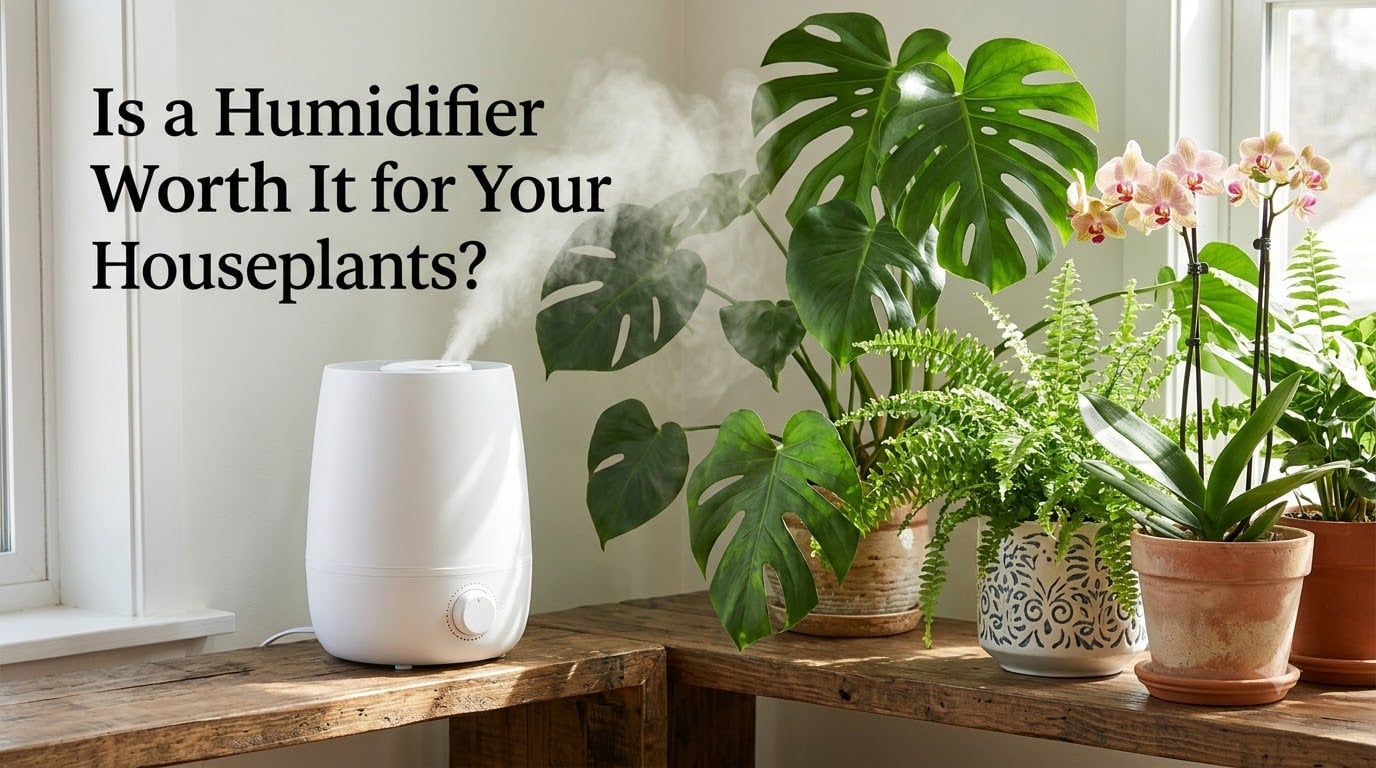
Is a humidifier worth it for houseplants? The short answer: yes, but only if you grow tropical species and your home drops below 40% relative humidity for long stretches. If your collection is mostly succulents, cacti, snake plants, and ZZ plants, you can skip it.
I’ve watched calathea leaves curl and crisp in my own living room through two dry winters. I’ve also seen them flatten out and push out fresh growth within a week of running a small humidifier. That gap between suffering and thriving is what this guide is about.
In the next few minutes, our team will walk you through the biology behind why humidity matters, a clear symptom checklist, a plant-by-plant reference table, the honest downsides (yes, mold is a real risk), and cheaper alternatives like pebble trays and grouping. By the end, you’ll know whether a humidifier belongs in your plant corner or in the “skip it” pile.
Table of Contents
Is a Humidifier Worth It for Houseplants?
Yes, a humidifier is worth it for houseplants if you grow tropical species and your indoor humidity regularly drops below 40%. If you only keep succulents, cacti, or other arid-climate plants, it isn’t worth the effort.
A humidifier is worth it when most of these are true for you:
- You own several tropical houseplants like calathea, monstera, ferns, orchids, or philodendrons
- Your home humidity sits below 40% for weeks at a time, especially in winter
- You run forced-air or central heating that dries the air
- You’re seeing brown leaf tips, crispy edges, or curled new growth
- Your collection has slowed or stopped pushing new leaves during the cold months
Skip it if you only keep drought-tolerant plants, live in a naturally humid region, or already have a bathroom or kitchen where humidity stays high. We’ll dig into both sides below.
Why Humidity Matters for Indoor Plants
Most popular houseplants evolved in tropical forests where relative humidity sits between 60 and 80%. Our living rooms rarely match that. In a heated home in winter, indoor RH often falls to 10 to 30%, which is closer to desert air than rainforest air.
Plants lose water through tiny pores called stomata. When the surrounding air is dry, water evaporates from the leaves faster than the roots can replace it. The plant responds by curling leaves, browning the tips, and slowing growth to conserve moisture.
Stomata also pull in carbon dioxide for photosynthesis. When humidity drops too low, many tropical plants close their stomata to save water. Less gas exchange means slower growth and weaker defenses against pests. A steady humidity level keeps stomata open and photosynthesis running.
Do My Houseplants Actually Need a Humidifier?
Your plants likely need more humidity if you spot several of these symptoms at the same time:
- Brown, crispy leaf tips on otherwise healthy plants
- Curling or cupping leaves, especially on calathea and prayer plants
- Yellowing edges that don’t match a watering problem
- Crispy brown patches on the leaf margins of ferns
- Bud drop on orchids before blooms open
- Slow or no new growth from November through March
- Static shocks when you water, a quick proxy for very dry indoor air
Here’s a 3-question self-test. If you answer yes to two or more, a humidifier is probably worth it for your situation:
- Do more than half your plants come from tropical regions?
- Do you run the heater daily between November and March?
- Have you seen brown tips or crispy edges that watering more didn’t fix?
One quick way to confirm is to pick up an inexpensive hygrometer. Place it next to your plants for a week and check the readings morning and night. Anything consistently under 40% RH is a strong signal to add humidity.
Plants That Love Humidity vs Plants That Don’t
Not every houseplant wants the same air moisture. Grouping your collection by origin makes it easier to decide whether a humidifier helps your specific mix.
Tropical and humidity-loving plants usually want 50 to 80% RH. Arid-climate plants prefer 20 to 40% RH and can actually suffer in humid air.
| Plant | Ideal RH Range | Humidifier Needed? |
|---|---|---|
| Orchid (Phalaenopsis) | 60 to 80% | Yes, especially in winter |
| Ferns (Boston, maidenhair) | 60 to 80% | Yes |
| Calathea and prayer plants | 60 to 70% | Strong yes |
| Anthurium | 60 to 75% | Yes |
| Monstera deliciosa | 50 to 70% | Helpful |
| Philodendron (most species) | 50 to 70% | Helpful |
| Pothos | 40 to 60% | Helpful in dry homes |
| Peace lily | 50 to 65% | Helpful |
| African violet | 50 to 65% | Helpful |
| Succulents (echeveria, haworthia) | 30 to 40% | No, often harmful |
| Cacti | 20 to 30% | No |
| Snake plant (sansevieria) | 30 to 40% | No |
| ZZ plant | 30 to 40% | No |
If your collection skews toward the top of this list, a humidifier will pay for itself in healthier growth. If it skews toward the bottom, save your money.
When a Humidifier Is NOT Worth It
A humidifier isn’t worth it if any of these apply to you. Many plant owners buy one out of habit when their setup doesn’t actually need it.
- You only grow succulents, cacti, snake plants, or ZZ plants
- You live in a humid coastal or subtropical climate where indoor RH already sits above 50%
- Your plants live in a bathroom or kitchen with regular steam
- You heat with a wood stove or radiant floor that doesn’t aggressively lower humidity
- You already group plants tightly and they look healthy
- You’re not willing to refill and clean the unit weekly
Reddit’s r/RareHouseplants has a well-known cautionary tale thread where over-enthusiastic use led to mold on walls, fungus gnats, and root rot. The lesson: more humidity is not always better. For dry-tolerant plants, extra humidity is a stress, not a treat.
Humidifier vs Misting, Pebble Trays, and Grouping
A humidifier is the most effective option, but it isn’t the only one. For small collections or renters who don’t want another appliance, these alternatives can help.
| Method | Effectiveness | Effort | Best For |
|---|---|---|---|
| Electric humidifier | High | Medium (refill, clean weekly) | Rooms with 3 or more tropicals |
| Grouping plants | Low to medium | Low | Already-dense plant shelves |
| Pebble tray with water | Low | Low | Single humidity-loving plant on a desk |
| Daily misting | Very low (mist evaporates in minutes) | High | Short-term leaf cleaning, not real humidity |
| Bathroom or kitchen placement | Medium | Low | Tropical plants that tolerate lower light |
| Glass cloche or terrarium | High locally | Low | Small ferns, propagation, moss |
| Propagation cabinet | High | Medium | Cuttings and humidity-loving aroids |
Misting deserves a callout because it’s the most common piece of bad advice online. Spraying leaves raises humidity around the plant for only a few minutes. By the time you walk away, it’s gone. Reddit houseplant communities have largely moved past misting as a humidity strategy. A pebble tray gives slightly longer-lasting benefit for one plant but won’t shift room humidity meaningfully.
Humidifier Types at a Glance
Three main humidifier types show up in plant forums. Each works, but they behave differently around water quality, noise, and energy use.
| Type | How It Works | Noise | Best For | Watch Out For |
|---|---|---|---|---|
| Ultrasonic (cool mist) | Vibrates water into a fine mist | Very quiet | Bedrooms, plant shelves, large collections | White mineral dust if you use hard tap water |
| Evaporative | Blows air through a wet wick filter | Low hum from fan | Hard-water areas, large rooms | Filter replacements every 1 to 2 months |
| Warm mist (steam) | Boils water and releases steam | Quiet but hot | Cold rooms, winter use | Burn risk, higher electricity use |
Most plant owners gravitate toward ultrasonic because they’re quiet and inexpensive. Just be ready to use distilled or filtered water if you live in a hard-water area. The Reddit houseplant crowd consistently recommends evaporative units for anyone who doesn’t want to fuss with bottled water.
Best Practices If You Get One
Once you decide to add a humidifier, a few habits decide whether it helps your plants or quietly creates new problems.
- Aim for 50 to 60% RH for most tropicals, 60 to 70% for calathea and ferns. Anything above 70% invites mold.
- Run it in the morning and early afternoon, not overnight. Nighttime humidity combined with cool leaf surfaces promotes fungal growth.
- Place the unit a few feet away from plants, not blasting directly onto leaves. Direct mist can cause spotting and salt deposits.
- Use distilled or filtered water if you have hard water. Mineral dust on leaves blocks light and clogs the unit.
- Empty and rinse the tank every week. A monthly deep clean with diluted white vinegar keeps bacteria and algae from building up.
- Use a built-in humidistat or external hygrometer to auto-shutoff. Don’t run it on max all day.
If you have a particularly tricky plant, run the humidifier near it but not on it. A small humidifier on a shelf of calatheas is far more effective than one giant unit trying to humidify a whole living room.
Risks and Real Downsides
Most articles online lean pro-humidifier. Our team wants to flag the downsides too, because they’re real and they show up in plant forums constantly.
Mold and mildew: if humidity climbs above 65% for long periods and the room has poor airflow, you can grow mold on walls, windowsills, and even soil surfaces. This is the most common cautionary tale in r/RareHouseplants.
Mineral dust: ultrasonic units vaporize everything in the water, including calcium and magnesium. Without distilled water, you’ll get a fine white powder on leaves, furniture, and electronics. It’s harmless to plants but messy.
Fungus gnats and root rot: constantly damp soil in a humid room becomes a fungus gnat nursery. If you add humidity, let the top inch of soil dry between waterings.
Energy and upkeep: a small humidifier adds a few dollars a month to your electric bill and demands weekly cleaning. Cheap units also tend to fail within 1 to 2 years, which adds up over time.
Over-humidification hides easily: a hygrometer is the only reliable check. Plants can’t tell you the air is too wet until they’re already stressed.
The Guardian’s 2026 houseplant review reached a similar verdict. Humidifiers deliver consistent humidity for tropical species, but they’re not essential and they cost effort. That balanced read is closer to reality than the “humidifier cures everything” tone you’ll find on plantfluencer posts.
Frequently Asked Questions
Do my houseplants need a humidifier?
Not always. You likely need one if more than half your plants are tropical (calathea, monstera, fern, orchid, philodendron) and indoor humidity drops below 40% for weeks. You probably don’t need one if you mostly grow succulents, cacti, snake plants, or ZZ plants.
Which houseplants do not like humidity?
Succulents, cacti, snake plants (sansevieria), ZZ plants, and other arid-climate species prefer 20 to 40% RH. Extra humidity can cause root rot, leaf spotting, and fungal issues in these plants.
How many hours a day should I run a humidifier for my plants?
Run it 4 to 6 hours in the morning and early afternoon, not overnight. Aim for 50 to 60% RH for most tropicals and 60 to 70% for calatheas and ferns. Use a humidistat to auto-shutoff so humidity doesn’t overshoot.
Do humidifiers really help plants?
Yes, when matched to the right plants. Tropical species respond quickly with greener leaves, fewer brown tips, and new growth within 1 to 2 weeks. They don’t help arid-climate plants and can actually harm them.
Do houseplants need a humidifier in winter?
Often yes. Forced-air heating can drop indoor RH to 10 to 30%, far below the 50 to 70% tropicals prefer. Winter is when brown tips and crispy edges appear most often, so a humidifier is most useful from November through March.
The Bottom Line
Is a humidifier worth it for houseplants? Yes, if you grow tropical species in a dry home. No, if you keep drought-tolerant plants or already have a humid microclimate.
The cheapest way to find out is a $10 hygrometer. Watch it for a week. If your humidity sits below 40% and your calatheas are crispy, a humidifier will change your plant care routine for the better. If you’re hovering near 50% or your plants already look happy, save the space and skip it.