
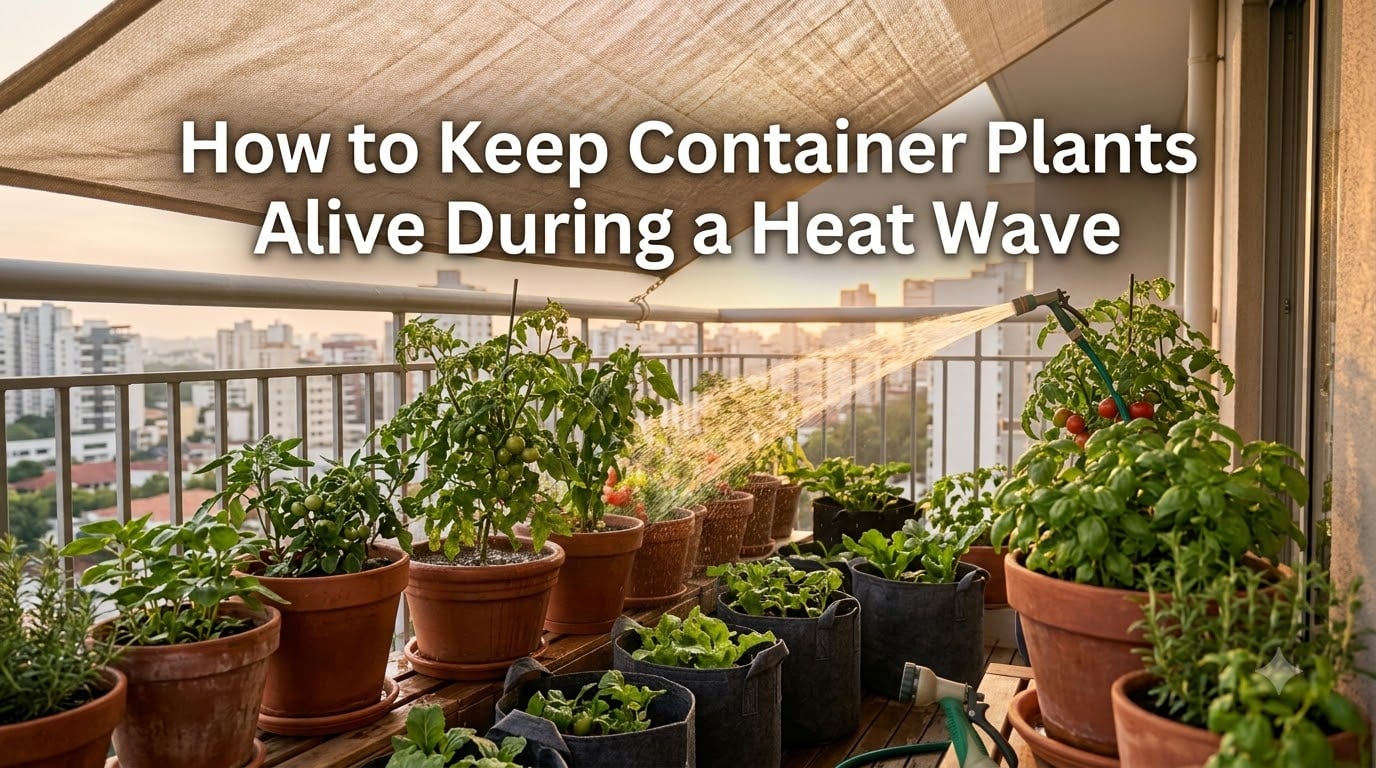
When a heat wave hits, container plants suffer first. The limited soil volume in a pot heats up far faster than ground soil, roots cook in temperatures above 120F, and water evaporates within hours. After losing two tomato plants to a Phoenix heat wave three summers ago, I rebuilt our team’s entire container routine. This guide covers what actually works: temperature thresholds for action, watering timing, shade cloth percentages, container material choices, and a pre-heat-wave checklist you can run in 30 minutes.
Table of Contents
Why Container Plants Struggle in Heat Waves
Container plants are uniquely vulnerable in heat waves because their root systems are trapped in a small volume of soil that heats up dramatically faster than ground soil. A black plastic pot in direct afternoon sun can reach 140F, while the soil just six inches below a garden bed might stay a comfortable 75F. That temperature gap is the difference between thriving roots and cooked ones.
Three factors combine to make containers the first casualties of a heat wave:
- Limited soil volume. Pots hold less water and less thermal mass. They cannot buffer against temperature swings the way ground soil does.
- Root-zone temperature extremes. Container soil can hit 120F or higher in direct sun. Most plant roots die when soil temperatures exceed 110F for more than a few hours.
- Rapid evaporation. Water disappears from a small pot in hours, not days. Leaves lose moisture faster than roots can absorb water, causing wilting even in moist soil.
A West Hollywood client once called me in a panic because her entire balcony of herbs wilted overnight during a 105F heat wave. She had watered that morning. The problem was not frequency; it was timing, pot material, and afternoon sun exposure on a west-facing wall. We will cover all three fixes below.
Temperature Thresholds: When to Act
Most container plants begin showing heat stress at 90F, with severe damage above 100F. Use this decision tree as your trigger guide:
| Temperature | Action Required |
|---|---|
| 85F and above | Mulch containers 2-3 inches deep; check soil moisture twice daily |
| 90F and above | Move sensitive plants (lettuce, basil, ferns, impatiens) to afternoon shade; water early morning |
| 95F and above | Water twice daily (morning and evening); install 30-50% shade cloth |
| 100F and above | Group containers together for shared humidity; wrap dark pots in reflective material; consider relocating entire setup if possible |
| 105F and above | Emergency protocol: shade the containers themselves (not just plants), use ollas or self-watering reservoirs, accept that some losses may occur |
Sensitive species include leafy greens, most herbs (especially basil and cilantro), ferns, impatiens, begonias, and young seedlings. Heat-loving species (tomatoes, peppers, succulents, Mediterranean herbs like rosemary and thyme) tolerate higher temperatures but still benefit from afternoon shade during extreme heat.
Watering Strategy: Timing, Frequency, and Depth
Water container plants deeply in the early morning (between 5 AM and 9 AM) so roots absorb moisture before peak heat arrives. Evening watering is acceptable during extreme heat waves but carries a slight fungal disease risk if leaves stay wet overnight. Avoid midday watering at all costs; water evaporates within minutes and droplets on leaves can magnify sun into burn marks.
During a heat wave, container plants typically need watering once or twice daily. Check soil moisture by sticking a finger 2 inches deep; if it feels dry, water immediately. A 10-inch terra cotta pot in full sun may need 2-3 gallons per day when temperatures exceed 100F. Smaller pots dry out faster and may need attention every 6-8 hours.
Deep watering beats frequent shallow watering. Slow, steady soaking encourages roots to grow deeper into the pot, making plants more resilient. A watering wand with a gentle flow setting works better than a blast from a hose; high-pressure streams compact soil and expose roots.
Bottom watering (setting pots in a saucer of water for 30 minutes) is highly effective for heat-stressed plants. The wicking action pulls moisture directly to the root zone without wetting foliage. This technique also reduces evaporation loss compared to overhead watering.
Self-watering options can buy you time if you work during the day:
- Ollas (clay irrigation pots). Buried in the soil, they slowly release water over 3-7 days. Excellent for tomatoes, peppers, and large containers.
- Water globes. Glass or plastic reservoirs that release water over 8-12 hours. Best for small to medium pots.
- DIY drip systems. A simple setup with a soaker hose and timer can water multiple containers automatically during peak heat.
- Saucer reservoirs. Filling the drainage saucer beneath pots provides a slow-release source. Monitor closely to avoid root rot in humid climates.
One forum-tested trick from r/containergardening: add a layer of straw mulch over saucer reservoirs to slow evaporation and keep roots cooler.
Shade Solutions: Cloth, Relocation, and DIY Options
Use 30-50% shade cloth for most container plants; increase to 50-60% for sensitive leafy greens, herbs, and seedlings. Shade cloth blocks a percentage of sunlight while still allowing airflow; it is far more effective than solid covers, which trap heat. You can drape cloth over a simple PVC frame, attach it to balcony railings, or suspend it between stakes.
Relocating containers is often the single most effective trick. A pot moved from a south-facing patio to the north side of a building may experience 15-20F lower peak temperatures. Prioritize moving sensitive plants first, then work your way up to heat-lovers.
DIY shade solutions work when store-bought cloth is hard to find:
- Patio umbrellas. Position them over container groupings during peak afternoon hours (1-5 PM).
- Bedsheets or lightweight curtains. Drape over tomato cages or stakes. Avoid heavy fabrics that block airflow.
- Lattice panels. Attach to balcony railings to filter afternoon sun. Leave gaps for air circulation.
- Old window screens. Lean them against west-facing walls to cast filtered shade on vulnerable pots.
West-facing balconies are the toughest case. They receive the harshest afternoon sun, often from 2 PM to sunset. If relocation is impossible, install a retractable shade sail or roll-up bamboo blind. One Reddit user in r/Balconygardening reported that a 6-foot shade sail reduced her container temperatures by 18F and saved an entire herb collection during a week-long heat wave.
Container Material Comparison: Which Pots Handle Heat Best
Container material matters more than most gardeners realize. A dark plastic pot in full sun can heat soil to 130F, while a light-colored fabric grow bag may stay 20-30F cooler. Here is how common materials stack up:
| Material | Heat Performance | Best Use |
|---|---|---|
| Glazed ceramic (light colors) | Excellent | Long-term ornamentals, Mediterranean herbs |
| Fabric grow bags | Excellent | Vegetables, annuals; breathable and cool |
| Wood (cedar, redwood) | Very Good | Large plantings, shrubs |
| Light-colored plastic | Good | Most plants; avoid dark colors in full sun |
| Terracotta (unglazed) | Moderate | Drought-tolerant plants; wicks moisture and cools roots |
| Dark plastic | Poor | Shade only; soil can exceed 130F in direct sun |
| Metal (steel, iron) | Poor | Avoid in full sun; conducts extreme heat to roots |
Terracotta deserves special mention. Unglazed terracotta is porous; water wicks through the walls and evaporates, creating a cooling effect. In hot-dry climates like Phoenix or Palm Springs, terracotta often outperforms plastic for sensitive plants. The downside: they dry out faster, so watering frequency must increase. In humid climates (Florida, Gulf Coast), terracotta can dry too quickly and stress plants between waterings.
If you already own dark plastic or metal containers, wrap them in reflective material during heat waves. Aluminum foil, reflective insulation wrap, or even a white pillowcase secured with twine can drop container surface temperatures by 30-40F.
Mulching Container Plants to Lock In Moisture
Apply 2-3 inches of organic mulch over container soil to reduce evaporation by up to 70%. Mulch acts as insulation, keeping soil temperatures lower and slowing moisture loss. It also blocks weed growth and gradually adds nutrients as it breaks down.
Best mulch options for containers:
- Straw (not hay). Light, breathable, and excellent for vegetable containers. Decomposes slowly and adds organic matter.
- Bark chips or shredded hardwood. Long-lasting and attractive for ornamental pots. Best for larger containers.
- Coco coir or cocoa hulls. Retain moisture well and resist fungal growth. Slight cost premium.
- Compost (well-aged). Doubles as a slow-release fertilizer. Apply a 1-inch layer and top with straw for best results.
Avoid mulching with gravel or decorative stones during heat waves. They absorb and radiate heat, raising soil temperatures. They also compact the soil surface and restrict water penetration. Light-colored gravel can work as a top-dressing in mild climates, but during extreme heat, organic mulch is safer.
Leave a 1-inch gap between mulch and plant stems to prevent rot and pest issues. This is especially important for succulents and Mediterranean herbs, which are prone to crown rot in humid conditions.
Pre-Heat-Wave Preparation Checklist
Run through this checklist 24-48 hours before forecasted extreme heat. Most steps take less than 5 minutes each.
2 Days Before:
- Check the extended forecast and identify peak temperature days
- Water all containers deeply (this saturates soil before the heat arrives)
- Apply 2-3 inches of mulch to any container without it
- Move sensitive plants (lettuce, basil, ferns, seedlings) to shaded locations
- Set up shade cloth frames or identify DIY shade materials
Day Before:
- Water early in the morning (before sunrise if possible)
- Group containers together; clustering creates a shared humidity microclimate
- Wrap dark plastic or metal pots in reflective material
- Fill self-watering reservoirs, ollas, or water globes
- Move container groupings away from west-facing walls (radiant heat adds 10-15F)
Day-Of Actions:
- Water deeply at dawn (5-7 AM is ideal)
- Deploy shade cloth, umbrellas, or DIY covers before 10 AM
- Check soil moisture at 2 PM; water again if dry 2 inches down
- Inspect for wilting, leaf scorch, or blossom drop; prioritize emergency watering for stressed plants
- Move any newly stressed containers to deeper shade immediately
If you are going to be away during the day, ask a neighbor or house sitter to check containers at 2 PM. Most heat-wave plant deaths happen because nobody was home to provide mid-afternoon relief.
What NOT to Do During a Heat Wave
Some well-intentioned gardening advice actually makes heat damage worse. Avoid these common mistakes:
Do not fertilize. Fertilizer forces tender new growth that wilts within hours under extreme heat. The plant cannot support new leaves when it is struggling to keep existing foliage alive. Resume feeding only when temperatures drop below 85F consistently.
Do not prune. Pruning exposes inner tissue to direct sun and removes the plant’s shade-producing canopy. Damaged leaves still provide some protection; let them fall naturally.
Do not mist foliage in direct sun. Water droplets act as lenses, focusing sunlight into burn marks on leaves. This is the opposite of what you want. If you mist, do it in shade or after sunset.
Do not transplant or repot. Transplanting damages roots at the worst possible time. Wait until temperatures stabilize before disturbing root systems.
Do not water mid-day. Water applied at 1 PM evaporates faster than roots can absorb it. Worse, hot water sitting on leaves causes burn. Early morning is always safer.
Do not use dark containers in full sun. If your only option is a dark plastic pot, wrap it in reflective material or move it to shade. Soil temperatures above 130F will kill roots within hours.
One quick forum rule from r/gardening: if a piece of advice sounds like it would help a stressed plant recover quickly (fertilizer, heavy pruning, repotting), it is almost certainly wrong during a heat wave.
Recognizing Heat Stress: Symptoms and Recovery Timeline
Heat stress symptoms appear in a predictable order. Recognizing them early gives you a chance to intervene before permanent damage sets in.
Early signs (within hours of heat exposure):
- Wilting leaves, especially during midday
- Leaf rolling or curling (a defense mechanism to reduce surface area)
- Faded or dull leaf color
Moderate signs (1-3 days of heat):
- Leaf scorch: brown, crispy edges or patches
- Blossom drop on tomatoes, peppers, and squash
- Yellowing of lower leaves
- Stunted new growth
Severe signs (3+ days of extreme heat):
- Massive leaf drop or defoliation
- Sunken, cracked soil pulling away from pot edges
- Brittle, blackened stems
- No recovery overnight even with watering
Recovery timeline: Most plants begin recovering within 3-7 days once temperatures drop below 85F. New growth typically appears within 2-3 weeks. Severely damaged plants may lose all leaves but can resprout from stems or roots over 4-6 weeks. Do not give up on seemingly dead plants until late summer. We have revived tomatoes that dropped every leaf in July by simply keeping them shaded and lightly watered through August.
Resist the urge to overwater recovering plants. Damaged roots absorb moisture slowly; soggy soil leads to root rot. Let the top inch dry between waterings during recovery.
Heat-Tolerant Plants for Future Seasons
If you are replanting containers after a heat wave, choose species that thrive in extreme heat rather than fighting nature every summer.
Succulents: Echeveria, sedum, agave, and aloe tolerate full sun and require minimal watering. They are ideal for hot, dry patios and west-facing balconies.
Mediterranean herbs: Rosemary, thyme, oregano, sage, and lavender evolved in hot, dry climates. They actually prefer poor soil and infrequent watering. Avoid basil and cilantro, which bolt at the first sign of heat.
Heat-loving ornamentals: Lantana, bougainvillea, portulaca, pentas, and yucca produce flowers through the hottest months. Lantana in particular attracts butterflies and tolerates reflected heat from walls and pavement.
Heat-tolerant vegetables: Peppers, eggplant, okra, and cherry tomatoes set fruit even when temperatures exceed 95F. Large-fruited tomatoes may stop production above 95F but resume when nights cool down.
Container size also matters. Larger pots (10 gallons or more) buffer temperature swings and retain moisture longer. If you are starting fresh, invest in the largest containers you can move. A 15-gallon fabric grow bag holds moisture through an entire 100F day; a 1-gallon pot may need three waterings.
Frequently Asked Questions
How often should I water container plants during a heat wave?
Container plants typically need watering once or twice daily during a heat wave, with smaller pots requiring attention every 6-8 hours. Water deeply in the early morning between 5 AM and 9 AM so roots absorb moisture before peak heat arrives. Check soil moisture by sticking a finger 2 inches deep; if dry, water immediately. Pots in full sun at 100F+ may need 2-3 gallons per day for a 10-inch container.
What temperature is too hot for potted plants?
Most potted plants begin experiencing heat stress at 90F, with severe damage above 100F. Container soil can reach 120F or higher in direct sun, killing roots within hours. Sensitive species like lettuce, basil, and ferns suffer at lower thresholds, while heat-loving plants like tomatoes, peppers, and succulents tolerate higher temperatures. Move sensitive containers to shade and water twice daily when temperatures exceed 95F.
Should I move my container plants during a heat wave?
Yes, relocating containers is often the single most effective heat-wave strategy. A pot moved from a south-facing patio to the north side of a building may experience 15-20F lower peak temperatures. Prioritize moving sensitive plants first, then work your way up to heat-loving species. If relocation is impossible, install shade cloth or DIY covers and wrap dark containers in reflective material.
Can container plants recover from heat damage?
Most plants begin recovering within 3-7 days once temperatures drop below 85F. New growth typically appears within 2-3 weeks. Severely damaged plants may lose all leaves but can resprout from stems or roots over 4-6 weeks. Do not give up on seemingly dead plants until late summer; we have revived tomatoes that dropped every leaf in July by simply keeping them shaded and lightly watered through August.
What is the best shade cloth percentage for container plants?
Use 30-50% shade cloth for most container plants, and increase to 50-60% for sensitive leafy greens, herbs, and seedlings. Shade cloth blocks a percentage of sunlight while allowing airflow, making it far more effective than solid covers that trap heat. You can drape cloth over a simple PVC frame, attach it to balcony railings, or suspend it between stakes.
Final Thoughts: A Container Plant Heat Wave Survival Plan
Keeping container plants alive during a heat wave comes down to three priorities: water early and deeply, provide afternoon shade, and protect the root zone from extreme temperatures. Run the pre-heat-wave checklist 48 hours before forecasted extreme heat, monitor soil moisture twice daily, and avoid the temptation to fertilize or prune until cooler weather returns.
The container plants that survive heat waves best are the ones whose owners planned ahead. Move sensitive pots to shade before the heat arrives, not after you see wilting. Apply mulch while the soil is still cool. Set up shade cloth frames ahead of time so deployment takes minutes, not hours. And choose heat-tolerant species for any new plantings, so next summer is easier than this one.
If you take nothing else from this guide, remember the 90-95-100 rule: at 90F, watch closely and water deeply; at 95F, add shade and water twice; at 100F+, relocate, wrap containers, and accept that some losses may happen despite your best efforts. Container gardening in extreme heat is a skill built over seasons, and every heat wave is a chance to learn what works in your specific microclimate.