
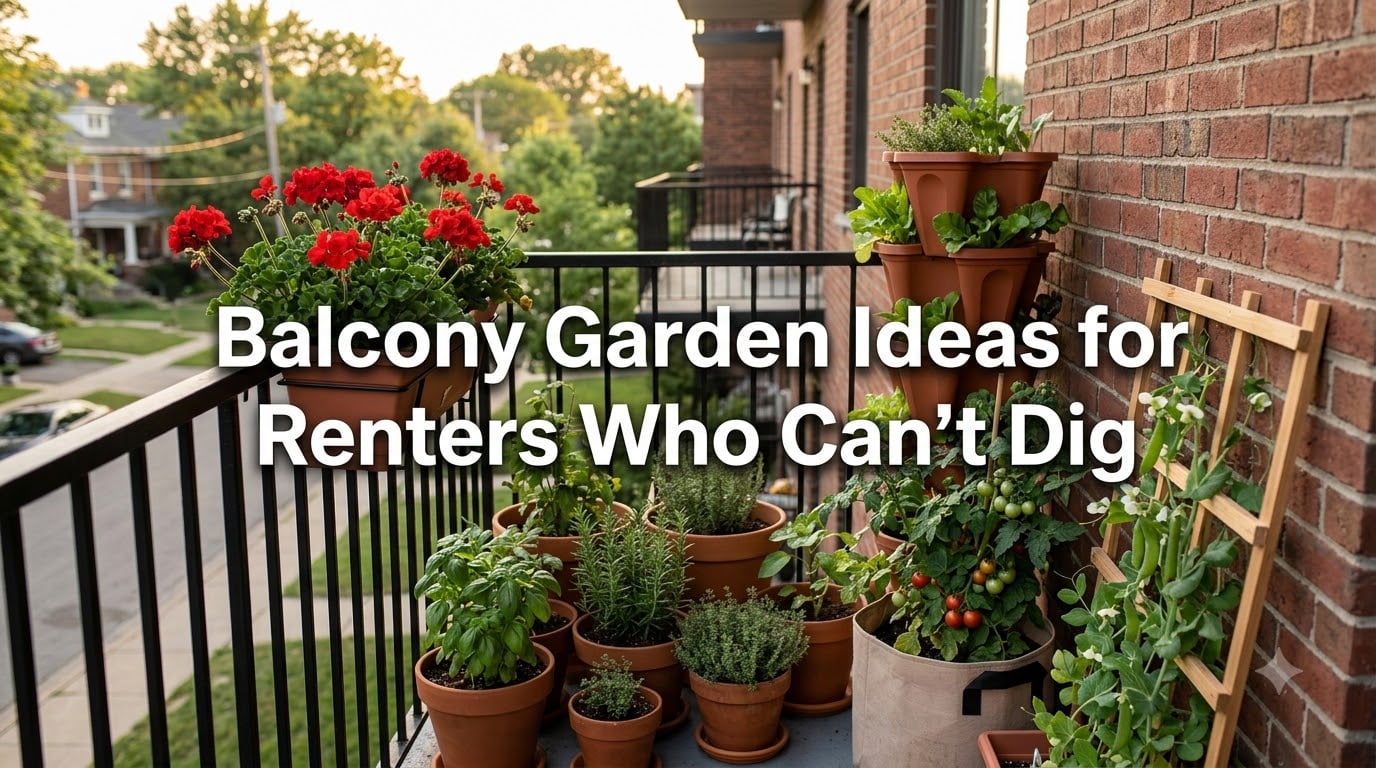
If you rent and want a garden but can’t dig, the best path forward is container and vertical gardening on your balcony. About one in three Americans rents, and most leases restrict ground disturbance or permanent changes – but a balcony garden built with freestanding pots, railing planters, grow bags, and pocket towers gives you herbs, vegetables, and flowers without risking your security deposit. This guide covers the exact setups that work, the plants that thrive by sun exposure, and the renter-proof rules I wish I’d known sooner.
I’ve spent the last three seasons testing these methods on my own third-floor balcony, and I pulled in advice from urban gardening forums where renters swap notes on what actually survives a lease. Everything below is designed so you can leave the space cleaner than you found it – which is the single best argument for a sympathetic landlord.
Table of Contents
How to Make a Renter-Friendly Balcony Garden
A renter-friendly balcony garden is any setup that uses containers, vertical structures, or hanging planters instead of in-ground beds, leaves no permanent marks on railings or floors, and can be packed into a car on moving day. The rule is simple: if you can’t lift it and take it with you, it’s not really a renter garden.
Before you buy a single pot, run through this five-step renter checklist:
- Read your lease. Look for clauses on “alterations,” “balcony use,” and “damage.” Many leases ban drilling into railings or exterior walls but allow freestanding planters.
- Email your landlord a photo of your plan. A short message showing self-watering pots and railing planters builds goodwill and protects you if a neighbor complains.
- Map your sun. Spend one full day checking your balcony every two hours. Note which corners get morning sun, afternoon sun, or stay shaded – this decides every plant you’ll buy.
- Check the floor weight rating. Most residential balconies hold at least 60 psf (pounds per square foot), but older buildings vary. We’ll cover this in detail below.
- Plan drainage. Every container needs a drip tray to protect the balcony surface and the neighbor below.
Once you have those answers, you can confidently pick from any of the setups below without worrying about lease violations or surprise move-out charges.
Understanding Balcony Weight and Load Limits Before You Plant
Balcony weight limits are the single most common concern renters raise on gardening forums, and most blog guides skip it entirely. A typical residential balcony is engineered to hold 60 psf (pounds per square foot), which sounds like a lot until you remember that wet potting mix weighs about 75 lbs per cubic foot – one big planter can weigh more than a small adult.
Here is how to keep your balcony safely under its load rating:
- Use lightweight potting mixes. Mix equal parts regular potting soil with coconut coir or perlite. This cuts wet weight by roughly 30 percent compared to standard bagged soil.
- Choose fabric grow bags over ceramic pots. A 5-gallon fabric grow bag weighs about 2 lbs empty; the same volume in ceramic clocks in at 25 lbs or more.
- Distribute weight. Spread containers across the floor rather than clustering them in one corner. Concentrated point loads stress the slab more than spread-out weight.
- Skip stone or concrete planters. They look great but double or triple the weight of a comparable plastic pot.
- Ask your building manager. If your balcony is cantilevered (sticks out from the building with no support below), ask management for the rated capacity before adding anything heavy.
For a 50-square-foot balcony at 60 psf, you have about 3,000 lbs of safe capacity. Even a dense container garden rarely uses more than 10 percent of that, so don’t panic – just choose materials wisely and avoid filling five-gallon ceramic pots with garden soil.
Container and Grow Bag Gardening Basics
Container gardening is the foundation of every renter-friendly balcony setup. You grow plants in pots, planters, or fabric bags filled with potting mix – no ground contact, full portability, and complete control over soil quality. It’s also the easiest method for beginners because you can rearrange your layout every season.
The three rules that make container gardens succeed on balconies:
- Match container size to the plant. Herbs and salad greens need at least 6 inches of depth. Tomatoes, peppers, and compact vegetables need 12 inches or more. Anything shallower and the roots fail fast.
- Use potting mix, never garden soil. Garden soil compacts in pots and suffocates roots. A peat- or coir-based potting mix with perlite drains freely and stays light.
- Always include drainage. Every container needs holes in the bottom and a drip tray underneath. Skip the gravel layer myth – it actually raises the water table and causes root rot.
Grow bags deserve a special mention for renters. They’re made of breathable material that air-prunes roots, preventing the circling that happens in plastic pots. They’re also collapsible – empty, a 5-gallon grow bag folds flat and fits in a kitchen drawer. That’s the move-out advantage ceramic planters can never match.
If you’re just starting out, begin with three containers: a 12-inch pot for a tomato or pepper, a 10-inch railing planter for salad greens, and a small herb trio (basil, thyme, parsley) in a single wide pot. That fits on most balconies and gives you a harvest within weeks.
Vertical Gardening Options for Tight Spaces
Vertical gardening uses structures – pocket planters, towers, trellises, or railing-mounted boxes – to grow plants upward instead of outward. For renters with small balconies, vertical setups can triple your growing space without adding a single square foot of floor load. They also create privacy screens and soften harsh balcony railings.
Here are the four vertical options that work best in rental situations:
Pocket Planters and Felt Walls
Hanging pocket planters attach to a single railing or wall with removable hooks or freestanding frames. Each pocket holds one to three plants. They’re ideal for shallow-rooted crops like lettuce, herbs, strawberries, and trailing flowers. The downside is they dry out fast and need frequent watering – pair them with a self-watering base if you can.
Vertical Garden Towers
Stackable planters tower three to five feet tall and hold a dozen or more plants in a footprint the size of a single large pot. Freestanding models don’t need to be attached to anything, making them perfect for renters. They’re heavier than pocket planters but grow more food per square foot than any other option.
Trellises and Climbing Supports
A simple trellis leans against a wall and supports climbing plants like peas, pole beans, cucumbers, and flowering vines. Choose a freestanding A-frame trellis – it sits in a planter at the base, needs no drilling, and comes down in 60 seconds. Trellised plants also create natural shade for lower-light crops underneath.
Railing Planters
Railing boxes hook over balcony railings without any tools or screws. They’re available in 2-foot, 4-foot, and adjustable lengths and work for herbs, salad greens, and trailing annuals. Just verify your railing width before buying – most are 2 to 4 inches, but older buildings sometimes run wider.
My favorite renter setup combines all four: a railing planter for herbs, a single vertical tower against the wall, one A-frame trellis for climbing peas, and a few standalone pots for tomatoes. That fills a 6-by-8-foot balcony without ever touching a drill.
Plant Picks by Sun Exposure
The fastest way to kill a balcony garden is to pick the wrong plant for your light conditions. A south-facing balcony in summer gets six or more hours of direct sun – perfect for tomatoes but murder on ferns. A north-facing balcony gets mostly indirect light – ideal for shade-tolerant plants, brutal for peppers.
Use this table to match plants to what your balcony actually offers:
| Sun Exposure | Edibles | Flowers & Foliage | Herbs |
|---|---|---|---|
| Full Sun (6+ hours direct) | Cherry tomatoes, peppers, compact cucumbers, strawberries, bush beans | Calibrachoa, dwarf zinnias, marigolds, salvia, lantana | Basil, rosemary, thyme, oregano, sage |
| Partial Sun (3-6 hours) | Salad greens, radishes, compact kale, chard, snap peas | Petunias, impatiens, begonias, fuchsia, nasturtiums | Parsley, chives, mint, cilantro, lemon balm |
| Shade (less than 3 hours) | Microgreens, lettuce, spinach, mustard greens | Ferns, pothos, coleus, hostas, heuchera | Parsley, chives, mint, lemon balm |
When in doubt, start with herbs and salad greens – they tolerate a wider range of conditions than fruiting vegetables and give you quick wins that build confidence. A north-facing balcony can still grow an entire salad garden in containers; it just won’t grow tomatoes.
For high-rise balconies above the fifth floor, also factor in wind. Stick to compact, sturdy plants with flexible stems: succulents, ornamental grasses, lantana, and most herbs handle gusts far better than tall flowers or top-heavy vegetables.
Watering Tips for Balcony Gardeners
Balcony pots dry out faster than in-ground beds because air circulates on all sides. In summer, a small container can need water twice a day; in winter, much less. The two biggest renter pain points are underwatering while traveling and overwatering onto the neighbor below.
These solutions solve both:
- Self-watering planters. A built-in reservoir wicks water up to the roots over several days. Most hold enough for a long weekend away.
- Drip trays under every pot. A simple plastic saucer catches runoff and protects the balcony floor and the neighbor below. Empty them after heavy rain.
- Watering globes and spikes. Glass globes or terracotta spikes slowly release water over 5 to 14 days. Cheap and reusable, perfect for renters who travel.
- Group pots by water need. Put thirsty plants together so you water them all at once. Drought-tolerant herbs like rosemary and thyme can sit together in a drier corner.
- Water in the morning. Less evaporates, and leaves dry before evening, which prevents fungal problems.
If you travel often, ask a neighbor or friend to check in once during long trips. A simple “water if soil is dry to the touch” instruction is all they need. Some renters also set up a cheap drip irrigation kit on a battery timer – it screws onto any standard faucet adapter and waters automatically for a week.
Wind, Pollinators, and High-Rise Balcony Tips
Wind is the invisible killer of high-rise balcony gardens. Above the fifth floor, sustained 15 mph winds are common, and gusts can snap stems, shred leaves, and dry out soil in hours. The fix isn’t to fight the wind – it’s to choose plants that thrive in it.
Wind-tolerant plant picks for high-rise balconies include lantana, ornamental grasses, sedum, succulents, salvias, lavender, and most Mediterranean herbs. Avoid anything with large soft leaves (hostas, basil in exposed spots) or tall fragile stems (dahlias, sunflowers).
A few physical windbreaks help too. A short trellis with climbing nasturtiums or sweet peas breaks gusts without blocking your view. A fabric privacy screen clipped to the railing cuts wind by half and adds a pollinator food source in one move.
Pollinator-friendly plants matter more than most renters realize. Even a small balcony with lavender, salvia, and calendula feeds bees and butterflies in cities where green space is scarce. Choose single-petal varieties over doubles – bees can’t reach the pollen in heavily bred “show” flowers. Mint, thyme, and oregano also bloom with flowers bees love, and you get herbs for cooking.
Moving With Your Garden and Leave-It-Better Tips
The beauty of a renter balcony garden is that it can travel with you. Fabric grow bags empty and fold flat. Plastic pots stack inside each other. Railing planters lift off in seconds. The only thing that needs careful packing are the plants themselves.
On moving day, follow this simple routine:
- Water plants the night before so they arrive hydrated.
- Wrap pots in plastic bags or old towels to keep soil contained.
- Pack tall plants upright in boxes with stakes for support.
- Empty soil from large planters – it weighs more than the pot itself.
- Label everything so you remember what was growing where.
Before you move out, do a quick leave-it-better sweep of the balcony. Sweep up soil, rinse the floor with a mild soap solution, wipe down railings, and remove any hooks or tape you added. Landlords remember tenants who left the balcony cleaner than they found it – and that’s often the difference between a full security deposit return and a partial one.
One last thought: a balcony garden doesn’t need to be permanent to be meaningful. A season of basil on your windowsill, a single tomato plant in a grow bag, a railing box of marigolds – any of these makes a rental feel a little more like home, and that’s worth more than any fancy planter.
Frequently Asked Questions
What are some good ways to grow a container garden on my balcony?
Start with three containers: a 12-inch pot for a tomato or pepper, a 10-inch railing planter for salad greens, and a wide pot for a herb trio like basil, thyme, and parsley. Use potting mix rather than garden soil, place a drip tray under every pot, and match each plant to the sun exposure your balcony actually receives.
How do I make a renter-friendly balcony garden?
Choose freestanding pots, railing planters, grow bags, and vertical pockets that lift off without tools. Read your lease for balcony and alteration clauses, email your landlord a photo of your plan, map your sun exposure across a full day, check the floor weight rating, and add a drip tray under every container to protect the surface and neighbors below.
What potted plants are good for a balcony?
Match plants to your sun exposure. Full sun balconies grow cherry tomatoes, peppers, basil, rosemary, and marigolds. Partial sun grows salad greens, parsley, chives, and petunias. Shaded balconies grow ferns, pothos, coleus, lettuce, microgreens, spinach, and mint. Herbs and salad greens are the easiest starting point because they tolerate a wider range of conditions.
What are some good ideas for planters for a balcony?
Use fabric grow bags for lightweight, collapsible containers that fold flat on moving day. Add railing planters that hook over without tools. Set a tower planter against the wall for high-density growing. Lean a freestanding A-frame trellis for climbing peas and cucumbers. Combine all four to fill a small balcony without drilling a single hole.