
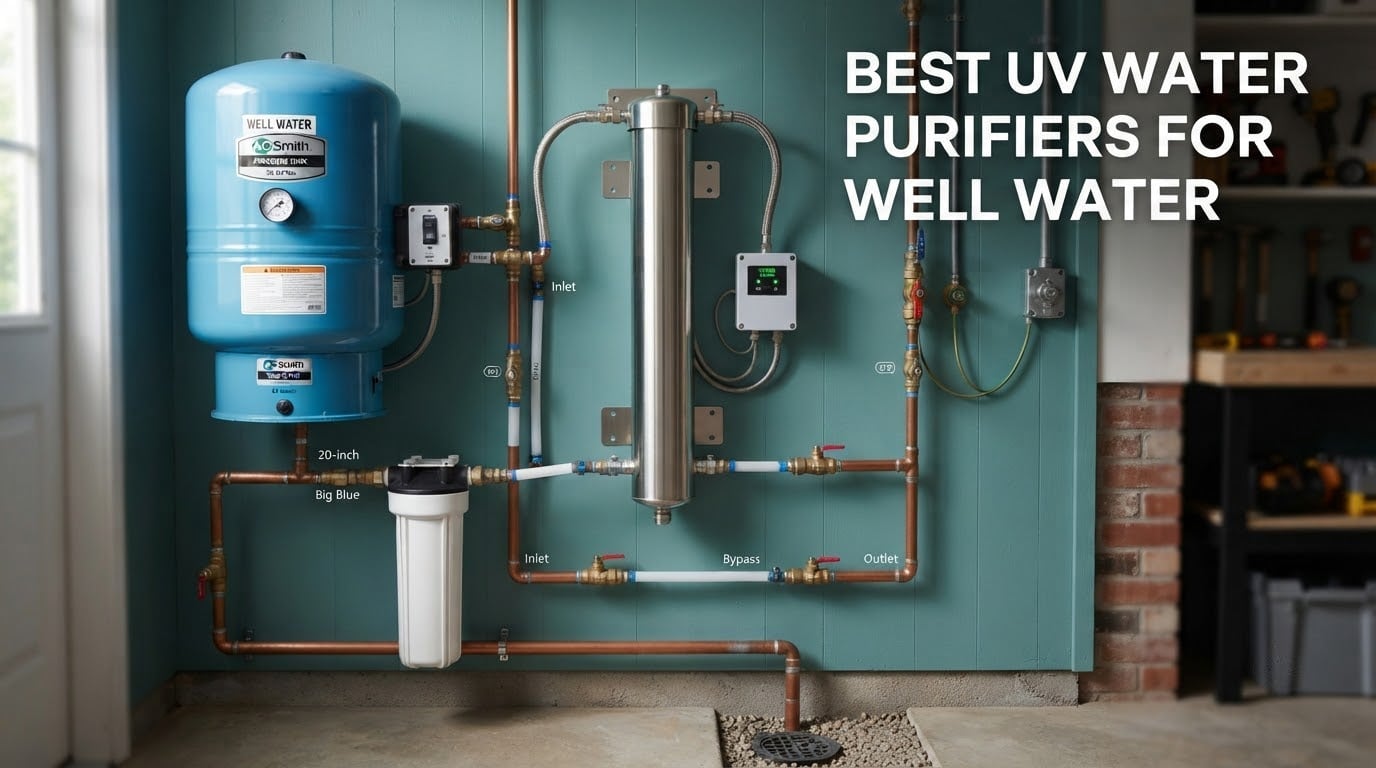
If you take the short answer: the Aquasana WH-Well-CT-UVS is the best UV water purifier for well water we tested, because it is the only system in this roundup carrying third-party NSF/ANSI Standard 55 certification and it bundles pre-filter, conditioner and post-filter stages around the UV chamber. For a standalone disinfection-only unit, the iSpring UVF55FS is the better buy.
Private well water is not regulated the way municipal supply is, and it can pick up total coliform, E. coli, Giardia or Cryptosporidium from a cracked casing, a nearby septic field, or surface water entering the well after heavy rain. Those pathogens walk straight through sediment and carbon filters. A UV chamber is the last line of defense in the train, and it only works if the water reaching it is already clear.
We spent weeks comparing the eight most-reviewed whole house UV systems sold for well water, weighing them on UV dose, rated flow rate, certification, chamber material, alarm and sensor features, warranty, and what replacement parts cost over ten years. Every specification in this guide comes from the manufacturer data and buyer feedback attached to each system, not from marketing copy alone.
Two things to know before you buy. First, UV disinfects; it does not filter, soften, or demineralize, so a sediment and iron pre-filter ahead of the chamber is mandatory, not optional. Second, UV leaves no residual protection, so water sitting in a storage tank or a long pipe run after the chamber is unprotected again.
Last updated: October 2026. We may earn a commission when you buy through links on this page, at no extra cost to you. This guide is for education and is not a substitute for a certified water lab test or professional plumbing advice.
Table of Contents
Top 3 Picks for Well Water UV Purification (October 2026)

Aquasana WH-Well-CT-UVS
- NSF/ANSI 55 Class B UV stage
- 20 inch pre-filter and 10 inch post-filter
- 500000 gallon rated capacity
- 5-year limited warranty

iSpring UVF55FS
- 12 GPM rated flow
- 55W lamp in 37.5 inch 304 stainless reactor
- Flow sensor switch with three modes
- 1 inch MNPT ports

HQUA-TWS-12
- 12 GPM 55W chamber
- Only 21 inches long for tight mechanical rooms
- Ships with spare lamp and sleeve
- 3/4 inch MNPT ports
These three cover the most common real-world setups. The Aquasana is a bundled whole house train that treats a well from the pressure tank to the last fixture. The iSpring is a disinfection-only chamber for a home that already has sediment and carbon filtration upstream. The HQUA is the same 12 GPM class of chamber in a body short enough to fit where a 44-inch reactor will not.
Quick Comparison of All 8 UV Systems (October 2026)
| Product | Specs | Action |
|---|---|---|
| Aquasana WH-Well-CT-UVS |
|
Check Latest Price |
| iSpring UVF55FS |
|
Check Latest Price |
| HQUA-TWS-12 |
|
Check Latest Price |
 Bluonics 55W UV 12 GPM Bluonics 55W UV 12 GPM |
|
Check Latest Price |
 Geekpure GP-UV55W Geekpure GP-UV55W |
|
Check Latest Price |
 Ronaqua RA-UV-55W-SET Ronaqua RA-UV-55W-SET |
|
Check Latest Price |
 VIQUA VH410 VIQUA VH410 |
|
Check Latest Price |
 Bluonics 110W 24 GPM Bluonics 110W 24 GPM |
|
Check Latest Price |
1. Aquasana WH-Well-CT-UVS – Best All-in-One Whole House Train
Aquasana Whole House Well Water Filter | 500K-Gallon | UV | WH-Well-CT-UVS
14.7 GPM max flow
500000 gallon rated capacity
NSF/ANSI 55 Class B UV
5-year limited warranty
Pros
- Only system here with NSF/ANSI 55 tested UV stage
- Bundles 20 inch pre-filter and 10 inch post-filter
- Salt-free scale control media avoids salt bags
- 500000 gallon capacity with 5-year filter life
- 688 reviews give the deepest owner history in the roundup
Cons
- Warranty is void on self-installation
- Plastic threaded connectors reported to leak repeatedly
- Standing filter volume makes service awkward
- Does not soften water like a salt-based softener
This is the only system in our test group whose UV stage is NSF tested and certified to NSF/ANSI Standard 55, Class B. That certification is not a formality in this category. It means an independent lab verified the delivered dose under flow, and Class B is the 16 mJ/cm2 tier used for point-of-entry disinfection on well water where you have already addressed sediment and metals.
The package is the reason most buyers end up here. You get a 20-inch pre-filter, a filtration tank with copper-zinc and carbon media, salt-free scale control media, a 10-inch post-filter, and the UV chamber, sized at 57 by 11 by 57 inches and rated to 14.7 GPM at 20 to 100 psi. The stated capacity is 500,000 gallons or five years, whichever comes first.
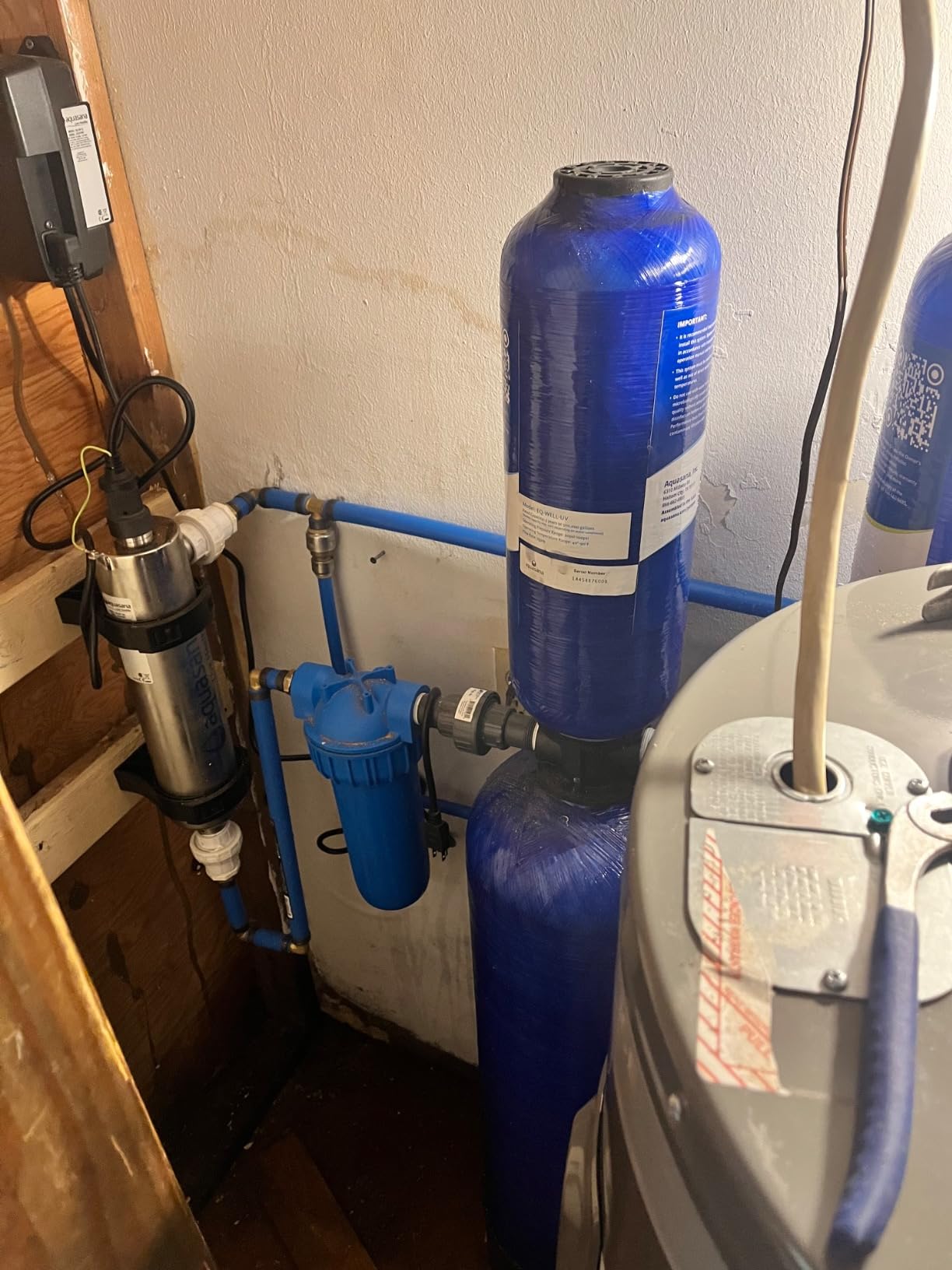
Owners consistently credit the carbon and KDF stages with cutting chlorine smell and improving taste, and the scale control media with protecting fixtures without salt bags or backwashing. Support is also singled out as responsive when parts arrive damaged, which matters when one of five tanks has to be swapped.
The 4.2 average out of 688 reviews is the largest review pool in this roundup, and the criticism is concentrated in hardware rather than treatment performance. Buyers report plastic threaded connectors leaking repeatedly, standing filter volume that is awkward to service, and fine black specks in the post-filter that need extra flushing and sometimes an additional sediment cartridge.
The water-quality boundaries are stated plainly by the manufacturer: best for hardness under 15 gpg, alkalinity under 250 mg/L, pH below 8.3, and iron under 0.3 ppm. If your well runs higher on iron, this bundle will not rescue it, and a dedicated oxidation filter belongs ahead of the whole train.
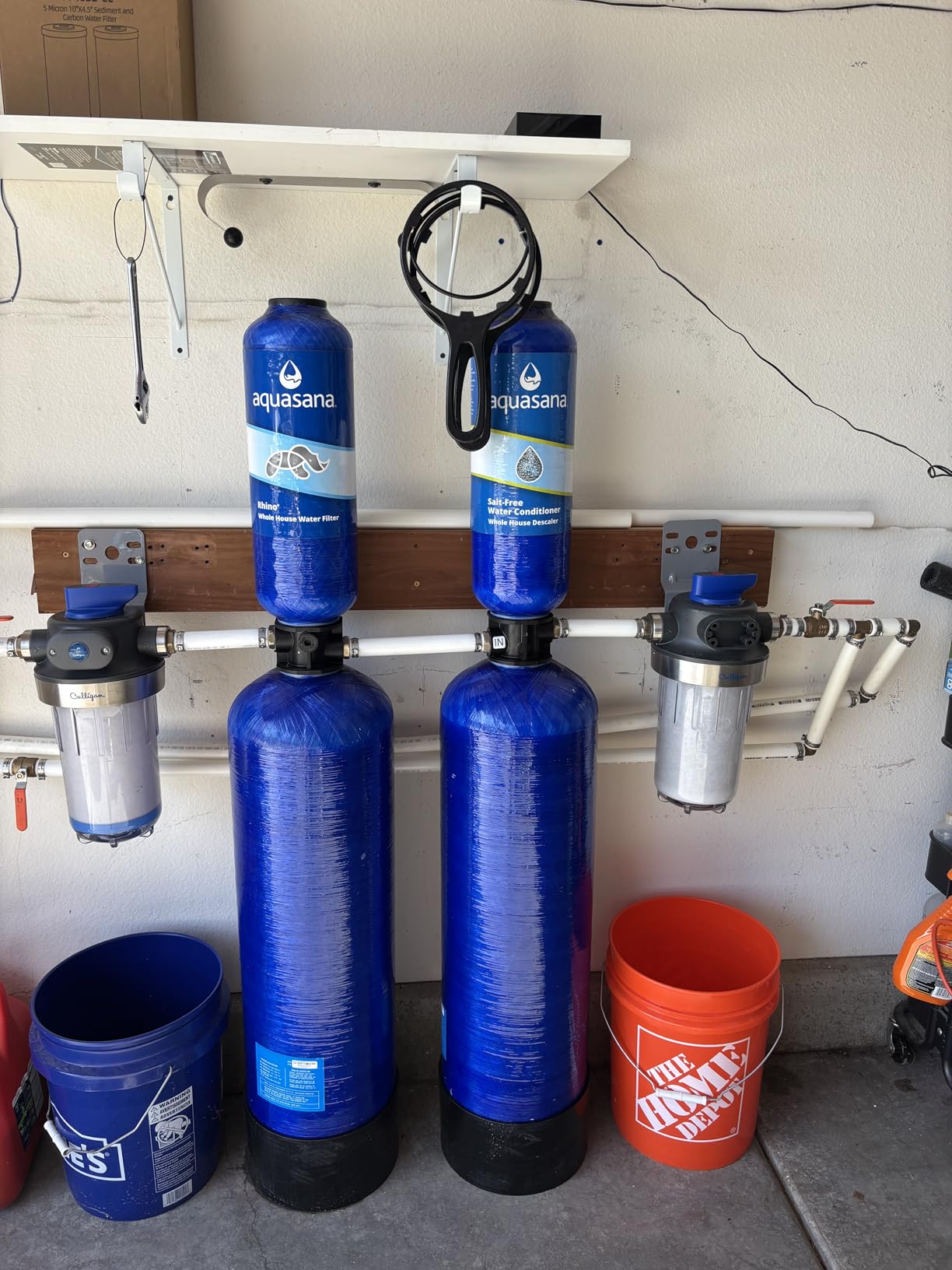
Who this system fits
A homeowner starting from raw well water who wants chlorine taste, sediment, scale and bacteria handled in one order of installation rather than sourcing four separate vendors. It is also the safest default for a household with an infant or an immunocompromised family member, because the UV stage carries independent certification rather than a self-declared claim.
Buyers installing in tight mechanical rooms report the footprint worked where larger multi-tank setups had not fit. Budget for a plumber, since the warranty does not survive self-installation, and plan to swap the plastic connectors for brass during that visit.
Where it falls short
If you already own a sediment filter and an iron filter, this bundle duplicates hardware you have. If your iron runs above 0.3 ppm, the 5-year capacity claim quietly stops applying, and you will be servicing media on a much shorter cycle.
It is also not a softener. Water at 15 gpg or higher still needs a salt-based softener downstream of the UV chamber, which means paying for two treatment trains rather than one.
2. iSpring UVF55FS – Best Value Standalone UV Chamber
iSpring UVF55FS Whole House UV Water Filter, 1″ MNPT Inlet/Outlet, 12 GPM
12 GPM rated flow
37.5 inch 304 stainless reactor
55W lamp
Smart flow sensor switch
Pros
- Flow sensor switch runs the lamp only when water moves
- 37.5 inch 304 stainless reactor gives long dwell time
- 12 GPM through 1 inch MNPT ports with low pressure loss
- Mounting clips included for straightforward install
- Chemical-free with no change to taste or pH
Cons
- Needs annual lamp changes and sleeve cleaning
- Must follow sediment and carbon filtration rather than replace it
- Quartz sleeves and lamps are fragile in shipping
At 4.4 stars across 615 reviews, this is the highest-confidence disinfection-only chamber in the group. The 55W lamp sits inside a 37.5-inch 304 stainless steel reactor, which is the geometry that buys contact time, and the chamber is rated to 12 GPM through 1-inch MNPT connections with minimal pressure loss.
The feature that separates it from cheaper 12 GPM boxes is the ballast. A smart flow sensor switch offers Auto, Move and Stop modes and only energizes the lamp at or above 0.66 GPM. On a well that produces water intermittently, that translates directly into lamp hours saved, and lamp hours are the main cost of ownership here.
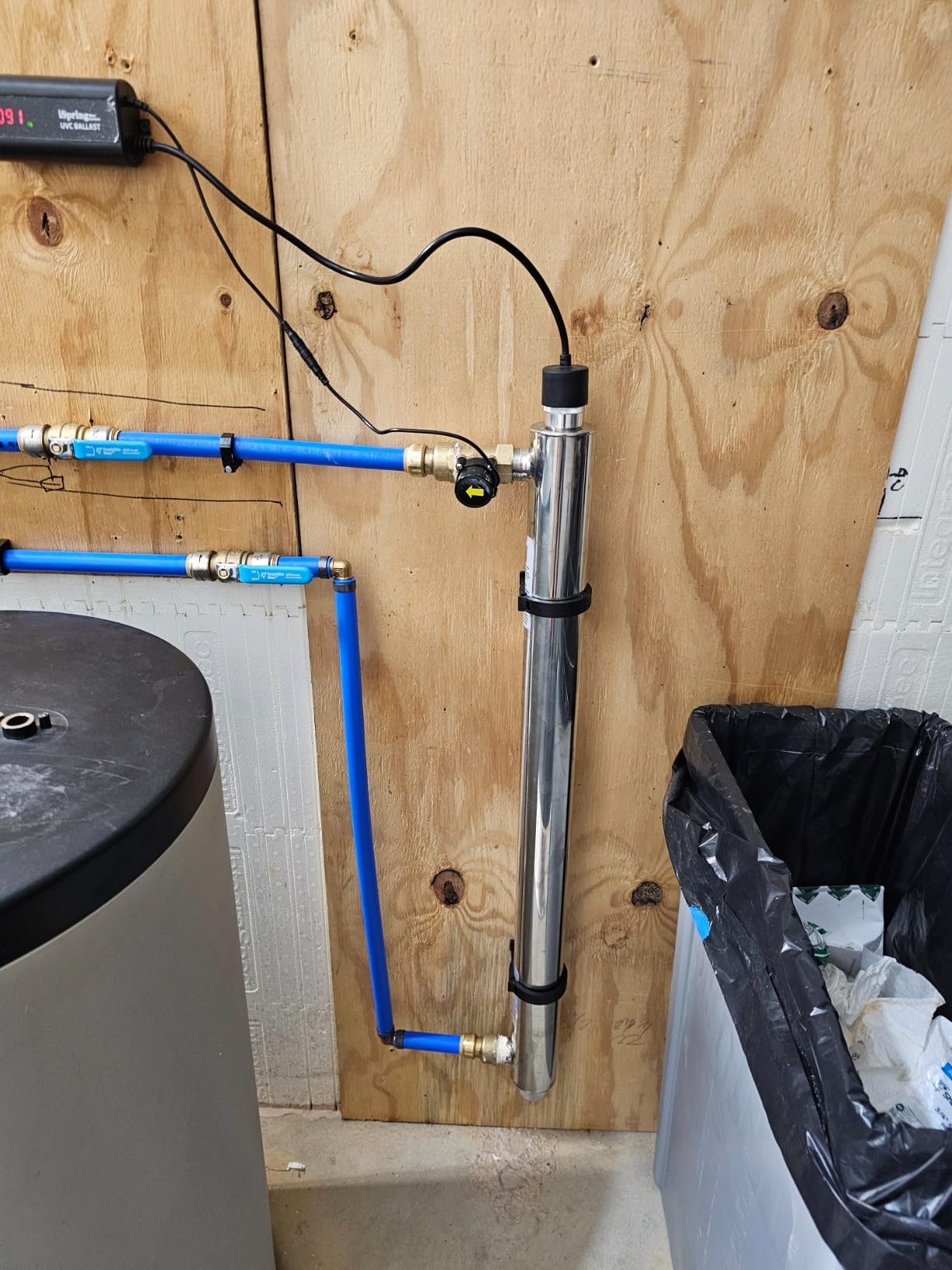
Roughly three quarters of the reviews are five star, and the recurring theme is a straightforward install with strong stainless construction. Rated capacity is listed at 17,280 gallons per day, lamp life up to 9,000 hours, and the unit weighs 7.5 pounds at 40 by 8 by 8 inches, which is easy to wall-mount beside a pressure tank.
Support terms are worth reading before you buy. The listing carries a 30-day money-back guarantee, a one-year manufacturer warranty with an extended warranty available on registration, and lifetime technical support. That is a different structure from a five-year limited warranty, so check the registration step and put the renewal date in a calendar.
The caveat owners raise most is placement. This is a final polish stage, not a standalone well purifier, and it does nothing to sediment, iron or hardness. Install it after your filters, and never as a replacement for them.
Sleeve condition drives real-world performance. The manufacturer recommends annual lamp replacement and quartz sleeve cleaning every 6 to 12 months, and reviewers treat the annual change as routine upkeep rather than a defect, which is the right way to approach it.
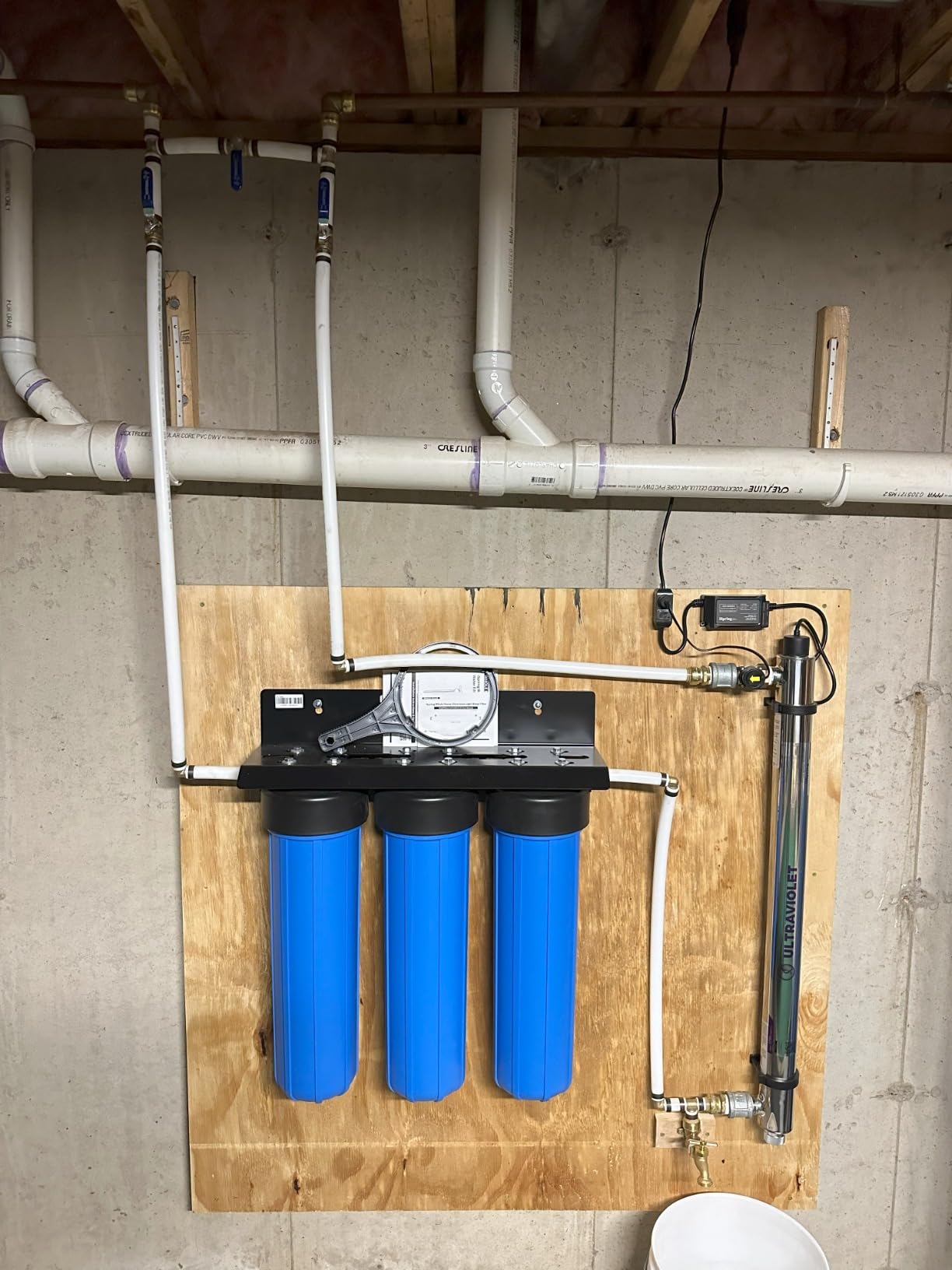
Who this system fits
A homeowner with an existing sediment and carbon train who now wants pathogen protection, and who wants the lamp to stop burning when no water is moving. The 12 GPM rating covers a typical three to four bedroom home, and the 1-inch ports match most existing plumbing without reducers.
It also suits anyone planning to add filtration later, since this chamber can move downstream as the train grows. The included mounting clips mean the install is a weekend job for anyone comfortable cutting pipe and taping threads.
Where it falls short
If your well has never been tested, this is the wrong first purchase. Iron and sediment will scale the quartz sleeve within months, and the lamp life and dose numbers on the box stop meaning anything once the sleeve clouds over.
There is also no stated third-party certification in the listing. You are trusting the manufacturer’s flow and dose claims, which is a reasonable bet at 615 reviews but not the same as a certified system.
3. HQUA-TWS-12 – Best Compact Install for Tight Mechanical Rooms
HQUA-TWS-12 Ultraviolet Water Purifier Filter for Whole House Water Purification,12GPM 120V, 1 Extra UV Lamp + 1 Extra Quartz Sleeve
12 GPM 55W chamber
Only 21 inches long
3/4 inch MNPT ports
Spare lamp and sleeve included
Pros
- Shortest chamber in the roundup at 21 inches
- Retains a 12 GPM 55W rating
- Includes a spare UV lamp and quartz sleeve
- 304 stainless chamber
- Leaves taste odor pH and conductivity unchanged
Cons
- Default 3/4 inch ports need fittings for 1 inch plumbing
- Annual lamp and sleeve maintenance required
- Effective only downstream of pre-filtration
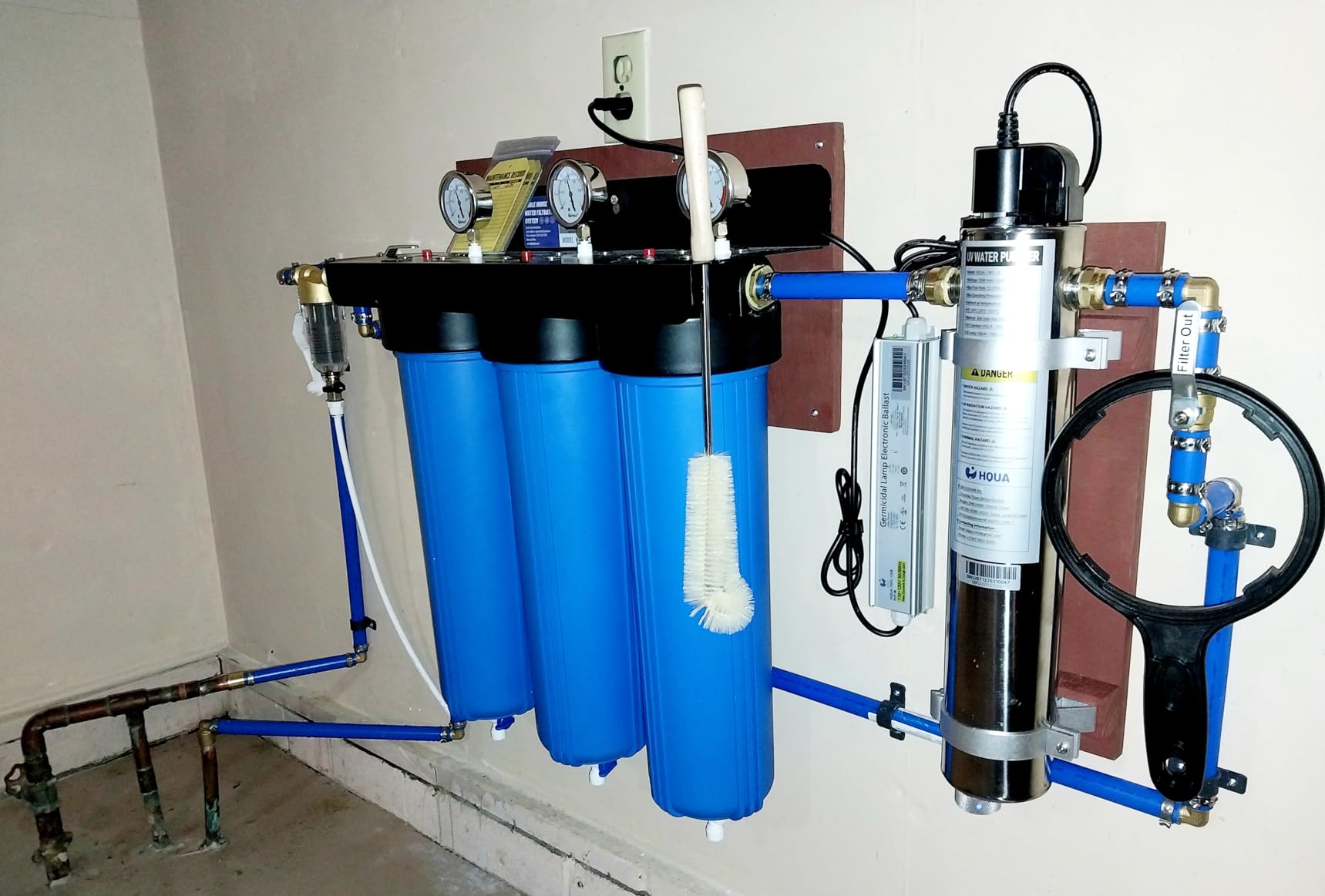
Every other 12 GPM chamber in this roundup runs 36 to 44 inches long. The HQUA is 21 inches by 3.5 inches, a footprint buyers describe as an easy retrofit where a full-size Big Blue style housing will not physically fit. Rated 12 GPM with a 55W bulb in a 304 stainless body, the specs are not reduced in any way that matters to water quality.
At 4.4 stars from 547 reviews, the size advantage has clearly landed. Owners installing into existing whole house plumbing call out the included spare lamp and spare quartz sleeve, plus the supplied manual, as the reason the install went smoothly. The bulb is rated at 9,000 hours, and the upper temperature rating of 140 degrees F is the highest stated here.
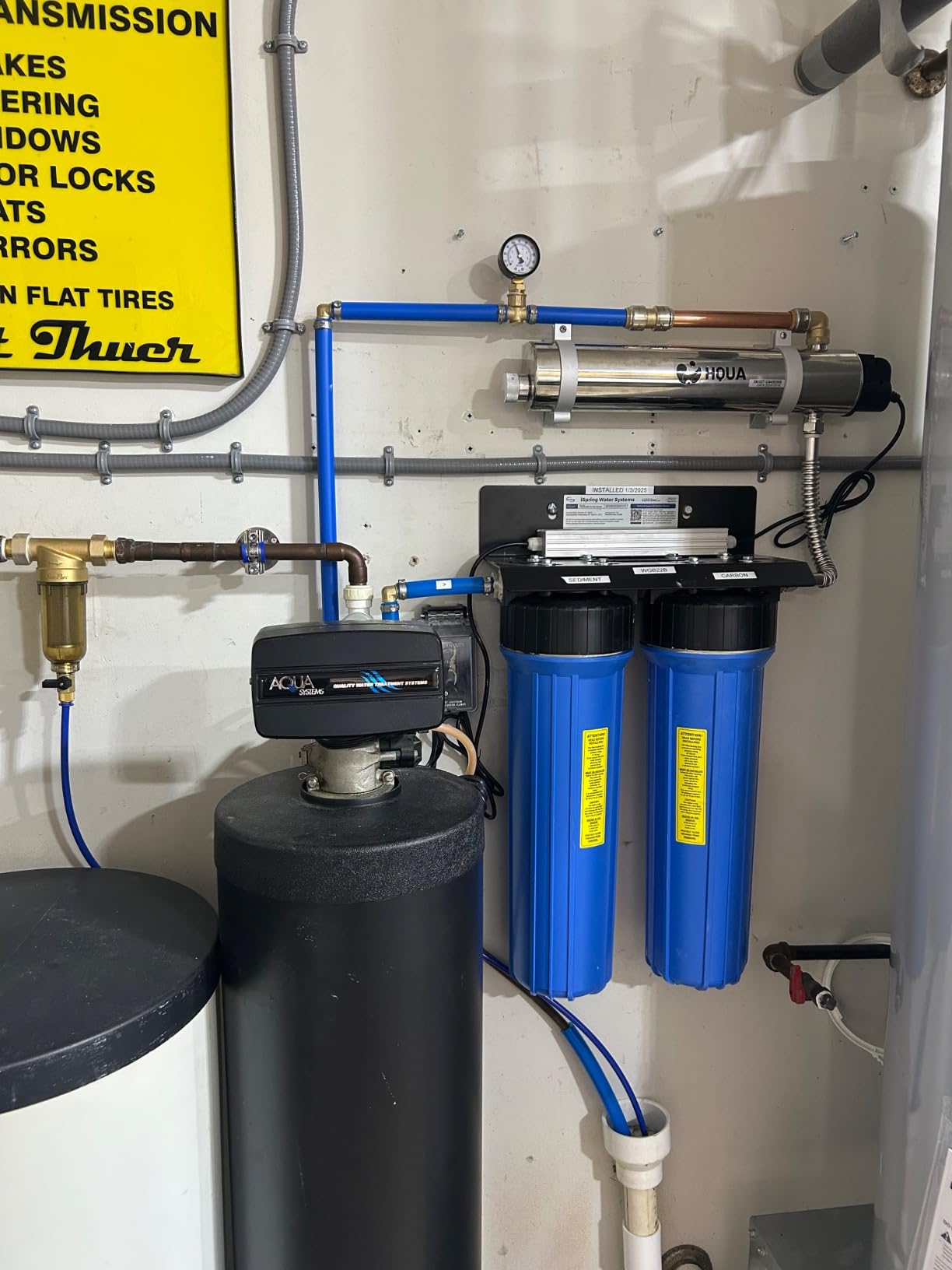
Two details catch people out. The standard fitting is 3/4 inch MNPT, so a home plumbed in 1-inch copper or PEX needs adapters or the alternate port variant. And like every other system in this guide, it treats only biological contamination. Sediment, iron, hardness and chemicals all require a stage ahead of it.
The included components list is genuinely complete for a first install: 304 stainless chamber, two UV bulbs, one quartz sleeve, one electronic ballast, two plastic bracket holders and o-rings. Spare parts are listed as available for 12 months, which is the shortest window in the group and worth factoring in if you are planning well beyond a year.
No warranty length is stated in the listing, so treat long-term support as unconfirmed and keep your own records of install dates and lamp changes. Manufacturers in this category usually answer warranty questions through the retail account rather than a published policy.
Who this system fits
Anyone replacing an aging inline UV unit where vertical space is the constraint, or a cottage with a cramped pump house. The short chamber also means a longer straight run of pipe is not required, which keeps installation inside a single afternoon.
Budget owners who want the spare lamp and sleeve included up front will also appreciate not needing a second order in year one. Just confirm your port size before buying, because that is the single complaint that shows up repeatedly.
Where it falls short
If your existing plumbing is 1 inch, the default fittings mean extra parts and a slightly larger installation footprint. And with a 21-inch chamber you trade away some dwell time margin, so keep the flow restrictor set below the rated maximum if your household has heavy simultaneous demand.
The 12-month spare parts window and unstated warranty make this a weaker choice than the iSpring for anyone who plans to keep a system for a decade.
4. Bluonics 55W UV 12 GPM – Best for Audible Lamp Monitoring
Whole House UV Water Filter System 12 GPM – 55W Stainless Steel UV Light System – LED Indicator & Audible Alarm – for Well & City Water – Includes 2 Extra Bulbs – Bluonics
12 GPM 55W lamp
LED status indicator plus audible alarm
3/4 inch NPT
2 spare bulbs included
Pros
- Audible alarm and LED status indicator
- Lamp and ballast kit plus two spare bulbs included
- Rated to 125 psi with sealed components
- Clear step-by-step installation instructions
- Cotton gloves supplied for handling the lamp
Cons
- Quartz sleeve can sit short of the end cap O-ring and leak
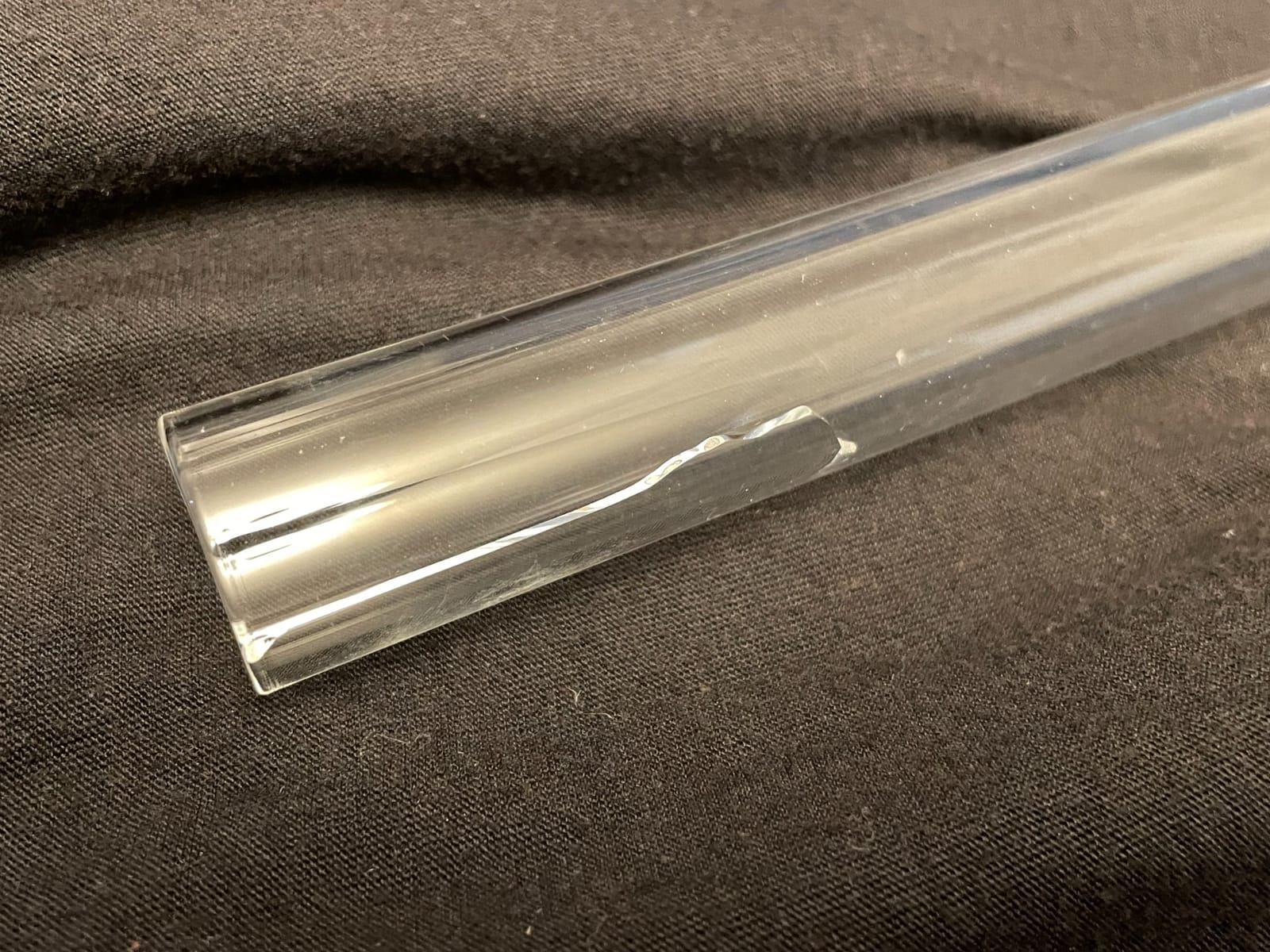
- Some sleeves crack where the bulb seats
- Ballast failures reported after extended use
- LED indicator has shown red with a working bulb
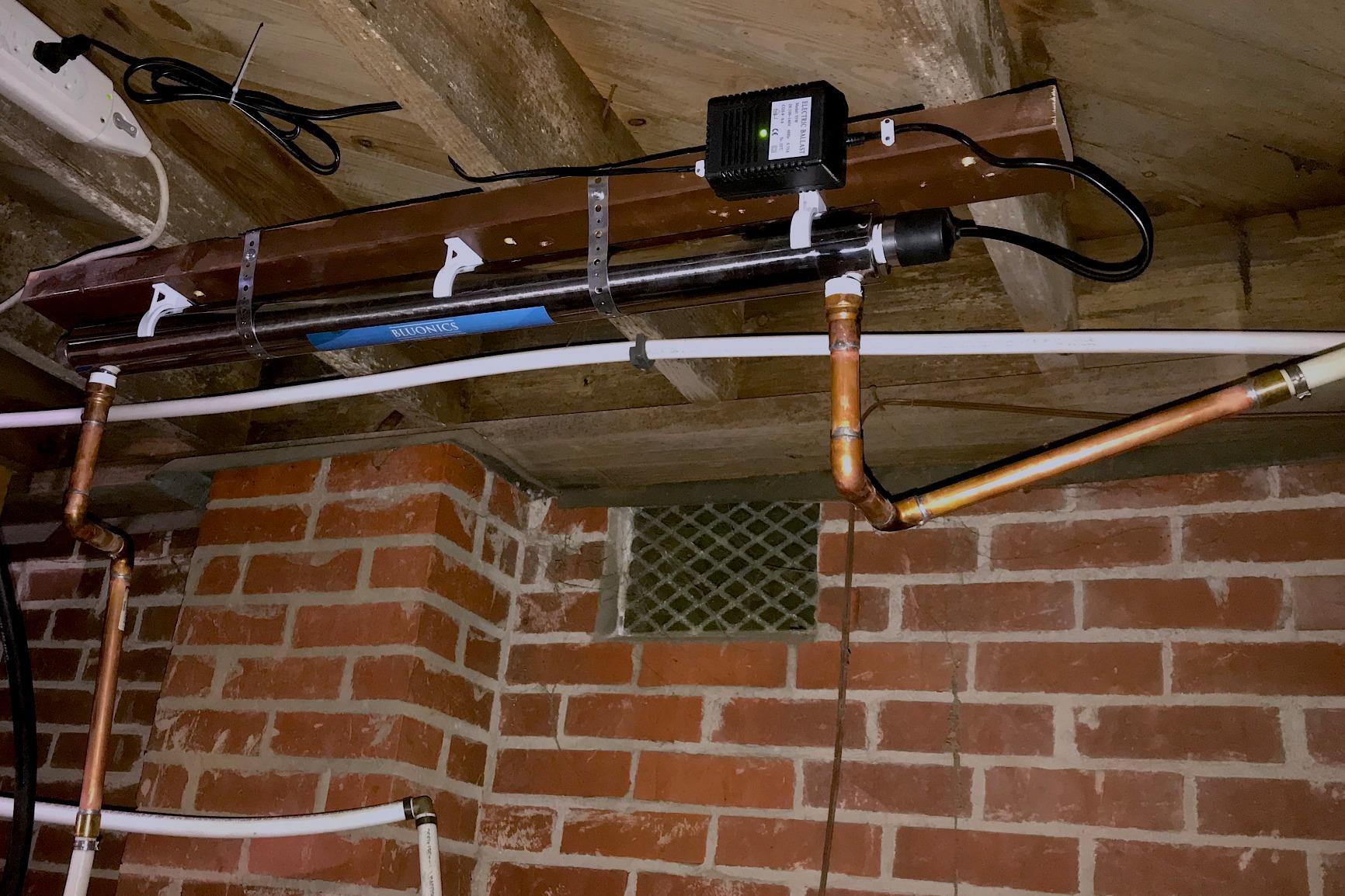
The distinguishing feature here is the alarm. This 55W chamber in a stainless steel body rated to 12 GPM carries both an LED status indicator and an audible alarm, so a lamp that stops producing output does not fail silently. That matters more than it sounds, because UV output declines long before a bulb visibly fails.
Well owners who tested before and after installation report going from positive coliform or E. coli to clear, and they highlight the two spare bulbs and the simplicity of the setup. Connections are standard 3/4 inch NPT, and the kit includes the chamber, ballast, lamp, quartz sleeve, o-rings, cotton gloves and mounting hardware.
Operating range is 35 to 104 degrees F at pressures up to 125 psi, and the listing states support for water up to 2,000 ppm TDS, the highest figure in the group. Warranty is one year from the manufacturer and the filter life cycle is listed at 12 months.
The 4.3 average from 197 reviews comes down to mechanical complaints rather than treatment results. The most repeated is a quartz sleeve that does not quite reach the end cap O-ring, which causes end cap leaks, followed by sleeves cracking in service at the end where the bulb seats, and eventual ballast or transformer failures.
A minority of buyers also describe the LED indicator showing red even with a working replacement bulb, and a few mention slow support responses. Treat the alarm as an early warning system rather than a diagnostic tool, and confirm lamp output with a water test rather than trusting the light alone.
Who this system fits
Households that have been burned by a silent failure. If you travel regularly, own a second home, or simply do not want to discover a dead lamp a year after the last water test, the audible alarm is the feature that justifies choosing this over a quieter chamber of the same class.
The two included spare bulbs also stretch the first year of ownership nicely, and the 125 psi pressure rating gives headroom on wells with a high static lift.
Where it falls short
Buyers planning long-term reliability should read the sleeve and ballast complaints carefully, because those are the components that end a unit’s life. If a sleeve has to be replaced every couple of years, that changes the ten-year ownership math in a way the sticker price does not suggest.
It also carries less review history than the three systems above it, so the failure pattern is less well documented and you are committing less of your decision to real data.
5. Geekpure GP-UV55W – Budget Pick with the Best Spare Parts Bundle
Geekpure 12 GPM Whole House UV Water Filter-1“NPT-55 Watt
12 GPM 55W lamp
1 inch NPT ports
304 stainless chamber
3 lamps and 3 sleeves included
Pros
- Three lamps and three quartz sleeves in the box
- 1 inch NPT ports match most plumbing
- ISO9001 certified maker and WQA member
- Simplest lamp and sleeve change design reviewed
- Lowest entry point in this roundup
Cons
- Sleeves and lamps have arrived cracked more than once
- Supplied mounting clips are weak
- Chamber gets hot during long periods of non-use
- Coarse 1 inch threads leak without careful taping
This 12 GPM, 55W chamber in 304 stainless steel is the entry point of the group, and the box is unusually generous. You get three UV lamps and three quartz sleeves, so the first three years of lamp changes are covered before you order anything again. The electronic ballast provides both audible and visual alarm.
Operating specs are tighter and more clearly stated than most listings in this category: 10 to 60 psi range with a 50 to 60 psi working window, 40 to 110 degrees F, free chlorine tolerance below 0.1 ppm, and a minimum lamp life of 9,000 hours or about one year of continuous operation. The manufacturer is ISO9001:2015 certified and a Water Quality Association member with over 20 years in the business.
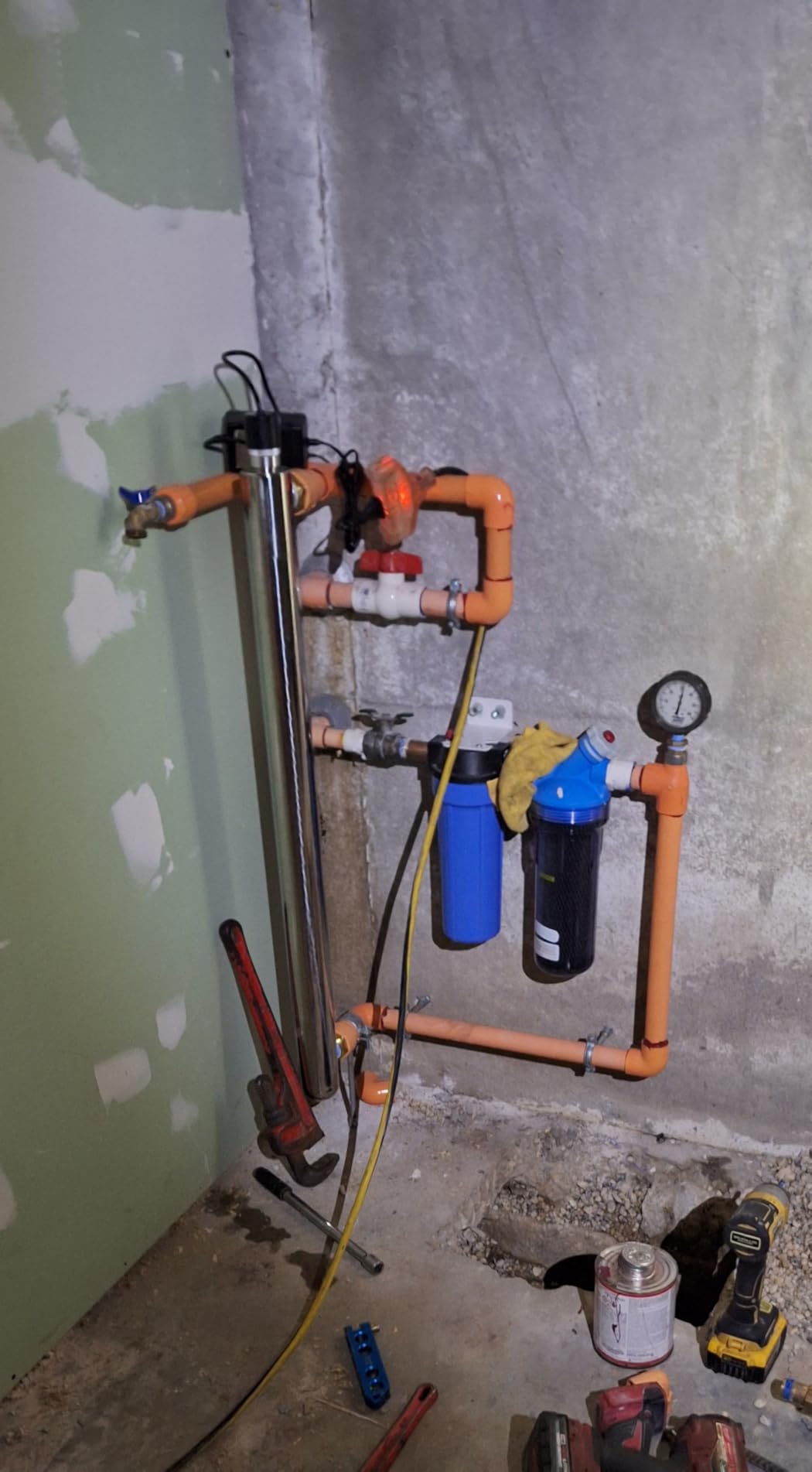
Reviewers with coliform-positive well water report tests coming back clean once the full train was in place, and several describe the same lamp and sleeve change procedure as the easiest of the 12 GPM units we reviewed. One year of warranty is the stated coverage, with spare parts listed as available for two years.
The 4.4 rating sits alongside genuinely consistent feedback about value, with owners saying it performs comparably to costlier brands. That is a credible claim given the manufacturer history, but the certification story stops at the corporate level. There is no stated NSF/ANSI 55 testing for the delivered UV dose.
Manufacturer guidance is explicit on placement: UV alone cannot treat raw well water, so this must be a final stage after other filtration. If you are still building a train, that is not a flaw in the unit, it is the correct engineering opinion.
Hardware is the weak point. Sleeves and lamps have arrived cracked more than once, the supplied clips are too weak to hold a 44-inch chamber indefinitely, and the 1-inch NPT threads are coarse enough to need careful retaping. Budget for extra pipe straps and a good roll of thread tape.
Who this system fits
A first-time UV buyer who wants the lowest sensible way into pathogen protection and who will install it as the last stage of an existing filtration train. The three-lamp, three-sleeve bundle means no consumable orders for three years, which softens the low purchase price considerably.
It is also a sensible second UV chamber for a property with a detached cottage or shop well, since the parts bundle scales to that use.
Where it falls short
No third-party dose certification means you are relying on the manufacturer’s own flow and lamp claims, and the operating pressure window is narrower than units rated to 125 psi. Check your actual well pressure before committing.
Owners also report the chamber running hot during long periods of non-use, which can warm water sitting in the line. On a well that draws only occasionally, that is worth designing around.
6. Ronaqua RA-UV-55W-SET – Best for Direct PEX Connections
Ronaqua 55W Whole House UV Light Water Purifier, 12 GPM, 3/4” MNPT Ports – Includes 2 Free Replacement Bulbs, Long-Lasting Performance, Ideal for Well & City Water
12 GPM 55W lamp
3/4 inch MNPT ports
36 inch slim chamber
3 UV lamps included
Pros
- 3/4 inch ports connect to standard PEX without adapters
- Slim 36 inch chamber
- Owners report coliform dropping from failing to absent
- One long-term owner reports 14 months of trouble-free service
- Adds nothing to the water except UV light
Cons
- Ballast and transformer failures reported after about nine months
- Bulbs and sleeves have arrived broken or missing
- Stated maximum TDS of 300 ppm is the lowest here
- Vendor warranty support described as limited
If your treatment train is plumbed in 3/4 inch PEX, this is the least fussy install in the roundup. The 3/4 inch MNPT inlet and outlet connect directly to standard residential plumbing without adapters, and the 36-inch chamber is slim enough to tuck alongside a pressure tank without a wall bracket project.
Owners who installed it after a whole house filter report improved taste and successful coliform remediation, with several noting that the port sizing avoided adapters entirely. Three UV lamps ship in the set, along with the quartz sleeve, ballast and three mounting clips, and the unit weighs 7 pounds.
Treatment behavior is what you would expect from a 55W germicidal lamp. It adds nothing to the water except UV light, leaving taste, smell and color unchanged, and it does not alter chemical composition. Rated flow is 12 GPM through the 3/4 inch ports.
The 4.0 average reflects durability and fulfilment rather than effectiveness. The most common negative is ballast and transformer failure at roughly nine months, followed by bulbs and sleeves arriving broken or missing from the package. One long-term owner counters that with 14 months of trouble-free service and two bulb swaps.
Support is the other weak spot. Some buyers describe limited vendor warranty coverage and being charged to return defective parts. Documentation is also thinner than most, with listing photos that show little beyond a single feature line, so plan to record your own install date and lamp changes.
One specification deserves a hard look before you buy: the stated maximum TDS of 300 ppm is the lowest figure in this roundup. On a high-TDS well, choose a different chamber rather than assuming UV output is unaffected by mineral load.

Who this system fits
Homes already running 3/4 inch PEX through the mechanical area, where avoiding adapters matters more than maximum dwell time. It is also a good fit for a secondary structure or a light-duty whole house line with modest demand.
If you have a reliable parts supplier and do not mind ordering lamps yourself, the three-lamp set covers the first three years regardless.
Where it falls short
The nine-month ballast failure reports are the deciding factor against this unit for anyone who wants set-and-forget reliability. Add to that the lowest stated TDS ceiling in the group and limited vendor support, and the low purchase price stops being the main attraction.
For a household that cannot afford to discover a failed disinfection stage between annual water tests, the added alarm-equipped and better-supported units above are worth the difference.
7. VIQUA VH410 – Best for Larger Homes at 18 GPM
VIQUA VH410 Whole-Home UV Water System, 18 GPM, 3/4-1 Inch NPT, 100-240V
18 GPM rated flow
100-240V universal voltage
365-day lamp timer
Safety cap and lamp plug
Pros
- 18 GPM in a compact 4.5 by 11.8 by 14.3 inch body
- Double-threaded connectors accept two hose sizes
- Ballast includes a 365-day countdown lamp timer
- Safety cap and lamp plug block unsafe lamp access
- Inactivates Cryptosporidium Giardia E. coli and fecal coliform
Cons
- Inlet and outlet on opposite sides complicates tight cabinet installs
- Water runs very hot after overnight stagnation
- Annual lamp replacement required
- One owner reported a no-power failure within about 12 hours
The VH410 is the only system in this group rated at 18 GPM that does not look or feel like a commercial cabinet. High UV output lamp technology delivers that flow from a chamber measuring 4.5 by 11.8 by 14.3 inches, and the body is rated across varying temperatures, pressures and pH levels.
Owners and installers praise the double-threaded connectors, which accept two different hose sizes and simplify plumbing while staying leak-free, and the ballast’s 365-day countdown timer that tracks lamp replacement. A safety cap and lamp plug prevent unsafe access to the bulb, and the unit runs on 100-240V universal voltage so it works without a transformer.
Coverage is the reason to choose it. The stated target list is Cryptosporidium, Giardia, E. coli and fecal coliform, and replacement parts are named explicitly, which removes the usual guesswork: controller BA-ICE-CL, lamp S410RL-HO, lamp and sleeve QL-410, and sleeve QSO-410. That parts clarity is rare in this category.
Users in r/WaterTreatment repeatedly name the Viqua 410 among the models people shortlist when moving from a filter-only setup to UV, and that pattern matches what the reviews here show: strong construction, simple service, and a recognizable brand that plumbers already know.
Two physical caveats come up. Inlet and outlet sit on opposite sides of the housing, which is awkward in a tight cabinet, and water standing overnight in the chamber can come out very hot, so flush the line before use after a period of non-use.
The 4.4 average comes from 81 reviews, the smallest pool here, which means long-term reliability data is thin. One owner reported the unit beeping and failing to power on after roughly 12 hours of use, an isolated report but a reminder to keep the controller model number on hand.
Who this system fits
A larger home with four or more bathrooms, or any household where 12 GPM would mean throttling fixtures during peak morning use. Eighteen GPM removes the need for a flow restrictor on most residential wells.
It also fits anyone who values named, orderable replacement parts over generic components, and anyone replacing an older UV unit who wants a compact body and a lamp timer that reminds you of the annual change.
Where it falls short
The 81-review pool means you are committing on a thinner evidence base than the four systems ahead of it. For a first-time buyer with a smaller budget, the extra flow capacity is not always the feature you are paying for.
Also note the housing material is listed as polypropylene rather than stainless steel, and the chamber needs to be plumbed with enough clearance to service the lamp and sleeve from the side.
8. Bluonics 110W 24 GPM – Best for Large Homes and Light Commercial Use
Whole House UV Water Filter System 24 GPM – 110W Stainless Steel UV Light – 1″ NPT – LED Indicator & Audible Alarm – for Well & City Water – Includes 2 Ballasts – Bluonics
24 GPM 110W lamp
1 inch NPT ports
2 ballasts included
40 to 125 psi operating range
Pros
- Highest flow capacity in the roundup at 24 GPM
- Two electronic ballasts included as an on-hand backup
- LED indicator and audible alarm on both ballasts
- 1 inch NPT ports support larger plumbing
- Operating range of 40 to 125 psi and 35 to 100 degrees F
Cons
- Highest one-star share among the picks
- Durability at this output level is less well documented
- Still needs pre-filtration for sediment and iron
- Annual bulb and sleeve replacement required
- 16-pound chamber needs solid mounting
This is the capacity play. A 110W lamp in a 44-inch stainless chamber rated to 24 GPM covers a large home with multiple bathrooms, a property with a pool house, or light commercial use such as a small lodge or workshop. Connections are 1-inch NPT and the operating range is 40 to 125 psi at 35 to 100 degrees F.
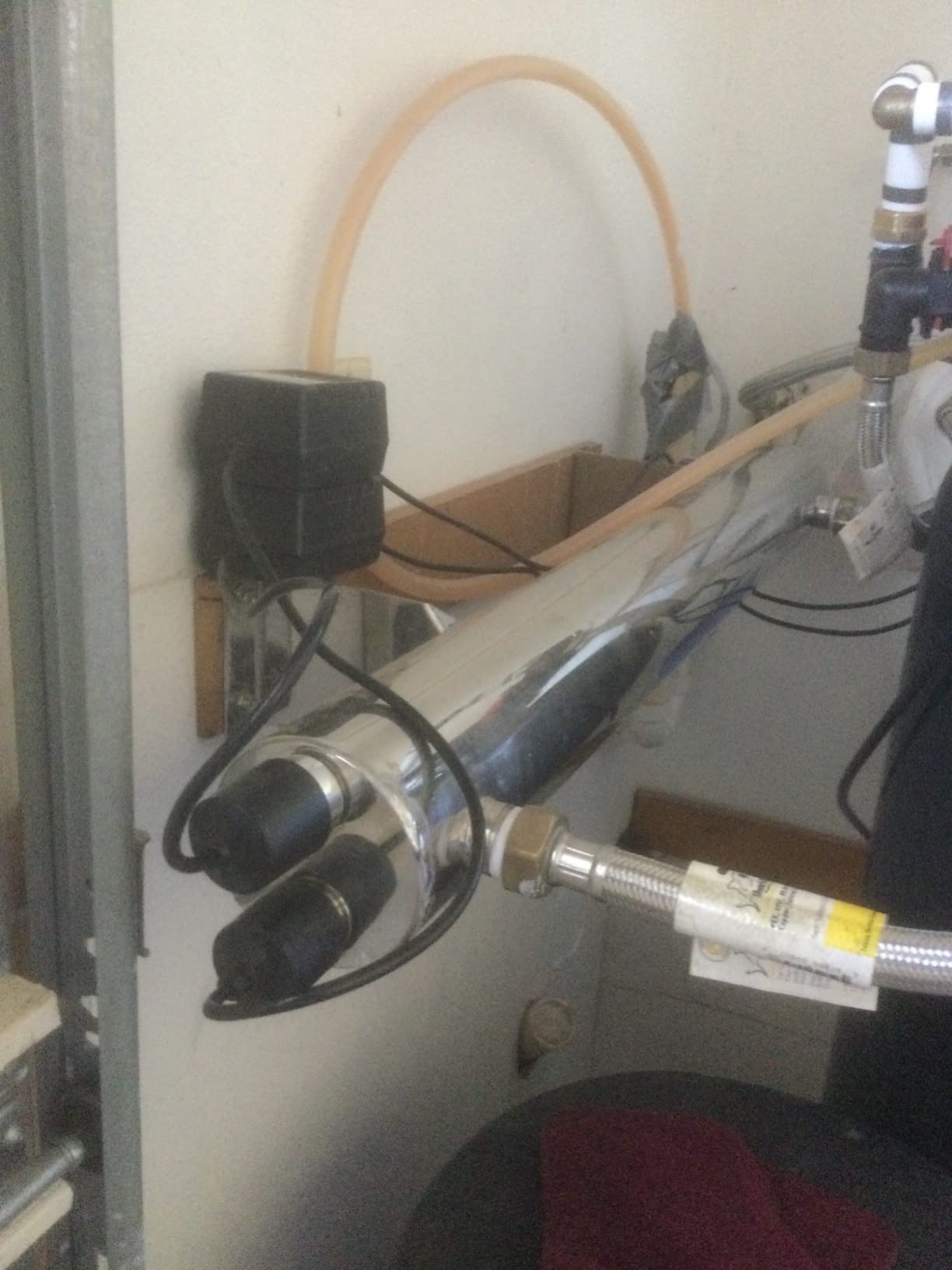
Buyers single out the two included electronic ballasts, which give you a working spare on the shelf, and the LED status indication plus audible alarm on both. The kit contains the stainless cylinder, two UV lamps, two quartz sleeves, two ballasts, four o-rings, gloves and a manual, so the first service is covered.
Water up to 1,000 ppm TDS is supported, and the chamber runs chemically clean with no effect on taste, odor or pH. At 16 pounds it is the heaviest unit reviewed, so mounting has to be solid rather than a light-duty bracket.
The 4.0 rating from 93 reviews carries the most mixed signals in the group. Two thirds of reviews are five star, but the 15 percent one-star share is the highest among our picks, and those negative reviews center on component failure and setup questions rather than on treatment performance.
Reliability documentation is thinner here than for the 55W units simply because fewer people run them as long-term daily drivers. Ballast and lamp life data at 110W is not yet well established, which matters if this is going into a rental or a business.
None of that changes the core limitation. It disinfects and does not remove sediment, hardness, iron or chemical contaminants, so a filtration train still has to sit ahead of it at full scale.
Who this system fits
A property where 12 or even 18 GPM would restrict real use, such as a large house with many fixtures running at once, or a small commercial operation drawing water for cleaning and restrooms. The spare ballast and dual alarm give an installer more resilience than a single-ballast design.
It is also a reasonable step-up choice for anyone who has already run a 12 GPM chamber and found themselves throttling flow during peak demand.
Where it falls short
The elevated one-star share and the thin long-term documentation are the reasons this sits last in our ranking despite the impressive flow figure. Buying capacity you do not need also means a larger lamp and sleeve consumable cost each year.
If your true peak demand sits around 12 to 16 GPM, the 12 GPM systems above with stronger review histories will serve you more reliably for less money over ten years.
How to Size a UV System for Your Home
Flow ratings describe the point at which the unit still delivers its rated dose, so the right number is your peak demand, not your average. Add up the fixtures that can run at the same time, then size the chamber at or above that total.
A typical single bathroom sink runs about 0.5 GPM, a shower 1.5 to 2 GPM, a tub 3 to 4 GPM, a washing machine 3 to 4 GPM, a dishwasher 1 to 2 GPM, and a toilet 1 GPM per minute of flush. A three bedroom, two bathroom house with a washer and dishwasher typically peaks around 6 to 8 GPM, which is why so many 12 GPM chambers fit typical homes with headroom.
Oversizing is not a free upgrade. A large lamp in a large chamber passing a trickle of water does not increase delivered dose, and buying capacity above your peak means paying more for the lamp and sleeve without any treatment benefit. The exception is households that plan to add fixtures, or a property near a septic system where conservative sizing is reasonable.
Flow rate alone is not the whole picture. Water clarity decides whether any of these numbers hold, and a 1 micron final filter ahead of the chamber protects the quartz sleeve from the fines that cause scaling.
What UV Does Not Remove
UV disinfection inactivates microorganisms and nothing else. It does not remove sediment, iron, manganese, hardness, nitrates, PFAS, pesticides or any other chemical contaminant, and it cannot repair a cracked well casing. It also leaves no residual protection, so water in a storage tank, a pressure tank bypass line, or a long pipe run after the chamber is unprotected again.
That last point is the one most roundups miss. If you have an unpressurized storage tank, a cistern, or a long distribution line where water sits for hours, plan on a residual disinfectant such as chlorine in those specific volumes, or test them separately. UV protects the water at the moment it passes the lamp and nowhere else.
For chemical contamination, UV is a companion to other treatment rather than a substitute. Reverse osmosis is the usual answer for nitrates, PFAS and dissolved metals, and pairing a UV chamber with an RO drinking-water system is common on wells that have both a bacteria problem and a chemistry problem.
NSF/ANSI 55 Class A vs Class B: The Only Certification Question That Matters
NSF/ANSI Standard 55 is the standard for UV microbiological water purifiers, and the class tells you the delivered dose. Class A delivers 40 mJ/cm2, a dose intended to inactivate bacteria, viruses and protozoa including Cryptosporidium, and is the tier used where water must be safe for drinking without further disinfection. Class B delivers 16 mJ/cm2 and is intended for point-of-entry disinfection and general well water treatment where the goal is bacteria control.
For a private well that has been tested clear of coliform and E. coli and is pre-filtered, a Class B system is the normal choice. Households with infants, immunocompromised members, or a recent contamination event should look for Class A or the highest certified dose available, and should also treat UV as a second line rather than a substitute for fixing the source.
Only one product in this roundup carries stated NSF/ANSI 55 certification, the Aquasana at Class B. The others rely on manufacturer flow and dose claims, which are not automatically wrong but are not independently verified either. If certification matters to your household, start there and size from there.
Pre-Filtration Thresholds You Cannot Ignore
UV light has to reach the water. Two numbers decide whether it can: turbidity below 1 NTU and iron below 0.3 mg/L. Above those levels, suspended particles scatter the light and shielding organisms survive in the shadow of a single particle.
Owners with iron at 5 ppm or higher consistently report that simple spin-down filters fail and that a dedicated oxidation or filtration stage is required first. Iron bacteria make it worse, because the slime they produce is a biofilm that UV cannot see through and that will also coat the quartz sleeve.
A workable order of stages, from the well outward, is: pressure tank, then sediment filtration, then iron removal if needed, then the UV chamber, then a softener, then carbon polish, then the fixtures. UV belongs ahead of the softener, because resin beds are a comfortable surface for bacteria and you do not want to disinfect last and then feed a colonized surface.
Test your water at a certified lab before you buy, specifically for total coliform and E. coli, plus iron, manganese, hardness, alkalinity, pH and turbidity. A single panel tells you whether UV is the right component at all, and many well owners learn their problem is iron before they ever need disinfection.
Maintenance: Lamp Changes and Sleeve Cleaning
Plan on one lamp change per year for the systems in this roundup, and treat it as non-optional. UV output falls steadily as a lamp ages, so a unit can be glowing and still under-delivering the dose it was rated for. Lamps here are commonly rated at 9,000 hours, and the reminder systems range from a simple LED to a 365-day countdown timer on the VIQUA ballast.
Clean the quartz sleeve every 6 to 12 months, and more often on hard or iron-bearing water. Scaling on the sleeve is the main reason performance quietly declines, and it is the item owners most often forget. A white or cloudy sleeve means light is being absorbed before it reaches the water.
Set an annual water test as well as an annual lamp change. Testing after a flood or heavy rain matters, because a well that has never failed can fail after one bad storm. Record lamp install dates, sleeve clean dates and test results somewhere you will find them, and keep the controller and lamp model numbers on file for reordering.
Frequently Asked Questions
What is the best UV filter for well water?
The Aquasana WH-Well-CT-UVS is the strongest all-round choice because it is the only system in our roundup with an NSF/ANSI Standard 55 certified UV stage and it bundles pre-filter, scale control and post-filter stages around the chamber. If you already own sediment and iron filtration, the iSpring UVF55FS is the better standalone buy at 12 GPM.
What is the downside of UV disinfection water?
UV only inactivates microorganisms. It does not remove sediment, iron, manganese, hardness, nitrates, PFAS or pesticides, and it leaves no residual protection, so water sitting in a storage tank or long pipe run after the chamber is unprotected again. Clean pre-filtration and a separate residual plan for stored water are both required.
Should UV go before or after filtering?
UV goes after filtration. A sediment and iron pre-filter must sit ahead of the chamber, because turbidity above 1 NTU and iron above 0.3 mg/L shield microorganisms from the light. A typical order is pressure tank, sediment filter, iron filter, UV chamber, softener, carbon polish, then fixtures. Installing UV after a softener lets bacteria colonize the resin bed.
What flow rate UV purifier do I need?
Size the chamber at or above your peak simultaneous demand, not your average use. A three bedroom, two bathroom home with a washer and dishwasher typically peaks around 6 to 8 GPM, so a 12 GPM unit gives useful headroom. Four or more bathrooms usually justify 18 GPM, and larger properties or light commercial use call for 24 GPM.
Does a UV water purifier remove iron from well water?
No. UV inactivates bacteria, viruses and protozoa and does nothing to dissolved or particulate iron, manganese, hardness or sediment. Iron above 0.3 mg/L also reduces UV effectiveness by shielding organisms and scaling the quartz sleeve, so an oxidation or iron filtration stage has to be installed ahead of the chamber first.
How long do UV lamps last?
Most lamps in this roundup are rated at about 9,000 hours, which works out to roughly one year of continuous runtime. Output declines gradually rather than stopping suddenly, so replace on schedule rather than waiting for a visible failure. Cleaning the quartz sleeve every 6 to 12 months protects the dose, and a countdown timer or alarm is worth having as a reminder.
Can I install a UV water purifier myself?
Most 12 GPM chambers are designed for DIY installation with 1-inch or 3/4-inch NPT connections, mounting clips and step-by-step instructions, and the work takes a few hours including a dry run and flush. Two cautions: confirm your port size before buying, and check the warranty terms, because some systems, including the Aquasana bundle, require professional installation to stay covered.
Conclusion
For most households starting from raw well water, the Aquasana WH-Well-CT-UVS is the best UV water purifier for well water in this roundup, because independent NSF/ANSI 55 certification and a complete treatment train solve more problems than any single chamber can. If you already have sediment and iron filtration in place, the iSpring UVF55FS is the value pick, and the HQUA-TWS-12 solves the fitting problem when mechanical room space is the constraint.
Whatever you choose, test the water first, keep turbidity under 1 NTU and iron under 0.3 mg/L ahead of the chamber, install UV before the softener, and replace the lamp every year. Those four habits matter more to your safety than any brand name on the box.