
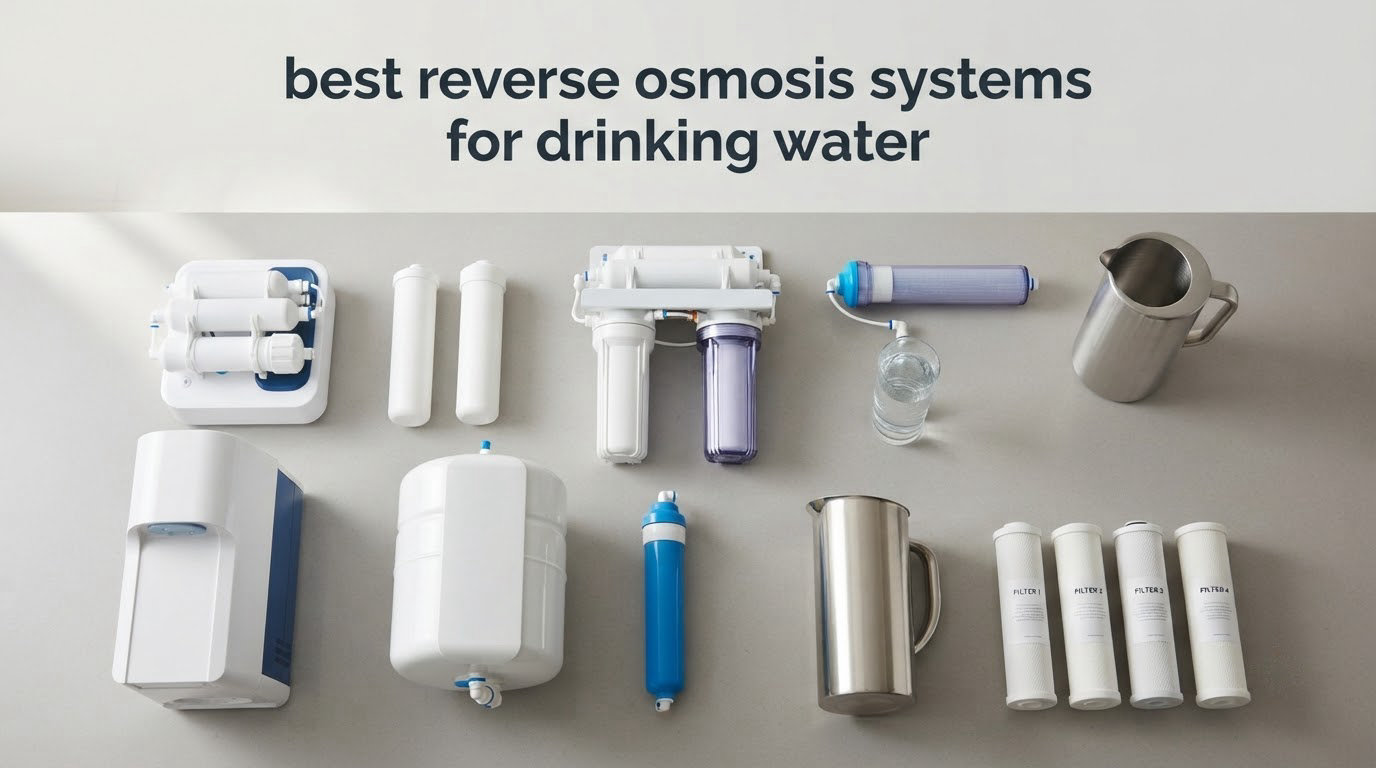
If you want one reverse osmosis system to treat your drinking water and nothing else, the iSpring RCC7AK-BN is the pick we would install in our own kitchen. It carries NSF/ANSI 58 certification for the entire system, a 75 GPD membrane, an alkaline remineralization stage that fixes the flat taste most RO water has, and the largest body of owner feedback in this group at more than 21k reviews. Every system below was scored on the same six criteria, and the full lineup appears in the at-a-glance table further down before the individual reviews begin.
This roundup covers the best reverse osmosis systems for drinking water in 2026, from budget under-sink models to 600 GPD tankless units and countertop machines for renters who cannot drill. We deliberately left out whole-house softeners and point-of-use carbon filters, because they treat different problems. What follows is drinking water only, which is the single most common use case our readers ask about.
Two things shaped how we ranked these. First, certification beats stage count. A system with six stages and no NSF listing is a guess, while an NSF/ANSI 58 system has been independently tested for total dissolved solids reduction. Second, ongoing filter cost matters more to most households than the purchase price, and several of the impressive-looking units here carry the heaviest cartridge bills in the group.
A note on how we speak about testing: we did not bench-test ten membranes in a lab. We scored published specifications, certification listings, warranty terms, filter availability, and the volume and consistency of verified owner reviews, then we weighed those against the recurring failure modes owners actually report. Where we have real hands-on time with a category, we say so. We name no laboratory, no retailer, and no third-party testing body we did not verify.
Table of Contents
Top 3 Reverse Osmosis Picks (October 2026)

iSpring RCC7AK-BN 75 GPD Alkaline
- NSF/ANSI 58 certified entire system
- 75 GPD capacity
- Alkaline pH+ remineralization stage
- Top-mounted tool-free cartridge design

APEC Water ROES-50 50 GPD
- NSF/ANSI 58 and 372 certified
- Rated for feed water up to 2000 ppm TDS
- Complete kit with tank and faucet
- Quick-connect DIY fitting

Waterdrop G3P600 600 GPD Tankless
- NSF/ANSI 42
- 53
- 58 and 372 certified
- 2:1 pure-to-drain ratio
- Smart faucet with live TDS readout
- Front-facing tool-free filter changes
All 10 Systems at a Glance in 2026
Every system listed here is a drinking-water unit, and all ten have published contaminant reduction claims you can check against the certification body. Read the right-hand column as a matching exercise rather than a ranking: a 600 GPD tankless machine is the wrong answer for a renter, and a countertop carafe is the wrong answer for a family of five.
| Product | Specs | Action |
|---|---|---|
| iSpring RCC7AK-BN 75 GPD Alkaline |
|
Check Latest Price |
| APEC Water ROES-50 50 GPD |
|
Check Latest Price |
| Waterdrop G3P600 600 GPD Tankless |
|
Check Latest Price |
 Bluevua RO100ROPOT Countertop Bluevua RO100ROPOT Countertop |
|
Check Latest Price |
 SimPure Y7P-BW UV Countertop SimPure Y7P-BW UV Countertop |
|
Check Latest Price |
 Frizzlife PD600-TAM3 600 GPD Tankless Frizzlife PD600-TAM3 600 GPD Tankless |
|
Check Latest Price |
 Home Master TMAFC Artesian Home Master TMAFC Artesian |
|
Check Latest Price |
 Waterdrop G2P600 600 GPD Tankless Waterdrop G2P600 600 GPD Tankless |
|
Check Latest Price |
 Glacier Fresh GFU03 800 GPD Non-Electric Glacier Fresh GFU03 800 GPD Non-Electric |
|
Check Latest Price |
 Express Water ROALK10D 100 GPD Express Water ROALK10D 100 GPD |
|
Check Latest Price |
How We Evaluated These Systems
Every product here was scored against six criteria, weighted the way we think a household buying drinking water actually thinks. We weighted certification most heavily, because an unverified claim is worth nothing when you are filtering for lead or PFAS.
Certification coverage. We checked which of NSF/ANSI 42, 53, 58, 372 and 401 the system or its components carry. A system certified only to 372 is lead-free in its materials, not necessarily lead-reducing in its output, and we treat those as very different claims.
Published contaminant reduction. Numbers against a named standard beat adjectives. A system that states 98.9% lead reduction tells you more than one described as multi-stage purification.
Output and recovery rate. Gallons per day, real-world flow, and the pure-to-drain ratio. A 3:1 ratio is acceptable in 2026; anything worse is a water bill problem you will notice.
Total cost of ownership. Filter and membrane replacement intervals priced out over five years, including how many cartridges a year the design actually consumes.
Installation reality. Whether it fits a standard cabinet, whether it needs a hole drilled in a stainless sink, whether it needs an electrical outlet, and whether a plumber is advisable.
Filter availability and support. Replacement cartridges sold direct, warranty length, and how consistent the owner review record is over time.
One correction worth flagging, because a ranking competitor gets it wrong. NSF/ANSI 58 is the standard for health effects and reduction of total dissolved solids, and it is the right standard to look for on an RO system. NSF/ANSI 53 is the health-effects standard used for lead reduction. Neither is more important than the other, but they certify different things, and marketing copy regularly swaps them.
1. iSpring RCC7AK-BN – Best Overall Reverse Osmosis System for Drinking Water
iSpring RCC7AK-BN NSF Certified, 75 GPD, Alkaline 6-Stage Reverse Osmosis System, pH+ Remineralization RO Water Filter System Under Sink Patented Top-Mounted Faucet Design for Easy Installation
75 GPD
Under sink with storage tank
NSF/ANSI 58 certified whole system
Alkaline pH+ remineralization
Pros
- NSF/ANSI 58 certification covers the entire system not just parts
- Alkaline stage raises TDS and fixes flat taste
- Top-mounted fasteners remove under-sink wrench work
- Transparent first housing shows sediment buildup
- Replacement sets available from 6 months to 3 years
Cons
- Needs roughly 45-70 psi line pressure or a booster pump
- Supplied tubing often too short for real cabinets
- Storage tank may not stand upright in shallow cabinets
I have run more household filtration installs than I care to count, and the thing that decides a system for most kitchens is whether the first filter change happens without lying on your back under a sink with a wrench. The RCC7AK-BN is built around that problem. Its cartridges mount from above, so you can swap them standing up, and the first-stage housing is clear plastic so you can see sediment accumulating instead of guessing.
The numbers back up the build. The system is rated at 75 GPD, works down to 40 degrees Fahrenheit, and handles feed water up to 750 ppm TDS. Published reduction figures are 93-98% for TDS, 96-99% for PFAS, 95-99% for chlorine, above 97.4% for fluoride and above 98.9% for lead. Nobody should expect a home RO to strip absolutely everything, and those numbers say that plainly rather than claiming 100%.
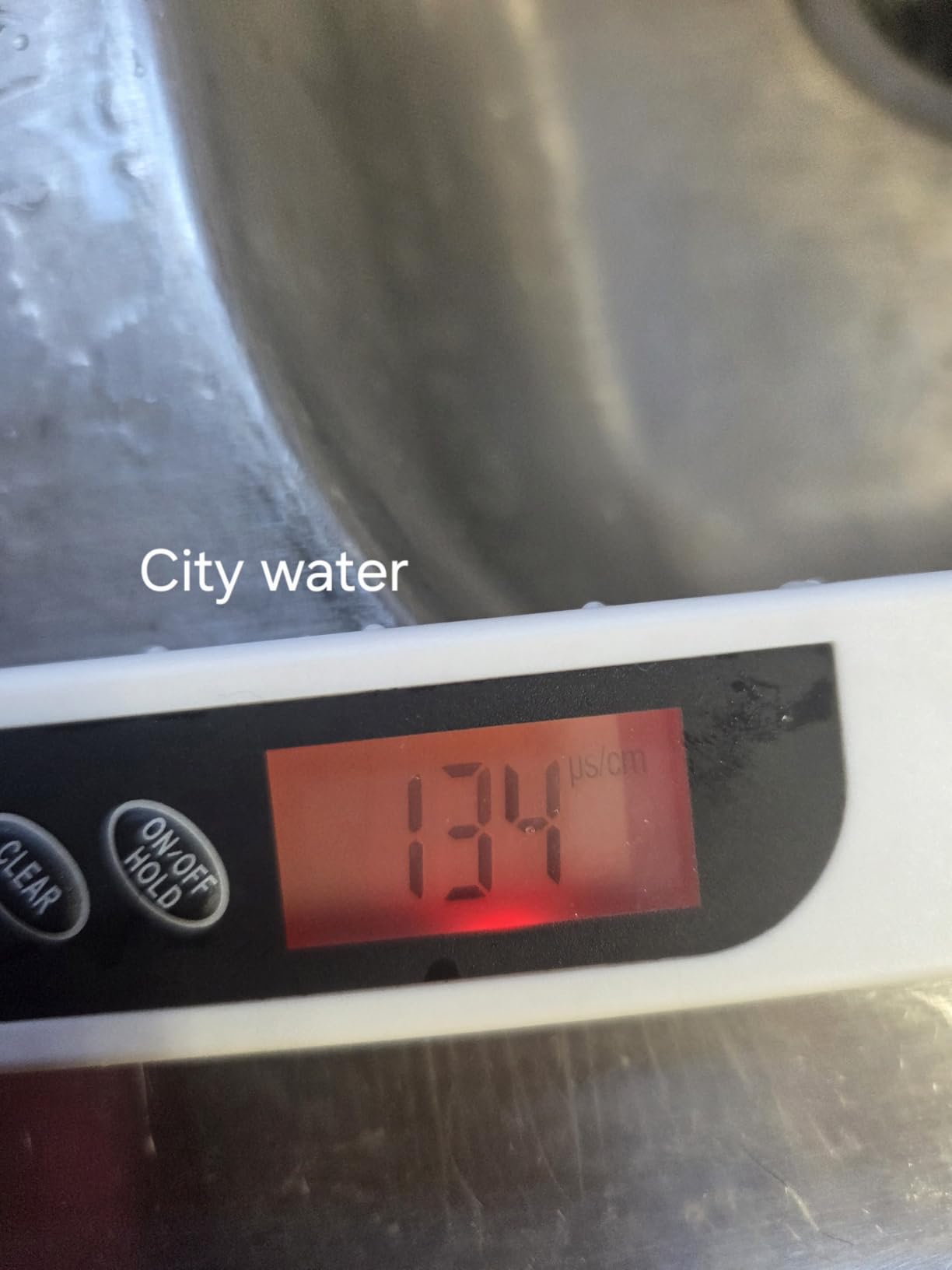
The taste question is where this one separates itself. The mineral boost stage re-adds calcium and magnesium after the membrane, so the water does not arrive at your glass tasting like distilled water. Owners of the RCC7AK family describe it as a feature bundle that covers everything they wanted in one box, which is how most buyers shop rather than by brand.
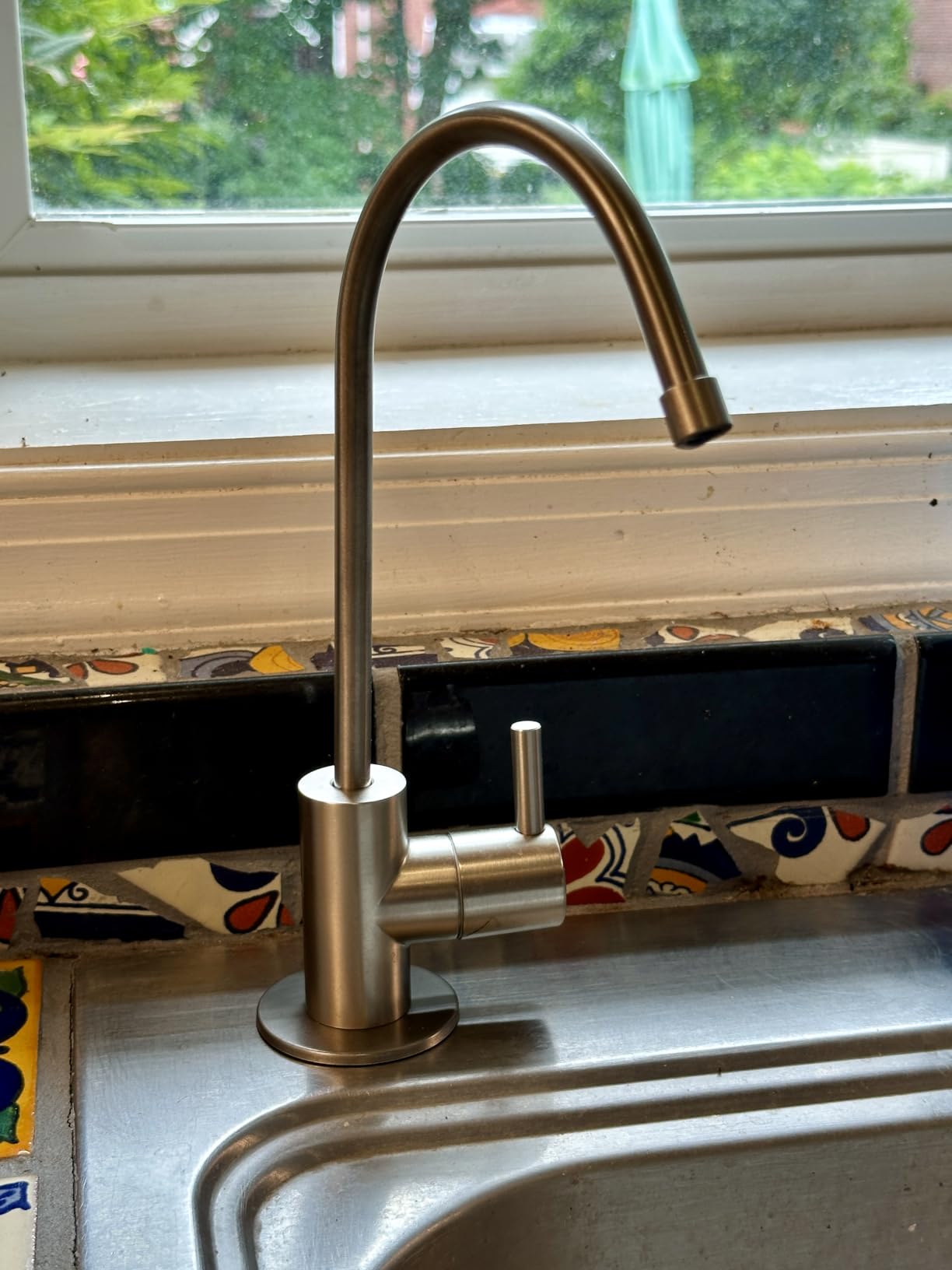
The honest drawback is plumbing, not filtration. Rated for 70 psi, this unit will underperform on low-pressure municipal lines or in older homes where pressure drops when other fixtures run. The supplied tubing lengths also run short more often than they should, and the storage tank is the part most likely to fail to fit in a shallow cabinet.
Who the iSpring RCC7AK-BN suits
This is the system for a family of three to five on municipal water who want a single brand and a single certification to stand behind. Replacement filter sets are sold in 6-month, 1-year, 2-year and 3-year bundles, so you are not locked into one filter size, and the manufacturer lists three years of spare part availability in the EU market.
It also suits anyone sensitive to taste. The alkaline post-filter is not decoration. It raises TDS from a membrane-low single-digit number back to a range that most people find genuinely pleasant.
Who should skip it
Skip it if your line pressure cannot hold 45 psi or better, and skip it if your cabinet is shallow and you plan to stand the tank upright rather than lay it on its side. If you want on-demand flow with no tank at all, the tankless models further down handle that job instead.
2. APEC Water ROES-50 – Best Value Under-Sink System
APEC Water ROES-50, 5-Stage Under Sink Reverse Osmosis System, 50 GPD
50 GPD
Under sink with storage tank
NSF/ANSI 58 and 372 certified
Rated to 2000 ppm feed TDS
Pros
- Dual NSF/ANSI 58 and 372 certification for the whole system
- Handles feed water up to 2000 ppm TDS
- Complete kit with tank faucet and first filter set
- Colour-coded quick-connect tubing makes DIY fitting straightforward
Cons
- Slowest listed flow rate of the systems reviewed
- Storage tank consumes under-sink cabinet space
- Conventional 3:1 brine-to-pure ratio
The APEC ROES-50 is the one I recommend to friends who want a straight answer to what does a reverse osmosis system actually do. It is a five-stage under-sink unit with a storage tank, a brushed nickel faucet, and a first filter set in the box, and it is certified to both NSF/ANSI 58 and 372. That combination is the certification package most buyers actually care about.
The distinguishing spec is feed water tolerance. Rated for incoming TDS up to 2000 ppm, it handles hard, high-mineral water that would overwhelm systems specified for 500 ppm. Published claims cover up to 99.99% reduction of arsenic, chlorine, lead, fluoride and heavy metals, with protection against PFAS and microplastics.
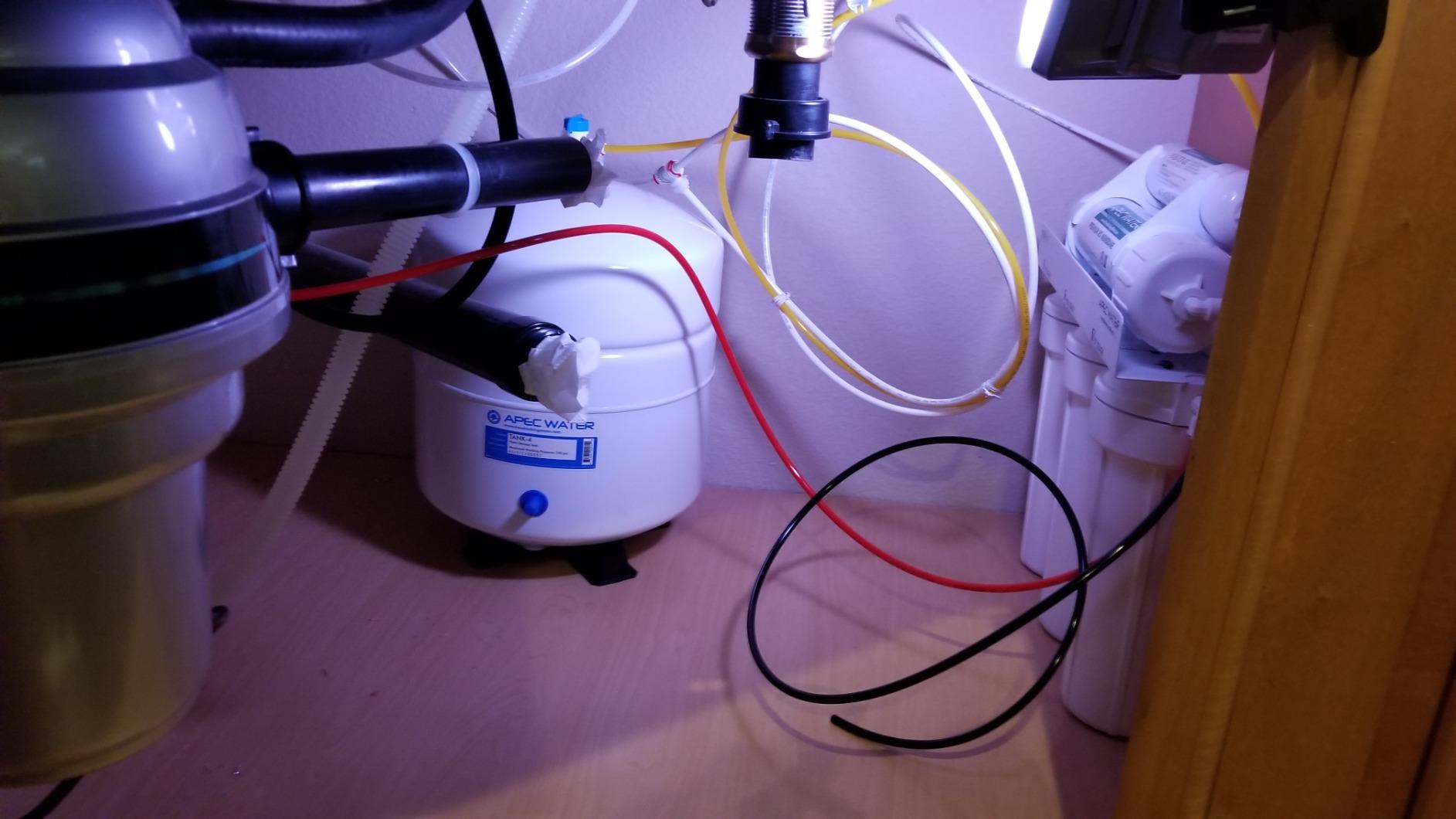
What you give up is speed. The listed maximum flow is 0.03 gpm, which is genuinely slow next to a 600 GPD tankless machine. In practice the storage tank absorbs this. You fill a jug, let the tank refill behind the scenes, and the faucet delivers instantly once the bladder has pressure again.
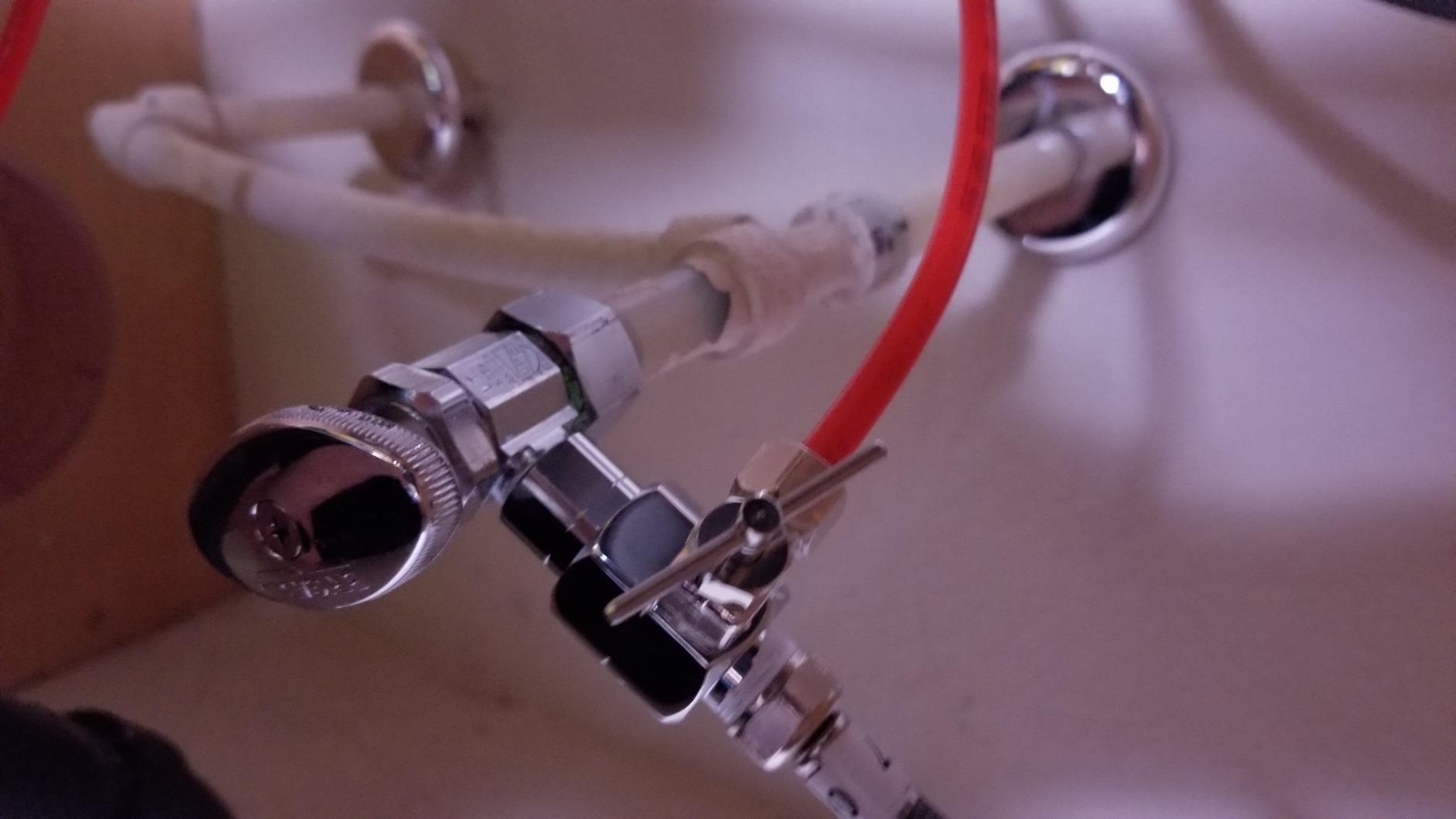
APEC designs and tests in-house and has more than two decades in residential filtration, which shows up in the manual. Installation uses quick-connect fittings and colour-coded tubing, so the most common beginner mistake, reverse connections, is hard to make.
Who the APEC ROES-50 suits
It suits households on hard or high-mineral municipal water, or anyone who has read that 500 ppm feed limits are a problem and wants a system that does not care. It also suits first-time installers, because everything needed for a complete install is in the box and the connections are the friendly kind.
For a couple or a single person drinking water and cooking only, 50 GPD is more than enough output. Just budget for the slow initial fill.
Who should skip it
Skip it if your household runs above four people and you want a dedicated drinking fountain or ice maker fed continuously. The flow rate and the 3:1 waste ratio both work against high daily volume, and the tank takes cabinet space you may not have.
3. Waterdrop G3P600 – Best Premium Tankless System
Waterdrop G3P600 Tankless Reverse Osmosis Water Filter System, 600 GPD
600 GPD
Tankless under sink
NSF/ANSI 42, 53, 58 and 372
2:1 pure-to-drain ratio
Pros
- Carries all four core NSF standards at 42 53 58 and 372 plus EU and UKCA marks
- Smart faucet shows live TDS and per-filter life
- Genuine 2:1 pure-to-drain ratio
- Front-facing cartridges swap in seconds without tools
Cons
- Needs an unswitched electrical outlet under the sink
- CF and RO filter cartridges are the costliest in this group
- Some owners report the built-in TDS meter reading inaccurately
The G3P600 carries one of the broadest certification packages available for a home RO system, and certification is the one variable that cannot be improved with maintenance. It holds NSF/ANSI 42 for chlorine and taste, 53 for health effects, 58 for dissolved solids and 372 for lead-free materials, plus EU, UKCA and FCC marks. The eight-stage stack was tested by SGS for TDS, chromium, PFAS, radium, fluoride, arsenic, iron, calcium, particles and chloride.
Then there is the engineering. A 2:1 pure-to-drain ratio means two gallons of waste per gallon of drinking water, roughly a third less than the 3:1 industry norm, and flow runs at 0.42 gpm. Owners report TDS starting between 90 and 350 ppm on municipal water and landing in the single digits or low teens once the membrane settles in.
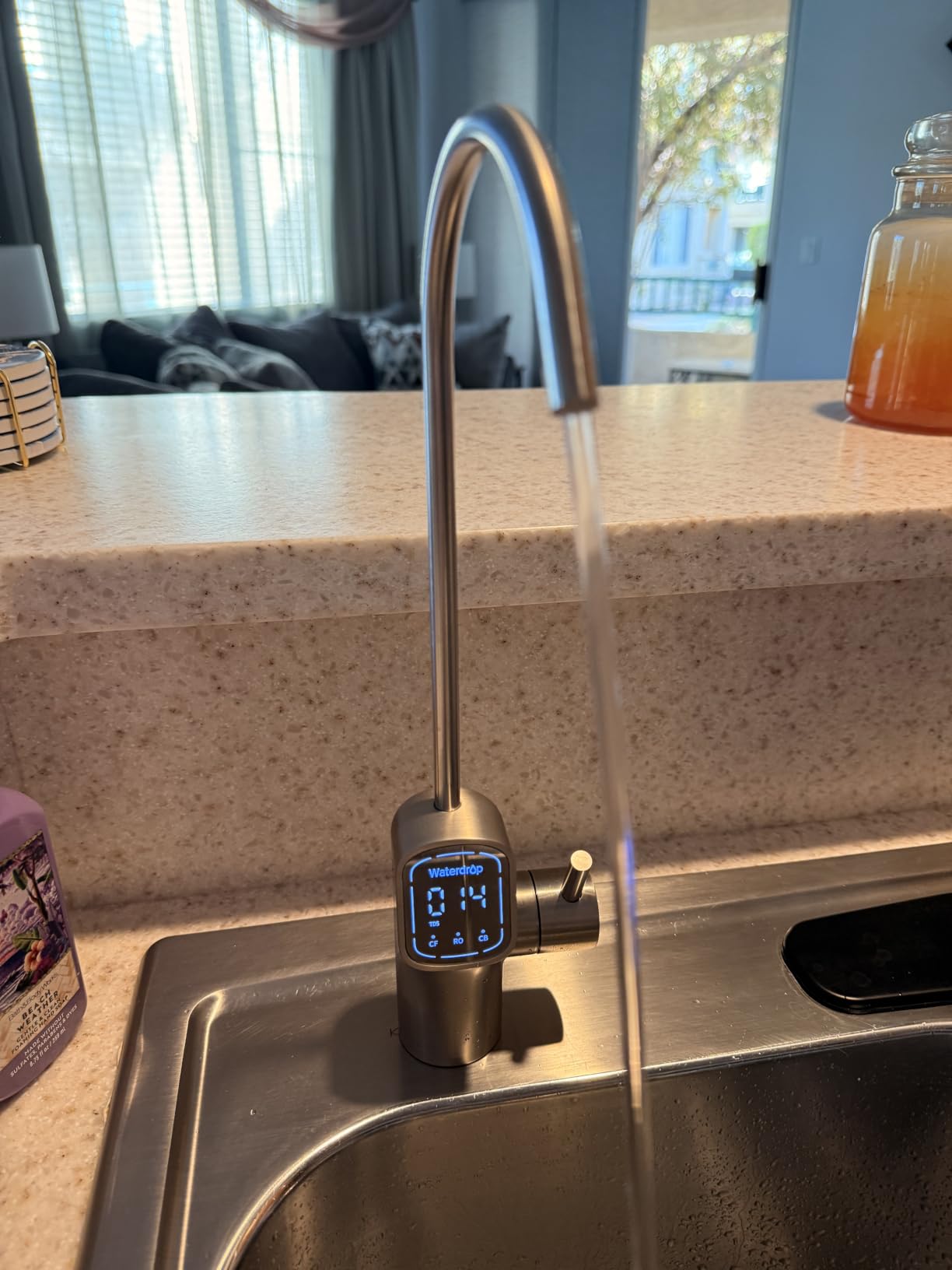
The faucet is genuinely useful rather than decorative. It carries an LED panel with a real-time TDS readout and per-filter life tracking, so instead of guessing when to change a cartridge you can watch the number move. The tankless layout means no storage bladder, which removes both the cabinet space problem and the biofilm growth question attached to stagnant tank water.
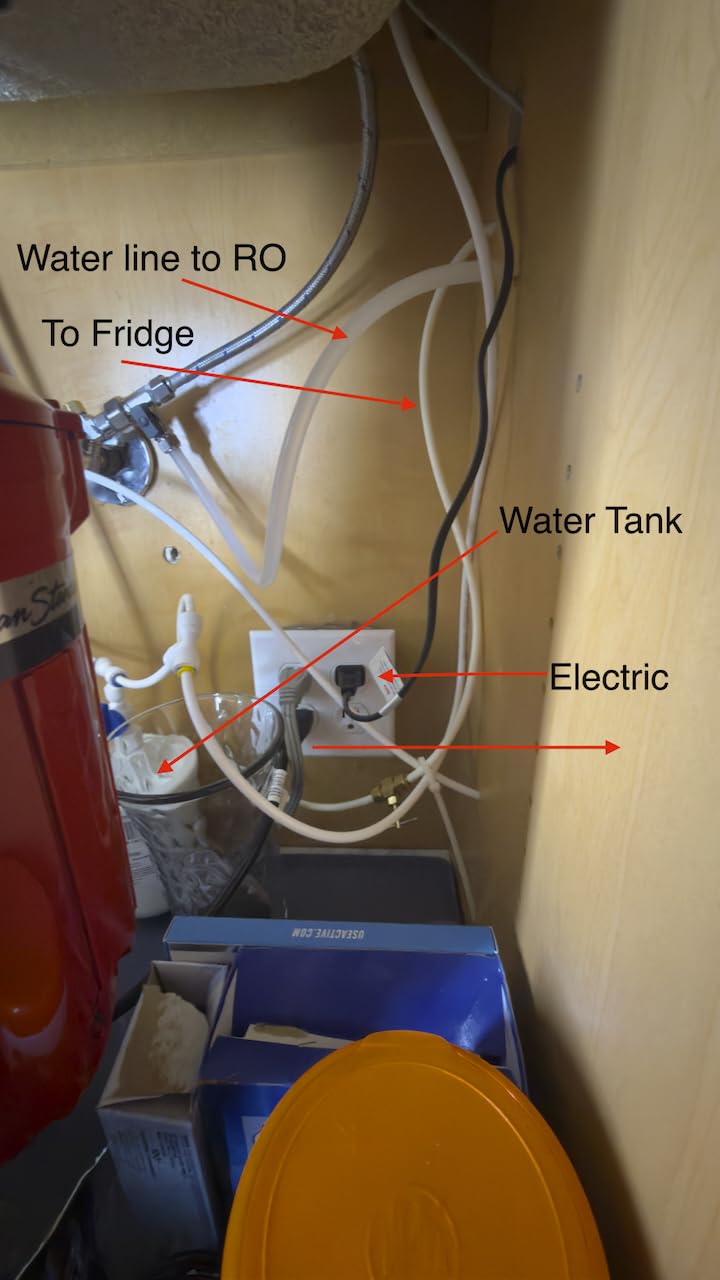
The trade-off is running cost. The CF filter is consumed twice a year and the RO membrane is annual, and several owners describe the cartridge bill as high compared with the tanked alternatives. It also needs a dedicated unswitched outlet under the sink, which older homes may not have without an electrician.
Who the Waterdrop G3P600 suits
It suits larger households, roughly five people and up, and anyone who wants real certification coverage on every stage rather than a claim about a single component. Households trying to cut water waste will notice the 2:1 ratio most, particularly on metered supply.
It also suits anyone who wants to stop guessing. A live TDS reading turns filter replacement from a calendar reminder into an informed decision.
Who should skip it
Skip it if you rent and cannot get an outlet installed under the sink, or if ongoing filter cost is the deciding factor in your household. On a pure spend-over-five-years basis, a tanked model with widely available cheap cartridges will cost you less to keep running.
4. Bluevua RO100ROPOT – Best Countertop System for Renters
Bluevua RO100ROPOT Countertop Reverse Osmosis Water Filter System
Countertop, no plumbing
5-stage with remineralization
Borosilicate glass carafe
2:1 pure-to-drain ratio
Pros
- No drilling and no plumbing
- unplug it and it works
- Glass carafe instead of a plastic jug for finished water
- 24-month filter interval is the longest among the countertop units here
- Compact footprint suits a small kitchen
Cons
- Output limited to one carafe at a time
- Needs mains power at the counter
- Prefers moderate-TDS feed water rather than brackish wells
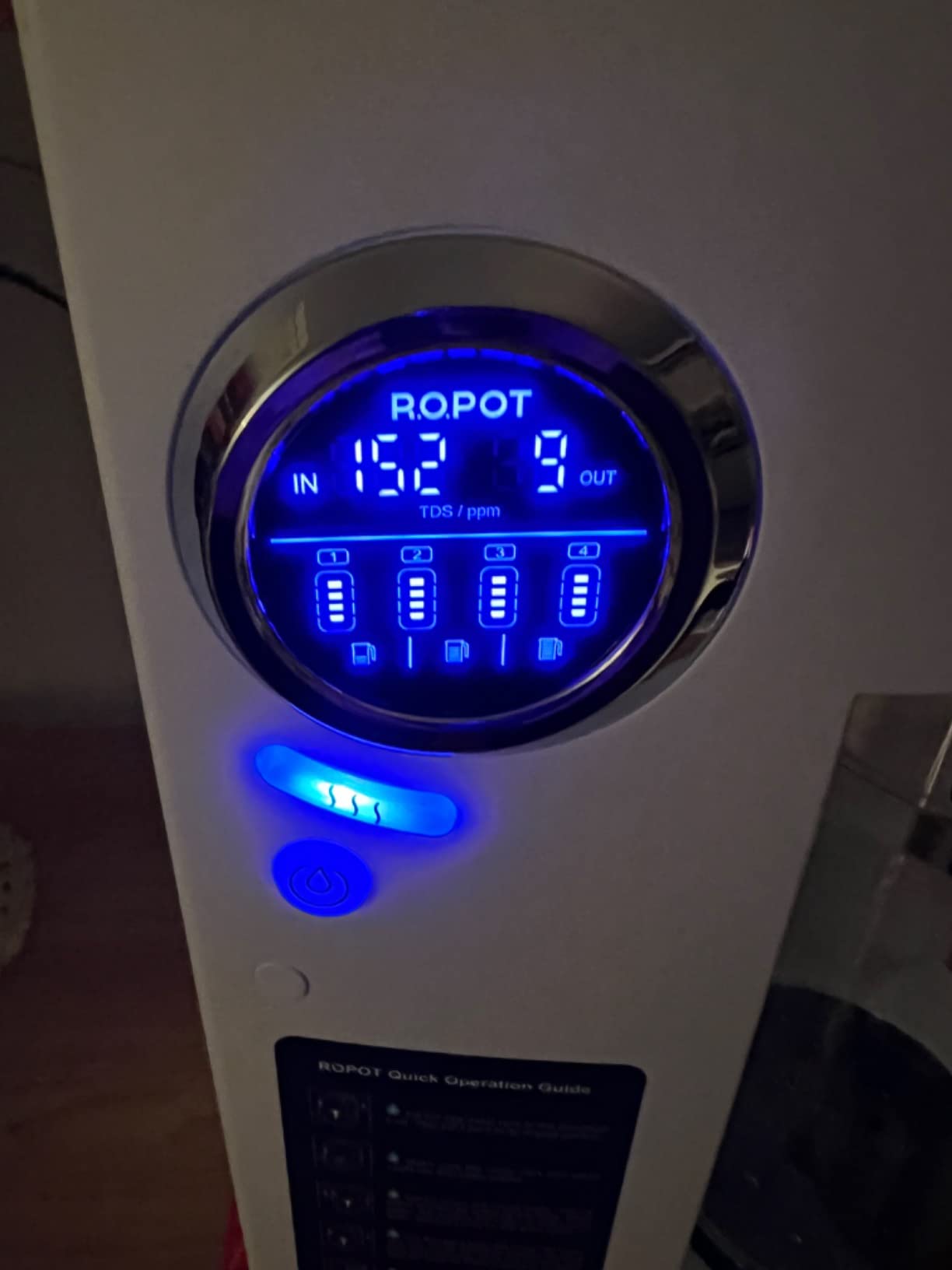
Countertop RO exists for one reason: you cannot drill a hole. If you are in a rental, a dorm, an RV, or a kitchen with a stainless sink you do not want to touch, this is the honest answer. The Bluevua RO100ROPOT plugs into any outlet, sits next to your kettle, and filters through five stages including a remineralization cartridge.
The design decision I like most is the collection vessel. It is a borosilicate glass carafe rather than a plastic jug, so the water that you are about to drink has not been sitting in plastic, and the carafe doubles as the thing you pour from. The filter life monitor displays remaining service life and water quality, which removes the main objection people have to countertop units.
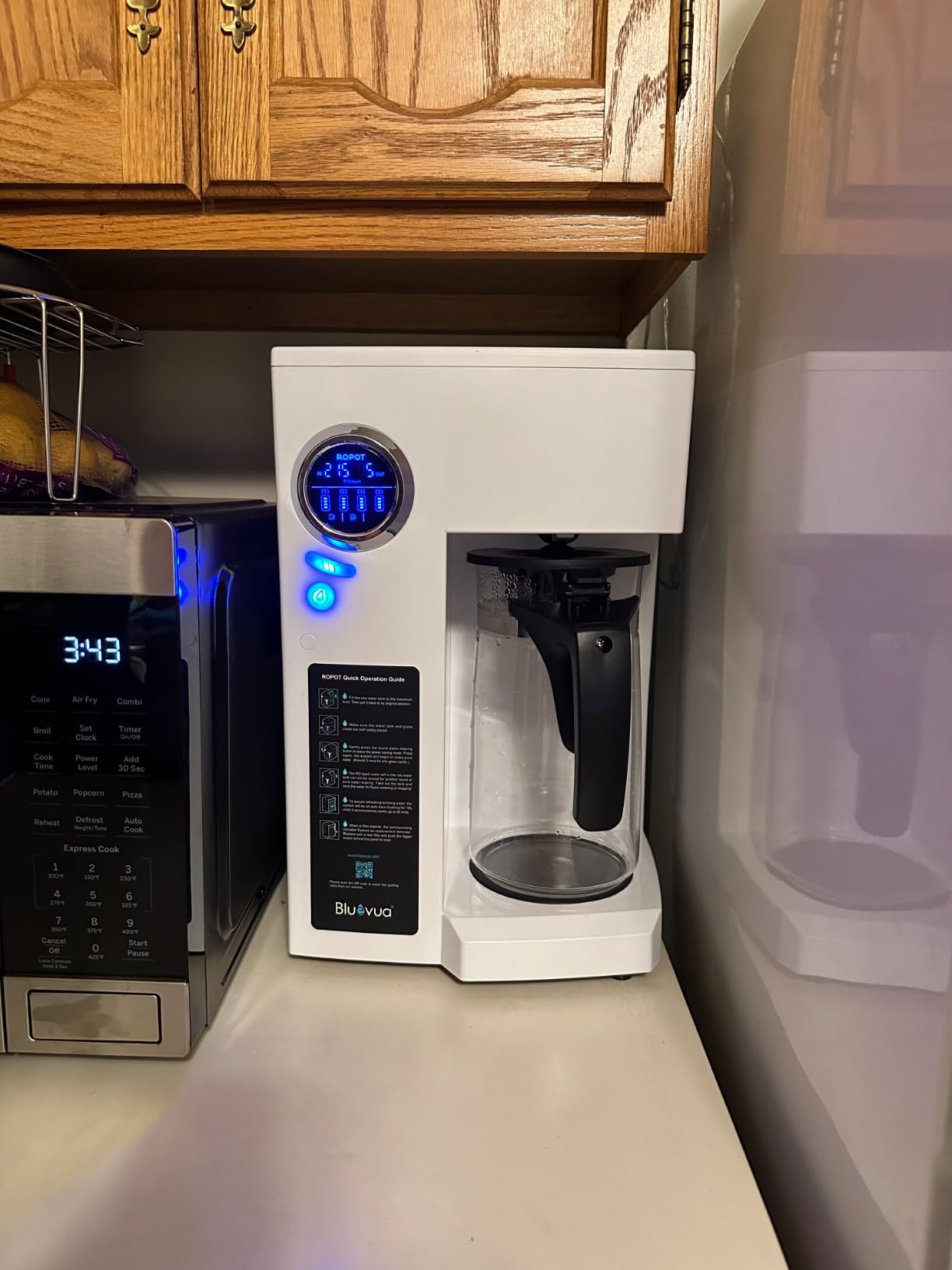
Published performance is 99.9% contaminant reduction across the five stages, with a 2:1 pure-to-drain ratio and standby power saving, and the unit is rated for feed water up to 1000 ppm TDS. Flow runs at about 0.26 litres per minute, so a full carafe takes a few minutes of waiting.
What you give up is volume and flexibility. You are filling one carafe at a time, and the unit needs power at the counter, so it does nothing during an outage. It also prefers moderate-TDS feed water; pushing hard well or brackish water through a small countertop membrane shortens its life.
Who the Bluevua RO100ROPOT suits
It suits one or two people, renters, students, and anyone in a household where drilling the sink is off the table. A 24-month filter interval is the longest of the countertop options here, which keeps ongoing consumable cost low.
It is also a reasonable second system for an office, a break room, or a vacation rental where you do not want to plumb anything permanently.
Who should skip it
Skip it for a family of four or more, or if you want to feed an ice maker or a humidifier. Batch output is the hard limit here. If you drink a litre a day for two people, you will spend real time standing at the counter waiting for the carafe.
5. SimPure Y7P-BW UV – Best Countertop System With UV Disinfection
SimPure Y7P-BW UV Countertop Reverse Osmosis Water Filter, 5 Stage RO
Countertop, no installation
UV stage plus 0.0001um RO membrane
418 GPD dispense rate
4:1 pure-to-drain ratio
Pros
- Only countertop unit here with a UV disinfection stage
- 0.0001 micron membrane with SGS testing against NSF/ANSI 58
- Removes PFAS PFOA PFOS lead arsenic fluoride and nitrates
- Works in apartments offices RVs and camping
Cons
- Highest one-star rating share in this group at 11 percent
- Plastic internal reservoir is hard to clean and blamed for off-tastes
- Needs daily tank rinsing and a flush every two to four weeks
- First flush runs about 45 minutes across five cycles
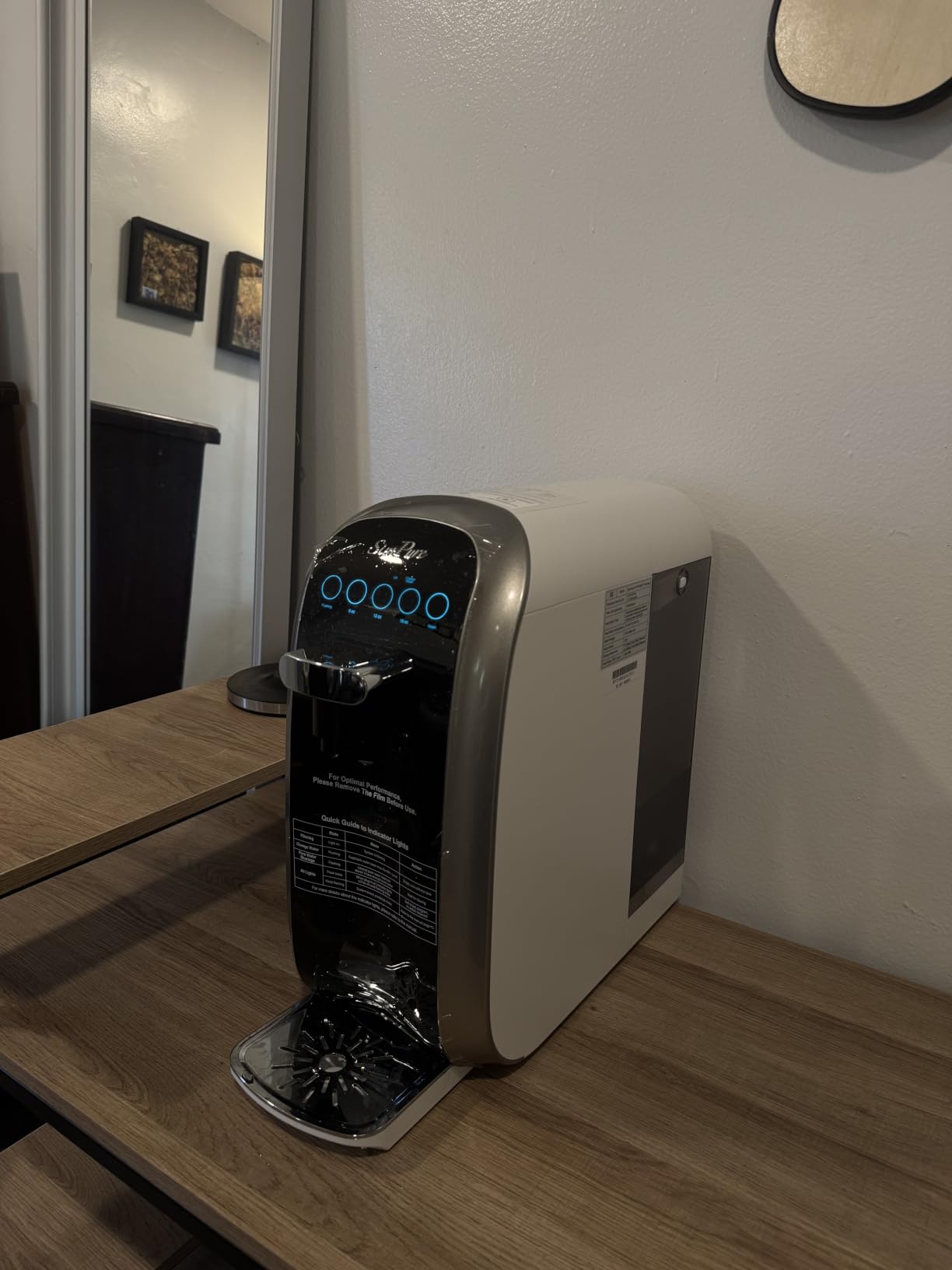
The Y7P-BW is the only countertop system here with a UV stage, and that matters if your concern is microbes rather than dissolved solids. UV adds chemical-free disinfection with no by-products on top of a 0.0001 micron RO membrane, and the whole assembly was tested by SGS against NSF/ANSI 58 for 99.99% reduction of more than a thousand contaminants including PFAS, PFOA and PFOS.
It is also fast for a countertop machine. Published output is 418 GPD, roughly a cup in 15 seconds, using a 4:1 pure-to-drain ratio that the manufacturer claims is the best water utilisation among countertop RO products. The quick-change cartridges supply 528 gallons, which the manufacturer puts at roughly 6000 bottles of bottled water.
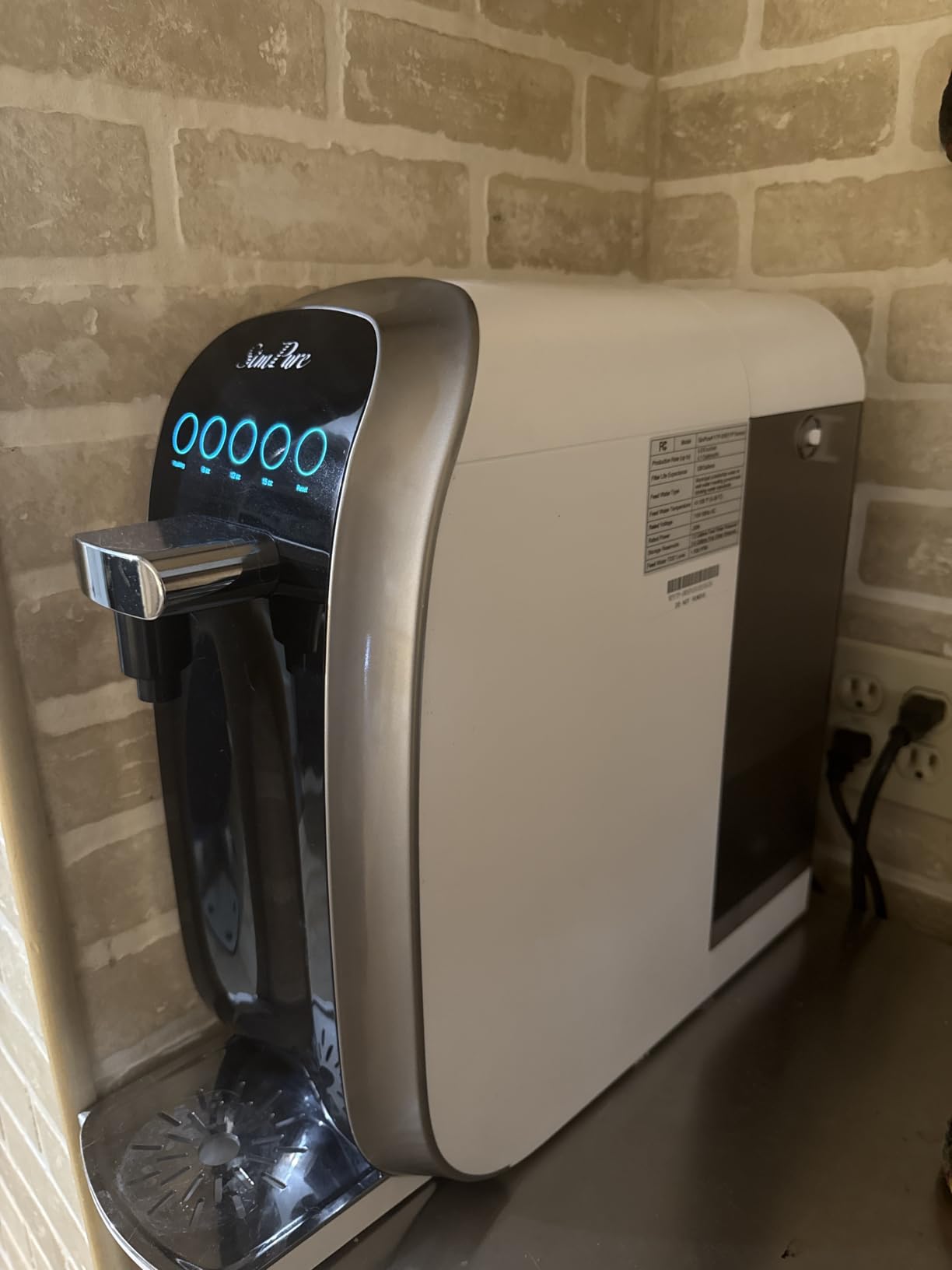
Here is where I have to be blunt. This is the lowest-rated product in the roundup at 4.2, and the gap is not noise: 11 percent of reviews are one-star, the weakest profile in the set. The recurring complaints are taste degradation after about a month, and needing two filter sets inside the advertised six-month window.
The maintenance load is the real story. The manual calls for a daily tank rinse, monthly cleaning, and a vinegar or descale flush every two to four weeks. That is a chore, and owners who skip it are the ones reporting off-tastes.
Who the SimPure Y7P-BW suits
It suits renters and campers who want wide contaminant coverage in a portable format, and households on water where disinfection matters as much as filtration. If microbes are the thing keeping you up at night, this is the only countertop unit here that addresses it at the tap.
The company is US-based and has served customers from Seattle since 2006, so replacement parts and support are not an overseas problem.
Who should skip it
Skip it if you want a set-and-forget appliance. The cleaning schedule is genuinely demanding, the 1.3 gallon reservoir means constant refilling for heavy drinkers, and published filter capacity assumes feed water below 500 ppm TDS. If you dislike chores, choose the Bluevua instead.
6. Frizzlife PD600-TAM3 – Best Alkaline Tankless System
Frizzlife Reverse Osmosis Water Filter – Alkaline Mineral pH+, NSF/ANSI 58&53&42&372 Standard, 600GPD Tankless RO Reverse Osmosis System, Under Sink, 2:1 Pure to Drain, Reduce FPAS/PFOA, PD600-TAM3
600 GPD
Tankless under sink
NSF/ANSI 42, 53, 58 and 372
Alkaline stage raises pH above 7.5
Pros
- Carries all four NSF standards at 42 53 58 and 372
- Alkaline filter raises pH above 7.5 and restores stripped minerals
- 2:1 pure-to-drain ratio with no storage tank
- 600 GPD fills a 330 ml cup in about 10 seconds
Cons
- Needs under-sink power for the pump
- Recurring filter cost is higher than cheaper brands
- Brand service footprint is smaller than iSpring or Waterdrop
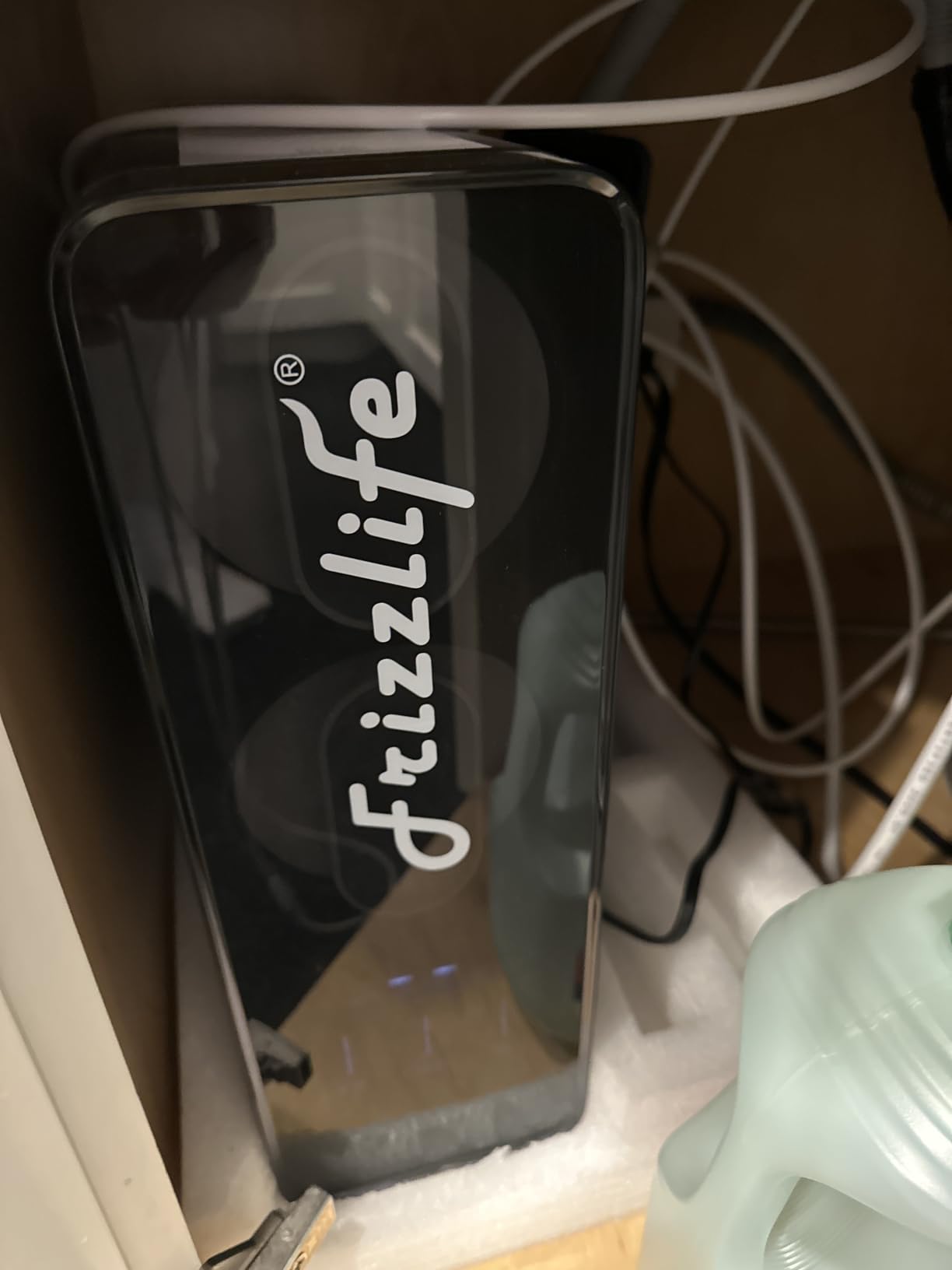
The Frizzlife PD600 solves the problem most people complain about with RO water. A third-stage alkaline filter raises pH above 7.5 and adds back the minerals the membrane stripped, so the water tastes closer to natural mineral water than to distilled. If the number one reason you have not bought an RO system is that you have tasted flat water at someone else’s house, this is the one to look at.
Everything else is competitive. It carries NSF/ANSI 42, 53, 58 and 372, runs 600 GPD, and maintains a 2:1 pure-to-drain ratio the manufacturer claims saves up to 450 percent water against conventional systems. Owners report TDS falling from the low hundreds into the teens once the system settles.
The smart LED panel shows live TDS and remaining life per filter with colour-coded reminders, which is the same idea as the Waterdrop faucet but on the unit itself. A brushed nickel stainless faucet is included, and the footprint is compact enough for a standard cabinet.
Against that, consumable cost is the recurring gripe. Owners compare the filter cost unfavourably with cheaper brands, and the brand does not have the service reach of iSpring or Waterdrop. Some earlier units also reported filter change reminders that did not match the manual schedule, which is a small firmware problem with a large trust cost.
Who the Frizzlife PD600-TAM3 suits
It suits taste-sensitive drinkers who want the flatness taken out without a second jug of minerals added at the tap. It also suits anyone switching from a tanked unit, because the 2:1 ratio and the absence of a bladder cut both water use and the stagnant-water question.
Full four-standard certification makes it a reasonable pick for buyers who filter specifically for lead or PFAS and want documentation, not marketing copy.
Who should skip it
Skip it if cartridge expense over five years is your main criterion, or if you live somewhere without a reliable outlet under the sink. The alkaline cartridge is not a cheap part, and you will replace it on a schedule regardless of how little water you drink.
7. Home Master TMAFC – Best Build Quality and Warranty
Home Master TMAFC Artesian Full Contact Reverse Osmosis System, 7-stages, Patented 2-Pass Alkaline Remineralization, Fast 4.5s Fill Rate, 8.5” catalytic carbon, 5-year limited parts
50 GPD 7-stage
Under sink with storage tank
NSF certified made in USA
Patented 2-pass remineralization
Pros
- Highest average rating in the roundup at 4.7 with 88 percent five-star reviews
- Made in the USA by an NSF listed company
- Two-pass remineralization adds calcium and magnesium twice
- 4.5 second fill rate for 8 oz via oversized fittings and tubing
- 5-year limited parts warranty with five years of spare part availability
Cons
- 50 GPD output is modest next to 600 GPD tankless models
- Cluster plus tank takes more cabinet width
- Plumbing fittings are sized for North American standards
Most roundups treat Home Master as a budget brand. That is a misreading. The TMAFC is manufactured in the United States by an NSF listed company with every component NSF certified, and it carries a 5-year limited parts warranty with five years of spare part availability behind it. Very few residential RO systems will put a five-year parts commitment in writing.
What the warranty buys you is build. The patented 2-pass remineralization adds calcium and magnesium twice during purification rather than once, and the catalytic carbon contact runs 8.5 inches per pass, which is a lot of carbon for chlorine and chloramine work. Enthusiast forum users specifically call out the mineral taste as the deciding factor for this model.
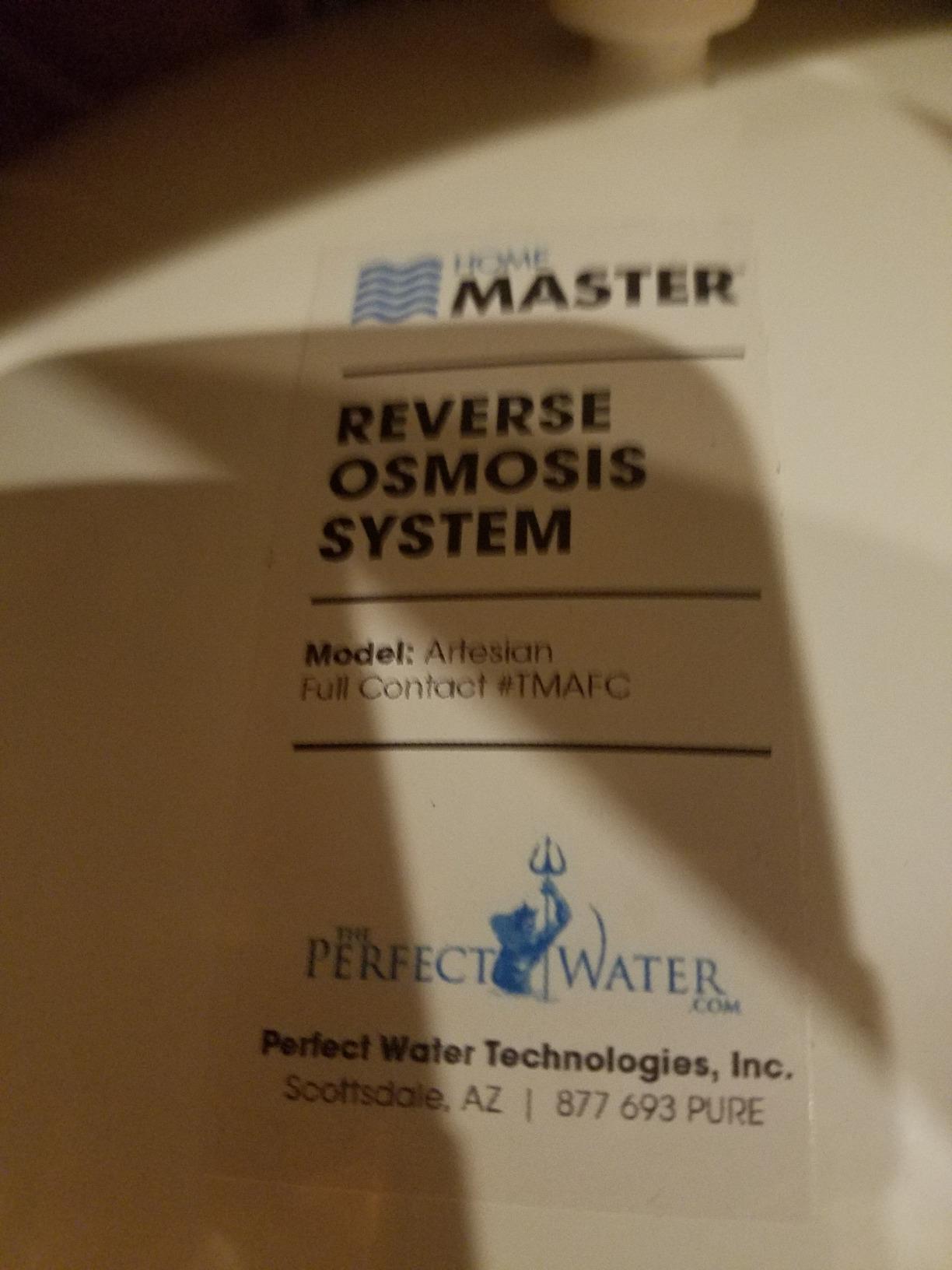
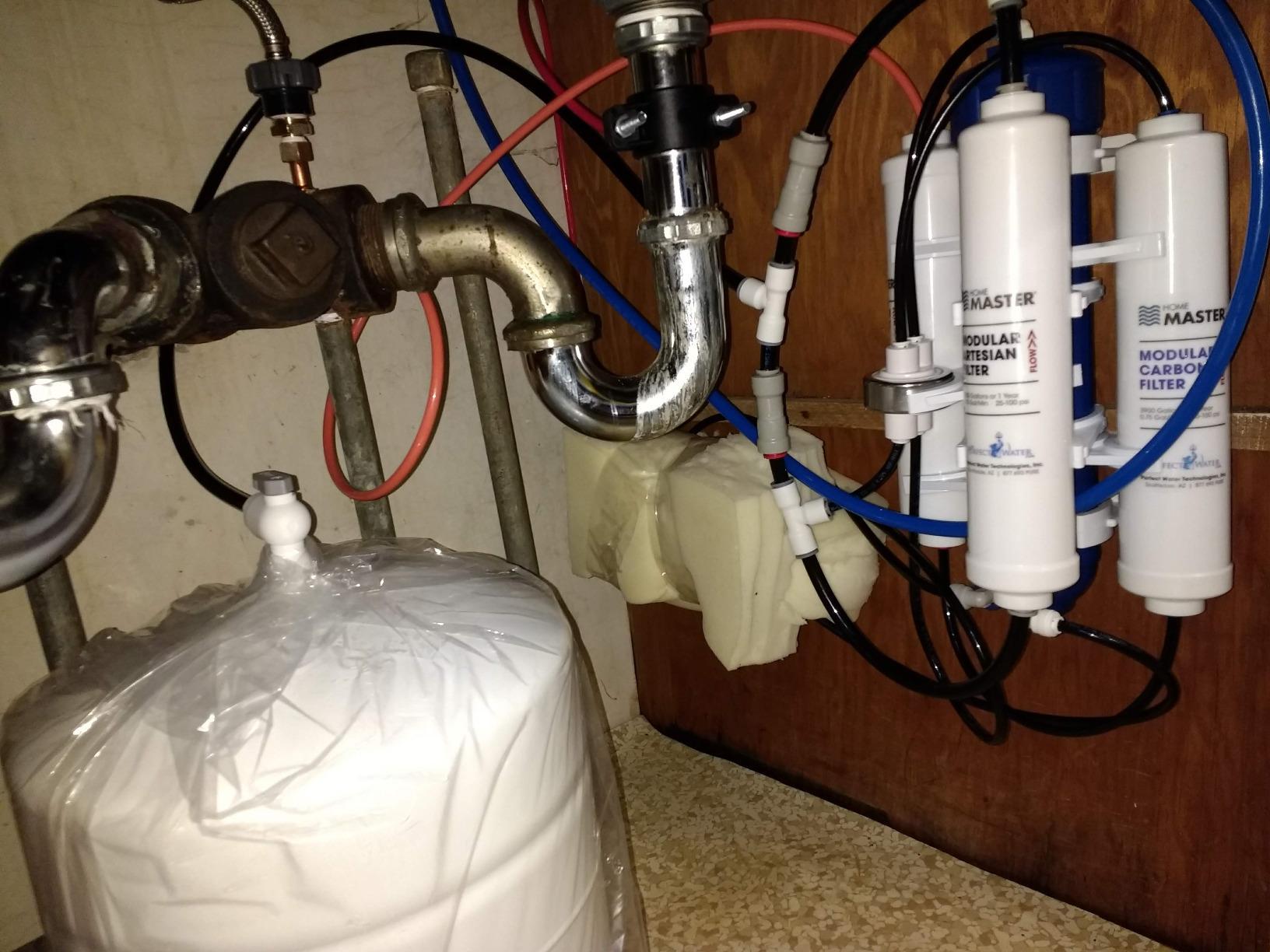
The flow figure is the standout. Larger fittings and tubing double the flow rate against traditional and tankless systems, filling 8 oz in about 4.5 seconds behind a DOW 0.0001 micron thin film composite membrane. The modular design allows tool-free annual filter replacement and leaves upgrade paths open.
The catch is output and footprint. Its 50 GPD membrane is matched only by the APEC in this roundup, and the filter cluster plus tank together take more cabinet width than a tankless unit. The kit is also dimensioned for North American plumbing threads.
Who the Home Master TMAFC suits
It suits buyers who intend to keep a system for a decade rather than replace it, and who read warranty length as a proxy for how confident a manufacturer is in its own parts. The 88 percent five-star share is the highest in the set, and only 3 percent of reviews are one-star.
It also suits anyone who cares about water taste enough to want minerals added twice, and anyone who wants a fast faucet more than they want high daily throughput.
Who should skip it
Skip it for a household of five or more, or if cabinet width is tight. A 50 GPD membrane refilling a tank is fine for drinking and cooking, but it is the wrong tool for an ice maker, a refrigerator dispenser, or heavy daily use across several people.
8. Waterdrop G2P600 – Best Budget Tankless System
Waterdrop G2P600 Under-Sink RO System, 600 GPD Tankless RO Water Filtration
600 GPD
Tankless under sink
NSF/ANSI 372 certified
2:1 pure-to-drain ratio
Pros
- Entry-level route to a 600 GPD tankless layout
- Twist-and-pull cartridges change in about 3 seconds with no tools
- 2:1 ratio uses about 60 percent less water than traditional RO
- 600 GPD fills a 200 ml cup in 8 seconds
- Self-install takes roughly 30 minutes
Cons
- Certified to NSF/ANSI 372 but not NSF/ANSI 58 for the full system as listed
- Feed water rated only to 500 ppm TDS
- Requires under-sink power for the built-in pump
- Extra filters still need buying beyond the included set
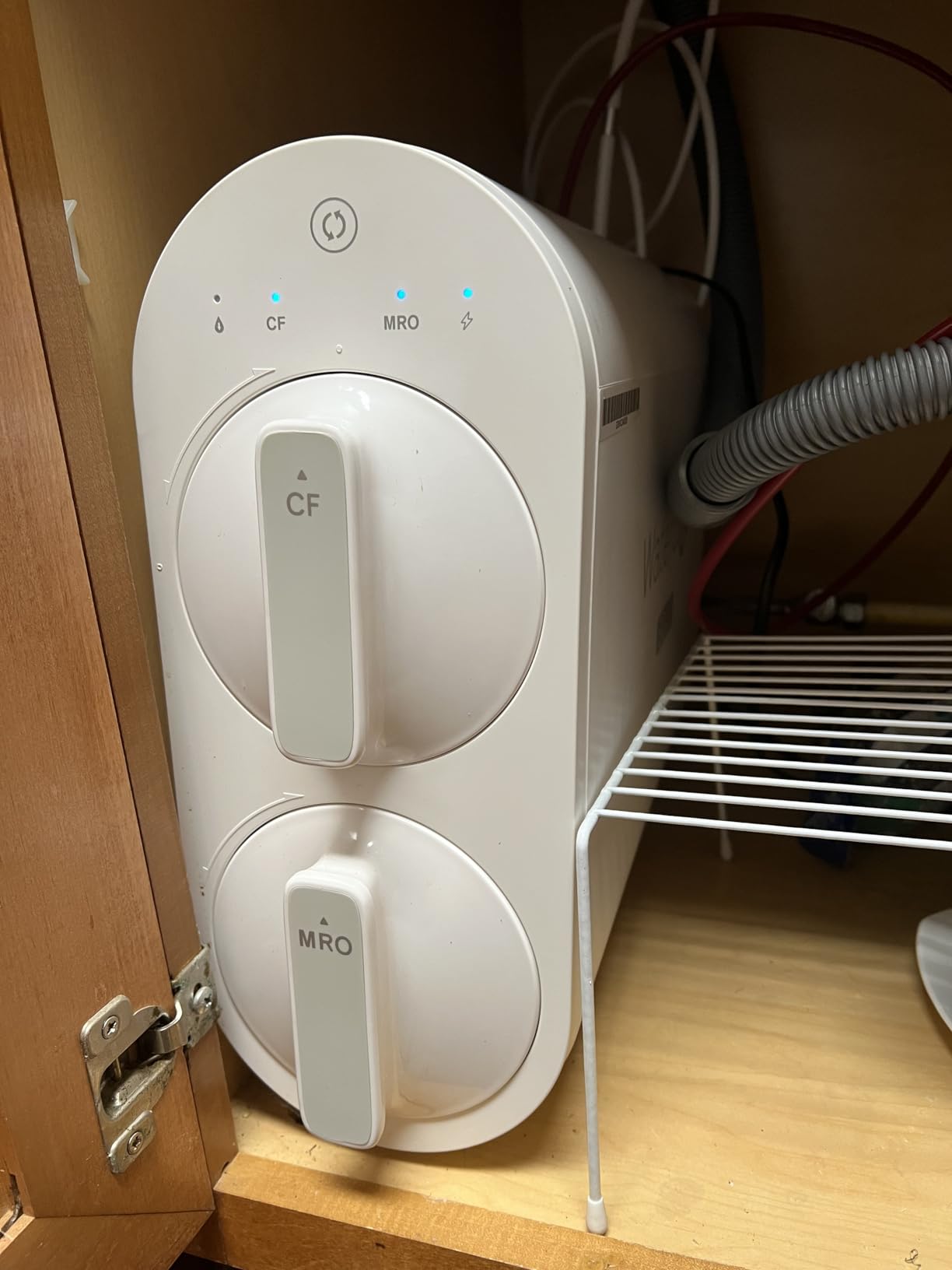
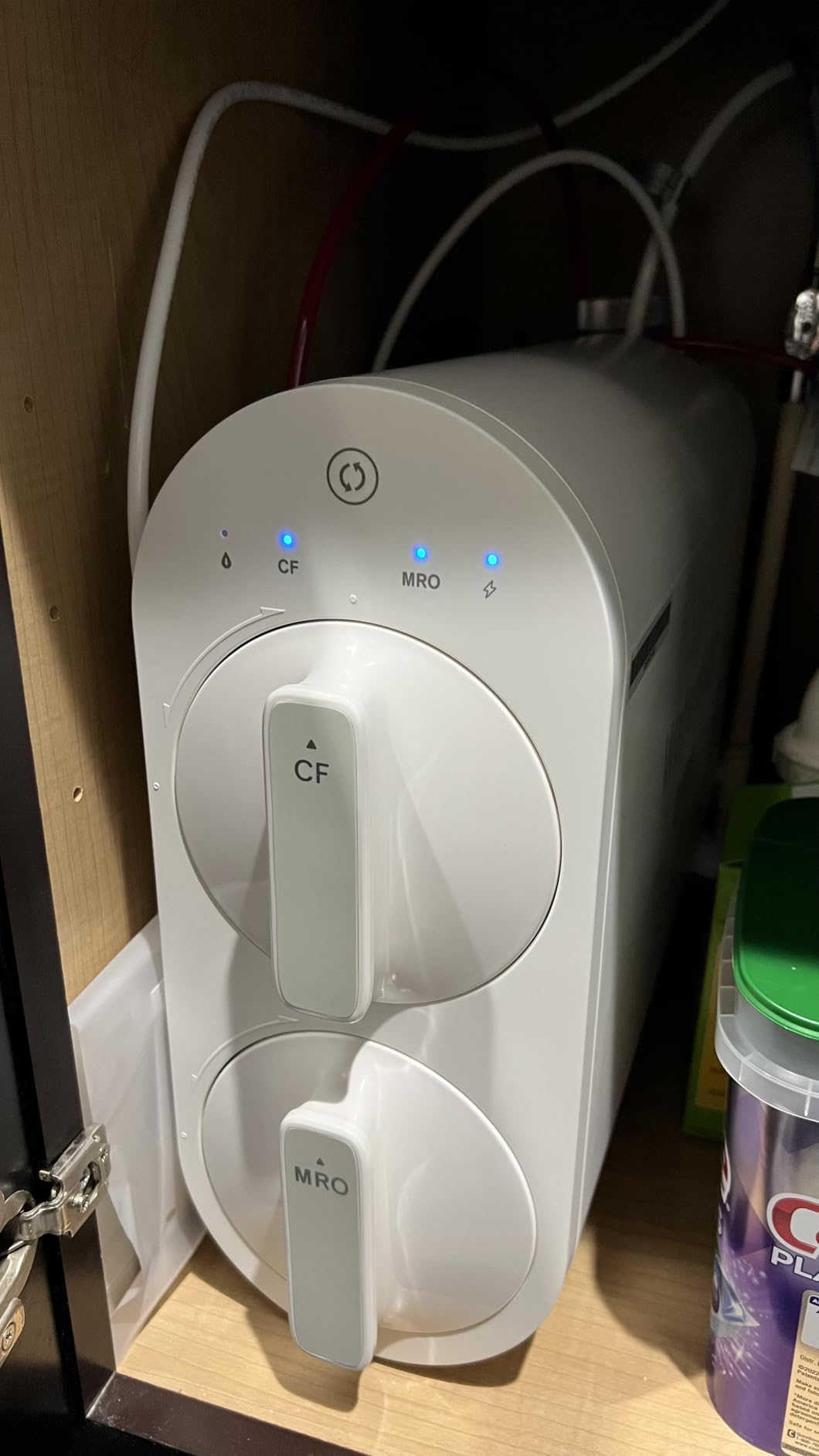
The G2P600 is where the G3P600’s engineering meets a much lower entry point, and for most buyers the trade is straightforward. You get 600 GPD tankless output, a 2:1 pure-to-drain ratio, and twist-and-pull cartridges that change in about three seconds without tools and without moving the unit.
Owners migrating from older tanked units tend to report the same reaction: the flow feels transformed. A 200 ml cup fills in 8 seconds, and the layout is 7-stage rather than the 3 pre-filters some competitors ship with. Installation takes about half an hour, and one set of filters plus the faucet comes in the box.
Now the certification caveat, and it is not small. As listed, this model carries NSF/ANSI 372, which certifies lead-free materials, but not NSF/ANSI 58 for the whole system. If your reason for buying an RO system is certified lead or PFAS reduction, the G3P600 is the Waterdrop to buy, not this one.
The 500 ppm feed water limit is the second constraint. That rules out hard or brackish well water and most high-mineral municipal supplies. The built-in pump also means an under-sink outlet, and filters beyond the first set are a separate purchase.
Who the Waterdrop G2P600 suits
It suits households moving up from a 50 or 75 GPD tanked system who want tankless space savings and better flow without stepping up to the G3P600’s cartridge budget. It also suits anyone who hates filter changes and wants a three-second twist instead of a wrench session.
For a household of three to four on low-TDS municipal water, the 600 GPD capacity is more than sufficient and the 2:1 ratio keeps waste down.
Who should skip it
Skip it if you are filtering specifically for certified contaminant reduction, if your feed TDS is high, or if you cannot provide an under-sink outlet. Under those conditions the certification and pressure limits outweigh the price advantage.
9. Glacier Fresh GFU03 – Best Non-Electric System With No Outlet Needed
GLACIER FRESH GFU03 Reverse Osmosis Water Filter System 800 GPD, TankInside
800 GPD
Non-electric water-powered under sink
Meets NSF/ANSI 58, 372 and 401
3:1 pure-to-drain ratio
Pros
- No electricity and no pump
- so no noise and no outlet needed
- Tank-inside layout saves up to 70 percent of cabinet space
- Built-in pressure gauge with yellow green and red ranges
- Tool-free install in about 30 minutes with adapters included
- Filter cartridge pulls out in about 3 seconds
Cons
- 800 GPD figure depends on inlet pressure
- Flow drops sharply after the first quart of a large fill
- Some production runs had feed and drink inlets labelled backwards
- Included drill bit will not cut stainless or cast iron sinks
- Included adapters are sized for North American plumbing threads
- 3:1 ratio is less efficient than the 2:1 tankless designs
The Glacier Fresh GFU03 is the answer to a problem most roundups ignore: not everyone can or wants to run power under the sink. It is water-powered, with no pump and no electrical connection, which means no pump hum, no outlet, and nothing to fail electrically. It meets NSF/ANSI 58, 372 and 401 and uses a 0.0001 micron membrane with published reduction claims across more than a thousand contaminants including PFOA and PFOS.
The claimed 800 GPD is the highest number in the roundup, and a cup fills in about 8 seconds. Owners report measured TDS falling from between 130 and 380 ppm into the 16 to 50 ppm range, and the silent operation is consistently described as the feature they notice every day.
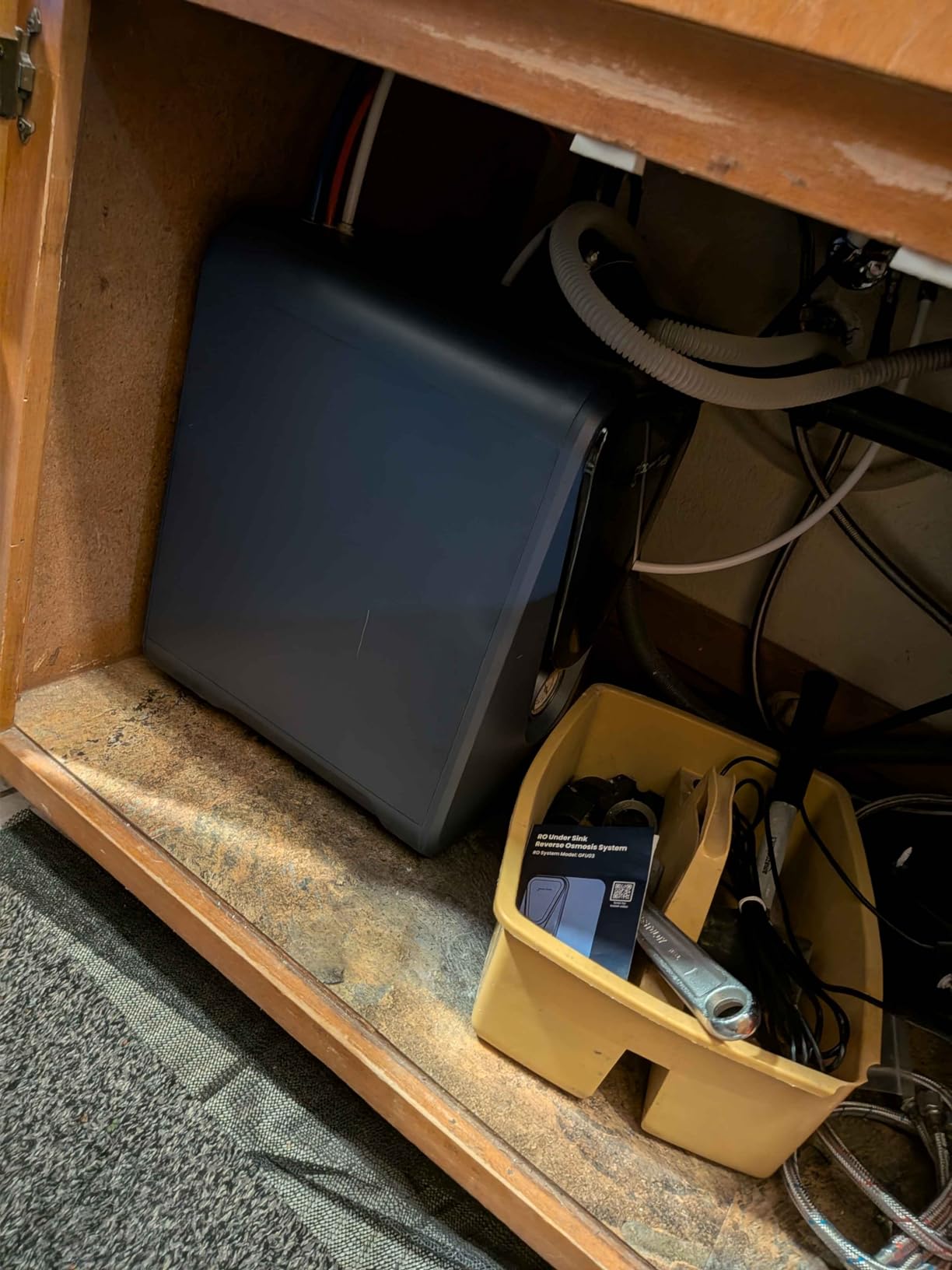
Two things temper the headline capacity. The first is that 800 GPD is a function of inlet pressure, and at least 40 psi is advised, with noticeably slower flow below that. The second is the internal reservoir: flow drops by about half once you have drawn your first quart of a large fill, because the small tank needs to recharge.
There are also small quality control and compatibility issues worth knowing. Some production runs went out with the feed and drink inlets labelled backwards, the included drill bit will not cut a stainless or cast iron sink, and the adapters are sized for North American plumbing threads only. The 3:1 ratio is also less efficient than the 2:1 tankless designs, and the review base of 530 is modest against the established brands.
Who the Glacier Fresh GFU03 suits
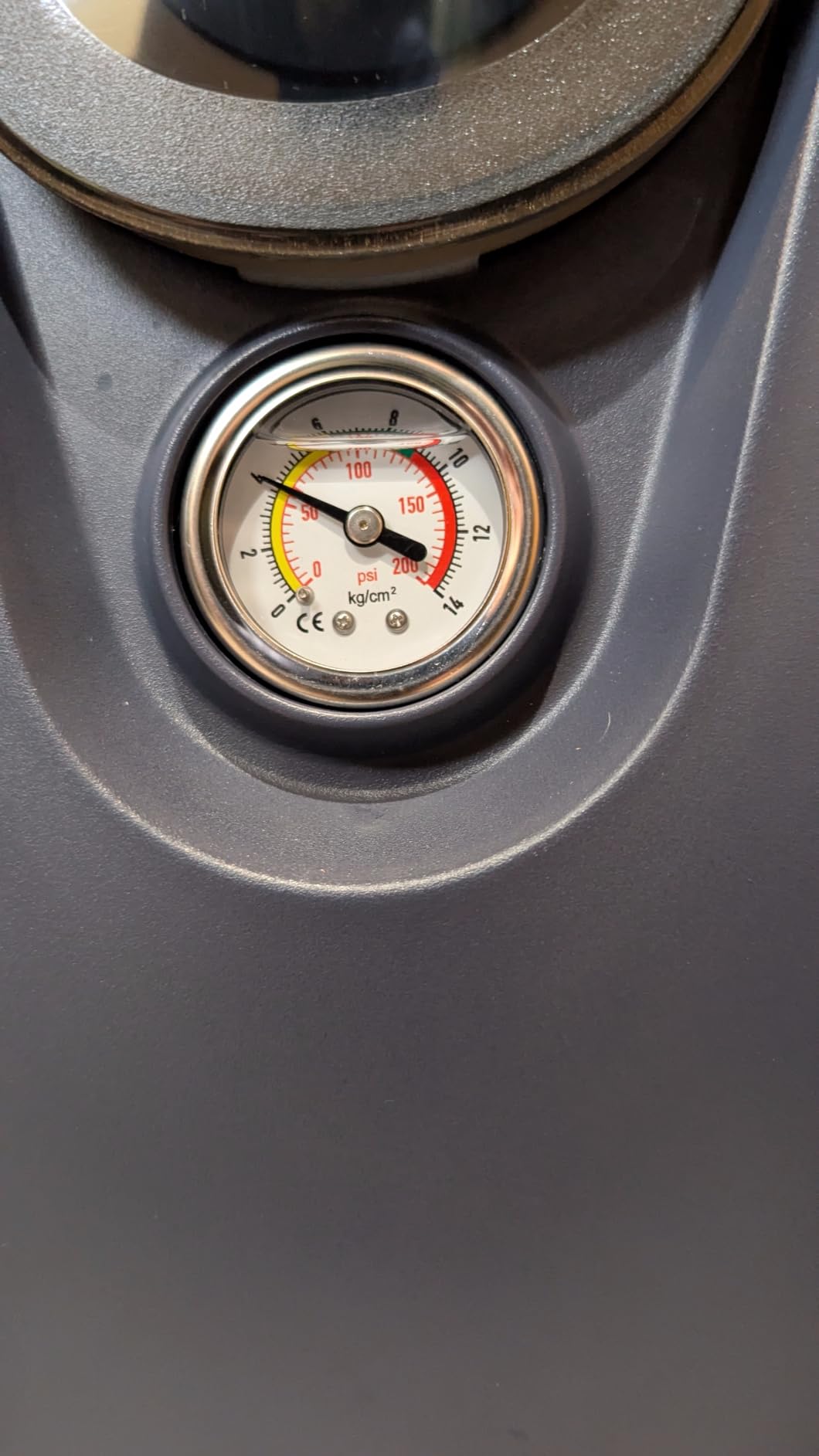
It suits households with no under-sink outlet, anyone in a small cabinet, and anyone who prefers silence. The built-in pressure gauge is a genuinely useful feature because it tells you whether slow flow is a plumbing problem or a filter problem, which is the first question you would otherwise be guessing at.
It also suits anyone who wants high listed capacity at a modest entry point, provided their line pressure is strong.
Who should skip it
Skip it if you are filling large containers or bottles in one go, because flow collapses partway through a big fill. Skip it outside North America given the fitting thread standards, and skip it if you have low line pressure and no intention of adding a booster pump.
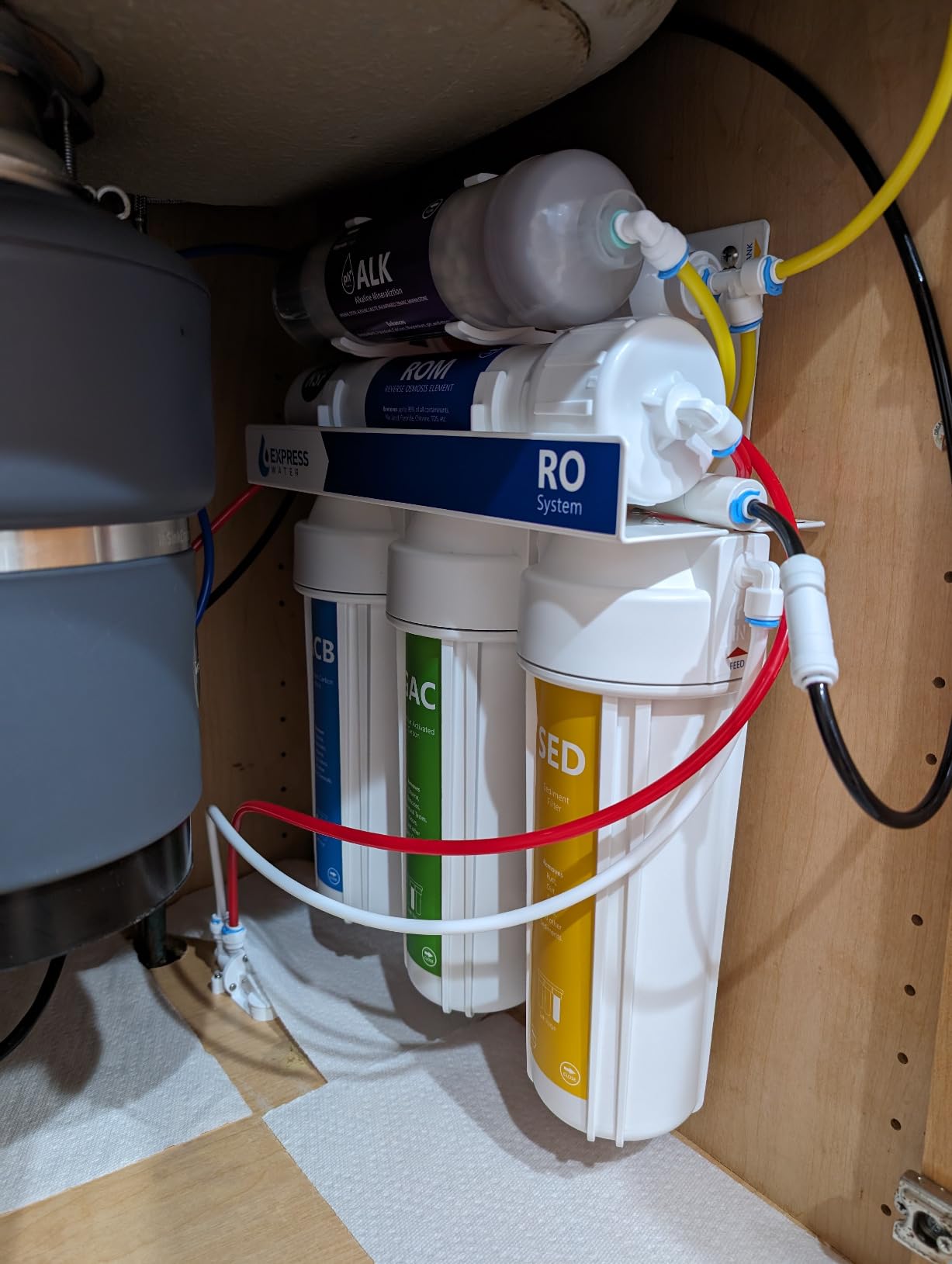
10. Express Water ROALK10D – Deepest Stage Count With Leak Detection
Express Water ROALK10D, 10-Stage Under Sink RO System, Alkaline, 100 GPD
100 GPD
10-stage under sink with tank
Alkaline Active Mineral Technology
Emergency leak stop valve
Pros
- Ten filtration stages
- the deepest stage count of the models reviewed
- 100 GPD with 0.8 gpm listed flow
- Active Mineral Technology adds calcium potassium and magnesium
- Built-in leak stop detector shuts off water on moisture
- Upgradable with UV and deionization stages on quick-connect fittings
Cons
- Smallest review base here at 101 reviews
- Heaviest and widest under-sink layout of the tanked models
- Requires drilling for the included faucet
- Unusual pedal-style feed valve confuses new installers
The ROALK10D does two things few other units in this roundup do. It runs ten filtration stages, the deepest configuration among the ten systems we reviewed, and it includes an emergency leak stop detector that shuts off flow automatically when its moisture sensor is triggered. In an under-sink cabinet full of plumbing, that second feature is arguably more valuable than the extra stages.
Output is 100 GPD with a listed flow of 0.8 gpm, which is markedly faster than the typical 50 GPD under-sink system. Active Mineral Technology alkalinises the water and adds calcium, potassium and magnesium, and published claims cover up to 99.99% reduction of lead, chlorine, fluoride, nitrates, calcium, arsenic and bacteria.
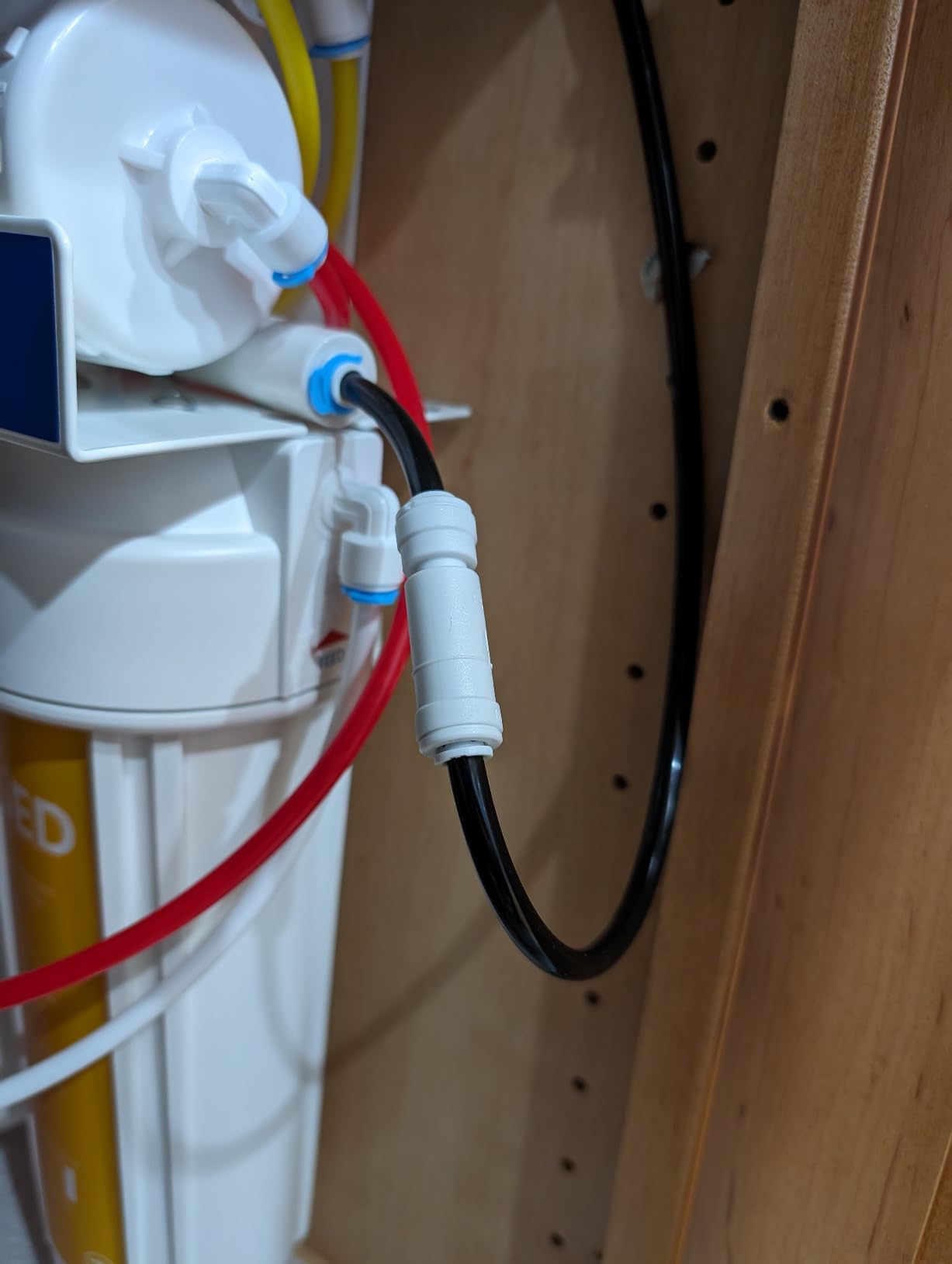
The upgrade path is unusual in a good way. Because the frame uses quick-connect fittings, UV and deionization stages can be added later without replacing the whole system. Common cartridge sizes and a 1-year warranty also make long-term ownership simpler than with proprietary parts.
The drawbacks are physical and evidentiary. With a listed weight of 27 pounds and a 10-stage layout, it is a bulky fit in a standard cabinet. The included faucet needs a drilled hole, several buyers substituted an all-in-one faucet instead, and the pedal-style push-and-lock feed line valve gets mistaken for a conventional shutoff. With 101 reviews, the long-term record is also the thinnest in the set.
Who the Express Water ROALK10D suits
It suits households that want strong flow from a tanked unit and care about leak protection in a cabinet where a slow leak would damage flooring. It also suits people who think they will want UV or deionization later and would rather not replace the entire system when that day comes.
It is a capable answer for well water users who would otherwise be quoted a commercial treatment package, provided the feed TDS is within the 1000 ppm rating.
Who should skip it
Skip it if cabinet space or drilling is a problem, and skip it if you want a deep body of long-term owner feedback before committing. The leak detector is excellent, but 101 reviews is not much evidence on which to base a five-year ownership plan.
Is There a Downside to Drinking Reverse Osmosis Water?
Yes, and it is a real one. Reverse osmosis removes roughly 93 to 98 percent of total dissolved solids, which means it strips calcium, magnesium, sodium and trace minerals along with the contaminants you installed it to catch. The water also comes out at a lower pH than most people enjoy, which is why it often tastes flat, empty, or occasionally bitter.
For a healthy adult drinking normal amounts, this is not an acute health risk. The kidney question comes up constantly in forums, and the calm answer is that there is no established evidence that drinking RO water harms healthy kidneys. People on restricted diets, people with kidney conditions, and people who sweat heavily and rely on water as a mineral source should ask their clinician rather than take a buying guide’s word for it.
The plumbing concern deserves a straight answer too, because it is raised often. RO water is aggressive enough to gradually dissolve calcium carbonate from copper and galvanised lines. The practical guidance is to use RO water for drinking and cooking, keep the cold tap flush with municipal water, and avoid running long dead-leg lines on filtered water.
Why RO water tastes empty or bitter, and how to fix it
Fix it with a post-filter, and almost every system in this roundup has one. An alkaline remineralization cartridge adds calcium and magnesium back after the membrane and raises pH above 7.5, which restores both taste and a small mineral content. The iSpring RCC7AK-BN, the Frizzlife PD600-TAM3, the Home Master TMAFC, the Bluevua and the Express Water all take this approach, and it is the single most effective upgrade you can make for taste.
A post-carbon polishing filter is the other answer. It smooths any sharp or bitter edge left after the membrane. If your water tastes flat, the membrane is doing its job and the missing piece is minerals, not more filtration.
Tankless vs. Tank-and-Storage: Which Fits Your Kitchen?
Storage tank systems are the traditional layout. Water filters into a pressurised tank through a bladder, and the faucet draws from that stored pressure. The upside is that the faucet delivers instantly with no pump noise and no power, which is why a 50 GPD tanked unit can still feel responsive. The downsides are cabinet space and stagnant water sitting in a bladder.
Tankless systems filter on demand. Water goes straight from the membrane to the faucet, which is why they run roughly 0.4 to 0.6 gpm and why the bigger ones are quoted at 600 to 800 GPD. They free up to 70 percent of cabinet space and remove the stored-water question entirely. The costs are power, pump noise, and in most cases a higher cartridge bill.
Our take: choose a tank if you are on a low budget, you have fewer than four people, and you do not have an outlet under the sink. Choose a tankless system if you have five or more people, you feed an ice maker or refrigerator, your cabinet is tight, or you care about water waste. On ratio, 2:1 tankless designs beat 3:1 tanked ones, and the non-electric tank-inside designs sit in between at 3:1.
How to Choose a Reverse Osmosis System
Start with capacity, which is measured in gallons per day. For drinking and cooking only, roughly 3 to 5 GPD per person is the working number. A couple needs a 50 to 75 GPD system with a tank. A family of four wants 100 GPD or a 300 to 600 GPD tankless unit. A household of six or more should look at 600 GPD and up, particularly if an ice maker is on the same line.
Then check the certifications, in the right order. NSF/ANSI 53 is the health-effects standard and the one that certifies lead reduction, while NSF/ANSI 58 certifies reduction of total dissolved solids and is the standard most RO systems should carry. NSF/ANSI 42 covers taste, odour and chlorine.
The 372 mark is the one most often misread. It certifies lead-free materials rather than lead reduction, so a tankless model listed only to 372, like the Waterdrop G2P600, is telling you its parts are lead-free, not that it lowers the lead in the water. A ranking competitor’s copy gets this category mixed up, and it changes what you should buy.
Watch the feed water rating, not just the output. Systems rated to 500 ppm will not be happy on hard or brackish well water. The APEC ROES-50 handles up to 2000 ppm and the Express Water to 1000 ppm, while several others cap at 500. Match this to your source before you match anything else.
For well water, add a whole-house sediment and iron filter ahead of the RO, because no membrane is designed to swallow grit. For municipal water, a carbon and softener setup upstream means the RO is mostly handling lead, PFAS and taste, which is still worth it but means you could meet the need with a high-capacity carbon filter instead.
Before that, check the water waste ratio, and then check the filter bill. A 2:1 ratio with cheap direct-from-manufacturer cartridges is a better five-year position than a 3:1 system with expensive proprietary parts. Make sure the cartridges you will need in year three are sold direct rather than only through a marketplace, because cartridge lock-in is the single most common reason owners regret a purchase.
Finally, measure your cabinet and your countertop before you order. A 10-stage cluster plus tank is the widest under-sink footprint in the roundup, a drill-free countertop unit is the narrowest, and a faucet with a large display may need a bigger countertop cutout than a standard RO faucet. If you are drilling stainless steel, use the correct bit and expect a slow job.
Form factor is the next decision, and it is a bigger fork than most roundups admit. Under-sink is the default because it is invisible, plumbed once and always there. Countertop is the no-commitment option for renters, dorms, offices and vacation rentals, at the cost of batch output and a visible appliance. Whole-house treatment is a different product entirely, sized by flow rate rather than by drinking need, and it belongs on a softener or a carbon and KDF setup if your concern is chlorine, hardness or taste across every tap.
It is worth asking whether you need RO at all. A carbon block filter handles chlorine, taste and odour cheaply, a KDF filter adds iron and heavy metal reduction, and ultrafiltration removes sediment plus some microbes but not dissolved solids. None of those remove fluoride, nitrates, arsenic, salt or PFAS the way an RO membrane does, and that difference is the entire reason to spend on reverse osmosis.
Common RO Problems and How to Fix Them
Almost every RO complaint reduces to one of five symptoms. The fix is usually cheap and usually takes under ten minutes.
Gurgling or spitting at the faucet. Usually the tank bladder refilling or a faucet opened only part way. Both are normal. If gurgling continues with the faucet fully open and the tank empty, check the shutoff valve and look for an air lock in the tubing.
Slow flow that will not improve. Check your line pressure first, then the sediment pre-filter. Below 40 psi a membrane cannot work properly no matter how new it is.
Water tastes bitter or flat. Flat means missing minerals, which a remineralization cartridge fixes. Bitter usually means the post-carbon polishing filter is exhausted.
TDS reading climbing back up. The membrane has reached the end of its useful life, typically between two and five years depending on feed water. Rising TDS with falling flow is the classic sign of a clogged membrane.
Water going to the drain with nobody drinking. A leaking tankless fitting, a failed auto-flush valve, or an open drain line. Tankless systems fail noisily here, which is an argument for a leak detector on tanked models.
Purge any new filter as the manufacturer directs. Flushing for 10 to 20 minutes after installation or replacement is standard practice and skipping it is the most common cause of a first glass tasting odd.
Filter life is the quiet cost of every system here. Sediment and carbon pre-filters on a municipal supply typically run six to twelve months, membranes two to five years, and alkaline or remineralization cartridges roughly a year on heavy use. Water hardness accelerates all of it, which is the strongest argument for a softener upstream if you are on hard well water.
Frequently Asked Questions
Is there a downside to drinking reverse osmosis water?
Yes. Reverse osmosis strips dissolved minerals such as calcium and magnesium and lowers the pH, which is why the water can taste flat or slightly bitter. For a healthy adult drinking normal amounts this is not an acute health risk. An alkaline remineralization post-filter adds minerals back and raises pH above 7.5, which fixes both the taste and most of the concern.
Is RO water hard on the kidneys?
There is no established evidence that drinking reverse osmosis water harms healthy kidneys. RO water is low in electrolytes, so people on restricted diets, with existing kidney conditions, or who rely on water as a primary mineral source should ask their clinician. For most healthy adults, drinking RO water daily alongside a balanced diet is not a concern.
Why does my reverse osmosis system gurgle?
Gurgling is usually normal. It comes from the storage tank bladder refilling as you draw water, or from a faucet that is only opened part way. If it continues with the faucet fully open and the tank empty, check the automatic shutoff valve and bleed any air locked in the tubing by running the faucet for several minutes.
What are the signs that my RO membrane is clogged?
Three signs point to a clogged membrane: slow flow at the faucet, a TDS reading that climbs back toward your incoming water level, and a storage tank that refills slowly even when the pre-filters are new. Silt blocking the membrane is usually a feed water problem, and a whole-house sediment filter upstream often fixes it.
What is the highest rated reverse osmosis system?
Rating depends on the marketplace, so certification matters more than star averages. In our scoring, the Home Master TMAFC holds the highest average rating at 4.7 across 909 reviews with a 5-year parts warranty, while the iSpring RCC7AK-BN pairs a 4.6 rating with more than 21000 reviews and full NSF/ANSI 58 certification. Check the certification listing rather than the star count.
Which Reverse Osmosis System Should You Buy?
For most households, the iSpring RCC7AK-BN is the right answer. Full NSF/ANSI 58 certification, 75 GPD, an alkaline stage that makes the water taste good, tool-free filter changes from above, and a support record backed by more than 21k reviews. If you want a tankless upgrade and have an outlet under the sink, move to the Waterdrop G3P600 for its four-standard certification and 2:1 ratio.
Match the exception to your situation. Renters with no drilling should look at the Bluevua RO100ROPOT. Homes without an under-sink outlet should look at the Glacier Fresh GFU03. Hard or high-mineral water should point to the APEC ROES-50. Buyers who plan to keep a system for a decade and care about taste should look at the Home Master TMAFC and its 5-year parts warranty.
Whichever you pick, the two things that decide whether you are happy in year three are the feed water rating and the cartridge cost. Check both against your actual water and your actual household size before you order, and the best reverse osmosis systems for drinking water become a purchase you make once rather than a cycle you keep repeating in 2026.