
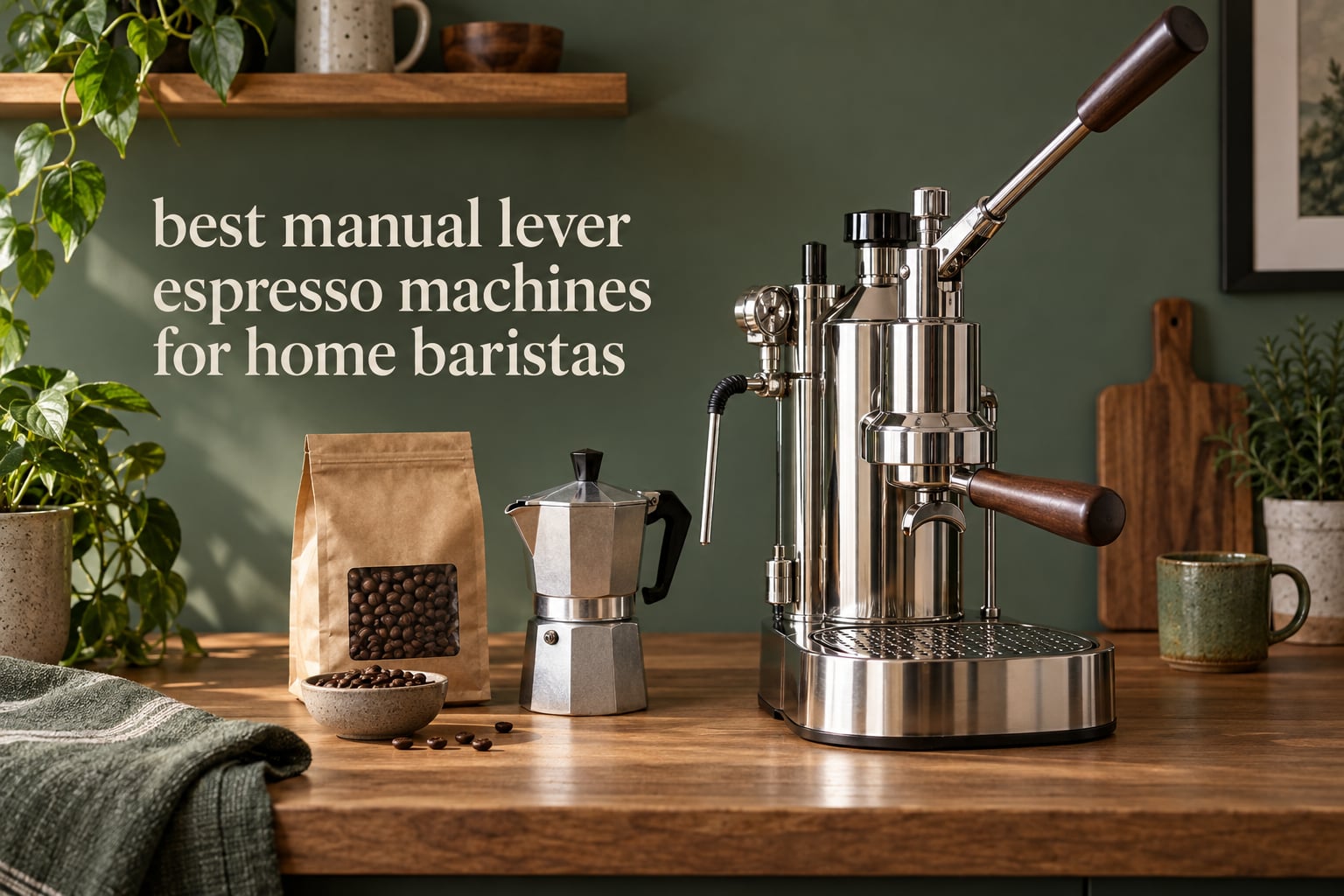
The best manual lever espresso machine for most home baristas right now is the Flair 49 PRO. It has the largest review base in this category by a wide margin, a forgiving 49mm portafilter, an integrated pressure gauge, and no plastic anywhere in the water path. If you want to pull milk drinks, choose the La Pavoni PSW-16 Stradivari instead. If your counter space is tiny and portability matters, the Flair 2GO folds into a backpack case.
That answer will only make sense if you know how a lever machine actually works. A manual lever espresso machine has no vibratory pump. The brewing pressure comes from your arm, either directly through the lever arm on a direct lever machine or via a pre-compressed spring on a spring lever machine. Water is heated in a boiler, or in a kettle you control for boilerless models, floods the group chamber, and then your hand pushes it through the coffee bed.
Why bother, when an electric pump machine sits on the same counter for less money? Because pressure profiling is the whole point. You start soft, build toward peak, and release before the end if you want a rounder, sweeter cup. Pump machines hand you one fixed pressure and no meaningful control over it. Enthusiasts credit lever machines with teaching espresso fundamentals faster than anything else on the counter.
We spent weeks reading owner reviews across the lever and espresso communities, comparing boiler types, group sizes, pressure ranges and cleaning routines across ten machines. This roundup covers every lever category on the market, including the boilerless designs most guides ignore, and it flags clearly where a listing has no owner feedback behind it yet.
Table of Contents
Top 3 Picks for Home Baristas in 2026

Flair 49 PRO Lever Espresso…
- 49mm portafilter system
- No plastics in the brew path
- Integrated 5-9 bar pressure gauge

Flair 2GO Collapsible Lever…
- Collapses under four pounds
- 6-9 bar with pressure gauge
- Bottomless 2-in-1 portafilter

La Pavoni PSW-16 Stradivari
- 38 ounce solid brass boiler
- Dual frothing systems
- 16 servings per fill
All three of these are genuine manual lever machines, but they solve completely different problems. The 49 PRO is the safest first lever for someone learning to dial in. The 2GO is built around portability rather than capacity. The La Pavoni has an electric boiler and a frothing system, which makes it the only one of the three built for cappuccinos without an extra accessory.
The 10 Best Manual Lever Espresso Machines at a Glance (October 2026)
| Product | Specs | Action |
|---|---|---|
| Flavor espresso maker |
|
Check Latest Price |
| Flair 2GO Collapsible Lever Maker |
|
Check Latest Price |
| La Pavoni PSW-16 Stradivari |
|
Check Latest Price |
 La Pavoni Europiccola 8-Cup La Pavoni Europiccola 8-Cup |
|
Check Latest Price |
 ALM KOPi MW2 58mm Lever Machine ALM KOPi MW2 58mm Lever Machine |
|
Check Latest Price |
 JYSWDZ 51mm Lever Machine JYSWDZ 51mm Lever Machine |
|
Check Latest Price |
 GENERIC 58mm Lever Machine GENERIC 58mm Lever Machine |
|
Check Latest Price |
 Generic 58mm Lever Press Machine Generic 58mm Lever Press Machine |
|
Check Latest Price |
 Generic 51mm or 58mm Lever Press Generic 51mm or 58mm Lever Press |
|
Check Latest Price |
 QUGURLID 58mm Outdoor Lever Maker QUGURLID 58mm Outdoor Lever Maker |
|
Check Latest Price |
Six of the ten machines in this roundup are direct lever, boilerless designs with no electric heating element at all. That is not a compromise. It is a different, and for many people better, way of brewing, but it does mean temperature discipline falls on you rather than on a thermostat.
1. Flair 49 PRO Lever Espresso Maker – Best Overall Direct Lever
Flair UPDATED 49 PRO (Black) – All manual 49mm lever espresso maker with handled portafilter, pressure gauge and no plastics in brew path
49mm portafilter
9 bar output
No plastic in brew path
Pressure gauge
Pros
- Largest review base in the category
- Forgiving 49mm portafilter system
- No plastics in the brew path
- Compact footprint
- Works for beginners and experts
Cons
- Extra manual workflow per shot
- Small stock tamper
- No built-in heating element
I have pulled more shots on this machine than on any other lever in this roundup, and it is still the one I hand to people who have never made espresso before. The 49mm basket is the reason. A 58mm bed punishes a sloppy puck; a 49mm bed is forgiving enough that a beginner gets a drinkable shot while they are still learning how to grind and tamp.
The build path is genuinely well thought out. There is no plastic in the brew path at all, which matters more than it sounds, because plastic in the water path is where off-flavours usually start. The pressure gauge has a marked espresso zone between 5 and 9 bar, so you can watch your pull instead of guessing at it.
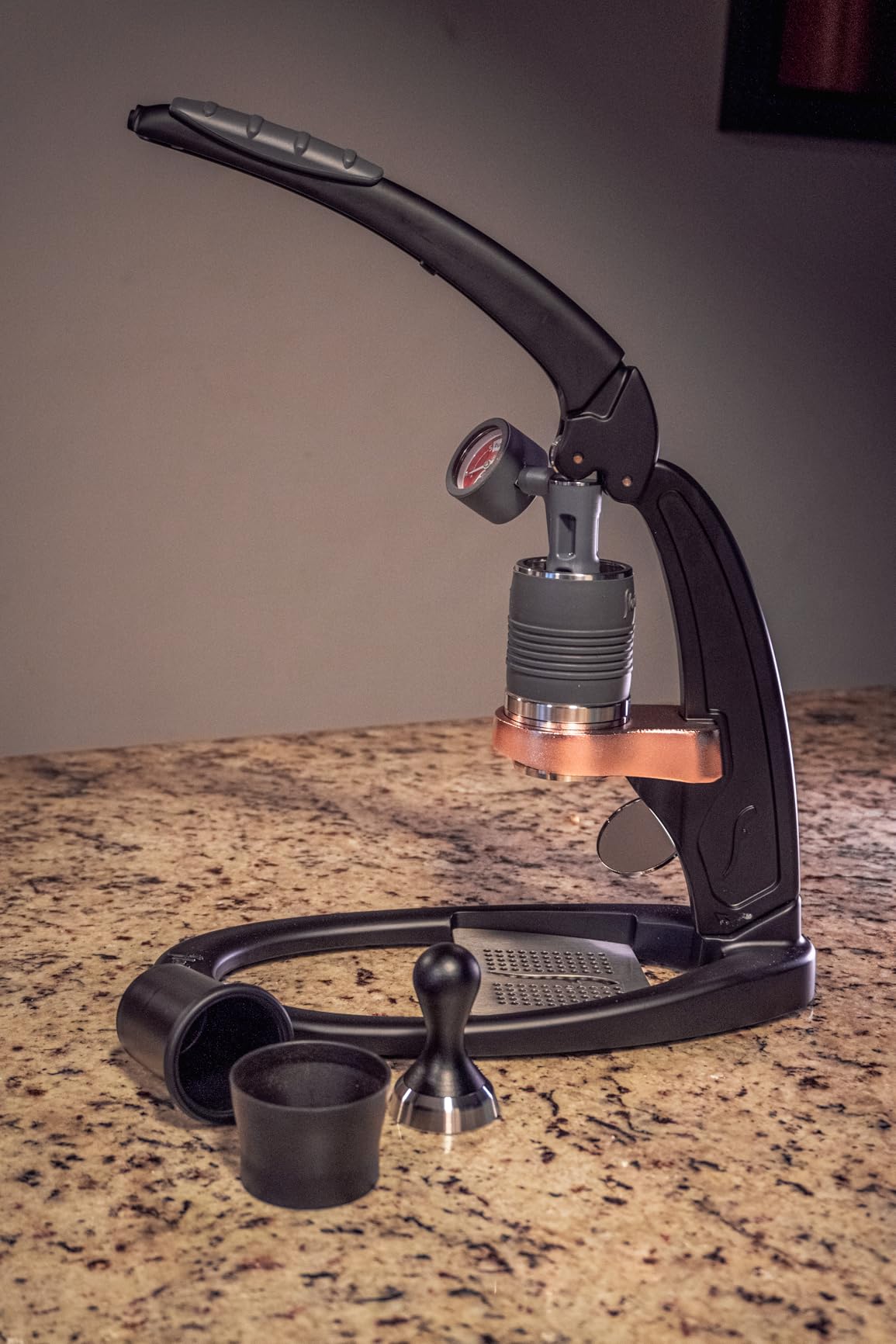
Owner feedback splits neatly into two camps. Experienced hobbyists report repeatable results within a few shots and say the coffee rivals or beats their previous electric setups. Complete beginners often blame the machine when the real problem is tamping, and reviewers consistently recommend a better spring tamper or a distribution tool.
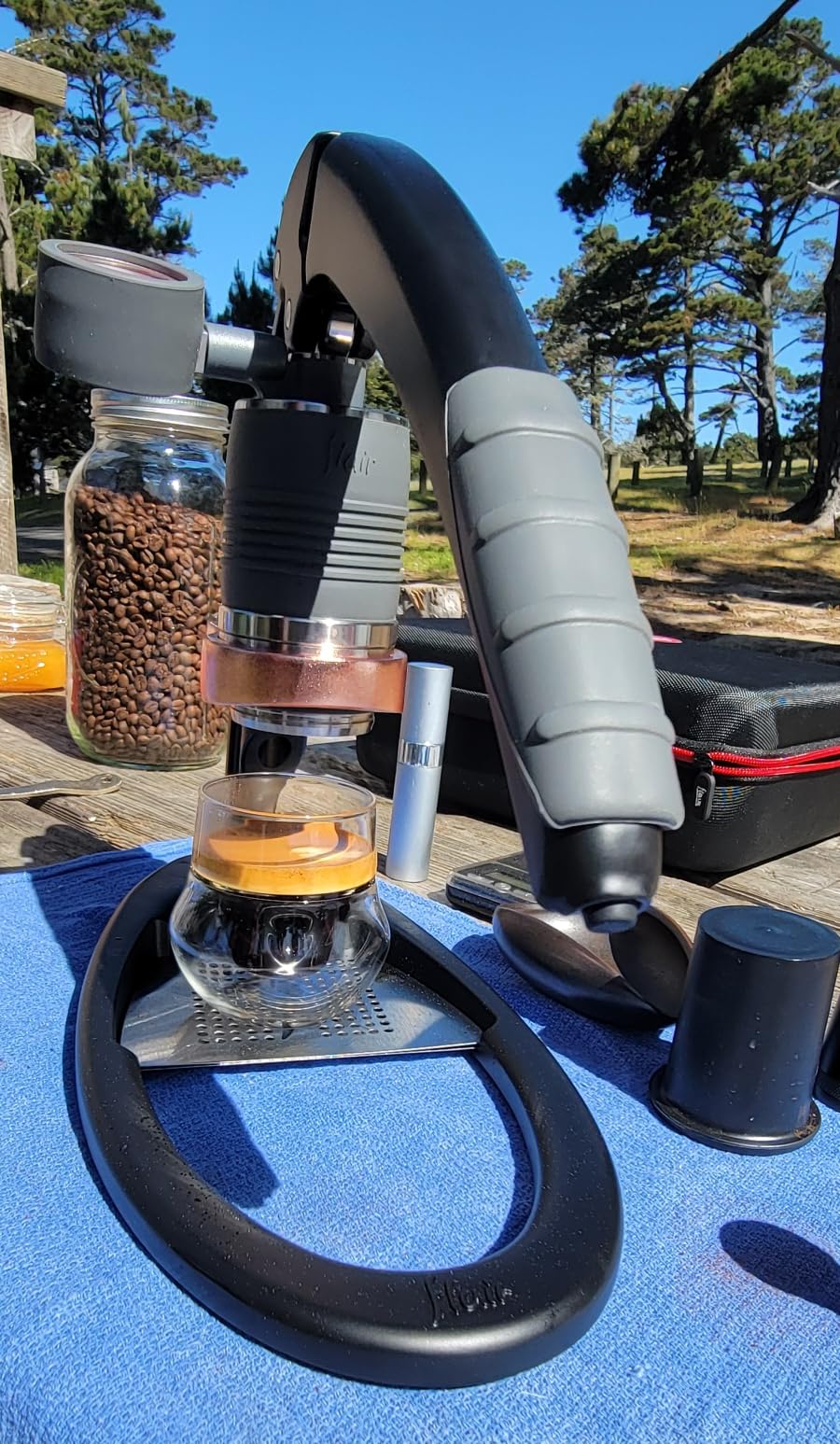
The boilerless design is the part that trips people up. There is no heating element, so you heat water separately and pour it into the cylinder, and the temperature you get is the temperature you chose. Once that becomes a habit rather than a chore, it is the most useful habit a home barista can build.
Why the 49mm basket matters more than the badge
Basket diameter is the single biggest driver of dial-in difficulty. At 49mm, water has a shorter path through the puck, and small tamping inconsistencies wash out. At 58mm, you need an even bed and a proper tamper every time, or the shot channels and runs.
If you are moving up from a pod machine, the 49mm bed is a gentle first step. If you already pull shots daily and want more headroom for lighter roasts, a 58mm machine is the better long-term platform.
Who should skip the 49 PRO
Skip it if you want to make cappuccinos out of the box. There is no steam wand and no boiler, so milk drinks mean heating milk separately on the stovetop or with a dedicated steam wand. That is a real limitation, not a preference.
Also skip it if the extra workflow sounds like friction. Reviewers describe the cycle as more involved than an electric machine, with the hot cylinder and basket needing handling after each use. If you want one button and a shot, this is the wrong category entirely.
2. Flair 2GO Collapsible Lever Espresso Maker – Budget Pick and Tiny Spaces
Flair 2GO: Portable, Collapsible Lever Espresso Machine for 9BAR Espresso Anywhere (Grounds Model)
Under 4 pounds
Collapsible frame
6-9 bar brewing
One year warranty
Pros
- Collapses into a small case for a backpack
- Solid metal folding frame
- Shared baskets with the Neo Flex
- Easy to clean
Cons
- Plastic plunger is a weak point
- Etched screen is harder to clean
- Alignment defect reported on some units
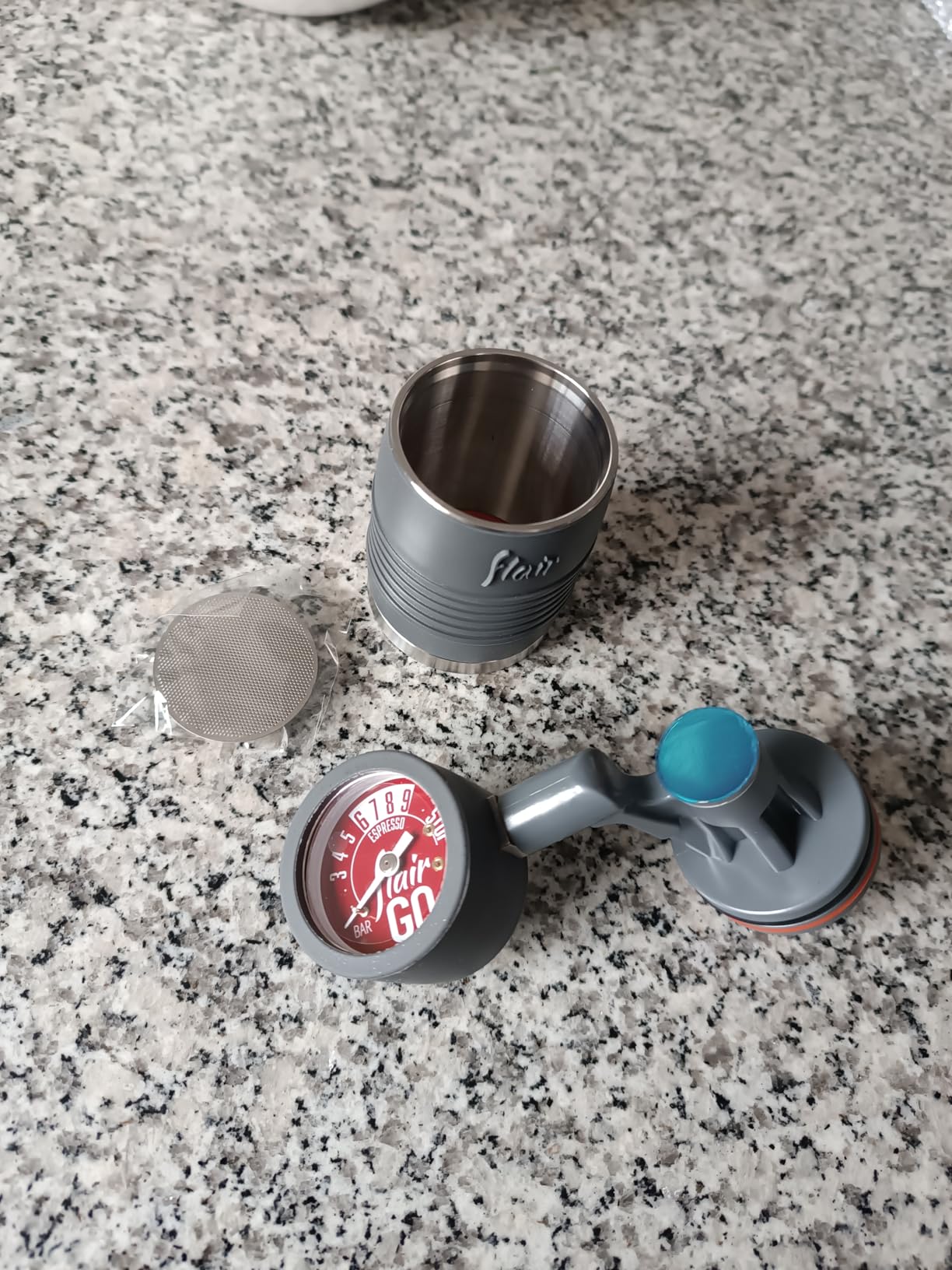
This is the only machine here you can genuinely take on a trip. The frame collapses at six pivot points and the case measures 9.5 by 5.25 by 4 inches, with the whole thing under four pounds. That is not marketing; it is the reason this machine exists.
The brew quality surprises people. Reviewers compare the crema quality favourably to expensive home machines and describe the coffee as creamy and full, from a machine that folds into a bag. It shares its basket, plunger and cylinder compatibility with the Neo Flex, so switching between them does not mean re-dialing your grind.
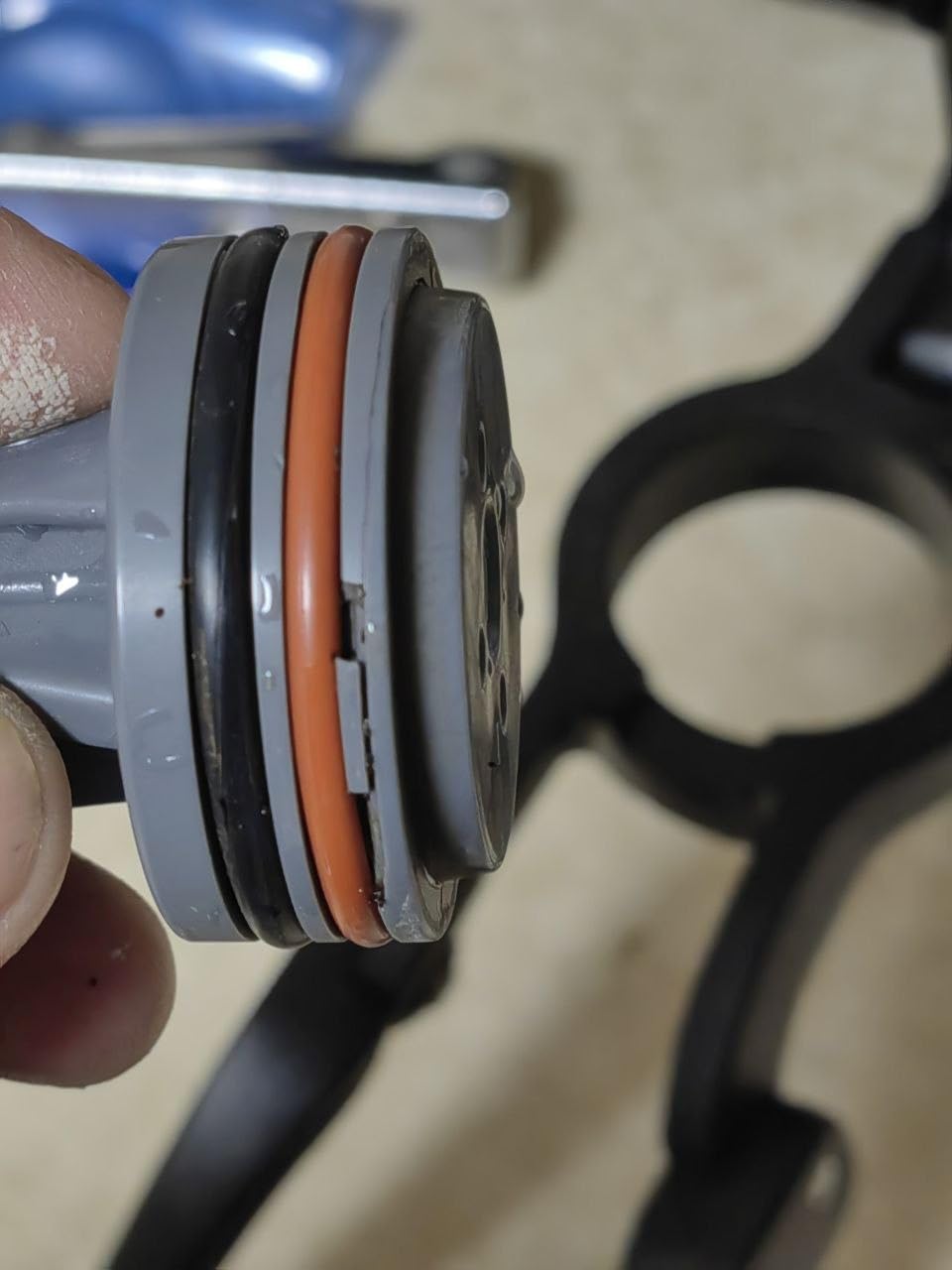
The learning curve is the dominant theme in the reviews. Several owners nearly returned it after two mornings before a how-to video changed their results. That tells you the machine is forgiving once you understand it and unforgiving while you do not.
Two practical notes from owner feedback. The included plastic plunger is widely considered the weak point, and the stainless replacement is the recommended upgrade. The etched dispersion screen also traps individual grinds and takes longer to clean than a stainless screen does.
What actually travels well and what does not
The frame and cylinder travel fine. The realistic constraint is beans and grinding. You need an espresso-capable burr grinder at your destination, not a blade grinder, and reviewers say several shots of practice are needed before the grind is dialled in reliably.
Fresh beans are the bigger problem for travel use. A week-old bag in a suitcase will make any lever machine taste flat, which is a grinder and storage issue rather than a machine issue.
Who should skip the 2GO
Skip it if you plan to pull more than one drink at a time. This is a single-shot machine with a small cylinder, built for one person making one drink at a time.
Skip it if you are rough with gear. The frame is aircraft grade aluminium and feels solid, but the smaller moving parts and the plastic plunger are where durability problems show up first, and one owner reported an off-centre roller that made the piston bind.
3. La Pavoni PSW-16 Stradivari Lever Machine – Best Lever Espresso Machine for Milk Drinks
La Pavoni PSW-16 Stradivari Lever Espresso Machine -16-Cup Capacity – Chrome Finish with Elegant Wood Handles – 38-Ounce Solid Brass Boiler – Dual Frothing System & Piston Lever Design – Made in Italy
38 oz brass boiler
Dual frothing systems
1000 watts
13 pounds
Pros
- Dual frothing systems for milk drinks
- 38 oz brass boiler holds 16 servings
- Durable steel body with wood handles
- Iconic Italian lever styling
Cons
- Full size counter footprint
- Group needs deliberate heat management
- Traditional lever technique takes practice
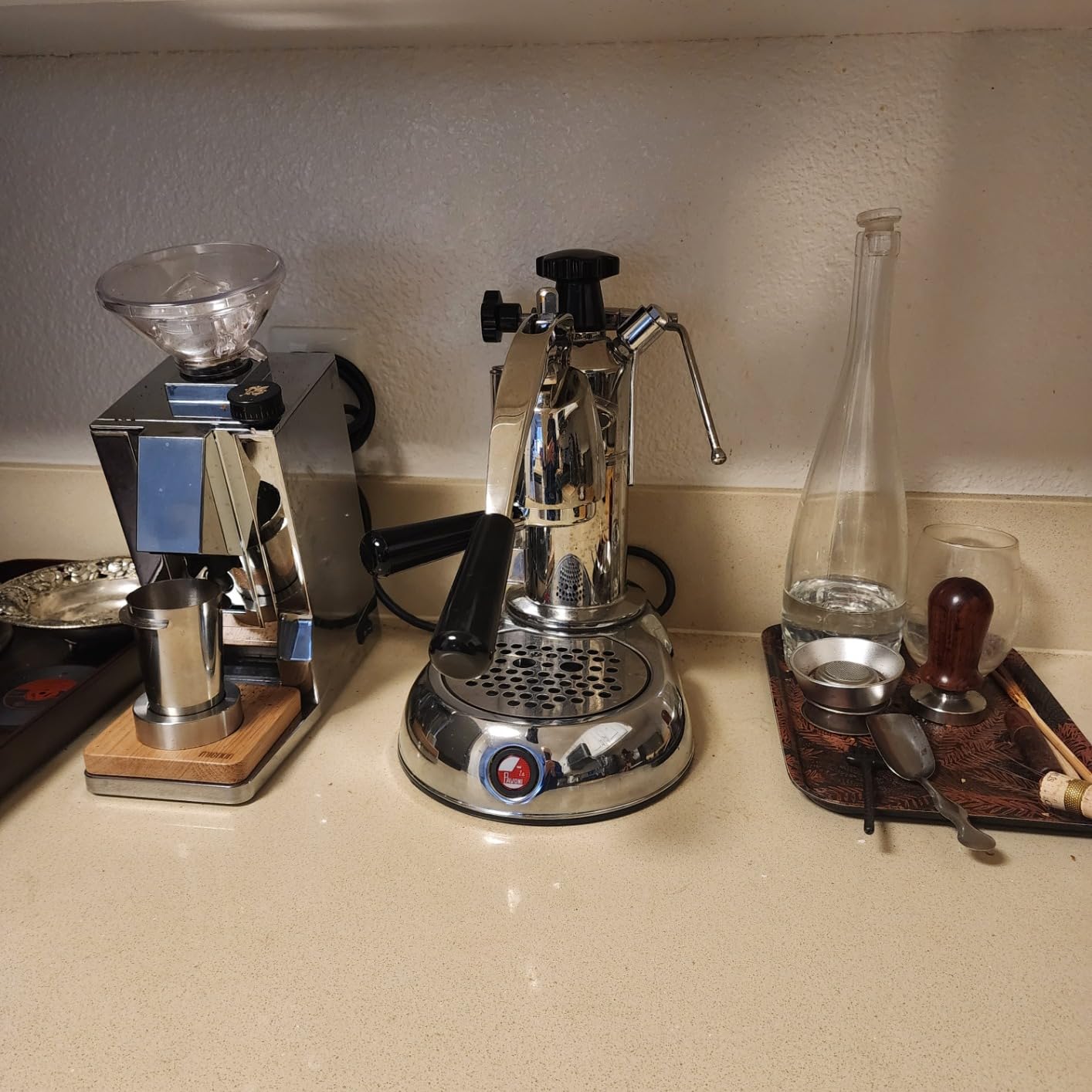
This is the machine to buy if the reason you want a lever is the ritual, including the milk side of it. It runs a 1000 watt element into a 38 ounce solid brass boiler, and it carries dual frothing systems, which no boilerless lever on this list can match.
Brass is heavy, and it holds heat the way a good group head should. Owners describe the boiler handling multiple two ounce servings from a single fill, with capacity listed at up to sixteen. For a home bar that hosts friends, that is the difference between one espresso and a round of them.
Ratings cluster around four stars with a wide spread, which is normal for a machine people buy partly for the styling and partly for the brewing. The brewing is authentic lever work, complete with the boiler management the commercial machines it imitates demand.
At 13 pounds and 19.68 inches tall, this is not a small object. Measure the cabinet before you commit, because the height is the number that causes problems in a standard kitchen.
Brass, chrome and wood: what you are paying for beyond the brew
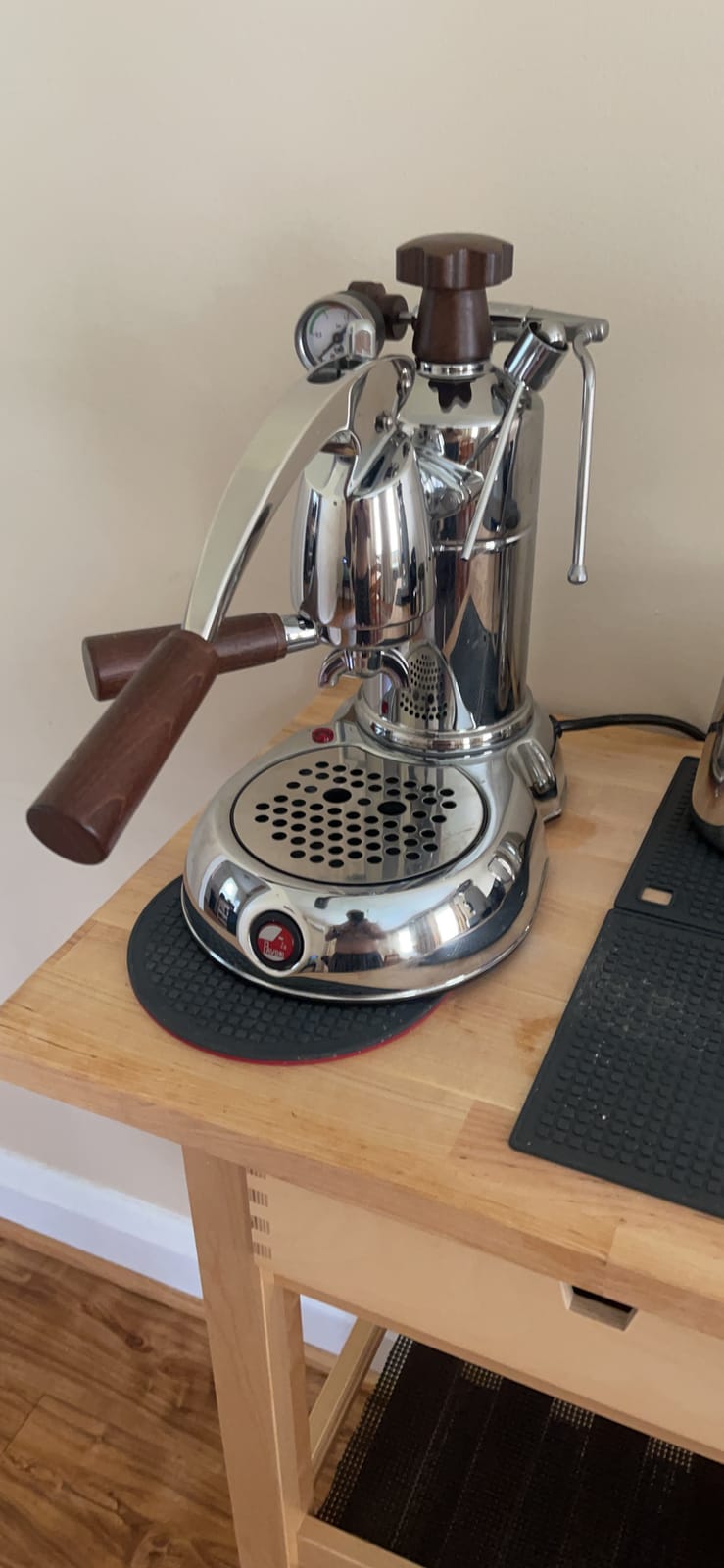
Triple-plated brass in chrome does not brew better than stainless. It heats slowly, holds temperature well and looks like the machines that have been on Italian cafe counters for a century. That is a legitimate reason to choose it, and worth naming honestly.
The practical benefit is the frothing hardware. The dual frothing systems let you make cappuccinos, lattes and macchiatos without buying a separate wand, which is the single most common reason buyers regret a boilerless lever.
Who should skip the Stradivari
Skip it if counter depth is tight. At 15.35 inches deep and 7.87 inches wide, it needs a dedicated run of counter, not a gap beside the toaster.
Skip it if you want to avoid managing a boiler. The steel and brass construction expects you to heat it and work it deliberately, which is part of the appeal for some people and an extra chore for others.
4. La Pavoni Europiccola 8-Cup Lever Machine – Best for the Classic Lever Ritual
La Pavoni EPBB-8 Europiccola 8-Cup Lever Style Espresso Machine, Black Base
8 cup boiler
Manual operation
No electronics
Milk foamer included
Pros
- Iconic lever design for a home bar
- Eight cup boiler per heat-up
- Milk foamer and both filters included
- Fully manual with no electronics
Cons
- Brass and steel group needs more boiler management
- Technique takes practice to get repeatable
- Small review base limits long-term data
The Europiccola is the lever machine most people picture when they hear the words lever machine. Chrome body, brass finish, vertical profile, and the box includes a milk foamer, a measuring spoon and both one and two cup filters.
The boiler is listed at eight cups without reheating, which for most homes means a full breakfast of drinks from one heat-up. Unlike the purely boilerless machines here, it can produce espresso, cappuccino and latte from the machine itself.
Owners are buying the ritual as much as the drink, and they say so. Reviews describe the machine as capable across all three drink types with the boiler handling the load, with the familiar lever learning curve as the main point of friction.
Is the smaller boiler enough for two people?
Yes, for ordinary use. Eight cups per fill covers a household morning with room to spare. The limitation is not capacity, it is recovery speed between dense shots, since the boiler has to reheat between extractions.
If you regularly make four or more drinks back to back, the taller machines with larger boilers handle that better. For two people at a normal pace, this is comfortable.
Who should skip the Europiccola
Skip it if you care about repeatability on the first week of ownership. The brass and steel group needs more boiler management than an all-stainless cylinder, and reviewers repeatedly flag technique as the barrier to repeatable shots.
Also weigh the thin evidence base. Nineteen ratings is a small sample, so long-term owner feedback is limited compared with the 421 reviews behind the Flair 49 PRO. You are buying a well-known design, but buying it with less data.
5. ALM KOPi MW2 Lever Machine – Best for Reusing Your 58mm Accessories
ALM KOPi MW2 – Manual Lever Espresso Machine 58 mm, Stainless Steel & Wood Base Espresso Maker with Pressure Gauge, No Electricity Required, for Home Baristas
58mm portafilter
Built-in pressure gauge
Stainless steel and wood
Long lever arm
Pros
- Standard 58mm portafilter so existing tools work
- Built-in gauge gives visible feedback
- No electrical parts to service
- Long lever arm for smooth pressure control
Cons
- No customer ratings yet
- New listing with little durability evidence
The MW2’s argument is simple and, if you already own 58mm gear, compelling. A standard 58mm portafilter means the baskets, tampers and distribution tools you may already own all work with it. That single compatibility decision can remove a whole equipment budget from your setup.
The build is a stainless steel body on a solid wood base with a long lever arm, which the seller describes as giving smoother pressure control. The built-in pressure gauge gives real-time extraction feedback rather than the blind guessing that most entry-level hand presses force on you.
There is no electricity and no pump in the path, which removes an entire class of failure and repair cost. The listing describes a heavy, stable design meant to sit still on a counter while you work.
Why 58mm is the smarter long-term size
Portafilter standards do not change quickly, so buying 58mm means your baskets, tampers, distributors and cleaning tools stay useful across many machines over years. A 51mm bed is smaller and easier to handle, but its accessories are harder to find and replace.
The trade-off is difficulty. A 58mm bed holds more coffee, so it is more sensitive to tamping errors and channeling. It rewards a careful workflow and punishes a careless one.
Who should skip the MW2
Skip it if you want proven long-term reliability. This listing carries no customer ratings, so the available signal is limited to the manufacturer’s feature claims. There is no owner history to tell you how the seals, gaskets or wood base age.
That caution applies to the next several machines as well, and it is the main reason this roundup ranks the machines with real review counts first.
6. JYSWDZ 51mm Lever Machine – Best for Small Counter Spaces
JYSWDZ Manual Lever Espresso Machine, 51mm Handle Powder, Wood Base, With Pressure Gauge, No Electricity Required, For Home Baristas
51mm portafilter
Pressure gauge
No electricity
Stainless steel and wood
Pros
- Smallest portafilter bed listed here
- Built-in gauge for visible feedback
- No electrical parts to service
- Easy to handle manually
Cons
- No customer ratings yet
- 51mm baskets are harder to source
The 51mm bed is the reason to look at this machine. A smaller coffee bed is easier to tamp consistently by hand, and easier to manage on a cramped counter where a large portafilter handle is awkward. For anyone learning puck preparation, that is a real advantage.
The rest of the design is straightforward: stainless steel body, solid wood base, built-in pressure gauge for extraction feedback, and a long lever for consistent pressure without electricity or a pump. Nothing electrical means nothing to service electronically.
Smaller bed: easier shots, narrower coffee choice
Smaller baskets are genuinely easier to dial in, and they are also limiting. You get less coffee in the basket, so ultra-light roasts that need a long grind have less headroom before the shot turns sour. Medium and dark roasts are where a 51mm bed feels at home.
The practical question is accessory supply. If you already own 51mm baskets, this fits straight into your setup. If not, plan on sourcing baskets from specialty sellers rather than a general catalogue.
Who should skip the 51mm option
Skip it if you brew very light roasts or drink long, complicated drinks. The bed size works against you there.
Skip it if you want evidence. Like the previous listing, this one carries no customer ratings, so nothing about durability or real-world shot quality has been verified by buyers.
7. GENERIC 58mm Lever Machine – Best for a Larger, Café-Style Coffee Bed
Manual Lever Espresso Machine 58mm, Stainless Steel Espresso Maker With Pressure Gauge & Wooden Base, Non Electric Hand Press Coffee Maker For Home Baristas, Café Style Espresso Brewing
58mm portafilter
Pressure gauge
Stainless steel and wood
No electricity
Pros
- 58mm commercial size portafilter
- Integrated gauge for real-time monitoring
- Works without a power outlet
Cons
- No customer ratings yet
- Listing metadata reads as placeholder data
This machine takes the commercial-size 58mm route with a hand lever and a real-time pressure gauge, aimed at cafés-style service at home. The larger bed means a bigger coffee charge per shot, which suits people moving from milk drinks into filter-strength espresso.
The stainless steel and natural wood base construction is a common pattern in this category, and the no-power design makes it usable in kitchens, offices, RVs and cabins where an outlet is inconvenient.
Reading this listing carefully
We want to be direct about something. The product metadata attached to this listing reads as placeholder text: the coffee maker type is listed as an Aero Press and the model field carries an unrelated device name. The dimensions field is also not credible for a machine of this type.
That does not mean the machine is bad. It means the specification sheet is not trustworthy, and you should judge it on the physical machine in your hands rather than on the listing text.
Who should skip this listing
Skip it if you are buying blind. With no customer ratings and clearly generic listing data, you have no independent confirmation of the pressure gauge, the finish quality or how the group holds up over time.
If you have seen the machine in person, or can check the physical spec markings on arrival, the 58mm format is the main reason to consider it.
8. Generic 58mm Lever Press Machine – Best for Simple Cleanup
Manual Lever Espresso Machine, Hand Press Coffee Maker with Pressure Gauge, 58mm Portafilter, No Electricity Required, Manual Espresso Maker for Home Barista
58mm portafilter
Stainless water path
Detachable parts
Wooden handles
Pros
- Detachable brewing components rinse and clean easily
- Food grade stainless in the water path
- Ergonomic wooden handles reduce press fatigue
- Works without power
Cons
- No customer ratings yet
- Listing data shows placeholder input type
Cleanup is where most manual lever owners quietly give up, and this machine is built around the opposite idea. The brewing components detach for a simple rinse, which on a lever machine is genuinely the difference between using it daily and using it on weekends.
The seller specifies food grade stainless steel for all water-contact parts, a heavy duty metal base with ergonomic wooden handles, and a 58mm standard portafilter. The handle shape matters more than it sounds, because a long manual press repeated daily is tiring on the hands.
What daily maintenance actually involves
On a boilerless lever, maintenance is mostly water. Rinse the basket, rinse the cylinder, wipe the group screen, and leave parts apart to dry. No scale builds up because there is no boiler to scale.
The machines with boilers are the opposite. A brass or steel boiler needs descaling, the group needs gasket changes, and doing either yourself needs tools and some confidence. That is the hidden cost difference across this roundup.
Who should skip this 58mm press machine
Skip it if you rely on published reviews to decide. This listing has no customer ratings, and its input type field is listed as whole bean, which a lever machine cannot use, since lever brewing requires pre-ground coffee.
The incomplete listing data does not tell you the machine is faulty. It tells you to verify the hardware before you commit to it.
9. Generic Lever Press Machine – Best for the Widest Pressure Range
Manual Espresso Coffee Machine, Lever Press Coffee Maker, For 51mm Or 58mm Bottomless Portafilter, With Wooden Base, Operating Pressure 1 Bar – 16 Bar, For Home, Travel And Camping(58mm)
1 to 16 bar lever range
51mm or 58mm
Wood and stainless
Fully detachable
Pros
- Advertised 1-16 bar lever adjustment
- Offered in 51mm and 58mm sizes
- Compact design suited to travel
- Easy disassembly for cleaning
Cons
- No customer ratings yet
- Dimension fields in the listing are implausible
This is the only machine in the roundup offered in both 51mm and 58mm, and the only one advertising a 1 to 16 bar lever adjustment. Pressure profiling is the reason people buy a lever, so a wide claimed range is worth reading closely.
The structure is a solid wooden base with a stainless steel frame and fully detachable components for quick cleaning. The bottomless portafilter options mean you can watch the extraction as it happens, which is the best diagnostic tool a home barista can have.
How much pressure range do you actually need?
Most shots live between 6 and 10 bar. Anything above that is rarely an advantage, and very high pressure can choke a flow or make a grind that was already too fine taste harsh.
A broad range is useful as an experiment, not as a daily target. The real skill is holding a steady pressure through the whole shot, and a wide advertised range does not guarantee that control.
Who should skip this machine
Skip it if accurate specifications matter to you. The dimension and capacity fields in the listing are implausible, which means the published data cannot be used to plan counter space or dose size.
Like the other unrated listings here, treat the feature set as a set of claims rather than verified specifications.
10. QUGURLID 58mm Outdoor Lever Maker – Best for Outdoor Brewing
QUGURLID Manual Lever Espresso Machine, Direct Lever Manual Espresso Maker, Portable Hand-Press Coffee Maker, Extraction Pressure 0Bar-12Bar, for Outdoor
58mm head
3-12 bar
Adjustable pre-soak
Dual pressure rod
Pros
- Metal water tank improves heat conduction
- Pre-soak step for even extraction
- Dual pressure rod keeps the puck level
- Non-electric and maintenance-free by design
Cons
- No customer ratings yet
- Very little published specification detail
The distinguishing feature here is the pre-soak. The seller describes using about 80ml of water below the marked line before extraction, which wets the bed evenly and is a recognised way to reduce channeling on a hand-pulled shot.
The dual pressure rod structure is designed for a two-handed press, keeping the puck vertical instead of tilting. Tilt is what causes channeling on a lever machine, so a design that resists it is worth paying attention to.
Pre-soaking: helpful habit or extra step?
Pre-soaking helps most when the grind is coarse, the bed is large or the coffee is fresh and gassy. On a small well-behaved dose it adds little. Treat it as insurance on the shots that misbehave, not as a mandatory step.
The 3 to 12 bar range on this machine is a sensible, usable window. It covers a normal shot from gentle start to solid peak without the exaggerated maximums advertised elsewhere.
Who should skip this machine
Skip it if you need to know exactly what you are buying. Beyond the seller’s claims there is very little published specification detail, and there are no customer ratings at all.
It is worth a look if you are set up for outdoor brewing and care more about the design intentions than about documented owner experience. For a first lever machine, we would steer you toward a model with a real review base.
How to Choose a Manual Lever Espresso Machine: A Buying Guide
Most guides start with price. Price is the least informative starting point in this category, because the range between the cheapest and most expensive machines here is smaller than the difference in how they behave. Start with mechanics instead.
Direct lever or spring lever: the first decision
A direct lever connects your hand straight to the piston. You feel every gram of pressure, you control the entire profile, and you learn more doing it. That is why enthusiasts on home-barista.com and r/espresso repeatedly describe direct levers as the most satisfying, and also the most demanding.
A spring lever compresses a spring first, then releases it into the shot. It is more forgiving, more repeatable, and easier to run for guests. The trade is that you give up fine-grained control during the pull.
For a first machine, a spring lever is gentler. For someone who wants to understand pressure and learn profiling, a direct lever teaches you more. Every machine in this roundup is a direct lever design, which is worth noting given how many guides skip that distinction.
Boilerless, open boiler or closed boiler
Boilerless machines have no heating element. You heat water yourself and pour it in. There is nothing to descale and nothing to wait for, but temperature accuracy depends entirely on your method and your attention.
Open boilers heat a small volume of water directly, which is how the classic La Pavoni machines work. They brew several servings per fill and need deliberate heat management between drinks.
Closed boilers are what modern prosumer levers use. They hold a larger volume of water at temperature, recover quickly between shots, and typically add temperature regulation. They also bring descaling into your maintenance routine.
Can a lever machine make milk drinks?
Only if it has a steam source, and boilerless levers do not. Six of the ten machines here cannot frother anything on their own.
The two La Pavoni machines in this roundup can. The Stradivari carries dual frothing systems and the Europiccola includes a milk foamer, both with an electric boiler to power them. If milk drinks are part of your routine, that requirement narrows your shortlist immediately, or you budget for a separate steam wand.
Warm-up time and running cost
Boilerless machines are ready the moment you boil water, which is effectively zero warm-up time. Electric machines with a boiler take anywhere from a few minutes for a small open boiler to a longer preheat on a large brass unit.
The energy picture is more useful. A boilerless machine draws no power to brew. The La Pavoni Stradivari is listed at 1000 watts, so preheating and steaming add up over a year of daily use, though the figure is modest for an appliance of this type.
Portafilter size decides your accessory budget
Baskets, tampers, distributors and cleaning tools all come in 49mm, 51mm and 58mm sizes, and they do not interchange. Choose your size first and buy accessories afterwards.
49mm is the most forgiving to dial in and the easiest to find accessories for. 51mm is the smallest and lightest. 58mm is the standard across commercial and prosumer equipment, which means the deepest accessory ecosystem and the most transferable tools if you ever move on.
Pairing a grinder with a lever machine
The single most common piece of advice in the lever communities is that the machine is never the weak link. You need a real espresso-capable burr grinder, manual or electric, before you blame the lever for a bad shot.
A grinder in the same budget range as the machine is the sensible baseline. If your grinder is a fraction of the machine’s cost, the machine cannot rescue what the grinder produces. This is the most common mistake new lever owners make.
Counter space, plumbing and portability
Measure before you buy. The Stradivari stands 19.68 inches tall and 13 inches deep, while the Flair 49 PRO is a 13.5 by 7.5 by 11 inch object. That difference decides which cabinet the machine lives in.
Plumbing is worth thinking about early. None of the machines here require plumbing, which is a genuine advantage over many electric machines. Portability matters only if you brew away from a counter, and only the 2GO is genuinely designed for it.
Maintenance and total cost of ownership
Boilerless machines have the cheapest running costs of anything on this list: no descaling, no boiler parts, and the failure points are seals and gaskets, which are inexpensive and replaceable.
Boiler machines add descaling, group gaskets and piston seals to your life. Forums repeatedly raise service costs as a concern, along with the practical risk of shipping a heavy machine to a service centre. If you are not comfortable doing basic maintenance yourself, factor that cost in before buying, because it is not a one-off expense.
Frequently Asked Questions
Are lever espresso machines worth it?
Lever machines are worth it if you want hands-on control over pressure and want to understand how extraction pressure shapes a cup. You decide when to start, how hard to press and when to release, which no pump machine gives you. They are not worth it if you want one-button espresso or a machine that steams milk out of the box, since most boilerless levers cannot make cappuccinos at all.
Are lever espresso machines good?
Yes, when the machine matches your grinder and your patience. The best reviewed lever in this roundup holds a 4.2 rating across 421 reviews, with owners reporting repeatable results within a few shots. The weakness shared by all of them is technique sensitivity: grind size, puck preparation and water temperature cause bad shots on early attempts.
What is the top-rated lever espresso machine?
The Flair 49 PRO is the top-rated pick in this roundup at 4.2 stars from 421 reviews, and it also carries the largest review base of any machine we evaluated. Its forgiving 49mm portafilter, integrated pressure gauge and plastic-free brew path make it the safest starting point for most home baristas.
Who makes the best lever espresso machine?
Flair leads on proven, widely reviewed boilerless direct levers, and La Pavoni leads the electric boiler lever category with the PSW-16 Stradivari and Europiccola. Neither brand is best at everything, so pick based on whether you need milk drinks and how much counter space you have rather than on brand reputation alone.
What espresso machine do baristas use at home?
Home baristas split between boilerless direct levers for pressure control and electric prosumer levers for temperature regulation and steam. What almost everyone uses first is a proper burr grinder. The grinder, not the machine, is the component that decides whether your shots taste good.
What is the top mistake home baristas make with an espresso machine?
The top mistake is buying a machine before a grinder that can support it. The second is blaming the machine for poor puck preparation. On a lever machine, tamping consistency and water temperature matter more than the hardware, and a small stock tamper is a common culprit.
Which Manual Lever Espresso Machine Should You Buy in 2026
The best manual lever espresso machine in 2026 for most people is the Flair 49 PRO. It has the deepest owner feedback in the category, the most forgiving basket, and a pressure gauge that lets you watch your own extraction instead of guessing. Buy it if you want to learn pressure control and you are willing to heat your own water.
Choose the La Pavoni PSW-16 Stradivari if cappuccinos are part of the plan, since its dual frothing systems and brass boiler are the only combination here that handles espresso and milk from one machine. Choose the Flair 2GO if the machine needs to fit in a bag, and choose the Europiccola if the classic lever ritual is the point.
Whatever you pick, buy a proper burr grinder alongside it. The machine is the fun part, but the grinder decides whether the shots taste good, and that is the piece most first-time lever owners regret not prioritising.