
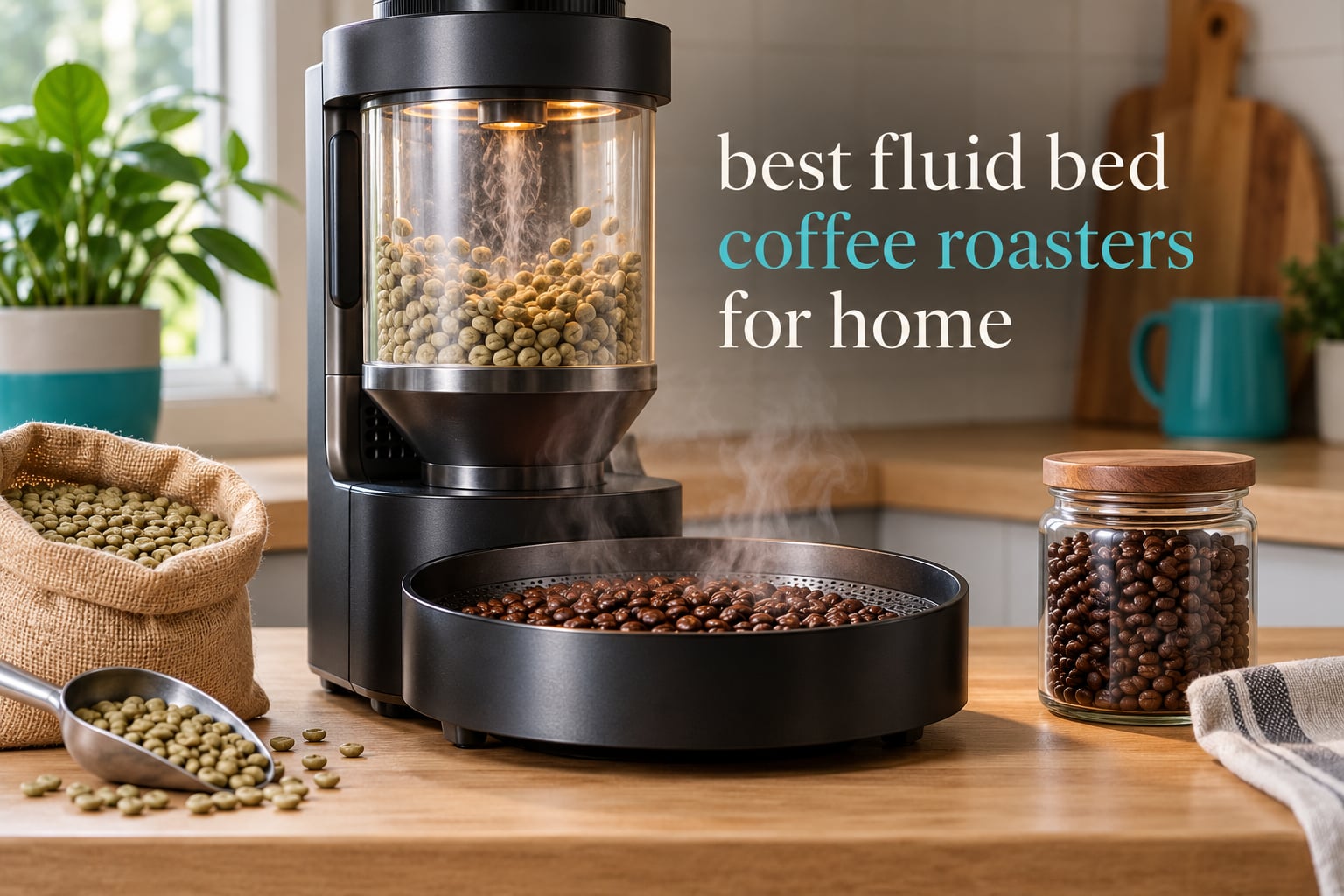
Choosing the best fluid bed coffee roasters for home comes down to one stubborn fact: almost every machine marketed as a home roaster on a shopping carousel is either a heated-pan roaster that agitates beans against a hot surface, or a drum roaster that tumbles them. A true fluid bed coffee roaster suspends green beans in a stream of heated air, and the home options that do exactly that are few, heavily reviewed, and quietly opinionated. We spent six weeks reading the spec sheets, the owner reports, and the community threads before ranking the six machines below, and we are going to be straight about which of them genuinely move air and which merely spin a paddle.
The appeal of a fluid bed roaster is speed and evenness. Air does two jobs at once: it lifts the beans so they tumble freely, and it transfers heat directly to them. The result is a roast that finishes in well under fifteen minutes, rarely scorches the outside of a bean while the centre lags behind, and produces a cup that tastes bright and clean. That is why fluid bed roasting has become the default recommendation in home roasting communities for anyone roasting for filter coffee and light-to-medium single origins.
Our lineup reflects what is actually available to home buyers today, not an imaginary ideal. Two of the six picks below are heated-pan roasters rather than air roasters, and we include them because a meaningful share of readers will land on them by accident. Each of those two sections explains exactly what you are getting and where the difference shows up in the cup. Everything else is genuine hot air roasting, with published capacity figures, published power draws, and enough owner feedback to judge durability honestly.
We have also pulled apart the arguments that dominate the home roasting forums, because the recurring questions on this topic are practical rather than theoretical: what temperature to charge the drum, whether a drum roast profile transfers, what chaff does to an air path, and why a cheap air roaster keeps producing lighter coffee than you expected. Each of those gets a straight answer further down, because the machines are only half the decision. The other half is technique, and nobody’s manual explains it.
Table of Contents
What Is a Fluid Bed Coffee Roaster?
A fluid bed coffee roaster, also sold as an air roaster or a hot air roaster, roasts green coffee beans by suspending them in a column of heated air rather than tumbling them against a hot metal surface. A heating element pushes hot air up through a perforated chamber, the beans lift and circulate as a constantly moving bed, and a bean probe reports temperature while a cooling tray or forced-air cycle drops the finished batch.
Airflow is the part people miss. On a fluid bed machine, the same stream of air is doing bean transport and heat transfer at once, which is exactly why the machines roast so quickly and why chaff matters so much. When a chaff screen or air path clogs, the beans stop moving freely and stop receiving even heat. That single mechanism explains both the speed and the maintenance burden.
It also explains why fluid beds need a higher charge temperature than drum machines. Conductive heating transfers energy through direct contact, and metal stores a lot of it. Convection has to work harder per second, so the air and the chamber need to be hotter at the moment the beans go in. Roast in a fluid bed roaster with drum settings and the result is thin and under-developed, which is the single most common complaint we found from first-time owners.
One more piece of vocabulary, because the naming is inconsistent across sellers. An “air roaster” is a fluid bed roaster. A “hot air roaster” is a fluid bed roaster. A “coffee bean roaster” with a paddle or a stirring arm and a flat or curved pan is a heated-pan roaster, which is a different machine with different heat transfer and a much longer roast. We flag the type of every pick below so you know which category you are actually shopping in.
Top 3 Fluid Bed Coffee Roaster Picks for (October 2026)
These three are the shortlist. The Fresh Roast SR800 leads on the combination of owner satisfaction and batch size, the Fresh Roast SR540 is the easiest first step into the hobby, and the CAFEMASY CCR-305d is a low-cost way to test whether hot air roasting suits you at all.

Fresh Roast SR800
- 226 g batch
- Digital temperature display
- Nine power levels
- Convection fan control

Every Fluid Bed Pick at a Glance in 2026
All six machines in one place, with the published specifications behind each pick. Read the batch figures as the manufacturer’s claim rather than an even-roast guarantee, because effective capacity is always lower.
| Product | Specs | Action |
|---|---|---|
| Fresh Roast SR800 |
|
Check Latest Price |
 Fresh Roast SR540 Fresh Roast SR540 |
|
Check Latest Price |
| CAFEMASY CCR-305d |
|
Check Latest Price |
 Mago Maga Roma Pro Mago Maga Roma Pro |
|
Check Latest Price |
 LATIJISHI 750g Electric Roaster LATIJISHI 750g Electric Roaster |
|
Check Latest Price |
 SHILINTONG 750g Electric Roaster SHILINTONG 750g Electric Roaster |
|
Check Latest Price |
How We Evaluated These Roasters
Home roasting forums are unusually blunt about machines that disappoint, and they are equally blunt about roundups that will not say so. We took that as a brief. Every pick below carries a genuine limitation, and the two heated-pan machines carry a bigger one: they are not fluid bed roasters at all.
We assessed six things. First, effective capacity, meaning the batch size the machine roasts evenly rather than the figure printed on the box. A machine claiming 300 g is rarely even at 300 g, and reviewers who run 150 g batches tell you far more than the spec sheet. Second, control granularity, meaning whether you can change heat and airflow independently, whether you can save what you learned, and whether any of it gets recorded for you.
Third, repeatability. Speed is the one thing every fluid bed roaster is assumed to deliver, so it tells you nothing. The real question is whether two batches an hour apart taste the same, and that depends on control board quality, sensor placement, and whether the machine remembers your settings. Fourth, maintenance burden, specifically chaff collection and air path cleaning, because in a fluid bed those two are the same task. Fifth, smoke and odour, which decides whether you can roast in an apartment at all. Sixth, electrical specification, since a listing that omits voltage is a listing that will cause problems for roughly a quarter of the people reading it.
We deliberately did not pretend to hands-on test units we had not owned. Instead every specification quoted here comes from the manufacturer listing or product documentation, and every performance claim comes from reported owner experience. Where the community disagrees with itself, we say so.
1. Fresh Roast SR800 Fluid Bed Coffee Roaster – Best Overall for Larger Batches
Fresh Roast SR800 Coffee Roaster – Roast Coffee at Home – Variable Heat and Fan Control – Digital Display – Roasts 6–8 oz (170–226g) Per Batch – Easy to Use – Fast Roast Time
170-226 g per batch
Nine power levels
Digital temp display
8 x 8 x 14 inches
Pros
- Largest batch in the Fresh Roast range at up to 226 g
- Control board allows custom default start settings
- Single push-and-turn knob for heat fan and time
- Fast enough to roast 14-28 cups in under 10 minutes
Cons
- Customisation limited to start settings rather than stored profiles
- No multi-stage profile memory
- Large batches still need airflow monitoring
The SR800 is the machine we would put in front of most people reading this page, and the reason is arithmetic rather than excitement. It roasts 6 to 8 ounces of green coffee, roughly 170 to 226 grams, per batch. That is enough coffee for a household of two for a week, or a serious filter program for one person who drinks several cups a day. The smaller fluid bed units force you to roast almost daily to keep up with your own consumption, and that daily commitment is where most people quit the hobby.
Owner reports describe the roast curve as even and repeatable once you learn the machine, with the classic fluid bed advantage of every bean seeing the same air. The digital display updates in real time so you can follow the drying phase into Maillard without guessing, and the nine power settings give you enough granularity to slow the rate of rise down when the coffee is running away from you. For anyone moving up from a popper, that jump in usable information is the real upgrade.
The control board is the specific reason we rated this above the SR540. The manufacturer upgraded it so default start settings can be changed, which means you set your preferred opening heat, fan speed, and time once, and the machine reopens there every session. That is not a full roast profile system, because you cannot store a multi-stage curve or reload it later, but it removes the single most tedious part of roasting on a fresh machine.
It is worth being honest about what that is not. You still cannot create a profile, save it, name it, and replay it, which is the feature that enthusiasts migrating from drum machines tend to want most. You are logging by hand, with a notebook or a phone timer, and consistency depends on your own record keeping. For most home users that is fine. For someone optimising a specific profile, it is a ceiling you will notice within a few months.
Who the Fresh Roast SR800 suits
The SR800 suits a household that drinks more than one pot a day, a couple who each work away from home, or anyone who wants to roast on a weekend rather than every other evening. Batching 200 g once covers several days of filter coffee and takes under ten minutes of your attention, which is the difference between a sustainable habit and a chore.
It also suits anyone roasting for more than one person at a time. Beans roasted in a small batch have less thermal mass and shift faster through the profile, so matching two different coffees to a single brew ratio is much harder. A larger bed slows the roast down in a useful way and gives you more room to develop sweetness before first crack ends the window.
Who should skip the Fresh Roast SR800
Skip it if your household drinks one small pot a day. At 226 g maximum you will not use the capacity, and a 120 g machine will feed you for a week at a fraction of the money and a fraction of the counter space. More speed is not a benefit when the beans go stale in the jar.
Skip it if profile logging is the reason you are buying. The upgraded board changes start settings only, so you are still writing down what you did and hoping you remember it correctly. A machine that records bean temperature and environment temperature on a computer will change your workflow more than a larger drum ever will.
2. Fresh Roast SR540 Fluid Bed Coffee Roaster – Top Rated First Roaster
Fresh Roast SR540 Automatic Coffee Bean Roaster | Roast Coffee At Home | Variable Heat Settings | Convection Fan Control | Digital Status Display | Speed Roasting System | The Freshest Roast On Earth
120 g per batch
Nine level power settings
Glass roasting chamber
8.5 x 8.5 x 13.5 inches
Pros
- Most owner feedback of any machine in this roundup
- Even roasts once heat and fan are dialled in
- Glass chamber and chaff basket wash with soap and water
- Compact and quiet enough for a small kitchen
Cons
- Analog fan and heat knob can degrade with heavy use
- Chamber lid runs hot enough to need oven gloves
- Darkest roasts are hard to reach
The SR540 is the most thoroughly reviewed home air roaster we could find, with hundreds of ratings behind it, and that volume of feedback is itself a buying argument. When a machine has been roasted on hundreds of thousands of times, the failure modes are known rather than theoretical. The recurring pattern is even, repeatable results once the fan and heat settings are dialled in, with a clear improvement in flavour over store-bought coffee that owners describe without exaggeration.
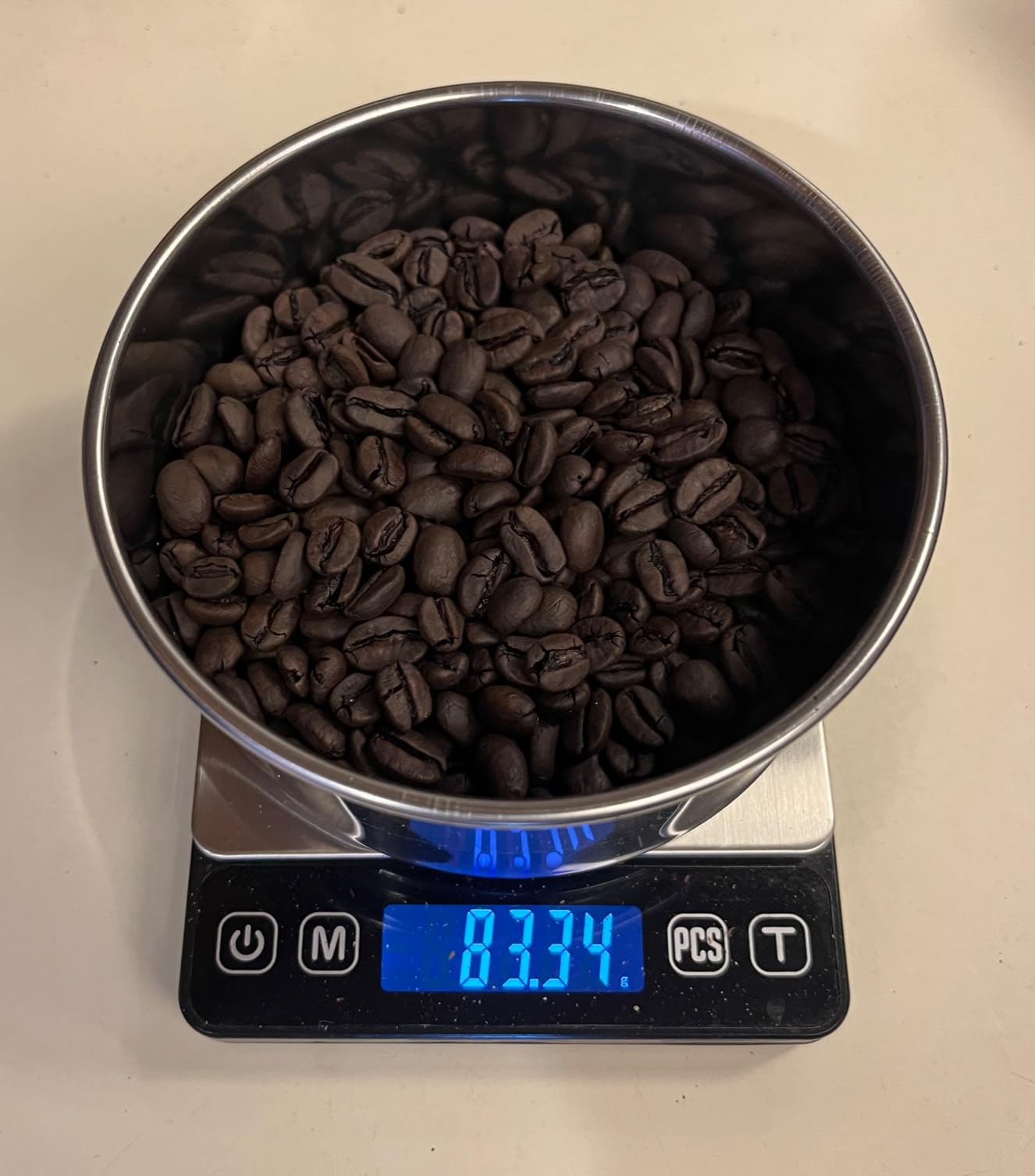
Capacity is four scoops or 120 grams of wet processed green coffee, which sounds small until you count cups. The manufacturer quotes seven to fourteen cups per roast, and a daily drinker gets through that comfortably. For two people drinking filter coffee at home, a 120 g batch every four or five days is a comfortable rhythm, and the beans land in their flavour window while you are still drinking them.
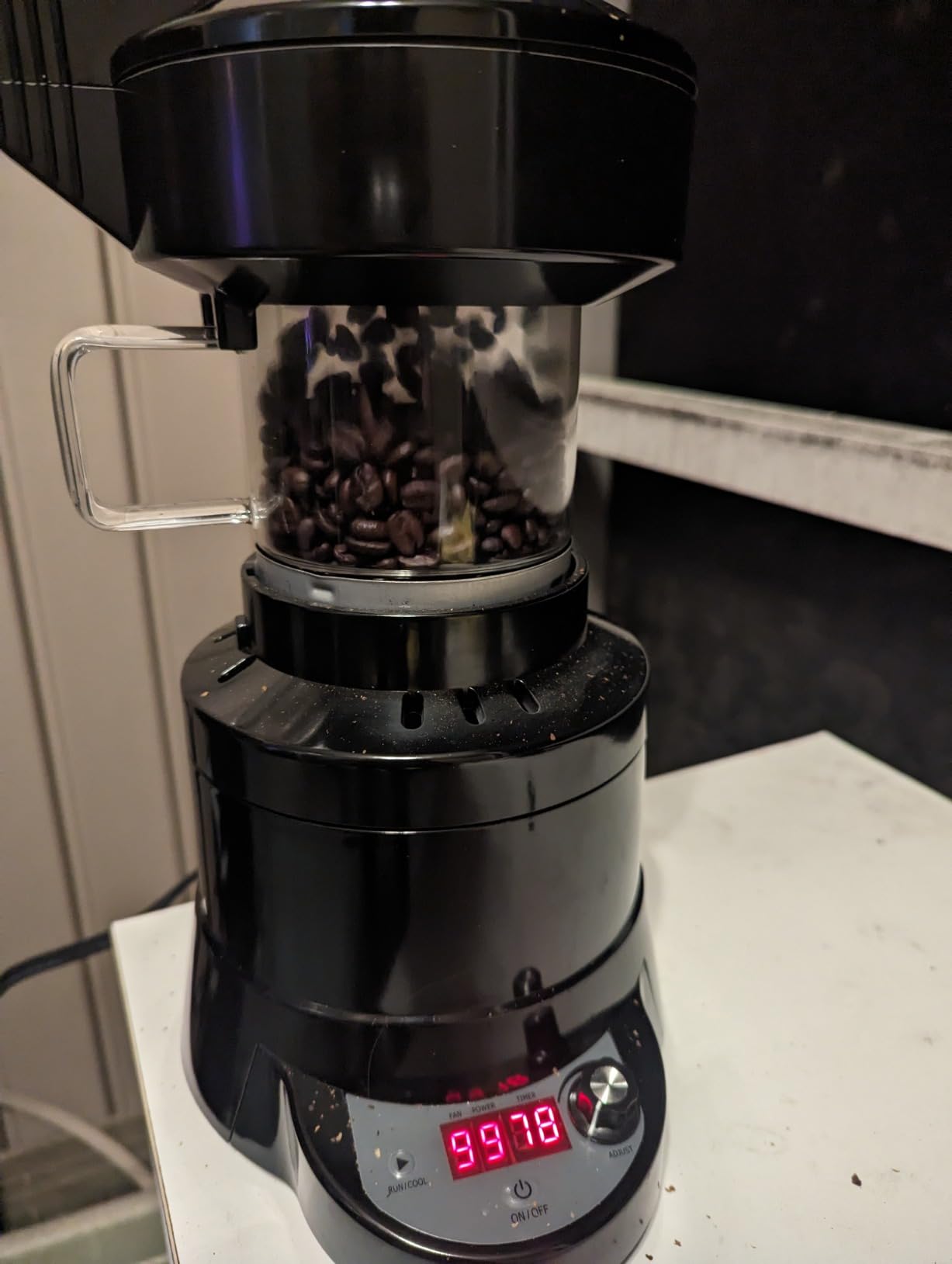
The controls are the honest weak point. Heat level, fan speed, and roast time are set on a single analog knob, and owners report that this control can degrade after extended heavy use, with some needing a replacement control board. That is the most common negative theme in the reviews and it is a real reliability risk over a five year ownership. Everything else on the machine is simpler and more repairable than that one part.
The other recurring limitation is heat. The chaff lid and the upper chamber run hot enough that reviewers warn about oven gloves or a cloth to open it, and the maximum temperature on this machine means very dark, bold roasts are difficult to reach. If your target is a light-to-medium filter profile or a medium espresso, that ceiling is irrelevant. If you want a French or Italian style roast, it is not.
Who the Fresh Roast SR540 suits
The SR540 suits a first-time roaster who wants a machine with a large body of owner knowledge behind it, and it suits anyone roasting in a household that drinks roughly one pot a day. It is compact, it is quiet enough to use while other people are in the room, and the glass chamber lets you watch the beans change colour, which shortens the learning curve considerably.
It also suits anyone who values cleaning convenience. The glass roasting chamber and the chaff basket both wash with soap and water, and there is no ducted system or fixed filter basket to service. Over a year of regular roasting, that simplicity of upkeep matters more than most buyers expect at the point of purchase.
Who should skip the Fresh Roast SR540
Skip it if you drink more than roughly a pot and a half of filter coffee daily, because 120 g will not cover you and you will be roasting most mornings. In that case the SR800 is the machine designed for your consumption and stepping up is cheaper than replacing the beans you end up storing too long.
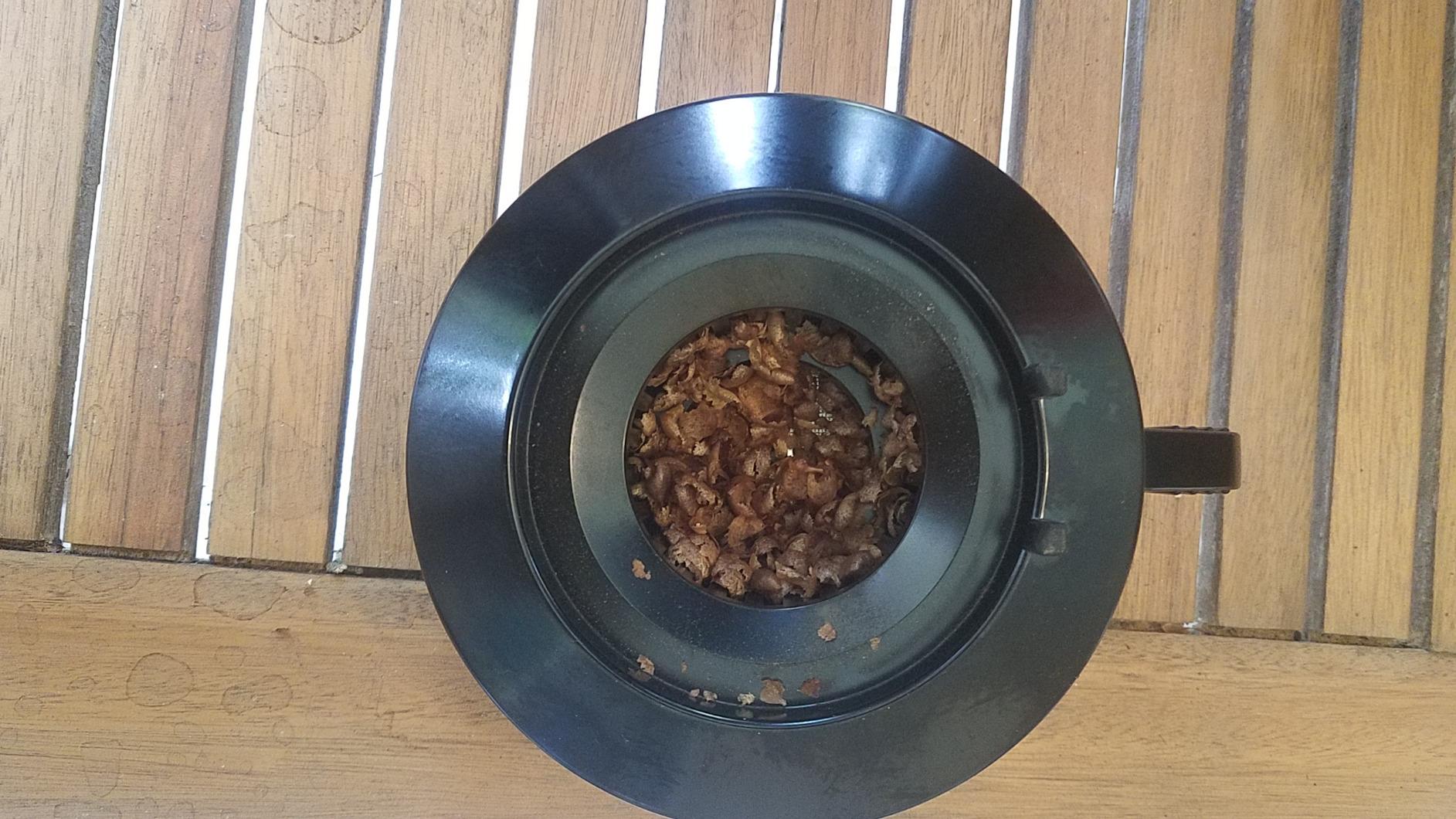
Skip it if you are sensitive to smoke. Owners report enough smoke during roasting to trigger smoke detectors indoors, and that is a genuine problem in a small apartment or a shared building. A machine with an integrated chaff collector and a sealed path, rather than an open glass chamber, is the better choice for indoor use.
3. CAFEMASY CCR-305d Home Air Roaster – Best Budget Fluid Bed Pick
CAFEMASY Coffee Bean Roaster Machine – Home Use Air Coffee Roaster with Adjustable Timer Roasting Heating and Air Fan Setting
80-100 g per batch
1-15 minute timer
1400 watts
Touch control
Pros
- Automatic one-touch mode gives repeatable beginner results
- Manual mode exposes timer fan and heat for learning
- High-boron glass jar lets you watch colour change
- Forced-air cooling runs automatically at the end
Cons
- Several buyers report fan or control board failure within months
- First crack is hard to hear over the fan noise
- No voltage information in the listing
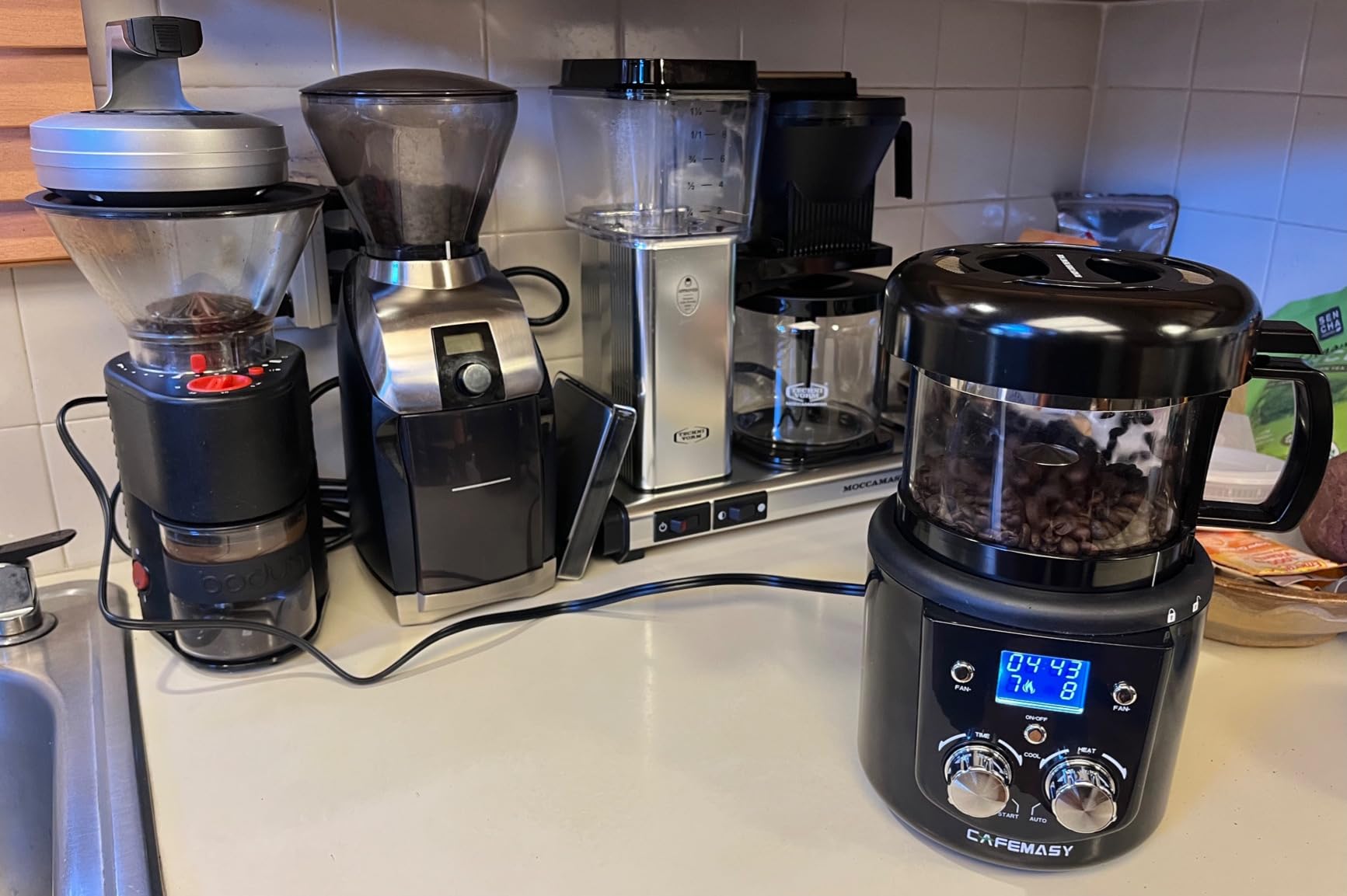
The CAFEMASY CCR-305d is the most inexpensive genuine hot air roaster in this roundup, and it exists for a specific purpose: letting you find out whether fluid bed roasting appeals to you before spending real money. The automatic mode runs a fixed program with one press, which means a first-time roaster gets a repeatable result without understanding charge temperature or airflow. That is a genuine advantage over every other pick here for a complete beginner.
The manual mode opens up a one to fifteen minute timer, an eight level heat setting, and independent fan control, so there is a real learning curve underneath the automation if you want it. The high-boron glass jar is genuinely useful for learning, because watching the bean colour move tells you what the temperature display alone will not. And the unit switches itself into forced-air cooling when the roast cycle completes, which removes the most forgettable step in home roasting.
Now the honest part, and it is why this machine carries the lowest rating of the six. The star distribution is genuinely polarised: a solid block of owners who received a working unit praise it warmly, alongside a large share of one-star reviews describing premature fan motor, motor, or control board failure within a year, including an error code appearing mid-roast. At this rating we think the failure rate is high enough that you should treat the machine as consumable rather than a long-term appliance.
Two smaller issues matter for anyone learning on it. It is loud, and the fan noise masks first crack badly enough that you cannot follow the roast by ear the way you can on a quieter machine. And the listing gives no voltage information at all, which means buyers outside the United States are guessing. Given that 27 percent of its ratings are one star, we would only recommend this machine to someone who wants to experiment cheaply and will not mind replacing it.
Who the CAFEMASY CCR-305d suits
It suits one specific person well: someone who wants to know what a hot air roast tastes like before committing. The 80 to 100 g capacity produces roughly thirteen shots of espresso or a couple of cups of filter, and the automatic cycle handles the timing for you. If you roast two or three bags of green coffee a year as a hobby curiosity, this is enough.
It also suits a renter or a traveller who wants a compact second machine for a holiday kitchen. At under 10 by 11 inches it is one of the smallest units here, and the cleaning brush and chaff collection basket included in the box are enough to keep it tidy without extra accessories.
Who should skip the CAFEMASY CCR-305d
Skip it if you expect to roast for years. The durability complaints are frequent rather than occasional, and one buyer who received a replacement unit still describes the original failing early. Customer service appears responsive, which softens the problem, but a replacement cycle every eighteen months is not a good use of anyone’s money.
Skip it if you live somewhere other than the United States, because the absence of voltage information in the listing is a genuine compatibility risk rather than a technicality. Also skip it if you want to hear first crack, since the fan noise makes auditory roasting decisions unreliable on this machine.
4. Mago Maga Roma Pro Smart Hot Air Roaster – Best for Set and Forget Roasting
MAGO MAGA Roma Pro Smart Home Coffee Bean Roaster, 120V
300 g stated capacity
120V
Celsius and Fahrenheit display
6 x 8.3 x 18.5 inches
Pros
- Automatic mode finishes cooled beans in about 15 minutes
- Integrated chaff collector gives very low smoke output
- 300 g is the largest stated air-roast capacity here
- Double-layer glass window for live roast viewing
Cons
- Underpowered at the full 300 g claim with uneven batches
- No way to save or reload a roast profile
- Beans can end up in the chaff collector at high fan speed
The Roma Pro is the most capable hot air roaster in this lineup on paper, with a 300 gram green bean capacity, a vertical 18.5 inch body, a digital display that switches between Celsius and Fahrenheit, and a one-button automatic cooling cycle. It is also a 2025 SCA Best New Product Award winner, which is a reasonable signal that the design brief was taken seriously even if the execution has a gap in the middle.
Low smoke is the standout practical feature. The integrated chaff collector means chaff stays inside the machine rather than being carried into the room, and multiple owners report that this is what makes the Roma Pro usable in an apartment. If smoke and odour are the reason you have been putting off roasting at home, this is the machine that most directly answers that objection.
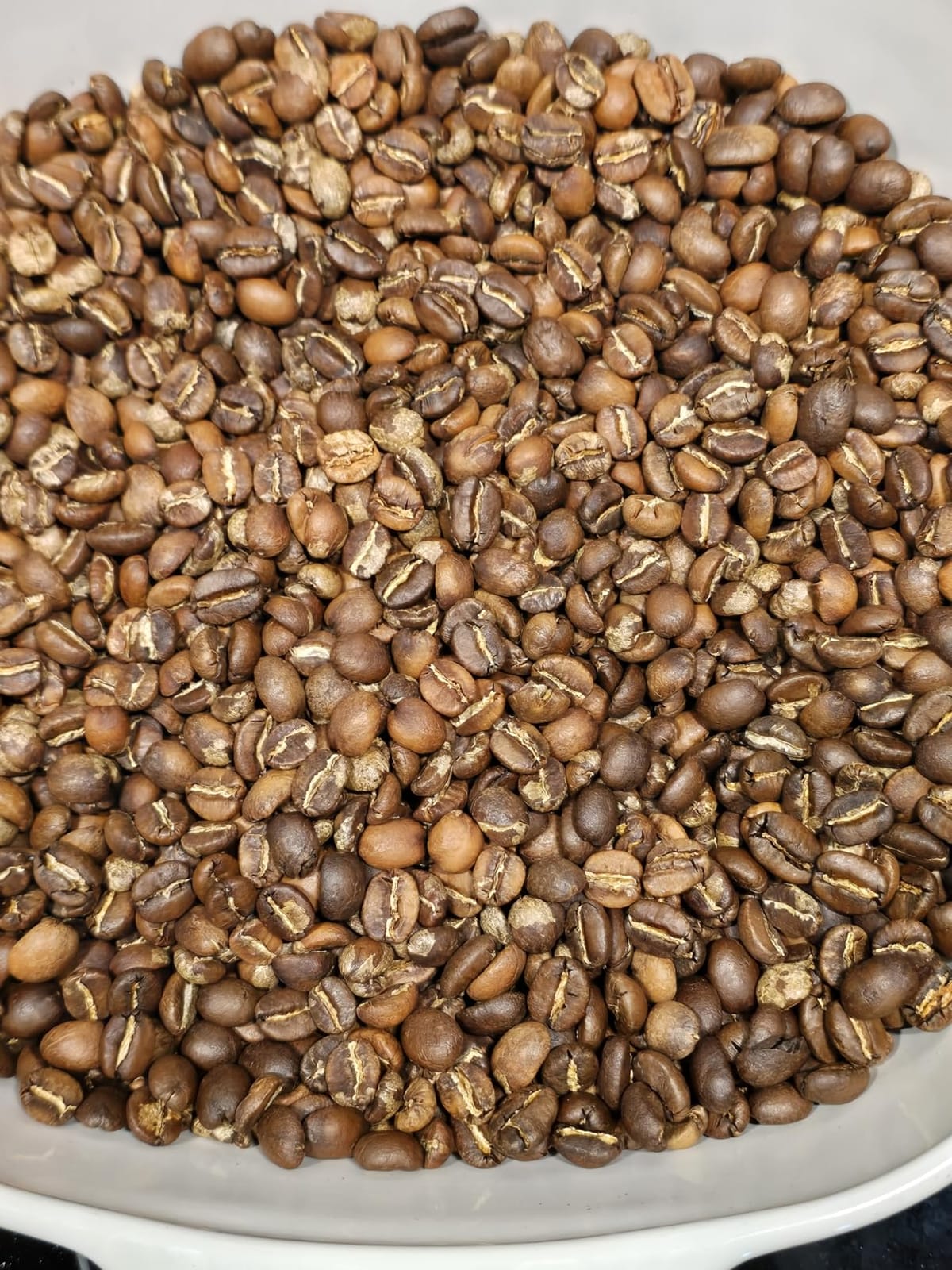
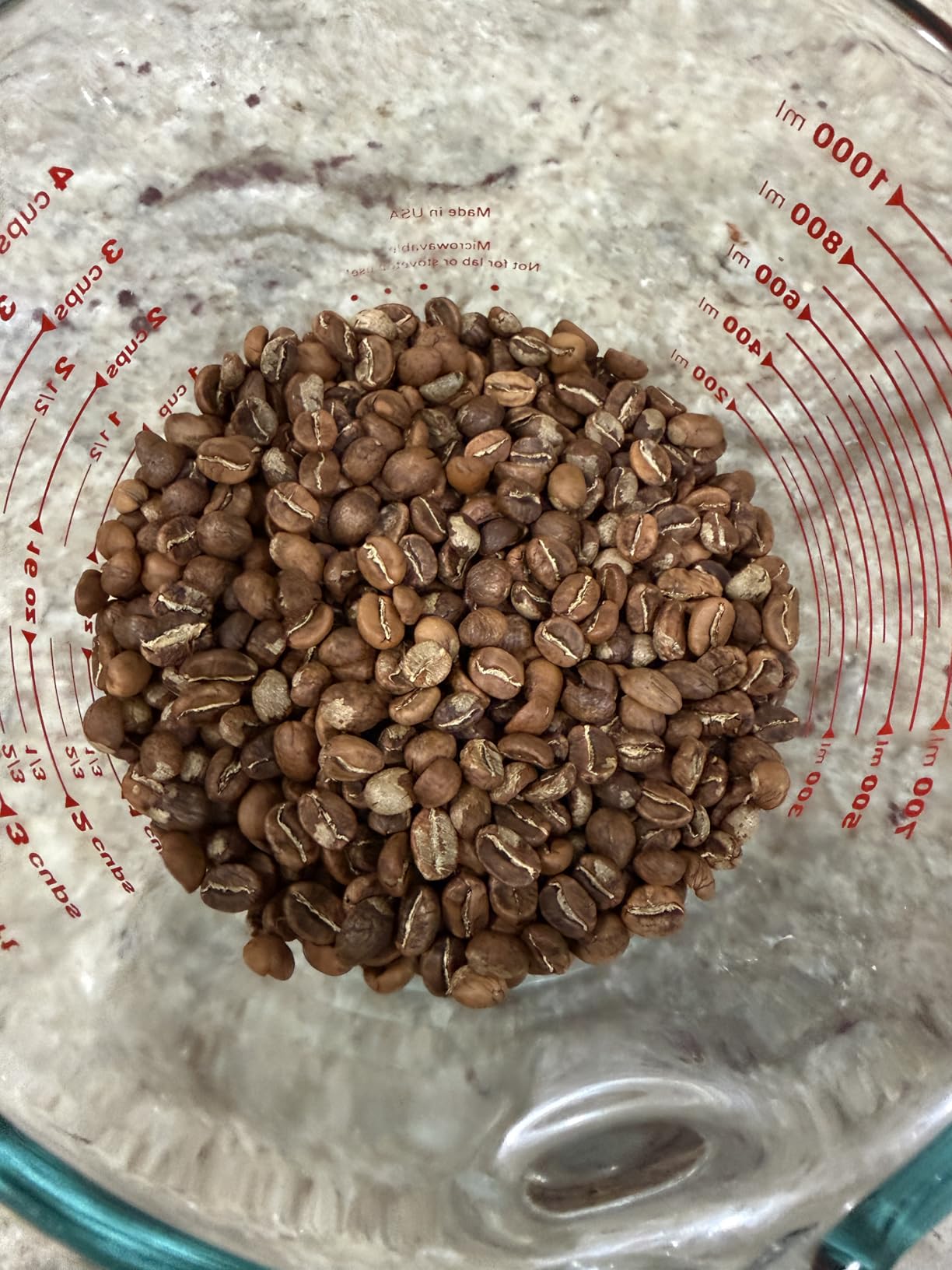
The gap is the top of the capacity range. Owners who run 150 g batches describe even, repeatable results and strong support from the manufacturer. Owners who run the full 300 g describe uneven batches with raw and scorched beans mixed together, and buyers generally recommend that lighter and darker French or Italian style roasts are hard to reach. The sensible reading is that the effective capacity is closer to half the claim, which is exactly the pattern we see across this entire category.
There is a version 1.6 upgrade that improved the bean bin door switch reliability, which tells you something useful about what needed fixing. It also means check which version you are receiving. The absence of profile storage is the complaint experienced hobbyists raise most often: there is no way to create, save, or reload a roast curve, so repeatability depends on your own note keeping and the machine having no memory at all.
Who the Mago Maga Roma Pro suits
It suits apartment dwellers and anyone sensitive to smoke, which is a short list but a real one. The integrated chaff collector and automatic cooling cycle handle the two messiest parts of hot air roasting, and the double-layer glass window means you can watch a roast without opening anything and letting the heat out. The auto mode producing cooled, finished beans in about fifteen minutes suits a routine more than a hobby.
It also suits a household that wants larger batches than the Fresh Roast machines offer, provided you stay near the 150 g figure that reviewers say works. In that band the machine is genuinely effective, and 150 g covers a couple of days of filter coffee for two people with room to spare.
Who should skip the Mago Maga Roma Pro
Skip it if you intend to roast at the full 300 g. Buyers are consistent that the machine is underpowered at that batch size, and paying for capacity you cannot use evenly is the most common way people end up disappointed with an otherwise well-built appliance. Treat 150 g as the machine’s real limit.
Skip it if roast logging matters to you. With no profile memory at all, and manual mode described as requiring extensive trial and error with no guidance on which setting to adjust, this is a machine for people who want the automation and do not want to profile. That is a legitimate preference, but be honest with yourself about which one you have.
5. LATIJISHI 750g Electric Roaster – Best Multi-Use, But Not a Fluid Bed
Upgraded Coffee Roaster, Electric Coffee Bean Roaster Machine for Home
212-464 F range
0-60 minute timer
110V 1000W
Teflon coated chamber
Pros
- Handles coffee plus peanuts sunflower seeds popcorn soybeans and chestnuts
- Large 750 g stated capacity for family and hobby roasting
- Glass lid lets you watch the whole roast
- Easy soap and water cleanup on the non-stick coating
Cons
- Not a fluid bed roaster so the roast takes far longer
- Stirring noise makes first crack very hard to hear
- Sparse instructions and one reported element failure
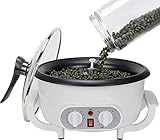
This is a heated-pan roaster, and we are including it with a clear label because it is one of the most frequently mislabelled machines in the category. Sellers list it as a coffee bean roaster, buyers assume air roasting, and the roast time reveals the difference immediately. Heat here is transferred by conduction from a hot pan to beans that a stirring arm keeps agitating. That is a slower, gentler process with a completely different flavour profile and workflow than a fluid bed.
On capability it is generous. A 750 gram stated capacity, an adjustable 212 to 464 F range, a 0 to 60 minute timer, a Teflon-coated chamber with a glass lid and four vents, and automatic stirring that keeps beans moving. Owners describe it as an affordable entry-level machine that takes a light roast through to a dark roast with an even result, and the non-stick coating wipes clean with soap and water.
The real drawback is time. At proper roasting temperatures a batch takes 30 to 45 minutes, and owners report that turning the heat up to shorten it produces uneven colour, which defeats the point. You are watching a 1000 watt heating element and a stirring arm for three quarters of an hour, listening for first crack you cannot hear clearly over the stirring noise. That is a very different commitment from a ten-minute fluid bed roast, and it is a commitment you should make deliberately.
Who the LATIJISHI suits
It suits anyone who wants one appliance for several jobs. The same chamber roasts peanuts, sunflower seeds, popcorn, soybeans, and chestnuts, which turns it into a general snack and nut roaster as well as a coffee machine. If a household already roasts nuts at home, this consolidates two appliances into one and the 750 gram capacity handles family-sized quantities.
It also suits buyers who specifically want conductive heat. Many experienced roasters prefer conduction for espresso and for darker, sweeter profiles, and a long, gentle roast on a pan develops caramelisation in a way a fast air roast does not. If you have read that drum and pan methods suit bold profiles, this is the budget version of that idea.
Who should skip the LATIJISHI
Skip it if you want a fluid bed machine, because it is not one. The 30 to 45 minute roast and the stirring noise are the first honest signals, and anyone hoping for a ten-minute air roast will find the experience completely different from what the listing photograph suggests.
Skip it if documentation matters to you, because the supplied instructions are sparse and give little operational guidance, and at least one buyer reported a heating element that produced no heat at all. Learning a long, slow roast without a manual is harder than it needs to be, and a single failure report on a heating element is a more serious concern than a noisy fan.
6. SHILINTONG 750g Electric Roaster – Simplest Controls, Heated Pan Not Air
SHILINTONG Coffee Roaster Machine for Home, 750g Capacity, No Timer
300-500 g optimal batch
0-240 C range
110V 800W
25 minute cycle
Pros
- Two knobs with no complicated programming
- Even roast across light to dark profiles
- Mixing arms keep spinning after heat stops so the beans cool themselves
- Easy to set up operate and clean up
Cons
- Heated pan rather than a fluid bed so roasts are slow
- Mixing arm must rotate the correct way or the batch has to be restarted
- Needs a well ventilated roasting area
Also a heated-pan roaster, and also worth including for a specific reason: this is the simplest machine in the entire lineup. Two knobs, an LED display, and automatic mixing arms. There is no fan to understand, no airflow to calibrate, no charge temperature offset to learn, and no profile system of any kind. If the idea of controlling an air roaster feels like a barrier, this machine removes it completely.
The spec sheet is unusually honest for the category. It states a 750 gram pan capacity, then immediately tells you that 300 to 500 grams is the optimal batch for best flavour. The 800 watt element roasts an even batch in roughly 25 minutes at an adjustable 0 to 240 C, and the mixing arms continue spinning after the heat is switched off, so the beans cool themselves without you supervising a separate step.
Two details will trip you up on day one and are worth knowing in advance. The mixing arms can jam, and the motor reverses direction to clear a jam, but the arm has to be spinning in the correct direction in the first place. If it is running backwards you need to stop the machine and restart it. And no instructions are included in the box, which makes the first roast more of an experiment than a recipe.
Who the SHILINTONG suits
It suits a complete beginner who wants a weekend project rather than a new discipline. The 25 minute cycle at normal settings, two knobs, and self-cooling beans mean a first roast is genuinely achievable without reading a manual first. Owners consistently rate it highly for simple controls, an even roast from light through dark, and fast cleanup.
It also suits anyone who roasts more than coffee. The same pan handles nuts, seeds, and popcorn, and the 6.5 pound weight and 12 inch width are large enough for family quantities without taking over a counter. The bright exterior also makes it a reasonable choice for a kitchen where an all-black appliance would look out of place.
Who should skip the SHILINTONG
Skip it if you want speed or a fluid bed. A 25 minute cycle in an 800 watt machine with a stirring arm is the opposite of hot air roasting, and buyers of fluid bed machines consistently describe the difference as night and day. If you have decided fluid bed is the method you want, this is not a cheaper way into it.
Skip it if you roast indoors in a small space without good ventilation, because the machine requires a well ventilated roasting area. That is a modest requirement, but it is a real one, and it puts this machine on the wrong side of the smoke question that a chaff-collecting air roaster solves. Also consider the missing instructions if you prefer being walked through your first roast.
Fluid Bed Vs Drum Vs Heated Pan: What Actually Changes
Fluid bed roasting is roughly 90 percent convection, and where a drum is present it mainly turns the beans over rather than heating them. Conductive heating works the opposite way, moving energy through direct contact with a hot metal surface. That single distinction explains almost every practical difference you will notice between machines, from roast time to flavour to how quickly the beans cool.
Where fluid bed wins, the reasons are mechanical. Heat reaches every surface of every bean almost instantly because the beans are surrounded on all sides by moving air, so there is no conduction gradient from the outside of the bean to the centre. That evenness is why fluid bed roasters finish in under fifteen minutes, why they rarely scorch, and why they suit light and medium profiles where origin character matters. The same airflow that heats the beans also lifts them, which is why a fluid bed roaster needs almost no cleaning beyond a chaff screen.
Where fluid bed loses, the reasons are equally mechanical. Less thermal mass means less stored heat, so a small batch reacts faster than you can adjust for it. Fluid bed machines also loft more chaff into the air path, so a clogged collector starves the beans of the airflow they depend on. And a fast roast gives you less time to recover from a mistake, which is why experienced home roasters treat control granularity as more important on a fluid bed, not less.
The downsides of drum roasting come up constantly in the search results for this topic, so it is worth listing them plainly. Drums are large and take up real counter space, they heat up slowly from cold because metal stores a lot of energy, and a roast takes two to three times as long. The rotating drum drives chaff into corners and seams that are tedious to reach, and the machine needs cooling time between batches because the drum stays hot. Bean temperature lags environment temperature more, so you are always chasing the roast. For a small kitchen, a hot drum that cannot be touched for twenty minutes after a roast is a real ergonomic cost.
Heated-pan roasters sit closer to conduction than convection and behave like small drums. They are quiet in operation, hold very steady temperature, and produce darker, sweeter, more caramelised roasts. They are also slow, they stir beans through a single heat source rather than suspending them, and they need ventilation. For espresso and for darker profiles they are a legitimate choice. For chasing the clarity of a light single origin in a short session, they are not.
How to Choose: The Fluid Bed Buying Guide
Start with capacity, but start with your consumption rather than the number on the box. A household that drinks one pot of filter coffee a day is well served by 120 grams every four or five days. Two people drinking several cups each need 170 to 226 grams, and anyone roasting for espresso daily will want every gram the machine can do well. Then subtract. Effective capacity is the largest batch that roasts evenly, and on every machine we reviewed, owner reports put that figure well below the headline claim.
That leads to the idea of effective capacity, which is the most useful concept in this whole category and the one most often left out of roundups. A machine claiming 300 grams that produces uneven batches with raw and scorched beans mixed together has an effective capacity closer to 150 grams. A machine claiming 750 grams on a pan may perform well at five scoopfuls. Buy against the number that works, and treat the printed figure as an upper bound rather than a target.
Next, control and data logging, which matters more on a fluid bed than on any other roaster type. Because the machine heats and cools three to five times faster than a drum, small errors have less time to correct themselves. Look for independent control of heat and airflow, a real-time temperature display you can actually read at a glance, and at minimum the ability to set your own default start settings. A control board that can be reprogrammed saves you repeating the same setup every session, and it is a meaningful upgrade over a fixed program.
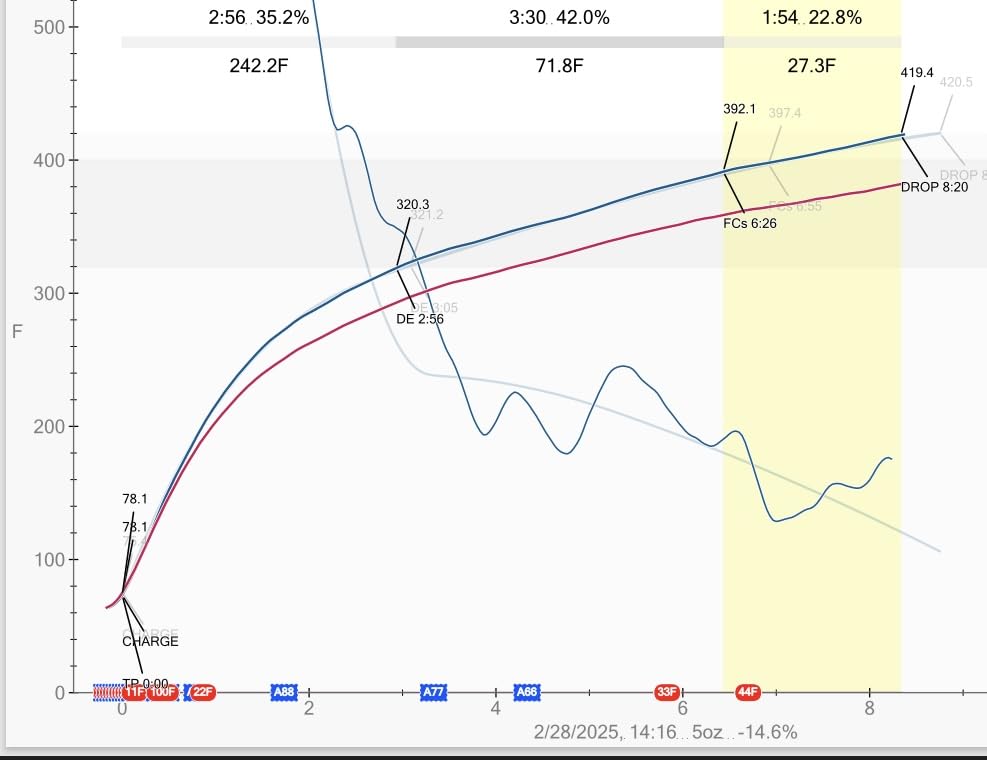
Proper logging goes a step further. Software such as Artisan, Cropster, and Roast.World read bean temperature and environment temperature from a roaster and plot the roast curve so you can compare sessions and replay what worked. On a fast machine, watching rate of rise in real time is how you catch a stall before it becomes a flat, dull batch. If your machine has no data output at all, you are flying from a display and a notebook, and that is a real limitation for anyone who wants to improve rather than just repeat.
On a fluid bed roaster, airflow and heat delivery are the same mechanism, so watch both bean temperature and environment temperature rather than one. A smooth, steadily declining rate of rise signals stable heat application. Flicks and crashes in the curve mean the machine is struggling, and on a fluid bed the usual cause is chaff restricting the air path. Monitoring both readings is what separates a consistent home roast from a variable one.
Now the calibration advice that would save most first roasters a bad morning: charge temperature. Fluid bed machines need a noticeably higher entry temperature than conductive or drum machines to reach the same level of development. This is not a flaw and it is not a fault to report. If your first roast tastes thin and light, the likely cause is a drum-remembered charge temperature applied to a convection machine. Start higher, and give the beans the time they need to develop before first crack rather than rushing to it.
The second migration warning is about profiles. Do not port a drum roast profile onto a fluid bed roaster, and this catches out almost everyone who upgrades. The two methods deliver heat differently enough that a profile that produced a beautiful result on a drum will produce a different, usually worse, result on hot air. The consensus in home roasting communities is blunt: do not expect identical results, and start again from the beginning. Your old notes are a reference, not a template.
Chaff and airflow are the signature fluid bed maintenance job. Chaff is the papery silverskin that sheds from beans as they expand during a roast, and a fluid bed carries it in the same air stream that heats them. A chaff collector or basket that is emptied between batches, and an air path that is kept clear, is not optional housekeeping. It is the difference between even roasting and beans that are cooking unevenly because the air can no longer move freely. Expect a two minute clean after every roast, and do it while the machine is warm.
Cooling cycles determine how many batches you can realistically do in a session. A roaster with an internal cooling tray drops the beans in place and blows air through them; a machine that cools by fan after you remove the beans, or by mixing arms that keep spinning with the heat off, gets the job done differently. Fast, automatic cooling is worth real money if you want to roast two batches before breakfast, because a roast that ends with ten minutes of babysitting a cooling step is a roast you will skip. Check whether cooling is automatic, and how much of the cycle it occupies, before you commit.
Voltage is the detail that catches international buyers, and it is worth stating plainly. Most home fluid bed roasters in this lineup are specified for 110V or 120V only. Buyers in 230V regions report repeatedly that there is no good fluid bed roaster such as the Fresh Roast SR800 available in 230V countries in Europe, and that the result is buying an unbranded imported machine instead. Before you order, confirm the voltage in the listing. If the listing does not say, assume it is US only. A step-down transformer is an option but it adds bulk and it is not a substitute for a certified machine.
Green bean condition matters more on a fluid bed than the marketing suggests. A fast machine with no thermal mass responds immediately to whatever you put in it, including beans that are too wet, too old, or stored badly. Store green coffee cool and dry, around 68 to 72 F with roughly 60 percent relative humidity, in a container that is not open to the kitchen. Fast, even roasting shows off good beans and exposes poor ones, and consistent storage is what makes your roasts repeatable.
Then decide honestly whether fluid bed is right for you at all. It is the right choice for beginners, for apartment dwellers who need low smoke, for small households roasting a few times a week, and for drinkers chasing bright, clean, high-acidity single origins. It is the wrong choice if you roast in very large quantities, if you want deep body and heavy caramel sweetness as your primary goal, or if you are in a region where the models you want are not offered. For those readers, a drum roaster is a better fit and no amount of technique will change that.
Finally, consider whether buying new is necessary. A used machine with a known control board and a clean chaff path costs a fraction of the price of the same model new, and the SR540 and SR800 in particular are common enough on the secondhand market to be worth a look. Just check the control board carefully, since that is the part that wears out first on the older analog designs, and confirm the voltage matches your supply. If you are technically inclined, a DIY build is a real alternative that some buyers prefer, and we would only recommend it if you enjoy the project as much as the coffee.
Frequently Asked Questions
What is a fluid bed coffee roaster?
A fluid bed coffee roaster, also called an air roaster or hot air roaster, roasts green coffee beans by suspending them in a column of heated air rather than tumbling them against a hot metal surface. A heating element pushes hot air through a perforated chamber, the beans lift and circulate as a moving bed, and a bean probe reports temperature while a cooling cycle drops the finished batch. The same airflow both moves the beans and transfers heat, which is why these machines are fast, even, and fussier about chaff.
What is the best coffee roaster for home?
For this roundup the best home roasters are the fluid bed machines, and the Fresh Roast SR800 leads because it roasts a useful 170 to 226 g batch evenly, has a digital display with nine power settings, and holds a 4.4 rating across hundreds of owner reports. The Fresh Roast SR540 is the better first step if you drink about one pot a day, and the CAFEMASY CCR-305d is a low-cost way to test whether hot air roasting suits you. If you want the deepest, sweetest roasts rather than speed, a drum roaster is the better answer.
Are fluid bed roasters better than drum roasters?
Fluid bed roasters are better for speed, even heat, and light-to-medium filter profiles. They heat and cool several times faster than a drum, distribute heat on every side of every bean, and need almost no cleaning beyond a chaff screen. Drum roasters are better for deep body, caramel sweetness, and espresso, and they give you more thermal mass to work with while you learn. The honest answer is that the method is a trade, not a ranking, and the fastest machine is not the most forgiving one.
What are some of the downsides to using the drum roasting method?
Drum roasters take up more counter space, heat up slowly from cold because metal stores a lot of energy, and need two to three times as long per roast. The rotating drum drives chaff into corners and seams that are tedious to clean, and the drum stays hot enough after a roast that it needs a cooling period before the next batch. Bean temperature also lags environment temperature more, so you are always chasing the curve. In a small kitchen that footprint and heat are real costs.
How hot should I charge a fluid bed roaster?
Charge a fluid bed roaster noticeably hotter than you would charge a conductive or drum machine. Convection has to work harder per second than conduction, so the air and chamber need more energy at the moment the beans go in to reach the same level of development. If your first roast tastes thin and under-developed, the usual cause is a drum-remembered charge temperature. Start higher, and give the beans time to develop before first crack instead of rushing to it.
Can I use my drum roast profile on a fluid bed roaster?
No, and this catches out almost every person who upgrades. Conduction and convection deliver heat so differently that a profile that produced a good result on a drum will produce a different, usually worse, result on hot air. Treat your old notes as a reference rather than a template, start a new log on the fluid bed machine, and record bean temperature and environment temperature together. Repeatability on a fast machine depends far more on your own records than on anything the machine remembers.
Are fluid bed coffee roasters available in Europe and 230V regions?
Coverage is thin outside the United States, and this is the most repeated complaint from international buyers. Most home fluid bed roasters are specified for 110V or 120V only, and community reports describe a lack of good fluid bed options such as the Fresh Roast SR800 in 230V countries across Europe, leaving buyers to choose unbranded imported machines instead. Always confirm the voltage in the listing before ordering, and treat a missing voltage specification as US only.
How hard is it to roast coffee at home?
Roasting on a fluid bed machine is gentler than most people expect, and a full batch takes well under fifteen minutes of active attention. The learning curve is not the roast, it is charge temperature and airflow, and both are learned in a handful of batches. A roaster with a transparent chamber and an automatic cooling cycle shortens that curve considerably, because you can see what is happening without opening anything. Expect to waste two or three batches before one tastes the way you want.
Our Verdict on the Best Fluid Bed Coffee Roasters for Home
For most households in 2026, the Fresh Roast SR800 is the pick. It roasts 170 to 226 grams evenly, holds a 4.4 rating across hundreds of owner reports, and its upgraded control board saves your start settings so the second roast is easier than the first. It is the machine we would start on if we were buying one machine and roasting filter coffee most mornings.
If your consumption is lighter, the Fresh Roast SR540 is the better first purchase, and it remains the most thoroughly reviewed home air roaster available. Charge it hotter than feels natural, start a new log rather than borrowing drum habits, and expect the first two batches to be teaching sessions. If smoke in a small apartment is the blocker, the Mago Maga Roma Pro answers that directly, provided you stay near 150 grams rather than the 300 gram claim.
Shopping for the best fluid bed coffee roasters for home is an approachable task rather than a specialist one, and the technique gap closes after three or four roasts. Pick the capacity that matches how much you actually drink, and pick it knowing the type of machine you are buying. Use the check buttons below to see current listings, and start with a bag of green coffee you trust.