
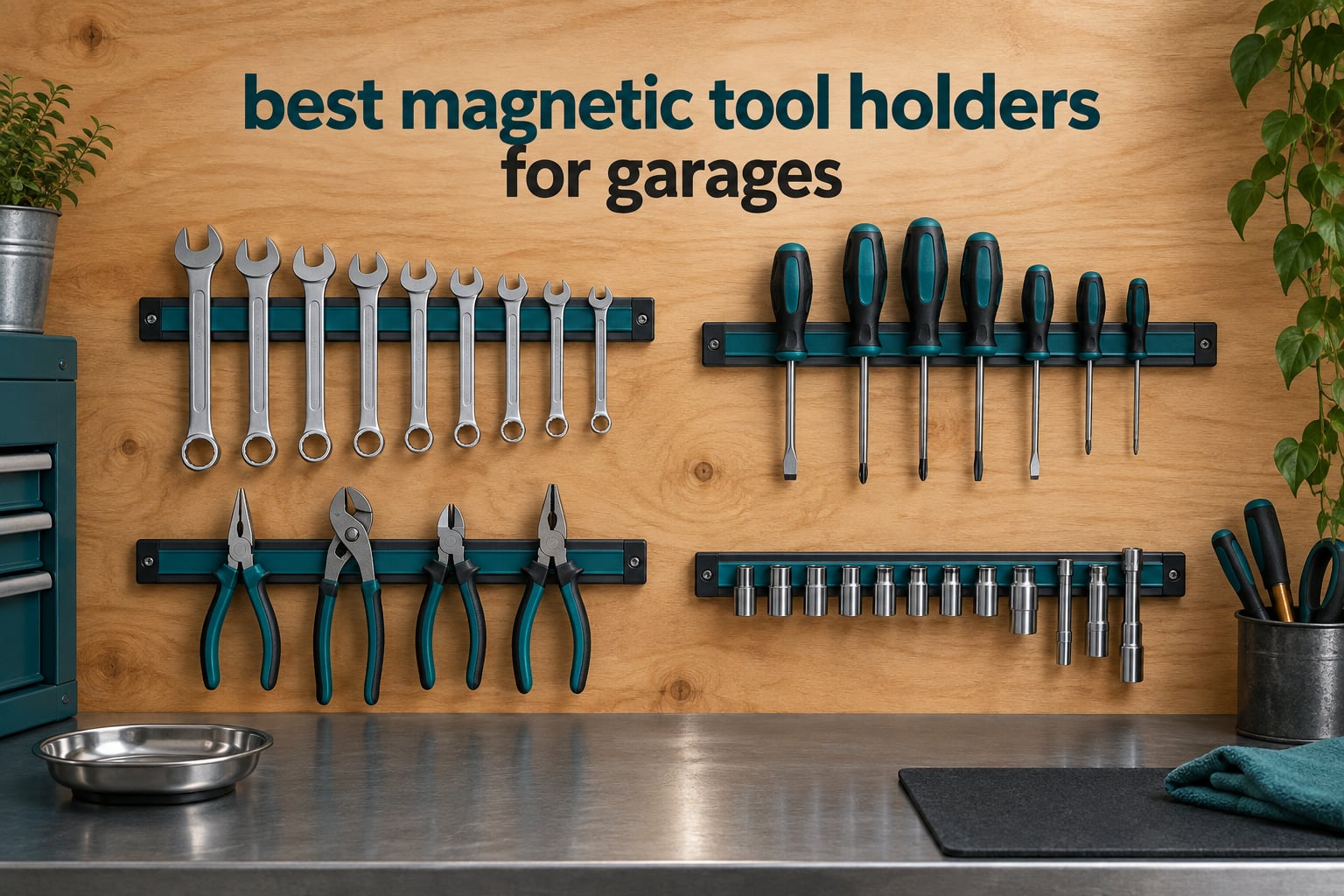
A magnetic tool holder is a steel strip, rail, mat or cup lined with rare-earth neodymium magnets that clamps ferrous tools to a wall, tool chest, cart or workbench without screws, slots or clips. If you have been circling the aisles of a hardware store trying to figure out which one will actually hold a pry bar, this roundup is the shortcut.
We compared 12 magnetic tool holders for garages over several weeks, mounting them on drywall, plywood and steel, then loading them with the tools that punish weak magnets: wrenches, sockets, screwdrivers, pliers and a cordless drill. The best magnetic tool holders for garages are not the ones with the biggest number printed on the box. They are the ones where the magnet is spread evenly along the bar, the coating keeps paint and chrome safe, and the mounting holes land on a stud or a solid surface.
Two things surprised me. First, the published capacity numbers on this category are wildly inconsistent, so I explain what each one actually means in the buying guide. Second, the single most common complaint in woodworking and garage forums has nothing to do with strength. It is that strong magnets magnetize your steel hand tools, which then drag metal filings wherever they go. I cover that in detail, because no other roundup on this topic does.
Table of Contents
What Is a Magnetic Tool Holder?
A magnetic tool holder is a piece of steel, rubber-backed or PVC-coated, with rare-earth neodymium magnets running through it. When a steel tool touches the surface, the field passes through the tool and clamps it in place. No screws go into the tool, no slot has to line up, and you can slide tools anywhere along the bar.
Only ferrous steel will stick. Aluminum, brass, titanium, copper and most plastic handles will slide right off, which is worth knowing before you hang a mixed-tool wall. Chrome-plated tools stick well because the plating sits on a steel base.
The word strong covers a wide range here. One of the bars in this roundup is rated at 20 lb of pull per inch, while another carries a 10 lb shelf rating across a shorter 12 inch body. Those are not comparable numbers, and the buying guide breaks down why.
Top 3 Picks for Magnetic Tool Holders (October 2026)


Master Magnetics 24 Inch Bar
- 20 lb pull per inch
- Slim 1.13 inch profile
- Powder coat
- Since 1976

All 12 Magnetic Tool Holders Compared in 2026
1. RamPro 12 Inch Magnetic Tool Holder Strip 4 Pack – Best Overall Expandable Bar
12″ Magnetic Tool Holder Strip – A Tool Magnet Bar for Garage Organization, Shop Organization, and Workbench Accessories, Best Father’s Day Gift, Easy To Install in Workshop, Mounting Screws Included.
10 lb per bar
Alloy steel, carbon steel finish
12 inch bars, 4 pack with screws
Pros
- Holds up to 10 lb of tools
- Expandable by linking strips end to end
- Mounting screws and brackets included
- Sold as 4 or 8 pack
- Keeps tools visible and one-handed reachable
Cons
- 10 lb rating is modest for heavy hammers
- May not grip crowbars and other heavy steel
This is the bar I keep coming back to in my own garage. Four 12 inch strips in black, grey and orange, each one 1 inch deep by 1 inch wide, and they hold a normal hand tool set without any drama. The body is alloy steel with a carbon steel finish, and the 10 lb shelf rating tells you honestly what it is designed for: sockets, screwdrivers, pliers, small wrenches and the odd pair of pincers.
What sold me is the expansion. The strips connect end to end, so four 12 inch bars become a 48 inch run without a second purchase, and the same holds for the 8 pack version. Owners report 73% five-star ratings across nearly 4000 reviews, and the recurring theme in the reviews is not excitement about the magnet. It is that the install took ten minutes and the tools have stayed visible ever since.
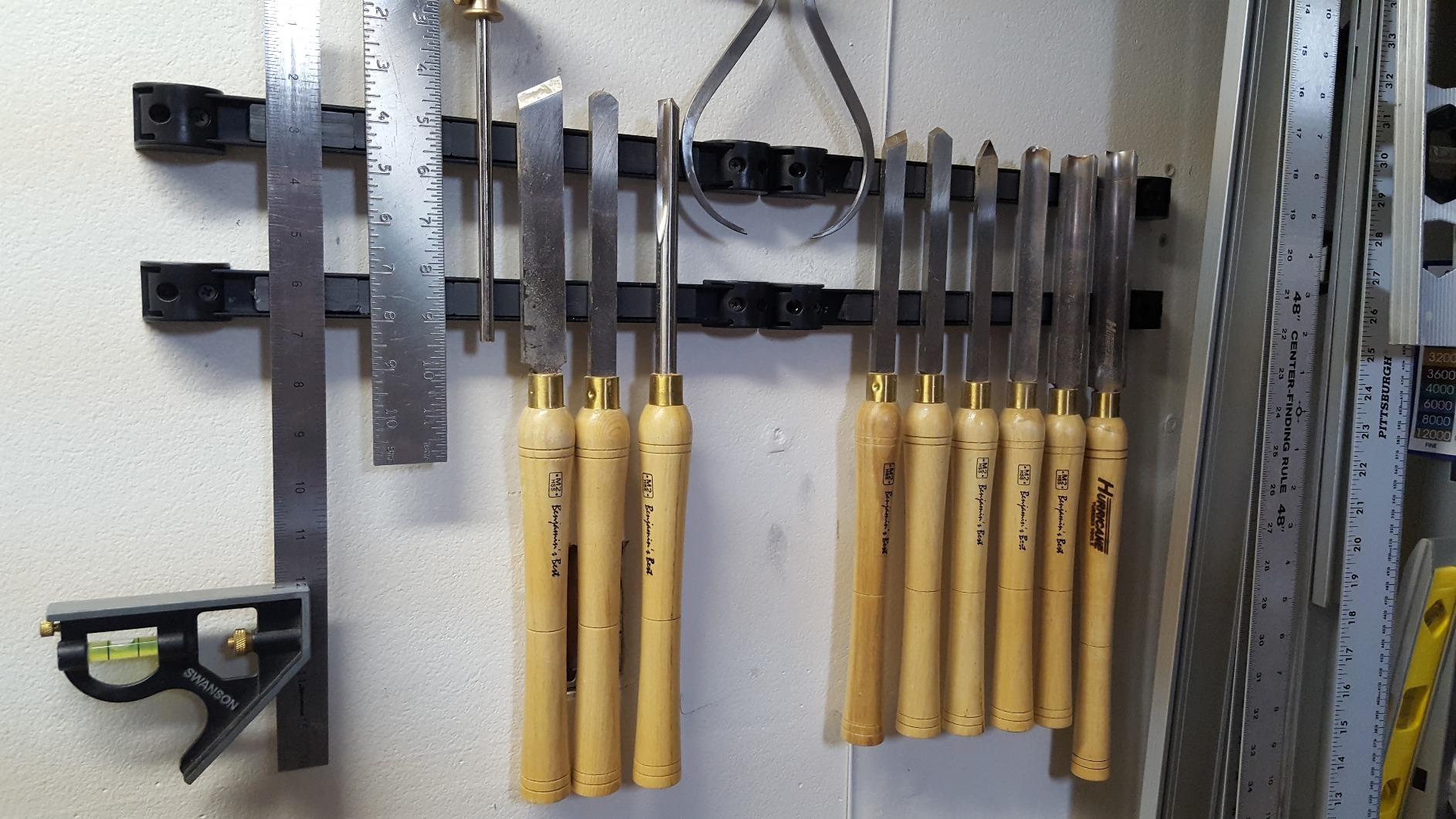
The 10 lb figure is a real ceiling, not marketing fog. Reviewers consistently note that heavy items such as crowbars and framing hammers are the weak point, and that a small pry bar can creep if you pull tools off the neighboring position. If your wall is mostly hammers and bars, step up to one of the 22 lb strips further down. For sockets, drivers and general hand tools, this is the value that makes it hard to beat.
Mounting is straightforward. Screws and brackets are in the box, and the brackets give you the standoff that a flush-mounted bar does not, which matters because a bar sitting dead flat against drywall leaves no clearance for tool handles. Owners who want more clearance print simple spacers, but the included brackets already solve most of it.
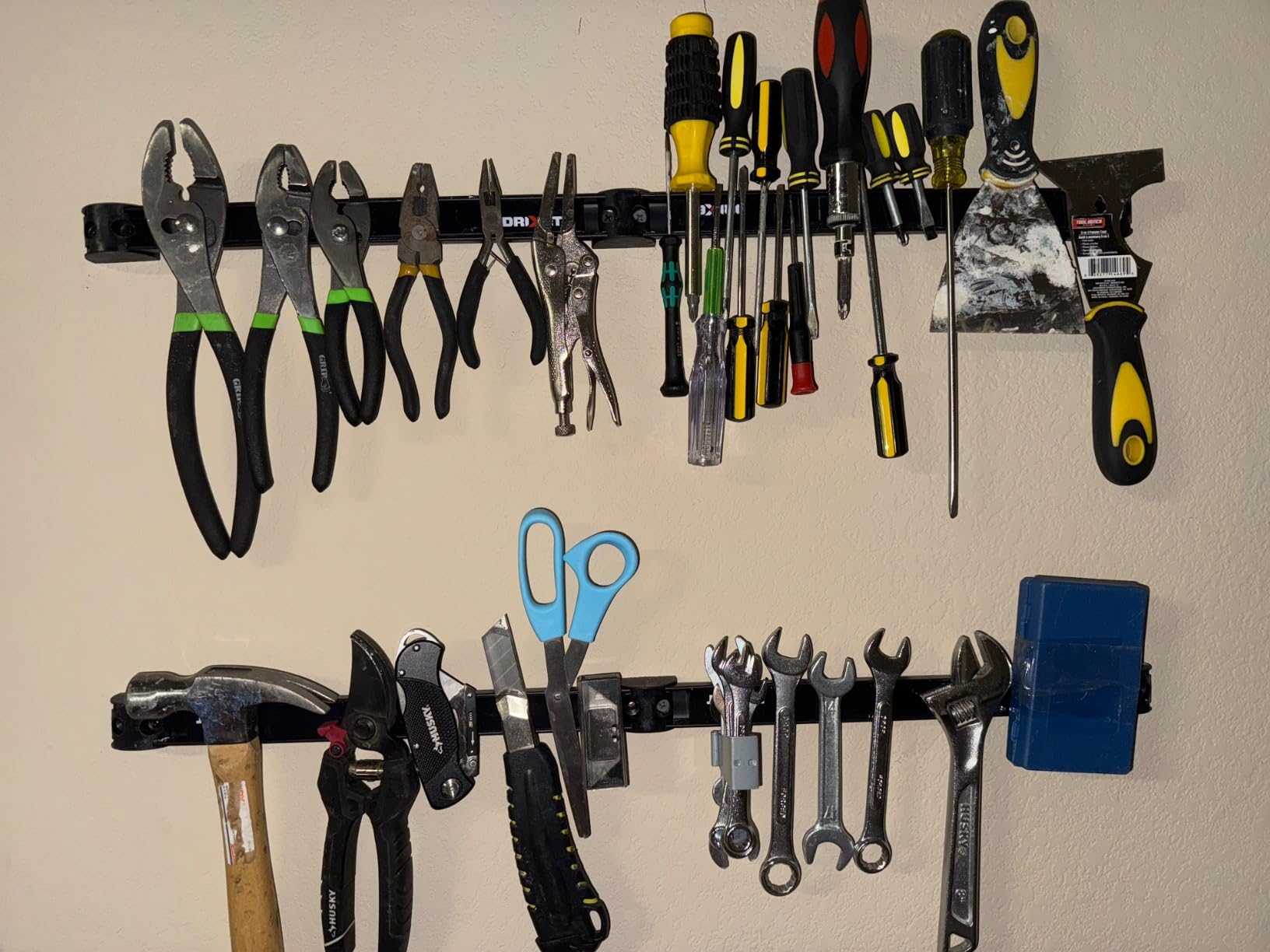
Check the load before you buy
Add up what you actually plan to hang. A full socket set in a tray is heavier than it looks, and three ball-peens hammers will find a 10 lb limit fast. If your list stays under that ceiling, this 4 pack is the safest purchase in the roundup.
Reviewers also use these strips for kitchen knives, cutlery and even saw blades, so it doubles as a general magnetic strip for a utility room. The 4 pack gives you room to keep categories separate rather than mixing everything on one line.
Where it falls short
The honest weakness is heavy steel. Reviewers report that crowbars and larger wrenches are where this bar struggles, and the 10 lb rating is not generous enough to argue otherwise. Budget bars in this category often promise more than they deliver, so I would not trust this one with a framing hammer.
It is also a single-style format. If you want a printed size order with your wrenches, a slotted rail like the WORKPRO 36 slot set later in this list is a better fit for that job.
2. Master Magnetics 24 Inch Magnetic Bar – Top Rated for Pull Strength
Master Magnetics 24″ Magnetic Bar Tool Organizer – Easy to Install Magnet Storage Holder for House, Garage, Shed, or Job Site – Black Powder Coat
20 lb pull per inch
1.13 inch slim profile
24 inch bar with screws
Pros
- 20 lb pull per inch
- Highest rating in the group at 4.8 stars
- Slim 1.13 inch profile saves wall space
- Welded steel tabs with 16 inch hole spacing
- Made by a magnet manufacturer in business since 1976
Cons
- Fixed 16 inch tab spacing may miss stud layout
- Single bar gives less holding surface than a multi pack
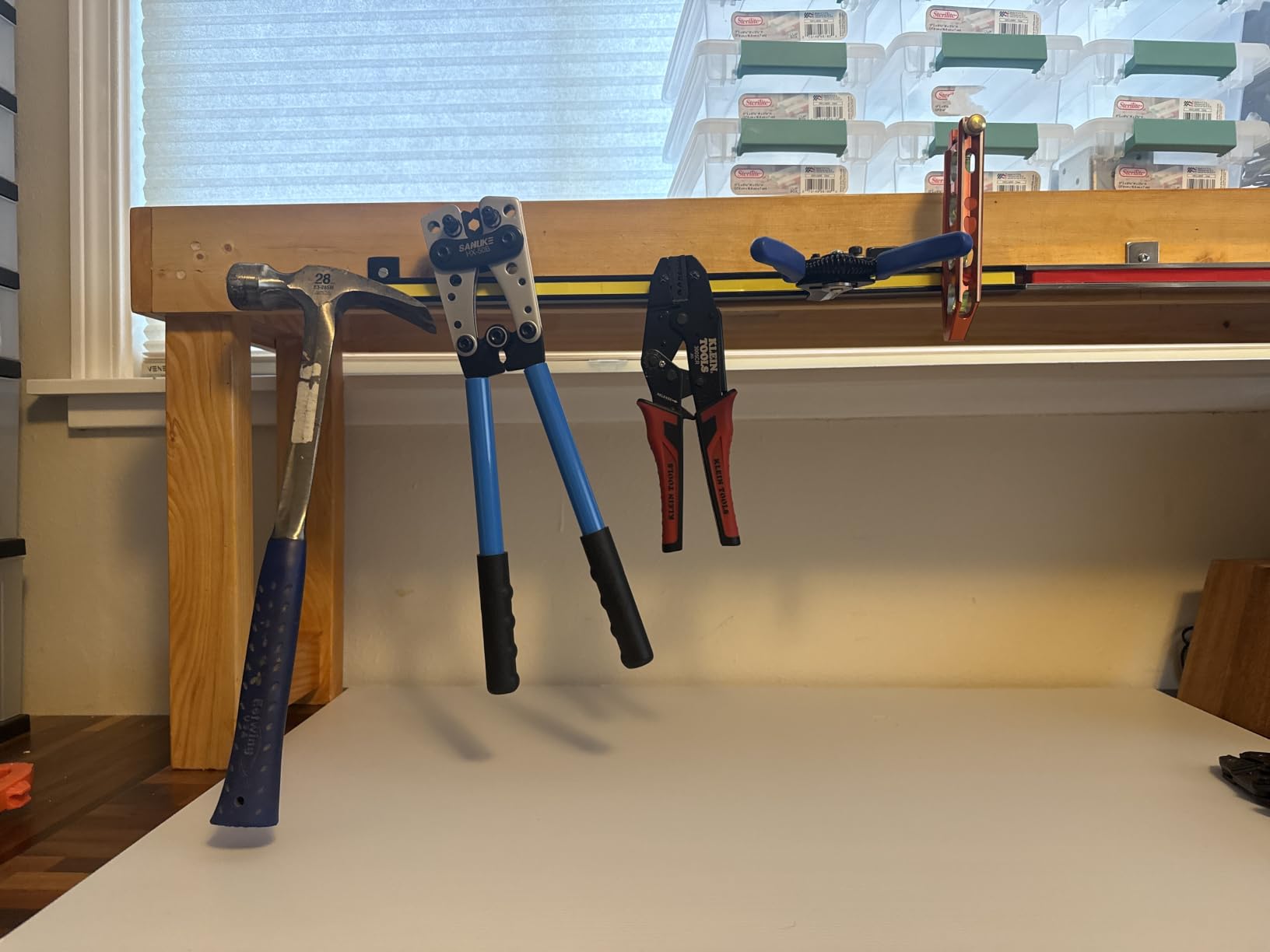
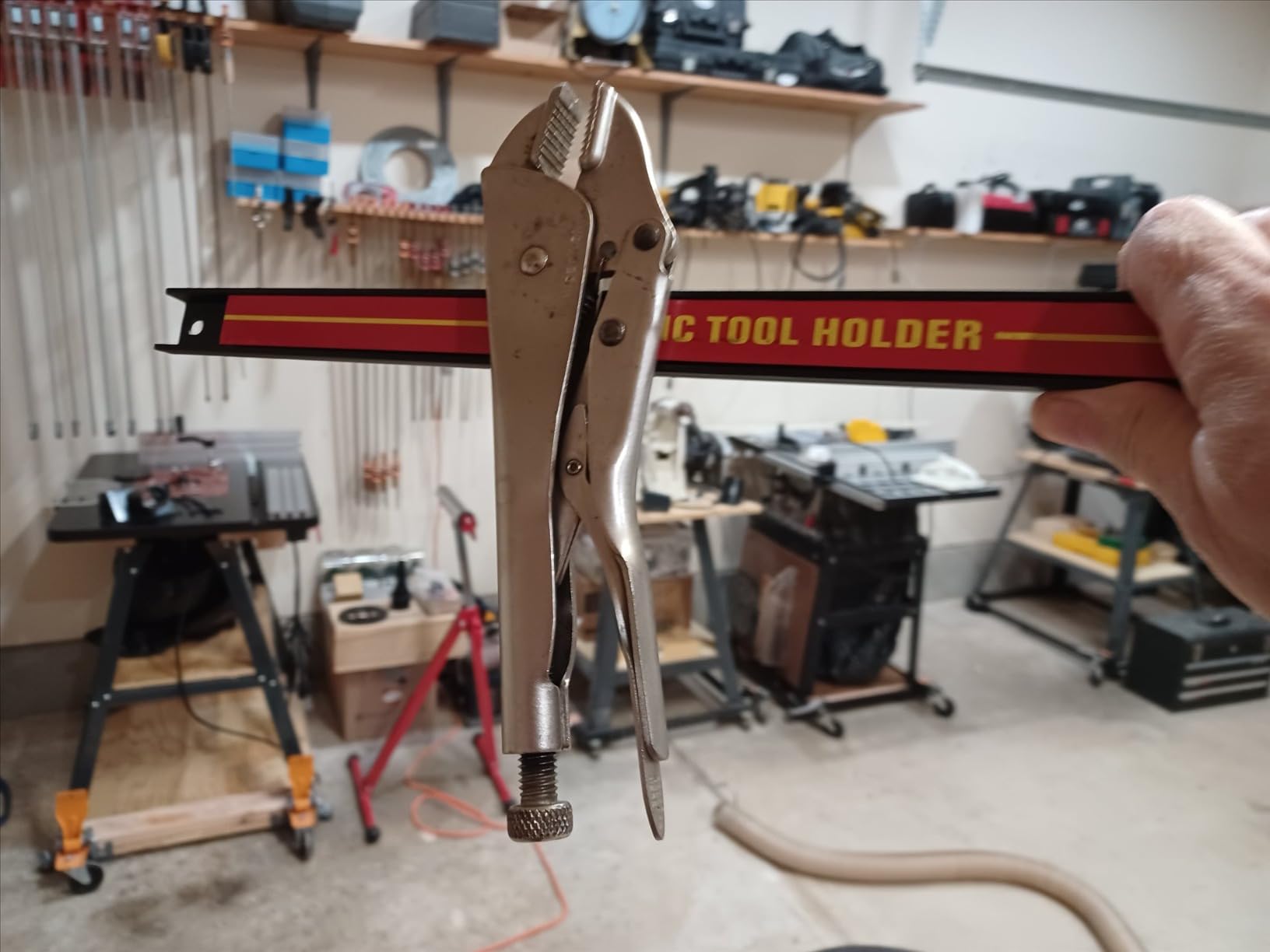
This bar is the strongest single bar in the group and the one I trust with a set of combination wrenches. Master Magnetics rates it at 20 lb of pull per inch, and at 24 inches long that is a genuinely serious clamp. The profile is only 1.13 inch deep, so you get holding strength without the shelf depth that eats wall space.
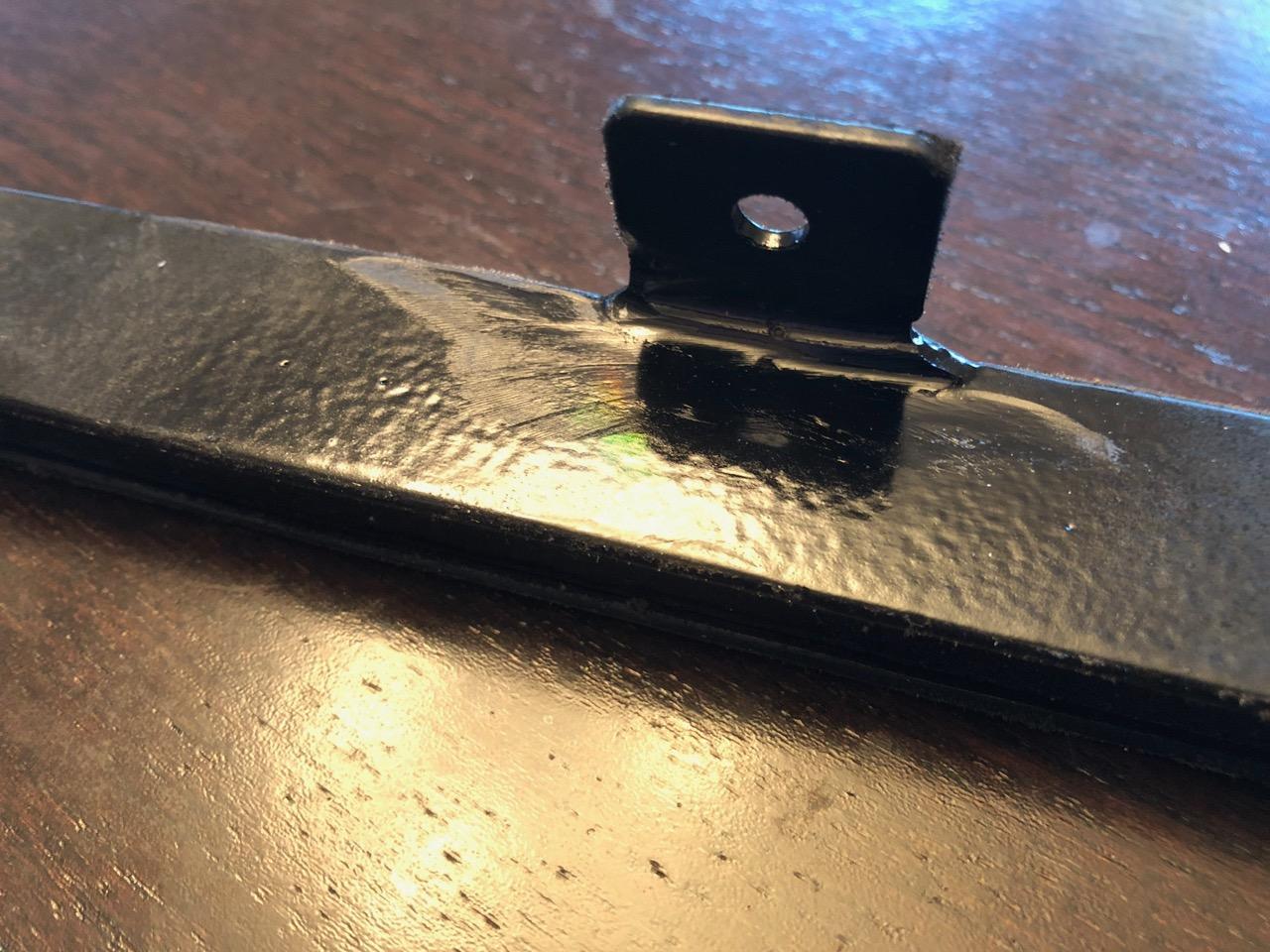
The build matches the numbers. Alloy steel with a black powder coat finish, two welded steel tabs with 0.25 inch holes spaced 16 inches apart, and two mounting screws in the box. The powder coat is the finish that decides whether a holder is safe on a finished surface, because a bare steel edge will mark a painted toolbox in a single drag.
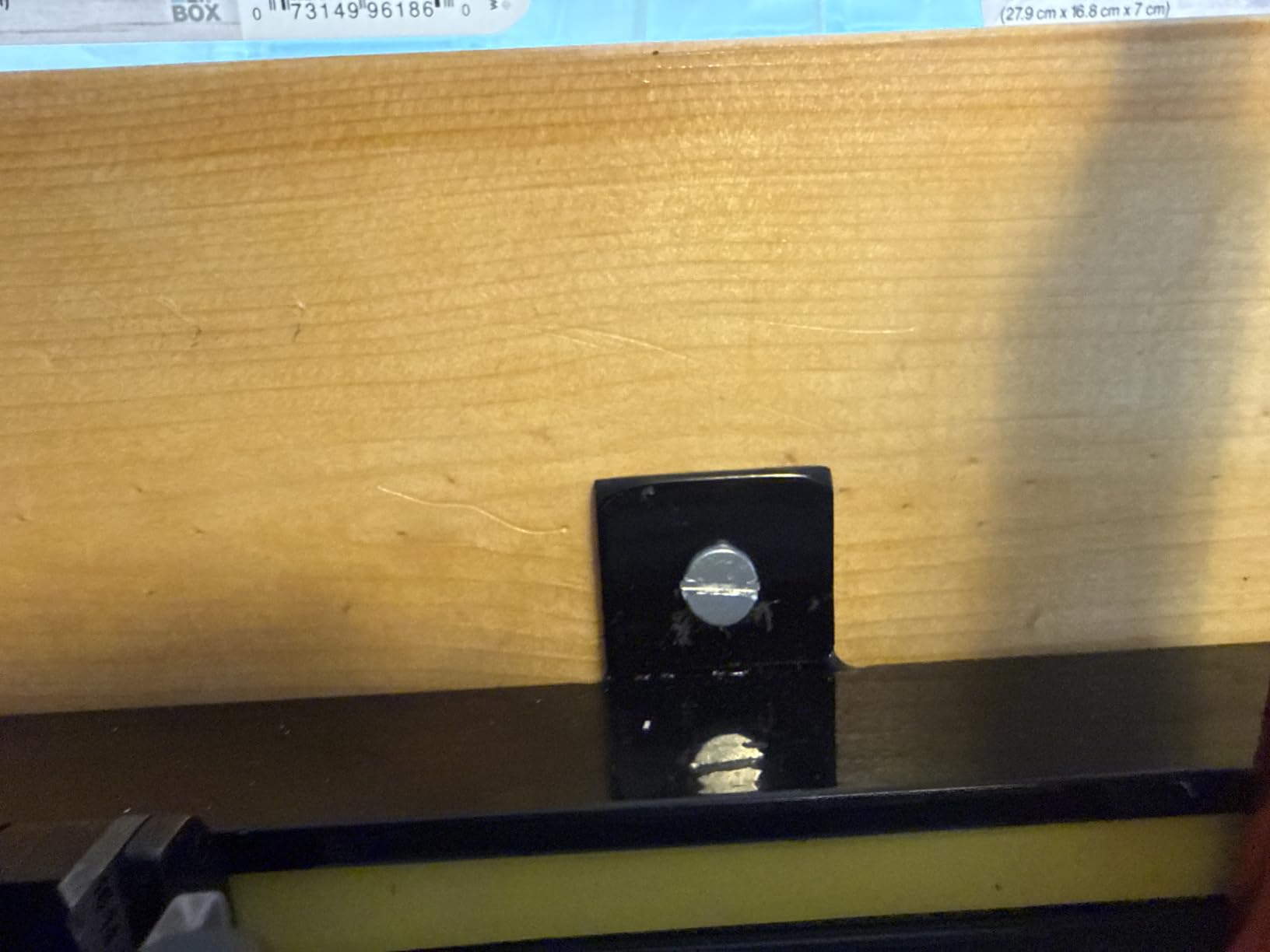
With 4.8 stars and 2653 reviews, including an 84% five-star share, this is the best-evidenced pick here. Reviewers describe it as strong, easy to mount and space saving, and the only complaint that repeats is the fixed 16 inch tab spacing. That is a real limitation worth planning around, since a single 24 inch bar wants a stud roughly 16 inches from an anchor point.
The same brand also sells 6, 13 and 18 inch versions, which matters more than it sounds. Two 13 inch bars let you hit stud spacing far more easily than one 24 inch bar, and a shorter bar carries less risk of flex when you pull a heavy tool off the end.
How to install it without a stud finder surprise
Check the tab spacing before you drill. If your studs sit at 16 inches, one bar lines up cleanly. If they do not, buy the shorter sizes and stagger them, or mount into a plywood backer panel screwed across several studs. This is the single most common install complaint in the reviews.
Use the two included screws and fasten into studs or masonry anchors, not into bare drywall. Pulling a loaded 24 inch bar straight off a drywall anchor will eventually take the anchor with it.
Where it falls short
It is one bar, so you will need two or three to cover a full wall, and the cost per foot adds up faster than a multi pack. If you are covering an entire workbench wall, the six-bar set further down gives you more holding surface for less.
It is also a strip, not a rail. Tools placed close together can jostle when you pull a neighbor off, so leave a finger width of space between wrenches if you care about them staying in size order.
3. HMmagnets 24 Inch Heavy Duty Bar – Most Compact for Even Force
HMmagnets 24″ Heavy-Duty Magnetic Tool Holder (Upgraded Version) – Extremely Powerful Magnetic Pull Force to Hold Heavy Tools – Professional Space-Saving Magnetic Bar – Tool Organizer Rack/Strip
Even force across 24 inches
Anchors and screws included
Mounts to pegboard or slat wall
Pros
- Magnetic force spread evenly across the full length
- Holds hammers pliers axes and tape measures
- Anchors and screws included
- Mounts on pegboard and slat wall as well as walls
- Black cover with no stickers to peel
Cons
- Two mounting tabs can flex slightly on thin drywall
- Higher cost per foot than generic bars
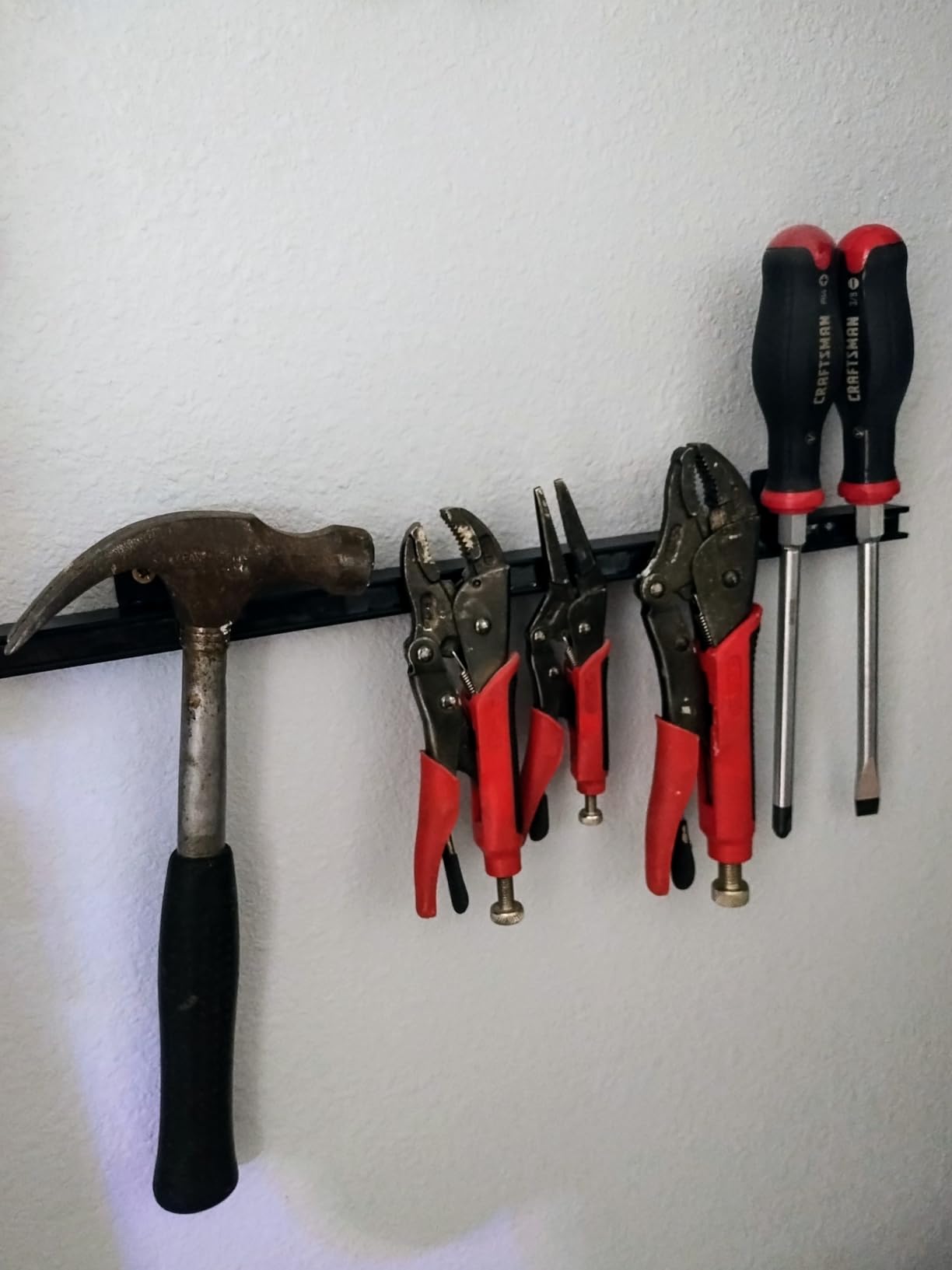
Dead zones are the failure mode nobody mentions until they find them. A bar can look fully magnetized at the middle and drop a screwdriver near one end, and you end up with a tool on the floor every time you reach for that corner. The HMmagnets bar is built specifically to avoid that, with upgraded magnets spread evenly across the full 24 inch length so the entire bar is usable.
Reviewers confirm the result in practical terms. Owners report holding about 30 tools at once, including hammers, pliers, wrenches, wire cutters, screwdrivers, tape measures and axes, and 83% of reviews are five-star. At 4.7 stars across 1278 reviews it sits behind the Master Magnetics bar on rating but ahead of it on coverage of the full length.
Installation is the other strength. Screws and anchors are included, and the manufacturer calls out concrete, brick and wood as valid substrates, plus pegboard and slat wall. That versatility is unusual, because most bars in this price range are advertised for drywall only and quietly fail on masonry.
The black strip cover hides the magnets, which sounds cosmetic until you have peeled stickers off a steel bar in the dark. The body measures 1.6 inch deep by 24 inch wide by 0.6 inch high, so it is a little chunkier than a slim bar but still reasonable on a stud wall.
Why even force matters more than peak force
Peak pull is the number on the box. Even force is the number that decides whether a bar works. On a 24 inch run, a bar that is strong in the center and dead at the ends will frustrate you more than a slightly weaker bar that holds the same anywhere.
Verified buyers report installing this one in under ten minutes, which usually means the anchors bite into masonry properly. If your garage walls are bare drywall, buy the anchors rather than improvising with drywall screws.
Where it falls short
Two mounting tabs over 24 inches is a lot of span, and owners report slight flex when pulling off heavy tools from thin drywall. The fix is a backer board or a stud behind each tab rather than a different product.
It costs more per foot than the generic multi packs, and you are paying for magnet consistency. If you only need a few light tools on one wall, that premium is not worth it.
4. Goplus 6 Pack 18 Inch Magnetic Tool Holder – Best for a Full Workbench Wall

Goplus 6PCS 18″ Magnetic Tool Holder, Wall Mounted 176LBS Capacity Magnetic Tool Organizer, Heavy Duty Metal Tool Rack, Tool Magnet Bar, Magnetic Tool Holder Strip for Garage Workshop
176 lbs total, 22 lbs per bar
Powder coated alloy steel
6 bars with mounting screws
Pros
- Six bars give 176 lbs of total capacity
- 22 lb rating per bar
- Pre-punched holes speed up alignment
- Bars link end to end for long runs
- Reported strong enough for hedge shears and loose hardware
Cons
- Hole spacing does not match 16 inch studs
- Not aligned to 1 inch pegboard spacing
- Back is not magnetic so fasteners are required
Coverage is the reason to buy this one. Six 18 inch powder-coated alloy steel bars give you 176 lbs of stated total capacity, with 22 lbs per bar. That is enough surface to run a whole wall above a workbench without the layout feeling like a collection of short strips, and it is the pick I would use for a shop where tool category matters more than a single hero bar.
Reviewers describe holding hedge shears, large wrenches and even loose nails and bolts, which is a stronger claim than most bars in this roundup can make. At 4.6 stars and 1038 reviews, the set is well proven, and people use these bars well beyond hand tools, from kitchen knives to grill utensils.
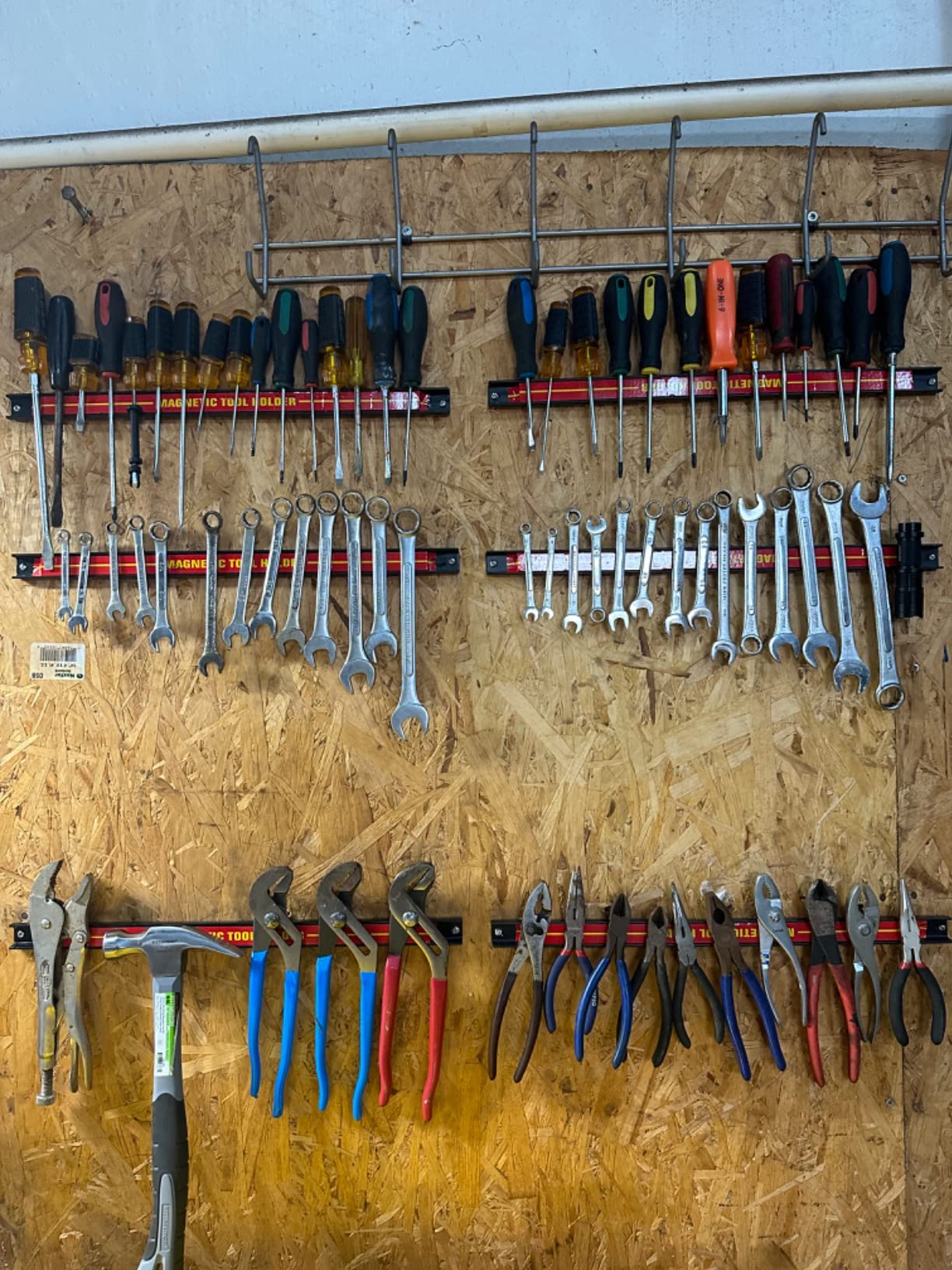
Pre-punched holes make alignment fast, and the bars connect end to end when you want a longer run. One detail is worth knowing: the steel frame holds the magnet about 1/32 inch off the tool, which slightly reduces attraction compared with a flush magnetic face. In practice that is a rounding error for hand tools, but it is the reason some reviews rate it just under the top bars.
Back the set with a plywood panel if you want a genuinely full wall. Six bars screwed into studs, spread across one 4 foot sheet, is the install pattern most owners settle on, and it makes the next set easy to add.
Plan around the hole spacing
The mounting holes do not line up with standard 16 inch stud spacing, and they are not spaced at 1 inch intervals for pegboard. That is the most repeated complaint in the reviews, and it is a planning problem rather than a defect. Measure first, then place your bars between studs or fasten through a backer board.
Because the back is not magnetic, adhesive alone will not do. Use the included screws, and if you are mounting into concrete or brick, add anchors.
Where it falls short
It is a wall product. Unlike the drawer-based organizers later in this list, these bars need a solid surface and screws, so they do nothing for a toolbox that has no wall behind it.
The stick-on magnetic labels that ship with some sets are also hard to remove if you decide to reposition, and reviewers mention that more than once. Plan your layout before you label anything.
5. WORKPRO 36 Slot Screwdriver and Wrench Organizer – Best for Neat Driver Order

WORKPRO Magnetic Screwdriver and Wrench Organizer Set, 36-Slot Tool Holders
36 slots across 3 rails
7.5 lbs per rack
Red anodized aluminum rails
Pros
- Holds 36 tools in a compact footprint
- Aluminum rails resist corrosion with a red anodized finish
- Adjustable high-tension clips fit varied tool sizes
- Rated number two in Tool Holders
- Suits garages and workshops
Cons
- 7.5 lbs weight limit per rack
- Excludes screwdrivers over 5 mm and wrenches over 7 mm
- Fixed slot layout is less flexible than a magnetic bar
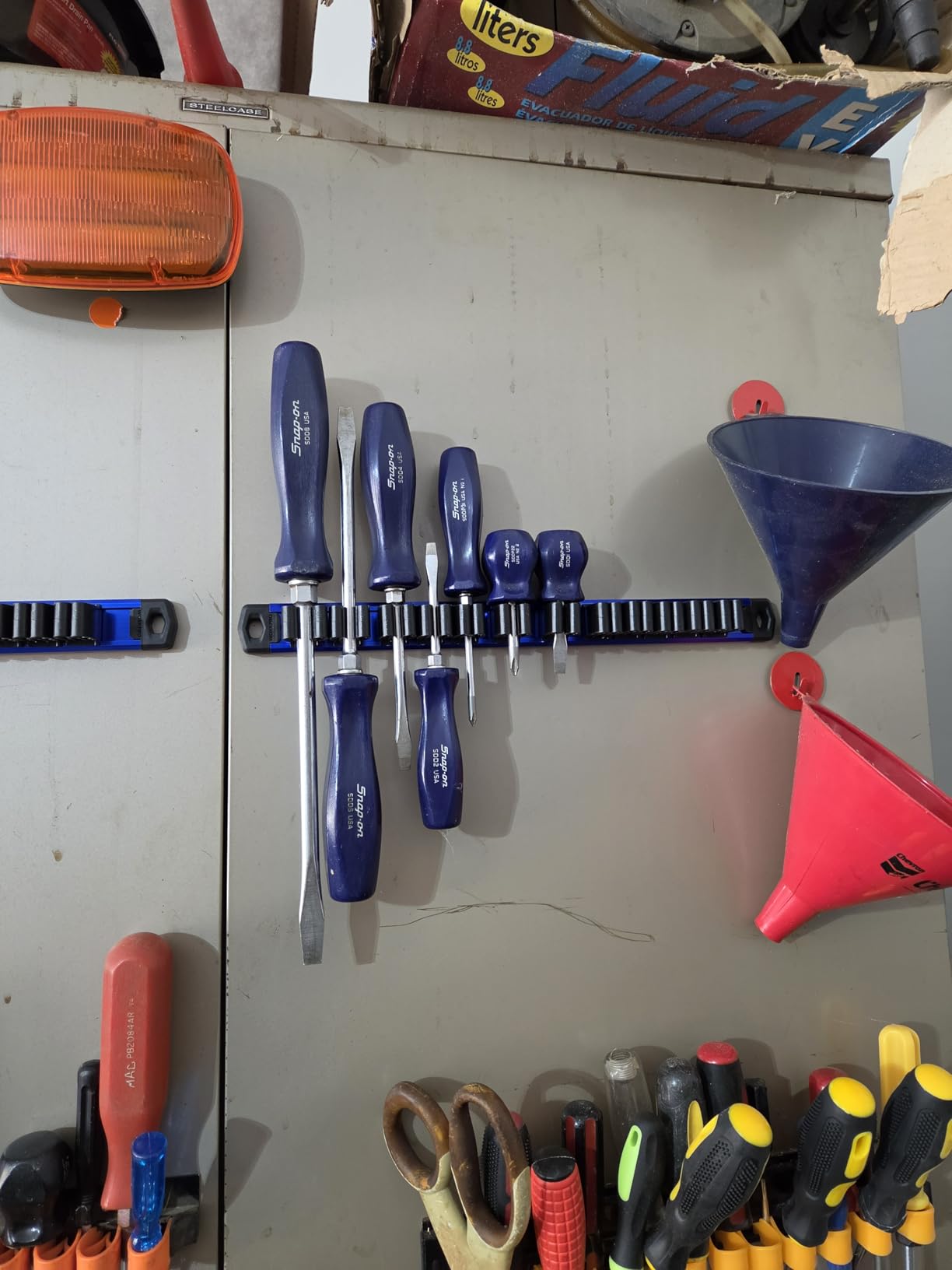
Magnetic bars keep tools visible but they do not keep them in order. Nothing in this category fixes that better than a slotted rail with a magnet behind it, and this 3 rail set gives you 36 slots, 12 per rail, in a footprint of 13.46 by 4.02 inches. Screwdrivers stand in size sequence instead of migrating along a bar every time you pull one out.
The rails are aluminum alloy with a red anodized finish, which resists corrosion in a damp garage far better than painted mild steel. Reviewers value the visible, orderly layout and the sturdy build, with 79% five-star ratings across 848 reviews. It ranks number two in its category on Amazon, which tells you how settled the demand is.
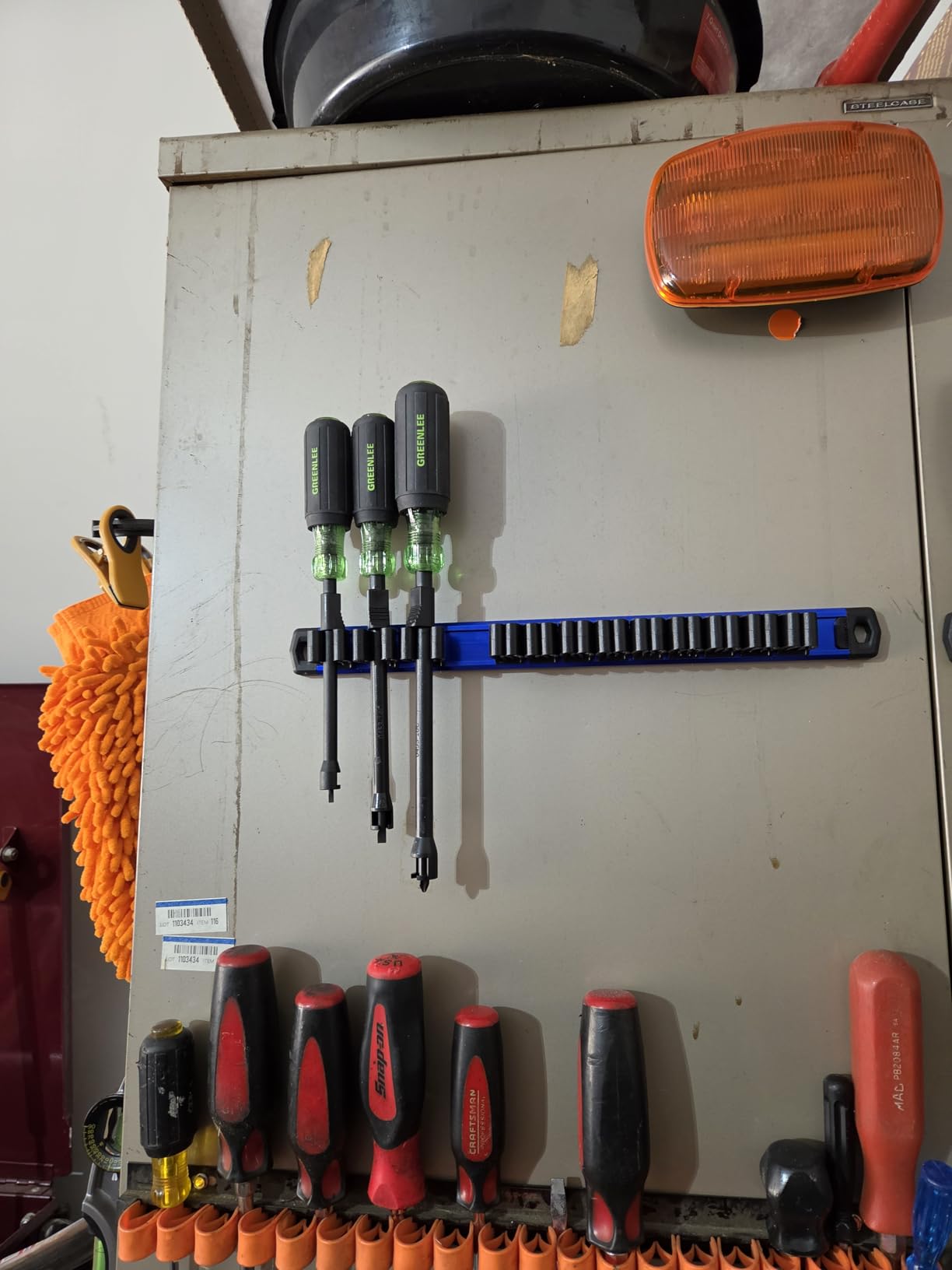
Two size limits decide whether this works for you. Screwdrivers need a barrel up to 5 mm in diameter, and wrenches need to be no thicker than 7 mm. Most household drivers and combination wrenches fall inside those numbers. Fat-handled drivers, pliers and anything oversized will not clip in, and that is a fit question, not a quality question.
Each rack is rated to 7.5 lbs, which covers 12 hand tools comfortably. Mount it to a steel tool chest or a wall-mounted steel backer, and the magnets hold the rail itself while the clips do the organizing.
Measure your driver barrels first
Take a caliper or a ruler to the fat-handled screwdrivers you own before ordering. If any of them exceed 5 mm, this rail will not accept them and you will be back to a magnetic bar for that portion of the wall.
Pairing matters too. A 3 rail set covers drivers and slim wrenches beautifully, but mixing in pliers or larger combination wrenches means leaving empty slots.
Where it falls short
The 7.5 lbs per rack ceiling is the real cap, and a rack loaded with 12 solid steel combination wrenches can approach it. Watch the weight if you are hanging the set high on a wall where a dropped wrench is a real hazard.
It is also less flexible than a bar. You cannot reconfigure the spacing, and adding a fourth size later means adding another rail rather than rearranging the one you have.
6. Ernst Wrench Pro Modular Wrench Organizer – Best for Wrench Sets

Ernst Manufacturing Wrench Pro – Modular Wrench Organizer for 40 Tools with Magnetic Base (Red) – Made in the USA
Holds 40 wrenches
Fits 6mm to 38mm
Made in USA with lifetime guarantee
Pros
- Modular design fits any number of wrenches in a set
- Aligns wrenches uniformly in one clean block
- Works with offset and combination wrenches plus open-end and stubby styles
- Identification labels make sizes readable at a glance
- Backed by a lifetime guarantee
Cons
- Fixed size range stops at 38mm and 1-1/2 inch
- Holds tools rather than mounting to a wall
- Needs a metal surface for the magnetic base
The Ernst Wrench Pro does one thing exceptionally well: it takes a matched wrench set and stands it up in a uniform block where you can read the sizes at a glance. It holds up to 40 tools, uses a magnetic base so the whole unit sticks to a steel surface, and the geometry is patented and made in the USA with a lifetime guarantee behind it.
It rates 4.8 stars across 865 reviews with 88% five-star, the highest five-star share of the 12 picks here. Reviewers keep pointing to the same thing: a tidy, uniform block and clear labels that make a missing wrench obvious immediately rather than after a hunt through a drawer.
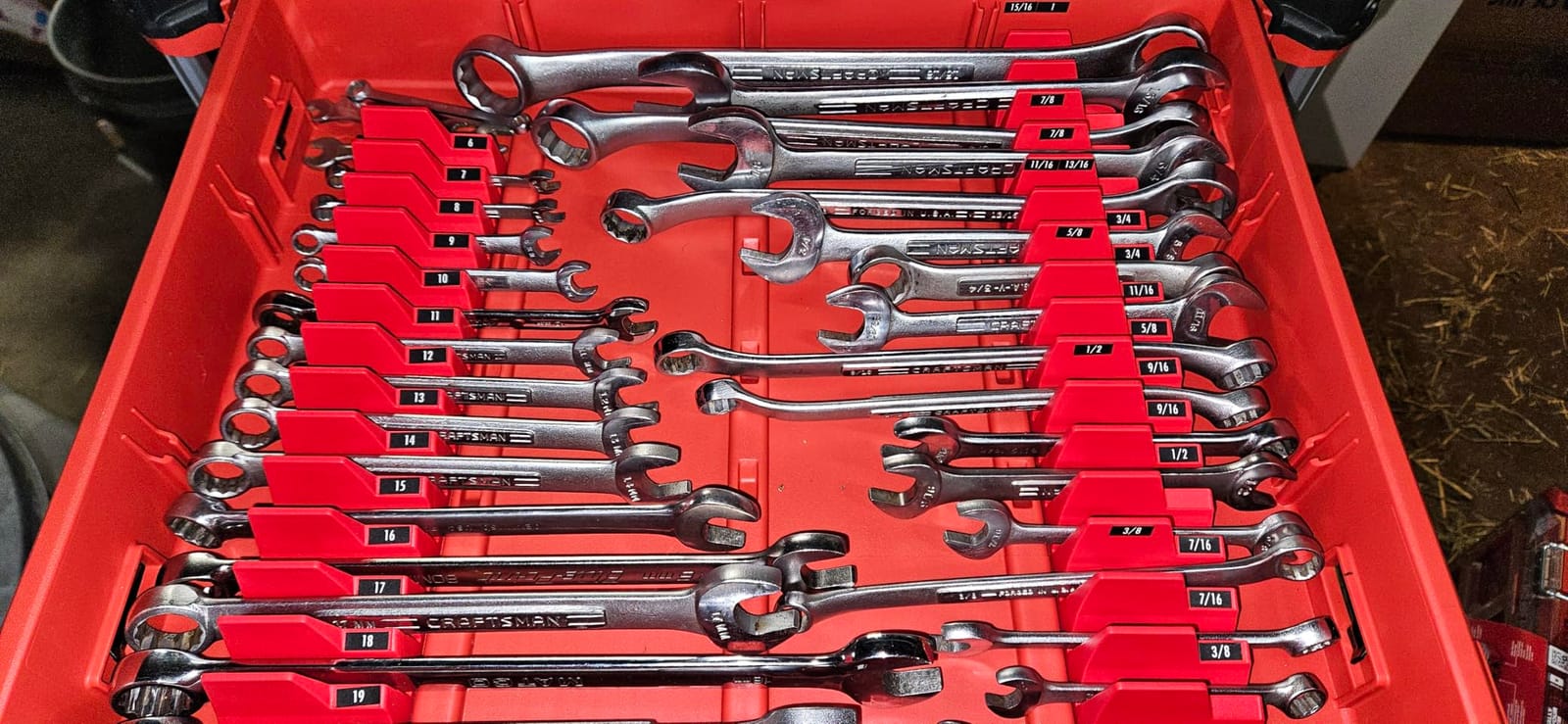
The size range is 6mm to 38mm, which is 1/4 inch to 1-1/2 inch, and it takes offset, combination, open-end, stubby and ratcheting wrenches. Modular is the key word, since pieces combine in any number, so a 20 piece set and a 40 piece set use the same building block.
Because the base is magnetic, this is a tool chest or drawer-top product, not a wall mount. It also needs a metal surface underneath, so a plastic drawer liner will defeat it entirely.
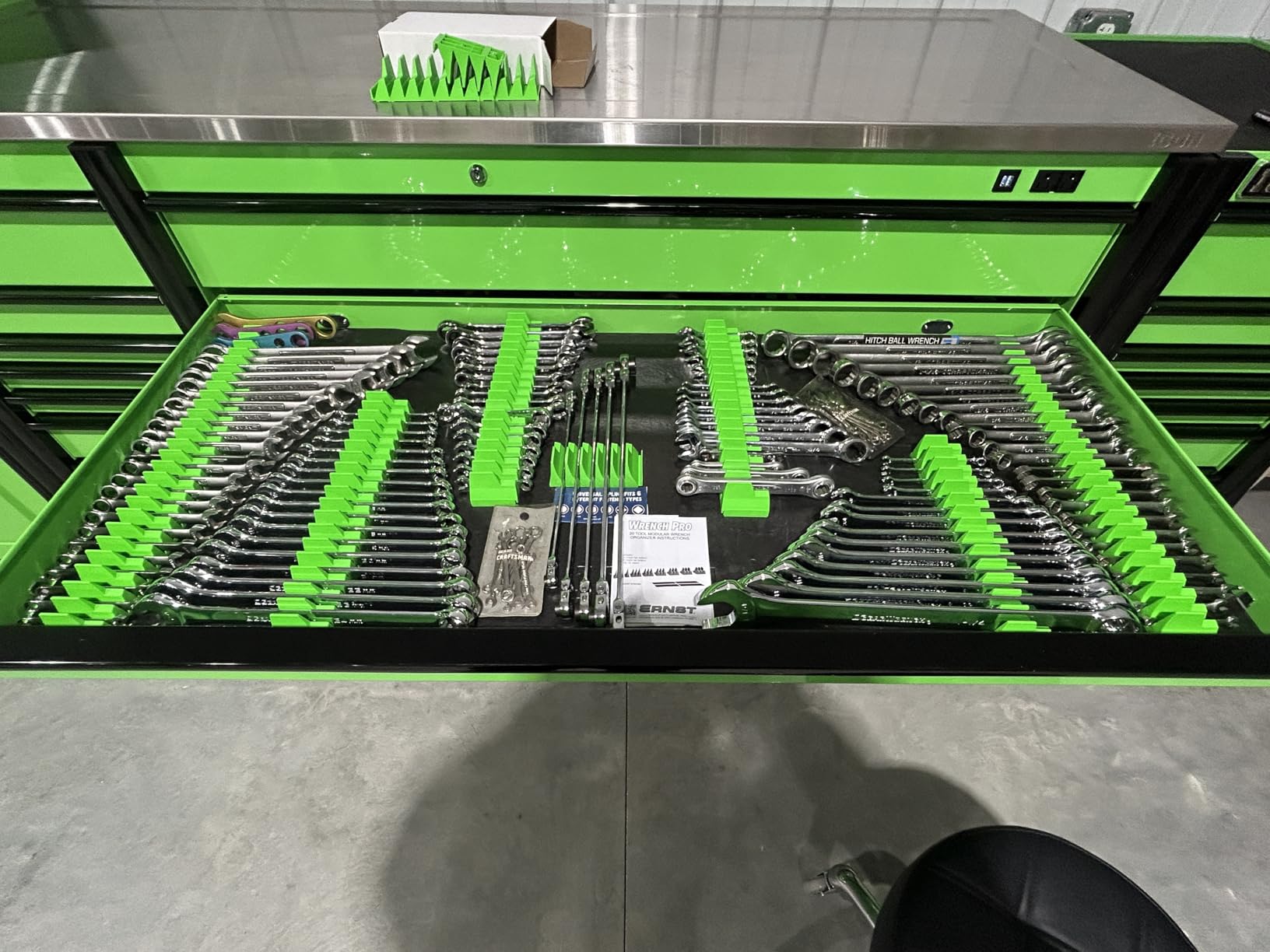
Check the top of your size range
Measure your largest wrench before you buy. Anything over 38 mm, including many 19 mm and 3/4 inch combination wrenches, will not fit and needs a different solution. This is the single caveat that shows up most often in the reviews.
Also confirm you have a steel surface to set it on. A steel tool chest top, a steel drawer or a steel wall panel all work. Formica or plastic drawer liners do not.
Where it falls short
It holds tools. It does not mount to a wall, so it cannot be the sole storage system in a garage. Most owners pair it with a magnetic bar above a chest, which is a good combination because the bar takes the loose tools and the organizer takes the set.
Because each wrench sits in its own slot, an empty set still occupies its full footprint. That is a fair trade for the order you get back.
7. DGSL 12 Inch Magnetic Tool Holder 4 Pack – Best Value Multi Pack

DGSL Heavy Duty Magnetic Tool Holder, 4 Pack 12″ Wall Mount Organizer
22 lbs per strip
Alloy steel, lacquered finish
12 inch strips, 4 pack
Pros
- 22 lb rating on every 12 inch strip
- Durable alloy steel frame with strong magnets
- Mounting hardware for wood drywall and other solid surfaces
- Installs horizontally or vertically
- Four bars for the price of about two premium ones
Cons
- 12 inch bars hold fewer tools than 18 or 24 inch options
- Wall mounting only
- not suited to drawer storage
The DGSL 4 pack lands in the sweet spot between the budget strips and the premium single bars. Each 12 inch alloy steel strip carries a 22 lb rating, which is double what most 12 inch bars in this roundup claim, and you get four of them. The lacquered finish is a sensible choice for a painted or powder-coated wall because it will not drag a bare steel edge across the surface.
At 4.5 stars and 700 reviews with 75% five-star, the set is well established. Reviewers report solid magnetic performance for everyday hand tools and use these strips for plenty of non-tool jobs, including kitchen utensils, drill bits and craft supplies, which tells you the magnets are not fussy about what they grab.
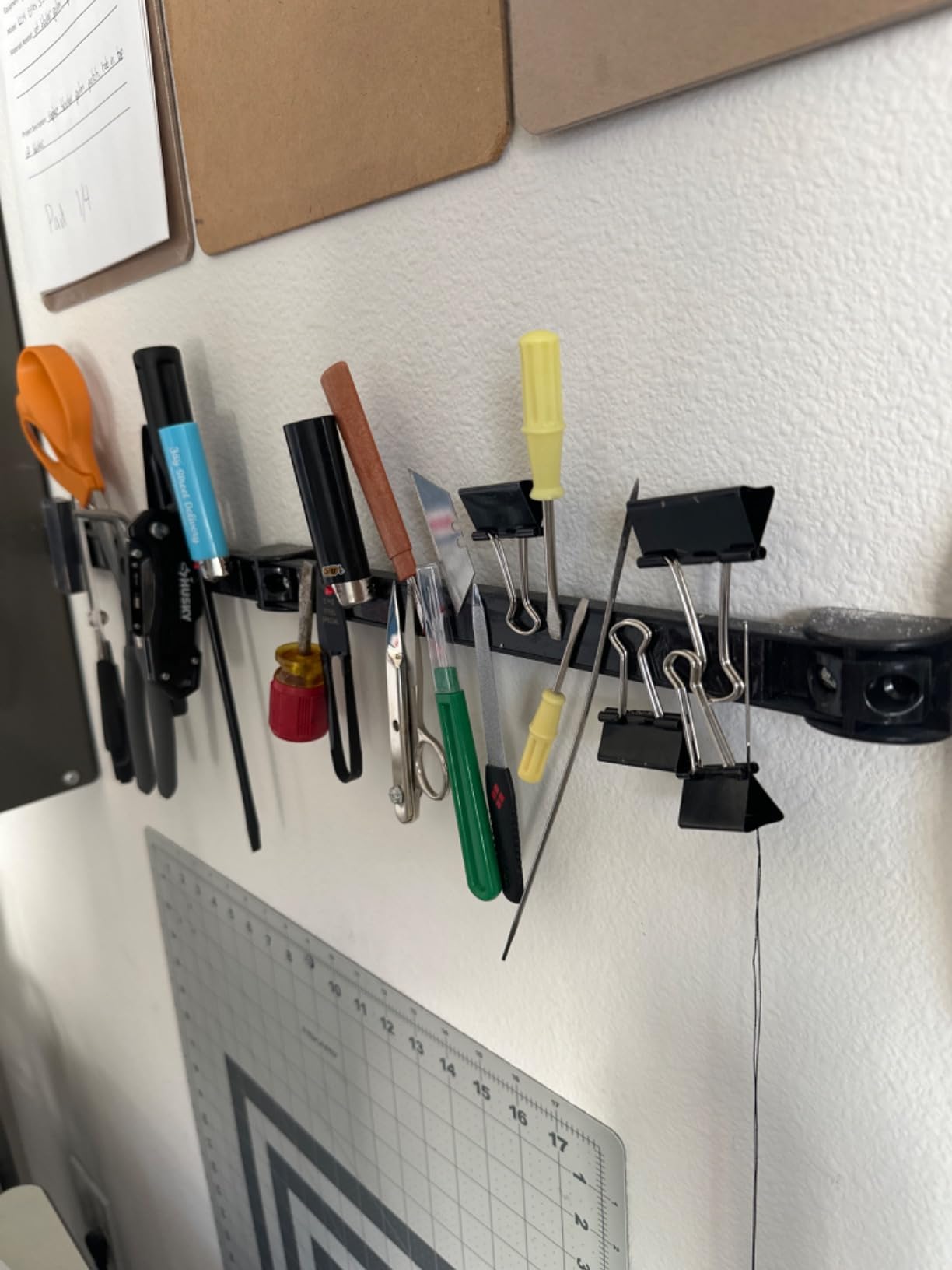
Each strip measures 12 inch deep by 0.95 inch wide by 1.6 inch high, and the mounting hardware covers wood, drywall and other solid surfaces. Installation works horizontally or vertically, which lets you run short vertical columns for drivers beside longer horizontal runs for wrenches, a layout most people never try on a bar-only wall.
Variants go from a 12 inch 4 pack up to a 24 inch 5 pack, so you can start small and add length later without changing systems. That matters for a garage that is still being organized.
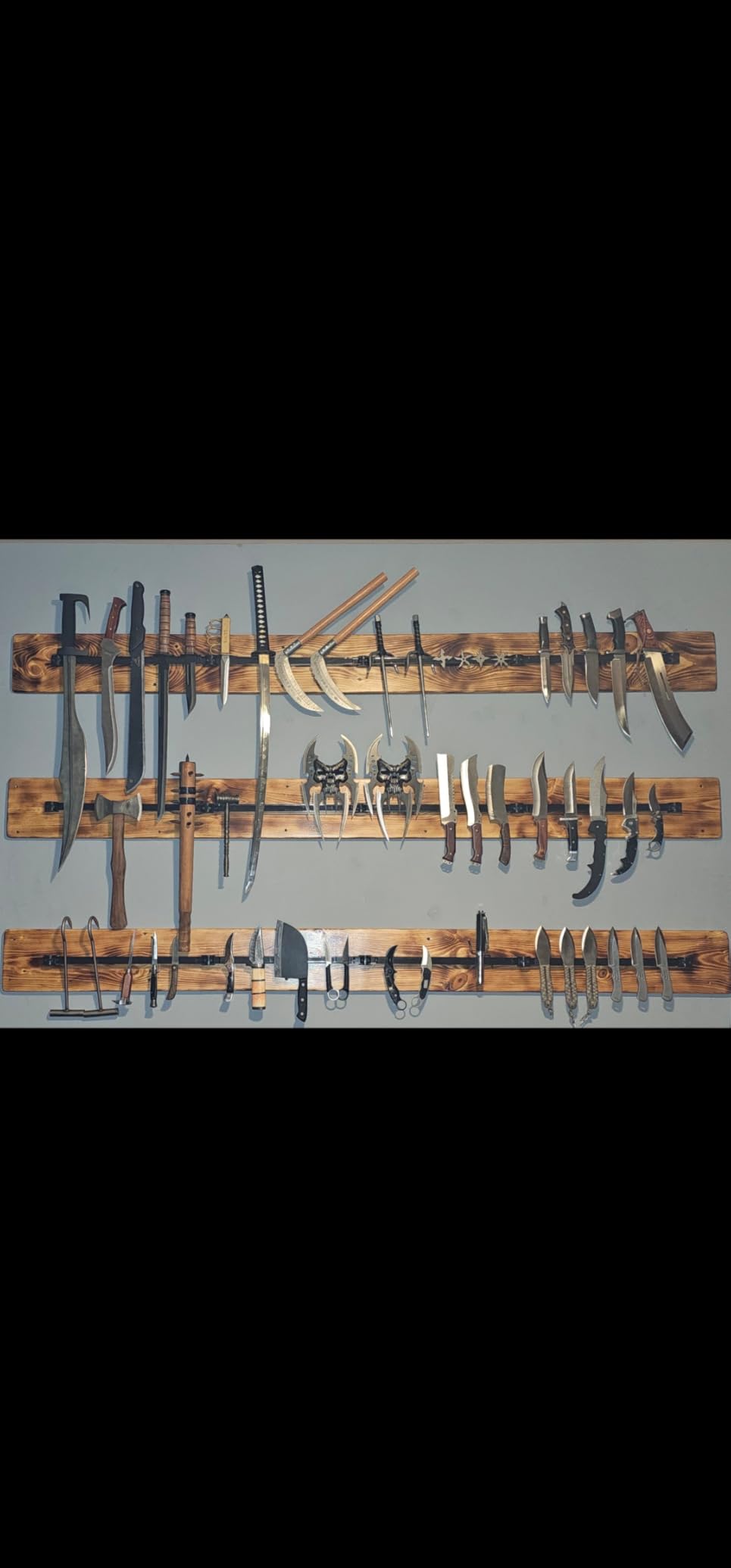
When 12 inches is enough
A 12 inch strip comfortably carries a group of screwdrivers, a plier set, or a run of sockets in ascending order. If your wall is organized by tool type rather than by size, short strips are easier to rearrange than one long bar, because you can move a small piece rather than a 24 inch span.
The 22 lb figure also gives you headroom above the 10 lb bars. A framing hammer is unlikely to fall off a 22 lb strip, which is the difference that matters if you are still finishing a garage build.
Where it falls short
Length is the limit. Twelve inches holds noticeably fewer tools than 18 or 24 inch bars, so covering a long wall takes more bars and more screws. Count your tools and divide by what fits before you order.
These are wall strips, not drawer organizers, and they are rated for indoor and outdoor use but they are not weatherproof for an exposed door exterior.
8. DEHOYI 48 Piece Magnetic Modular Wrench Organizer – Best for Toolbox Drawers

DEHOYI 48 PCS MAGNETIC Modular Wrench Organizer for Tool box, Metric & SAE
48 modular holders, metal construction
Fits 6mm to 38mm wrenches
128 size labels, two year warranty
Pros
- Replaces bulky V-shaped wrench holders and frees a drawer
- Modular pieces snap together so sizes can be added mid layout
- 128 size labels make missing tools obvious
- Magnets hold through a drawer liner and survive shaking
- Metal construction with a two year warranty
Cons
- Magnets are weak through a liner and pieces can slide
- 48 pieces may not hold 48 large wrenches
- Only two sets of labels are included
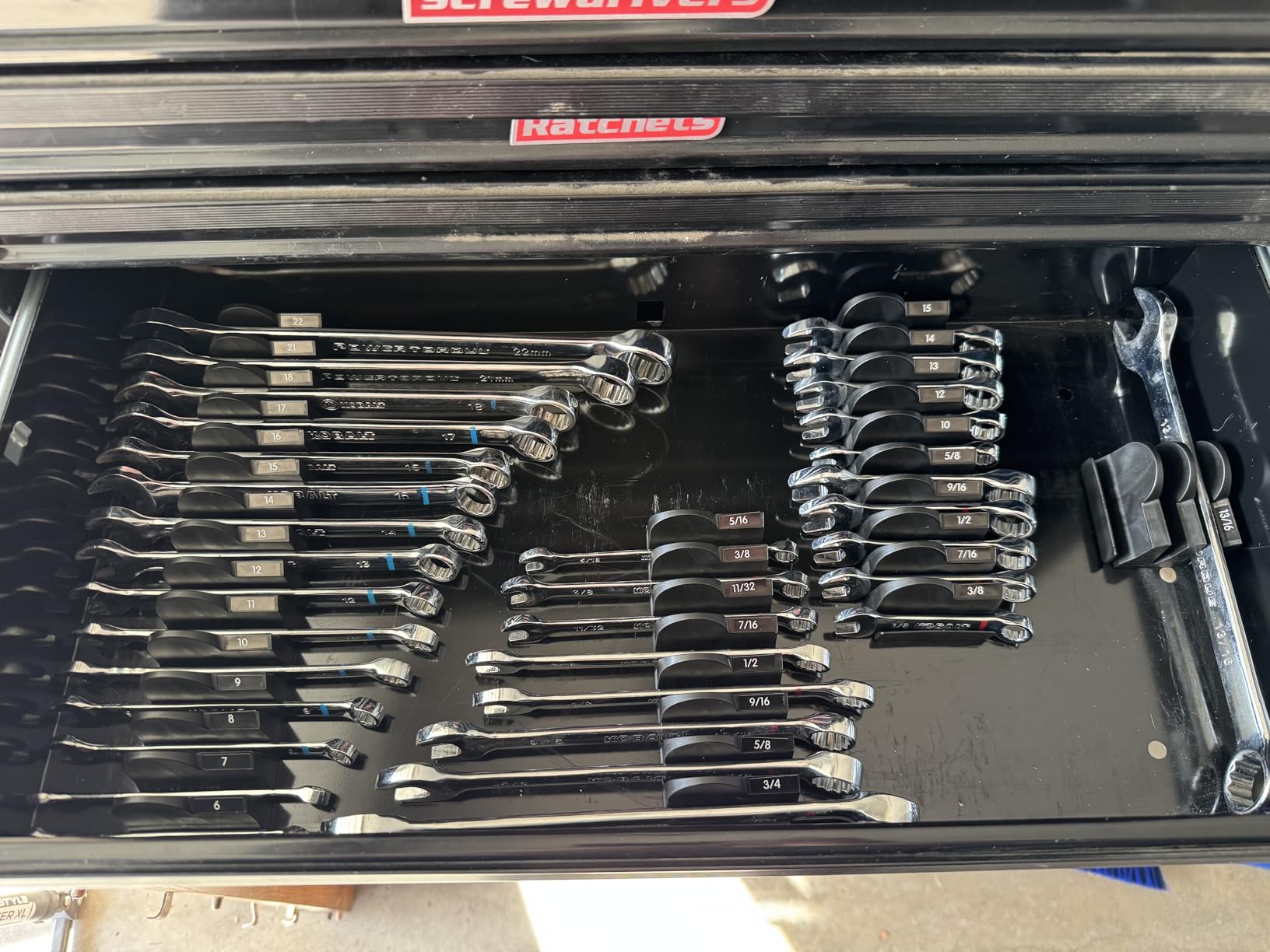
Most wrench storage in a toolbox is a tray of V-shaped racks that takes a full drawer for one set. This 48 piece modular system replaces all of that. Each small metal holder grips one wrench, and the pieces snap together in any arrangement, so you can drop in a new size later without taking the layout apart or relabeling everything.
Reviewers consistently report a noticeably tidier toolbox and faster tool finding, with 78% five-star ratings across 601 reviews. It ranks number one in its category on Amazon. Two sets of 64 size labels are included, so a full set can be identified from a distance, and the metal construction is rated for years of daily use with a two year warranty.
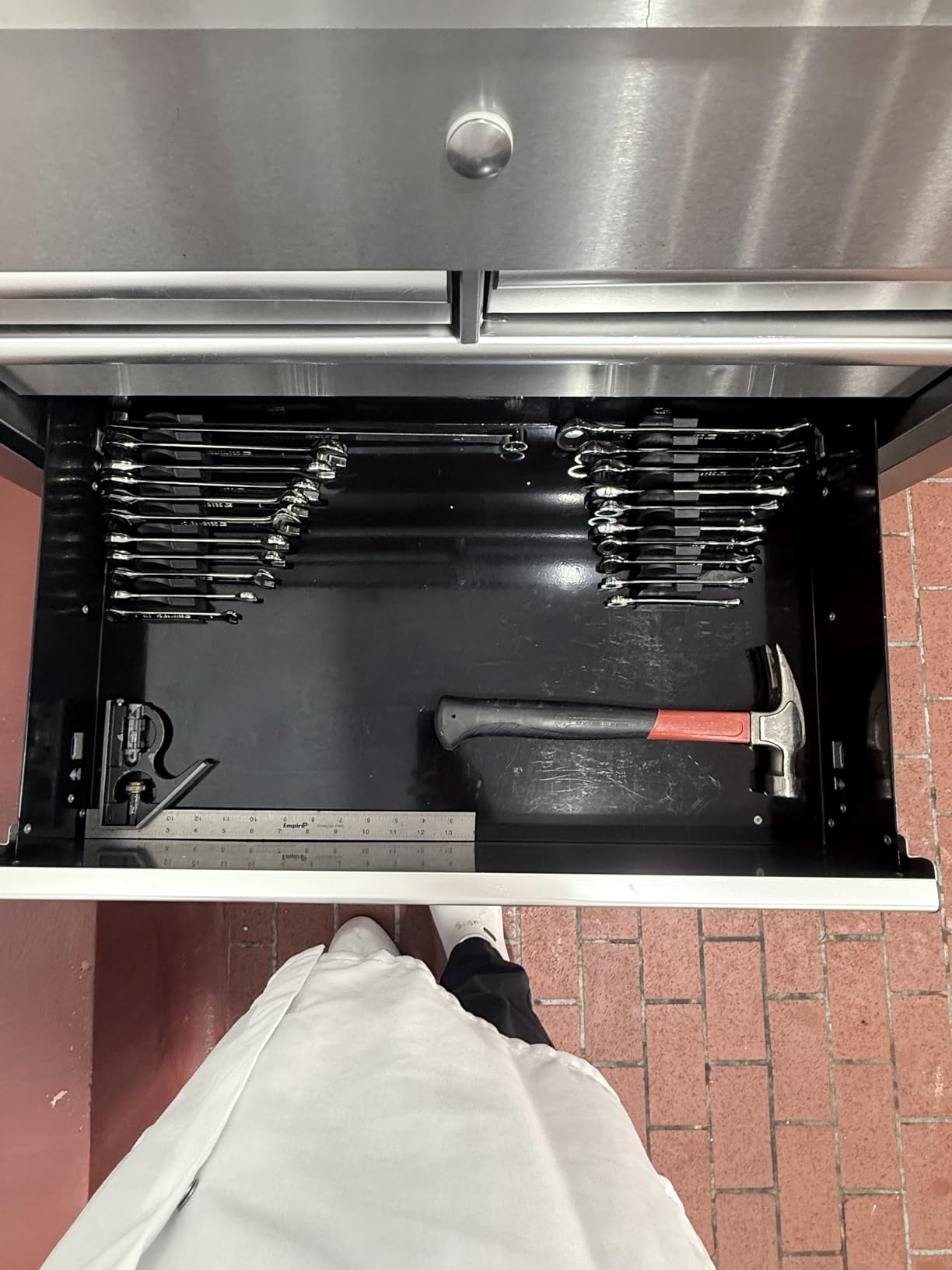
The size range matches the Ernst organizer at 6mm to 38mm, or 1/4 inch to 1-1/2 inch, and it accepts offset, combination, open-end, short-handle, adjustable and ratcheting wrenches. Because the magnets are in the base of each holder, the whole module sits on a metal drawer floor without any mounting hardware at all.
The honest limitation is liner depth. Reviewers report that the magnets hold through a drawer liner but the pieces can slide slightly, and they shift when you slam a drawer. It is a settled, minor movement rather than a failure, but it is the thing owners mention most.
Why modular beats a fixed tray
A fixed tray forces you to buy for the size range you think you will own. Modular pieces let you expand one size at a time, and a new holder simply snaps onto the end of the run. For anyone building a set gradually, that is the whole value proposition.
Count your actual wrenches before buying 48 pieces. If a tool sits between two holders, 48 pieces may not hold 48 of the largest wrenches, and you will end up short.
Where it falls short
Through a thick drawer liner the magnets weaken noticeably, and the dominant complaint in the reviews is exactly that. If your drawer has a rubber mat, either remove it under this module or accept slight movement.
Some sets arrive bent, and a bent piece will not sit flush against the drawer floor, so check the metal on arrival. Return requests are the fix, not adhesive.
9. DURATECH 4 Pack 12 Inch Magnetic Tool Holder Strip – Most Versatile for Light Hand Tools

DURATECH 4 Pack 12″ Magnetic Tool Holder Strip, Heavy Duty Tool Bar
22 lb pull per 12 inch bar
Alloy steel, blue finish
4 pack with brackets and screws
Pros
- Lowest cost per bar in the set
- 22 lb pull figure for a budget strip
- Brackets and mounting screws included
- Multiple bars can run side by side for more capacity
- Works for knives screwdrivers saw blades and sockets
Cons
- Lowest rating in the group at 4.3 stars
- Some users report pull below the stated 22 lb for heavy tools
- 12 inch length limits tools per bar
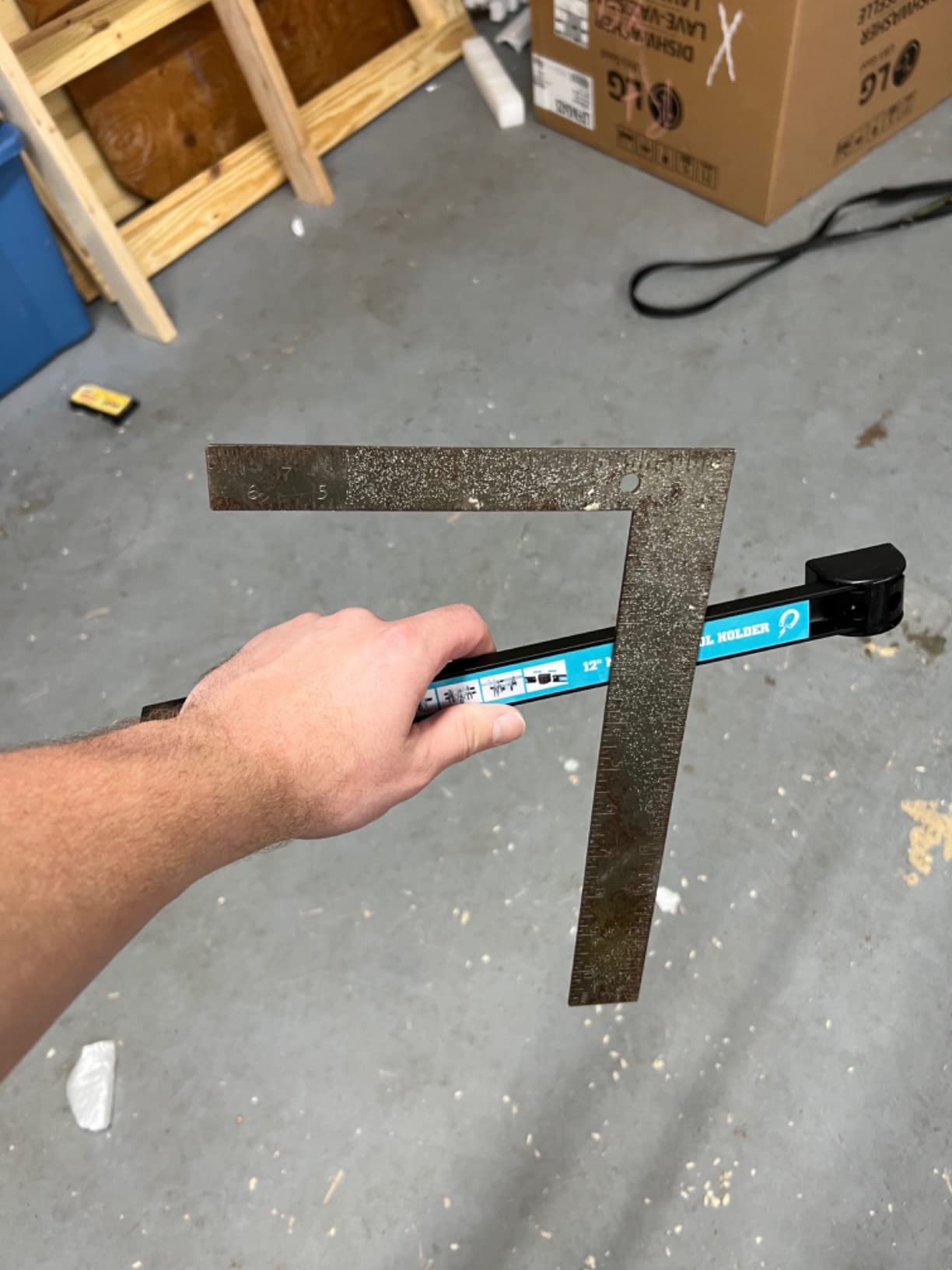
This is the cheapest way to put a magnetic strip on the wall, and for lighter work it does the job. Four 12 inch alloy steel strips in blue, each rated at 22 lb of pull, with brackets and mounting screws in the box. The low price per bar is the entire proposition: you can cover a full workbench wall for a fraction of what the premium bars cost.
The reviews split, and honestly. At 4.3 stars with 556 reviews, it is the lowest rated product in this roundup, with 7% one-star ratings, and the mixed ratings trace back to one thing: whether the magnet delivers its stated pull on heavy tools. Some users report the actual hold falls short for heavier items, which is exactly the pattern a lower price point invites.
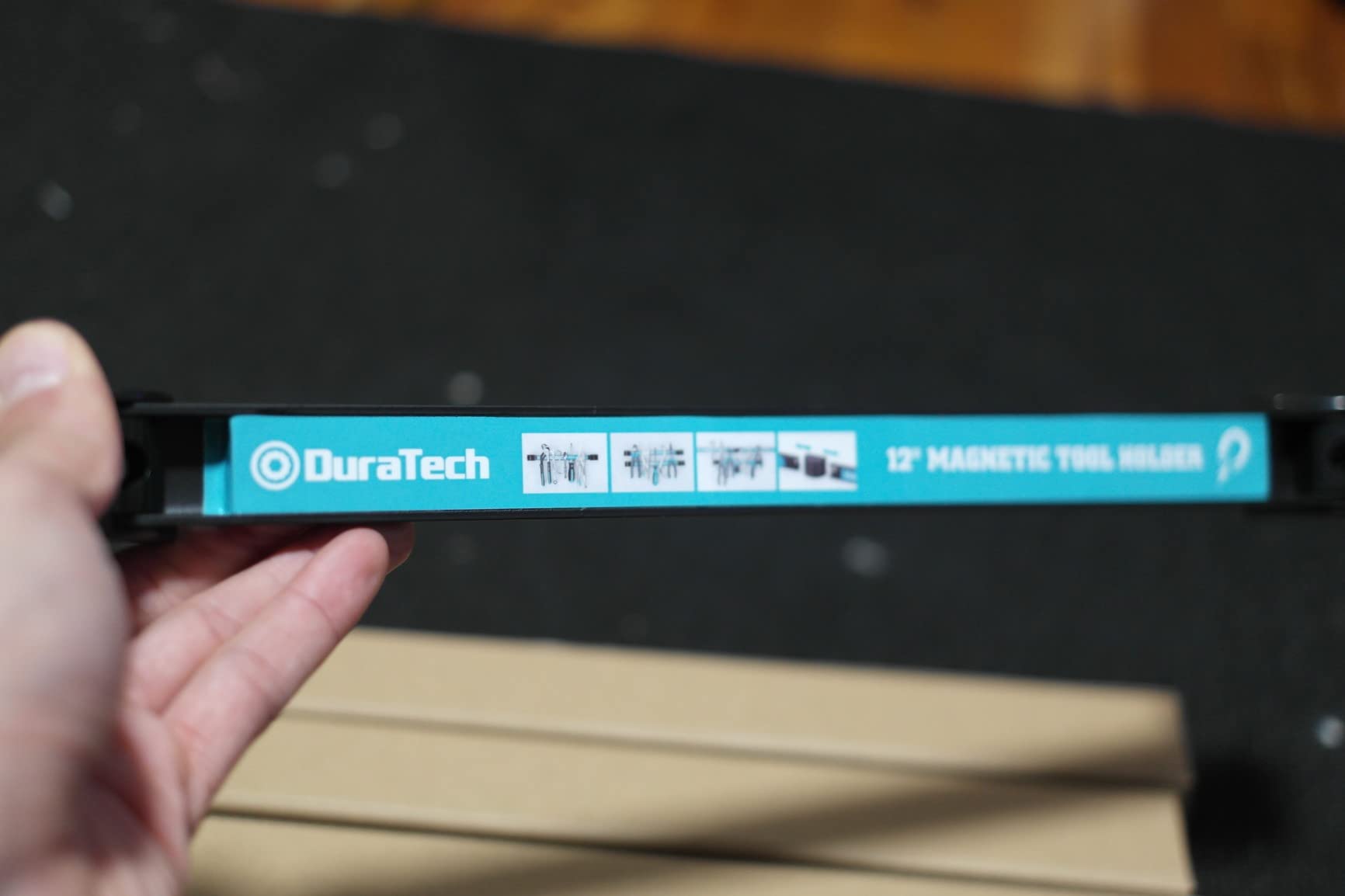
For the right job it is genuinely good. Reviewers like the easy wall mounting and the way multiple bars can be installed side by side for greater capacity, and people use these strips for knives, cutlery, screwdrivers, saw blades, sockets and ratchets. The strips are also expandable by connecting units, so four bars become a longer run.
My read after testing is that these belong on a wall of screwdrivers, pliers and small sockets. I would not hang framing hammers or pry bars from them, and I would check the hold by hand before you trust a heavy tool to one.
Know when the budget pick is right
Light, flat, steel tools are what a budget strip handles without complaint: screwdrivers, putty knives, small wrenches, socket extensions, bits. If that is the majority of what you want to hang, the cost per bar is hard to argue with.
Install them side by side rather than end to end when you want more capacity. Parallel bars give you more usable surface and spread the load across more fasteners, which is a better use of a 4 pack than one long line.
Where it falls short
Heavy tools are the problem. If you hang a hammer or a crowbar and the bar has to carry that load continuously, the stated pull may not be there in practice, and the one-star reviews describe exactly that.
Twelve inches is short, so you will need more of them than with a longer bar, and more screws means more drilling. If your garage wall is large, the six-bar set later in this list covers more ground with less effort.
10. WORKPRO 8 Piece Magnetic Socket and Wrench Organizer Set – Best for Sockets

WORKPRO 8-Piece Magnetic Socket and Wrench Organizer Set
Holds 143 sockets across 6 trays
Color coded metric and SAE
Rubber base, contents hold when inverted
Pros
- Magnetic base keeps sockets and wrenches seated when inverted
- Large capacity for 143 sockets plus 24 wrenches
- Color coded metric and SAE trays with legible drive labels
- Soft rubber base prevents scratching chrome and steel
- Trays attach to any steel surface or lay flat
Cons
- Does not organize impact sockets
- Sockets and wrenches are not included
- Highest cost per piece in the set and plastic trays
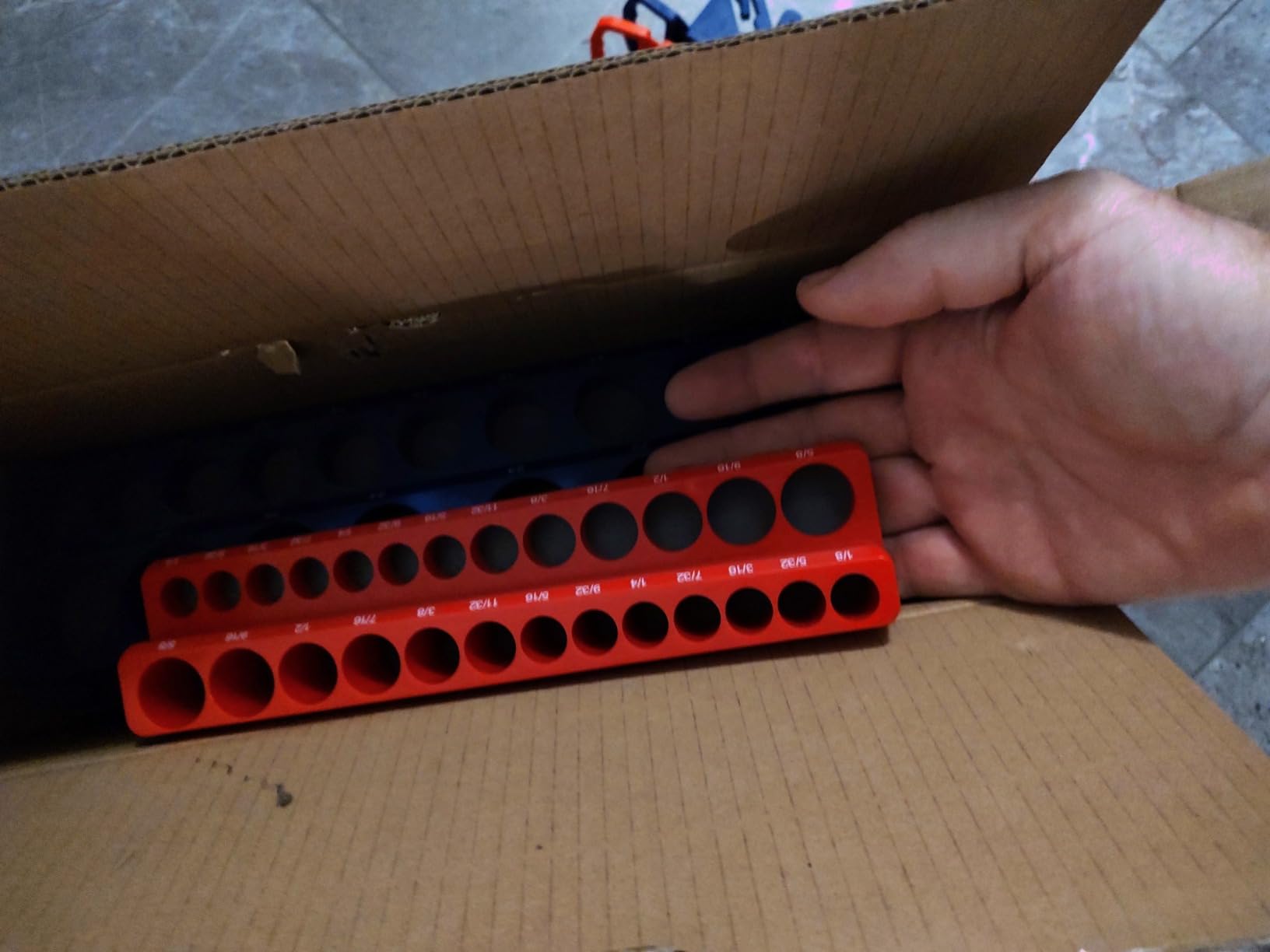
Socket sets are where magnetic storage earns its keep, because a loose socket in a tray is a socket you will find in the bottom of the toolbox. This 8 piece set uses six socket trays to hold up to 143 metric and SAE sockets, covering 1/4 inch, 3/8 inch and 1/2 inch drives, plus two wrench hangers that take 12 wrenches each for 24 total.
Color coding does the fast work. Three trays are blue for metric and three are red for SAE, and each has legible drive-size labels, so you can find the 10 mm without sorting through a mixed pile. At 4.6 stars with 368 reviews and 79% five-star, the trays themselves are well liked, and reviewers single out the labeled slots and the soft rubber base.
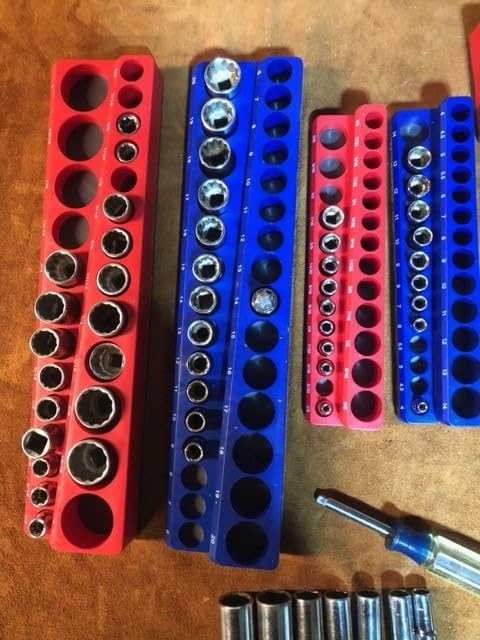
The soft rubber magnetic base is the detail that matters most for chrome. It prevents scratching on sockets and wrenches, which is the same coating argument that applies to wall bars. The trays also attach to any steel surface and hold their contents even when turned upside down, so you can mount them under a shelf or on a liftgate and the sockets stay seated.
Two limits are clear. The set organizes sockets and wrenches but does not include them, and it is not designed for impact sockets, which have a different profile and a different wall thickness. Plan your existing set around that.
Match the trays to your drives
Before buying, count which drives you actually run. A mixed 1/4, 3/8 and 1/2 inch set uses all six socket trays, and the color split then keeps metric and SAE apart without you re-sorting anything later.
If your work is mostly 3/8 and 1/2 inch, you can dedicate the smaller trays to extensions and the wrench hangers to the sizes you grab most, which makes the eight pieces work harder.
Where it falls short
Impact sockets are outside the design, and impact-rated sockets are the ones you hammer on with an impact wrench, so they need a separate tray. If impact work is a regular part of your week, budget for a dedicated impact tray alongside this set.
It is also the most expensive option here per piece, and the trays are plastic rather than metal. The magnetic base compensates, but it will not survive being dropped off a liftgate the way a steel tray would.
11. Pmsanzay Magnetic W Hanger for Power Tools – Best for Cordless Drills

Pmsanzay 2 Pack Power Drill Tool Organizer Holder,Magnetic Tool Holders,Garage Tool Storage Rack,Heavy Duty Large Garage Magnet Utility Hooks with Rubber Coating, No Scratches – No Power Drill
10 lb rated rubber covered magnet
2 pack adjustable W hangers
No drilling required
Pros
- Holds cordless drills and impact drivers with batteries attached
- Rubber coating protects metal surfaces from scratches
- Tool-free installation on any flat ferrous surface
- Adjustable flexible arms fit drills garden tools bikes and hoses
- Works far beyond tool storage
Cons
- Needs a flat ferrous steel surface at least 0.047 inch thick
- Will not work on aluminum or stainless steel
- Flexible hanger arms can be the weak point under heavy loads
Drills are the one tool that will not sit on a flat magnetic bar, because the chuck and battery pack present almost no flat steel to clamp. That is what this pair of W hangers solves. Each one has an industrial strength rubber covered magnet rated to 10 pounds, and the flexible arms wrap around a drill, impact driver or ladder so it cannot drop.
Reviewers report drills with batteries attached staying put on toolboxes, safes and vehicle walls, and the rubber coating is what keeps them from scratching those surfaces. At 4.5 stars across 364 reviews with 79% five-star and only 5% one-star, it is one of the most consistently positive products here. Buyers also use them for home gym gear, shoes, holiday decorations and van cable management.
Installation is genuinely tool-free. No drilling, no screws, and the whole thing adheres to any flat ferrous surface, which is why it works on a steel garage door or the side of a tool chest that has no stud behind it. The arms adjust to fit drills, lawn mowers, garden tools, bicycles, shovels, brooms, ropes, hoses, coiled cords, hard hats and circular saws.
There is a hard specification here that you should take seriously: the steel you attach to must be thicker than 0.047 inch, or 1.2 mm. On thinner or uneven sheet metal the hook will slide, and on aluminum or stainless steel it will not hold at all because those materials are not magnetic.
Note this product has no customer images available in our research, so I could not verify real-world placement photos. Everything above comes from the listing details and the written review themes.
Test the surface before you trust it
Press the hanger on and tug it hard. If it slides, the metal is too thin or the surface is curved, and no amount of force will fix that. Measure or test the sheet thickness first, and use a flat panel if you have to.
The rubber cover means you can use it on a painted vehicle wall or a finished toolbox, which is the main reason people buy a magnetic hook in the first place.
Where it falls short
It is a hook, not storage. Two hangers hold two bulky items, so a full drill collection needs several sets, and the arms are the part most likely to flex under a heavy load rather than the magnet itself.
It also cannot touch aluminum or stainless. If your workbench or truck bed is aluminum, this product simply does not apply and you need a screw-mounted cradle instead.
12. HORUSDY 12 Inch Magnetic Tool Holder Strip 4 Pack – Best for Long Linked Runs

HORUSDY 12″ Magnetic Tool Holder Strip, 4-Pack Tool Magnet Bar for Garage Organization, Shop Organization, Mounting Screws Included
10 lb per bar
Linkable rails to 48 inches
Black polished alloy steel, 4 pack
Pros
- Holds screwdrivers pliers wire cutters hex keys and a small hammer
- Bars link end to end into runs up to 48 inches
- Simple screw mounting with two screws per bar
- Black polished alloy steel finish
- Good price for a four pack
Cons
- Some bars have dead spots along the strip
- Weak grip on light-contact items such as pliers
- End caps can slide off if the bar is not solidly fastened
The HORUSDY 4 pack is the run-building option in this roundup. Each 12 inch alloy steel bar is rated to 10 pounds, and the linkable design lets you chain bars together into runs of up to 48 inches using the included expansion accessories. If you want a single straight line of tools across a wide wall, this is the set that gets there without a second purchase.
At 4.3 stars with 495 reviews, including 72% five-star and 6% one-star, it sits alongside the DURATECH set in the budget tier, and the review patterns are similar. Owners like the simple screw mounting, the at-a-glance visibility and the way the alloy steel holds screwdrivers, pliers, wire cutters, hex keys and even a small hammer.
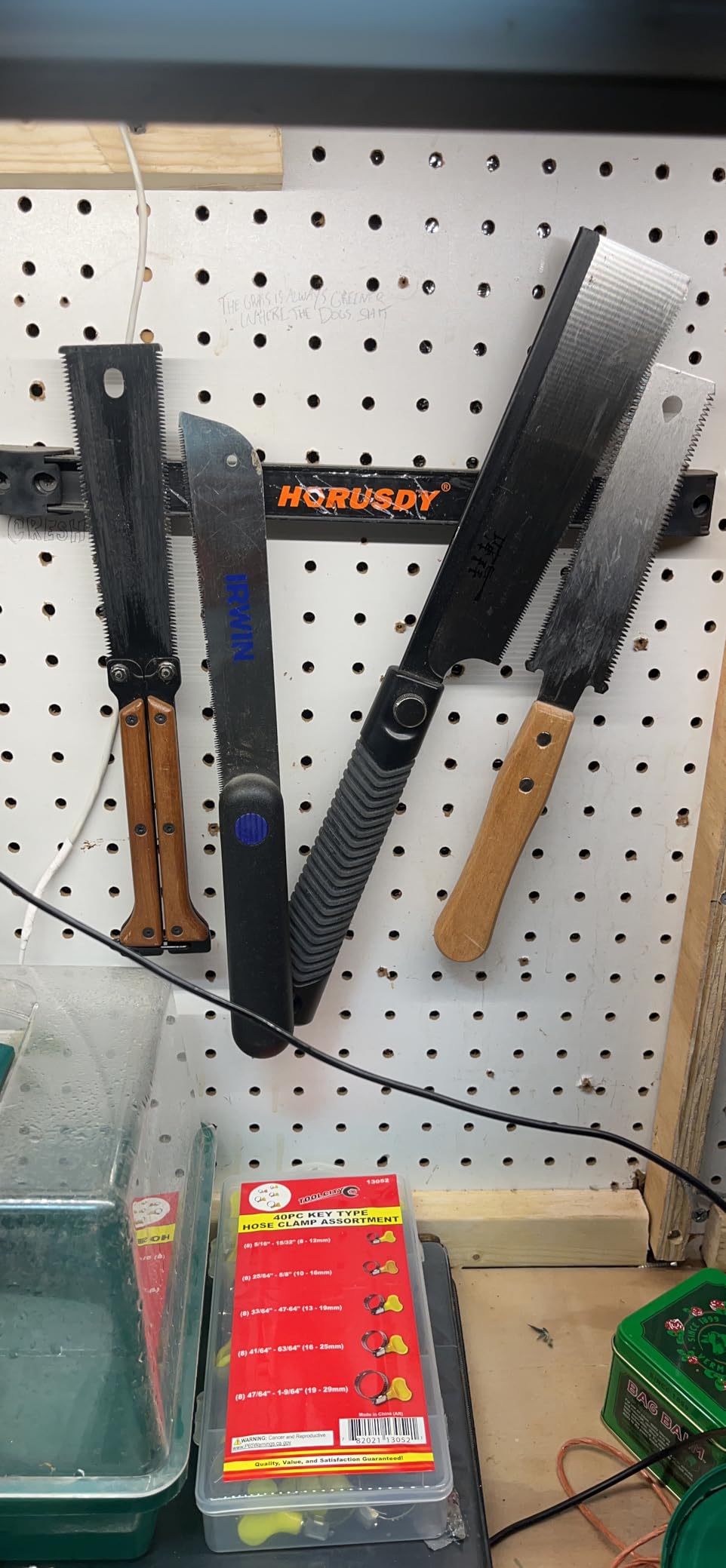
The criticism is consistency. Some bars have dead spots along the strip where items will not grip, which is the same weakness that separates good magnet manufacturers from cheap ones, and magnet strength is weaker for heavy or poorly balanced items that present little contact metal, like pliers.
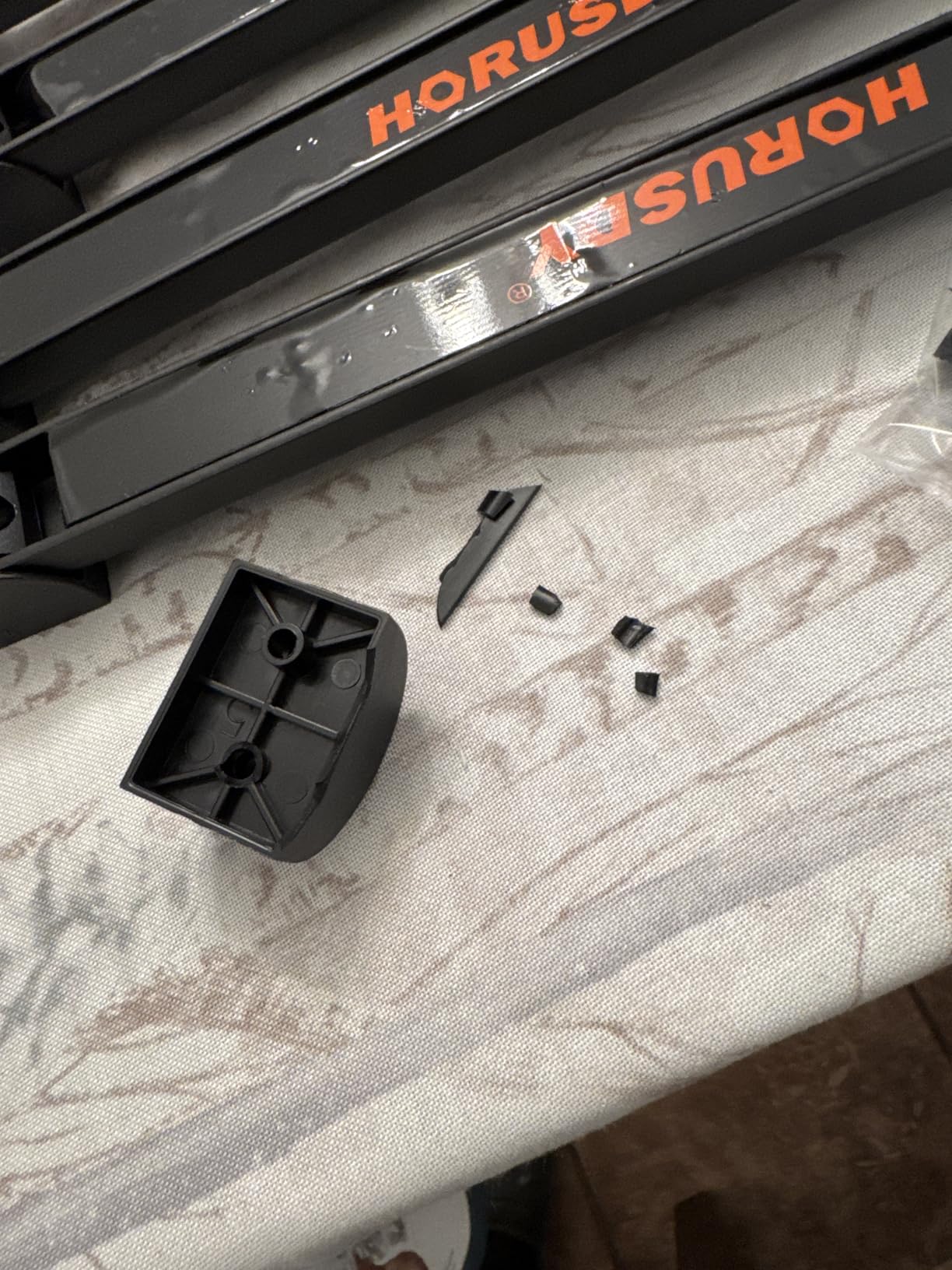
There is also a mounting detail worth reading twice. Bars must be fastened with screws rather than tape, and the end caps can slide off the magnet bar if it is not solidly fastened, which turns a tidy run into four loose strips over time.
Linking bars versus buying longer ones
Linking gets you a continuous run for less money than a 24 inch bar, and the joints let you add capacity as your collection grows. The tradeoff is a seam every 12 inches, and a seam is a good place for a tool to catch when you pull it off.
For heavy wrenches and pry bars, a longer single bar with a higher pull rating is the better choice. For screwdrivers, pliers, hex keys and general visibility, the linked run works well.
Where it falls short
Dead spots are the main issue, and they are unit-by-unit. Inspect each bar with a screwdriver after mounting and swap any that feel weak before you hang a load on them.
Pliers grip poorly because of the small contact area, so plan to hang pliers on a clipped rail or a hook instead. And secure every bar properly, because the end caps are the piece that fails when mounting is rushed.
Magnetic Strips vs Pegboard, French Cleat and Slatwall
If you are building a garage wall from scratch, pegboard is still the system most people are comparing against, and the honest answer is that they solve different problems. Magnetic storage wins on speed of retrieval and on surfaces with no studs. Pegboard wins on predictable positions and on tools with awkward shapes.
Five disadvantages of magnetic strips are worth stating plainly before you commit. First, only ferrous tools stick, so aluminum, brass, titanium and plastic-handled drivers are excluded by physics, not by design. Second, strong bars magnetize your steel hand tools, which then pick up filings. Third, a bar mounted on bare drywall needs anchors or a backer board, and adhesive-only mounting is not adequate under load. Fourth, tools placed side by side jostle when you remove a neighbor. Fifth, a bar mounted flush to the wall leaves no clearance for tool handles, which is why some owners print simple spacers.
Against that, the advantages are real too. A magnetic bar installs in minutes with two screws, needs no stud alignment, moves anywhere you like, expands by linking, and can be mounted on a steel surface such as a garage door or a tool chest without a single fastener. Pegboard installation is a weekend, the holes must be spaced evenly, and moving a hook means filling holes.
French cleat is the strongest system for large and awkward items, since a full-length cleat carries weight that a bar would never hold, but it is a build rather than a purchase. Slatwall is the best choice when you already have panels, because the bars and hangers in this roundup mount onto slat wall without special hardware. My own combination is a magnetic bar above the bench for loose tools, a slotted rail for drivers, and cleats for the big stuff.
How to Install a Magnetic Tool Bar in Your Garage?
The substrate decides everything, so start there rather than with the bar. On drywall, either land the mounting holes on studs or fasten through a plywood backer panel, because drywall anchors creep under the repeated pull of removing a loaded tool. On bare concrete or brick, use the anchors that ship with the heavier-duty bars.
On a steel garage door, screw mounting is unnecessary because the door itself is the steel surface, and the same applies to a steel tool chest, a liftgate or a steel workbench. Check the door for a recessed panel seam, since a bar mounted across the raised panels will not sit flat and the magnets will lose contact.
On slatwall and pegboard, pick a product whose holes are actually spaced for it. Bars with 1 inch hole spacing suit pegboard, and the HMmagnets bar is specified for both pegboard and slat wall. The six-bar set in this roundup is explicitly not pegboard compatible because its holes do not line up.
Two finishing details improve the result more than the brand you choose. Add a standoff so handles clear the wall, and mark each tool position with a paint pen or a silicone dot so the layout survives a year of moving things around.
What to Look For in a Magnetic Tool Holder
Capacity is the first spec to read, and the numbers in this category mean different things. A shelf weight capacity of 10 lbs describes the rated load for the whole strip. A pull force figure of 20 lb per inch describes the magnet at that spot on the bar. A total figure such as 176 lbs across six bars describes the set. None of them are directly comparable, and a large printed number alone is not evidence of a strong magnet.
Second, look for even distribution along the length. A bar rated at 20 lb per inch but concentrated in the middle leaves dead ends, and a 10 lb strip with evenly spread magnets often holds more usable tools than a higher rated bar with a hotspot. Reviews that mention dead spots are the most useful signal you will find on any of these listings.
Third, check the coating. PVC, rubber and powder coat are what keep a bar from scratching car paint, a finished steel surface or chrome sockets. A bare machined steel edge will mark a painted surface in one pass, and this is the most common deal breaker reported in buyer feedback.
Fourth, count your mounting options. Screws and anchors in the box matter more than any feature list, and adhesive alone is not adequate for a loaded bar on drywall. Bars with 16 inch hole spacing line up with standard studs, which saves you from drilling a hole that hits nothing.
Fifth, think about tool shape. Flat steel tools such as sockets, screwdrivers, pliers, wrenches and knives work on any bar. Cordless drills and impact drivers have almost no flat steel, so they need a cradle or hanger such as the W-hanger pick. Pliers present only a small contact area and grip weakly on lighter bars.
Finally, plan for length. A 12 inch strip holds noticeably fewer tools than an 18 or 24 inch bar, so multiply out before ordering. If you expect to keep adding tools, a set that links end to end or expands will serve you better than one fixed bar.
Will Magnetic Tool Holders Magnetize Your Tools?
Yes, and this is the single most discussed complaint in woodworking and garage forums, yet none of the retail listings mention it. A steel wrench that sits against a strong bar picks up a residual magnetic field, and a magnetized tool behaves badly in ways that have nothing to do with your garage. Woodworking forum users report tools sticking to the tool rest mid-cut, which makes a clean long cut impossible, and other users report magnetized tips dragging metal filings across a sharpening wheel.
The filing issue is quieter but more annoying. Magnetic strips collect swarf and filings at the tool tips, and that debris then transfers to your workbench, your clamps and your sharpening equipment. Some users put duct tape over a magnet to reduce direct contact, at the cost of pull strength, and others simply wipe the tool tips before use.
The workaround is straightforward. If a tool behaves as though it has become magnetic, run it past a demagnetizer, or pass it once in each direction through a strong field. Plenty of long-term users simply adapt, reporting that after years of magnetic storage they no longer notice a difference in push or pull cuts, and some report no problem at all with magnetic racks over decades.
Keep strong magnets away from pacemakers, and treat two bars snapping together as a pinch hazard. Snapping a bar against a steel toolbox is the fastest way to get a small cut.
Frequently Asked Questions
Do magnetic tool holders work?
Yes, they work very well for steel hand tools such as sockets, wrenches, screwdrivers, pliers, bits and knives. The magnet clamps the tool to the bar with no screws, slots or clips, and you can slide tools anywhere along the length. They do not work with aluminum, brass, titanium, copper or most plastic-handled tools, and objects with a small flat contact area such as pliers grip more weakly than sockets and screwdrivers.
What is the best tool holder for a garage?
For most garages the best magnetic tool holder is a wall bar between 12 and 24 inches long, screwed into studs or a plywood backer, with a PVC, rubber or powder-coated back. Choose a bar whose mounting holes match your stud spacing, and pair it with a slotted rail for screwdrivers if you want a visible size order. For sockets, color-coded magnetic trays and modular wrench holders are the better choice because they keep sizes in sequence.
Are magnetic tool holders worth it?
For hand tools, yes. They install in minutes, need no stud alignment, expand by linking bars together, and keep every tool visible and one-handed reachable while freeing bench and drawer space. They are less useful for large tools, power tools with no flat steel surface, or non-ferrous items. The main drawback to weigh is that strong bars magnetize steel tools, which can cause problems at a tool rest or when sharpening.
What are the disadvantages of magnetic strips?
Five matter most. Only ferrous steel sticks, so aluminum, brass, titanium and plastic handles are excluded. Strong strips magnetize your hand tools, which then collect metal filings. Adhesive-only mounting fails under load, so drywall needs anchors or a backer board. Tools placed close together jostle when you pull a neighbor off, and a bar mounted flush to the wall leaves no clearance for tool handles.
How long do magnetic tool holders last?
Service life follows the steel, not the magnet. Powder-coated or lacquered alloy steel bars that are screwed into studs routinely last for years, and longer-term users report magnetic racks working fine after more than two decades. Adhesive-mounted products fail much sooner, usually within a year, because the adhesive takes the repeated load each time a tool is removed. Brushed or chipped coatings are what lead to surface marks and eventual rust.
What are some good ways to organize tools on my wall?
Five approaches work. Magnetic bars for loose steel hand tools, which install fast and reposition freely. Pegboard with hooks for predictable, fixed positions and awkward shapes. French cleat for large and heavy items that a bar could never hold. Slatwall panels when you already have them, since most magnetic bars mount straight onto slat wall. A plywood backer sheet with bars screwed into it, which turns any drywall wall into a solid mounting surface.
The Best Magnetic Tool Holders for Garages: Final Word
After putting all 12 through their paces, the RamPro 12 inch 4 pack is the pick I would buy first. It has the deepest review base in the group, a mounting system that includes brackets and screws, and an expandable design that lets a 12 inch strip grow into a 48 inch run as your collection grows. For a single bar with the strongest pull, choose the Master Magnetics 24 inch, and for an entire workbench wall in one purchase, the six-bar 18 inch set covers the most ground.
Whatever you choose, screw it into studs or a backer board, keep it clear of pacemakers and phones, and expect to wipe filings off your tool tips now and then. That small routine is the entire price of admission for the best magnetic tool holders for garages in 2026, and it buys back a lot of bench space.