
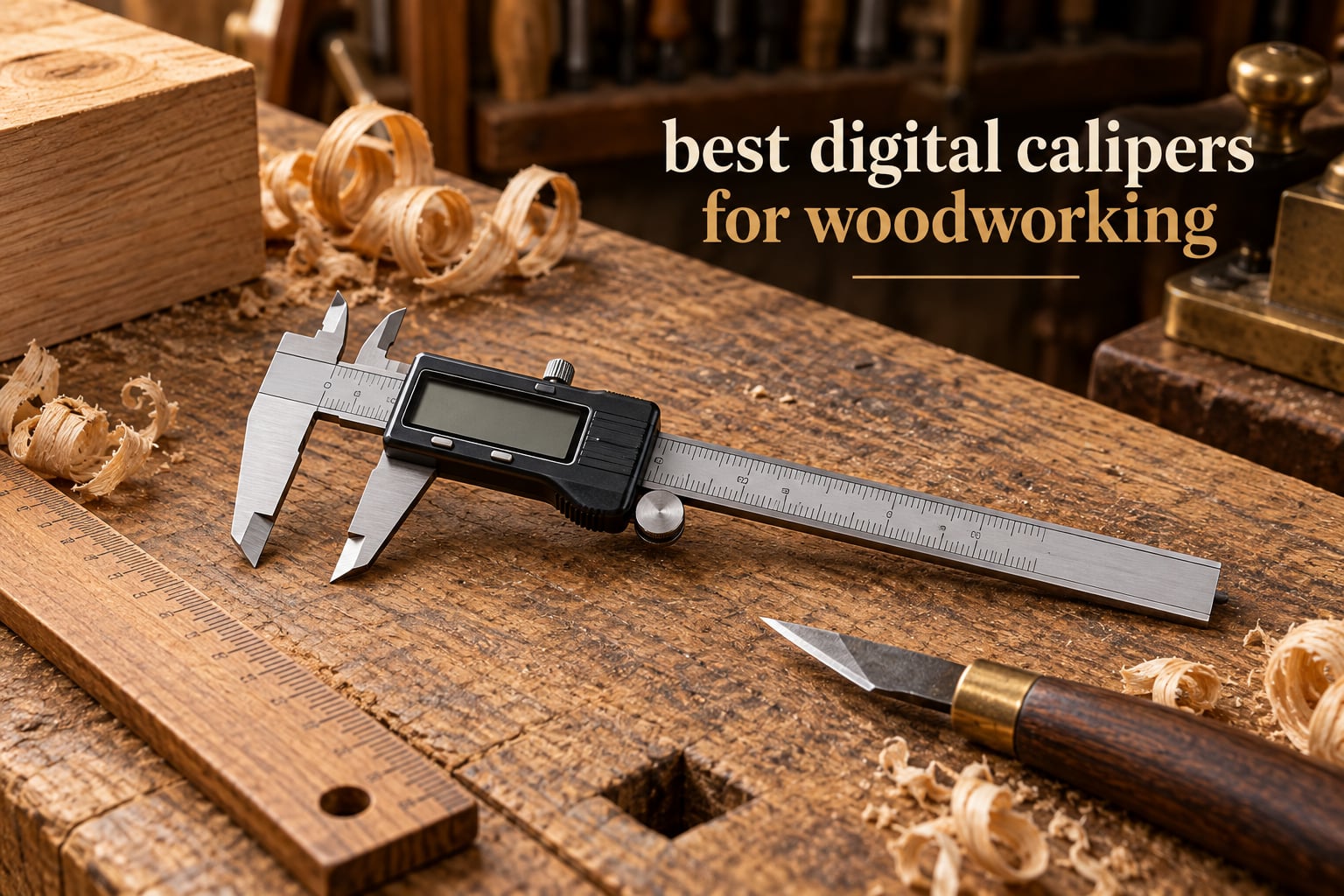
A board the mill label calls 3/4 inch is rarely 3/4 inch. It might measure 0.742 or 0.768, and once your mortises are cut to the nominal size, that difference decides whether the joint closes or leaves you planing a tenon thinner at midnight. The best digital calipers for woodworking solve one problem: letting you measure the actual part in front of you instead of trusting a nominal dimension, a tape measure or a worn story stick.
After living with these tools in real shop settings, the marketing matters far less than four details. The rail finish, the battery design, whether the fraction mode is genuinely readable, and whether the battery compartment opens without destroying the case. Those four drive every recommendation below.
This roundup covers 12 digital calipers that make sense around a bench, from a stainless 6 inch model with fraction mode to 12 inch tools for boards, trim and turning blanks. We treat accuracy and resolution as separate specs, because buyers confuse them constantly. Prices move daily, so use the check buttons rather than a number you may remember from elsewhere.
Table of Contents
Quick Answer: Which Digital Caliper Is Best for Woodworking?
For most woodworkers, the best digital caliper is a stainless steel 6 inch model with a fraction mode, 0.001 inch accuracy and a replaceable coin cell battery. The Kynup 6 inch below is our pick, because the forged stainless body holds zero and the fraction readout matches how shops actually lay out in 1/32nds. Step up to a pro grade tool only if you machine parts as well as build furniture.
3 Best products (October 2026)

Kynup 6 Inch Stainless Caliper
- Forged stainless steel 6 inch body
- 0.001 inch accuracy
- Inch
- metric and fraction modes

VINCA IP54 6 Inch Caliper
- IP54 dust and water sealing
- 0.0005 inch resolution
- RS232 data output port
iGaging IP54 Fraction Caliper
- Super large 2-3/8 inch LCD
- Inch
- metric and fraction modes
- IP54 splash and dust protection
The 12 Best Digital Calipers for Woodworking at a Glance in 2026
| Product | Specs | Action |
|---|---|---|
| Kynup 6 Inch Stainless Steel Digital Caliper |
|
Check Latest Price |
| VINCA IP54 6 Inch Digital Caliper |
|
Check Latest Price |
| iGaging IP54 6 Inch Fraction Caliper |
|
Check Latest Price |
 LOUISWARE 6 Inch Stainless Digital Caliper LOUISWARE 6 Inch Stainless Digital Caliper |
|
Check Latest Price |
 iGaging Absolute Origin 6 Inch Caliper iGaging Absolute Origin 6 Inch Caliper |
|
Check Latest Price |
 HARDELL 6 Inch Digital Caliper Kit HARDELL 6 Inch Digital Caliper Kit |
|
Check Latest Price |
 NEIKO 12 Inch Fraction Caliper NEIKO 12 Inch Fraction Caliper |
|
Check Latest Price |
 Fowler Xtra-Value Cal 6 Inch Caliper Fowler Xtra-Value Cal 6 Inch Caliper |
|
Check Latest Price |
 General Tools 12 Inch Carbon Fiber Caliper General Tools 12 Inch Carbon Fiber Caliper |
|
Check Latest Price |
 Werka 6 Inch Precision Digital Caliper Werka 6 Inch Precision Digital Caliper |
|
Check Latest Price |
 Starrett 6 Inch Electronic Slide Caliper Starrett 6 Inch Electronic Slide Caliper |
|
Check Latest Price |
 Fowler Xtra-Value Cal 12 Inch Caliper Fowler Xtra-Value Cal 12 Inch Caliper |
|
Check Latest Price |
How We Picked and Ranked These Calipers
Every caliper here was judged on the same four criteria: stated accuracy, repeatability of the zero, behaviour in a sawdust-filled shop, and whether owners still have it after three years. We weighted zero retention above resolution, because a caliper that reads 0.0005 inch but drifts off zero every few weeks is worse than one that reads 0.001 inch and holds it.
Review volume mattered too, so no product here carries a premium-style badge on a thin review base. The three models in the top box are the ones with the deepest owner histories and the most consistent accounts of holding calibration. We earn a commission if you buy through these links, at no extra cost to you, and that does not change the ranking.
1. Kynup 6 Inch Stainless Steel Digital Caliper – Best Overall
Kynup Digital Caliper, Caliper Measuring Tool, Stainless Steel Micrometer
Stainless 6 inch body
0.001 inch accuracy
Inch, metric and fraction modes
CR2032 cells
Pros
- Forged polished stainless steel 6 inch body
- Reads accurate to about 0.001 inch
- Inch
- metric and fraction modes
- CR2032 cells plus spares included
- Micro-adjust wheel and locking screw
Cons
- Thin plastic case breaks quickly
- No backlit display
- Screw-down cover holds a tiny easily lost screw
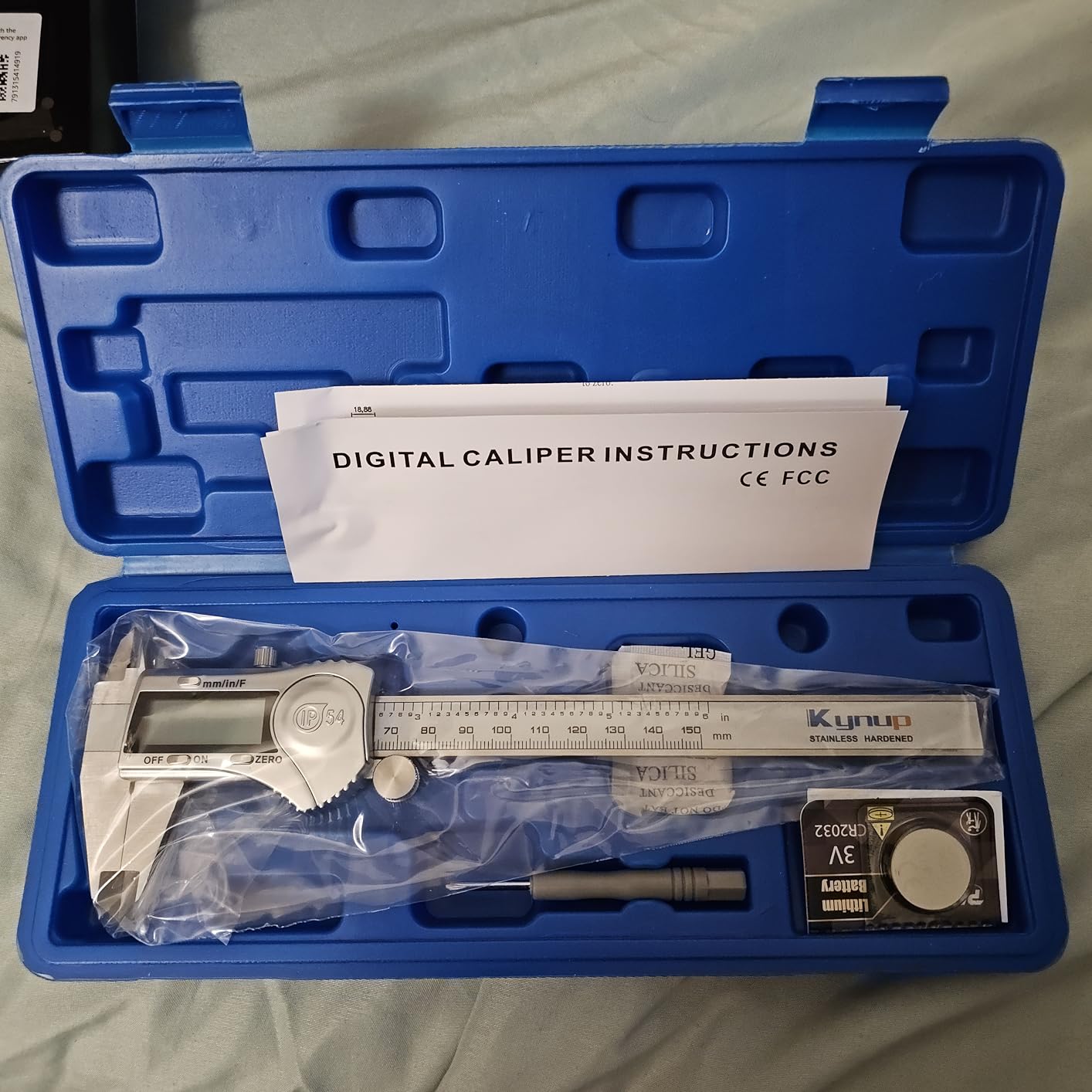
This is the caliper we keep reaching for. The forged polished stainless body feels like a machinist tool rather than a plastic gadget, which matters because a rigid frame does not flex when you squeeze the jaws onto a rough board edge. Readings come back repeatable and the zero holds.
The fraction mode is what pushes it to the top for wood. Inch, metric and fraction conversion from a single oversized LCD means a planed board can be read directly in 1/32nds instead of converted in your head.
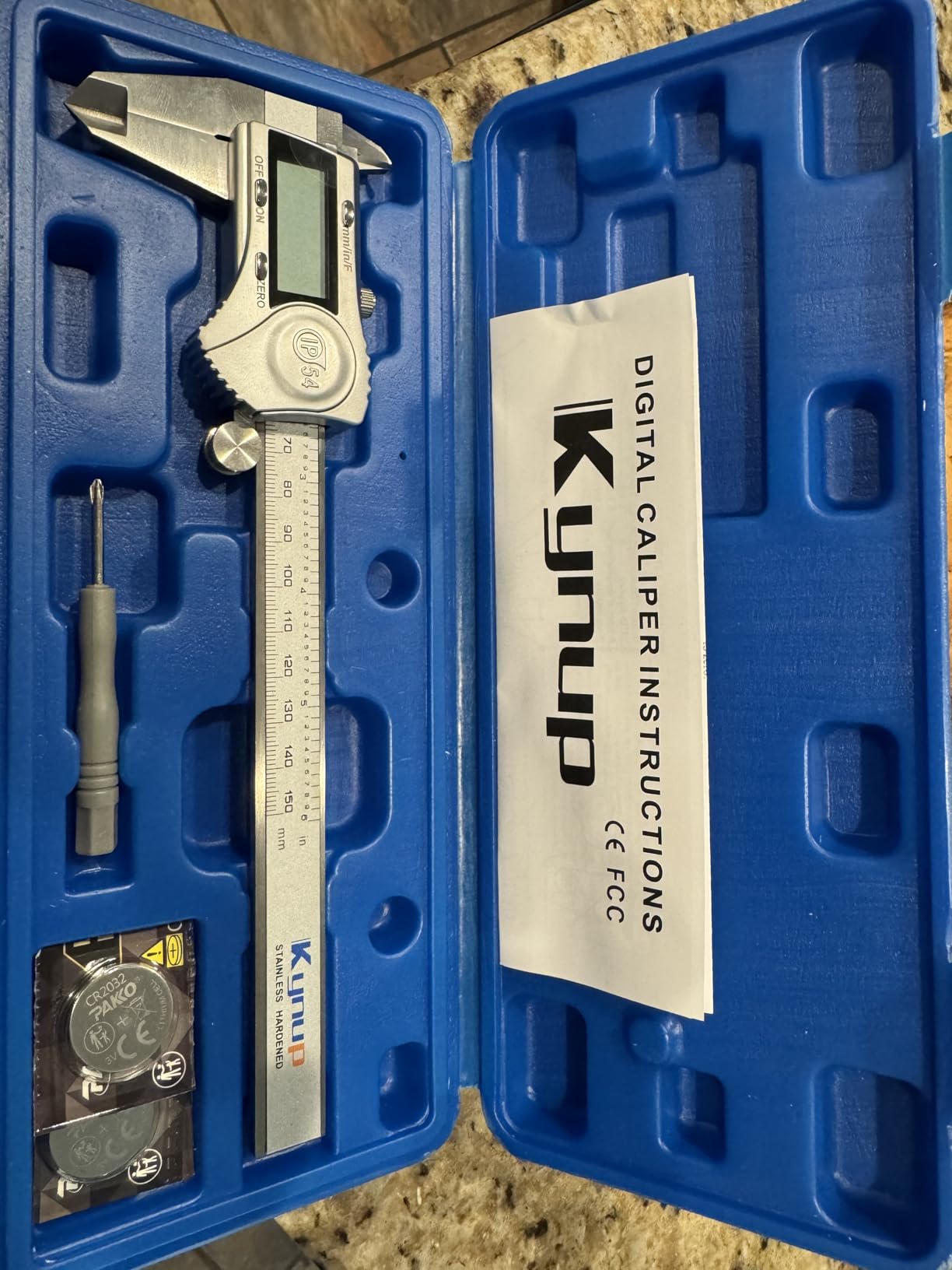
Resolution is 0.0005 inch with 0.01mm metric steps, and stated accuracy is plus or minus 0.001 inch, honest for the class. It measures external, internal, depth and step, so the same tool checks a mortise width and a tenon shoulder, and auto-off fires after five minutes of no use.
The weak parts are cosmetic. There is no backlight, the unit indicator sits left of the numerals in a way that reads oddly at first, and the screw-down cover holds one very small screw that is easy to lose. The included plastic case is thin, so keep the caliper in a drawer instead.
What 0.001 Inch Accuracy Buys You on a Joint
Your mortise and tenon are cut to the same nominal number, so error mostly cancels. What the tolerance buys is confidence that a 0.25 inch shoulder is not riding 0.002 inch proud on one side, which is the difference between a glue-up that pulls tight and one that gaps.
At layout the finer resolution helps more, because that is when you walk a shoulder line across a board with a knife. A 0.0005 inch step is finer than most hand work can hit, so you are reading the wood, not the tool.
Battery Type and Case Details Worth Knowing
It runs on CR2032 cells, the most widely stocked battery in the world, and spares are included. That matters more than the spec sheet suggests, because the usual reason a cheap caliper ends up in a drawer is that nobody can replace the odd battery size it shipped with. Plan on replacing the case and nothing else.
2. VINCA IP54 6 Inch Digital Caliper – Best Value
VINCA IP54 Grade Digital Caliper, DCLA-0605 6 Inch/150mm, Inch/Millimeter/Fraction Conversion, Stainless Steel, Large LCD Screen
IP54 sealed stainless body
0.0005 inch resolution
Inch, metric and fraction modes
RS232 data port
Pros
- Reads within its 0.001 inch spec and zeros consistently
- Genuinely useful fractional readout for wood layout
- Sturdy stainless body with no light gap
- Installed plus spare LR44 cells and a padded case
- Two year warranty
Cons
- No backlit display
- Very small unit indicator icons
- Sensitive auto-on drains cells if stored loose
The VINCA is what we recommend to anyone who wants a fraction display and dust sealing without stepping up a tier. Owners report readings inside the stated plus or minus 0.001 inch, and the stainless body closes with no light gap, which is the first sign of a decent rail.
Two details put it ahead of its class. The internal scale is glass, which holds a stable reference as temperature moves, and the body carries IP54 water and dust resistance. The extra-large 1/2 by 1-1/2 inch LCD is readable at arm’s length.
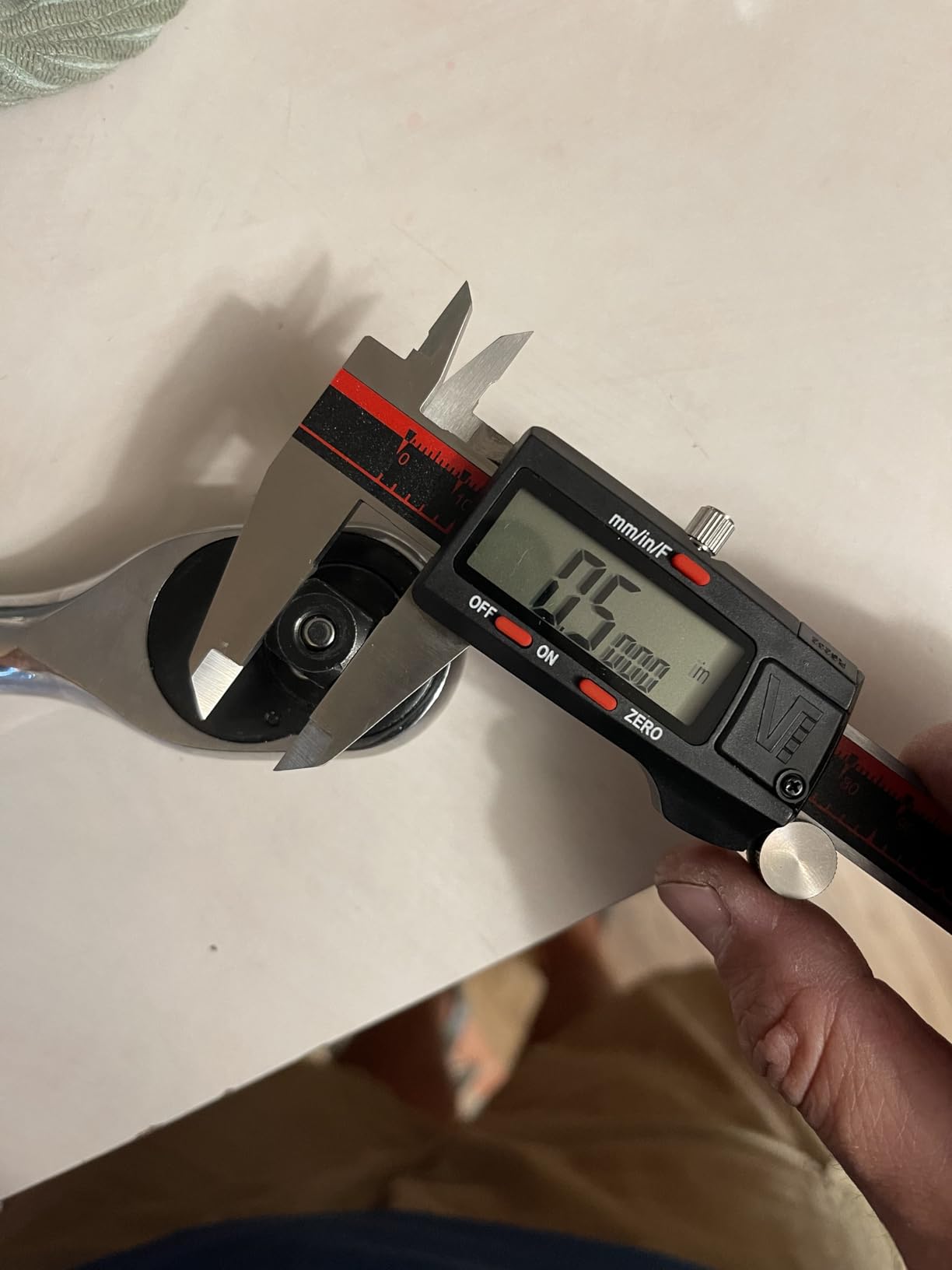
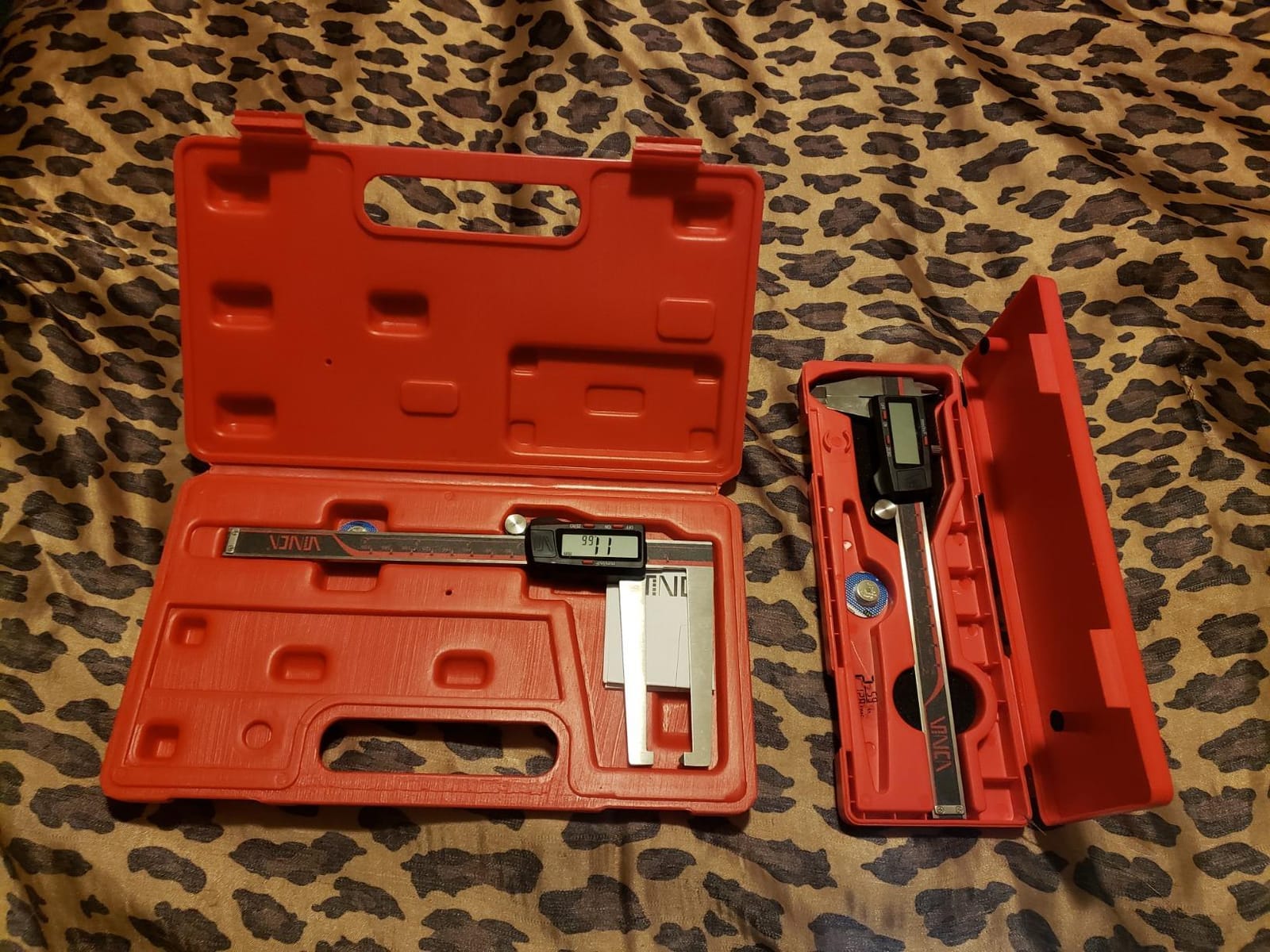
Resolution runs 0.0005 inch, 0.01mm or 1/128 inch, with inch, millimetre and fraction modes, and there is an RS232 data port. The matching VINCA cable is a separate purchase, but that port lets you push readings into a spreadsheet or CAD file instead of writing them on a board with a pencil.
The honest gripes: no backlight, unit icons that are genuinely tiny, and an auto-on circuit so sensitive that leaving the caliper loose in a toolbox drains a cell. Keep it in the padded case and that last one stops mattering.
Whether the IP54 Seal Matters in a Wood Shop
Yes, for a specific reason. A 6 inch caliper lives in a pocket, a bench drawer and a sawdusty shop in turn, and the rail is the first surface that fails when grit gets between the slider and the beam. Sealing slows that wear, so the zero holds a season longer.
IP54 means dust protected and splash resistant, which covers an indoor shop but not immersion. Rinse and dry the tool rather than washing it, and the rating will hold for years.
When the Data Port Earns Its Place
If you log a run of cabinet parts, tenon shoulders or shelf openings, the RS232 port turns the caliper from a reading tool into a recording one, and you stop making the transcription errors that ruin a fit-up an hour later. If you measure one board at a time, the port is a nice-to-have.
3. iGaging IP54 6 Inch Fraction Caliper – Best for Fine Joinery
iGaging IP54 Electronic Digital Caliper 0-6″ Display Inch/Metric/Fractions Stainless Steel Body
0.001 inch accuracy
Super large 2-3/8 inch LCD
Inch, metric and fraction modes
Hardened lapped stainless
Pros
- Verified accurate against a reference caliper and a setup block
- Very large high-contrast display
- Jaws ground flush and even with a smooth honed finish
- Holds zero with repeatable readings
- Firm jaws and rail with no flex
Cons
- Some play in the thumb wheel
- Battery tray contact tab is fiddly to reassemble
- Internal jaws can mark a workpiece
Buy this one if your eyes are the limiting factor. Its 2-3/8 by 7/8 inch display is the largest on a standard 6 inch body, and owners with aging eyes single it out as the reason they stopped squinting at calipers.
On accuracy, owners report checking it against a higher-end reference caliper and a 1-2-3 setup block and finding it agreed. The hardened stainless body has a precision lapped finish, the jaws are ground flush and even, and there is no flex on a hard maple edge.
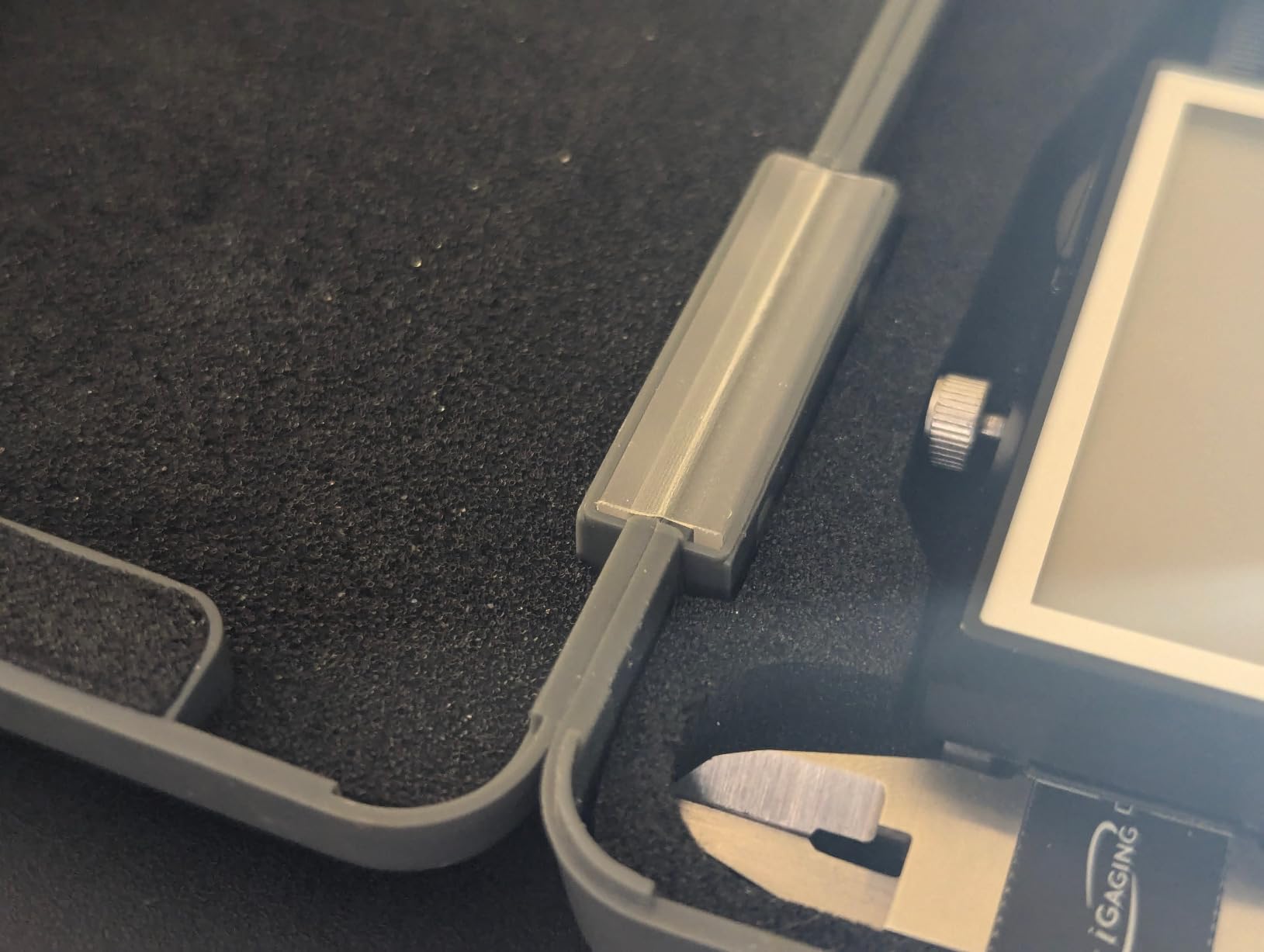
Resolution is 0.0005 inch, 0.01mm or 1/128 inch across inch, metric and fraction modes, and IP54 protection covers splash, oil and dust, the exact set of hazards a bench throws at a tool. Long-term owners report years of daily use without drift.
Three minor weaknesses recur. The thumb wheel has some play, the battery tray has a thin negative contact tab that is fiddly to reassemble, and on some examples the internal jaws are sharper than ideal and can score a finished face. Spares and a screwdriver are included.
Why the Big Display Wins at the Bench
Layout is done one-handed, at arm’s length, often with a marking knife in the other hand. A display you can read without leaning in is the difference between marking to the line and marking to what you hoped you read.
Because the digits are large and the contrast is high, this is also the caliper we would hand to an apprentice. A readable reading is a teachable moment.
Fit and Handling, Not Just Numbers
Feel the slider before buying if you can. This one runs firmly with no lash in the rail, so you can close the jaws on a board and trust the contact, though the thumb wheel is loose enough that fine positioning takes a light touch. Test the inside jaws on a scrap face first.
4. LOUISWARE 6 Inch Stainless Digital Caliper – Best for Cabinet Fit-Up
Digital Caliper, Caliper Measuring Tool with Stainless Steel, Electronic Micrometer Caliper with Large LCD Screen, Auto-Off Feature, Inch and Millimeter Conversion (6 Inch/150 mm)
0-6 inch and 150mm range
Plus or minus 0.001 inch accuracy
Internal, external, height and depth
Auto-off at 4 minutes
Pros
- Stainless body resists water
- oil and staining
- Large clear LCD for quick readings
- Smooth thumb roller and locking screw
- Four minute auto shutoff preserves the cells
- Four measurement types in one tool
Cons
- No fractional inch readout
- Runs on CR2 cells that are less commonly stocked
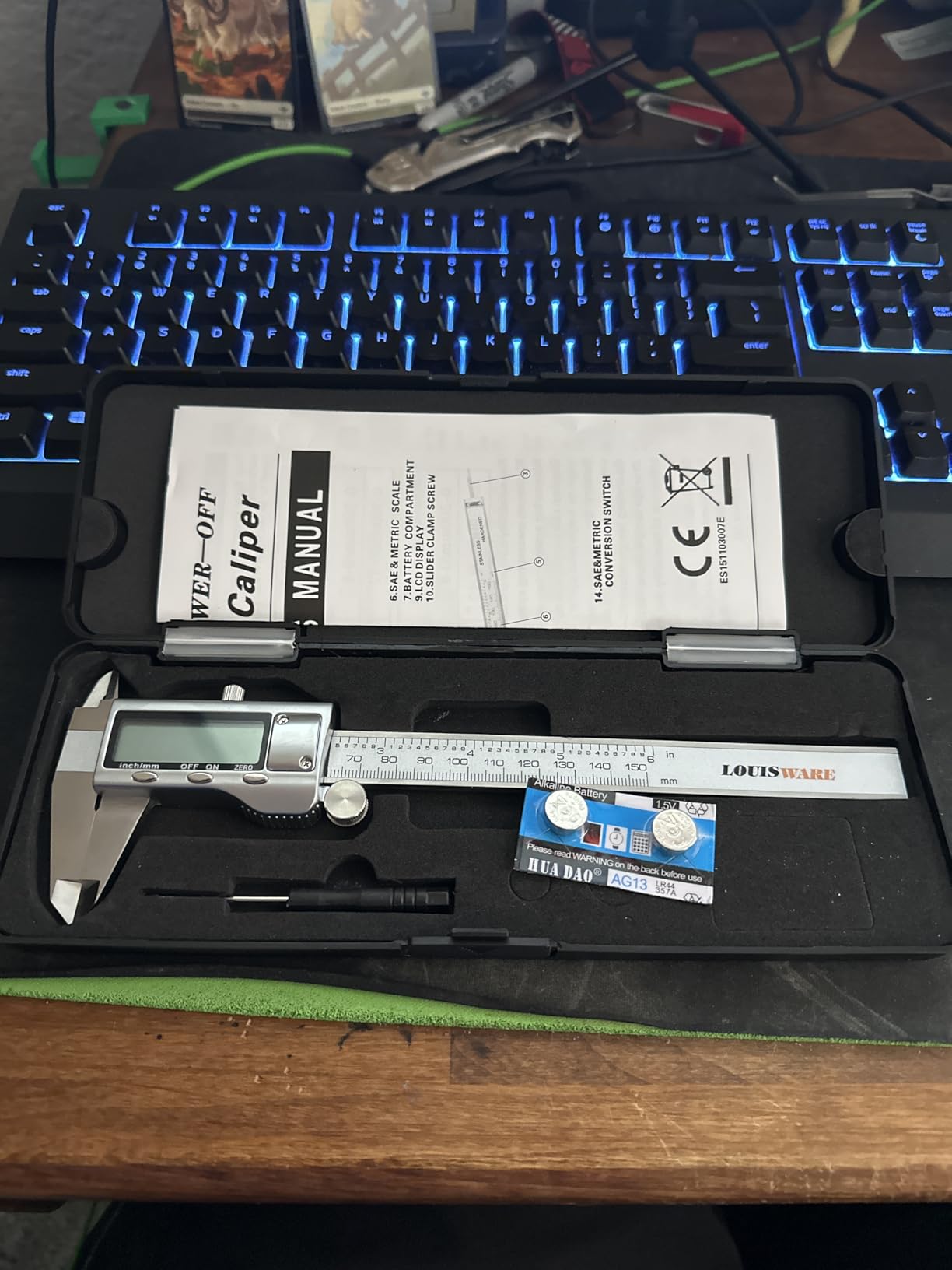
Cabinet and shelf work is mostly about depth and inside dimensions rather than fractions, and that is what this tool covers. It measures internal, external, height and depth from one body, and one-button inch and millimetre conversion is fast enough that you are not hunting a menu mid-fit.
The stainless body resists water, oil and staining, which matters on a wet finish bench or beside a glue-up. The LCD is large and clear, and the locking screw holds position for scribing a line across a cabinet side.
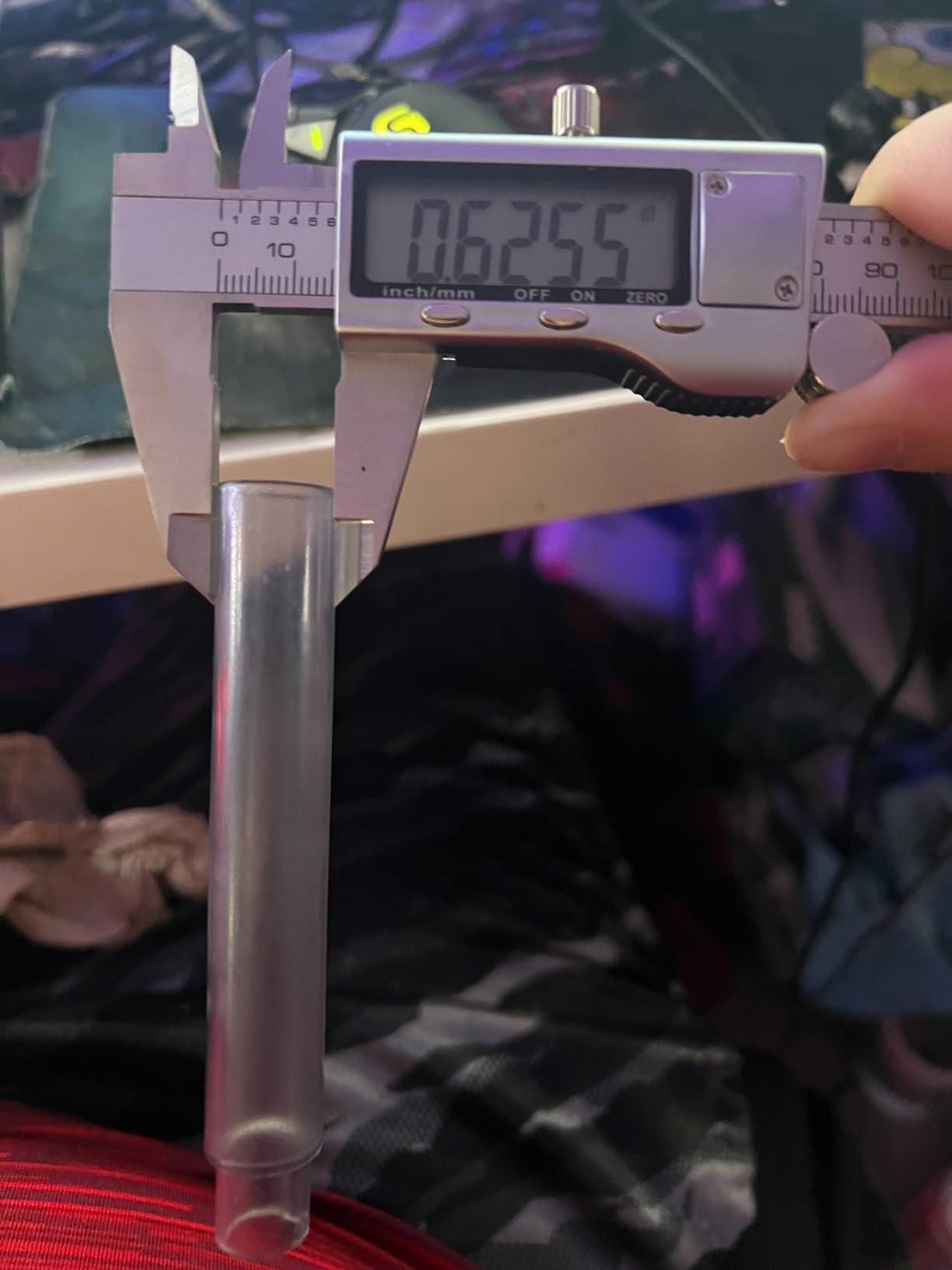
Accuracy is stated at plus or minus 0.001 inch and 0.02mm with 0.01mm and 0.0005 inch resolution over 0-150mm. Auto shutoff at four minutes is the shortest in this group, which keeps cells healthy between uses and is the right call for a caliper that lives in a toolbox.
Two limits to weigh. There is no fraction mode, so a shop that thinks in 1/32nds converts by hand. And it uses two CR2 cells, a format less common on shelves than CR2032 or LR44, so buy a pack when you order one.
Does a Cabinet Builder Need Fraction Mode?
Usually not. Casework and shelving are dimensioned in decimals and full inches, not 1/32nd increments, so a decimal readout is the format you will already be thinking in. Fraction mode earns its keep on furniture joinery and layout marking, not on a fit-up.
The inside jaws matter more for cabinets, and these are sharp enough for a tight reveal without marking a finished face in normal use.
Why the Four-Minute Auto-Off Helps
Shop calipers get left in pockets, toolboxes and on benches under glue pots. A short auto-off is the biggest single factor in whether you still have a working caliper in two years, because it protects the cells that would otherwise die in a drawer and corrode the compartment.
5. iGaging Absolute Origin 6 Inch Caliper – Best for Data Logging
iGAGING Absolute Origin 0-6″ Digital Caliper, IP54 Stainless Steel, SPC/USB Output Port, Inch & Metric Modes, Case, Manual
Absolute Origin zero retention
SPC and USB data output
IP54 sealed stainless body
High-contrast LCD
Pros
- Keeps the zero reference when switched off
- Sends readings into CAD or spreadsheets
- IP54 sealed body handles shop dust and moisture
- High-contrast display reads in low light
Cons
- No fractional inch readout
- Uses two C cells which are bulkier than coin cells
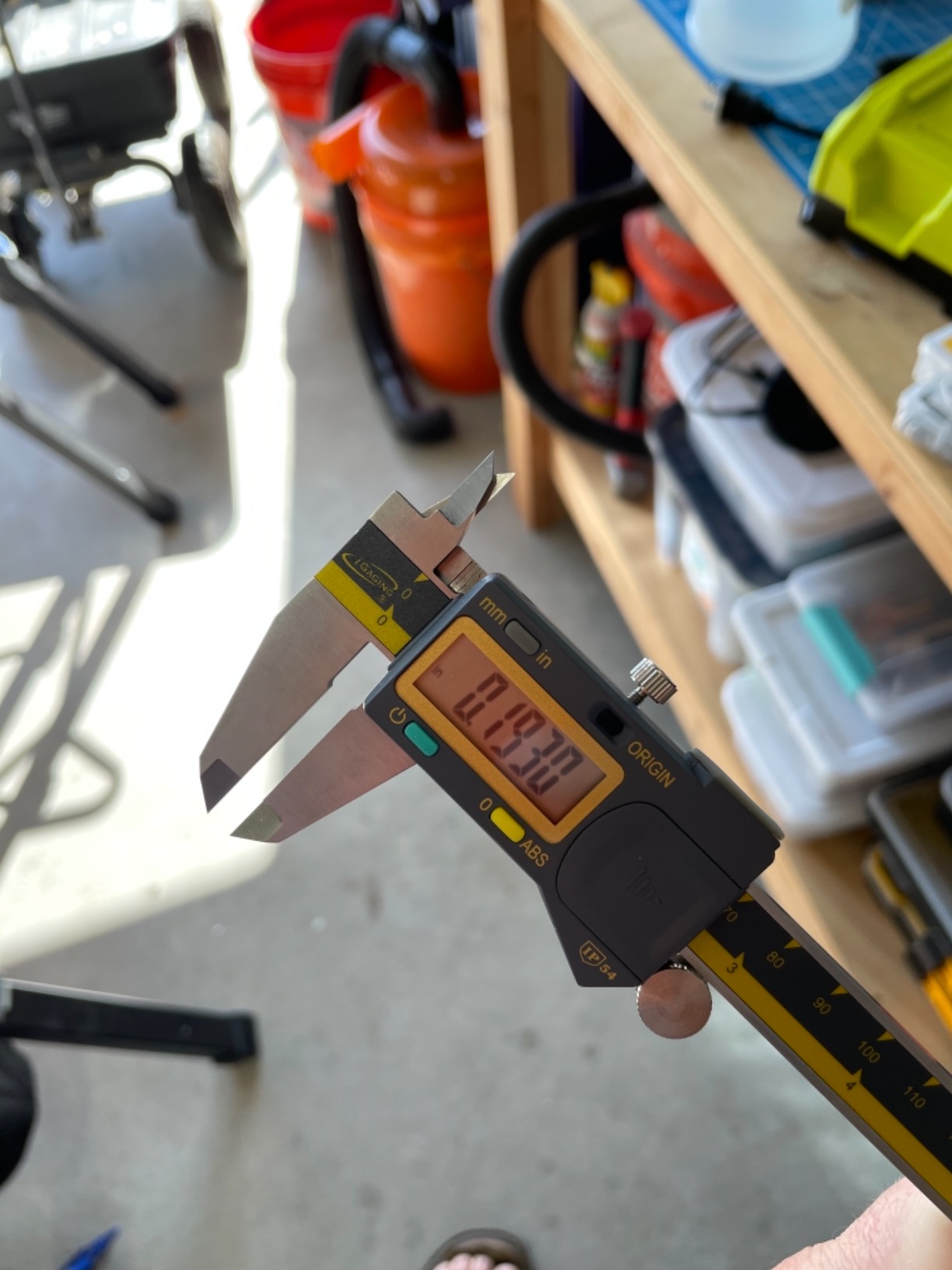
Absolute Origin is the reason to buy this one. When the battery is removed or the tool powers down, it remembers where the zero was, so the next time you power on the reading is still relative to the same reference. In practice you stop re-zeroing at the start of every session.
That matters more than it sounds in a shop where a caliper gets knocked in a drawer between jobs. Zero drift that forces a re-zero every time you pick the tool up is the most common complaint about digital calipers, and this one removes the cause.
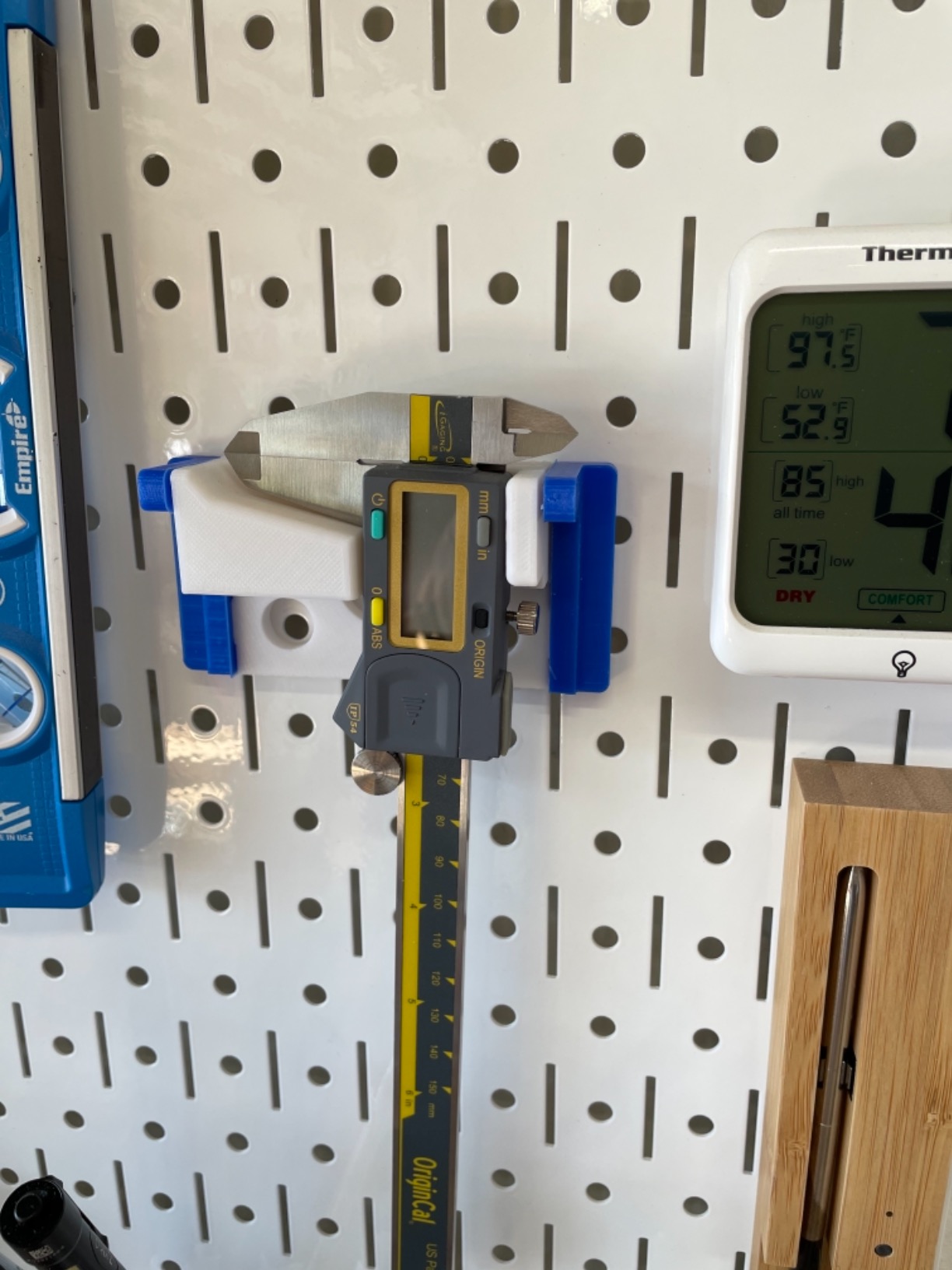
The SPC and USB output sends measurements into CAD software or a spreadsheet, turning a stack of handwritten dimension notes into a log you can sort against your cut list later. The body is sealed stainless with IP54 protection and the display is high contrast for low light.
Two trade-offs. There is no fraction mode, so this is a decimal and millimetre tool for machinist-style work. And it takes two C cells, which are bulkier than the coin cells most calipers use. Neither is a defect, and the reference retention pays for the package.
What Absolute Origin Actually Solves
Ordinary calipers lose their zero reference when power is removed, so you close the jaws, press zero and start again. Do that twenty times a day for three years and it becomes a habit you stop noticing, which means trusting a reference you have not verified in months.
This one holds that reference through a battery change. For a shop treating the caliper as a shared tool, that is the difference between an instrument and a lucky guess.
When USB Output Beats a Pencil
At two or three parts a day, a pencil is faster and the cable is dead weight. Cutting twenty shelves, ten drawer fronts or a run of cabinet sides is where logging catches the transcription error that ruins a fit-up an hour later. The port costs nothing to leave unused.
6. HARDELL 6 Inch Digital Caliper Kit – Best All-Round Kit
HARDELL Digital Caliper 6 Inch, Caliper Measuring Tool with Large LCD
Stainless steel 6 inch body
Plus or minus 0.001 inch accuracy
ID, OD, depth and step
Oversized high-contrast LCD
Pros
- Stainless body resists rust and bending in daily use
- Smooth thumb roller with a locking screw that holds
- Oversized LCD with a wide viewing angle
- Covers four measurement types
- Kit adds case
- battery
- screwdriver and a steel rule
Cons
- No fractional inch display
- A small share report the digital function becoming unreliable
The HARDELL kit is the most complete box here. Alongside the caliper you get a case, two batteries, a mini screwdriver and a stainless steel rule, which seems odd until you notice how often a straightedge is the second tool in your hand during layout.
Stated accuracy is plus or minus 0.001 inch and 0.02mm over 0-6 inch with 0.01mm resolution. Owners say the solid stainless resists rust and bending in daily workshop use, and the oversized LCD has a wide viewing angle, which helps when you read it off to the side at a mitre saw.
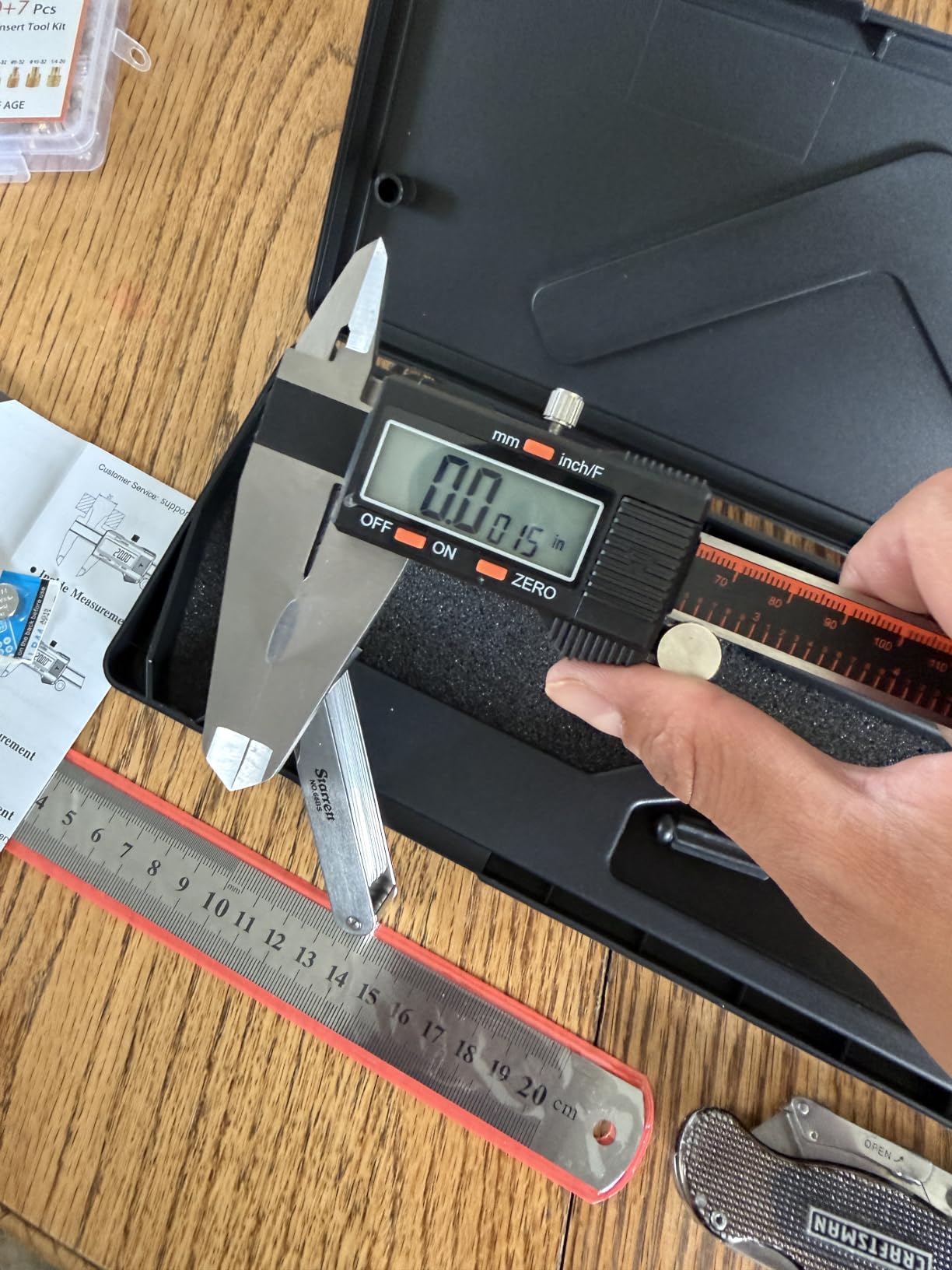
Two jaw pairs plus a depth probe cover inside, outside, depth and step. The thumb roller glides smoothly and the locking screw holds the reading, so you can clamp it at a dimension and scribe a line with both hands busy, with one-click conversion between metric and imperial.
There is no fraction mode, and a small share of owners report the digital function becoming unreliable over extended use. If this is your only caliper and you have no way to cross-check, weigh that. The 4.5 average across more than 1500 reviews still reflects a broadly satisfied owner base.
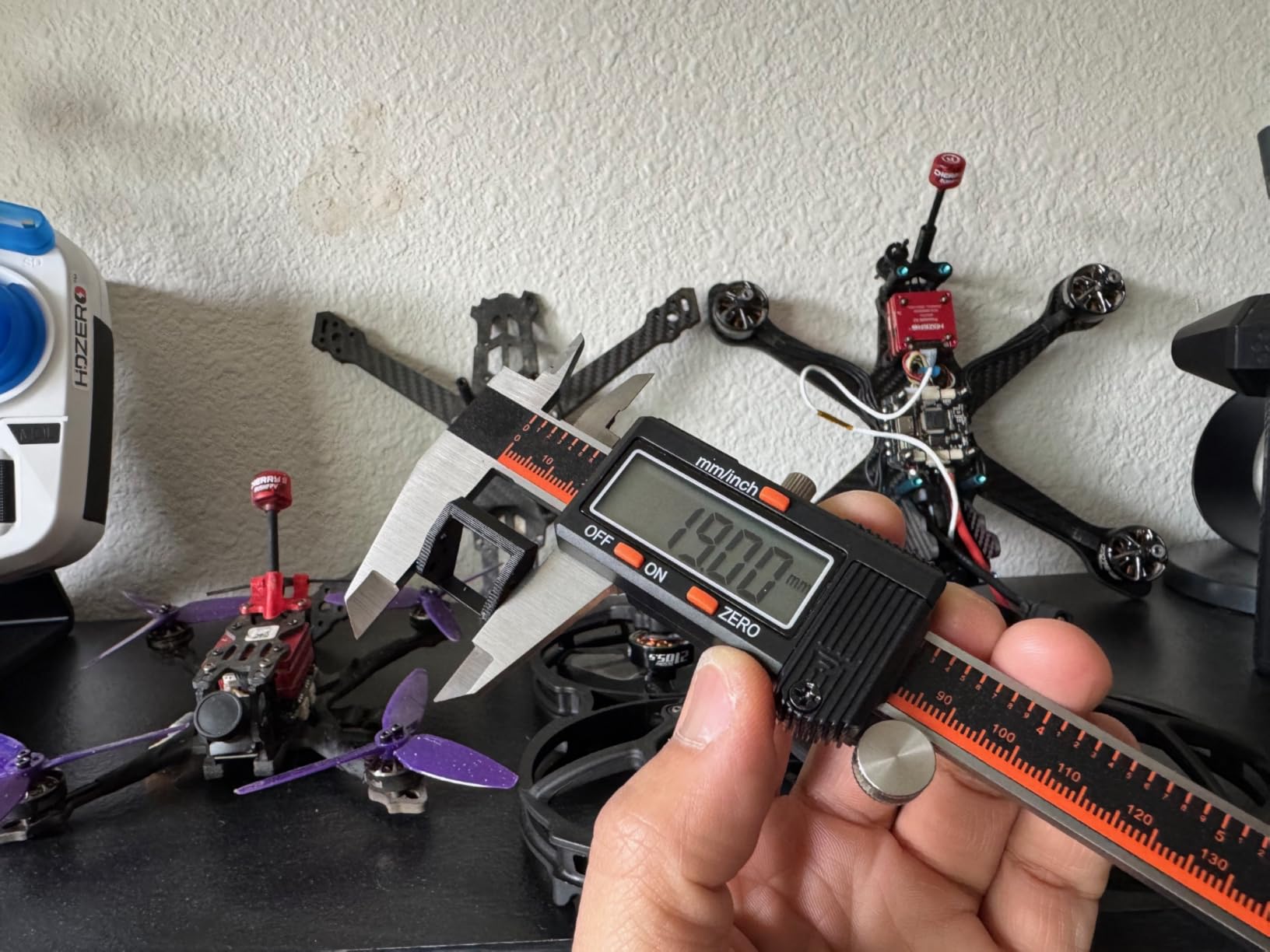
Is the Extra Steel Rule Actually Useful?
More often than you would expect. A straightedge living with the caliper is a straightedge that is there when you check a shoulder line or draw a long line on a wide board, and the caliper is already in the drawer you are standing at. It will not replace a machinist square, but it saves a trip across the shop.
How to Weigh the Reliability Reports
Electronics failure is a wear item rather than a defect, and it appears in reviews across brands at this tier. The response is not to avoid the tool but to own a second caliper and cross-check a known dimension now and then, which takes about two minutes.
7. NEIKO 12 Inch Fraction Caliper – Best for Woodturning and Large Stock
NEIKO 01409A 12” Electronic Digital Caliper | Extra Large Display | 0-12 Inches | Inch/Fractions/Millimeter Conversion | Polished Stainless Steel
0-12 inch and 300mm range
Inch, fraction and millimetre modes
Extra-large LCD
Polished stainless frame
Pros
- 12 inch range removes the 6 inch limit on boards and blanks
- Fraction mode stands out for wood layout
- Returns to zero exactly and stays accurate when extended
- Heavy rigid frame with a well-padded case
- Extra-large LCD readable at a glance
Cons
- Instant-on gives under a year of battery life
- Loose thumb wheel makes fine work harder
- Can show slippage if slid quickly
- A minority report the readout failing after about a year
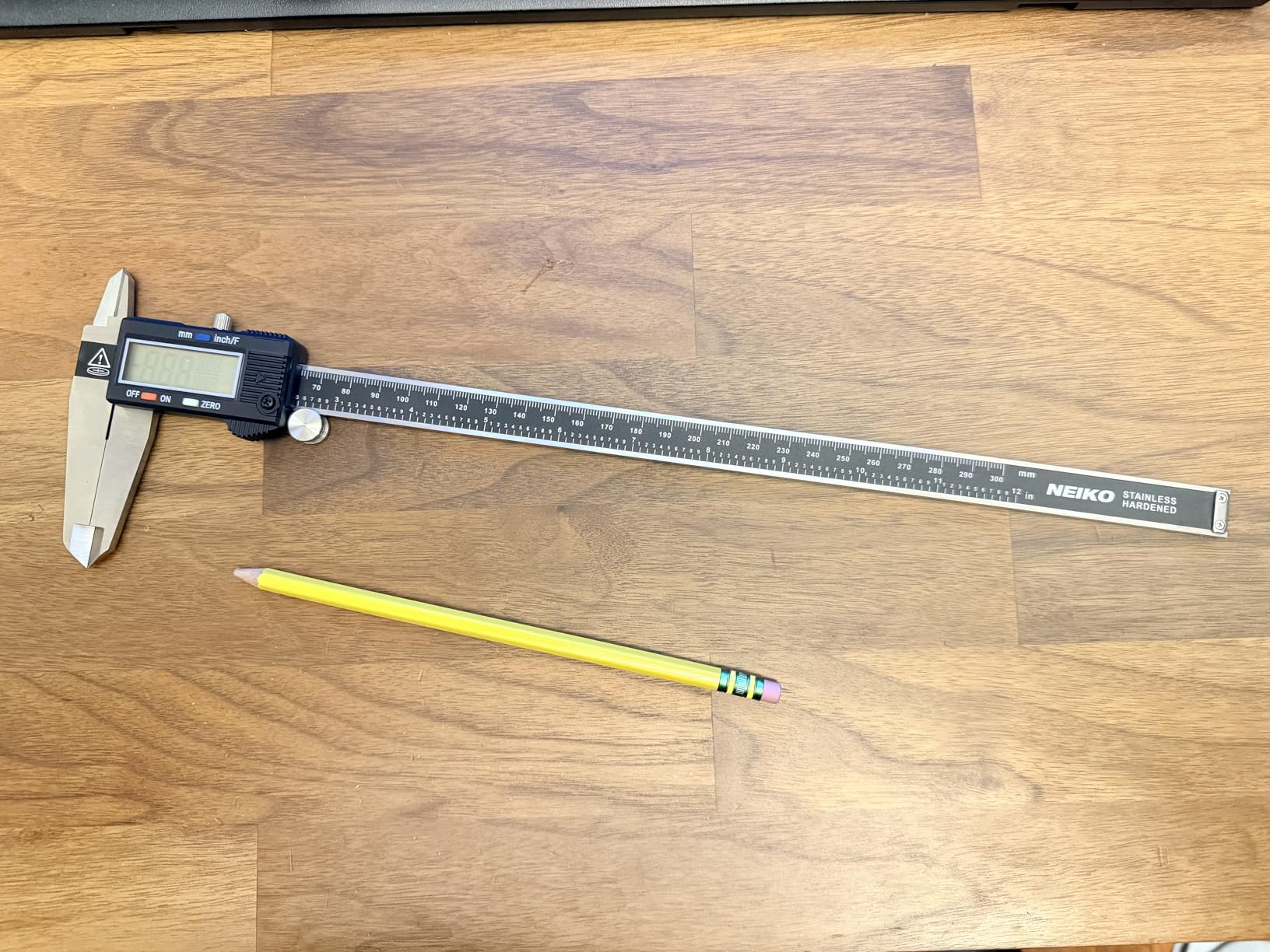
A 6 inch caliper cannot measure the thing most woodturners actually need. Turning blanks, bowl stock and wide boards all run past six inches, so you either measure twice with a tape or you use a 12 inch tool. This is the one we would have.
The fraction mode is the standout. It switches between inch, fractional inch and millimetre with one button, and owners working in 1/64ths report reaching for it rather than a higher-end brand, which is a strong vote for the money.
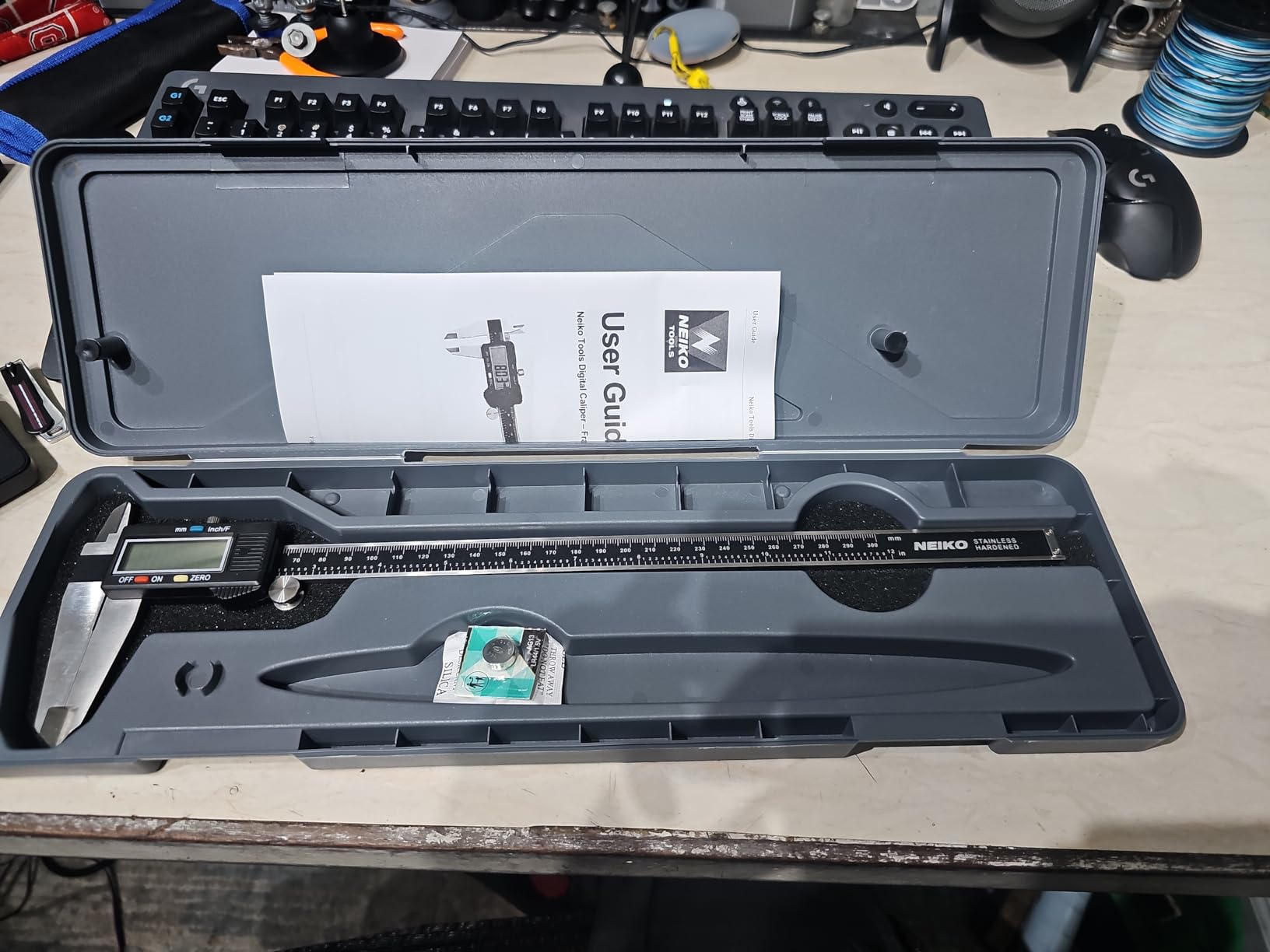
Range is 0-12 inch and 0-300mm with 0.0005 inch, 1/128 inch or 0.01mm resolution, and stated accuracy is 0.001 inch. Owners report it returns to zero exactly and holds accuracy fully extended, which is the failure mode long-reach calipers are prone to. Two jaw sets plus a probe cover inside, outside, depth and step.
The battery is the weak point. Instant-on behaviour means the cell rarely rests and owners report under a year of life. The thumb wheel is loose, fine positioning takes care, and driving the slider fast rather than through the wheel can show slippage. Keep spare LR44 cells in the case and the first problem disappears.
Do 12 Inch Calipers Lose Accuracy When Extended
Sometimes, and it is worth testing. On a long tool, rail runout and frame flex are amplified at the far end of the scale, so check the far end against a known dimension before trusting it on a bowl blank. This model reports holding accuracy fully extended, which is why it outranks cheaper 12 inch options.
Battery Management for an Always-On Tool
If the caliper is awake whenever you move it, treat the battery as a consumable rather than a component. Keep a spare set in the padded case, change cells on a schedule rather than waiting for a faded display, and the readout never dies mid-turn. That one habit removes the complaint that appears most in these reviews.
8. Fowler Xtra-Value Cal 6 Inch Digital Caliper – Best for Shop Durability
Fowler 54-101-150-2, Xtra-Value Cal Digital Caliper With 0-6″/150MM Measuring Range,Blue
One-touch zero at any position
0.001 inch accuracy, 0.0005 inch resolution
CR2032 cells
Case, manual and 1 year warranty
Pros
- Holds zero with repeatable readings over years of use
- Large CR2032 cell gives long battery life
- Auto-off plus repeat and hold functions
- Reported to survive multiple drops
- Stiffer build than entry-level calipers
Cons
- No manual on or off switch
- LCD can be hard to read at extreme angles
- Not as smooth in action as a top-tier caliper
- One report of an opened unit with missing batteries
The Fowler is the one owners describe as the caliper they still trust after a decade. Reports of repeatable readings and a stable zero over years of daily shop use are the consistent theme, and some add that theirs survived multiple drops without losing accuracy.
Zeroing is one touch and works at any point along the scale, not just with the jaws closed. That is genuinely useful when checking a shoulder against a known reference part, and it beats closing the jaws and pressing zero every time.
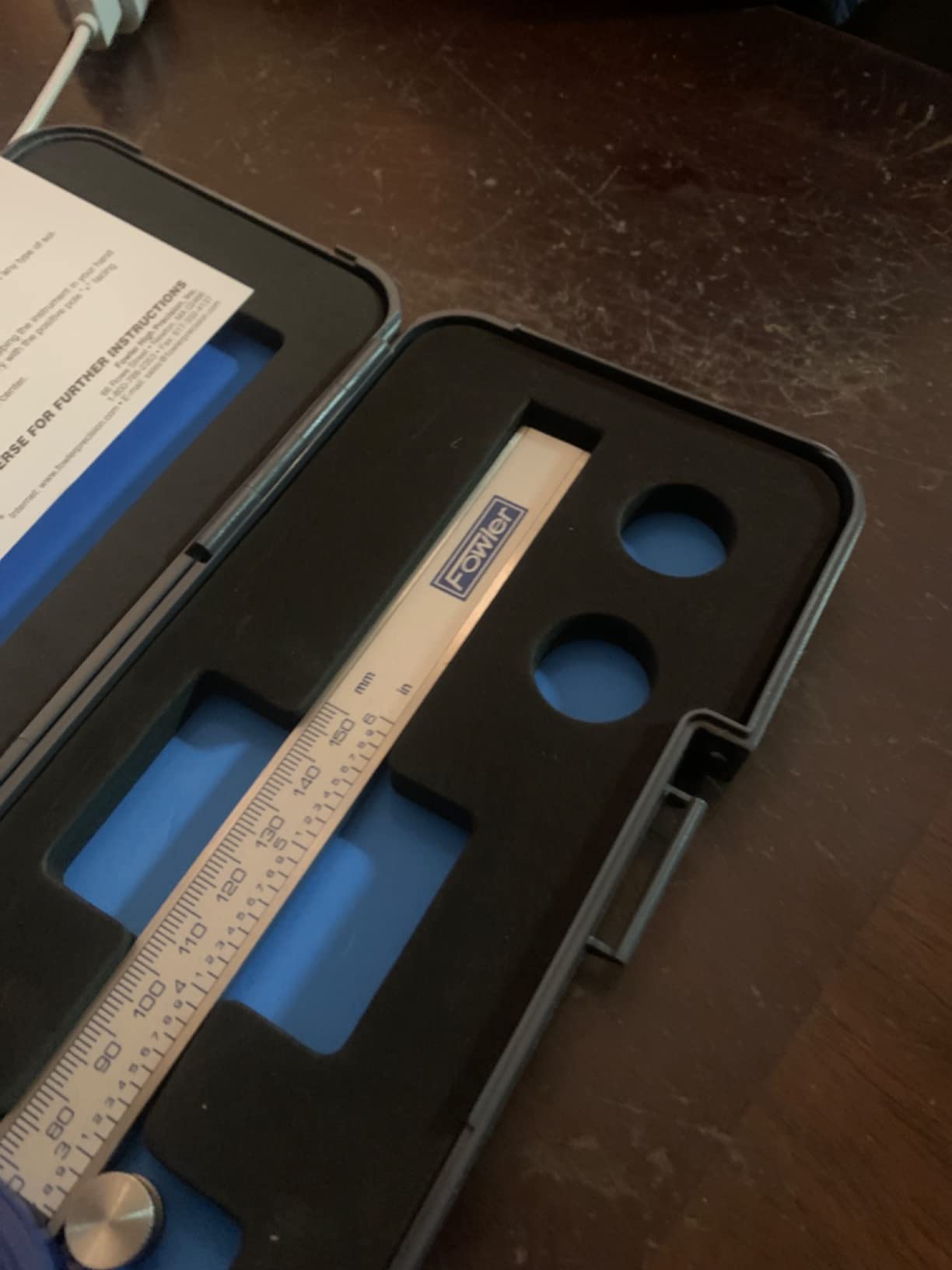
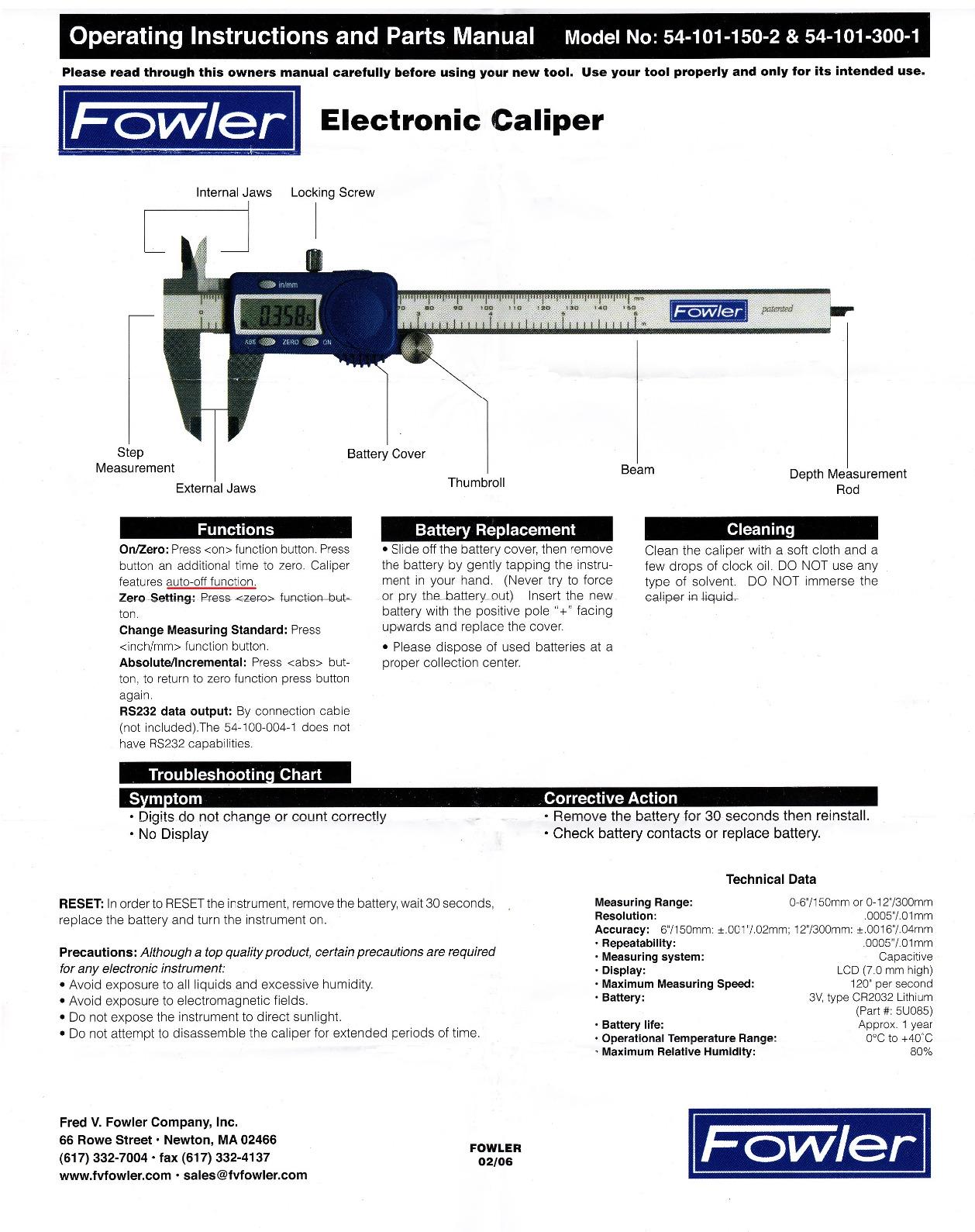
Stated accuracy is 0.001 inch with 0.0005 inch resolution over 6 inch and 150mm. Two jaw sets plus a depth rod cover inside, outside, depth and step, and the set includes two CR2032 cells, a case, a manual and a one year warranty.
What you give up is refinement. There is no manual power switch, so the tool depends on a ten minute auto shutoff, and the LCD is difficult to read at extreme angles. Owners also note it is not as smooth in action as a top-tier caliper. Check the box on arrival if possible.
Why CR2032 Cells Change Ownership
Owners consistently single out the large CR2032 cell for long battery life. You can buy it in any pharmacy or hardware store, which means a dead caliper is a two minute fix instead of a two week hunt for the odd size the tool shipped with. That design decision removes the most common reason a good caliper is abandoned.
When Drop Resistance Matters More Than Features
Calipers get dropped, slid off benches and land jaws-first on concrete. For a shop where the tool lives in a truck bed, build that survives a drop is worth real money, because a bent caliper no longer reads true and most owners never notice. Bench-based and careful? The missing fraction mode matters more.
9. General Tools 12 Inch Carbon Fiber Caliper – Best for Framing and Trim
General Tools Digital Caliper 14712 – 12″ Caliper Measuring Tool – Stainless Steel Ruler
0-12 inch and 305mm range
Decimal, fraction and millimetre modes
Non-marring carbon fiber body
Extra-large LCD
Pros
- Highest average rating among these picks
- Extra-large LCD with quick three-mode switching
- 12 inch range suits boards
- trim and framing
- Integrated ruler edge and carbon fiber for a non-marring surface
- Extendable depth gauge for small holes
Cons
- Twelve inch body is bulkier for tight joinery work
- Fraction mode is the feature to weigh for layout accuracy
This carries the highest average rating of any caliper in our group, with a broad share of five-star ratings from owners who call it one of the most reliable tools they own. The extra-large LCD and quick switching between decimal inches, fractional inches and millimetres come up constantly as the reasons.
Where the others are all stainless, this one pairs stainless steel with a non-marring carbon fiber section. On a finished or veneered surface a hardened steel jaw is a scratch you notice a week later, and the integrated ruler edge is a quiet extra for long layout lines.
Range is 0-12 inch and 305mm, measuring inside and outside diameter, depth and step. Auto-on and auto-off preserve the battery, a free-wheeling friction roller lets you nudge the jaws into contact lightly, and an extendable depth gauge reaches small holes a standard rod cannot. A foam-lined case is included.
The trade-off is size. At 12 inches this is a large tool in the hand, and for fine joinery on a small bench it is simply the wrong shape. For boards, trim, framing stock and site work it is the right one, and owners describe it helping with fitting joints, board thickness and cutting depths.
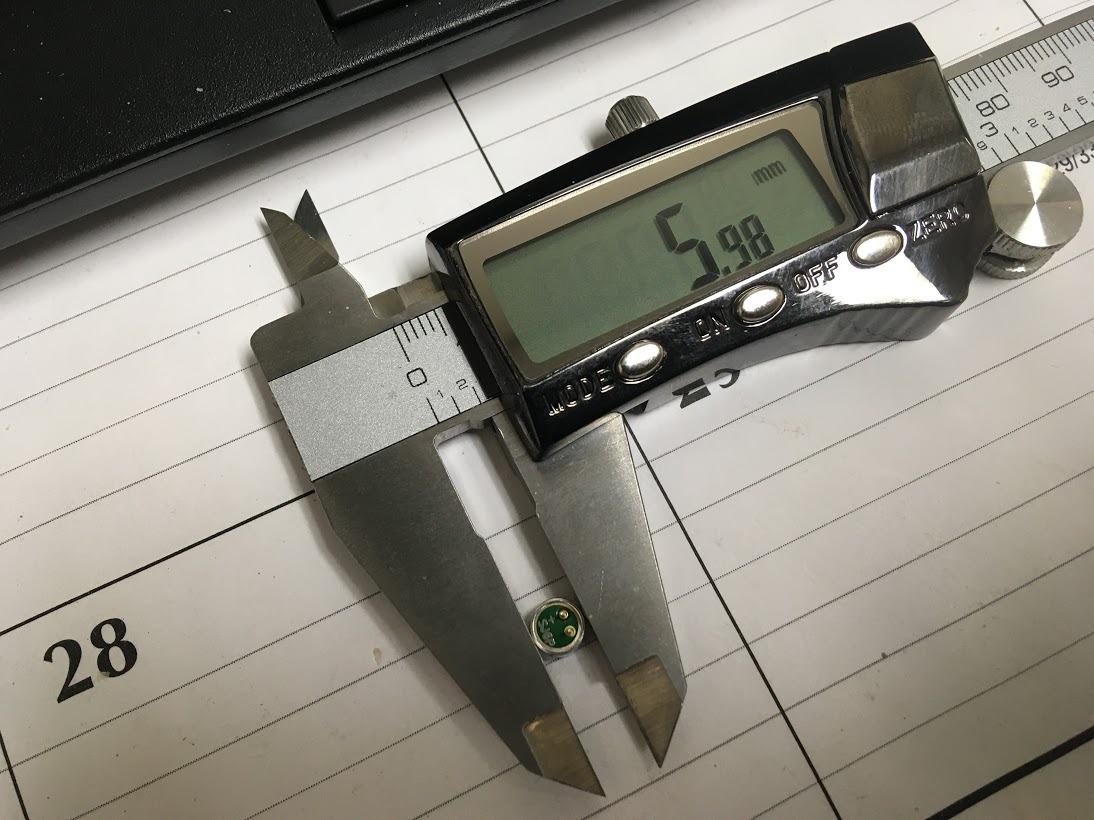
Why a Non-Marring Jaw Matters on Finished Work
Once a panel is varnished or veneered, a caliper becomes a risk rather than a tool. The carbon fiber section takes contact without marking, so you can check a door stile after finishing instead of only before, when the dimension is no longer the interesting number.
Deciding Between a 6 Inch and a 12 Inch Body
Choose 6 inch if your largest workpiece fits inside it, because a shorter tool is easier to handle one-handed and more precise in a confined space. Choose 12 inch for boards, trim or stock that will not fit, and for turning. A useful test is to measure the widest thing you touched last month.
10. Werka 6 Inch Precision Digital Caliper – Best for a First Caliper
Werka Digital Caliper 0-6 Inch, Stainless Steel Measuring Tool
0-6 inch range at 0.001 inch
Inch, fraction and millimetre modes
Large LCD with auto-off
Polished stainless body
Pros
- Highest five-star share among these picks
- Stainless build that outlasts basic plastic calipers
- Covers inside
- outside
- depth and step measuring
- Three display modes including fractional inch
- Hard case with a sponge insert protects the tool
Cons
- No data output port so readings must be written down
- Relies on LR44 cells with only one spare listed
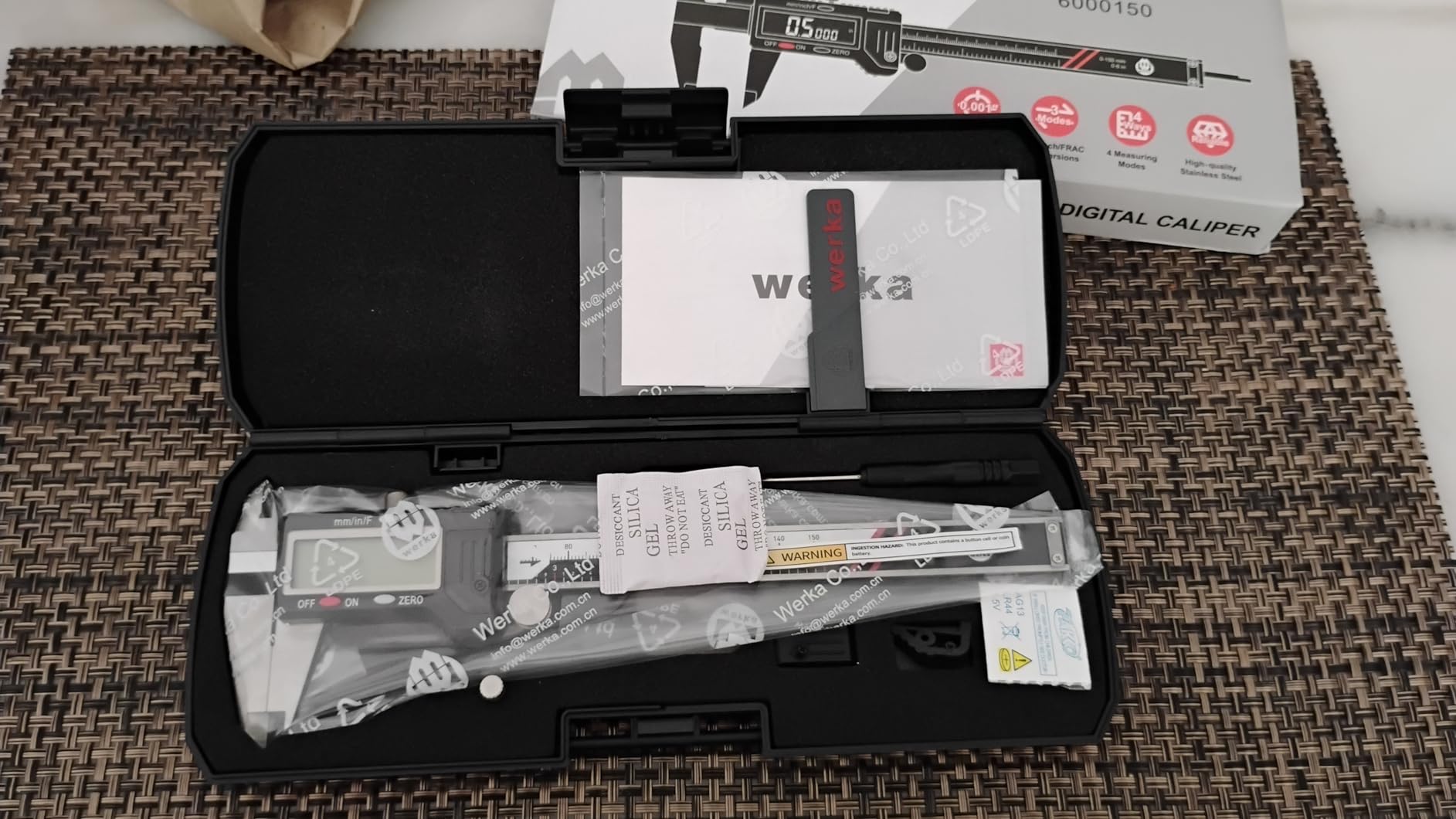
If this is your first digital caliper, the Werka is the least likely to disappoint. It covers what a wood shop actually needs: inside, outside, depth and step measuring, 0.001 inch precision, and inch, fractional inch and millimetre conversion on a large LCD.
Owners describe the polished stainless body as far more durable than the plastic calipers it costs the same as, and the hard case with a sponge insert beats the flimsy shells that come with cheaper tools. For a first purchase the case matters, since a caliper dropped in a truck bed may never read true again.
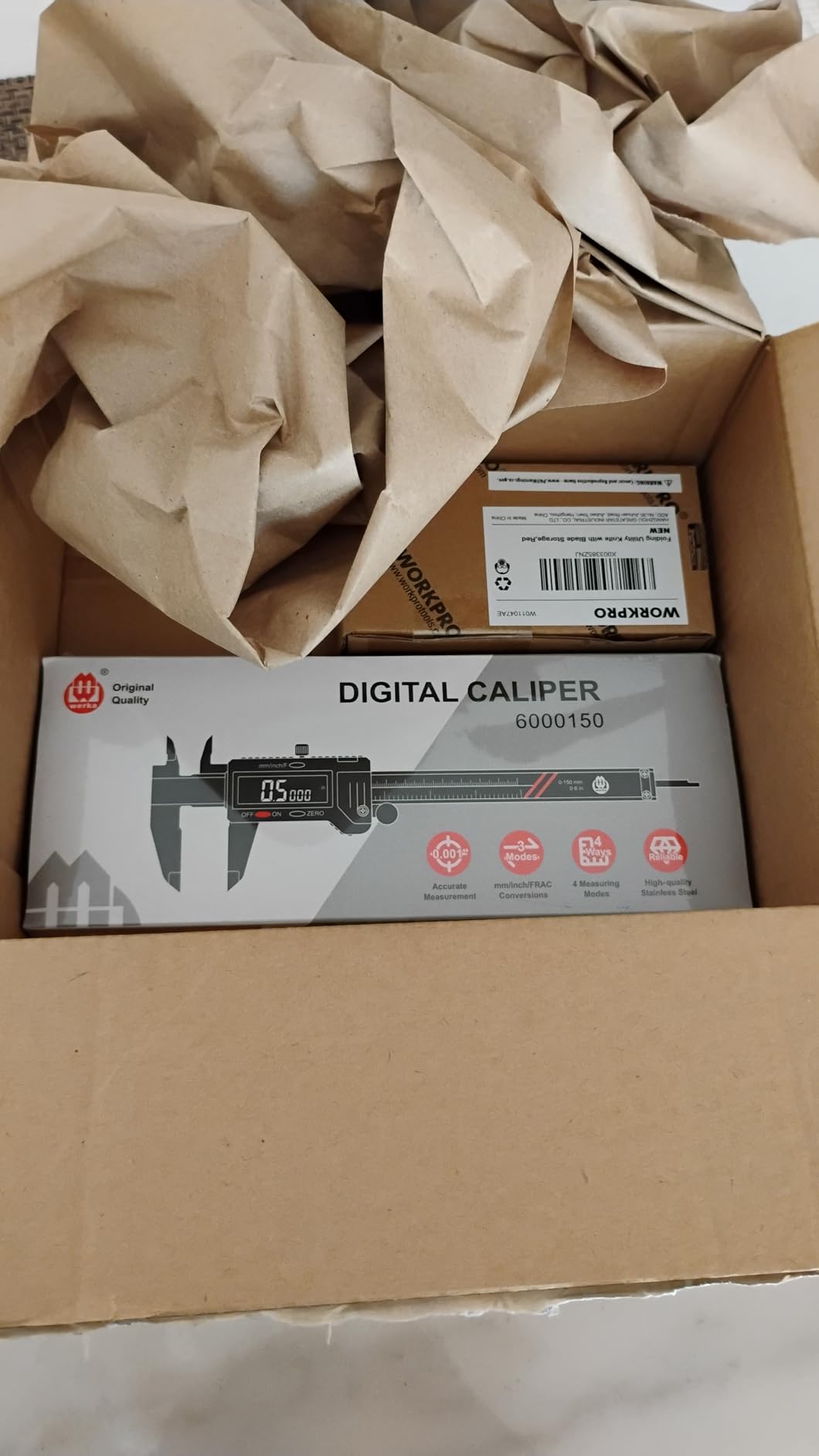
Auto-off protects the cells and a low battery warning gives notice before a reading goes wrong mid-job. A thumb roller and locking screw handle fine positioning, and the 0-6 inch range at 0.001 inch and 0.02mm precision is a stated, honest spec rather than a marketing number.
Two limits. There is no data output port, so readings are written by hand, which is fine for one woodworker and wrong for a production run. And it runs on LR44 cells with a limited number of spares listed, so buy a pack while you are ordering.
What a Beginner Should Prioritise Over Specs
Start with the battery and the case, not the resolution figure. A caliper you cannot keep alive or cannot store without a dent leaves your workflow within a year, and resolution below 0.001 inch is finer than most hand work can use. This model gets both right.
When to Move Up From This One
Stay as long as you measure one part at a time in a home shop. Move up when you start logging batches, when your work includes pieces wider than six inches, or when you need to compare readings against a second instrument. There is no rush, and plenty of professional furniture makers never leave this level.
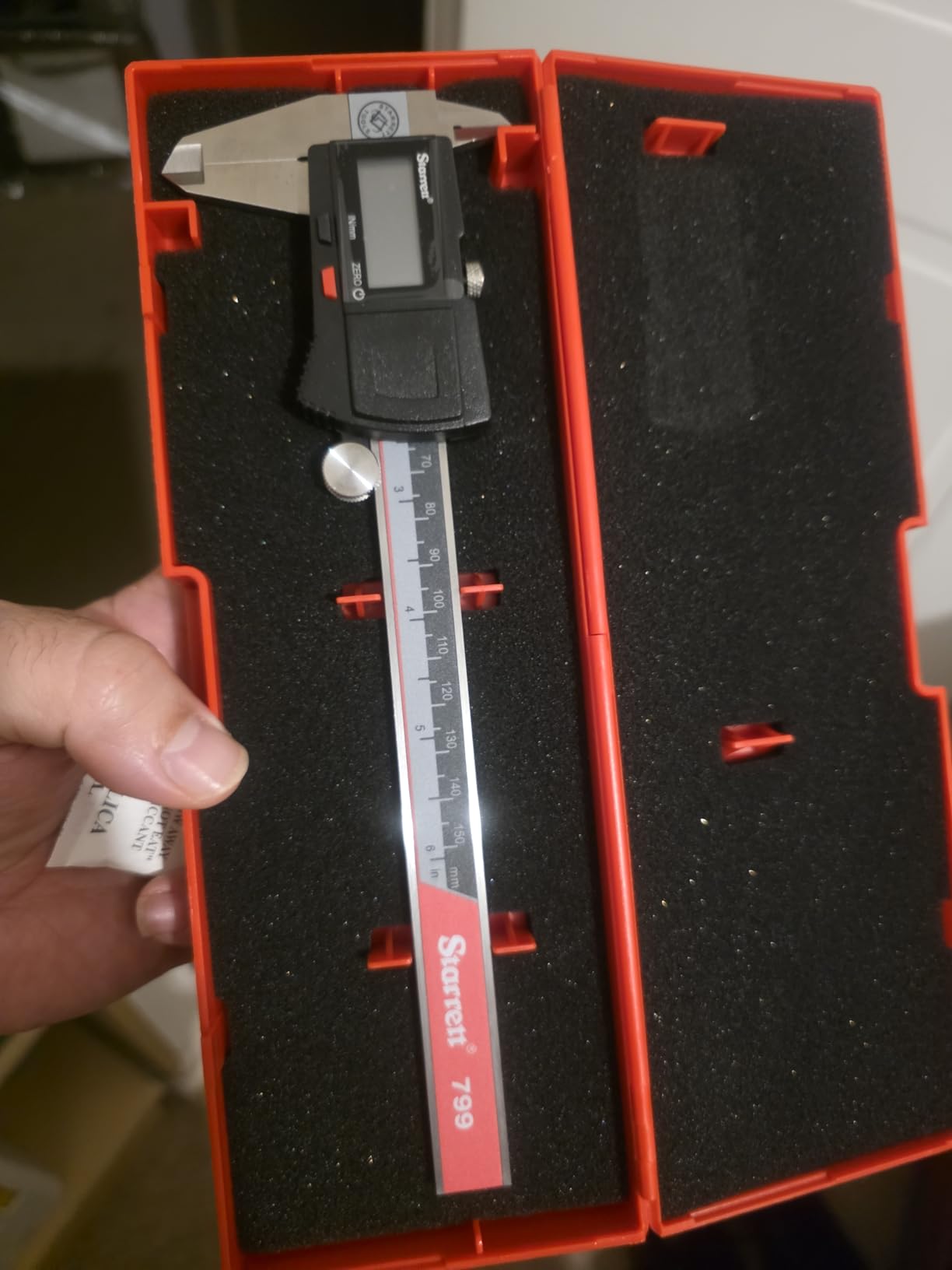
11. Starrett 6 Inch Electronic Slide Caliper – Pro Grade Pick
Starrett Stainless Steel Electronic Slide Caliper, 0-6″ Range, .0005″ Res
Hardened stainless steel surfaces
0.0005 inch resolution
Plus or minus 0.001 inch accuracy
30 minute auto-off
Pros
- Hardened stainless surfaces from an established precision brand
- Large high-contrast LCD read at a glance
- Fine adjustment wheel supports repeatable readings
- 30 minute auto-off is the longest in this group
- Reactivates with no loss of measuring position
Cons
- Inch and millimetre only with no fraction display
- Highest cost in this group
The Starrett is the traditional machinist choice, and the reasoning is sound. The measuring surfaces are hardened stainless rather than plated mild steel, which resists the corrosion and wear that eventually shows up as a zero that will not return.
The 30 minute auto-off is the longest in this group by a wide margin, and that is not a spec-sheet detail. On a tool that switches on when you slide the jaws, battery life decides whether it is always ready or always flat. Reactivation takes one second, with no loss of measuring position.
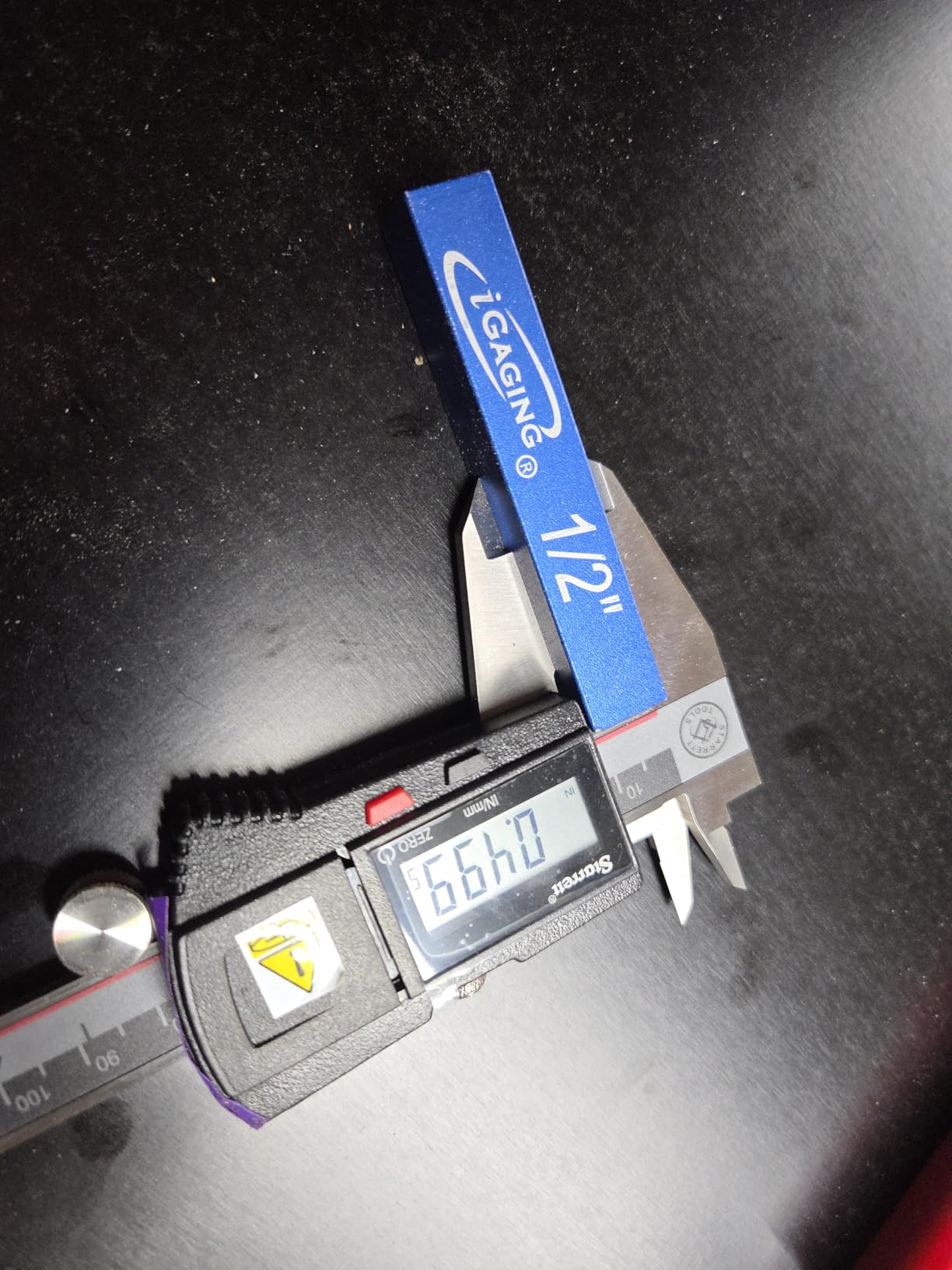
Resolution is 0.0005 inch and 0.01mm, with stated accuracy of plus or minus 0.001 inch over 0-6 inch and plus or minus 0.02mm over 0-150mm. A fine adjustment thumb wheel supports careful repeatable readings, and the high-contrast LCD reads at a glance, which is what you want when the tool is in your hand.
Cost is the obvious trade-off, and there is a second one specific to woodworkers: this is inch and millimetre only, with no fraction mode, so a shop working in 1/32nds converts by hand. Buy it if you machine as well as build, or if you want a tool that outlives several other purchases.
Is a Pro Grade Caliper Overkill for Wood
For most shops, yes. Several picks in this roundup measure to the same stated 0.001 inch accuracy at a fraction of the cost, and hardened surfaces matter far more on machined metal than on planed poplar. Step up for precision fitting, precision hand planes, or a mixed shop role.
The forum consensus among experienced woodworkers matches that. Step up to a machinist-grade brand for precision work, use a solid mid-tier caliper for general furniture, and the results will not differ at your bench.
What the 30 Minute Auto-Off Changes
On an instant-on caliper, battery life is the practical limit on how long the tool stays trustworthy. Longer auto-off means fewer dead-cell mornings, less corrosion around the compartment, and a display that answers when you pick the tool up. On a tool at the top of this price range, that margin is a fair part of what the extra money buys.
12. Fowler Xtra-Value Cal 12 Inch Caliper – Best for Long-Reach Boards
Fowler 54-101-300-1, Xtra-Value Cal Digital Caliper With 0-12″/300MM Measuring Range
0-12 inch and 300mm range
Two jaw pairs plus a depth rod
One-touch zero at any position
One year warranty
Pros
- 12 inch and 300mm range for large panels and mouldings
- Stainless body with two jaw pairs and a depth rod
- One-touch zero set at any point along the scale
- Backed by a full one year manufacturer warranty
Cons
- Lowest average rating in this group
- No fractional inch mode for wood layout
- Listing quotes two different accuracy figures
- A costly pick with a small review base
Long reach is the reason to consider this one. At 0-12 inch and 300mm it handles large panels, wide mouldings and rough lumber in a single pass, with two pairs of jaws and a depth rod covering inside, outside, depth and step. One-touch zero works at any point along the scale.
You should know what you are buying. The 4.1 average is the lowest here, with a 9 percent one-star share, and buyers report accuracy and durability concerns. The listing also quotes two different accuracy figures in two places, so verify the tool yourself when it arrives.
It comes with a fitted case, two batteries, a manual and a full one year manufacturer warranty, a better package than many cheaper 12 inch tools offer. The stainless body and easy to read LCD match the rest of the Fowler range.
There is no fraction mode, which rules it out for joinery layout that thinks in 1/32nds, and the review base of 117 owners is far thinner than the other eleven picks. Our read is that this suits someone who specifically needs 12 inch reach and accepts more risk, not a default recommendation.
What a 4.1 Average Rating Tells You
A low average on a thin review base is a signal to check, not a disqualification. It usually reflects inconsistent manufacturing between units rather than a design that does not work, which makes quality control on arrival matter more than usual here.
Run the accuracy check below the day it arrives. If it holds, you have a fine long-reach caliper. If it does not, you have a warranty and about five minutes.
When Longer Reach Is Actually Needed
Measure the widest workpiece you regularly handle. Past six inches, a 6 inch caliper forces you to slide along the part and add two numbers, which is a source of error you do not need. Wide panels, long trim and turning blanks are exactly where long reach pays for itself.
Digital Caliper Buying Guide for Woodworkers
Accuracy and Resolution Are Different Specs
Resolution is the smallest step the display can show. Accuracy is how close that reading is to the true dimension. A caliper with 0.0005 inch resolution and 0.001 inch accuracy will happily show a half-thousandth change that is not real, and this is the most misunderstood spec in the category.
For woodworking it barely matters. Hand-cut joinery at 0.001 inch is already excellent, so resolution below 0.001 inch is a comfort feature rather than a capability, and the stated accuracy figure is the number that should influence you.
Fraction or Decimal: Which Readout Fits How You Work
Decimal inches suit cabinetry, shelving, framing and anything dimensioned in full inches and thousandths. Fractional inches in 1/32 or 1/64 suit furniture joinery, hand-cut dovetails and layout marking, where your rule of thumb and knife line are already fractional.
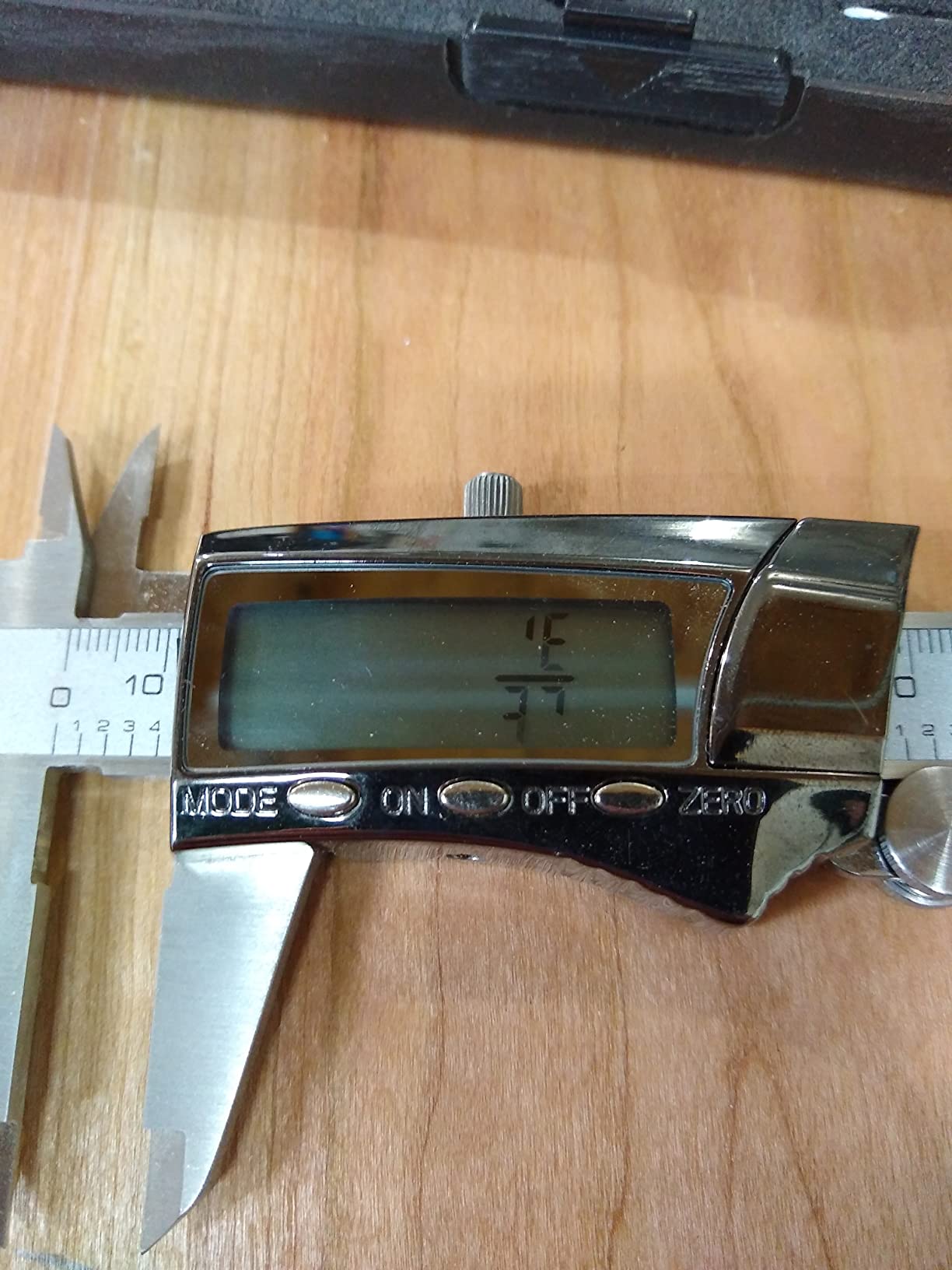
Check how the fraction display actually looks before committing. Some render clearly at a glance, others use mixed digit heights that make a simple number harder to read than a decimal would, and reviewers note that difference explicitly.
6 Inch or 12 Inch: Match the Tool to the Work
A 6 inch caliper handles most furniture joinery, cabinet parts and guitar work, and is easier to use one-handed. A 12 inch caliper is necessary for wide boards, long trim, panels, mouldings and turning blanks, and it is bulkier for anything delicate.
One worry comes up repeatedly on woodworking forums: that accuracy falls away at full extension as rail length and frame flex increase. That is a testable claim rather than a certainty, and it is exactly what the accuracy check below tells you about a specific tool.
Power Source and Battery Life Decide Whether You Keep the Tool
The most common complaints in forum threads about calipers are not about accuracy. They are about batteries dying without warning and about a zero that no longer returns after a year of dust and knocks. Both are design decisions rather than bad luck.
Prefer CR2032 or LR44 cells because you can buy them anywhere. Avoid tools whose battery compartment opens only with a small tool you are likely to lose, and treat any battery you do not recognise as a reason to think twice. A short auto-off timer is far better than none.
IP54 and IP67 in a Sawdust-Filled Shop
IP54 means dust protected and splash resistant, which covers an indoor woodworking shop: sawdust, glue, a knocked-over water cup. IP67 adds temporary immersion protection, sensible only if you measure wet or exterior timber.
The reason it matters is wear, not electronics. Grit between the slider and the beam is the main cause of a rail that develops a light gap and a zero that will not return, and sealing slows that process.
Body Material and Jaw Quality
Stainless steel is the safe default. Carbon fiber sections avoid marking finished surfaces, and plastic bodies are lighter but flex more, which shows up as repeatability you can feel. Jaw finish matters as much as body material: jaws ground flush and even close evenly, and a burred jaw reads inconsistently on soft wood.
On inside jaws, sharper is not always better. A very sharp internal jaw can score a finished face when you reach into a mortise, so test an inside measurement on a scrap first.
How to Check a New Caliper’s Accuracy Before You Trust It?
No competitor page in this category explains how to do this, and it takes about two minutes. It turns a spec sheet into a measurement you made yourself, which is the single most useful habit a caliper owner can build.
First, check the zero. Close the jaws fully with light pressure and confirm the display reads 0.000. If it does not, press zero and check again. A caliper that will not hold a zero when closed cannot be trusted at any dimension.
Second, look for light gap. Slide the jaws closed and check them against a light. You should see a thin, even line, not an uneven gap, because that gap is the beginning of rail wear and it only gets worse.
Third, test known dimensions. Open the jaws to roughly 0.500, 1.000 and 2.500 inch and compare against a known reference such as a machinist square, gauge blocks, or a 1-2-3 setup block. On a 12 inch tool, repeat the test fully extended, because that is where problems hide.
Fourth, test repeatability. Measure the same board edge five times without re-zeroing. If the numbers wander by more than a thousandth, the jaws, the rail or your technique is at fault, and the tool has told you something important.
Fifth, compare against a second instrument if you own one. Agreement between two cheap tools is not proof, but a clear disagreement is an instruction to return one of them.
Digital Calipers vs Dial Calipers vs Thickness Gauges vs Story Sticks
Digital calipers give a live readout and a depth rod, which makes them the only option covering inside, outside, depth and step in one tool. They are also the easiest to misread in poor light and the only ones that need a battery.
Dial calipers need no power and have no battery to die, and the needle reads from a distance. They cannot switch units, usually cannot measure depth, and you read the needle while it is moving, which makes them harder to use precisely than a digital readout.
Thickness gauges are cheap, pocketable and accurate for one job: is this ply the same as that ply. They cannot measure a tenon shoulder, and the plates need to sit parallel to the surface to be correct.
Story sticks and yardsticks are for rough dimensioning. A story stick mixes units on purpose, which makes it excellent for estimating a cut list quickly and completely wrong for anything that needs a repeatable number.
Caliper Care: Zero, Batteries and Sawdust
Wipe the rail with a dry cloth before you close the jaws, every time. A chip of sawdust trapped between the jaws is the fastest route to a reading you cannot trust, and it takes two seconds to prevent.
Do not leave a caliper in a damp shop overnight. If you wiped up with a damp rag, open the battery compartment and let the tool dry before closing it, because trapped moisture causes the corrosion that ruins both a compartment and a cell.
Re-zero on purpose every few weeks. A caliper that reads 0.000 when closed is trustworthy; one that reads 0.002 and reads 0.002 every time you check is drifting slowly, and you want to know before it reaches a joint.
Keep spare cells of whatever type the tool uses, in whatever case holds the tool. A caliper that cannot be revived because its battery size is discontinued is worth less than the money you paid for it, and that is the most common reason these tools end up in a drawer.
Frequently Asked Questions
Which digital caliper is best for woodworking?
For most woodworkers, the best digital caliper is a stainless steel 6 inch model with a fraction display, 0.001 inch accuracy and a widely available coin cell battery. The Kynup 6 inch we tested is the strongest all-round choice because the forged stainless body holds its zero and the fraction readout matches how most shops lay out in 1/32nds. Step up to a pro grade tool only if you also do precision fitting or machine work.
Which digital caliper is the most accurate?
Accuracy is rated separately from resolution, and for woodwork the stated accuracy figure is the one that matters. Most of the picks in this roundup are rated at plus or minus 0.001 inch, which is far finer than hand-cut joinery requires. The Starrett offers hardened stainless measuring surfaces at the same stated tolerance, so it wins on durability and repeatability rather than on a better number.
Are Starrett or Mitutoyo calipers better?
Experienced members on r/Tools and woodworking forums treat the two as the reference standard and rarely separate them on accuracy, because both are specified to a similar tolerance. Starrett is often chosen for hardened measuring surfaces and a long battery auto-off timer, while Mitutoyo is widely recommended as a dependable default. Neither has a fraction display in common configurations, so woodworkers who think in 1/32nds often add a mid-tier fraction model alongside one.
Is the step up to a premium brand worth it for wood?
Usually not, and experienced woodworkers on forums say so plainly. Three tools in this roundup measure to the same 0.001 inch accuracy as a premium machinist brand at a fraction of the cost. The premium tier earns its place when you do precision fitting, build precision hand planes, or need hardened surfaces and drop resistance more than you need a fraction display.
Are Harbor Freight digital calipers accurate?
For general woodworking dimensioning, most owners report readings accurate enough for cabinet parts, shelf openings and board thickness checks. The recurring warning in forum threads is not about accuracy on the bench but about quality control between units and about zero drift over time. If you buy one, run the zero, light gap and known-dimension checks on arrival so you know exactly what you have.
Do I need a fractional display for woodworking?
You need one if your layout is fractional. Furniture joinery, hand-cut dovetails and shoulder lines marked with a knife are usually worked in 1/32 or 1/64 inch increments, and a fraction readout saves constant mental conversion. Cabinetry, shelving and framing are dimensioned in decimals and inches, so a decimal-only caliper is genuinely fine there. Check that the fraction display is legible before buying, because some render poorly.
How do I know if my digital caliper is accurate?
Close the jaws fully and confirm the display reads 0.000, then look through the closed jaws against a light for a thin, even gap. Next, open the jaws to roughly 0.500, 1.000 and 2.500 inch and compare against a known reference such as a machinist square or a 1-2-3 setup block. Finally, measure the same edge five times without re-zeroing. More than a thousandth of wander means the tool, its jaws or your technique needs attention.
Conclusion: Which Digital Caliper Should You Buy in 2026
Buy the Kynup 6 inch if you want one tool that covers everything a wood shop does, because the forged stainless body, honest 0.001 inch accuracy and fraction mode make it the safest single purchase in this roundup. Add the VINCA if you work near water or spray finishes and want a sealed body with a data port, or the iGaging IP54 if reading a small display is becoming the harder part of your day.
Go longer only if your work demands it. The NEIKO and General Tools 12 inch models cover boards, trim and turning blanks with fraction readouts, while the Fowler 12 inch is the reach option to buy only if you accept a thinner warranty record. Whichever you choose, run the two-minute accuracy check the day it arrives, keep spare cells with the tool, and it will still read true well beyond 2026.