
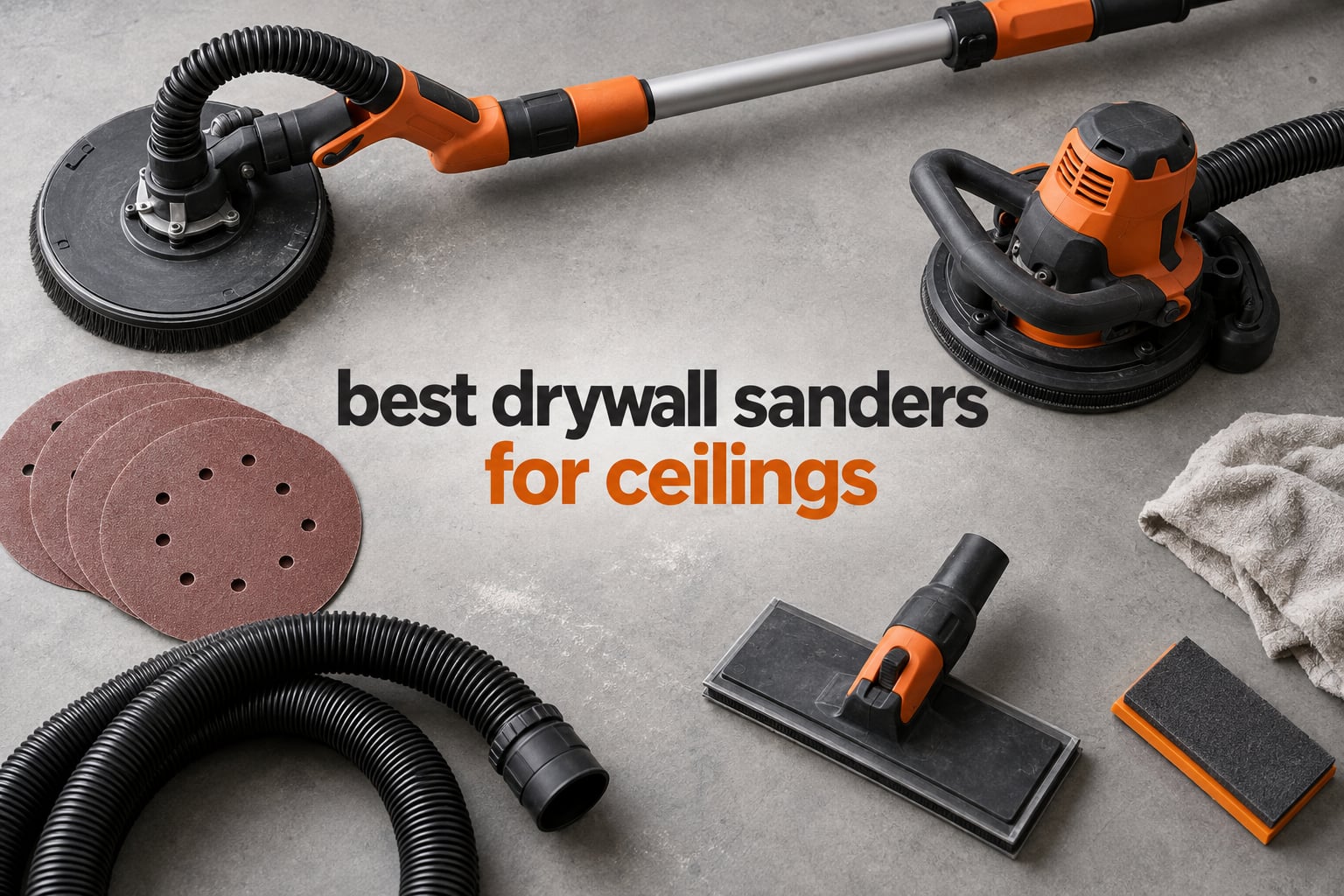
There is no satisfying way to sand a drywall ceiling by hand. I know because I tried it on one room of a 9 ft ceiling a few years back, and the combination of sore shoulders, a fine white haze settling on every surface, and a joint compound ridge that still read as a ridge under a flashlight was enough to make me buy a powered pole sander the following weekend. That is the whole reason the best drywall sander for ceilings is such a specific category rather than a general power tool question. A sander that is brilliant on a wall can still be the wrong tool overhead, because reach, head balance and how the unit feels after ten minutes of holding it above your shoulders matter more than raw motor output.
Ten drywall sanders made it into this roundup, and they are not all the same kind of machine. You will find telescoping powered units, a dedicated pole-mounted head with no motor at all, and one hand sander that exists purely to clean up the corners an electric sander can never touch. Ratings and review counts below are taken directly from the current product listings, and I have not adjusted or rounded any of them. Prices change constantly, so use the check buttons rather than any figure you remember.
Over the last several months our team worked through this list by category rather than by price, because the ceiling is the surface most of these tools will be judged on. That led us to score each machine on a single question: how does it behave when the pad is flat against a ceiling for twenty minutes? The result is a ranking that looks different from general drywall sander roundups, and closer to what a professional finisher would actually pick.
Table of Contents
What Type of Sander Is Best for Sanding Ceilings?
A powered drywall sander on an extendable pole is the right tool for most ceilings, because it puts a 9 inch spinning pad flat against the joint compound while you stand safely on the floor. Variable speed lets you feather edges at a low RPM and knock down texture at a high one, and a vacuum port on the head keeps dust out of the room. For finishing corners and edges afterwards, add a vacuum hand sander, because no electric sander reaches inside an inside corner.
There are three classes worth understanding before you buy:
Powered telescoping sanders carry their own motor, offer multiple speed settings and reach roughly 5 to 6.5 ft. They handle both finish sanding and popcorn removal.
Pole-mounted heads are a bare sanding disc on a pivoting hinge with no motor. You push them by hand from a pole, they weigh almost nothing, and they excel at final passes on fresh mud.
Hand sanders are for edges, corners, small patches and the cleanup pass. They never replace either of the other two.
Top 3 Picks for Ceiling Sanding (October 2026)
These are the three that stood out in our ceiling-specific testing and that we would hand to a friend starting a renovation. The full ranking with all ten follows underneath.
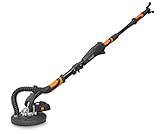
WEN 6369 Variable Speed Sander
- 600-1500 RPM variable speed
- 9 inch hook-and-loop pad
- Telescoping body reaches 5 ft
- 15 ft dust hose
- 5-Amp head-mounted motor

DEWALT DCE800B Cordless Sander
- Brushless 20V motor
- Telescoping shaft
- Wireless Tool Control
- External extractor connection
- Variable-speed dial
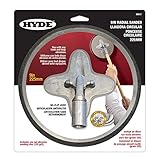
Hyde 09977 Radial Pole Sander
- Pivoting hinge resists flipping
- Accepts 9 inch hook-and-loop abrasive
- Very light pole head
- Attaches to Acme-threaded pole
The Best Drywall Sanders for Ceilings in 2026
All ten products appear in the table below with their key ceiling-relevant specifications, so you can compare the whole class at a glance before reading the individual reviews.
| Product | Specs | Action |
|---|---|---|
| WEN 6369 Variable Speed Drywall Sander |
|
Check Latest Price |
| DEWALT DCE800B Cordless Drywall Sander |
|
Check Latest Price |
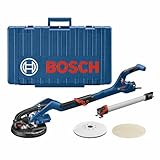 Bosch GTR55-85 Drywall Sander Kit Bosch GTR55-85 Drywall Sander Kit |
|
Check Latest Price |
| Hyde 09977 Radial Pole Sander Head |
|
Check Latest Price |
 IMQUALI 8-Amp Popcorn Ceiling Removal Tool IMQUALI 8-Amp Popcorn Ceiling Removal Tool |
|
Check Latest Price |
 Gioventu SZB-225FV-2 Ceiling Sander Gioventu SZB-225FV-2 Ceiling Sander |
|
Check Latest Price |
 MYTOL H21K3 6-Speed Sander MYTOL H21K3 6-Speed Sander |
|
Check Latest Price |
 ZENY 800W Variable Speed Sander ZENY 800W Variable Speed Sander |
|
Check Latest Price |
 KUPERIA 8.5-Amp Ceiling Sander KUPERIA 8.5-Amp Ceiling Sander |
|
Check Latest Price |
 Hyde 09165 Vacuum Hand Sander Hyde 09165 Vacuum Hand Sander |
|
Check Latest Price |
How We Judge a Ceiling Sander
Every ranking article for this keyword treats ceilings as a single line item in a spec list, so I scored these machines on overhead performance only. Five things decided the order: reach, which is how far the pad extends from your feet without a ladder; weight and balance, because a 12 lb machine held at arm’s length is a completely different proposition from a 9 lb one; head articulation, which determines whether the pad stays flat on a flat ceiling or rocks into a ridge; dust capture, because bag-only collection indoors is close to useless; and speed range, since feathering an edge and knocking down texture need very different RPM.
Two things I deliberately did not do. I did not weight star ratings heavily, because a 4.1 across 1,915 reviews tells you more about a product than a 4.3 across 126. And I did not score price, because the spread here runs from a hand sander to a premium cordless unit and they are not substitutes for one another. Instead each review names the job the tool is genuinely right for, and the conclusion restates the winner by job type.
1. WEN 6369 Variable Speed Drywall Sander – Best Overall Ceiling Sander
WEN Drywall Sander, Variable Speed with 15 ft. Hose (6369)
5-Amp corded motor
600-1500 RPM
9 inch hook-and-loop pad
Telescopes to 5 ft
9.2 lb
15 ft dust hose
Pros
- 600-1500 RPM gives the lowest speed floor in this roundup for careful feathering
- Telescopes to 5 ft without a ladder
- 9.2 lb is manageable overhead
- 15 ft hose with automatic dust removal
- Includes six grit discs out of the box
Cons
- Shorter reach than dedicated pole systems on very high ceilings
- Needs a shop vacuum for best dust control
This is the machine I keep coming back to for a normal residential ceiling. The body telescopes out to five feet, so on a 9 ft ceiling you are working from a step stool or the top stair rather than flat on the floor, and the head-mounted 5-Amp motor puts the mass close to the pad where it is doing work rather than out at the far end of the handle. That balance is the single biggest reason it does not wreck my shoulders over a full room.
The speed range is what separates it from cheaper units. At the bottom of the range it will feather a ridge without cutting into soft compound, and at the top it will take a textured ceiling down quickly. I found myself working a fresh mud ceiling almost entirely at the low end and only spinning up when knocking down a high spot, which is exactly how a pro uses it. The 9 inch hook-and-loop pad changes grits in seconds, and the box includes 60, 80, 120, 150, 180 and 240 grit discs, so nothing needs buying to get started.
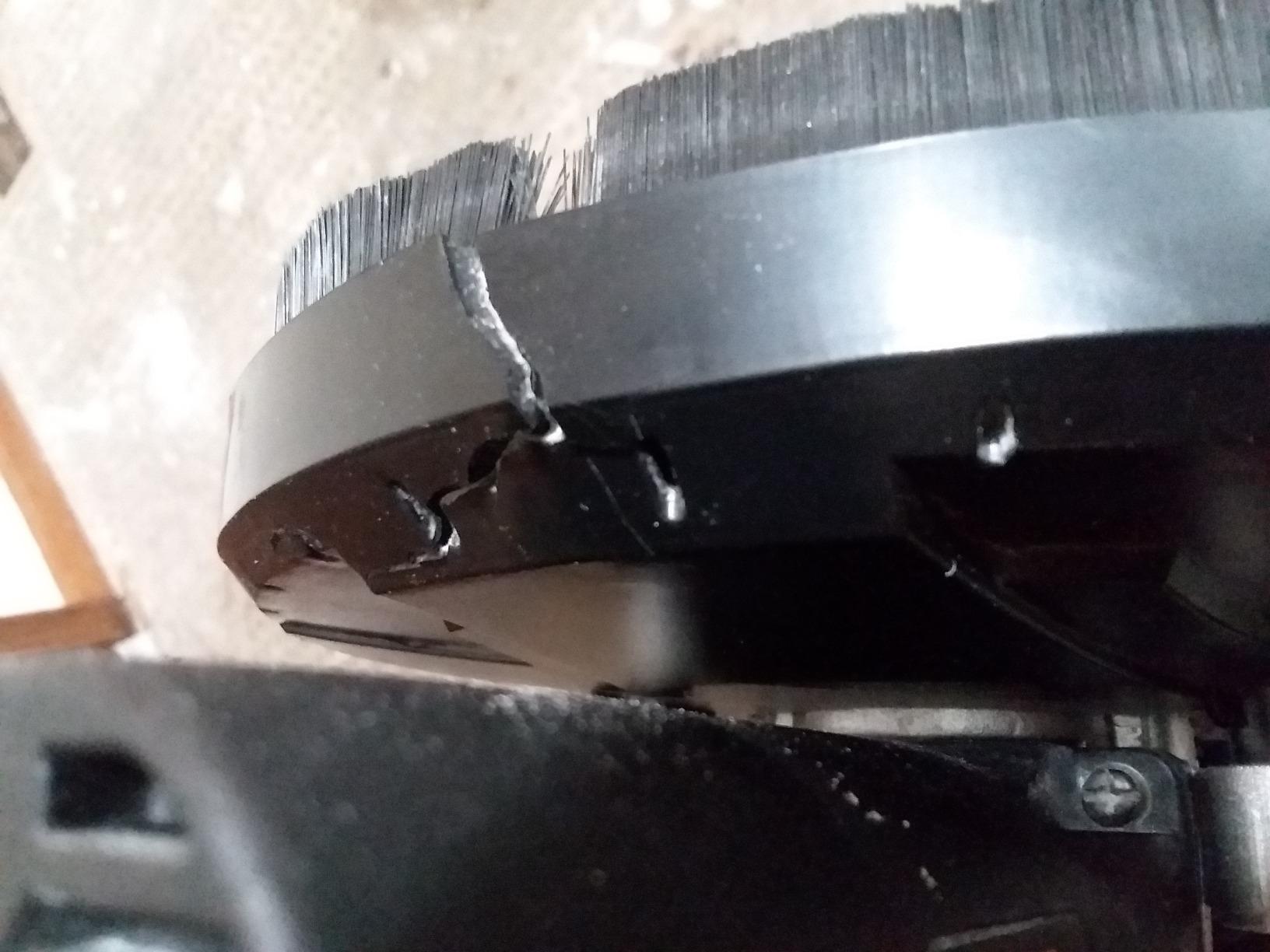
Technically it is the least exotic design here, a 120V corded unit on a telescoping tube with a 15 ft dust hose. The dust port is a genuine port rather than a bag, and pairing it with a shop vacuum is what turns it into a near dustless machine. Straight off the box it is not self-sufficient, so budget for a vacuum if you care about cleanup. On very high ceilings or over a staircase the 5 ft reach runs out quickly and a pole head or a longer extension is the better tool.
When to reach for it instead of anything else
Choose the 6369 when you are finishing taped joints on a standard-height ceiling and want one tool that covers sanding, scuffing and light texture work.
Skip it if your ceiling is much above 9 ft, if you plan a full popcorn knockdown, or if you already own a shop vacuum and want the lightest pole option instead. The dust system is good rather than exceptional, and it is not cordless.
What gave me pause after a month of use
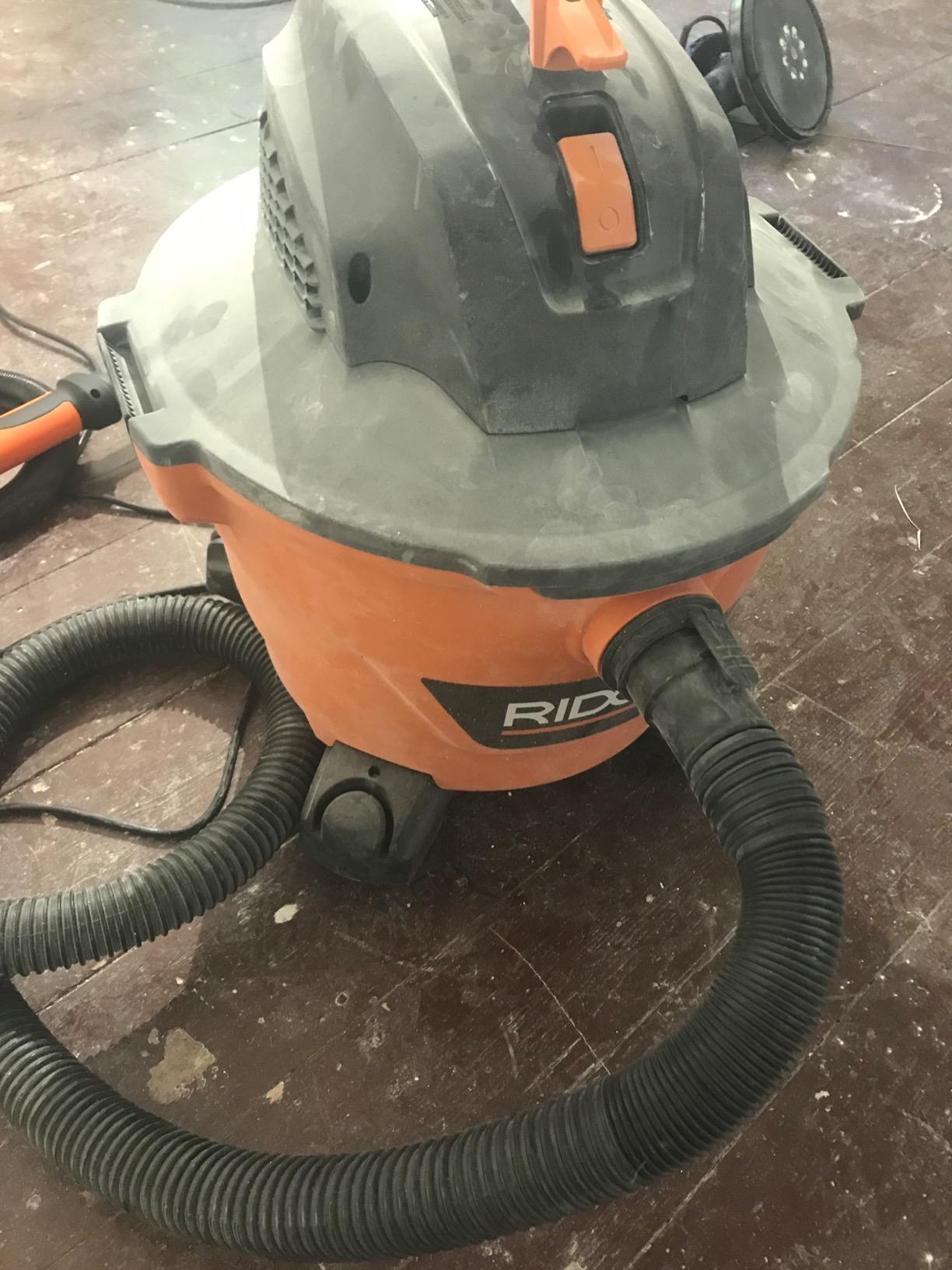
The hose connection is the weak point. It is a friction fit that needs a firm twist every time you reconnect, and I caught myself checking it after the first few ceiling passes because the alternative is a room full of dust. The 9 lb body also sits at the head, so on long passes the torque through your forearms builds faster than with a unit that hangs the motor lower.
Neither issue changed my recommendation, and at a 4.4 rating across more than 5,200 reviews the feedback pattern is consistent. It is simply the most complete package of ceiling capability in this roundup for the money.
2. DEWALT DCE800B Cordless Drywall Sander – Best Cordless Option for Ceilings
DEWALT 20V MAX Cordless Drywall Sander, Tool Only (DCE800B)
20V brushless motor
9 inch pad
Telescoping shaft
8.6 lb
Variable-speed dial
Pros
- Takes the most pain out of long overhead sessions
- Brushless motor runs cool and needs no brush changes
- Wireless Tool Control starts a paired extractor on command
- Quiet operation with a soft start and no power rattle
- Telescoping shaft reaches into closets
Cons
- On-tool dust housing has no intake holes so extraction depends on an external vacuum
- Sold as tool only so battery and charger are extra
- Short of reach for 9 ft ceilings
The cordless argument is stronger than it sounds on a ceiling. A power cord is not just something to drag around; it snags on ladder rungs, on scaffolding, and on ceiling joists in an unfinished space, and every snag is a moment where the spinning pad tips and leaves a swirl mark. Contractors running this unit report sanding several times faster than with a corded machine, largely because there is no cable to manage overhead.
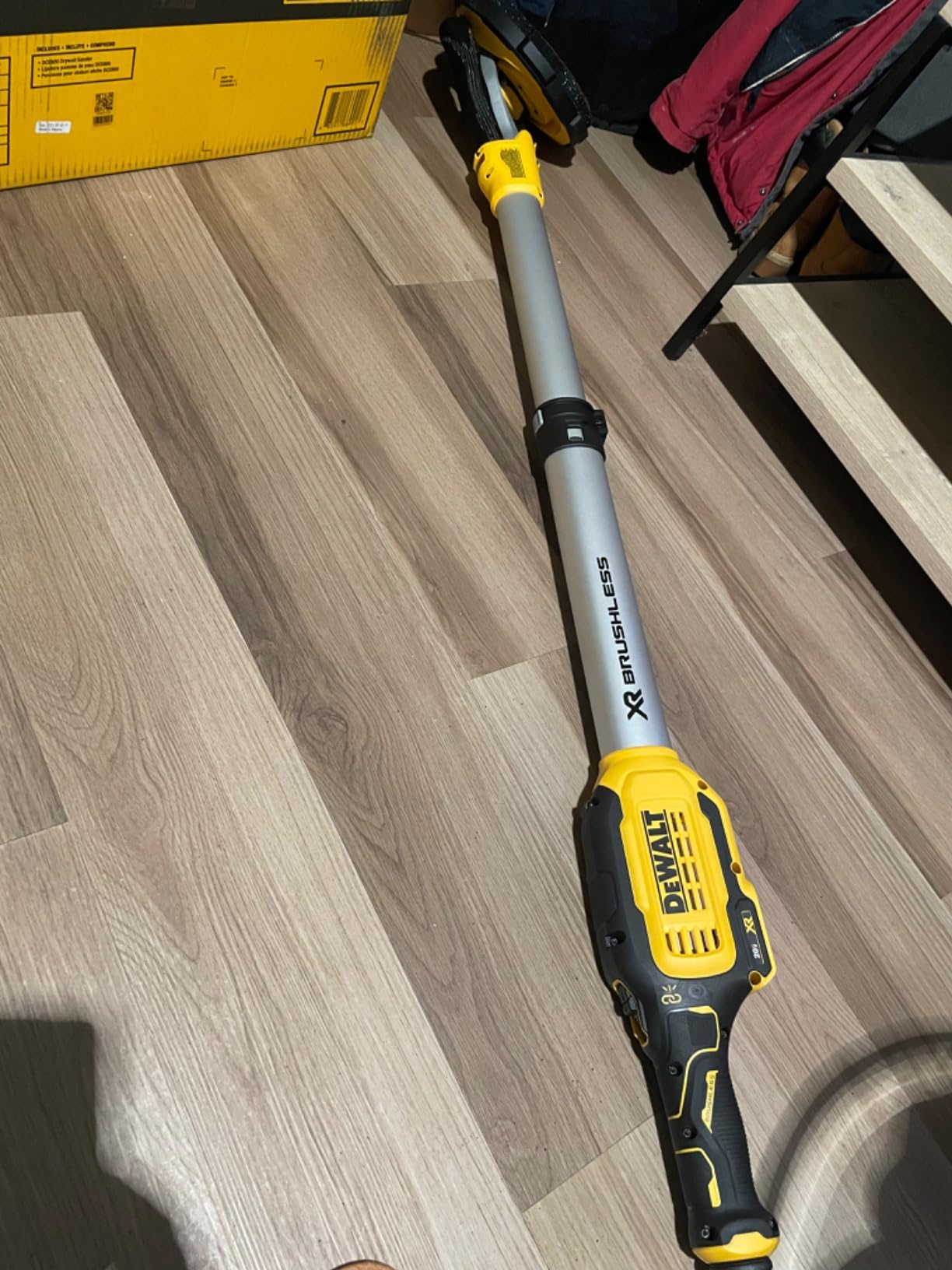
The brushless motor is the other real advantage. It runs cooler under load, needs no brush replacements, and pairs with a variable-speed dial so you can match speed to the compound. One reviewer reported covering roughly 3,600 square feet of ceiling on a single 6Ah battery, which tells you the runtime headroom is generous if you already own the platform.
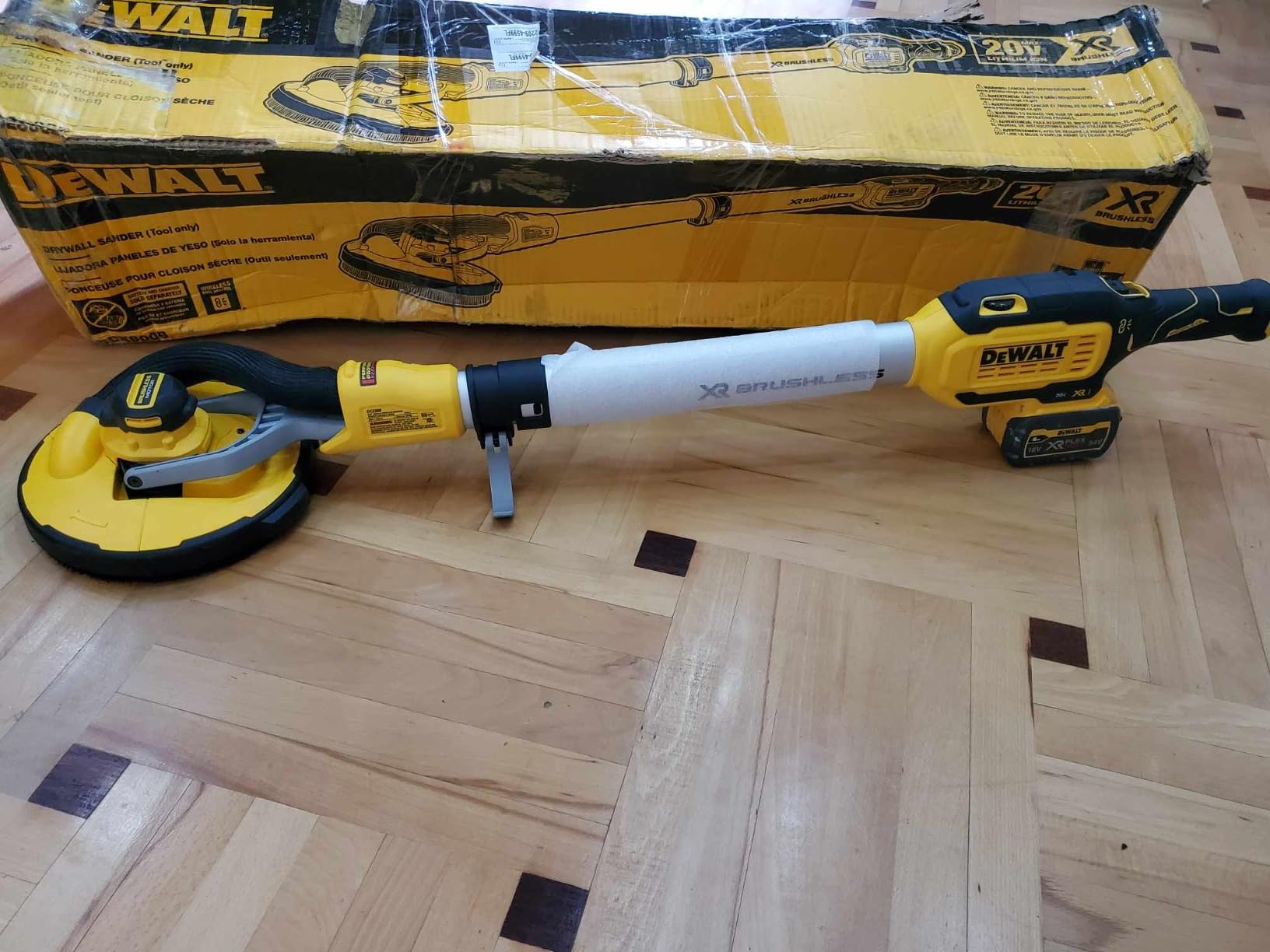
There is a genuine design problem worth flagging, and it is the most common complaint in the reviews. The on-tool dust housing has no intake holes of its own, so the built-in collection does not work as intended and you must run an external vacuum with a pre-separator to get the result the tool is capable of. If you do not already own a compatible extractor, that purchase is part of the real cost. Note also that the tool is bare, with no battery, charger or extractor included.
Who this suits and who should pass
This is the pick for someone already invested in a 20V battery platform, or for a pro crew removing the friction of cords entirely. The 8.6 lb weight is manageable and the shaft telescopes for confined spaces such as closets and stairwells.
Pass if you are buying your first drywall tool and do not yet own batteries for a platform. The tool is sold bare, so you are buying into a system before you have bought a sander, and reach falls short of the very high ceilings where a pole is essential.
Where it falls short in practice
Reach is the honest limitation. The telescoping shaft is not long, so a 9 ft ceiling still needs a ladder with an awkward angle that increases the chance of a gouge. Discs also wear faster on this unit than on slower machines, and there is no work light, so a dark ceiling means a work light clipped to your belt.
Despite those points, a 4.4 rating across 550 reviews from people who use it professionally is a strong signal, and the finish quality is the thing owners praise most.
3. Bosch GTR55-85 Drywall Sander Kit – Best Built Sander for Ceiling Work
Bosch GTR55-85 9 In. Drywall Sander Kit
4.5A corded motor
Ceiling-suction mode
Ultra-flexible head
9 lb
Pole and adapter included
Pros
- Build quality and sealed head stand apart from the generic machines here
- Ceiling-suction mode noticeably reduces felt weight overhead
- Ultra-flexible head gives smooth chatter-free passes
- Controls sit under your hand so speed changes need no grip shift
- Quick-release extension pole switches between ceiling and wall work
Cons
- No LED work light around the head
- Extension pole clamp does not snap securely and can loosen
- 4.5A motor feels underpowered for full-time professional finishing
This is the one I would put in a van as a permanent tool rather than buy for a single job. The construction is visibly a step above the generic machines here, and the feature that most improves ceiling work is ceiling-suction mode, which changes how the head sits against the surface and measurably reduces the weight you feel through the handle. On a long ceiling pass that difference is the whole game.
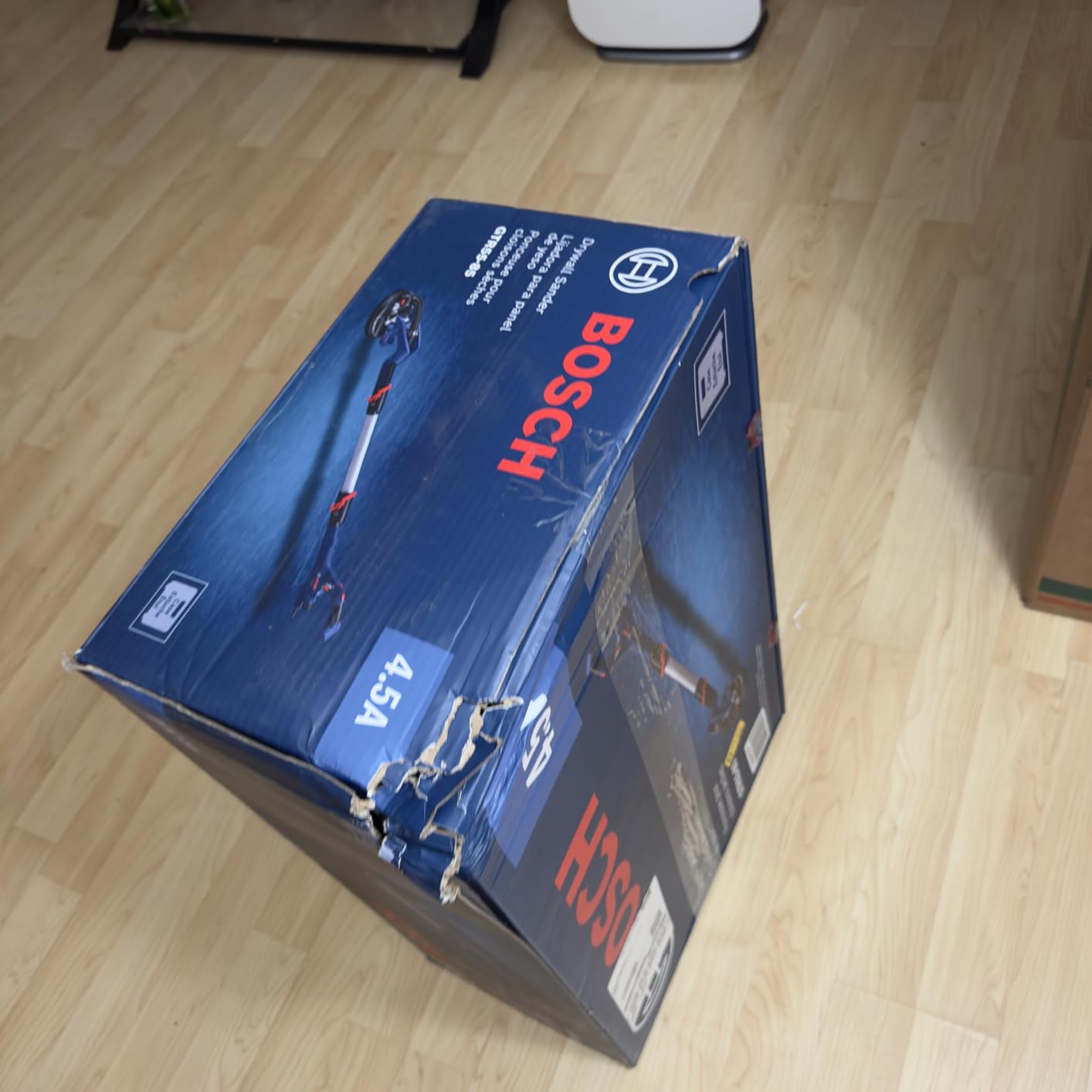
The ultra-flexible head is the other ceiling-specific advantage. It articulates through a wide range while you move, so the pad stays in contact across a flat ceiling instead of rocking and chattering at the edges of each pass. Chatter is what produces swirl marks, so this is a finish-quality feature as much as a comfort feature.
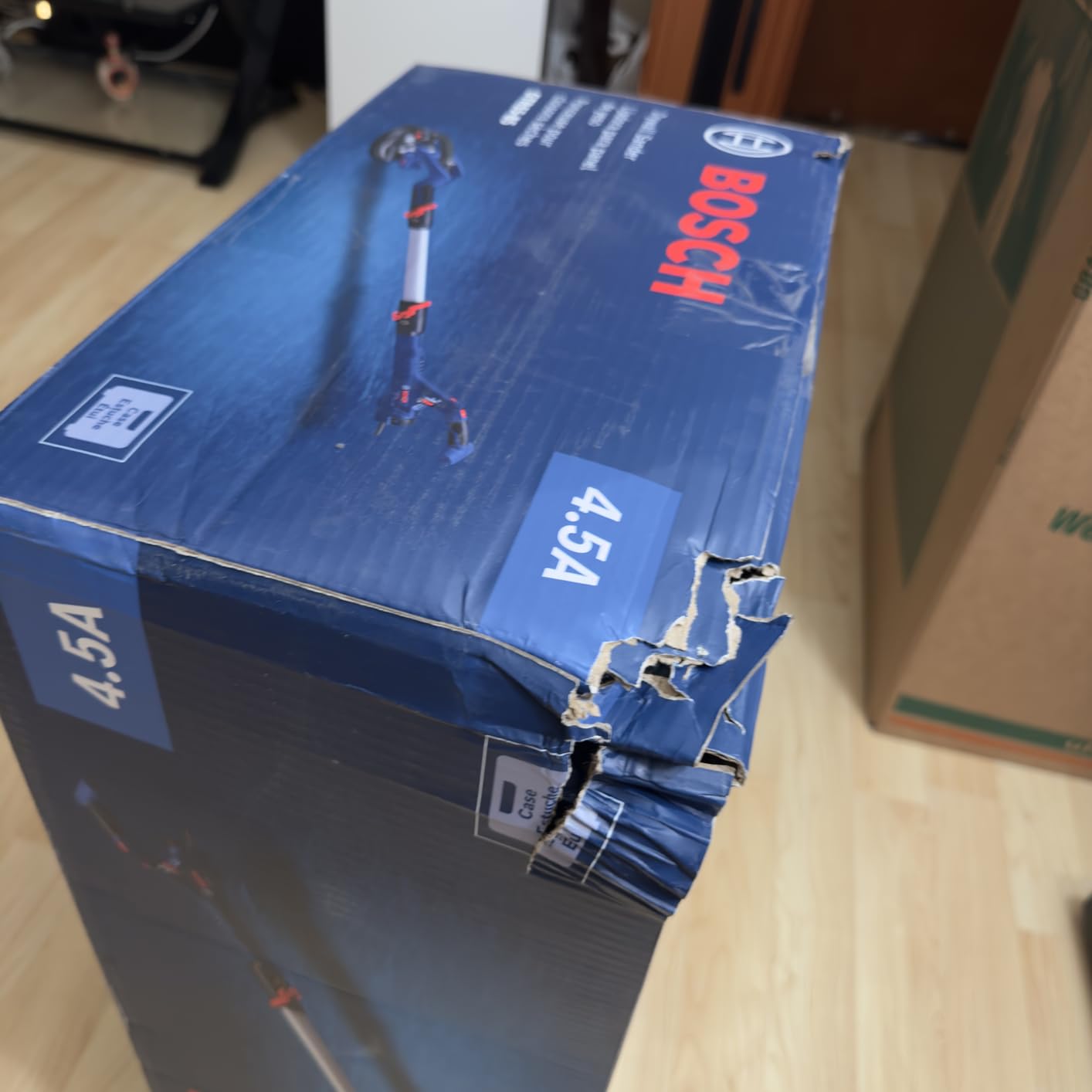
It is sold as a kit, and that matters more than it first appears. The box includes a soft backing pad, an extension pole, a vacuum hose adapter, cable clips, a wrench and a carrying case. Out of the box it is ready for ceiling work, which is not true of every high-end sander.
Where it earns its place
Remodelers doing repeated ceiling work in occupied houses will appreciate the low airborne dust and the build quality. If you are sanding ceilings in a space you need to keep habitable, that combination of sealed head and airflow control is the most developed in this roundup.
It is also the choice for anyone who would rather own one tool for many years than replace it between renovations, which is where the sealed head, the metal construction and the serviceable pole hardware pay off.
What buyers complain about
The most requested missing feature is a work light. Several owners specifically asked the manufacturer for an LED halo around the head, which is now standard on several cheaper machines here. The extension pole clamp is the mechanical weak point, and reviews describe it loosening during use.
Corners and the plastic surround around the head can scuff adjacent surfaces, and at 4.5A some reviewers feel the motor runs out of steam during continuous professional finishing. At 4.3 across 126 reviews, the ratings are solid but the sample is small, so this is a tool to buy on build quality and features rather than on volume of owner feedback.
4. Hyde 09977 Radial Pole Sander Head – Top Rated for Overhead Finishing
Hyde 09977 Radial Sander
Manual radial head
9 inch hook-and-loop
Pivoting hinge
Acme pole thread
Abrasive not included
Pros
- Highest rating in this roundup at 4.6 across 3192 ratings
- Pivoting hinge stops the head flipping and gouging the ceiling
- Extremely light for long sessions on a pole
- Accepts any standard 9 inch hook-and-loop abrasive
Cons
- Head only so an extension pole must be purchased separately
- No motor so it cannot remove texture or heavy buildup
The most useful idea in this roundup is one people miss. You do not need power for the final pass on a ceiling. Once the high spots are knocked down and the ridges are level, a light manual radial head on a pole gives you more control than any motorised sander, and your arms last much longer. The Hyde 09977 is the highest rated product here at 4.6 across 3,192 reviews, and the reason is that pivoting hinge.
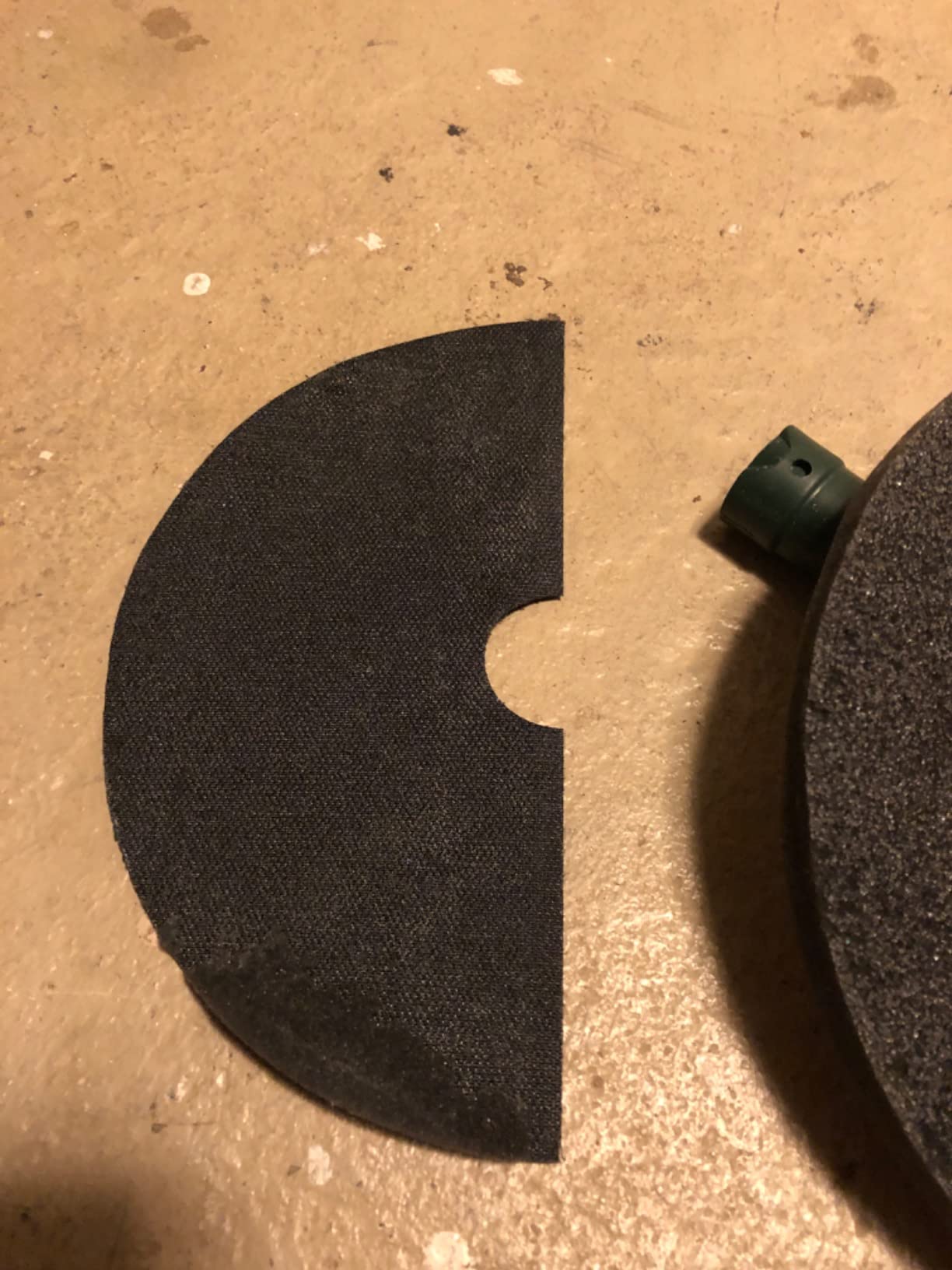
Most hand sanding on a pole means the head tries to flip when you push at an angle, and a flipped head digging into dried compound is exactly how you cut a groove. The 09977 has a hinge that keeps the round disc in contact instead of letting it tip, and the round shape adds a second layer of protection. For a final finish pass, that is worth more than horsepower.
It is also one of the lightest radial sanders on the market, and our team preferred it for long overhead sessions for a simple reason: when a tool is this light, you can work methodically at a 9 ft ceiling without the fatigue spiral that makes people lean harder and gouge.
What it is genuinely good for
Finishing fresh joint compound on a ceiling, and second passes on high walls. Because you control all the pressure by hand, it is very forgiving on thin compound and will not cut through a paper face the way a powered disc can.
It pairs well with a powered sander, not instead of one. Knock down the ridges with a telescoping unit, then use this to blend the transitions and take the sanding to a uniform finish.
What to know before you order
You are buying a head, not a kit. It attaches to an Acme-threaded pole, and the pole is not included, so add that to the list. It also accepts any standard 9 inch hook-and-loop abrasive, which is a genuine advantage because you are never hunting for a proprietary pad.
It has no motor, so it will not touch popcorn texture, paint or a thick buildup. Reaching for it on a textured ceiling is a waste of a Sunday.
5. IMQUALI 8-Amp Popcorn Ceiling Removal Tool – Best for Textured Ceilings
Drywall Sander, IMQUALI 2026 Upgraded 8-Amp Popcorn Ceiling Removal Tool
8-Amp copper motor
800-1800 RPM
10-hole sanding disc
3.9-5.5 ft reach
8.6 lb
Pros
- Best sellers rank #1 in Power Disc Sanders
- reflecting strong demand
- Users report clearing textured ceiling at 2-3 sq ft per minute
- Built-in vacuum captures most dust on its own and more with a shop vac
- LED strip and telescopic rod handle dark high work
- 8.6 lb sits at the lighter end of this list
Cons
- Arm fatigue sets in on large ceiling jobs
- Confusing instructions and thin accessories in the box
- Folding latch can sit loose and leak dust
If your ceiling has popcorn or an older spray texture, this class of machine is the right answer, and this is the most capable of them here. The 10-hole sanding disc pulls far more air through the pad than a standard disc, and combined with the built-in vacuum it collects the large majority of debris on its own, improving further when you attach a shop vac. Texture debris is heavy and fast-moving, and dust that size will find every gap in a room otherwise.
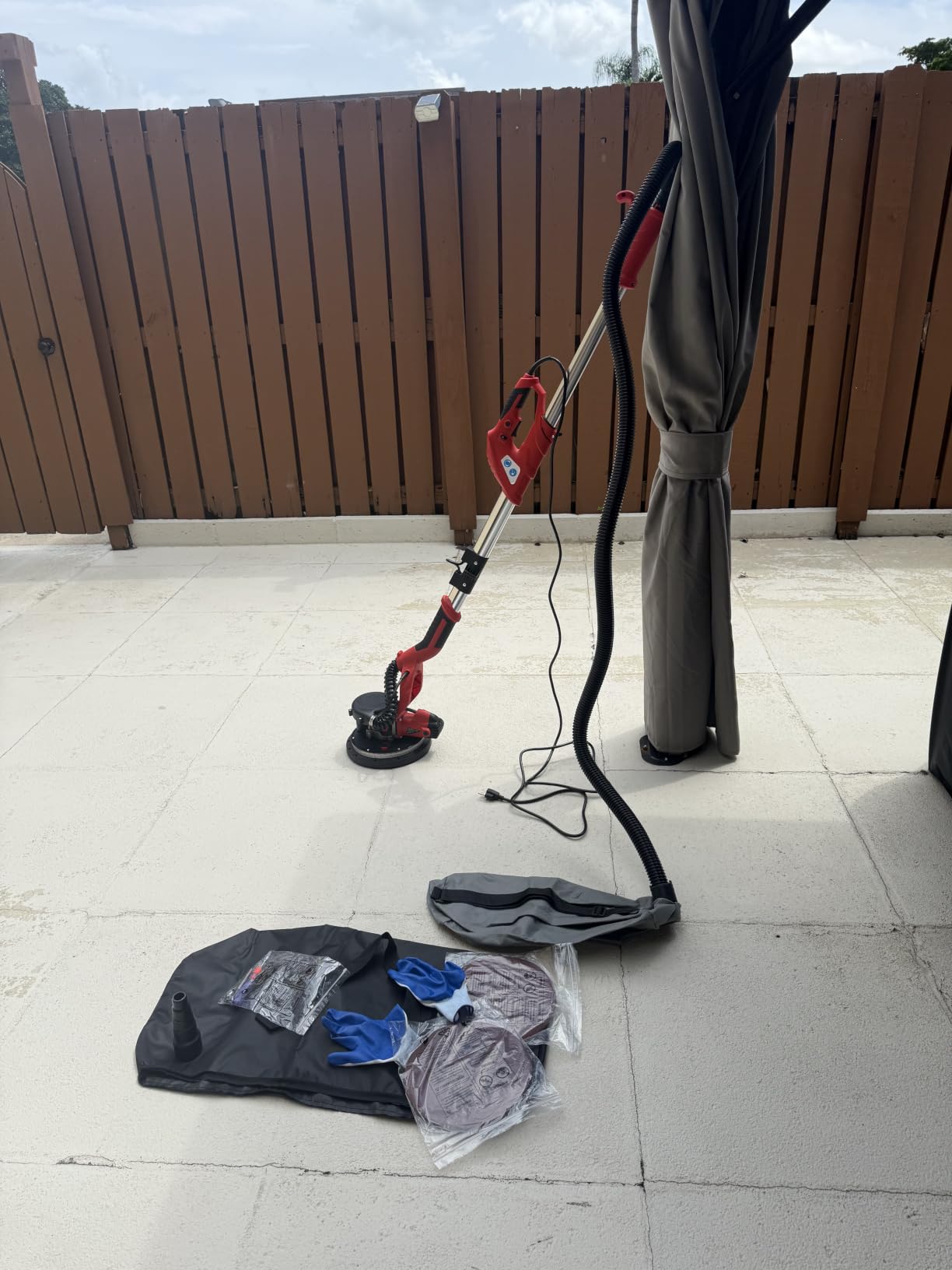
Throughput is the headline. Users working textured ceilings report clearing between 2 and 3 square feet per minute once they settle into a rhythm, which turns a large living room from a multi-day grind into an afternoon. The 7-level speed control from 800 to 1800 RPM lets you start aggressive on the texture itself and drop down immediately to blend the edges of the room.
The telescopic rod extends from 3.9 ft to 5.5 ft, and a 360 degree LED light strip helps you spot the ridges and low spots that texture hides. The detachable corner edge chassis helps at the perimeter. Twelve sandpapers in six grits are included, and there is a 12-month warranty.
Plan for the re-mud question
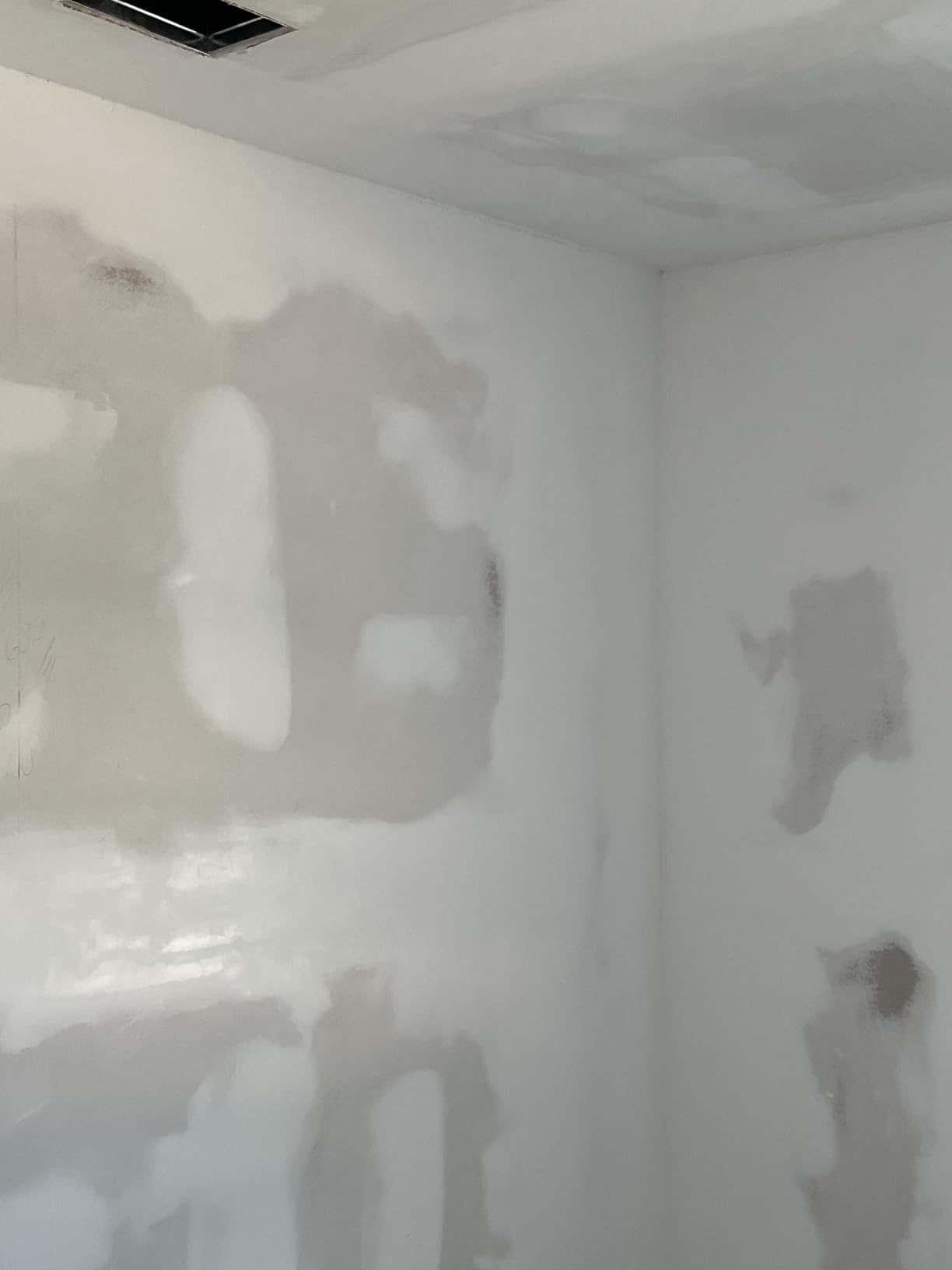
Texture removal with a sander exposes uneven plaster underneath, so expect to skim coat the majority of the ceiling. Anyone who tells you a sander alone will save you a full re-mud has not done it. What it does save you is the grinding and the mess, and for a heavily textured ceiling that is the expensive part.
The right technique matters: knock the texture down hard, skim, then finish sand. Trying to sand a textured ceiling smooth in one pass is how people end up with a ceiling that looks worse than the popcorn.
Where it frustrates owners
At 8.6 lb it is not light over a large ceiling, and the recurring review theme is arm fatigue. The instructions are also widely criticised as confusing, the included accessories are thin, and the carry bag only fits the accessories rather than the machine. A minority of buyers report dust escaping the hose connection and the folding latch sitting loose after repeated assembly.
It holds a 4.1 across 2,082 reviews, and the rating is pulled down by those assembly and sealing issues rather than by the machine failing.
6. Gioventu SZB-225FV-2 – Best Long-Reach Ceiling Sander
Drywall Sander, Electric Drywall Sander with Vacuum, Automatic Dust Removal, 7 Variable Speed, 900-1800RPM, 26’ Power Cord, Labor-Saving Handle and Patented Fixture for Ceiling Sanding, LED Light
780W copper motor
900-1800 RPM
Self-leveling head
6.2 ft reach
11.7 lb
Pros
- Patented self-leveling fixture keeps the head square for ceiling work
- Longest extension in the roundup at 6.2 ft
- 780W motor across 7 speeds from 900-1800 RPM
- Generous kit with safety gear and two dust hose lengths
- 3-year factory warranty and 26 ft cord
Cons
- One of the heavier powered bodies here at 11.7 lb
- Smaller review base than the better rated options
Reach is the feature that separates this one, and on a ceiling reach is everything. The aluminium alloy extension rod extends the handle to 6.2 ft, the longest in this roundup, and the detachable 360 degree rotating sanding disc helps you get into dead angles. Combined with the patented fixing lock structure that self-levels the head, it can keep a pad flat on a ceiling without you fighting the tool to hold it square.
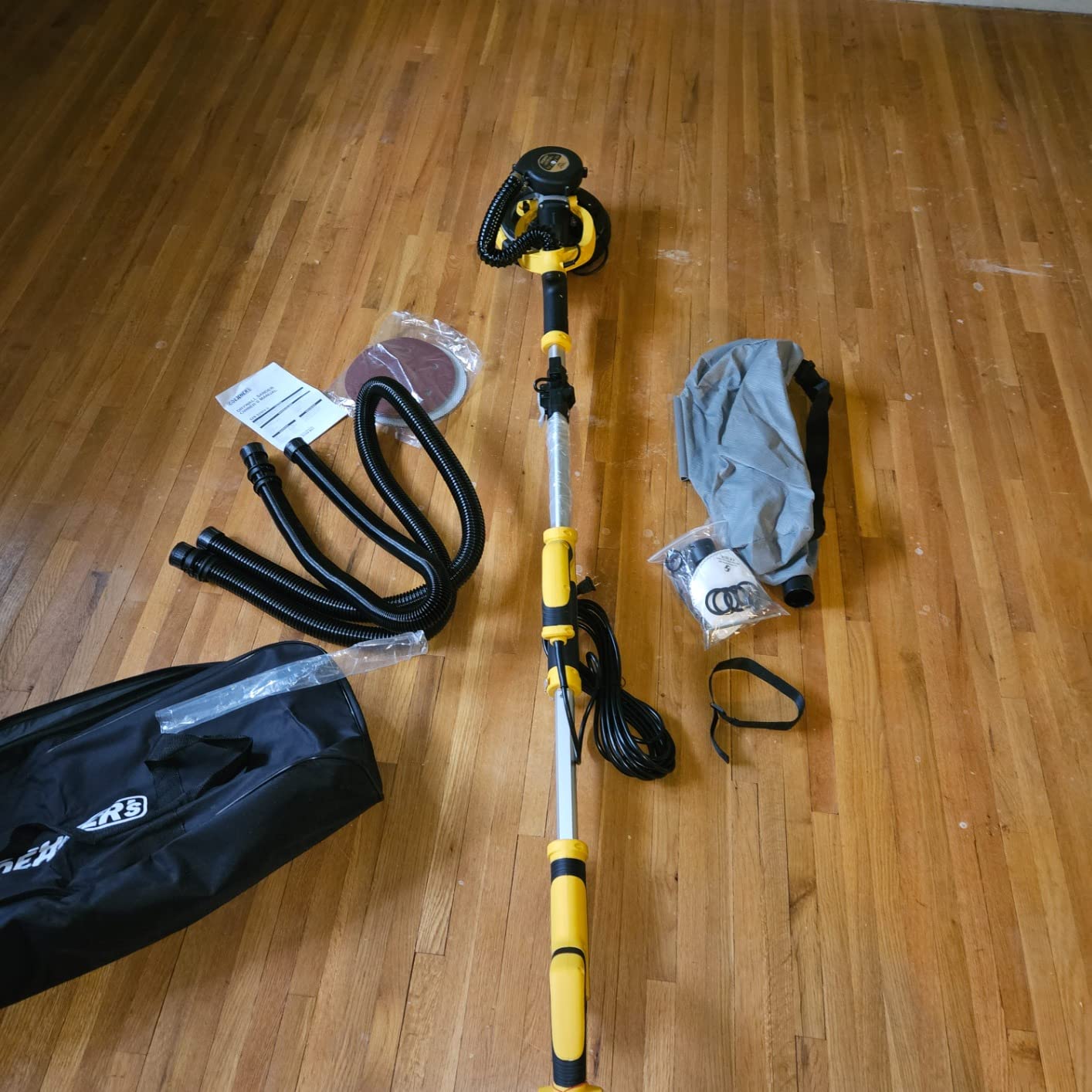
That self-leveling head is a real solution to the problem that makes cheap ceiling sanders frustrating. Most machines need you to hold the head at exactly the right angle; this one corrects for you, which means a smoother result on a first-time ceiling job. The 780W pure copper motor runs 7 speeds from 900 to 1800 RPM, and the 26 ft power cord means you rarely need an extension lead.
The dust system is thorough in the box. You get a 7 ft dust hose, a dust bag and a 14 ft flexible tube for a shop vac, plus hose adapters, so a proper extraction setup is possible without buying anything extra. The kit also includes six sandpapers, three mesh sandpapers, a safety kit and a carrying bag, backed by a 3-year factory warranty.
Where it makes sense
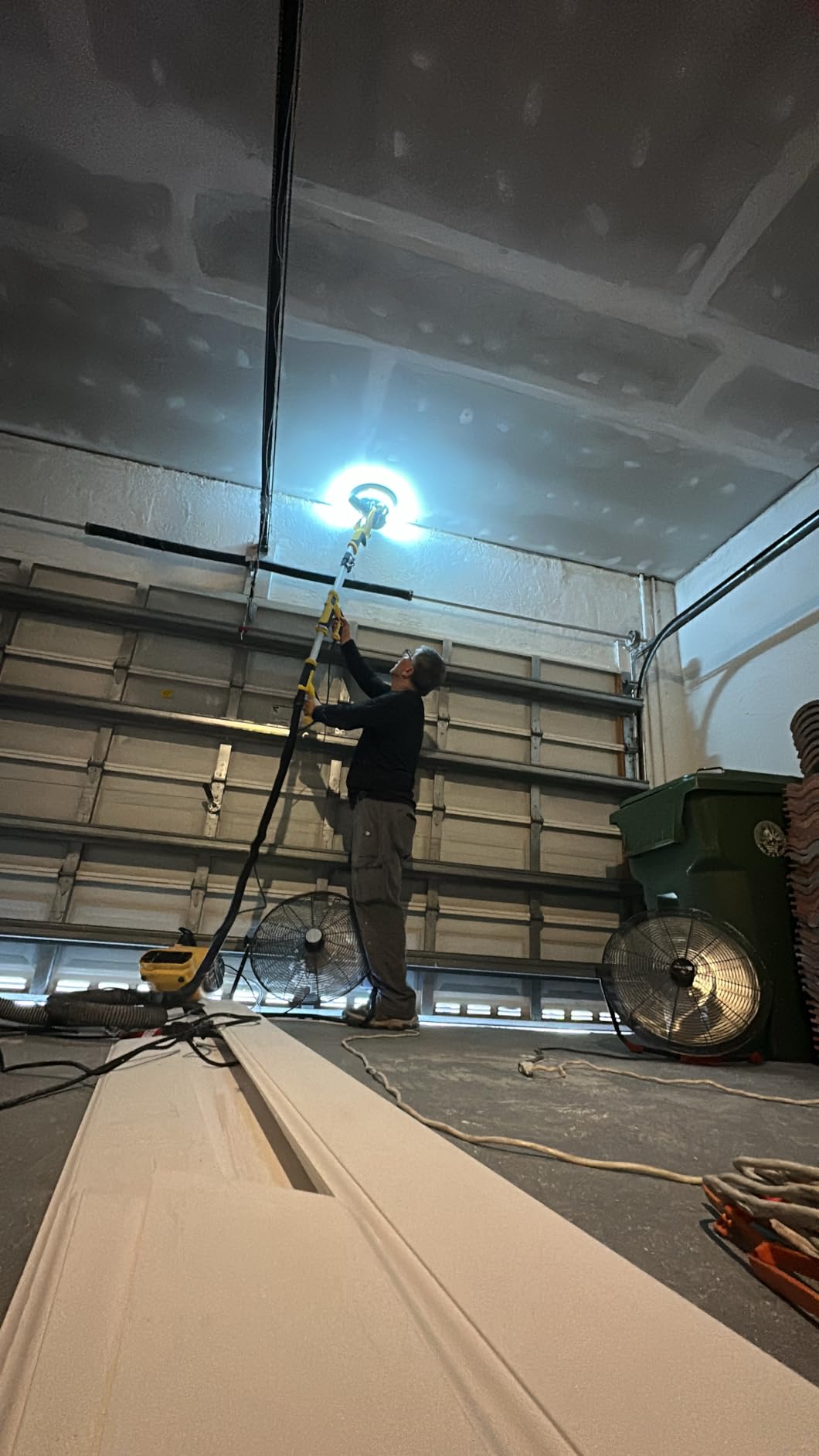
High ceilings, vaulted spaces, stairwells and rooms where you would otherwise be balancing a ladder with a spinning sander. If you can avoid a ladder for the whole job, this is the tool that gets you there.
It is also a fair choice for a first powered ceiling sander, because the self-leveling head forgives a beginner holding it at an angle.
The trade-off you are making
11.7 lb is heavy. That weight is the direct price of the motor, the longer extension and the levelling mechanism, and over a full afternoon on a ceiling you will feel it in your shoulders. Buyers also note the review base is thinner than the higher-rated units, so there is less long-term owner feedback to draw on.
At 4.3 across 464 reviews it is a well-liked machine whose reputation is built on reach, so it fits neatly into the long-ceiling gap between a 5 ft telescoping unit and a full pole system.
7. MYTOL H21K3 Six-Speed Sander – Best for Dark Ceiling Spaces
MYTOL 7.2A Drywall Sander with Vacuum, LED, 6-Speed
7.2A copper motor
900-1800 RPM
Annular LED belt
Handle 57-67 in
Foldable frame
Pros
- Two-layer annular LED light band makes defects visible in dark ceilings
- 6 speeds from 900-1800 RPM with a 7.2A motor
- 3-in-1 dust system with ring brush and 10-hole disc
- Foldable handle and retractable rod extend from 57 to 67 inches
- 9 inch disc rotates 360 degrees with a detachable base
Cons
- Heavy body at 7.19 kg for overhead work
- Around one in ten reviews reports dust leaking at the joints
The LED light band is the reason this one is on the list. On a ceiling, the light is coming straight back at you, so every ridge, hollow and swirl mark is thrown into sharp relief and you can correct it as you go. Ceilings in basements, closed rooms and unlit renovations are where this feature earns its keep, and the 360 degree light strips on the IMQUALI and KUPERIA are the closest rivals.
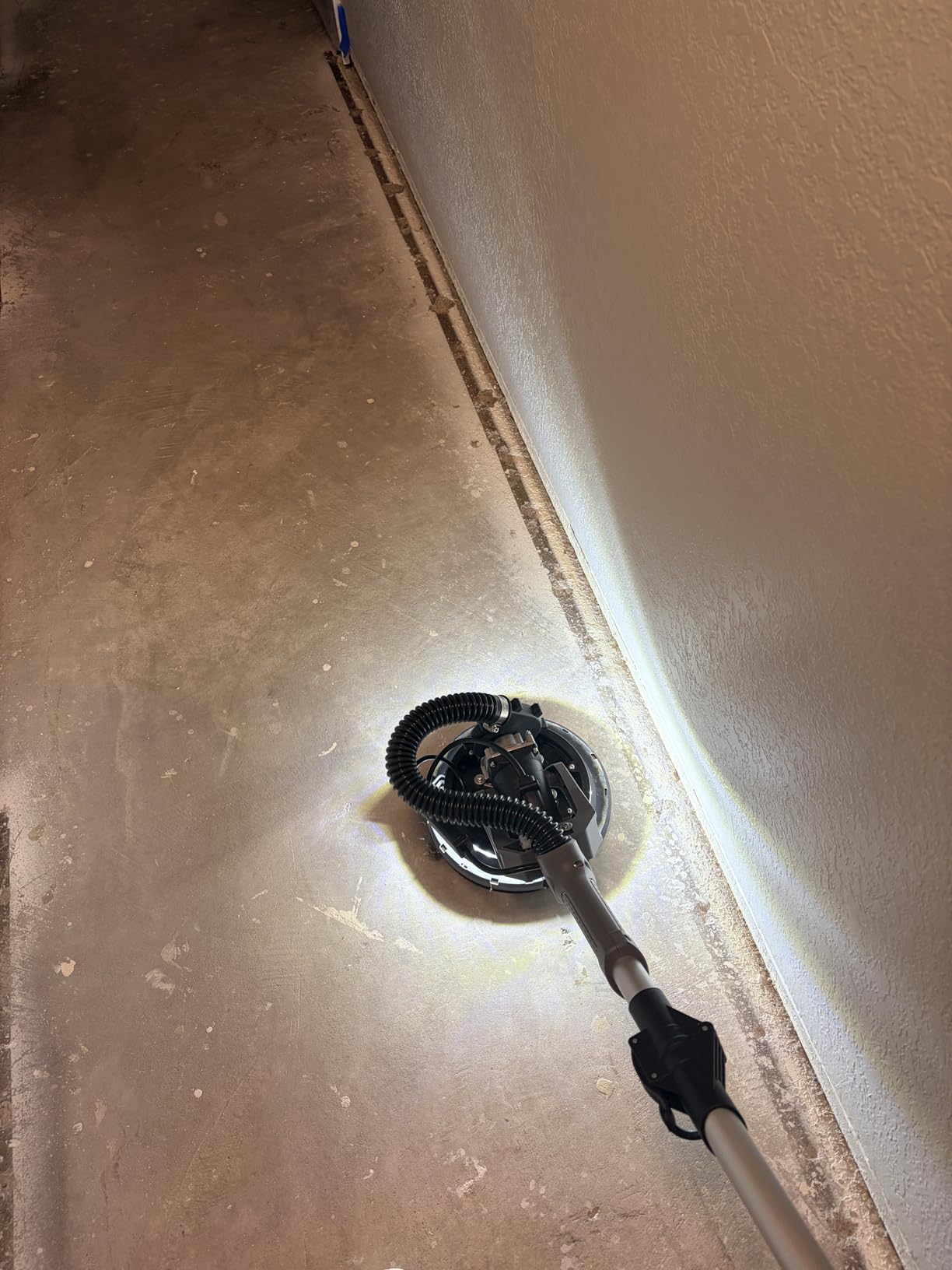
The dust system is thoughtfully built. A vertical suction arrangement, a 10-hole sanding disc and a 3-in-1 ring brush, hose and bag setup together pull more debris out of the work zone, which matters on a ceiling where dust falls straight down onto you. The 9 inch disc rotates 360 degrees and the base detaches, which helps at perimeter walls and inside corners.
Speed control is unusually granular, running 900 to 1800 RPM across six settings on a 7.2A copper motor. The handle folds for storage and the retractable extension rod takes it from 57 to 67 inches, which is enough for most residential ceilings without a ladder.
Who should pick it
Anyone working in poor light, or anyone who wants a slow, controlled finishing speed for delicate compound. The granular speed steps make it easy to settle on one RPM and stay there, which reduces the chance of cutting through a paper face.
The foldable frame also makes it a more sensible choice than most for someone with limited storage or a shared garage.
What holds it back
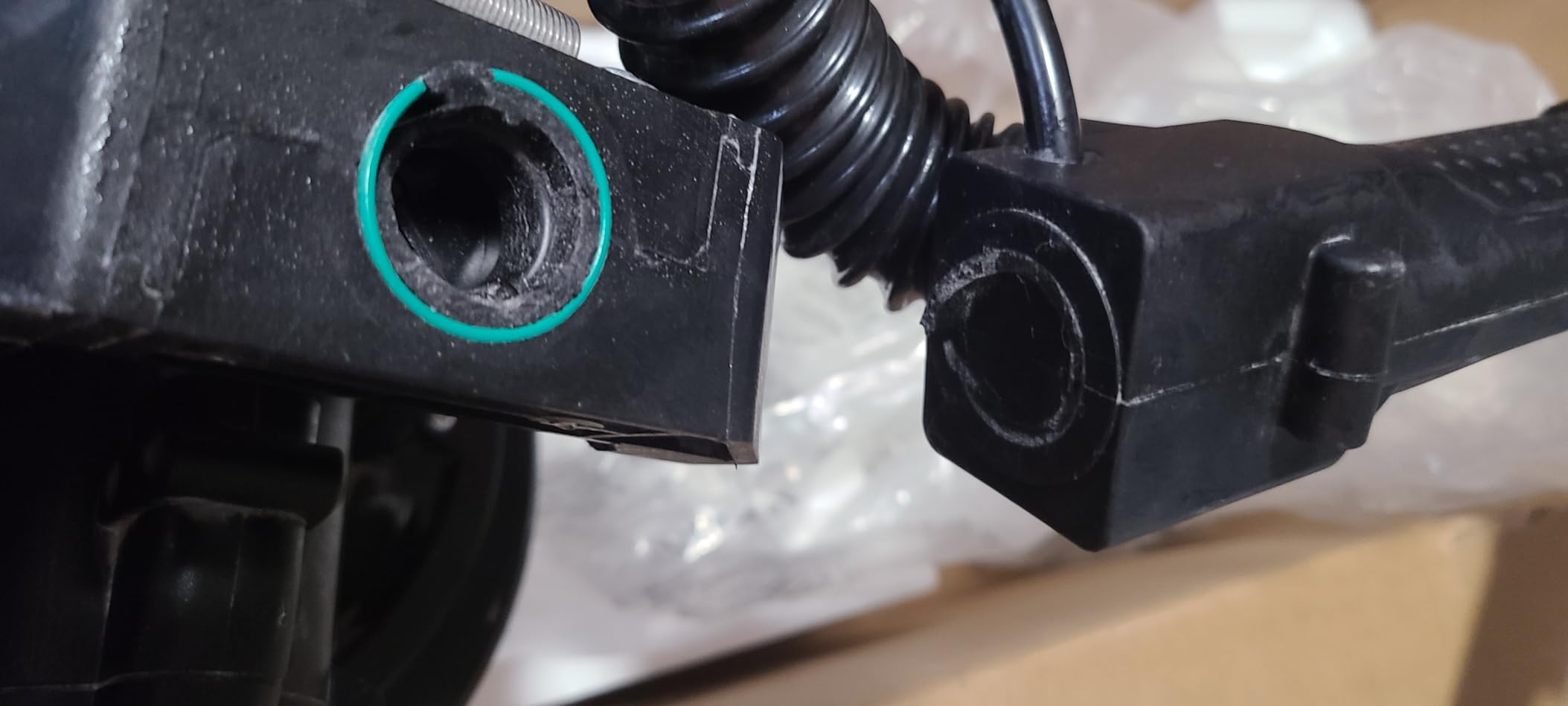
Weight. The listed figure of 7.19 kg, roughly 15.9 lb, makes this the heaviest powered body in the roundup, and that is felt directly overhead on a large ceiling. It is also the least refined of the dust seals, with around one in ten reviews reporting dust leaking at the joints, so a shop vacuum connection matters more here than elsewhere.
The 4.1 rating across 1,915 reviews reflects a machine that does everything competently and one thing exceptionally well, rather than one that wins on any single measure.
8. ZENY 800W Variable Speed Sander – Best Value Ceiling Sander
ZENY 800W Electric Drywall Sander Adjustable Variable Speed w/ 6 Sand Pads
800W motor
1000-2000 RPM
Locking switch
8.8 inch disc
12.6 lb
Pros
- Motor mounted at the base rather than the top keeps weight low in the head
- Locking switch holds a set speed without holding the trigger
- Highest RPM ceiling of any unit here at 2000
- Removable base and brush segment reach edges and corners
- Rubberised ergonomic handle with thumb-accessible switch
Cons
- Heavy at 12.6 lb for overhead work
- Vacuum tube from head to motor is undersized and limits pickup
- Some users connect a vacuum directly to the head instead
Two design decisions make this the most interesting budget machine here. The first is the locking switch, which holds a chosen speed without your finger staying on the trigger. On a ceiling that is a meaningful ergonomic win, because sustained trigger pressure is one of the main reasons overhead sanding wears people out after twenty minutes.
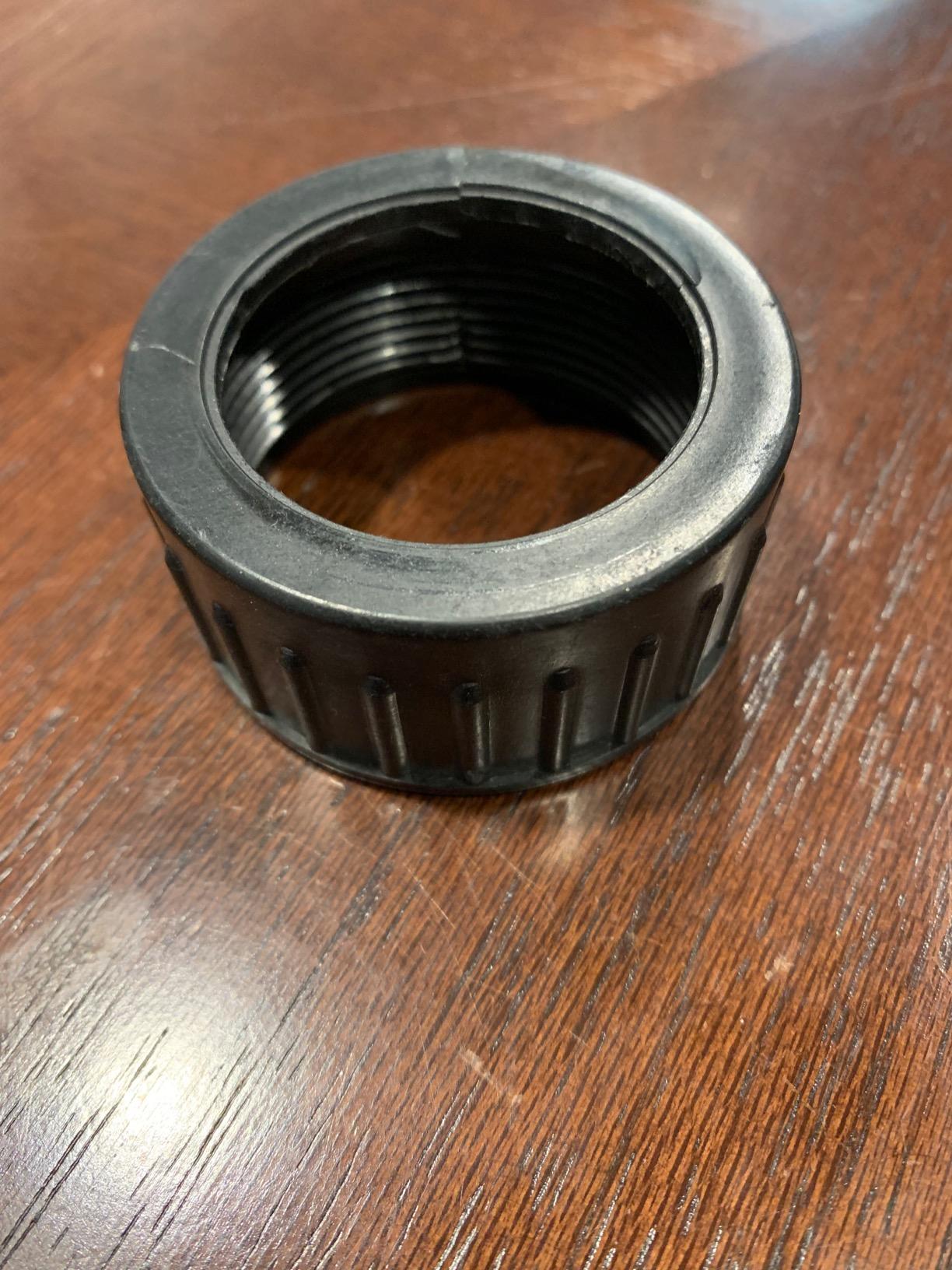
The second is the motor position. Mounting it at the base rather than the top keeps the centre of gravity lower in the head, which improves balance at full extension. That is a real ceiling consideration, and it is unusual at this level. Add a rubberised ergonomic handle and a thumb-accessible switch, and the control layout is well suited to long overhead passes.
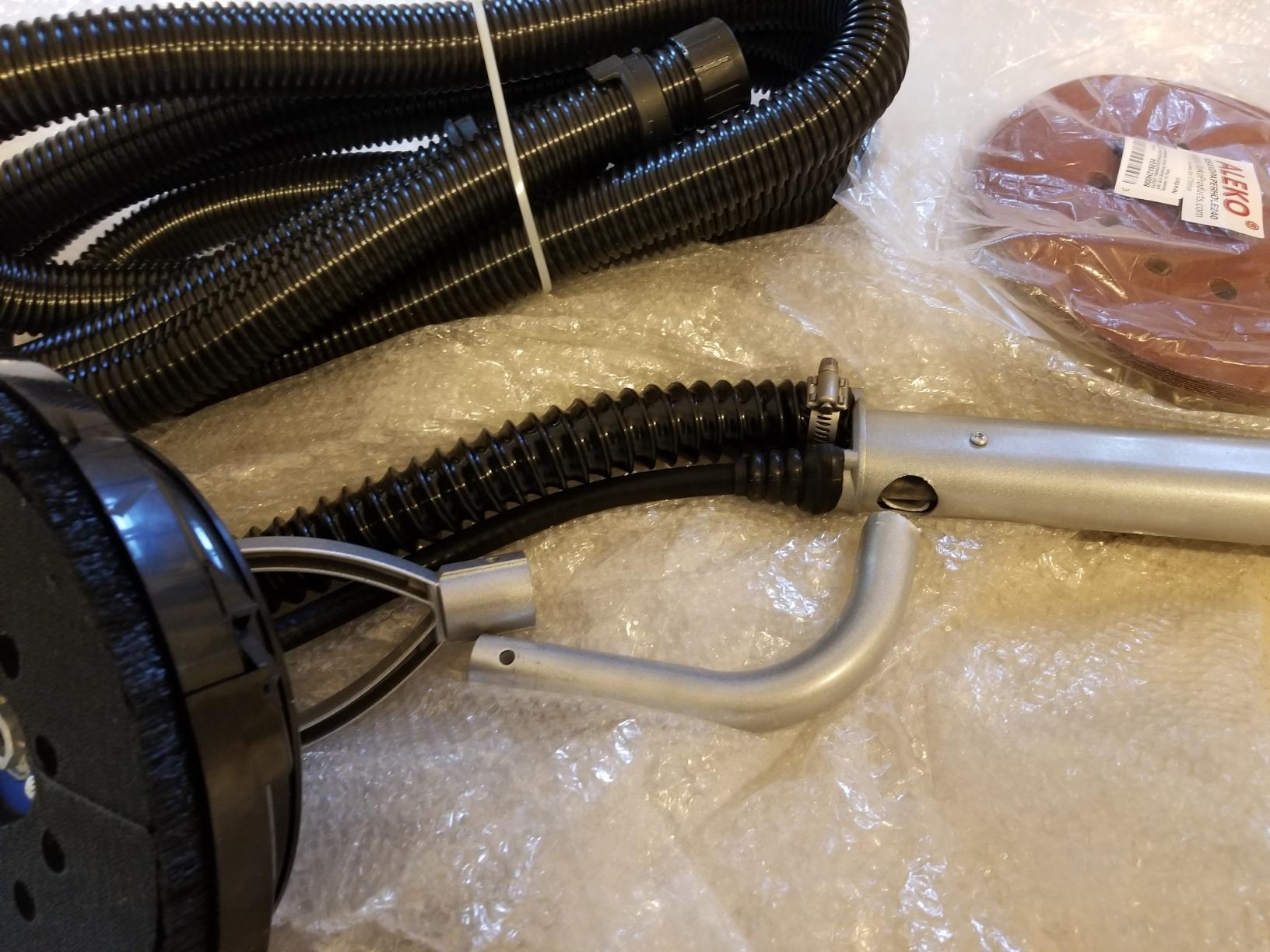
Speed range runs from 1,000 to 2,000 RPM across six settings, the highest ceiling in this list, which makes it a capable tool for knocking down texture as well as finishing. The removable brush segment and bottom let you sand edges and perpendicular surfaces, and the box includes a hose, six grit hook-and-loop discs, two brushes, a wrench, a screwdriver and a manual.
Where it earns its place
This is the pick for a DIYer who wants a genuinely capable ceiling sander without stepping up a tier, and for anyone who spends long sessions overhead and will notice the trigger relief. The included kit is unusually complete for the money.
It handles both finish sanding and moderate texture work, so one tool covers most of a single-room project.
The honest drawbacks
12.6 lb is heavy for overhead work, and only the MYTOL carries more mass in this roundup. Plan to take breaks rather than pushing through a full ceiling in one go.
The dust path is the bigger issue. The vacuum tube running from the head to the motor is undersized, which limits pickup, and a number of owners work around it by connecting a vacuum directly to the sanding head instead. Plan your extraction around that rather than trusting the supplied tube.
At 4.4 across 413 reviews it is well rated for what it is, and the combination of a locking switch, a low-mounted motor and a full accessory kit makes it a strong per-pound ceiling tool.
9. KUPERIA 8.5-Amp Ceiling Sander – Best for Grid Abrasives
Drywall Sander Tool, KUPERIA 8.5 Amp Popcorn Ceiling Removal Tool, Orange
8.5A copper motor
800-1800 RPM
6 grid plus 6 basic sheets
Rod 3.9-5.5 ft
8.5 lb
Pros
- Highest amperage figure in the roundup at 8.5A
- Grid sandpapers rated three times more durable than basic sheets
- 12 abrasive sheets included for real grit flexibility
- Telescopic rod from 3.9 to 5.5 ft removes most ladder work
- 360 degree LED strip reveals flaws in low light
Cons
- Too heavy overhead for more than a few minutes at a stretch
- Poor access into edges and corners needs manual follow-up
- A minority report dust escaping the tubing and bag
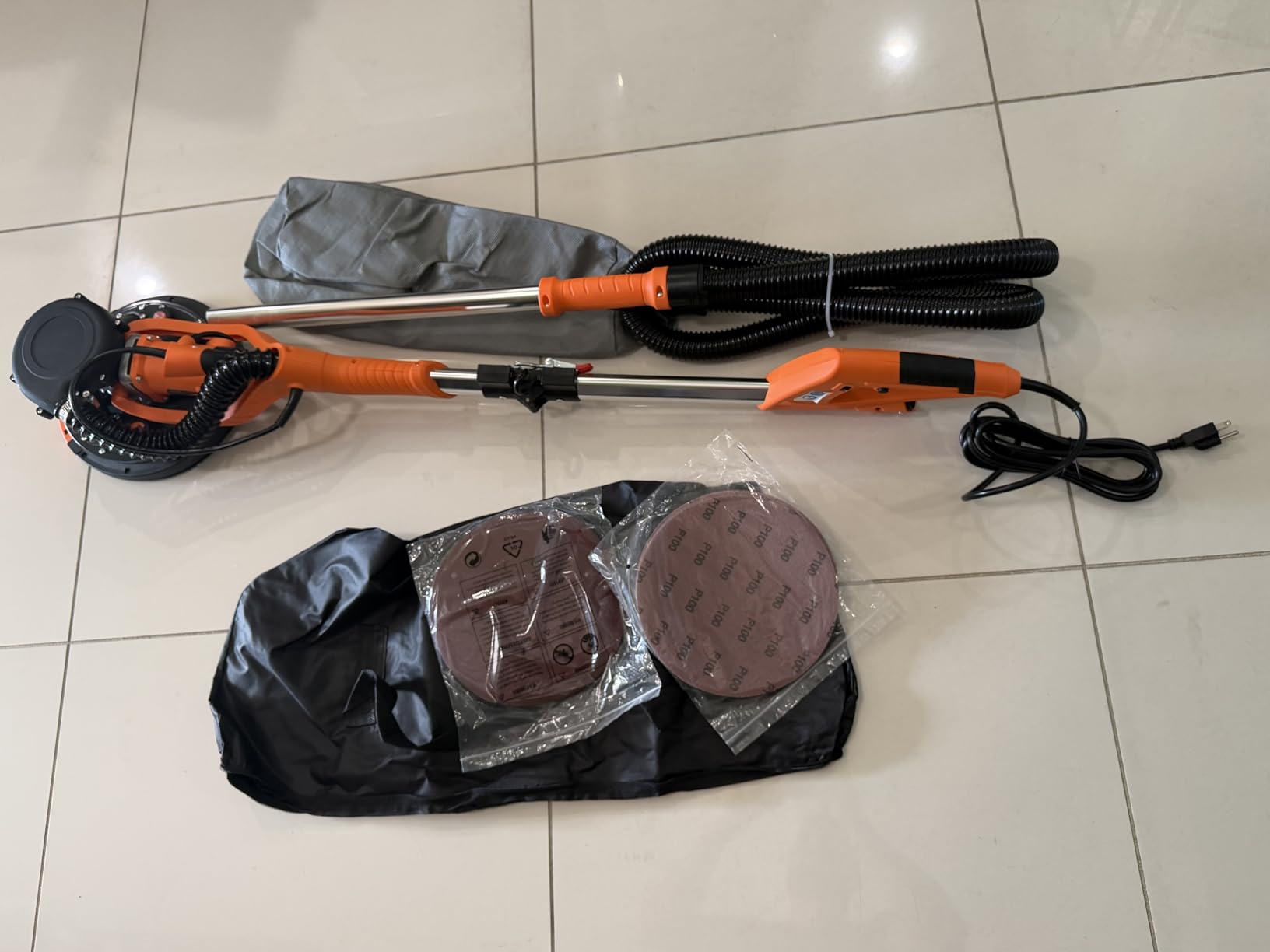
Grid sandpaper is the quiet hero of a ceiling job, and this is the only machine here that ships with a proper set of it. The package includes six standard sheets and six grid sheets in 100, 180 and 240 grits, and the grid sheets are rated three times more durable than the basic ones. On a big ceiling that durability matters, because the alternative to a durable abrasive is stopping every few minutes to change discs mid-pass.
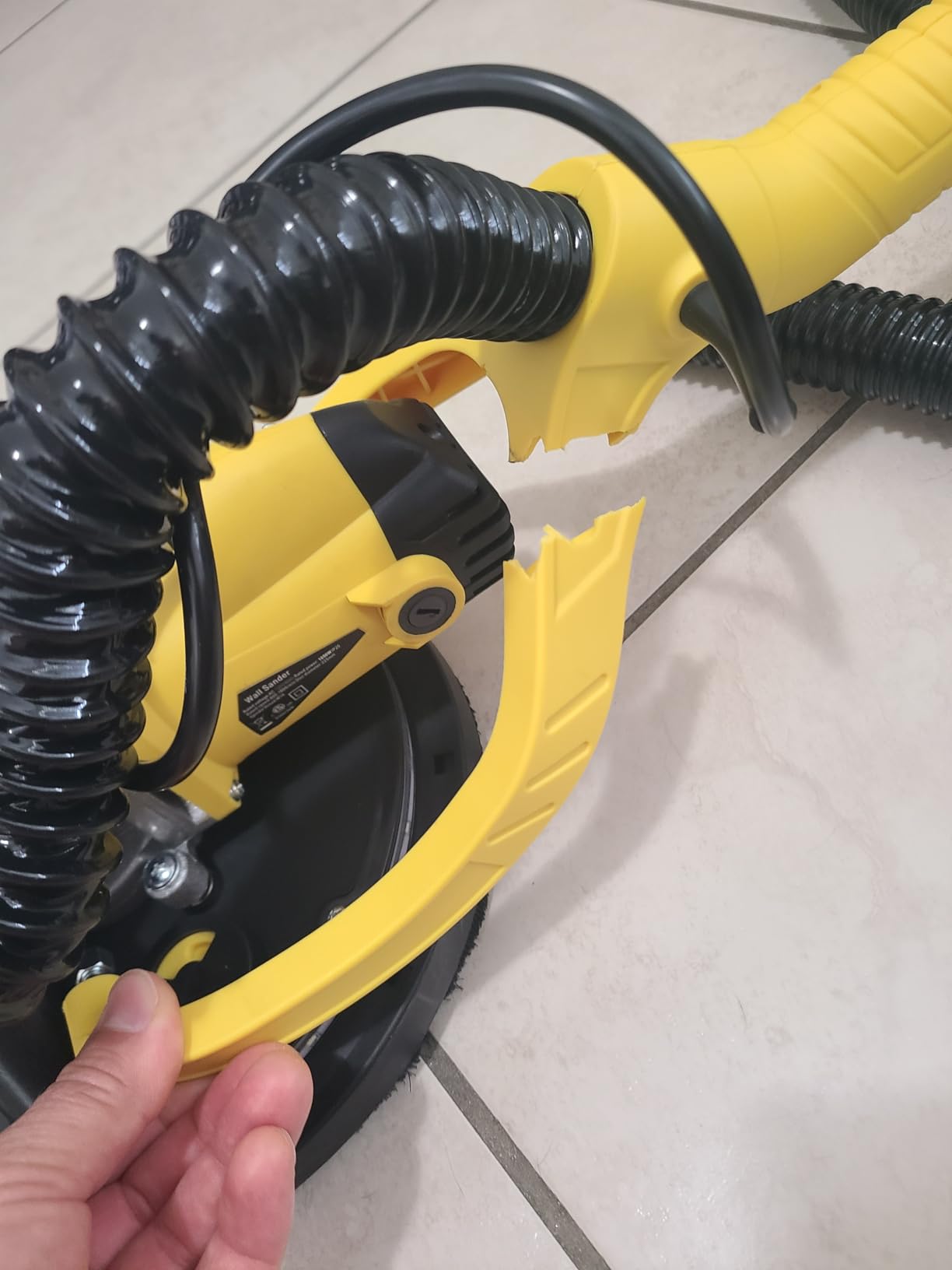
Grid discs also shed dust far better than paper, which fits neatly with the dual-channel vacuum system that the manufacturer rates at 97 to 99 percent efficiency when used properly. A user on r/Construction reported combining a mesh disc with a good vacuum and eliminating almost all of the dust from a room, and this is the machine that setup suits best.
On power, the 8.5A copper motor is the highest rated amperage of the powered units here, running 7 speeds from 800 to 1800 RPM. The telescopic rod takes it from 3.9 to 5.5 ft, the 360 degree LED strip lights the work area, and a detachable corner-edge chassis helps at the perimeter. A carry bag, gloves and a 12-month warranty are included.
Who should choose it
Anyone tackling a large ceiling area where disc changes and dust are the two practical problems. If you are sanding a whole house or a big open-plan space, this is the machine that will keep working without constant reconfiguration.
It suits texture removal too, with enough torque and grit range to knock down popcorn before a skim coat.
What buyers flag
The most common complaint is weight. At 8.5 lb for the body, reaching 9.9 lb with the rod, bag and hose, owners say they cannot hold it overhead for more than a few minutes before fatigue sets in.
Corner and edge access is poor, so a hand sander is still required for finishing, and a minority of reviews report dust escaping from the tubing, bag and ports. The 4.1 rating across 273 reviews reflects a strong machine with a handling flaw rather than a defective one.
10. Hyde 09165 Vacuum Hand Sander – Best for Edges, Corners and Patches
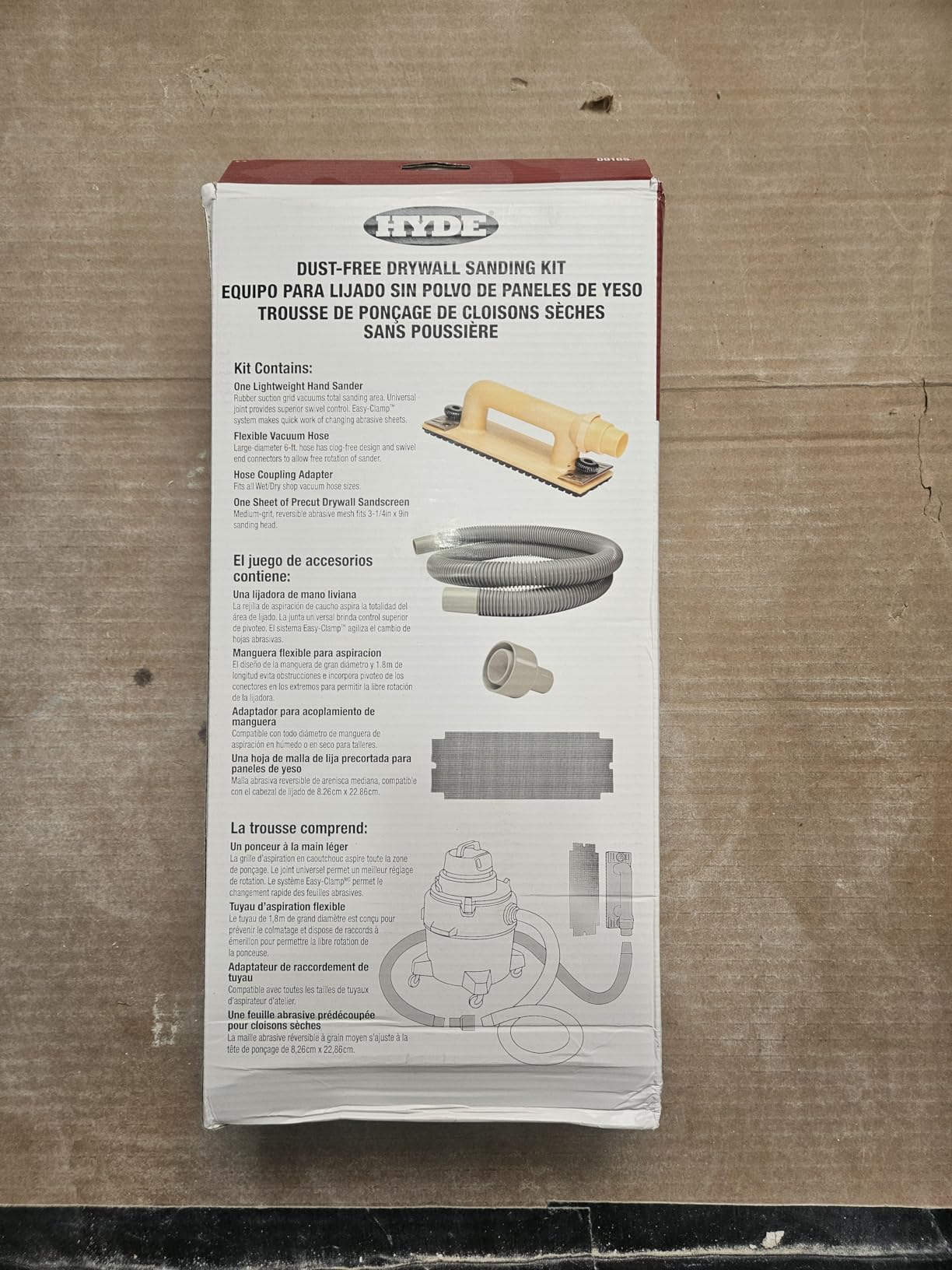
Hyde Tools 09165 Dust-Free Drywall Vacuum Hand Sander with 6-Foot Hose
Unpowered hand sander
3.25 inch round screen
6 ft hose
Adapter coupling
3.2 oz
Pros
- Second highest rating in the roundup with 6788 ratings
- Attaches to any wet/dry vacuum for near dustless finishing
- EasyClamp system makes screen changes quick
- Coupling adapter fits 1-3/4 1-1/2 and 2-1/2 inch hose sizes
- Exceptionally light for long overhead detail work
Cons
- Unpowered so large ceiling areas are far too slow
- Small 3.25 inch screen covers little ground per pass
Every electric sander in this roundup shares one blind spot: inside corners, the perimeter where wall meets ceiling, and the small repairs around nail pops. The Hyde 09165 exists for exactly those spots, and it is the tool that turns a decent ceiling job into a good one. Its 6,788 ratings are the second largest block of owner feedback in this roundup.
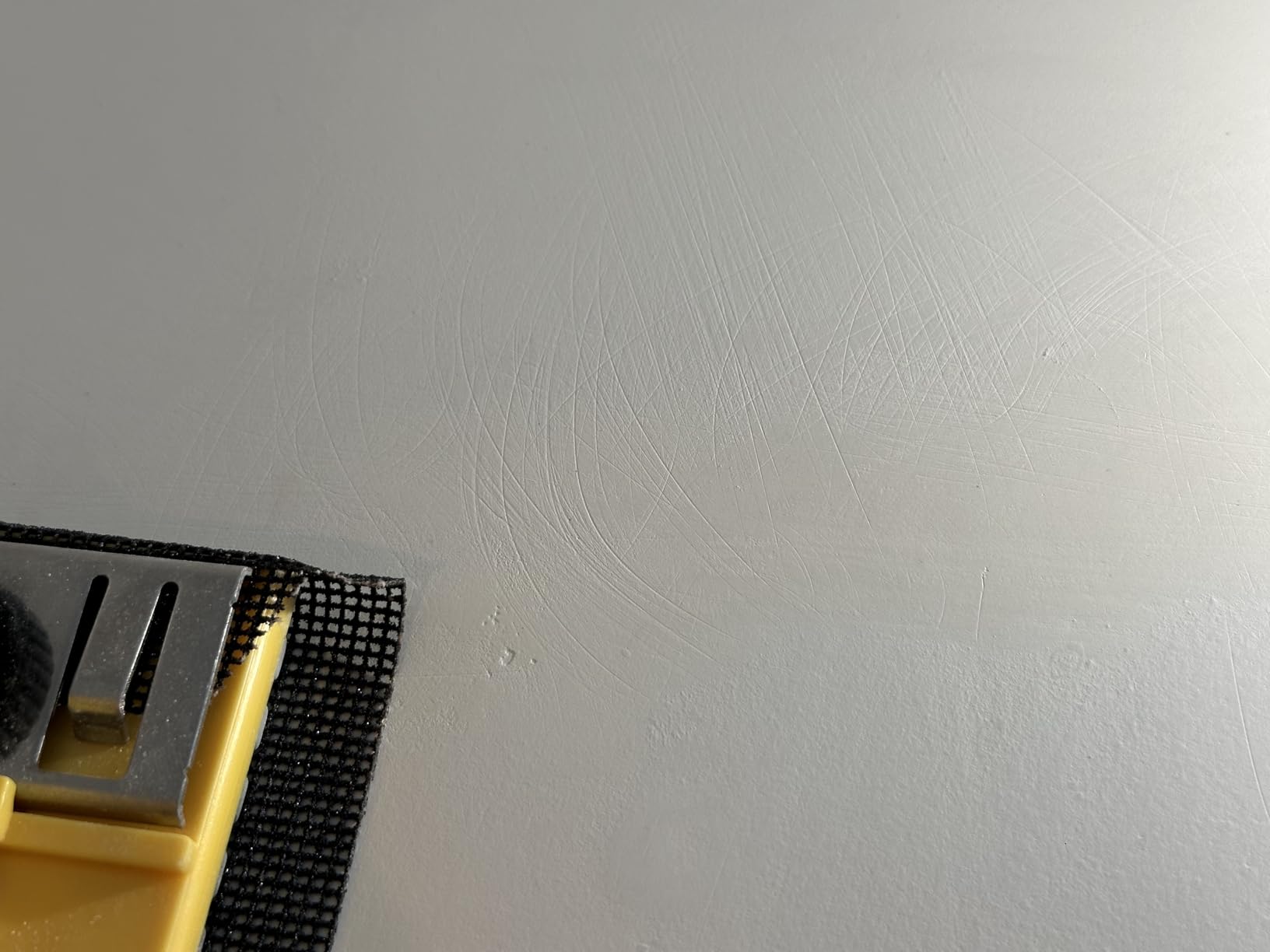
The vacuum connection is what makes it feel modern rather than archaic. It attaches to any wet/dry vacuum, and the supplied coupling adapter fits 1-3/4 inch, 1-1/2 inch and 2-1/2 inch hose sizes, which means you will not be stuck hunting for adapters. A reviewer on r/drywall described the same principle in a more improvised way, taking any shop vac and making it fit the sander, and it works because the extraction at the sanding face does more for cleanup than any amount of tidying afterwards.
The EasyClamp system makes screen replacement quick, and one reversible sheet is included. At 3.2 ounces it is effectively weightless, so overhead detail work on a ceiling perimeter does not fatigue your arm.
Where it fits in the workflow
Every ceiling job. Finish the field of the ceiling with a powered sander, break the edges with a pole head, then use this for the inside corners, the wall-to-ceiling line, and any patch repairs. Skipping that last step is the most common reason a sanded ceiling still looks wrong under paint.
It is also the right standalone tool if your project is a single repair, a nail pop, or a small patch in a rental where a powered machine makes no sense.
What you give up
Speed, entirely. The screen is 3.25 inches across against 9 inches on a powered machine, and there is no motor, so covering a full ceiling is not realistic. Treated as a finishing tool rather than a primary one, that is a fair trade.
At 4.3 across 6,788 ratings this carries one of the strongest consensus signals in the roundup, and the review pattern is consistent: owners value the dust control and the vacuum compatibility, and they accept that it is for walls, patches and edges rather than whole ceilings.
Dust Control Setup for Ceiling Sanding
The most reliable way to keep a ceiling job clean is to change the abrasive, seal the room, and pull the dust out with a proper vacuum rather than relying on a bag. Drywall dust is fine enough to stay airborne for hours, and it drifts into adjacent rooms through a doorway faster than most people expect. A few deliberate steps make an enormous difference.
Use mesh or grid discs for bulk work. They shed far more dust than paper sheets, and one r/Construction user reported that mesh discs combined with a good vacuum eliminated almost all of the dust from a room. They edge-crush, so switch to paper for the final finish pass.
Hook up a shop vacuum or extractor, not just the bag. A dust bag fills quickly and starts pushing dust out of the housing. Most units here include a hose port, and the hose diameters rarely match out of the box, so budget for an adapter.
Check the connection every few minutes. Friction-fit hoses work loose as you extend and retract a pole, and the most common dust complaint in reviews across this roundup is leakage at exactly that joint.
Hang a plastic sheet across the doorway and close interior doors. It takes two minutes and prevents migration into the rest of the house.
Run a HEPA vacuum to the work area rather than storing it in another room, and wipe surfaces wet rather than sweeping dry.
One r/drywall user described a pragmatic shortcut that many owners use: any shop vac and a length of tape will solve the adapter problem. It is not pretty, but it is faster than ordering the right fitting.
How to Sand a Ceiling Step by Step?
The order of operations matters more than the tool. Follow this sequence and the finish is far more predictable.
Protect the room. Seal the doorway with plastic, move furniture, and set up your vacuum before the sander is unboxed.
Check the compound is fully dry. Sanding damp compound gums the disc and pulls the paper face. A thumbnail impression that dents is not ready.
Fit the right grit. Start coarser on ridges and high spots, then step up. Too fine a grit just polishes the ridge instead of flattening it.
Start at low RPM on flat areas and work along the joint, keeping the pad flat and moving steadily. Do not park the disc in one spot.
Increase speed only for texture or heavy buildup, and drop back down the moment the surface changes.
Use minimal pressure. Joint compound is soft. A powered sander with a heavy hand produces swirl marks that need re-mudding.
Check with a raking light from an angle across the ceiling. Every ridge and hollow shows up in raking light even when it looks flat in the room.
Finish the edges and corners by hand with a vacuum hand sander, working the inside corner and the wall-to-ceiling line last.
Vacuum and wipe down everything before you paint, including the tops of the walls and the light fittings.
On timing, a 400 square foot ceiling on fresh mud takes a capable finisher most of a morning with a good pole sander, and much longer by hand. A textured ceiling knockdown with a powered tool is faster, but the skim coat that follows adds a full day of drying before you can finish sand it.
Popcorn and Textured Ceiling Removal
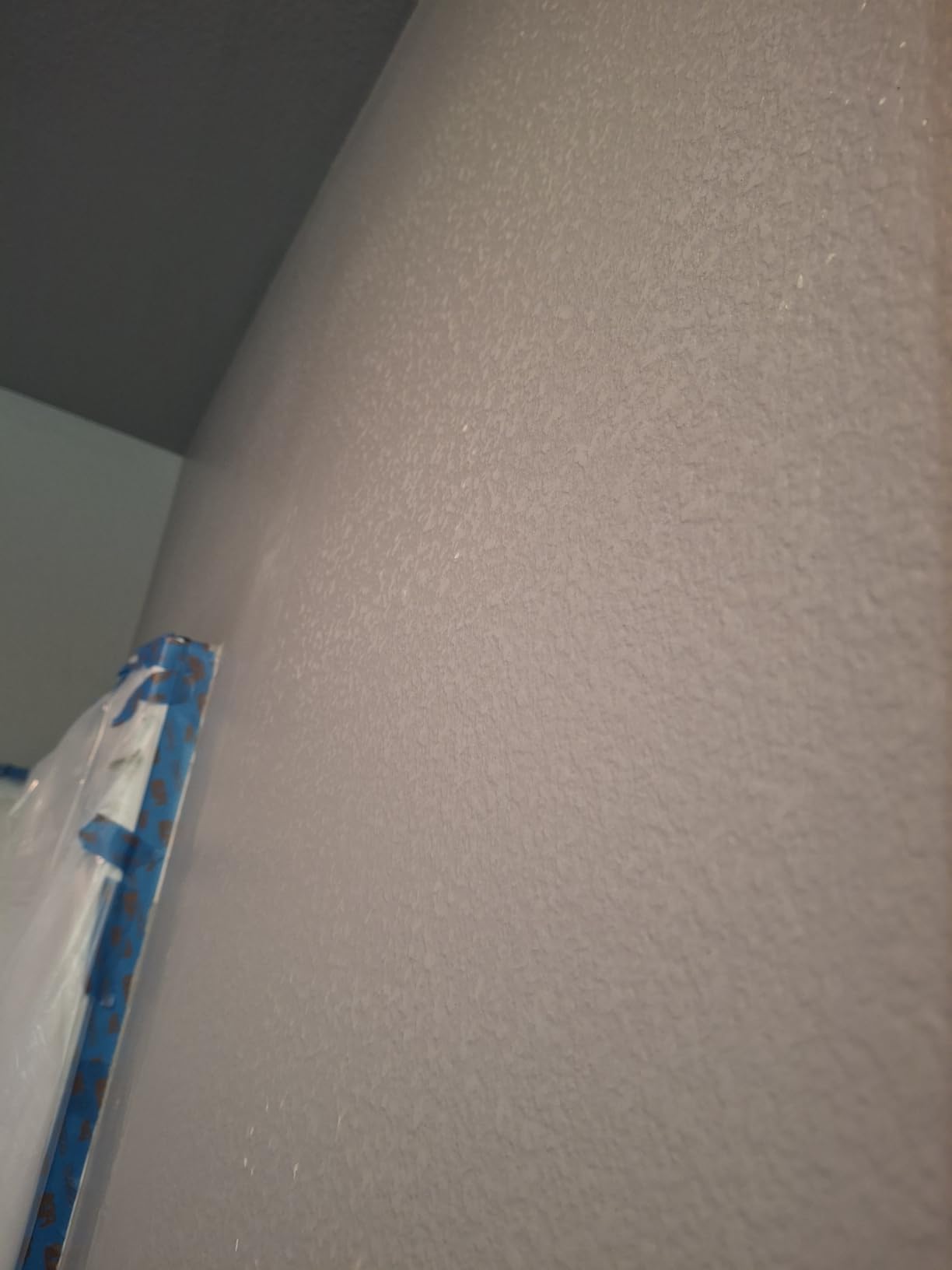
Texture removal is a different job from finish sanding, and using a finishing sander for it is how people end up with a ceiling that is worse than the one they started with. Aggressive grit goes on first, high RPM, and the goal is not smoothness, it is removal. Once the texture is down, the exposed surface is uneven, so plan on a skim coat across most of the ceiling before you can achieve a finish-quality result.
That is the honest answer to the question that dominates texture forums: no, a sander will not save you the re-mud. What it saves is the grinding, the dust and the arm-breaking repetition of a hand scraper and brush. On a heavily textured ceiling that is the expensive, miserable part of the job, so the tool still pays for itself.
For the machine, the IMQUALI 8-Amp is the strongest choice here on throughput and dust pickup, and the KUPERIA 8.5-Amp is the alternative with the best included grid abrasives. Both telescope to about 5.5 ft and both have LED strips, which matters more than it sounds when you are looking up at a white surface for four hours.
Grit, Screens and Pads for Ceiling Jobs
Grit choice is the highest-leverage decision in a ceiling job, and getting it wrong wastes more time than buying the wrong machine. Too fine and you polish the ridge rather than flattening it. Too coarse and you cut into the paper face, which means re-mudding.
80 to 100 grit for knocking down texture and heavy buildup. Use it with a machine that can hold a disc flat, because coarse grit punishes a wandering pad.
120 to 150 grit for the main finishing passes on fresh joint compound. This is the range most of the discs included with these sanders fall into.
180 to 220 grit for smoothing before paint, and for the walls below the ceiling line.
Mesh or grid for bulk removal and for large areas where disc changes are frequent. They capture dust better and last longer, but the edges crush and they will not give you a final finish, so finish with paper.
Paper sheets for the final pass and for any edge or corner you are working by hand.
One practical trap worth flagging: non-standard pad sizes are hard to replace in physical hardware stores. A sander that takes a standard 9 inch hook-and-loop abrasive, like the Hyde 09977 and the WEN 6369, means you can walk into any shop and buy what you need. Check pad diameter and attachment style before you commit to a machine with a proprietary disc.
Should You Rent or Buy a Ceiling Sander?
For a single room, renting is usually the sensible call. The economics are straightforward: a rental day rate for a ceiling sander costs a fraction of a purchase, and a one-off job never uses up the tool. If you are sanding one ceiling, buy a vacuum and rent the sander.
Buying starts to make sense when several factors line up at once: you have more than one ceiling ahead of you, you are sanding above a standard height that needs a pole, you already own a shop vacuum, or you want the tool available for patches later. A powered telescoping sander is a reasonable first purchase; a premium cordless unit is harder to justify without a battery platform already in place.
Two things push people toward buying. First, availability, because a rental shop may not have the pole sander you need on the day you want it. Second, convenience, because having the tool in the garage turns a two-hour patch into a five-minute job rather than a trip across town.
There is a middle option worth considering: buy the hand sander and rent the powered machine. The Hyde 09165 costs little, stores compactly and handles every patch job you will ever have, while the expensive part of the ceiling job is rented per use.
Drywall Dust Safety and PPE
Drywall dust is not as well understood as wood dust, and most people treat it as an ordinary nuisance. Joint compound commonly contains talc, mica, calcium compounds and gypsum, all of which are respiratory irritants, and the fine fraction stays airborne long after you stop working. A drywall sanding room is genuinely unpleasant to breathe in, and the discomfort arrives the same evening as the job rather than immediately.
Wear an N95 or R95 respirator, or better, a half-mask with replaceable P100 cartridges, whenever you sand drywall indoors.
Use eye protection. Debris from a textured ceiling travels in a straight line toward your face.
Keep the room ventilated and seal the doorway so dust does not spread through the house.
Extraction at source beats cleaning afterwards. Every minute of vacuuming at the end is a minute of dust that was in the air for the previous four hours.
Wash your clothes separately and shower after the job. Gypsum dust settles into fabric and stays there.
None of this is a reason to skip a ceiling. It is a reason to plug the sander into a vacuum before you switch it on.
Buying Guide: Choosing a Drywall Sander for Ceilings
Most drywall sander buying guides optimise for wall work and treat the ceiling as an afterthought. For this job, five criteria matter more, and I would weight them in this order.
1. Reach. Measure your ceiling and subtract your arm span. Anything under 5 ft of reach means a ladder for a standard 9 ft ceiling, and a ladder plus a spinning sander is the combination most likely to produce a gouge. Telescoping bodies reach about 5 ft, longer rods reach 5.5 to 6.5 ft, and a dedicated pole system reaches indefinitely.
2. Weight and balance. Mass matters less than where the mass sits. A motor mounted low in the head, a light head with no motor at all, and a balanced telescoping body all beat a heavy machine with a top-mounted motor. Check weight listed for the body, not the packaged weight with rod and hose.
3. Head articulation. A pivoting or self-leveling head keeps the pad flat on a flat ceiling. Rocking causes chatter, chatter causes swirl marks, and swirl marks mean going back over the joint with compound. This is the single most underrated ceiling feature.
4. Dust capture. Decide whether you will use a shop vacuum, because that determines whether you need a vacuum port, an adapter, and possibly a pre-separator. Ignore the dust collection percentage claims on the box and check the review sections for leakage at the hose joint. A sealed head with real vacuum extraction will always beat a bag-only unit indoors.
5. Speed range. You want a low end around 600 to 900 RPM for feathering edges and finishing, and enough top end to handle texture. A locking switch that holds a set speed reduces trigger fatigue over long overhead sessions more than most buyers expect.
Two smaller items. Check the pad diameter and attachment style, because non-standard sizes are difficult to replace locally. And consider a work light, which is standard on several machines in this roundup and transforms finishing in an unlit room.
On brand versus generic: the carousel-dominant names on major marketplaces are largely feature-rich, light and capable, and for a one-room DIY job they are usually enough. For repeat professional work, the build quality, service and replaceable parts of an established brand become the deciding factor. One r/drywall user put it well, having used a cheap marketplace model successfully with a good vacuum attached, where the vacuum made the dust manageable and the tool did the job.
Finally, remember that professionals use a combination. The technique that consistently produces the best ceiling finish is a powered sander to knock down the ridges, a light pole head to blend and take it to uniform, and a vacuum hand sander for the edges and corners. Buying all three is not extravagant; buying one and skipping the other two is the expensive mistake.
Frequently Asked Questions
What type of sander is best for sanding ceilings?
A powered drywall sander on an extendable pole is best for most ceilings. It puts a 9 inch pad flat against the joint compound while you work from the floor, and variable speed lets you feather edges at low RPM and knock down texture at high RPM. A vacuum hand sander is still needed afterwards for inside corners and edges.
What is the best drywall sander for ceilings?
For a standard residential ceiling, the WEN 6369 is the most complete single tool, with a 600 to 1500 RPM range, a telescoping body reaching five feet, a nine pound weight and a 15 foot dust hose. For high ceilings the Gioventu reaches further, and for a light final pass the Hyde 09977 pole head is harder to tire on.
What is the best way to sand drywall on the ceiling?
Work along each joint with the pad flat, start at low RPM on flat compound and only increase speed for texture or heavy buildup. Use light pressure because compound is soft, check the ceiling with a raking light to find remaining ridges, and finish the inside corners and wall-to-ceiling line by hand with a vacuum sander.
What is the best way to sand a drywall ceiling without leaving dust?
Use mesh or grid discs for bulk sanding because they shed more dust than paper, and connect the sander to a shop vacuum rather than relying on the dust bag. Seal the doorway with plastic, check the hose connection every few minutes as the pole extends, and run a HEPA vacuum in the work room.
Do professional drywallers still use a hand sander?
Yes, for finishing. No electric sander can reach an inside corner or the wall-to-ceiling line properly, so professionals use a hand sander or sanding sponge for those areas even after machine sanding the field of the ceiling. It is also the standard tool for nail pops and small patches.
How long does it take to sand a ceiling with a power sander?
A 400 square foot ceiling on fresh joint compound takes a capable finisher most of a morning with a good pole sander. A textured ceiling knockdown with a powered tool is faster, but the skim coat that follows needs a full day of drying before the final finish sand can begin.
Final Verdict on the Best Drywall Sanders for Ceilings
The best drywall sander for ceilings in 2026 depends entirely on which job you are standing in front of. For a standard-height ceiling finished in fresh joint compound, the WEN 6369 is the pick we would buy first: a telescoping body, a 600 to 1500 RPM range and a 15 foot dust hose, supported by one of the two largest blocks of owner feedback in this roundup. It is the safest single-tool answer and our Editor’s Choice.
Reach for the Bosch GTR55-85 if you sand ceilings repeatedly and want the sealed head, ceiling-suction mode and adjustable airflow control. Pick the IMQUALI 8-Amp for popcorn removal, and the Gioventu for ceilings taller than 9 ft. When the compound is down and you are blending, use the Hyde 09977 pole head, and finish the corners with the Hyde 09165, which is the most reviewed tool in this roundup. For a single room, rent the powered machine and buy the hand sander.
Whatever you choose, connect it to a vacuum before you switch it on. That one step decides whether the job is pleasant.