
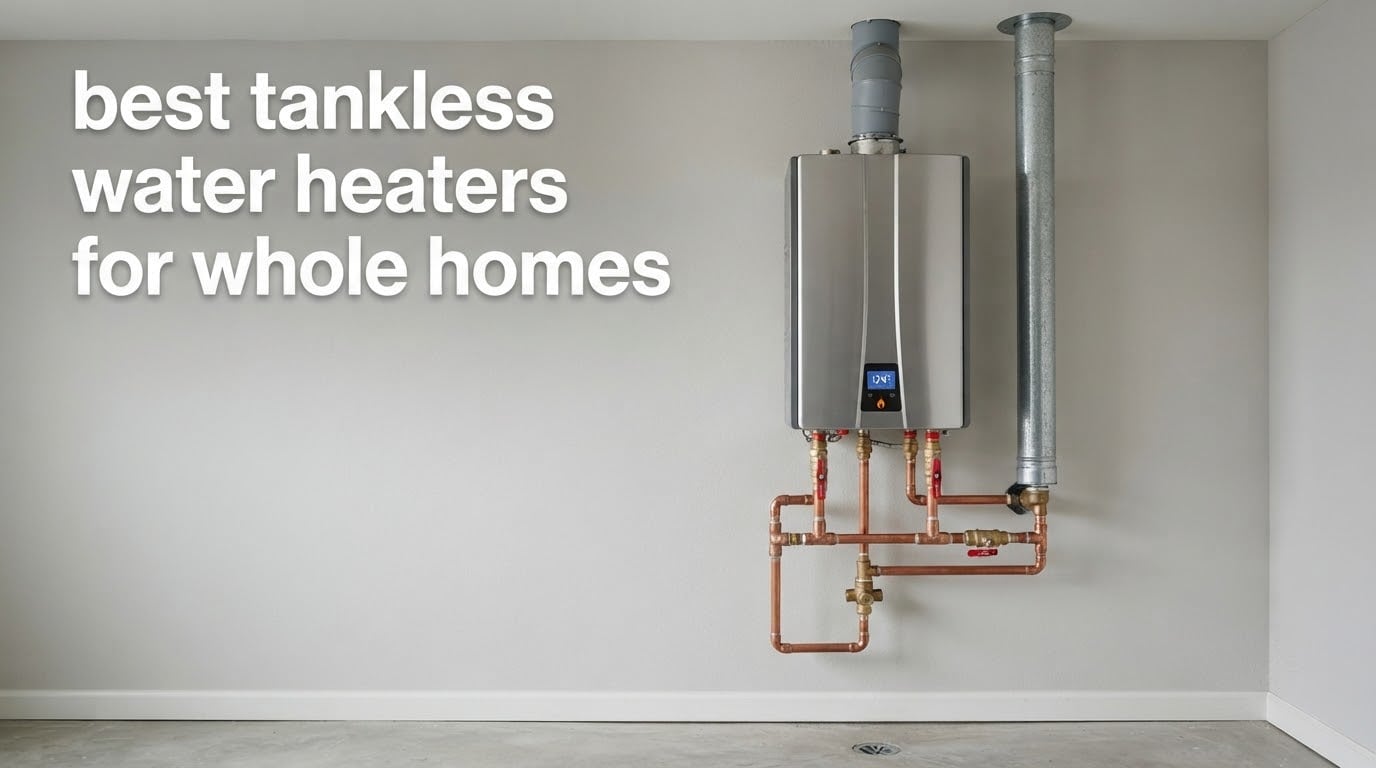
A whole-home tankless water heater is the only appliance in the house that can change how hot water feels, and choosing the wrong one is felt every single day. The best tankless water heaters for whole homes are not the models with the biggest spec sheet; they are the ones that can cover your busiest minute of the week without straining the electrical panel, the gas line, or your budget. We spent the 2026 buying season reading every listing, warranty sheet and review set in this roundup of 12 units to work out which ones actually fit a full house.
The core problem is flow. A tankless heater heats water as it flows, so it has to cover the moment when a shower, a laundry cycle and the dishwasher all fire at once. Get that number wrong and you will hear the most common complaint in the category, which is running out of hot water in the middle of a shower, and no brand or price point fixes it afterward.
Below is a full roundup of 12 whole-home units, split between gas and electric, with the flow rate, power draw, breaker requirements and warranty terms for each. We also added a sizing guide, a gas-versus-electric comparison, an honest look at where tankless is the wrong choice, and answers to the sizing and reliability questions homeowners search for most. Model lines move fast in this category, so check the panel capacity before you fall in love with a unit.
Table of Contents
Top 3 Whole-Home Tankless Picks (October 2026)
The Rheem RTEX-18 takes the top spot for the best tankless water heaters for whole homes because it has the deepest review history in the group, a serviceable copper element design, and a 4.4 GPM flow rate that covers a typical family without demanding a panel upgrade. The Rheem RTEX-24 is the value pick if you need more simultaneous use, and the MIZUDO 199,000 BTU unit is the one to look at if you have three or more bathrooms.
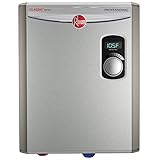
Rheem RTEX-18 18kW Electric
- 4.4 GPM flow rate
- 18kW self-modulating output
- Field-serviceable copper elements
- LED digital control

Rheem RTEX-24 24kW Electric
- 5.9 GPM flow rate
- 80-140F in 1-degree steps
- No venting required
- Limited lifetime warranty

MIZUDO 199,000 BTU Gas
- 10.3 GPM flow rate
- Plus or minus 1F gas modulation
- WiFi and app temperature control
- Sealed direct-vent combustion
All 12 Whole-Home Tankless Picks at a Glance
The table below is the fastest way to narrow the field. Flow rate determines whether the unit can handle simultaneous fixtures, kW or BTU tells you how hard the unit has to work to deliver it, and the breaker count is the real gate on any electric pick.
| Product | Specs | Action |
|---|---|---|
| Rheem RTEX-18 18kW Electric |
|
Check Latest Price |
| Rheem RTEX-24 24kW Electric |
|
Check Latest Price |
 thermomate ET180 18kW Electric thermomate ET180 18kW Electric |
|
Check Latest Price |
 Ranein 8.5 GPM Gas Ranein 8.5 GPM Gas |
|
Check Latest Price |
| MIZUDO 199000 BTU Gas |
|
Check Latest Price |
 Ranein RE18K 18kW Electric Ranein RE18K 18kW Electric |
|
Check Latest Price |
 WINTEMP 36kW Electric WINTEMP 36kW Electric |
|
Check Latest Price |
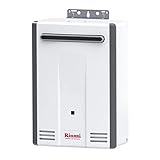 Rinnai V53DeN 5.3 GPM Gas Rinnai V53DeN 5.3 GPM Gas |
|
Check Latest Price |
 thermomate CZ422NG Gas thermomate CZ422NG Gas |
|
Check Latest Price |
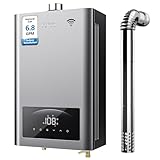 APUS 6.8 GPM Gas APUS 6.8 GPM Gas |
|
Check Latest Price |
 APUS 27kW Electric APUS 27kW Electric |
|
Check Latest Price |
 Stiebel Eltron 24 Trend Electric Stiebel Eltron 24 Trend Electric |
|
Check Latest Price |
1. Rheem RTEX-18 18kW Electric Tankless – Our Overall Pick
Rheem 18kW 240V Tankless Electric Water Heater, Gray
4.4 GPM
18kW at 240V
14.5W x 18.25H x 18.25D
99.8% efficiency
Pros
- Deepest review history in the group at 2185 reviews
- Field-serviceable copper immersion elements
- Self-modulating output holds temperature steady
- Compact 14.8 pound wall mount
Cons
- Needs 240V hardwired install with adequate breaker capacity
- 4.4 GPM is modest when several fixtures run at once
- Some owners report temperature dropouts at high demand
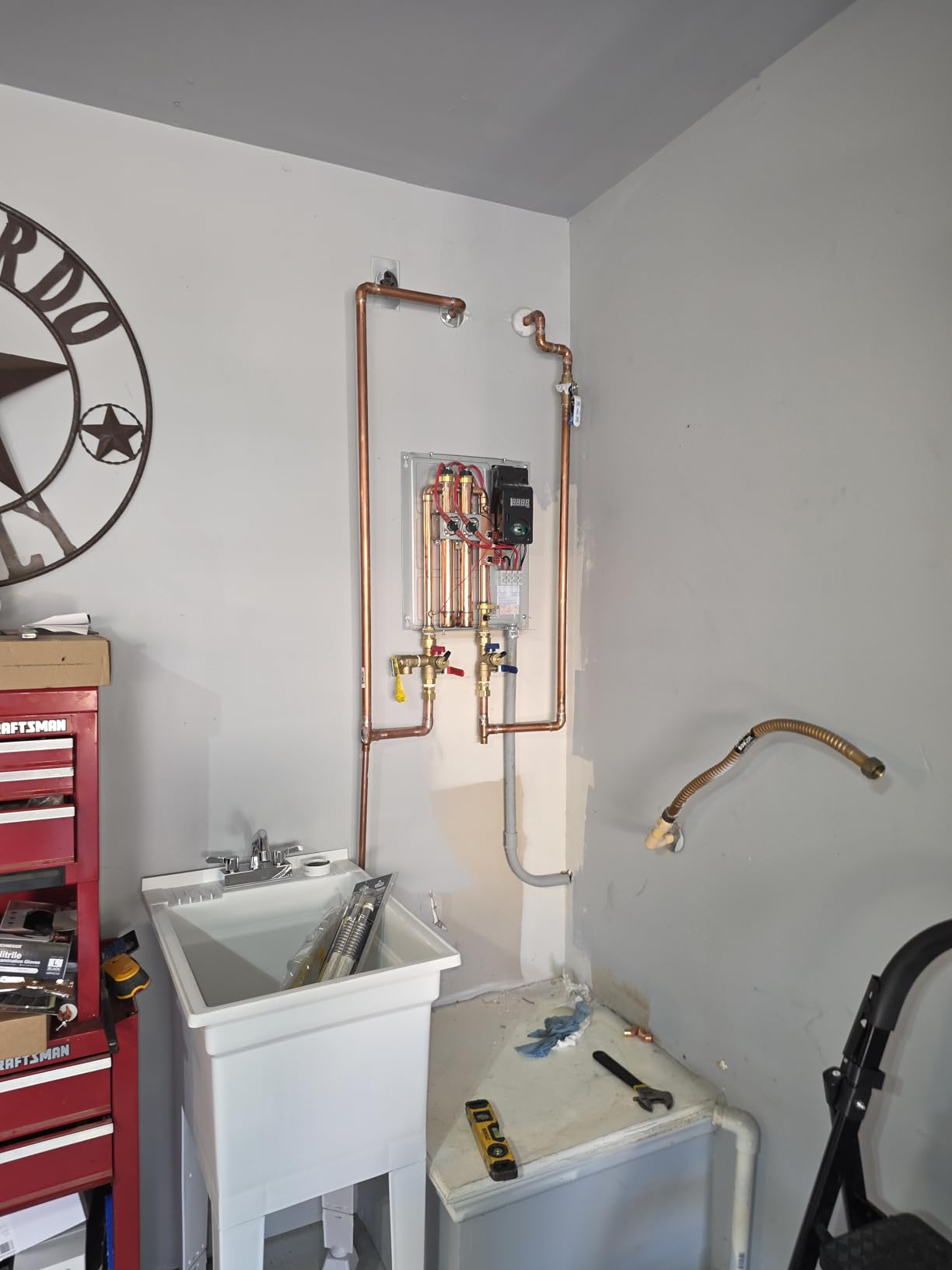
The Rheem RTEX-18 is the pick we kept coming back to. It runs 4.4 GPM at 18kW on 240V, and that middle ground matters, because it delivers enough water for a shower plus a sink plus a laundry cycle without asking your electrical panel to do something it cannot. Owners describe hot water that simply appears, with no preheat wait and no tank to run out of.
The build quality detail that stands out is the copper immersion heating elements, which are field serviceable rather than sealed. When a scaling element eventually needs replacing, a technician can work on the unit rather than swap the whole assembly.
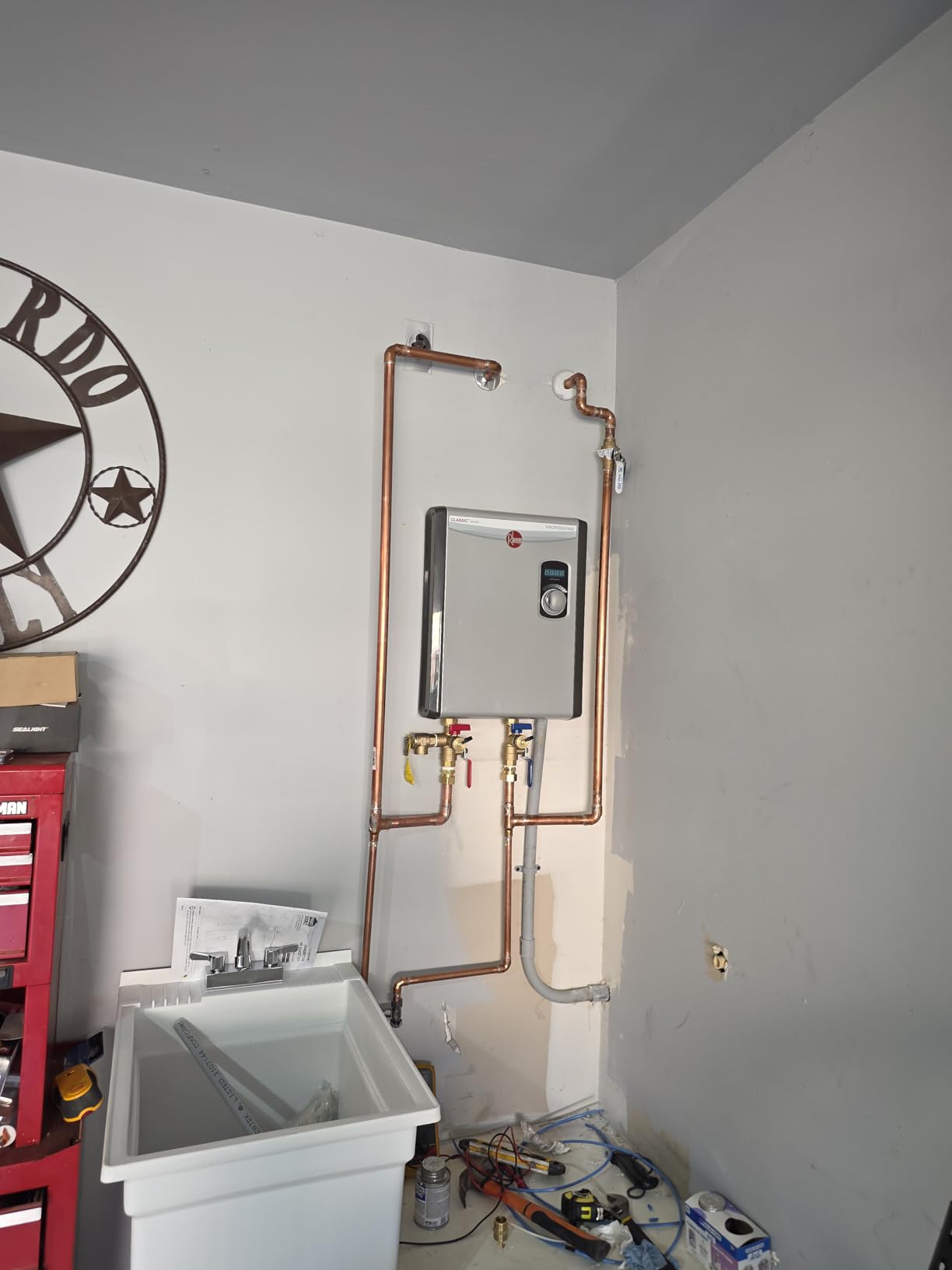
What we like most is the control. The external digital thermostat uses one-degree increments with an LED display, so the number on the wall matches what comes out of the showerhead. Self-modulation adjusts power to the flow it senses, which is what keeps temperature steady when someone starts the dishwasher mid-shower.
The honest limitation is flow. At 4.4 GPM, two showers running at once plus any other hot water use will push past what the unit can heat at a comfortable temperature. In a home with two full bathrooms, we would size up to the RTEX-24 instead.
Who this heater works well for
This suits a household of two to three in a home with one or two bathrooms, and it is the easiest unit here to install in a panel with any real capacity at all. If you are replacing a 40 or 50 gallon electric tank, the wall footprint frees the closet space a tank used to occupy.
Who should buy something else
Skip it if you regularly run two showers and the dishwasher at the same time, or if your incoming water is very cold, since cold inlet water erodes effective flow. Households in cold climates should size for a derated flow rate, not the number on the box.
2. Rheem RTEX-24 24kW Electric Tankless – Best Value for Two-Bathroom Homes
Rheem RTEX-24 24kW 240V Electric Tankless Water Heater, Gray
5.9 GPM
24kW at 240V
17.63W x 18.25H x 3.5D
Limited lifetime warranty
Pros
- Handles two concurrent showers plus laundry
- Long-term owners report six-plus years problem free
- Rheem support ships parts at no cost
- No venting required
Cons
- Requires 200A service and three 40A double-pole breakers
- Slower to deliver hot water at distant fixtures
- Cold-climate owners report 24kW is not enough for full baths
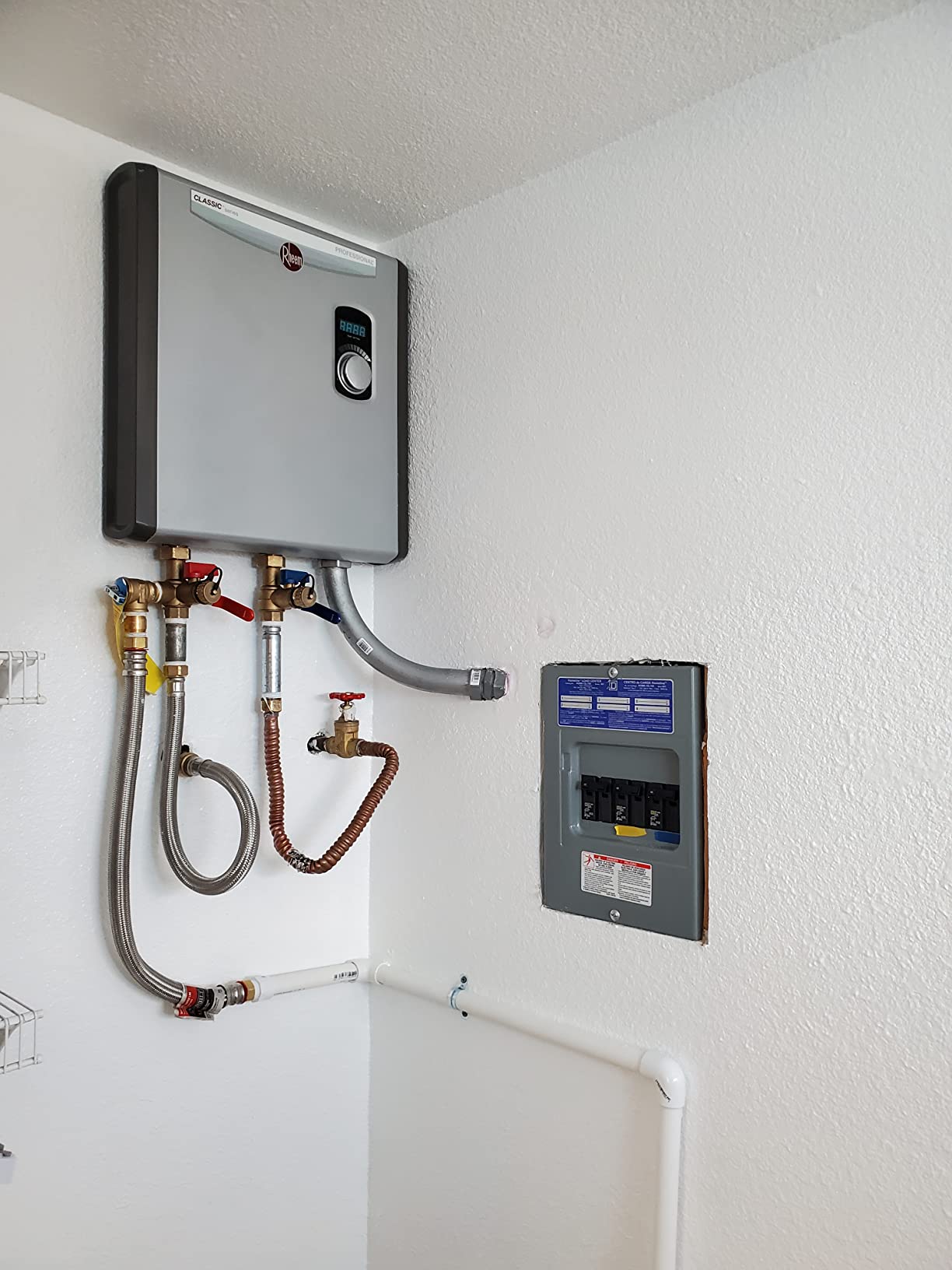
The RTEX-24 is the one we recommend to most two-bathroom households. It moves 5.9 GPM, which is a full GPM more than the RTEX-18, and that single step is the difference between one comfortable shower and two. The digital control runs from 80F to 140F in one-degree steps, so you can dial in a safe delivery temperature for kids without guessing.
Reviewers consistently call out one thing: this unit has been installed for years and simply keeps working. Owners in the six-plus-year range describe no service calls, and several mention that Rheem technical support sent replacement parts at no cost.
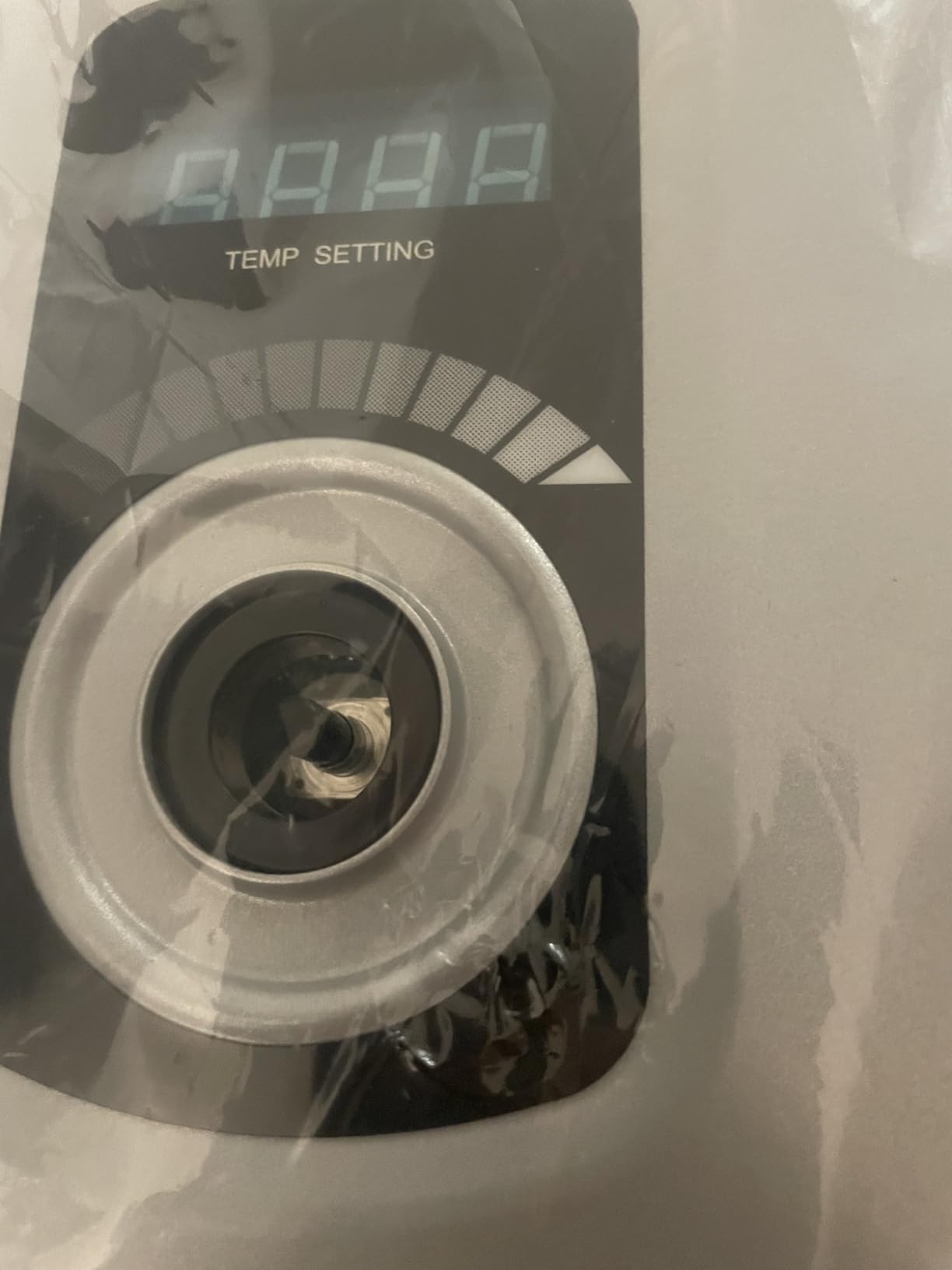
The electrical requirement is the real decision point. This unit needs three 40-amp double-pole breakers, three sets of number 8 copper conductors, and a 200-amp minimum household panel. That is a meaningful electrical job, and on older homes it can cost more in labor than the heater itself.
There is no venting requirement, which is one of the biggest practical advantages of going electric in a retrofit. The warranty is a 5-year leak and 1-year parts package, described by the manufacturer as a limited lifetime warranty on the unit.
Who this heater works well for
It fits a family of three or four in a two-bathroom home, especially one that currently runs a 50 gallon electric tank. If your panel is already 200 amps or you are building new with the circuits planned in, it is hard to argue with.
Who should buy something else
A 100 or 150 amp panel rules it out without a panel upgrade. So does a household that expects genuinely unlimited hot water in a cold climate, since cold inlet water cuts the effective flow well below the rated 5.9 GPM.
3. thermomate ET180 18kW Electric Tankless – Best Budget Entry
Tankless Water Heater Electric 18kW at 240 Volt, ThermoMate On Demand Instant Hot Water Heater Up to 4.4GMP, Self-Modulating Energy Saving for Residential Indoor Shower, Draw 76Amp
4.4 GPM
18kW at 240V, 76A max draw
13.12W x 17.12H x 3.12D
ETL certified
Pros
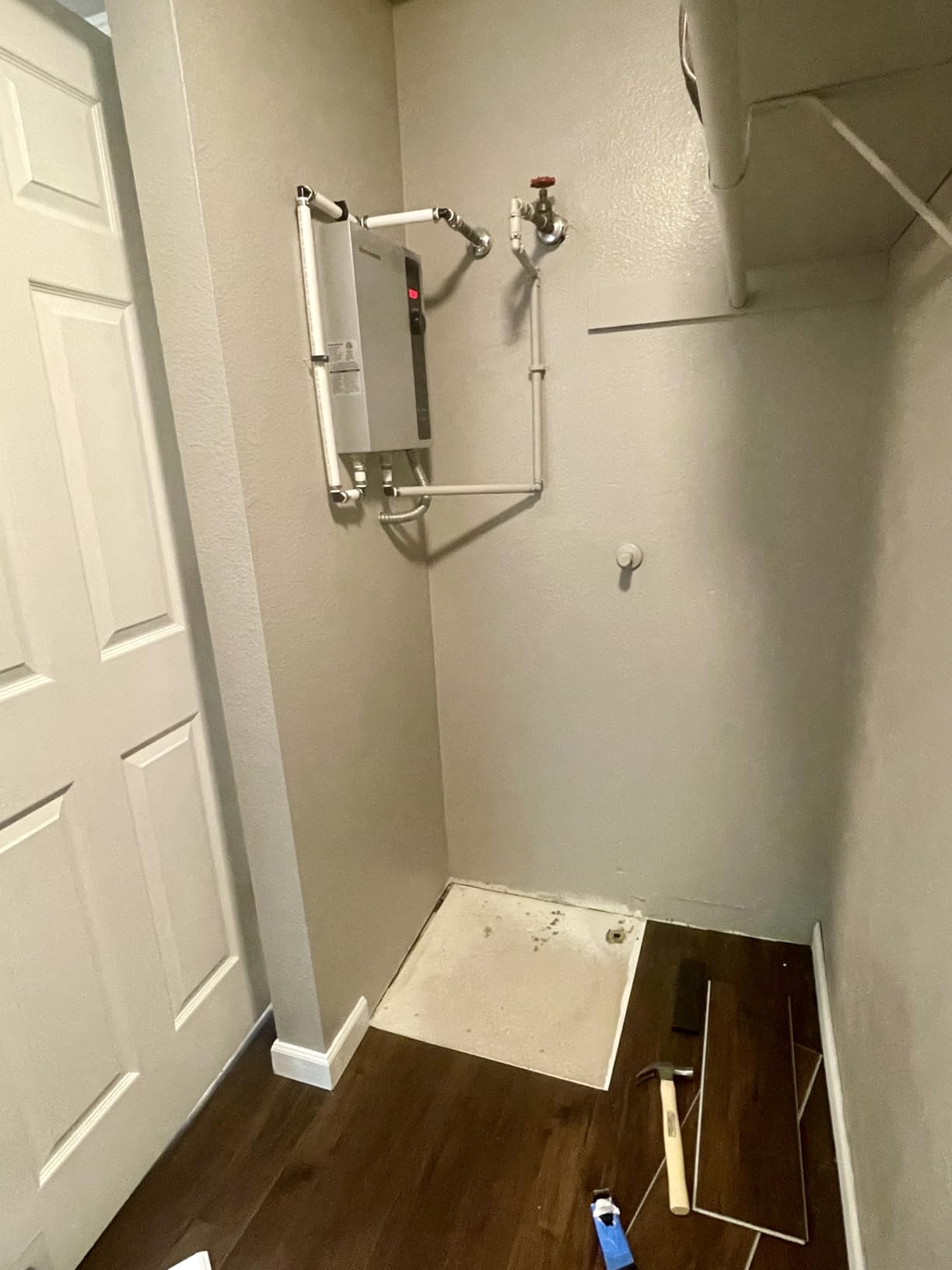
- Slim 3 inch deep body fits almost anywhere
- Element separated from water path to cut scale
- Holds up in hard water
- Owners report real electric bill savings
Cons
- Some units modulate temperature unevenly
- Advertised flow falls short at high flow rates
- Needs two 40A breakers and heavy 8 AWG cable
The thermomate ET180 is the cheapest way into continuous on-demand water, and at 4.4 GPM it matches our overall pick on paper. Owners frequently mention the electric bill drop after replacing a storage tank, which makes sense given the elimination of standby losses entirely.
The design choice we like best is the heating element separated from the water tube. That separation is why reviewers say the unit holds up in hard water areas, and it is a cheaper version of the same scale-resistance idea we see in premium copper designs.
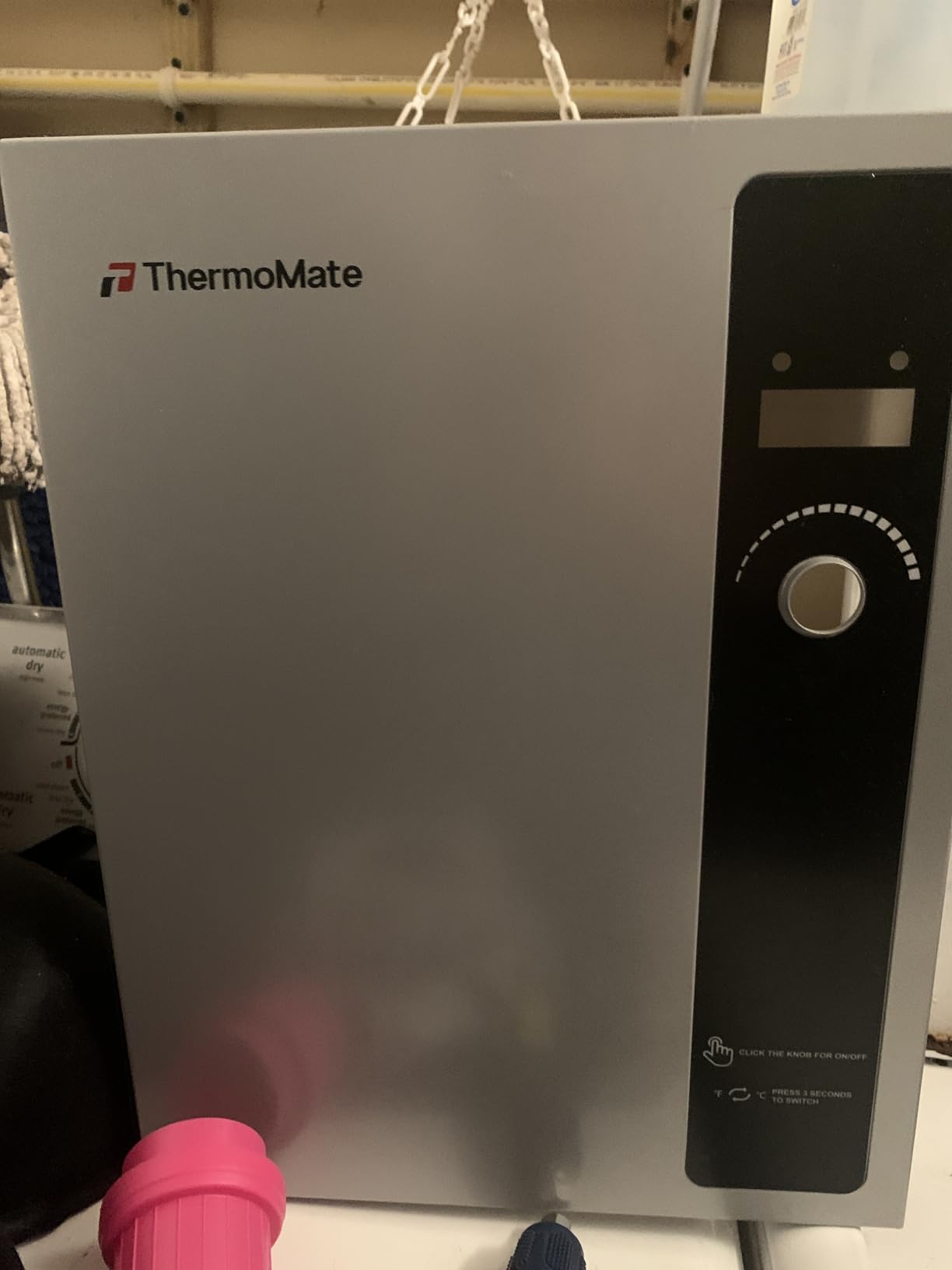
Hot water arrives in about three seconds according to owners, and the digital display adjusts from 80F to 140F in one-degree steps. The ETL listing includes overheat and no-water auto stop protection, which is the safety baseline we look for.
The recurring complaint in reviews is temperature regulation. A steady minority report overshooting and then dropping rather than holding a steady set point, and several note that the achievable temperature is lower than advertised once flow climbs. If you are replacing a tank in a home where precise delivery temperature matters, temper your expectations.
Who this heater works well for
It is a good fit for renters, ADUs, basement remodels and budget remodels where a 3-inch-deep unit on a utility room wall is the deciding factor. It also handles hard water better than most units at this level.
Who should buy something else
Anyone who wants one temperature and never any variation should look elsewhere. So should a household that needs more than about 4.4 GPM, since the output is not there in a cold inlet condition.
4. Ranein 8.5 GPM Natural Gas Tankless – Best Mid-Size Home Pick
Ranein Natural Gas Tankless Water Heater, 8.5 GPM, 190,000 BTU, Indoor
8.5 GPM
190,000 BTU natural gas
15.08W x 24.25H x 8.07D
42 pounds
Pros
- 8.5 GPM covers several fixtures at once
- Compact cabinet-style body saves utility room space
- No preheat wait for hot water
- Standard 3/4 inch NPT connections
Cons
- Elevation limit of 2000 feet restricts installs
- Error codes and temperature dropouts reported in cold weather
- Two-year warranty is shorter than rivals
For a family moving up from a 50 gallon gas tank, this is the shape of unit that actually works. Eight and a half GPM from a 190,000 BTU burner covers the two-shower-plus-dishwasher scenario that electric units at this level cannot reach, and it does it without a panel upgrade.
The bottom-mounted forced-draft blower is the detail that separates this from a cheap open-vent design. It adjusts speed automatically to keep combustion stable and reduces the smoke backflow risk that makes some homeowners nervous about gas tankless.
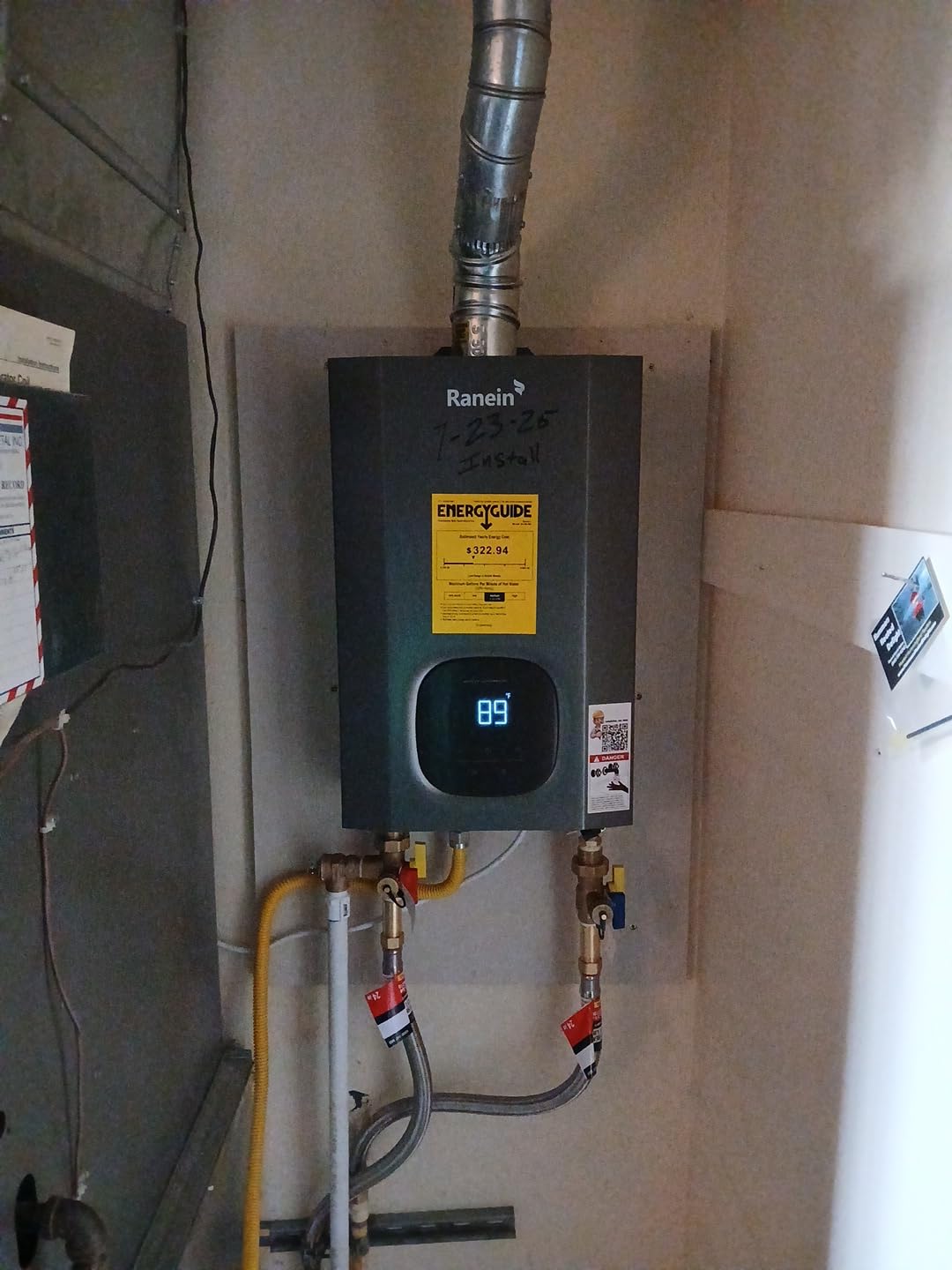
Owners highlight the flow and the footprint in equal measure, and the standard 3/4 inch NPT inlet fittings mean the plumbing hookup is not exotic. The box includes the assembly kit, manual and unit, and an LED display handles the interface.
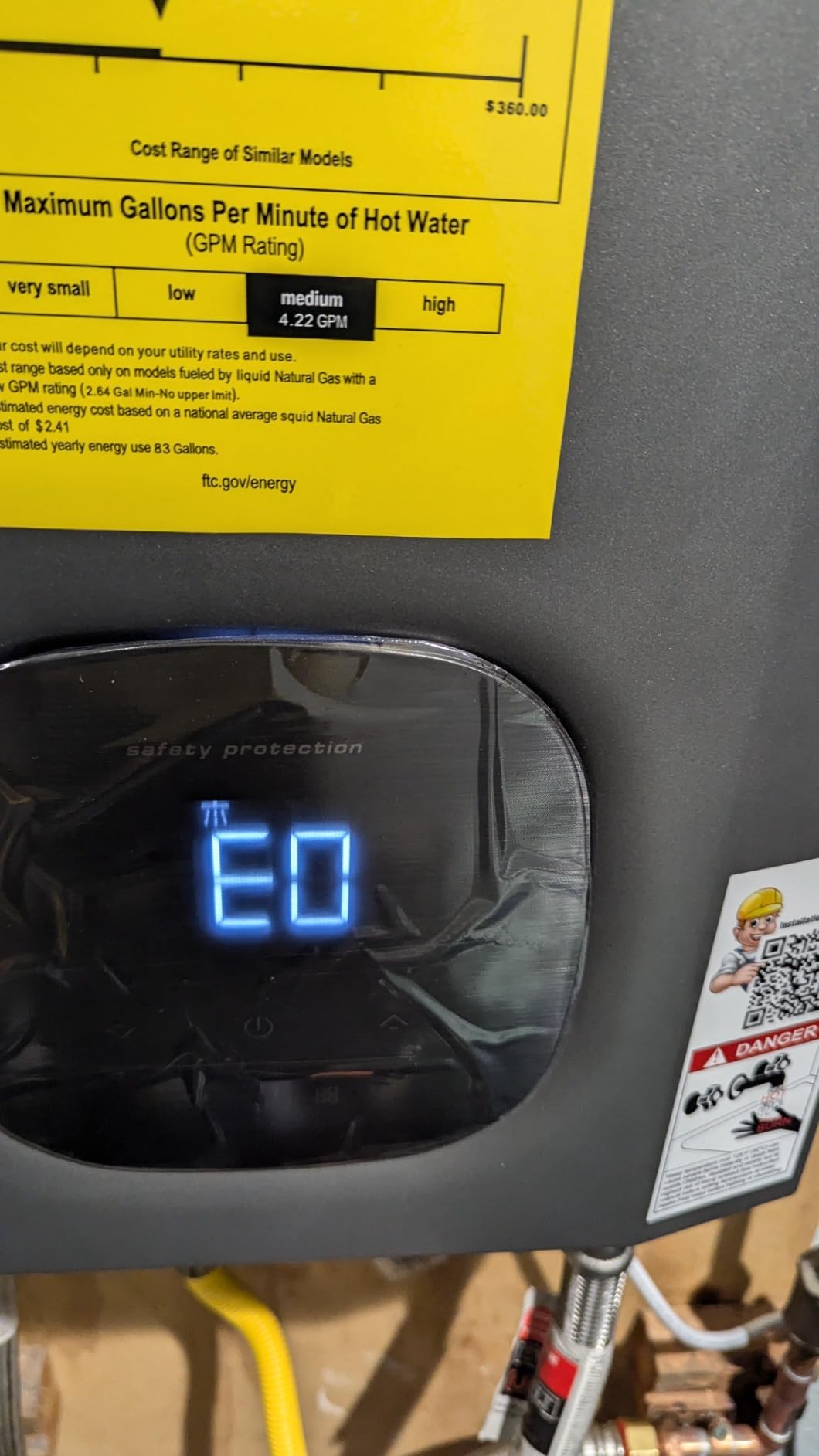
Cold weather is where reviews get less glowing. Some owners report error codes and temperature dropping out in freezing conditions, and the manufacturer guidance is to drain the unit through the pressure relief valve when it will sit unused in cold weather. The 2,000 foot elevation limit is a genuine cutoff for mountain homes, and the 2-year warranty is the shortest in this group.
Who this heater works well for
A family of four in a two or three bathroom home with an existing gas line will find 8.5 GPM comfortable. It is also the natural choice for a home replacing a gas tank, since the fuel and venting approach stay the same.
Who should buy something else
Homes above 2,000 feet cannot use it. Nor should a household that wants the longest possible warranty coverage or firm wintertime reliability in a freezing garage or unheated space.
5. MIZUDO 199,000 BTU Natural Gas Tankless – Best for Large Homes
MIZUDO Natural Gas Tankless Water Heater, 199,000 BTU, Indoor
10.3 GPM
199,000 BTU per hour
15.9W x 24.8H x 10.4D
55.5 pounds
Pros
- Highest flow rating here at 10.3 GPM
- WiFi app control with abnormal-condition alerts
- Plus or minus 1F control up to 149F for soaking tubs
- Sealed direct vent resists backdraft in wind
Cons
- Not rated above 3000 feet elevation
- Requires a dedicated concentric vent kit and professional gas work
- Some cold-weather error codes and hot-water cutoffs reported
This is the highest-flow unit in the roundup, and for a three or four bathroom house with a family of five that is not a spec-sheet flex, it is the point. Ten point three GPM with 199,000 BTU of input is sized for 2-3 bathrooms plus kitchen, laundry and dishwasher, which describes most large homes exactly.
The temperature range runs to 149F with plus or minus 1F gas modulation and a 107F default setting, which makes it one of the few units here you would actually use to fill a soaking tub. The low-flow activation threshold of 0.53 GPM means it starts heating for very small draws rather than idling.
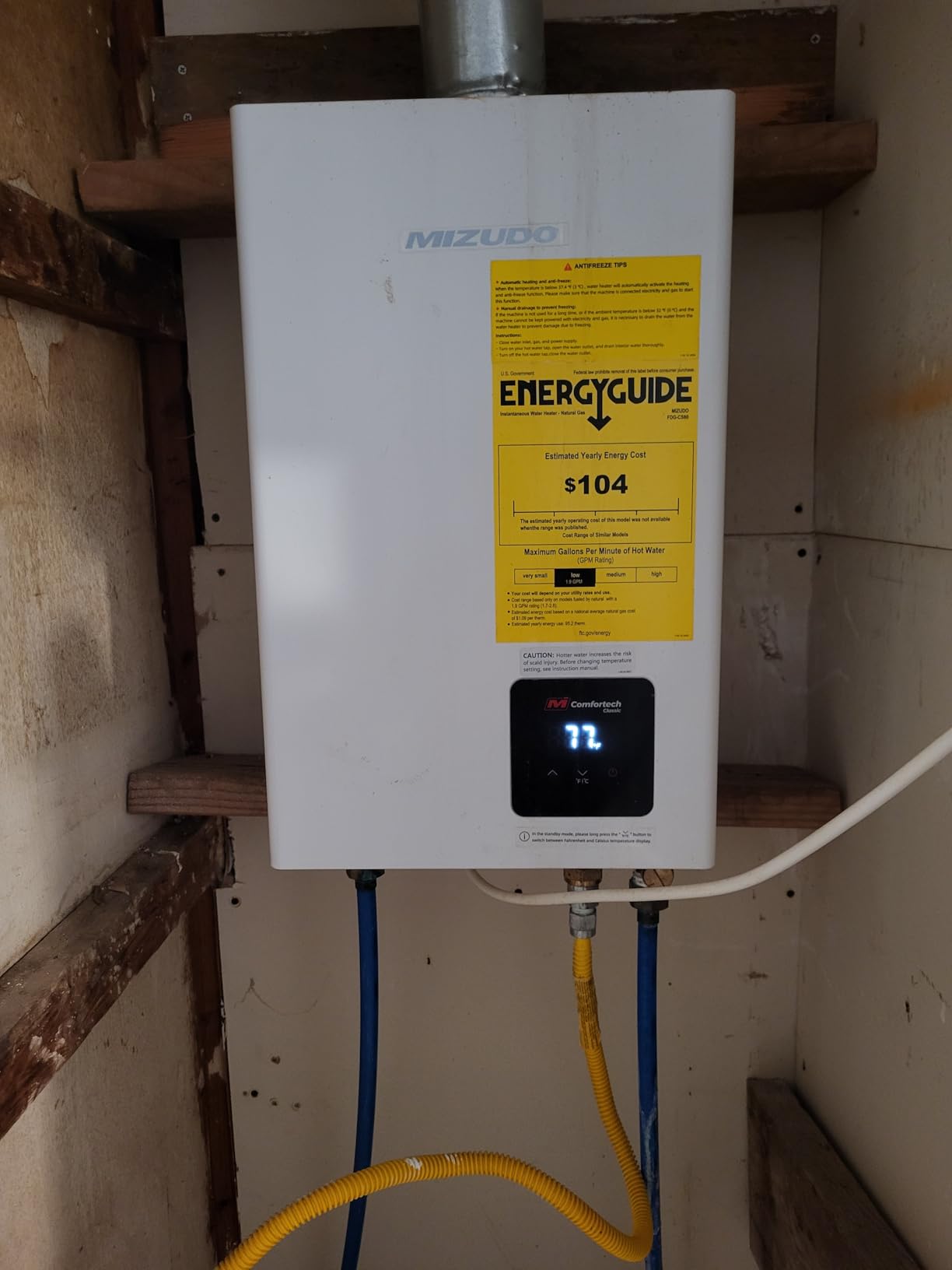
Two features set it apart from the rest of the group. The WiFi app control lets you raise the set temperature before a shower, and abnormal-condition alerts are built in. The sealed concentric direct-vent system draws combustion air from outdoors, so it holds up in windy weather where an indoor combustion design can be marginal.
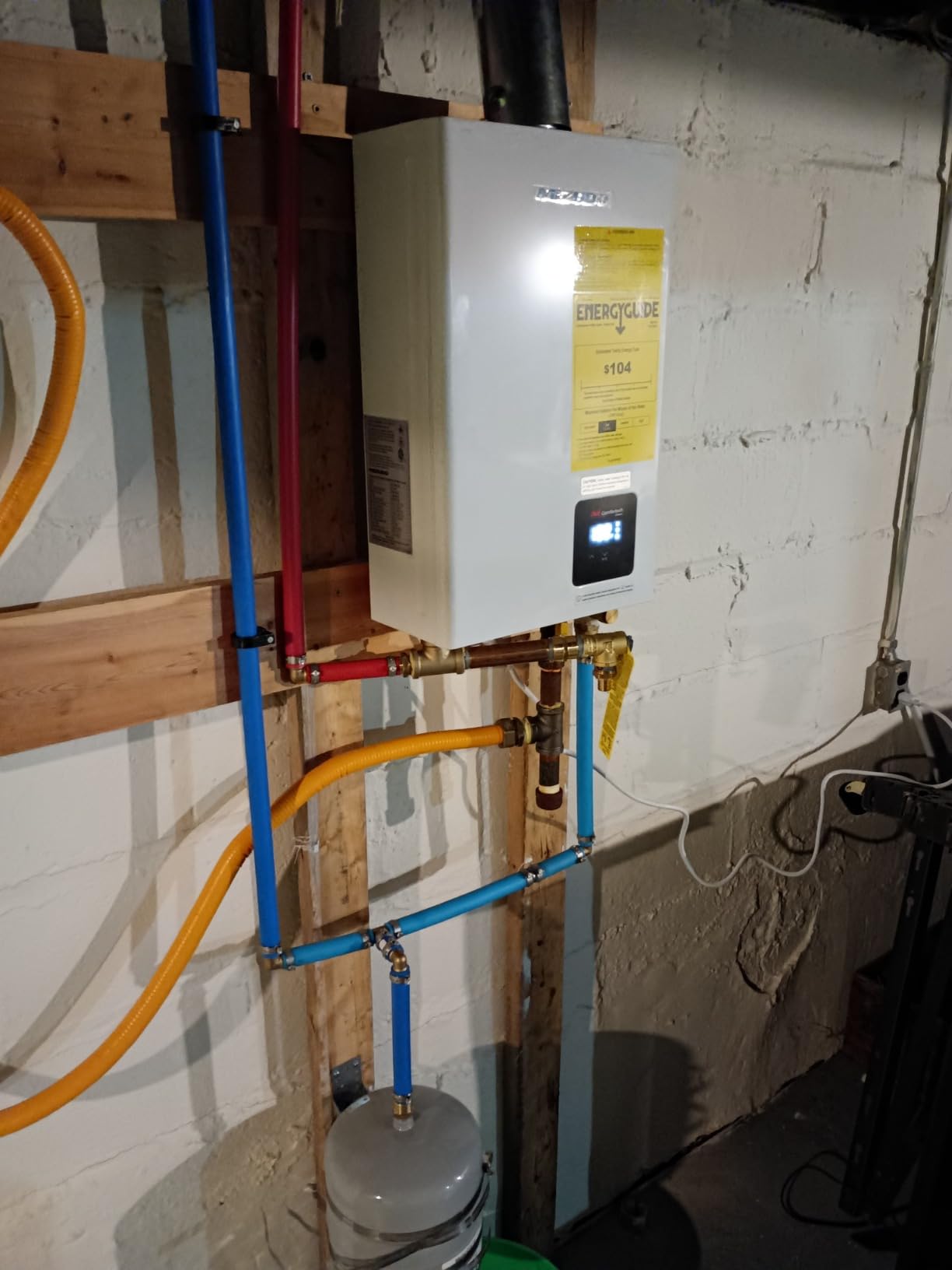
The tradeoffs are installation complexity and the elevation cap. It needs a dedicated concentric vent kit and professional gas hookup, and it is not rated above 3,000 feet. A smaller group of owners still reports error codes and hot-water cutoff cycles in cold weather, so the freeze protection story is not perfect.
Who this heater works well for
Large families, homes with three or more bathrooms, and anyone filling a tub who wants smart control. The 2-year full unit and 5-year heat exchanger warranty with 24/7 support is also a reason to shortlist it.
Who should buy something else
Small households will pay for capacity they never use, and anyone above 3,000 feet is out. It is also the wrong call in a home with no gas line and no plan to add one.
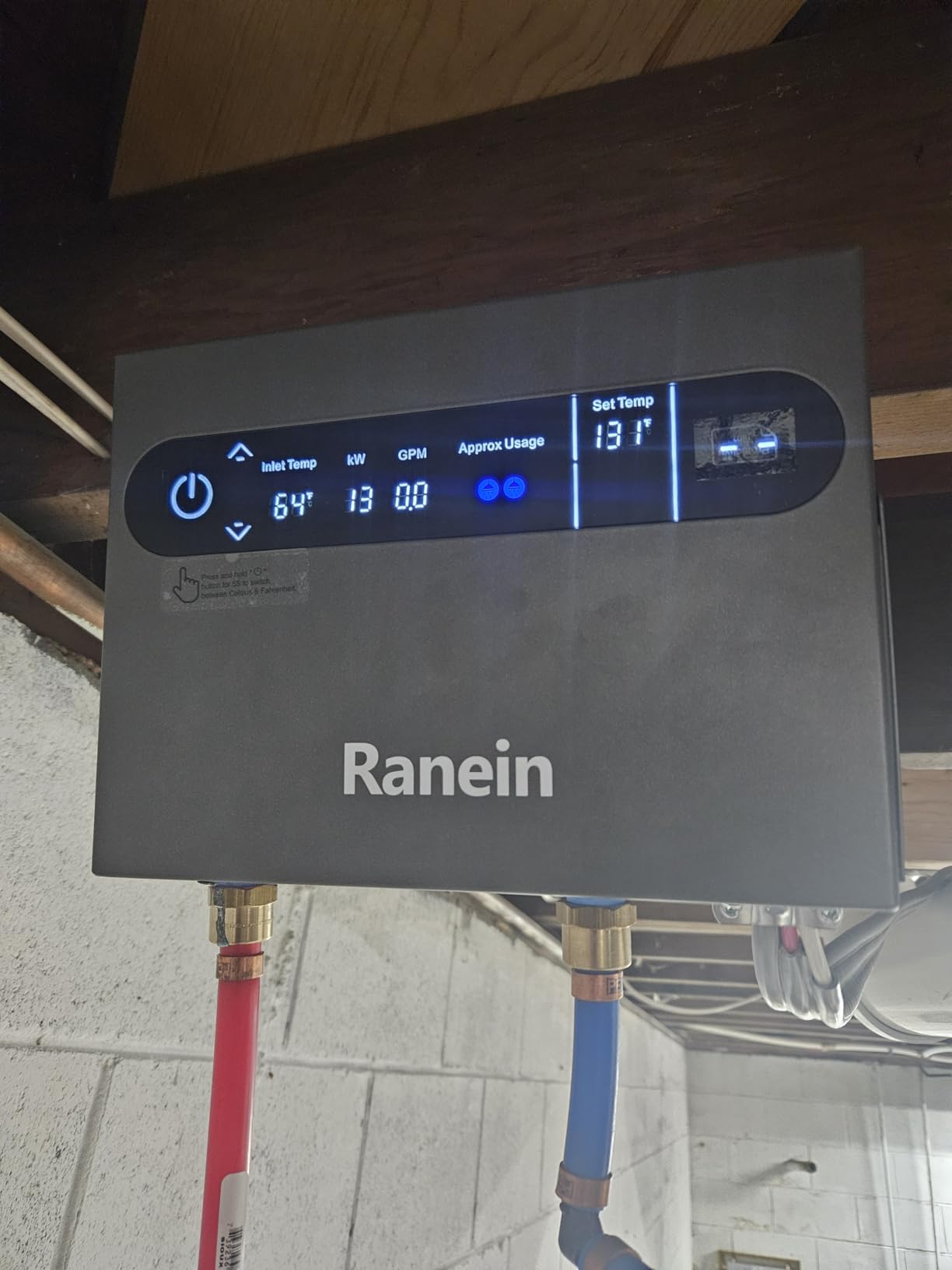
6. Ranein RE18K 18kW Electric Tankless – Best for Tight Utility Rooms
Ranein 18kW Tankless Electric Water Heater, Max 4.3 GPM, 240V, Whole House
4.3 GPM
18kW at 240V
13.8W x 18.7H x 3.1D
99% efficiency
Pros
- Very small wall body takes almost no space
- Heats quickly with no mid-shower cutoffs
- Brass and metal inlets feel better built than plastic
- Knob and LED control is simple to set
Cons
- Some units trip breakers randomly with slow support response
- Max 4.3 GPM limits simultaneous household demand
- Capacity numbering between variants is confusing
The RE18K is the pick when space, not flow, is the deciding factor. At 13.8 inches wide, 3.1 inches deep and just under 8 kilograms, it is the smallest unit in the roundup, and owners consistently mention never running out mid-shower once it is up.
We also appreciate the inlet and outlet construction. Reviewers notice the brass and metal fittings, and that is a fair upgrade over plastic ports, which are a common failure point in budget electric units.
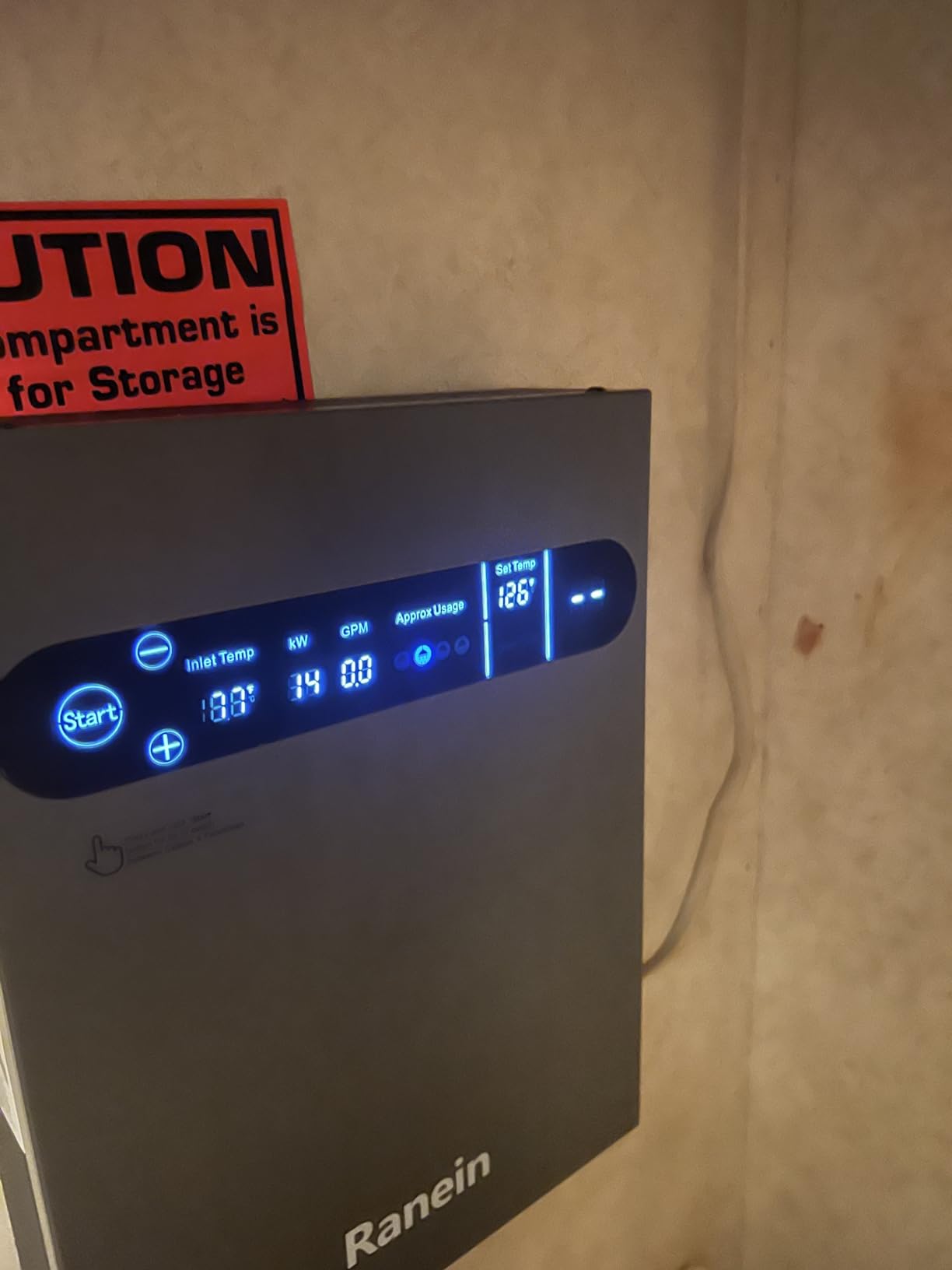
Temperature runs from 86F to 131F in one-degree steps on a knob and LED interface, which is less refined than the digital panels elsewhere but perfectly serviceable. Efficiency is listed at 99% thermal, with the manufacturer claiming up to 60% energy reduction compared with a tank heater.
The support complaint is the one to weigh. A small but vocal group reports random breaker trips and essentially unresponsive warranty service, which matters more here than in a larger unit because 4.3 GPM is already at the low end. The variant numbering is also confusing, so confirm you are buying the 18kW model and not a neighbour in the lineup.
Who this heater works well for
Condos, ADUs, basement apartments and small homes where a 3-inch wall mount is the only install that fits. It is a sensible single-bathroom or laundry-closet solution with no venting to plan.
Who should buy something else
Anyone expecting to run more than two hot water fixtures at once. And if after-sales support matters to you, the reported response times are a reason to consider a larger brand.
7. WINTEMP 36kW Electric Tankless – Highest Electric Flow in the Roundup
WINTEMP 36kW Electric Tankless Water Heater 240V ETL Certified WiFi
8.7 GPM
36kW at 240V, 150A max draw
13.7W x 21.5H x 5.2D
ETL certified
Pros
- 8.7 GPM covers 3-5 bathrooms in mild climates
- Owners report no rise in electricity usage
- Self-modulating control holds output temperature
- Quick install with a drilling template
Cons
- Requires 300A service
- four 40A breakers and 8/2 AWG cable
- Shuts down if flow rate runs too high
- WiFi connection quality questioned by some owners
At 36kW and 8.7 GPM, this is the most capable electric unit in the group, and it exists mainly to show you what the electrical gate really costs. The maximum draw is 150 amps, which means four 40-amp double-pole breakers, four runs of 8/2 AWG cable, and a 300-amp household service recommendation.
That requirement is not negotiable, and it is why we treat this unit as a new-build or panel-upgrade candidate rather than a general recommendation. If your electrical service cannot carry it, the conversation is over regardless of how good the heater is.
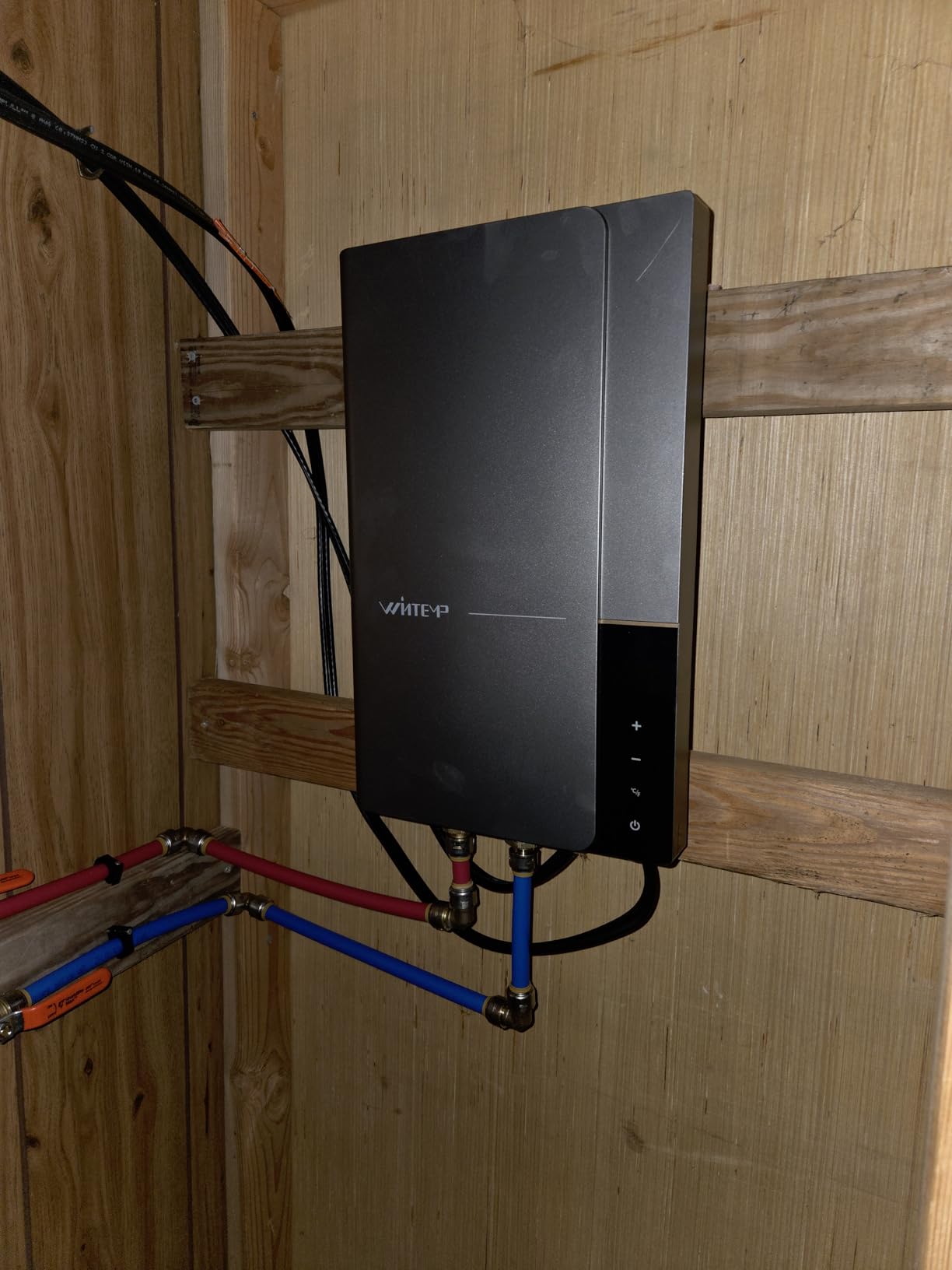
When the panel can carry it, the payoff is real. Owners in mild climates report it handling 3 to 5 bathrooms, and several mention that their electricity usage did not increase after switching away from a tank, which tracks with on-demand heating that eliminates standby losses.
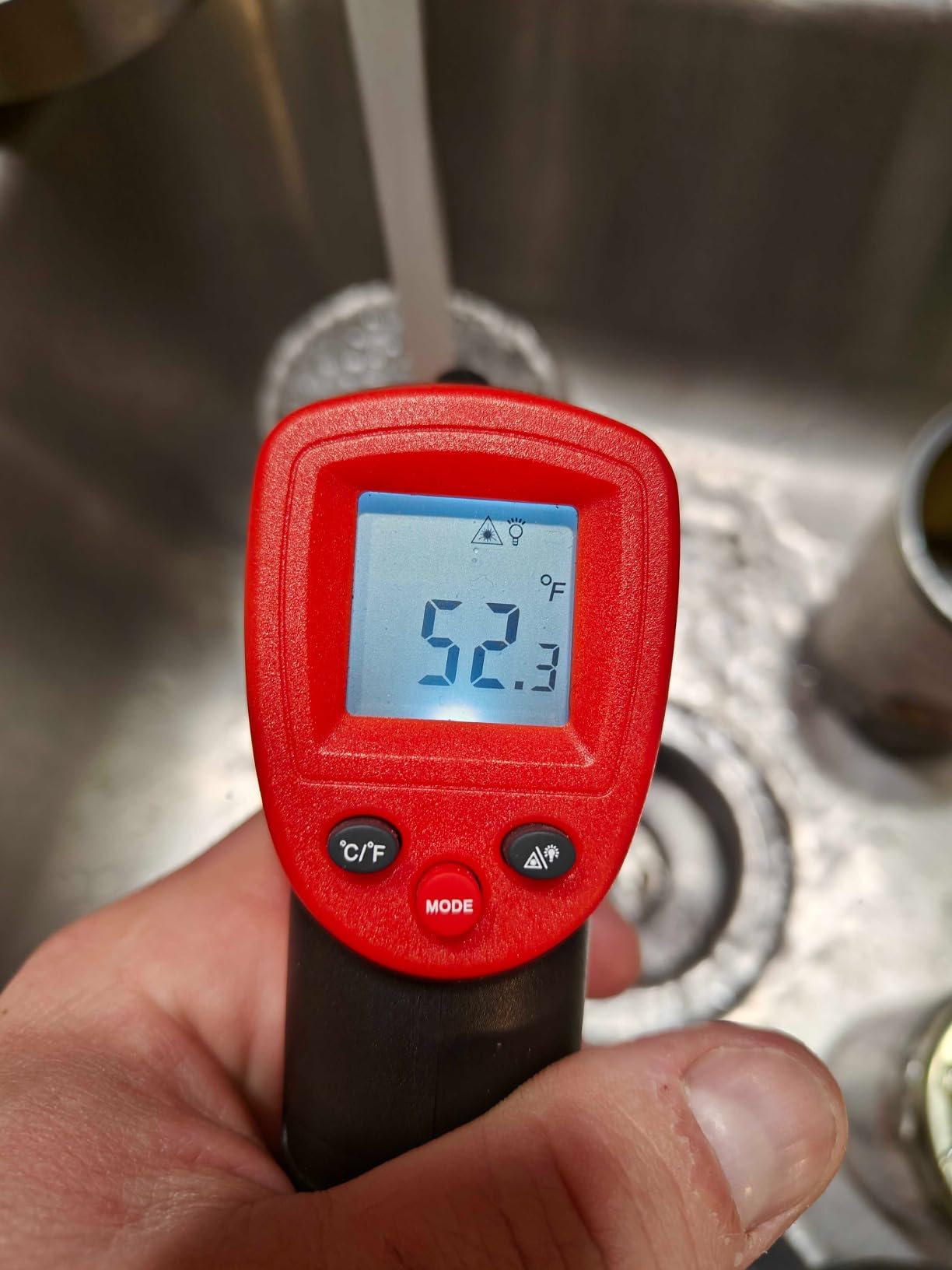
Two operational details matter. The unit can shut down if flow rate runs too high, so a flow regulator is worth adding. And while WiFi remote temperature control is convenient, some owners are skeptical of the connection quality, so treat it as a bonus feature rather than a reason to buy.
Who this heater works well for
New construction with a 300-amp panel designed in, or an existing home that is already being rewired. In a mild climate with 3 to 5 bathrooms, it is the only electric route to that level of simultaneous demand.
Who should buy something else
Any home on a 100, 150 or 200-amp panel. Four heavy cable runs and a service upgrade can cost more than a gas tankless install with no electrical work at all.
8. Rinnai V53DeN 5.3 GPM Gas Tankless – Best Warranty Coverage
Rinnai V53DeN Natural Gas Tankless Water Heater
5.3 GPM outdoor unit
81 kW gas burner
7.9 inch depth
33 pounds
Pros
- 15-year heat exchanger and 5-year parts and labor warranty
- Established brand with a deep service network
- 5.3 GPM serves up to four appliances
- Compact outdoor-rated footprint
Cons
- 5.3 GPM is modest for multiple high-demand fixtures
- Requires professional installation and code-compliant venting
- Registration within 90 days is needed to keep full labor coverage
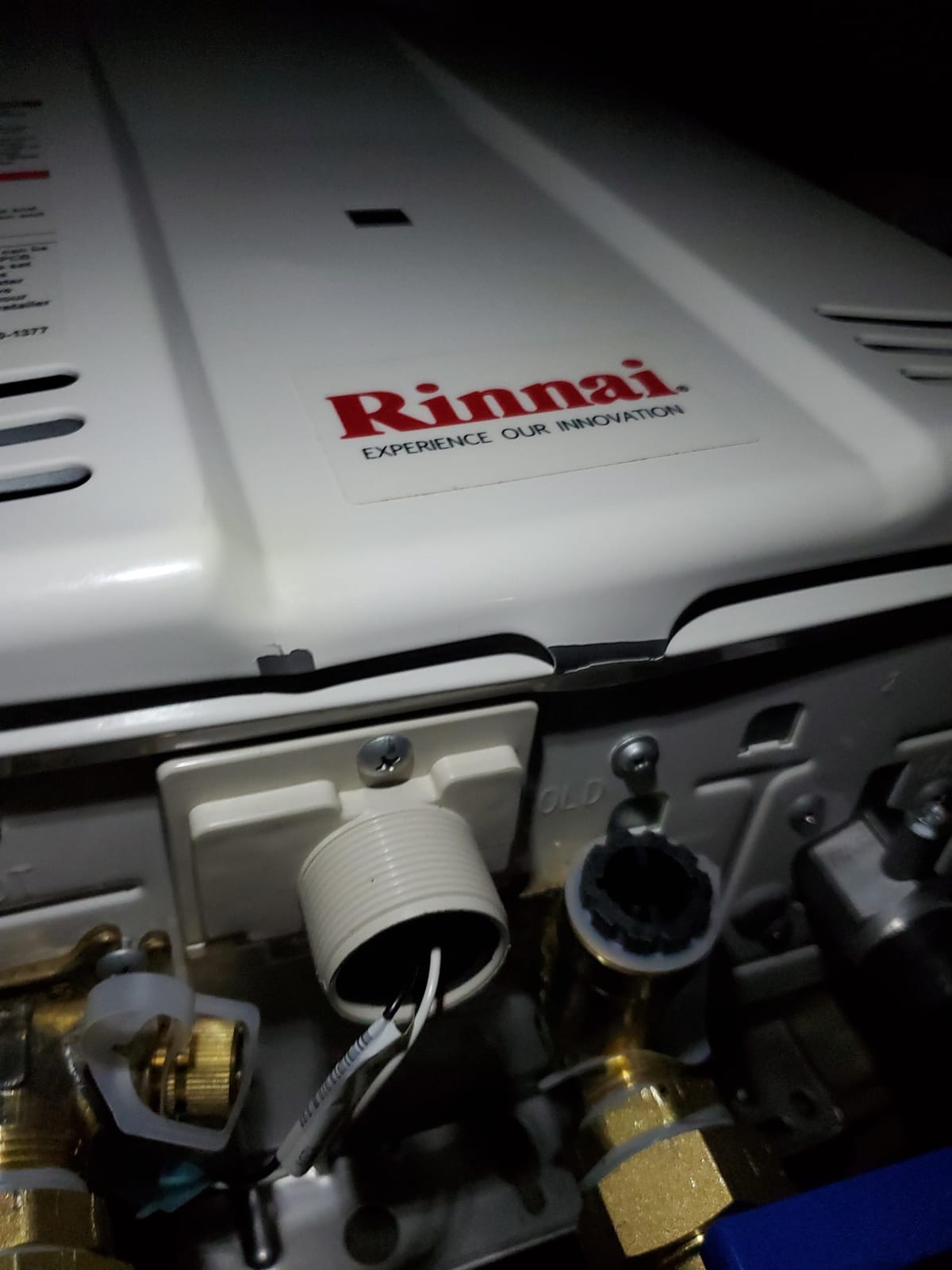
The Rinnai V53DeN is the brand-name answer in this roundup, and its reason for existing is warranty structure. The residential warranty runs 15 years on the heat exchanger, 5 years on parts and 5 years on labor, which is longer coverage than anything else here. You have to register within 90 days of installation to keep the labor portion, which is a detail many buyers miss.
It is an outdoor-rated unit, so the space it frees indoors is a real advantage in a tight mechanical area. Heating water only on demand removes standby losses entirely, and 5.3 GPM will serve up to four appliances in a home with moderate demand.
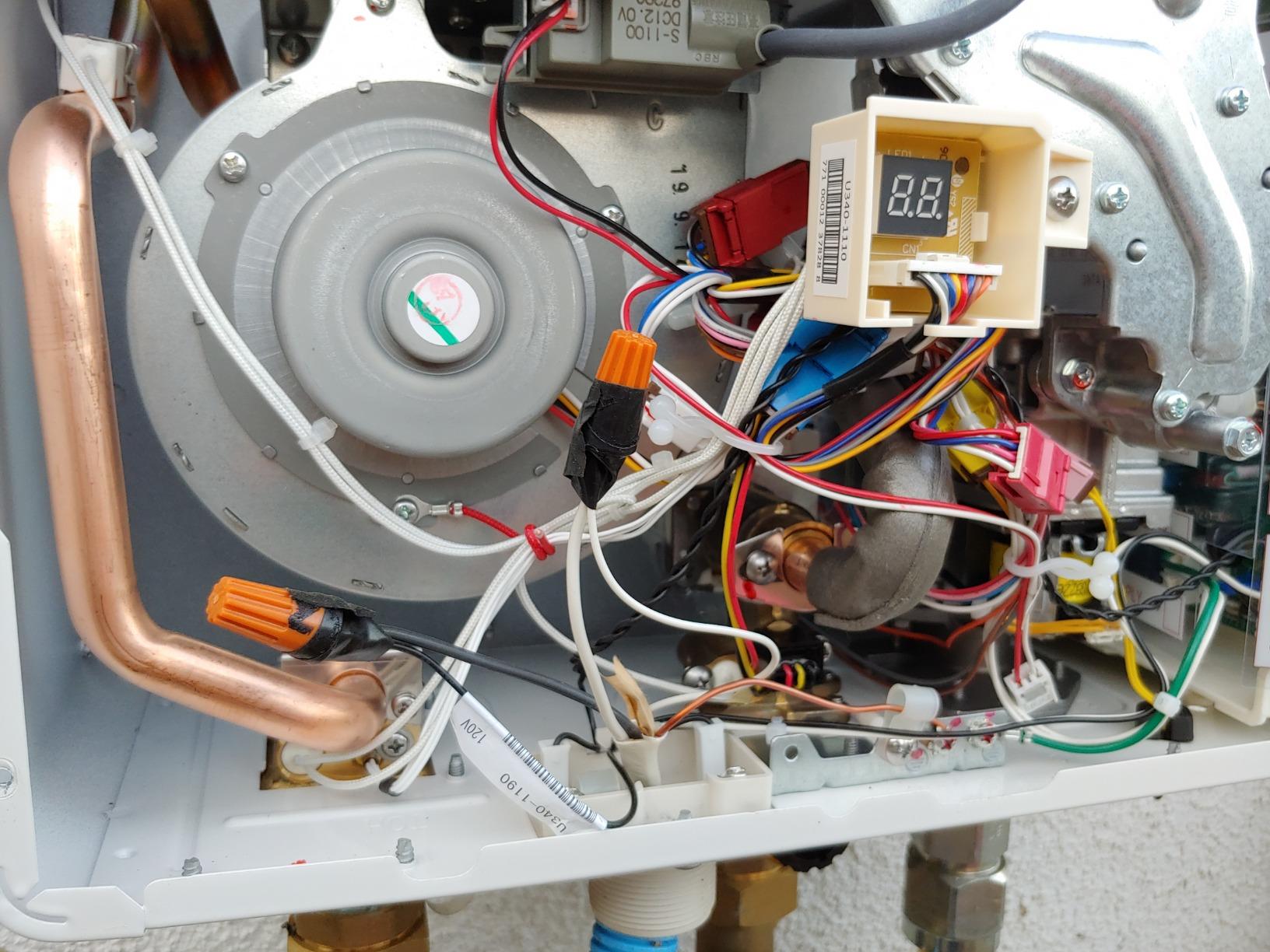
Owners value the brand reputation as much as the hardware, and forum discussion around tankless brands repeatedly names Rinnai for exactly that reason: parts and service are simply easier to find. The same homeowners who like that reputation note that brand loyalty is partly a service-network decision rather than a pure performance claim.
The honest limitation is capacity. At 5.3 GPM, a household that runs two showers and laundry together will feel the ceiling, and the unit still requires professional installation and venting to code. Propane and indoor variants exist in the same range, which is worth confirming before you order.
Who this heater works well for
Homeowners who plan to keep the unit a long time and care most about warranty coverage and service availability. It also suits a small to mid-size home with an outdoor mounting location.
Who should buy something else
Large households with multiple high-demand fixtures, and anyone without a suitable exterior mounting spot. Installation and venting still need a licensed professional either way.
9. thermomate CZ422NG Gas Tankless – Best Compact Gas Unit
ThermoMate CZ422NG, Natural Gas Tankless Water Heater Indoor, Up to 5 GPM
5 GPM
113,000 BTU natural gas
13.77W x 21.65H x 7D
0.81 UEF
Pros
- Body takes under a third the space of a tank heater
- CSA certified with an extensive safety list
- 3.5 inch LED display with error codes
- Oxygen-free copper exchanger at 98% efficiency
Cons
- 5 GPM is below what larger homes need
- Gas
- vent and water fittings must be sourced separately
- Professional installation generally required
The CZ422NG packs a gas burner into a 13.77 by 21.65 by 7 inch cabinet, and that footprint is its main argument. Owners converting from a tank talk about reclaiming an entire closet. The 5 GPM and 113,000 BTU rating sustains 105F from a 65F inlet, which covers two simultaneous showers in a moderate household.
Diagnostics are unusually good for the category. The 3.5 inch LED display shows error codes, and a flow sensor with a control chip that adjusts heating many times a second holds temperature to plus or minus 1F. Efficiency is listed at 98% thermal with a 0.81 UEF.
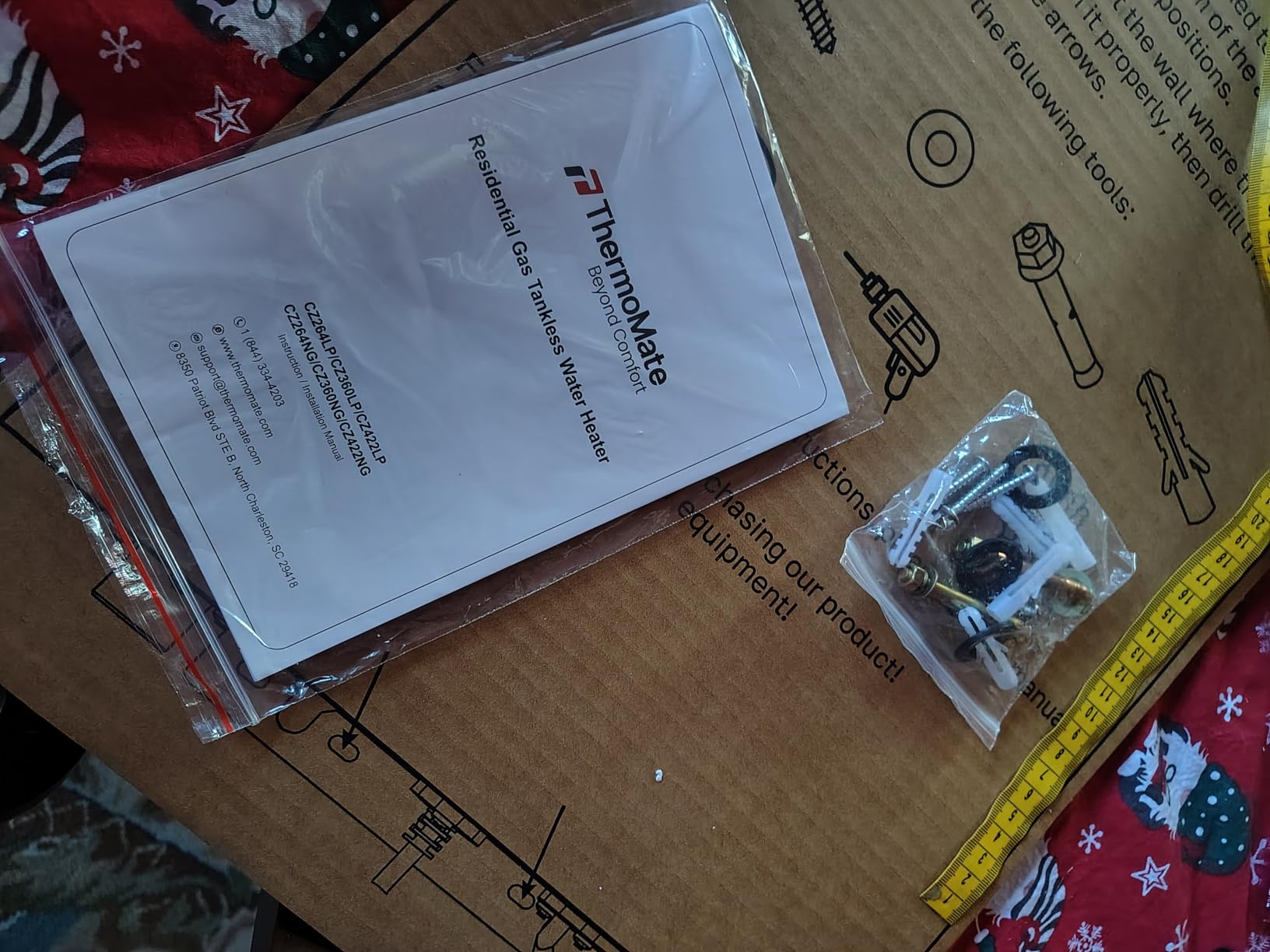
The safety list is long: boil-dry, freeze protection that activates at 41F, flame-out, timeout and overheat, all on a CSA-certified unit. It also plugs into a standard 120V outlet for power and monitoring, so you are not running a dedicated circuit for the electronics.
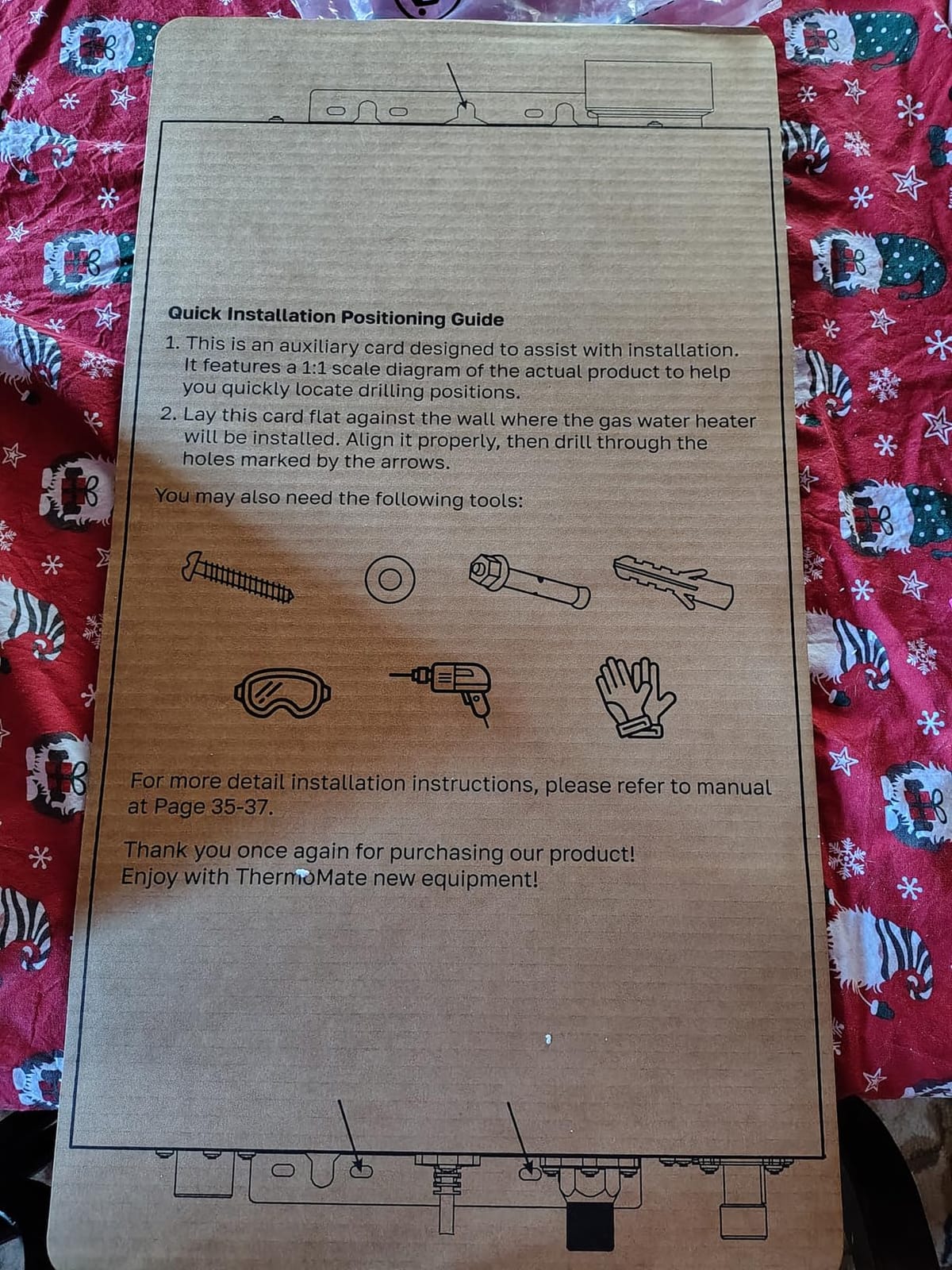
What you have to source separately is the gas line, the vent pipe and the water fittings, which surprises first-time gas buyers more than anything else on the list. And 5 GPM is a small number for a house with two full bathrooms and a laundry room, so check your peak demand before committing.
Who this heater works well for
Condos and small homes without a gas line currently, and anyone converting a small tank closet where every inch of mechanical space matters. Two-person households will find 5 GPM comfortable.
Who should buy something else
Families of four or more with multiple fixtures, and anyone who wants the unit to arrive install-ready. The accessory list is real work for a first-time gas install.
10. APUS 6.8 GPM Natural Gas Tankless – Best for App Control
APUS Natural Gas Tankless Water Heater, 140,000 BTU, Up to 6.8 GPM, Indoor
6.8 GPM with booster
140,000 BTU
7.09W x 21.26H x 7.09D
0.81 UEF
Pros
- Booster pump pushes flow up 130% to 6.8 GPM
- Smart Season Comfort Mode holds plus or minus 1F
- WiFi app control to raise temperature early
- Turbo fan runs 30% quieter than standard units
Cons
- Some owners find outlet temperature too cool for tub fills
- Extra fittings and hardware bought separately
- Needs full drainage if ambient nears 41F
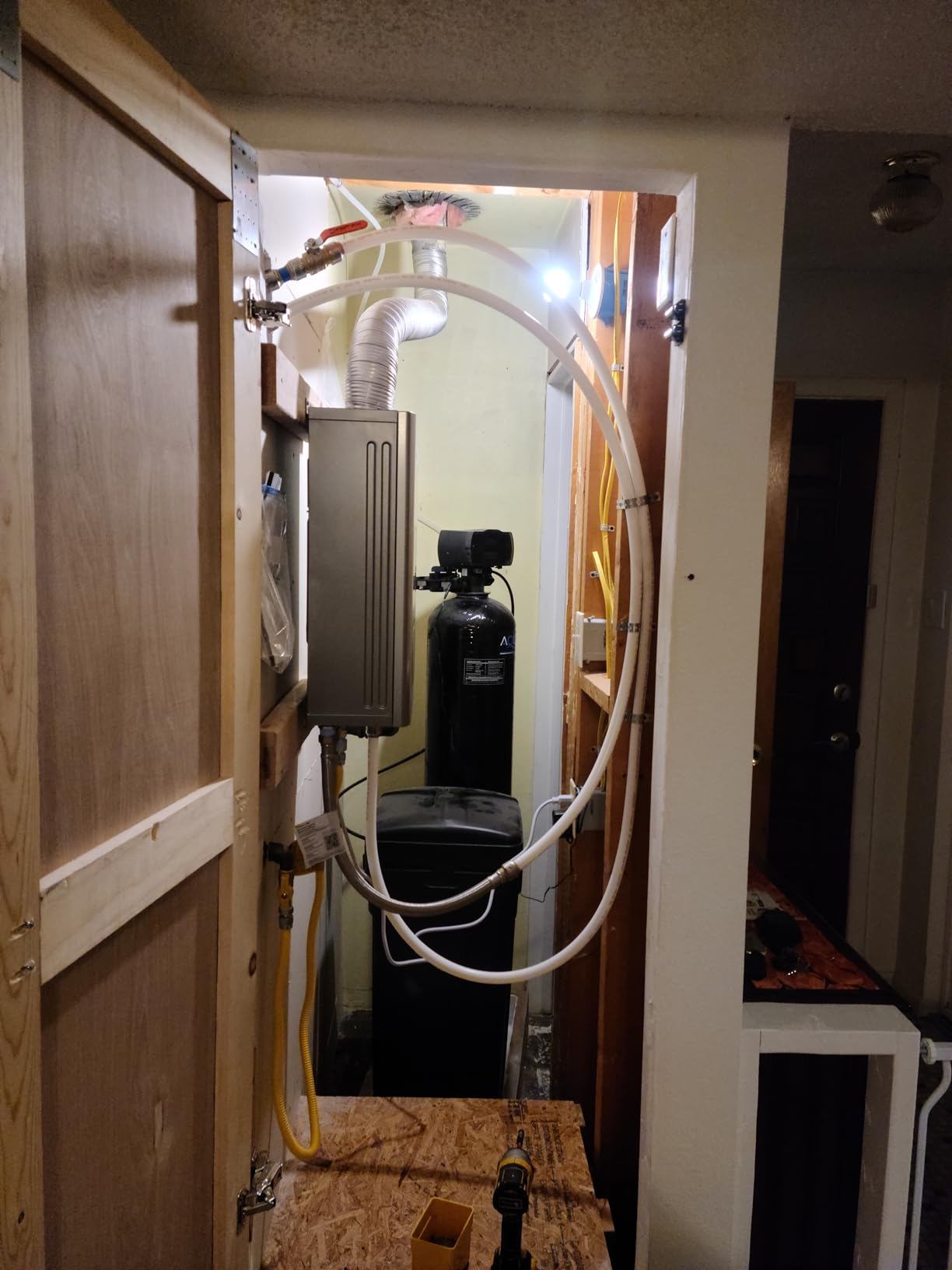
The APUS AP-AWH-Q20NG is defined by its booster pump, which raises flow up to 130% for a maximum of 6.8 GPM. Owners report running two showers and two sinks at once, and the oxygen-free copper heat exchanger with a 140,000 BTU burner handles the load.
The control story is the differentiator. Smart Season Comfort Mode holds temperature to plus or minus 1F, and the Tuya app lets you raise the set point before a shower instead of waiting for the water to catch up. There is also a 24/7 ECO smart cycle tied to a 0.81 UEF rating.
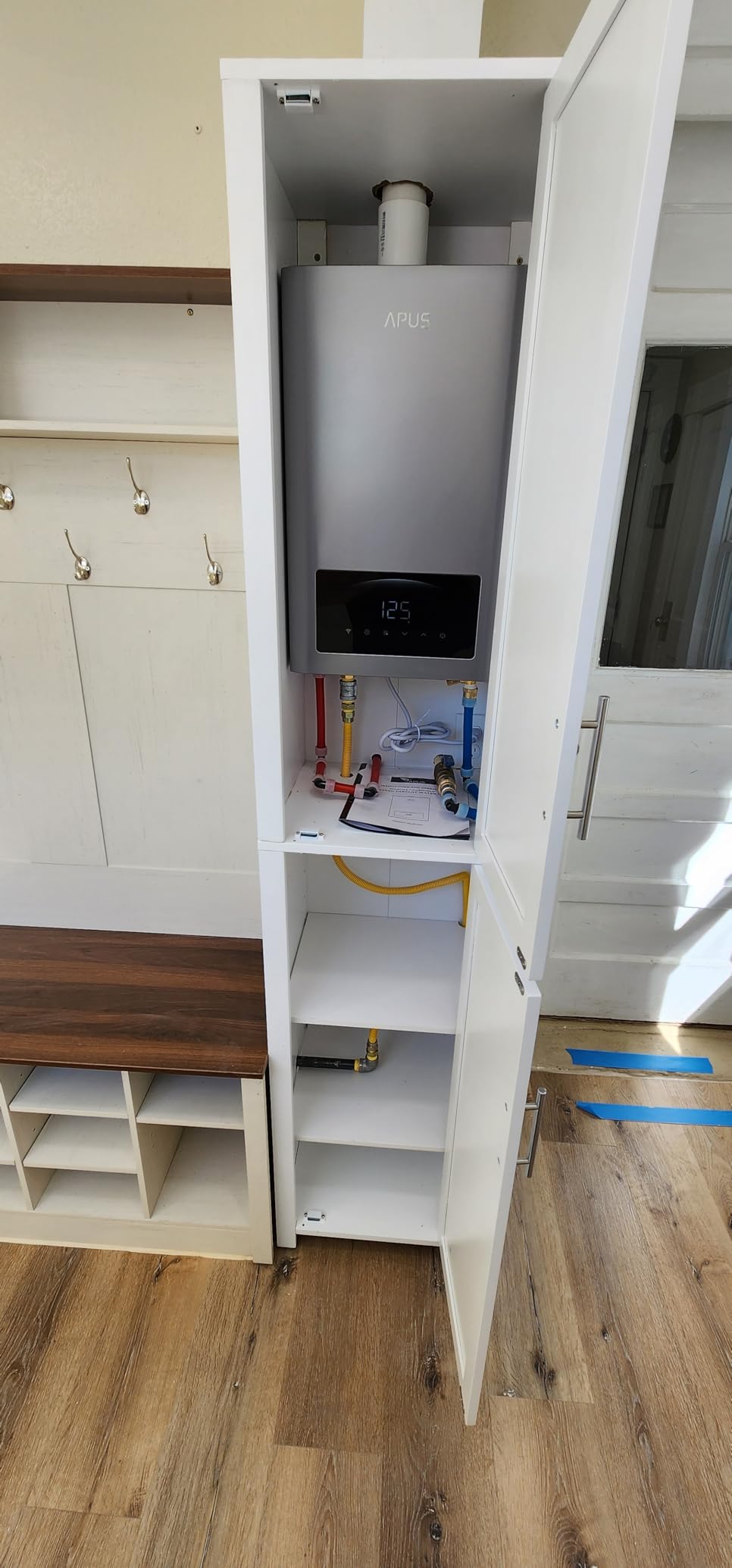
Sound levels get a mention in reviews, with a bottom turbo fan rated 30% quieter than a standard tankless unit. Installation is straightforward on the water and gas side with standard 1/2 inch NPT connections and a 120V plug, and a vent pipe and installation accessories are included in the box.
The real complaint is temperature at high draw. Several owners say the outlet runs too cool for filling a bathtub, which is a capacity issue rather than a defect. The unit also needs complete drainage if the ambient temperature approaches 41F, and initial ignition can fail if downstream flow is restricted.
Who this heater works well for
Households that want app control and who rarely fill a tub. Two to four people with two bathrooms is the sweet spot, and the included vent pipe simplifies the install.
Who should buy something else
Anyone whose hot water demand centers on tub fills, and anyone in a climate where the unit might sit in an unheated space below 41F without a freeze plan.
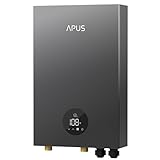
11. APUS 27kW Electric Tankless – Best Slim Electric Per Amp
APUS 27kW Electric Tankless Water Heater, 240V, Up to 6.5 GPM, 3s Instant
6.5 GPM
27kW at 240V
11.42W x 17.72H x 3.54D
99% efficiency
Pros
- Only 3.5 inches deep for a 6.5 GPM unit
- Handles 3-4 simultaneous household uses
- Self-modulation stabilises output temperature
- Memory recalls the previous set temperature
Cons
- Requires three 40A breakers and six 8 AWG cables
- Actual flow drops with inlet temperature and demand
- Professional installation and proper grounding recommended
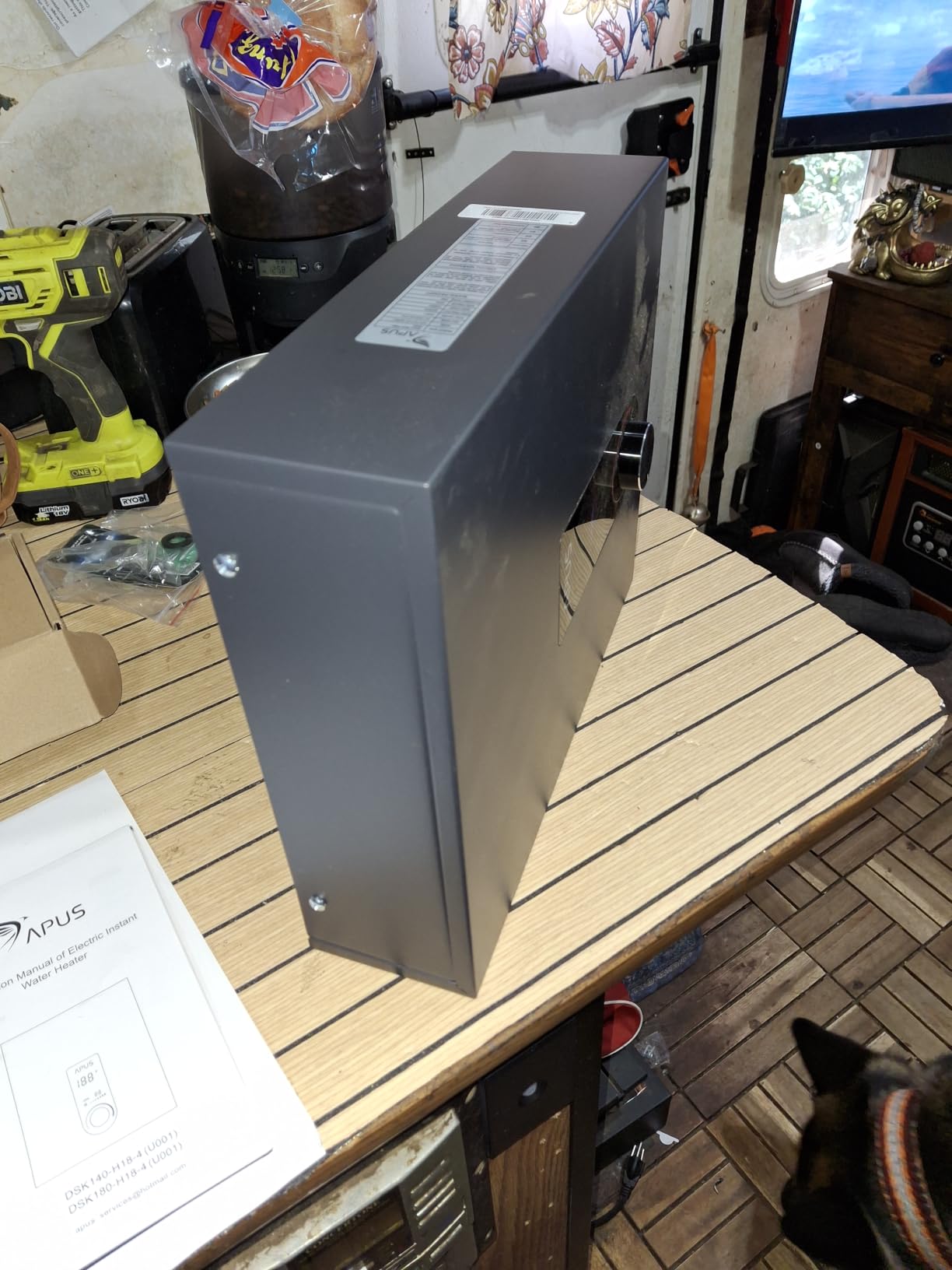
The 27kW APUS is the efficiency-of-package pick. It delivers up to 6.5 GPM from a body only 3.5 inches deep, and at 99% efficiency it heats water only when a tap opens, which is where the real energy savings versus a tank come from.
Owners highlight the multi-fixture capacity for a unit in this size class, and the self-modulating power output matched to real-time flow is what keeps the temperature stable rather than spiking. Temperature is adjustable from 86F to 140F in one-degree steps, with a memory function that recalls your last setting.
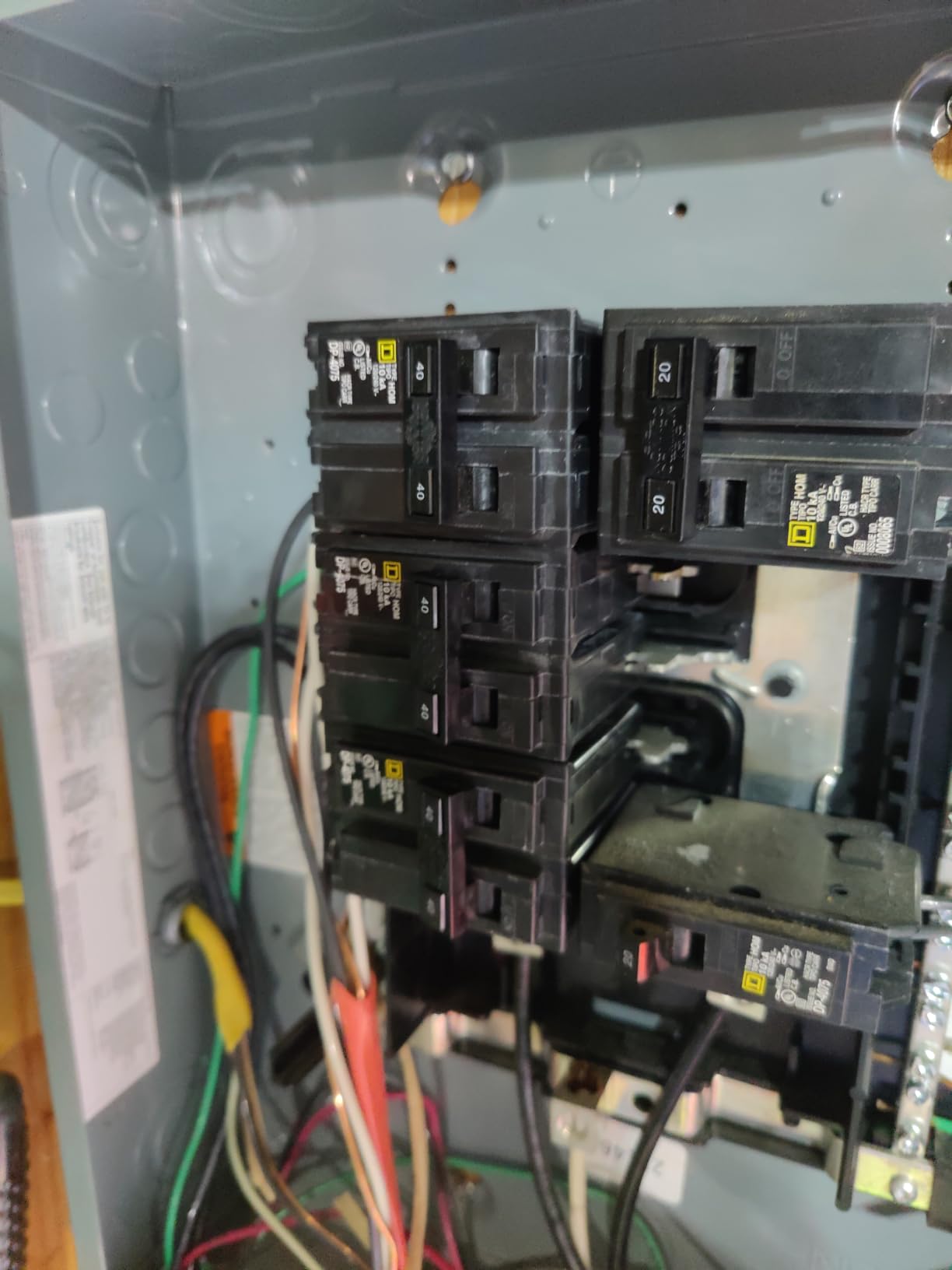
Installation is a 240V permanent hardwiring job with three 40-amp breakers and six runs of 8 AWG cable, and the manufacturer is clear that professional installation and proper grounding are expected. The included kit has the rubber mounts, screws, sealing rings and an installation guide card.
As with every electric unit here, actual flow depends on inlet temperature. Owners in cold regions report the 6.5 GPM rating shrinking noticeably when the supply water is cold, so size with a derating margin. The warranty is 2 years limited with 24/7 customer service.
Who this heater works well for
Three or four people who want a slim electric unit without dropping below 6 GPM, and homes with a 200-amp panel and space for three dedicated circuits.
Who should buy something else
Homeowners without the panel capacity for three 40-amp circuits, and anyone in a cold climate who needs the full 6.5 GPM in February.
12. Stiebel Eltron 24 Trend Electric Tankless – Best Silent Run
Stiebel Eltron Tempra 24 Trend Electric Tankless Water Heater, 24kW, 240V
24kW at 240V, 100A draw
16.63W x 14.5H x 4.63D
Made in Germany
Pros
- Highest average rating here at 4.5 stars
- Completely silent electronic operation
- US spare parts readily available
- 7-year leakage and 3-year parts warranty
Cons
- Needs two 50A breakers and 150A minimum service
- Some owners report difficulty processing warranty claims
- Laundry and shower together reduce available hot water
The Stiebel Eltron 24 Trend has the highest average rating in this group, and the reason is not a single feature so much as consistency. Owners describe a completely silent unit with a clear digital temperature display and steady output, and a solid copper heating system with auto-modulation means power adjusts before you notice a swing.
It draws 100 amps at 24kW, which is served by two 50-amp breakers and a 150-amp minimum service recommendation. That is a notably lighter electrical demand than the 24kW competitor in this roundup, which needs three 40-amp circuits for a lower flow rate.
Output temperature runs from 68F to 140F, and there is no venting requirement. Stiebel markets energy and cost savings of up to 34% in whole-home use, and owners frequently report lower power bills after moving off a tank.
Who this heater works well for
Anyone whose main complaint with a tankless unit is noise, and households in areas where a German-manufactured brand might raise parts questions. Reviewers confirm US spare parts are readily available, and the 7-year leakage warranty is the longest in this roundup. The 150-amp service requirement is also the most achievable of the high-flow electric options.
Who should buy something else
Large homes that run laundry and showers together, since owners report the available hot water drops when both are running. Anyone with a 100-amp panel is out. And if you are buying purely on warranty, note that owners report difficulty getting claims processed after a failure even though support itself has been strong when reachable.
How to Size a Tankless Water Heater for a Whole Home
Size by peak demand, not by average. Add up the flow rate of every fixture you expect to use at the same time, then check that the unit’s rating covers that number at your incoming water temperature. This is where most disappointed buyers go wrong, and it is also the reason we put flow rate first in the table above.
Start with the fixture count. A shower typically needs 2 to 2.5 GPM, a bathtub spout 3 to 4 GPM, a hand shower 1.5 GPM, a vanity sink 1 to 1.5 GPM, a kitchen faucet 1.5 to 3 GPM, a washing machine 2 to 3 GPM and a dishwasher 1 to 2 GPM. Two showers plus a washer and a dishwasher lands around 8 to 10 GPM, which is why the largest units in this roundup exist.
Then apply the temperature rise correction, and this is the step most sizing guides skip. Manufacturers rate flow at a specific inlet temperature and temperature rise, usually around 75F inlet and a 75F rise to reach 120F output. In a cold climate where inlet water drops to 45F, you need a 75F rise at a colder starting point, and the achievable GPM falls sharply for the same unit.
A rough guide by household: 1-2 people with 1-2 bathrooms usually need 4 to 6 GPM. A family of 3-4 with 2-3 bathrooms needs 6 to 8 GPM. Three or more bathrooms with a family of five or more needs 9 GPM or above. Add a derating margin of 20 to 30% if your incoming water is cold year-round.
Gas vs Electric Tankless for Whole Homes
Gas wins on flow, electric wins on simplicity. A gas condensing unit at 9 to 10 GPM will handle more simultaneous fixtures than any electric unit in a home without a major panel upgrade, and no venting decision needs to be made on the electric side. The trade is a gas line, venting code, and a combustion appliance to install and maintain.
Electric units here reach 99% thermal efficiency, well above gas, and they heat water only when a tap opens with no standby losses at all. The catch is amperage: the 24kW Rheem needs a 200-amp panel and three 40-amp breakers, while the 36kW WINTEMP needs a 300-amp service and four 40-amp circuits. The Stiebel Eltron at 150 amps is the most achievable high-flow electric option.
Forum discussion adds a practical filter that spec sheets do not. Homeowners on r/Plumbing and r/FirstTimeHomeBuyer repeatedly raise panel amperage as a hard gate, and one owner with a 300-amp panel described ruling electric tankless out entirely in favor of tankless gas. The same threads stress that finding a plumber who will actually service the unit matters as much as the brand on the box.
What Plumbers and Homeowners Say About Tankless Brands
Across r/Plumbing, r/pittsburgh, r/indianapolis and r/longbeach, the consensus is less about specs and more about service. Navien is frequently called the number one choice by plumbers, and Rinnai and Bosch are chosen specifically because parts and technicians are easier to find, not only for performance. A homeowner in Indianapolis described going tankless and being happy, but struggling to find an honest installer.
Another theme worth knowing before you compare brand tiers: several commenters pointed out that some of these brands are effectively rebadged versions of the same Bosch platform, which makes brand loyalty look more meaningful than it really is. One commenter recommended a different brand entirely on exactly that basis, noting that Rinnai and Bradford White are rebadged Bosch units.
There are complaints too. Newer Rheem models are reported by some owners to use more plastic parts, raising longevity questions, and the most common forum complaint across all brands is descaling cost plus difficulty finding a plumber willing to service the unit. On sizing, one 300-amp-panel owner noted that tankless gas, a heat pump electric heater, or a standard tanked gas unit were the realistic options once the electrical constraint was applied.
When Tankless Is the Wrong Choice
Tankless is the wrong call in a small home with one bathroom. At 4 GPM of flow, a household of one or two gets no real benefit over a heat pump or conventional tank, and you take on descaling and maintenance for the privilege. Forum buyers make this point repeatedly, describing heat pump water heaters as looking great on paper with real-world drawbacks, and concluding that a smaller household often gets more from a conventional unit.
It is also wrong without a gas line if you want high flow. Electric at 8 GPM requires a 300-amp service, and a panel upgrade can cost more than the heater. In hard water areas, an unconditioned tankless unit scales faster, and skipped descaling shortens the life of the heat exchanger, so a softener or a scale inhibitor becomes part of the budget.
Finally, treat the installation quote carefully. Forum homeowners describe install quote shock as one of the biggest surprises, because the unit price is far below the installed price once venting, gas line work, electrical circuits, permits and a recirculation loop are added. Get a written installed number, not a unit number.
How to Read a Tankless Water Heater Spec Sheet
Read five numbers and ignore the rest. Flow rate in GPM is the capacity. Input rating in BTU for gas or kW for electric tells you how hard the unit works to deliver that flow. The electrical breaker count and minimum panel amperage decide whether electric is even possible. The warranty term tells you who pays when the heat exchanger fails. Elevation limit decides whether you can install it at all.
Condensing versus non-condensing matters more to the spec sheet than most buyers expect. Condensing units extract heat from the exhaust and reach higher efficiency, and they pair better with a recirculation loop. Non-condensing units are simpler and cheaper to install but vent warm moist air. The 199,000 BTU and 8.5 GPM gas units in this roundup use forced-draft blowers for stable combustion, which is the middle ground.
Efficiency ratings carry two labels. Uniform Energy Factor applies to residential units and runs higher; Energy Factor is the older gas-tankless scale. A gas unit at 0.81 UEF here is solid, and electric units listed at 99 to 99.8% are effectively at the ceiling, so do not pay a premium for a fraction of a percent between two electric models.
Frequently Asked Questions
What is the best tankless water heater for a whole house?
For most households, the Rheem RTEX-18 at 4.4 GPM and 18kW is the best balance of flow, service history and install difficulty, with 2185 reviews behind it. Homes with two full bathrooms should step up to the Rheem RTEX-24 at 5.9 GPM, and three-bathroom homes should look at gas units in the 8.5 to 10.3 GPM range. Flow rate, not brand, decides whether a unit fits your house.
How many GPM do I need for tankless water heater sizing?
Add the flow rate of every fixture you expect to run at once. One to two people with one or two bathrooms need roughly 4 to 6 GPM. A family of three or four with two or three bathrooms needs 6 to 8 GPM. Three or more bathrooms with five or more people needs 9 GPM or above, and cold incoming water means sizing 20 to 30 percent above the rated figure.
What is the best whole house electric tankless water heater?
The Rheem RTEX-24 is our pick, delivering 5.9 GPM from 24kW with no venting required. It needs three 40-amp double-pole breakers and a 200-amp minimum service, so confirm your panel before buying. For the highest electric flow, the WINTEMP 36kW reaches 8.7 GPM but demands a 300-amp service and four 40-amp circuits. The Stiebel Eltron 24 Trend is the quietest option at 100 amps.
What is the most common problem with tankless water heaters?
The most common problem is running out of hot water, and in the vast majority of cases that is an undersized unit rather than a defective one. The second most common is scale buildup in hard water areas, which reduces heat transfer and eventually restricts flow. Error codes and cold-weather failures appear in reviews on the gas units, particularly where freeze protection is not winterized.
What brand of tankless water heater is the most reliable?
Reliability rankings on plumbing forums lean toward Navien, which is frequently called the top pick by plumbers, and toward Rinnai and Bosch, which are chosen for how easy parts and technicians are to find. The Rinnai V53DeN in this roundup carries a 15-year heat exchanger and 5-year parts and labor warranty. Remember that some brands are rebadged versions of the same Bosch platform, so service network matters as much as the badge.
Conclusion: Which Whole-Home Tankless Water Heater to Buy
The best tankless water heaters for whole homes come down to two questions: how many gallons per minute does your busiest minute need, and what can your panel or gas line actually deliver. For a one or two bathroom home, the Rheem RTEX-18 is the proven pick. For two full bathrooms, the Rheem RTEX-24 handles the simultaneous demand that trips up smaller heaters.
For three or more bathrooms, the choice is gas. The Ranein at 8.5 GPM covers a mid-size house, and the MIZUDO at 10.3 GPM covers a large one with app control and tub-capable temperatures. The Stiebel Eltron 24 Trend earns its place as the quietest unit here and the most achievable high-flow electric option at 150 amps of service.
Before you order, check your panel amperage, confirm the elevation rating if you live in the mountains, and get a written installed price that includes venting and electrical work. Those three checks prevent most of the disappointment we saw in reviews. Model lines in this category turn over quickly, so verify current specifications before you buy, and ask your utility about rebates for high-efficiency water heating before the 2026 buying season is out.