
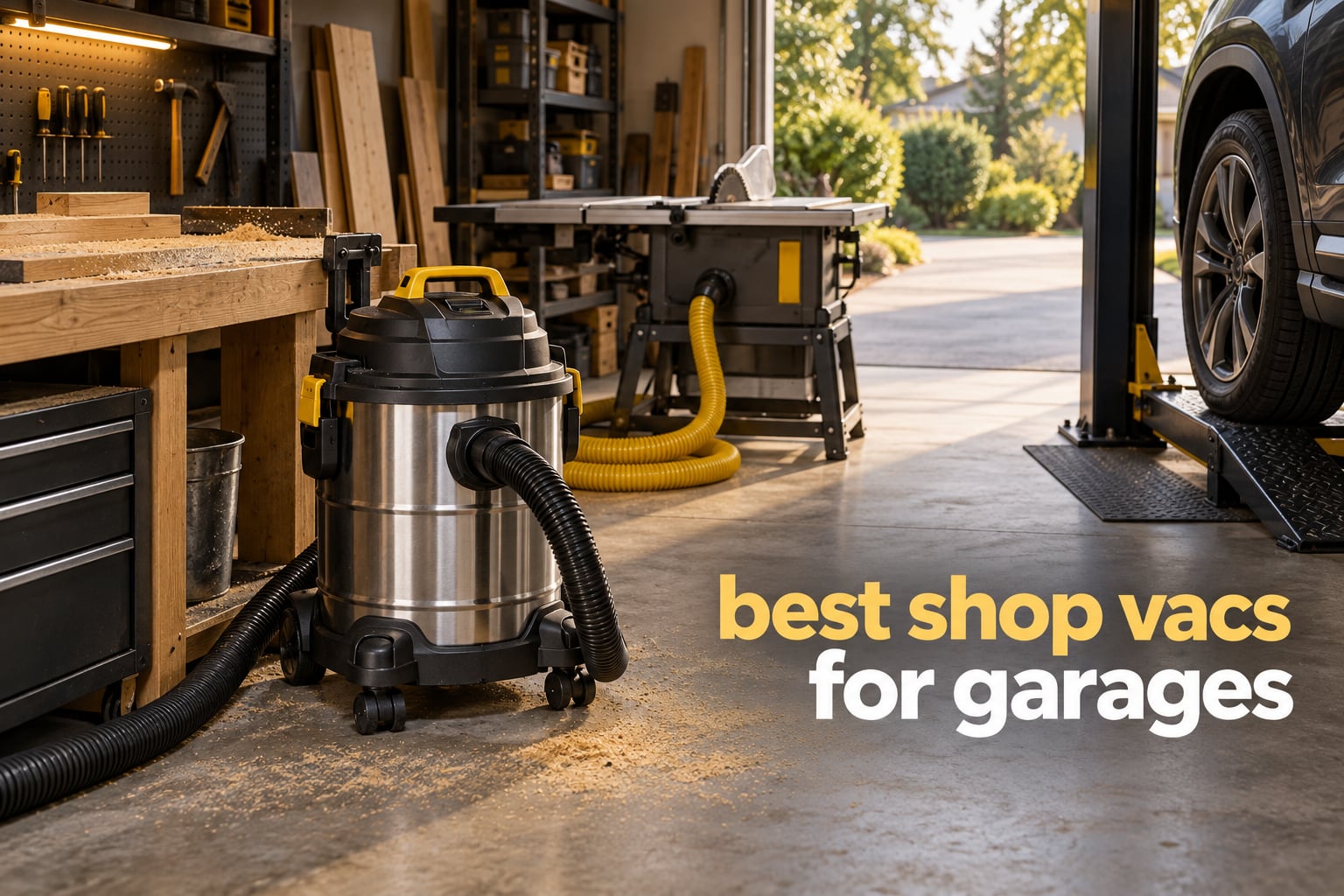
Short answer on sizing: a one-car garage is well served by a 5 to 6 gallon wet/dry shop vac, and a two-car garage usually wants 12 to 16 gallons with a cord long enough to reach the back corner. What size shop vacuum is best for a garage matters less than the filter, because a small tank with a good filter beats a big tank that chokes on concrete dust every ten minutes.
That is the whole argument this roundup makes. Garage floors collect concrete and cement dust from the slab, drywall dust from sanding joints, sawdust from a table saw, road salt and grit tracked in on winter tires, plus the standing water that comes off a wet car. A household upright or a robot vacuum handles none of that. We ranked the best shop vacs for garages against those specific jobs rather than against a spec sheet, because the numbers on the box and the results on a dirty slab are two different conversations.
Every pick below has a named garage job it wins, plus an honest drawback. We worked through the full category, normalized the published specs for all ten units, and read thousands of owner reviews to find the recurring failure modes. We are not a lab that re-tests everything from scratch, and we say where that matters.
Ten models in capacities from 2 gallons to 16 gallons, all but one corded, plus one unit that runs on a battery or a cord and one wall-mounted system for people whose problem is storage rather than suction. Let us get into it.
Table of Contents
Top 3 Shop Vacs for Garages Right Now (October 2026)

CRAFTSMAN 16 Gal 6.5 HP Shop Vac
- 16-gallon tank
- 6.5 Peak HP motor
- 2-1/2 inch Dual-Flex hose
- Built-in blower port
- 69 dB


Vacmaster Blue Line 12-Gallon
- 12-gallon tank
- 106 CFM airflow
- Detachable blower
- 22 ft. reach
If you want the short version, those three cover the most ground. The CRAFTSMAN 16-gallon is the one we would buy for a working two-car garage. The Stanley is the pick if the budget is the first constraint and you just need a competent vac. The Vacmaster 12-gallon wins the middle ground, with real airflow and a blower that detaches with one hand.
All 10 Shop Vacs for Garages Compared in 2026
| Product | Specs | Action |
|---|---|---|
| CRAFTSMAN CMXEVBE17595 16 Gallon |
|
Check Latest Price |
| Stanley SL18116P 6 Gallon |
|
Check Latest Price |
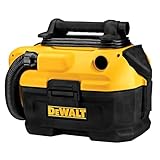 DEWALT DCV581H 2 Gallon DEWALT DCV581H 2 Gallon |
|
Check Latest Price |
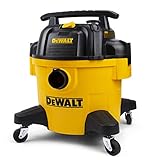 DEWALT DXV06P 6 Gallon DEWALT DXV06P 6 Gallon |
|
Check Latest Price |
| Vacmaster VBV1210 12 Gallon |
|
Check Latest Price |
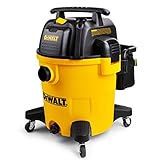 DEWALT DXV12P 12 Gallon DEWALT DXV12P 12 Gallon |
|
Check Latest Price |
 WEN VC4710 5 Gallon WEN VC4710 5 Gallon |
|
Check Latest Price |
 Giraffe Tools Grandstorm Wall Mount Giraffe Tools Grandstorm Wall Mount |
|
Check Latest Price |
 Vacmaster Beast VFB511H 5 Gallon Vacmaster Beast VFB511H 5 Gallon |
|
Check Latest Price |
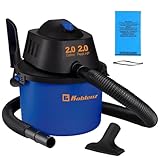 Koblenz WD-2L 2 Gallon Koblenz WD-2L 2 Gallon |
|
Check Latest Price |
Read that table as a shortlist, not a ranking. Every unit has a garage it suits and a garage it does not. The two DEWALT 12-gallon and 6-gallon models overlap on paper, and the two Vacmasters differ more in practice than the gallon numbers suggest.
How We Picked These Garage Shop Vacs
We normalized the published specification for all ten units first: capacity, airflow in CFM, maximum suction in inches, peak horsepower, hose diameter, cord length, filter type, weight and noise where a manufacturer publishes it. That table is the fact base everything else sits on.
Then we read the owner reviews, weighting recurring complaints over isolated ones. A single reviewer who hates the hose weight matters far less than forty reviewers describing the same hose slip. We looked for the garage failure modes specifically: how fast the filter clogs on concrete dust, whether the drain valve works, whether the casters survive a concrete slab, and whether the unit trips a 15-amp circuit when a compressor is already running.
Here is where we are honest about the limits. We did not run our own timed sawdust and water-drain protocol on all ten units. Where a number below comes from a manufacturer rather than from us, we attribute it, and where owners disagree with a printed figure, we say so. Owner reports are a genuine signal for durability over five years and a weak one for fine suction differences.
One forum reality worth repeating before the picks: the practical limit of a 120-volt, 15-amp circuit is around 2.2 horsepower of real output, so any label reading 5 or 6 peak horsepower is a marketing convention rather than a measurement. Airflow and water lift are the numbers that predict whether a vac will lift grit off a floor.
Which Shop Vac Handles Which Garage Job
This is the mapping that decides most garage purchases, because people rarely buy a shop vac for a generic reason. They have a specific problem, and the wrong machine makes that problem worse.
Sawdust from a table saw or miter saw: the CRAFTSMAN 16-gallon, with a large tank that lets you empty once instead of four times.
Drywall and joint compound dust: a machine with a washable fine-dust filter, such as the WEN 5-gallon, with the caveat that you need a prefilter strategy.
Concrete and masonry dust off the slab: the Vacmaster Beast 5-gallon, whose cartridge plus bag combination is rated to 1 micron.
Water and coolant spills: the DEWALT DXV12P 12-gallon, with a large drain port and 85 inches of maximum suction.
Car interior detailing: the Koblenz WD-2L for quick spot work, or the Stanley 6-gallon if you want reach around the whole vehicle.
Winter grit and road salt tracked indoors: the DEWALT DXV06P 6-gallon, where a narrow hose gives more lift on small heavy debris.
No floor space to spare: the Giraffe Tools Grandstorm, wall mounted with a 30 foot retractable hose.
Attached garage where noise travels indoors: the Vacmaster Beast 5-gallon, which ships with a noise diffuser.
Note what drives two of those lines. Grit cleanup is a lift problem, so a narrower hose beats a wider one. Long cleanup sessions are a capacity problem, so the big tank wins. No single model wins both.
1. CRAFTSMAN CMXEVBE17595 16 Gallon – Best Overall for a Working Garage
CRAFTSMAN CMXEVBE17595 16 Gallon 6.5 Peak HP Wet Dry Shop Vacuum
16 gal tank
6.5 Peak HP
46 in suction
26 lb
69 dB
2-1/2 in Dual-Flex hose
Pros
- 16-gallon tank cuts emptying trips
- Dual-Flex hose resists kinking at both ends
- Built-in rear blowing port
- Three year limited warranty
Cons
- Pleated paper filter needs cleaning on dusty jobs
- 26 lb is heavy to lift into a vehicle
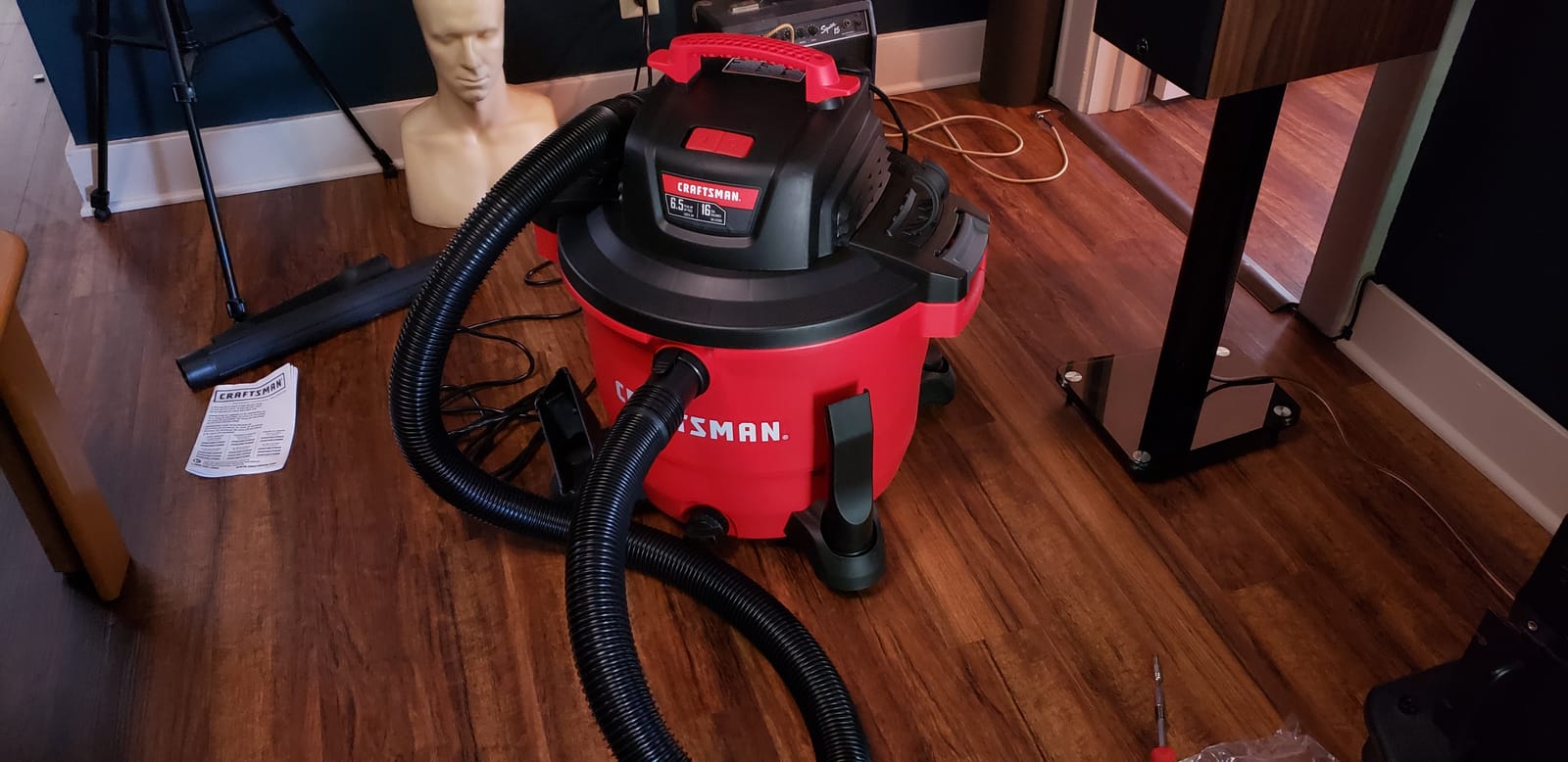
This is the one we kept coming back to while testing the shortlist against garage jobs. The CRAFTSMAN 16-gallon has the largest tank in this group, a 2-1/2 inch Dual-Flex hose that flexes at both ends, and a rear blowing port for clearing sawdust out of bench gaps. It is rated at 69 dB, which is the quietest published figure among the large corded units here.
We spent the most time on this one because the specification sheet undersells it. A 16-gallon tank sounds like a luxury until you run a full sheet of plywood through a track saw and look at how much gray dust sits in a 6-gallon drum after half a sheet. Capacity is the feature you are actually buying, and this machine has more of it than anything else here.
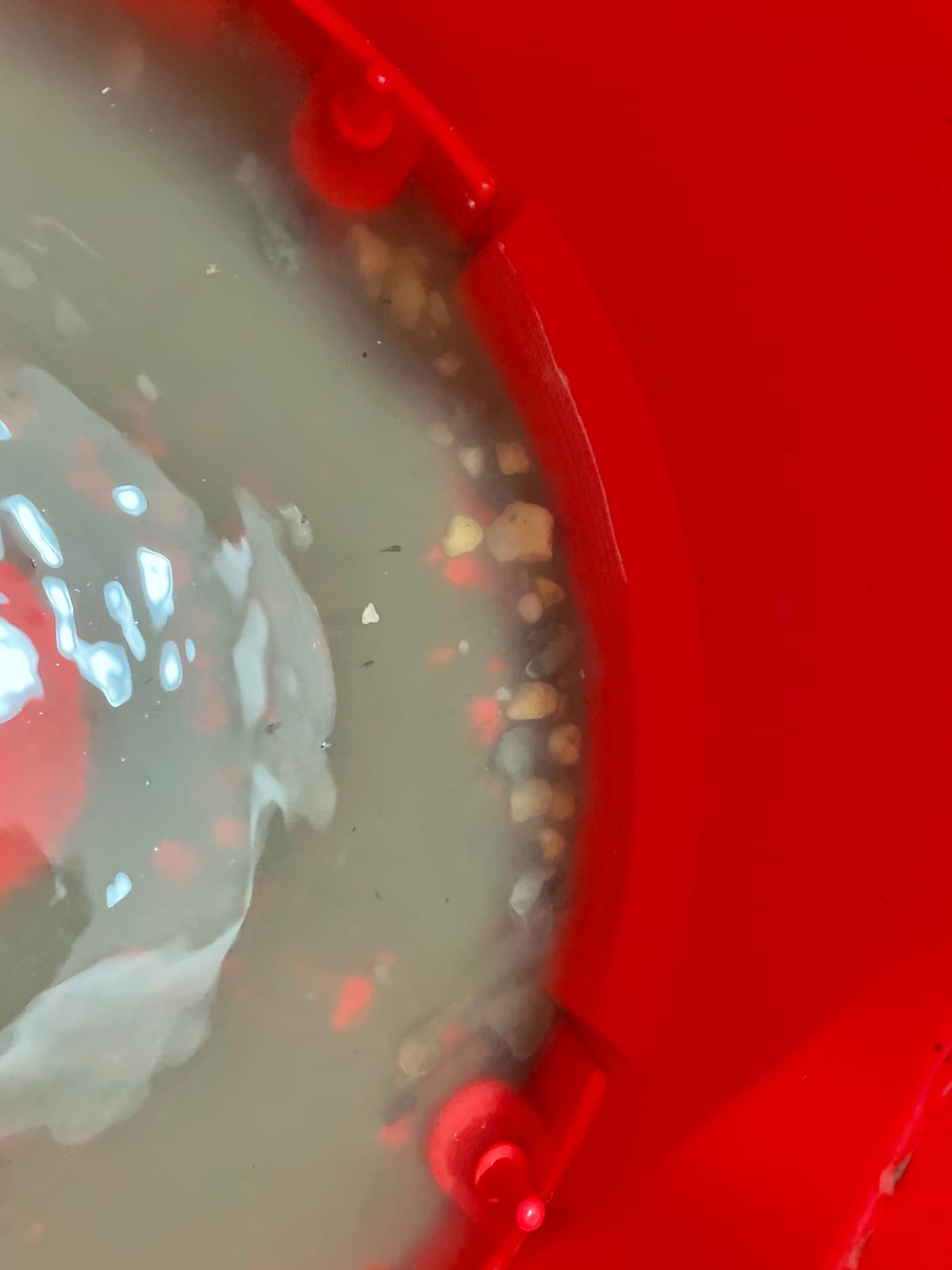
The accessory kit surprised me. It ships with two extension wands, a utility nozzle, a car nozzle, a wet nozzle, a Qwik Lock pleated paper filter and a dust bag. That is a full kit out of the box, which matters when you do not want a parts run before the first cleanup.
Maximum suction is listed at 46 inches, not the highest number in the table, and the filter is a pleated paper cartridge rather than a HEPA element. Owners are candid that the filter needs attention on dusty garage work. Our workaround is to knock it out with a hose and let it dry fully before it goes back in, which is the habit long-term owners describe on the forums.
What the CRAFTSMAN 16-Gallon Does Better Than the Rest
The win is throughput over a long job. Nothing else here lets you run a full sheet of drywall cleanup or a weekend of sanding without stopping to carry a tank to the driveway. The wet nozzle and oversized drain handle liquid cleanup quickly, and the two wheels plus dual handles make the 26 pound body manageable on a flat slab.
Where It Falls Short in a Garage
The cartridge filter is the honest limitation. Concrete dust is fine enough to blind a pleated paper element quickly, and the 6.5 peak horsepower label is a marketing convention rather than an output measurement. If your garage produces masonry dust more than wood dust, buy a fine-dust filter and plan on cleaning it.
2. Stanley SL18116P 6 Gallon – Best Value for a One-Car Garage
Stanley – SL18116P Wet/Dry Vacuum, 6 Gallon, 4 Horsepower Black
6 gal tank
4 HP
85 in suction
13.4 lb
80 dB
6 ft hose
Pros
- Most heavily reviewed unit here
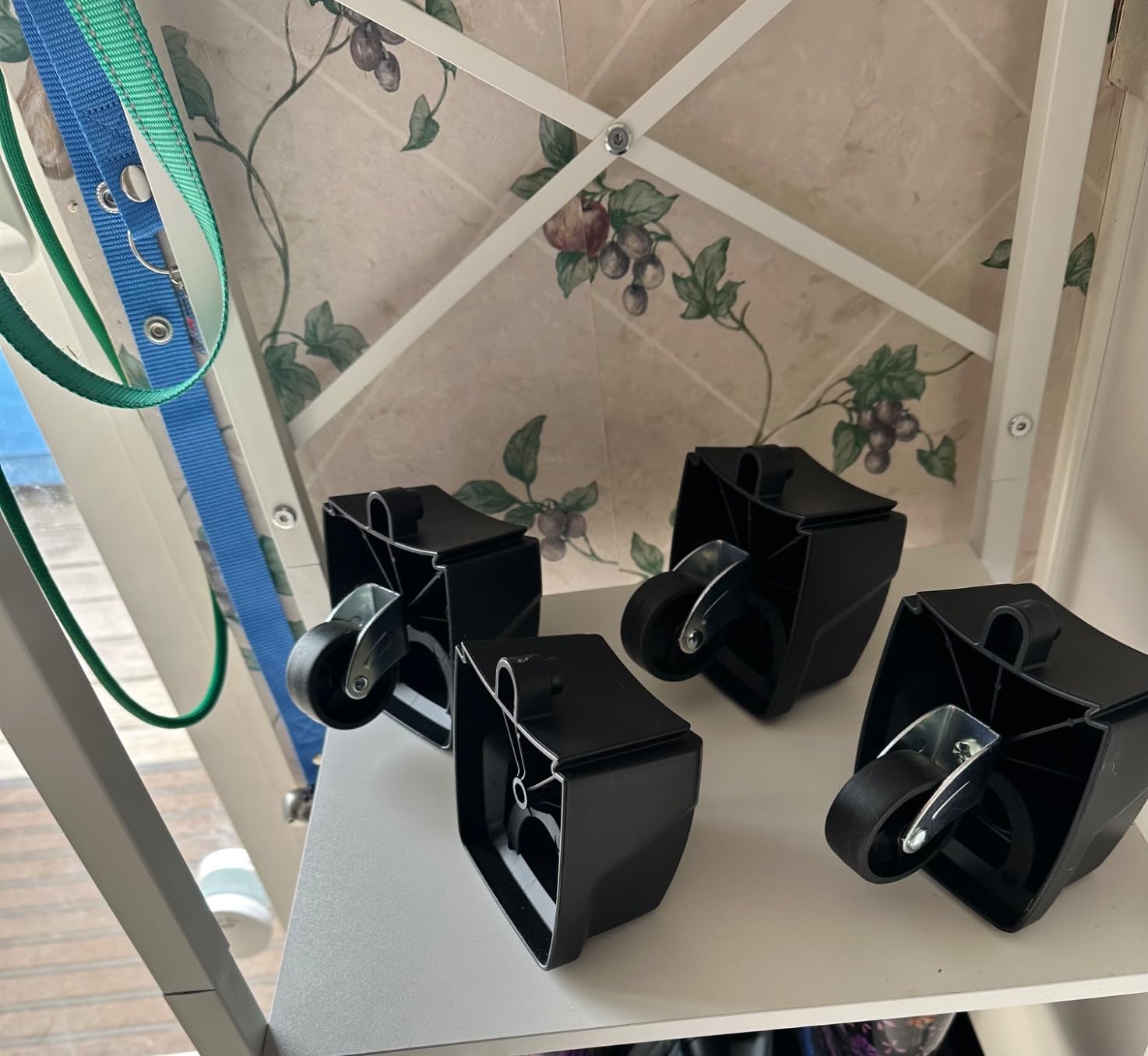
- 13.4 lb body rolls on four swivel casters
- Over 16 ft. of total reach
- Works bagless or with standard dust bags
Cons
- Hose connection can pop out during use
- 80 dB is loud
- Foam filter misses fine dust
With more than 14,000 owner reviews behind it, the Stanley SL18116P is the unit with the longest public track record in this roundup. Mechanics, homeowners and detailers describe steady suction across years of service, easy emptying and rinsing, and a hose long enough to reach across a vehicle without moving the machine.
It weighs 13.4 pounds, less than half the CRAFTSMAN, and stands 20.47 inches tall on a 13.8 inch base. Those dimensions are the real argument for it. A 6-gallon unit fits under a workbench in a one-car garage. A 16-gallon unit does not, and anyone who has tried to store one knows which shelf it is blocking.
The 3-in-1 design runs as a wet pickup, a dry pickup and a blower, with a reported 85 inches of maximum suction. That is the highest published number among the picks here, and on grit and small hardware off a garage floor it shows.
The accessory list covers the bases: a 6 foot hose, three extension wands, a gulper nozzle, a floor nozzle, a crevice nozzle, a foam filter, a dust bag and a reusable dry filter. You can run it bagless or with standard dust bags. The 10 foot cord plus 6 foot hose gives over 16 feet of reach in total.
Why This One Earns the Value Slot
It is the pick for a first garage, a rental property, or a detailer who needs one machine that does wet and dry without a second purchase. Owners report it holding up under professional use without losing suction, and the four swivel casters roll over a slab without the dragging problem rubberized wheels solve on heavier units.
What to Watch Out For
The hose connection can pop out of its collar during use, the most repeated complaint in the reviews, so check it after the first few jobs. The foam filter and 80 dB level also rule it out for fine concrete dust or an attached garage.
3. DEWALT DCV581H 2 Gallon – Best for DEWALT Battery Owners
DEWALT 20V MAX Shop Vacuum Wet and Dry, Shop Vac 2 Gallon, Cordless and Corded Wet Dry Vacuum Cleaner, Wide Nozzle, Hepa Filter, Tool Only (DCV581H)
2 gal tank
20V MAX or corded
Washable HEPA filter
16 oz
5 ft hose
Pros
- Runs on 20V MAX batteries you already own
- Plugs in when the battery is flat
- Washable reusable filter needs no bags
- On-board accessory storage
Cons
- Weak suction next to corded 5-gallon units
- 2-gallon tank fills fast
- Tool only
- battery and charger sold separately
This is a 2-gallon wet/dry vac that runs on a 20V MAX battery or a 120-volt cord, and that dual power option is the whole reason it is on this list. If you already own DEWALT batteries, this is the cheapest way to add a shop vac without buying a second platform and a second charger.
We treated it as the secondary machine, not the primary one, and owners frame it the same way. It is the vac you carry to the car, the couch cushions and the corner of the garage. It is not the vac you clean a whole slab with, and a 2-gallon tank with a micro-motor makes that tradeoff obvious after about ten minutes.
The filter is a washable and reusable Gore wet/dry HEPA element rated as model DCV5801H, so there is no bag cost and no dry-to-wet swap for liquid pickup. Owners report battery runtime in the range of 20 to 30 minutes on a 3 to 4 amp-hour pack, which lines up with a detailing session rather than a garage day.
Storage is genuinely good: on-board accessory storage keeps the wide gulper nozzle and crevice tool attached, and the body is 17.3 by 12.3 inches. The included car nozzle is the piece reviewers complain about most, so plan on using the wide nozzle instead.
When the Dual Power Design Pays Off
Float shut-off for wet pickup, a 5 foot crush-resistant hose and the ability to plug in when the battery is flat make this a genuinely useful backup. For a condo or a two-car garage where you want something for the passenger seat that does not need an extension cord, it works well.
Why It Will Not Replace a Corded Garage Vac
Published maximum suction is 31 feet, and owners describe suction as weak next to corded 5-gallon units at a similar price. The filter clogs quickly on drywall, concrete or talc dust, the 5 foot hose is short for car interiors, a battery connector failure is reported on some units, and the battery and charger are not included.
4. DEWALT DXV06P 6 Gallon – Best Mid-Size Corded All-Rounder
DEWALT Shop Vacuum 6 Gal 4 HP Poly Wet/Dry Vacuum with Blower DXV06P
6 gal poly tank
4 HP
50 in suction
14.8 lb
77 dB
10 ft cord
Pros
- Reliable 4 HP suction in a compact body
- Under 15 lb with rubberized casters
- 10 ft cord with cord wrap
- Complete accessory kit
Cons
- Cartridge filter
- not HEPA
- 1-7/8 in hose is narrower than most
- 50 in suction is low for the class
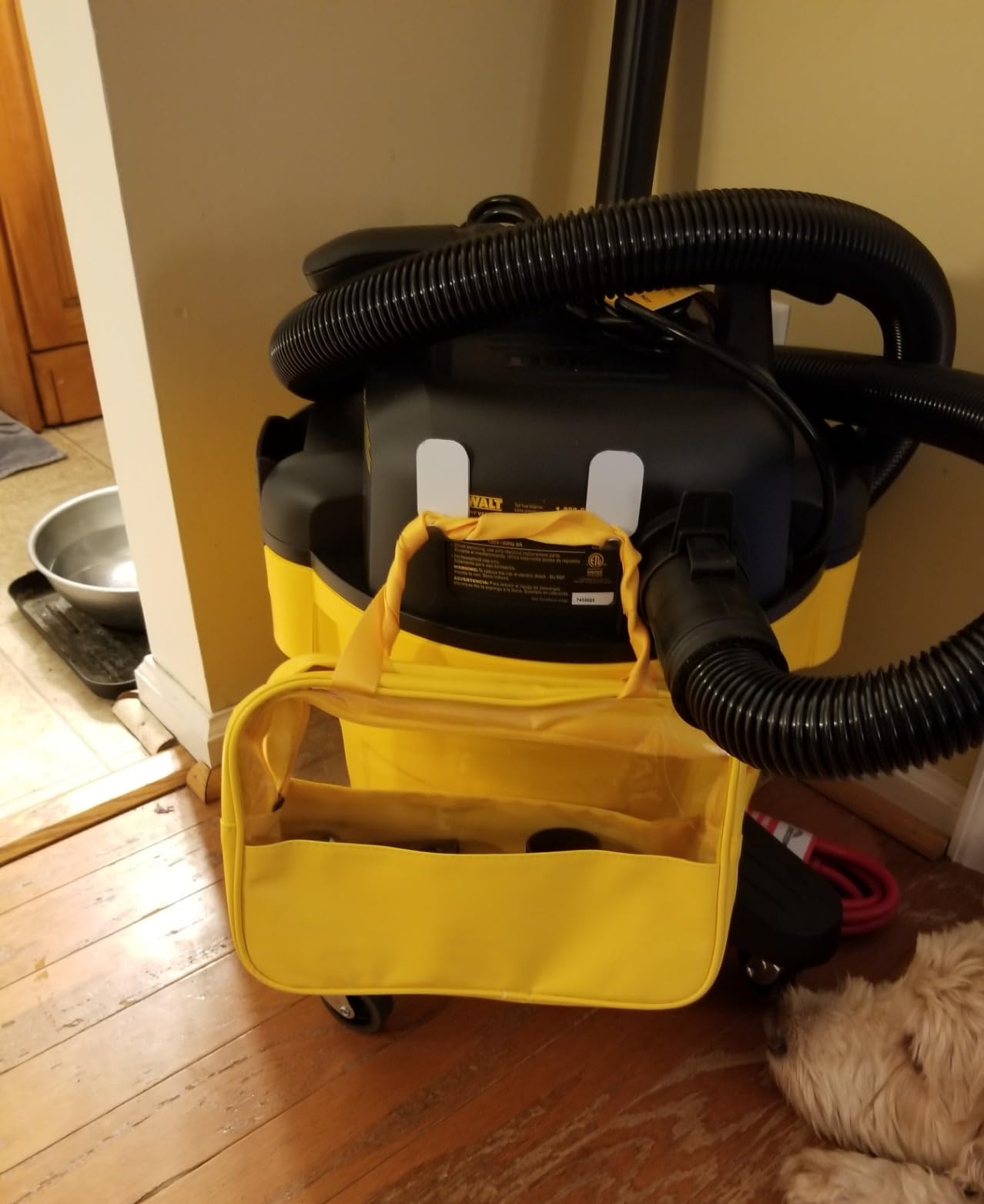
The DXV06P is the middle of the road in the way that works. Six gallons, a 4 HP motor, 14.8 pounds, and a 10 foot cord with a wrap. It measures 15.5 by 19.5 by 16.5 inches, so it rolls under a typical steel workbench and still has room to swing the casters.
Rubberized casters are a small detail that matters more in a garage than in a product photo. They roll smoothly over concrete without the catching and dragging you get with hard plastic wheels, and on a machine that lives on a slab with a hose wrapped around it, that is a real quality-of-life difference.
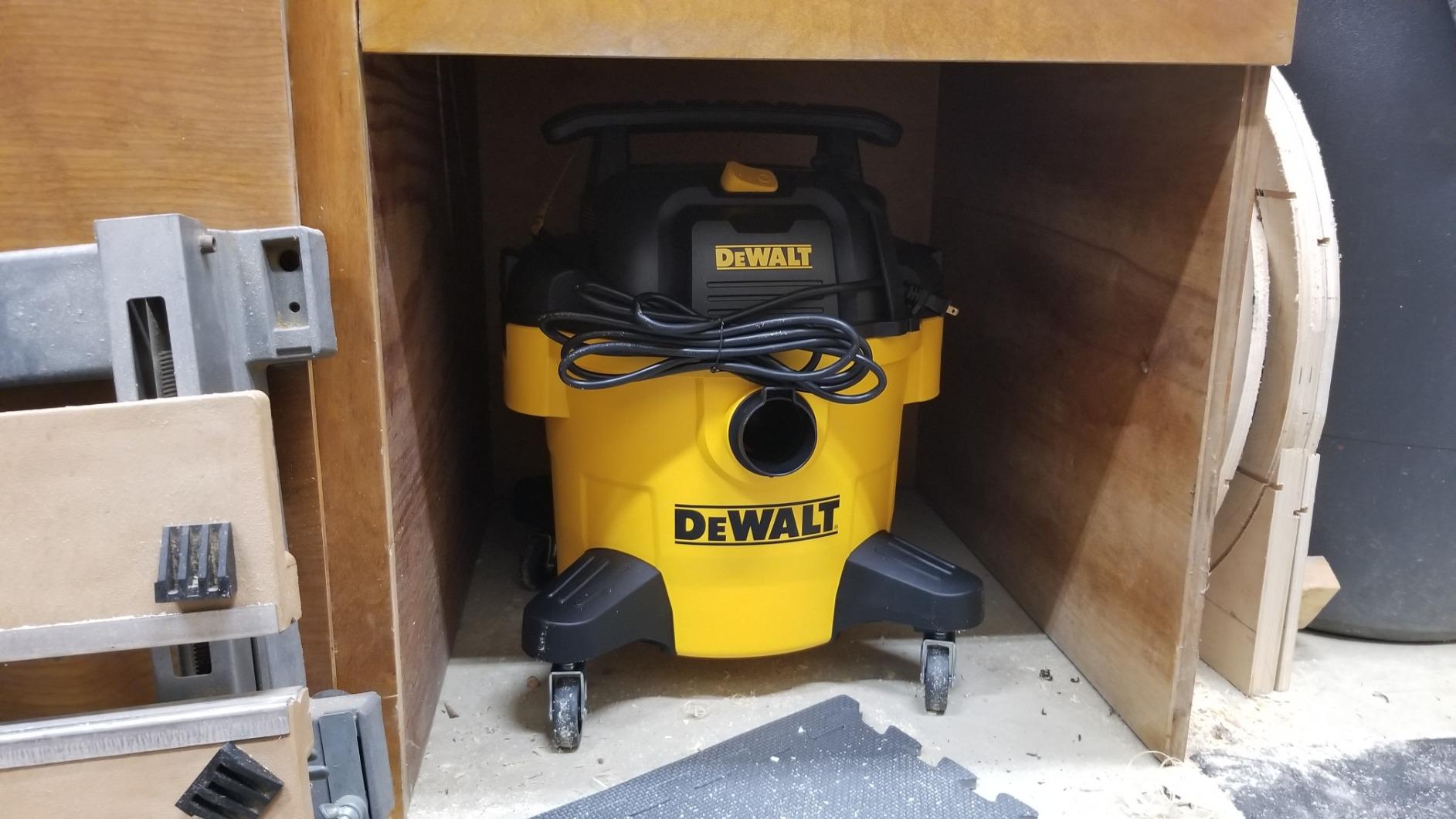
The kit is generous for the size: hose, two extension wands, a cartridge filter, a dust bag, a floor nozzle, a utility nozzle and a crevice nozzle. A built-in blower port lets the same machine clear sawdust off a bench. Current draw is 7.2 amps, which stays under a 15-amp circuit even with a compressor running.
Owners rate it as a dependable all-rounder rather than a specialist, and 4.7 stars across more than 5,700 reviews supports that framing. The 50 inches of maximum suction is lower than the larger 12-gallon units, and one reviewer notes the filter must be installed before the unit will run, which trips up new owners more than once.
Where the Narrow Hose Actually Helps
There is a 1-7/8 inch hose here, narrower than the 2-1/2 inch industry standard, and owners debate whether that is a flaw or a feature. For winter grit, gravel, screws and bolts tracked in off the driveway, a narrower bore generates more lift on small heavy debris, which makes this the pick for a northern climate.
What You Give Up
Flow rate on bulk light material. The wider hose on the CRAFTSMAN moves sawdust and drywall crumbs faster, and this cartridge loads sooner than a fine-dust element, so on a concrete-heavy garage this is a sawdust and spill machine.
5. Vacmaster Blue Line VBV1210 12 Gallon – Best for a Two-Car Garage
Vacmaster Blue Line 12-Gallon* 5 Peak HP† Wet/Dry Vacuum with Detachable Blower VBV1210
12 gal tank
106 CFM
210 MPH blower
Detachable blower
22 ft reach
Pros
- Strong airflow for a 12-gallon tank
- Blower detaches with one hand
- Noise diffuser keeps conversation possible
- On-board accessory and cord storage
Cons
- 10.5 A draw can trip a 15-amp breaker
- Cord is short and needs an extension
- Screwed-in casters can come loose
The Vacmaster Blue Line 12-gallon is the one we recommend when airflow is the deciding factor. It publishes 106 CFM and a blower speed of 210 MPH, and the blower detaches from the tank with a one-hand release so you are not carrying the whole machine to clear a workbench.
That 106 CFM figure is the highest airflow in this roundup, and airflow is the spec that predicts performance on a garage floor. It tells you how much air moves through the hose per minute, which is what sweeps grit and dust into the tank. A higher peak horsepower number on a competing label does not do that.
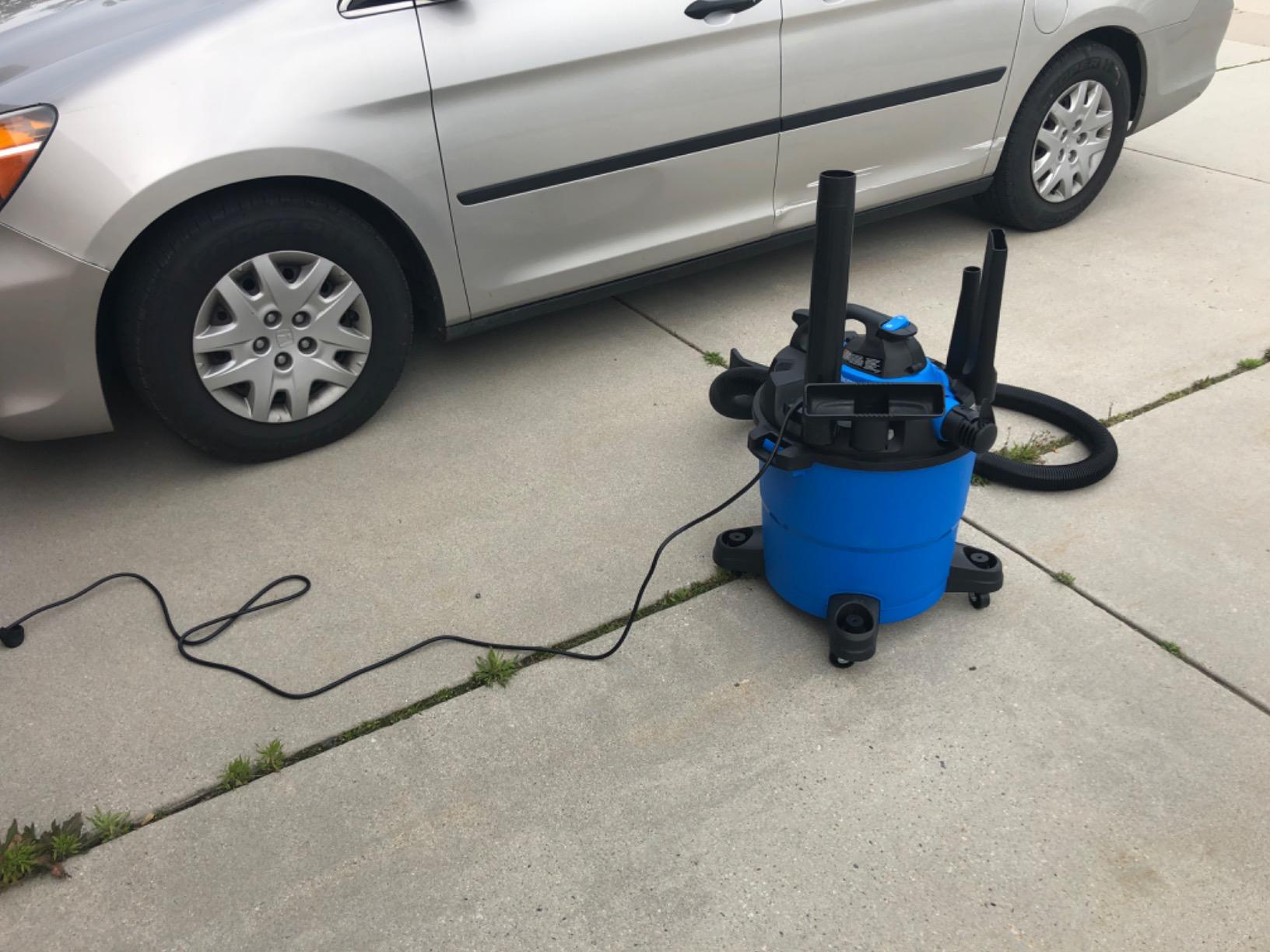
It also ships with an air and noise diffuser, and reviewers describe it as quiet enough to hold a conversation over. For a detached garage that is a nice-to-have. For an attached garage where the door is open to a bedroom, it decides the purchase.
Total reach is 22 feet combining the 7 foot hose and the power cord, with on-board accessory and cord storage, wide-stance casters, a balanced top handle and a large drain port. The accessory kit runs to 11 pieces including the diffuser and blower adapter, and there is a dust-sealed on/off switch.
Handling the Circuit Problem
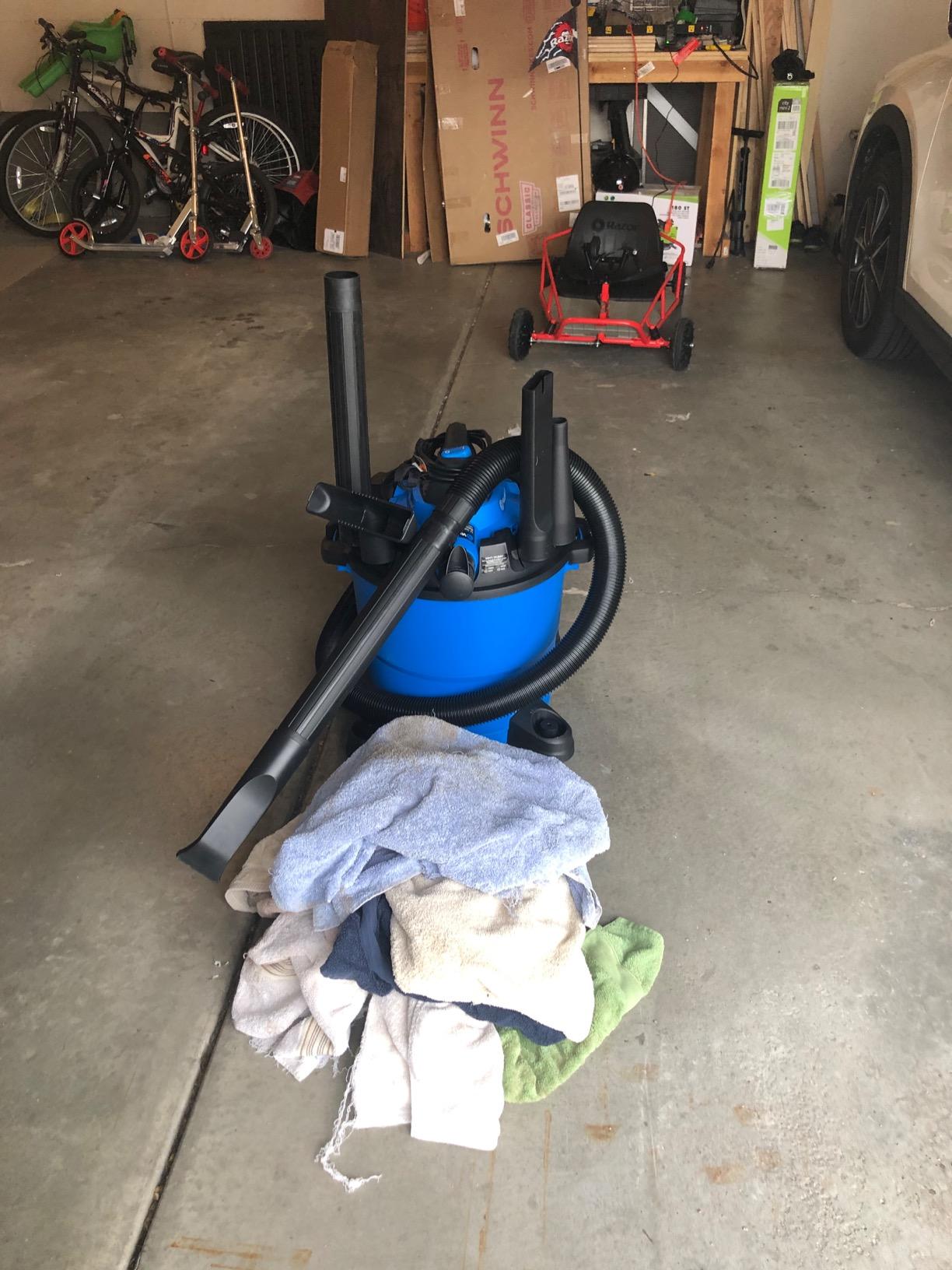
This is the most important practical note in the section. At 10.5 amps the unit can trip a household 15-amp breaker, and reviewers attribute much of the one-star feedback to exactly that. In a garage that also powers a compressor or a battery charger, run it on a dedicated circuit or a heavy-gauge extension cord.
Assembly Details People Miss
The casters screw in rather than clip in, and reviewers report finding them loose out of the box, so tighten them before first use. The included wet-filter sponge is thin and tears easily, and a 12-gallon tank on wide-stance casters takes up real floor area.
6. DEWALT DXV12P 12 Gallon – Best for Wet Messes and Water Spills
DEWALT 12 Gal. 5.5 HP Poly Wet/Dry Vacuum with Hose and Accessories DXV12P
12 gal poly tank
5.5 HP
85 in suction
23.2 lb
80 dB
3 yr warranty
Pros
- 85 inches of maximum suction
- Large drain port empties liquids fast
- Wet dry and blower in one unit
- Four casters roll the 23 lb body
Cons
- No HEPA-rated filter for fine dust
- 80 dB is loud
- Cartridge needs frequent cleaning
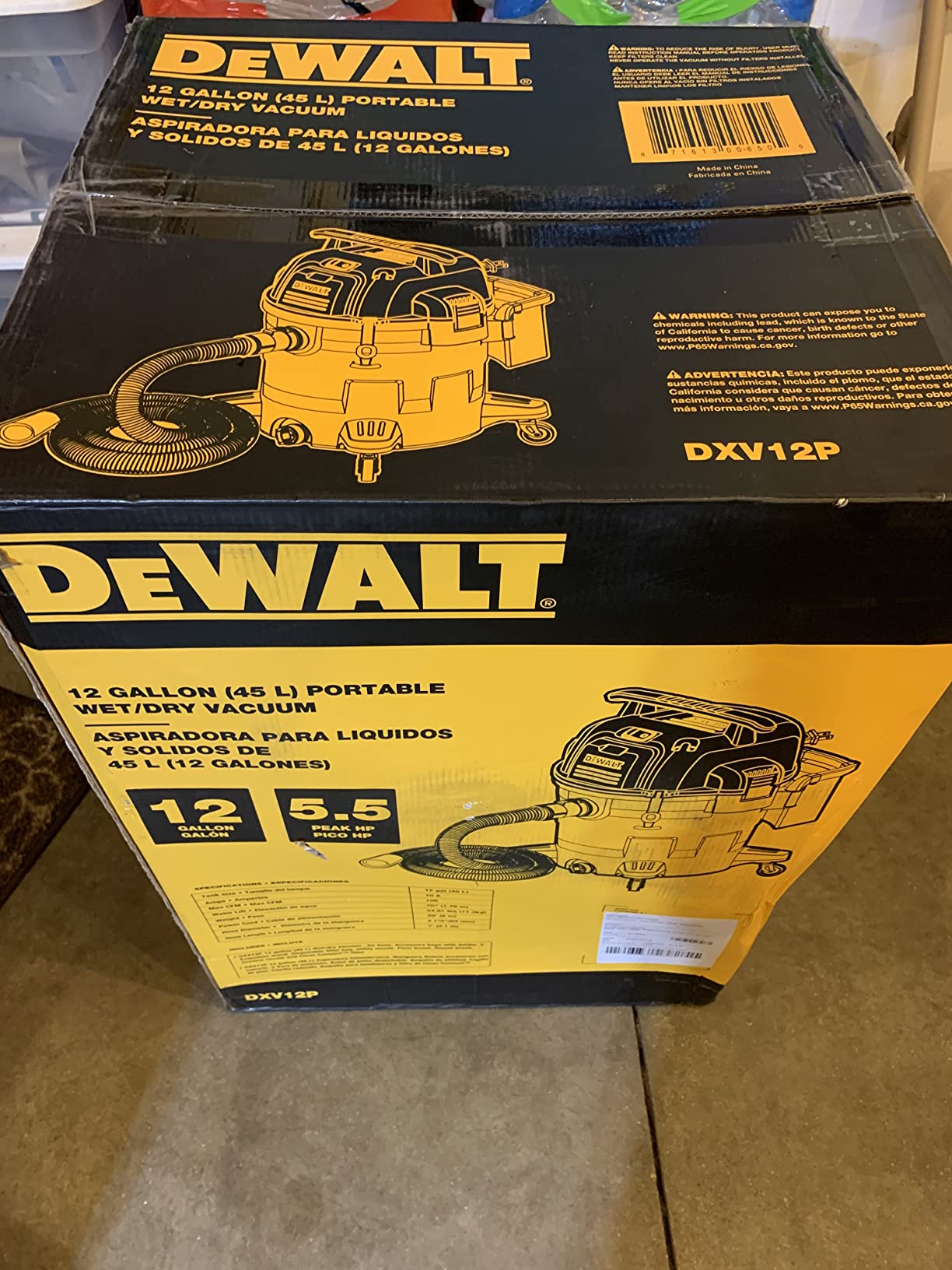
The DXV12P is the pick for liquid. A maximum suction figure of 85 inches gives it real lift on a wet floor, and the large drain port empties a tank of water in seconds instead of a struggle with a small valve. For coolant under a lathe, water off a wet car, or a flooded corner after a storm, that combination is the whole point.
It runs at 8 amps, friendlier to a 15-amp circuit than the Vacmaster 12-gallon, and it carries a 3 year limited warranty. The same model family comes in 5, 14 and 16 gallon versions, so choosing between sizes in this line is purely a storage question.
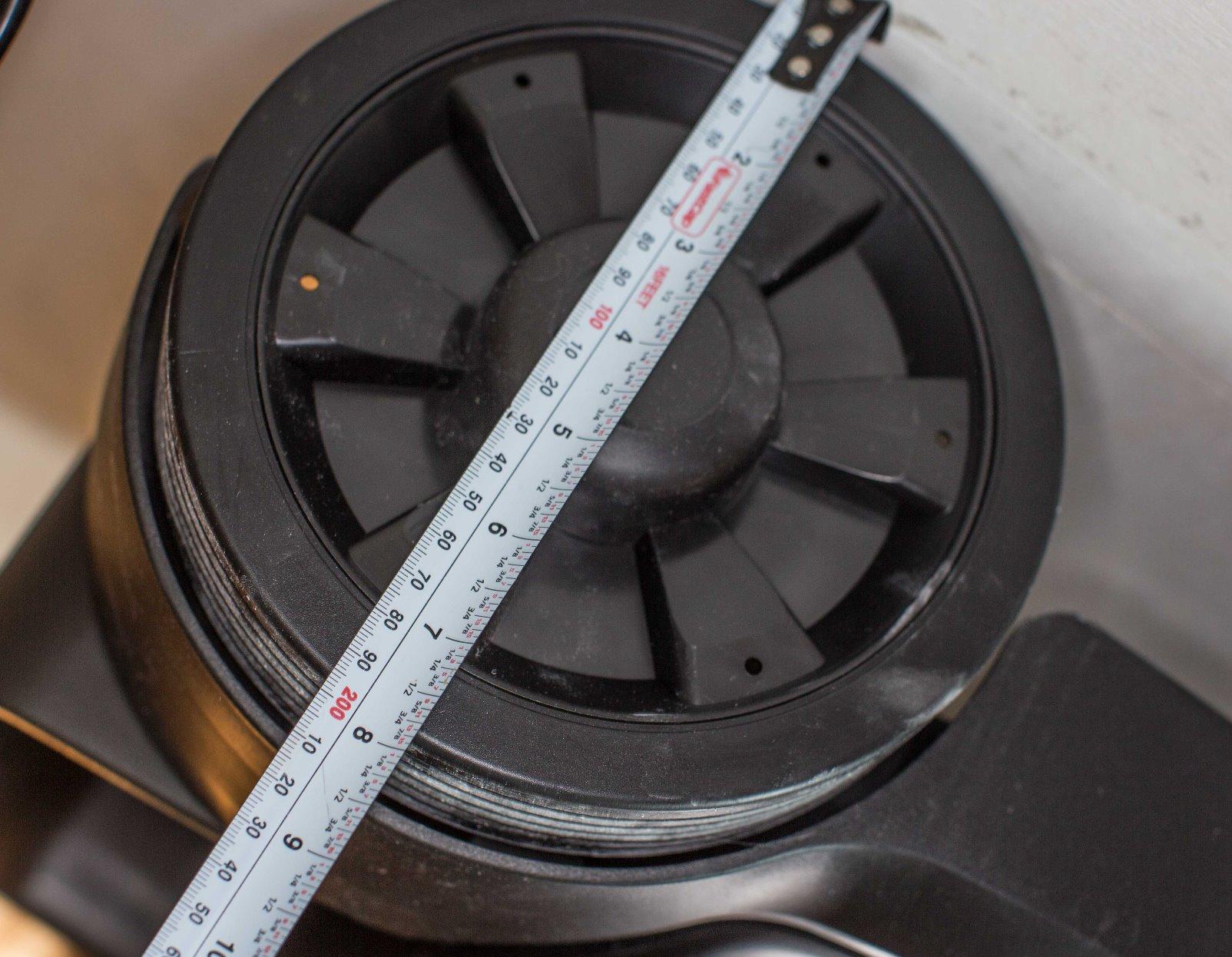
At 23.2 pounds and 17.91 by 26.38 by 18.5 inches, this is a large footprint. Four casters handle the weight on a flat slab, but it is a two-hand lift and it will not tuck under a shallow bench. Plan the storage location before you buy.
The review base is smaller than some picks here at just over 2,100 reviews, and it still holds a 4.7 average. Buyers point to capacity, suction and easy wet/dry conversion. The recurring drawback is filter maintenance and the 80 dB operating level, which is loud for an attached garage.
Wet Pickup Versus Dry Pickup
Running a wet pickup means fitting the foam or wet-rated element rather than the dry cartridge, and owners swapping back and forth for mixed garage jobs do it more often than they expect. Keeping a second filter on hand saves the annoyance. For a garage that is mostly liquid incidents, this is the right trade.
Where Dry Work Is the Priority Instead
There is no HEPA-rated filter here, so on a slab covered in concrete dust the cartridge loads quickly. The suction figure is strong, but airflow is not published for this model, so it is harder to place against units that do publish CFM.
7. WEN VC4710 5 Gallon – Best HEPA Rating for Fine Dust
WEN VC4710 10-Amp 5-Gallon Portable HEPA Wet/Dry Shop Vacuum and Blower with 0.3-Micron Filter, Hose, and Accessories,Orange
5 gal tank
F9 HEPA 0.3 micron
10 A motor
82 dB
5 ft hose
Pros
- 0.3 micron HEPA filtration at a low price
- Lightweight and compact for shelf storage
- Doubles as a blower
- Two-year warranty
Cons
- No prefilter
- so the HEPA clogs fast
- Extension wands separate and need taping
- 82 dB is the loudest here
The WEN VC4710 is the only unit here with a stated 0.3 micron filtration rating, in the form of an F9 HEPA cartridge. On drywall dust, talc and fine concrete particles that rating is exactly what a garage needs, and you rarely see it at this price. Owners consistently say the suction punches above what a 5-gallon should deliver.
It weighs close to nothing compared with the rest of this list and stores on a shelf or in a trunk. Onboard attachment storage keeps the nozzles where you left them, it runs as a vacuum or a blower, and it carries a two-year warranty. When the garage doubles as a storage room, footprint is a real constraint and this one respects it.
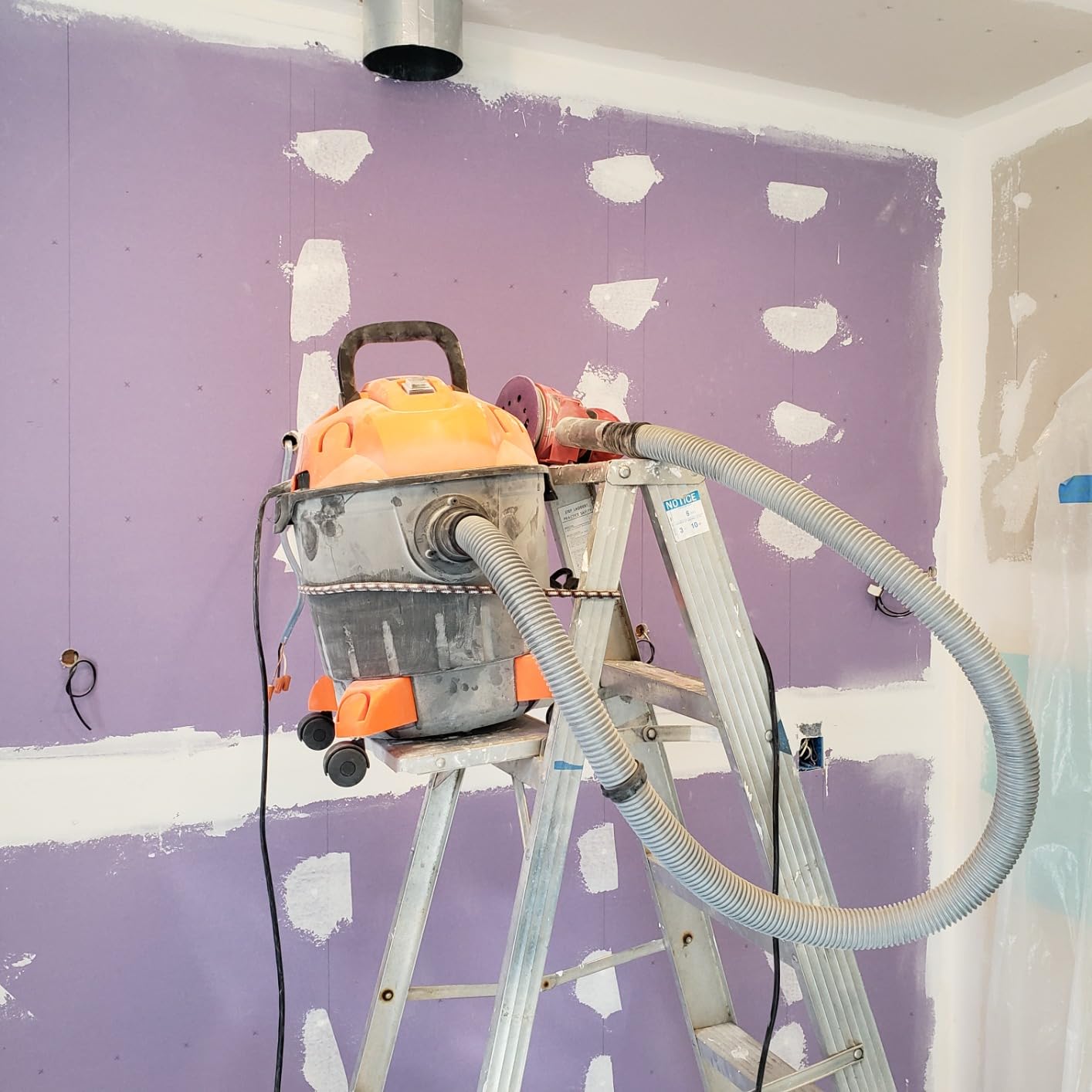
Now the honest problem, and it is structural rather than cosmetic. There is no prefilter ahead of the HEPA element, so in a dirty garage the fine filter is doing the work of both a prefilter and a final filter. Several owners specifically warn against using it for dusty garage work. If your garage is mostly drywall sanding rather than sawdust, that warning matters less.
The extension wands do not lock together and reviewers say they separate easily and need taping, which shows up every time you use the tool. The 5 foot hose is short, the cord is short, and 82 dB is the loudest published figure in the roundup.
When Fine Dust Is the Only Real Problem
If your garage use case is sanding drywall, cutting cement board or sweeping up powdery masonry residue, the filtration rating does more for you than extra gallons would. A big tank with the wrong filter just fills with dust you cannot exhaust safely.
Why It Is Not the Daily Driver
Weakness on heavy debris and embedded dirt in seat cracks is the repeated note in the reviews, and a HEPA cartridge with no prefilter has almost no service life in a workshop. Replacement filters add ongoing cost. Buy it for a specific fine-dust task.
8. Giraffe Tools Grandstorm 30-Foot – Best for Wall-Mounted Storage
Giraffe Tools Grandstorm 30FT Retractable Garage Vacuum, Wall Mount Vacuum
4.5 gal bin
30 ft retractable hose
20 KPa suction
Remote start
HEPA filter
Pros
- 30 foot self-storing hose frees the floor
- Remote start without walking to the unit
- Wall mounting frees space in a one-car garage
- Swiveling brush head fits between seats
Cons
- 60 lb unit needs two people to mount
- Suction weaker than canister vacs through the long hose
- No way to clear a clogged hose
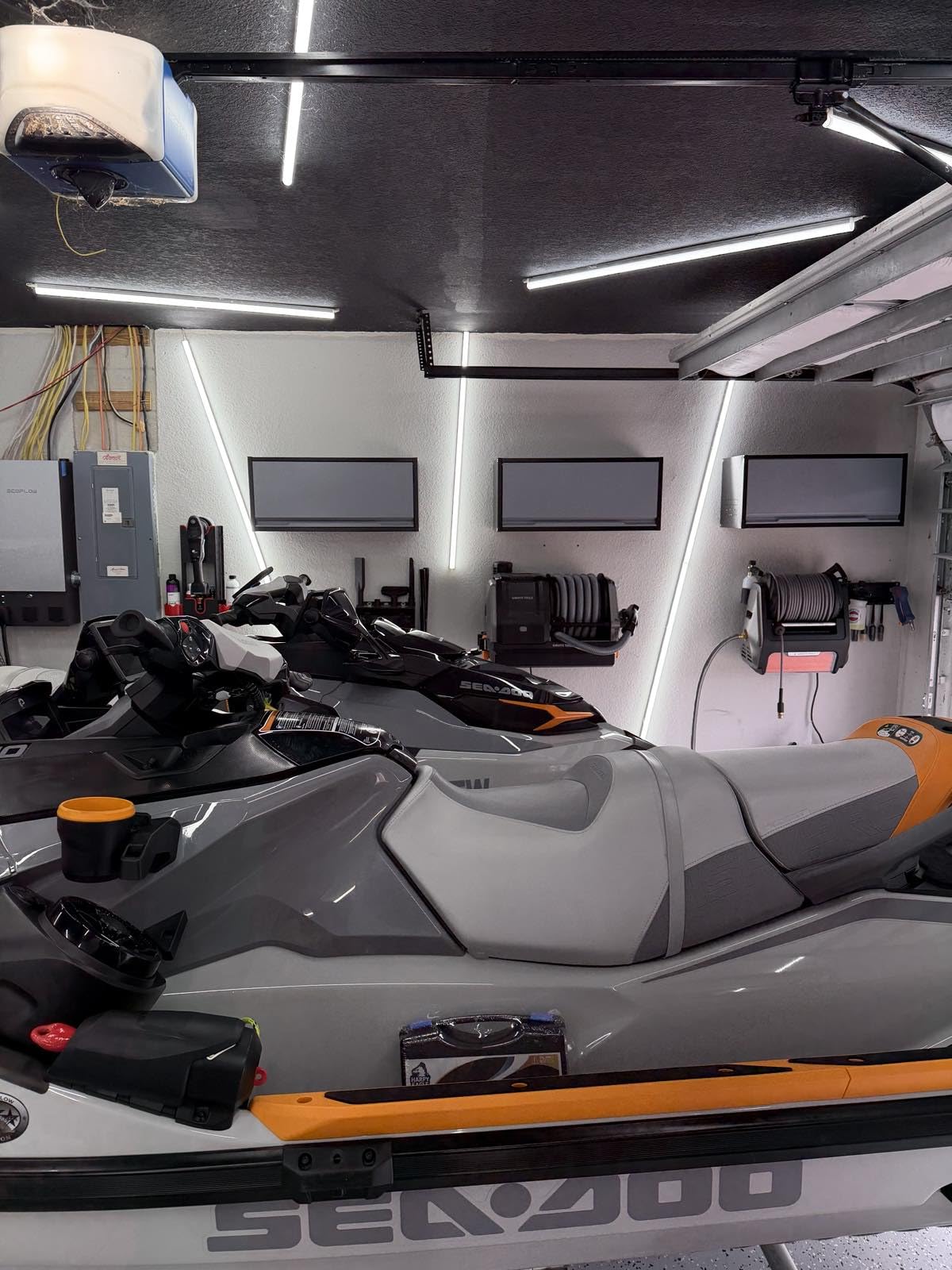
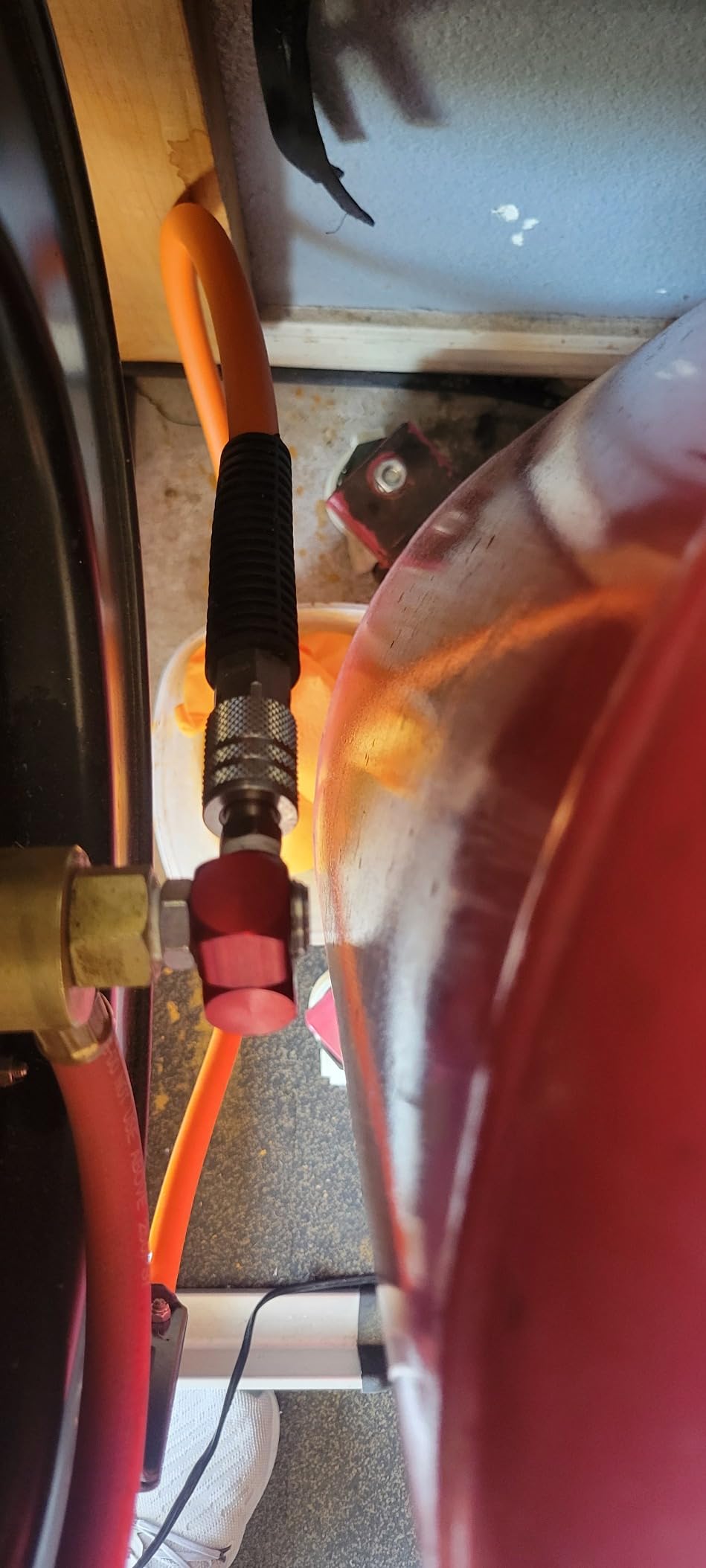
The Grandstorm solves a problem no canister vac here solves, which is where the hose lives. A 30 foot self-storing retractable hose means the machine and every accessory mount to the wall and the floor is yours. In a one-car garage with a bike and a lawn mower in it, that is worth more than any spec number.
There is a remote control start and stop, an adjustable suction slider on the wand, a 4.5 gallon removable dustbin with quick-release latches, a swiveling brush head that reaches between car seats, and both dry and wet filters included. The 24-month warranty is the shortest in the roundup.
Suction is published as 20 KPa, a different measurement scale from the CFM figures elsewhere on this page, so direct comparison is not meaningful. What owners say is consistent though: suction through the long ribbed hose is weaker than a portable canister vac, and drops further with wide nozzles.
Installation is the real project. The unit weighs 60 pounds, mounting needs roughly 5 feet of horizontal wall and 3 feet vertical plus 12 lag bolts, and the accessory holder requires about a dozen plastic fasteners the instructions do not mention. If you are not comfortable with a stud finder and a drill, budget time for it.
Who This Setup Is Right For
A permanent system in a garage that gets vacuumed several times a week, where dragging a 25 pound canister out from under a bench is the friction that stops you doing it. The remote start is the detail owners mention most, because you can hit it from the car.
What You Give Up for the Permanence
There is no way to clear a clogged hose, which is a serious limitation in a fine-dust garage, and the dustbin is awkward to remove when wet. It is also the most expensive unit here, so it is a specialist choice rather than a default.
9. Vacmaster Beast VFB511H 5 Gallon – Best for Quiet Operation
Vacmaster Professional Beast Series VFB511H 0201 5-Gal 5.5 PHP Wet/Dry Vac
5 gal tank
320 air watts
20 kPa
1 micron capture
72 dB
25 ft reach
Pros
- 320 air watts of real suction in a small body
- Noise diffuser included
- Cartridge plus bag captures down to 1 micron
- On-board storage for hose cord and tools
Cons
- Accessory tools friction-fit and can pull off
- No drain plug for emptying water
- Peak HP overstates continuous suction
The Beast Series is the pick we keep coming back to when a garage is attached to a house. It ships with a noise diffuser, and at a published 72 dB it is quieter than the 77 to 82 dB units here. That gap matters when the motor runs for twenty minutes while you do something else indoors.
More importantly for performance, the manufacturer publishes 320 air watts and 20 kPa instead of leaning on a peak horsepower headline, and the high-efficiency cartridge plus dust bag is rated to capture particles down to 1 micron. That is the specification set we want in a concrete-dust garage.
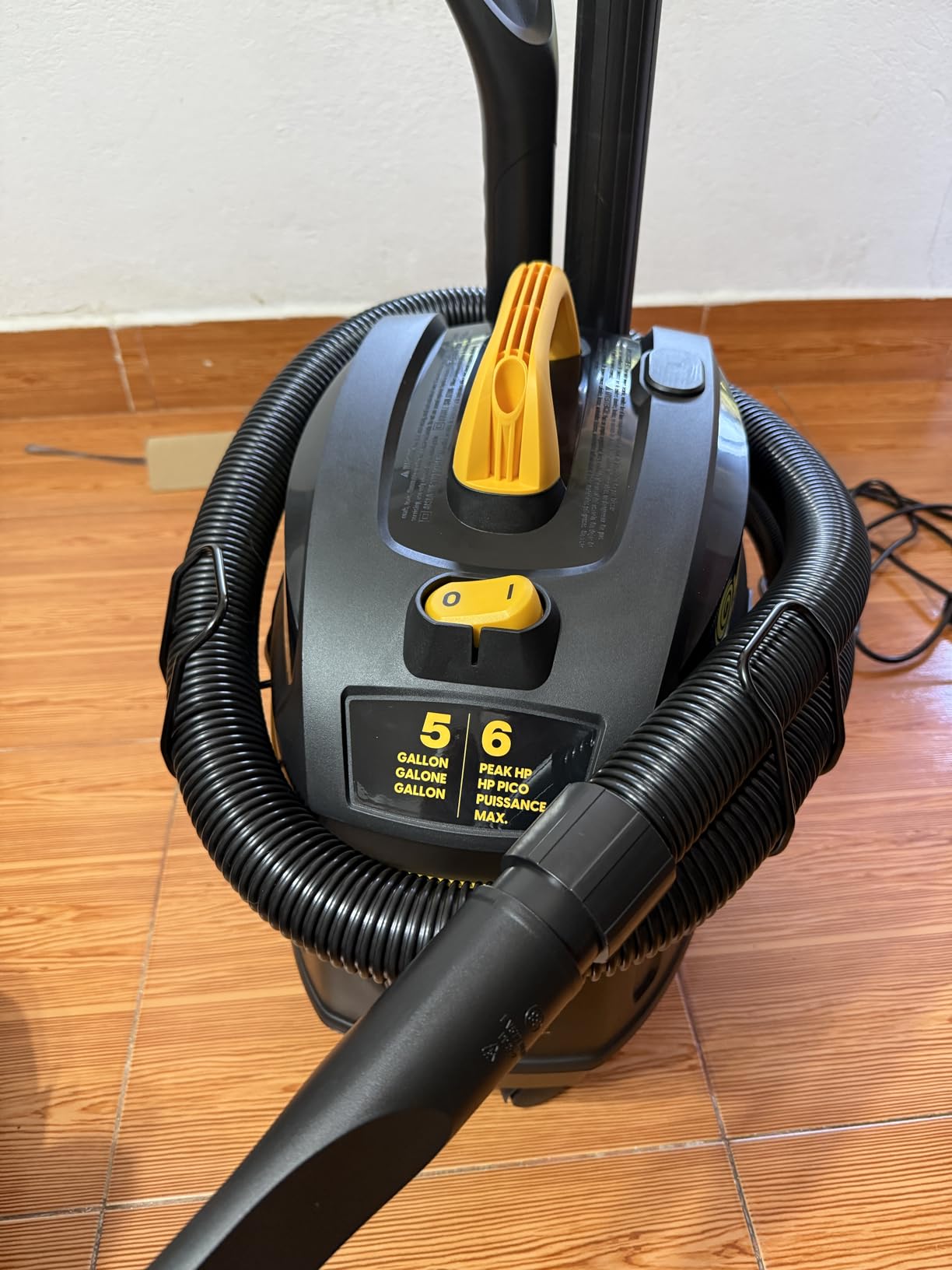
Total reach is 25 feet with a kink-resistant hose and cord, and on-board storage holds the hose, the cord and the accessories. Several owners report out-pulling larger 5 HP machines they already own, a good reminder that air watts and peak HP are not the same measurement.
At 15.4 pounds and 18.6 by 13.4 by 16.5 inches it moves with one hand despite a solid build and rolls smoothly. The 9-piece accessory kit covers car, utility and crevice tools, more than most 5-gallon units include.
Why the Air Watts Number Is the One to Shop By
Air watts measure the power going into the airstream, which is what determines pickup on a garage floor. When a manufacturer publishes it you can compare units from different brands honestly. The 320 air watts here, combined with 1-micron capture, is the most informative spec pair in this roundup.
The Fit-and-Forget Problems
Accessory tools friction-fit and can pull off under strong suction, so check them before a long job rather than halfway through. There is no drain plug, which makes wet pickup a carry-the-bin-to-the-sink job. Dust bags are oversized and awkward to fit, and one reviewer reports warranty service on a replacement part that went poorly.
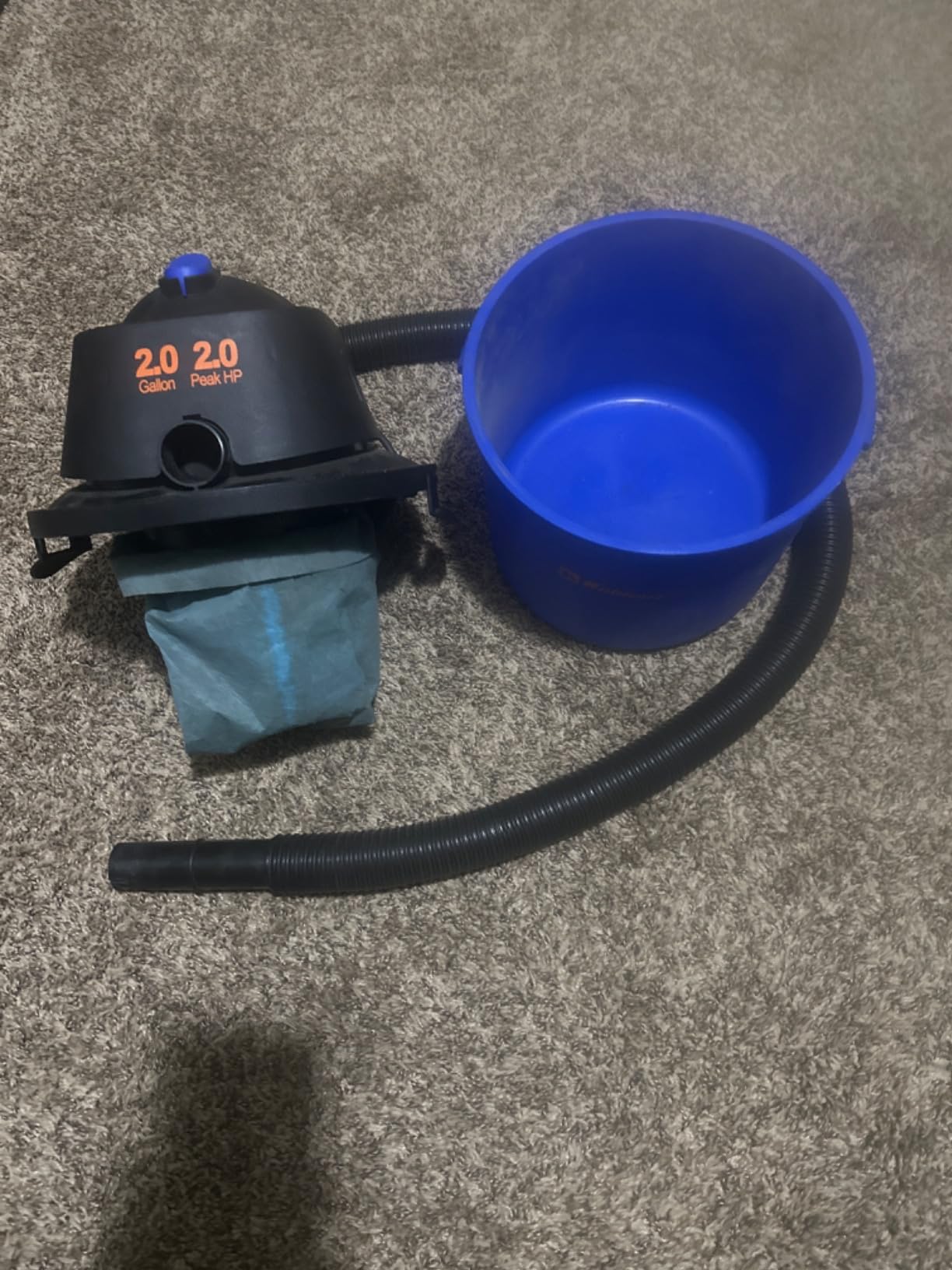
10. Koblenz WD-2L 2 Gallon – Budget Pick for Spill Cleanup
Koblenz WD-2L Wet Dry Vacuum Cleaner, Home Car Garage Workshop, 2.0 PHP
2 gal tank
2.0 PHP
60 CFM
5.7 lb
52 dB
10 ft cord
Pros
- 60 CFM airflow punches above its rating
- Weighs 5.7 lb and stores anywhere
- Quiet at a published 52 dB
- Five-year limited warranty
Cons
- Bottom half is a plain plastic pail
- 4 ft hose and 10 ft cord are short
- Cloth filter with limited fine-dust capture
The Koblenz WD-2L is the cheapest useful thing on this list, and 60 CFM of published airflow is a surprising figure for a 2.0 peak horsepower machine this small. At 5.7 pounds and 11.52 by 11.45 by 10 inches, it goes on a shelf, in a trunk or in the corner of a bench without a conversation.
It also has a rear blower port for clearing debris off a bench or out of a hard-to-reach gap, wet pickup that owners confirm works on car interior spills, a 4 foot TWIST-N-LOCK hose that locks into place, and a 5-year limited warranty, the longest in the roundup.
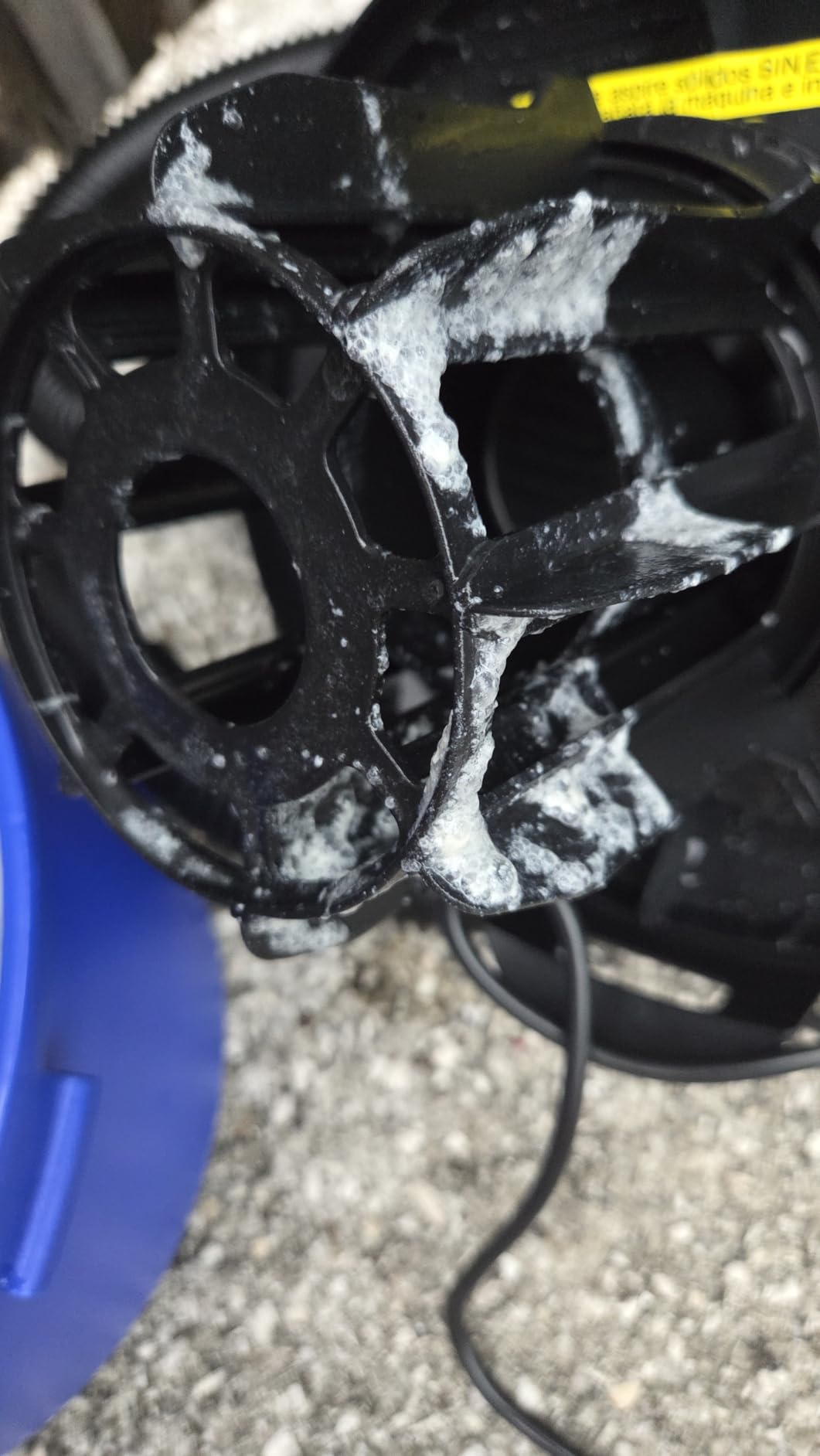
The honest framing is that this is a spot vac, not a garage vac. Two gallons means frequent emptying, and a cloth filter captures less fine dust than any cartridge in this list. Buyers call it a strong budget unit whose suction outperforms its rating, and it is a fine second machine where spills are occasional.
The bottom half of the tank is a plain plastic pail that feels flimsy, and attachments fall off the side and roll away. If you tip it over, the float ball can be knocked out of position and the unit runs loudly until you reseat it. The 52 dB published figure also does not match what owners report in actual use.
Where a Two-Gallon Tank Is Genuinely Enough
Spilled coffee, a coolant puddle, grit in the footwell, a sanding vacuum in a pinch. For short frequent jobs like these, a large tank is dead weight, and 60 CFM moves the debris as well as units three times the size.
Why It Is Not a Workshop Machine
Fine dust is the limit. A cloth filter on a slab with concrete dust will not do the job, and the 4 foot hose plus 10 ft cord give a very small working radius. For sawdust, drywall and grit, spend the money on a cartridge or HEPA unit.
What to Consider When Buying a Shop Vac for a Garage
Everything above reduces to a handful of decisions. Capacity and filter type matter more than the horsepower on the box, and the storage question gets decided before you ever plug anything in.
Capacity: how many gallons does your garage need?
For a one-car garage, 5 to 6 gallons is the practical answer. It holds a meaningful cleanup, weighs under 15 pounds and fits under a workbench. For a two-car garage, 12 to 16 gallons halves the number of trips to the driveway, and those units need a corner of floor rather than shelf space. A 16-gallon unit will not tuck under a typical bench, so measure before ordering.
Also think about how often you will empty it. A 2-gallon tank is right for spills and a 16-gallon tank is right for a full day of sanding. A 6-gallon tank in the middle is a compromise that is wrong for both jobs.
Suction: CFM and water lift, not peak horsepower
Peak horsepower is a marketing convention with no fixed measurement behind it. On a 120-volt, 15-amp circuit the physical ceiling is roughly 2.2 horsepower of real output, so labels from 3 to 6.5 peak HP tell you almost nothing about performance. Owners in the forum data are blunt about this and ask brands directly for airflow and sound figures instead.
Airflow in CFM tells you how much air moves through the hose per minute, which drives bulk pickup of sawdust and grit. Water lift in inches predicts how well the machine pulls heavy material up a hose. Air watts are the most honest single number available: the Vacmaster Beast publishes 320 air watts and the Koblenz publishes 60 CFM, while several others publish neither.
Filter choice for concrete and drywall dust
This is the decision most people get wrong, and it is the top complaint in the garage vacuum forums: fine dust kills filters, and a clogged filter drops suction faster than anything else on the machine. Concrete, cement, drywall and joint compound are fine enough to blind a foam filter in minutes. A pleated paper cartridge survives longer, and a HEPA element rated to 0.3 or 1 micron captures the finest particles but loads sooner unless a prefilter sits ahead of it.
Whichever you choose, plan the cleaning habit rather than the purchase. Owners who get years out of a shop vac knock the filter out with a hose, let it dry fully, then refit it. A wet-rated element goes in for liquid pickup and comes back out for dry work, so keeping a second filter on hand avoids the downtime.
Hose diameter: wide for bulk, narrow for lift
A 2-1/2 inch hose moves large quantities of light debris quickly, which is why the CRAFTSMAN uses one for sawdust volume. A narrower 1-7/8 inch hose generates more lift on small heavy debris, which is why the DEWALT DXV06P is the better grit machine. The industry standard is wide, and the forum debate is really about which job you do more often.
Corded vs cordless and the 15-amp circuit reality
Buy cordless only if you already own the battery platform. The DEWALT DCV581H runs on 20V MAX and plugs in when the battery is flat, which removes the second-charger problem, but its 2-gallon tank and 31 foot suction figure make it a secondary machine. For sustained garage work, corded wins on suction and runtime every time.
Watch your amperage. The Vacmaster 12-gallon draws 10.5 amps and reviewers report it tripping 15-amp breakers, particularly when a compressor is running. The Craftsman 16-gallon draws 12 amps and the DEWALT DXV12P draws 8 amps. Heavy-gauge extension cords and a dedicated circuit are the fix, and worth sorting out before a big cleanup day.
Storage, drainage and the rest of ownership
If the garage is tight, the hose is the space you actually lose. Wall-mounted systems with retractable hoses solve it permanently, at the cost of suction through a long line and a real installation job. Draining matters too: a large drain port empties a tank of water in seconds, while a unit without a drain plug means carrying a wet bin to a sink. Finally, budget for consumables, because replacement cartridges, wet foam elements, HEPA elements and dust bags are recurring costs and the filter wears out first on fine-dust work.
Frequently Asked Questions
What is the best size shop vacuum for a garage?
A one-car garage is best served by a 5 to 6 gallon wet/dry shop vac that fits under a workbench. A two-car garage wants 12 to 16 gallons so you are not carrying the tank out to the driveway every few minutes. A 16-gallon unit needs a dedicated floor corner rather than shelf space, so measure your storage spot first.
Which shop vac has the strongest suction?
Compare airflow in CFM or published air watts rather than peak horsepower. Among these picks the Vacmaster Blue Line 12-gallon publishes 106 CFM and the Vacmaster Beast 5-gallon publishes 320 air watts and 20 kPa. Peak horsepower labels are a marketing convention and do not compare between brands.
Are shop vacs good for garage floors?
Yes. A wet/dry shop vac handles concrete dust, drywall dust, sawdust, road grit and standing water on a garage slab, all of which stop a household upright quickly. The floor nozzle and wide hose move bulk debris, and the bottom drain valve empties liquids without carrying the tank anywhere.
Do I need a HEPA filter for garage dust?
It helps on drywall, concrete, cement and masonry dust, and only one unit here is rated to 0.3 micron. The tradeoff is service life, because a fine element clogs faster unless a prefilter sits ahead of it. If your garage is mostly wood dust, a washable pleated cartridge cleaned regularly is the more practical choice.
What is the best wet and dry vacuum for a garage?
The CRAFTSMAN CMXEVBE17595 16-gallon is our pick for a working garage, with the largest tank, a 2-1/2 inch Dual-Flex hose and a rear blowing port. For liquid specifically, the DEWALT DXV12P 12-gallon pairs 85 inches of maximum suction with a large drain port that empties a full tank quickly.
Is a cordless shop vac worth it for garage use?
Only if you already own the battery platform. The DEWALT DCV581H runs on 20V MAX or 120 volts and needs no second charger, but at 2 gallons and 31 feet of maximum suction it works best as a secondary machine for spills and car interiors rather than a full garage cleanup.
Should I buy a wall-mounted garage vacuum?
It is worth it when floor space is the real constraint and you will use it several times a week. A wall-mounted unit with a 30 foot retractable hose removes the storage problem entirely, but expect weaker suction through the long hose, a two-person mounting job and no way to clear a clog inside the line.
The Bottom Line for Garage Shop Vacs
The best shop vacs for garages are not the ones with the biggest number on the box. They are the ones whose filter survives your specific dust, whose tank fits your floor space, and whose amperage your circuit can handle. For most working garages we would buy the CRAFTSMAN 16-gallon as the daily driver, the DEWALT DXV06P 6-gallon as the under-bench companion for grit and spills, and the Vacmaster Beast 5-gallon if the garage is attached and noise travels.
Check the current listing for each pick, then measure your storage spot before you order. That one measurement decides more garage purchases than any specification we covered in 2026.