
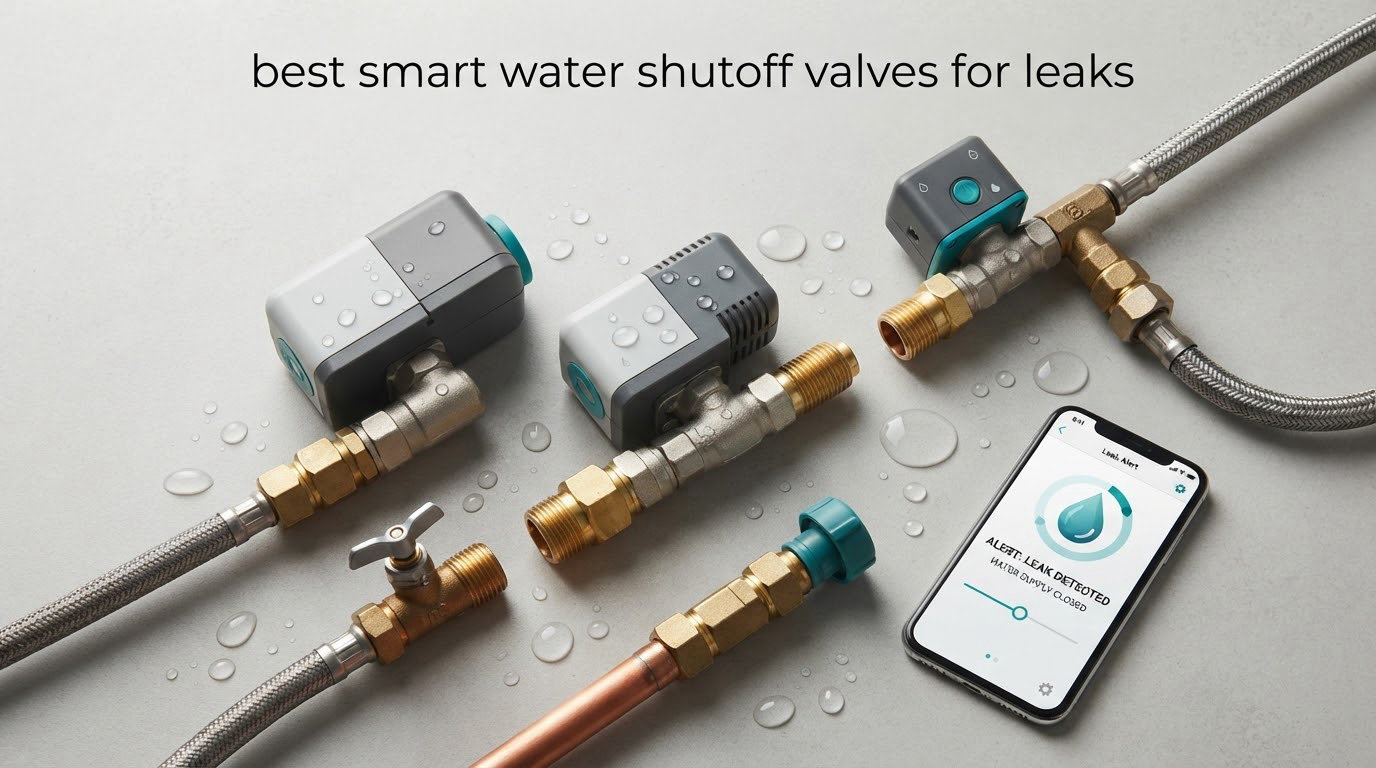
Automatic water shutoff valves are worth it if nobody in your household can reach the main shutoff within an hour of a leak alert. An inline motorized ball valve on the main line watches flow, pressure and temperature around the clock and closes the water while you are at work, asleep or out of the country. For most homes, that single capability removes more risk than any other flood-protection upgrade.
That is the short version. The long version is that the eight best smart water shutoff valves for leaks fall into three very different families, and buying the wrong one is how people end up with a device that never sees a leak. Whole-home flow monitors install in the main line and infer a leak from the flow signature. Clamp-on retrofit actuators bolt on top of the ball valve you already have. Point-sensor systems stay quiet until a probe under a water heater or washer gets wet, then close the valve.
We spent weeks reading spec sheets, install guides and several thousand customer reviews across all three families, then cross-checked what plumbing and home-automation forums actually complain about. Nothing here was flood-tested in a lab; this is a spec-plus-review evaluation, and we say so plainly because the alternative is pretending we turned on a tap in every basement in America.
Two more framing notes before the picks. First, a smart water shutoff valve is not a replacement for point leak sensors; the best results come from pairing them. Second, if your property is an apartment or condo without an accessible main shutoff, skip the inline category entirely and look at the clamp-on and point-sensor options further down.
Table of Contents
Top 3 Smart Water Shutoff Valves for Leak Protection (October 2026)
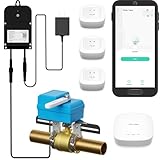
YoLink Water Shutoff Kit
- Offline device-to-device shutoff
- LoRa range up to 1/4 mile
- No pipe cutting
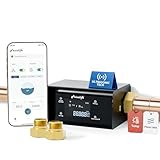
Frizzlife LP365
- Ultrasonic 0.01 gpm micro leak detection
- No moving parts
- 3/4 and 1 inch fit

Tokatuker WiFi Valve Actuator
- No hub and no monthly fee
- Alexa and Google Assistant
- Fits existing ball valve
The YoLink kit is our Editor’s Choice because it is the only product in this group that keeps shutting water off when the internet goes down, thanks to direct device-to-device pairing between the sensors and the valve controller. The Frizzlife LP365 takes best value with genuinely sensitive ultrasonic flow measurement and no moving parts. The Tokatuker actuator is the cheapest way to get phone control over a valve you already own.
All 8 Smart Water Shutoff Valves Compared in 2026
| Product | Specs | Action |
|---|---|---|
| YoLink Water Shutoff Kit |
|
Check Latest Price |
| Frizzlife LP365 |
|
Check Latest Price |
 Moen Flo Shutoff Moen Flo Shutoff |
|
Check Latest Price |
 iSpring LS43 iSpring LS43 |
|
Check Latest Price |
 Zooz ZAC36 Titan Zooz ZAC36 Titan |
|
Check Latest Price |
| Tokatuker WiFi Actuator |
|
Check Latest Price |
 E-SDS Leak Shutoff System E-SDS Leak Shutoff System |
|
Check Latest Price |
 Savant AS-414 Savant AS-414 |
|
Check Latest Price |
Read that table by detection method rather than by brand. The YoLink, Zooz and Tokatuker entries clamp onto a valve you already own, so they are the only three here that need no pipe work. The Frizzlife LP365, Moen Flo and iSpring LS43 replace the main shutoff itself and infer leaks from flow behavior at the main line. The E-SDS and Savant units do not monitor the whole house at all; they watch one appliance line and act when a sensor gets wet.
That last distinction matters more than any spec on this page. A point-sensor shutoff cannot catch a burst supply line inside a wall, because no probe sits there. A flow monitor can catch it. Neither one, however, tells you as quickly when water is already hitting a floor.
1. YoLink Water Shutoff Kit Review – Offline Clamp-On Protection
YoLink Water Shutoff Kit: Controller + EVO + 3-Pack Sensors + Hub
Controller plus EVO valve operator
3 leak sensors and hub
LoRa range up to 1/4 mile
Works with Alexa and Home Assistant
Pros
- Device-to-device shutoff keeps working during power loss or network outages
- No plumbing required because the EVO operator clamps onto the existing valve
- LoRa range reaches basements and detached areas
- Sensors last up to 5 years on battery
- Highest average rating in our group at 4.7 out of 5
Cons
- Total kit cost climbs once the hub and multiple sensors are counted
- Hub and sensors must be mounted away from flooding and condensation
- Only five free SMS alerts per month are included
This is the kit we recommend to almost everyone who asks us what to buy first. The bundle contains three water leak sensors, a smart valve controller, an EVO valve operator and a YoLink hub, and the operator mounts over your existing ball valve without cutting a single pipe. That single design choice removes the plumber from the decision, which is the main reason DIY installers keep recommending clamp-on form factors in the home automation communities.
What separates it from the other clamp-on options is the pairing architecture. Once the sensors and the controller have been paired to each other, they talk directly rather than routing every alert through the hub and the internet. The manufacturer calls this device-to-device communication, and in practice it means a tripped sensor still closes the valve when your router is down or the hub loses power.
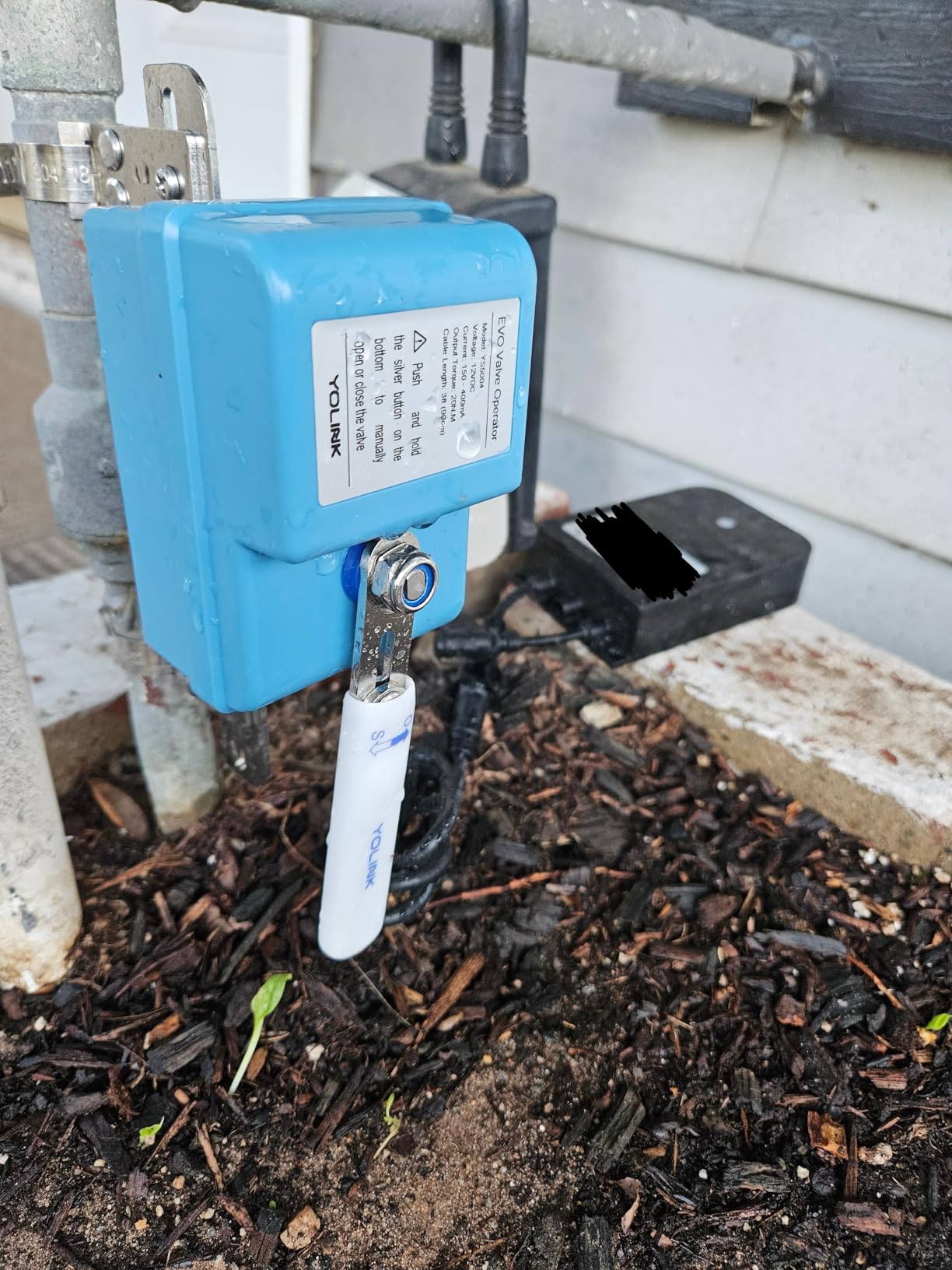
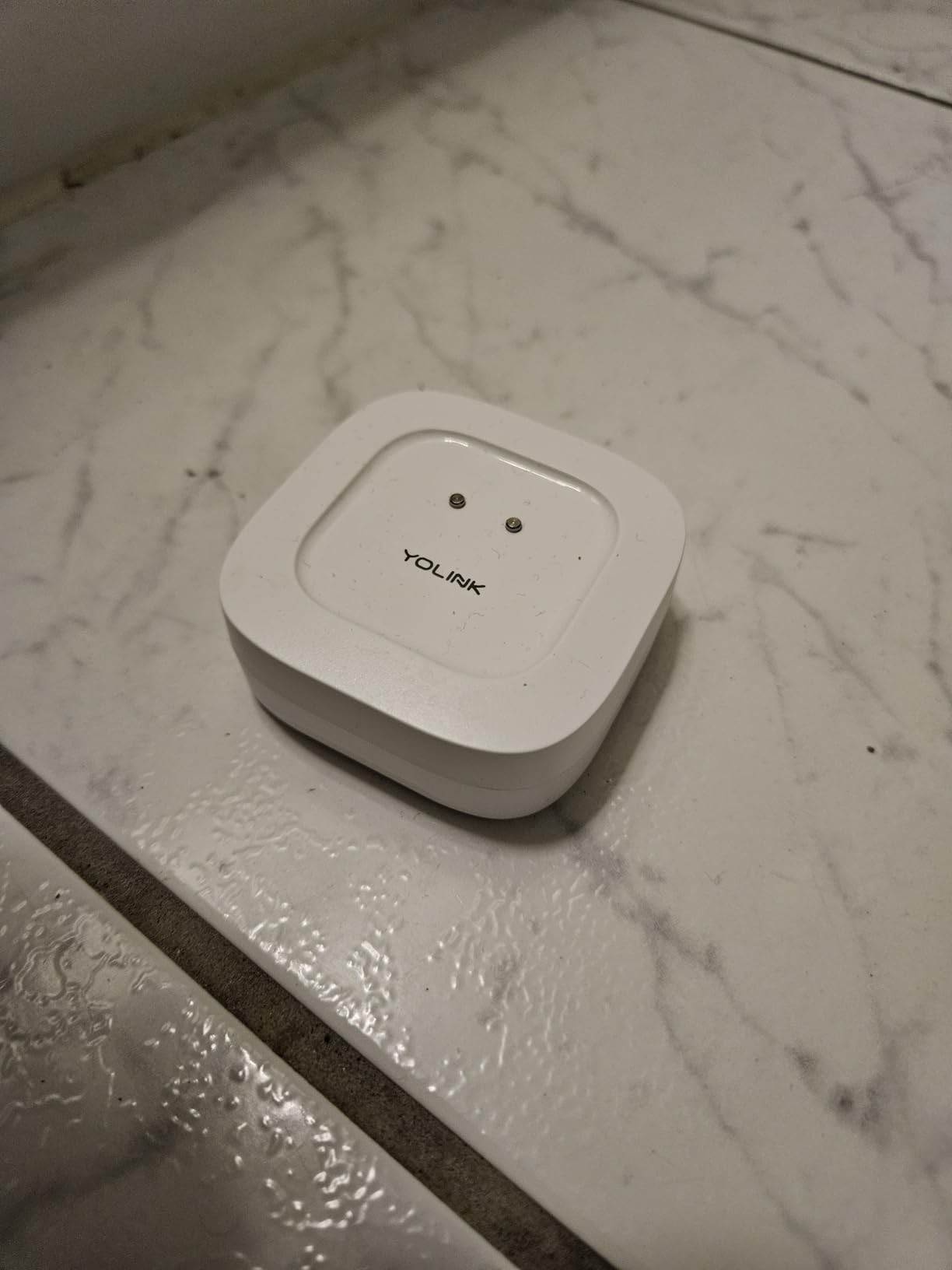
Range is the other quiet advantage. LoRa gives roughly a quarter mile of line-of-sight-plus-obstacle distance between devices and the hub, so the sensors can sit in a basement, an attic and a detached utility space without range extenders. Battery life is quoted at up to five years on the sensors and about two years on the valve controller, which runs on mains power with battery backup.
It also plays nicely with what people already own. Alexa, Google Assistant, IFTTT and Home Assistant are all listed as supported, and the sensors can be added to an existing automation that shuts the water when any of them trips. For a household running local control rather than a cloud app, that matters more than the app polish does.
Who this kit suits best
This is the pick for renters and homeowners who refuse to let a plumber touch the main line, and for anyone with a basement, crawlspace or second property where Wi-Fi coverage is unreliable. It is also the strongest choice for vacation homes and short-term rentals, because the offline shutoff path does not depend on a working internet connection at the property.
If you already run Home Assistant and want a valve your hub can drive directly, the device-to-device pairing here is a real advantage over cloud-only designs. Pair it with a couple of extra sensors and you have whole-home coverage without any plumbing changes at all.
Where the kit falls short
The cost of the full bundle is the biggest drawback, and it grows as you add sensors to cover more of the house. Hub placement also takes thought: the hub and the sensors need to sit somewhere without condensation, extreme temperature or a chance of being submerged, which rules out the exact spots most likely to leak.
And the alert allowance is limited to five free SMS messages per month per account, so if you configure every sensor to text you, you will need to rely on app and email notifications beyond that. None of this stops the shutoff itself, which still fires locally. It only changes how you hear about it.
2. Frizzlife LP365 Review – Ultrasonic Whole-Home Flow Monitoring
Frizzlife LP365 Smart Water Monitor and Automatic Shutoff Valve – 0.01GPM Ultrasonic Micro Leak Detection, APP Wi-Fi Remote Control, Real-Time Flow/Temp Alarm, 24/7 Water Usage Reports, 3/4″ and 1″
Inline 3/4 and 1 inch fitting
Ultrasonic 0.01 gpm detection
Flow, temperature and usage reports
Requires a nearby outlet
Pros
- No moving parts means no turbine to wear out in hard water
- Detects micro leaks down to 0.01 gpm
- Works with the Smart Life app and integrates with Home Assistant and Apple HomeKit
- Customizable thresholds reduce false alarms from irrigation
- Usage data tracks closely with municipal meter readings
Cons
- Must be plugged in and needs a nearby outlet
- Leaks under 0.01 gpm such as a slow drip go undetected
- Brass NPT adapters lack wrench flats
- Valve takes roughly 20 seconds to fully close
The Frizzlife LP365 replaces the main shutoff with a 3/4 inch or 1 inch inline assembly and reads flow with an ultrasonic sensor rather than a spinning turbine. For anyone who has lived with a turbine meter that crusts up in hard water, the no-moving-parts design is the headline. There is nothing inside to wear out.
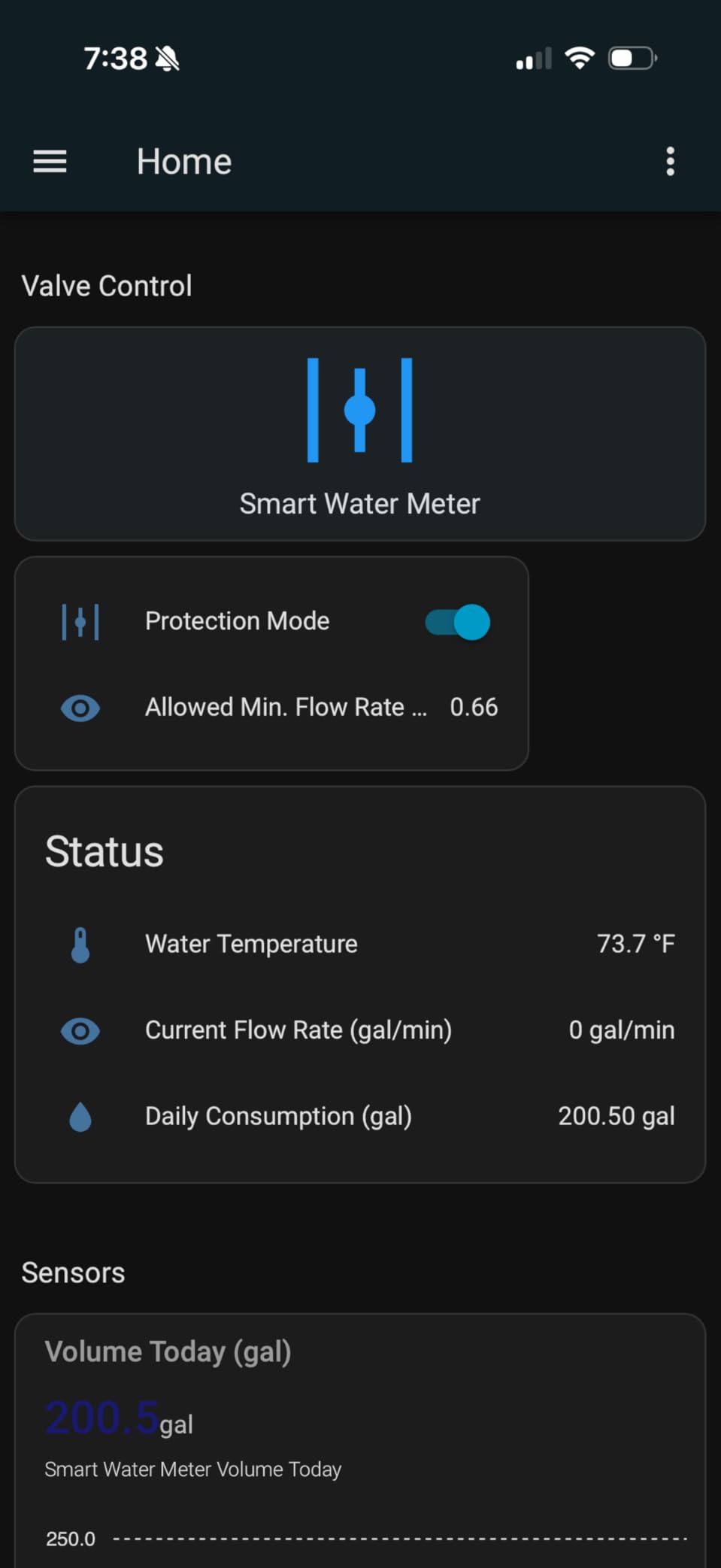
Detection sensitivity is the other selling point. The stated floor is 0.01 gallons per minute, which is well below what most flow-based competitors claim, and the app gives you real-time flow rate, temperature and, on the LP365-P variant, pressure. Daily and monthly usage history let you compare a normal week against a week when something is quietly running.
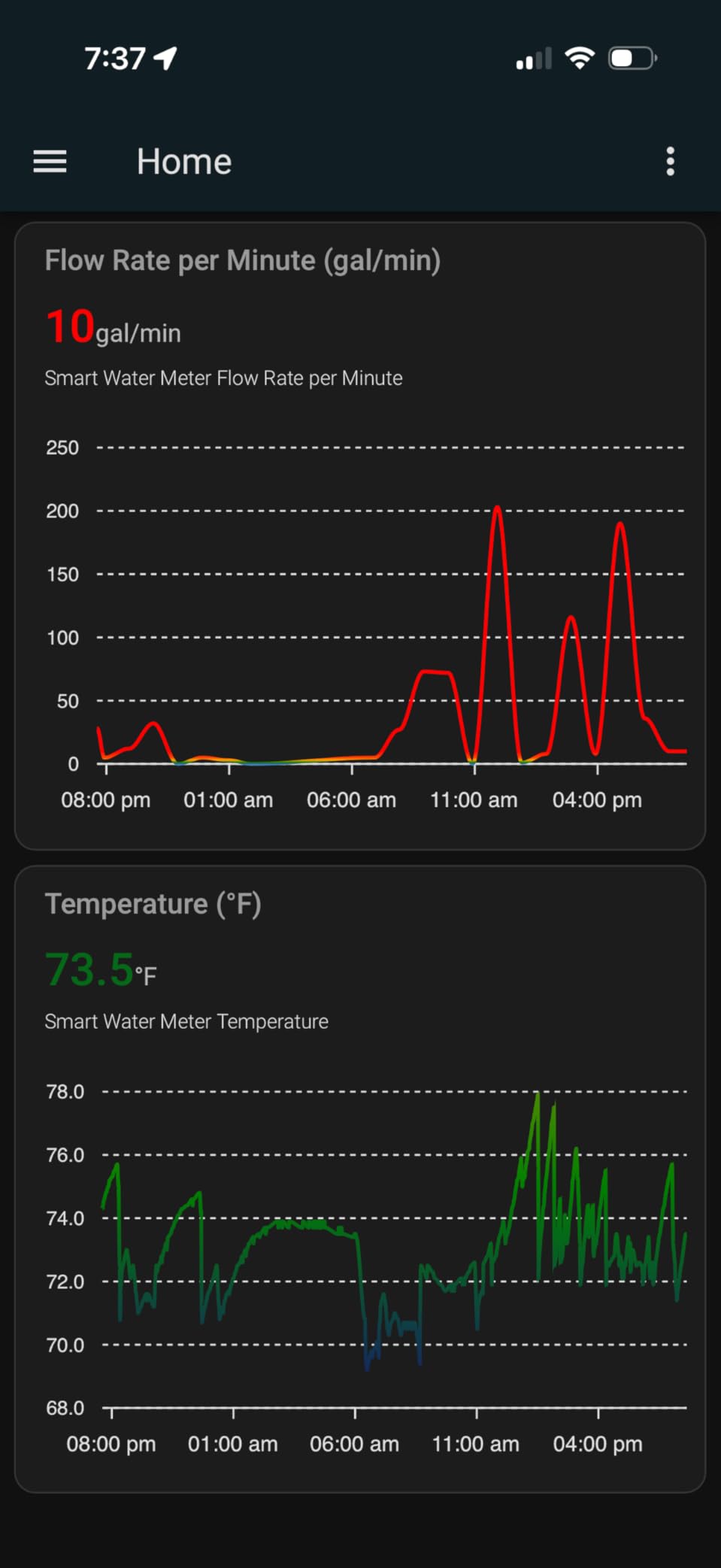
Smart-home integration is better here than on most competitors. It runs on the Smart Life app and is reported to integrate cleanly with Home Assistant and Apple HomeKit, which makes it a straightforward pick for anyone already inside that ecosystem. Several long-form reviews also note that their insurer accepted the device after installation, which is the single most common real-world reason people end up buying one.
The 24/7 alerting covers SMS, phone calls and app notifications, with automatic valve closure when the threshold is crossed. Thresholds are customizable against household size, daily schedules and irrigation, which is how you keep outdoor watering cycles from looking like a leak at 6 a.m. every morning.
What you gain by going inline
An inline whole-home monitor sees things a point sensor never will: a supply line leaking inside a wall, a toilet running endlessly, a water heater relief valve weeping. Because it sits at the main line, one device covers every fixture downstream of it, which is the coverage argument that makes inline valves worth a plumber visit.
The trade is installation. This is not a clamp-on. The assembly has to be plumbed into the main line, and it needs a nearby power outlet because it must be plugged in to join the network. Budget a plumber, and confirm you have outlet access before you buy.
What the reviews complain about
Hardware ergonomics is the top complaint. The brass NPT adapters supplied do not have wrench flats, so tightening them means improvising a tool, and the shipped manual is frequently described as difficult to follow with support having to supply a clearer one. The valve also takes about 20 seconds to close, which is slower than the near-instant reactions of a probe-driven system.
Below 0.01 gpm you are outside its detection range, so a very slow faucet drip will not trigger it. That is usually the right trade for whole-home protection, but it is a real gap if your concern is a specific slow leak.
3. Moen Flo Shutoff Review – The Most Reviewed Inline Smart Valve
Moen Flo Shutoff, 3/4″ Automatic Water Leak Detector & Shutoff, 900-001
Inline 3/4 inch main line install
Monitors flow, pressure and temperature
C-123A lithium backup battery
AC powered with wall mounting
Pros
- Daily MicroLeak tests proactively surface hidden problems
- FloSense learns your household usage patterns
- App-based monitoring and remote shutoff from anywhere
- By far the largest review base in this group
Cons
- Lowest average rating of the group at 3.9 out of 5 with a large one-star share
- Flow measurement is less sensitive to very small leaks than ultrasonic designs
- Requires professional plumbing installation and a nearby outlet
- Sensitive to fixtures such as irrigation systems
The Moen Flo Shutoff is the most widely reviewed inline smart valve in this roundup by a wide margin, and it is also the most polarizing. Its 3.9 average sits at the bottom of our group, with roughly 18 percent of reviews at one star, while 64 percent sit at five stars. That split is the story: people who had it installed by a plumber and left the learning curve alone tend to love it, and people who did not tend to explain exactly why.
What it does well is the daily MicroLeak test. Instead of waiting for a leak to exceed a threshold, the unit sends a small pulse through the line on a schedule and looks for an abnormal response, which is designed to catch problems while they are still small. FloSense adds a second layer by learning the specific water patterns of your household, including when fixtures normally run.
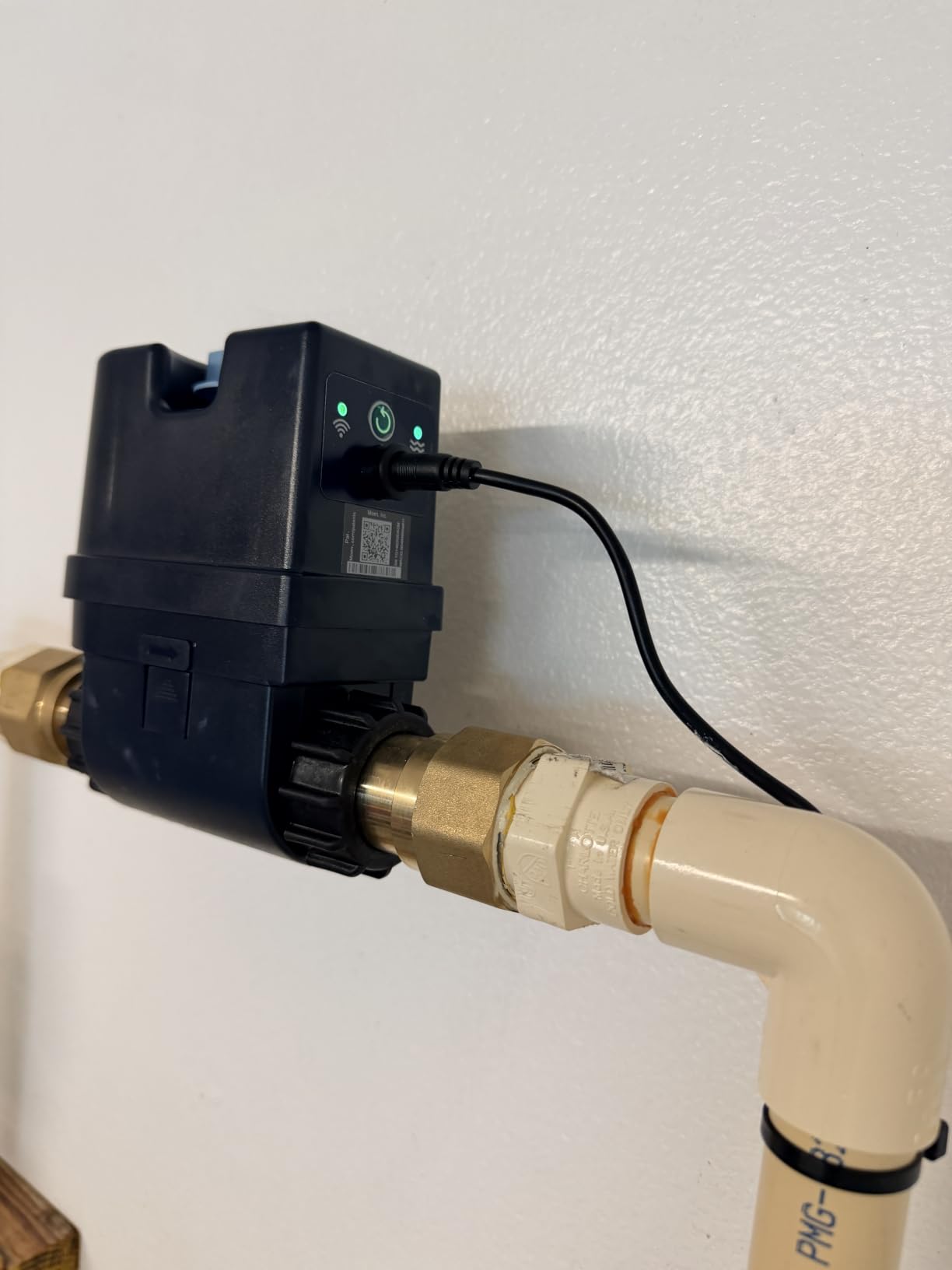
It monitors flow, pressure and temperature continuously, and the app lets you close the valve remotely from anywhere. The hardware is AC powered at 12 volts with a CR123A lithium backup battery, and the box includes a power adapter, spacers, O-rings, threaded tailpieces and an Allen key.
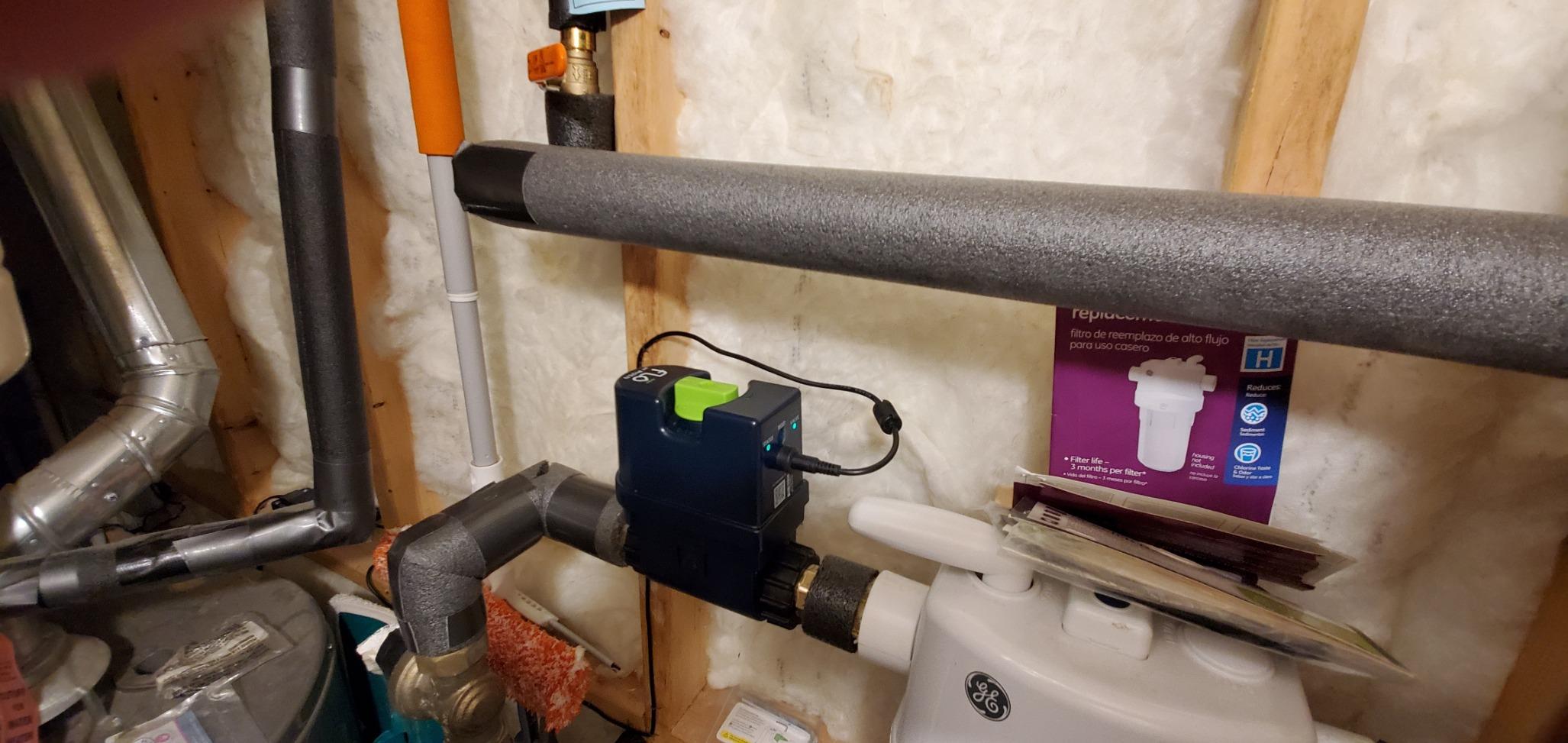
Reliability over a long horizon is the real question on this one, and it is the concern that dominates plumbing forums. Homeowners there repeatedly ask whether these valves still work in three to five years, and several report units that stopped responding after roughly a year, with the auto-shutoff motor among the components named. We are not calling the product defective. We are telling you that long-term dependability is the weakest part of its customer record, and that you should plan to know how to reach the physical valve if the motor ever dies.
Forum advice that is worth taking seriously here: do not bury the assembly somewhere you cannot reach. If the motor fails, your fallback is a manual valve, and if that valve is behind a finished wall you have created a much bigger problem than the one you were trying to prevent.
Where Moen Flo still makes sense
If your household has a predictable, metered water pattern and you want scheduled self-tests rather than only threshold alarms, this design has no equal in the group. It is also a reasonable choice when your insurer has asked for a recognized automatic shutoff, since the Flo name carries weight with carriers in a way most of the smaller brands do not.
For anyone nervous about a quiet drip, the daily test cycle adds a check-in that purely threshold-based products simply do not perform. Just confirm a plumber will install it and that you have outlet access nearby, because the unit is not a DIY item.
Why buyers get frustrated
Three issues recur. The flow measurement is less sensitive to very small leaks than an ultrasonic design, so a slow micro leak may not register. The system needs to be calibrated to your usage, and it is easily confused by an irrigation zone or a large fixture drawing water on a schedule. And installation is genuinely plumbing work on the main line.
Add a rating this polarized and the result is a product with a large support tail of people who needed help, and a large group of people who never needed it in the first place. Read the one-star reviews closely before you commit; the complaints are specific rather than vague.
4. iSpring LS43 Review – Expandable Eight-Sensor Coverage
iSpring LS43 Water Leak Detector Alarm System, Automatic Shut-Off Valve and 2 Detection Sensors, Connects Up to 8 Sensor to Prevent Flooding, 3/4″ NPT
3/4 inch NPT automatic ball valve
Controller links up to 8 sensors
2 sensors included
Loud in-home audible alarm
Pros
- Calibrated sensors avoid the humidity and rain false alarms cheaper units suffer
- Shuts off the main supply within seconds of sensor contact
- Expands to 8 sensors covering heater
- washer
- dishwasher
- basement and baths
- Responsive support with a 1-year warranty and lifetime help
Cons
- Installation requires measuring and cutting the supply pipe
- Fewer reviews than the category leaders so long-term data is thinner
- One indicator light color is non-standard
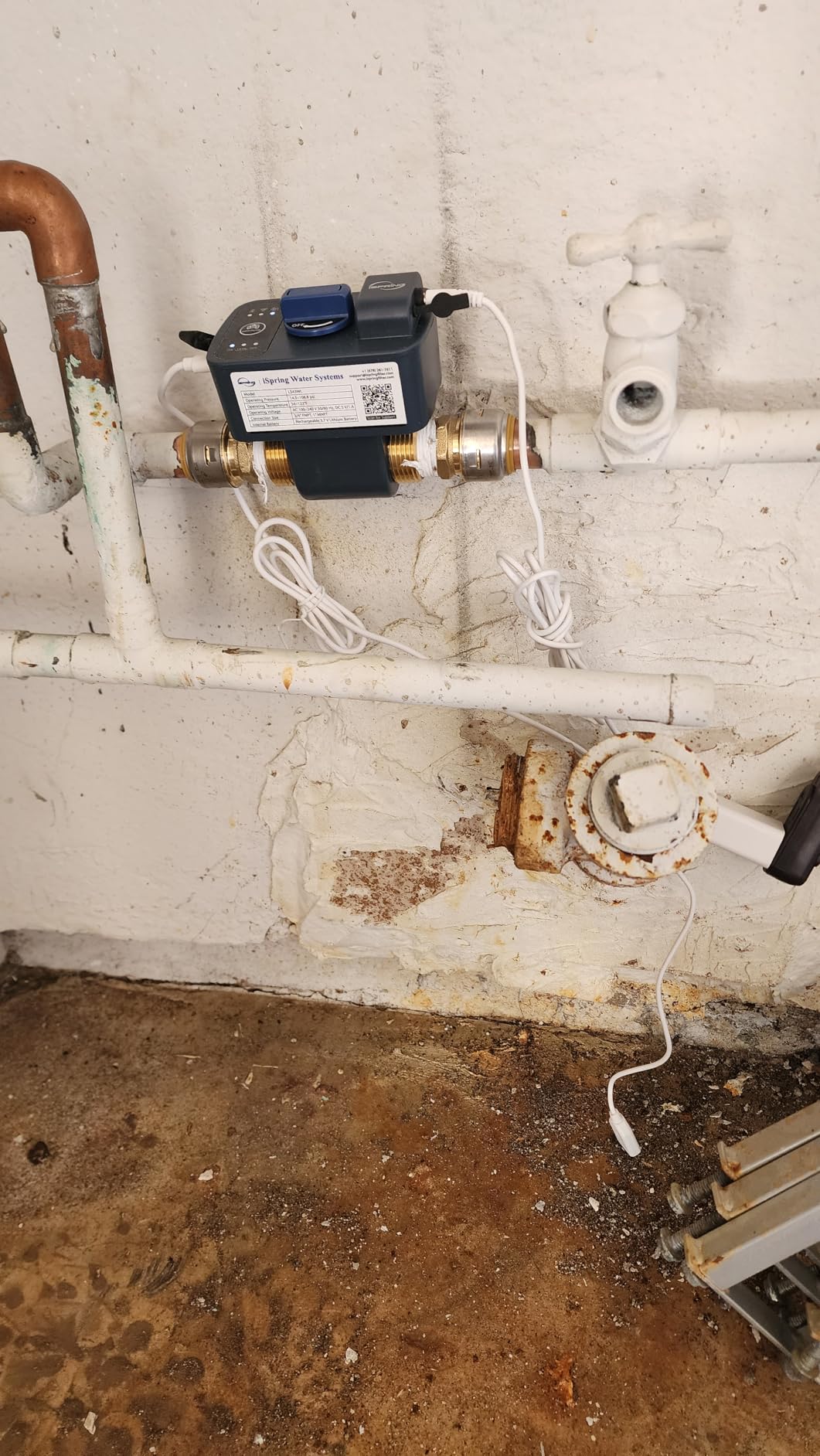
The iSpring LS43 takes a different shape from the rest of the inline group. It pairs a 3/4 inch NPT automatic ball valve with a controller module that accepts up to eight water detection sensors, and two sensors come in the box. The 4.6 average is the second highest in this roundup, with 84 percent of reviews at five stars.
What reviewers like most is that the sensor calibration avoids nuisance trips. Cheaper contact sensors are notorious for crying wolf when humidity rises or a basement sweats, and an unnecessary shutoff trains you to ignore the alarm. That failure mode erodes the whole value proposition, so the difference shows up in the reviews.
The controller also drives a loud audible alarm inside the home, audible from a basement, alongside phone alerts on the wired and wireless variants. With the expansion room, one system can cover a water heater, dishwasher, washer, basement and bathrooms without a second purchase.
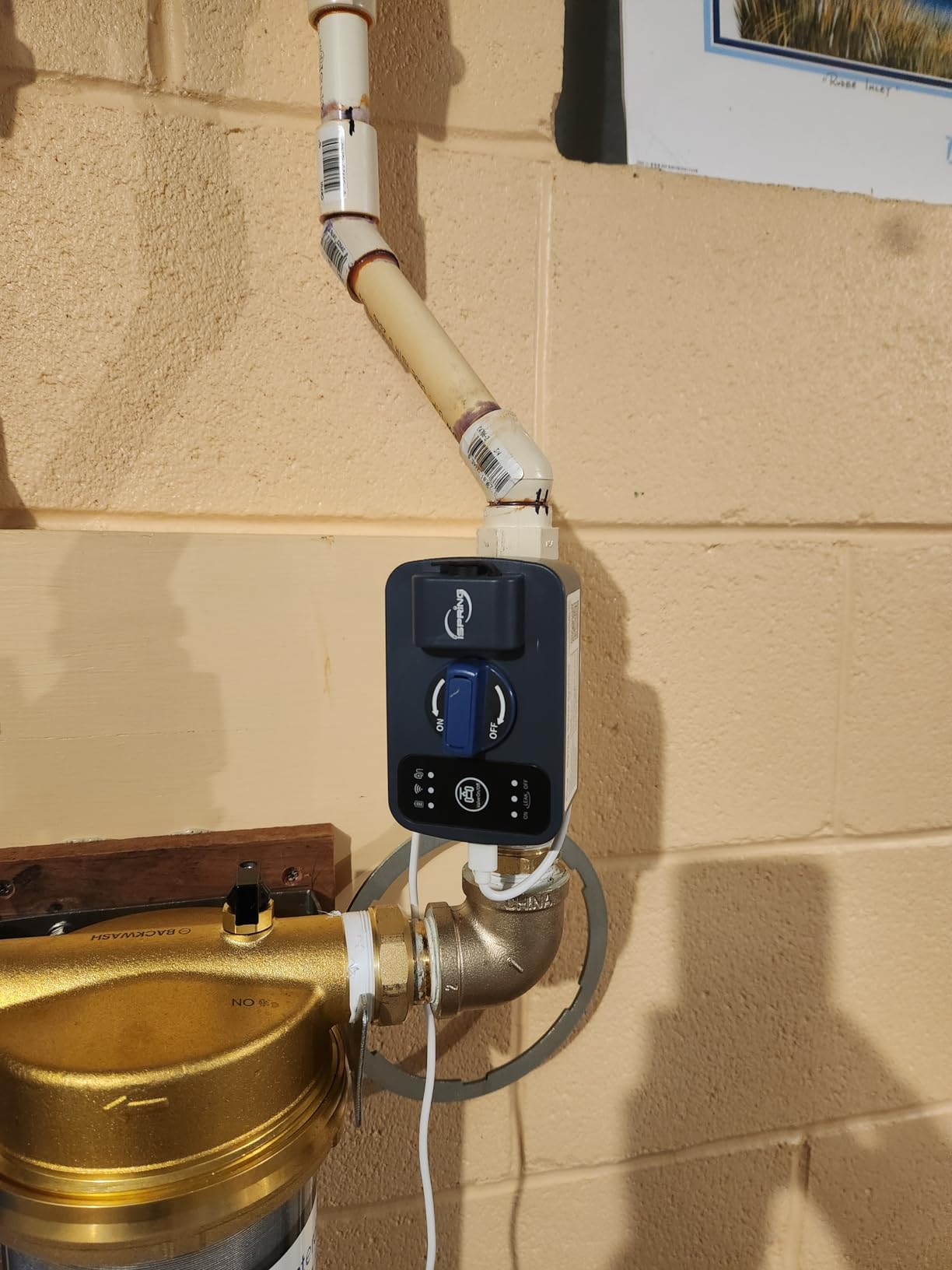
Support is another point of repeat praise. Owners describe iSpring answering setup questions directly and sending replacement sensors when needed, backed by a 1-year warranty with what the company calls lifetime support. The kit includes two sensors, a 5V/1A transformer, the ball valve with sound and light alarm, and the controller module.
Sensor units report a stable wireless connection with long battery life, which matters when the nearest of your eight sensors is in a utility room at the far end of the property. Treat the review count as the honest caveat here: 67 reviews is a thin sample for judging five-year reliability, and we would rather say that than pretend otherwise.
When this is the right shape of system
Pick the LS43 if you know exactly which spots scare you: the water heater, the washer supply, the dishwasher, a basement wall, a laundry drain. Eight sensor slots means you can cover all of them from one controller instead of mixing brands. For a vacation home where you want alerts and a shutoff rather than constant whole-home telemetry, this fits the job.
It is also a good answer for a rental or an older house where a plumber is acceptable but an expensive smart-home stack is not. The system is designed to be installed on the whole-house water pipe, so the coverage is main-line shutoff, driven by local probes.
What to check before ordering
Installation means measuring and cutting the supply pipe, so this is a plumber job unless you are genuinely comfortable with supply plumbing. Get the measurement right; that is the single most common install complaint we saw for this system and it is an easy mistake to make.
Expect fewer network extras than a cloud-connected system: no voice assistant integration is listed, and coverage is local rather than flow-based. If you want whole-home leak inference without a probe near every risk, the Frizzlife LP365 is the closer fit.
5. Zooz ZAC36 Titan Review – Z-Wave Actuator for an Existing Ball Valve
Zooz Z-Wave Long Range 700 Series Titan Water Valve Actuator ZAC36 | Compatible with Z-Box, SmartThings, Works with Ring Alarm
Clamp-on Z-Wave Long Range actuator
Fits 0.5 to 1.25 inch ball valves
Includes a plug-in leak probe
5-year warranty when registered
Pros
- Motor handles stubborn or seized ball valves and calibrates per valve
- No tools and a few minutes to mount
- Works offline with the included probe and fully wirelessly through a hub
- Supports SmartThings
- Hubitat
- Ring and Home Assistant
Cons
- Included probe cord is too short unless the valve sits near the floor
- Probe connector is a tight fit
- Nothing locks the actuator to the pipes
- Some units pair with only one hub
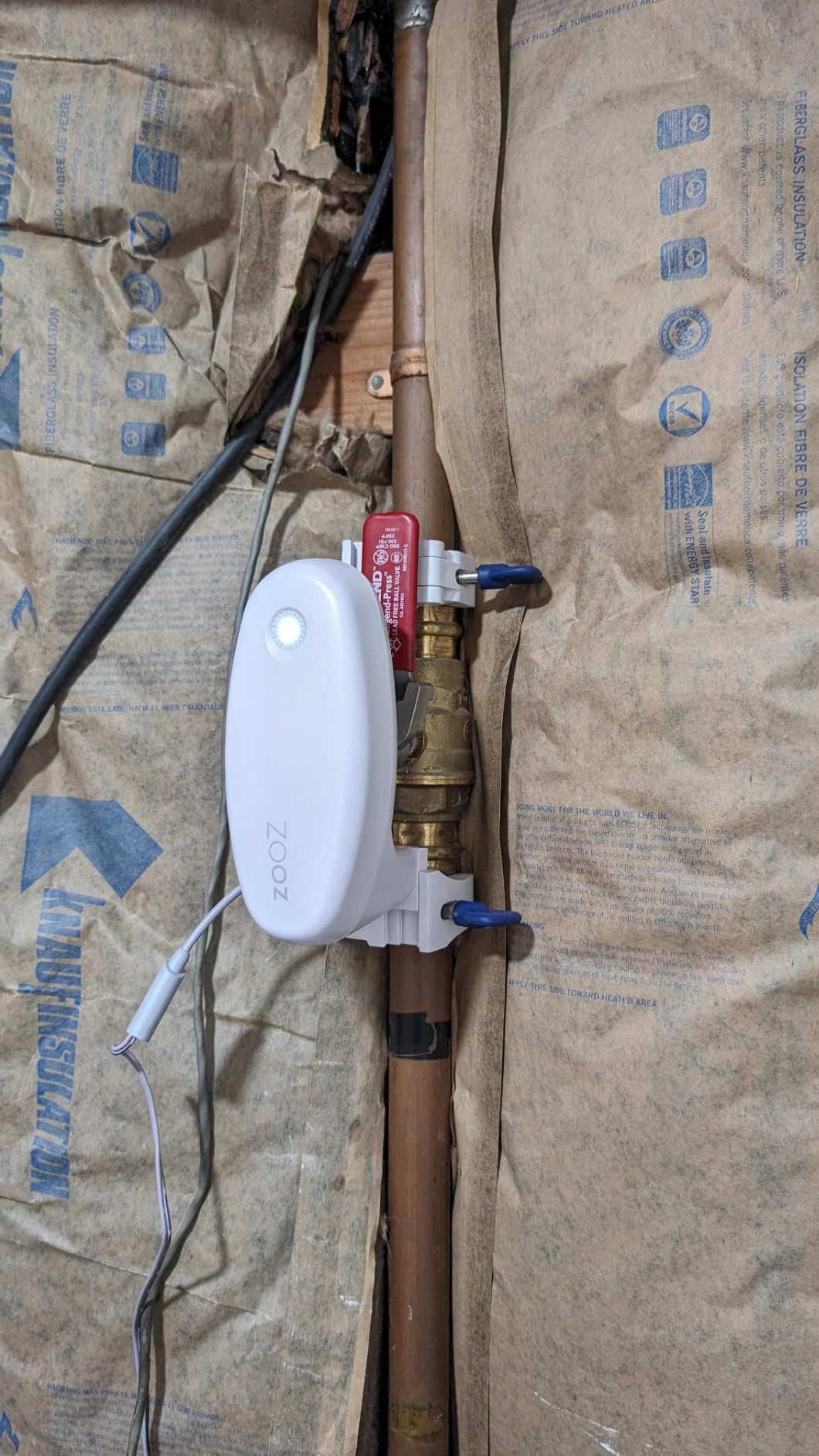
The Zooz ZAC36 Titan is an actuator, not a valve. It mounts over the ball valve you already have and drives the handle open and closed, which means no pipe cutting and typically no plumber. Among home-automation communities, Z-Wave and Zigbee clamp-on valves are consistently the recommended pattern for exactly this reason, and the Titan is the most mature of the Z-Wave options.
The motor is the reason it earns its place. It opens and closes valves that other actuators stall against, including ones that have partially seized, and it calibrates to your specific valve once at install. Reviews describe mounting and calibration as a few minutes of tool-free work, and it is rated for outdoor use.
Connectivity is where it earns its badge. It runs the Z-Wave Long Range protocol with S2 Security and SmartStart, and it is listed as compatible with Z-Box, SmartThings, Hubitat, Ring Alarm and Home Assistant. It also keeps working offline with the included plug-in leak probe, so a basic install has a safety net before you ever pair a hub.
Register the unit within 30 days and the warranty extends to five years, which is a genuinely useful offer on a device whose motor is the whole point.
Check your clearance before you buy
This is the most important line in the whole roundup if you own a Z-Wave hub. The Titan requires a standard 0.5 inch to 1.25 inch ball valve with 3 inches of clearance on each side, 1.25 inches of handle clearance and 1 inch of wall clearance. Cramped crawlspaces and tight basement walls are where clamp-on installs die, so measure the space first.
Also confirm your hub supports Z-Wave Long Range. If it does not, you are stuck with a probe-only device and no wireless control, which is a common and expensive discovery made after the box is open.
Weak points worth knowing
The included leak probe cord is short. Reviews describe it as usable only when the valve sits within a couple of feet of the floor, and the connector is a tight fit that can be hard to seat. There is also nothing that locks the actuator to the pipes, which makes it easier to knock or remove.
A minority of owners report the unit pairing with only one hub, choosing SmartThings or Ring but not both, plus one report of a valve that would repeatedly close and refuse a factory reset. If you run two ecosystems, verify pairing before you bury the install.
6. Tokatuker WiFi Valve Actuator Review – Hub-Free Remote Control
Motorized Smart Valve Actuator (Valve Sold Separately) WiFi & Bluetooth Electric Water Shutoff Controller Robot Automatically, Tuya Smart & Smart Life App Control, Work with Alexa, No Hub Required
Wi-Fi and Bluetooth valve opener
Fits 1/2, 3/4 and 1 inch valves
Alexa and Google Assistant
No hub or monthly fee
Pros
- No hub required and no monthly subscription for app control
- Works with Alexa
- Google Assistant and the Tuya Smart and Smart Life apps
- Scheduling timers for watering or shutoff windows
- Fits an existing ball valve with no plumbing work
- Bluetooth plus Wi-Fi gives a local connection path
Cons
- Valve is not included and must be fitted to a separate long-lever ball valve
- Pivot must align directly above the valve pivot or force drops and the unit can be damaged
- Does not work with SmartThings despite being Tuya based
- No support for 1.5 inch valves
The Tokatuker BT-511Wifi is the cheapest way to get phone control over a valve you already own. It is a motorized opener that grips the handle of a long-lever ball valve, powered by an included adapter and driven over Wi-Fi or Bluetooth through the Tuya Smart or Smart Life app, with no hub and no monthly charge. The 4.0 average sits below the group leaders, and the reason is almost always installation rather than function.
Because it works over ordinary Wi-Fi with voice support for Alexa and Google Assistant, it drops straight into a household that has no smart-home hub at all. Timers let you schedule watering windows for an outdoor faucet or set a recurring on and off cycle, and you can pair it with separate water or gas detectors to trigger a shutoff.
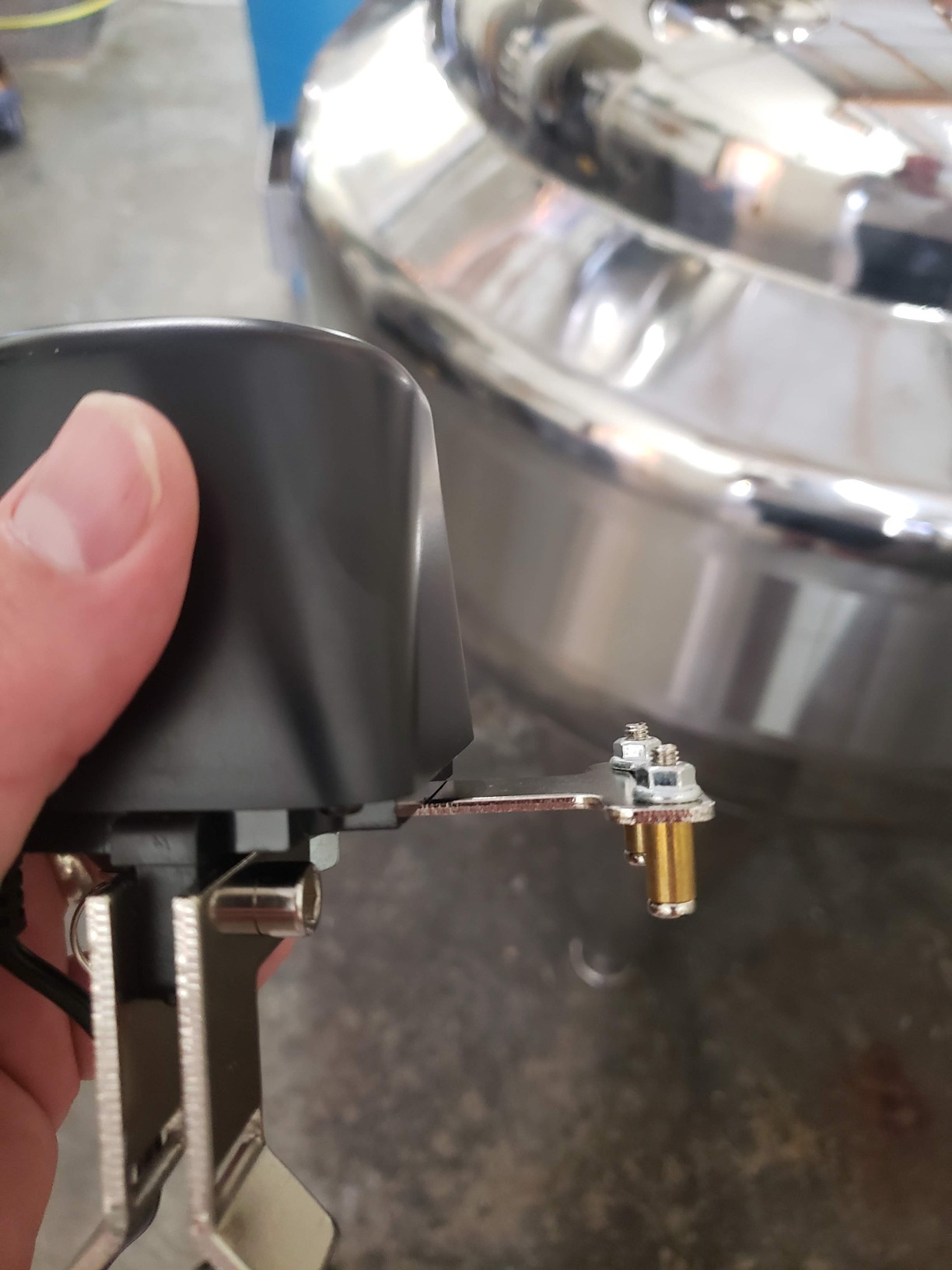
Two requirements decide whether this works for you. You need strong 2.4 GHz coverage at the valve, and the opener pivot has to sit directly above the valve pivot. Get that alignment right and it fits 1/2 inch, 3/4 inch and 1 inch long-lever ball valves with no plumbing work; get it wrong and the motor applies less force and may damage the unit.
The box contains the Wi-Fi controller with no ball valve, a power adapter, a DN20 bracket, an adjustable bracket and a manual. You are buying the actuator alone, so make sure you already have a compatible long-lever handle to mount it to.
Why it is still worth considering
No hub, no subscription and no plumbing means this is the fastest, least invasive way to get remote shutoff on an existing valve. If your main concern is being able to close the water from your phone while you are away, and you are willing to spend ten minutes aligning the bracket, it delivers exactly that.
It is also a sensible second layer in a two-valve plan: an inexpensive actuator at a critical appliance line, with a more capable inline monitor covering the whole house.
Where it will frustrate you
Alignment sensitivity is the dominant complaint, and installation is repeatedly described as fiddly, requiring patience. It does not support 1.5 inch valves. And despite being a Tuya-based device, it will not work with SmartThings, which surprises people who assumed the Tuya platform meant universal compatibility.
There is no included leak probe, so on its own it only responds to commands. Pair it with sensors or a flow monitor if you want automatic action rather than manual control.
7. E-SDS Water Leak Shutoff Review – Budget Coverage for a Water Heater or Laundry
E-SDS Water Leak Detector with Shutoff Valve,Sensors and Sounds Alarm
3/4 NPT solid brass ball valve
19.68 ft sensor probe
Shutoff within 2 seconds
Supports hot water to 212F
Pros
- Attaches to existing plumbing without replacing the main line
- Closes flow within 2 seconds of probe contact
- Audible alarm with flashing LED indicators
- Manual open
- close and reset buttons simplify service after a repair
Cons
- Two fixed female threads make the bulky assembly awkward to fit
- No app or smart-home connectivity at all
- Probe cable described as flimsy and needing protection
- Thread type may not match some appliance fittings
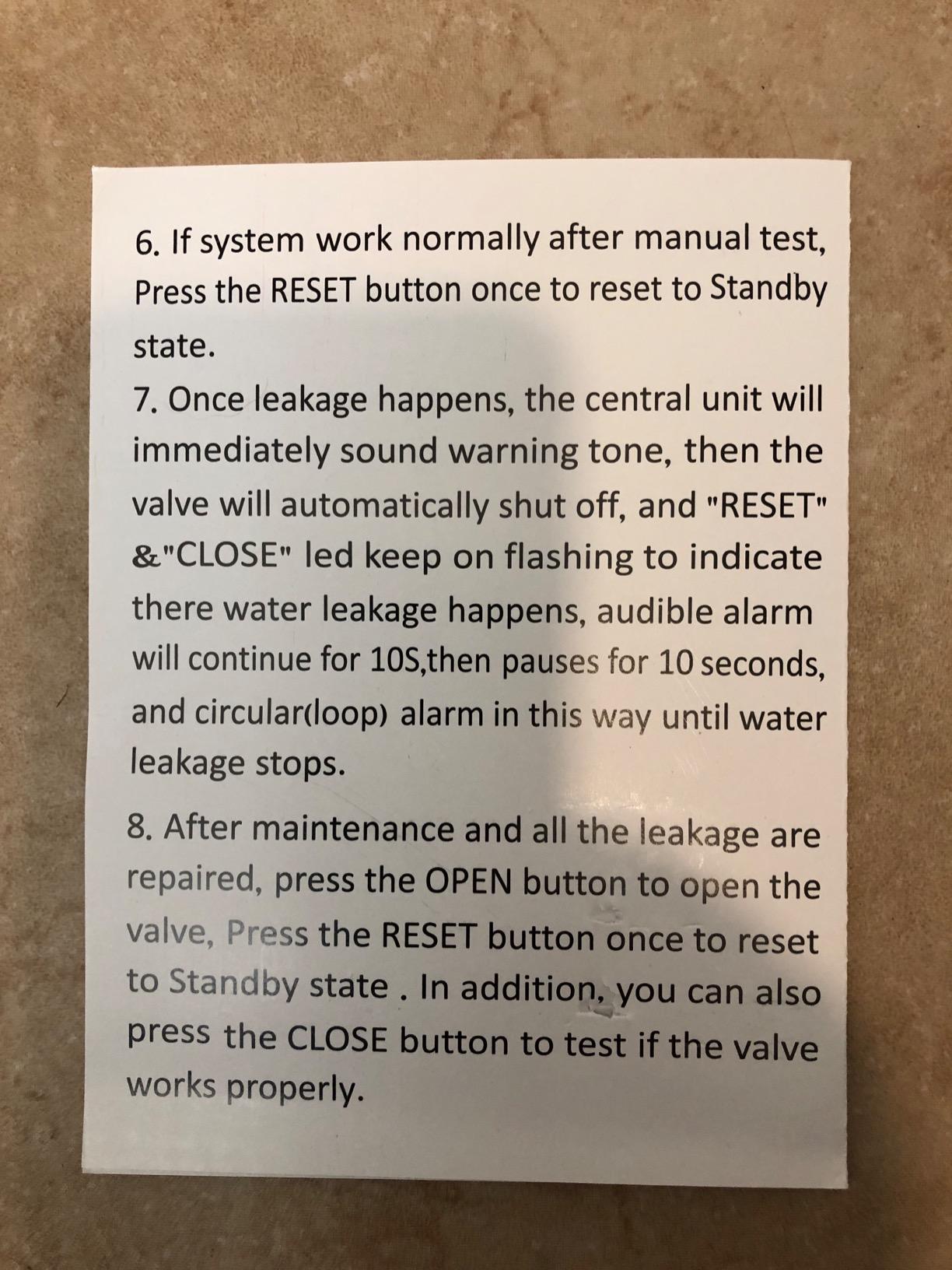
The E-SDS system is a straightforward, non-connected answer for a single high-risk spot. You get a 3/4 NPT solid brass ball valve, a central alarm unit and one water sensing probe on a 19.68 foot cable. When the probe is touched by water, the flow closes within two seconds and the unit sounds an alarm while flashing its indicators. Most reviews confirm that is exactly what happens when you bench test it.
The 4.3 average with 65 percent five stars reflects a device that does one thing quickly and cheaply. It suits a water heater, a laundry supply or a utility room where the risk is concentrated and you do not need to reach the valve from your phone. It handles hot water up to 212F, so it is not limited to cold supply lines.
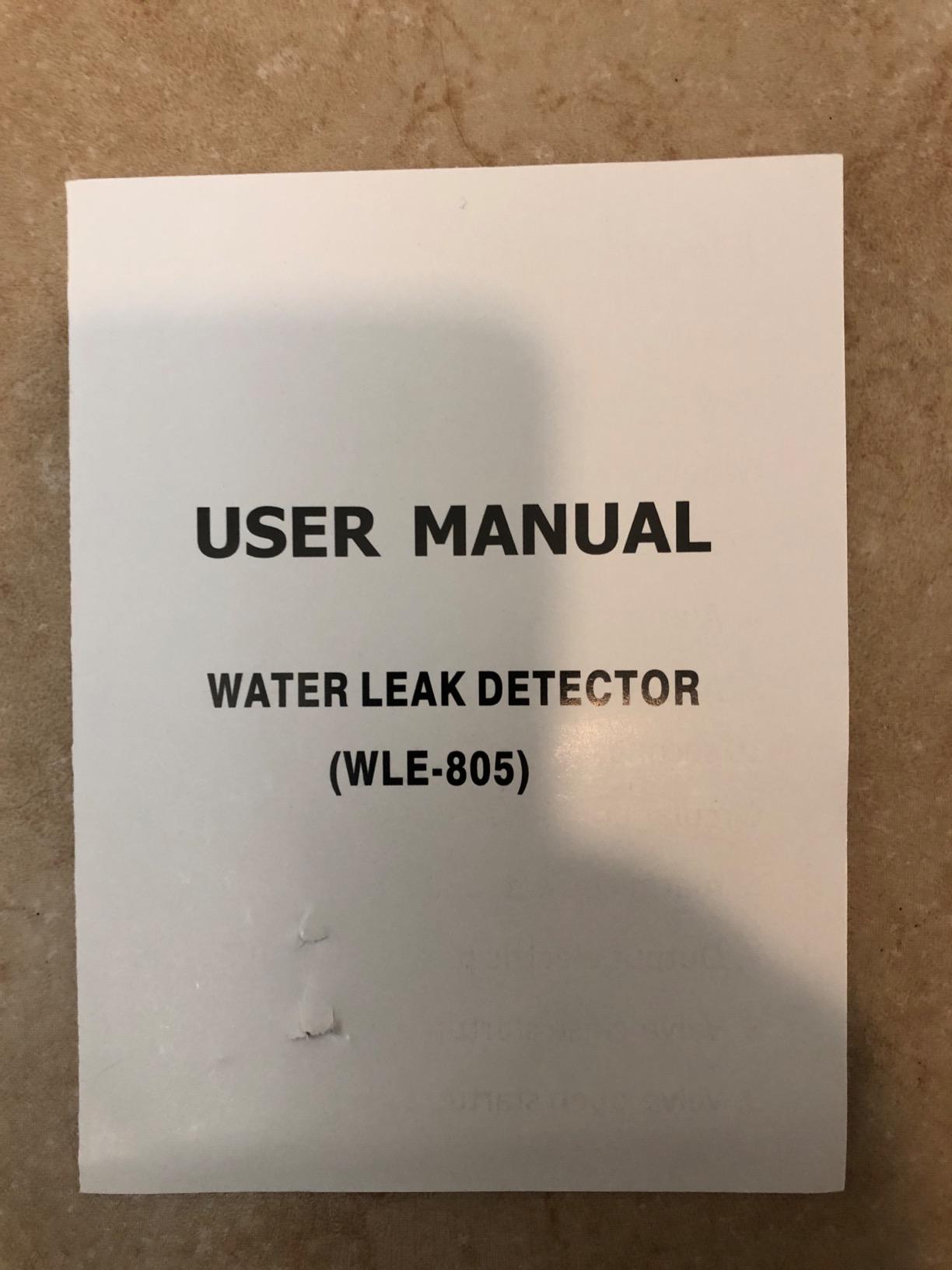
Manual open, close and reset buttons are more useful than they sound. After you repair whatever caused the trip, resetting the unit is a physical action on the valve rather than an app command, which means the system keeps working even though it has never been connected to anything.
The 19.68 foot probe cable is long enough to reach a floor drain, a laundry pan or the base of a water heater, which is what makes this practical for appliance protection rather than whole-home coverage.
What it is good for
Treat it as targeted protection rather than a system. A water heater or a washing machine in a finished basement is where most household water damage actually starts, and a local probe with a two-second mechanical response is a reliable guard for that one location. It is also the right pick for a rental or a shop where nobody wants to manage another app.
If you already run a smart-home stack, this device will not join it. There is no app, no wireless and no hub support, so it cannot report status or close remotely. Judge it as a mechanical safeguard.
Things to confirm before fitting
The threading is the real installation snag. Both ends are fixed female threads rather than one fixed and one rotating, so the bulky assembly has to be rotated into place and needs clearance around it in a tight laundry closet.
Also note that one reviewer raised a concern about lead content and potable water contact. It is a single unverified report rather than a recall, but it is worth checking certification on the listing for the exact model you buy. Finally, the cable is described as flimsy, so protect it from foot traffic, and confirm the thread type matches your appliance connections.
8. Savant AS-414 Review – Single-Point Protection for Filters and Softeners
Savant AS-414 Auto Water Shut-Off Valve for Leak Protection
Single-point leak protection
9V alkaline battery operation
Shuts off automatically on low battery
Adapters for 1/4 and 3/8 inch RO lines
Pros
- Lowest cost in the group for protecting one point of risk
- Sensitive sensor trips the valve and alarm at the first sign of moisture
- Alerts on low battery and shuts off before the battery dies
- One-button reset after the leak is fixed
- Owners report it stopping real pinhole leaks over several years
Cons
- No smart home
- app or wireless connectivity
- Protects one appliance line rather than the whole house
- Reports of a valve stuck shut and a plastic casing that split after years
- The unit itself is not waterproof
The Savant AS-414 is the smallest job in this roundup and does it well: protect a single line where a slow leak would go unnoticed for months. It is designed specifically for water filters, water softeners and reverse-osmosis systems, ships with adapters for 3/8 inch and 1/4 inch RO lines, and runs on a 9V alkaline battery. At 16 ounces it is also the easiest to install and the least expensive here.
The behavior that earns goodwill is the low-battery handling. It warns you when the battery is low and then shuts the water off automatically rather than waiting to go dead silently, and reset after a repair is a single button. Several owners describe it stopping genuine problems, including a set of pinhole leaks over a multi-year span.
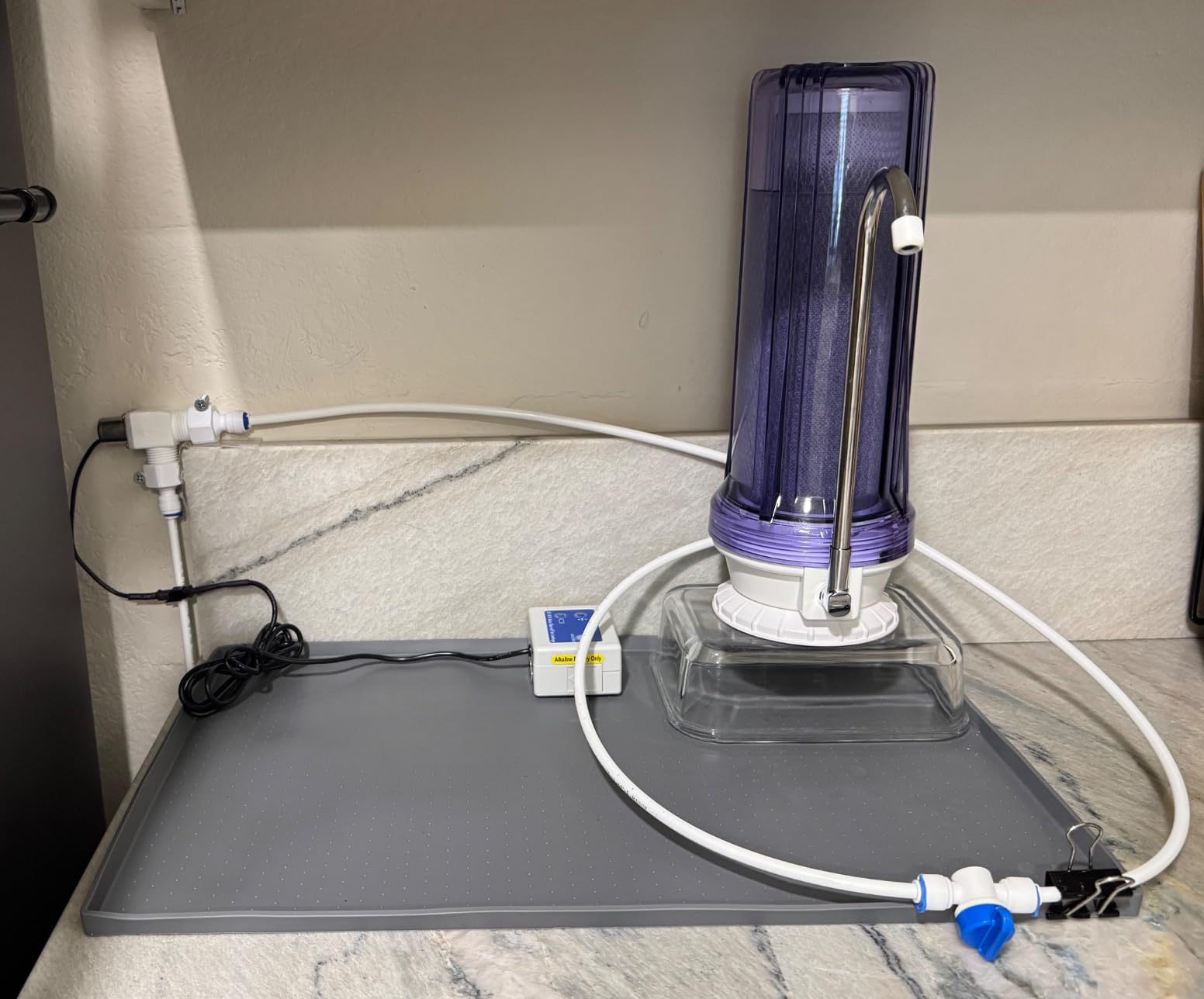
Set expectations clearly, though. This is a local mechanical device with no app, no wireless and no smart-home integration, and it protects one appliance line rather than the house. It will not see a burst supply line inside a wall, and it will not tell you anything while you are away beyond switching the water off at that point.
Longevity is the other caveat. Reviews include a roughly two-to-four year service life with a plastic casing that split after several years and one report of a valve stuck shut. The unit is not itself waterproof, and at least one owner had to disassemble and dry it before it worked again.
The case for spending this little
Whole-home protection is a real expense and a real plumbing project. If your actual risk is a filter canister that sweats onto a floor in a finished basement, a softener brine line, or an RO system under a sink, this device addresses that exact problem for a fraction of the cost of an inline valve, and it does it without a plumber.
It is also a sensible second layer alongside a bigger system. Many people protect the main line with a flow monitor and then add cheap point devices under the two or three appliances that cause the most damage when they fail.
Where it does not fit
If you want to close the water from your phone, receive alerts, or integrate with Home Assistant or Alexa, this is the wrong product. There are no connected features to configure, and no way to know remotely whether it has tripped until you are standing in the room.
Confirm your line size matches one of the supplied adapters, and keep it somewhere the casing will stay dry. If your concern is a whole house rather than one appliance line, move up to a clamp-on kit or an inline flow monitor instead.
How to Choose a Smart Water Shutoff Valve: Detection Method First?
Detection method is the only decision that really matters, and everything else is a preference. Inline flow monitors such as the Frizzlife LP365 and the Moen Flo infer a leak from the flow signature at the main line, which means one device covers the entire house including leaks inside walls. Clamp-on actuators such as the YoLink kit, the Zooz Titan and the Tokatuker opener do not detect anything on their own; they respond to paired sensors or to commands. Point-sensor systems like the E-SDS and the Savant AS-414 act only when a probe is wetted.
If you want one device to cover everything, you want an inline flow monitor and you need a plumber. If you want no plumbing work, you want a clamp-on actuator and you need to buy sensors separately. If your risk is concentrated at one or two appliances, a point-sensor shutoff is the cheapest correct answer.
Now think about the second layer. For most homes the strongest configuration is a flow monitor at the main line plus two to four point sensors at the water heater, washer, dishwasher and water heater drain pan. Our recommendations below split on that basis rather than pretending one device covers every case.
Subscription tolerance is the next filter. Several premium brands sell optional paid plans and, in at least one case, a financed bundle with an early-cancellation penalty, which is a fear that surfaces repeatedly in plumbing forums. Of the products here, the Frizzlife LP365, Zooz Titan and Tokatuker opener run without a monthly charge, and the clamp-on options from YoLink include a limited SMS allowance rather than a subscription. Check the current terms yourself before buying, since these change.
Hub ecosystem matters too if you run Home Assistant, Hubitat, SmartThings or an ISY controller. Zooz speaks Z-Wave Long Range, the Tokatuker opener is Wi-Fi only and explicitly not SmartThings, and the Frizzlife LP365 is reported to integrate cleanly with Home Assistant and Apple HomeKit. Buying a cloud-only device because the listing said smart is the most common compatibility regret in the forums.
Power Loss, False Shutoffs, and Pipe Compatibility
What happens in a power outage depends entirely on the architecture, and this is the question we get asked most. Can you unplug a smart water shutoff valve and still have running water? In most designs, yes. An inline motorized ball valve is normally open, so a loss of power leaves you with water and no automatic protection. A clamp-on actuator behaves the same way. The exceptions matter: the Savant AS-414 deliberately shuts off on a low battery, and the YoLink kit continues to shut off locally during a power or network interruption because sensors talk directly to the controller.
So the honest answer is that you are trading protection for availability depending on the design, and the direction of that trade is a purchase decision rather than a defect. Anyone relying on a shutoff for freeze protection should confirm the behavior in writing before relying on it during a storm.
False shutoffs are the other thing nobody on page one of the search results explains. In our reading, the common triggers are an irrigation zone drawing water on a schedule, a large fixture such as a tub fill or a clothes washer that looks like a leak until the system learns the pattern, humidity under a sensor probe in a basement, a sump pump discharge on a shared line, and pressure-tank cycling on a well system. The fix is almost always calibration rather than a return: give the device a week or two of normal use, set the threshold above your highest legitimate flow, and place probe sensors away from condensation.
Pipe compatibility decides whether an inline install is even possible. The inline options here cover 3/4 inch lines, with the Frizzlife LP365 also supplied with fittings for 1 inch. The clamp-on options have their own limits: the Zooz Titan fits 0.5 inch to 1.25 inch ball valves but demands real clearance, the Tokatuker opener covers 1/2 inch, 3/4 inch and 1 inch long-lever valves and not 1.5 inch, and the Savant AS-414 is sized for filter and RO lines rather than the main. Galvanized plumbing and well systems with a pressure tank are the two cases that trip people up, and both need a plumber conversation before you order.
Finally, reachability. Forum advice that we think is correct: do not bury the valve somewhere you cannot reach if the motor dies. A crawlspace is fine, a finished wall is not.
What Installation Actually Involves
Inline installs are plumbing work on the main line. The water has to be shut off at the street-side valve, the existing shutoff comes out, the new assembly goes in, and the line has to be repressurized and checked for leaks before you close the wall back up. A plumber should quote the labor separately from the hardware, because the hardware is the part you can compare and the labor is the part you cannot.
Clamp-on installs are different. The actuator mounts over the handle of the valve you already have, calibrates to that valve once, and takes minutes rather than an afternoon. No pipe is cut, which also means no push-to-connect mistakes and no risk of no water at all, a fear that comes up repeatedly in homeowner forums. These are the genuinely DIY-friendly options in this roundup.
Point-sensor installs sit between the two. A probe goes under an appliance or beside a drain, the valve attaches to the existing plumbing downstream of the appliance, and you have to confirm that the thread type matches your connections. The E-SDS unit in particular needs clearance because both ends of the valve are fixed threads.
Two practical checks before anyone opens a toolbox. Make sure there is a nearby outlet if the device is mains powered, since the Frizzlife LP365 and the Moen Flo both need to be plugged in to join the network. And measure the space around the valve if you are buying a clamp-on, because the Zooz Titan needs 3 inches of clearance on each side and 1 inch from the wall.
On insurance, we will only say this much: some carriers offer a premium discount for an approved automatic shutoff, and an insurer has been known to require one, but eligibility and the size of the discount vary by carrier and by state. Ask your specific agent what they will accept and what documentation they want before you buy, and keep the receipt and the model number.
Frequently Asked Questions
Are automatic water shut off valves worth it?
Yes, when nobody in your household can reach the main shutoff within an hour of a leak alert. An inline motorized ball valve watches flow, pressure and temperature around the clock and closes the water while you are at work, asleep or away, which removes more risk than any other flood-protection upgrade. They are less valuable in a small home where someone is always home.
What is the best automatic water shutoff valve for residential use?
The YoLink Water Shutoff Kit is our top pick for most homes because it clamps onto an existing valve with no plumbing work and keeps shutting water off locally even when the internet or the hub is down. For whole-home flow inference with the highest sensitivity, the Frizzlife LP365 is the strongest alternative, and it runs without a monthly subscription.
What is the most reliable water shut-off valve?
Reliability is judged less by the spec sheet than by what breaks and when. Across this group, clamp-on designs with no water-handling internals, such as the YoLink kit and the Zooz ZAC36 Titan, avoid the sensor-fouling and pipe-fitting failure points of inline units. No product here has five-year reliability data, so plan on knowing how to reach your manual valve.
What happens if a smart water shutoff valve loses power?
Most designs fail open, meaning you keep running water but lose automatic protection until power returns. Two exceptions matter: the Savant AS-414 deliberately shuts off on a low battery, and the YoLink kit keeps closing the valve during a power or network interruption because its sensors communicate directly with the controller.
Why does a smart water shutoff valve keep shutting off?
The usual triggers are an irrigation zone drawing water on a schedule, a large fixture such as a tub fill or clothes washer, humidity reaching a sensor probe in a basement, a sump pump discharge on a shared line, and pressure tank cycling on a well system. Give the device a week of normal use, set the threshold above your highest legitimate flow, and move probe sensors away from condensation.
How much does an automatic water shut off valve cost to install?
Inline main-line installs are the expensive case because the plumber has to remove the existing shutoff, fit the new assembly and test the line. Clamp-on retrofits such as the YoLink kit or the Zooz ZAC36 Titan need no pipe work and can be DIY. Point-sensor units like the Savant AS-414 or the E-SDS system attach to existing plumbing and sit between the two. Always ask for labor quoted separately from hardware.
Do smart water shutoff valves require a subscription?
Most of the devices in this roundup do not. The Frizzlife LP365, Zooz ZAC36 Titan and Tokatuker WiFi actuator all work without a monthly charge, and the YoLink kit includes a limited number of SMS alerts rather than a paid plan. Some premium brands sell optional plans and financed bundles with early-cancellation penalties, so check the current terms before you buy.
The Verdict on Smart Water Shutoff Valves in 2026
After working through all eight, the best smart water shutoff valve for most people is the YoLink Water Shutoff Kit: it clamps on, it keeps protecting you when the internet does not, and it carries the strongest rating in the group. If you want whole-home flow inference rather than sensor-triggered protection and you can accept a plumber visit, the Frizzlife LP365 is the smarter technical buy with no recurring fee. If you already run Z-Wave, the Zooz ZAC36 Titan fits neatly into that hub.
Whichever you pick, pair it with two or three point sensors at the water heater and washer, confirm the power-loss behavior matches what you need, and make sure you can physically reach the manual valve. That last habit has prevented more plumbing emergencies than any brand on this list.