
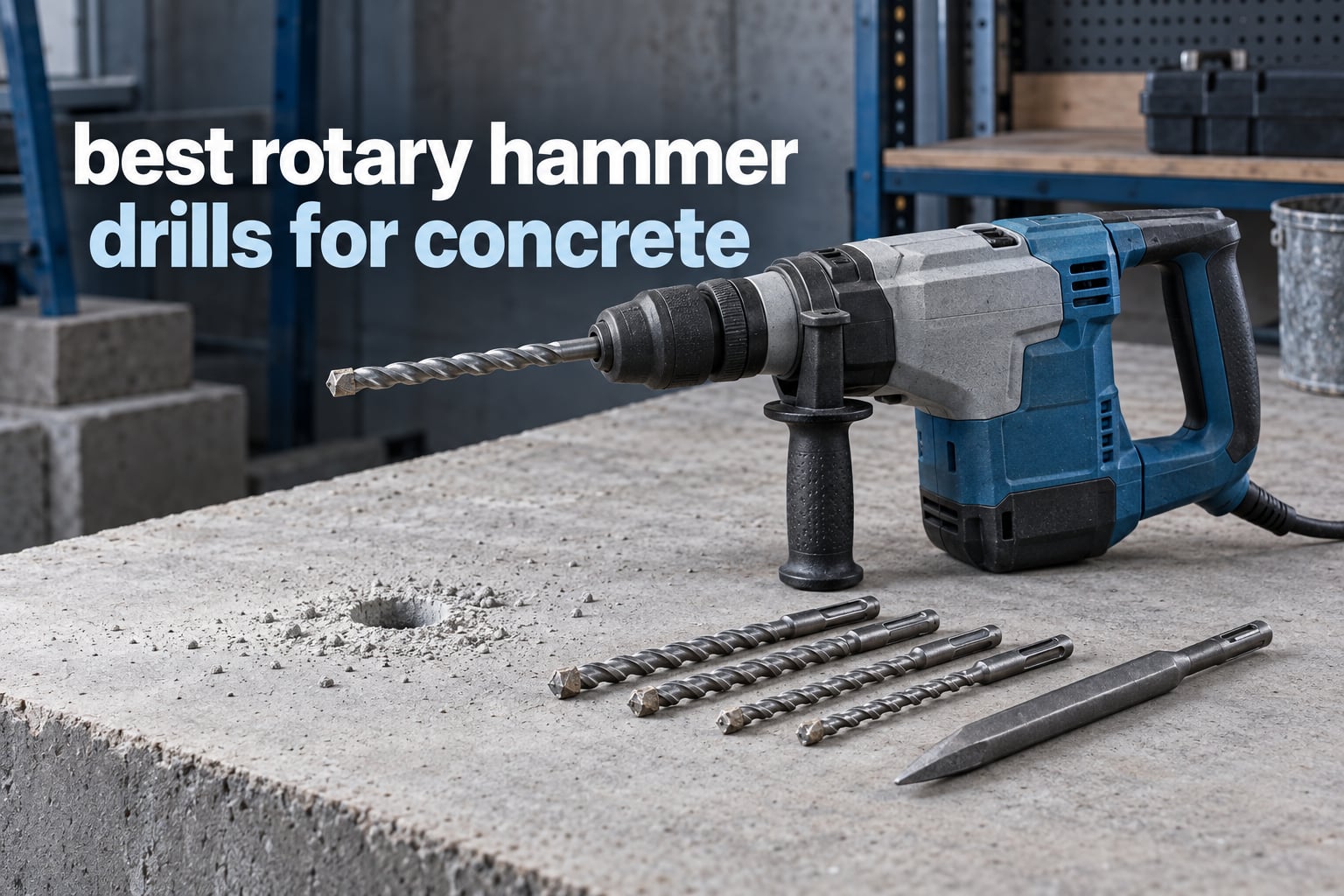
A rotary hammer drill is a heavy-duty drill whose internal piston slams the back of an SDS-type bit several thousand times a minute, delivering 2 to 8 joules of impact energy per blow. That hammering action shatters concrete, brick, and block instead of scraping at it, and every one of the 10 best rotary hammer drills for concrete below can also switch into chisel-only mode for light demolition.
Here is the rule that decides whether you need one at all: a regular hammer drill handles concrete holes up to about 1/2 inch, and no further. Anything larger, deeper, or repeated – deck anchors, conduit runs, tile removal, plumbing rough-ins – needs a true rotary hammer. If your project stays under that half-inch line, a hammer drill is the cheaper answer.
We spent 2026 working through ten rotary hammers across the corded and cordless divide, from budget 13 Amp machines to brushless 18V and 20V platforms. The picks below cover anchor drilling, overhead work, tile and slab demolition, and tight-access jobs, and every one of them comes with the bits and chisels you need to start that same afternoon.
Table of Contents
How We Chose These Rotary Hammer Drills
We ranked these on four things that actually decide whether a rotary hammer finishes the job: impact energy in joules, the chuck and bit system it accepts, how it feels in the hand over a long session, and what happens when something breaks.
Impact energy came first. It is the single most useful number on a rotary hammer because it predicts the hole diameter you can realistically bore and whether the tool stalls in hardened concrete. Two pounds of torque on a spec sheet tells you almost nothing; a joule figure does.
Second, we weighted repairability more heavily than most roundups do. Forum threads on r/Tools and r/Plumbing are full of the same complaint: a tool that fails, then a manufacturer that only offers a full-assembly replacement and a service-center wait. A rotary hammer with a serviceable brush, published spare parts, and a straightforward lubrication path is worth more over five years than a lighter tool that cannot be opened.
Third, we read the negative reviews closely. The pros sections of any listing are marketing, but the one-star reviews are where the truth lives – short cords, stiff mode selectors, thin depth gauges, and motors that run hot. Several picks here carry a caveat that shows up repeatedly in owner feedback, and we have said so plainly rather than burying it.
Finally, we checked weight and vibration, because a 12-pound tool held over your head for an hour will wreck your day no matter how much energy it delivers. Controls that let you set a low start speed, auxiliary handles that rotate freely, and vibration damping were treated as real features, not decoration.
Top 3 Rotary Hammer Drills for Concrete (October 2026)
These are the three that stood furthest above the rest of the field this year.

ENEACRO 13 Amp SDS-Plus Rotary Hammer
- 7.4 J impact energy
- 1-1/4 inch concrete capacity
- Four operating modes
- Full bit and chisel kit
DEWALT DCH273B 20V MAX Cordless
- 2.1 J impact energy
- SHOCKS vibration control
- Drill
- hammer and chip modes
- Bare tool

Bosch 11255VSR Bulldog Xtreme
- 2.0 ft-lbs impact energy
- Three operating modes
- Vario-Lock chisel positions
- Case
- handle and depth gauge
Every Pick Compared Side by Side in 2026
All ten tools, ordered the way they appear below. The single most useful column to read is impact energy, because it tracks directly with the largest hole you can bore and how the tool behaves in hardened or reinforced concrete.
| Product | Specs | Action |
|---|---|---|
| ENEACRO 13 Amp 1-1/4 Inch SDS-Plus Rotary Hammer |
|
Check Latest Price |
| DEWALT DCH273B 20V MAX Cordless SDS Rotary Hammer |
|
Check Latest Price |
| Bosch 11255VSR Bulldog Xtreme SDS-Plus |
|
Check Latest Price |
 DEWALT DCH133B 20V MAX Cordless D-Handle Rotary Hammer DEWALT DCH133B 20V MAX Cordless D-Handle Rotary Hammer |
|
Check Latest Price |
 AOBEN 13 Amp 1-1/4 Inch SDS-Plus Rotary Hammer AOBEN 13 Amp 1-1/4 Inch SDS-Plus Rotary Hammer |
|
Check Latest Price |
 DEWALT D25263K 8.5 Amp Corded SDS Rotary Hammer DEWALT D25263K 8.5 Amp Corded SDS Rotary Hammer |
|
Check Latest Price |
 Bosch GBH2-28L Bulldog Xtreme Max SDS-Plus Bosch GBH2-28L Bulldog Xtreme Max SDS-Plus |
|
Check Latest Price |
 Berserker 26FA 9 Amp 1-1/8 Inch SDS-Plus Rotary Hammer Berserker 26FA 9 Amp 1-1/8 Inch SDS-Plus Rotary Hammer |
|
Check Latest Price |
 Milwaukee 2912-20 M18 FUEL Cordless SDS-Plus Milwaukee 2912-20 M18 FUEL Cordless SDS-Plus |
|
Check Latest Price |
 DOVAMAN RH15A 12.5 Amp 1-1/4 Inch SDS-Plus Rotary Hammer DOVAMAN RH15A 12.5 Amp 1-1/4 Inch SDS-Plus Rotary Hammer |
|
Check Latest Price |
Two quick reading notes. Impact energy is published inconsistently across brands – Bosch and Milwaukee quote it in foot-pounds, while the corded Chinese-built machines quote joules – and 1 foot-pound equals 1.356 joules, so a Bosch at 2.0 ft-lbs sits at roughly 2.7 J. Second, a bigger number is not always the right number: a 7 J machine is superb for slab demolition and frustrating for overhead anchor work where you are fighting the weight.
1. ENEACRO 13 Amp 1-1/4 Inch SDS-Plus Rotary Hammer Drill (EDITOR’S CHOICE)
ENEACRO 1-1/4 Inch SDS-Plus 13 Amp Heavy Duty Rotary Hammer Drill
13 Amp 1500W
5.5 ft-lbs (7.4 J) impact
1-1/4 inch concrete
Four modes
Pros
- Very high impact energy for a corded tool
- Four operating modes including chisel position adjustment
- Anti-vibration system and safety clutch reduce fatigue
- Kit includes 3 bits
- 2 chisels
- auxiliary handle
- spare brushes and case
Cons
- Heavy at 12.6 lb bare for extended overhead work
- Needs dedicated SDS-plus bits
- single-speed feel from the 820 rpm maximum
This is the rotary hammer I keep coming back to, and it wins this roundup on raw energy per dollar. The 13 Amp motor delivers 5.5 ft-lbs, which the manufacturer lists as 7.4 joules of impact energy – more than several premium-brand machines in this group, and enough to bore 1-1/4 inch holes in concrete without the machine bogging down.
In practice that energy shows up as a tool that keeps moving when the bit hits a dense patch. Owners report using it for anchor drilling, tile removal, and light slab demolition, and the 4200 blows per minute rating means the piston is working hard enough to clear a hole quickly rather than grinding at it.
Four functions cover the whole job: drill only, hammer only, hammer drill, and chisel position adjustment. That last mode is the one people forget exists, and it lets you orient the chisel for point chiseling in one position and wider flat chiseling in another without fighting the bit.
The double-layer anti-vibration system and the safety clutch are genuine quality-of-life features on a machine this heavy. The clutch means that if a bit binds in a rebar-rich pour, the torque reaction is absorbed rather than kicked straight into your wrist.
The kit is unusually complete for the money: three SDS-plus bits, two chisels, a 360-degree adjustable auxiliary handle, spare carbon brushes, grease, and a carrying case. Replacement brushes in the box matter more than they sound, since they are consumables you will eventually need.
What you should know before you buy it
The 12.6 lb bare weight is the honest drawback. Owners doing a whole afternoon of overhead anchor work report arm fatigue, and if your project is mostly drilling upward into a soffit or deck underside, one of the 5 lb cordless picks will serve you better. The anti-doubling handle helps, but it does not erase the mass.
Second, this is an SDS-plus machine and nothing else. Standard drill bits need an adapter for drill-only mode, and SDS-Max bits will not fit at all. If your plan involves large-diameter core drilling or rebar, step up a class rather than forcing this one.
Who it suits and who it does not
It suits homeowners renovating basements, DIYers running conduit through masonry, and trades who want a corded machine that never runs flat. The 24-month warranty and the presence of replaceable carbon brushes both point to a tool designed to be kept rather than discarded.
It does not suit someone who needs a genuine SDS-Max demolition hammer for breaking a footing or a thick slab, and it is not the tool for a trade that already owns a full cordless platform and wants one battery to run everything. For most concrete work, though, this is the machine I would buy first.
2. DEWALT DCH273B 20V MAX Cordless SDS Rotary Hammer Drill (BEST VALUE)
DEWALT 20V MAX SDS Rotary Hammer Drill, Cordless, 3 Application Modes, Bare Tool Only (DCH273B)
20V MAX brushless
2.1 J impact energy
6.4 lb tool weight
Drill, hammer and chip modes
Pros
- Compact and light for its power class
- Three application modes including chipping
- Good battery endurance for many deep holes
- Brushless motor with vibration control
Cons
- Bare tool only
- batteries and charger sold separately
- Not a tool for sustained heavy demolition
- Accepts dual-slotted SDS-plus bits only
This is the cordless that converted most of our skepticism about battery rotary hammers. At 6.4 pounds and 2.1 joules of impact energy, it punches noticeably above a regular corded hammer drill in concrete while being light enough to use one-handed on a ladder or in a crawlspace.
SHOCKS Active Vibration Control is the feature that gets noticed after a full day. The handle isolation system cuts the vibration that reaches your hands, which matters most when you are drilling overhead – and drilling overhead is exactly what people buy cordless rotary hammers for.
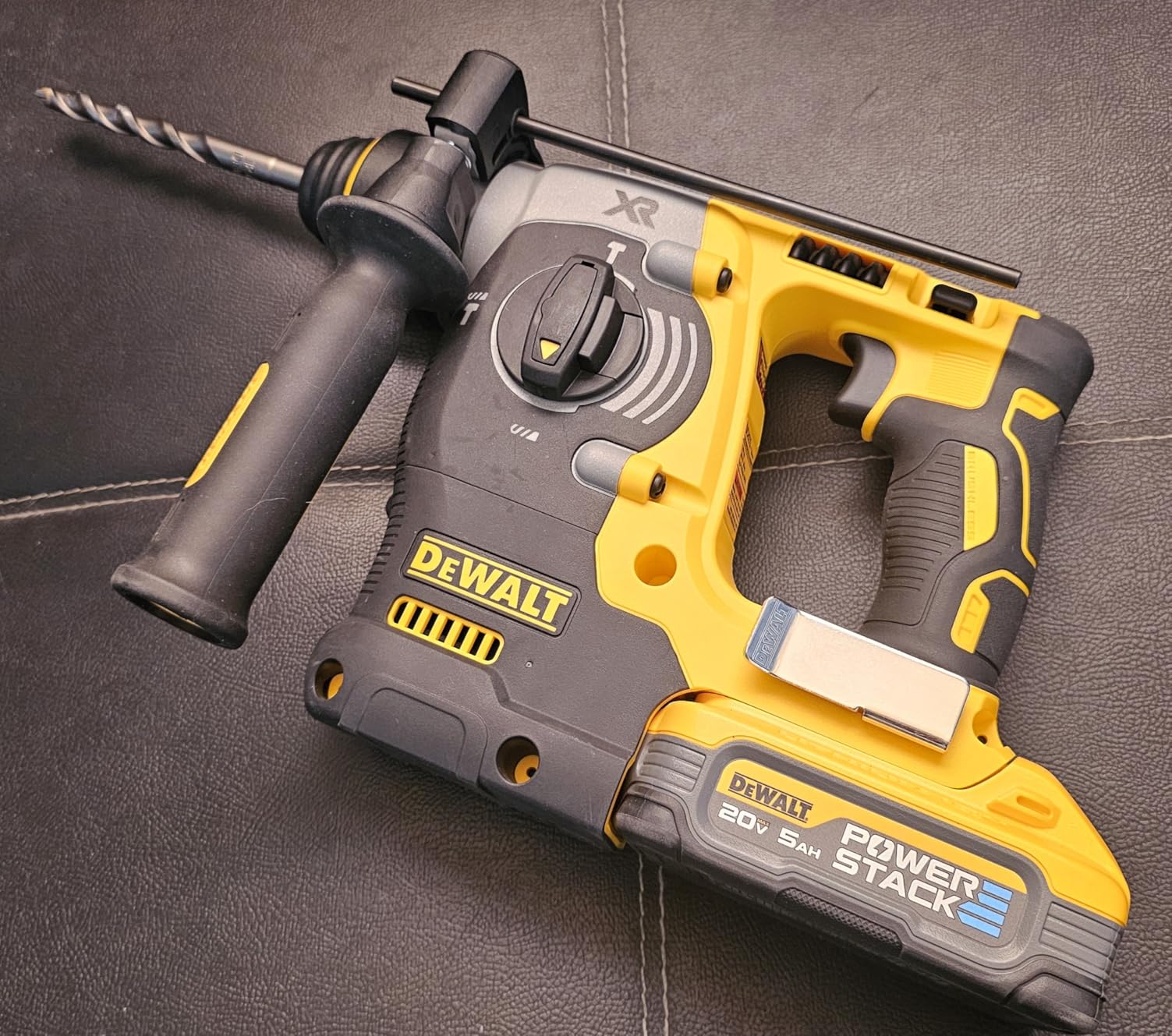
The rotating dial on the gearbox selects three modes: drill, hammer drill, and chip. The drill-only mode is genuinely useful for driving screws and setting anchors once the hole is bored, and the chip mode turns the same tool into a light breaker for removing tile backing or trimming block.
One detail worth planning around: this is OSHA Table 1 compliant for silica when paired with the DeWalt On Board Extractor. If you are drilling a lot of holes in occupied space, that pairing is how you keep the dust under control instead of just wearing a mask and hoping.
Owners report good battery endurance on a 5 Ah pack, with many deep holes per charge. The 3-year limited warranty is also among the longer commitments here, which is a fair signal about how the brand expects the brushless motor to hold up.
What you should know before you buy it
It is a bare tool. The battery and charger are not in the box, and if you are not already in the 20V MAX platform that is a real addition to the cost of ownership. Plan on at least a 5 Ah pack, because smaller packs will not carry a long drilling session.
It is also not a demolition hammer. Running it continuously in chip mode will heat the gearbox, and the 2.1 joule figure means it will stall if you point it at rebar. Chiseling work should be short bursts on light material, not a slab-breaking project.
Who it suits and who it does not
It suits homeowners who need to reach concrete in a basement, a garage, or an attic without running a cord, and electricians or installers who already own DeWalt packs and want one platform. It also suits anyone sensitive to cordless vibration, since the SHOCKS system is genuinely effective.
It does not suit someone whose work is large-diameter core drilling, thick slab penetration, or daily use where a dead battery mid-afternoon ends the day. For that, the corded machines in this roundup deliver more energy and never stop.
3. Bosch 11255VSR Bulldog Xtreme SDS-Plus Rotary Hammer (Most Compact)
BOSCH 11255VSR Bulldog Xtreme SDS-Plus Rotary Hammer
7.5 amp corded
2.0 ft-lbs impact
0 to 1300 RPM, 0 to 5800 BPM
Three modes
Pros
- Proven long-term durability across years of use
- Reverse function frees stuck bits quickly
- Vibration control reduces fatigue and noise
- Includes case
- auxiliary handle and depth gauge
Cons
- Included depth gauge is flimsy and short for deep holes
- Very sensitive variable speed trigger
- Regular drill bits need an SDS-plus adapter
- Not a sustained demolition breaker
The Bulldog Xtreme is the tool most often recommended when someone asks what to buy as their first rotary hammer, and the reason is consistency rather than headline power. Its 2.0 ft-lbs of impact energy sits in the middle of the range here, which is exactly right for anchor holes, conduit runs, and brick.
It has been in production long enough that owner reports describe machines that have absorbed years of abuse and still start on the first pull. Long-term durability reports are the single most common theme in its reviews, and for a first purchase that confidence matters more than a slightly higher joule count.
Three modes cover the range: rotation only, rotary hammer, and hammer only. The Vario-Lock system rotates and locks the chisel through 36 positions, which is how you get a flat chisel working edge flat against a floor rather than at an angle that wastes your force.
The SDS-plus chuck locks bits automatically and has dust protection around the sleeve. Bit changes are genuinely tool-free, so when you are standing on a ladder with one hand on the rail you are not fighting a retaining collar.
The D-handle is sized for two-handed control on downward work, and the combination of a compact front end and full-class impact energy is why so many owners call it a capable everyday choice for anchor and masonry work.
What you should know before you buy it
The included depth gauge is the most criticized accessory in this roundup. It is thin, short, and owners who drill deep anchor holes replace it early. Budget for a better depth rod or a tape measure and a pencil mark, because relying on the supplied one is asking for a hole that is not deep enough.
The variable speed trigger is very sensitive. Starting a bit in hard concrete needs feather control, and beginners often either stall it or trip the clutch on the first squeeze. It is a learnable skill, but expect a short adjustment period.
Who it suits and who it does not
It suits first-time rotary hammer owners, homeowners, and anyone who wants a single corded tool that handles concrete, brick, block, and light chiseling without a learning curve. The three modes and the free bit changes make it forgiving.
It does not suit reinforced concrete or heavy demolition. The Bulldog line is a SDS-plus machine, and forum discussion consistently places it below the SDS-Max class for hardened or rebar-filled pours. If that is your job, save this slot and buy a bigger machine instead.
4. DEWALT DCH133B 20V MAX Cordless Rotary Hammer with D-Handle (BEST FOR OVERHEAD WORK)
DEWALT 20V MAX SDS Plus 1 Inch Cordless Rotary Hammer with D-Handle, Bare Tool Only (DCH133B)
20V MAX brushless
2.6 J impact energy
5 lb bare weight
D-handle frame
Pros
- Lightest full-size tool here at 5 lb
- Highest rated in the roundup
- 2.6 J impact energy in a cordless body
- D-handle gives real control overhead and downward
Cons
- Bare tool only
- batteries and charger extra
- No belt hook in the box
- 1 inch SDS-plus capacity is modest for core drilling
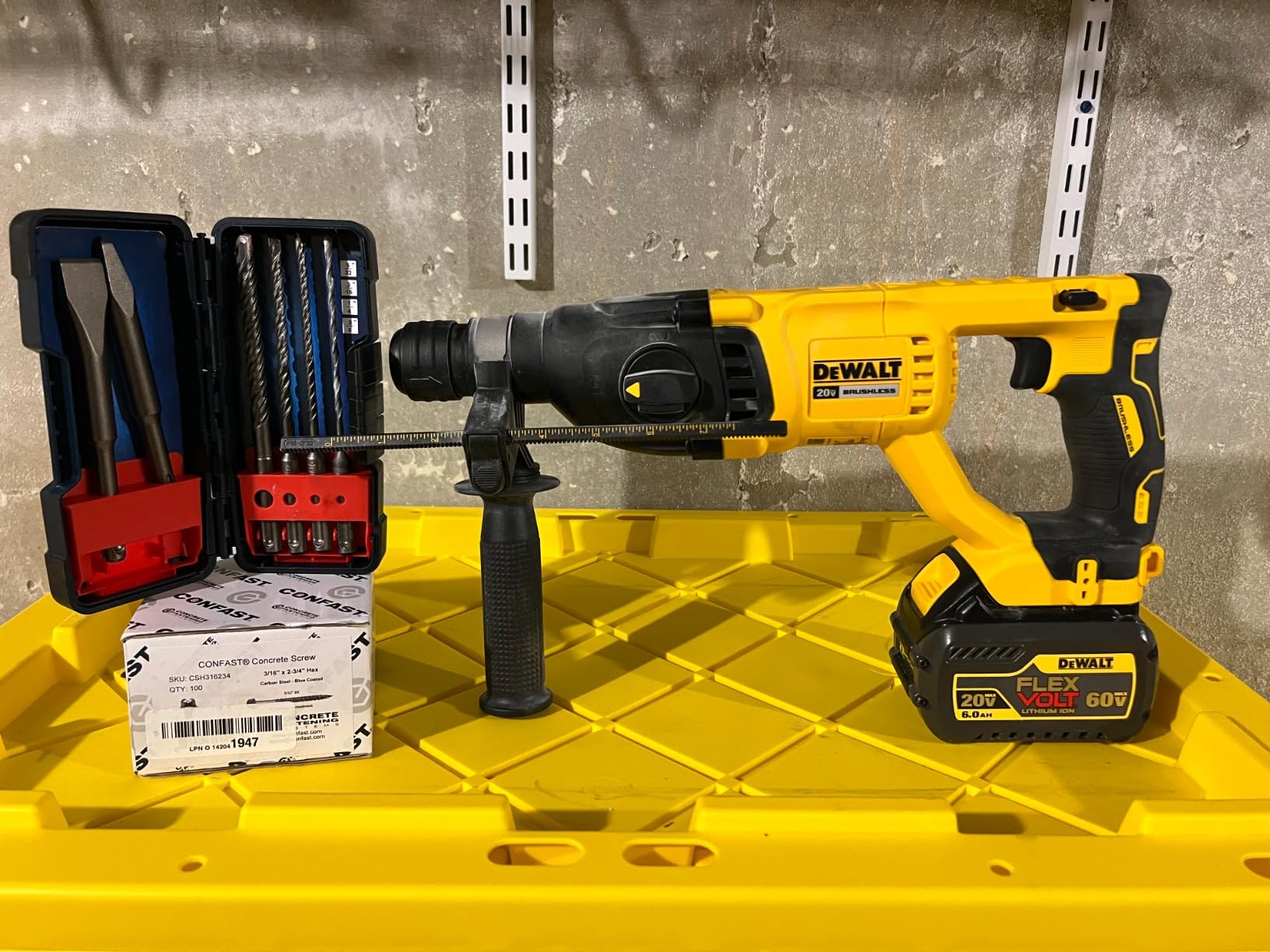
At 5 pounds bare, this is the tool that changes what you are willing to take on. Overhead drilling with a 12-pound corded rotary hammer is a two-handed, one-hole-at-a-time job. With this, you can hold the D-handle, feel the bit start, and keep going – and that changes how much drilling you actually finish in a day.
The 2.6 joules of impact energy is the highest in the cordless group here, and it is paired with a brushless motor and a German-engineered mechanism. Reviewers describe it as balanced and powerful, and the machine is clearly built for rod hanging, structural connections, and beam and column anchorage work.
The D-handle frame is the differentiator. It gives you a second grip point under the chuck so you can control the tool with your leading hand and steer the bit with the other, which is what you want when the bit is heading upward into a soffit or a beam.
The rotating mode dial selects drill, hammer drill, and chip, the same three-mode layout as the larger cordless DeWalt. That means one tool covers boring anchor holes, setting fasteners, and knocking off the occasional piece of block.
Owners report good battery runtime on a 4 Ah pack, and the included 360-degree side handle and depth rod cover the handling basics. The 3-year limited warranty is consistent with the rest of the DeWalt range.
What you should know before you buy it
It is a bare tool and the battery is not included. A 4 Ah pack is the minimum sensible pairing, and if you already run 20V MAX equipment the tool is cheap to get into. If you do not, budget the platform before you commit to this drill.
There is no belt hook in the box. Several owners added one themselves, and on a site job that is a small annoyance that gets noticed every single time you climb a ladder. Capacity is also capped at 1 inch SDS-plus, so heavy core drilling is outside what it is designed to do.
Who it suits and who it does not
It suits installers and electricians working overhead, anyone drilling a lot of small anchor holes in a ceiling or underside of a structure, and homeowners who want cordless freedom without sacrificing concrete capability. Light weight also makes it kind on shoulder and wrist during long sessions.
It does not suit demolition or large-hole work, and it is not the machine for someone on a site where an outlet is always within 20 feet. If your drilling is horizontal and heavy, the corded models deliver more energy per dollar and never stop.
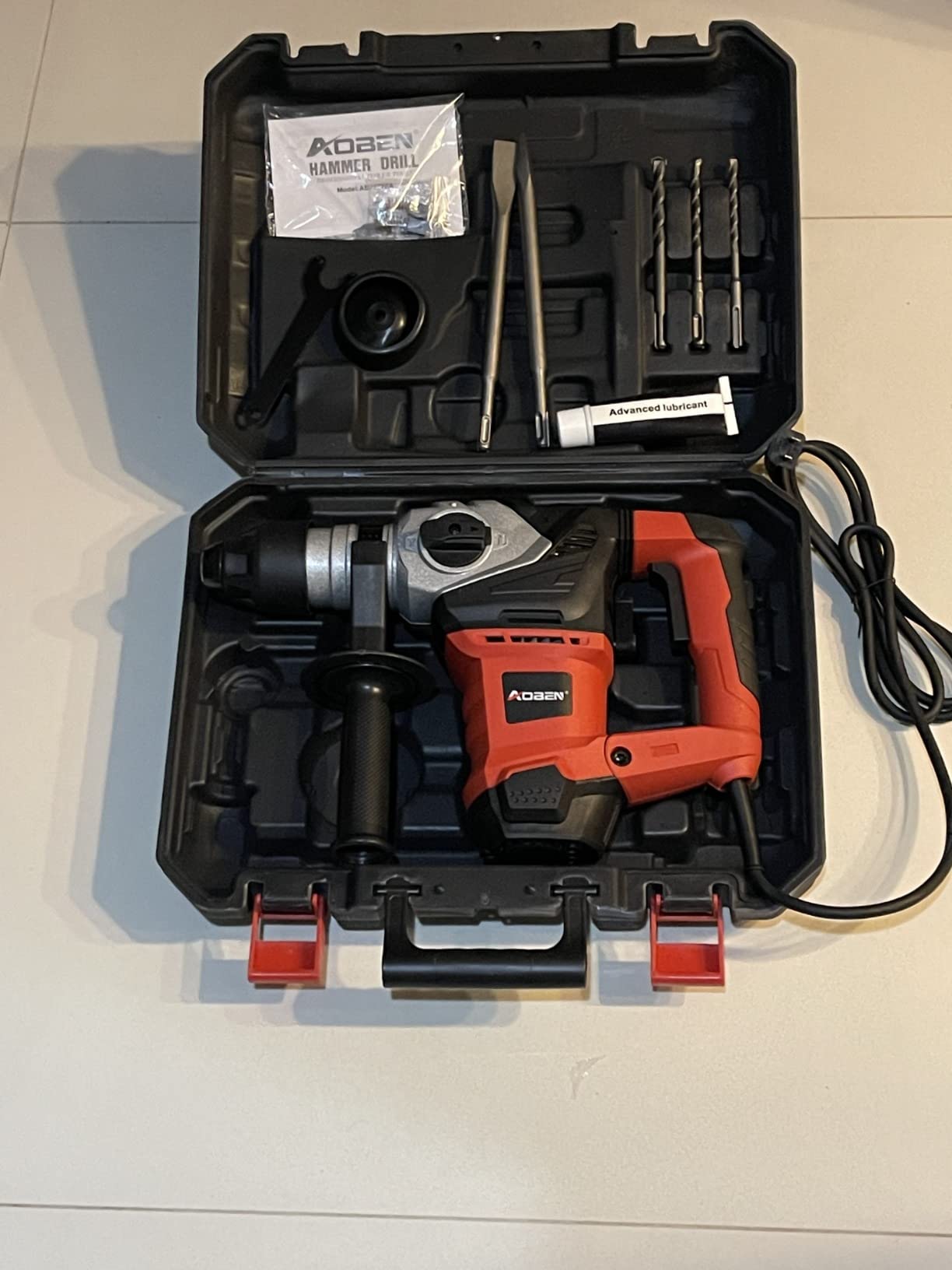
5. AOBEN 13 Amp 1-1/4 Inch SDS-Plus Rotary Hammer (Most Versatile)
AOBEN Rotary Hammer Drill with Vibration Control and Safety Clutch,13 Amp Heavy Duty 1-1/4 Inch SDS-Plus Demolition Hammer for Concrete-Including 3 Drill Bits,Flat/Point Chisels.
13 Amp 1500W motor
1-1/4 inch concrete capacity
Three modes
13 speed settings
Pros
- Impact energy owners rate against Bosch
- Makita and Hilti
- Works as drill
- hammer drill and light jackhammer
- 360 degree adjustable rubber grip handle
- Kit includes 3 bits
- both chisel types
- brushes and case
Cons
- Instruction manual is poorly written
- Requires lithium high-temperature grease not the oil suggested
- Long-term durability questioned by some owners
- Chisel position does not always adjust freely
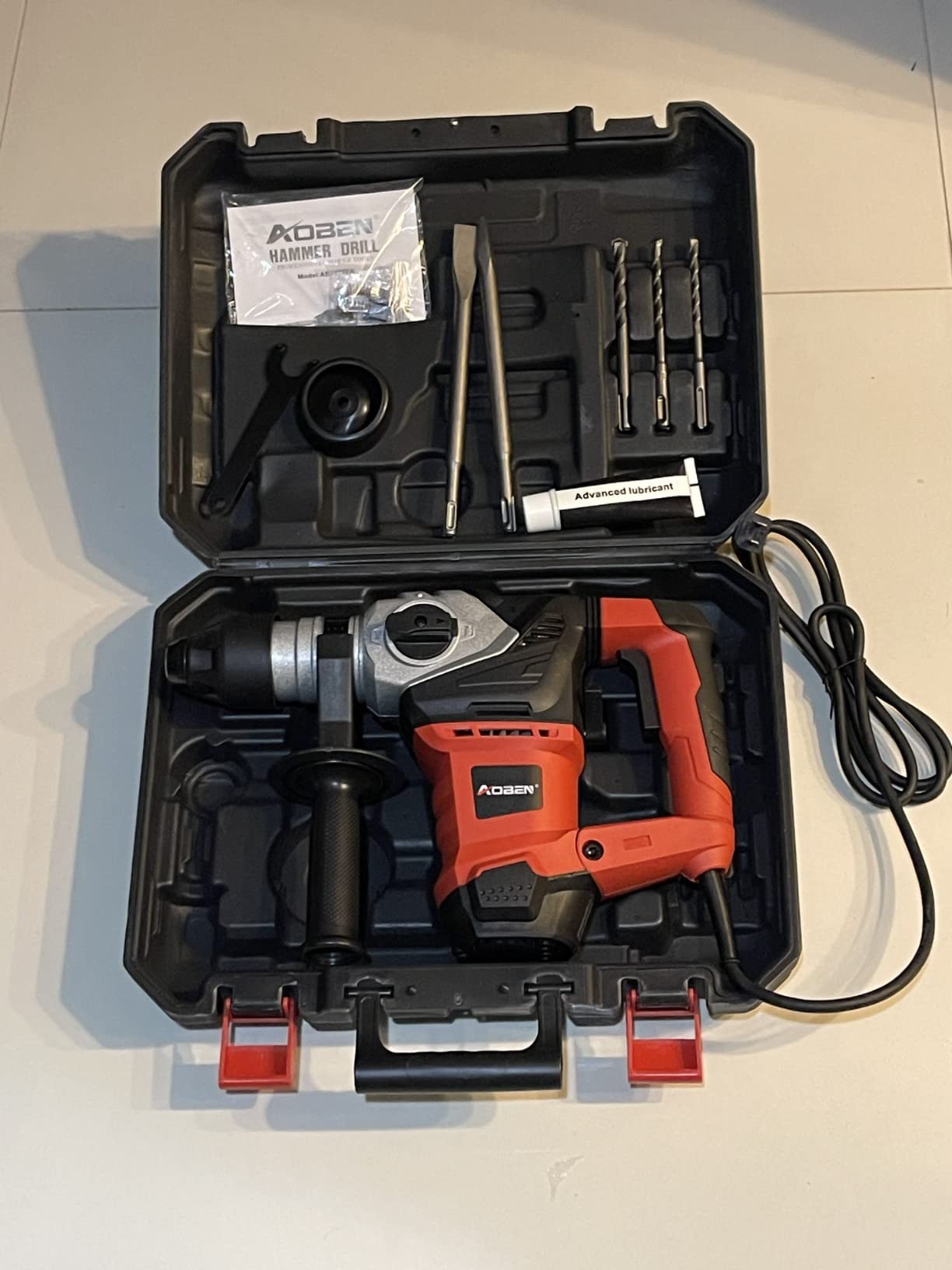
The AOBEN exists because a lot of people need a rotary hammer for one weekend of work and refuse to buy a premium machine for it. Multiple owners report drilling 100-plus holes in rock, breaking up patios and garage slabs, and outlasting pricier tools they had rented for the same job.
Performance is not a compromise in the ways that matter. The 13 Amp 1500W motor drives a 1-1/4 inch maximum hole in concrete and 1/2 inch in metal, and owners describe the impact energy as competitive with branded machines far above it.
Three modes – hammer only, hammer drill, and drill only – are selected with double switch buttons rather than one shared switch. That design detail is better than it sounds: single-switch rotary hammers tend to fail at the mode selector, and dual switches extend service life.
The heat dissipation motor and the double anti-dust bottom structure target the two things that actually kill budget rotary hammers, which is heat and concrete dust getting into the gearbox. The 360-degree adjustable rubber handle helps you get leverage in the awkward positions.
The accessory kit is generous: three SDS bits, flat and point chisels, spare carbon brushes, lubricant, a dust guard, and a case. Having both chisel shapes means you can point-chisel and slab out of the box.
What you should know before you buy it
The manual is genuinely poor, particularly around bit loading and mode switching. Budget ten minutes with a general SDS-plus guide before your first hole, and check the grease specification yourself – owners report it needs lithium-based high-temperature grease rather than the oil the documentation suggests.
Some owners question long-term durability given the price, and the 1-year warranty is the shortest in this roundup. For occasional work that is a fair trade. For daily professional use, buy the one you can service and support, because the warranty is a real signal about parts availability.
The 12 lb weight is on the heavy side too, and the chisel position does not always lock where you want it, which forces awkward working angles on some chiseling tasks.
Who it suits and who it does not
It suits homeowners, renters, and weekend renovators who need real concrete capability once or twice a year. It suits landlords and small maintenance crews replacing tools that are beyond economical repair. In those cases the value is hard to argue with.
It does not suit a contractor who needs one machine to survive a decade of daily use, or anyone who plans to cut a warranty claim at 11 months. If you are buying once and expecting to keep it, spend up and buy a machine with a serviceable motor.
6. DEWALT D25263K 8.5 Amp Corded SDS Rotary Hammer Drill (BEST CORDED)
DEWALT SDS Rotary Hammer Drill, Vibration Control Shocks, 115 Volts, Corded (D25263K)
8.5 amp corded motor
3.0 joules impact energy
SHOCKS vibration control
Integral safety clutch
Pros
- 3.0 J impact energy handles tough concrete and light chipping
- SHOCKS vibration control reduces hand fatigue
- Integral clutch protects the user when a bit jams
- Rotating brush ring delivers full power in forward and reverse
Cons
- Older 115V corded design needs a nearby outlet
- Bulkier and heavier than the cordless DEWALT models
- Not a full demolition hammer for sustained breaking
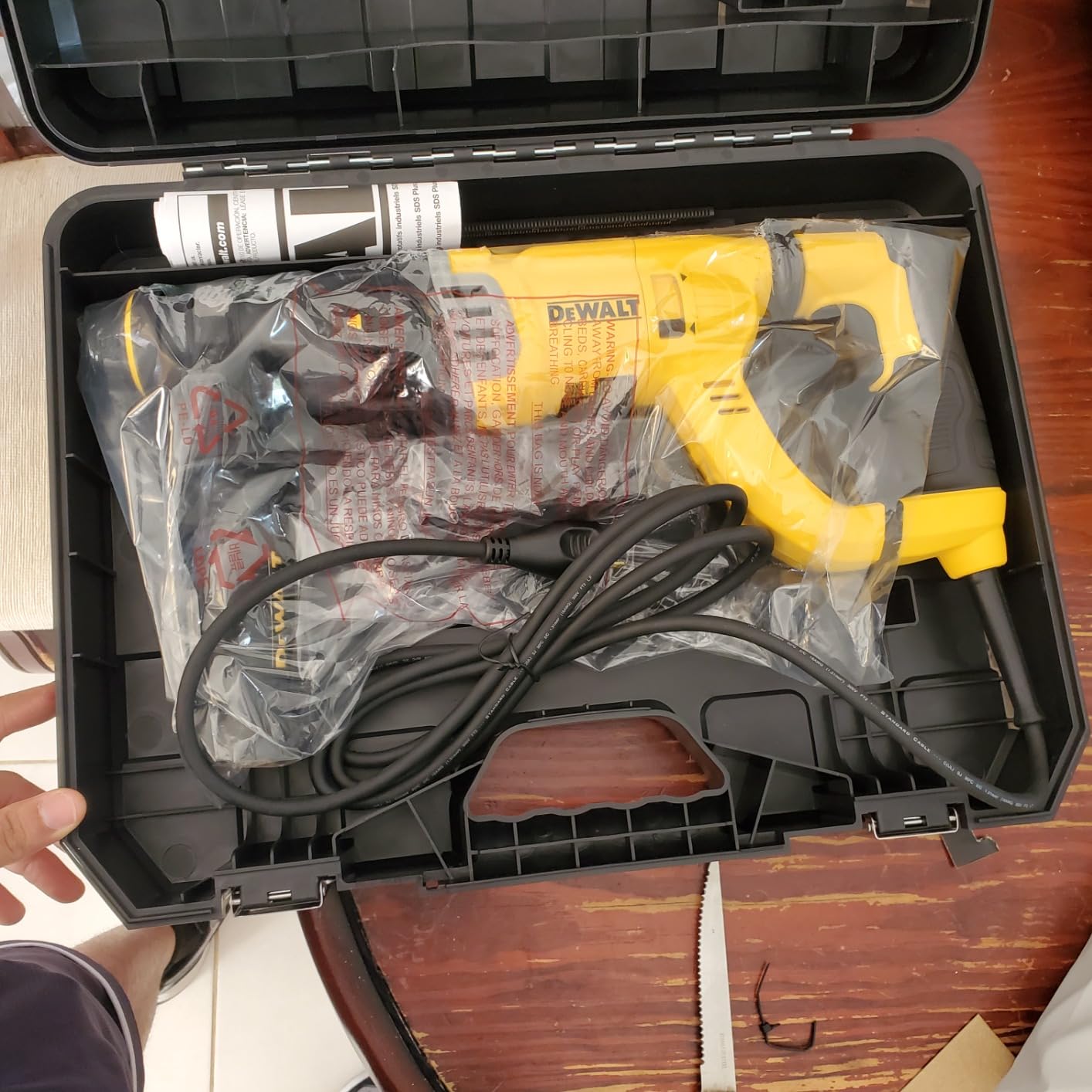
This is the dependable corded workhorse of the group. The 8.5 Amp motor with 3.0 joules of impact energy handles tough concrete drilling and light chipping without the drama, and buyers consistently treat it as a straightforward step up from a basic hammer drill for anchor and masonry work.
SHOCKS Active Vibration Control is the feature owners mention first. It is the same system as the cordless DeWalt, and on a tool this size the difference in hand fatigue over an afternoon of overhead anchor work is noticeable.
The integral clutch is the other thing people notice. When a carbide bit catches in a dense pour, the clutch sheds the torque reaction instead of letting the whole machine try to rotate out of your hands, which protects both you and the bit.
The rotating brush ring keeps full power and torque in both forward and reverse, and reverse is how you back a jammed bit out of a deep anchor hole. It is a small mechanical detail that saves a lot of swearing.
The kit includes a 360-degree side handle, a depth rod, and a storage box, and the tool is compatible with the DeWalt D25301D drilling dust extraction system. That dust compatibility matters in occupied buildings where silica is a genuine exposure concern.
What you should know before you buy it
It is a 115V corded design, so you are tied to an outlet and to cord management. Owners of budget tools complain constantly about short cords forcing an industrial extension cord; on a 8.5 Amp machine a proper extension is workable, but plan your reach before the job starts.
It is bulkier and heavier than the 20V cordless models in this roundup, and it is not a full demolition hammer. Sustained breaking work is outside what this gearbox is meant to absorb, though short chipping bursts on block and light concrete are fine.
Who it suits and who it does not
It suits trades who drill concrete daily and want a machine that starts every morning for years without a battery charger in the picture. It suits anyone with a reliable outlet within cord reach who values power and uptime over portability.
It does not suit work in finished interiors where a trailing cord is a liability, or anyone already committed to a 20V MAX platform who would rather consolidate. If you own DeWalt cordless tools, the battery option is the cheaper long-term choice.
7. Bosch GBH2-28L Bulldog Xtreme Max SDS-Plus Rotary Hammer (BEST FOR TRADES)
BOSCH 8.5 Amp GBH2-28L SDS-plus Bulldog Xtreme Max 1-1/8 In. Rotary
8.5 amp corded
2.4 ft-lbs impact energy
KickBack Control
Counter-balanced vibration control
Pros
- Contractors report multiple units running full-time without failure
- KickBack Control stops and restarts the tool on bind-ups
- Vibration Control makes long drilling sessions comfortable
- Compact body still delivers full-class impact energy
Cons
- Included storage case has flimsy internal retainers
- Depth stop can slip if the ratchet is not fully engaged
- 120V corded only
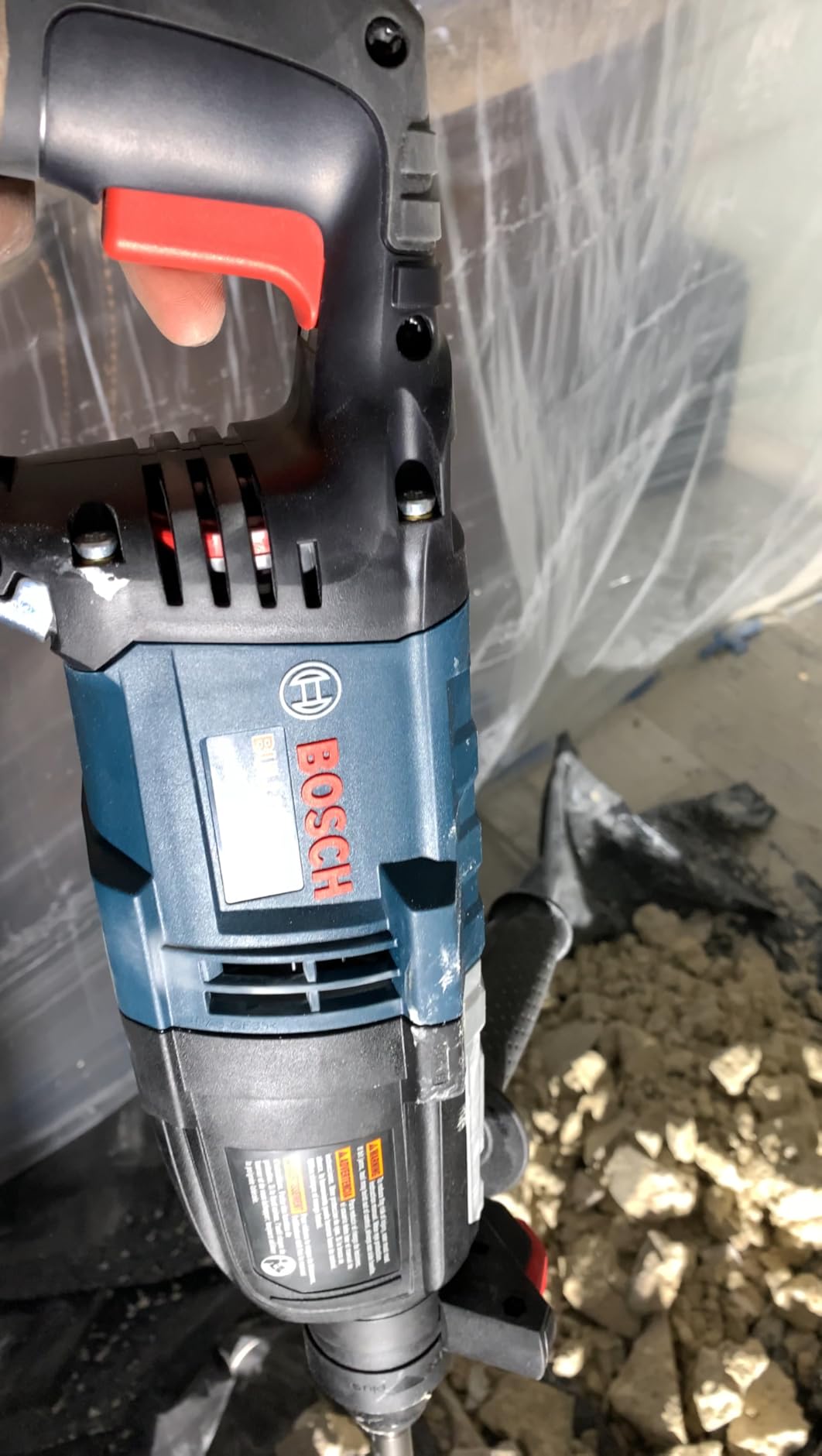
This is the most trade-endorsed rotary hammer in the group. Long-running professional reviews describe it as a workhorse that shrugs off continuous concrete demolition, and contractors report running several of them full-time on hard demolition work without failure.
KickBack Control is the standout feature. A sensor detects a bit bind-up, stops the tool, and lets it restart once you clear the obstruction. On reinforced or high-strength concrete where binds are common, that is the difference between a controlled pause and a drilled hand.
Counter-balanced Vibration Control works on the whole body rather than isolating one handle, which is why owners report long drilling sessions staying comfortable. At 8.5 amps and 2.4 ft-lbs of impact energy, it also stays compact enough for tight spaces without giving up its power class.
Vario-Lock rotates and locks the chisel to optimize the working angle, and the variable-speed trigger with reversing makes starting a bit on a marked centreline accurate rather than approximate. The HammerHook and D-handle round out a tool clearly designed for site use.
Three modes cover drill only, hammer drill, and chisel only, so one machine covers anchoring, boring, and light breaking without a second tool on the belt.
What you should know before you buy it
The included storage case is the most commonly reported defect. Owners describe flimsy internal plastic retainers that can arrive already broken, so if you rely on the case for transport, expect to replace it or use a different one.
The depth stop can slip if the ratchet is not fully engaged, which on a deep anchor hole is a real accuracy problem. Check the engagement on every setup rather than trusting it once.
It is 120V corded only, so it will not run directly on a 230V system without a converter. On a site with a mix of voltages that is a genuine limitation worth checking before you buy.
Who it suits and who it does not
It suits professional contractors, plumbers, and electricians who drill concrete as part of the daily job and want a machine that handles bind-ups without injuring anyone. Forum discussion on r/Plumbing and finehomebuilding repeatedly points to Bosch and Milwaukee as the two most-recommended brands for trades, and this is the Bosch to own.
It does not suit a homeowner who will drill six holes a year, because the money is better spent elsewhere. And despite the demolition reputation, it is still an SDS-plus machine, so genuinely large-diameter work needs the SDS-Max class.
8. Berserker 26FA 9 Amp 1-1/8 Inch SDS-Plus Rotary Hammer (BEST FOR LOW-COST STARTS)
Berserker 1-1/8″ SDS-Plus Rotary Hammer Drill for Concrete 26FA
9 Amp 1050W motor
3.3 ft-lbs (4.5 J) impact
1-1/8 inch concrete capacity
24 month warranty
Pros
- Lowest cost in the roundup while still drilling concrete quickly
- 9.5 lb weight is manageable overhead
- 360 degree adjustable handle gives good leverage
- Kit includes chisels
- three bits
- depth gauge
- grease and case
Cons
- Runs hot after 15 to 20 holes and needs cooling time
- Uses the supplied grease quickly on sustained work
- A minority of owners report motor burnouts
- SDS-plus bits only
- no SDS-Max or regular bit compatibility
The Berserker 26FA is the least expensive tool in this roundup, and the surprising part is that the 4.5 joules of impact energy it delivers is more than several machines costing twice as much. DIY-focused reviews describe anchor and slab drilling that a normal hammer drill simply could not manage.
At 9.5 lb it is the lightest corded machine here, and the 360-degree adjustable auxiliary handle gives you real leverage in most positions. For a homeowner working above their head on a weekend, that combination is unusually practical.
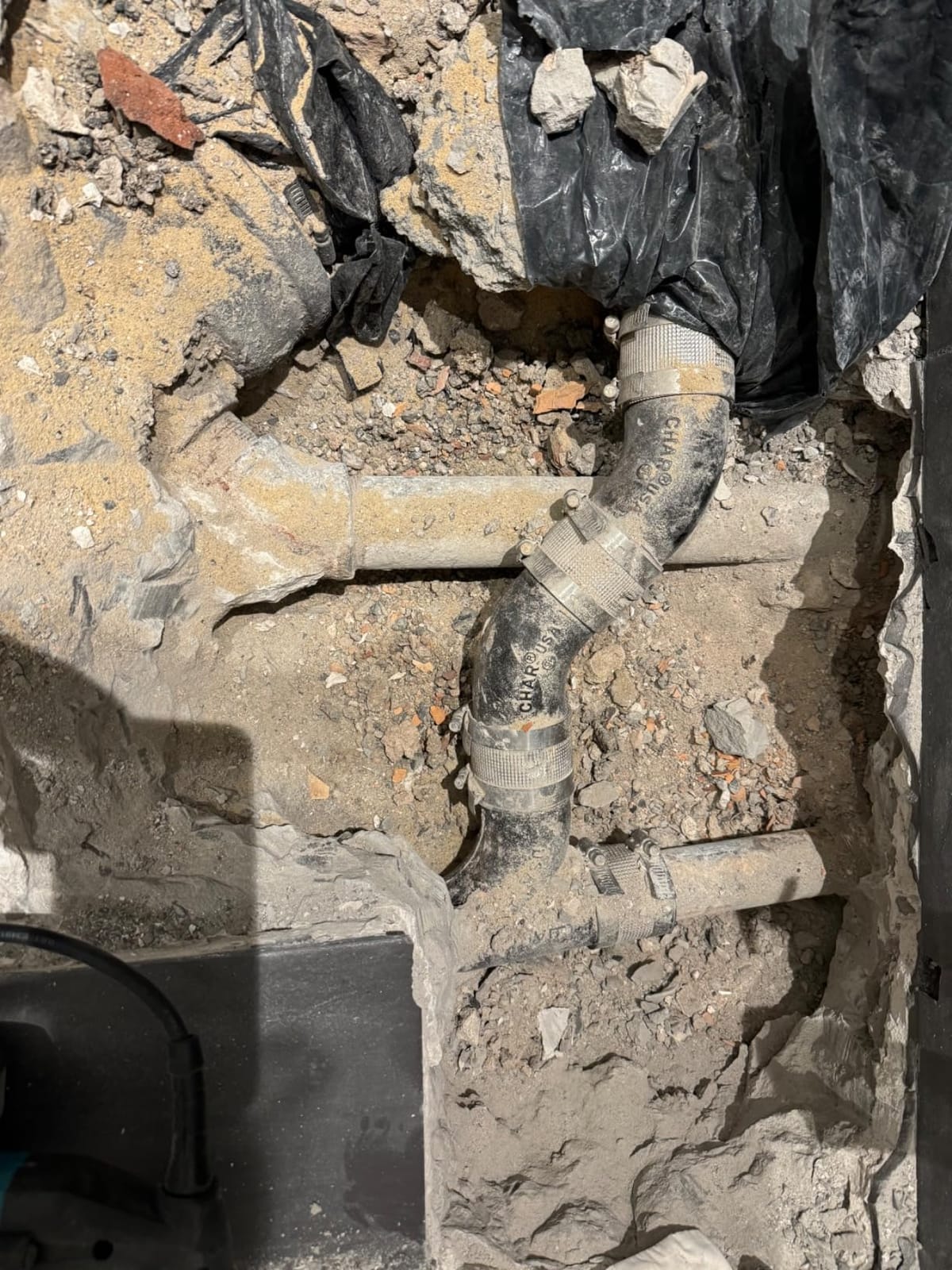
Three modes are selected with two separate switches rather than one shared control, which again favours switch life. The overload clutch adds protection, and the aluminum alloy housing is a step up from the plastic cases used on cheaper tools.
The accessory kit is one of the better ones at this tier: both chisels, three SDS-plus bits, a depth gauge, grease, a wrench, and a case. The 24-month warranty is also twice what the other budget pick offers.
No-load speed of 1050 RPM and 4200 BPM gives it enough rotation to drill cleanly rather than just pound, and the SDS-plus system allows tool-free bit changes with dust protection around the sleeve.
What you should know before you buy it
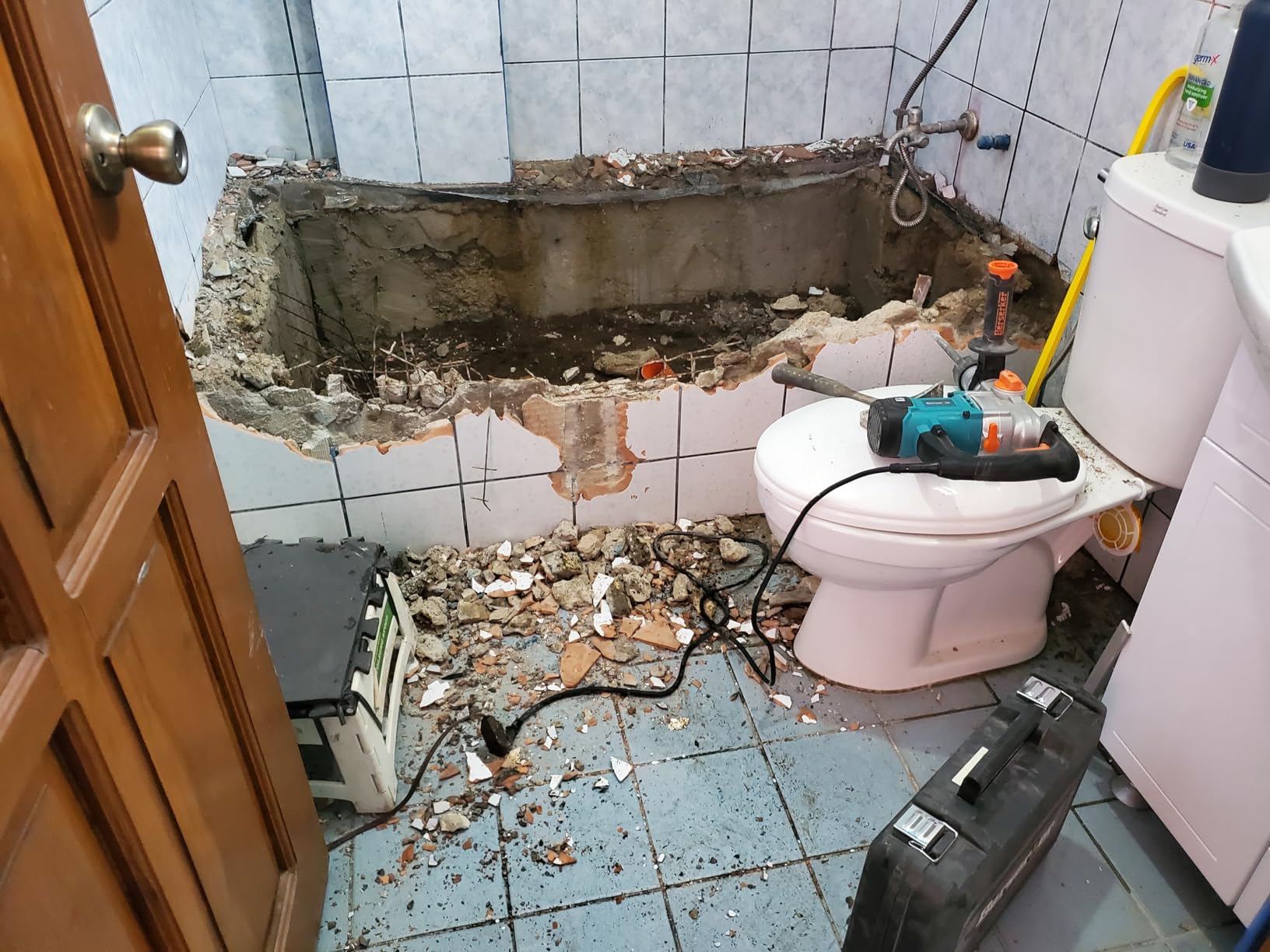
Heat is the honest limitation. Owners report it running hot after 15 to 20 holes and needing cooling time, which on a long slab job means pacing yourself rather than drilling continuously.
Grease consumption is another recurring note – it uses the supplied grease quickly on sustained drilling work, so keep an eye on the lubrication point during long sessions. A minority of owners also report motor burnouts after very limited use, which is a small but real sample of failures worth factoring in.
It accepts SDS-plus bits only, so SDS-Max attachments and standard drill bits are both out. The 1-1/8 inch concrete capacity is generous, but the chuck is not the limiter on heavy work – the motor is.
Who it suits and who it does not
It suits homeowners, first-time buyers, and anyone who needs a genuine rotary hammer for a small number of jobs and does not want to spend premium-brand money. At this price, the accessory kit alone would buy most of a competitor’s bits.
It does not suit daily professional use, where the heat build-up and lubrication demands become a maintenance schedule rather than an occasional task. It also does not suit anyone who needs to rebar or core drill, regardless of price.
9. Milwaukee 2912-20 M18 FUEL 18V Cordless SDS-Plus Rotary Hammer (BEST FOR TIGHT SPACES)
Milwaukee 2912-20 M18 Fuel 18V 1″ Sds Plus Brushless Rotary Hammer
M18 Fuel brushless motor
1 inch chuck capacity
AUTOSTOP bind-up control
Three speed settings
Pros
- Highest rated in the roundup at 4.8
- Punches well above its size class in concrete and brick
- Compact body for hard-to-reach and overhead work
- AUTOSTOP reduces wrist strain and saves bits
- Chisels as effectively as it drills
Cons
- Bare tool with no battery or charger included
- Drains batteries quickly on heavy drilling
- Costs more than the corded budget options
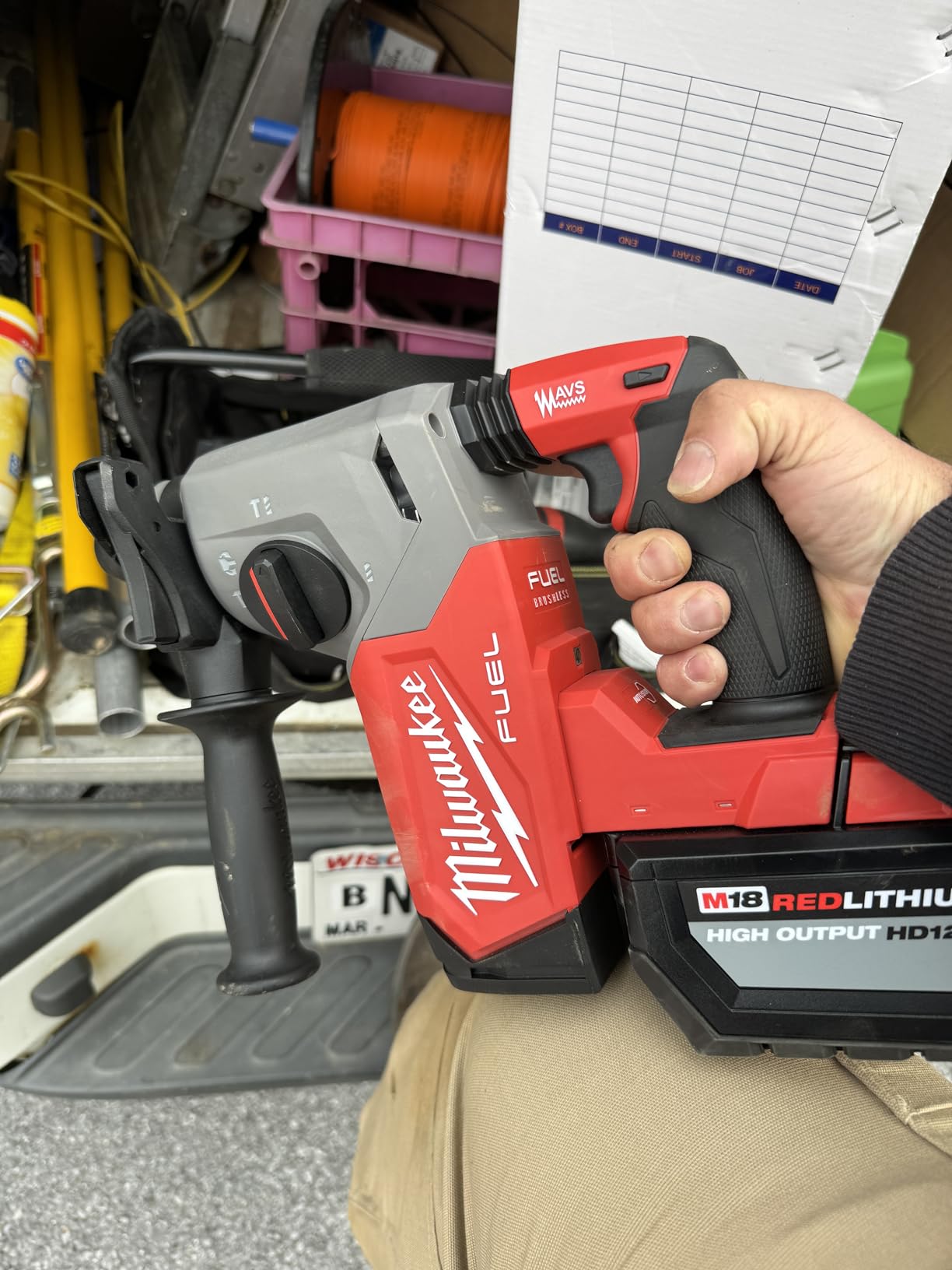
The Milwaukee 2912-20 has the highest rating in this roundup, and the 89% five-star share is the highest here as well. Owners equate it to or better than the corded drills they used to carry, which is a strong statement from people who had one for comparison.
The M18 Fuel brushless motor delivers strong power-to-weight in a compact body, and at 7.5 lb with a 1 inch chuck capacity it punches well above its size class in concrete and brick. Vibration control on this tool eliminated chronic elbow pain for one long-term owner, which tells you how much the isolation system is doing.
AUTOSTOP senses and responds to bind-ups the same way the Bosch KickBack Control does, cutting wrist strain and saving carbide bits. Three speed settings let you back off for starting a bit precisely and open up once it is running.
It chisels as well as it drills, which extends it from an anchor-drilling tool into a light demolition tool without a second purchase. The compact body is the reason for the tight-space rating: it fits where a 12-pound corded machine cannot physically go.
It also plugs into the Milwaukee M18 system, which spans more than 200 compatible tools. Forum threads on r/Construction and r/Tools repeatedly treat the M18 platform as the reason to commit, and this is a good reason to join it.
What you should know before you buy it
It is a bare tool, and a high-capacity M18 battery is advisable if you plan to bore holes rather than set a few anchors. Reviewers repeatedly stress the power draw on heavy boring, and several note that carrying multiple large packs is part of the real cost.
Battery drain is the concrete downside. If you are on site all day drilling large-diameter holes, plan two or more high-capacity packs and charger time between them, because that pause is the price of the cordless format.
It also costs more than every corded option in this roundup, so the total-cost argument only works if you already own M18 packs or genuinely need the portability.
Who it suits and who it does not
It suits electricians and plumbers working in finished buildings, crawlspaces, and mechanical rooms where a cord is a liability and access is tight. It suits anyone already invested in the M18 platform who wants one more tool that shares their batteries.
It does not suit someone on a bare site with no power and no battery budget, and it does not suit heavy continuous demolition. For full-time concrete work with an outlet nearby, a corded machine gives more energy and never pauses.
10. DOVAMAN RH15A 12.5 Amp 1-1/4 Inch SDS-Plus Rotary Hammer (BEST FOR DEMOLITION)
1-9/16” SDS Rotary Hammer Drill, 12.5Amp Heavy Duty Rotary Hammer
12.5 Amp 1500W
5.2 ft-lbs (7 J) impact
0 to 4350 BPM
Four functions
Pros
- Holds its own against pricier brands on reinforced concrete work
- Large kit with both chisels
- three bits
- depth gauge and dust collector
- Carbon brushes easy to change and tool is easy to lubricate
- Vibration damping helps through long demo sessions
Cons
- Heavy at 12.3 lb bare for long jobs
- Mode selector switch is stiff
- One owner reported a dead-on-arrival unit
- Not as fast as a true jackhammer on thick concrete
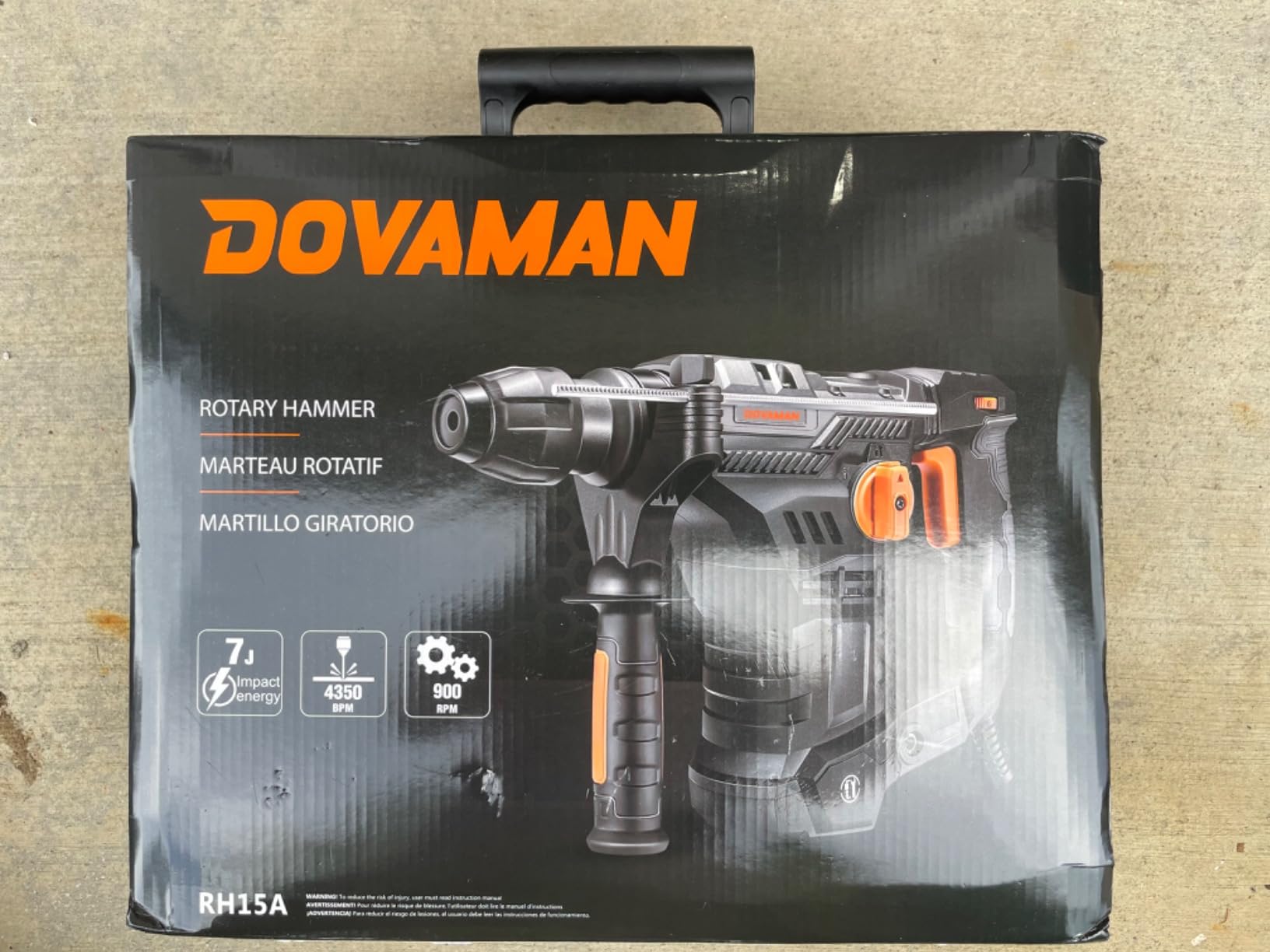
The DOVAMAN RH15A is the demolition pick in this roundup because of one number: 5.2 ft-lbs, or 7 joules of impact energy, with a 4350 blows per minute hammer rate. That is genuine breaking energy, and reviewers report using it for hole sawing, wall demolition, and even reinforced concrete.
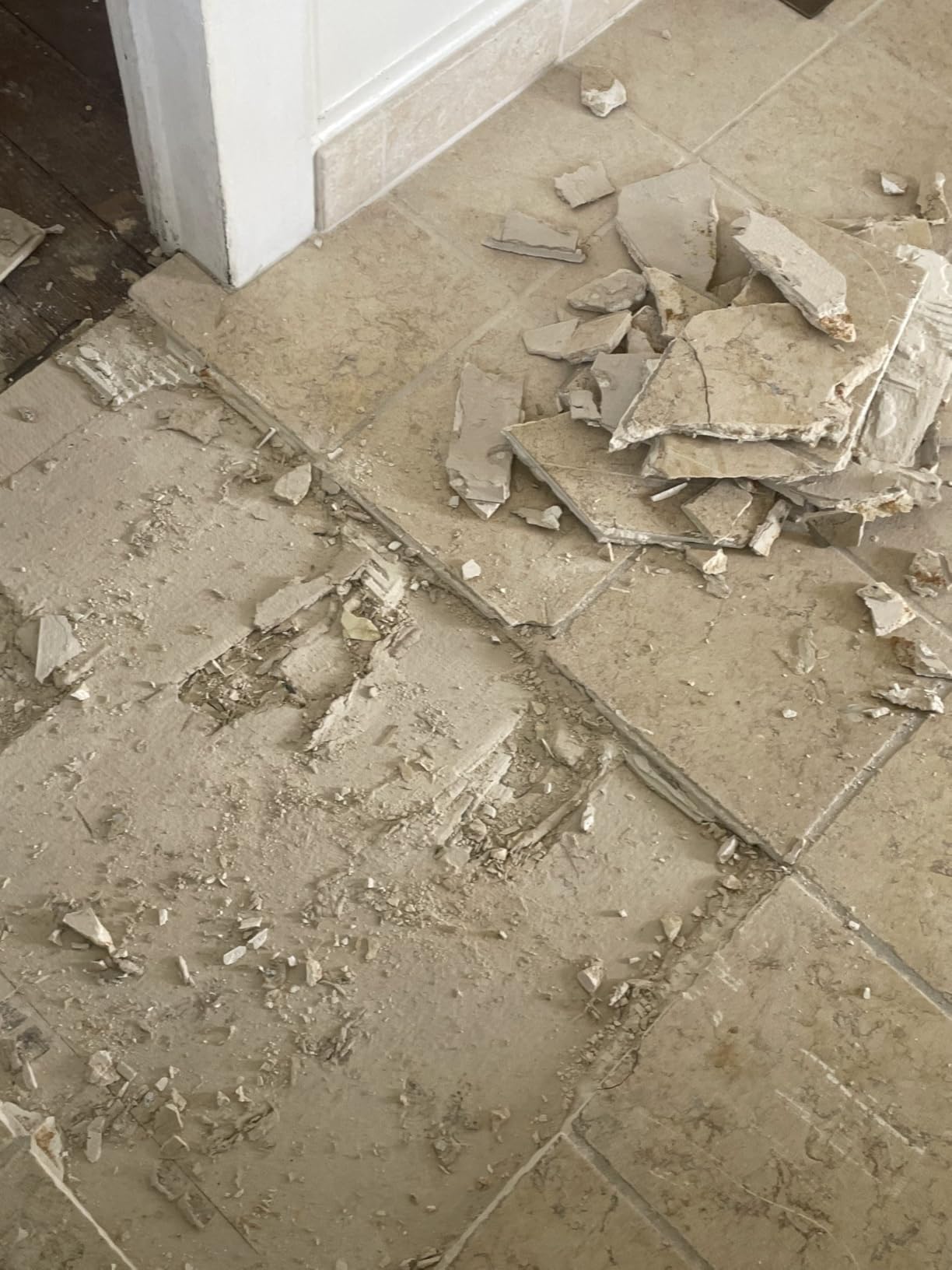
It is also the most serviceable budget machine here. Reviewers specifically praise the easy carbon brush changes and straightforward lubrication, which is the exact opposite of the complaint that dominates forum discussion about welded assemblies and assembly-only parts policies.
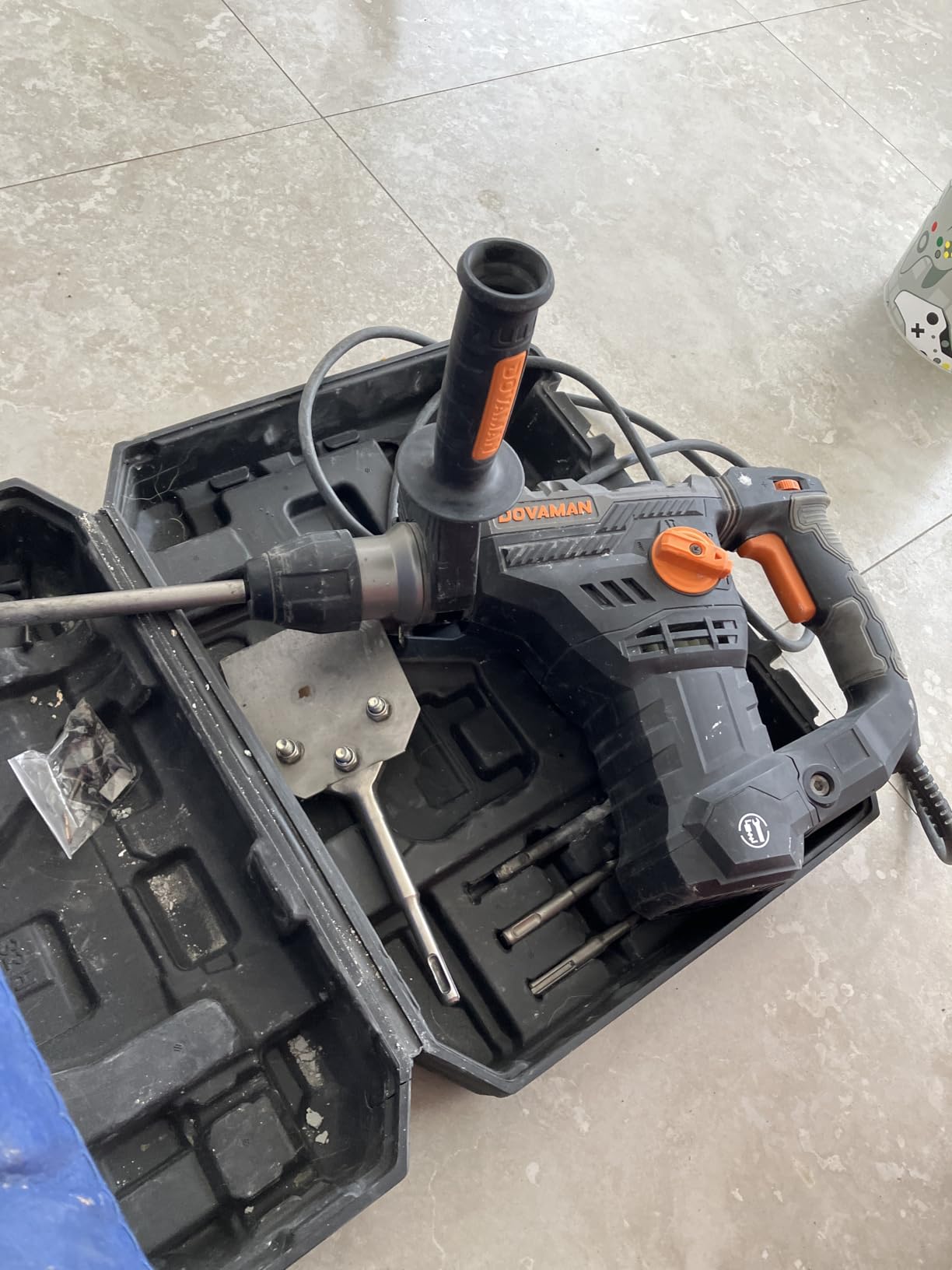
Four functions cover chisel only, hammer drill, drill only, and chisel position adjustment. That last one lets you change the chisel orientation to match the material, which matters when you are working a flat spade along a slab edge instead of point-chiseling a seam.
The upgraded vibration damping technology reduces fatigue through long demolition sessions, and the 360-degree adjustable auxiliary handle with a microtexture rubber overmold gives you a secure grip when the tool is at full energy and your hand is not in a calm state.
The accessory kit is the biggest in the roundup: an SDS-plus adapter, chuck key, three bits, flat and point chisels, carbon brushes, depth gauge, dust collector, grease, and a case. The dust collector is a real advantage on interior demolition.
What you should know before you buy it
At 12.3 lb bare – 18.1 lb with the accessories – this is a heavy tool, and owners report arm fatigue on long jobs. The vibration damping helps, but it does not turn a 12-pound breaker into a light one.
The mode selector switch is stiff and needs a light trigger press to actuate, which is an irritating combination when you are working quickly. One owner also received a dead-on-arrival unit with no motor output, a single report but worth knowing about.
Most importantly, it is not a jackhammer. On thick concrete it is slower than a dedicated breaker, and the impact energy is being split between rotation and hammering rather than going entirely into the chisel.
Who it suits and who it does not
It suits renovators and demolition crews breaking up patios, garage slabs, and block walls, and anyone who needs reinforced-concrete capability without moving up to a full SDS-Max machine. The serviceable motor makes it a better long-term bet than most machines at this price.
It does not suit overhead work, precision drilling near finished surfaces, or anyone who needs maximum speed on thick slab. And the 4.5-star rating with the widest spread of one-star reviews in this group means quality control is inconsistent, so keep the return option in mind.
Rotary Hammer vs Hammer Drill vs Demolition Hammer: What Each One Does?
A rotary hammer drill beats a hammer drill on concrete above roughly half an inch, and beats a demolition hammer on anything that requires a hole to stay round. The distinction is mechanical: a hammer drill uses a cam-driven flapper that shakes a regular bit, while a rotary hammer uses a crank-driven piston and compressed air to strike the bit several thousand times a minute.
That piston action is why rotary hammers deliver 2 to 8 joules rather than the light tapping of a hammer drill, and why they can switch to chisel-only mode. A demolition hammer is the same piston idea with the rotation removed entirely – all energy into breaking, zero ability to drill a controlled hole.
Every rotary hammer here has a three-position mode selector covering drill only, hammer drill, and hammer only. Drill-only lets you drive fasteners and set anchors once the hole is bored; hammer drill is the working drilling mode; hammer-only turns the same machine into a light breaker for tile and block.
One long-standing piece of trade wisdom, repeated across r/Tools and r/Plumbing discussions, is worth repeating: a regular hammer drill handles small masonry holes, and anything over roughly 1/2 inch needs a rotary hammer. Buy the bigger tool before you start, not after you stall halfway through a wall.
Choose by Chuck Type, Impact Energy and Power Source
Every decision about a rotary hammer comes down to three things: which bit system you need, how much impact energy that work requires, and whether you have power where the work is. Get those three right and the model choice is easy.
SDS-Plus, SDS-Max or spline: which chuck do you need
SDS-Plus uses a 10 mm shank and handles holes up to roughly 1 inch. This is the right answer for the overwhelming majority of residential and light commercial work – anchors, conduit, brick, block – and it is the system on nine of the ten tools in this roundup.
SDS-Max uses an 18 mm shank and delivers far more impact energy. It is the only practical option for large-diameter holes, heavy demolition, and reinforced concrete. The one compatibility rule worth memorizing: SDS-Max bits fit SDS-Max chucks, and SDS-plus bits will not.
A spline chuck is a three-jaw design that accepts round-shank bits and the widest range of accessories, including adapters for core bits and hole saws. Owners of older Milwaukee and Makita spline machines keep them for decades because the accessory ecosystem attached to that mount is enormous. If you already own one, keep it and add an SDS-plus tool rather than replacing it.
One naming note that causes real confusion: what does 1-inch SDS mean? It is the manufacturer recommended maximum concrete hole diameter for that tool, and the largest commonly available in this class is 1-9/16 inches. A machine rated at 1 inch can technically take a larger bit, but you will stall.
Impact energy: the number that actually predicts performance
Impact energy is measured in joules, or in foot-pounds by some brands, and 1 foot-pound equals 1.356 joules. It matters more than motor wattage, because it is the energy delivered per blow to the bit, and that is what breaks concrete rather than polishing it.
The 2 to 3.5 joule band covers nearly all residential and light commercial anchor work. The 4 to 5 joule band adds serious slab drilling and light breaking. Above 5 joules you are into reinforced concrete and sustained demolition territory, and that is where the price step becomes real.
Popular Mechanics makes a point worth repeating: higher wattage does not always mean higher joules. A 1500W budget machine and a 1000W premium one can have the same impact rating, and two machines with the same wattage can differ substantially. Read the joule figure, ignore the watts.
Blows per minute gets quoted constantly and matters much less. What matters is the energy per blow, the mode control, and whether the tool can keep that energy up without the gearbox overheating after 20 holes.
Corded or cordless
Corded means sustained power and a lower total cost. A 13 Amp corded rotary hammer delivers more impact energy than any of the cordless options here, never needs a charge, and costs far less. The trade-off is the cord: reach, cord management, and no access to places without an outlet.
Cordless means freedom and access, and that is not a small benefit. Overhead work, crawlspaces, mechanical rooms, and unpowered job sites are all cases where a cordless rotary hammer is the only workable answer. The cost is battery platform lock-in and pack capacity.
On total cost of ownership, the math depends on your platform. A bare tool is the cheapest route if you already own the batteries and charger. If you are starting from nothing, add a 4 to 5 Ah high-capacity pack and a charger to every cordless price before comparing it against a corded machine. Forum discussion is blunt about this: the battery is often the largest single cost in a cordless rotary hammer setup.
Forum threads on r/AskElectricians and finehomebuilding converge on one rule. If your drilling is horizontal, heavy, and near an outlet, buy corded. If it is overhead, in tight spaces, or off-grid, buy cordless and buy a spare battery.
Weight, balance and vibration control
A 12 lb rotary hammer held overhead will limit you more than the lack of power will. If your work is above shoulder height, weight is a first-order consideration and the 5 to 6 lb cordless machines deserve serious thought even at lower impact energy.
Vibration control systems isolate the hammer mechanism from the handle so less of the shock reaches your hands. On a long drilling session the difference shows up as your hands at the end of the day, and on chiseling work it is the difference between finishing a bathroom and not.
An auxiliary handle that rotates a full 360 degrees is worth checking on any model. Fixed-position handles force awkward wrist angles, and an awkward angle with a 5.5 ft-lb impact energy behind it is how tools get dropped.
Maximum drilling diameter and the anchors you are installing
Match the tool to the fastener, not the other way around. A 1/4 inch wedge anchor needs a 5/8 inch hole. A 3/8 inch expansion anchor needs a 5/8 inch hole. A 1/2 inch anchor commonly needs a 3/4 inch hole. A tile or flooring anchor set will specify its own hole diameter in its installation sheet.
Always read the anchor packaging rather than guessing, and always drill the specified diameter with a carbide-tipped masonry bit. Undersizing the hole loads the anchor and it will not set. Oversizing it and the anchor has nothing to grip.
As a general rule, buy the drill that can bore the largest hole your anchor schedule requires plus half an inch of headroom. If your biggest requirement is a 3/4 inch hole, a 1 inch SDS-plus machine has the capacity with margin.
Bits and chisels to buy with it
Buy real masonry bits. Owners repeatedly report that switching from standard hammer drill bits to proper carbide-tipped SDS bits cut their drilling time dramatically, and carbide costs very little per bit. Start with a set of 1/4, 3/8, 1/2, and 3/4 inch carbide bits in your chuck system.
For chiseling, three attachments cover almost everything. A bull point chisel concentrates the energy for breaking and channeling concrete. A clay spade is the wide flat chisel for removing tile, mortar beds, and surface material. A cold chisel is the general-purpose flat for splitting and dressing.
A scaling chisel, a wider and thinner flat, is better for cleaning up mortar and removing render. Every one of these needs the right shank – SDS-plus chisels do not fit SDS-Max chucks, and a spline chisel fits neither.
Can a rotary hammer drill rebar?
Only an SDS-Max tool at 5 joules or higher handles rebar reliably, and none of the SDS-plus machines in this roundup is designed for it. At 2 to 3.5 joules, a bit will bind the instant it touches a rebar bar and stall, which is the exact complaint that shows up repeatedly in forum threads about reinforced concrete.
Even in the right class, rebar drilling is slow and unforgiving. A carbide core bit or a dedicated rebar bit is the correct tool, and the technique is to keep the bit moving and accept a low rate of progress.
Here is an honest tier read on the picks above. The 7 J corded machines at positions 1, 5, and 10 report holding their own on reinforced concrete. The 2 to 3 J tools will bind. If rebar is a regular part of your job, the honest answer is that none of these ten is the right tool and you need to step up a class.
Concrete dust and silica safety
Drilling concrete produces respirable crystalline silica, and the fine dust that comes off the bit is far more dangerous than the visible rubble. A respirator rated for silica, eye protection, and control of the dust plume all matter on interior jobs.
The tools that pair with a dust extraction system are the ones worth owning for interior work. The DeWalt cordless model is OSHA Table 1 compliant when paired with the On Board Extractor, and the corded D25263K accepts a separate extraction system. The DOVAMAN kit includes a dust collector as standard.
A practical habit that costs nothing: keep the bit slightly angled rather than driving it straight in, so the heavier fraction of dust is thrown away from you rather than back at the surface. It also reduces the bind-up rate in hard concrete.
Repairability is a buying criterion
The most-discussed complaint across tool forums is not performance, it is what happens when a tool fails. Owners describe brands with welded assemblies that force whole-unit replacement, and manufacturers that sell only full assemblies for some models, leaving a serviceable tool unrepairable.
Before you buy, check three things. Are the carbon brushes replaceable, and are spares published? Is the lubrication path documented, and does the model need regular greasing? Is the gearbox opened with standard hardware rather than rivets or adhesive?
For this roundup, the budget machines that include spare brushes and a grease tube score best on serviceability. The DOVAMAN is the standout example – owners call out easy brush changes and straightforward lubrication as a primary reason to recommend it.
Warranty length is the fastest proxy. A 1-year warranty signals a disposable tool. A 3-year limited warranty or longer signals a manufacturer expecting the motor to last. It is not a guarantee of parts availability, but it is a reasonable first filter.
Frequently Asked Questions
What is the best hammer drill machine for concrete work?
A rotary hammer drill is the right machine for concrete, and a standard hammer drill tops out around half-inch holes. Our pick for most people is the ENEACRO 13 Amp 1-1/4 Inch SDS-Plus Rotary Hammer Drill, which delivers 7.4 joules of impact energy and covers anchor drilling, masonry, and light demolition in one tool. If you work overhead, the DEWALT DCH273B cordless model is easier to control.
Will a rotary hammer drill through concrete?
Yes. A rotary hammer uses a piston to deliver 2 to 8 joules of hammering energy per blow straight into an SDS-type bit, which shatters concrete, brick, and block rather than scraping at it. Paired with a carbide-tipped masonry bit, it will bore holes from a fraction of an inch up to the tool rated capacity. Continuous structural concrete and rebar need an SDS-Max tool at 5 joules or higher.
Which drill is best for drilling concrete?
It depends on the job. For horizontal, heavy drilling near an outlet, a corded SDS-plus model such as the DEWALT D25263K or Bosch GBH2-28L gives sustained power. For overhead work, crawlspaces, and unpowered sites, a cordless model such as the DEWALT DCH273B or Milwaukee 2912-20 is the practical choice. For large holes, thick slabs, and reinforced concrete, step up to an SDS-Max machine.
What is the best drill bit for a hammer drill to use in concrete?
Use a carbide-tipped masonry bit matched to your chuck system, not a standard twist bit. For SDS-plus tools, go up to about a 1 inch hole; SDS-Max handles larger diameters. Within the bit types, a bullet or chisel-style bit works for general concrete, a cross-cut bit clears debris faster on deep holes, and a core bit is what you need for large-diameter and rebar work. Owners repeatedly report that proper masonry bits cut drilling time dramatically.
What is the difference between a rotary hammer and a hammer drill?
A hammer drill uses a cam-driven flapper that shakes a regular bit and suits small masonry holes up to roughly half an inch. A rotary hammer uses a crank-driven piston and compressed air to strike an SDS bit several thousand times a minute, delivering 2 to 8 joules, which handles large holes and switches into chisel-only mode. A demolition hammer has no drill mode at all – it is built purely for breaking.
Can I use an SDS drill bit in a regular drill?
No. A standard three-jaw chuck cannot hold the SDS shank securely, and a regular drill does not have the hammer energy to drive one. An SDS-plus adapter will let a rotary hammer use regular drill bits in drill-only mode, but the reverse is not safe or possible. Forcing it is a good way to damage the bit, the chuck, and your wrist.
Should I buy a corded or cordless rotary hammer drill for concrete?
Buy corded for sustained power, lower total cost, and drilling near an outlet. Buy cordless for overhead work, tight access, and sites without power, factoring in the platform lock-in: a 4 to 5 Ah high-capacity pack and a charger can add substantially to a bare tool price. If you already own batteries for a platform, the bare-tool route is the cheapest way in. Forum consensus is that many trades end up owning both.
How do I maintain a rotary hammer drill?
Maintenance is minimal but not zero. Keep the chuck sleeves and vents clear of concrete dust, lubricate the hammer mechanism periodically on models that are not factory sealed, and replace carbon brushes on brushed motors at roughly 7500 hours of run time. Store it dry and off the floor, and grease the shank of your bits so concrete dust does not seize them in the chuck.
Bottom Line: Which Rotary Hammer Drill Should You Buy?
The ENEACRO 13 Amp 1-1/4 Inch SDS-Plus Rotary Hammer Drill takes the top spot in 2026 for a simple reason: 7.4 joules of impact energy, four operating modes, a safety clutch, real vibration damping, and a full kit of bits and chisels in the box. For most homeowners, DIYers, and trades, that is more capability than a single project will ever ask for.
Buy the DEWALT DCH273B if you need to reach concrete in tight spaces or overhead and you already run 20V MAX packs. Buy the DEWALT DCH133B if the drilling is overhead and weight is the thing stopping you. Buy the Milwaukee 2912-20 if you are in the M18 system or need the shortest, most controlled cordless body available.
Buy the Bosch GBH2-28L if you are a trade and want bind-up protection and the durability reputation that forum threads keep pointing to. Buy the DEWALT D25263K if you want corded power with genuine vibration control. Buy the DOVAMAN RH15A if you are breaking slabs and want serviceable brushes and a dust collector in the kit.
And if you only need concrete occasionally, the Berserker 26FA and the AOBEN both deliver 1-1/4 inch capability for a fraction of the cost. Just check the grease specification before the first hole, and check the return window before the warranty runs out.