
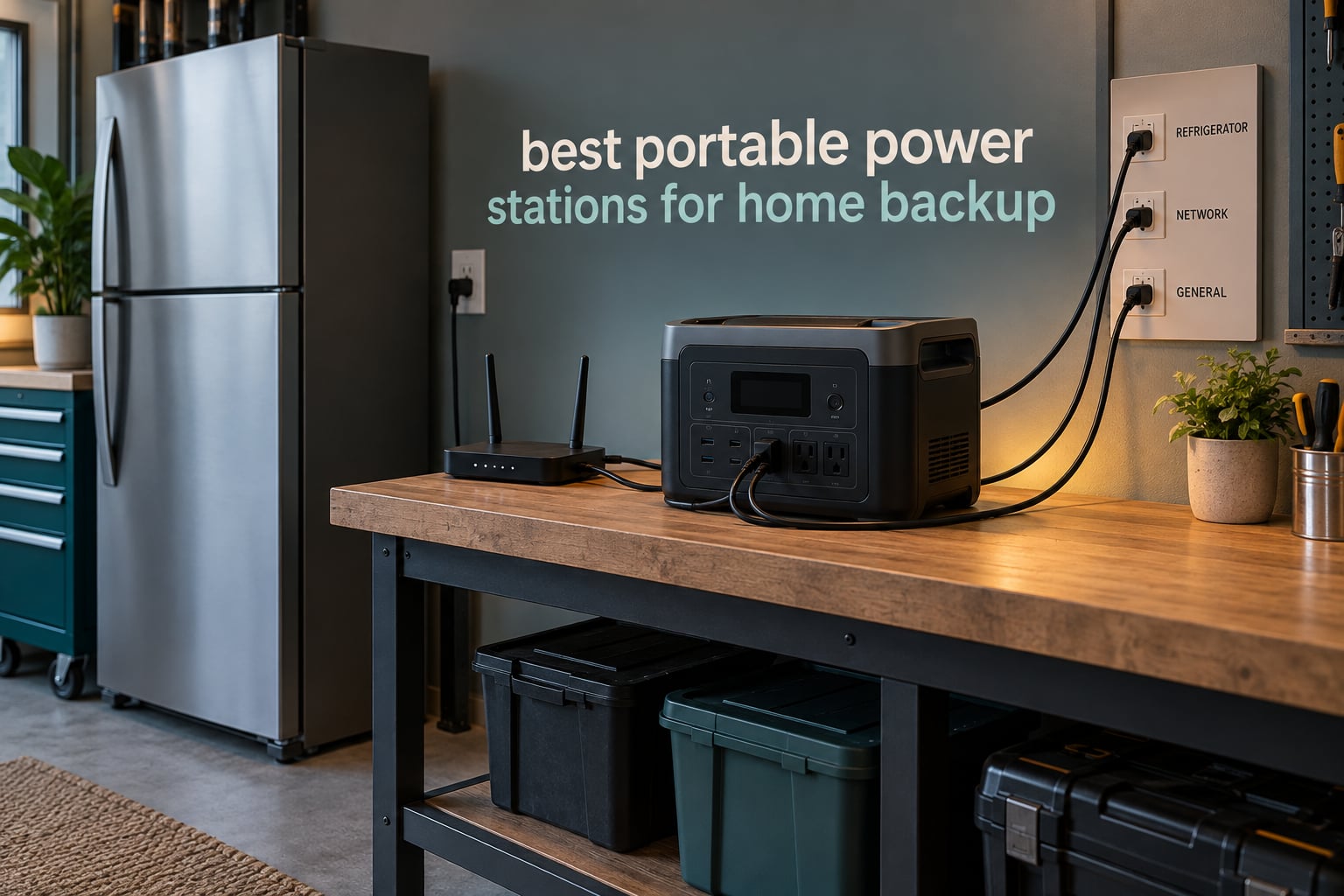
Short answer first: the Jackery Explorer 1000 v2 is the best portable power station for home backup for most households, because it pairs 1,070Wh of capacity with a 1,500W pure sine wave inverter, weighs 23.8 lb so one person can move it, and carries the largest review base of any model in this group. If your household runs a well pump or a dryer, step up to the Anker SOLIX F3800, the only model here with true 120V/240V dual-voltage output.
A portable power station is a battery with an inverter bolted to it. It charges from a wall outlet, a car, or solar panels, stores energy in watt-hours, then converts that stored energy back into the same 120V household current your appliances already expect. There is no fuel, no exhaust, no pull-start handle, and nothing to install. You carry it to the kitchen, plug the fridge into it, and the fridge keeps running.
That last point is the one most spec sheets bury. The best portable power stations for home backup are not whole-house systems. Unless you add a transfer switch, someone still has to physically walk the extension cords to the loads in the dark during a storm. What you are buying is hours of quiet, clean power for a defined list of appliances, and the whole buying exercise is deciding which appliances are on that list.
We put all eight power stations in this guide through the same lens: usable capacity after inverter losses, continuous output against the appliances you actually own, surge headroom for motors, UPS switchover time, solar input limits, and expansion paths. If your essentials draw under 400W, anything in the 1kWh class will carry you through a night. If you need a well pump, an electric dryer, or a heat pump, you are shopping in a different category entirely, and most of them are the wrong tool for the job.
Table of Contents
Top 3 Picks for Home Backup (October 2026)

Jackery Explorer 1000 v2
- 1070Wh capacity
- 1500W AC output
- 3000W surge
- 23.8 lb
- 4000 cycle LFP battery

Anker SOLIX C1000 Gen 2
- 1024Wh capacity
- 2000W continuous
- 3000W peak
- 49 minute full recharge
- under 10ms UPS

The 8 Best Portable Power Stations for Home Backup in 2026
Every pick below, with the three numbers that actually decide whether it fits your household. Prices move constantly, so use the buttons to check current listings rather than our figures.
| Product | Specs | Action |
|---|---|---|
| Jackery Explorer 1000 v2 |
|
Check Latest Price |
| BLUETTI AC180 |
|
Check Latest Price |
| Anker SOLIX C1000 Gen 2 |
|
Check Latest Price |
 OUPES Mega 1 OUPES Mega 1 |
|
Check Latest Price |
 EcoFlow Delta 3 Classic EcoFlow Delta 3 Classic |
|
Check Latest Price |
 Anker SOLIX F3800 Anker SOLIX F3800 |
|
Check Latest Price |
 Anker SOLIX S2000 Anker SOLIX S2000 |
|
Check Latest Price |
 Dabbsson 2000L Dabbsson 2000L |
|
Check Latest Price |
Six of these eight power stations are 1kWh or 2kWh class machines that cover essentials. Only the Anker SOLIX F3800 gives you true 240V output, and only the OUPES Mega 1 reaches beyond 2kWh without a second purchase. That single fact should shape your shortlist before you read another spec.
How We Picked and What We Checked
Being straight about method matters more than a flattering intro. We did not bench-test these models in a lab. Every specification in this guide comes from manufacturer product listings and from the pattern in thousands of owner reviews, and we cross-checked the two against each other before repeating a number.
That means we filter out claims that only appear in marketing copy and keep the ones owners actually describe in practice. The Anker SOLIX S2000 is described as delivering up to 35 hours of fridge backup, and we treat that as a manufacturer figure rather than a tested result. The BLUETTI AC180 has owners consistently measuring roughly 20W of inverter self-consumption, and that complaint appears often enough that we plan around it.
Across the group we scored five things: usable capacity after conversion losses, continuous output against a real appliance list, surge behaviour on motor loads, UPS switchover in milliseconds, and the expansion path if your needs grow. We also flagged anything that would leave a buyer stranded later, like a proprietary charging cable, an app-only settings menu, or the removal of expandability in a new generation.
1. Jackery Explorer 1000 v2 – Best Overall for Home Backup
Jackery Explorer 1000 v2 Portable Power Station,1070Wh,1500W
1070Wh
LiFePO4
1500W AC
3000W surge
23.8 lb
7 outlets
Pros
- Portable at 23.8 lb with a foldable handle
- 1500W AC and 3000W surge handles motors
- Three pure sine wave AC outlets plus 100W USB-C
- One hour emergency charge enabled in the app
- Over 70 percent capacity after 4000 cycles
Cons
- Solar input accepts only Jackery panels
- One hour fast charge must be switched on in the app each session
- 1070Wh is small for long high-draw runs
Out of the eight models here, the Jackery Explorer 1000 v2 is the one I keep recommending first, and the reason is boring rather than glamorous. It weighs 23.8 lb, it has a foldable handle, and one person can carry it from the garage to the kitchen without planning the move. For a device whose entire job is to be dragged across a dark house during a storm, weight is a real feature.
On paper it gives you 1,070Wh of LFP capacity, 1,500W of continuous AC output and 3,000W of surge headroom across three pure sine wave outlets, plus two USB-C ports, a USB-A port and a 12V car socket. Owners running this as a fridge and router backup report getting through an overnight storm comfortably on a single charge, which matches the math when you assume a fridge averages around 150W of real draw rather than its nameplate.
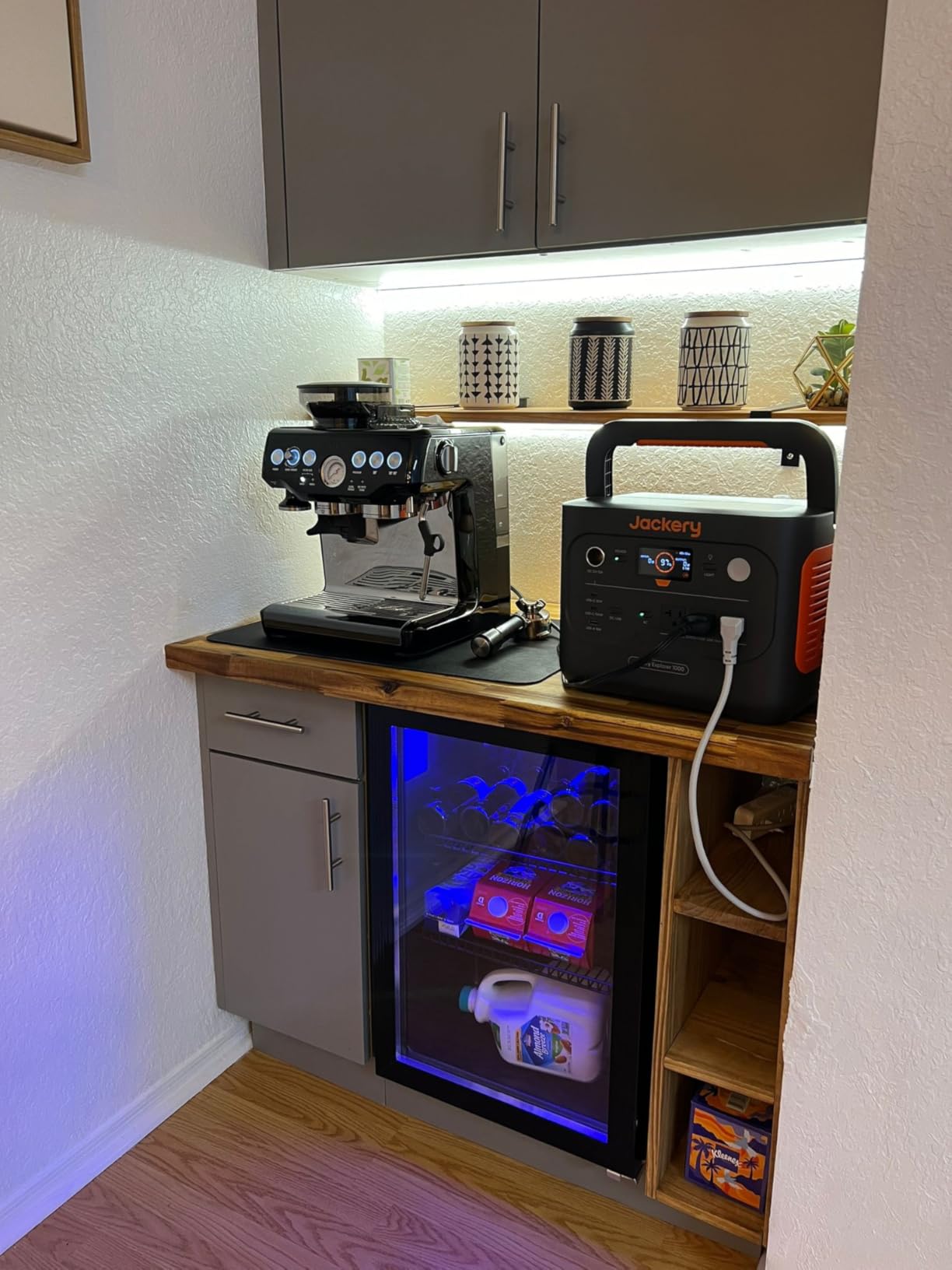
Three practical details stand out. The LFP battery is rated to hold over 70 percent of its capacity after 4,000 cycles, which works out to more than a decade of daily use. Charging from a wall outlet takes about 1.7 hours by default, and the app unlocks a one-hour emergency top-up when you know a storm is hours away rather than days.
The 4.7 rating across more than 3,600 reviews is the widest evidence base in the group, and 85 percent of those ratings are five stars. A large review base matters for a practical reason: the failure modes are already well documented, so you are not gambling on an unknown device when the lights go out.
Who This Suits Best
This is the right station for a fridge, a router and modem, a couple of lamp charges, and a phone or two for one or two days. It also handles short high-draw items without drama, since 3,000W of surge covers a freezer compressor or a kettle, and the pure sine wave output keeps sensitive electronics happy.
Households that want one device for both emergencies and weekends at a campsite will appreciate the combination of weight and capacity more than any spec sheet number. Anything you can lift with one hand at 23.8 lb changes how often you actually think about using it.
Who Should Look Elsewhere
If your outage plan includes a well pump, a sump pump running for days, an electric dryer, or anything on a 240V circuit, this station is not the answer. Its inverter is 120V only, and 1,070Wh disappears quickly once a pump is cycling.
There is also a portability compromise to know about. Solar charging is restricted to Jackery-brand panels, so if you already own third-party solar, or plan to buy it, you are locking yourself into one ecosystem. And the one-year warranty is the shortest in this group, which is worth weighing against a device you expect to own for a decade.
2. BLUETTI AC180 – Best Value 1kWh Unit With a 5 Year Warranty
BLUETTI Portable Power Station AC180, 1152Wh LiFePO4 Battery Backup w/ 2 1800W (2700W peak) AC Outlets, 0-80% in 45Min, Solar Generator for Camping, Off-grid, Power Outage
1152Wh
LiFePO4
1800W continuous
2700W app boost
37.4 lb
11 outlets
Pros
- Full charge in one hour at 1440W AC input
- 1800W continuous with app boost to 2700W
- 20ms UPS switchover for router and lights
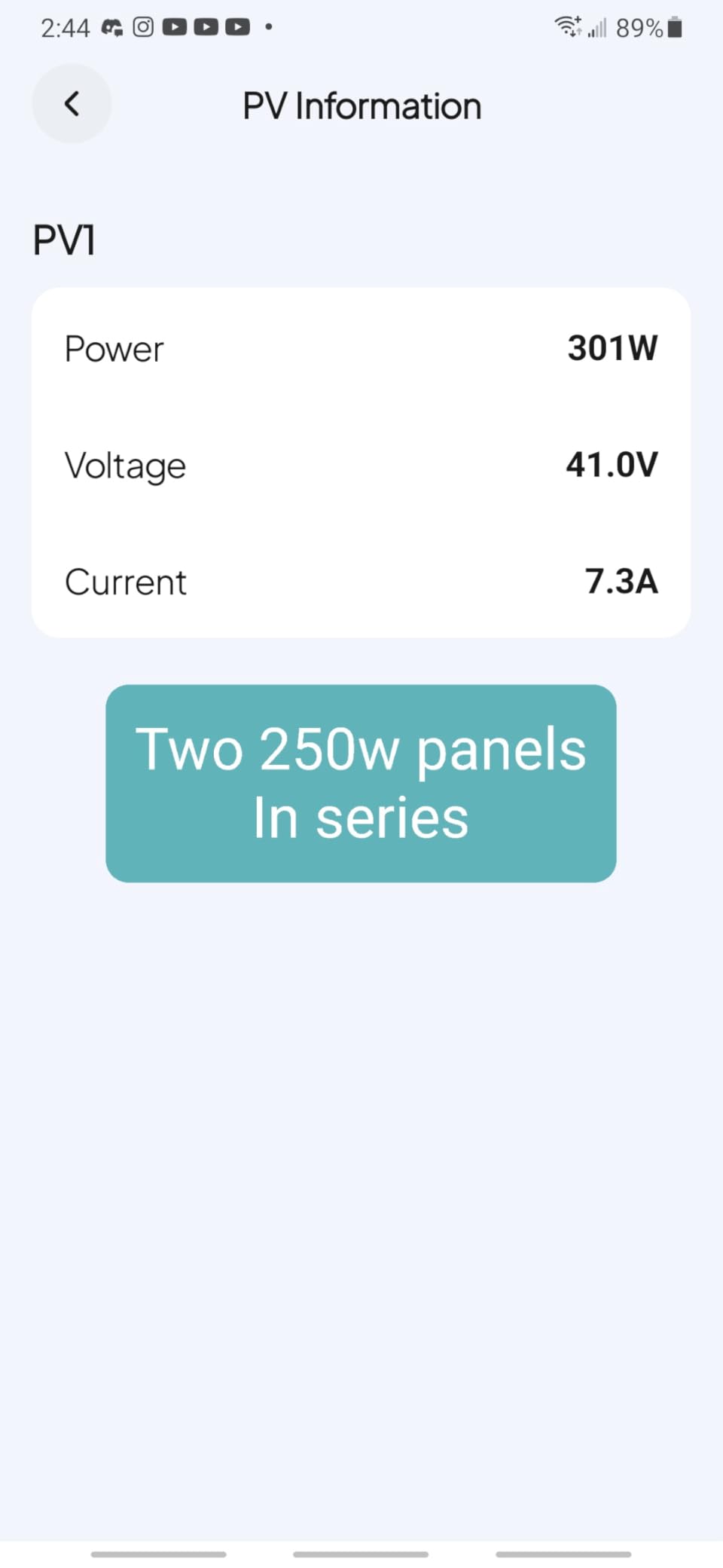
- 500W solar input recharges in under 3.3 hours
- 5 year warranty with responsive support
Cons
- Heavy at roughly 37.4 lb for a 1kWh unit
- Top wireless charging pad frequently drops the phone connection
- About 20W of inverter self-consumption trims runtime on light loads
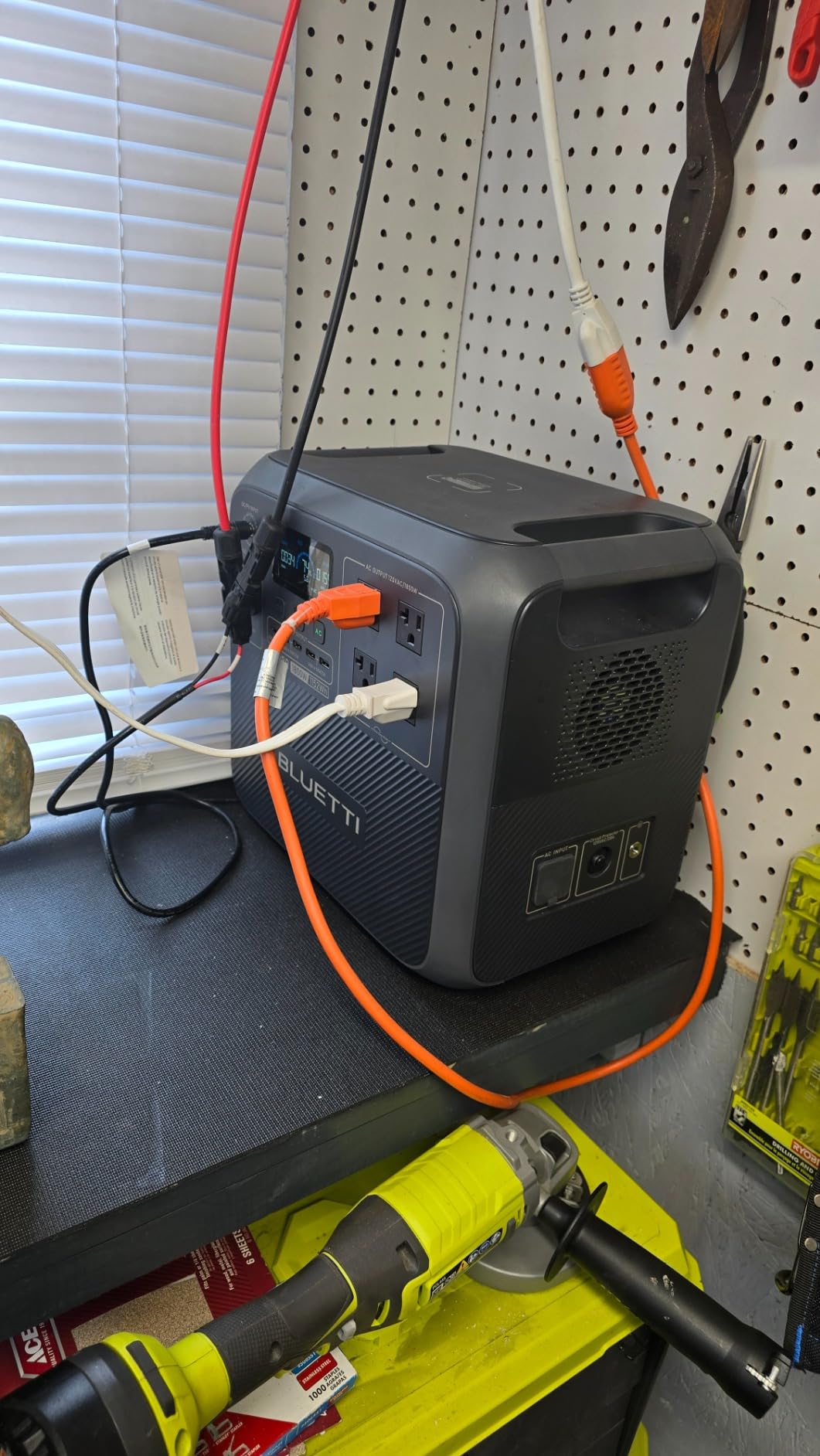
The AC180 is the pick I suggest when someone wants the most output per watt of capacity in the 1kWh class and is not planning to move it between the garage and the hallway. It delivers 1,800W continuous from 1,152Wh, and the app can push that to 2,700W on resistive loads like a space heater or a hair dryer.
Its 11 outlets are unusual at this size: eight AC sockets plus USB and DC outputs. That number matters more than it sounds, because most backup plans involve several small loads at once rather than one large one, and hunting for a free socket mid-outage is an irritation you can avoid by buying ahead.
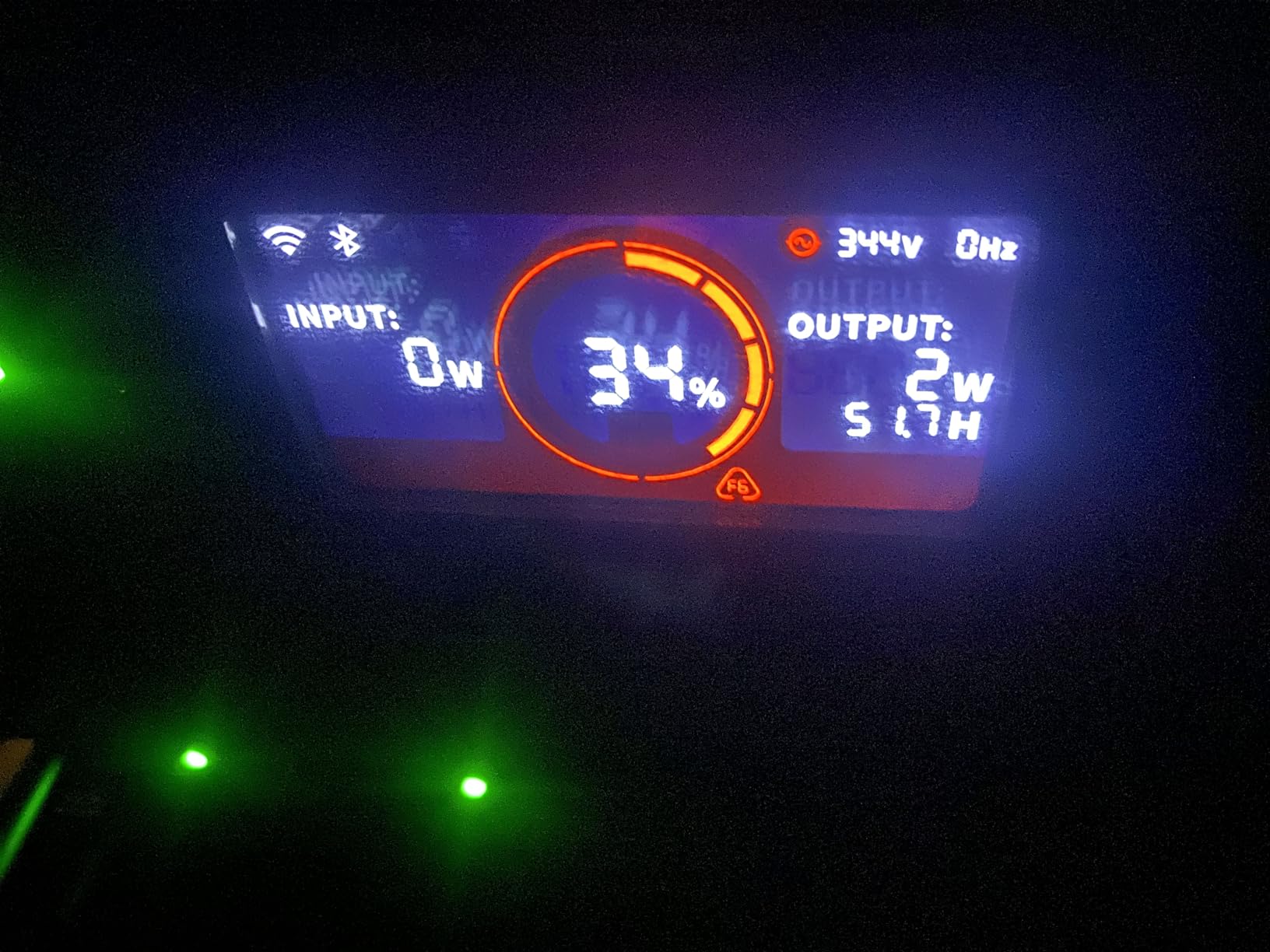
Owners describe it as the ideal entry-level home backup unit, and the near-instant 20 millisecond UPS transfer is the part that earns that description. A router, a lamp and a laptop plugged into UPS outlets will not blink when utility power fails, which is exactly the behaviour you want from a device meant to sit beside your network gear.
Recharging is fast. A full charge from a 1,440W wall supply takes about an hour, and the 500W solar input refills the battery in roughly three hours on its own or about an hour with AC assist. The 4.6 rating sits across more than 2,600 reviews, with 82 percent at five stars, and BLUETTI’s five-year warranty is double what Jackery offers on the comparable model.
Who This Suits Best
Pick the AC180 if your essentials include a router, a monitor, a laptop and lights, or a fridge for a single overnight outage, and if you value warranty length and outlet count over portability. Homes with a home office or medical devices that need uninterrupted power do well here, because 20ms transfer is inside the tolerance of almost any sensitive load.
It is also a sensible pick for anyone who wants one brand for both the battery and the solar input, since the 500W solar ceiling is a genuine limit rather than a marketing number and the panels are widely available.
Who Should Look Elsewhere
At roughly 35 to 37 lb, this is the heaviest 1kWh model in the group, and that is a real problem if your plan involves carrying it outdoors or loading it into a vehicle at short notice. If weight is the deciding factor, look at the Jackery instead.
Two smaller issues are worth knowing. The wireless charging pad on the top frequently fails to hold a phone connection, so treat it as a novelty rather than a feature. More importantly, the inverter draws around 20W on its own, which quietly eats into usable capacity on light loads, and the manual says only about 90 percent of rated capacity is available in practice.
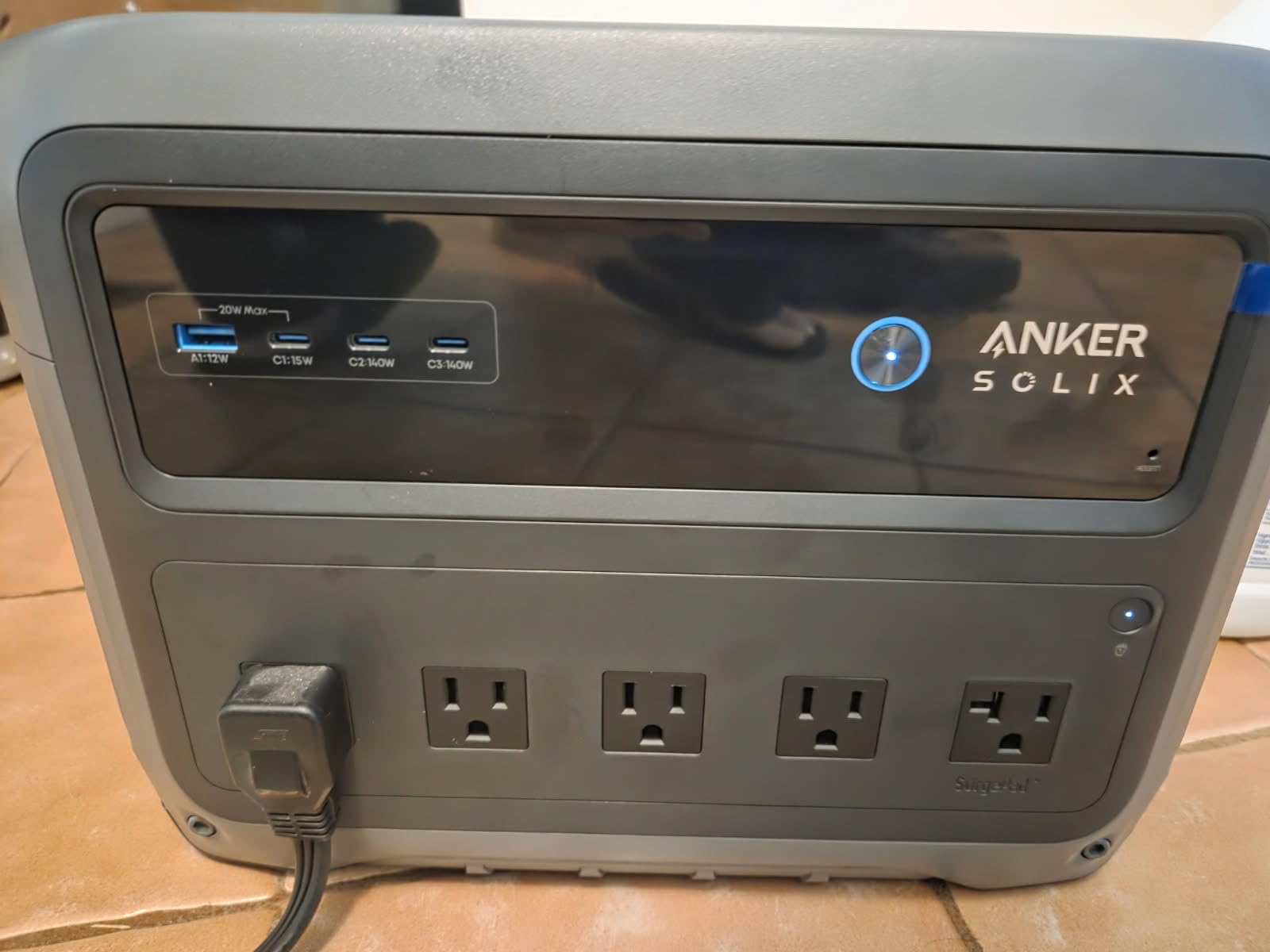
3. Anker SOLIX C1000 Gen 2 – Best Recharge Speed in Under an Hour
Anker SOLIX C1000 Gen 2 Portable Power Station
1024Wh
LiFePO4
2000W continuous
3000W peak
10 ports
under 10ms UPS
Pros
- Full recharge in about 49 minutes at 1600W
- 2000W continuous and 3000W peak across 10 ports
- Under 10ms UPS keeps CPAP and laptops running
- 600W solar input refills in about 1.8 hours
- 14 percent smaller and 11 percent lighter than similar models
Cons
- Gen 2 removed the battery expandability the first generation offered
- Measurable harmonic distortion driving a microwave oven
- No protective storage case included
When a storm is forecast to arrive tomorrow afternoon and your unit is at 20 percent, recharge speed matters more than any other spec. The SOLIX C1000 Gen 2 does a full charge in about 49 minutes at 1,600W once you enable the fast mode in the Anker app, which puts it among the quickest refills in this entire group.
It also matches the Jackery for raw inverter strength at 2,000W continuous and 3,000W peak, from a slightly smaller 1,024Wh battery, and the listed weight of 11.3 kg the result is the lightest full-size option here to move between rooms. Ten ports cover a household of phones, laptops, a router and a lamp without you needing a power strip, and one detailed electrical-engineer review confirms the output meets its specification.
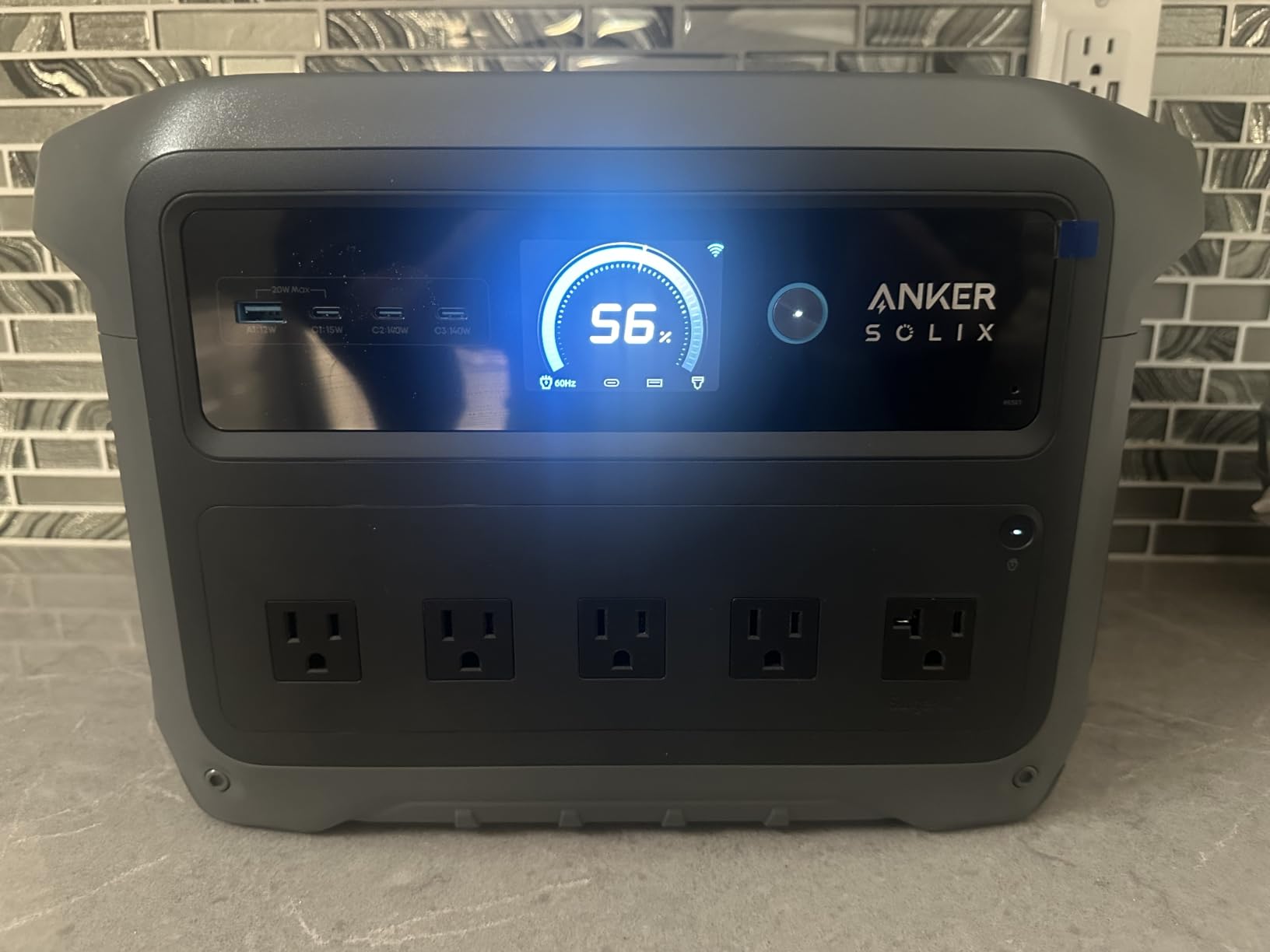
Owners report using it for multi-hour fridge backup, for CPAP machines overnight, and for solar camping trips, and the sub 10 millisecond UPS transfer is the feature medical-device users care about most. A CPAP machine that resets every time the power flickers is useless, and a transfer this fast simply does not interrupt it.
The rating is 4.7 across more than 1,600 reviews with 86 percent at five stars, and Anker support replaced a faulty first unit quickly and without hassle, which tells you something about how the brand handles a problem device during storm season.
Who This Suits Best
This suits anyone running a CPAP machine, an oxygen concentrator, a home security system or an NVR, because the switchover is fast enough that the load never notices. It is also the right unit if you need to top up fast the day before a hurricane or an ice storm makes the grid unreliable.
Travel-oriented households get a bonus: at 14 percent smaller and 11 percent lighter than comparable models, with 2,000W of output, this handles camping and van use at the same time as emergency duty.
Who Should Look Elsewhere
Buy elsewhere if you expect your needs to grow. The second generation dropped the battery expandability that the original C1000 offered, so you are locked at 1,024Wh for the life of the model. That is a strange trade for a device meant to sit as an insurance policy for a decade.
Two smaller caveats: the output shows measurable harmonic distortion when driving a microwave oven, so avoid running a microwave from it, and there is no included protective case for the cables and adapters, which is an annoyance rather than a problem.
4. OUPES Mega 1 – Best Expandable 1kWh Platform
OUPES Mega 1 Portable Power Station 1024Wh 2000W (4500W Surge)
1024Wh
expands to 5120Wh
2000W continuous
4500W surge
27.8 lb
LiFePO4 3500 cycles
Pros
- 2000W continuous with 4500W surge
- 0-80% in 36 minutes on AC alone
- Expands to 5120Wh with two B2 batteries and no extra inverter
- Under 20ms UPS transfer
- Four 120V outlets plus twin 100W USB-C
Cons
- Cooling fan runs continuously while charging and can be loud
- Wi-Fi pairing in the app is unreliable while Bluetooth works better
- Proprietary charging cable is hard to source a replacement for
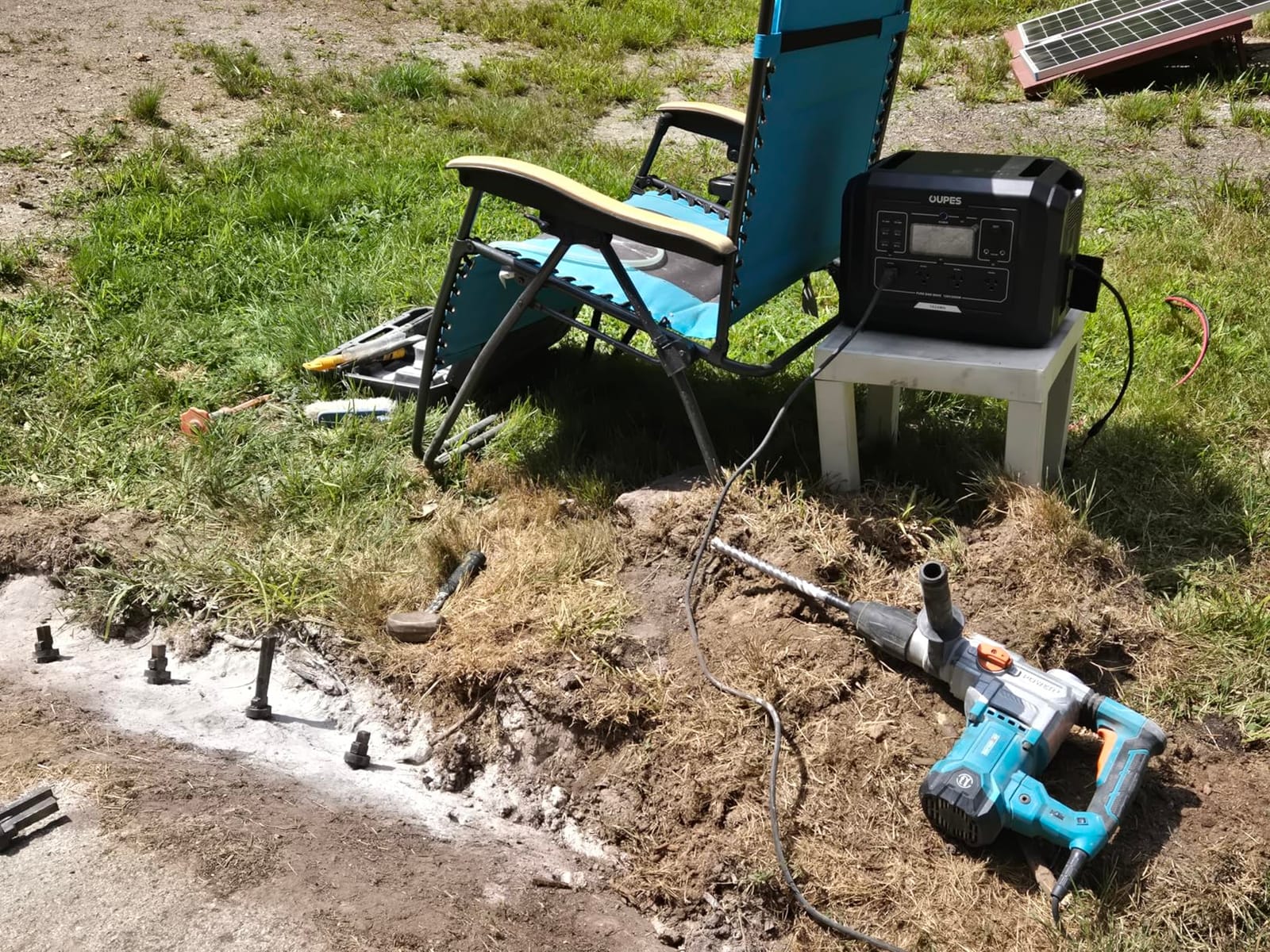
The Mega 1 is the only model in the 1kWh class that grows into a multi-day system. Two B2 expansion batteries take it from 1,024Wh to 5,120Wh without adding a second inverter, which is the single most important feature for anyone whose outage might run past the first night and who does not want to buy a second device.
Base inverter output is 2,000W continuous with a stated 4,500W surge, on pure sine wave AC outlets. Owners consistently single out power-per-dollar as the reason they chose it over Jackery, EcoFlow or BLUETTI, and the recharge figures back that up: 0 to 80 percent in 36 minutes on AC alone, or 26 minutes with AC and solar together.
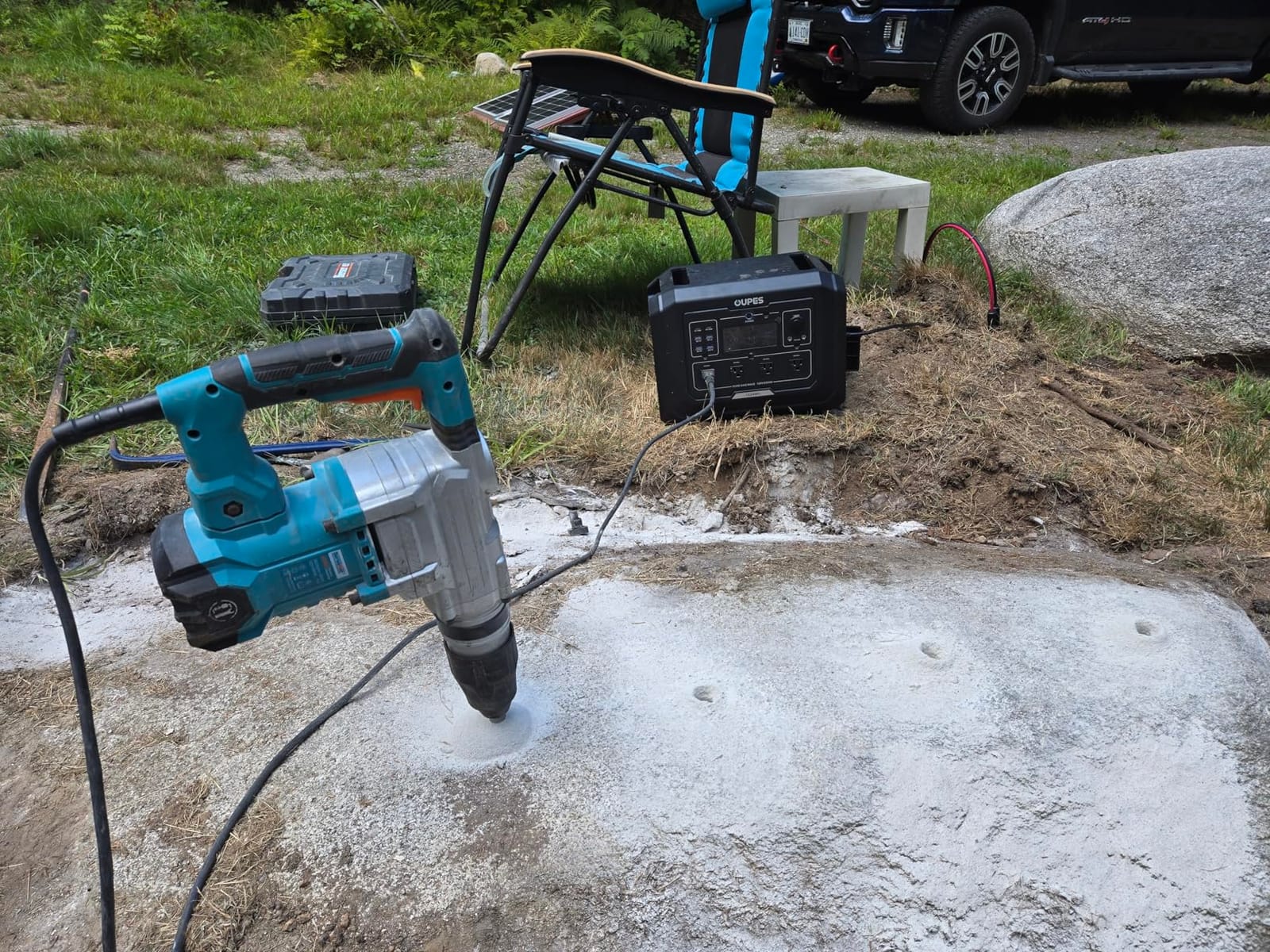
The UPS transfer is under 20 milliseconds, which is quick enough for servers, workstations and medical devices, and the pass-through charging support means you can add solar while the unit keeps supplying your loads. The LiFePO4 pack is rated for 3,500 or more cycles, and the 4.5 rating sits across more than 1,300 reviews with 82 percent at five stars.
It is not a household name, and that is the honest trade. Support is responsive and sends replacement hardware, but you are buying from a newer brand with a shorter track record than the established names in this guide.
Who This Suits Best
This is my pick for a household that expects a long outage and wants to grow capacity gradually rather than commit to a 6kWh system on day one. Buy the base unit now, add a B2 battery before hurricane season, add the second one the following year.
It also suits anyone with a home server or NAS who needs a transfer time short enough not to drop a session, and buyers who want more continuous output than the Jackery offers from a similar size class.
Who Should Look Elsewhere
Skip it if the cooling fan running constantly while charging is going to bother you, because this one is audible in a quiet room. People who need the unit in a bedroom or a home office overnight should test that expectation first.
Skip it if you need a mature app. The Wi-Fi pairing in the CleanEnergy app is unreliable, the app is basic with no cell-level state or temperature reporting, and Bluetooth is the more dependable route. Separately, one long-term owner reports the advertised 4,500W surge tripping closer to 2,050 to 2,200W in practice, so treat the surge figure as a headline rather than a promise.
5. EcoFlow Delta 3 Classic – Best for Sump Pump Standby
EF ECOFLOW Portable Power Station Delta 3 Classic, 1024Wh 1800W AC
1024Wh
LiFePO4 with EV-grade cells
1800W AC
3600W surge
2600W with X-Boost
26.7 lb
Pros
- 0-80% recharge in about 45 minutes
- Under 10ms UPS switchover
- App scheduling runs the unit during peak price hours
- Absorbs full output from solar panels
- Owners run two sump pumps for two days on half a charge
Cons
- No compatibility with DELTA 2 or DELTA 3 series extra batteries
- 26.7 lb is heavy for repeated carry
- A small number of units arrived dead or already opened
If your reason for buying backup power is a wet basement, the Delta 3 Classic deserves a close look. Owners running it as a sump pump standby report covering two pumps for two days on roughly half a charge, and the 1,800W continuous output with 3,600W surge has the headroom for a motor-driven pump starting under load.
It charges 0 to 80 percent in about 45 minutes with X-Stream AC charging, and a full recharge from a 500W solar panel takes roughly two and a half hours. The UPS switchover is under 10 milliseconds, which means a fridge or a network switch plugged into the UPS outlets will not register the outage at all.
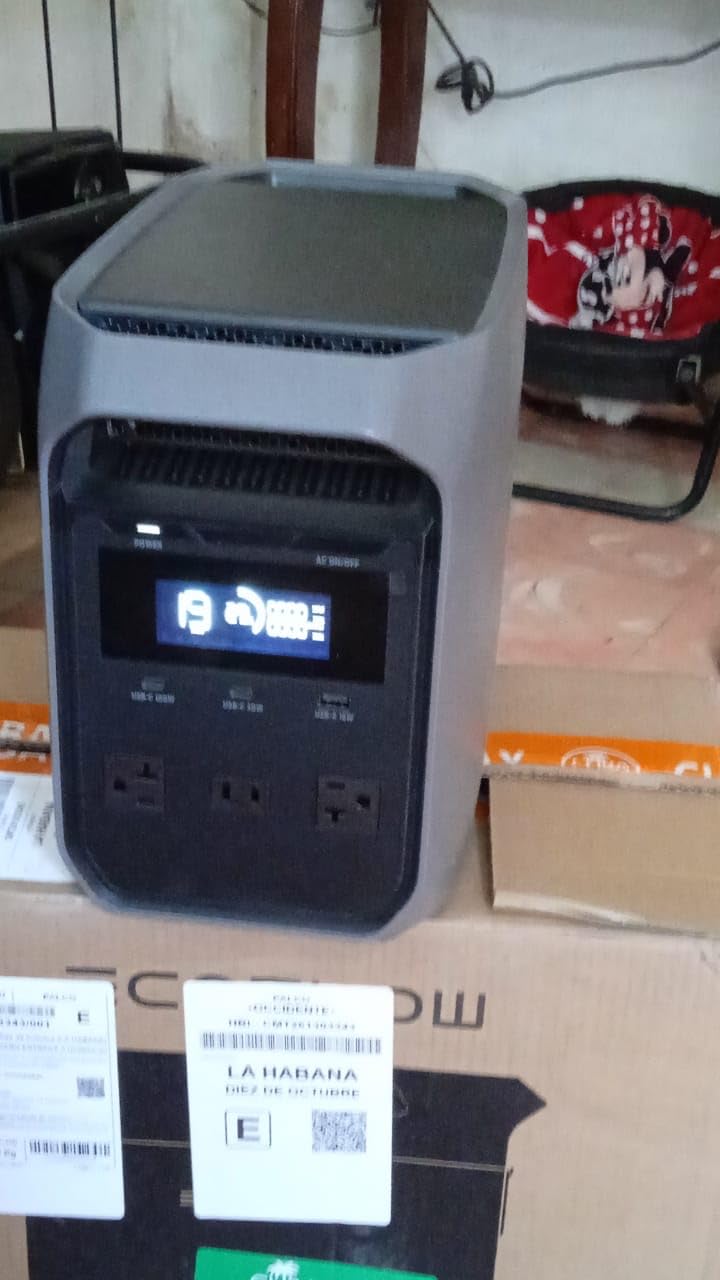
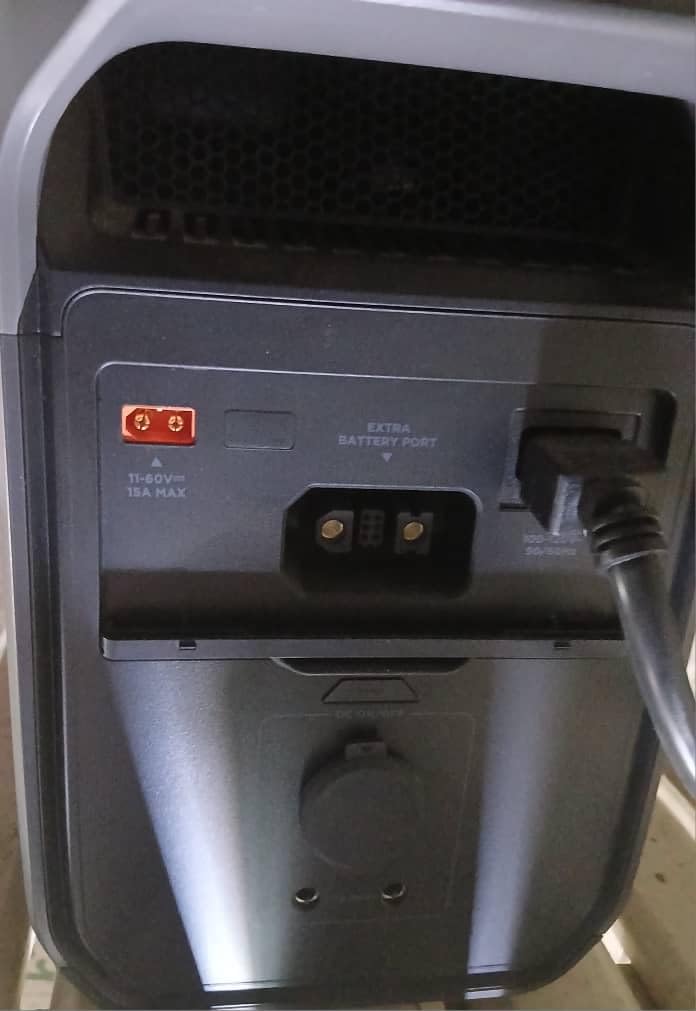
The build quality details are the ones buyers mention most: labelled cables, a swinging input cover, non-skid base pads, and Bluetooth pairing that connects flawlessly on the first try. The app also does something genuinely useful for a home rather than a campsite, letting you schedule charging for off-peak electricity rates.
At 4.7 across more than 1,200 reviews with 89 percent at five stars, this has the highest five-star share of any unit here. The LFP cells use an EV-grade CTC design rated for more than a decade of daily use, and the five-year warranty matches the better half of the group.
Who This Suits Best
This suits households with a sump pump, a basement dehumidifier, or a fridge they want protected for a full weekend rather than one night. Anyone already on time-of-use electricity pricing will get real value from the scheduling function, charging overnight and holding until the rate rises.
It is also a strong choice for van life or a small work site where fast wall recharge and a sub 10 millisecond transfer both matter more than capacity.
Who Should Look Elsewhere
Do not buy it expecting to grow. The Delta 3 Classic is not compatible with DELTA 2 or DELTA 3 series smart extra batteries, which blocks the most natural upgrade path in the EcoFlow range. If you might need 3kWh or more within a few years, the OUPES Mega 1 is built for that.
At 26.7 lb it is not a one-hand carry, and a small number of buyers received units that arrived dead on delivery or in previously opened boxes. That is a fulfilment issue rather than a design flaw, but it is worth checking the box on arrival rather than during an outage.
6. Anker SOLIX F3800 – Best for Whole-Home 240V Backup
Anker SOLIX F3800 Portable Power Station and Double Power Hub, 7,680Wh
7680Wh paired
6000W continuous
120V and 240V dual voltage
26.9kWh expansion
132.3 lb
Pros
- 7680Wh total from the paired stations
- True 120V and 240V dual-voltage output at 6000W
- NEMA 14-50 port charges an EV at up to 6000W
- Powers an RV through NEMA 14-50 or L14-30
- Expands to 26.9kWh with up to six battery packs
Cons
- Very heavy at 132.3 lb and usually needs two people to move
- App control is required to get the most from the power management settings
This is the only power station in the guide that crosses the line from backup into whole-home. It outputs true 120V and 240V dual-voltage power at 6,000W continuous, and adding a second F3800 doubles that to 12,000W. A clothes dryer, an electric water heater, a well pump or a heat pump compressor are all in reach, and none of them are in reach on the other seven models.
The bundle here is two F3800 stations joined by a Double Power Hub, giving 7,680Wh total from 3.84kWh per unit. Owners describe it as covering roughly a full day of household use, and the NEMA 14-50 port can charge an electric vehicle directly at up to 6,000W with no additional grounding equipment, or power an RV through a standard inlet.
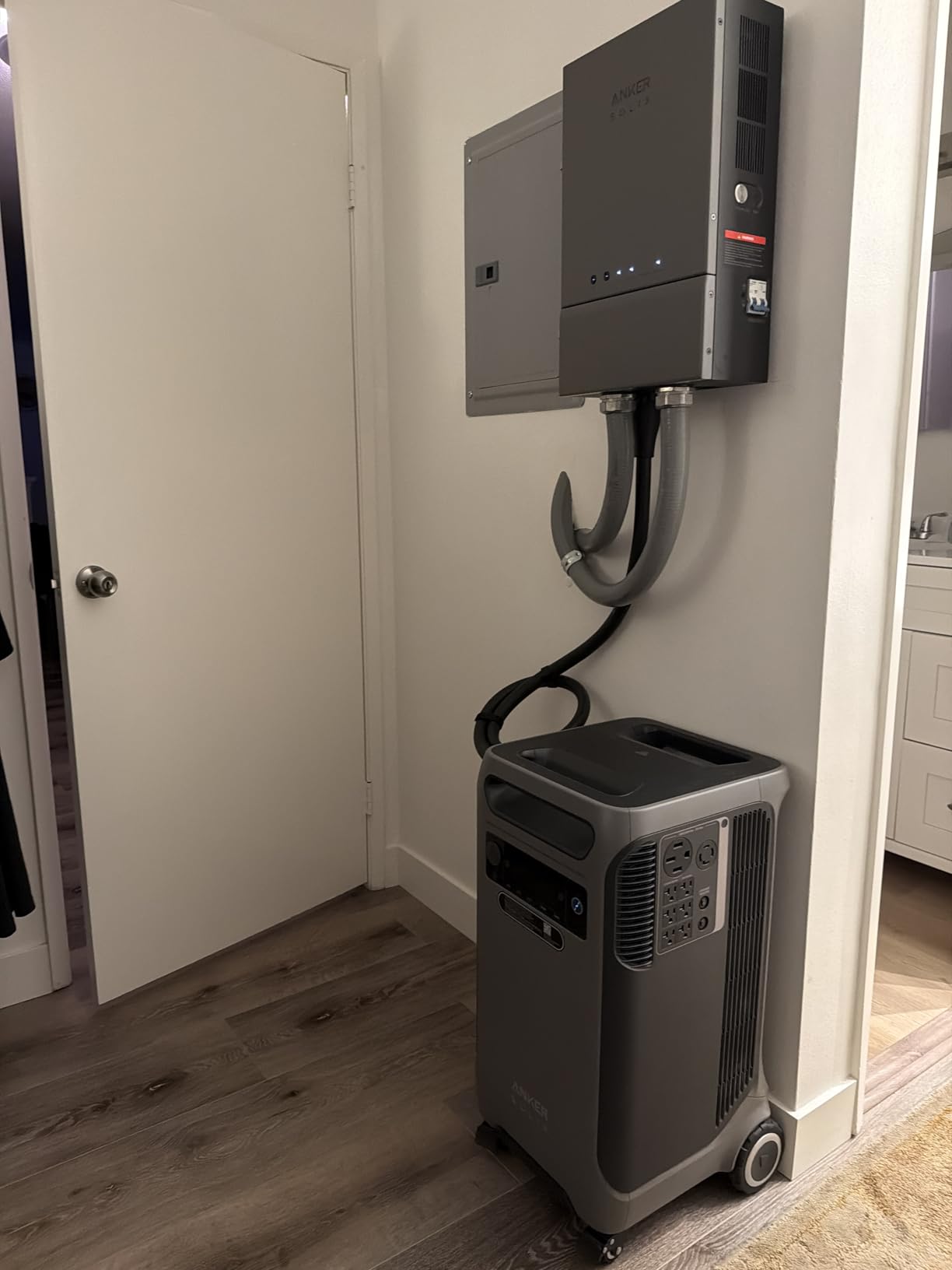
Expansion is the long story. You can add up to six battery packs to reach 26.9kWh, and pairing with a Smart Generator 5500 gives you auto start-stop so the station only runs when the grid is actually down. The five-year warranty and stated ten-year lifespan, with EV-class LFP cells and a temperature management system, are appropriate for something that lives in a garage rather than a tent.
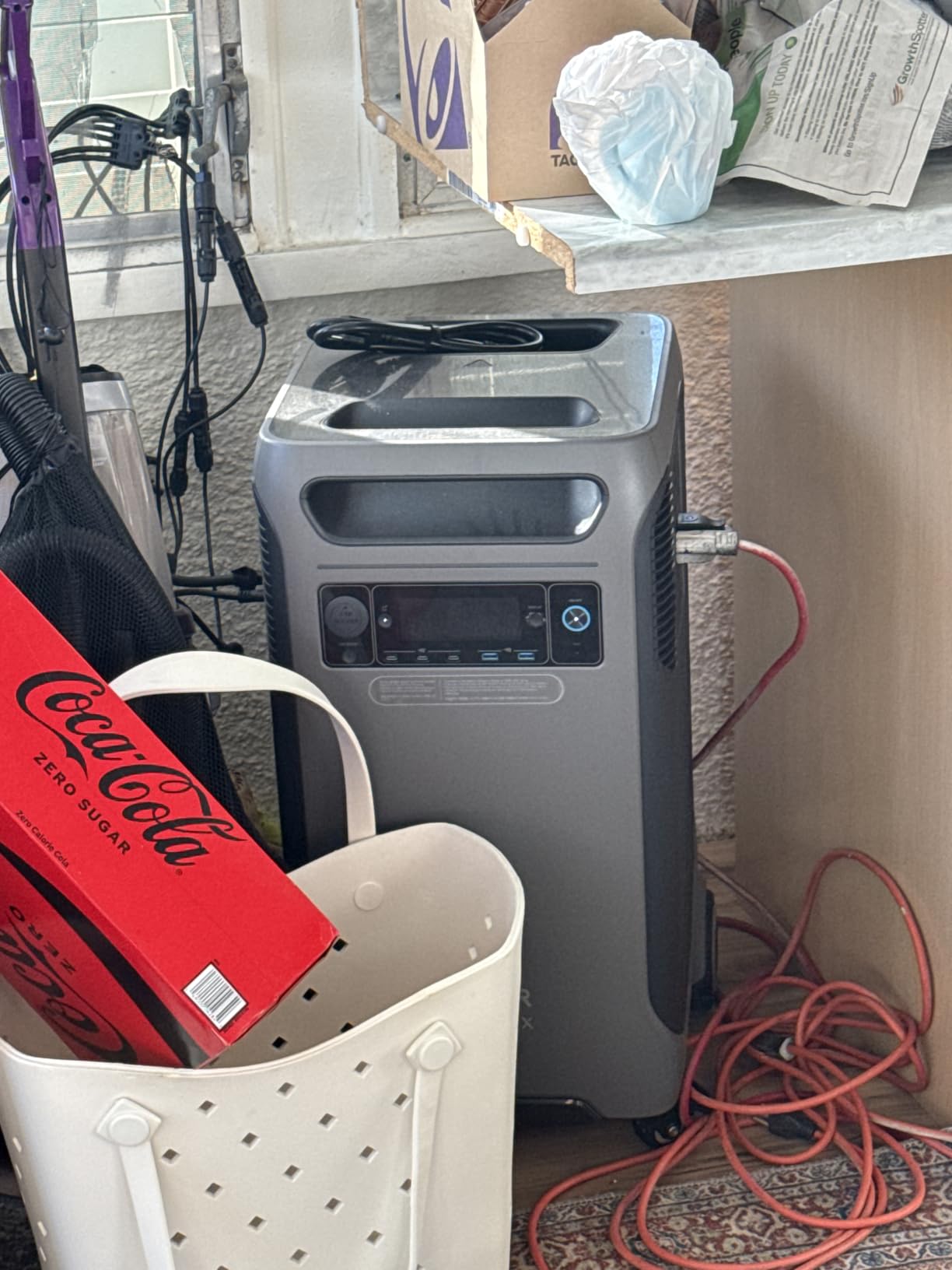
The rating is 4.4 across 322 reviews with 75 percent at five stars, a smaller review base than the 1kWh models because far fewer people buy a system this size. Owners consistently name dual-voltage output, EV charging and the multi-day expansion path as the reasons to buy, and weight as the thing nobody enjoys. A seven percent one-star share is a reminder to check the box and hub connections on arrival rather than during an outage.
Who This Suits Best
This suits a household with electric heat, a well pump, an electric vehicle, or a large home where the goal is running more than a fridge and a router. Anyone with a generator already in the shed gets a genuinely useful hybrid, running the generator during the day to recharge and running the house silently overnight.
It is also the right unit for RV owners or anyone planning to move to battery-first energy, since the same hardware handles a vehicle inlet, a 240V dryer circuit and a normal 120V household load.
Who Should Look Elsewhere
Skip it if you live in a small apartment or want something you can carry up a staircase. At 132.3 lb this is a deliberate placement decision rather than a portable device, and moving it usually takes two people and a plan.
Also consider whether you will use the 240V capability. Paying for a system this size and then running only 120V essentials means a 1kWh unit would be served better by a smaller 1kWh station. And the app is needed to get full value from the power management settings, so test the software on a phone you actually carry before committing.
7. Anker SOLIX S2000 – Best 2kWh Unit for Long Fridge Runtime
Anker SOLIX S2000 Portable Power Station, 2,010Wh, 1,500W
2010Wh
LFP 314Ah cells
1500W continuous
3000W peak
6W idle draw
35.7 lb
Pros
- Up to 35 hours of fridge backup on a 6W idle draw
- 10000 cycle LFP battery rated for a 15 year lifespan
- 2010Wh in a compact 35.7 lb footprint
- Six recharge paths including generator and alternator
- Under 10ms switchover
Cons
- No 12V DC port so car accessories need an adapter
- 1500W continuous is modest for a 2kWh unit
- Runtimes vary with refrigerator model and ambient temperature
The S2000 solves a problem the rest of the 2kWh class handles poorly: standby draw. It idles at about 6 watts, far below what other 2kWh-class models pull just to run their own inverter, and Anker credits that with a 10 percent efficiency gain and up to 35 hours of fridge backup. Over a long outage, idle draw is the leak that quietly determines whether you make it to morning.
Capacity is 2,010Wh from 314Ah LFP cells rated for 10,000 cycles and a fifteen-year lifespan, which is the longest cell rating in this group by a wide margin. Inverter output is 1,500W continuous and 3,000W peak, and the dual-sided outlet layout keeps always-on appliances on the front while you reach for the rear.
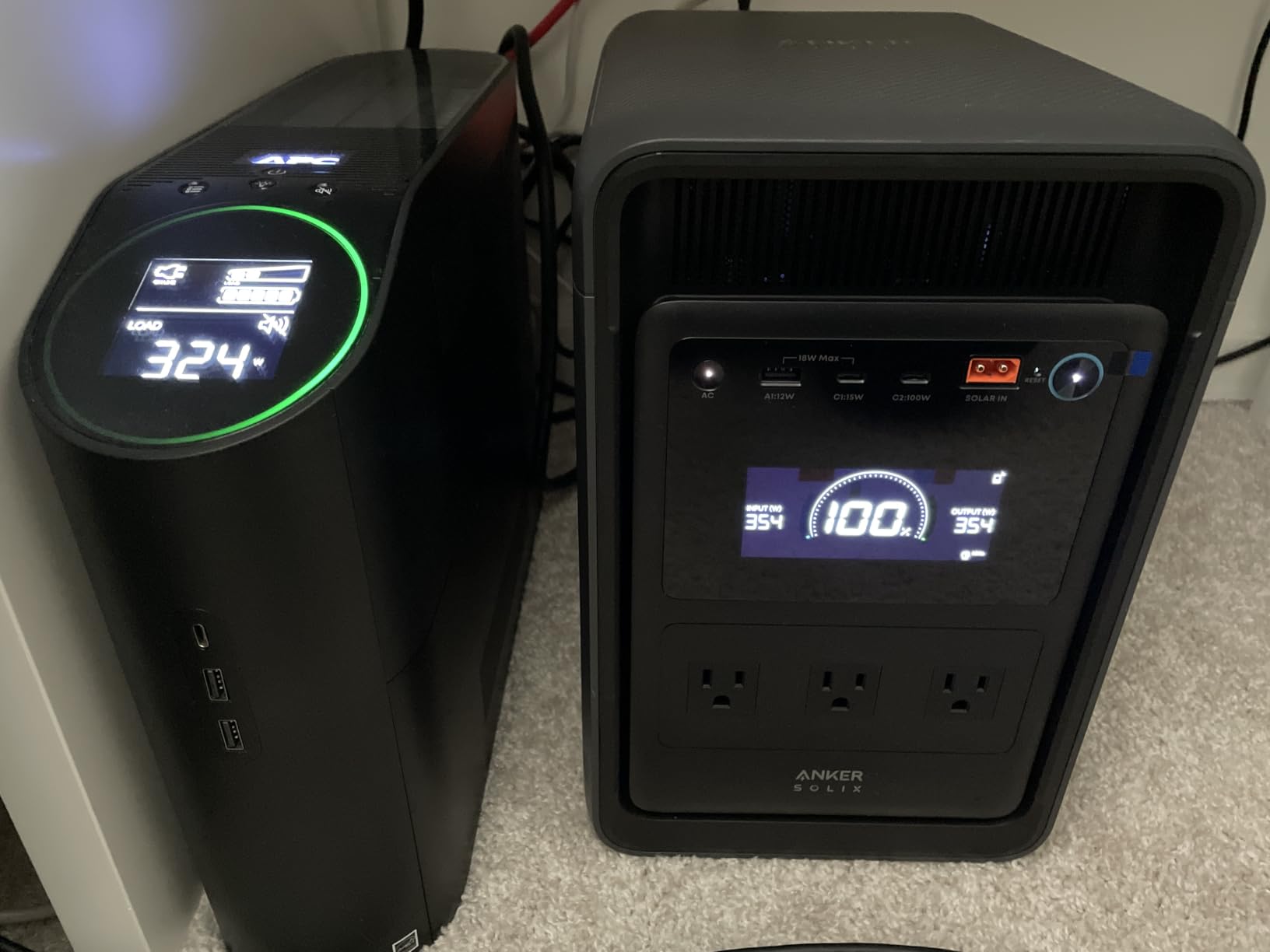
Recharge flexibility is the sleeper feature. There are six paths: AC, solar up to 400W, a wall outlet, a generator, an alternator charger and a car outlet. That generator input matters for exactly the scenario most owners describe on forums, charging a battery early in the day from a gas inverter generator and running the house quietly overnight.
At 4.7 across 303 reviews with 85 percent at five stars, the review base is the smallest of the 2kWh units here, so treat the sentiment as thinner evidence than the Jackery numbers. The packaging is genuinely compact for the capacity, at 30 percent smaller and 25 percent lighter than the industry average, though 35.7 lb is still a two-handed lift.
Who This Suits Best
Choose the S2000 when your outage plan is a fridge, a freezer, a router and lights, and you want that combination running for days rather than a night. A medical device, a home office or a small business server that must stay up fits the same profile.
It also suits households that already own a generator or an alternator, because the six recharge paths let one battery serve an RV, a car and a house without buying adapters for each.
Who Should Look Elsewhere
It is not the right unit if you need to run a kettle, a space heater or a microwave at the same time as your essentials. A 1,500W continuous ceiling on a 2kWh battery is modest, and the Dabbsson 2000L offers more headroom for similar capacity.
There is also no 12V DC port, so car accessories need an adapter. And the 35-hour fridge figure is a manufacturer claim that depends heavily on your refrigerator and the temperature in your kitchen, so plan with the more conservative estimates in the runtime section below.
8. Dabbsson 2000L – Best 2kWh Output for the Money
DABBSSON Portable Power Station 2000L, 2048Wh Semi-Solid LiFePO4 Battery, 2200W AC Output 6, 3300W Power Boost, 1 Hr Fast Charge, Solar Generator for Home Backup, Camping & RVs (Solar Panel Optional)
2048Wh
semi-solid LiFePO4
2200W continuous
3300W boost
41 lb
800W solar input
Pros
- Semi-solid LFP cells give about 1.3x the runtime of comparable 2048Wh units
- 2200W continuous with a 3300W power boost
- Full 2048Wh recharge in about one hour
- 4000 or more deep cycles to 80 percent in a UL94-V0 housing
- Under 15ms EPS switchover with pass-through charging
Cons
- App Wi-Fi pairing is difficult and key settings are app-only
- Cooling fan cycles on every few minutes even at zero load
- The charge limit setting does not appear to apply in practice
The 2000L is the pick for a household that wants a large battery and a strong inverter in the 2kWh class, and that is the honest one-line summary. You get 2,048Wh of semi-solid LiFePO4 chemistry behind a 2,200W continuous inverter with a 3,300W power boost, which is the highest continuous output of any 2kWh-class model in this guide.
Semi-solid cells are the differentiator. Owners report about 1.3 times the runtime of comparable 2,048Wh stations, and the pack is rated for more than 4,000 deep cycles before dropping to 80 percent, sitting in a UL94-V0 flame-retardant housing. Six AC outlets mean a fridge, a freezer, a router and a lamp can all run at once without a power strip.
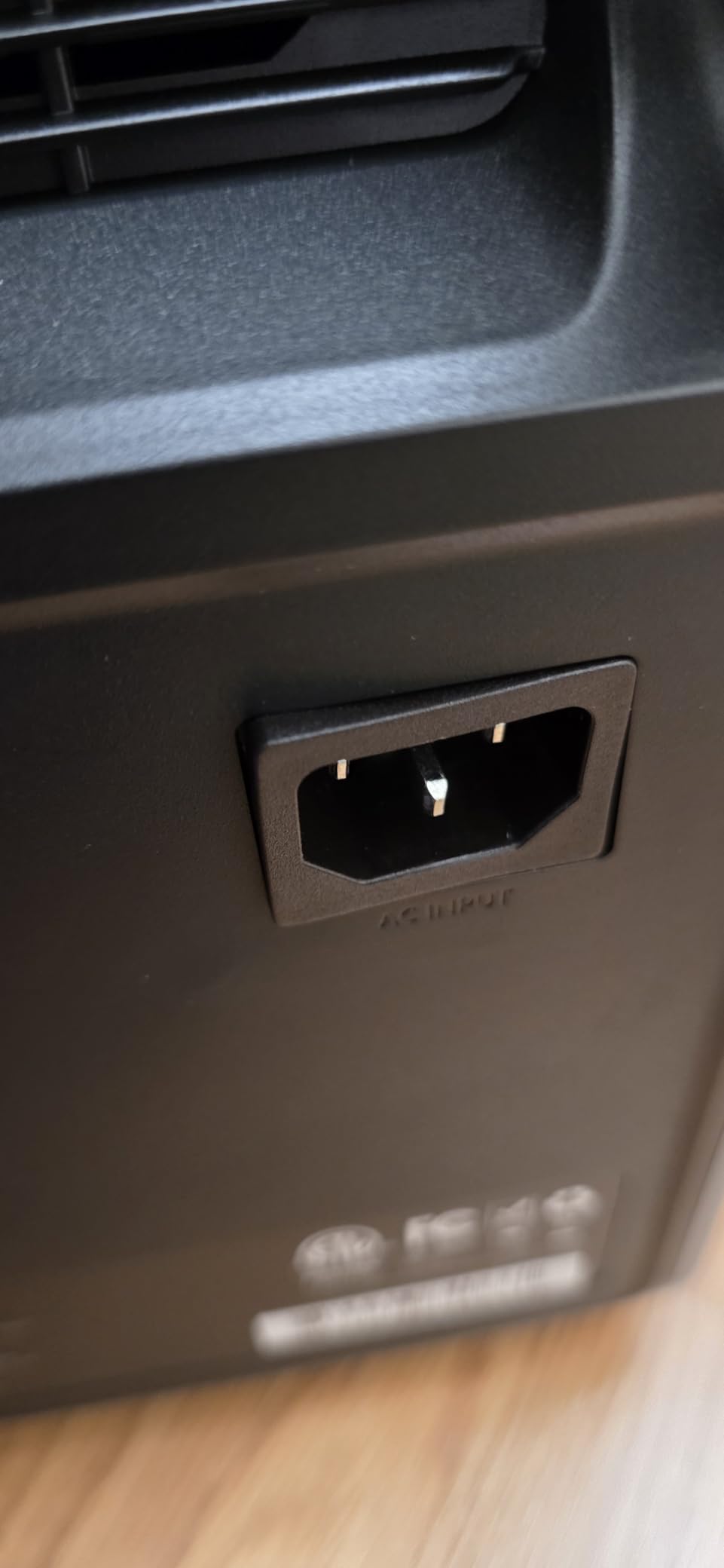
Charging is the other strength: a full 2,048Wh recharge from AC in about an hour, up to 800W of MPPT solar input, and hybrid dual-input for combining sources. The EPS switchover is under 15 milliseconds, and pass-through charging means solar can top it up while it keeps supplying your loads.
One real-world report is worth repeating because it illustrates the benefit: owners running two full-size refrigerators plus two upright freezers got roughly 7.5 hours, and a single kitchen fridge ran about 20.5 hours. The rating is 4.5 across 250 reviews with 79 percent at five stars, and warranty coverage runs three years plus a two-year extension.
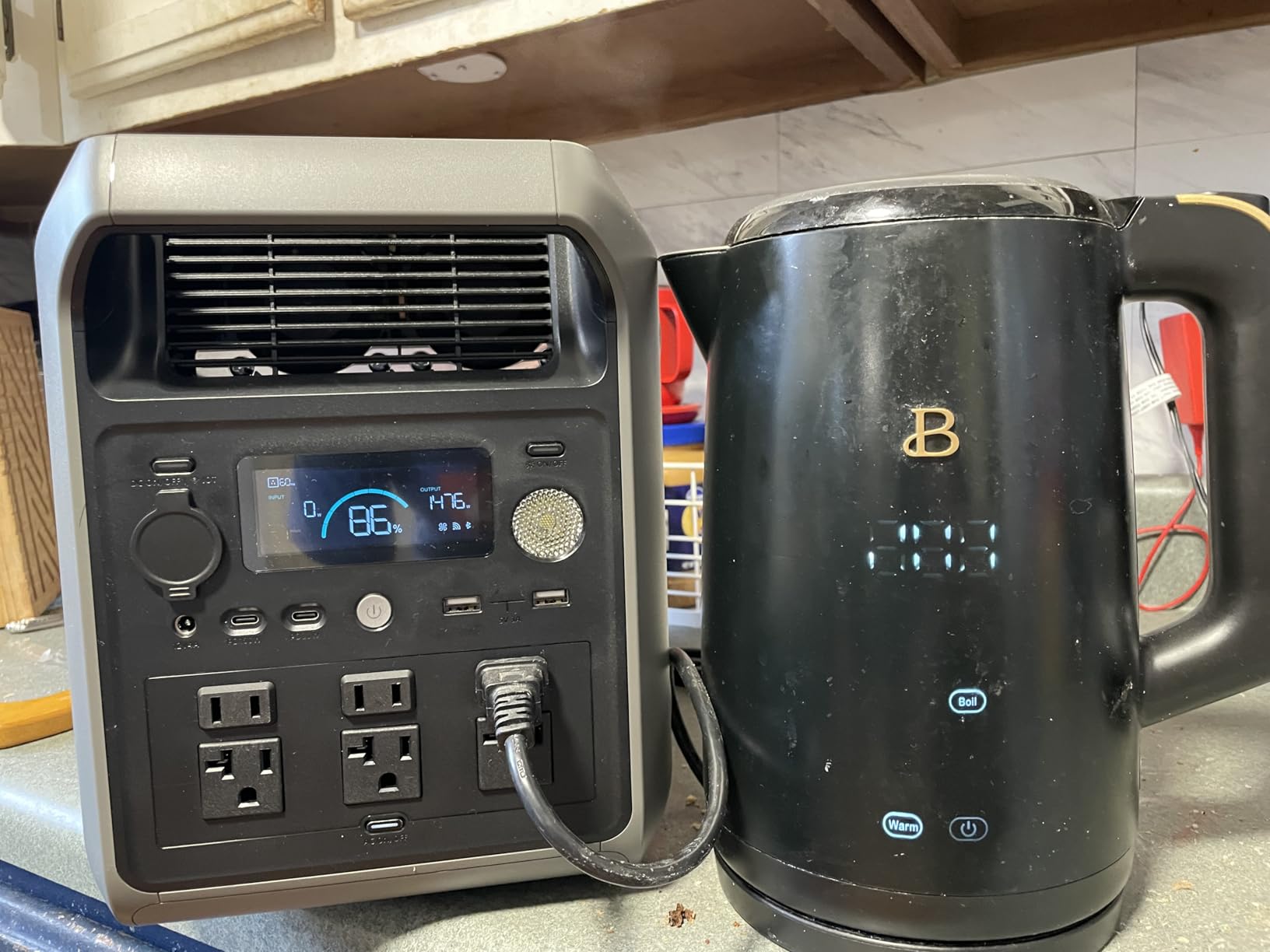
Who This Suits Best
This suits a household with more than one fridge, a chest freezer, and a genuine need for high output. Anyone planning to run an air fryer, microwave, kettle or power tools alongside essentials is in the right class here, and the 800W solar ceiling is generous for off-grid recharging.
Buyers who want a 2kWh platform and plan to grow it later are also well served, since the inverter has more headroom than most competitors at the same capacity.
Who Should Look Elsewhere
Software is the weak point. Wi-Fi pairing in the Dabbsson app is difficult to establish, Bluetooth setup is not user friendly, and several settings including the charge and discharge limits are only reachable through the app, so practise before you need it.
At 41 lb it is heavier than the Anker SOLIX S2000 in the same capacity tier, and the cooling fan cycles on every few minutes even with no load, audible from around 20 feet. Owners also report constant clicking while running on AC pass-through as the unit switches between battery and wall power, and that the charge limit setting does not appear to apply in practice. If quiet overnight operation is your top requirement, choose the Anker SOLIX S2000 instead.
How to Size a Power Station for Your Home Backup?
Most sizing mistakes come from reading watt-hours as a power figure rather than an energy figure. Watts tell you how fast you can deliver energy, watt-hours tell you how much energy you have stored, and the two answer completely different questions. A refrigerator label might read 150W, which tells you what the inverter must handle at any instant, but the compressor only runs for a few hours a day, so the number that matters for runtime is total watt-hours against the hours the compressor is actually on.
Step one is to write down your actual load list, not the one in the manufacturer’s marketing. For most households it is a refrigerator, a freezer if you have one, a router and modem, LED lighting, phone charging, a CPAP machine or medical device if applicable, and internet service such as Starlink if you rely on it.
Step two is to find the running and starting watts for each. A router is trivial at around 20W. LED lamps cluster at 5 to 10W each. A refrigerator averages roughly 150W of continuous draw over a full day but needs a startup surge of several hundred watts, which is why every model here has 2,000W or more of surge headroom. A half horsepower sump pump runs around 250W and a half horsepower well pump can run around 350W, with startup peaks several times higher.
Step three is to match the inverter. Add the running watts of everything you intend to run simultaneously, then check that figure against the unit’s continuous output, not its surge number. Surge only exists for the second or two a motor takes to start, and a unit that trips its breaker on pump startup is the single most common home backup complaint.
Step four is to size the battery for the hours you actually need. Multiply your simultaneous running watts by the hours you want, then divide by the usable share of capacity. Assume about 90 percent is realistic after inverter conversion losses and standby draw, and reserve a further slice for the unit’s own idle consumption.
As a rough tier guide, an essentials load of roughly 220W works out to about 4 to 5 hours on a 1kWh-class station, roughly 8 to 9 hours on a 2kWh-class station, and over 30 hours on the 7,680Wh paired system. A household wanting pump coverage needs to add the pump’s draw across the hours it runs, which is why the 2kWh and larger classes matter more for wet basements than the capacity number alone suggests.
Runtime: Turning Watt-Hours Into Real Hours
Here is the translation almost every competitor leaves out. The estimates below assume roughly 90 percent usable capacity and are planning figures rather than tested results, so treat them as a ceiling you will approach rather than a promise.
Refrigerator only at about 150W average draw: roughly 6.4 hours on the Jackery Explorer 1000 v2, 6.1 hours on the BLUETTI AC180 after allowing for its inverter overhead, 6.1 hours on the Anker SOLIX C1000 Gen 2, 6.1 hours on the OUPES Mega 1, 6.1 hours on the EcoFlow Delta 3 Classic, 12.1 hours on the Anker SOLIX S2000, 12.3 hours on the Dabbsson 2000L, and 46 hours on the paired Anker SOLIX F3800.
Essentials load of fridge, router and lights at about 220W: roughly 4.4 hours on the Jackery, 4.3 hours on the BLUETTI after allowing for its roughly 20W of self-consumption, 4.2 hours on the Anker C1000, 4.2 hours on the OUPES, 4.2 hours on the EcoFlow, 8.2 hours on the Anker S2000, 8.4 hours on the Dabbsson 2000L, and 31 hours on the F3800 pair.
Essentials plus a half horsepower sump pump cycling, averaging about 470W combined: roughly 2 hours from any 1kWh-class station, 3.8 hours on the Anker S2000, 3.9 hours on the Dabbsson 2000L, and 14.7 hours on the F3800 pair.
Two adjustments move these numbers more than any other factor. First, the BLUETTI AC180’s roughly 20W of inverter overhead is added to whatever you are running, so against a light load like a 20W router it eats a large slice of the remaining capacity, while against a 470W pump load it barely registers. Second, pass-through charging changes the calculation entirely if you have solar, because a unit recharging while it runs is not a finite pool.
Realistic solar yield matters here. A 500W panel in good midday sun delivers a few hundred watts after controller and conversion losses, so refilling a 2,000Wh battery takes roughly eight hours of direct sun, not the three or four a panel’s nameplate suggests. During a multi-day storm with cloud cover, plan on panels as a trickle rather than a recovery strategy.
Transfer Switch, Auto-Start and UPS Mode: What to Expect
This is the question asked most often in home forums and answered least often, so here is the honest version. A portable power station does not connect to your panel. Out of the box, it sits there as a large battery, and when the utility power fails you walk over and plug in the loads you want to run. Nothing happens on its own.
There is a partial exception worth understanding. UPS mode lets you leave a router, a network switch or a NAS plugged into the station permanently, and the station watches the wall outlet for a failure and switches to battery internally in under 10 or 20 milliseconds. That covers the devices that matter most for connectivity, and the switchover is fast enough that they never notice.
Everything with a plug and a motor is still manual unless you add a transfer switch. An electrician can install one that feeds selected critical circuits from the station, which is what turns a 1kWh station into something closer to whole-home coverage for a fridge, a sump pump and some lights. The installation has a cost, it needs to be done correctly, and it must be done by a licensed installer.
The third option is a Smart Generator, which sits between the generator and the panel and starts the engine automatically when utility power fails. Pairing one with a large station such as the Anker SOLIX F3800 gives you a system that wakes up on its own, holds the essentials quietly for days, and only runs the generator when you actually need to recharge.
Keeping a Power Station Charged Between Outages
The failure mode people fear most is a station that sat untouched for six months and will not hold charge when the storm finally arrives. That is mostly avoidable with a small routine.
Charge to full when you store it, then top it up to around 80 percent every two to three months. LiFePO4 chemistry tolerates long storage far better than older lithium-ion packs, and keeping the unit away from a full charge reduces the stress on the cells over years of sitting still.
Store it part-charged rather than pinned at full, in a cool dry indoor space, and keep it off concrete. Never store a station in a hot car or an unheated garage in summer, because heat is the enemy of battery longevity. Keep the vents clear, and give it a short discharge and recharge once or twice a year so the cells and the firmware stay in step.
Finally, run a real test. Once a season, plug in a lamp and your actual fridge for twenty minutes, confirm the UPS outlets behave, and check the app still connects. Ten minutes in September is far better than discovering a dead unit in a dark house during a storm.
Brand Comparison: Jackery vs EcoFlow vs BLUETTI vs Anker
Answering the brand questions directly, since they appear repeatedly in search and on forums. On warranty length, BLUETTI and Anker lead at five years across their ranges while Jackery’s Explorer 1000 v2 carries one year, which is a meaningful difference for a device expected to last a decade.
On recharge speed, Anker leads with a 49 minute full recharge on the SOLIX C1000 Gen 2, followed by the OUPES Mega 1 at 36 minutes to 80 percent, the EcoFlow Delta 3 Classic at 45 minutes to 80 percent, and the BLUETTI AC180 at about an hour. On UPS switchover, Anker and EcoFlow both deliver under 10 milliseconds, BLUETTI and Dabbsson sit under 15 to 20, and Jackery does not publish a figure we could verify.
On expansion, the honest ranking is Anker first with expansion to 26.9kWh on the F3800 and family growth elsewhere, then EcoFlow on its higher series, then OUPES to 5,120Wh in the 1kWh class. Jackery locks solar to its own panels on the Explorer 1000 v2, and the EcoFlow Delta 3 Classic in this guide does not take extra batteries at all.
On reliability, the four-name brands EcoFlow, BLUETTI, Anker and Jackery are the ones owners in forums consistently describe as known quantities, and the review volumes in this guide support that: more than 3,600 reviews on the Jackery, more than 2,600 on the BLUETTI, more than 1,600 on the Anker and more than 1,200 on the EcoFlow. OUPES and Dabbsson are newer names with solid output specifications and thinner long-term records.
So if your question is whether there is a better brand than Jackery, the fair answer is that Anker SOLIX leads on recharge speed and warranty, BLUETTI leads on outlet count and warranty at this capacity, and EcoFlow leads on pump standby and scheduling. Jackery still wins on the combination of weight, review depth and surge headroom in a single package, which is why it takes our top spot.
Portable Power Station vs Gas Generator vs Installed Home Battery
Community consensus on forums, and the reason this category keeps growing, is that a portable power station costs a fraction of an installed system with no fuel, no exhaust, no permit and no installation. The trade is that you accept manual plug-in, lower sustained output, and finite capacity.
A gas generator wins on one metric: sustained high output. If you need to run a heat pump, a large well pump, power tools and a dryer simultaneously for days, only a generator or an installed system does that. Its costs are fuel, oil changes, noise, carbon monoxide risk and the fact that it cannot run indoors.
An installed home battery with automatic switchover wins on everything except cost and flexibility. It starts itself, it scales, it never needs a manual plug-in, and it sits silently in a garage. It also needs an electrician, permitting, and a budget several times higher, and it is fixed to one house.
A portable power station wins on cost, silence and indoor safety. It can run in a hallway with no ventilation, it needs no fuel logistics during an emergency, and you can take it to a second property or a vehicle. A hybrid is the common answer: generator for recharge during daylight, battery for the house overnight.
Buying Guide: Nine Specs That Decide the Purchase
Start with usable capacity, not rated capacity. Every model here converts a small share of its stored energy into heat, and the BLUETTI manual already says only about 90 percent is available in practice. Plan from 90 percent and you will never be disappointed.
Then check continuous output against your largest appliance, and treat surge separately. Continuous output is what the inverter can hold indefinitely. Surge is a short window for motor startup. If a 1/3 HP sump pump or a 1/2 HP well pump is on your list, confirm the unit can carry the pump’s running watts continuously, because a station that trips during startup is the most common failure in this category.
Decide whether you need 240V. Most of these power stations are 120V only, and that is fine for a fridge, a router and lights. A dryer, an electric water heater, a heat pump compressor and most well pumps are 240V, and only the Anker SOLIX F3800 in this guide delivers genuine dual-voltage output.
Check battery chemistry and cycle life. Every unit here uses LiFePO4, which tolerates deep discharge, high temperatures and daily use far better than older NMC chemistry. Cycle ratings range from 3,500 or more on the OUPES to 4,000 on the Jackery and Dabbsson, 10,000 on the Anker SOLIX S2000, and BLUETTI supports spare parts for five years.
Look at solar input limits as a controller ceiling, not a panel rating. The MPPT input caps here range from 400W on the Anker SOLIX S2000 to 500W on the BLUETTI AC180 and EcoFlow Delta 3 Classic, and 600W on the Anker C1000, up to 800W on the Dabbsson 2000L. A 1,000W panel connected to a 500W input still only delivers 500W.
Check UPS switchover if you plan to leave sensitive equipment plugged in. Under 10 milliseconds covers network gear, laptops and CPAP machines comfortably. Twenty milliseconds is also fine for most of those, but verify before relying on it for a medical device you cannot pause.
Think about expandability before you buy, because retrofitting capacity later is harder than buying it once. The OUPES Mega 1 reaches 5,120Wh in the 1kWh class, the Anker SOLIX F3800 reaches 26.9kWh, and the EcoFlow Delta 3 Classic and Anker SOLIX C1000 Gen 2 in this guide do not expand at all.
Weigh weight honestly. The range here runs from about 25 lb on the Anker SOLIX C1000 Gen 2 to 132.3 lb on the F3800 pair, and weight predicts how often you will actually reach for the device. A station you have to plan a two-person move for will sit in a corner more often than one with a foldable handle.
Finally, read the warranty and the app. The best-documented app in this group is Anker’s, with time-of-use scheduling and reliable firmware support. The weakest are the basic ones with app-only settings and flaky Wi-Fi pairing, and a settings menu you cannot reach without a working app is a poor place to be during a blackout.
Frequently Asked Questions
How much power do I need to run my house in an outage?
For essentials only, plan on about 220W for a refrigerator, router and lights, which means a 1kWh-class station gives you roughly four to five hours and a 2kWh-class station roughly eight to nine hours. A half horsepower sump pump running alongside essentials pushes the combined load to roughly 470W, so plan on about two hours from a 1kWh-class station. Running heat, a dryer, a well pump or an EV charger puts you into the 240V class entirely, where only a 6,000W dual-voltage system like the Anker SOLIX F3800 applies.
How long will a portable power station power a refrigerator?
A refrigerator averages roughly 150W of continuous draw, so a 1,070Wh station with about 90 percent usable capacity gives roughly six hours, a 2,010Wh unit about twelve hours, and the 7,680Wh paired system more than forty hours. The Anker SOLIX S2000 is rated by its manufacturer for up to 35 hours of fridge backup thanks to a 6W idle draw, and a freezer running alongside your fridge reduces every one of these figures by roughly half.
Can a portable power station replace a gas generator?
It can replace a generator for essentials, and many households use both. A portable power station runs silently, needs no fuel or oil changes, and is safe to operate indoors, but its continuous output is measured in hundreds or low thousands of watts and its capacity in watt-hours. If you need to run a heat pump, a well pump, power tools and a dryer at the same time for days, you will be running a generator or an installed system, and a hybrid approach of generator-by-day and battery-by-night is the most common answer.
Do I need a transfer switch for a portable power station?
No, but without one you plug loads in by hand when the power fails. Out of the box, UPS mode does cover the case where you leave a router, network switch or laptop permanently connected, since the station switches to battery internally in under 10 to 20 milliseconds without you touching anything. A transfer switch installed by a licensed electrician is what lets the station feed selected house circuits such as a fridge, a sump pump and lights automatically, and it is required before you should ever wire one into a panel.
Is it safe to use a portable power station inside the house?
Yes. A portable power station produces no exhaust and no carbon monoxide, which is the main safety advantage over a gas generator, and every unit in this guide uses LiFePO4 chemistry with battery management systems and thermal monitoring. It is not damage-proof, so keep it away from water and flooding, keep the vents clear, store it somewhere cool and dry rather than a hot car, and place it where a smoke alarm can hear it. Never run a gas generator indoors, which is where the real carbon monoxide risk sits.
Is Jackery or Anker better for home backup?
Anker SOLIX is better if recharge speed, warranty length or a sub 10 millisecond UPS transfer for a CPAP machine or a NAS matters most, since the SOLIX C1000 Gen 2 recharges in about 49 minutes and carries a five-year warranty. Jackery Explorer 1000 v2 is better if weight, review depth and surge headroom matter most, since it weighs 23.8 lb with 3,000W of surge and the largest review base in this group. For most households the weight difference decides it.
Which brand of portable power station is the most reliable?
On the evidence available in this category, EcoFlow, BLUETTI, Anker and Jackery are the most established, with review volumes of more than 1,200 each on the models in this guide and published spare-part support from BLUETTI. All four use LiFePO4 chemistry and offer three to five year warranties except the Jackery Explorer 1000 v2, which carries one. Newer names such as OUPES and Dabbsson publish strong output specifications but have much thinner long-term records, so reliability is harder to judge there.
The Verdict for 2026
The best portable power stations for home backup come down to one question: what is on your list, and for how long? If that list is a fridge, a router and lights, the Jackery Explorer 1000 v2 is the pick, because 23.8 lb and 3,000W of surge at a 4.7 rating across more than 3,600 reviews is the combination we would put in a hallway closet without hesitating.
Go to the Anker SOLIX C1000 Gen 2 when recharge speed or a sub 10 millisecond transfer for medical equipment decides the outcome, to the BLUETTI AC180 when warranty length and outlet count matter more than weight, and to the OUPES Mega 1 when you want to grow from 1,024Wh to 5,120Wh over a few seasons. For a wet basement, the EcoFlow Delta 3 Classic has the best owner-reported pump runtime, and for high output on a 2kWh budget, the Dabbsson 2000L is hard to argue with.
Save the Anker SOLIX F3800 for households that genuinely need 240V and days of runtime, and buy it knowing it weighs 132.3 lb and does not move like a portable device. Whichever you choose, charge it now, test it for twenty minutes before storm season, and keep it topped up between events. Updated for October 2026.