
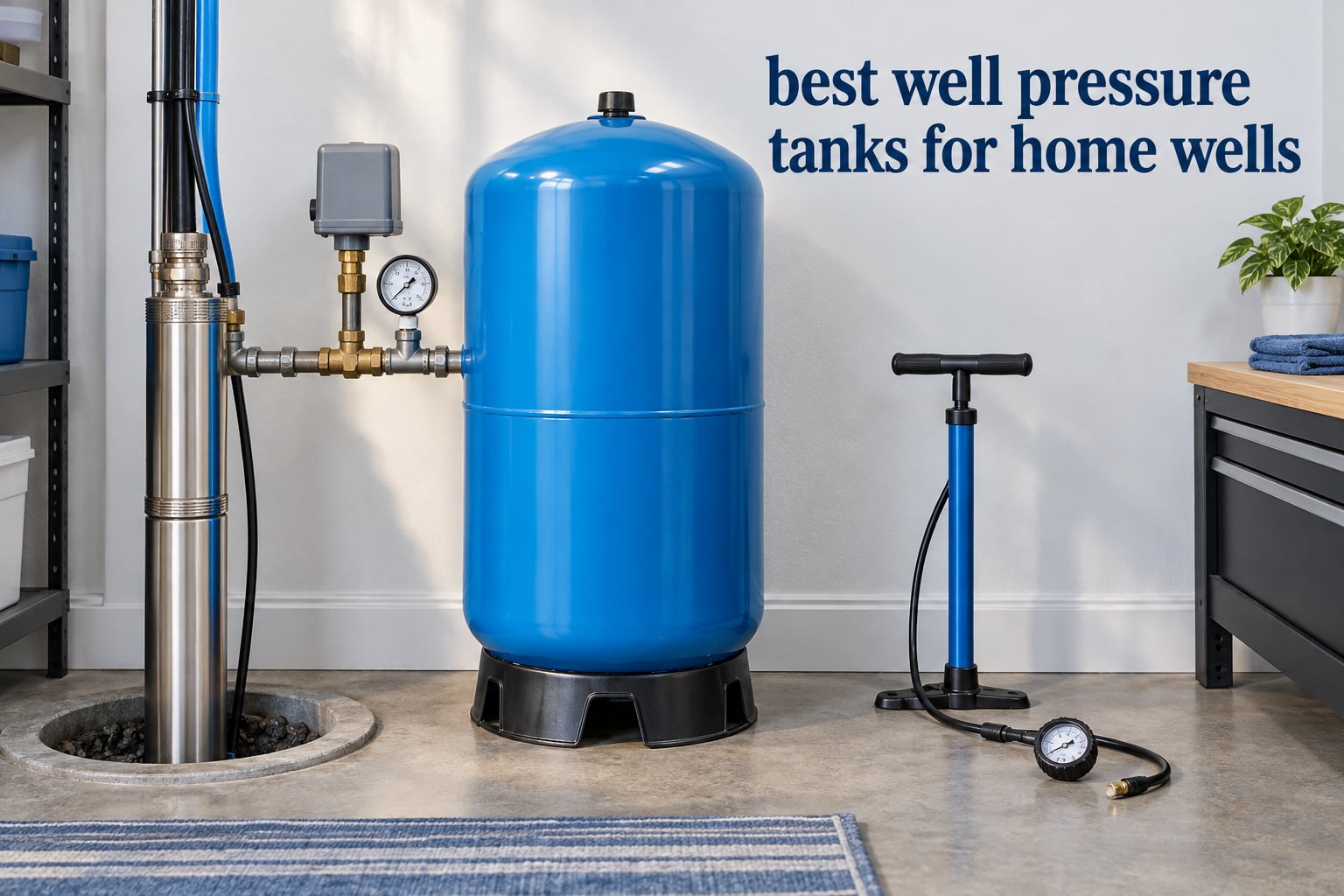
Every home on a private well depends on a pressure tank more than most owners realize. Open a faucet and that tank pushes stored water into the pipes until pressure drops to the pump’s cut-in setting, then the pump fires and refills the vessel. Cut the tank out or let it go waterlogged and the pump starts and stops constantly, and pump starts are what kill submersible pumps. Picking the right one comes down to two numbers: how much water the tank can actually deliver, and whether the air charge matches your pressure switch. That is what this roundup of the best well pressure tanks for home wells in 2026 sorts out, tank by tank.
Here is the sizing rule most guides bury: multiply your pump’s rated flow in gallons per minute by one minute, and that is your minimum usable drawdown. A 10 GPM pump needs at least 10 gallons of drawdown to run a full minute per cycle. The number stamped on the side of the tank is total volume, not usable water, and treating the two as the same is the single most common sizing mistake. One owner on the Terry Love Plumbing forum reported getting only about 9 gallons of drawdown from a 32 gallon WX-203 on a 40/60 setting, which is exactly the gap between nominal size and real performance.
We worked through ten tanks that cover the full range of homes: compact units for a small cottage, mid-size steel tanks for a three or four bathroom house, a 44 gallon model for high-demand households, and two fiberglass Wellmate tanks for anyone dealing with corrosive water. Each one below carries the factory pre-charge, the shell material, the connection type and the warranty, because those four details decide whether a tank lasts five years or twenty.
We also named sources. Reddit’s r/Plumbing is where the consensus on sizing and fiberglass lives, DIYChatroom threads separate bladder and bladderless designs, and The Garage Journal treats Amtrol as the reference standard with visible manufacturing provenance. Where a specific claim is one reviewer’s experience rather than a lab result, we say so.
Table of Contents
Top 3 Picks for Home Well Pressure Tanks (October 2026)
These three cover the most common situations. The Amtrol WX-202 is the default choice for a typical home, WaterWorker 25009 is the strongest value pick, and the Wellmate WM-6 is the one to buy when the water itself is the problem.
Amtrol WX-202
- 20 gallon steel well tank
- Virgin polypropylene inner liner
- Positive hoop ring seal
- 7 year manufacturer warranty
WaterWorker 25009
- 20 gallon vertical tank
- NSF/ANSI 61 listed
- Seamless butyl diaphragm
- Factory pre-charged to 25 psi

Wellmate WM-6
- 19.8 gallon fiberglass shell
- Quick Connect replaceable air cell
- Will not rust in corrosive water
- 26 pound empty weight
All 10 Well Pressure Tanks Compared in 2026
Every tank in this roundup, with the construction detail that matters most for each one. The order below matches the numbered reviews that follow.
| Product | Specs | Action |
|---|---|---|
| Amtrol WX-202 Well Pressure Tank |
|
Check Latest Price |
| WaterWorker 25009 20 Gallon Vertical Well Tank |
|
Check Latest Price |
| Wellmate WM-6 Fiberglass Captive Air Tank |
|
Check Latest Price |
 WaterWorker 153921 44 Gallon Vertical Well Tank WaterWorker 153921 44 Gallon Vertical Well Tank |
|
Check Latest Price |
 Amtrol WX-203 Stand Well Water Tank Amtrol WX-203 Stand Well Water Tank |
|
Check Latest Price |
 WaterWorker HT-30B 30 Gallon Pressure Well Tank WaterWorker HT-30B 30 Gallon Pressure Well Tank |
|
Check Latest Price |
 Water Worker HT-32B 32 Gallon Well Tank Water Worker HT-32B 32 Gallon Well Tank |
|
Check Latest Price |
 Goulds V60 HydroPro Tank Kit Goulds V60 HydroPro Tank Kit |
|
Check Latest Price |
 Wellmate WM-9 Fiberglass Tank Wellmate WM-9 Fiberglass Tank |
|
Check Latest Price |
 Red Lion RL20A 20 Gallon Vertical Tank Red Lion RL20A 20 Gallon Vertical Tank |
|
Check Latest Price |
1. Amtrol WX-202 — Best Overall Well Pressure Tank for a Typical Home
Amtrol WX-202 Well Pressure Tank
20 gallon steel shell
Polypropylene inner liner
Hoop ring seal
7 year warranty
Pros
- Highest average rating in this roundup at 4.7 stars across 656 reviews
- Proven hoop ring seal closure for the diaphragm and liner
- Virgin polypropylene liner resists cracking chipping and peeling
- 7 year manufacturer warranty
- Compact 20 gallon footprint for tight mechanical rooms
Cons
- Some long-term owners report diaphragm failure and short cycling after roughly three years
- A failed tank must be fully drained which is difficult when the bladder blocks the bottom valve
- Replacement logistics from the seller can require shipping costs even under warranty
The WX-202 is the tank we keep coming back to because it does the unglamorous things well. The high-strength steel shell is closed with Amtrol’s positive hoop ring seal, which is a mechanical lock between the diaphragm and the liner rather than a simple crimp. That closure is the reason the internal parts stay put, and the internal parts are what fail in every other tank.
The liner is virgin polypropylene, which matters more than it sounds. A polypropylene liner will not crack, chip, flake or peel, and it imparts no taste or odor to the water. On r/Plumbing the recurring homeowner complaint about cheap tanks is exactly that: a liner flakes and the water tastes like plastic.
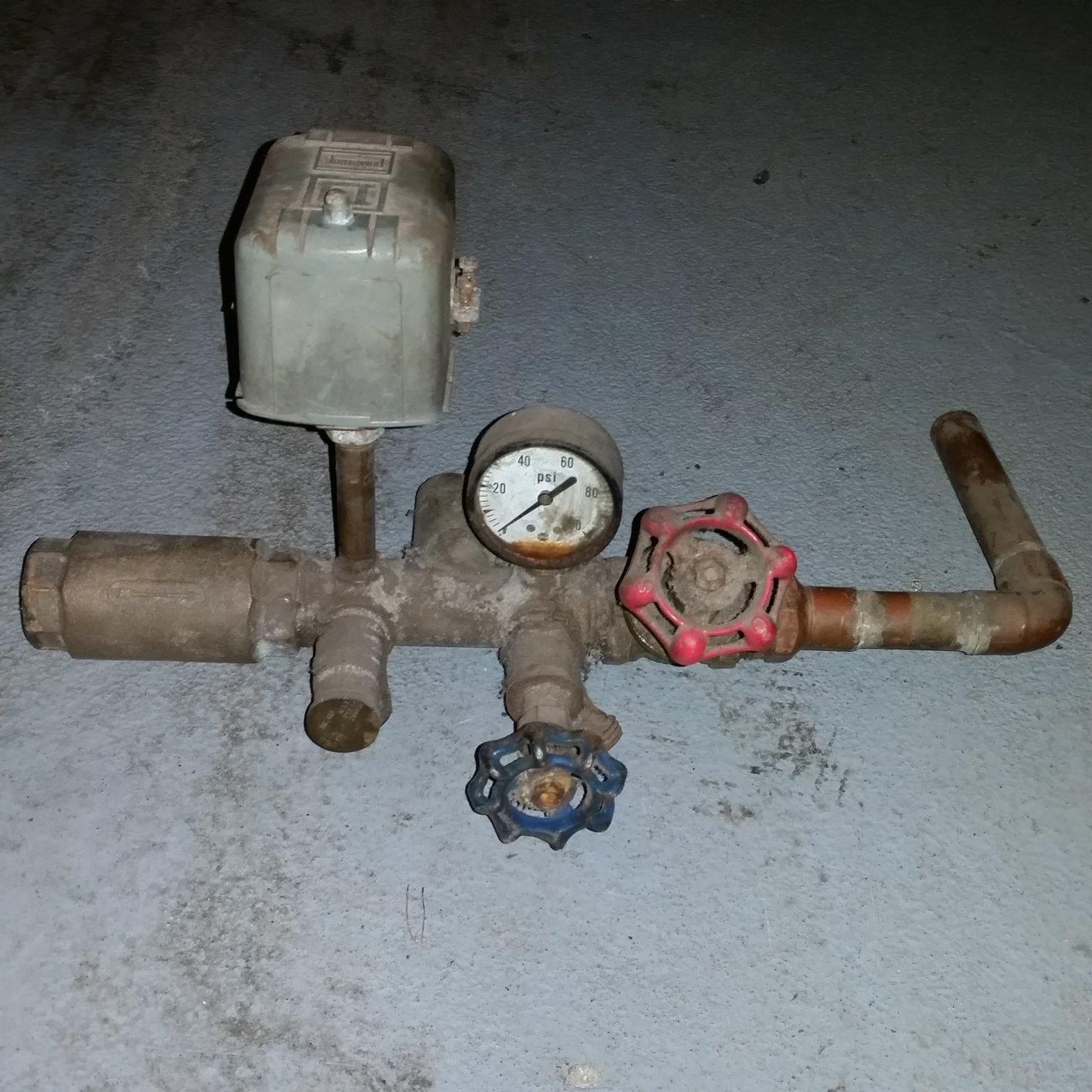
Reviews describe the unit as solidly built once it is plumbed in, and the rating across 656 reviews is the highest in this group. What we like most for a homeowner is the footprint: 15 inches by 15 inches at 31 inches tall and 23 pounds empty, so it moves around a mechanical room without a second person.
The 7 year manufacturer warranty is longer than anything else in this roundup. That matters because the two most common failure stories both involve the bladder or diaphragm, and a longer warranty means the manufacturer is standing behind the closure that keeps those parts sealed.
The weak spot is the honest one. Some long-term owners report diaphragm failure and the resulting pump short cycling after roughly three years, sometimes following a change of ownership. And when the tank does fail, draining it is awkward, because the bladder sits over the bottom valve and blocks the flow. Budget an afternoon for a full replacement rather than a quick reset.
When the WX-202 is the right call
Choose it when you have a one to three bathroom home, a conventional submersible or shallow well pump, and ordinary municipal-style water chemistry. It is the safest default in the roundup: the best rating, a long warranty and a compact body.
It also suits a straight replacement, because Amtrol’s 20 gallon footprint and connection are among the most widely installed sizes in the category, so matching existing plumbing is usually simple.
When to pick something else
If your water is aggressive, with low pH, high chlorides or a coastal water table, the steel shell is working against you over a long service life and a fiberglass tank is the better investment. The Garage Journal treats Amtrol as a trusted long-running standard, and it is, but its strength is in conventional water, not salt.
If your pump delivers substantially more than 10 GPM, a 20 gallon tank will be undersized and your pump will short cycle. Move up in capacity instead of hoping the switch settings compensate.
2. WaterWorker 25009 — Budget Pick 20 Gallon Vertical Well Tank
WaterWorker 25009 20Gal Vertical Well Tank, 20 Gallon, Blue
20 gallons
Alloy steel shell
Polypropylene liner
5 year warranty
Pros
- Most reviews of any tank in this roundup with 1225 at 4.6 stars
- Seamless butyl diaphragm that flexes rather than stretches or creases
- Polypropylene liner resists flaking and imparts no taste or odor
- Deep drawn steel domes rated at twice the strength of a rolled shell
- 5 year warranty with reportedly hassle-free replacement service
Cons
- Ships in a thin cardboard box so units occasionally arrive with a dented or bent base
- Pre-charge is often not set to the correct pressure for the installed switch and must be checked
- Cast metal bottom elbow is a known corrosion weak point over long service
- Does not include a tank tee or multi-port fitting
With 1225 reviews at a 4.6 average, the WaterWorker 25009 is the most thoroughly owner-tested tank here, and owners report solid, leak-free performance after a straightforward install while repeatedly noting the value against big-box pricing. That combination of rating and volume of history is why it sits at number two rather than lower.
The construction is worth reading twice. The diaphragm and liner isolate the water from the deep drawn steel domed shell, and the deep drawn domes are rated at twice the strength of a rolled steel shell of the same thickness. The result is a tank that tolerates shipping and handling better than the thin-wall competition.
The high gloss enamel finish protects the tank from the elements, and the whole thing is listed by the National Sanitation Foundation under ANSI/NSF Std 61, which is the drinking water certification you want to see. The polypropylene reservoir liner will not flake, chip, crack or peel and imparts no taste or odor.
Two practical details deserve a warning. The tank arrives pre-charged to 25 psi, which is not automatically the right number for your installed pressure switch, so check it before you connect anything. And the tank does not come with a tank tee or multi-port fitting, so budget for that separately if your existing tee is seized or galvanized.
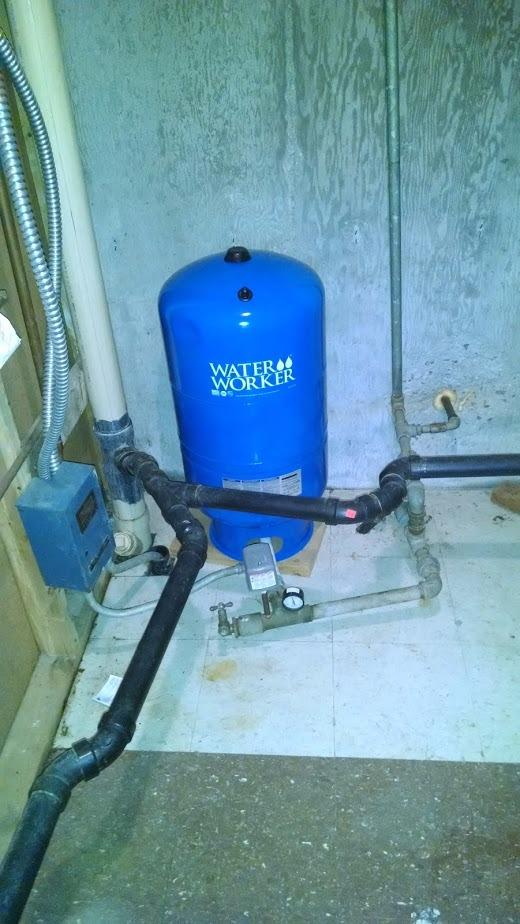
The cast metal bottom elbow is the component most likely to give you trouble years down the road. It is a recurring complaint in long service installations, and it is the exact failure point that fiberglass tanks were designed to eliminate.
When the 25009 fits your system
It fits a one to three bathroom home on a pump in the 10 GPM range, especially if you are replacing an older tank of the same class and want the simplest possible swap. The 15 inch by 15 inch footprint at 32 inches tall fits most mechanical room ceilings.
It is also the pick if the pump is a conventional shallow well or submersible unit and your water is not aggressive. Under those conditions nothing in the design fights you.
Where it falls short
The 25 psi factory charge is the single biggest reason owners end up short cycling. If you skip the pre-charge check, the tank will underperform its rating no matter how good the tank itself is.
For a house with four or more bathrooms, a serious irrigation zone, or genuinely corrosive water, step up to a larger capacity or a fiberglass shell. The elbow and the steel dome both have limits.
3. Wellmate WM-6 — Best Fiberbladder Tank for Corrosive or Coastal Water
Wellmate WM-6 / WM0075 QC Captive Air and Retention Fiberglass Tank, Quick Connect (19.8 gal / 75 LTR.)
19.8 gallon fiberglass
Quick Connect air cell
16 inch diameter
26 pounds
Pros
- Fiberglass construction will not rust in corrosive or coastal water environments
- Replaceable Quick Connect air cell allows field servicing without replacing the tank
- Greater drawdown than comparably sized steel tanks
- Light at 26 pounds for a one-person install
- Extended labor warranty option available to homeowners
Cons
- Quick Connect fitting on newer units may not be interchangeable with older Wellmate fittings
- Printed installation instructions and diagrams do not always match the parts supplied
- Tank must be installed upright at a minimum angle from horizontal
- Fiberglass can cost more than a comparable steel tank
On r/Plumbing the most-repeated recommendation for anyone whose steel tanks have rusted out at the bottom elbow is a Wellmate fiberglass tank, and that consensus is the reason this tank earns a slot. It will not rust in corrosive environments, which is described as particularly important in coastal regions, and that single property is worth more than any other feature on this list if your water is the problem.
The other structural advantage is the Quick Connect replaceable air cell. Instead of replacing the whole tank when the air side ages out, you replace the cell. That converts a full plumbing job into a short one, and it is the field-servicing story that distinguishes this brand.
Wellmate also claims greater drawdown than comparably sized steel tanks, which follows from how the captive air and retention design divides the vessel. At 19.8 gallons and 75 litres, it is a mid-size tank for a three to four bathroom home rather than a small one.
Installation is the easy part. At 26 pounds and 16 inches in assembled diameter, most homeowners manage it alone in fewer man-hours, which is a genuine cost saving when you are also paying a plumber for the pump work.
Two cautions. The Quick Connect fitting on newer units is not interchangeable with the fitting on older Wellmate tanks, so if you are replacing a previous Wellmate you may need a conversion. And the printed instructions have a reputation for not matching the parts supplied, so verify the diagram against the actual hardware before you start.
When fiberglass is the right answer
Choose the WM-6 when your water has a pH below about 6.5, elevated chlorides, high dissolved solids, or if you live in a coastal or humid salt air environment. It is also a strong choice for a rental or a house you plan to hold for a long time, because the corrosion failure mode is designed out.
It suits a one to three bathroom home on a 10 GPM pump, and the greater drawdown for the size gives you some margin over an equivalent steel tank.
Where it is not the answer
Do not choose it on price. A comparable steel tank is usually cheaper, and if your water is ordinary you give up a little drawdown efficiency for corrosion resistance you will never use.
It also must be kept upright, at a minimum angle from horizontal, so skip it if your install location is awkward or the tank will end up on its side in a crawlspace.
4. WaterWorker 153921 — Best 44 Gallon Tank for High-Demand Homes
WaterWorker 153921 44Gal Vertical Well Tank, 44 Gallon, Blue
44 gallons
Alloy steel and polypropylene
22 by 23 by 36 inches
5 year warranty
Pros
- Large 44 gallon capacity gives higher drawdown for longer pump-off cycles
- Seamless butyl diaphragm preferred over bladder tanks for flexibility and durability
- NSF/ANSI 61 listed polypropylene liner that imparts no taste or odor
- Deep drawn steel domed shell at twice the strength of a rolled shell
- Backed by a 5 year warranty
Cons
- Ships in a cardboard box with limited padding so dents on arrival are a recurring complaint
- Factory air pre-charge frequently needs adjustment to match the installed pressure switch
- Cast metal bottom elbow can corrode and eventually restrict flow over long service
- Largest capacity option so it needs adequate vertical clearance
When a household genuinely uses a lot of water, the answer is more drawdown, and this is where capacity stops being negotiable. The 44 gallon capacity gives noticeably stronger, steadier household pressure than smaller replacements, and reviewers pair that with comments about installation being straightforward alongside a plumber.
Internally it matches the WaterWorker design language we saw on the 20 gallon: a seamless butyl diaphragm designed to flex rather than stretch and crease, a polypropylene water reservoir liner, and a deep drawn steel domed shell at twice the strength of a rolled shell of the same thickness. The high gloss enamel finish handles the elements.
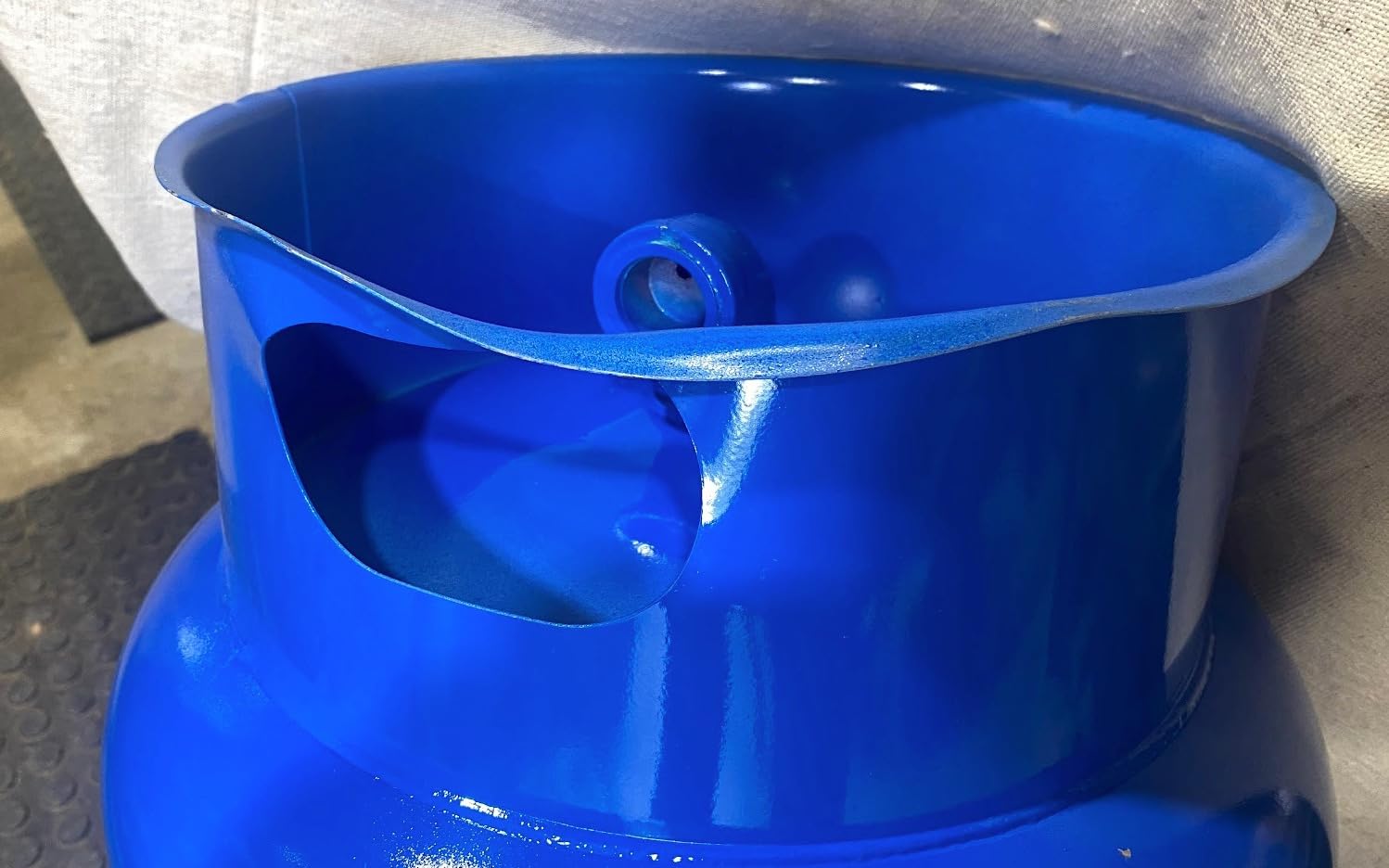
It is NSF/ANSI Std 61 listed, which matters if you have ever had a metallic taste complaint. The butyl diaphragm and polypropylene liner fully isolate the water from the steel shell.
At 22 inches by 23 inches and 36 inches tall, this is the biggest footprint in the roundup, and you should measure before you buy. Vertical clearance matters more than floor space here, and a tank that gets squeezed into a corner tends to get installed badly.
The two recurring complaints match the rest of the WaterWorker line: transit damage, because the box is thin and padding is limited, and the factory pre-charge arriving at a level that does not suit your installed switch. Set it to 2 psi below the cut-in before commissioning rather than trusting the preset.
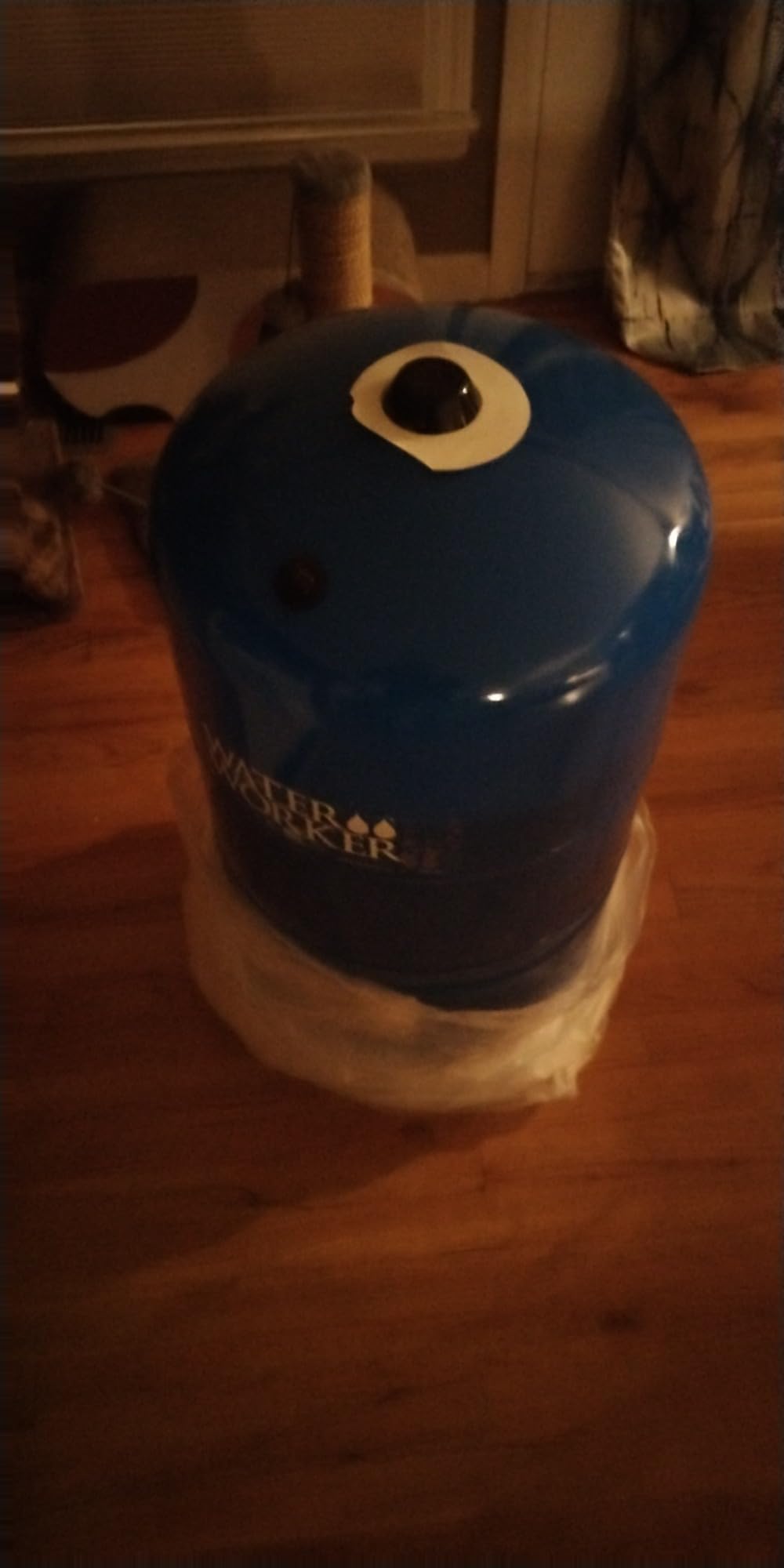
Long term, watch the cast metal bottom elbow. It can corrode and eventually restrict flow, which presents as a pump that runs longer than it used to for the same fixture.
When a 44 gallon tank is justified
Four or more bathrooms, a household that runs a washing machine and a dishwasher simultaneously, or a well that also serves an irrigation zone, all push you here. More stored water means longer pump-off stretches, which means fewer starts.
It is also a reasonable choice for a shallow well pump with a higher flow rating, where a smaller tank would force short cycles.
When it is overkill
For a two bathroom home on a 10 GPM pump, this is more vessel than the system needs, and you pay for capacity you will not draw down. The r/Plumbing consensus is consistent on this point: bigger is not better, and the best tank is the one properly sized for your pump flow rate.
Skip it too if the install space is tight. A 20 gallon tank that fits comfortably beats a 44 gallon tank you have to fight.
5. Amtrol WX-203 — Best Stand-Alone Replacement Tank
Amtrol WX-203 Well-X-Trol Stand Well Water Tank
32 gallon capacity
Integrated steel stand
Steel system connection
7 year warranty
Pros
- Integrated steel stand eliminates the need for separate framing or blocking
- Steel system connection resists aggressive and hard water better than plastic fittings
- Deep drawn domes give twice the strength of rolled steel at lower weight
- Double-boxed shipping protected units well in transit
- 7 year warranty with reports of a 2016 unit still running
Cons
- Carries a premium price tag relative to generic steel tanks of the same size
- A minority of units arrive with a dented stand section
- Some long-term owners report diaphragm failure within a few years and short pump cycling
- Tall 47 inch format requires substantial vertical clearance
The WX-203 is the direct like-for-like replacement for an older Well-X-Trol unit, and that is its main argument. If the tank you are removing came off a 2010-vintage Amtrol installation, matching the footprint, the connection and the stand geometry avoids the kind of replumbing that turns a one hour job into a half day.
Two design details separate it. The steel system connection is rated to withstand aggressive water, which is where most plastic-fitted tanks eventually leak. And the integrated steel stand means you are not framing a platform or setting blocks under a bare tank, which is real work you would otherwise pay a plumber for.
The deep-drawn steel domes offer twice the strength of rolled steel while minimizing weight, and the virgin polypropylene inner liner resists cracking, chipping and peeling. The positive hoop ring seal secures the diaphragm and liner for added strength and reliability.
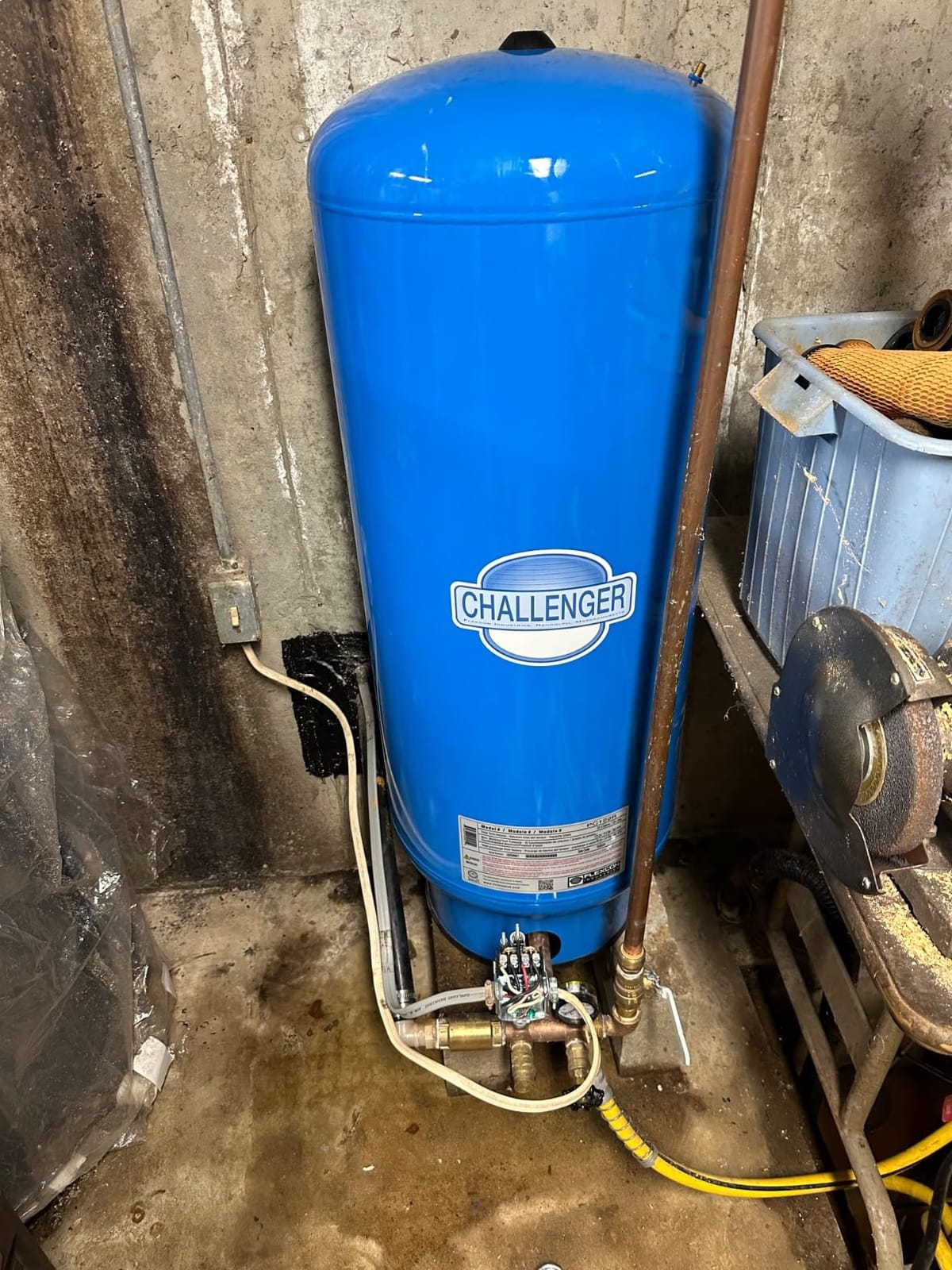
Reviewers value the accurate factory pre-charge on this one, with many citing installation times around 30 minutes. Shipping is double-boxed, and reports of a 2016 unit still running years later suggest the closure holds up well.
Now the parts you will not like. It sits in the premium tier relative to generic steel tanks of the same size, and DoItYourself threads show homeowners weighing exactly that trade-off before settling on a smaller generic unit. A minority of units arrive with a dented stand section. And the 47 inch height is the tallest in the roundup, so measure your headroom before ordering.
There is also a durability thread worth reading honestly: some long-term owners report diaphragm failure within a few years, followed by short pump cycling. That is the same failure mode the 7 year warranty exists to cover, and it is worth keeping the receipt and the original purchase date.
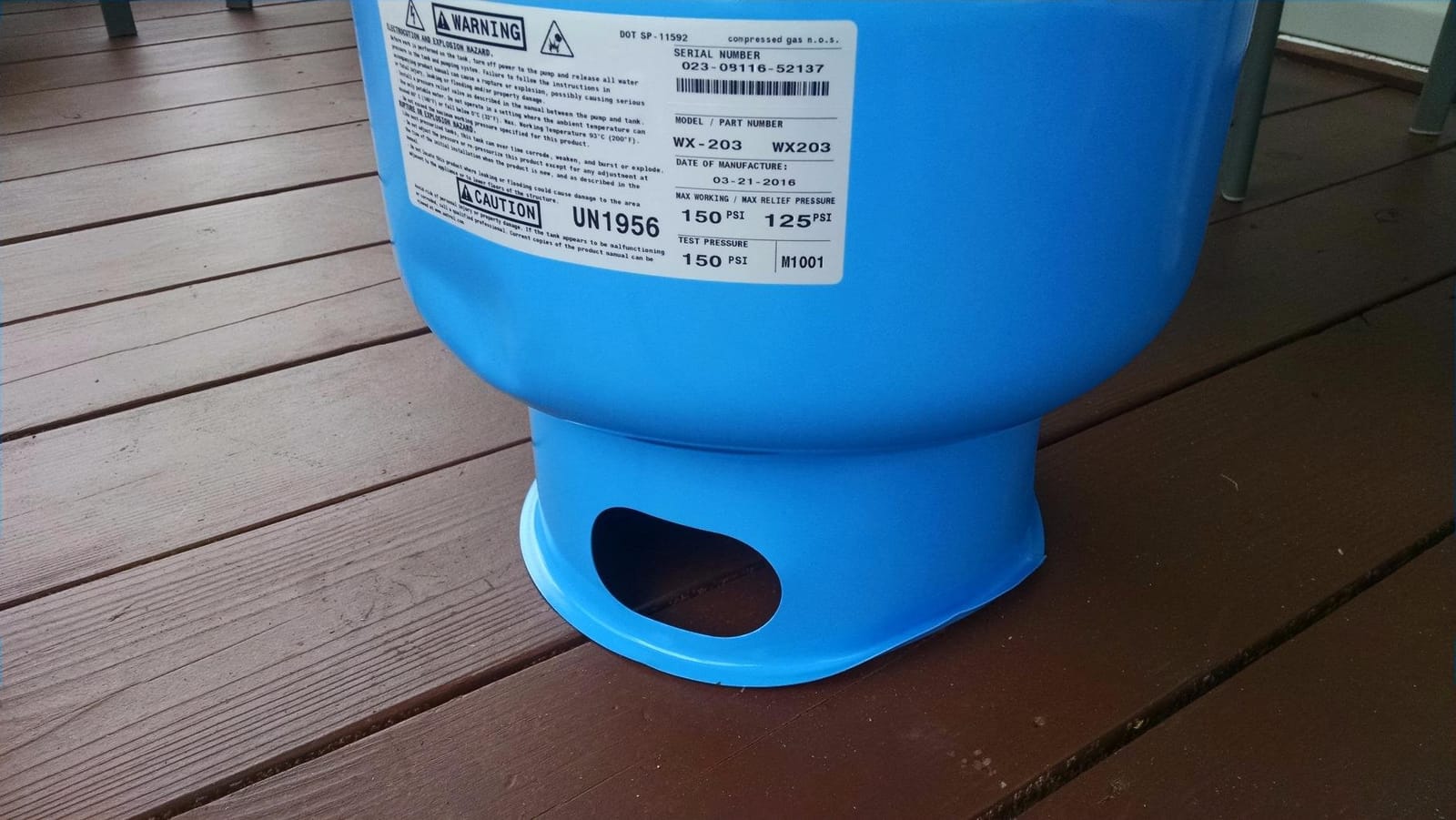
The 32 gallon nominal capacity makes this a good fit for a three to four bathroom home or a pump rated above 10 GPM, and it comfortably clears the one minute minimum run time for most residential pumps.
When the WX-203 is the right replacement
Choose it when you are replacing an Amtrol unit of the same class, when your water is hard enough to punish plastic fittings, or when you want the stand included rather than building one. The accurate factory charge is a quiet but meaningful advantage over tanks that arrive low.
It works well for three to four bathroom homes where 32 gallons of nominal capacity gives you real drawdown margin over a 20 gallon tank.
Where it does not fit
Skip it if ceiling height is the constraint. A 47 inch tank in a low mechanical room is a problem, and a 31 inch alternative solves the same job.
It is also a poor value choice if you are on a tight budget and your water is ordinary. The premium buys you the connection material, the stand and the warranty, and if you will not use the first two it is money you do not need to spend.
6. WaterWorker HT-30B — Best 30 Gallon Tank for Three to Four Bathroom Homes
WaterWorker HT-30B Vertical Pressure Well Tank, 30-gallon tank with 26-gallon capacity, Blue
30 gallon nominal,26 gallon usable
15 inch diameter
Welded base with tee cut-out
5 year warranty
Pros
- 15 inch diameter fits tight install spaces where most 30 gallon tanks will not
- Welded steel base with cut-out accepts a multi-port tank tee directly
- Made in the USA
- NSF/ANSI 61 listed polypropylene liner
- Many owners report nine-plus years of service before any bladder issue
Cons
- Some units arrive heavily dented from shipping
- Factory pre-charge often arrives above the correct setting and must be bled down
- Diaphragm life is reported by some owners at six to nine years in harsh or humid climates
- Bottom elbow is a known corrosion and restriction point over time
This is the tank that solves the awkward install. At 15 inches in diameter it fits in spaces where most 30 gallon tanks will not, which in a real house means a utility room that is already crowded with a pump, a control box and a pressure switch. The welded steel support base with a pre-attached 1 inch elbow and T-tee cut-out accepts a multi-port tank tee directly, so the connection is a short job.
Note the honest capacity figure: 30 gallons nominal with 26 gallons usable. That distinction is exactly what confuses buyers elsewhere on this list, and WaterWorker publishes it plainly, which we appreciate.
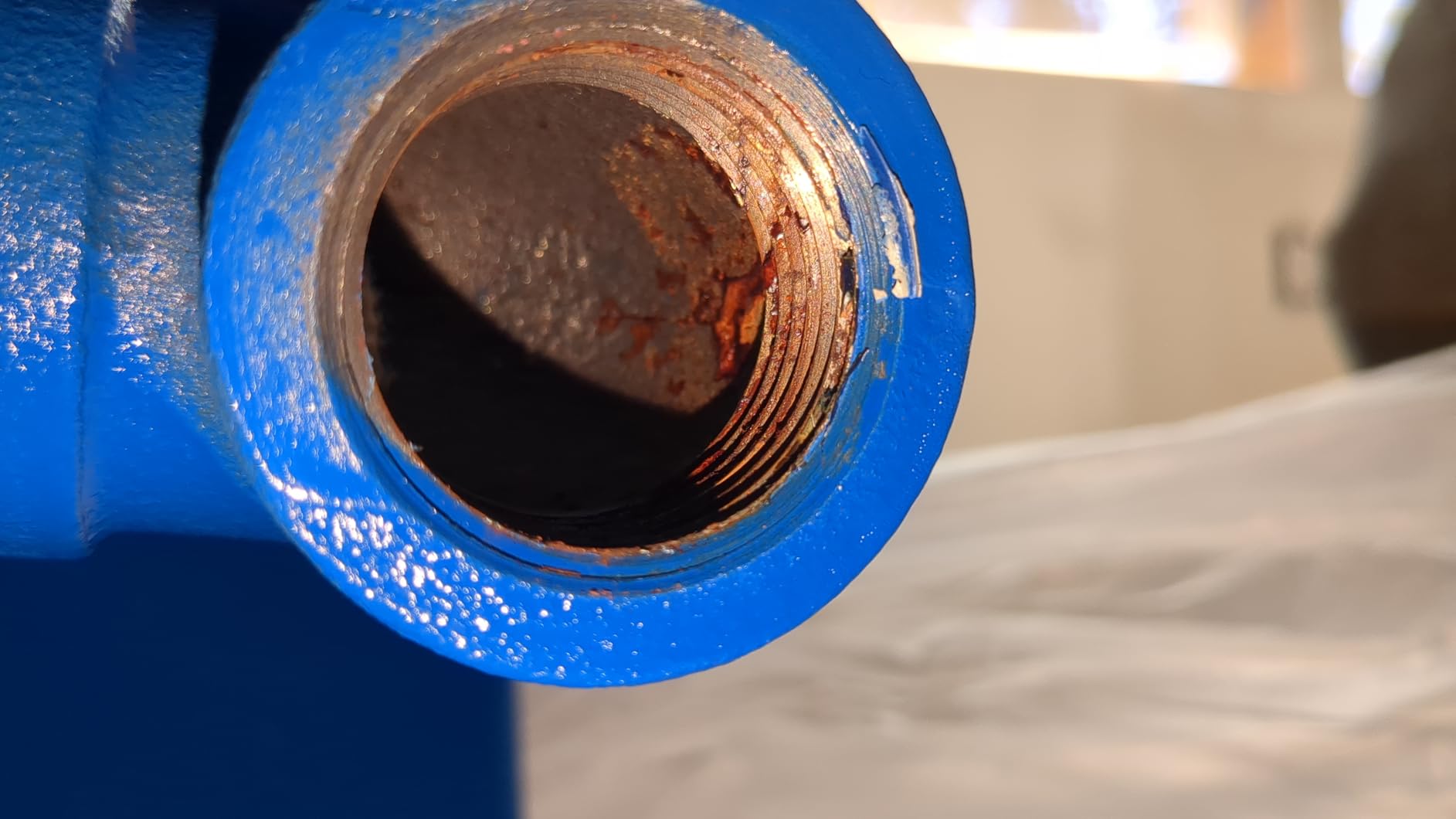
Buyers single out the compact footprint and the welded base as the reasons this tank fits and installs cleanly, and many note it directly replaced an identical earlier unit. Longevity reports are strong, with several owners at nine-plus years of service before any bladder issue. It is made in the USA and priced below most big-box equivalents.
The negatives are consistent with the brand. Shipping dents are the most common complaint, and the factory pre-charge frequently arrives above the correct setting, so it must be bled down to 2 psi below the switch cut-in before you connect it.
The weather matters more here than most. Diaphragm life is reported by some owners at six to nine years in harsh or humid climates, and reviewers in Florida and similar environments are specifically the ones citing durability problems. If you are in one of those regions, read that section of the reviews before you commit.
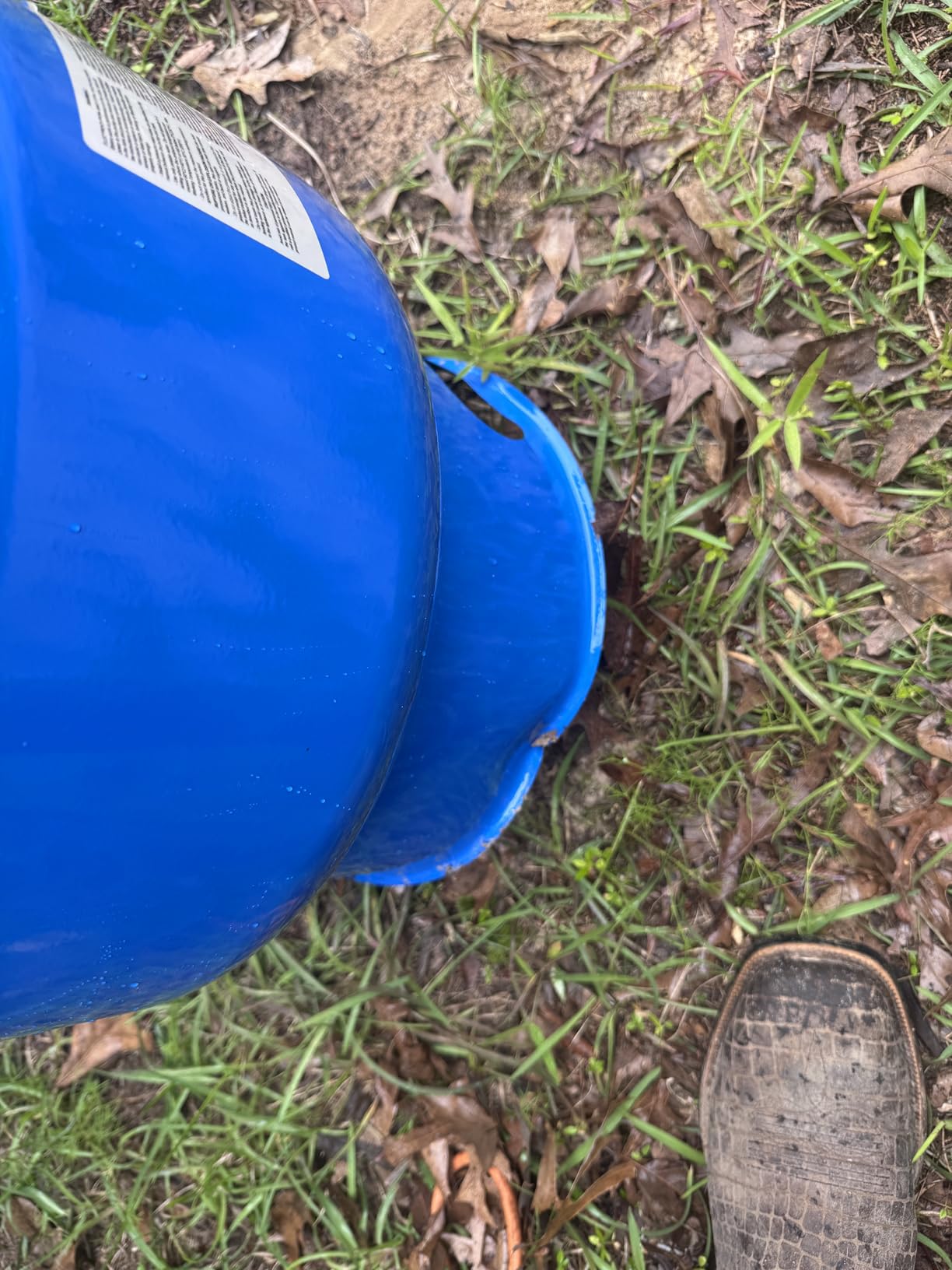
Thirty nominal gallons is the right zone for a three to four bathroom home with a 10 to 15 GPM pump, and the 26 gallon usable figure clears the one minute minimum run time without pushing you into a footprint that will not fit.
When the HT-30B is the right call
Take it when space is the binding constraint and capacity still matters. A narrow utility room, a closet install or a shallow pit all favor a 15 inch diameter over a wider 30 gallon tank.
It is also a good pick if you want a tank that installs in reasonable time, because the pre-attached elbow and base cut-out remove the fiddly part of the job. Made in the USA and NSF/ANSI 61 listed, with a 5 year warranty.
Where it is not the right call
Do not pick it for a coastal or high-humidity install without accepting the shorter diaphragm reports. In that environment, go fiberglass.
For a very high flow pump or a house that runs irrigation on well water, the 26 gallon usable figure is the ceiling, and you will be under it.
7. Water Worker HT-32B — Budget 32 Gallon Drop-In Replacement
Water Worker HT-32B Well Tank, 32 GAL Capacity, 1 in FNPT
32 gallon capacity
1 inch FNPT connection
Steel construction
Vertical format
Pros
- 32 gallon capacity in a vertical footprint suited to standard mechanical rooms
- 1 inch FNPT connection matches common well pump and manifold fittings
- Steel construction with an established HT-32B model number in wide service
- Widely available replacement for aging domestic pressure tanks
Cons
- Lowest average rating in this group at 4.3 stars with a notable 11 percent one-star share
- Listing details are sparse and inconsistent including an implausible weight entry
- Brand attribution is ambiguous between Water Worker and Amtrol
- Air pre-charge must be verified and set 2 psi below the pressure switch cut-in
This one gets the budget slot, and the reason is narrow and practical. Owners mostly treat it as a functional drop-in replacement for a failed domestic tank, and the 1 inch FNPT connection works with standard well plumbing. The 32 gallon size in a vertical format fits a standard mechanical room without special planning.
The HT-32B model number has been in wide service for years, which means plumbing familiarity, and that is worth something when a homeowner is swapping a failed tank on a weekend.
We want to be straightforward about the downsides, because this is the weakest-reviewed tank in the roundup. The average rating is 4.3 stars with a notable 11 percent one-star share, which is high for a component with no moving mechanical complexity. Buyers report a double-digit share of one-star reviews across 319 total ratings.
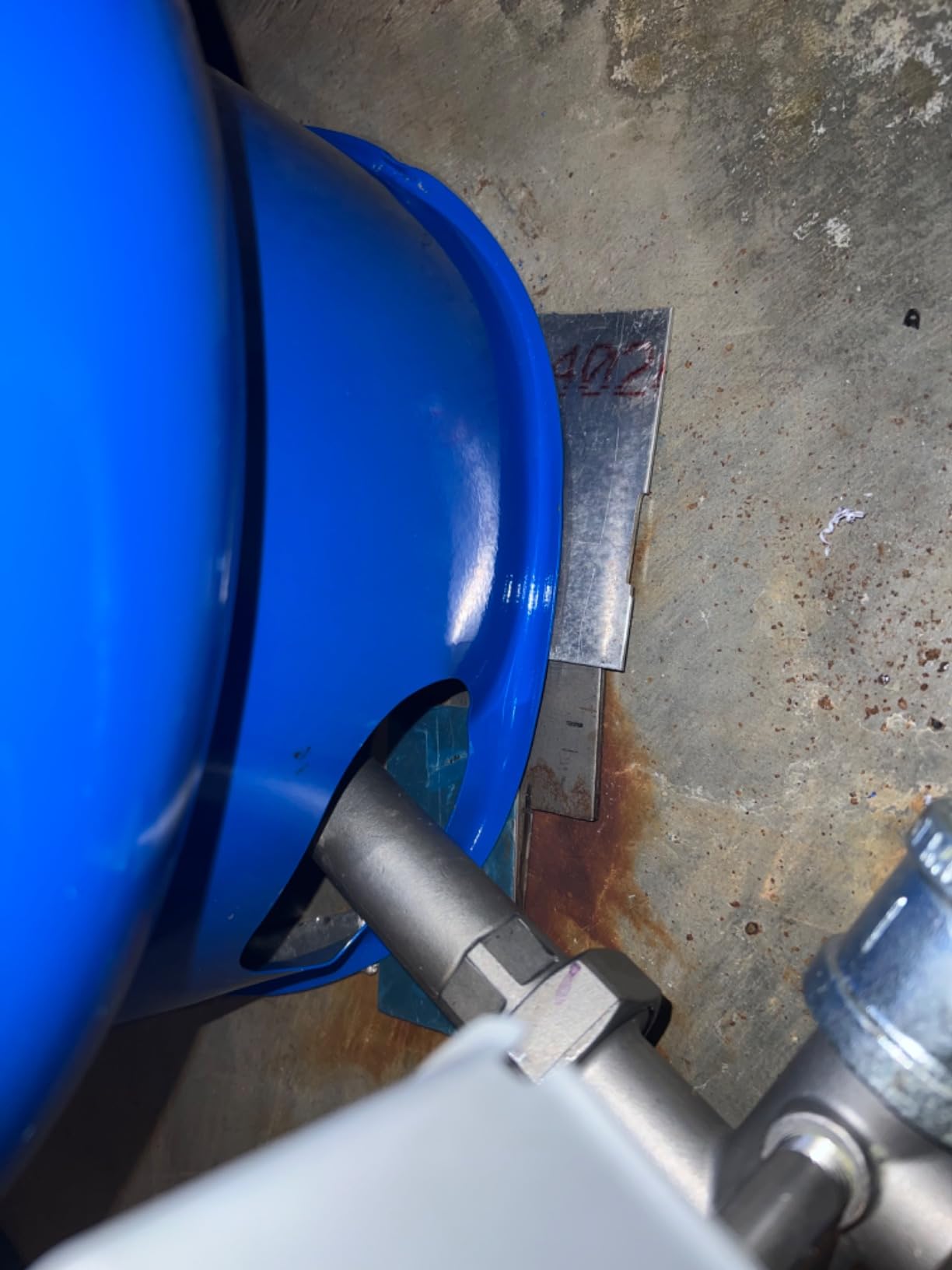
The listing itself is part of the problem. Published details are sparse and inconsistent, including an implausible weight and dimension entry, and brand attribution is ambiguous between Water Worker and Amtrol. Before you buy, confirm the actual dimensions and connection from the manufacturer rather than the listing.
As with every tank here, the air pre-charge must be set to 2 psi below the pressure switch cut-in before commissioning. The HT-32B is no exception, and a pre-charge error is the fastest way to turn a working tank into a short-cycling problem.
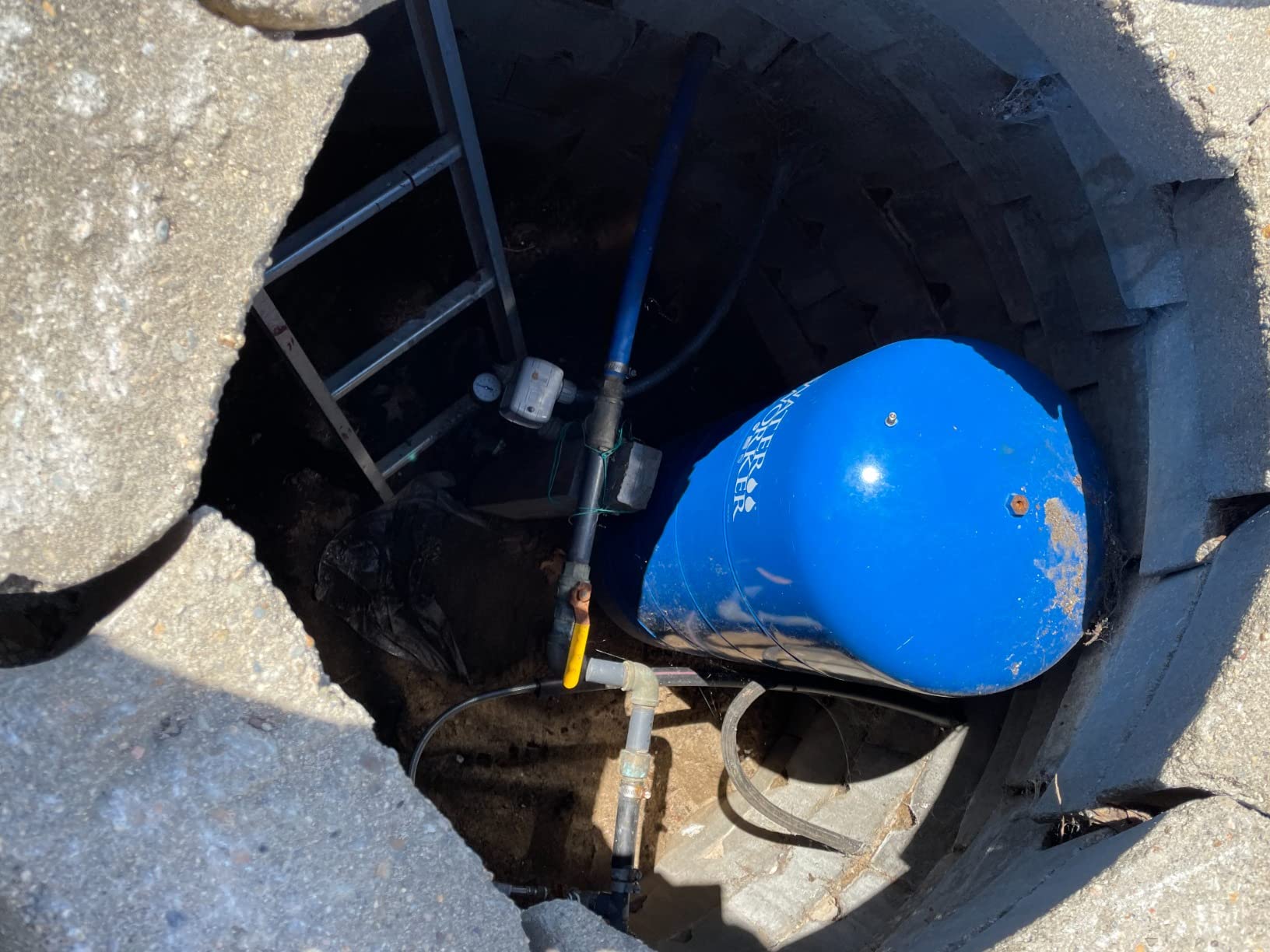
Thirty-two gallons suits a three to four bathroom home with a mid-range pump, and for that use it is a serviceable choice rather than a mistake.
When the HT-32B makes sense
Pick it when the job is a like-for-like replacement of a failed tank of this size, when the connection is 1 inch FNPT, and when the budget is the deciding factor. For a straightforward swap, that is a legitimate set of reasons.
It is also a reasonable second tank for a home that has outgrown a smaller vessel and already has the vertical space and a compatible connection.
Where you should spend more instead
Given the 11 percent one-star share and the incomplete listing data, we would not install this as the primary tank on a system you care about, and we would not use it where water chemistry is aggressive.
For a small premium you get a longer warranty, clearer documentation and a better-documented closure on the models above. The saving here is modest enough that the risk is rarely worth it.
8. Goulds V60 HydroPro — Best Complete Kit for a Fast DIY Replacement
Goulds V60 HydroPro pressure tank With or Without brass tank tee kit + UNION + Valves Square D fsg2 40-60 (V60Tank + 1″x11″ Tee Kit + Union + Valves)
Tank with tee and union kit
Square D 40-60 switch
Brass lead free tees
5 year tank warranty
Pros
- Complete kit includes tank
- 1 inch by 11 inch tee
- union
- valves and Square D FSG2 40-60 switch
- Union fittings and pre-supplied parts cut replacement time to about 30 minutes
- Tank arrives factory pressurized and ready to connect
- Brass and plastic base components resist rusting at the connection
- Owners report units lasting 13 years or more
Cons
- Costs more than a bare tank because of the bundled kit rather than premium hardware
- Pressure switch configuration is fixed at 40-60 unless a message is sent to the seller
- Seller fulfillment options for switch type limit configuration flexibility
Most pressure tank purchases need four things the tank does not come with: a tank tee, a union, a drain valve and a pressure switch. The Goulds V60 HydroPro kit ships with all of them in one box, and that is the entire pitch. Buyers consistently call it the best complete package for a DIY replacement.
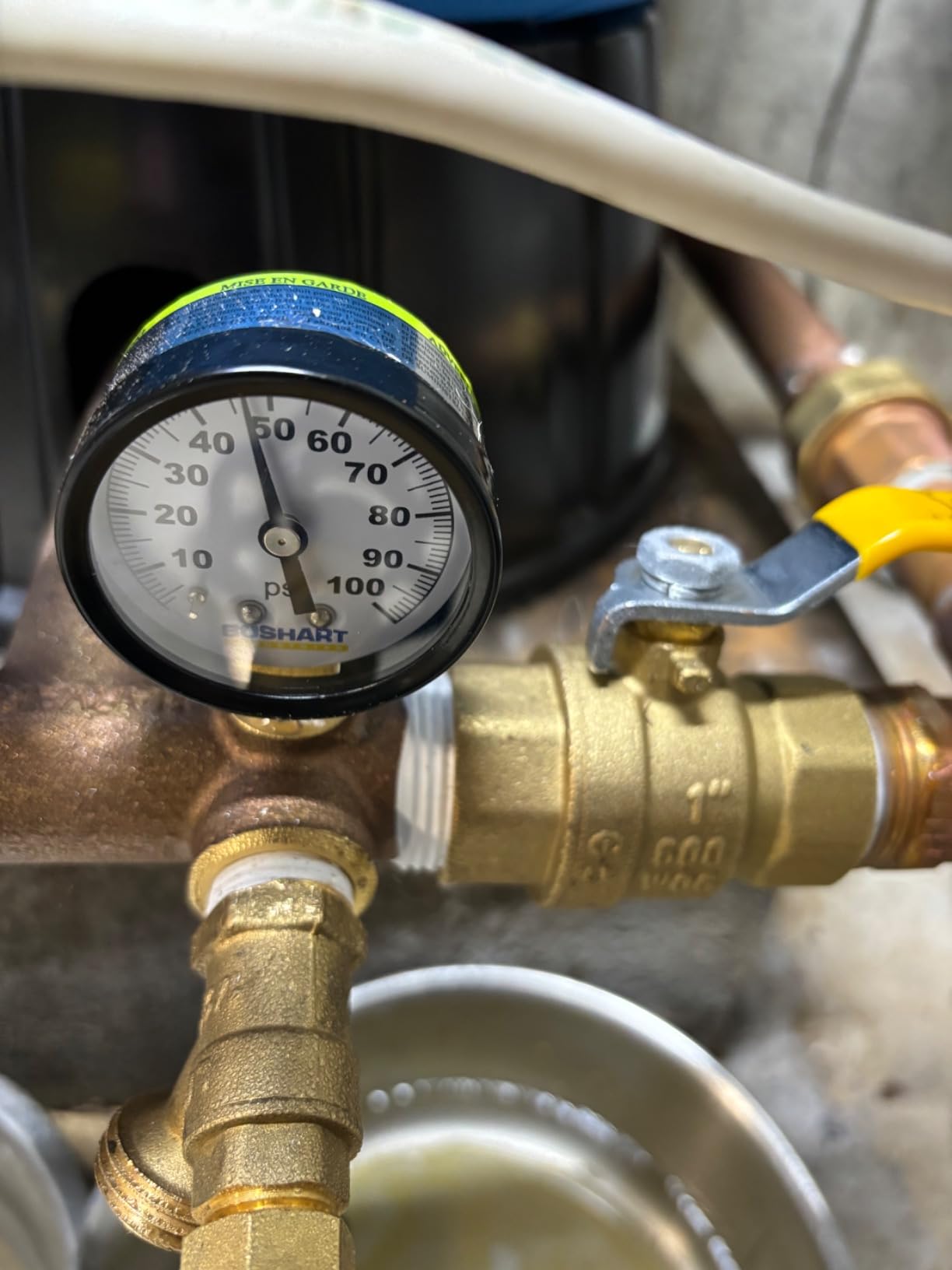
The fittings matter more than they look. Union tees let you install and service without cutting and re-cutting pipe, and that is where the reported 30 minute replacement time comes from. Lead free 1 inch NPT brass tank tees and a non-corrosive plastic base address the two places where a steel tank typically leaks first.
You also get a Square D FSG2 40-60 pressure switch in the box, and the tank arrives factory pressurized and ready to connect. If your existing switch is 30-50 rather than 40-60, the listing notes 30-50 is available on request, so confirm the setting with the seller before the order ships.
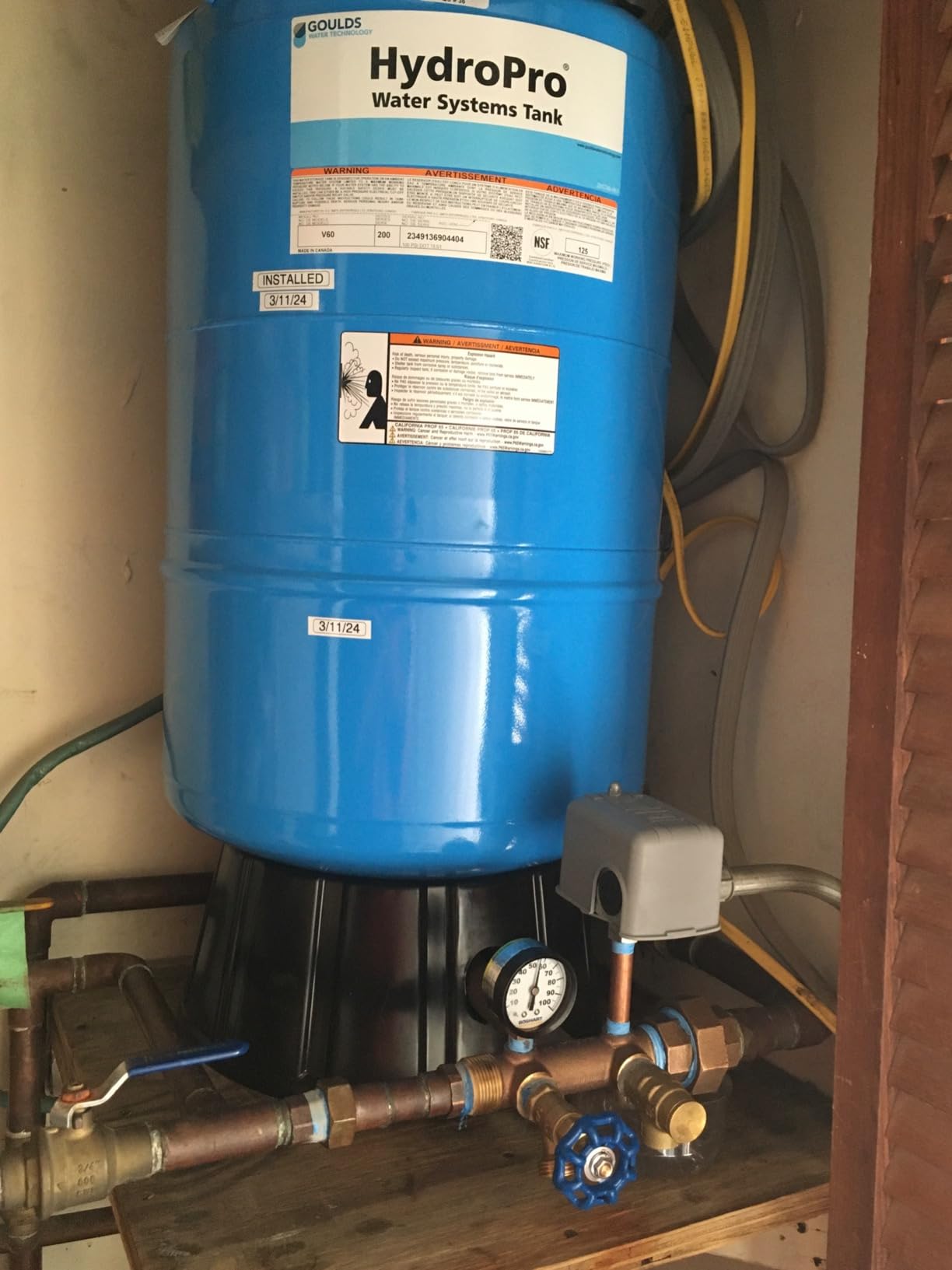
Durability reports are the strongest in the roundup for a kit product, with owners reporting units lasting 13 years or more and repeat buyers returning for the identical replacement. The tank carries a 5 year warranty, and it ships in its original factory box.
The trade-off is straightforward. You pay more than a bare tank, and that difference reflects the bundled hardware rather than a better vessel, so if you already own a good union and a serviceable switch, you are partly repurchasing what you have. The 40-60 switch configuration is also the default, which means anyone running a 30-50 system has to ask for the change in advance.
Check the V60 against your pump’s flow rating before committing, because the kit is designed around a particular tank size and a fixed switch configuration.
When the kit is the smart buy
Buy the kit when your existing tee is galvanized and seized, when you do not own a union, and when you would rather not make a second trip to a plumbing supply house. It converts a project with six small parts into a single box.
It is also the choice for a first-time installer who is confident with a union and a wrench but does not want to select fittings by trial and error, and for anyone whose pressure switch needs replacing anyway.
When to buy the bare tank instead
If your plumbing is already modern, with a stainless or brass tee, a good union and a switch that still holds its setting, you will duplicate hardware. In that case a bare tank is the cleaner purchase.
Also skip it if you cannot confirm the switch configuration you need in advance, because the default will not match a 30-50 system.
9. Wellmate WM-9 — Best Long-Service-Life Fiberglass Tank
Wellmate WM-9 / WM0120QC Captive Air and Retention Fiberglass Tank, Quick Connect (29.5 gal / 112 LTR.)
29.5 gallon fiberglass
Quick Connect air cell
PVC connection
28.6 pounds
Pros
- Fiberglass shell and heavy duty PVC fitting will never rust out at the bottom elbow
- Quick Connect fitting makes air cell replacement straightforward
- Clear printed instructions and easy one-person swap reported at about 45 minutes
- Greater drawdown than comparably sized steel tanks
- Owners report first units lasting 15 to 20 years or more
Cons
- Quick Connect fitting on current units may not be compatible with an older Wellmate fitting
- Some owners report a small leak at the quick connect fitting
- Vendor support is unresponsive to calls and messages for some buyers
- Printed instruction sheet contains an incorrect o-ring diagram
The WM-9 is the larger of the two Wellmate tanks here, at 29.5 gallons or 112 litres, and it is where the fiberglass case is most complete. The shell and the heavy duty PVC fitting will never rust out at the bottom elbow, which is precisely the failure that brings steel tanks to their end in aggressive water.
Service life is the headline. Owners report first units lasting 15 to 20 years or more, and repeat buyers cite that lifespan directly when choosing it again. The Quick Connect fitting makes air cell replacement straightforward, and the clear printed instructions support an easy one-person swap reported at about 45 minutes.
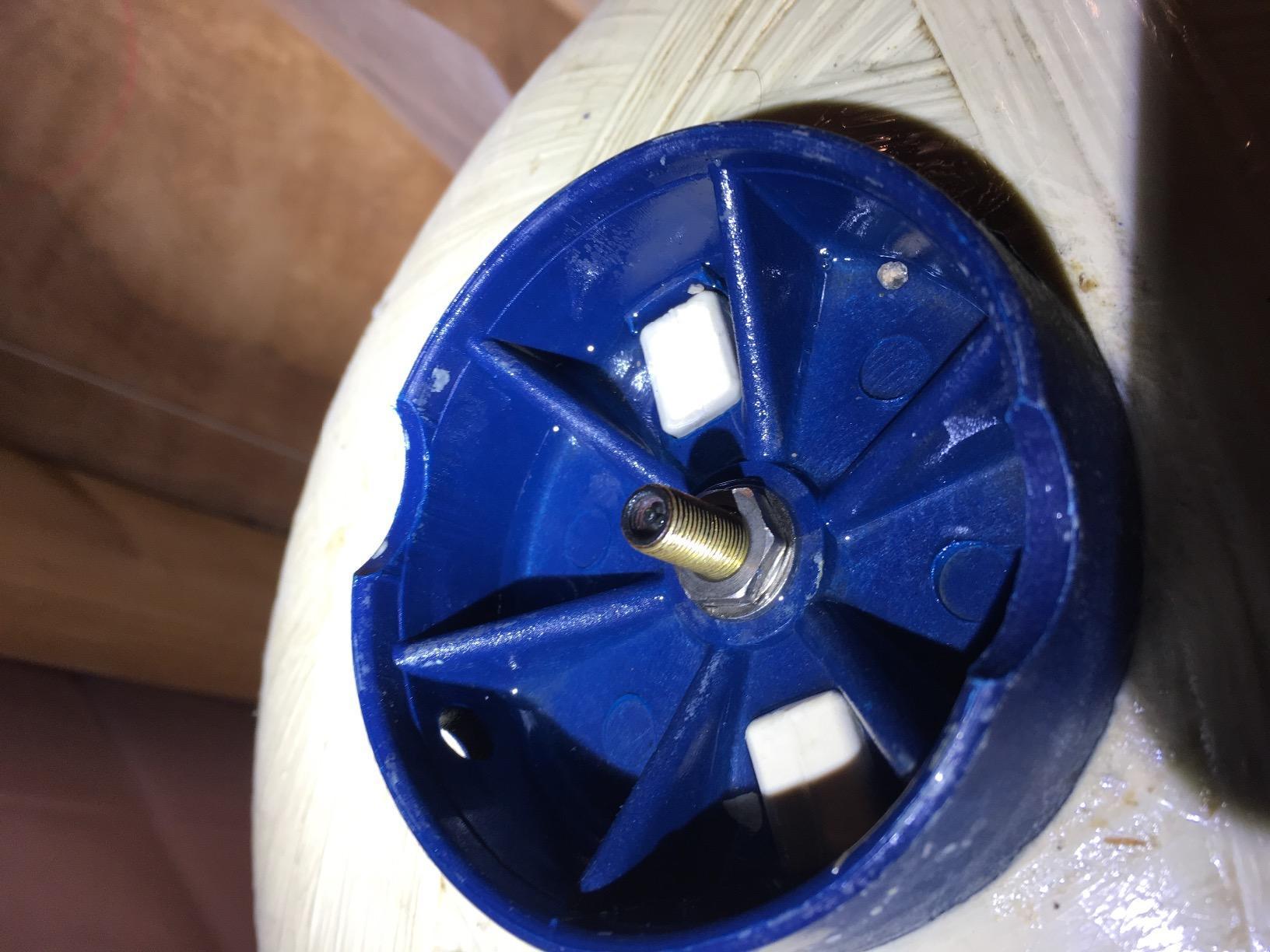
Like the WM-6, it offers greater drawdown than comparably sized steel tanks. At 16 inches assembled diameter and 28.6 pounds, it installs as a one-person job with fewer man-hours, and the extended labor warranty option is available to homeowners. It is made in the USA.
Not everything is smooth. The Quick Connect fitting on current units may not be compatible with an older Wellmate tank’s fitting, so verify before you buy if you are replacing a previous Wellmate. Some owners report a small leak at the quick connect fitting, and the printed instruction sheet has been known to contain an incorrect o-ring diagram.
The complaint we would weigh most heavily is vendor support. Some buyers report the seller being unresponsive to calls and messages, which matters because the Quick Connect air cell is a serviceable part you may eventually need.
The tank must be kept upright at a minimum of 30 degrees from horizontal, so it is not a candidate for a sideways crawlspace install.
When the WM-9 earns its place
Take it for a three to four bathroom home with aggressive or coastal water, where a 29.5 gallon fiberglass vessel gives you both the capacity and the corrosion resistance. It is also the pick for anyone planning to stay in the house for two decades, since the reported service life is the longest in this roundup.
For a household replacing a steel tank that rusted out at the elbow, the PVC connection removes the cause of the failure entirely.
When it is not the right fit
Do not buy it if you need help after the sale. If vendor responsiveness is important to you, verify support before ordering.
Skip it for very ordinary water in a small home, where a steel tank would serve the same purpose for less money, and skip it anywhere you cannot keep the tank upright.
10. Red Lion RL20A — Best 20 Gallon Tank for Small Wells and Shallow Pump Houses
Red Lion RL20A, Vertical Pre-Charged Well Pressure Tank, 20 gallon
20 gallon vertical
304 stainless connection
7.2 gallon drawdown at 30/50
28 pounds
Pros
- 304 stainless steel connection is more corrosion resistant than the cast fittings many steel tanks use
- Variable geometry butyl rubber diaphragm holds air pressure reliably with no pressure drops
- Thermoplastic base keeps the tank off the floor and avoids condensation staining
- Dual NSF/ANSI/CAN 61 and 372 certification for drinking water
- Compact 17 inch footprint at 28 pounds for a one-person install
Cons
- Ships pre-charged to only 20 PSI for transport so it must be recharged before use
- Occasional units arrive with transit damage
- 7.2 gallon drawdown at 30/50 PSI is modest for larger households
- Long-term durability is still unproven on newer units
The RL20A is the one tank in the roundup that publishes its drawdown, and the number deserves attention. Seven point two gallons of drawdown at a 30-50 PSI switch setting is the honest, usable figure for a 20 gallon tank, not the 20 gallons on the label. It also states that the tank handles six water fixtures running simultaneously, which tells you the intended class of home.
Owners report steady pressure and noticeably fewer pump cycles after installation, with several noting the tank doubled their pressure over a jet pump setup and that it can be installed by a handyman in an afternoon.
The connection is the differentiator. A 304 stainless steel water connection with patented leak safe technology is more corrosion resistant than the cast fittings used by many steel tanks, and the 1 inch FNPT elbow system connection is certified by WQA. The heavy duty 20 gauge steel tank shell is paired with a high performance variable geometry butyl rubber diaphragm and a propylene liner.
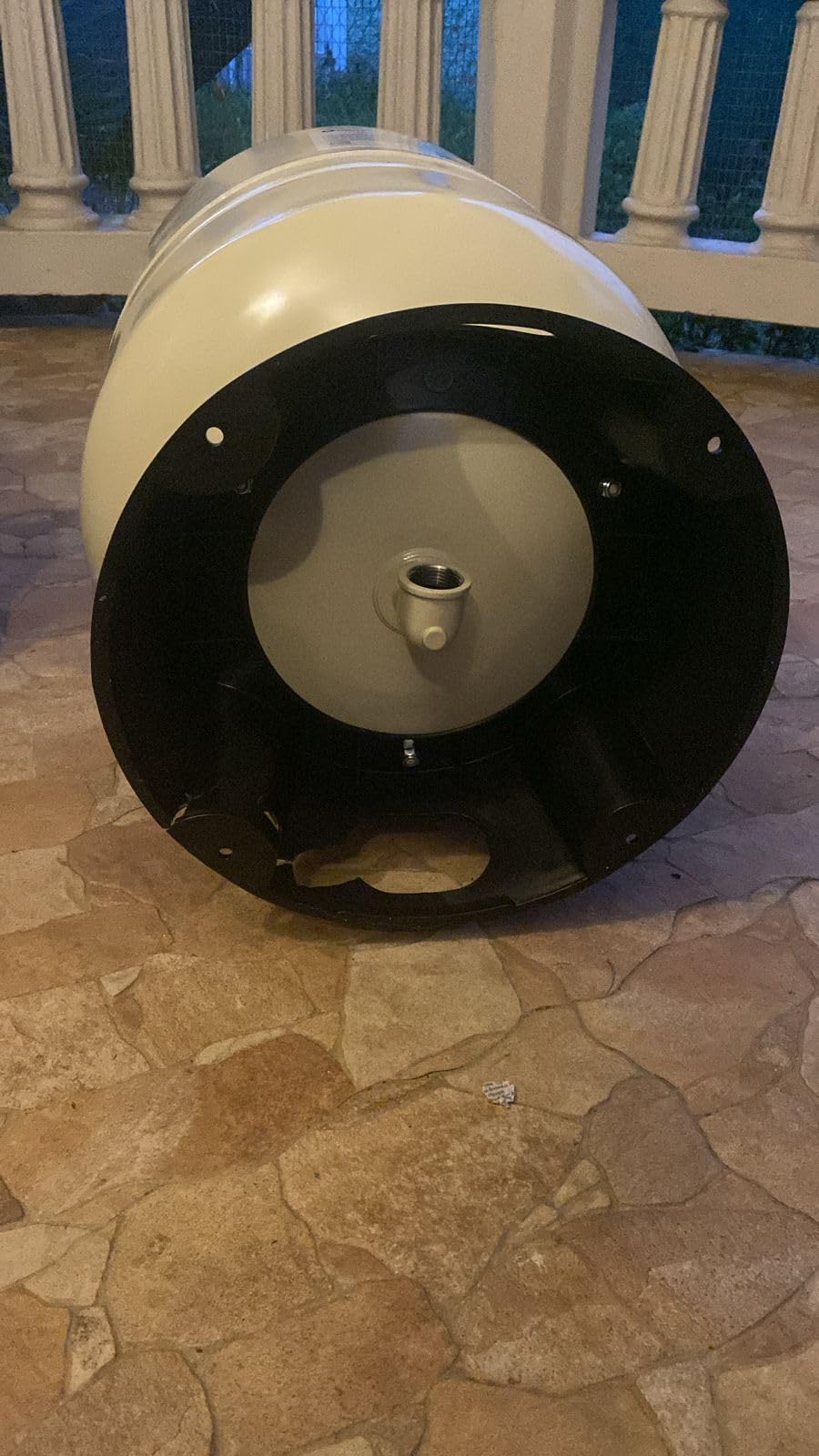
It also carries dual NSF/ANSI/CAN 61 and NSF/ANSI/CAN 372 certification, which covers lead content as well as drinking water safety, and few competitors in this roundup publish both. The thermoplastic base lifts the tank off the floor to prevent condensation and floor staining, which is a small thing that matters in a finished basement.
The critical warning is on the label and buried in the specs: it ships pre-charged to 20 PSI for transportation only, and it must be topped off with a bicycle pump to 2 PSI below the pressure switch cut-in before use. This is the field-charging difference that confuses people most often, and it is why we cover it in detail below.
Drawdown of 7.2 gallons at 30-50 is modest for larger households, so treat this as a small-well and small-home tank. At 17 inches square by 27.3 inches tall and 28 pounds, it is compact and light enough to install without a plumber.
When the RL20A fits
It fits a one to two bathroom home, a cottage, or a shallow pump house where space is genuinely tight. The 17 inch footprint and 28 pound weight make it the easiest unit here to move and install alone.
It is also the pick for anyone who wants a stainless connection without moving to fiberglass, and for a well with slightly aggressive water where a cast elbow would be the weak link.
Where it is not enough
For three or more bathrooms, a pump above 10 GPM, or a house running irrigation, 7.2 gallons of drawdown will not hold pressure. Step up in capacity instead.
And do not skip the pre-charge. The 20 PSI transport charge is the most commonly missed step in the whole category, and it will cause short cycling until it is corrected.
How to Size a Well Pressure Tank for Your Home
Size for drawdown, not for the number printed on the tank. The working rule is simple: multiply your pump’s rated flow in gallons per minute by one minute. That result is your minimum usable drawdown, because the pump needs to run at least a minute per start to keep the motor and bearings cool and to protect the pressure switch and check valve.
A 10 GPM pump needs 10 gallons of drawdown. A 15 GPM pump needs 15. A 1 hp submersible commonly rates between 8 and 12 GPM, which puts most homeowners in the 10 gallon drawdown zone and therefore the 20 gallon nominal tank class.
Work down from there using household demand. These are starting points, not rules, because two showers running at once changes the answer faster than anything else:
One bathroom, no irrigation: about 8 to 10 gallons of drawdown, so a 20 gallon nominal tank.
Two or three bathrooms with a dishwasher and laundry: about 10 to 15 gallons, so a 20 to 30 gallon nominal tank.
Four or more bathrooms or a busy household: about 15 to 22 gallons, so a 30 to 44 gallon nominal tank.
Irrigation on the same well: treat it as a third bathroom and size up one full class.
Very low flow well, under 8 GPM: a smaller 14 gallon tank can work, because the pump is the limiting factor.
One caution from the r/Plumbing consensus that we agree with: bigger is not better. An oversized tank does not create more pressure, it just holds more water and makes the tank slower to refill, which can leave the bladder fully expanded and the drawdown lower than you calculated. Size to the pump, then let the household confirm it.
Before you buy anything, read the pump nameplate for the rated GPM and check the pressure switch setting, usually 30-50 or 40-60. Those two numbers determine the pre-charge, and the pre-charge determines whether the tank actually delivers the drawdown the label implies.
Air Pre-Charge Cheat Sheet for 30-50 and 40-60 Switches
The single most common reason a brand new pressure tank underperforms is an air charge that does not match the installed pressure switch. The rule is to set the tank’s air pressure 2 psi below the switch’s cut-in pressure. For a 30-50 switch, that means 28 PSI. For a 40-60 switch, that means 38 PSI.
Set the charge with the water side of the tank empty, or at least with the pump off and the system bled down. Check it with a tire gauge on the Schrader air valve at the base of the tank, and add air with a bicycle pump or a compressor with a bike fitting. If the gauge reads higher than your target, bleed air out until it matches.
Factory charges vary more than manufacturers advertise, and this is the field-charging difference the research turned up repeatedly:
WaterWorker 20, 30 and 44 gallon tanks ship pre-charged to 25 psi, and owners report that charge often arriving too high for a 30-50 switch rather than too low.
The Red Lion RL20A ships pre-charged to 20 psi explicitly for transportation, and must be topped up to 2 psi below the cut-in before it will perform to spec.
The Amtrol WX-203 is reported by reviewers to arrive with an accurate factory pre-charge, which is a real convenience.
The Goulds V60 kit arrives factory pressurized and ready to connect, with the pressure switch supplied in the same box.
Field charging matters most in bladder and bladderless tanks. As DIYChatroom threads describe it, a bladderless air-over-water tank gradually loses air and needs periodic recharging, while a tank with a proper diaphragm holds its charge far longer. Either way, the air side is what makes the water side deliver pressure, so check it whenever pressure behavior changes.
One last practical point. If the tank’s air pressure is set too high, the bladder rests against the pump side and the tank holds almost no usable water. If it is set too low, the tank accepts too much air, the water pushes into the air space, and the tank goes waterlogged. Both failure modes look like short cycling from inside the house.
Diaphragm, Bladder and Fiberglass Tanks Compared
Every tank in this roundup uses a flexible rubber separator between the water and the air, so the meaningful distinction is shell material and how the air side is serviced.
Diaphragm tanks use a fixed butyl diaphragm clamped across the shell, with a positive hoop ring seal on the Amtrol models. The diaphragm flexes rather than stretching, which is why WaterWorker describes its butyl diaphragm as designed to flex rather than stretch and crease like bladder tanks. Bladder tanks use a removable bladder hung from the top of the tank, which makes bladder replacement possible but depends on the bladder staying seated.
Bladderless or air-over-water tanks put air directly above the water with no rubber separator. They are simpler and cheaper to manufacture, and as DIYChatroom contributors note, they gradually lose air and need periodic recharging. For a homeowner who wants to install once and stop thinking about it, a factory-charged diaphragm tank is the calmer choice.
Shell material is the second axis. Steel shells, deep drawn or rolled, are rigid and take a lot of vertical space but will eventually corrode from the inside where water sits against the steel, and from the outside in humid or salty air. Fiberglass shells do not rust at all, which is the whole argument for the Wellmate models and for coastal installs generally.
The third axis is serviceability. A tank with a Quick Connect replaceable air cell, like both Wellmates, can have its air side renewed in place. A tank with a crimped or ring-sealed diaphragm generally means replacing the tank when the rubber fails. If you are comfortable with a plumber’s visit every decade or so, the serviceable design is worth the premium.
Four Signs Your Well Pressure Tank Needs Replacing
Waterlogging is the most common failure, and it is the one homeowners miss longest. A waterlogged tank has lost its air charge and cannot hold pressure, so the pump runs almost continuously. Watch the pump: sustained running with the house quiet, or a pressure gauge that sags to zero after the pump shuts off, both point at the air side.
Short cycling is the second sign, and it is the expensive one. If the pump starts and stops several times a minute, the tank is not delivering enough drawdown, and every start wears the motor, the check valve and the pressure switch. Number of starts, not hours run, is what shortens pump life.
Zero air pressure at the Schrader valve is the third sign and the easiest to check. With the pump off and the system bled down, a tank gauge should read close to your cut-in pressure minus 2 psi. If it reads nothing, the bladder or diaphragm has failed.
Visible rust or a weeping bottom elbow is the fourth. Owners repeatedly describe steel tanks lasting many good years and then restricting flow at the cast metal elbow, and that is the failure point that fiberglass tanks remove. It is also the moment to consider replacing the connection material, not just the tank.
Before you buy a bigger tank, consider whether a constant pressure system makes sense. Adding a variable frequency drive to the pump can replace a large conventional tank with a very small one, because the controller manages pressure continuously rather than relying on stored water. It is a larger electrical and plumbing change, but it is the correct answer for some high-demand homes that keep oversizing their tanks.
Two other paths are worth knowing. Running two tanks in parallel roughly doubles the available drawdown if you have the space and a properly sized manifold, which is cheaper than a single oversized tank of a shape that will not fit. And while the system is open for the swap, it is a good moment to have the water tested for bacteria and radon, since you are already cutting into the plumbing.
Frequently Asked Questions
What is the best brand of well pressure tanks?
For most homes, Amtrol is the strongest overall brand because of its 7 year warranty, virgin polypropylene liners and positive hoop ring seal closures, and the WX-202 is the model most owners end up with. WaterWorker offers the deepest ownership history and the widest footprint in the category. Wellmate is the choice when corrosion resistance matters, because its fiberglass shell and PVC connection cannot rust at the bottom elbow. Brand matters less than matching the tank to your pump flow rate and getting the air pre-charge right.
What is the average lifespan of a well pressure tank?
It depends on shell material, water chemistry and service conditions. Steel diaphragm tank owners commonly report nine-plus years, some extending past a decade, while owners in humid or salty climates report diaphragm life of six to nine years. Fiberglass tanks have owners reporting first units lasting 15 to 20 years or more. Expect to replace the rubber air side well before you replace the shell, which is why a tank with a replaceable Quick Connect air cell can last far longer than one without.
What is the best size well pressure tank for my well?
Multiply your pump’s rated flow in gallons per minute by one minute to get your minimum drawdown. A 10 GPM pump needs 10 gallons of drawdown, which is usually a 20 gallon nominal tank. A three to four bathroom home generally wants 30 to 44 gallons nominal, and four or more bathrooms with irrigation push toward 44 gallons. The number printed on the tank is total volume, not usable water, so treat it as an upper bound rather than a target.
What are people saying about the A.O. Smith water pressure tank?
A.O. Smith appears repeatedly in shopping results for this query, though it is not among the ten tanks we analyzed for this roundup, so we cannot report verified owner feedback for it. What we can say is that it is a mainstream residential brand and the evaluation criteria here apply unchanged: drawdown against pump GPM, factory and field air pre-charge, shell and connection material, and warranty length.
Is it better to have a larger well pressure tank?
Not automatically. A larger tank does not create more pressure; it stores more water so the pump runs less often. The consensus among homeowners on plumbing forums is that bigger is not better, and the best tank is the one properly sized for your system and pump flow rate. Oversizing can leave the bladder fully expanded and cut the usable drawdown below what you calculated. Match the tank to the pump first and let household demand confirm the choice.
Are fiberglass well pressure tanks better than steel?
They are better in corrosive conditions and worse in almost nothing else. Fiberglass will not rust, cannot fail at a bottom metal elbow, is lighter to handle for a one-person install, and on some designs uses a replaceable air cell that can be serviced instead of replaced. Steel tanks are usually cheaper and can be more compact in shape, and they handle ordinary municipal-style water without issue. If your water has a pH below about 6.5, high chlorides, high dissolved solids or you live in a coastal area, fiberglass is the better choice.
Which Well Pressure Tank Should You Buy
For most homes, the Amtrol WX-202 is the default. It carries the best rating in this roundup at 4.7 stars across 656 reviews, a 7 year warranty, a virgin polypropylene liner and a compact 20 gallon footprint that fits a typical mechanical room. Pair it with a 28 PSI air charge on a 30-50 switch or 38 PSI on a 40-60 switch, and it will do its job for years.
Choose the WaterWorker 25009 instead if you want the deepest ownership history and the strongest value position at the same 20 gallon size. Choose the WaterWorker HT-30B if your install space is narrow and you are at three or four bathrooms. Choose the WaterWorker 153921 at 44 gallons for four or more bathrooms or a well that also runs irrigation.
If your water is aggressive, coastal or simply hard on steel elbows, the Wellmate WM-6 or WM-9 is the right answer, with the WM-9 for higher demand. The Amtrol WX-203 suits a straight like-for-like replacement of an older Well-X-Trol with a stand included, and the Goulds V60 kit is the fastest path for a DIY swap when your tee and switch need replacing too.
Whichever one you choose, measure the space, note your pump’s rated GPM and your switch setting, and set the air pre-charge to 2 psi below cut-in before you connect anything. Those three minutes of checking are what separate a tank that performs to spec from one that short cycles. Our picks and the reasoning behind them cover the best well pressure tanks for home wells in 2026, and they should hold up as your system and household change.