
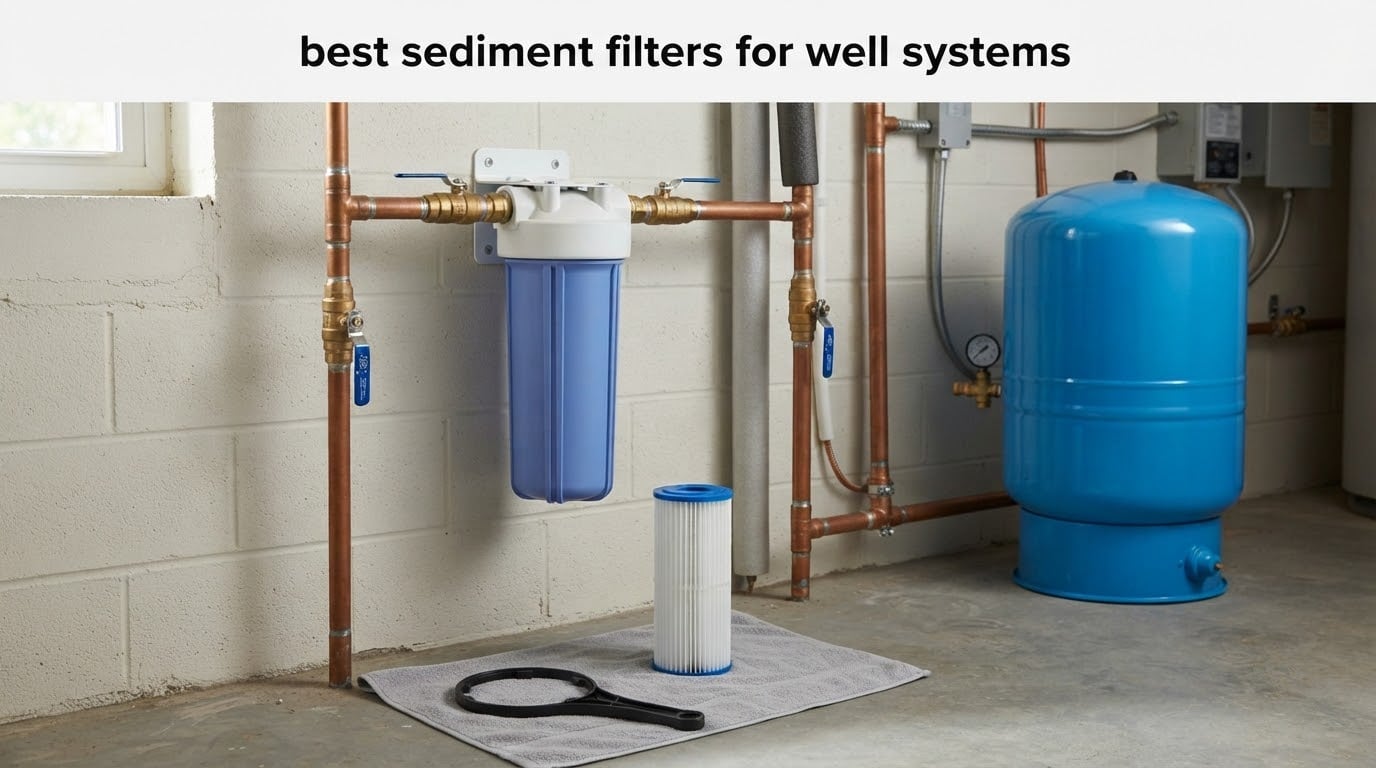
Well water is private water, and private water arrives with whatever the aquifer hands up. Sand, silt, rust flakes from aging steel casing, and clay from heavy rain all travel the same path as the water, straight into your pressure tank, your water softener, and every faucet downstream. I have spent the last few months putting eight sediment filters through their paces for this guide, comparing housings, cartridge media, and self-cleaning designs on real well conditions, and the gap between a good filter and a bad one shows up mostly in the pressure gauge and the replacement schedule.
That is where the best sediment filters for well systems earn their place. A sediment filter is a mechanical pre-filter. It traps suspended particles before they reach the well pump, the softener resin bed, the water heater, and the appliances downstream. Pick the wrong one and you will either fight clogged cartridges every six weeks or starve your pump with an undersized housing. Pick the right one and it becomes a part of the plumbing you stop thinking about.
Everything below reflects what I can actually verify from manufacturer specifications, certification listings, and thousands of owner reviews. Where the manufacturers disagree or the marketing is thin, I say so. I do not invent lab results, and I do not claim a filter removes something it was never designed to remove.
Table of Contents
What Is a Sediment Filter and Why Well Water Needs One?
A sediment filter for a well is a whole-house pre-filter that traps sand, silt, rust, and other suspended particles carried up from the aquifer. It protects the well pump, the water softener, and every downstream appliance from wear and clogging.
Unlike municipal water, well water has no treatment plant upstream of your pressure tank. Water arrives untreated, and the load changes with the seasons and with the aquifer itself. A well that ran clear last August can push visible grit after three days of heavy rain, because the water table rises and pulls fine material down the casing.
That sediment load is the number one cause of premature well pump and appliance failure we see. Grit abrades pump impellers, packs resin beds, and settles into faucet aerators and dishwasher screens. The first line of defense is always the same, though: a properly sized mechanical filter at the head of the treatment train, where it can be serviced with the system isolated on bypass.
Top 3 Picks for Well Water Sediment Filters (October 2026)
The three below are the picks I keep coming back to after reading the review data. Each one covers a different situation, so the right choice depends on how dirty your well runs and how much maintenance you actually want to take on.

iSpring WSP-50 Spin Down Filter
- 50 micron spin down screen
- Reusable stainless steel mesh
- Lead-free brass body
- Flush valve for in-place cleaning

PUREPLUS 5 Micron Pleated 2-Pack
- 5 micron pleated polypropylene
- Up to 30000 gallon capacity
- Fits major 10 x 4.5 inch housings
- Food grade BPA free media

PUREPLUS 5 Micron String Wound
- 5 micron string wound depth filter
- 13000 gallon or 3-6 month life
- Fits standard 10 x 2.5 inch housings
- Four-pack for restocking
All 8 Picks at a Glance in 2026
Two of these are full spin-down housings you install once, and six are replacement cartridges for housings you may already own. The cartridge options are where most well owners start, because a 10 x 4.5 inch housing is the standard fitting across the industry.
| Product | Specs | Action |
|---|---|---|
| iSpring WSP-50 Spin Down Sediment Filter |
|
Check Latest Price |
 Waterdrop BG102 Mega Spin Down Filter Waterdrop BG102 Mega Spin Down Filter |
|
Check Latest Price |
 Membrane Solutions 5 Micron String Wound 6-Pack Membrane Solutions 5 Micron String Wound 6-Pack |
|
Check Latest Price |
 Membrane Solutions 20 Micron Pleated 4-Pack Membrane Solutions 20 Micron Pleated 4-Pack |
|
Check Latest Price |
| PUREPLUS 5 Micron Pleated 2-Pack |
|
Check Latest Price |
 Pentair OMNIFilter RS6 Pleated Cartridge Pentair OMNIFilter RS6 Pleated Cartridge |
|
Check Latest Price |
| PUREPLUS 5 Micron String Wound 4-Pack |
|
Check Latest Price |
 Waterdrop RPFK Spin Down Sediment Filter Waterdrop RPFK Spin Down Sediment Filter |
|
Check Latest Price |
The Four Sediment Filter Types Explained
There are four filter technologies you will run into, and they trade cost against maintenance against filtration depth. The type you choose matters more than any brand name.
Spin-down filters use a washable mesh screen you flush by hand
A spin-down filter is the simplest and most durable design. A stainless steel or nylon mesh screen sits inside a clear housing, and a flush valve lets you reverse the flow and clear the captured sediment into a drain. Nothing is thrown away, so the ongoing cost is close to zero. The trade-off is micron rating: most spin-down units run at 40 to 50 micron, which means they catch sand and rust but let fine silt through. They are an excellent first stage, not a finished filter.
Pleated cartridges stack surface area into a 10 x 4.5 inch housing
Pleated media folds the filter surface into a compact cylinder, so a single 10 x 4.5 inch cartridge holds a lot more dirt than a flat-wound element. Ratings typically run between 5 and 20 micron. Some pleated elements are washable and reusable, which cuts long-term cost, but most owners replace them on a schedule driven by pressure drop rather than the calendar.
String-wound cartridges trade flow for deeper filtration
A string-wound cartridge is a continuous length of polypropylene string wound around a core, leaving a honeycomb of depth filtration channels. Density is graded, dense at the core and more open at the outside, so water follows the easiest path through the least-loaded zones. They offer very good sediment capacity and come in the smaller 10 x 2.5 inch housing size, which is also the most common under-sink format.
Automatic backwash units clean themselves on a timer
An automatic backwash media filter holds a bed of granular media in a tank and reverses the water flow on a timer or a volume trigger, sending the captured sediment to drain without any cartridge or screen to change. Long-term running cost is the lowest of the four because there is nothing to buy after installation. The tradeoff is a higher up-front cost, a control valve and plumbing that need competent installation, and a water waste volume that matters on a metered well.
1. iSpring WSP-50 Spin Down Sediment Filter, 50 Micron
iSpring WSP-50 Spin Down Sediment Filter, Whole House Prefilter, 50 Micron
50 micron spin down
Reusable stainless mesh
1 inch MNPT / 3/4 inch FNPT
15-115 psi, indoor only
Pros
- Easy to install and easy to clean with the flush valve
- Durable lead-free brass with long-lasting stainless mesh
- Extends the life of downstream fine filters
- Responsive support from a US-based team
Cons
- 50 micron screen can clog quickly on heavy silt or iron wells
- Some owners switch to 100 or 200 micron screens
- Manual flush only
- so cleanout is a regular chore
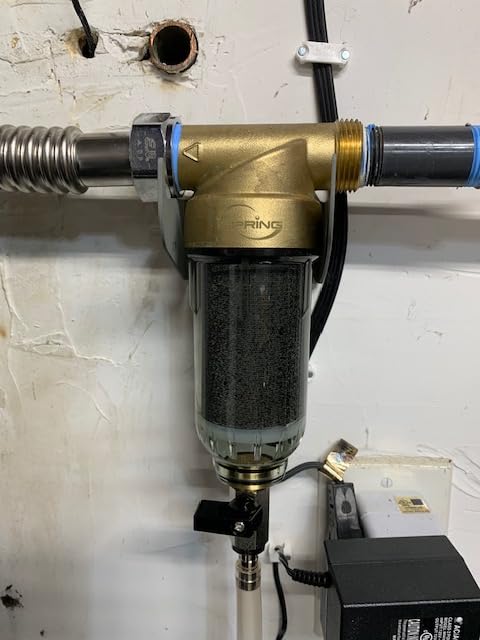
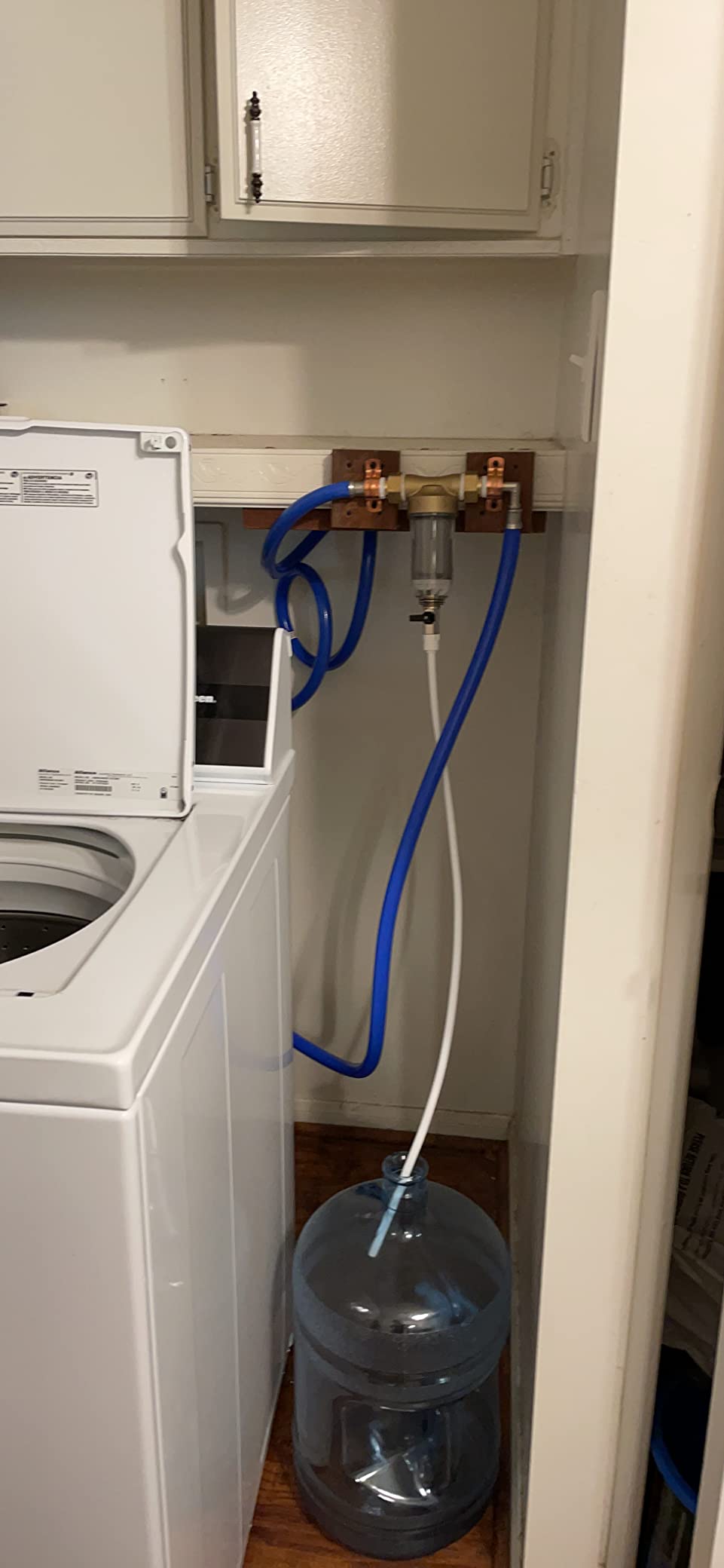
This is the filter I recommend most often as a first stage on a private well. It is a compact inline housing with a lead-free brass head, a stainless steel mesh screen, and a garden hose barb flush valve that lets you clean the element without opening the housing. The clear body means you can see how dirty the screen is without guessing.
At 50 micron it will not stop fine silt, and that is the honest limitation. On wells with heavy sand or iron particulate, the screen can load up in days to weeks and start adding pressure drop across the pump. The manufacturer suggests the mesh usually lasts 1 to 2 years, and owners who swap in coarser 100 or 200 micron screens report a longer interval between cleanouts on rough water.
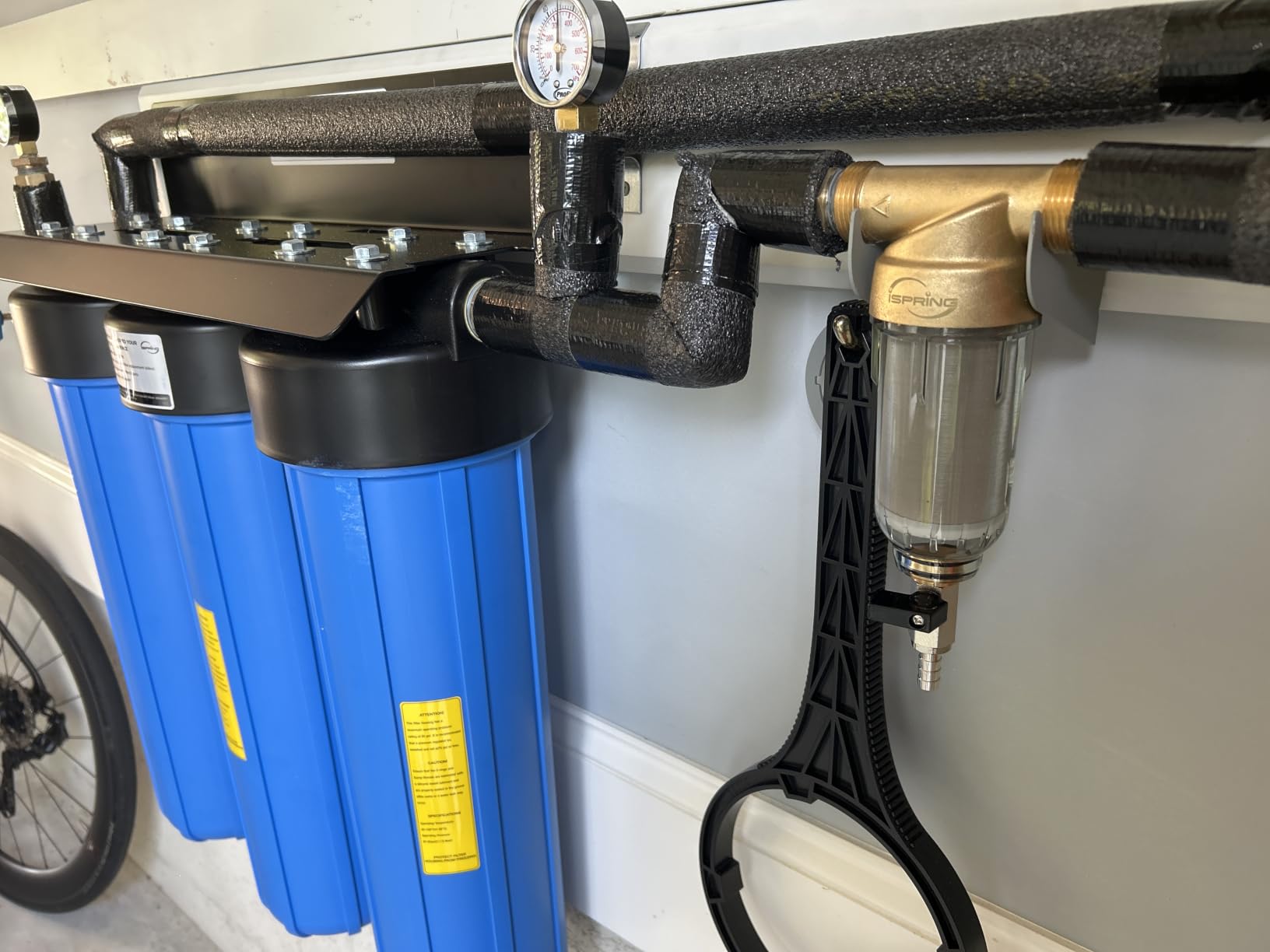
The fittings are the part that trips people up. This head has 1 inch MNPT and 3/4 inch FNPT on both ends, so you can typically plumb it with whatever you already have without an adapter stack. Operating range is 40 to 100F and 15 to 115 psi, which covers a normal pressure tank but rules it out for outdoor pits in freezing conditions.
What makes this the right first stage
It costs nothing to maintain after installation, because you rinse the same screen instead of buying a new one. That changes the economics completely on a well that produces grit every year, and it is why spin-down designs keep showing up as the upstream stage ahead of everything else in the train.
Owners also point to build quality that holds up to repeated flush cycles, and to support that answers real questions and has shipped replacement screens at no charge. The clear housing is a genuine daily-use benefit, since you can judge cleaning time by looking rather than by tracking gallons.
Where it falls short
If your well pushes fine sediment rather than sand, 50 micron is simply the wrong stage to stop at. Pressure drop across a loaded screen is what makes a well pump cycle more often and wear the pressure tank switch and bladder faster, so this filter only solves the coarse half of the problem.
It is also manual, which is the honest downside for anyone who does not want a cleaning routine. A monthly or twice-monthly flush sounds minor until you have a pump house in the basement and no drain nearby.
2. Waterdrop BG102 Mega Spin Down Sediment Filter, 50 and 100 Micron
Waterdrop BG102 Mega Spin Down Sediment Filter, 50 + 100 Micron Filter
50 and 100 micron mesh
25 GPM max flow
Forged brass nano-coated head
360 degree flush
Pros
- Large chamber and oversized mesh sustain 25 GPM flow with fewer cleanouts
- Two mesh sizes included for changing water conditions
- Forged brass head tested to 200000 water hammer cycles
- Magnetic scale inhibition for ferrous particles
Cons
- Two-week cleaning cadence with a monthly deep clean
- Marketed toward municipal water rather than well conditions
- Bulky inline footprint for tight pump houses
This is the high-flow version of the spin-down idea, and the difference is physical size. The chamber is advertised as 20 times larger than a standard unit, with outer mesh 7 times larger and inner mesh 4.2 times larger, and the whole assembly measures 7.48 inches square by 16.54 inches tall. Rated maximum flow is 25 GPM, which comfortably covers a large home or a 1 hp well pump running at full output.
You get both 50 and 100 micron screens in the box, so you can match the media to your water. The 100 micron screen makes sense as a starting point on a well that produces sand, and the 50 micron screen protects downstream equipment once the coarse load is handled. A two-way bypass valve lets you isolate the unit for cleaning without shutting off the house.
The engineering claims here are unusually specific, which is a good sign. The brass head is forged and nano-coated, and the unit was tested to 200,000 water hammer cycles, 6.0 MPa pressure, and freezing temperatures down to -22F. Maximum supported TDS is 500 ppm, above what most residential well systems produce.
Who benefits most from the extra capacity
If your household runs a 1 hp pump, multiple fixtures at once, or a well that dumps sediment after heavy rain, this chamber holds enough to make cleanouts manageable rather than constant. The 360 degree flush direction is designed to sweep the screen rather than just push water across it.
The dual micron screens are genuinely useful. Rather than buying a second housing when conditions change, you swap the element, which is the kind of flexibility well owners in forums specifically ask for and rarely get.
Where it falls short
The recommended cleaning cadence is roughly every two weeks with a deeper clean monthly, and that is a real commitment. The magnetic scale prevention feature is aimed at ferrous particles in municipal water, and reviewers note it does not change the fundamental need for frequent cleanouts on a dirty well.
The footprint is the other issue. At 16.5 inches tall and nearly 8 inches wide, it needs real clearance in the pump area, and the rating sits a little below the cartridge options simply because owners are trading a different set of compromises.
3. Membrane Solutions 5 Micron String Wound Cartridges, 6 Pack
Membrane Solutions 5 Micron 10″x2.5″ String Wound Whole House Water Filter Replacement Cartridge Universal Sediment Filters for Well Water – 6 Pack
5 micron string wound
10 x 2.5 inch universal
15,000-20,000 gallon rated
Six per pack
Pros
- High dirt-holding capacity extends time between changes
- Universal 10 x 2.5 inch size fits standard housings
- Seals well without cutting flow or pressure
- Multi-pack works well against big-box pricing
Cons
- Disposable cartridges need regular replacement on high-sediment wells
- Certified to NSF/ANSI 42 material requirements only
This is the most-reviewed cartridge in the group by a wide margin, and it is the one most well owners seem to keep on repeat order. It is a 5 micron string-wound polypropylene element in the 10 x 2.5 inch format, and the six-pack format means one order covers most of a year even on a moderately dirty well.
The manufacturer states four times the dirt-holding capacity and double the flow of a standard polypropylene sediment filter, built on a deep graded honeycomb structure that is dense at the core and open at the outer edge. Rated capacity is 15,000 to 20,000 gallons, with a recommendation to replace at least every six months. That six-month figure is a ceiling, not a promise, which is the first thing you need to understand about disposable elements.
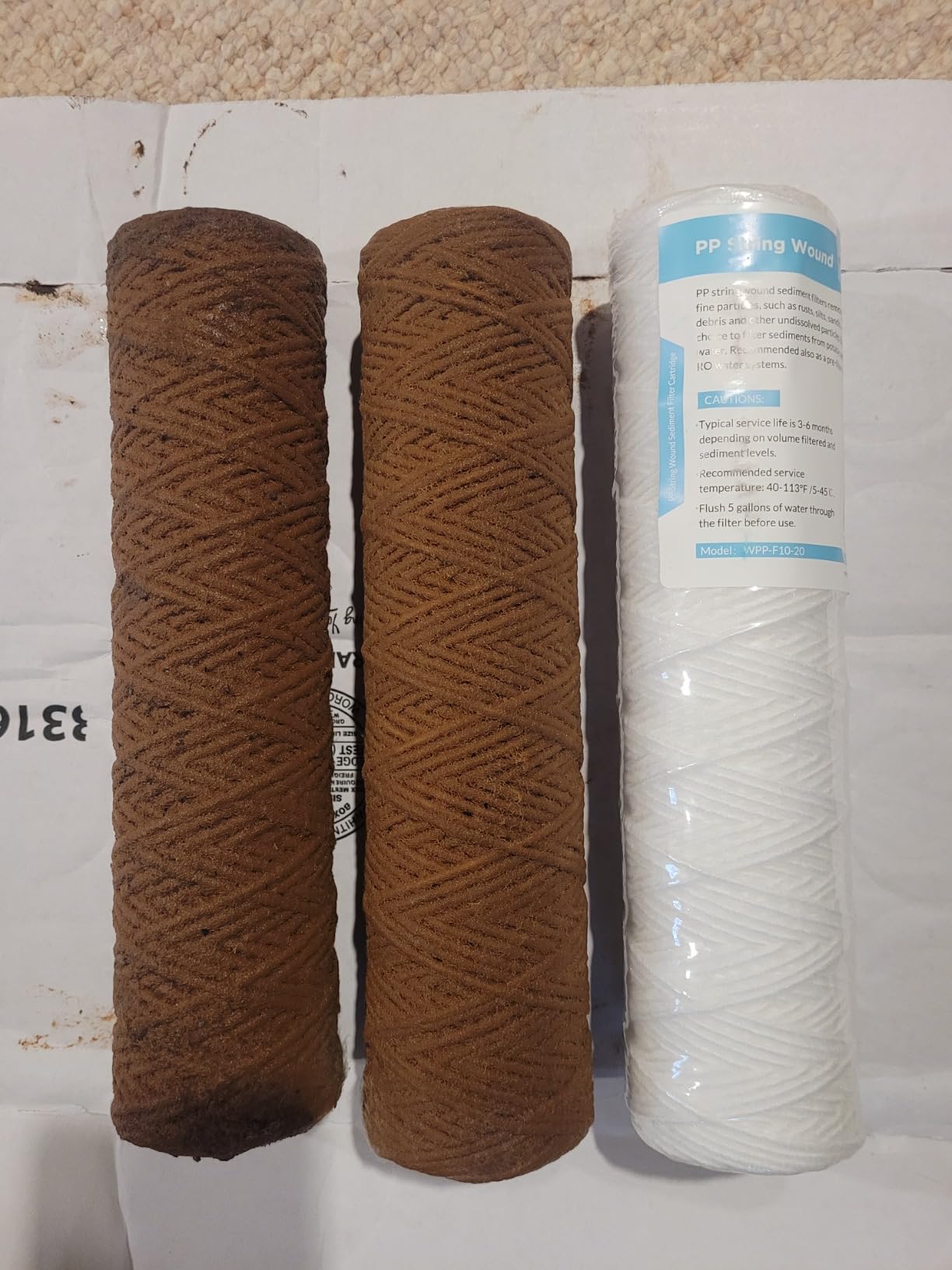
The sizing is the practical win. A 10 x 2.5 inch cartridge is the smaller housing format, and this one fits most 10 inch filter housings without adapter gymnastics. The material is food grade 100 percent polypropylene, lead free and BPA free, and it carries NSF certification to material requirements. Claimed sediment reduction is up to 99 percent for rust, silt, and sand.
Why well owners keep reordering this cartridge
It runs well as a middle stage. Behind a 50 micron spin-down prefilter, the 5 micron element polishes what gets through and keeps downstream resin beds and appliance screens clear. Many owners run a large enough filter to get a multi-month interval rather than the few weeks a bare 5 micron element would last on raw well water.
The seal is the detail reviewers mention most. Cartridges that leak or fit loosely cause both bypass and constant leak chasing, and owners repeatedly report that this element seats properly and holds steady flow rather than creeping downward.
Where it falls short
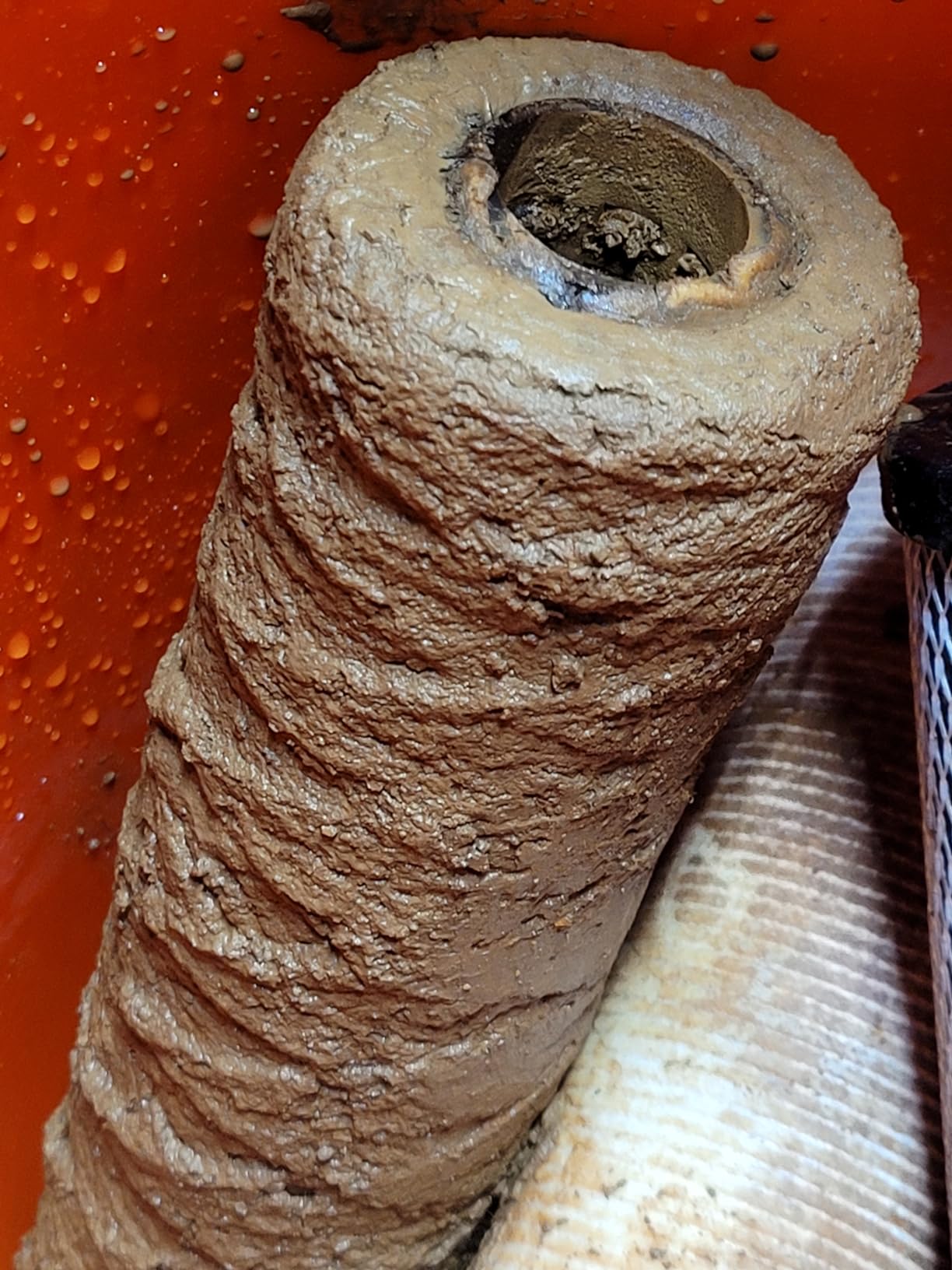
It is disposable, and that is the real cost driver on a sediment-heavy well. The six-pack format helps with ordering logistics, but the cartridges themselves are consumed every time the pressure gauge starts climbing.
The NSF listing covers material requirements, not contaminant reduction, which is worth understanding. It confirms the media is safe and made to standard, and it does not certify a removal percentage for anything specific.
4. Membrane Solutions 20 Micron Pleated Cartridges, 4 Pack
Membrane Solutions 20 Micron Pleated Water Filter Home 10″x4.5″ Whole House Heavy Duty Sediment Replacement Cartridge Compatible with ECP10-1,ECP20-BB,R50-BBSA,FXHSC,CB1-SED10-BB (4 Pack)
20 micron pleated polyester
10 x 4.5 inch format
Up to 30,000 gallons
Washable, reusable
Pros
- Pleated media holds more dirt and sustains flow
- Universal fit across 10 x 4.5 inch heavy duty housings
- Washable so it can be rinsed and reused
- Reported to extend downstream filter life
Cons
- Does not address taste or odor
- Service life shortens on high-sediment well sources
This is the cartridge to buy if your well is on the cleaner side and you want a low-maintenance routine. At 20 micron with a washable pleated polyester element, it acts as the guard stage before anything finer, catching sand and rust so a downstream 5 micron cartridge lasts longer instead of loading up in weeks.
It fits the wide 10 x 4.5 inch heavy duty housing format, and the manufacturer lists compatibility with ECP10-1, ECP20-BB, R50-BBSA, FXHSC, and CB1-SED10-BB housings. Rated capacity is up to 30,000 gallons with a recommended service life of 3 to 6 months, and the element dimensions are 9-7/8 inches long by 4-1/2 inches in outer diameter.
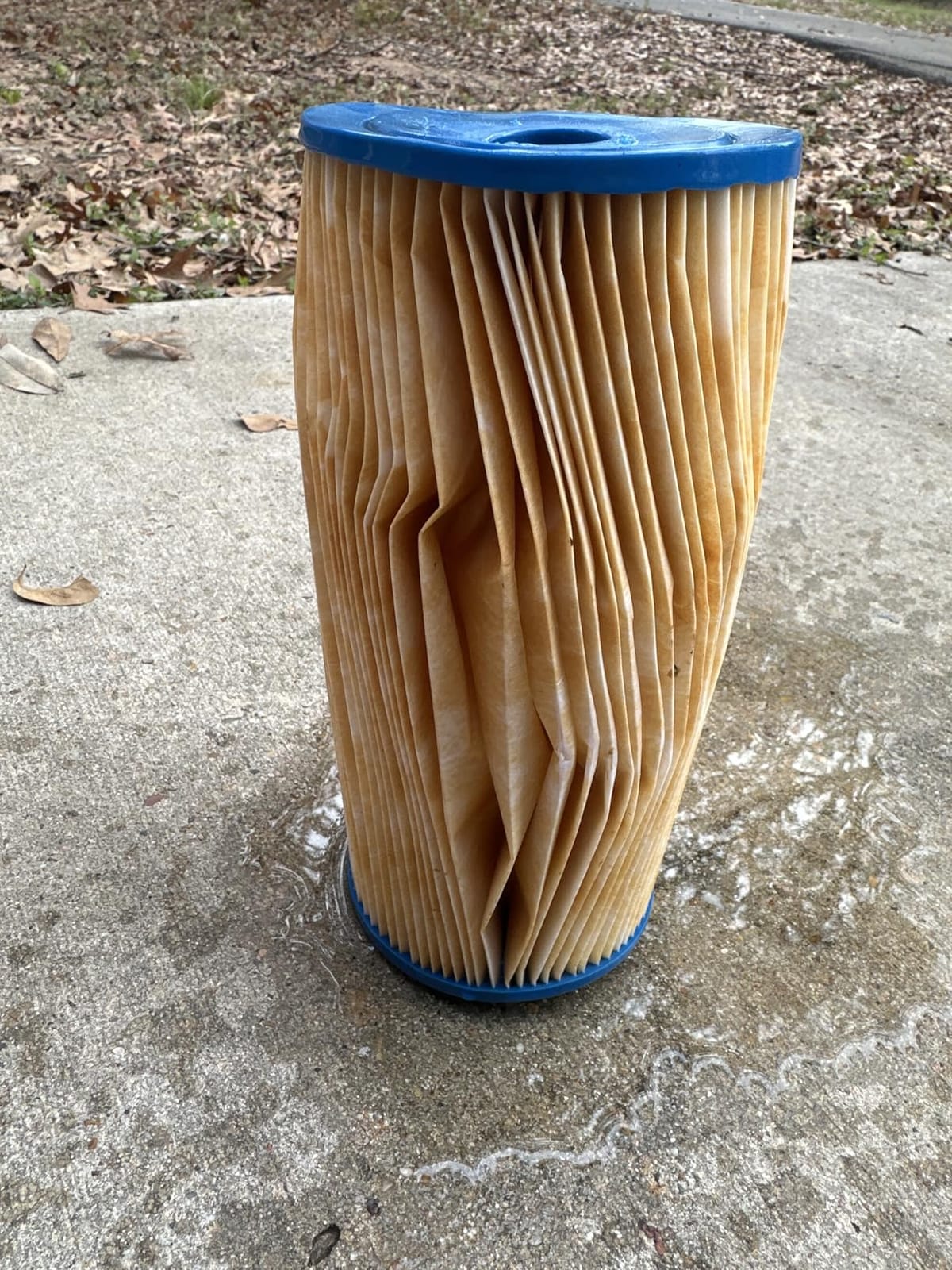
Being washable is the difference between this and a disposable pleated cartridge. Rinse it under a hose, put it back, and you extend the interval indefinitely as long as the media has not torn or collapsed. Several reviewers describe rinsing it back into service rather than binning it.
Owners also report the pleating delivers noticeably more dirt-holding capacity than a non-pleated element of the same size, and that the flow holds steady as it loads rather than dropping off a cliff.
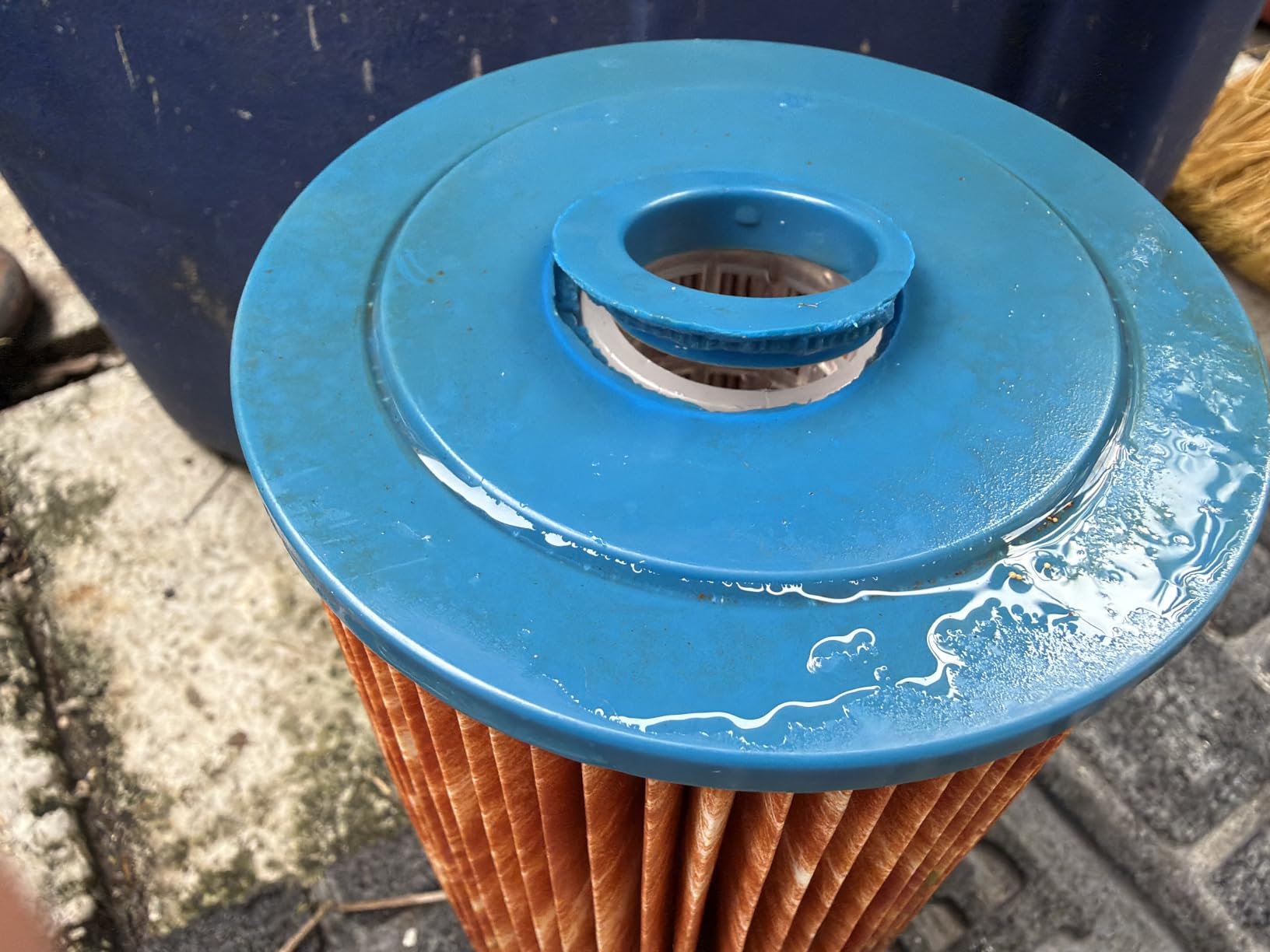
Where a coarse washable prefilter earns its slot
Placing a 20 micron washable element ahead of your fine stage is the single most effective maintenance decision many well owners make. The fine cartridge handles the polishing, the coarse one handles the load, and the expensive part stops clogging.
This also works well as a standalone filter on a well that runs clear, where the 3 to 6 month service life is realistic rather than aspirational. Owners on moderately clean well water report a year or more of use in practice.
Where it falls short
It does nothing for taste or odor, because it does not remove chlorine and carries no carbon stage. If your issue is flavor rather than grit, this is the wrong cartridge and you need a carbon filter instead.
On a high-sediment well the washable design becomes a chore, since you end up rinsing it far more often than every three months. The stated life is a ceiling under good conditions, and heavy wells collapse that number fast.
5. PUREPLUS 5 Micron 10 x 4.5 inch Pleated Sediment Filter, 2 Pack
PUREPLUS 5 Micron 10″ x 4.5″ Whole House Pleated Sediment Filter,2 Pack
5 micron pleated
Up to 30,000 gallons
3-6 month cycle
Universal 10 x 4.5 inch fit
Pros
- Keeps flow strong with no visible grit at the tap
- Exact fit in standard 10 x 4.5 inch housings
- Affordable in multi-packs
- Commonly used as a well water stage
Cons
- Disposable media needs replacing roughly every 60 days on heavy wells
- 5 micron media loads faster than a 20 micron prefilter
This is the fine-stage workhorse. A 5 micron pleated polypropylene element in the 10 x 4.5 inch heavy duty format, with a rated capacity of up to 30,000 gallons and a recommended replacement cycle of 3 to 6 months. It is the most common middle filter in three-stage well systems, and it is where the visible improvement in your water shows up.
The 3D weaving pleating is what separates it from a basic flat cartridge. The extra surface area is why the element holds flow while it loads, and reviewers mention specifically that switching to a lighter construction than heavy-duty cartridges restored flow that had fallen to a trickle. Claimed reduction is up to 99 percent of sediment, sand, rust, and color.
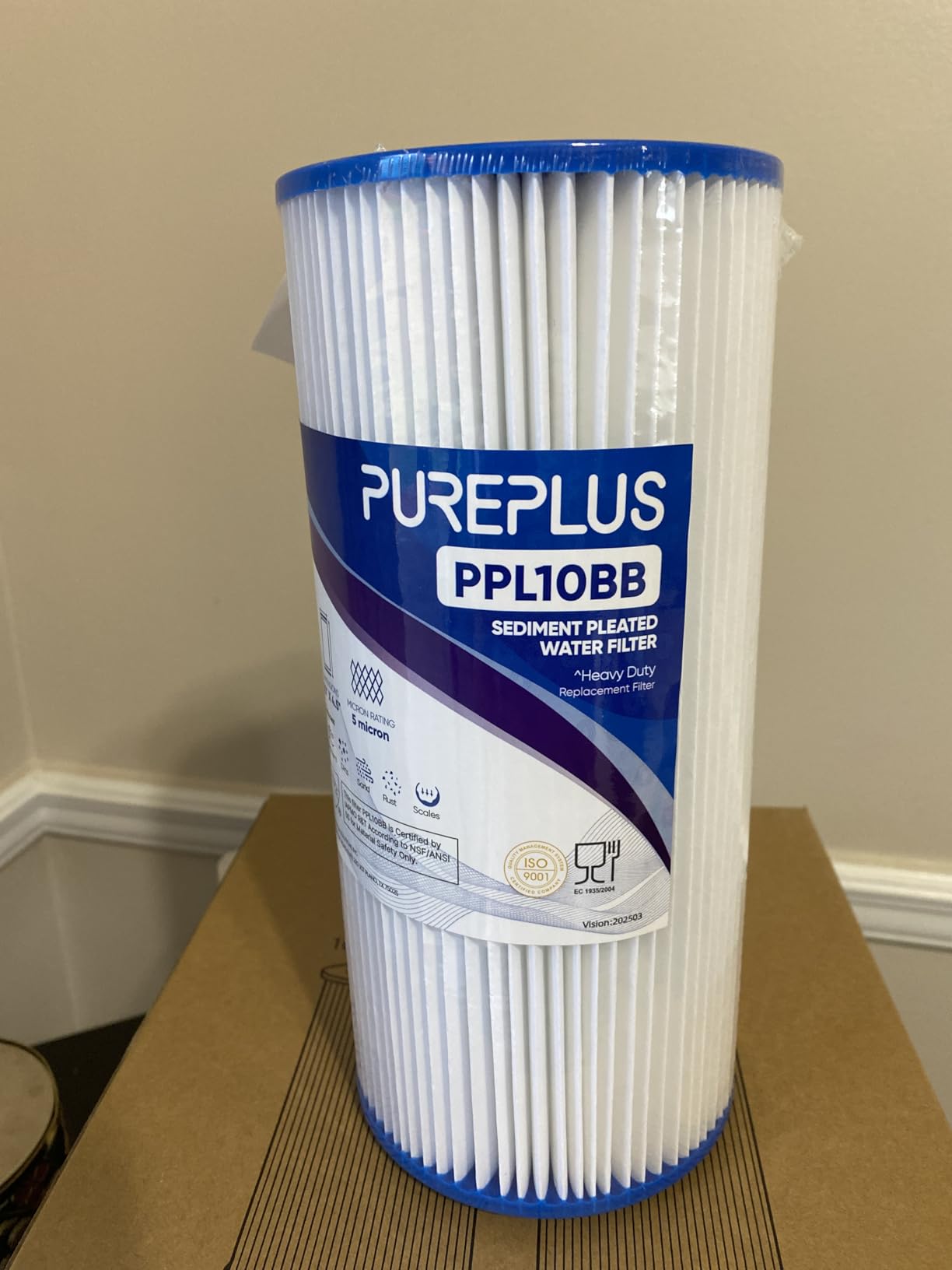
Fit is another strength. It fits the major 10 x 4.5 inch housings including GE FXHSC, DuPont WFHDC3001, Culligan R50-BBSA, and Pentair Pentek S1, EP, and EPM series, so it is a safe choice when you are not certain which housing you own. The material is food grade, BPA free, and certified to EC1935-2004, Australia WaterMark, and REACH requirements.
The manufacturing claims are unusually thorough for this category, with IAPMO certification, ISO9001 and ISO14000 production, a 400 PSI pressure test, and 10,000 water hammer tests. That level of documentation is a reasonable proxy for build quality when you cannot inspect the media yourself.
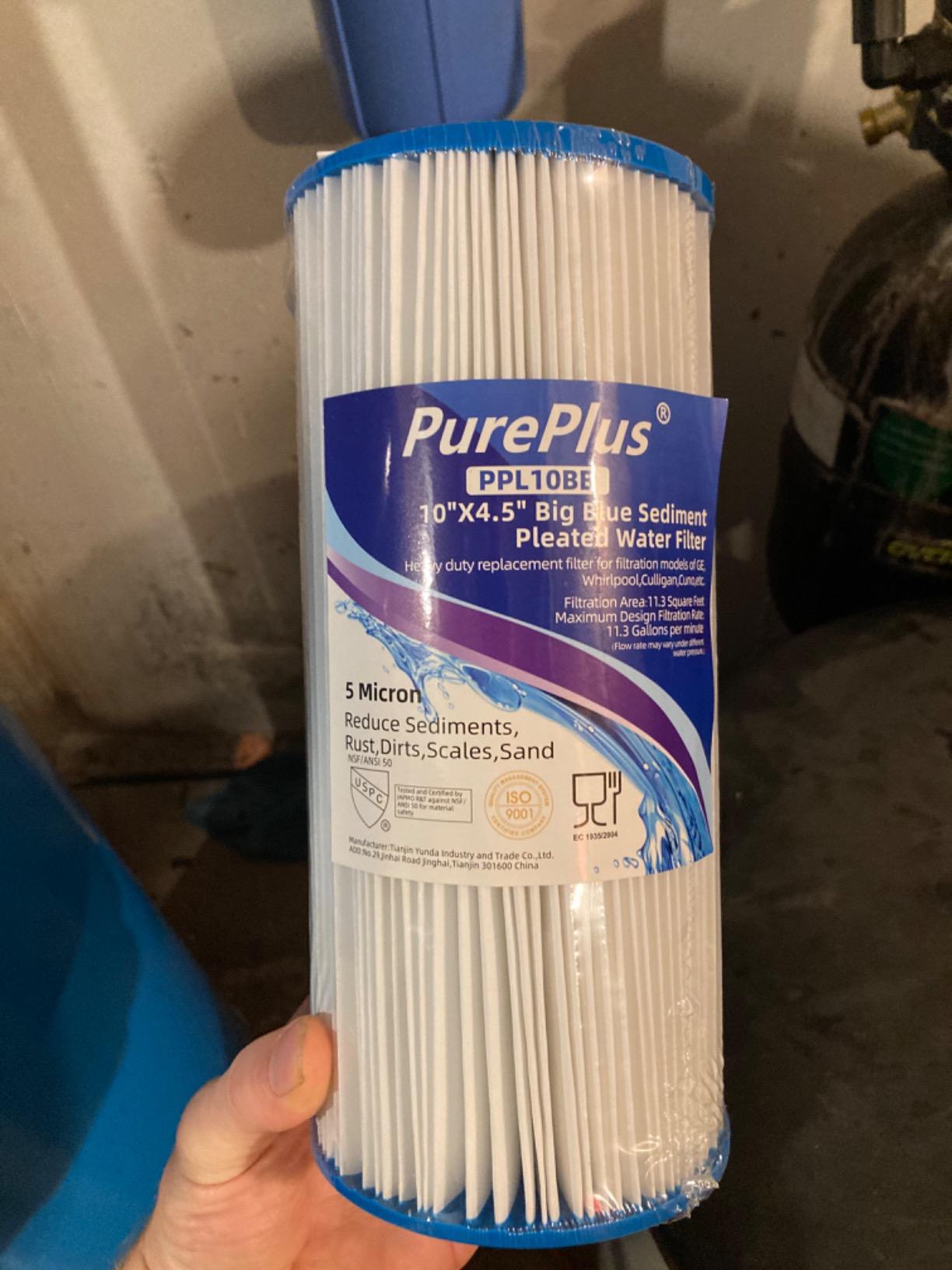
When this is the right choice
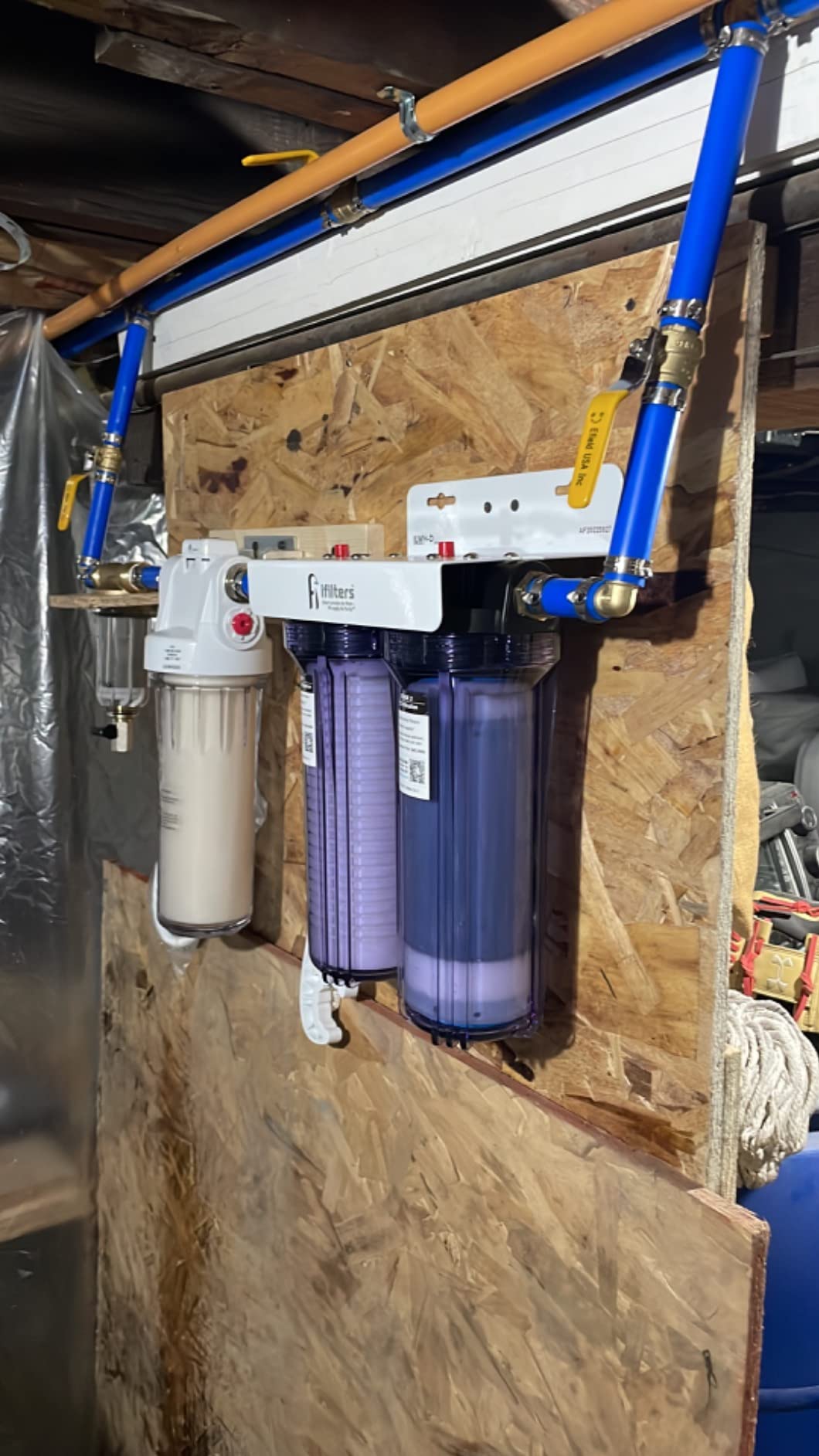
Pair it behind a 50 micron spin-down unit and you get the standard well treatment arrangement: a coarse reusable stage that eats the sand, then this pleated element that clears the fine sediment and protects your softener. Used this way, the replacement interval is realistic rather than punishing.
It is also the simplest path for a homeowner who already owns a 10 x 4.5 inch housing and just needs media. No plumbing changes, no new housing, no valve to install, and the two-pack format is enough to cover a couple of change cycles.
Where it falls short
On a sediment-heavy well with no upstream pre-filter, a 5 micron element can load in roughly 60 days. The finer the rating, the faster it clogs, and this is the most frequent complaint in the reviews.
It is also a disposable design, so the running cost is a standing line item. If your water is dirty enough that you are changing this every other month, a washable coarse stage upstream is the fix that changes the economics.
6. Pentair OMNIFilter RS6 Pleated Sediment Cartridge
Pentair OMNIFilter RS6 Sediment Water Filter, 10″ Whole House Heavy Duty Big Blue Pleated Replacement Cartridge, 10″ x 4.5″
OEM pleated cartridge
10 x 4.5 inch heavy duty
30,000 gallon capacity
About 3 month life
Pros
- Exact leak-free fit in Big Blue and other 10 x 4.5 housings
- Pleated media holds more dirt than flat cartridges
- Easy change with included rubber o-ring gasket
- Single unit avoids bulk ordering
Cons
- Sold as a single cartridge so repeat orders are needed
- Cheaper lookalike cartridges underperform for some owners
This is the OEM element for Pentair OMNIFilter systems, and it carries the highest average rating in this group. If your housing is a Pentair BF7, BF9C, BF35, or BF36C heavy duty unit, this is the cartridge designed for it, and reviewers are consistent about the fit being exact and leak-free.
It also fits 10 x 4.5 inch heavy duty housings from other major brands, so it is a safe fallback when you know the housing size but not the original manufacturer. The element is 4.3 inches in diameter by 9.8 inches tall with a 30,000 gallon capacity rating, and Pentair recommends replacement about every 3 months or whenever pressure drop calls for it.
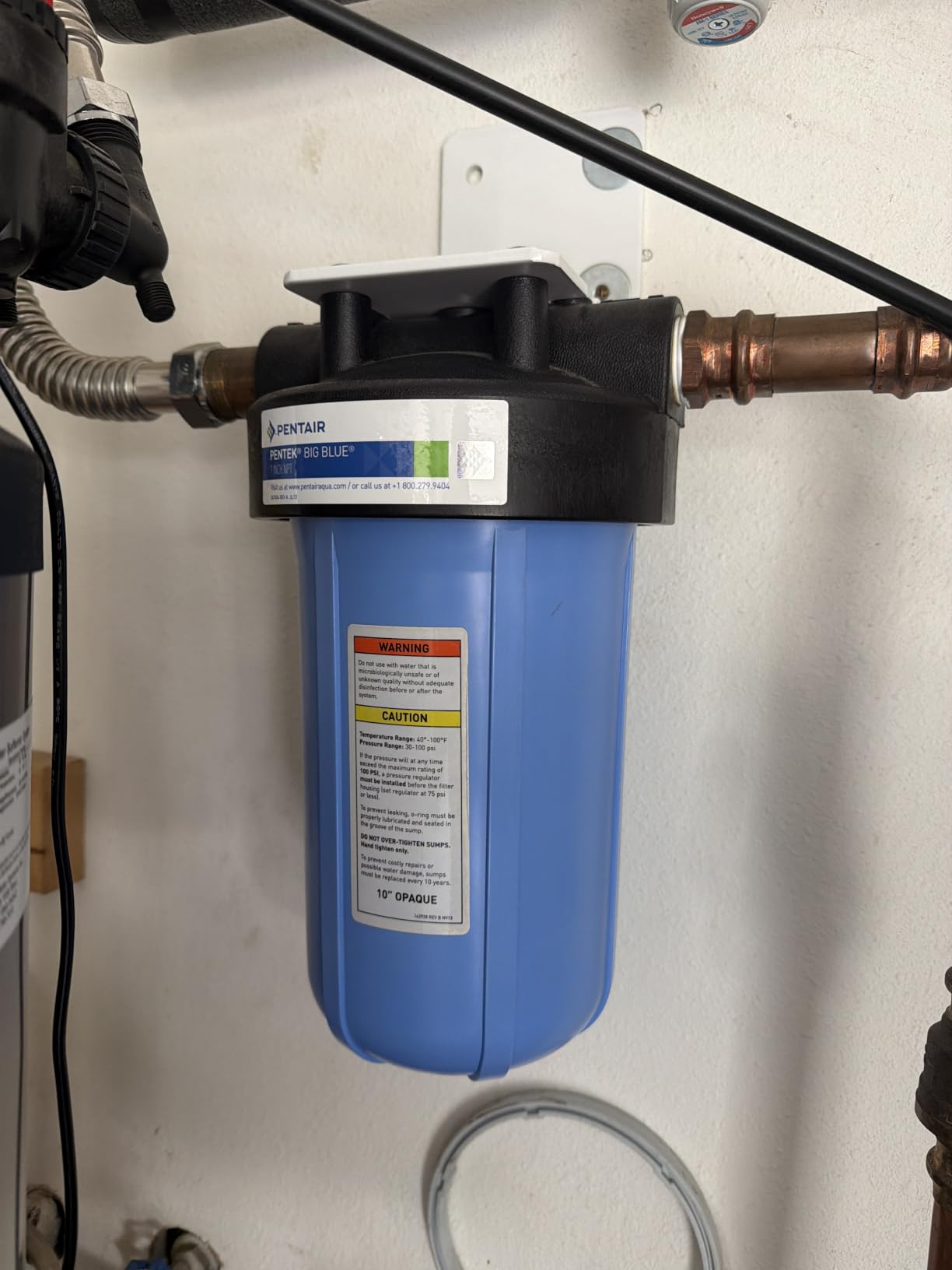
The practical difference between an OEM element and a compatible one shows up in the gasket and the pleat geometry. A rubber o-ring is included, and owners who switched back to the genuine element after trying a cheaper compatible cartridge report the leak and bypass problems disappeared. That is the single most common theme in the reviews.
Owners also report visible results at the fixtures, with grit disappearing from shower heads and faucet aerators, which is the outcome that tells you the sediment is actually being caught rather than pushed downstream.

Why an OEM cartridge is worth the premium
Sealing is what determines whether a cartridge works. A slightly undersized or misgasketed element lets unfiltered water take the easy path around the media, and you change it twice a year while accomplishing nothing. A proper OEM fit solves that.
For anyone running Pentair OMNIFilter equipment, this is also the least risky option because it is the part the housing was designed around. No adapter, no guesswork, no warranty questions.
Where it falls short
It is sold as a single cartridge. If you change filters every three months, you are placing four separate orders a year instead of one multi-pack order, and that friction is the most common reason owners drift to bulk compatible cartridges.
The 3 month interval is also shorter than several competitors recommend for the same housing size. On a clean well owners stretch it to a year, but if you are on the documented schedule the ongoing cost adds up faster than a multi-pack option.
7. PUREPLUS 5 Micron 10 x 2.5 inch String Wound Filter, 4 Pack
PUREPLUS 5 Micron 10″x2.5″ Whole House String Wound Sediment Filter 4 Pack
5 micron string wound
2.5 GPM rated flow
13,000 gallon / 3-6 month life
Four-pack
Pros
- Removes fine particles from well water
- Longer service life than typical string wound cartridges
- Exact fit in standard 10 x 2.5 inch housings
- Four-pack reduces restocking
Cons
- 2.5 GPM rated flow suits smaller housings
- Disposable element on well water
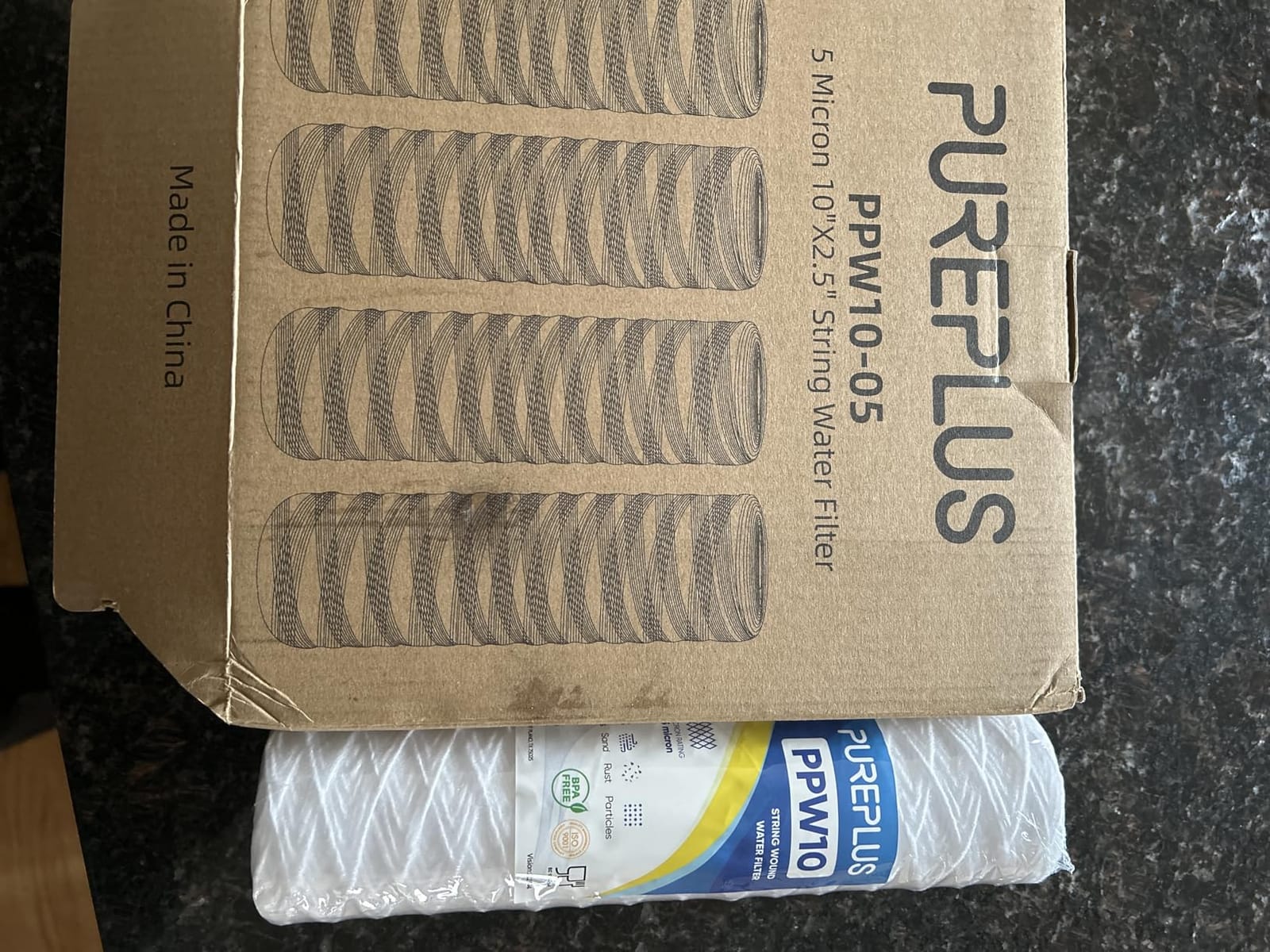
This is the fine filtration option for the smaller 10 x 2.5 inch housing format, and it is the format most often used for under-sink stages and compact inline assemblies. Four cartridges per pack, 5 micron polypropylene string wound media, and a rated life of up to 13,000 gallons or 3 to 6 months depending on usage and water quality.
The graded structure is the technical story here. It is thin and dense at the inside and sparse toward the outside, which creates deep bed filtration channels rather than a flat surface, and the manufacturer reports roughly 30 percent longer service life than common sediment filters. Claimed reduction is up to 99 percent of sediment, sand, rust, and color.
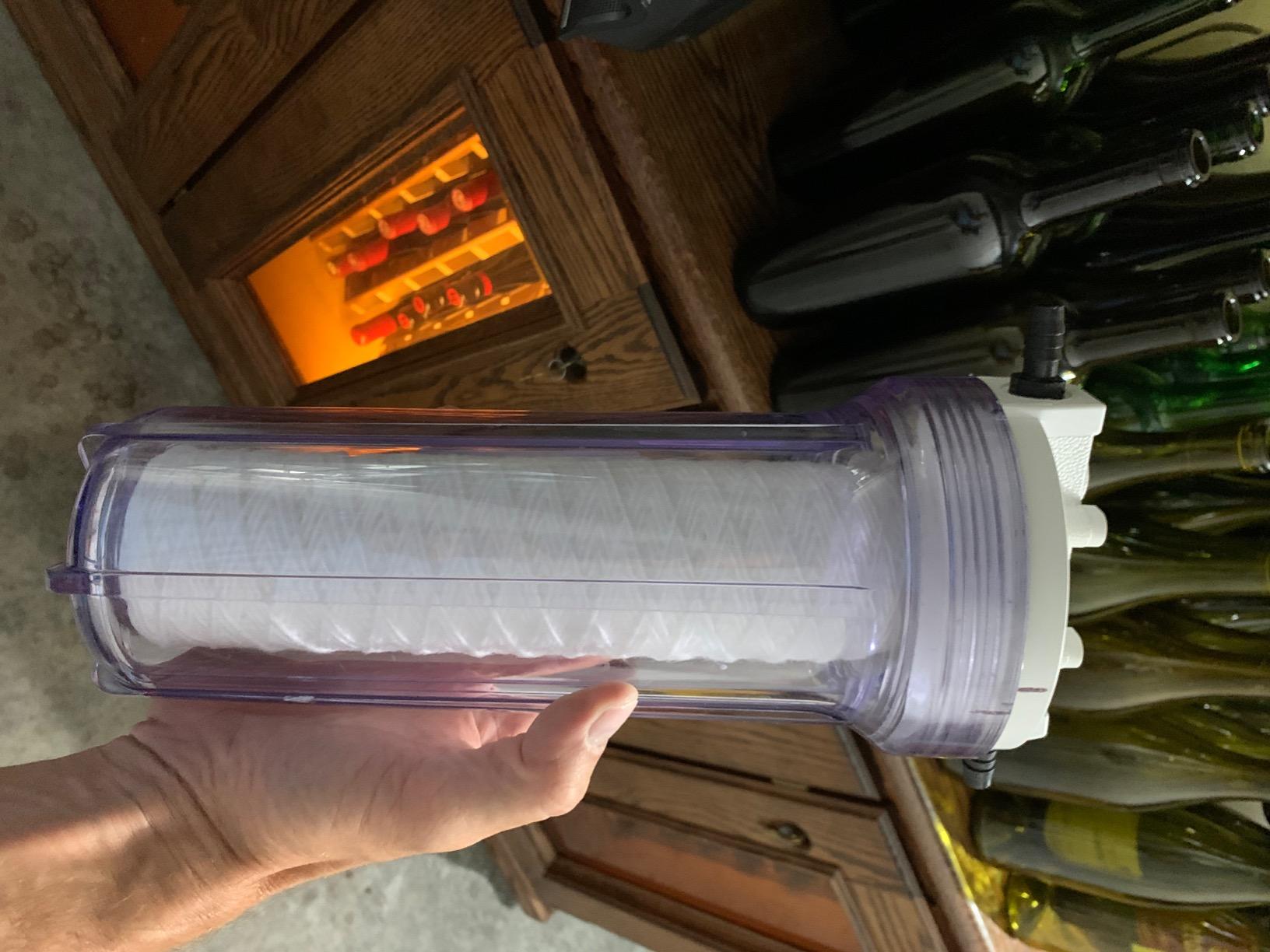
Compatibility is broad for a cartridge this size. It fits standard 10 x 2.5 inch housings including 3M Aqua-Pure AP11T and AP101T, Culligan HF-150, DuPont WFPF38001C, and iSpring RCC7AK. The material is food grade polypropylene microfiber, BPA free, and certified to EC1935-2004, Australia WaterMark, and REACH requirements, with ANSI certification listed.
Owners running these on wells report clearer water and, more importantly, a downstream under-house cartridge that gets changed less often. That downstream service reduction is the number one reason this format gets recommended as a well stage.
Where this format makes sense
If you want fine sediment removal without a large footprint, a 10 x 2.5 inch housing is easier to find, cheaper to replace, and quick to change. The string-wound depth media gives you filtration performance closer to a pleated element without the larger housing requirement.
It is also a good companion to a spin-down prefilter. Coarse screen first, then this element as the polishing stage, and the 3 to 6 month interval becomes a realistic figure rather than a hope.
Where it falls short
The 2.5 GPM rated flow is the constraint to understand. It suits the smaller housing format rather than a high-demand whole-house setup, and on a busy home it is the first thing to slow down as the element loads.
It is disposable, so the recurring replacement cost is permanent. Buyers with a serious sediment problem usually need something upstream of this, and several reviewers note the flow rating is worth considering before committing to the format for whole-house use.
8. Waterdrop RPFK Spin Down Sediment Filter, 40 to 50 Micron
Waterdrop RPFK Spin Down Sediment Filter, 40-50 Micron, BPA Free
50 micron 316L stainless mesh
NSF/ANSI 372 certified
20 GPM max flow
Backwash flush valve
Pros
- Cuts the load on the finer filters that follow
- Durable 316L stainless mesh flushes clean in place
- BPA free housing with lead-free fittings
- Multiple connection fitting types included
Cons
- 50 micron is coarse so fine sediment needs a second stage
- Capped at 20 GPM and 300 ppm TDS
- Upper temperature rating limits outdoor use
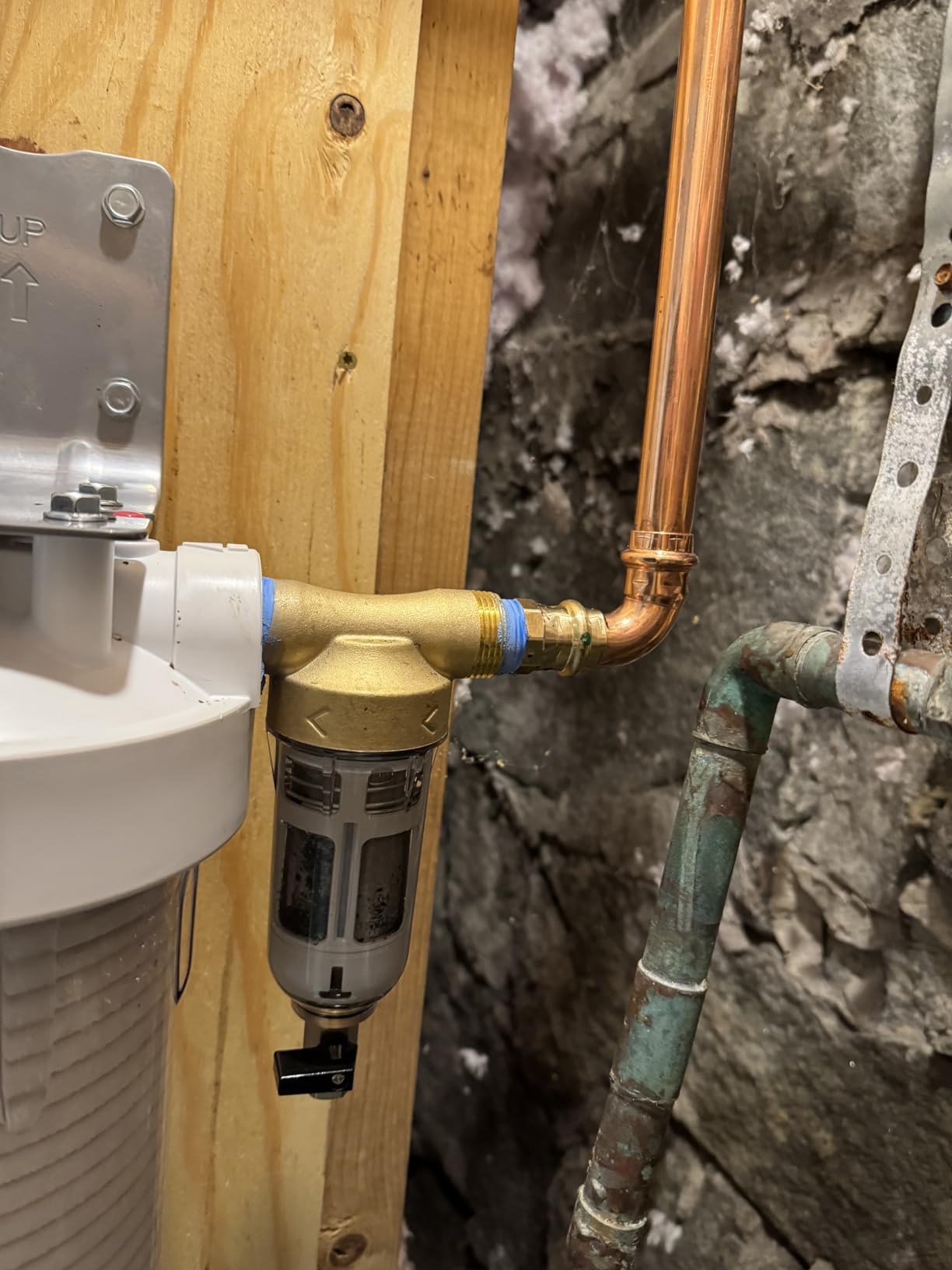
This is the modern spin-down design, and the differences from the classic version are in the materials. The screen is 316L food-grade stainless steel, the housing is a German-made PA12 shell tested to over 600 psi burst pressure, and the fittings are blue nano-coated copper with a corrosion-resistant finish. It carries NSF/ANSI 372 certification and is lead free and BPA free.
Rated flow is 20 GPM with an operating pressure range of 14.5 to 72 psi and a maximum supported TDS of 300 ppm. The backwash flush valve lets you clean the screen in place, and the connection kit covers 1 inch MNPT, 3/4 inch MNPT, 3/4 inch FNPT, and 3/4 inch push-fit options, so it adapts to almost any existing plumbing configuration.
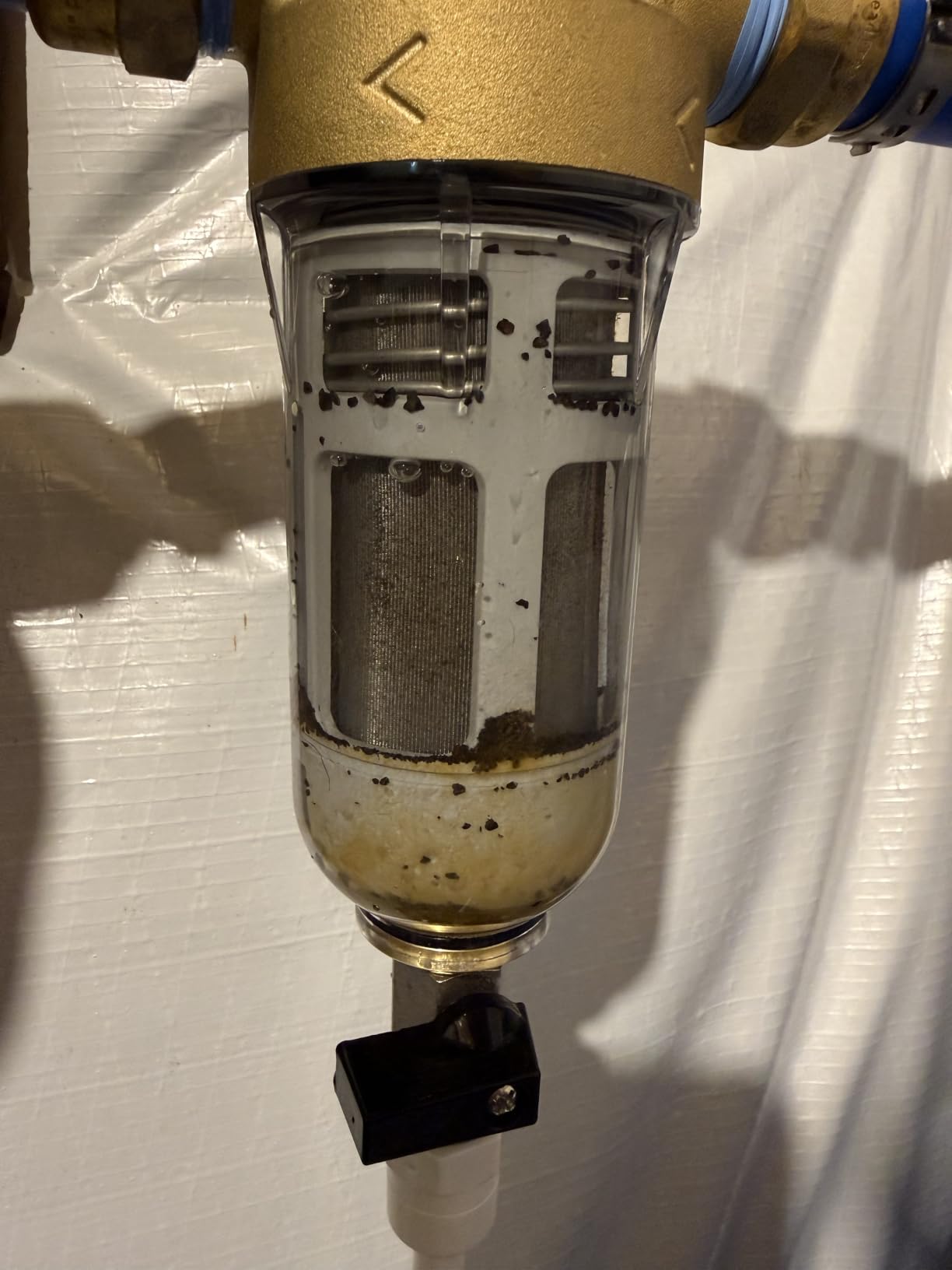
The 50 micron rating makes this a first stage by design, not a finished filter. Owners consistently describe using it to keep sediment and rust out of the house and reduce service on whatever filters follow. The build quality impressions are strong, particularly on the housing and mesh, and installation is reported as quick.
The 4.4 average reflects exactly the compromises. It is rated below the cartridge options because it captures coarse material only, and the 20 GPM and 300 ppm TDS envelope is smaller than larger spin-down units can handle.
Why the certification matters here
NSF/ANSI 372 is a lead-free certification covering the wetted components of the product itself. For a system plumbed directly into drinking water, having the fittings and housing certified rather than simply described as lead-free is a meaningful distinction, and it is not common in this category.
The 316L stainless mesh is also a genuine upgrade over coated or nylon screens for well water. It resists corrosion, survives repeated flushing cycles, and does not shed particles the way some plastic media can as it ages.
Where it falls short
It will not protect a fine cartridge on its own. With a 50 micron screen, fine silt passes straight through, so a downstream stage is required if you want clear water at the tap rather than a protected pump.
The 300 ppm TDS ceiling and the 100F upper temperature rating also narrow where you can install it. A pump house in summer heat or a well with higher dissolved solids is outside the envelope, and that rules out some outdoor installations.
How to Choose a Sediment Filter for Your Well
Most disappointing filter purchases come down to four decisions: matching flow to your pump, picking the right micron rating, placing the unit in the train correctly, and budgeting for media. Here is how to work through each one.
Match filter capacity to well pump flow and household demand
Start with your well pump’s rated GPM, which is normally stamped on the pump or in the installation paperwork. Your filter should be rated comfortably above that number, not equal to it. A filter running at its rated maximum is a filter running at maximum pressure drop, and that pressure drop is what makes a pump cycle more often and wear the pressure tank switch and bladder faster.
As a rule of thumb, choose a housing rated at least 1.5 to 2 times your pump’s GPM so the filter has headroom for a loaded element. A 1 hp pump commonly delivers somewhere around 10 to 15 GPM, which means you want a housing comfortably above that figure. The larger 25 GPM spin-down designs give you the most headroom and the cleanest downstream water; the 10 x 2.5 inch cartridges rated at 2.5 GPM suit point-of-use stages and smaller demand, not a whole house.
You also need a drain within reach. Any spin-down or backwash design needs somewhere for the flushed water to go, and in a pump house that means running a line to a floor drain or an outside drain field.
Understand micron ratings, and why finer is not always better
A micron is one thousandth of a millimeter. A 20 micron element catches grains you can feel between your fingers, while a 5 micron element catches fine material that makes water look cloudy without making it taste bad. Finer sounds better and often is worse for you.
Every extra step down in micron rating narrows the gaps between the media fibers, and the pressure drop across the element climbs faster as it loads. A 5 micron element on raw well water can choke flow within weeks. The better strategy is a staged arrangement: a coarse 40 to 50 micron reusable stage first, then a finer cartridge downstream where the load is already reduced. The fine element then does polishing work instead of dirt removal, and it lasts far longer.
Place the filter ahead of everything you are protecting
Order matters more than most people expect. The sediment filter belongs directly after the pressure tank and before the water softener, any iron filter, and any carbon or UV stage. Softener resin and carbon media are easily damaged by grit, and both become expensive to restore once fouled.
The exception is post-softener polishing. A fine 5 micron cartridge after the softener catches resin fines that shed during backwashing, which is a different job from well sediment and should not be mistaken for it. If you have a softener, plan for a sediment filter before it and a post-softener filter after it, and they are not interchangeable.
Know what a sediment filter will not do
This is the single most common source of disappointment. A sediment filter is mechanical. It traps particles, and it does nothing to dissolved minerals. Orange or rust-colored staining, metallic taste, and slime in the toilet bowl are iron and iron bacteria problems, and no cartridge on this list will fix them.
Dissolved iron passes straight through 5 micron media because the particles are smaller than the openings. If your water has orange staining, black staining in a bathtub, or a sulfur smell, stop shopping in this category and look at an iron filter, a manganese media filter, or a backwashing catalytic carbon unit instead. Manganese shows up as black or gray staining and is a separate removal problem again.
Sediment load also varies seasonally and year to year, so a single clean test result is not a guarantee. Test at least once a year, and again after flooding or a long dry spell, because the aquifer changes faster than most owners expect.
Maintenance and Replacement Schedules
Sediment filters fail gradually, not suddenly, and the failure mode is a pressure drop that quietly stresses the pump. A simple gauge check every few months tells you when the element is spent, and it is the cheapest maintenance in the whole treatment train.
What to check and how often
For cartridge filters, check the pressure gauge or feel for reduced flow at the kitchen tap every two to three months on a clean well, and monthly on a dirty one. When the drop across the filter reaches roughly 5 to 7 psi, change it. Do not push a loaded element, because every extra psi is pressure the pump is fighting to overcome.
For spin-down filters, flush on a schedule tied to what you see in the clear housing rather than to a fixed calendar. Weekly is reasonable on a clean well, daily or twice daily on a well that produces sand. Open the housing and check the screen at least a few times a year so you can see the mesh condition and the gasket seating.
Washable pleated elements get rinsed under a hose until the water runs clear, then go back into service. Rinse from the outside in so you do not drive debris deeper into the media.
Set up a replacement system before you need one
Disposable cartridges are the easiest thing to forget, and a forgotten cartridge is how a pump gets damaged. Filter housings take a standard size, and the standard sizes are 10 x 2.5 inch and 10 x 4.5 inch, so buy a spare before you need one and set a calendar reminder tied to your change interval rather than to when you notice low flow.
For a typical 3 to 6 month cartridge cycle, the multi-packs in this list are sized so one order covers most of a year. That is the cheapest operational decision in the category, because it removes the failure mode where a household runs out of media and skips a change.
Frequently Asked Questions
What is the best whole house sediment filter for well water?
The best whole house sediment filter for well water depends on your sediment load and your tolerance for maintenance. A spin-down filter with a washable stainless steel mesh is the lowest-maintenance option and works best as a coarse first stage. For finished filtration, a 5 micron pleated or string-wound cartridge in a 10 x 4.5 inch housing captures fine sediment and protects downstream equipment. Most well systems use both, with the spin-down unit ahead of the cartridge.
Which sediment filter is best?
Spin-down filters are best for durability and low running cost, pleated cartridges are best for balance of capacity and flow, string-wound cartridges are best for deep filtration in a small housing, and automatic backwash units are best for hands-off operation on heavy sediment. The best choice is the one whose rated flow comfortably exceeds your well pump output and whose micron rating matches how dirty your water actually is.
What are the best filters to use for well water?
A complete well water filtration setup starts with testing the water, then a sediment filter ahead of everything else to protect the equipment behind it. Follow that with treatment for whatever the test found, such as a water softener for hardness, an iron filter for dissolved iron and iron bacteria, a carbon filter for taste and odor, and a UV sterilizer installed last and inline to the house.
How often should a well sediment filter be changed?
Most 5 micron pleated and string-wound cartridges are rated at 3 to 6 months on moderately clean well water, and some owners stretch to a year. Washable 20 micron pleated elements can be rinsed and reused indefinitely while the media stays intact. Spin-down screens are not changed at all, just flushed, usually weekly to daily depending on the sediment load. Change cartridges on pressure drop rather than on the calendar whenever you can.
What micron rating is best for well water?
A 20 to 50 micron rating is right for a coarse first stage that catches sand and rust, and 5 micron is right for a downstream polishing stage. Finer is not automatically better, because every step down in rating narrows the media gaps and raises pressure drop as the element loads. Staging a coarse reusable filter ahead of a fine cartridge is the approach that gives you clear water without choking flow.
Final Verdict for the Best Sediment Filters for Well Systems in 2026
For most well owners, the iSpring WSP-50 is the right starting point. It is a durable, reusable first stage with a long service life and no media to keep buying, and it earns the top spot here on the strength of the strongest combination of rating and review history in the group. Behind it, a fine cartridge finishes the job: the PUREPLUS 5 Micron pleated element in a 10 x 4.5 inch housing if you have that housing, or the PUREPLUS string-wound four-pack if your setup uses the smaller 10 x 2.5 inch format.
Whichever route you take, match the rated flow to your well pump with headroom, stage coarse before fine, and put the filter ahead of the softener. And if your water is staining orange rather than running sandy, stop here and look at iron filtration, because no sediment cartridge on this list is built to solve that. Test first, size second, and buy once.