
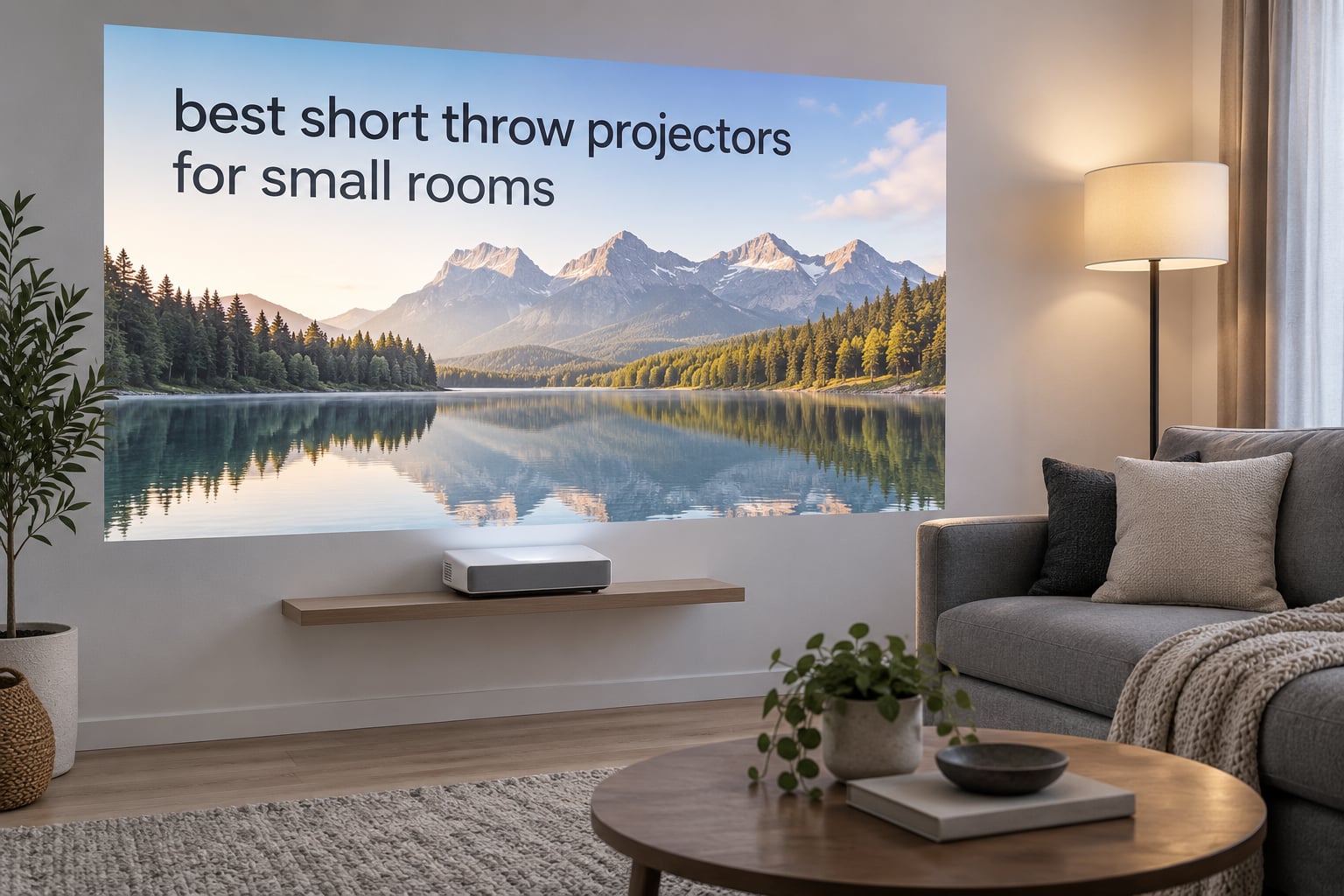
A short throw projector has a throw ratio of roughly 0.4:1 to 0.65:1, which means it can fill a 100-inch widescreen image from about 5 to 7 feet away instead of the 10 to 12 feet a standard throw projector needs. In a room under about 12 feet deep, that is the difference between an 80-inch picture and a genuinely large one.
Most projector roundups treat short throw, ultra short throw and standard throw as interchangeable. They are not. A short throw projector needs a few feet of breathing room between the lens and the wall, an ultra short throw projector sits almost against the screen, and a standard throw projector will simply run out of room. Getting that distinction right is most of what makes a projector work in a small space.
We compared ten short throw projectors across throw ratio, native resolution, ANSI brightness, light source, room fit and the complaints buyers actually repeat. The list spans a 500-ANSI-lumen budget unit for a dark bedroom, two 4K laser machines for a daylit media room, and two ultra short throw models that sit a few inches from the wall. Below is the best short throw projector for small rooms in 2026, and why each one earns its place.
One note before we start: brightness figures here are ANSI lumens, not the raw “lumens” some brands print on the box. The two numbers are not comparable, which is why every spec in this guide is quoted the same way.
Table of Contents
Our Top 3 Short Throw Projectors for Small Rooms (October 2026)

BenQ TH671ST
- Native 1080p DLP
- 3000 ANSI lumens
- 100 inch image from 5 feet
- Low input lag for console gaming
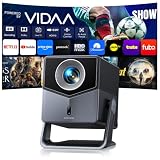
TOPTRO A2 Smart Projector
- VIDAA smart OS with streaming apps
- 650 ISO ANSI lumens
- 200 degree rotating stand
- AI auto focus and keystone
AWOL VISION LTV-3000 Pro
- Native 4K triple laser
- 3000 ANSI lumens
- 150 inch image from 12.8 inches
- Dolby Vision and HDR10+
All 10 Short Throw Projectors at a Glance in 2026
| Product | Specs | Action |
|---|---|---|
| BenQ TH671ST |
|
Check Latest Price |
| TOPTRO A2 |
|
Check Latest Price |
| AWOL VISION LTV-3000 Pro |
|
Check Latest Price |
 Optoma GT1090HDR Optoma GT1090HDR |
|
Check Latest Price |
 Hisense PL2 Hisense PL2 |
|
Check Latest Price |
 Optoma GT2000HDR Optoma GT2000HDR |
|
Check Latest Price |
 ViewSonic PS502W ViewSonic PS502W |
|
Check Latest Price |
 BenQ X500i BenQ X500i |
|
Check Latest Price |
 BenQ TK710STi BenQ TK710STi |
|
Check Latest Price |
 iSinbox AC311 iSinbox AC311 |
|
Check Latest Price |
1. BenQ TH671ST – The Best Short Throw Projector Overall for Small Rooms
BenQ TH671ST 3000 Lumens 1080p Short Throw Home Entertainment Projector
Native 1080p DLP
3000 ANSI lumens
100 inch image from 5 feet
Pros
- 3000 ANSI lumens holds up with lights on
- Fills a 100 inch screen from about 5 feet
- Low input lag suits console and PC gaming
- 92 percent Rec.709 color accuracy
- Three-year parts and labor warranty
Cons
- Shadowing shows if someone crosses the lens
- Not ultra short throw so 100 inches still needs 5 feet
- No optical audio out or USB media playback
I keep coming back to the TH671ST because it solves the small-room problem in the least dramatic way possible. It throws a 100-inch image from about 5 feet, which fits behind a normal sofa or a desk in a room most people would call small, and it does that at 3000 ANSI lumens so you are not watching in a blackout.
The 3000-lumen figure is the one that matters. Owners repeatedly report using it in sunrooms, small living rooms and golf simulator bays with lights on or blinds half drawn. Reviewers also single out the low input lag and a refresh rate matched to current consoles, plus a three-year warranty backed by US support.
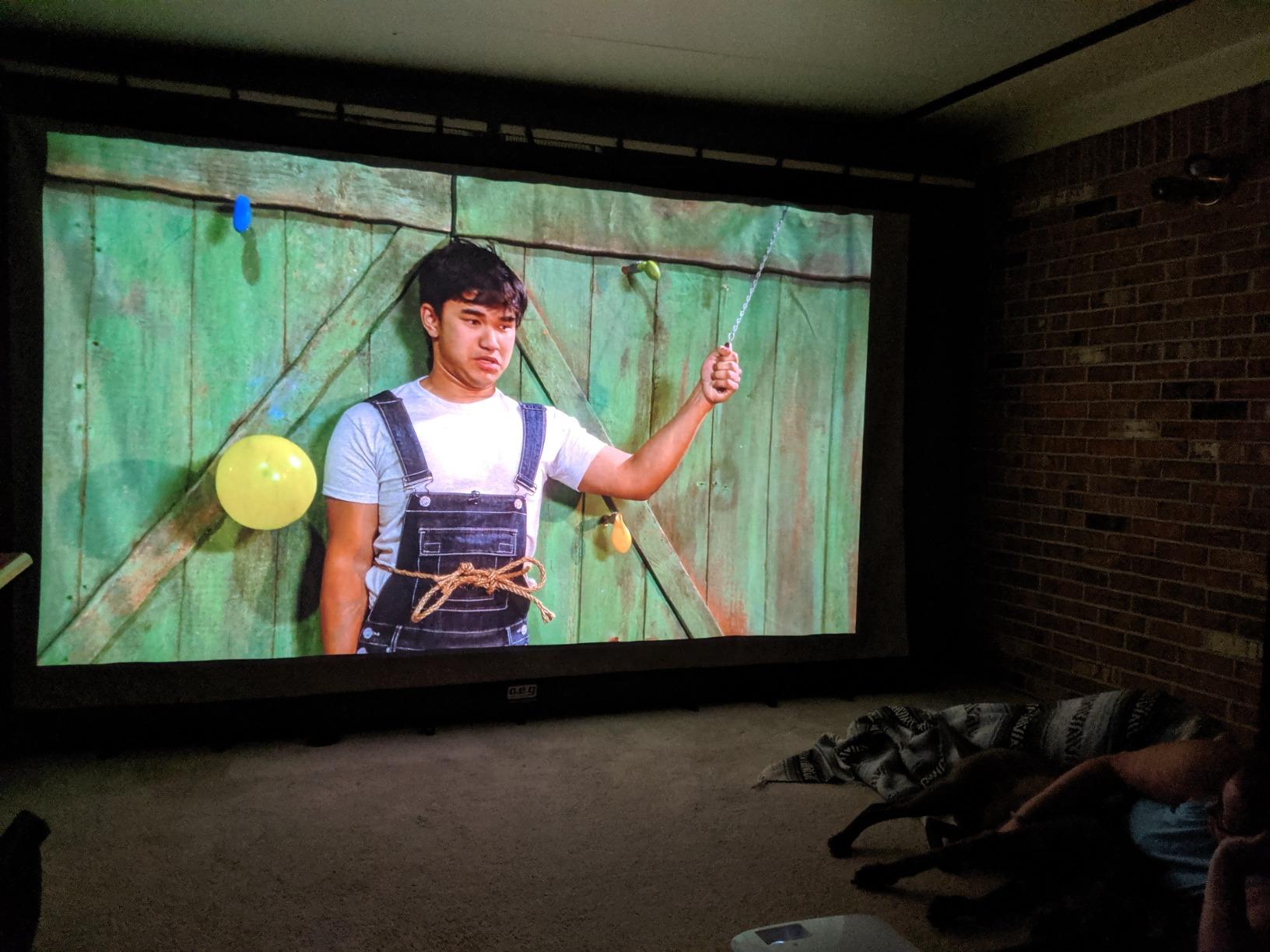
Long-term owners report four to five years of dependable service with no repairs, and the image holds 92 percent Rec.709 color coverage. The chassis is 5.9 pounds with a 3-year parts and labor warranty, and the fixed 60 to 300-inch image range means you set the screen size with zoom rather than moving the unit around.
Keystone and zoom controls plus leveling feet make placement forgiving in an awkward room. The lamp is rated for 10000 hours, though heavy gaming use shortens that, and the exposed lens is easy to scratch if you reposition it often.
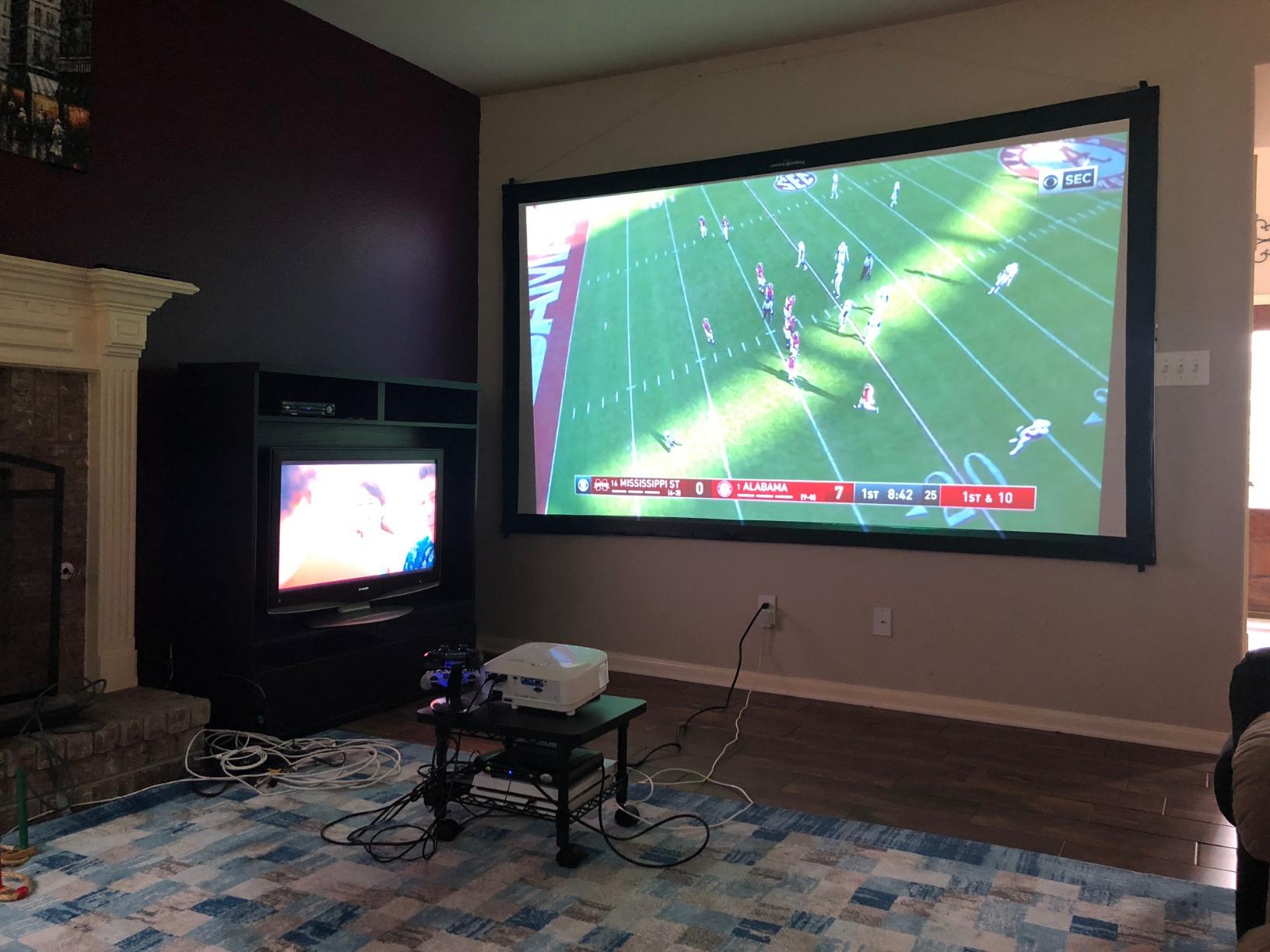
Which rooms the TH671ST suits
This is the right pick for a small apartment living room, a den or a bedroom where you want a real 100-inch screen and some flexibility on where the projector sits. The fixed 5-foot throw is short enough to hide behind furniture and long enough that nobody walks through the beam every time they get up for a snack.
It also suits a golf simulator bay, since owners in that segment cite brightness and throw distance as the reasons it works. Just know that 3000 lumens is a lights-low room, not a sun-flooded one.
What to check before you buy
Measure from your intended lens position to the wall before anything else. If you have under 5 feet of clear distance, this unit will not fill a 100-inch screen no matter what the marketing says, and the next step up is an ultra short throw model.
Also plan for audio. There is no optical audio out, so a soundbar has to connect over HDMI or Bluetooth. And if you sit close to a very large screen, DLP rainbow fringing can show up on high-contrast edges.
2. TOPTRO A2 – Best Value Smart Short Throw Projector
Smart Projector 4K [VIDAA Live TV & 36W Dolby & Voice Control] with WiFi6 and Bluetooth, Short Throw Projector Compatible with Netflix, AI Auto Focus, HDR10, Home Theater Proyector for Outdoor Movies
Native 1080p LED
650 ISO ANSI lumens
100 inch image from about 7 feet
Pros
- 200 degree rotating stand doubles as a carry handle
- VIDAA OS with Netflix and Prime Video built in
- AI auto focus and auto keystone
- 36W Dolby audio with HDMI ARC
- Compact 4.2 pound body suits bedrooms and dorms
Cons
- 650 ISO ANSI lumens wants a dark room or ALR screen
- Native 1080p so 4K content displays at 1080p
- iOS cannot mirror Netflix or Disney+
The TOPTRO A2 has the strongest rating in this group, and for a specific reason: it removes every step between unboxing and watching. AI auto focus, auto keystone, auto screen alignment and obstacle avoidance mean you set it on a shelf and it does the geometry itself.
At 4.2 pounds with a 200-degree rotating stand that doubles as a carrying handle, it moves between a bedroom, a dorm and a backyard table without a case. The VIDAA operating system loads Netflix, YouTube, Prime Video, Disney+ and Hulu, so you do not need a streaming stick.
![Smart Projector 4K [VIDAA Live TV & 36W Dolby & Voice Control] with WiFi6 and Bluetooth, Short Throw Projector Compatible with Netflix, AI Auto Focus, HDR10, Home Theater Proyector for Outdoor Movies customer photo 1](https://www.conservatoryweho.com/wp-content/uploads/2026/09/B0GX1FC64J_customer_1.jpg)
The 36W Dolby audio with dual 18W speakers is genuinely usable on its own, and HDMI ARC plus two-way Bluetooth 5.2 make it easy to hand sound off to a soundbar when you want one. WiFi 6, AirPlay 2 and Miracast cover the wireless side.
The honest limitation is brightness. At 650 ISO ANSI lumens this is a dark-room projector, and reviewers say so directly, pointing to an ALR screen as the fix if your room has any ambient light.
![Smart Projector 4K [VIDAA Live TV & 36W Dolby & Voice Control] with WiFi6 and Bluetooth, Short Throw Projector Compatible with Netflix, AI Auto Focus, HDR10, Home Theater Proyector for Outdoor Movies customer photo 2](https://www.conservatoryweho.com/wp-content/uploads/2026/09/B0GX1FC64J_customer_2.jpg)
Which rooms the TOPTRO A2 suits
It is built for bedrooms, dorms and rentals where the priority is a large image in a dark room and nobody wants to re-mount anything. A 100-inch image from roughly 7 feet fits a 10-foot wall comfortably, and the rotating stand makes side-wall placement practical.
It is also a decent first projector for a child who is still moving rooms. Nothing gets drilled, and the whole unit fits in one hand.
What to check before you buy
Do not read the 4K in the name as native 4K. The panel is 1920 x 1080 and 4K refers to decoding, which is a distinction reviewers regularly have to make for other buyers.
Check your light conditions before ordering. If the room takes daylight through a window, step up to a 2000-plus lumen laser unit. Also note that the remote arrives without AAA batteries and that iOS cannot mirror the licensed streaming apps.
3. AWOL VISION LTV-3000 Pro – Best Premium 4K Ultra Short Throw
AWOL VISION LTV-3000 Pro 4K 3D Ultra Short Throw Triple Laser Projector, Dolby Vision & Atmos, HDR10+, 150″ UST Laser TV Home Theater Projector
Native 4K triple laser
3000 ANSI lumens
150 inch image from 12.8 inches
Pros
- 150 inch image from about 12.8 inches of throw
- Triple laser with a 25000 hour life and no color wheel
- Dolby Vision HDR10+ and 3D support
- Built-in center channel speaker for dialogue
- Pairs with ALR screens for daylight viewing
Cons
- Best picture needs a dark room or a paid ALR screen
- Fixed 0.25:1 ratio needs a deep cabinet or a motorized slider
- 28 pound chassis and 3D glasses sold separately
The LTV-3000 Pro is the one to buy if your constraint is not throw distance but cabinet depth. At a fixed 0.25:1 throw ratio it paints a 150-inch image from about 12.8 inches, or a 100-inch image from roughly 8.5 inches, so it can live inside a media unit against the wall.
It is native 4K with a triple laser light source rated at 25,000 hours and no color wheel, covering 107 percent of BT.2020 and 147 percent of DCI-P3. Dolby Vision, HDR10+, Dolby Atmos and 3D support make it the most cinema-capable picture in this group.
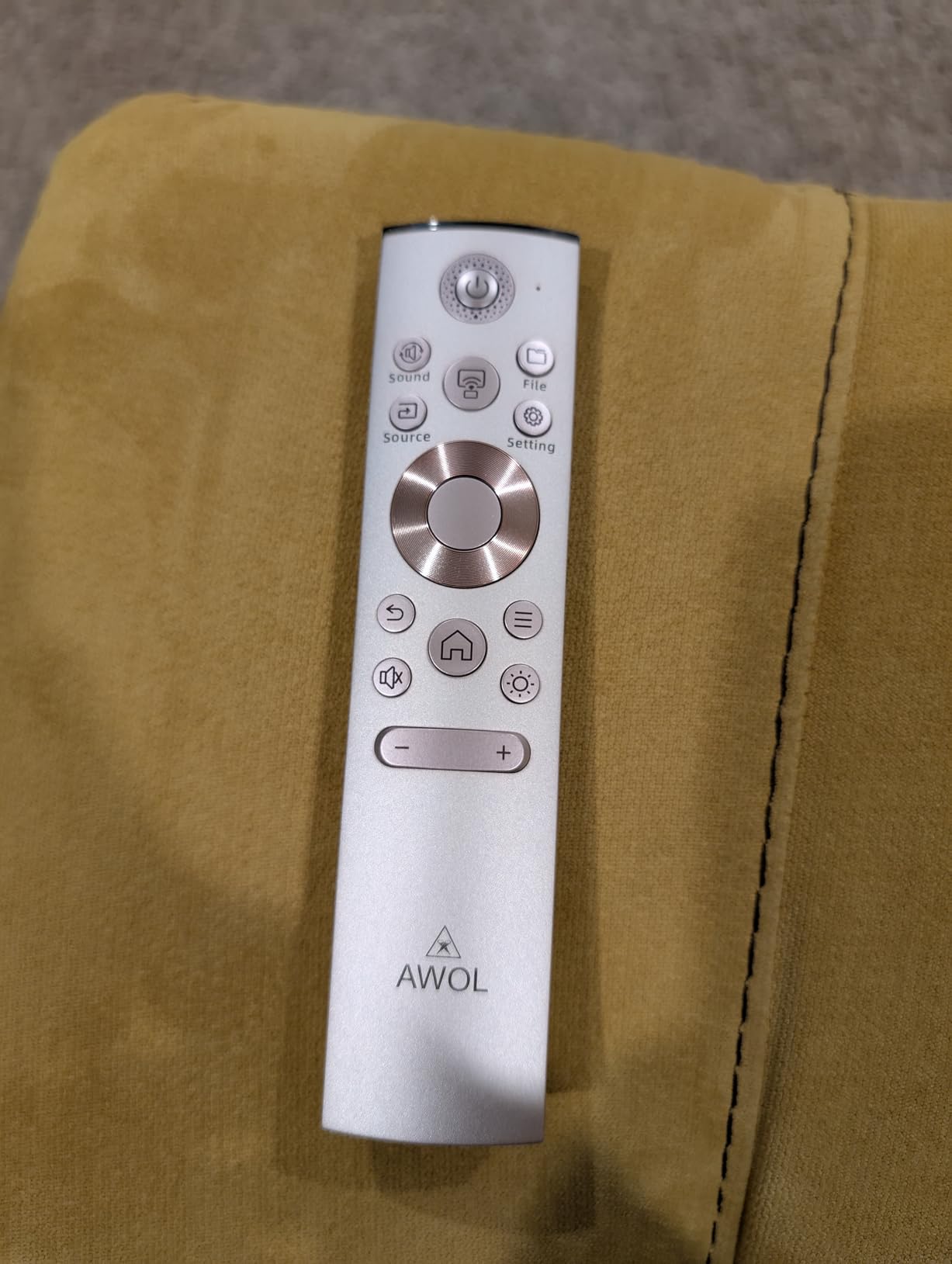
What separates it from other laser TVs is the built-in center-channel speaker, which puts dialogue from the screen itself. Reviewers single that out as a real differentiator in a room too small for a full surround array, and it also responds to PJ Link and Control4 for automation.
The setup caveats are about placement, not picture. Because the ratio is fixed, your cabinet needs to be deep enough or you need a motorized slider, and at 28 pounds the chassis needs deliberate placement rather than a casual shelf.
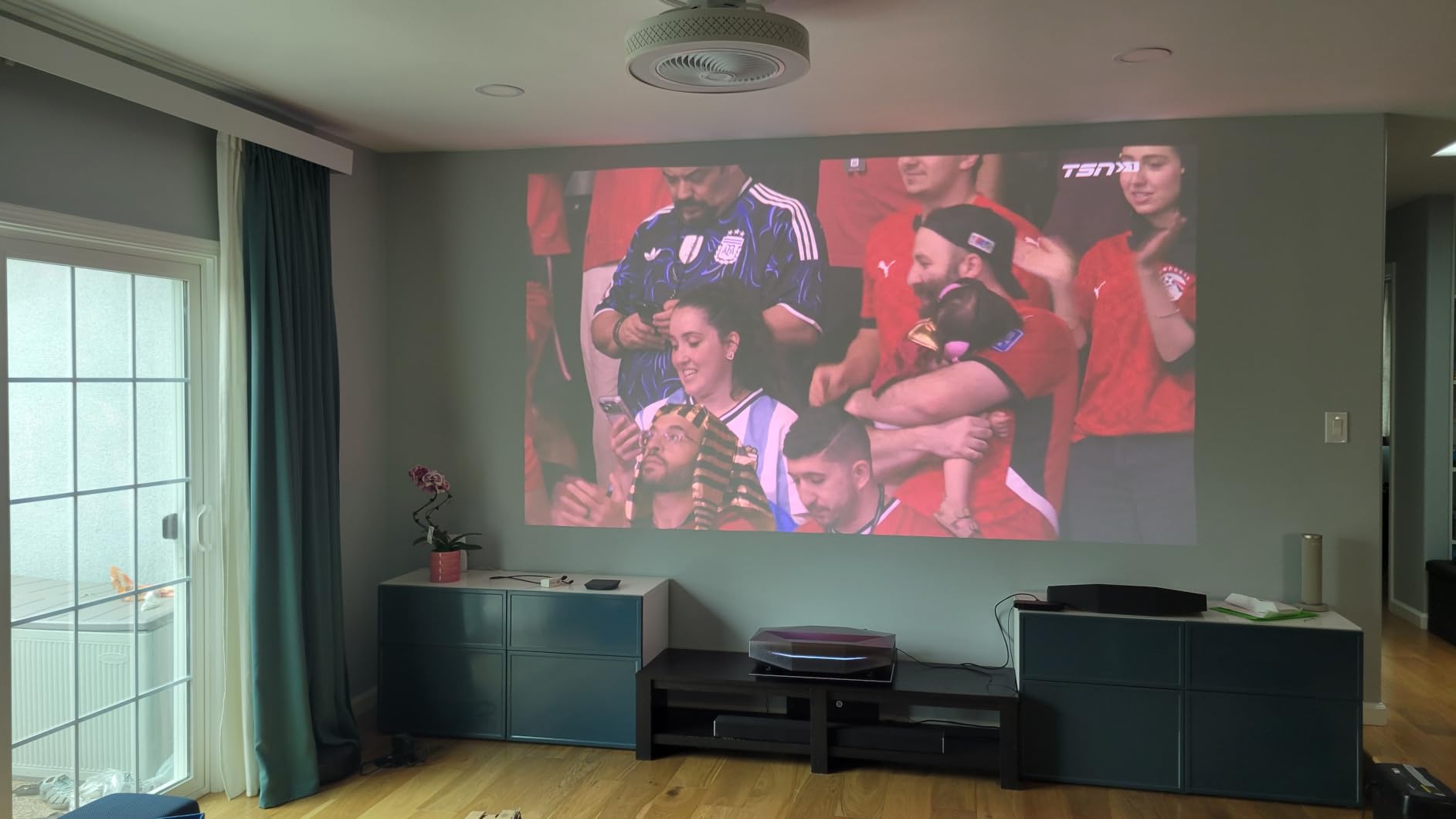
Which rooms the LTV-3000 Pro suits
This is a media room, a den or a living room where the projector replaces a television and sits on a console. It works with ALR screens, so a daylit room is achievable with the right surface even though a dark room is where it looks best.
If you have very little floor space and a shallow console, this solves a problem no other unit here does. Just budget for 3D glasses if you want 3D, and plan on a 3D source.
What to check before you buy
Measure your console depth first. At 0.25:1 the lens needs the full 12.8 inches of clearance for a 150-inch image, and a unit that cannot sit that far off the wall will not reach the size you want.
Decide about 3D early, because active shutter glasses are extra. And be realistic about contrast: in a sunlit room without an ALR screen, the 2500:1 native ratio will not deliver the picture the feature list implies.
4. Optoma GT1090HDR – Best for Daylit Small Rooms
Optoma GT1090HDR Short Throw Laser Home Theater Projector | 4K HDR Input | Lamp-Free Reliable Operation 30,000 hours | Bright 4,200 lumens for Day and Night | Short Throw
Native 1080p laser
4200 ANSI lumens
120 inch image from 4 feet 4 inches
Pros
- 4200 ANSI lumens is the highest figure in this group
- DuraCore laser rated at 30000 hours with no filter changes
- 120 inch image from about 4 feet 4 inches
- 32dB operation in eco mode
- 120Hz gaming mode at 20-40ms response
Cons
- Native 1080p despite 4K input
- Manual focus is hard to get perfectly sharp
- No HDMI ARC or optical audio out
If your small room has a window, brightness is the whole conversation, and the GT1090HDR answers it with 4200 ANSI lumens. That is the highest figure among these ten units, and it is what reviewers mean when they describe using it with lights on for family viewing.
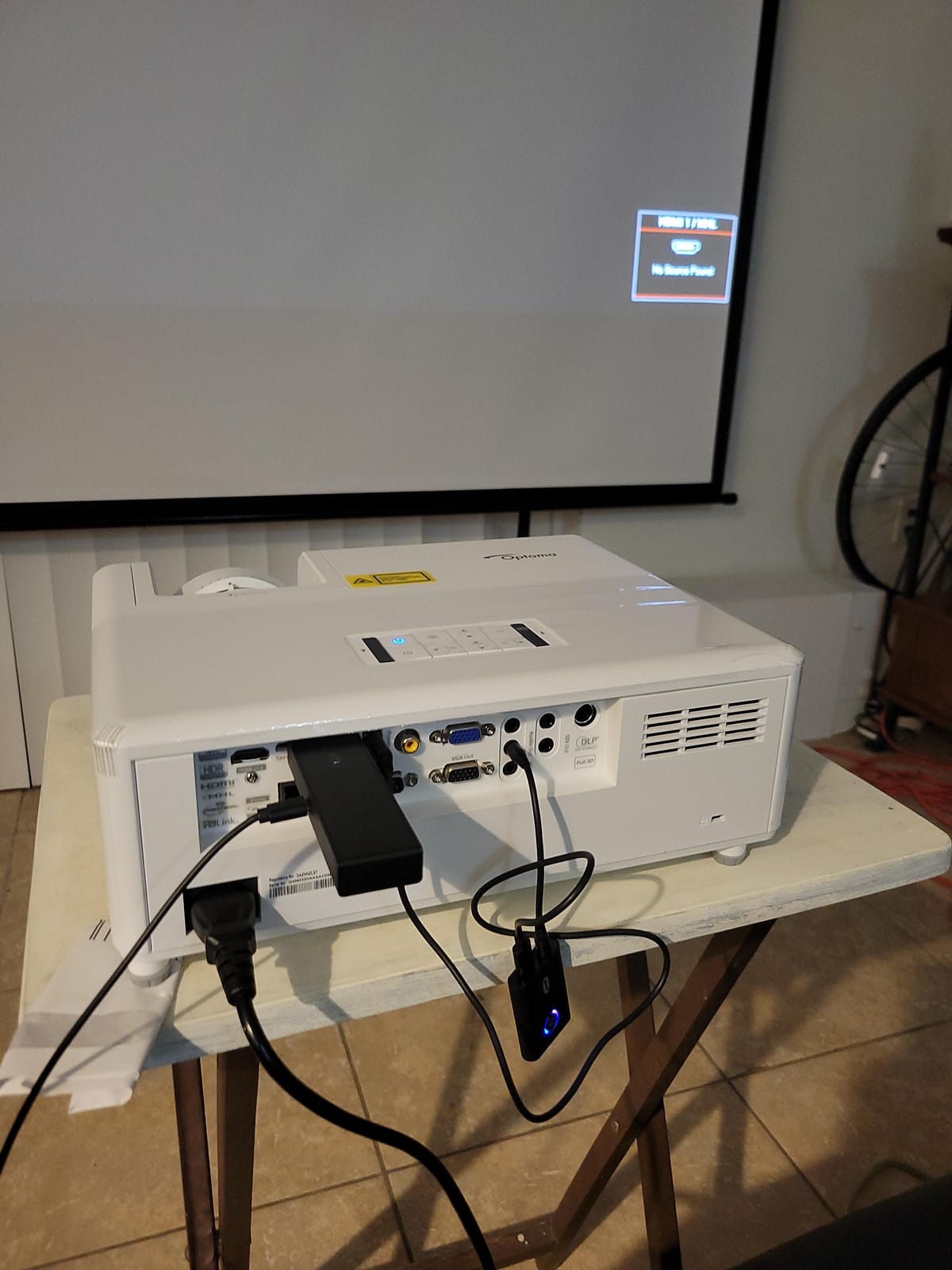
The DuraCore laser is rated at 30,000 hours with IPX6 dust resistance, so there is no lamp and no filter to change. A 120-inch image arrives from about 4 feet 4 inches, and the image shift plus four-corner keystone make ceiling installs straightforward.
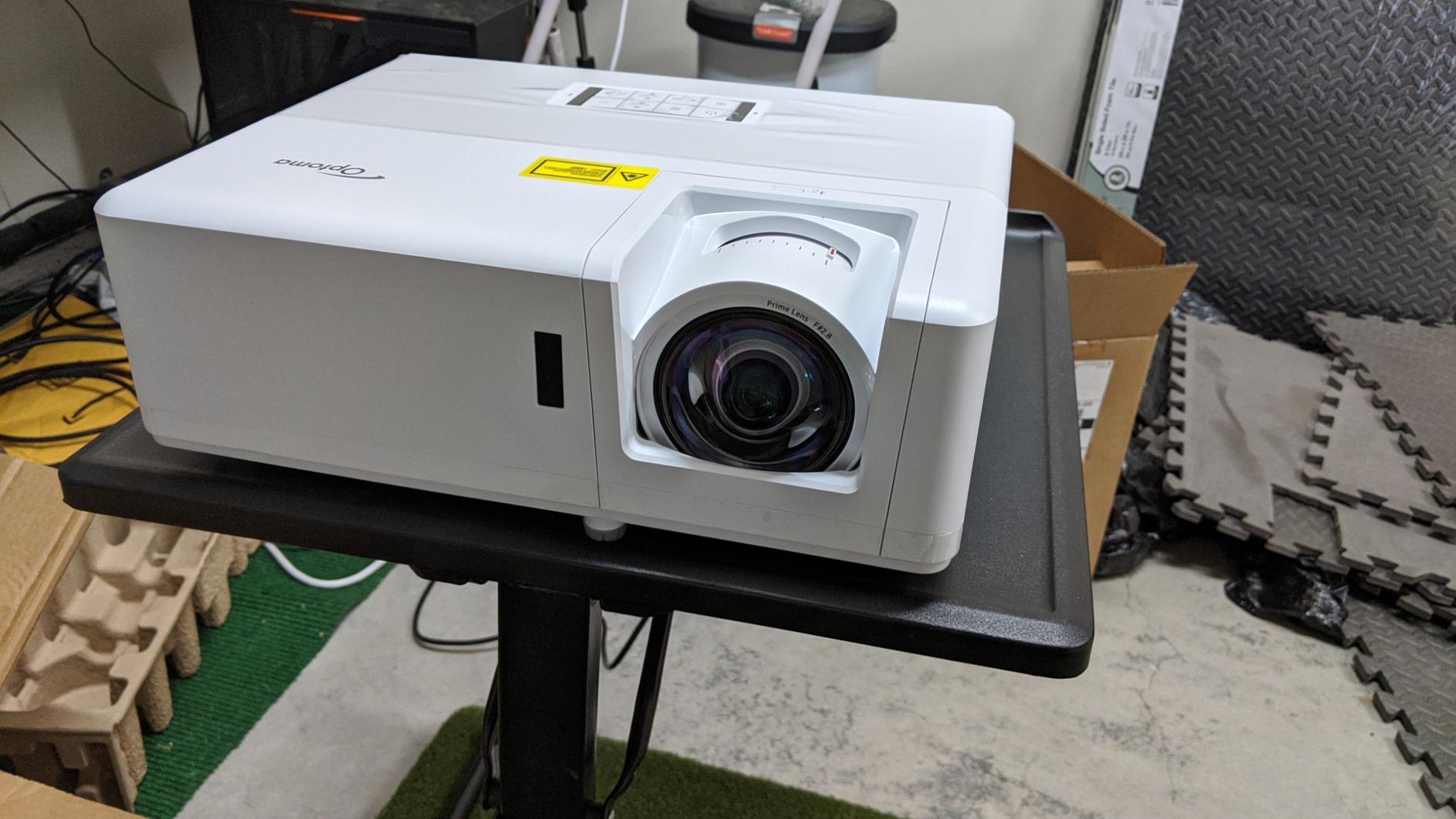
Noise is another small-room advantage here: 32dB in eco mode is among the quietest figures in the group, and it matters more when the unit is four feet from your seating. The 120Hz gaming mode at 20-40ms also made it popular with golf simulator owners.
Many long-term owners report five years of trouble-free operation. The picture engine is 1080p native with 300,000:1 dynamic contrast and HDR10 plus HLG input handling.
Which rooms the GT1090HDR suits
A bright living room, a sunroom, a classroom or a meeting room where you cannot control the ambient light. It also works well for a golf simulator bay, where a large, bright impact screen is the priority.
It suits anywhere the projector will be visible to people walking through the room, because the extra headroom means a lot of light is still on the screen with blinds half drawn.
What to check before you buy
Be clear that 4K input is not 4K output. The native panel is 1920 x 1080, and this is the most common misunderstanding in this category, so check the native resolution line rather than the maximum input line.
Manual focus is genuinely fussy according to owners, and the digital zoom and image shift are coarse, with a shift step large enough to blur corners. If you want a soundbar, plan on the 3.5mm output rather than ARC, since optical audio out is absent.
5. Hisense PL2 – Best Native 4K Ultra Short Throw for a Small Media Wall
Hisense PL2, Ultra Short Throw Home Theater Laser Projector, 80” – 150”, 4K UHD, 2,700 Lumens, 3000:1 Contrast, Dolby Vision & Atmos, 3D, Google TV, WIFI 6E
Native 4K UST laser
2700 ANSI lumens
80 to 150 inch images
Pros
- Ultra short throw scaling from 80 to 150 inches
- Native 4K image on a plain painted wall
- Fast Google TV with the major streaming apps
- Dolby Vision with a 25000 hour laser source
- Leveler
- focus and keystone are easy to adjust
Cons
- Rainbow effect shows to some sensitive viewers
- Auto keystone needs a photo uploaded to a web page
- Bulky 18.7 pound body and 2700 lumens wants an ALR screen
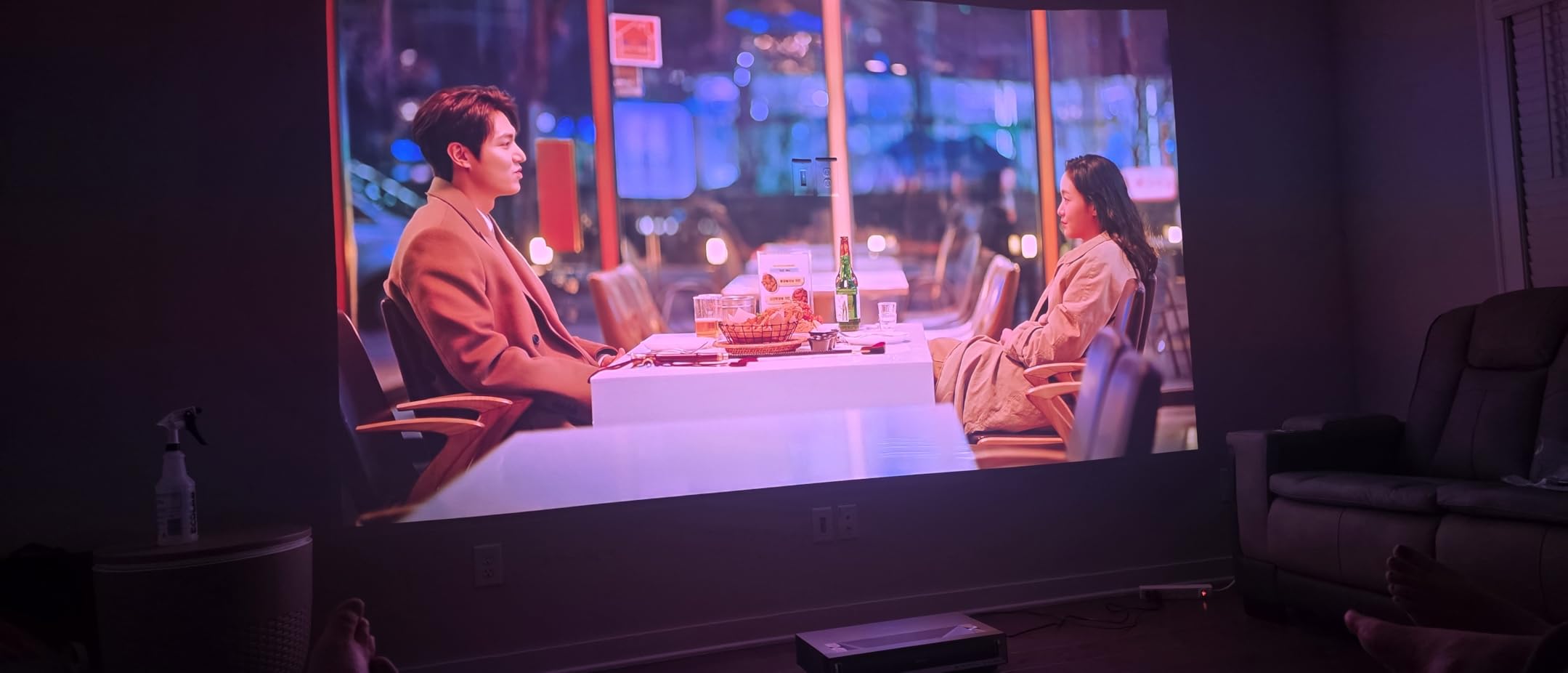
The Hisense PL2 is the value route into a native 4K ultra short throw setup. It scales from 80 to 150 inches across roughly 3 to 18 inches of throw distance, with an 80-inch image landing close to the wall and a 150-inch image needing the full depth.
Owners point out that the 4K picture looks genuinely good on a plain painted wall, which removes the single biggest obstacle to a laser TV at this level. The Google TV interface is fast, and the X-Fusion laser source is rated at 25,000-plus hours.
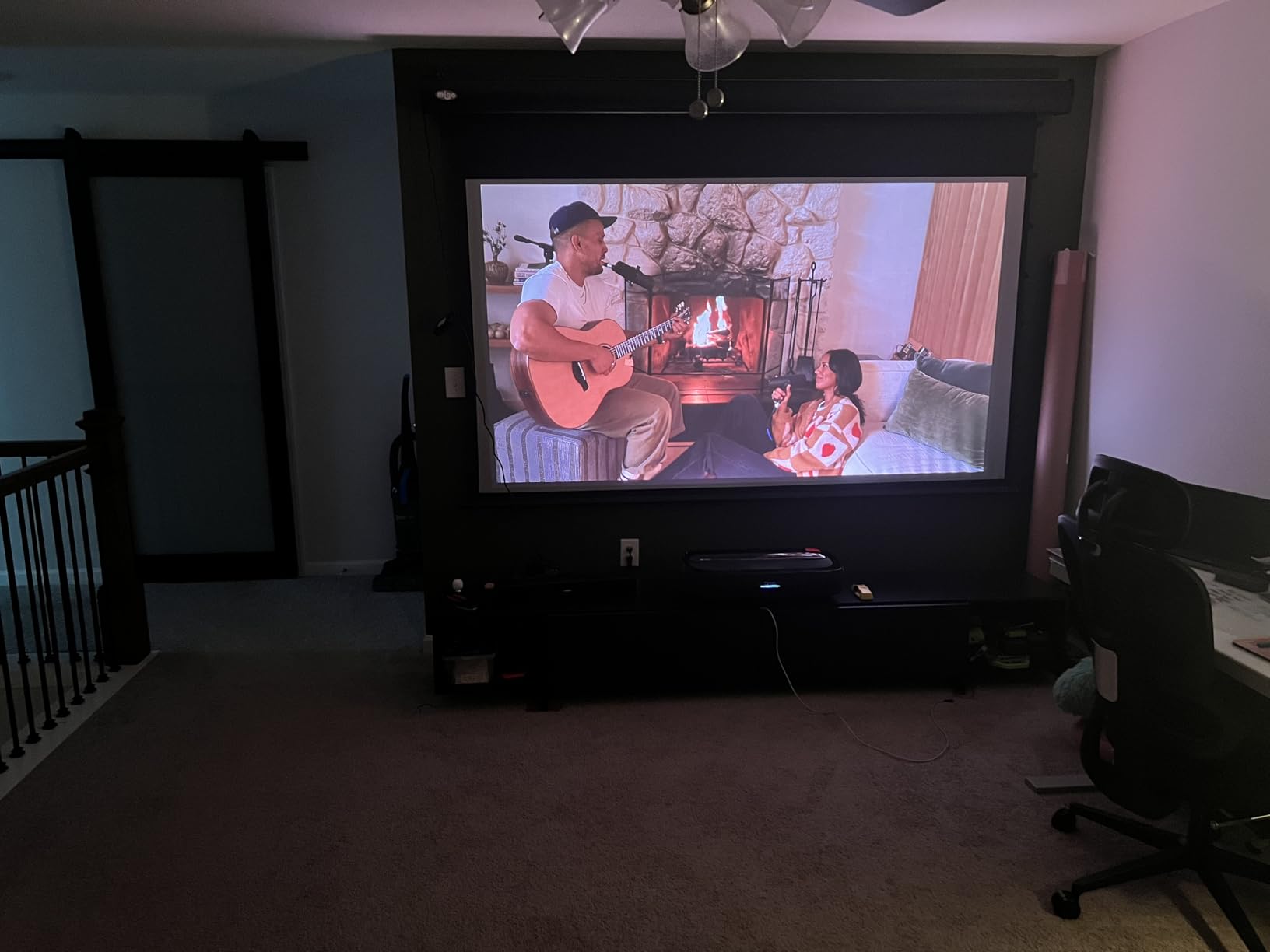
Setup is straightforward with a leveler, manual focus and keystone, and reviewers rate the built-in speakers better than expected. Dolby Vision and multiple HDR formats are supported, and Bluetooth 5, WiFi 6E, Ethernet, HDMI and USB 3.0 cover connections.
The most repeated complaint is the rainbow effect. Color fringing on DLP shows to some sensitive viewers, especially seated close, and at least one owner returned a unit over it. A secondary theme is that 2700 lumens looks modest until an ALR or Fresnel screen is added.
Which rooms the Hisense PL2 suits
A small living room, a bedroom or an apartment where the projector replaces a wall-mounted television and no separate screen is planned. Painting a flat, matte wall in a neutral color is enough to get a large, sharp image.
It also suits a home office or classroom where the presenter needs a big image without centering themselves in the beam. Setup time is short, which matters in a room used for more than one purpose.
What to check before you buy
Sit at your normal viewing distance first if you are sensitive to color fringing. This is the most common reason buyers return ultra short throw projectors, and it cannot be fixed in software.
Check console depth and skip the automatic keystone. Owners find the auto workflow poor because it requires photographing the screen and uploading to a web page, and the 18.7-pound body needs a floor spot or a solid cabinet rather than a typical media shelf.
6. Optoma GT2000HDR – Best Compact Laser Short Throw
Optoma GT2000HDR Ultra-Compact Short Throw Full HD Home Laser Projector
Native 1080p laser
3500 ANSI lumens
External power supply
Pros
- Compact chassis that sits close to the wall
- 3500 ANSI lumens with a 30000 hour light source
- External power supply keeps the footprint small
- 98 watt power draw keeps running cost low
- Five-year light source warranty
Cons
- Lowest rating in this group at 4.1
- Native 1080p with no smart OS or WiFi
- Box includes only the user manual
The GT2000HDR is the smallest laser unit here, and that is the entire pitch. It measures 4.49 inches deep, uses an external power supply so the only thing on your table is a thin power brick, and it still delivers 3500 ANSI lumens.
Reviewers credit it for size, brightness and low power use in a tight space. The laser light source is rated at 30,000 hours with a 98-watt draw, and the warranty covers the light source for five years or 12,000 hours.
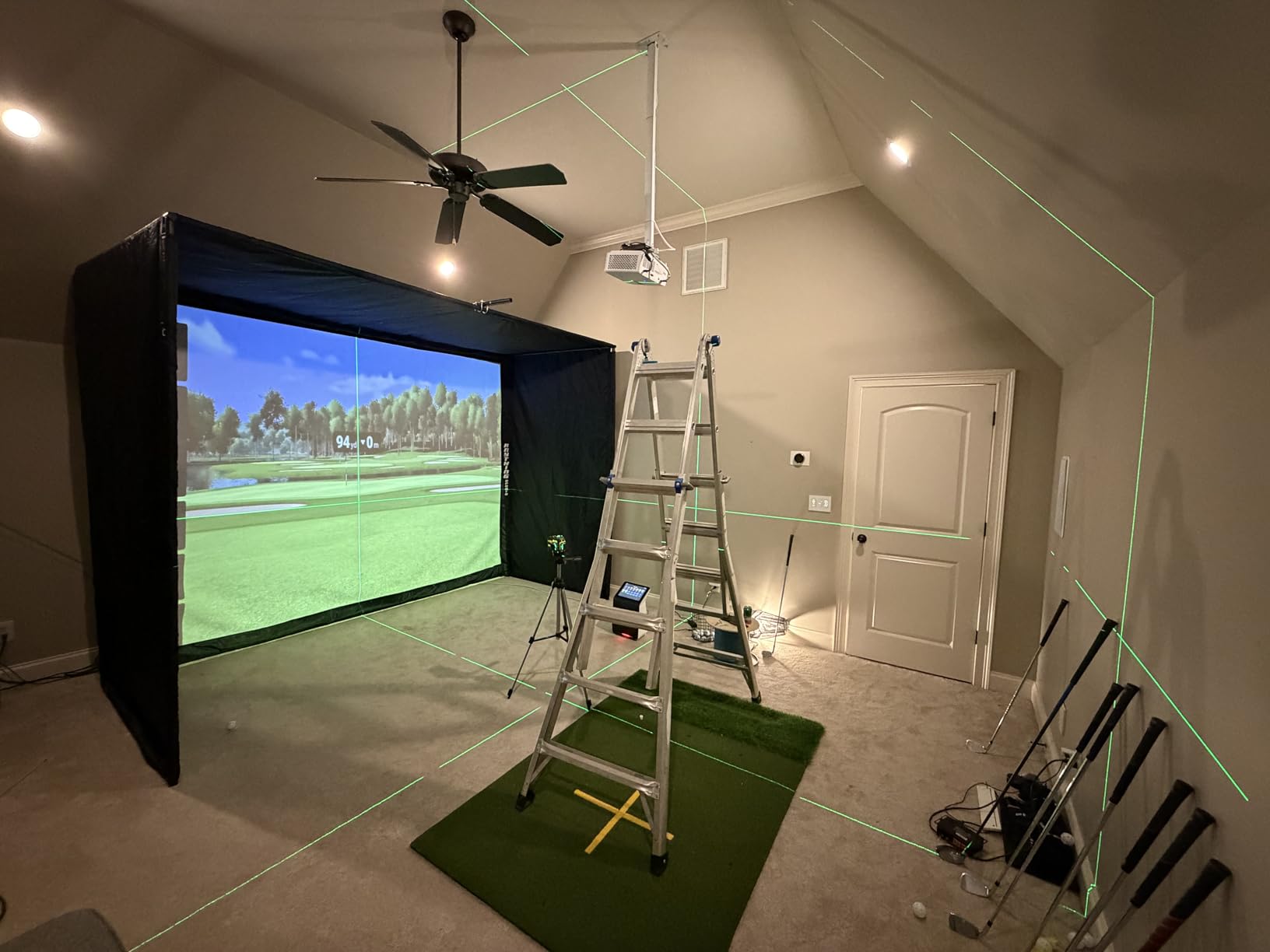
It is a plain projector, by design. There is no smart operating system, no streaming apps and no documented WiFi, so it wants an external source whether that is a laptop, a game console or a streaming stick.
It is also the weakest-reviewed unit in this group at 4.1, with 12 percent one-star reviews. Owners point to signal reliability issues, and the box includes only the user manual, so expect to source the HDMI cable yourself.
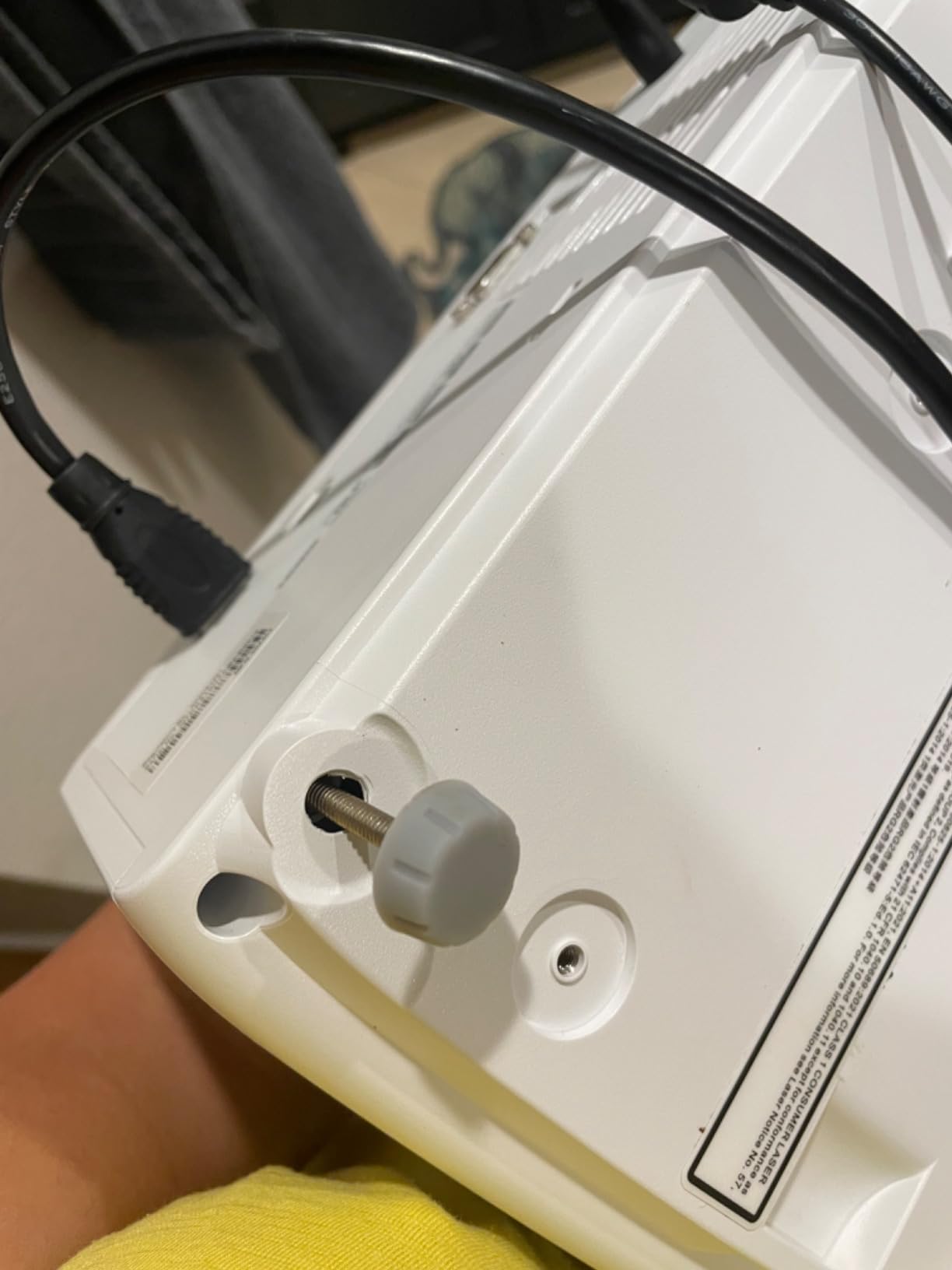
Which rooms the GT2000HDR suits
A small room where shelf depth is the binding constraint, or a spot behind a sofa where a full-size chassis will not fit. The low power draw also makes it a sensible second-room or occasional-use unit.
It works for a home office, a dorm or a small meeting room where an external laptop or stick is already the normal way to display content. At 1080p with 300,000:1 dynamic contrast, it suits casual movie and gaming nights rather than fine detail.
What to check before you buy
Decide how you will feed it. With no smart OS, no WiFi and no documented streaming apps, a bare projector is only as useful as the source you plug into it.
Read the resolution line carefully: native 1920 x 1080 means 4K HDR source material will not display at full detail. There is also no optical audio out or HDMI ARC, so a soundbar has to work over the 3.5mm output or the source device.
7. ViewSonic PS502W – Best for Classrooms, Meeting Rooms and Shared Spaces
ViewSonic PS502W WXGA Short Throw Projector 4000 Lumens, Dual HDMI
WXGA 1280x800 DLP
4000 ANSI lumens
100 inch image from 4.5 feet
Pros
- 4000 ANSI lumens for moderate ambient light
- 0.5 throw ratio fills 100 inches from 4.5 feet
- Dual HDMI plus VGA
- USB and 3.5mm audio
- Instant power on and off with no warm-up wait
- Three-year parts and labor warranty
Cons
- WXGA is the weakest resolution here
- Lamp light source rated at only 4000 hours
- No smart OS or WiFi so add a streaming stick
The PS502W is a bright, dependable short-throw workhorse, and reviewers use it in classrooms, meeting rooms and small living spaces for exactly that reason. A 0.5 throw ratio fills 100 inches from 4.5 feet, and 4000 ANSI lumens holds up against moderate ambient light.
Instant power on and off skips the warm-up and cool-down cycle, which matters in a room where people walk in and out. At 6.3 pounds it is easy to reposition, and tabletop or ceiling mounting are both supported.
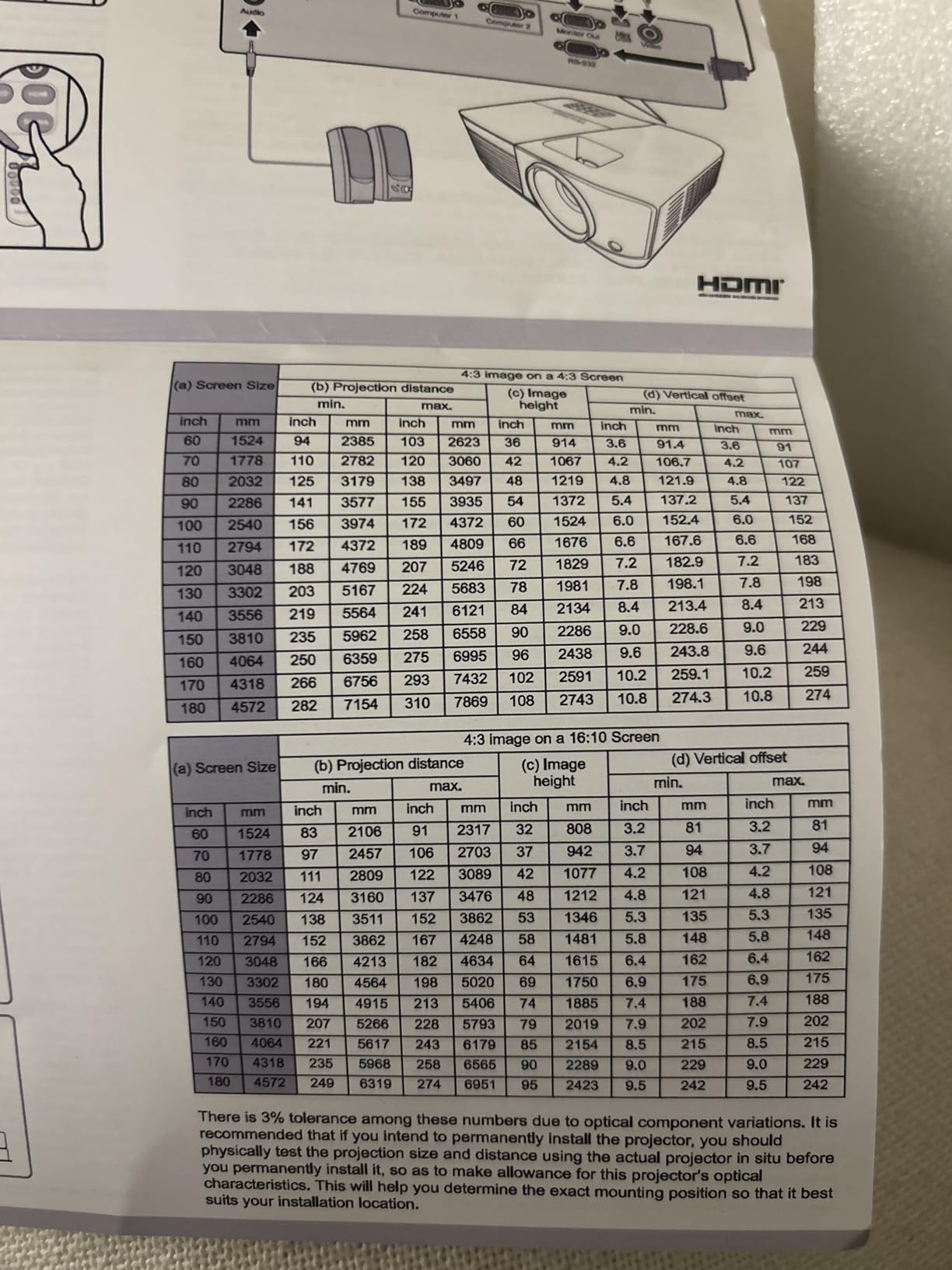
Connectivity is the strong suit: dual HDMI alongside VGA, USB 2.0 Type A and 3.5mm audio cover most source needs without adapters. SuperColor technology delivers a wide gamut, and the warranty runs three years on parts and labor with first-year Express Exchange.
There is no smart OS, no WiFi and no streaming apps, so budget for a streaming stick. The keystone is vertical auto only, with no horizontal or four-corner correction, so mounting angle matters more here than with the laser units above.
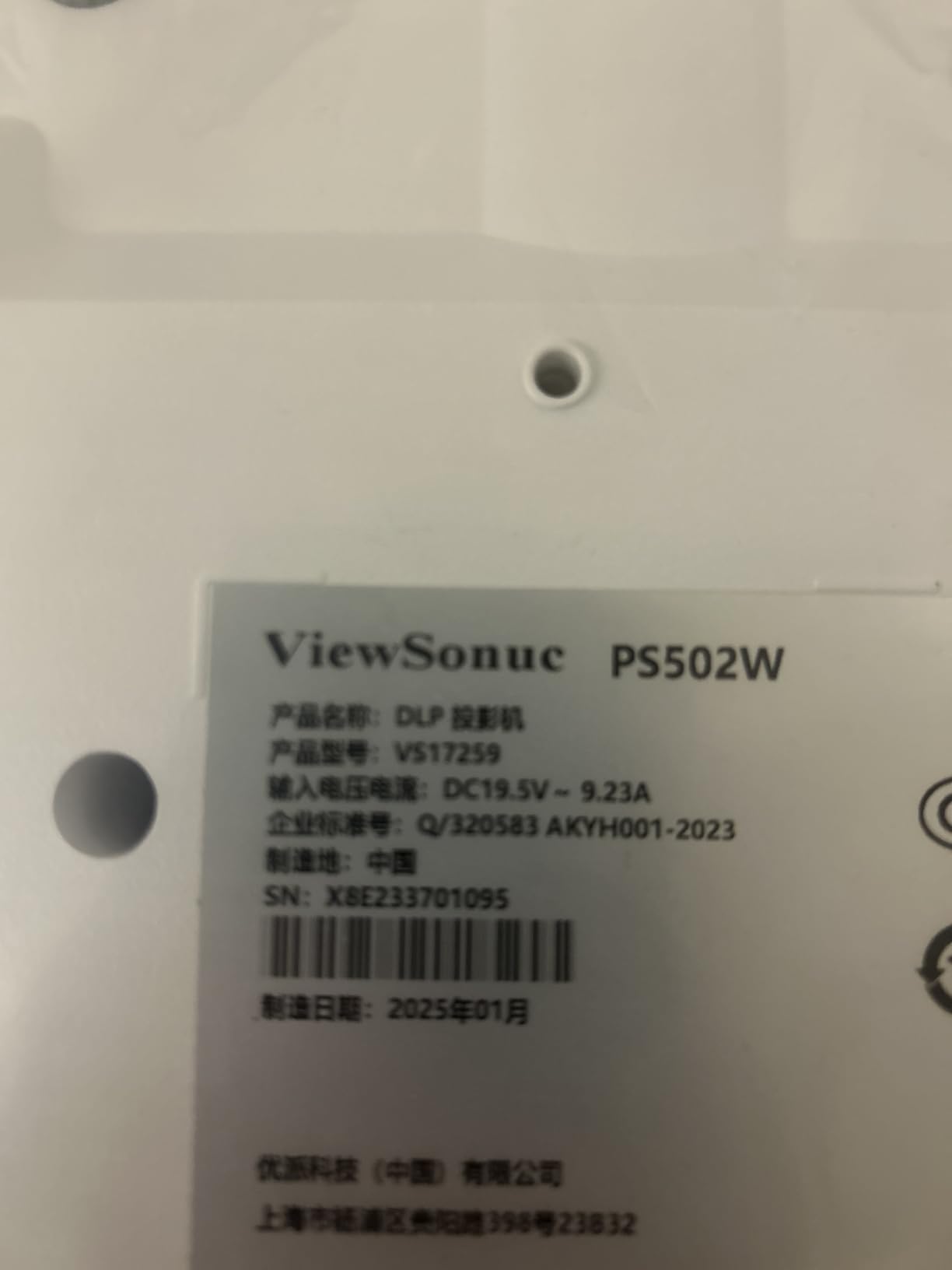
Which rooms the PS502W suits
Shared and semi-shared spaces: a conference room, a classroom, a small office or a living room where daylight is not fully controllable. A 100-inch image from 4.5 feet leaves the room usable for its original purpose.
It is also the easiest unit here to justify in a space that is not a media room at all, because there is no smart interface to configure and no account to set up before the first meeting.
What to check before you buy
Look at the native resolution first: 1280 x 800 is the lowest here, and buyers consistently accept it for presentations but not for detailed 1080p film content. If movies are the main use, choose a 1080p panel instead.
Plan for the lamp. The light source is rated at 4000 hours with a one-year lamp warranty, so unlike the laser units in this list it will eventually need a bulb. Also check your mount angle, since only vertical auto keystone is available.
8. BenQ X500i – Best for Low-Latency 4K Gaming in a Small Room
BenQ X500i True 4K HDR Short Throw Gaming Projector 2200 Lumens
Native 4K 4LED
2200 ANSI lumens
100 inch image from about 6.5 feet
Pros
- 4.2ms latency at 1080p with 240Hz refresh
- 4LED engine rated at 20000 hour life
- Google-Certified Android TV with AirPlay and Chromecast
- TreVolo audio with eARC and S/PDIF out
- Auto Game Mode detects PS5
- Xbox and Switch
Cons
- Fan and actuator hum around 40-42dB in eco mode
- HDMI 2.0 only with no HDMI 2.1
- 2200 lumens and no Ethernet port
The X500i is the gaming pick. At 4.2ms input lag with a 240Hz refresh rate at 1080p, it is one of the fastest short-throw projectors here, and owners in garages, man caves and small theaters use it that way at 135 to 150 inches.
The 4LED light engine covers a 20,000-hour life with no bulb changes, and BenQ HDR-PRO tuning handles HDR content. It is native 4K, and the 0.69-0.83 short throw ratio still fills 100 inches from about 6.5 feet.
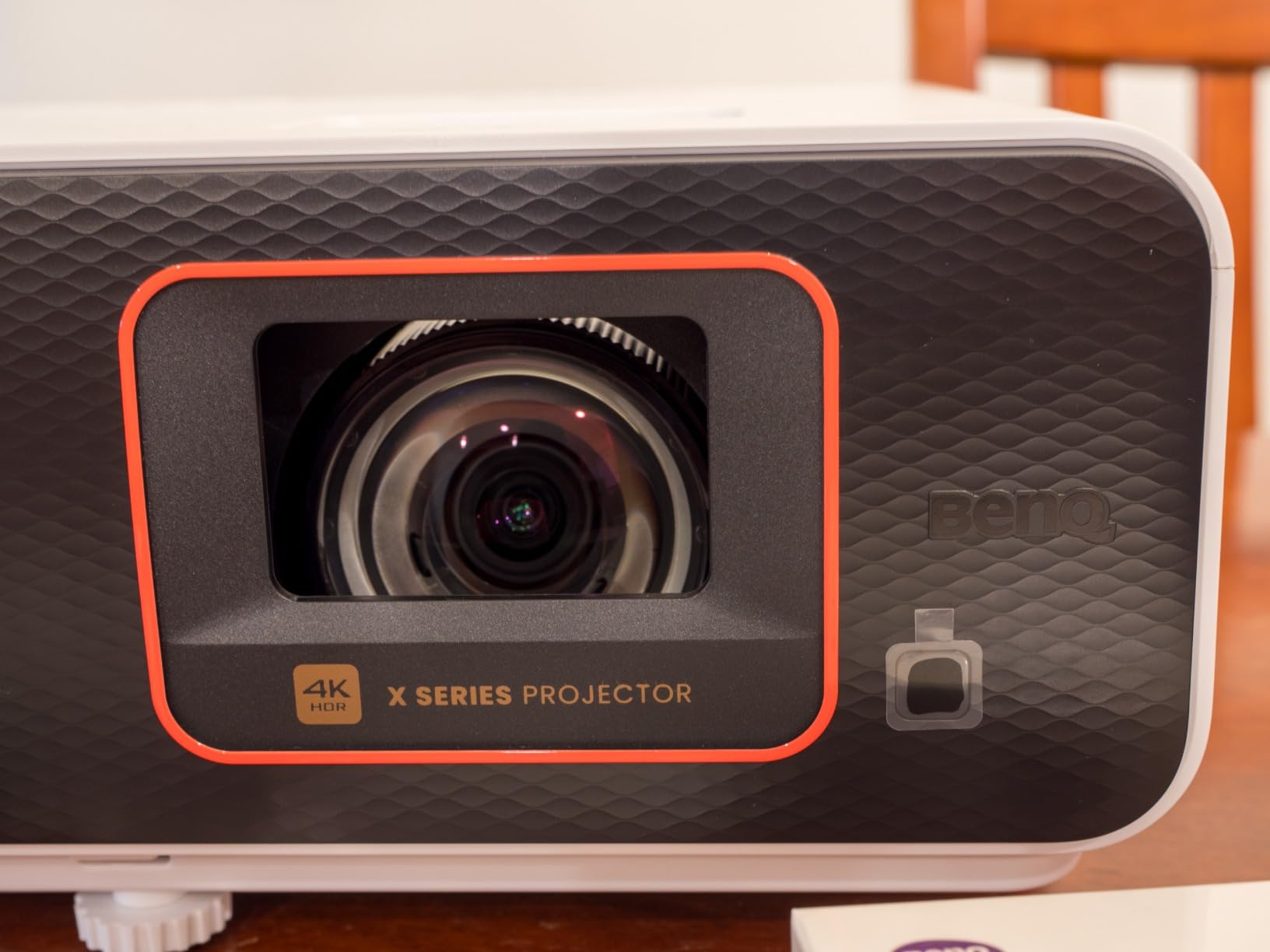
Google-Certified Android TV is built in with AirPlay and Chromecast, so no streaming stick is needed. TreVolo audio includes eARC and S/PDIF output for a soundbar or surround system, and Auto Game Mode detects a PS5, Xbox or Switch and tunes the picture on its own.
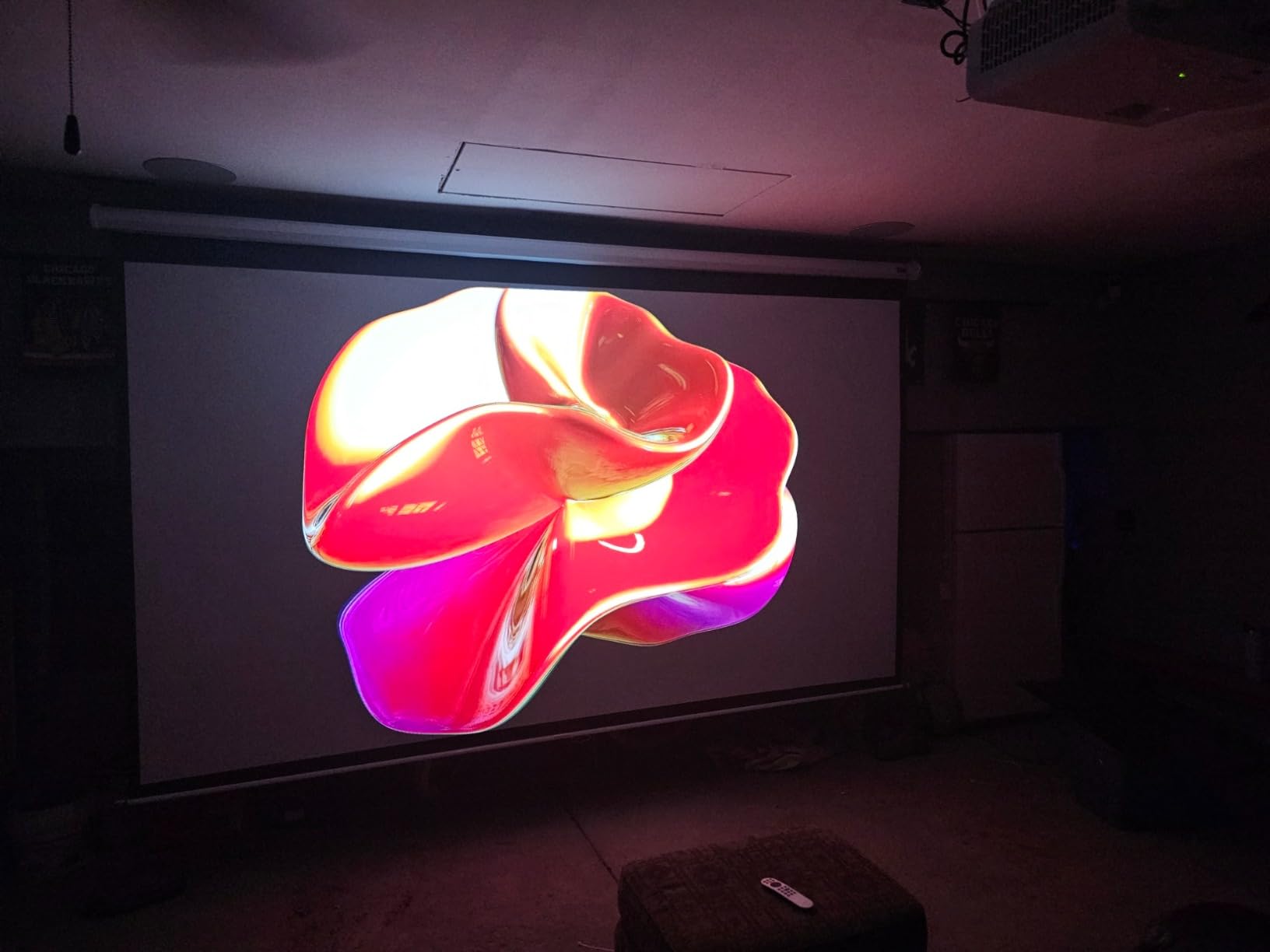
Noise is the real drawback. Owners measure a high-pitched fan and XPR actuator hum at roughly 40-42dB even in eco mode, and at least one buyer returned a unit over it. In a small room that hum is much closer to your ears than it would be in a loft.
Which rooms the X500i suits
A bedroom, a den or a garage theater where the room is dark and the console is the main event. It also works well in a home office for anyone who games on the same setup they work on.
Because it scales to 300 inches, it suits anyone who wants a large picture now and a bigger one later without changing projector. Ceiling mounting is popular with owners for that reason.
What to check before you buy
Listen for the hum in a quiet room before committing. Sound level is not a spec sheet number here, and in a 10-by-10-foot space it may bother you where it would not in a larger room.
Check your ports and your network. There is HDMI 2.0 but no HDMI 2.1, and there is no Ethernet port, so streaming quality depends on a fast and stable WiFi connection. At 2200 lumens, dark cinematic scenes also lose impact in a lit room.
9. BenQ TK710STi – Best for Golf Simulators and Large Impact Screens
BenQ TK710STi 3200 Lumens 4K HDR Short Throw Home Entertainment Projector
Native 4K laser
3200 ANSI lumens
120 inch image from about 7 feet
Pros
- 3200 ANSI lumens keeps the image punchy with lights on
- Native 4K with HDR10 and 95 percent Rec.709
- 4ms response at 1080p and 240Hz
- Google-Certified Android TV with Netflix and AirPlay
- Grid keystone makes ceiling install quick
Cons
- Noticeably loud fan noise
- 120 inch image still needs about 6 foot 8 inches to 8 feet
- Only two HDMI ports and no optical audio out
The TK710STi pairs native 4K with 3200 ANSI lumens, which is the combination a golf simulator bay or a bright media room actually wants. Reviewers describe upgrading from older Epson or BenQ units and calling the difference immediate, particularly with room lights on.
It runs a 20,000-hour laser light source, so there are no routine lamp replacements, and it carries 4ms response at 1080p with a 240Hz refresh rate for effectively zero perceived input lag. Android TV with Netflix, Prime Video, YouTube and AirPlay is built in.
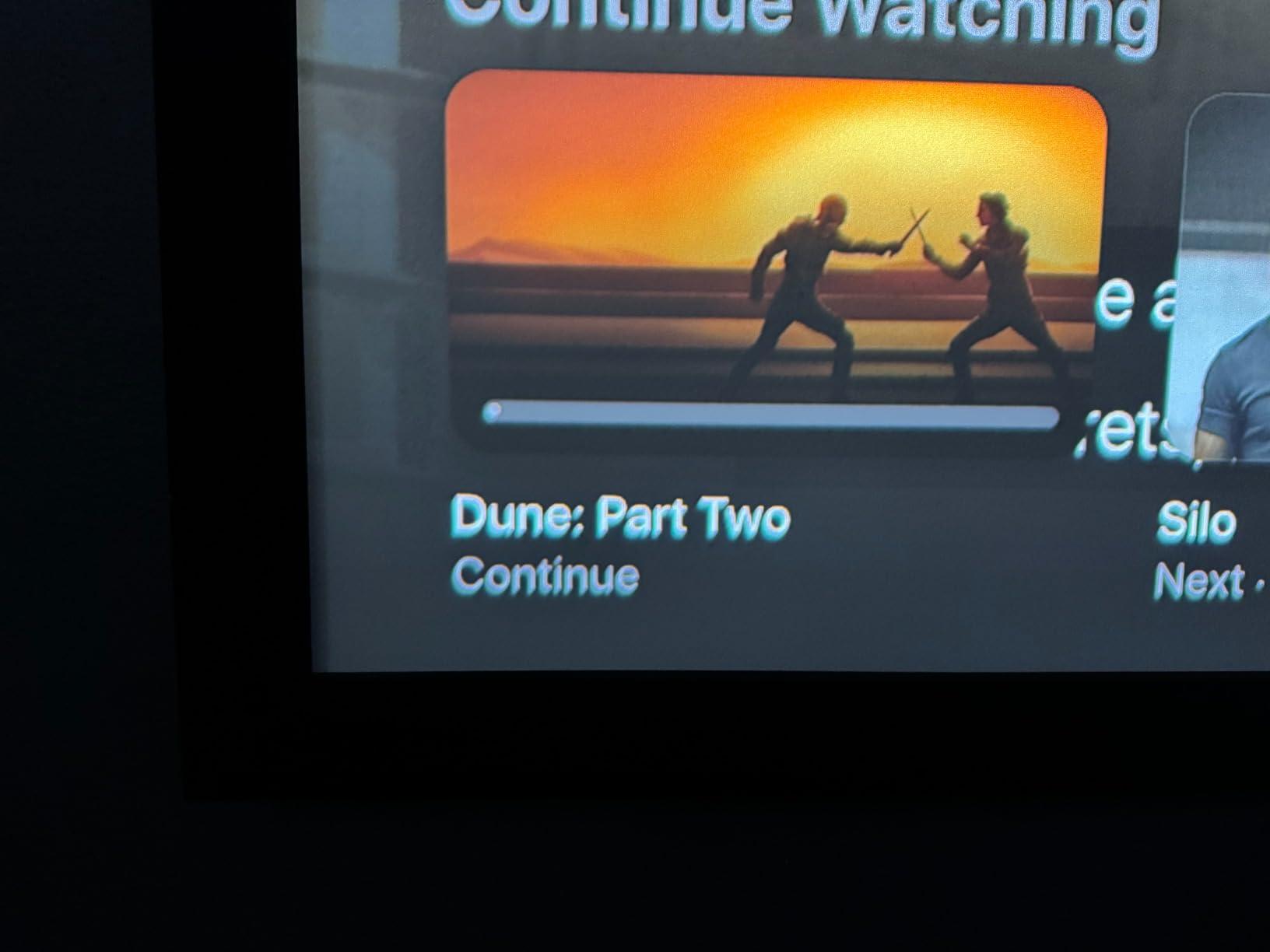
Picture quality is 4K with HDR10 and 95 percent Rec.709 coverage, and 600,000:1 dynamic contrast handles the dark and light range an impact screen throws at you. The grid and auto keystone snap square quickly, which makes a ceiling install much less painful.
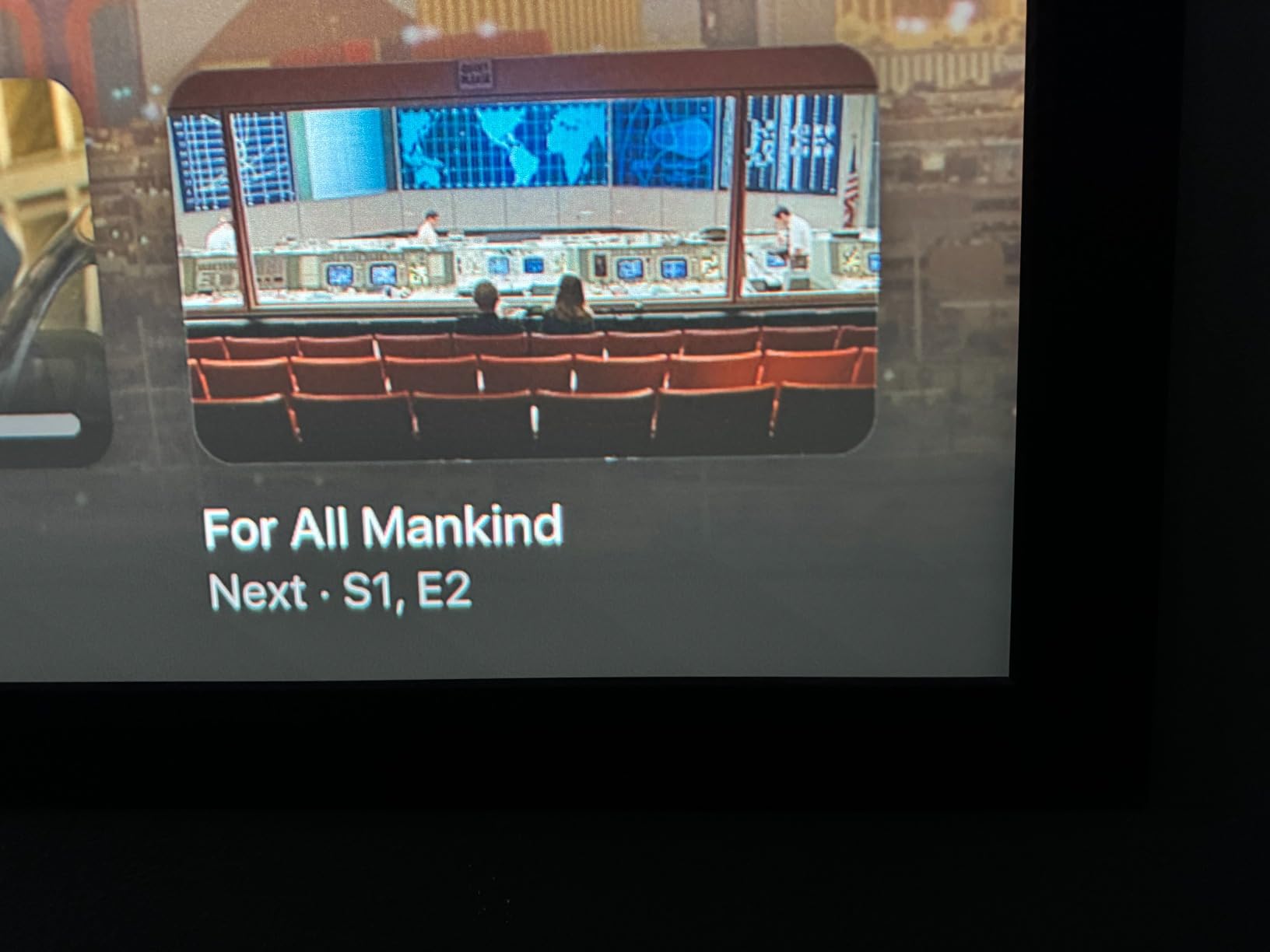
Its sample of reviews is the smallest here, at 41, so treat the sentiment as directional rather than definitive. Two things recur: audible fan noise described by one buyer as loud as a vacuum cleaner, and a small number of early light-source failures.
Which rooms the TK710STi suits
A golf simulator bay, a garage, a basement media room or a living room used during the day. The 8.8-pound desktop chassis mounts on a table or ceiling and needs no external media player.
It suits a family room that doubles as an office, because the Android TV side means it is ready to play in the evening without anyone hunting for a streaming stick or a laptop cable.
What to check before you buy
Confirm your throw distance. Despite the short throw label, a 120-inch image still needs roughly 6 foot 8 inches to 8 feet, so it is not a tight-shelf unit and not a substitute for an ultra short throw.
Count your ports. There are only two HDMI and no optical audio out, so a surround system has to come from the source device. And if noise matters in your room, this is the loudest unit in the group.
10. iSinbox AC311 – Best Short Throw Projector for Renters and Small Bedrooms
iSinbox Short Throw Projector 4K, Now with Netflix, Auto Focus, 40W Dolby
Native 1080p LCD
500 ANSI lumens
100 inch image from about 7.9 feet
Pros
- 1.1:1 ratio gives 100 inches from about 7.9 feet
- Smart OS with Netflix
- Prime Video and Disney+
- 360 degree stand doubles as a carry handle
- AI auto focus and 6D keystone
- Dolby stereo with eARC and two-way Bluetooth
Cons
- 500 ANSI lumens looks its best after dark
- Native 1080p LCD so 4K and HDR10+ are decode only
- Throw ratio listed as 1.1:1 on the listing and 1.2:1 on the packaging
The AC311 is the lowest-cost way into short throw viewing, and buyers treat it as such. At 1.1:1 it puts a 100-inch image up from about 7.9 feet, which saves real depth in a bedroom, a dorm or an RV.
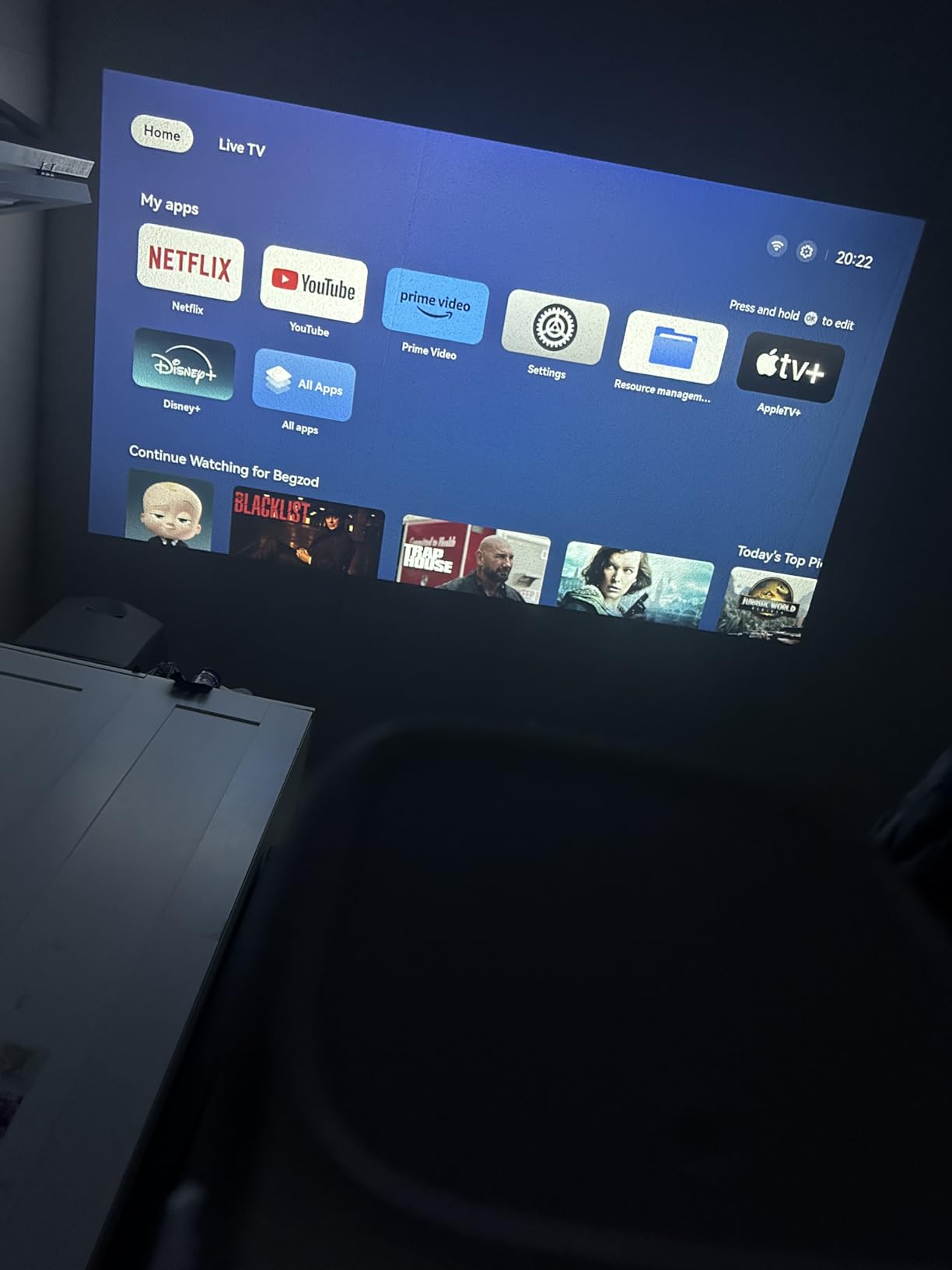
The smart operating system includes Netflix, YouTube, Prime Video, Disney+, HBO Max and Paramount+ along with 200-plus apps, and the 360-degree all-in-one stand doubles as a carrying handle. That combination makes it a genuinely portable unit rather than a shelf projector.
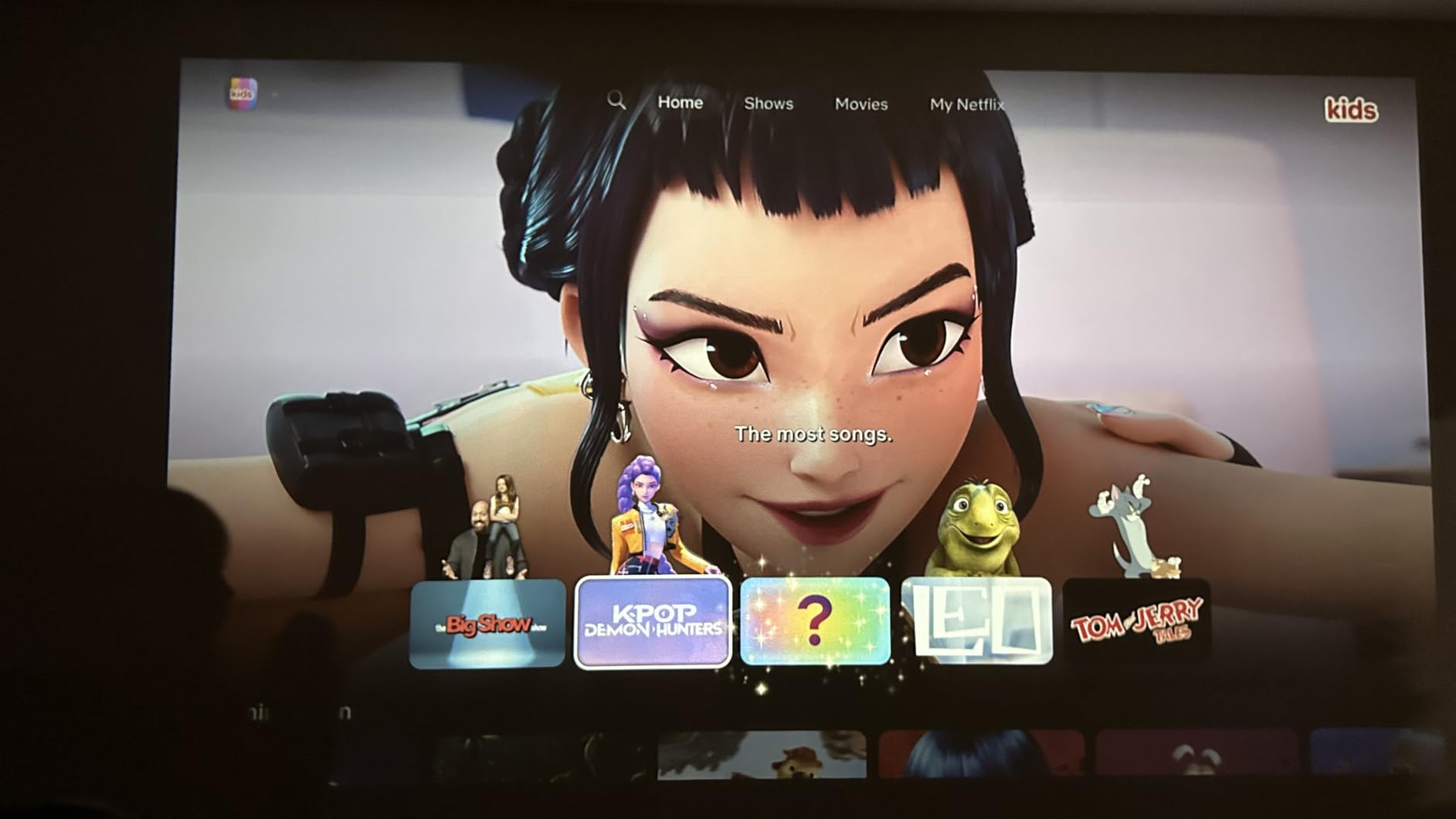
Setup is fully automatic: AI autofocus, 6D keystone, auto screen alignment and smart obstacle avoidance. Dolby-certified stereo with DTS decoding, eARC and two-way Bluetooth 5.4 handle sound, and WiFi 6 with AirPlay covers casting.
At 500 ANSI lumens, reviewers are consistent that it looks its best after dark. The panel is native 1080p LCD, so 4K and HDR10+ are decoding features rather than extra detail.
Which rooms the AC311 suits
A rented apartment, a dorm room, a bedroom for a child or a backyard movie night where the unit has to be carried out, used and packed away again. The universal M4 mount also allows ceiling mounting without buying extra hardware.
It suits anyone who wants a very large image for casual streaming and gaming rather than a calibrated home theater. Eye-protection blue light reduction is a nice touch for a bedroom.
What to check before you buy
Check the room is dark, or plan to use an ALR screen. At 500 ANSI lumens this unit will not fight daylight, and no software setting changes that.
Note the throw ratio discrepancy, since product pages have been inconsistent about 1.1:1 versus 1.2:1. Plan your depth using the longer figure so you are not short on distance. The remote also arrives without batteries, and there is no Ethernet option.
How to Choose a Short Throw Projector for a Small Room
Match your room depth to the throw ratio before anything else
Throw ratio is the single number that decides whether a projector fits your room. It is the distance from the lens to the screen divided by the image width, so a 0.5:1 unit fills a 100-inch image from about 4.5 feet. Standard throw projectors sit near 1.2:1 to 1.8:1 and need 10 to 12 feet for the same picture, which is why they top out around an 80- to 90-inch image in a 12-foot room.
Use this as your working guide: at 0.5:1 you need roughly 4.5 feet for 100 inches, at 0.65:1 about 5.9 feet, at 1.0:1 around 7 feet, and at 0.25:1 an ultra short throw unit needs under a foot. Measure the clear distance from your wall to wherever the unit will sit, and subtract a few inches for the chassis depth.
Short throw, ultra short throw or standard throw: which one your room needs
Short throw is right when you have 4 to 7 feet of depth and want flexibility. It needs no special screen, gives you placement freedom, and avoids people walking through the beam as often as a UST unit does.
Ultra short throw is right when your depth is the problem. It trades placement freedom and image brightness for a picture that sits inches from the wall, and it usually pairs best with a dedicated ALR or UST screen. Standard throw is worth buying only if you have 10 feet or more to spend.
How many ANSI lumens you actually need
For a fully dark room, 500 to 1000 ANSI lumens is enough for a 100-inch image at normal seating. For a room with some controlled daylight, aim for 2000 to 3000. For a genuinely daylit space with no blackout, you want 3500 ANSI lumens or higher, or an ALR screen doing the work instead.
Expect a daylit small room to look washed out below 1500 lumens no matter what the packaging claims. That is the honest answer to the question people ask most often on forums, and it is why the brightest model here is not the one with the best picture.
Do you need a special ALR or UST screen?
For a short throw projector, no. A standard matte white screen or even a flat painted wall works, and that is a real advantage over ultra short throw units, which are frequently sold as a package deal with a bespoke screen.
An ALR screen is optional and becomes worthwhile in two cases: your room has ambient light you cannot control, or your projector is dim, where a screen with gain and a light-rejecting surface recovers much of the lost punch. A UST screen is a different product designed to reject side light for near-wall units.
Native 4K versus 4K support, and what that means for your image
Native resolution is the number of pixels the panel actually produces. Maximum input resolution is the largest signal the electronics accept. A projector can be labelled 4K while being 1080p native, which is exactly the case for the Optoma GT1090HDR in this list, which accepts 4K input but outputs 1920 x 1080.
For a 100-inch image viewed from normal sofa distance, 1080p is still acceptable. For 120 inches and up, or for mixed 4K streaming, native 4K is worth paying for. Check the native line on the spec sheet every time.
Noise, latency and the other trade-offs buyers mention most
Fan noise deserves more attention in a small room than any spec sheet suggests. Measured figures in this group range from 32dB in eco mode on the Optoma GT1090HDR to roughly 40-42dB on the BenQ X500i, and in a 10-by-10-foot space that difference is obvious.
Input lag matters only if you game. Anything under about 40ms feels responsive to most players, and the two BenQ models here run at 4ms and 4.2ms. Audio outputs matter more often than people expect, because several units here lack optical audio out and HDMI ARC, which limits how you connect a soundbar.
Frequently Asked Questions
What is the best projector for a small room?
A short throw projector with a throw ratio around 0.4:1 to 0.65:1 is the right answer for most small rooms, because it fills a 100-inch image from 4 to 7 feet instead of the 10 to 12 feet a standard throw unit needs. The BenQ TH671ST is our top overall pick, pairing a 100-inch image from 5 feet with 3000 ANSI lumens, which keeps it usable with some ambient light.
Are short throw projectors worth it?
Yes, when your room depth is the limiting factor. In a room under about 12 feet deep, a standard throw projector tops out near an 80- to 90-inch image, so short throw is the only way to get a genuinely large picture without moving furniture or sitting in the light path. They need no special screen, which is an advantage over ultra short throw units.
What is the ideal throw ratio for a projector?
For a small room, aim for 0.5:1 to 0.65:1. That fills a 100-inch image from about 4.5 to 6 feet, so the unit can sit behind a sofa or on a shelf. Ultra short throw at 0.25:1 needs under a foot but demands a cabinet deep enough to hold the chassis, and standard throw at 1.2:1 or higher will not produce a large image in a short room.
Is 1000 lumens bright enough for a projector?
For a dark room, yes. Around 500 to 1000 ANSI lumens produces a solid 100-inch image at normal seating distance with curtains drawn. For a room that takes daylight, aim higher: 2000 to 3000 lumens for controlled ambient light, and 3500 or more for a genuinely daylit space, or add an ALR screen to recover brightness.
What are the downsides of a short throw projector?
The main drawbacks are shadowing when someone walks between the lens and the screen, image quality that degrades if digital zoom or keystone is used heavily, and brightness that is often lower than a comparable standard throw unit. Cheap models also run hot and their fans are audible in a small room, and built-in speakers are rarely good enough for home theater use.
The Best Short Throw Projector for Small Rooms
The BenQ TH671ST is the best short throw projector for small rooms in 2026 because it combines the two things a small room demands: a 100-inch image from about 5 feet, and 3000 ANSI lumens so the picture survives a room that is not fully dark. Its 682 reviews give it the deepest owner history in the group, and the recurring themes are brightness, sharp 1080p color and dependable multi-year service.
For a daylit room, the Optoma GT1090HDR offers 4200 ANSI lumens and quiet 32dB operation. For a console-first setup, the BenQ X500i delivers 4.2ms latency, accepting the fan hum that comes with it. For a media wall where depth is the problem, the AWOL VISION LTV-3000 Pro paints 150 inches from 12.8 inches with native 4K triple laser.
Measure your room before you order anything. The throw ratio is what decides whether a projector fits, and every unit in this list is a better purchase once you know the number of feet between your wall and your furniture.