
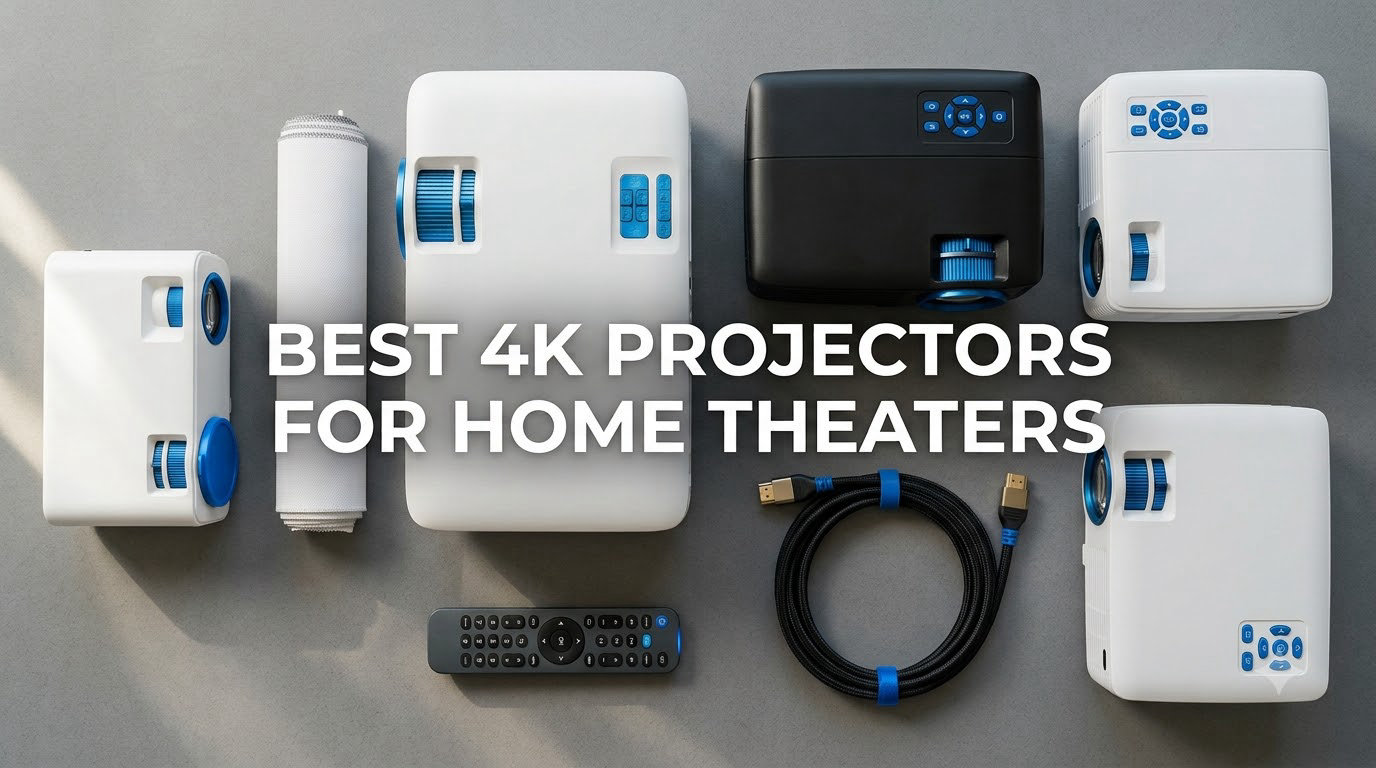
The best 4K projectors for home theaters come down to one question: how dark is your room, and can you mount a projector? If you have a dedicated room you can black out, the Epson Home Cinema 5050UB is the model we recommend to almost everyone. If you cannot drill into the ceiling or hide hardware behind your seating, an ultra-short-throw unit like the AWOL VISION LTV-3000 Pro is the practical answer.
We spent weeks reading the owner feedback on all ten projectors below, comparing brightness ratings, contrast figures, throw ratios, lens adjustment and latency, then matching each one to the room it actually suits. The list covers dedicated dark theaters, bright living rooms, gaming setups and portable use cases, so you can narrow it to a single model rather than wading through ten spec sheets.
One warning before we start. Projector brightness is quoted two different ways, and the numbers are not interchangeable. ANSI lumens and ISO lumens come from different measurement standards, and a projector rated 2800 ISO lumens is not the same as one rated 2800 lumens without a standard attached. We note the standard for every brightness figure in this guide, because that single distinction changes which projector suits a room with a window.
We also updated this guide for 2026 and every model here is current-generation. Last updated: October 2026.
Table of Contents
Top 3 Picks for the Best 4K Projectors for Home Theater (October 2026)

Epson Home Cinema 5050UB
- 3-Chip 3LCD
- 2600 lumens
- Motorized lens shift with lens memory
- 4K PRO-UHD pixel-shift
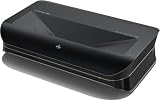
AWOL LTV-3000 Pro
- 0.25:1 throw to 150 inch
- Triple laser with Dolby Vision
- Built-in center channel speaker

Nebula Cosmos 4K SE
- 1800 ANSI lumens hybrid light source
- Google TV with 4K Netflix
- IEA 4.0 auto setup suite
Those three cover the widest range of rooms in the roundup. The Epson is the image-quality default for a room you can darken, the AWOL VISION solves the placement problem that stops most people from installing a projector at all, and the Nebula Cosmos is the pick when a large image matters more than deep blacks.
The Best 4K Projectors for Home Theater at a Glance in 2026
| Product | Specs | Action |
|---|---|---|
| Epson Home Cinema 5050UB |
|
Check Latest Price |
| Nebula Cosmos 4K SE |
|
Check Latest Price |
 JMGO N1S Ultra JMGO N1S Ultra |
|
Check Latest Price |
| AWOL VISION LTV-3000 Pro |
|
Check Latest Price |
 Epson Home Cinema 2350 Epson Home Cinema 2350 |
|
Check Latest Price |
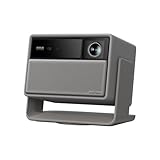 XGIMI HORIZON 20 XGIMI HORIZON 20 |
|
Check Latest Price |
 Hisense PL2 Hisense PL2 |
|
Check Latest Price |
 Nebula X1 Nebula X1 |
|
Check Latest Price |
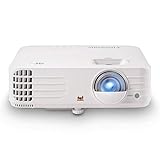 ViewSonic PX701-4K ViewSonic PX701-4K |
|
Check Latest Price |
 Epson Home Cinema LS11000 Epson Home Cinema LS11000 |
|
Check Latest Price |
Here is the same lineup sorted by use case, the way buyers actually search for it. Every entry names the room it fits and one number that matters for that room.
Best 4K projector overall for a dedicated home theater: Epson Home Cinema 5050UB. 2600 lumens from a 3-chip 3LCD engine, up to 1,000,000:1 dynamic contrast and a motorized lens with memory, which is the combination that matters most in a dark room.
Best ultra-short-throw 4K projector: AWOL VISION LTV-3000 Pro. A 0.25:1 throw ratio puts a 150-inch image on screen from roughly 12.84 inches of lens-to-screen distance, and the built-in center channel speaker simplifies a surround setup.
Best all-in-one living room projector: Hisense PL2. 2700 ANSI lumens and 3000:1 contrast over an 80 to 150 inch ultra-short-throw image, with Google TV and Wi-Fi 6E built in.
Best 4K laser projector for movies: Epson Home Cinema LS11000. A laser array light source rated at 20,000 hours, full 10-bit HDR with HDR10+ and HLG, and a laser 3LCD engine that produces no rainbowing.
Best 4K projector for gaming: ViewSonic PX701-4K. 240Hz refresh with 4.2ms input lag is the strongest gaming specification in this group, and it is also the lightest unit at 6.2 pounds.
Best budget 4K projector: Epson Home Cinema 2350. 2800 lumens of color and white brightness, true 3-chip 3LCD with no rainbowing, and input lag under 20 ms at an entry price.
Best color-accurate 4K projector: JMGO N1S Ultra. Triple RGB laser optics with Delta E under 1 factory color accuracy, measured against a stated 1600:1 FOFO contrast ratio.
Best smart 4K projector with built-in streaming: Nebula Cosmos 4K SE. Google TV with native 4K Netflix and no dongle required, plus the IEA 4.0 suite that handles autofocus, keystone and screen fit automatically.
Best triple-laser 4K projector for vivid color: XGIMI HORIZON 20. 3200 ISO lumens from an RGB triple laser engine, covering 100,000:1 contrast with lens shift and optical zoom for placement.
Best portable 4K projector for flexible setup: Nebula X1. 3500 ANSI lumens with a 5000:1 native contrast ratio, a 14-element all-glass lens and auto-alignment that stores per-room settings.
UST vs. Long Throw: Which Throw Type Fits Your Room
Ultra-short throw and long throw are the two branches of this category, and picking the wrong one is the most expensive mistake a buyer can make. Ultra-short throw means the lens sits less than a foot or so from the screen and fires the image at an extreme angle. Long throw places the projector at the back of the room on a ceiling mount or a rear shelf, firing across the full depth of the space.
For a dedicated dark room, long throw is the better choice. The projector gets out of the way, you can mount it above and behind the seating, and the light path is short enough that contrast holds up better in a fully blacked-out space. A ceiling mount also gives you a clean image with no keystone correction applied, which matters because digital keystone always costs you some resolution and brightness.
For a living room where you cannot drill into the ceiling, ultra-short throw wins outright. The unit sits on the same console as your media gear, projects a large image from inches away, and there is nothing overhead to look at. The trade is a harder installation: these projectors need a genuinely flat screen surface, and forum users on r/projectors describe them as requiring a flatter surface, a smaller range of image size and more effort to set up than a long throw unit.
The real disagreement on r/hometheater is not about throw type, it is about whether ultra-short throw contrast and black levels justify the premium. Plenty of owners in that thread argue they fall short for the money. That criticism is fair: an ultra-short throw beam hits the screen at such a shallow angle that any surface texture or imperfection scatters light back at you, and screen reflection is much harder to control than in a head-on long throw setup.
Here is how to decide in under a minute. If you have a screen wall, roughly 10 feet or more of depth, and no problem mounting hardware, choose long throw. If you have a shallow room, a low ceiling, or a strict no-drilling rule, choose ultra-short throw and budget for an ambient light rejecting screen. If you are still undecided, note that all three ultra-short-throw models here cap at 150 inches, while the long throw models here reach 300 inches. A 150-inch ceiling is a genuine cinema screen, but it is the ceiling of what this category can do.
1. Epson Home Cinema 5050UB: Best 4K Projector Overall for a Dedicated Room
Epson Home Cinema 5050UB 4K PRO-UHD 3-Chip 3LCD Projector with HDR
2600 lumens
3-Chip 3LCD engine
Motorized lens with memory
50 to 300 inch image
Pros
- Deep
- crush-free black levels in a dedicated dark room
- No rainbowing thanks to the true 3-chip 3LCD engine
- Motorized lens shift
- zoom and focus with memory for 16:9 and 2.35:1 setups
- Very quiet even in high lamp mode
- Full 10-bit HDR processing without bloom or macroblocking
Cons
- Large and heavy at 24.7 pounds
- meant to stay mounted
- About 11-second delay before 4K sources display after an HDMI handshake
- Lens memory does not always return the image to its exact saved position
This is the projector we return to most often when someone describes a finished basement, a blackout-curtained media room or any space they can genuinely darken. Owners across hundreds of reviews describe the same thing: black levels that hold together in a dark room without crushing, and a sharpness from the pixel-shift processor that most viewers do not identify as non-native.
The engine is a true three-chip 3LCD design, so there is no color wheel and no rainbowing on white text or fast scrolling menus. That single decision matters for a theater room, because rainbow artifacts are most visible on subtitles and on high-contrast edges during pans, which is exactly what a movie contains for two hours at a time.

What separates this from cheaper 3LCD units is the motorized lens. Zoom, focus and vertical shift are all motorized, and the lens memory stores positions so you can switch between a 16:9 image and a 2.35:1 cinemascope image without re-aiming the chassis. On a ceiling mount at the back of a room, that capability saves you from crawling on a ladder with a screwdriver.
HDR handling is genuinely good rather than nominal. It accepts 10-bit HDR source information and runs it through a 12-bit digital imaging processor, and owners report full 10-bit tone mapping without blooming or macroblocking in dark scenes. The stated contrast ratio is up to 1,000,000:1 dynamic, which is a dynamic figure rather than a native one, but the perceptual result in a dark room is what matters and reviewers describe it as crush-free.
Two practical details to know before you commit. The unit weighs 24.7 pounds and measures 20.5 inches long, so treat it as a permanent fixture rather than something you move between rooms. And there is roughly an 11-second delay before a 4K UHD source displays after the HDMI handshake, along with a momentary blackout when you switch to or from 4K sources. If you game by switching sources often, that pause is noticeable.
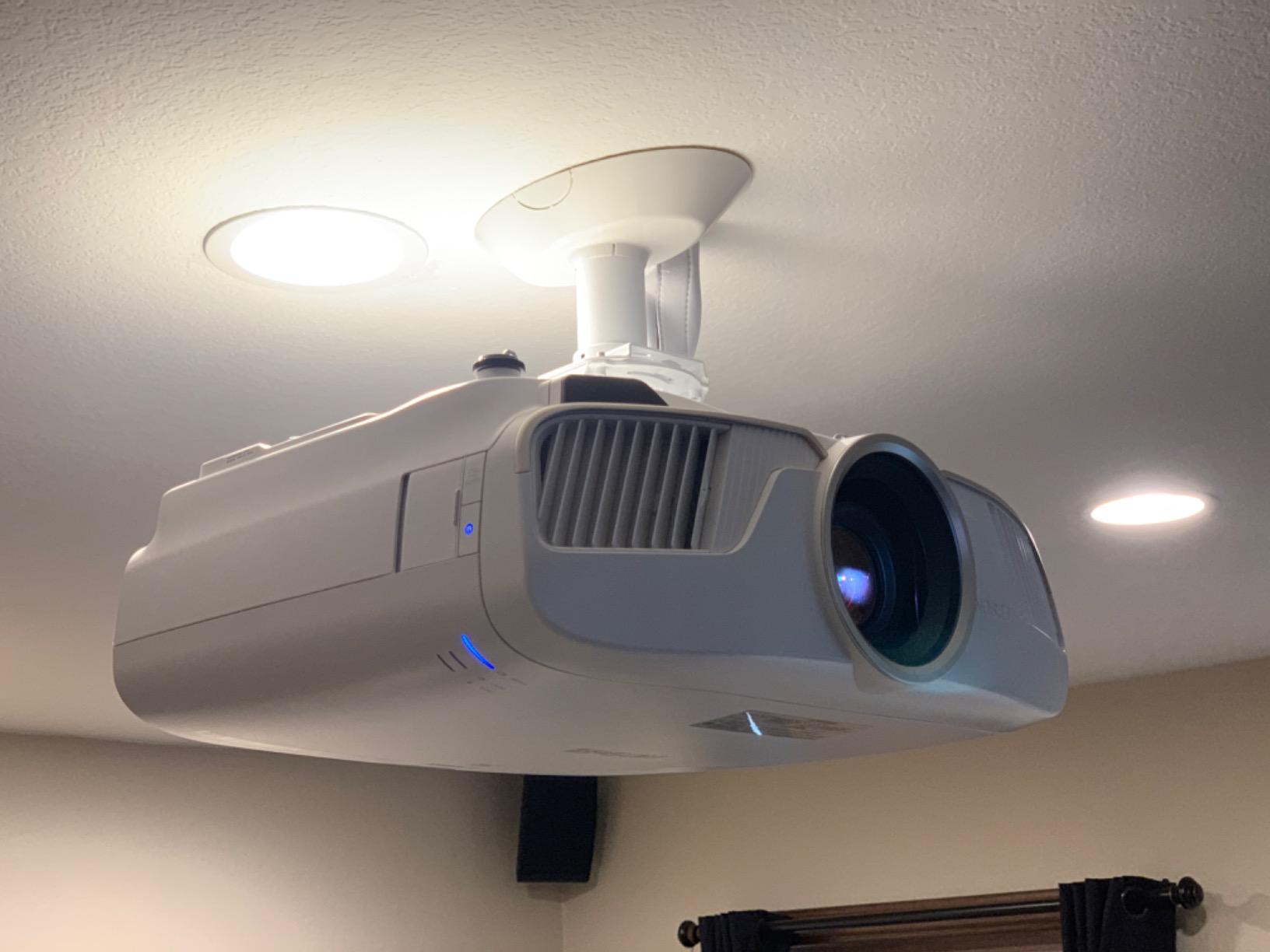
Does the 5050UB fit your room and mounting plan
Image size runs from 50 to 300 inches and throw distance from 1.35m to 2.84m, so a 100-inch image needs a relatively short pull and a 120-inch image is comfortable in a normal dedicated room. Mounting options cover front, rear and ceiling, and at 340 watts power draw it wants a dedicated circuit in a finished installation.
The practical win is the lens memory paired with vertical shift. If your ceiling height is awkward, shift lets you drop the image below the lens line without tilting the chassis, and tilting is what introduces keystone softness. Two-year projector and 90-day lamp coverage is included, and the box ships with HDMI cable clamps, which is a small sign the design anticipated permanent installation.
The deal-breaker to know about
The 5050UB uses resolution enhancement rather than a native 4K light source, and at high brightness specular highlights can look slightly dimmer than a high-end OLED would render them. For most viewers at normal viewing distances this is invisible, and it is one of the reasons owners compare this model favorably to far more expensive native 4K and DLP alternatives.
If you sit closer than roughly 1.5 times the screen width, or if you routinely watch in a bright room with the curtains open, the picture loses its main advantage. In a properly dark dedicated room, this is still the pick we recommend first for the best 4K projectors for home theaters.
2. Nebula Cosmos 4K SE: Best Value Pick for a Flexible Setup
NEBULA Cosmos 4K SE Portable Projector, 1,800 ANSI Lumens
1800 ANSI lumens
HybridBeam LED and laser
Google TV with 4K Netflix
Auto focus and keystone
Pros
- Sharp edge-to-edge 4K that several owners say rivals or beats a 70-inch TV
- Bright colorful 4K from a hybrid LED and laser light source
- Google TV plays 4K Netflix with no dongle needed
- Auto focus
- auto keystone and obstacle avoidance make setup nearly instant
Cons
- 400:1 contrast gives weak blacks compared with dedicated theater projectors
- Some owners report the Google TV interface feeling slow when switching apps
- Not battery powered
- so it needs mains power even when used as a portable unit
This is the unit that surprises people. At the low end of this roundup it produces an edge-to-edge 4K image that multiple owners directly compare to a large television, and the HybridBeam hybrid LED and laser light source keeps it colorful without the contrast collapse you would expect at this level.
The IEA 4.0 setup suite is the feature that changes the experience most. Real-time autofocus, keystone correction, obstacle avoidance, screen fit and wall color adaptation all run automatically, which means you can set it on a side table, point it at a wall and have a rectangular image in seconds rather than spending an evening on menus.
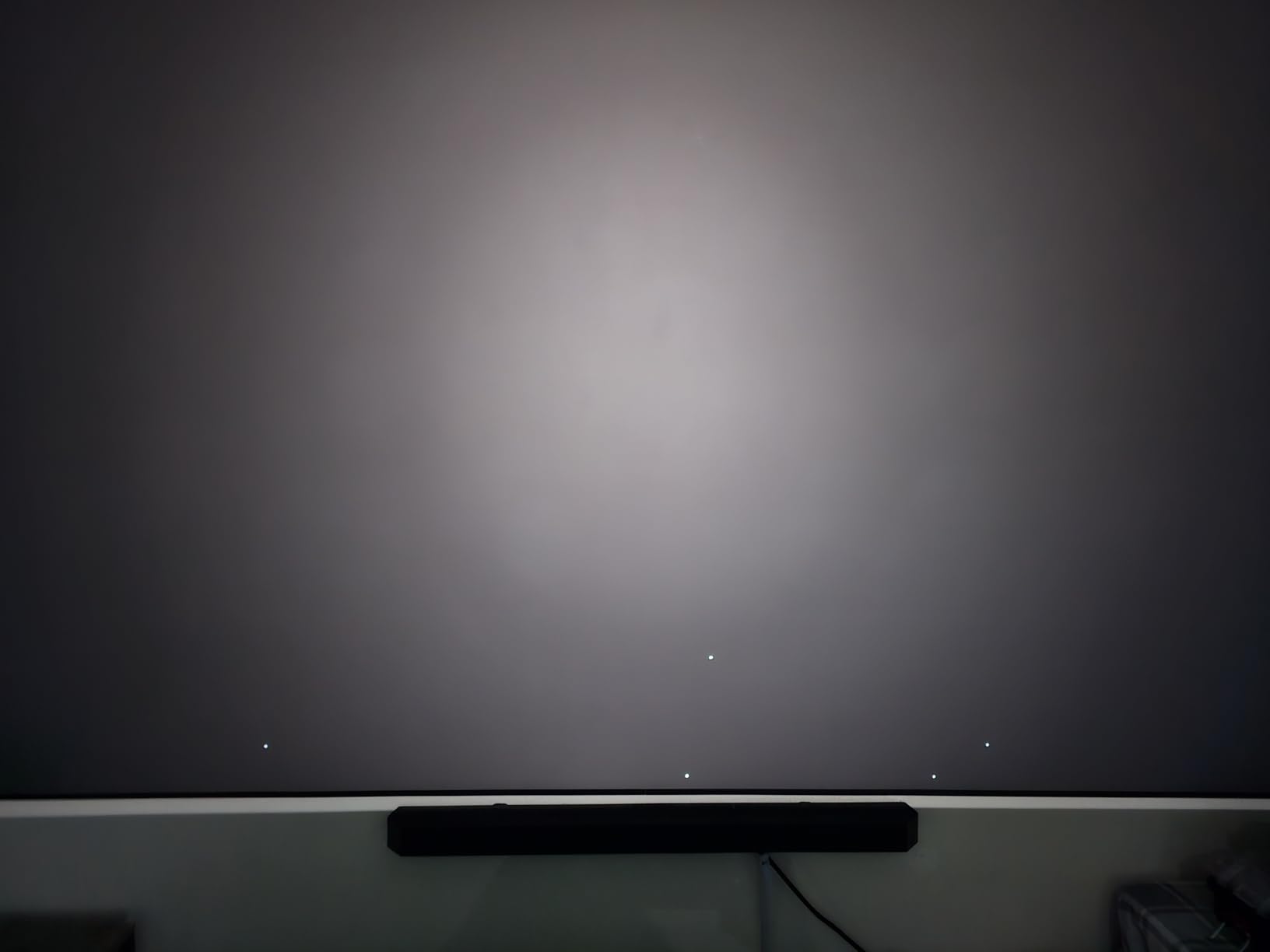
Google TV is built in with native 4K Netflix and no external dongle required, and the 40-watt power draw is roughly an eighth of what the Epson 5050UB pulls. At 9.9 pounds and just over 10 inches on each dimension, it moves between a bedroom, a living room and a patio without drama. The light source is rated at 25,000 hours and the warranty runs 12 months.
The catch is contrast, and it is not a small one. A stated 400:1 contrast ratio is the second-lowest figure in this roundup, and reviewers consistently note that blacks are weak next to a dedicated theater projector. In a dark room with a 120-inch image, dark scenes will look gray. In a moderately lit room, that weakness matters far less because ambient light is lifting the black level anyway.
A few owners also report needing to repeatedly recalibrate, refocus and recenter over extended use, alongside occasional audio dropouts and freeze-ups. Treat the automatic setup as a starting point that saves time, not as a permanent solution.
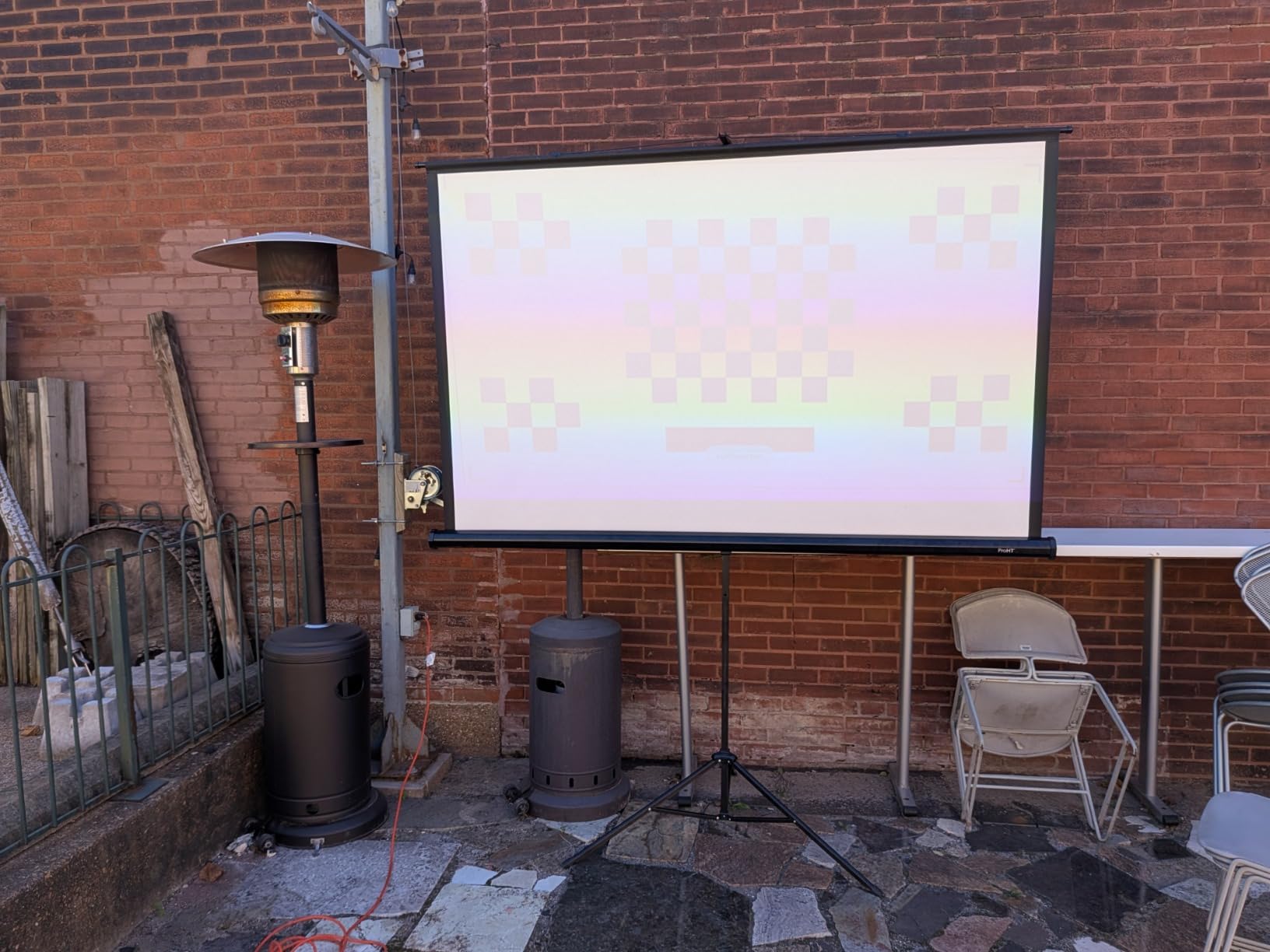
Where this projector earns its place
This is the model to buy when you want a big image without a permanent install. Throw distance runs from 1.69m to 4.78m and image size from 20 to 200 inches, so it works for a bedroom ceiling mount as well as a casual living room setup. Built-in speakers with real bass cover the case where you have no sound system at all.
At 1800 ANSI lumens it needs a dim room to look its best, but the stated standard matters here: ANSI is a defined measurement, so this figure is comparable to other ANSI-rated figures in this guide. That is more than can be said for many unrated brightness claims at this price level.
The deal-breaker to know about
If your goal is a dedicated theater with deep blacks and letterboxing, this is the wrong projector. The 400:1 ratio means shadow detail in night scenes and dark animation will disappoint, and no amount of calibration fully recovers it because the number reflects the light engine itself.
The second deal-breaker is power. Despite the portable form factor, there is no internal battery, so every use requires mains power. Plan cable routing before you decide this is your bedroom projector.
3. JMGO N1S Ultra: Best for Factory-Level Color Accuracy
JMGO N1S Ultra 4K Triple Laser Projector , 2800 ISO Lumens, Google TV
2800 ISO lumens
Triple RGB laser
Delta E under 1 color accuracy
1600:1 FOFO contrast
Pros
- Triple RGB laser rated at 2800 ISO lumens stays vivid in lit rooms
- Delta E under 1 color accuracy measured at the factory
- 3D TOF sensor plus camera handle autofocus
- keystone and screen fit
- Compact at 9.9 pounds with Google TV and 20W Dolby Digital Plus speakers
Cons
- 1600:1 contrast is modest for a dedicated theater
- so shadow detail suffers in dark scenes
- Keystone and alignment corrections are automatic only with limited manual override
- No optical lens shift or zoom
- which limits placement flexibility
Color is where this projector separates itself. The triple RGB laser light source is specified at Delta E under 1 for color accuracy, which is a factory calibration figure rather than a marketing approximation, and reviewers single out accurate color as the reason they rarely touch the picture settings after setup.
At 2800 ISO lumens it is bright enough to hold up with some ambient light, and unlike laser projectors built around a color wheel, a dedicated RGB laser engine has no sequential color artifact to worry about. The color volume is genuinely wide, which shows most clearly on animated films, nature documentaries and anything with large areas of saturated color.
The sensor stack is worth knowing about. A 3D time-of-flight sensor paired with a CMOS camera drives real-time autofocus, keystone, screen fit, brightness and wall color adaptation, and an integrated gimbal keeps the image aligned. In practice that means it goes from unpacked to a rectangular, sharp image in under a minute in most rooms.
Smart features and the entertainment package
Google TV is built in with Chromecast, Google Assistant and more than 10,000 apps, plus 20-watt dual speakers with Dolby Digital Plus reaching down to 45Hz. Bass to 45Hz from built-in projector speakers is unusual and it means this unit can carry a movie night without external audio in a small room.
Connectivity covers HDMI 2.1 with eARC, USB 2.0, Bluetooth and Wi-Fi, and the unit is Blu-ray 3D capable. Image size runs 60 to 300 inches with a throw distance of 5.2 to 25.1 feet, and the laser light source is rated at 30,000 hours, the longest figure among the triple-laser models here alongside the Nebula X1.
The deal-breaker to know about
Placement is the limitation. There is no optical lens shift and no reported optical zoom, and keystone correction runs automatically with limited manual override. If you are ceiling mounting, you need the chassis to land at the correct height and distance on the first try, because you cannot nudge the image optically afterward.
For a dark dedicated room, the 1600:1 FOFO contrast is also simply not enough to deliver true black on a large screen. This is a projector built for color and for rooms you cannot fully darken, which is a real and common situation, but it is not the movie-room answer.
4. AWOL VISION LTV-3000 Pro: Best Ultra-Short-Throw 4K Projector
AWOL VISION LTV-3000 Pro 4K 3D Ultra Short Throw Triple Laser Projector, Dolby Vision & Atmos, HDR10+, 150″ UST Laser TV Home Theater Projector
0.25:1 ultra short throw
80 to 150 inch image
Triple laser with Dolby Vision and HDR10+
Built-in center channel speaker
Pros
- Cinema-grade triple laser covering 107% BT.2020 and 147% DCI-P3
- 0.25:1 throw projects 150 inches from roughly 12.84 inches
- Built-in center channel speaker plus Dolby Atmos simplifies a 5.2.2 setup
- Dolby Vision and HDR10+ with active shutter 3D support
- PJ Link IP control for Control4 and other automation systems
Cons
- Image size caps at 150 inches
- 150-inch is the limit so larger theater screens are out of reach
- Works best in dark rooms and needs an ALR screen in brighter spaces
- 28 pounds means placement close to the wall must be planned carefully
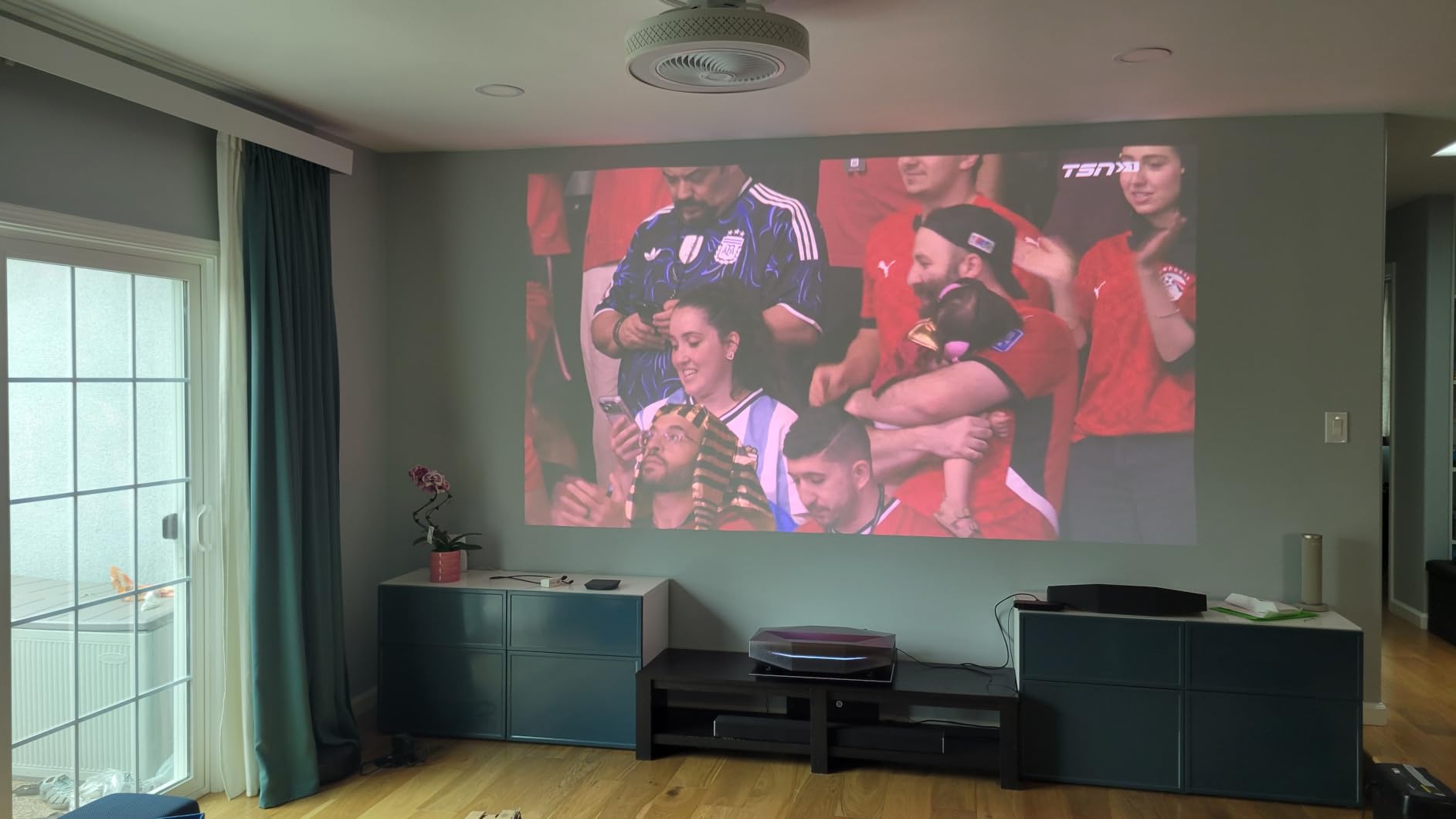
This is the projector that makes a large image possible without drilling a hole in the ceiling. At a 0.25:1 throw ratio it puts a 100-inch image on screen from about 8.54 inches of lens-to-screen distance and a 150-inch image from roughly 12.84 inches, which means it lives on the media console rather than at the back of the room.
The light source is a triple laser with no color wheel, covering 107% of BT.2020 and 147% of DCI-P3 with more than a billion colors. That is an unusually wide specification for a unit at this level, and it is the reason the picture reads as vividly saturated even before calibration. Dolby Vision and HDR10+ are both supported, along with active shutter 3D from compatible glasses.
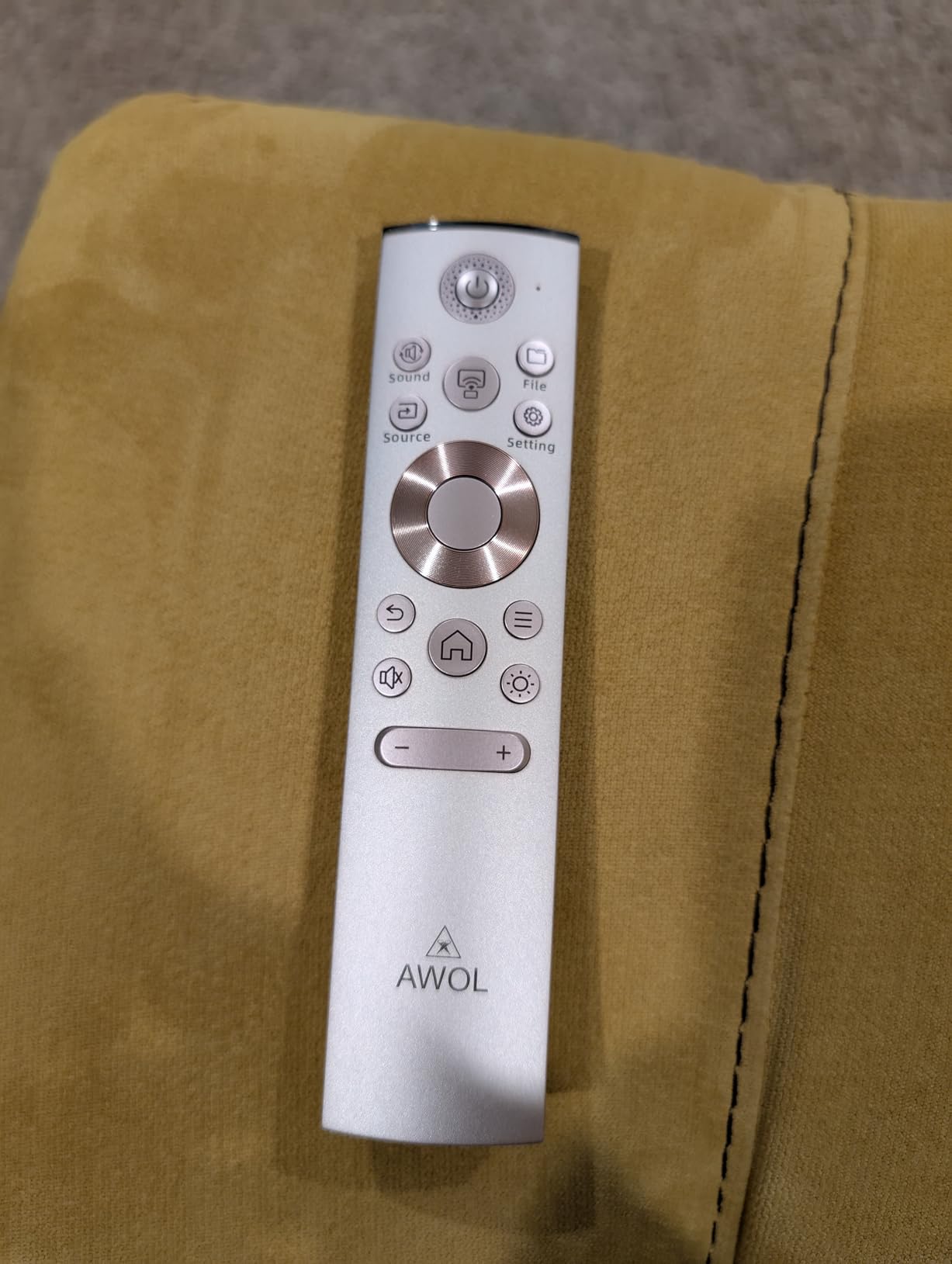
What makes it unusual among home projectors is the audio. It is the first ultra-short-throw projector with a built-in center channel speaker, paired with Dolby Atmos and a ThunderBeat 4.2.2 surround system. For a 5.2.2 setup that means one fewer speaker to solve, and dialogue sits where it belongs without a separate soundbar. PJ Link IP control also lets it integrate with Control4 and similar home automation systems.
Vertical keystone correction handles up to 40 inches of offset, which covers most console placements, and the throw distance range is 0.5 to 1.68 feet across an 80 to 150 inch image. The laser light source is rated at 25,000 hours, warranty is two years, and power draw is 300 watts.
The installation reality is that this is a 28-pound, 23.6-inch-long unit designed to sit close to the wall. The fixed throw ratio can also require the optional motorized slider if your cabinet depth is limited, which is worth confirming against your own furniture before you commit.
What the 150-inch ceiling means for your room
Knowing the cap up front saves a lot of planning. A 150-inch 16:9 image is 130.7 inches wide, and at typical 4K projector viewing ratios that seats roughly 9 to 12 people comfortably. Beyond 150 inches, none of the ultra-short-throw models in this roundup can follow, so if you want a 120-inch screen that is fine, and if you want a 135-inch screen you should verify the specific unit before buying.
Screen choice matters more here than with any long throw unit. Because the beam arrives at a very shallow angle, screen surface texture scatters light straight back toward your seating position. In a dark room the standard ALR or matte white surface works, but in a room with daylight you will want a high-gain ALR surface or the color and contrast will not hold.
The deal-breaker to know about
Buyers consistently note this projector works best in dark rooms and needs an ALR screen to hold color and contrast in brighter environments. Combined with the 150-inch ceiling on image size, that makes it a strong living room replacement for a television rather than a solution for a 16:9 dedicated theater with a larger screen.
Its 2500:1 contrast is respectable but not exceptional for the category. If your priority is deep black in a fully dark room rather than placement convenience, a long throw model in this roundup will produce a better image and you have more flexibility on screen size.
5. Epson Home Cinema 2350: Best Budget Entry Point
Epson Home Cinema 2350 4K PRO-UHD Smart Streaming Projector with Android TV
2800 lumens color and white
True 3-Chip 3LCD
Under 20 ms input lag
Android TV built in
Pros
- Bright 2800 lumen color and white output that tolerates some ambient light
- True 3-Chip 3LCD engine means no rainbowing and no color brightness issue
- Under 20 ms input lag in low latency mode for console gaming
- Android TV with Google Assistant and streaming apps
- Only 9 pounds and easy to reposition around a room
Cons
- 35000:1 contrast is the weakest black level in this group
- No lens shift or optical zoom
- so placement depends on keystone correction
- Some buyers report image size not matching published specifications on very large screens
This is the model most people should look at first, because it answers the basic question of whether a 4K projector is worth it at all. At 2800 lumens of color and white brightness it is bright enough to be usable with a lamp on, and the true three-chip 3LCD engine gives you consistent brightness across all three channels and no color wheel artifacts.
For gaming it is unusually capable at this level, with input lag under 20 milliseconds in low latency mode. That is not competitive shooter territory, but it removes the noticeable input delay that makes casual console gaming feel sluggish. HDMI, Wi-Fi, 3.5mm audio and USB cover the connection needs without a converter.
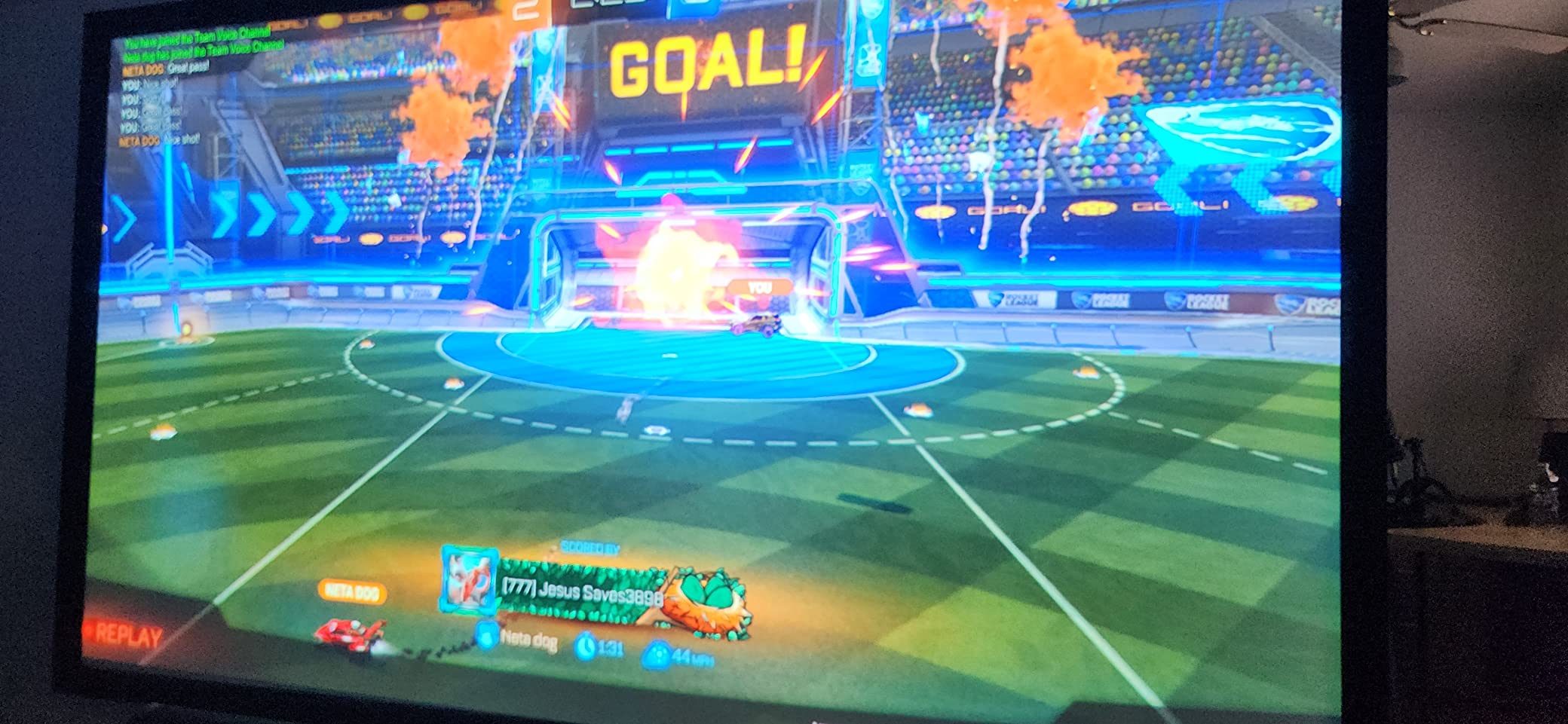
Android TV is built in with Google Assistant voice search and the standard streaming apps, and there is a 10-watt speaker plus Bluetooth for pairing to something better. Image size is specified from 40 to 500 inches with a throw distance of 3.9 to 48.7 feet, so it scales from a bedroom to a large room depending on how much depth you have.
Warranty is a two-year projector limited warranty, and the box includes an interface cover and a lens cover, both of which hint at a design intended to be enclosed or mounted rather than left exposed on a coffee table.
The weakness is black level, and it is not marginal. A 35,000:1 contrast ratio is the weakest in this roundup, and reviewers call out weaker blacks in a dark theater as the most common complaint. Combined with the absence of lens shift or optical zoom, this is a projector that wants a bright-ish room rather than a fully blacked-out one.
Placement realities without lens shift
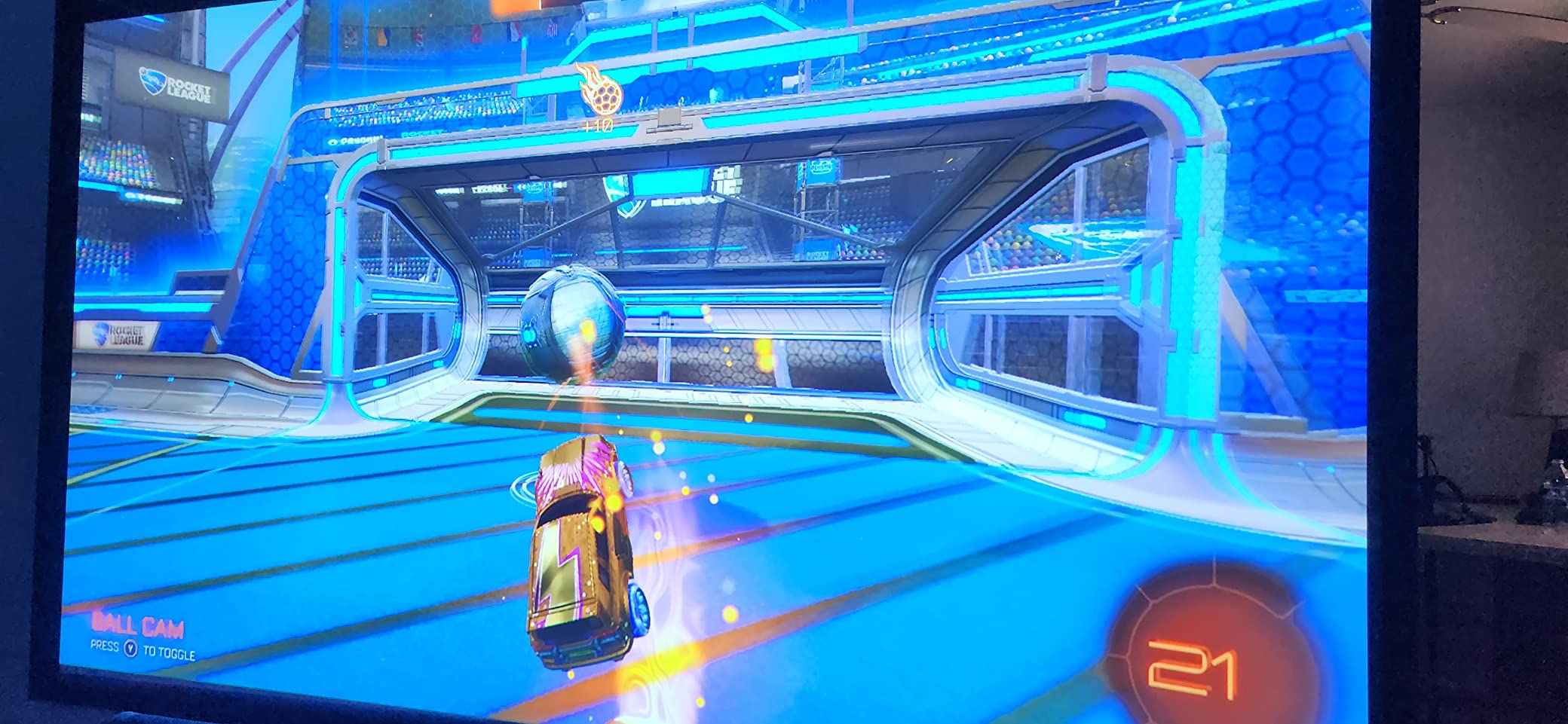
Without lens shift or optical zoom, the only way to change image size and position is keystone correction, which digitally crops and scales the image. That costs resolution and brightness, so mounting accuracy matters more here than with the 5050UB. Get the chassis at the right height before you bolt anything up.
At 9 pounds and 13.1 by 10.8 by 4.8 inches this is the easiest unit here to move between a bedroom and a living room. If your plans are still forming, that flexibility has real value. Just note that some buyers report image size and aspect on very large screens not matching published specifications, so verify against a return window.
The deal-breaker to know about
This is the one to skip if you are building a dedicated theater and intend to black out the room completely. It carries the lowest average rating in the roundup, with a heavier share of one-star reviews than the other Epson models, and the complaints concentrate on black level and image sizing rather than color or sharpness.
If your room is dim but not dark, and you want a large image with a built-in streaming platform and low latency for console gaming, it remains a sensible starting point. The 3LCD engine is the reason we would pick it over a cheaper single-chip DLP alternative.
6. XGIMI HORIZON 20: Best for Daylight and Ambient Light
XGIMI HORIZON 20 4K RGB Triple Laser Home Projector, 3200 ISO Lumens
3200 ISO lumens
RGB triple laser engine
Lens shift and optical zoom
240Hz with 1ms response
Pros
- 3200 ISO lumens from an RGB triple laser engine cuts through ambient daylight
- Essentially fanless-silent operation that stays cool after multiple movies
- Built-in lens shift and optical zoom center the image without micro-adjusting the chassis
- Automatic keystone
- autofocus
- screen fit and obstacle avoidance finish setup in seconds
- Harman Kardon speakers good enough that many skip an external soundbar
Cons
- Visible laser speckle on some 1.0-gain matte white screen surfaces
- Brief color fringing can appear on white content such as subtitles during motion
- A Google account is required during setup because Google TV is the startup screen
Among long throw models here, this is the one built for rooms that are not fully dark. The X-Master RGB triple laser engine is specified at 3200 ISO lumens, a stated standard that makes the figure directly comparable to the other ISO-rated units in this guide, and users report it holds up for daytime viewing in a way the 2500 to 2800 lumen models do not.
The second thing that sets it apart is placement hardware. Built-in flexible lens shift and optical zoom mean you can center a large image and size it without physically moving the chassis, which on a low ceiling or a rear shelf is a genuine convenience rather than a spec-sheet nicety. Automatic keystone, autofocus, screen fit and obstacle avoidance handle the rest.
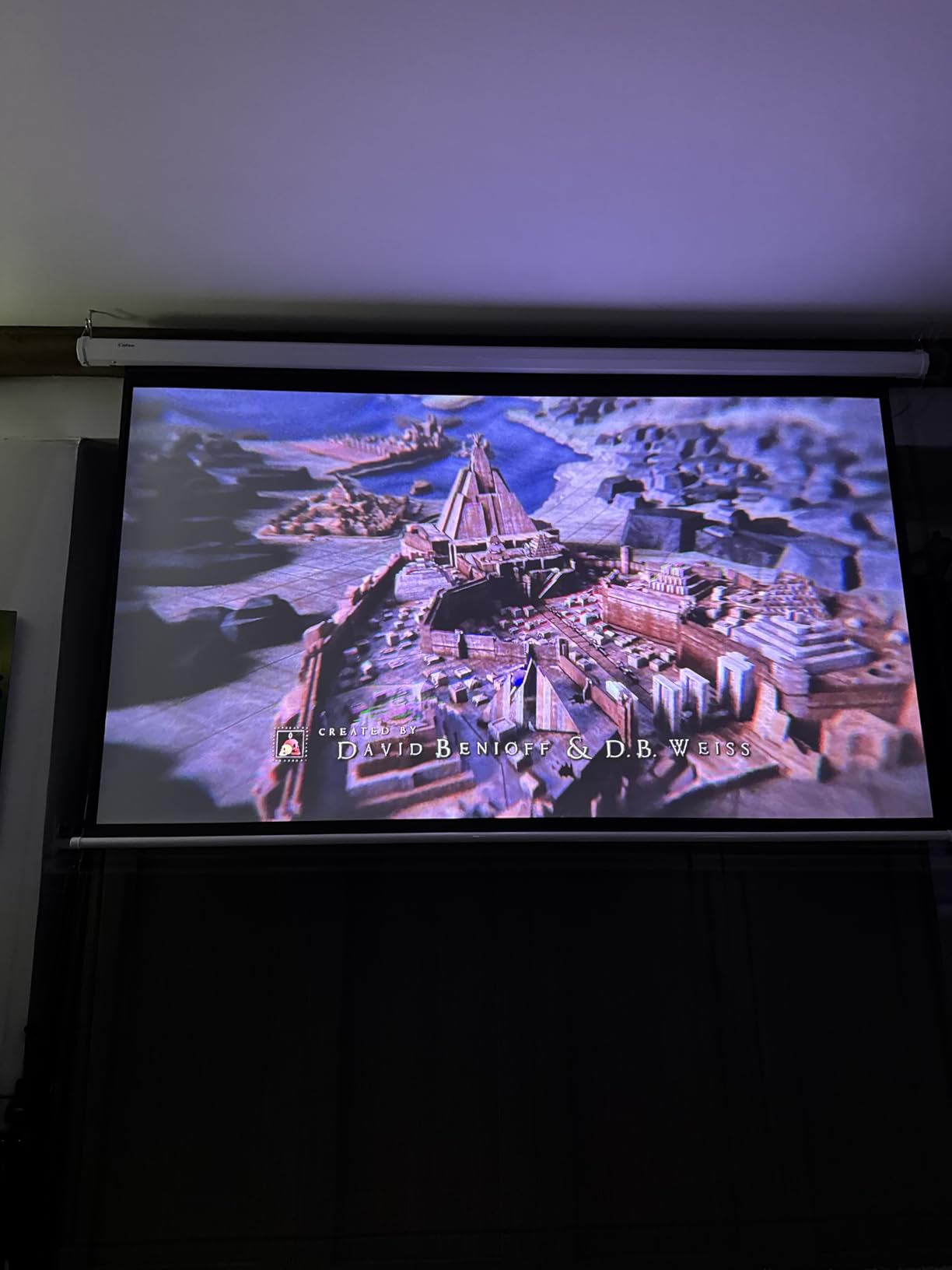
Gaming is a strength too. The specification is up to 300-inch visuals with 1ms response, 240Hz with VRR and ALLM, and owners describe the motion handling as clean. Image size runs 40 to 300 inches with a throw distance of 1.06 to 5.31 meters, and power draw is a modest 180 watts.
For HDR it lists IMAX Enhanced, Dolby Vision, HDR10+ and Filmmaker Mode, and the stated 100,000:1 contrast ratio is the highest figure in this roundup. Harman Kardon speakers are built in alongside Google TV, and a two-year warranty is included. At 4.9 kg it is heavier than the portable units but far lighter than the 28-pound theater models.
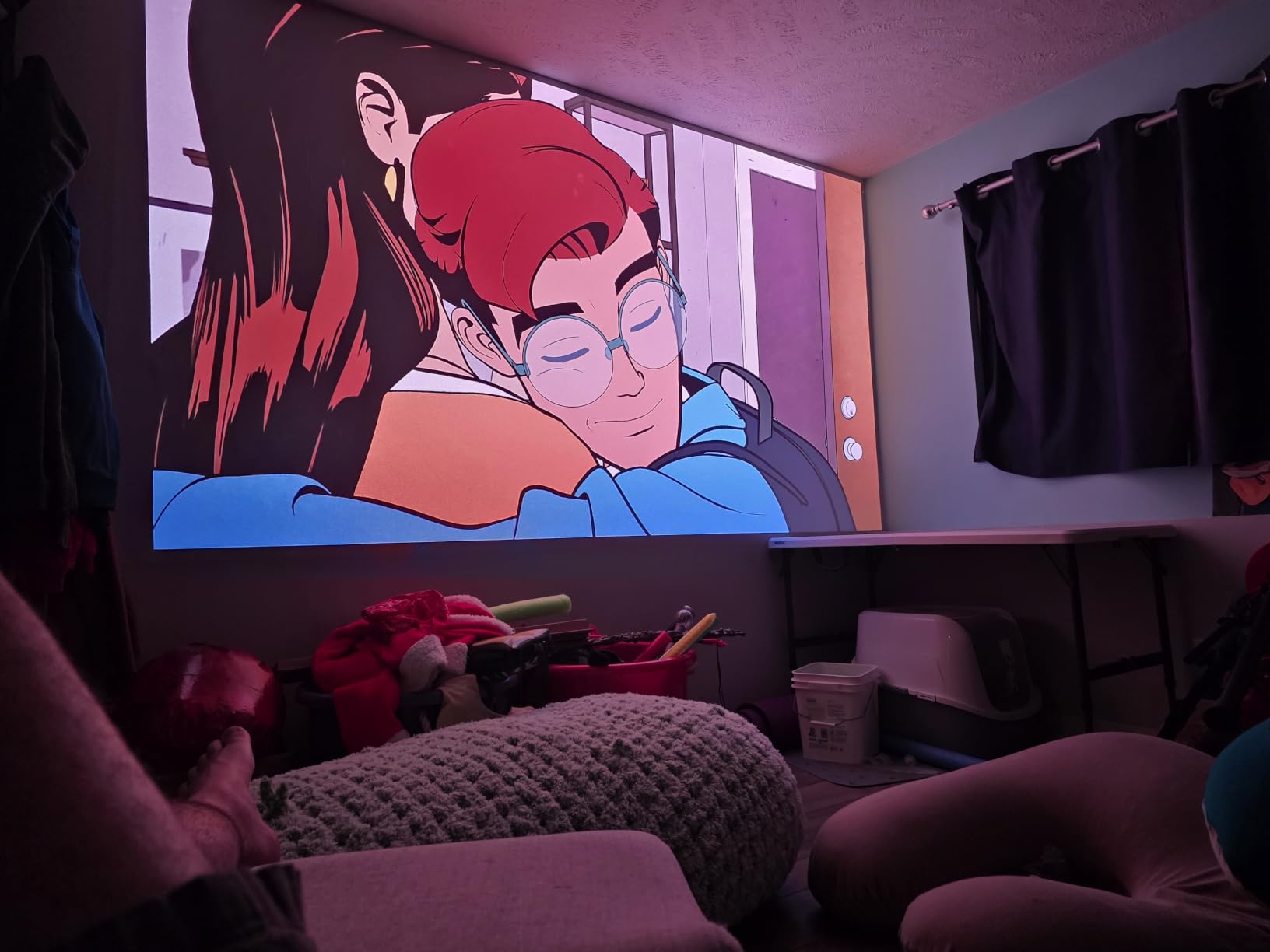
Two image characteristics deserve a warning. Visible laser speckle is reported on some screens, particularly 1.0-gain matte white surfaces, which is a characteristic of single-laser systems. And brief color fringing can show on white content such as subtitles during motion, which is most visible on dark scenes with credits.
Matching a screen to a triple-laser engine
Speckle is the deciding factor here. On a high-gain ALR screen it largely disappears, but on a budget matte white screen it can be clearly visible at close seating distances. If you sit in the first two rows, ask for a screen sample before committing, or accept a screen that needs a gain above 1.0.
Setup friction is close to zero on this unit. Automatic keystone, autofocus, screen fit and obstacle avoidance finish in seconds, and the lens shift and optical zoom handle the geometry that keystone would otherwise distort. Power consumption of 180 watts also means less heat and a quieter room than most competitors at this brightness.
The deal-breaker to know about
One reviewer reports a firmware update that stopped the unit powering on, along with slow manufacturer support. That is a single reported instance rather than a pattern, but it is worth noting alongside the two-year warranty, and it is a reason to keep firmware current rather than deferring updates for months.
The included travel case is also heavy-duty styrofoam, which is a strange thing to ship with a home theater projector and one that will not survive frequent transport. If you plan to move it around regularly, budget for a proper case.
7. Hisense PL2: Best All-in-One Living Room Projector
Hisense PL2, Ultra Short Throw Home Theater Laser Projector, 80” – 150”, 4K UHD, 2,700 Lumens, 3000:1 Contrast, Dolby Vision & Atmos, 3D, Google TV, WIFI 6E
2700 ANSI lumens
3000:1 contrast
80 to 150 inch ultra short throw
Dolby Vision and Atmos
Pros
- Genuinely cinematic 4K image with improved blacks
- saturation and contrast over earlier Hisense UST models
- Very bright for an ultra short throw unit and it holds up well with an ALR screen
- Extremely simple setup with digital lens focus and a straightforward leveler
- Fast
- responsive Google TV interface with Wi-Fi 6E
- Works on a plain painted wall without specialty paint or spackling
Cons
- Image size limited to 80 to 150 inches
- Must sit very close to the wall
- and floor placement puts the leveler feet at floor level
- Wall texture and drywall imperfections can show on plain painted walls
Among the ultra-short-throw models here, this one has the highest stated contrast ratio at 3000:1, and owners describe the image as a dramatic upgrade over earlier Hisense UST models with better black level, saturation and contrast. Several report it finally beating a comparable OLED in their room, which is a high bar for a projector.
The light source is X-Fusion laser rated at 25,000 hours or more, and the image comes off a DLP system with 2.07 million micro-mirrors paired with a 4K AI upscaler. Over 1.07 billion colors, Dolby Vision with multiple HDR formats, Dolby Atmos and 3D support round out a strong feature list for a living room unit.
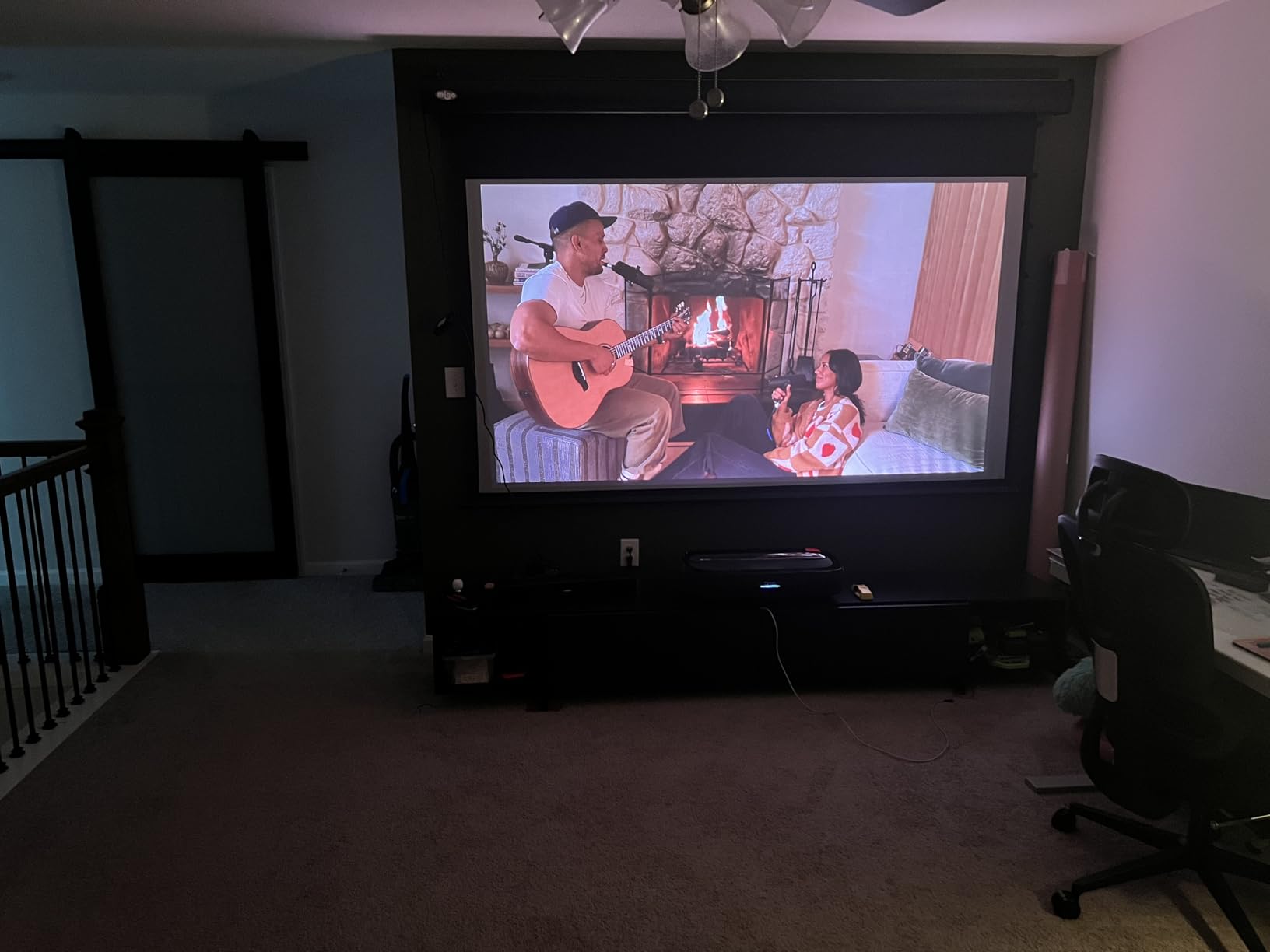
Setup is the story most owners tell. Digital lens focus plus straightforward keystone and leveler adjustment gets you to a correct image quickly, and the Google TV interface is fast and responsive over Wi-Fi 6E, with Bluetooth 5, Ethernet, HDMI and USB 3.0 for the rest. A cleaning kit is included in the box, which is a sensible inclusion for a unit that sits close to a wall where dust collects.
At 18.7 pounds and 20.9 by 13.2 by 4.7 inches it is lighter and shallower than the AWOL LTV-3000 Pro, which helps in shallow cabinet spaces. The throw can be as little as 0.22 feet, covering an 80 to 150 inch image, and power draw is 300 watts with a two-year manufacturer warranty.
There is one DLP-specific concern. A small number of buyers report rainbow artifacts that caused them to return the unit. If you are sensitive to that effect, the three-chip 3LCD models in this roundup are rainbow-free by design.
What the screen surface has to be like
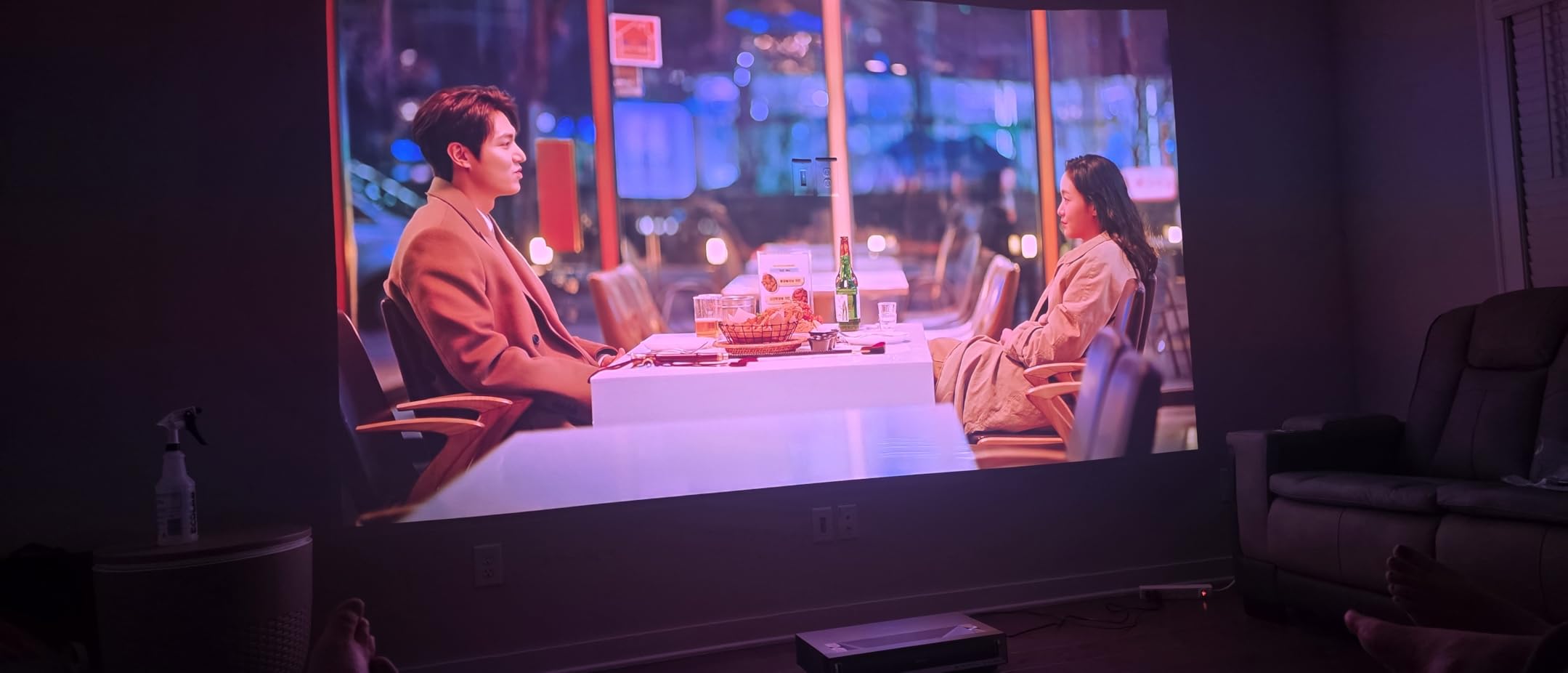
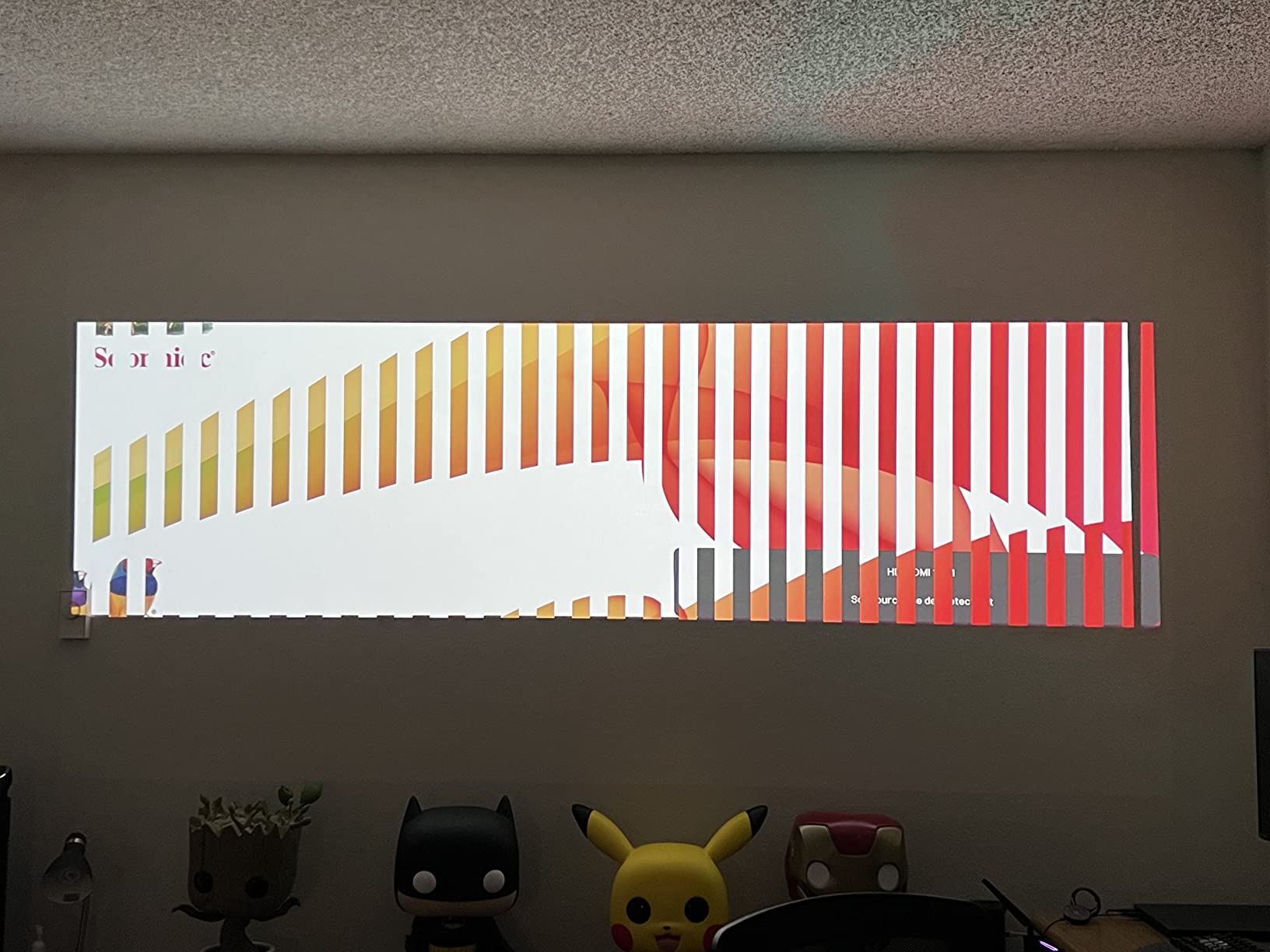
Owners report this projector works on a plain painted wall without needing specialty paint or spackling, which is unusual for an ultra-short-throw unit. The caveat is that wall texture and drywall imperfections can show on a plain painted wall, particularly with grid-type content such as spreadsheets or a Windows desktop.
If you will be watching movies on a wall, that is fine. If you will occasionally mirror a laptop, expect to see the wall. A proper ALR screen is the better long-term answer, and at this brightness it is the configuration that holds color and contrast in a room you do not fully darken.
The deal-breaker to know about
The unit must sit very close to the wall or screen, and floor placement puts the leveler feet at floor level rather than on a console surface, which can introduce height issues. Plan the furniture before the projector, not after.
Also note the 80 to 150 inch range. If your media wall is wider than that, you are looking at the wrong category, and the long throw models here reach 300 inches. A handful of menus, including keystone, are also only reachable through the remote’s menu button rather than the settings screen, which is a small ongoing irritation.
8. Nebula X1: Best Bright and Sharp Portable 4K Projector
Nebula X1 4K Laser Projector, 3,500 ANSI Lumens, Dolby Vision
3500 ANSI lumens triple laser
5000:1 native contrast
14-element all-glass lens
Dolby Vision, ISF calibrated
Pros
- Exceptionally high brightness for a portable unit
- bright enough for near-daylight outdoor viewing
- Very good black levels and contrast once the firmware contrast engine is updated
- Sharp all-glass lens with consistent 4K detail and no edge softness
- Auto-alignment plus Spatial Recall stores per-room position
- size and focus settings
Cons
- Input limited to 60Hz
- which is a real constraint for gaming
- Noticeable rainbow effect in bright white scenes
- Out-of-box color can lean warm or pink until manually calibrated
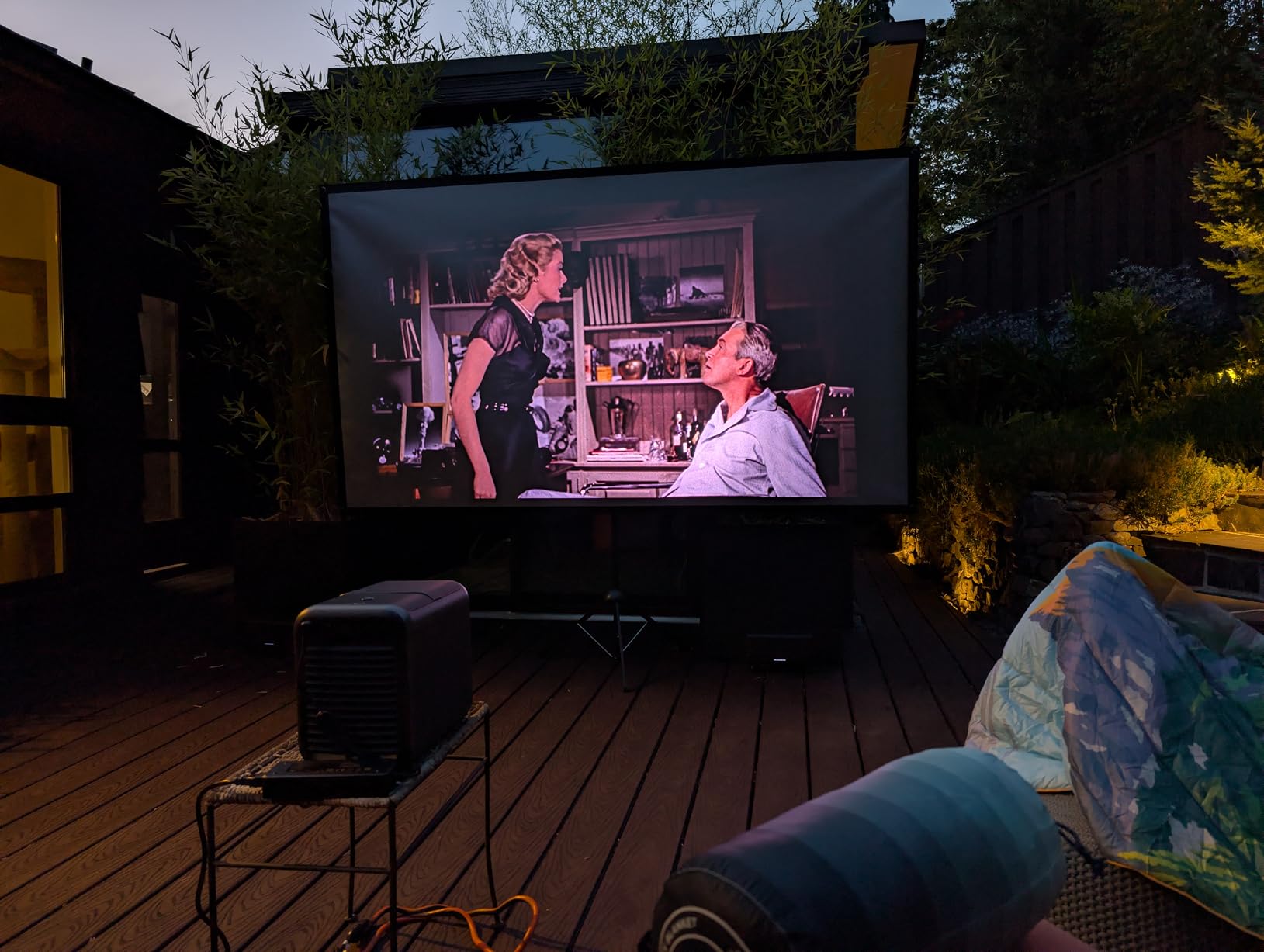
This is the brightest unit in the roundup by a wide margin, at 3500 ANSI lumens from a triple laser light source, and it is the one reviewers describe as capable of near-daylight outdoor viewing. For a bright living room with a large window or for a backyard movie night, nothing else here matches it.
The contrast story is the real differentiator for a portable unit. A 6-blade iris delivers 5000:1 native contrast, which is enhanced to 56,000:1 by the NebulaMaster engine, and owners report very good black levels once the firmware contrast engine is updated. Native contrast is the honest figure here, and 5000:1 is the highest native ratio among the portable models in this guide.
Optics are a 14-element all-glass lens giving edge-to-edge 4K clarity up to 300 inches, and it is ISF calibrated with TUV Rheinland verification for brightness, color accuracy, contrast and blue light. Dolby Vision is supported, the laser light source is rated at 30,000 hours, and warranty runs 24 months.
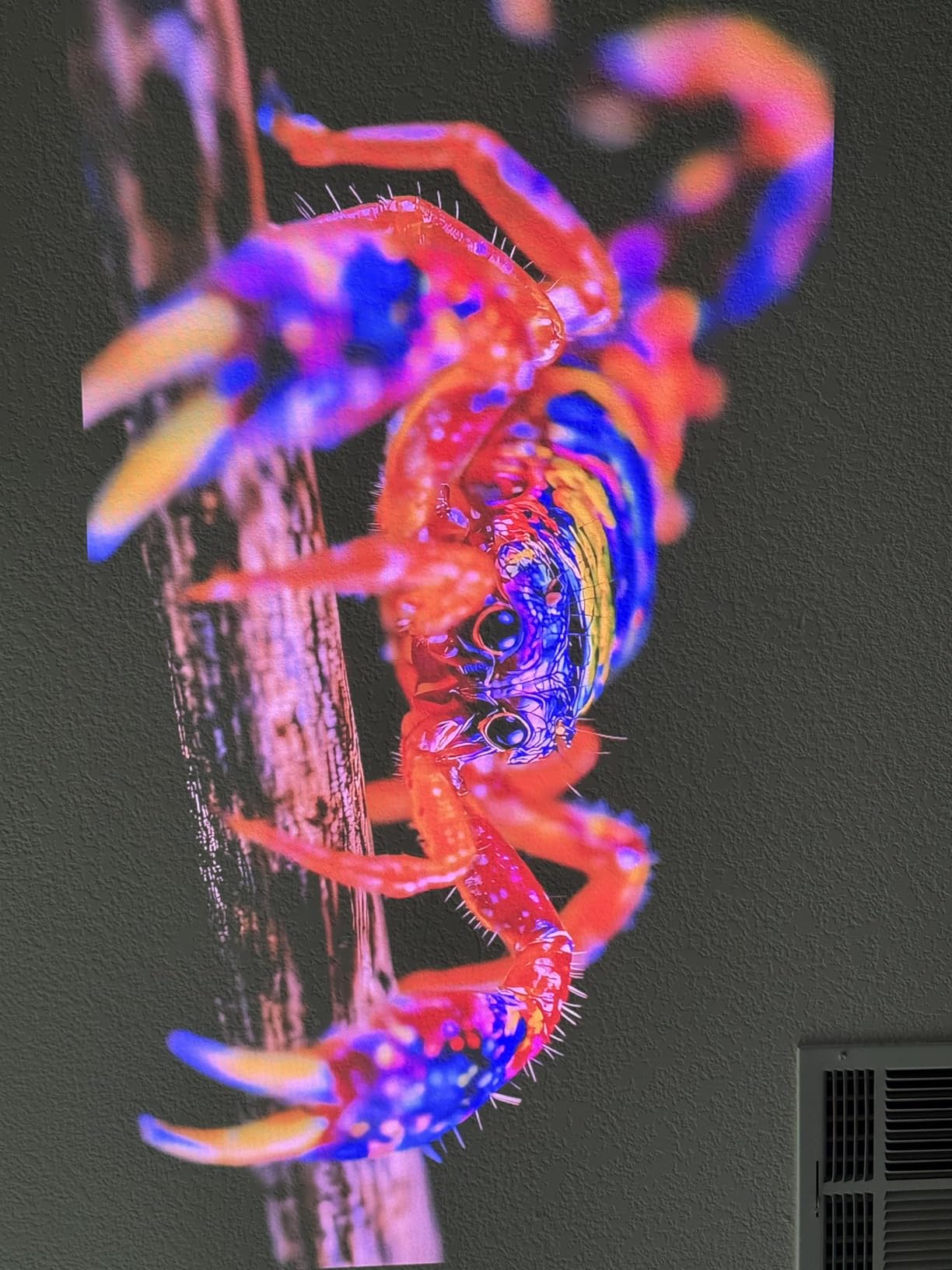
The software features are unusually well thought out for this category. Auto-alignment and Spatial Recall save position, size and focus settings per room, so moving the projector between the living room and a bedroom does not mean starting over. The external power brick also means the unit itself stays quiet, since the heat-producing component sits away from the chassis.
Audio is handled properly for a portable unit. eARC over HDMI plus optical audio out supporting 5.1 Dolby Digital means you can push 7.1 audio to a surround system even when streaming from the built-in Google TV platform. Image size runs 40 to 300 inches, so despite the portable form factor this is a legitimate theater projector.
One firmware note worth acting on: the manufacturer recommends an Android 14 update for smoother streaming, and owners characterize the built-in Google TV as slow out of the box. A streaming stick is the common workaround.
Latency, white scenes and out-of-box color
Three compromises show up in reviews and you should know them before you buy. Input is limited to 60Hz, which rules this out as a competitive gaming projector no matter how bright the image is. A noticeable rainbow effect appears in bright white scenes, which is inherent to single-chip DLP with a color wheel. And out-of-box color can lean warm or pink until you calibrate manually.
That last one is a calibration task, not a defect, and ISF calibration plus Dolby Vision means there is real accuracy available once you put in the time. Budget an evening with a calibration disc rather than expecting the first frame to be correct.
The remote is also worth flagging: it lacks an Input Select button, has no motion-activated backlight and does not always power on reliably. It is a small thing that will annoy you more than any of the image characteristics.
The deal-breaker to know about
If you are a gamer, the 60Hz input limit ends the evaluation. If you are a movie and sports viewer with a bright room, this is the strongest picture in the roundup and the brightness to use it. And if you want a no-fuss one-box setup, note that 3D mode must be re-enabled manually after menu or scene changes, which is tedious if you watch 3D content regularly.
9. ViewSonic PX701-4K: Best 4K Projector for Gaming
ViewSonic PX701-4K UHD Projector, 3200 Lumens, 240Hz HDR, Auto Keystone DLP
3200 ANSI lumens
240Hz refresh rate
4.2ms input lag
1.1x optical zoom
Pros
- Best gaming specification set in this group at 240Hz and 4.2ms input lag
- 3200 ANSI lumens makes it usable in rooms with ambient light
- 1.1x optical zoom plus auto keystone and four-corner adjustment simplify placement
- Lightest unit here at 6.2 pounds with a compact footprint
- Dual HDMI and a powered USB-A port support consoles and streaming dongles
Cons
- DLP rainbow artifacts are reported by sensitive viewers
- 12000:1 contrast gives weak dark-scene detail versus 3LCD and laser models
- Lamp light source rated only 6000 hours
- so bulbs need eventual replacement
With 240Hz refresh and 4.2ms input lag, this is the fastest projector in the roundup, and the gap to the next best is not small. For a console or PC gaming setup where motion clarity and responsiveness are the priority, that number decides the conversation on its own.
It also has the largest review base here at 767 ratings, which matters more than raw count: a picture quality record that large is far more likely to be representative than a handful of reviews. The 3200 ANSI lumens brightness also lets it work in a room with ambient light, and 1.1x optical zoom plus auto keystone and four-corner adjustment make placement manageable without lens shift.
The physical design helps in older homes. At 6.2 pounds and 8.7 by 12.3 by 4.3 inches it is the lightest unit in the group, it is ceiling mount compatible with the PJ-WMK-007 bracket, and it supports curved screen projection. Image sizes run 30 to 300 inches, with a 100-inch image from 10.9 feet, and dual HDMI plus a powered USB-A port cover consoles and streaming dongles. A three-year limited warranty is unusually long for this category.
Resolution is true 3840 by 2160 DLP with HDR and HLG support through SuperColor technology. Power draw is 265 watts, which is higher than the triple-laser portable models and lower than the Epson 5050UB.
The trade-off is the light source. A 6,000-hour lamp rating is the shortest in the roundup, and it is the one spec here with a real future cost attached, because you will eventually replace a bulb. Contrast at 12000:1 also produces weaker dark-scene detail than the 3LCD and laser models in this list, and rainbow artifacts are reported by sensitive viewers.

Should you weigh the lamp life against the latency
Work out the arithmetic before deciding. A 6,000-hour lamp in a room used three hours a night works out to roughly five years of service, and the replacement bulbs for a DLP unit of this type are inexpensive relative to the projector. If you will upgrade before then, the lamp life barely registers.
Placement is straightforward too. A 100-inch image from 10.9 feet is a normal rear-shelf or ceiling-mount distance, 1.1x optical zoom gives you some latitude on image size, and four-corner adjustment handles the cases where the chassis cannot be perfectly square to the screen.
The deal-breaker to know about
Keystone-based setup can soften the image compared with a model that uses lens shift, and that matters if you care about fine detail. Combined with the weaker dark-scene contrast from the 12000:1 ratio, this is a projector that rewards a dim room and rewards sitting a reasonable distance back rather than close.
Its operating system is also older relative to the Google TV models here, so streaming apps may eventually need an external device. For a gaming-first installation driven by a console or PC, that is not a problem at all.
10. Epson Home Cinema LS11000: Best Cinema Image Quality
Epson Home Cinema LS11000 4K PRO-UHD Laser Projector with HDR10+
Laser 3LCD, 2500 lumens
Motorized lens zoom, focus and shift
Full 10-bit HDR10+ and HLG
Up to 120Hz with HDMI 2.1
Pros
- Best-in-group image quality with razor sharpness
- deep blacks and no DLP rainbowing
- Laser array light source powers on instantly and needs no bulb replacement for 20000 hours
- Motorized zoom
- focus and lens shift make placement straightforward
- Excellent 120Hz motion handling with low input lag for gaming
- eARC-capable HDMI simplifies connecting a sound bar or surround system
Cons
- No 3D support
- which some 3LCD buyers treat as a dealbreaker
- Very high acquisition cost compared with every other projector in this group
- Picture quality drops noticeably in rooms with heavy ambient light
This is the picture quality answer. Owners of the LS11000 consistently call it the best image in the group, citing sharpness, deep blacks and the absence of any DLP rainbowing, and it is regularly compared favorably to the 5050UB despite costing considerably more. The engine is a true three-chip 3LCD design with a laser array light source rather than a lamp.
The pixel-shift approach here uses Precision Shift Glass Plate technology, running 4K pixel-shift in parallel across all three LCD chips rather than sequentially. The stated resolution is 3840 by 2160 with 8.29 million pixels, and 2500 lumens of both color and white brightness means no chroma imbalance to correct.
Lens control is fully motorized: zoom, focus and lens shift, with an Epson Cinema Lens specified for edge-to-edge focus uniformity so the corners stay as sharp as the center on a wide image. That uniformity matters at 120 inches and beyond, where cheaper lenses visibly soften toward the edges.
HDR is the most complete implementation in the roundup. Full 10-bit HDR, HDR10+ and HLG with 16-step real-time HDR curve adjustment, driven by the Epson Picture Processor alongside color, contrast and resolution enhancement. Motion handling goes to 120Hz with frame interpolation, and HDMI 2.1 covers the bandwidth needs. Image size runs 50 to 300 inches at 311 watts, with a two-year limited warranty and a 20,000-hour laser life.
One operational warning from reviews: this projector amplifies poor source quality, so low-bitrate streaming looks worse on it than on cheaper models. Feed it high-quality sources. It is also noticeably less impressive in a room with heavy ambient light, which points the same direction as the 5050UB: this is a dedicated dark room machine.
Installation and long-term ownership
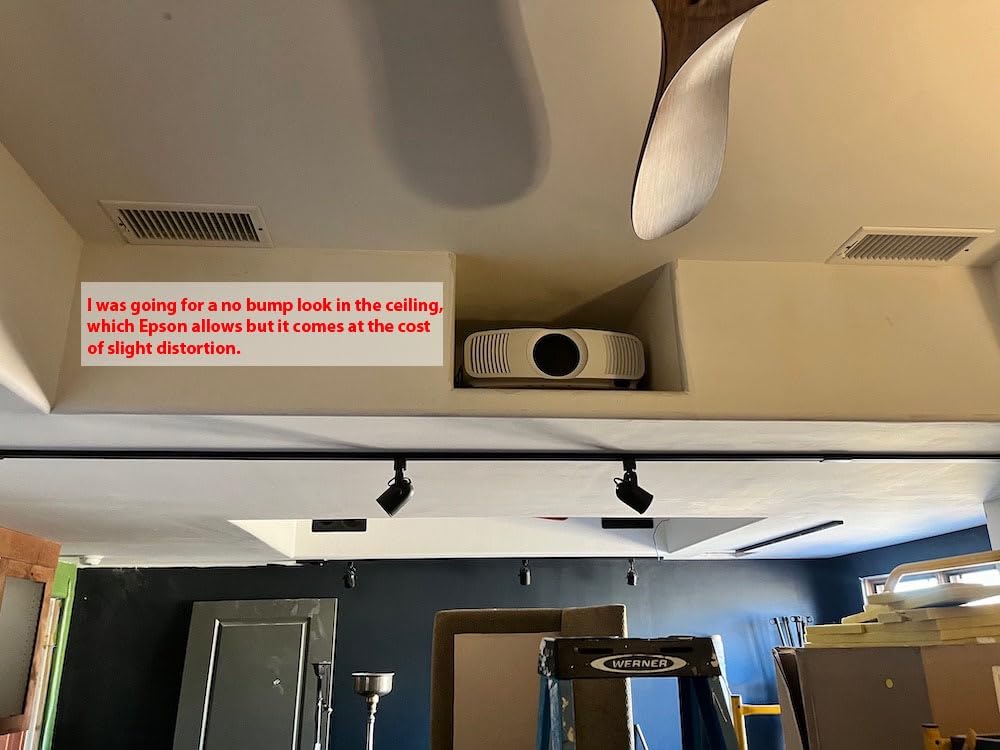
At 28 pounds and 17.6 by 20.5 by 7.6 inches this is a permanent ceiling or shelf mount, and the motorized lens means you can dial in image geometry after it is mounted rather than before. That is the single most underrated feature in a permanent installation, because it removes the need to physically reposition a unit this size.
Laser operation is quiet and instant on, with no warm-up, no bulb replacement over the life of the unit and no lamp warranty to think about. eARC over HDMI simplifies audio to a sound bar or surround receiver, and owners describe operation as very quiet even during extended viewing, which matters for a room you want to use for music as well as film.
The deal-breaker to know about
There is no 3D support, and some 3LCD buyers consider that a dealbreaker. The AWOL LTV-3000 Pro, Hisense PL2 and JMGO N1S Ultra in this roundup all do support 3D, so if 3D content matters, this is not the model.
The other hard constraint is cost, which is the highest in the roundup, and the fact that a 28-pound chassis is not something you reposition. There is also one reported instance of a unit failing within an hour of delivery, resolved by Epson support, which is a reminder to test the projector immediately on arrival rather than after mounting it.
How to Choose a 4K Home Theater Projector: Buying Guide
Projector specifications reward the buyer who knows which numbers actually move the image, and punish the one who compares them blindly. The measurement conventions alone are enough to send you the wrong way, so this section is organized around the decisions in the order you need to make them: room, light, throw, engine, then features.
DLP or 3LCD: which light engine matters more
Two engine families cover most of the projectors you will consider. DLP uses a single micro-mirror chip and, unless it is a three-chip design, a color wheel that cycles colors rapidly. 3LCD uses three separate LCD chips, one per primary color, combined through a prism.
Three-chip 3LCD is rainbow-free by design, which is why both Epson models and every 3LCD entry in this roundup sit comfortably for long movie nights. The cost is a larger, heavier chassis and a tendency toward lower contrast. Single-chip DLP is more compact, and laser DLP avoids bulb replacement entirely, but sensitive viewers can see rainbow artifacts, which appear in reviews of the ViewSonic PX701-4K, the Hisense PL2 and the Nebula X1.
Within DLP, the light source is its own decision. Lamp-based DLP is the most affordable and, in the PX701-4K’s case, rated at 6,000 hours before a bulb is needed. Laser DLP units in this roundup are rated from 25,000 to 30,000 hours and power on instantly. Triple RGB laser is the most colorful and brightest category, used in the JMGO N1S Ultra, AWOL LTV-3000 Pro, XGIMI HORIZON 20 and Nebula X1.
One laser-specific consideration for homes with children: the light source is not supposed to be viewed directly, and ultra-short-throw units are designed to fire from inches away so the beam is never at eye level. Any projector should be positioned so nobody can look into the lens, and laser models should never be moved while powered without unplugging first.
Brightness in ANSI and ISO lumens, and how much your room needs
Brightness is quoted in lumens, and the two standards that matter are not interchangeable. ANSI lumens follow a defined measurement that checks brightness at nine points across the image, so a figure quoted as ANSI is a claim about average brightness. ISO lumens come from a different convention that manufacturers treat as a more flattering but equally self-reported number. Comparing 2800 ISO lumens to 2800 unrated lumens tells you nothing.
In this roundup, the ANSI-rated models are the Nebula Cosmos 4K SE at 1800, the Nebula X1 at 3500, the Hisense PL2 at 2700 and the ViewSonic PX701-4K at 3200. The ISO-rated models are the JMGO N1S Ultra at 2800 and the XGIMI HORIZON 20 at 3200. The Epson 5050UB and 2350 quote plain lumens with no standard attached, and the AWOL LTV-3000 Pro quotes 3000 ANSI lumens peak.
Match brightness to the room instead of chasing the largest number. A fully dark dedicated room can look excellent from 1800 to 2500 lumens at 100 inches, and pushing brightness harder in a black room usually means dimming it back down anyway. Blackout curtains with a modest 2200 to 2800 lumens projector are comfortable for most people. A living room with a window that gets daylight needs 3200 lumens or more and usually an ALR screen, and a room used for daytime viewing or an outdoor movie night is a brightness race you only win with a triple-laser unit.
The mistake to avoid is buying for a bright room and then putting the projector in a dark one. You cannot dim a triple laser into deep black the way you can dim a lamp projector, so a very bright laser unit in a blacked-out room often produces a grayish black level.
Throw ratio, throw distance and screen size math
Throw ratio tells you how far back the projector sits per unit of image width. Multiply the throw ratio by the desired image width and you get the lens-to-screen distance. That single calculation eliminates almost every placement problem, and it is worth doing before you pick a model.
For a 100-inch 16:9 image the width is 87 inches. A long throw projector with a 1.4:1 ratio sits about 122 inches, or 10.2 feet, back. A short throw model at 0.8:1 sits about 70 inches, or 5.8 feet. The AWOL LTV-3000 Pro at 0.25:1 sits about 22 inches, or 8.54 inches as the manufacturer states for a 100-inch image. The Hisense PL2 manages a 150-inch image from as little as 0.22 feet.
For a 120-inch image the width is 104.5 inches, so budget roughly 12.2 feet for a 1.4:1 long throw projector, 8 feet for a 0.8:1 short throw, and about 26 inches for a 0.25:1 ultra-short-throw. The Epson 5050UB is specified for a throw distance of 1.35m to 2.84m across a 50 to 300 inch image, and the XGIMI HORIZON 20 for 1.06m to 5.31m across 40 to 300 inches.
On viewing distance, the 4-6-8 rule is a useful shortcut: 4 feet back for a 40-inch screen, 6 feet for a 60-inch screen, 8 feet for an 80-inch screen. It scales linearly, which puts about 10 to 13 feet for a 100 to 120 inch image. That matches how the enthusiast sources on the forums answer the same question, with room depth and screen diagonal cited more often than any spec.
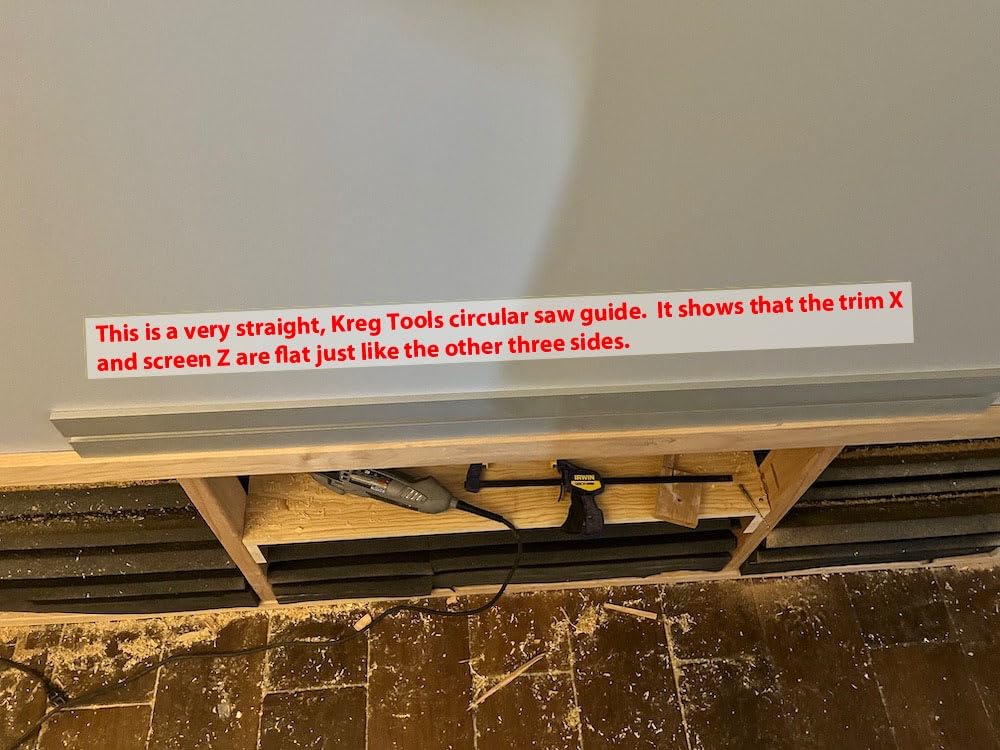
One caution specific to ultra-short-throw units. They need a genuinely flat screen surface, which is a real dealbreaker on an old wall with texture. They also cap image size, and every ultra-short-throw model in this roundup stops at 150 inches.
Contrast and black level in a dedicated dark room
In a fully dark room, contrast matters more than brightness, because the difference between a true black and a lifted black is far more visible than a difference between 2500 and 3000 lumens. That reverses the priority you would use in a lit room.
Reading the contrast numbers takes practice, because manufacturers quote native and dynamic ratios and the gap between them can be enormous. A 1,000,000:1 dynamic figure says little about native contrast. Among the native figures available here, the Nebula X1 leads the portable group at 5000:1, the Hisense PL2 is 3000:1, the AWOL LTV-3000 Pro is 2500:1, the JMGO N1S Ultra is 1600:1 FOFO, the Nebula Cosmos 4K SE is 400:1, the ViewSonic PX701-4K quotes 12000:1 dynamic, and the Epson 2350 quotes 35,000:1.
Is a 20,000:1 contrast ratio good for a projector? For a dark theater, treat it as a moderate figure rather than an exceptional one, and note that the two three-chip 3LCD models in this roundup produce perceptually deeper blacks than their dynamic contrast numbers imply because a full-color-on-black LCD panel has less inherent light leakage than a color-wheel DLP. Owner feedback is consistent on this point, and the LS11000 in particular is described as delivering blacks that hold without crushing.
Laser lifespan, HDMI 2.1, gaming latency and smart features
Light source life changes the ownership calculation. Lamp-based projectors here, such as the ViewSonic PX701-4K, are rated at 6,000 hours. Laser models range from 20,000 hours for the Epson LS11000 to 30,000 hours for the JMGO N1S Ultra and Nebula X1, and 25,000 hours for the Hisense PL2, the AWOL LTV-3000 Pro and the Nebula Cosmos 4K SE. At three hours a night, 20,000 hours is roughly 18 years, so laser is a solved problem for most buyers and the answer to how long a laser projector lasts is longer than the ownership period of most people.
Gaming splits cleanly on three numbers: refresh rate, input lag and whether the HDMI path supports VRR and ALLM. The ViewSonic PX701-4K leads at 240Hz and 4.2ms. The XGIMI HORIZON 20 offers 240Hz with 1ms response, VRR and ALLM, and the Epson LS11000 goes to 120Hz with frame interpolation over HDMI 2.1. The Epson 2350 is under 20ms, which is fine for console play. The Nebula X1 is limited to 60Hz input, which rules it out for competitive gaming regardless of image quality.
Smart features decide how much hardware you need afterwards. Google TV appears on the Nebula Cosmos 4K SE, JMGO N1S Ultra, XGIMI HORIZON 20, Hisense PL2 and Nebula X1, with native 4K Netflix and Chromecast. The Epson 2350 carries Android TV with Google Assistant. The Epson 5050UB, ViewSonic PX701-4K and Epson LS11000 have no built-in platform, so budget for a streaming device. Feedback on the built-in Google TV is mixed, with the Nebula X1 specifically criticised as slow and the manufacturer recommending a firmware update.
Lens shift and optical zoom are the features that decide whether installation goes smoothly. Full motorized control appears on the Epson 5050UB and LS11000, the XGIMI HORIZON 20 has built-in lens shift and optical zoom, and the ViewSonic PX701-4K has 1.1x optical zoom. The JMGO N1S Ultra has neither, and the Epson 2350 has neither, so both depend on keystone correction and lose a little sharpness and brightness when they use it.
Screen, mount, cables and the rest of the build
The projector is the smallest part of a home theater budget in most cases. A fixed-frame or drop-roll screen, a ceiling mount, an active 8K or 4K HDMI cable run, a surge protector and external audio can each add meaningfully on top, and owners on the enthusiast forums consistently describe under-budgeting the build as the common regret.
Screen choice follows the projector. Any of the ultra-short-throw units here should be paired with an ALR or high-gain surface, particularly in a room you cannot darken. A single-laser unit like the XGIMI HORIZON 20 may show speckle on a budget 1.0-gain matte white surface, so request a sample. A long throw projector in a dedicated room is fine on a standard matte white fixed-frame screen, which usually gives the best image per pound spent.
For mounting, verify ceiling height before choosing. A projector that needs a 1.4:1 throw distance for a 100-inch image requires about 10 feet of depth, and a long throw unit also needs somewhere to route cables. Ventilation matters too: leave clearance around the intake and exhaust, and do not install inside a fully enclosed cabinet without airflow.
On the used and refurbished market, enthusiasts treat it as a legitimate strategy. Forum recommendations regularly include a used Epson LS12000 or a JVC DLA-NP5 as a value route, on the reasoning that at a given price point the difference between native 4K and pixel-shift 4K is not of significant consequence. That is a defensible position for most viewers, and it means a depreciated flagship can outperform a new mid-tier unit on image quality for less money.
Finally, one question worth answering honestly before you buy anything. If you watch mostly in the evening with the lights off, a projector will beat a television at 100 inches and above. If you watch during the day with curtains open, a bright television usually wins on contrast, sound and convenience, and the two top organic results on this topic are people asking exactly that question. Knowing which side of that line you are on will save you from buying the wrong category.
Frequently Asked Questions
What is the best 4K projector for home cinema?
The Epson Home Cinema 5050UB is our overall pick for a dedicated dark room, with 2600 lumens from a 3-chip 3LCD engine and a motorized lens with memory. If your room cannot be darkened or you cannot ceiling mount, the AWOL VISION LTV-3000 Pro covers 150 inches from inches away.
Are long throw projectors better than UST?
For a dedicated dark room, long throw is better. You get more flexible image size up to 300 inches, better contrast in a blacked-out space and no screen flatness requirement. Ultra-short throw is better when you cannot drill into the ceiling, at the cost of a 150-inch size cap and more demanding screen surface needs.
Should I get a short throw or long throw projector?
Choose long throw if you have roughly 10 feet or more of depth and can mount the unit above or behind your seating. Choose short or ultra-short throw if the room is shallow, the ceiling is low, or drilling is not an option. Ultra-short-throw models in this roundup all cap at 150 inches.
How many lumens do I need for a home theater projector?
A fully dark dedicated room is comfortable at 1800 to 2500 lumens for a 100-inch image. Blackout curtains suit 2200 to 2800 lumens. A living room with daylight needs 3200 lumens or more, usually with an ALR screen, and outdoor or daytime viewing calls for a triple-laser unit such as the Nebula X1 at 3500 ANSI lumens.
What is the difference between native 4K and pixel shift 4K?
Native 4K uses a 4K light source with roughly 8.3 million pixels displayed directly. Pixel-shift 4K shifts a lower-resolution image at high speed to create a 4K pixel count, which is how the Epson 5050UB and LS11000 operate. For most viewers at normal distances the difference is subtle, and forum consensus holds it is not of significant consequence below a certain price tier.
What is the 4 6 8 rule for projectors?
It is a shortcut for viewing distance: sit about 4 feet from the screen for a 40-inch image, 6 feet for a 60-inch image and 8 feet for an 80-inch image. It scales roughly linearly, which puts a 100 to 120 inch image at about 10 to 13 feet.
How far away should I sit from a 100-inch projector screen?
About 10 to 12 feet is the comfortable range for a 100-inch image, which puts most long throw projectors at roughly 10 feet of throw distance for a 1.4:1 throw ratio. Closer seating is possible on a smaller image but shows pixel structure and any laser speckle more readily.
How long does a laser projector light source last?
Laser projectors in this roundup are rated from 20,000 to 30,000 hours, compared with 6,000 hours for the lamp-based ViewSonic PX701-4K. At three hours of viewing a night, 20,000 hours is about 18 years, so laser removes bulb replacement as an ownership concern for most buyers.
Conclusion: Our Best 4K Projectors for Home Theater Picks
For a dedicated dark room with room to mount, the Epson Home Cinema 5050UB is the pick, with deep blacks, a rainbow-free three-chip engine and a motorized lens with memory. If picture quality is your only priority and the budget stretches, the Epson Home Cinema LS11000 goes further with a laser light source and the most complete HDR implementation in the group.
For a living room you cannot darken, the Nebula X1 leads on brightness at 3500 ANSI lumens with 5000:1 native contrast. For a no-mount installation, the AWOL VISION LTV-3000 Pro and Hisense PL2 both cover up to 150 inches from inches away, and the Hisense has the higher contrast of the two. The Nebula Cosmos 4K SE is the flexible, low-commitment option when you want a large image and near-instant automatic setup.
For gaming, the ViewSonic PX701-4K is 240Hz at 4.2ms, and the XGIMI HORIZON 20 is the one to buy if you want high refresh and a smart platform together. For color accuracy, the JMGO N1S Ultra is specified at Delta E under 1. The Epson Home Cinema 2350 remains the sensible first 4K projector for a bright-ish room and console gaming, as long as you accept weak black level.
Whichever you pick, verify the throw distance math against your room and remember that the screen, mount, cabling and audio are part of the cost. This roundup was updated in October 2026, and each recommendation is backed by the owner feedback on hundreds of units rather than a spec sheet alone.