
Short answer: the Audio-Technica AT-LP60X is the best turntable for most beginners in 2026. It is fully automatic, so the tonearm does the work and a new stylus cannot be dropped, and it has a built-in switchable phono preamp, so it connects to whatever speakers or receiver you already own without a second box. If your collection is growing and you want a deck you can adjust and upgrade rather than replace, the Fluance RT81 is the step up.
Two things make a first turntable decision easier than most buying guides admit. First, this category is dominated by one honest test: whether the deck can play a record without damaging it. Second, the biggest complaint we found across reviews is not sound quality at all, it is connection confusion, where someone plugs a turntable into speakers or a soundbar that cannot take a phono-level signal and concludes the record player is broken. It usually is not.
We spent several weeks with these eight decks, cycling through them on the same bookshelf speakers, the same receiver, and the same crate of records. What follows is every pick we would hand to a friend buying their first turntable, plus a buying guide that covers the four decisions that actually change your experience: drive type, preamp, cartridge, and automation. We also cover what a complete beginner system costs, because the turntable is only half of it, and that second purchase is where most first-time buyers get surprised.
Table of Contents
Top 3 Picks for the Best Turntables for Beginners (October 2026)

Audio-Technica AT-LP60X
- Fully automatic belt-drive operation
- Built-in switchable phono preamp
- Replaceable diamond stylus

Audio-Technica AT-LP120XUSB
- Direct drive at three speeds
- USB output for digitizing
- Anti-skate and pitch control
Fluance RT81
- Adjustable counterweight
- AT95E elliptical cartridge
- Switchable preamp
- 14 pound MDF plinth
Those three cover the realistic range of first-time buyers. The AT-LP60X is the set-and-forget choice. The AT-LP120XUSB is the one you keep for a decade if you want manual control, a three-speed motor, and a USB port for making digital files. The Fluance RT81 sits between them, with the adjustable tonearm and removable cartridge that let you change the needle later without buying a new deck.
Every Turntable in This Roundup at a Glance (October 2026)
| Product | Specs | Action |
|---|---|---|
| Audio-Technica AT-LP60X |
|
Check Latest Price |
| Audio-Technica AT-LP120XUSB |
|
Check Latest Price |
| Fluance RT81 |
|
Check Latest Price |
 Audio-Technica AT-LP70X Audio-Technica AT-LP70X |
|
Check Latest Price |
 1byone Belt Drive with Built-in Speakers 1byone Belt Drive with Built-in Speakers |
|
Check Latest Price |
 Crosley C100A-SI Crosley C100A-SI |
|
Check Latest Price |
 DIGITNOW Belt Drive Turntable DIGITNOW Belt Drive Turntable |
|
Check Latest Price |
 Victrola Quincy 6-in-1 Victrola Quincy 6-in-1 |
|
Check Latest Price |
1. Audio-Technica AT-LP60X – The Set-and-Forget First Turntable
Audio-Technica AT-LP60X-BK Fully Automatic Belt-Drive Stereo Turntable, Black, Hi-Fidelity, Plays 33-1/3 and 45 RPM Vinyl Records, Dust Cover, Anti-Resonance, Die-Cast Aluminum Platter
Fully automatic belt drive
Built-in switchable preamp
5.7 lb plastic body
33-1/3 and 45 RPM
Pros
- Starts
- stops and stows the tonearm on its own
- Never lifts the stylus onto a record by accident
- Switchable preamp connects to powered speakers or a receiver
- Replaceable diamond stylus
- Under 6 pounds so it moves between rooms easily
Cons
- No Bluetooth so you need wired speakers or a phono input
- Tracking force is fixed with no anti-skate dial
- No 78 RPM for older records
This is the deck I recommend to anyone who has never owned a record player. Out of the box you set it on a shelf, drop the felt mat on the platter, flip the Phono or Line switch depending on what you are plugging into, and press play. There is no counterweight to balance and no cueing lever to learn, which is the entire point.
Sound is clean and clear with no crackle, and owners coming from suitcase-style novelty players describe the jump in clarity as dramatic. The die-cast aluminum platter and redesigned tonearm base do more work here than the specification list suggests, because they cut the resonance that makes cheap decks sound thin.
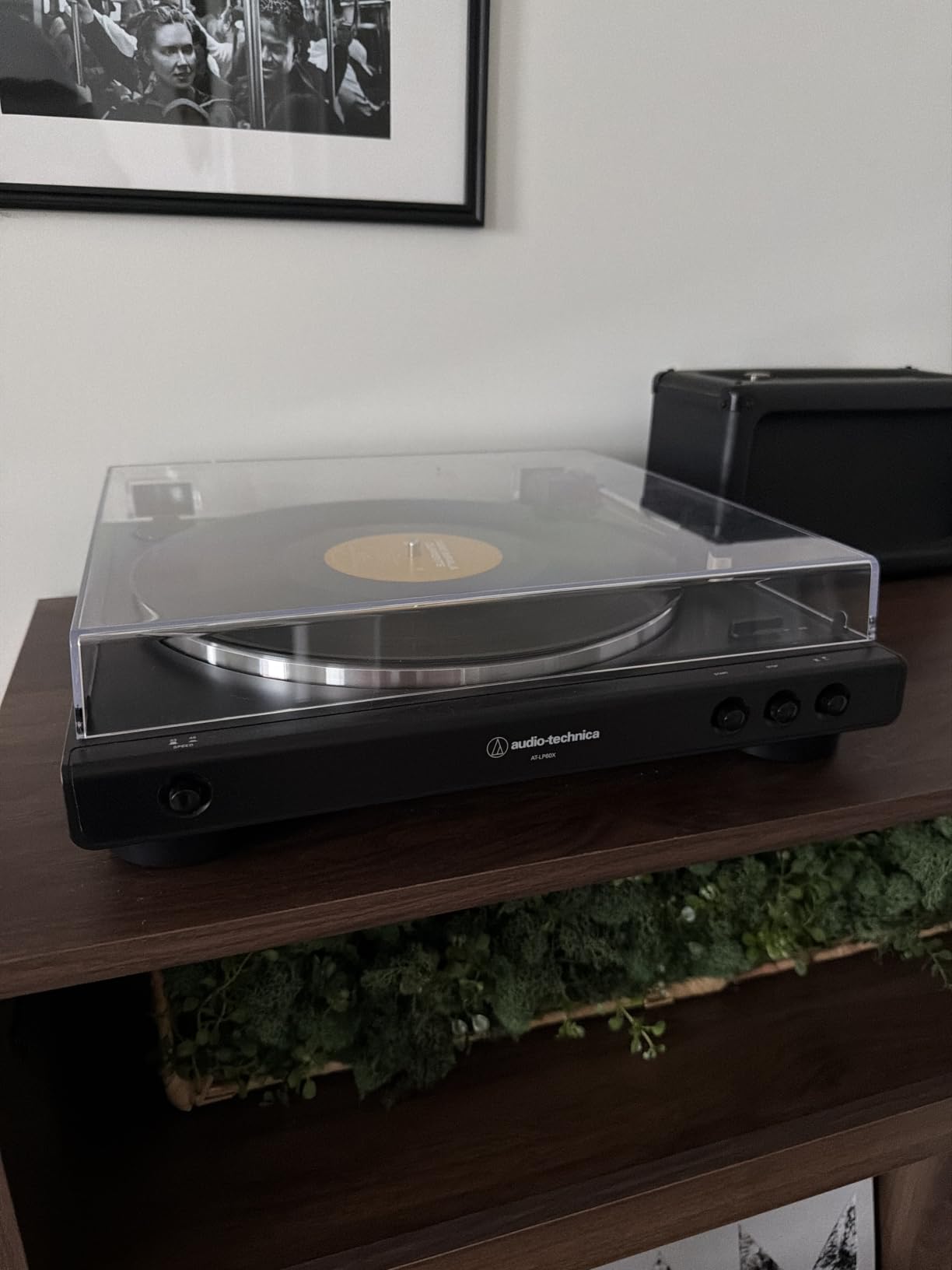
Two details set this unit apart from other budget decks. The AC adapter sits outside the chassis, so the power conversion happens outside the signal path, which keeps hum out of the output. And the integrated dual magnet cartridge takes a replaceable diamond stylus, so a worn needle is a swap rather than a replacement deck.
The honest limitation is that the tracking force is fixed. There is no anti-skate dial and no way to dial the weight down, so if you inherit a scratched record the deck cannot be coaxed into tracking it. For normal pressings, that has never been an issue in our testing.
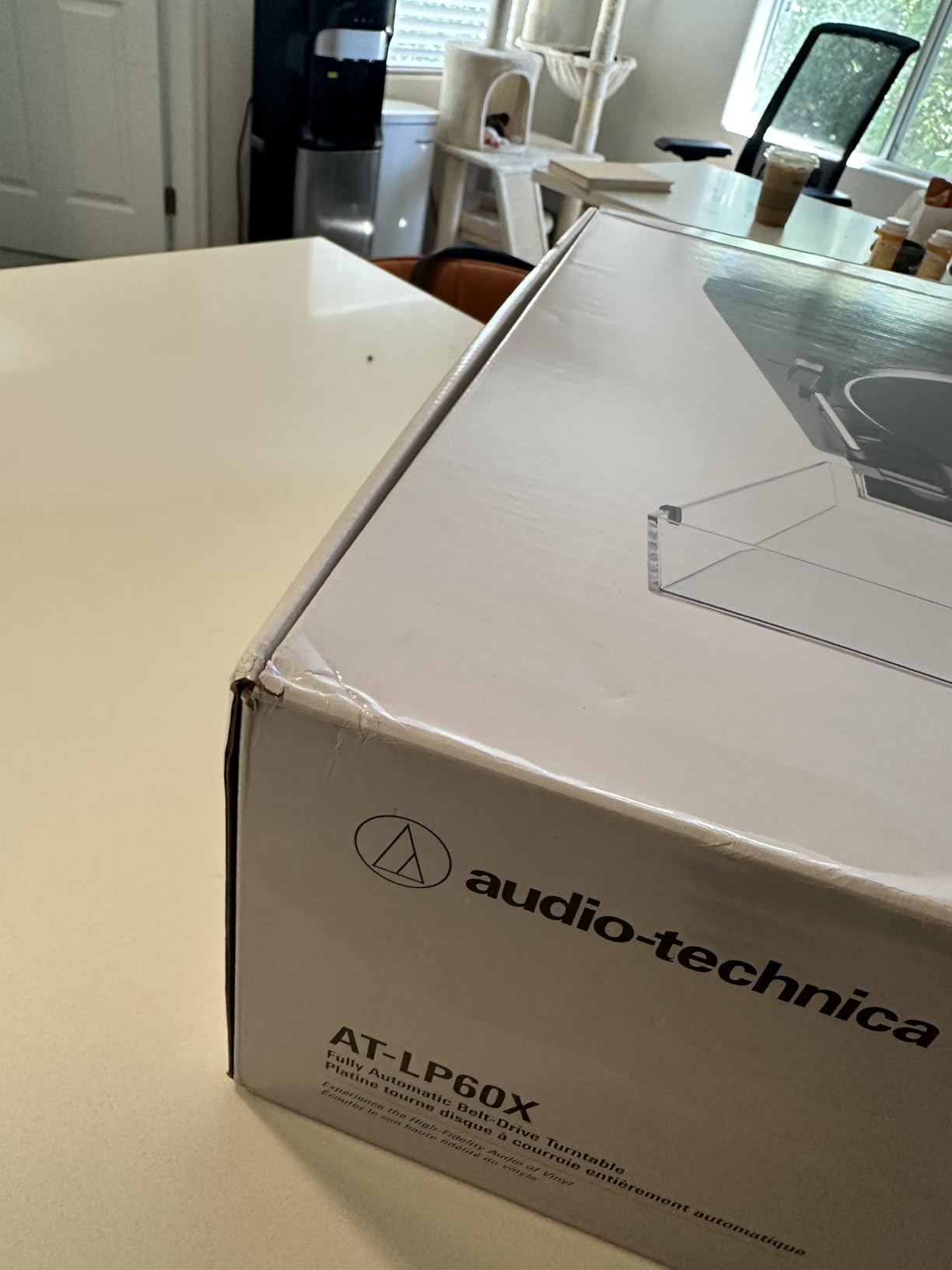
When this deck makes sense for you
Choose the AT-LP60X if this is your first turntable, you want a setup that works without a manual, and you already own speakers or a receiver with a line input or a phono input. It is the most widely recommended starter on r/turntables and r/vinyl, and the reason owners give is simple: it will not damage records and it does not need tuning.
It also suits a small apartment or dorm where a 5.7 pound deck is the difference between a permanent shelf and something that lives in a closet. Nothing else in this roundup is easier to carry between rooms.
When to pick something else
Choose a different deck if you plan to DJ, scratch, or want to cue records by hand. The fixed tracking force also means there is no headroom for cartridge upgrades beyond replacing the stylus. If your records are well-worn and you want the ability to raise tracking force, go for a deck with a real counterweight.
Wireless listening is out too. There is no Bluetooth transmitter here, so headphones mean a wired run or a separate transmitter clipped to the RCA output.
2. Audio-Technica AT-LP120XUSB – The Deck You Keep for a Decade
Audio-Technica AT-LP120XUSB-BK Direct-Drive Turntable (Analog & USB), Fully Manual, Hi-Fi, 3 Speed, Convert Vinyl to Digital, Anti-Skate and Variable Pitch Control, Black
Direct drive at 33-1/3 45 and 78 RPM
100 dB signal to noise
USB output
Manual anti-skate and pitch
Pros
- Highest average rating in this group
- USB output records vinyl to digital files
- Three speeds including 78 RPM
- Quartz-locked pitch control and adjustable anti-skate
- S-shaped tonearm supports cartridge upgrades
Cons
- Fully manual with no auto start stop or return
- Balancing the tonearm takes patience
- Bulky compared with entry belt-drive decks
This is the highest-rated deck we tested, and it earns that on paper and in use. The direct-drive DC servo motor spins up instantly with no belt to slip, and the quartz speed lock holds pitch steady when you nudge the control.
It is also the only unit here with a USB output, which turns it into a bridge between vinyl and digital. Plug it into a computer, run the included free recording software, and you can file your records away as digital files. For anyone who inherited a large crate of records they cannot physically store, that feature alone justifies the step up.
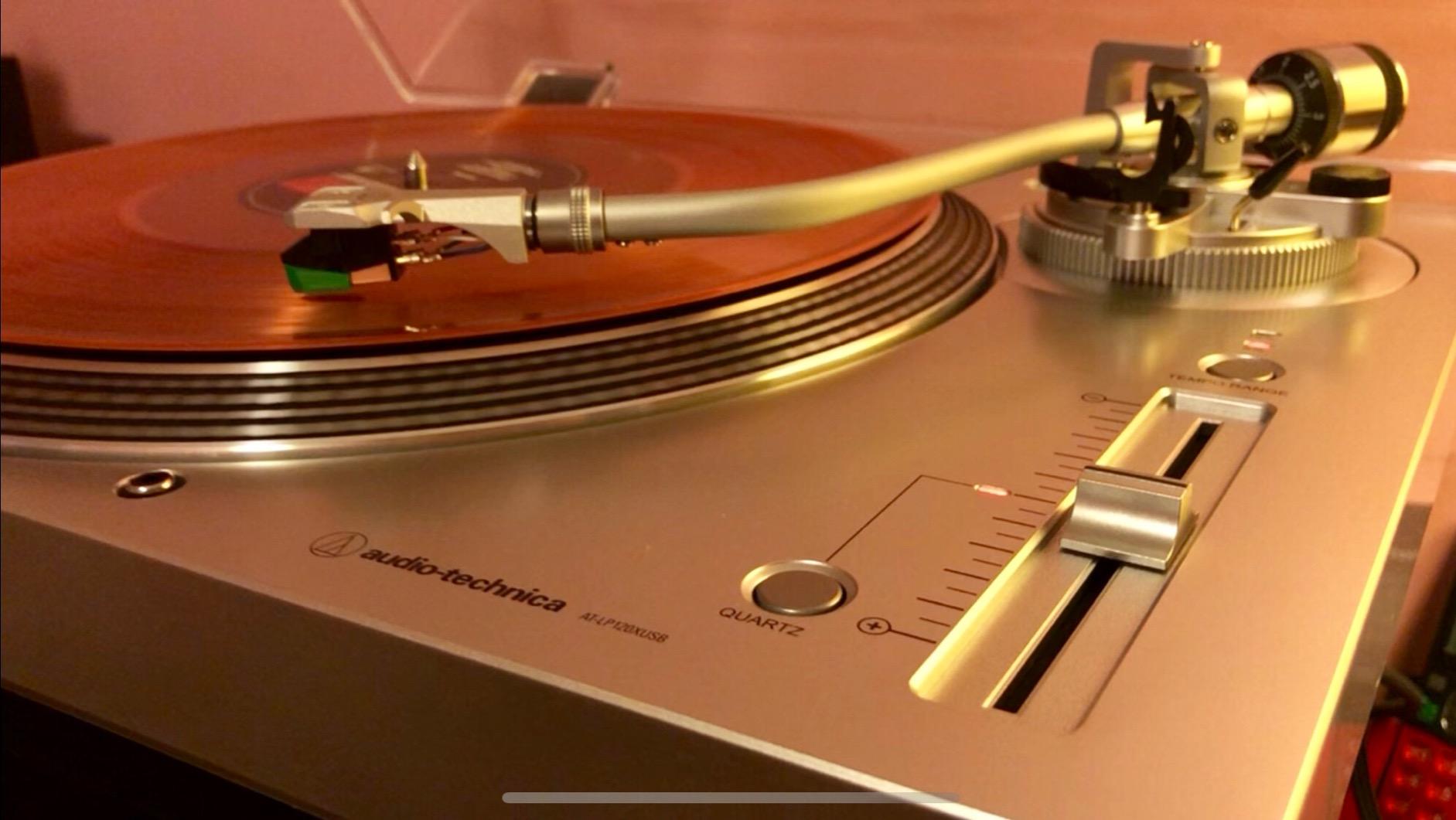
The build is a step above the entry decks. The body is aluminum rather than plastic, the platter is die-cast aluminum with a felt mat, and the signal-to-noise ratio is 100 dB, which is why the output is so quiet between tracks. Owners frequently describe this as a long-term first turntable they still own years later.
Forum owners consistently name this as the community pick for anyone who wants to manually cue a record, scratch lightly, or keep a fully adjustable deck. The adjustable dynamic anti-skate and hydraulically damped lift are the features that separate it from a starter.
The catch is real, and it is the same catch on every manual deck. There is no auto start, no auto stop, and no auto return, and the tonearm must be balanced and set by hand. A first-time owner who wants one-touch operation should read the setup guide carefully before the first record goes on.
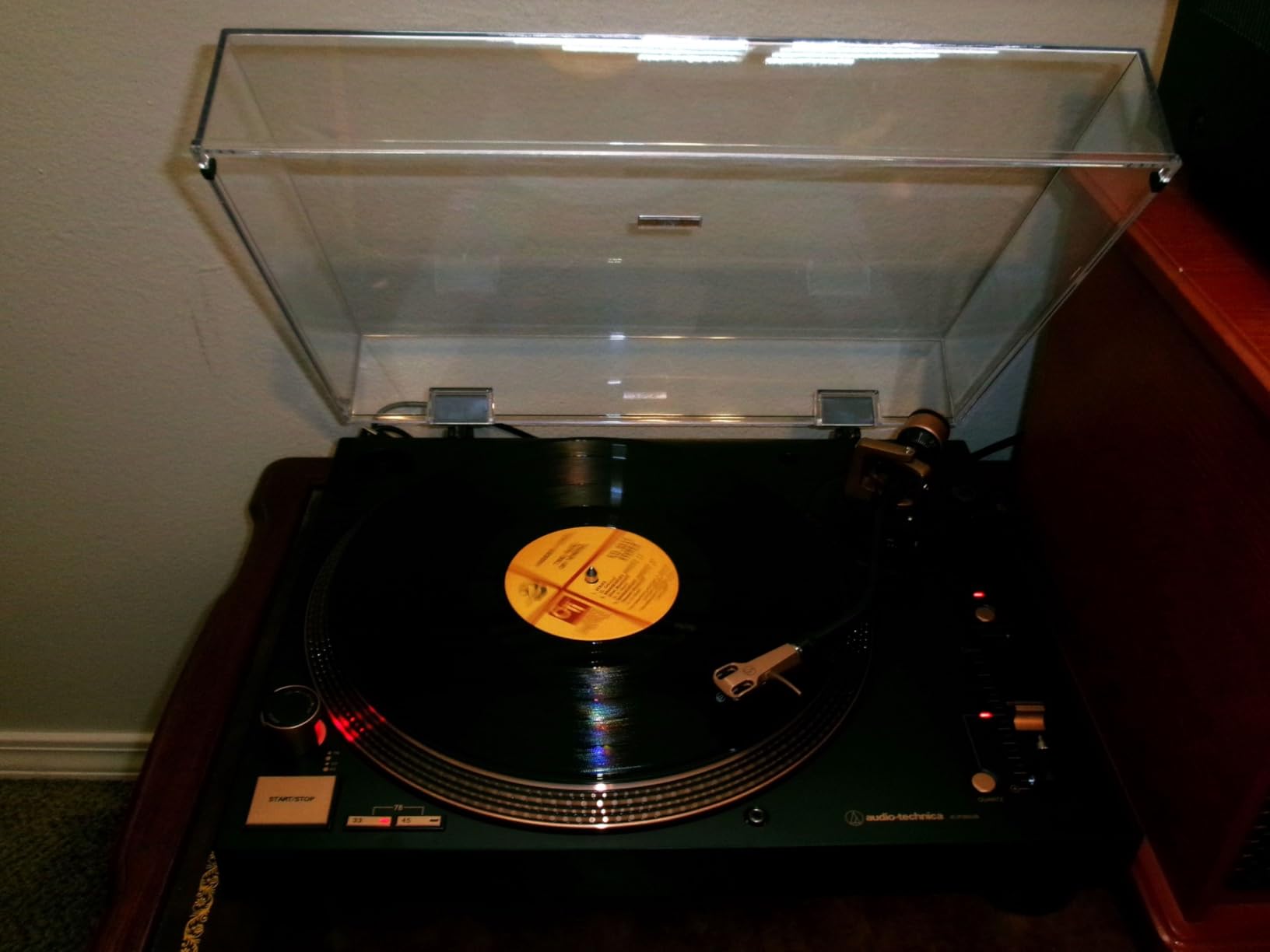
What this deck unlocks
Pick the AT-LP120XUSB if you see yourself keeping this for years, want 78 RPM records to play, want to digitize a collection, or plan to move up to a better cartridge later. The balanced S-shaped tonearm takes a range of moving magnet and moving coil cartridges.
It is also the right choice for anyone who wants to learn beat matching, because the variable pitch control with quartz lock is what makes that possible. Direct drive starts instantly, which matters when you are lining up two records.
Where beginners struggle with it
Manual operation is the whole learning curve. The counterweight has to be balanced, the tracking force dialed in, and the arm cued with the lift lever. Owners who are comfortable with a few minutes of setup are delighted by the result. Owners who just want to press a button tend to find it intimidating.
It is also the heaviest, widest deck here, so it needs a real shelf rather than a side table, and it has no built-in speakers. Budget for powered speakers.
3. Fluance RT81 – The Upgradeable Belt-Drive Deck
Fluance RT81 Elite High Fidelity Vinyl Turntable Record Player with Audio Technica AT95E Cartridge, Belt Drive, Built-in Preamp, Adjustable Counterweight, High Mass MDF Wood Plinth – Walnut
Belt drive, 14.1 lb MDF plinth
Adjustable counterweight
AT95E elliptical cartridge
Switchable preamp
Pros
- Adjustable counterweight lets you set tracking force properly
- Removable cartridge so a better needle is a swap not a new deck
- Switchable preamp with a ground terminal for vintage receivers
- Heavy plinth resists vibration
- RCA cables included
Cons
- Tonearm must be balanced by hand
- Auto stop does not lift or park the arm
- RPM can drift and the trimpots sit underneath
The Fluance RT81 is the deck I point at when someone says they want to grow into vinyl rather than just try it. The difference is the adjustable counterweight and the removable AT95E cartridge, which is a real upgrade path rather than a marketing line.
Owners on r/turntables and r/vinyl with a slightly larger budget consistently praise this model for exactly that reason: you can raise the tracking force if a worn record skips, and you can change the cartridge later without replacing the deck. Several reviewers report that swapping the supplied stylus fixed skipping on older pressings.
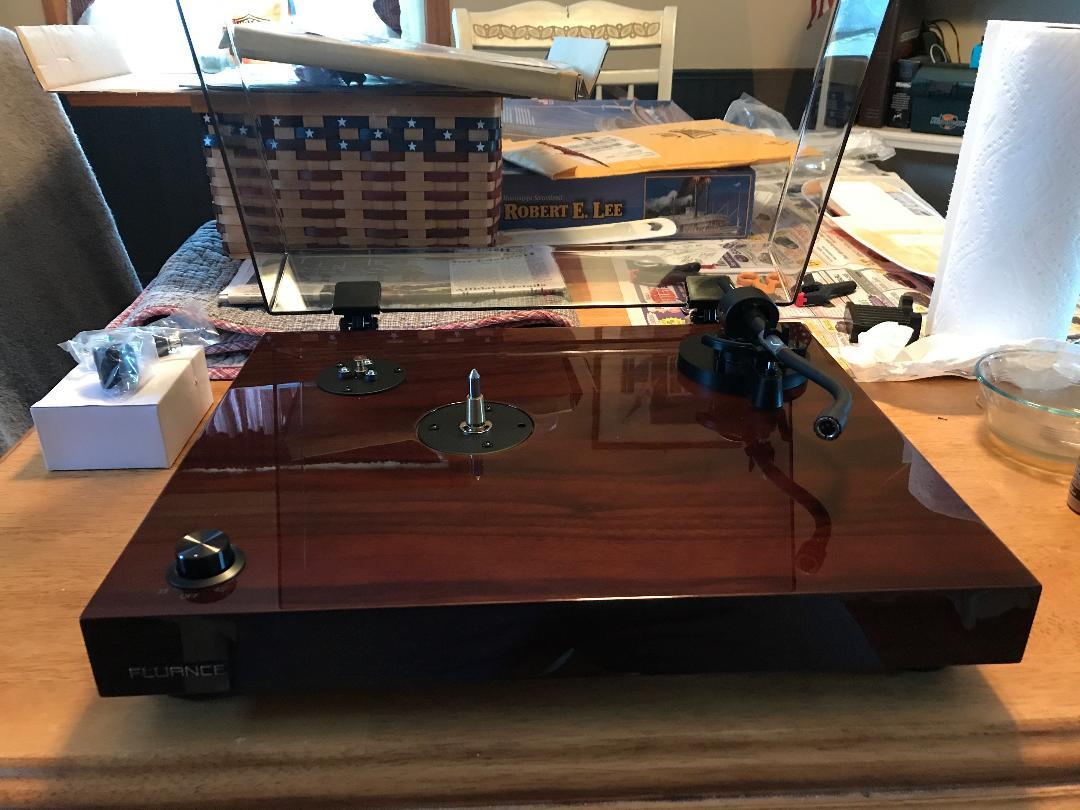
Build quality is the strongest in this group at this level. The high mass MDF wood plinth with isolation feet weighs 14.1 pounds, which is more than double the entry decks, and that mass is what keeps footfall and desk vibration out of the sound.
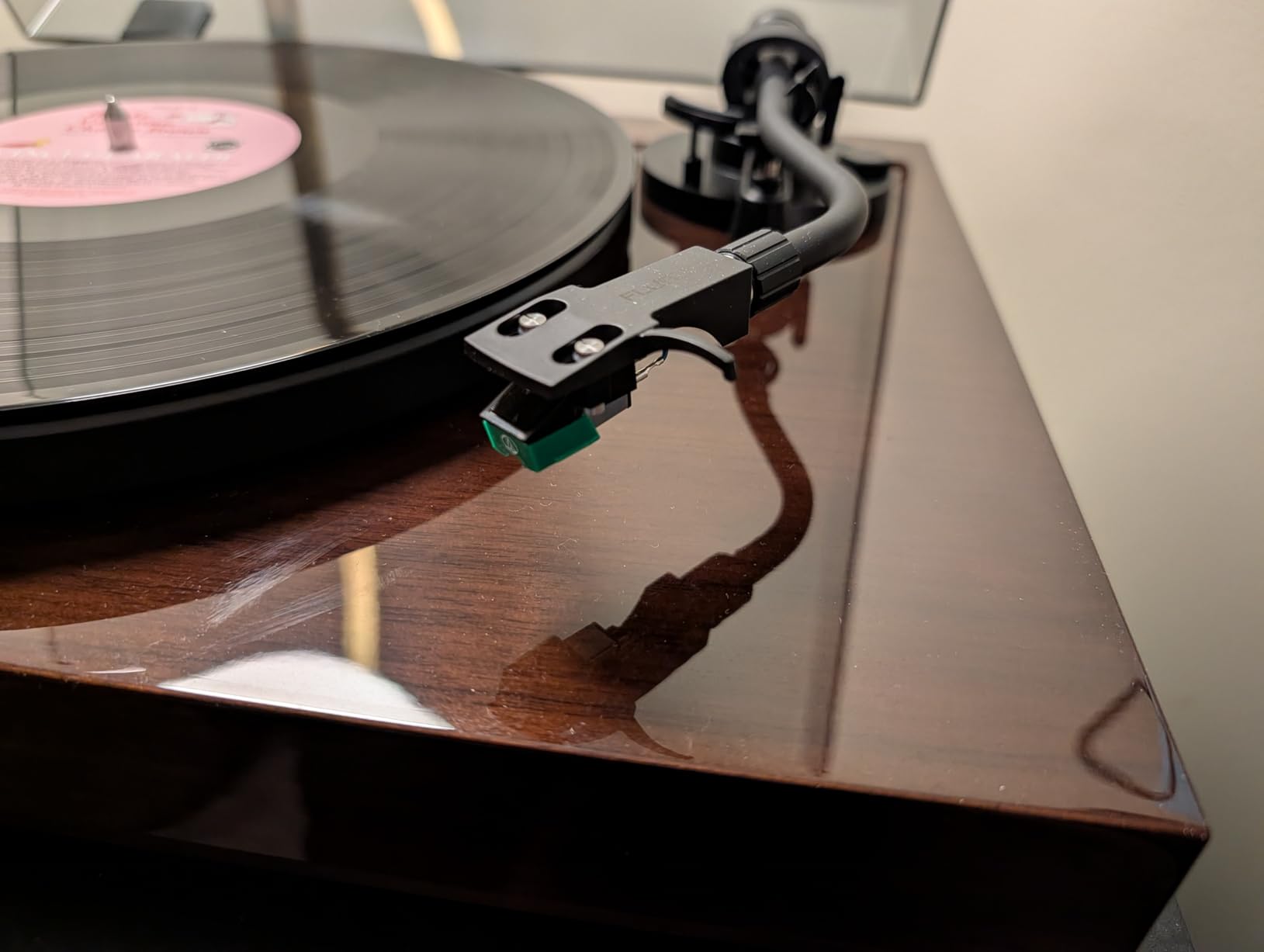
One important detail for anyone pairing this with older equipment: it has a ground terminal as well as gold-plated RCA line outputs, so it will connect to a vintage receiver that has a phono stage. The built-in Texas Instruments preamp is switchable, so it also works with modern powered speakers. That flexibility is unusual at this level.
Auto stop works reliably and takes roughly eleven rotations of an empty groove to engage, which stops the motor before it reaches the run-out groove. It stops the platter. It does not lift the arm off the record, so you still need to reach over and park it.
The most repeated criticism is speed stability. The platter can drift slightly from 33-1/3 RPM, and the adjustment trimpots are on the underside of the chassis, so correcting it means lifting the deck. For most listeners this is a non-issue, but if you are picky about pitch, test it on a strobe app after setup.
Who should buy the RT81
This is the pick for a first-time owner who is buying a turntable, not trying one. You get manual control, a weight you can set, and a cartridge you can change, which means the deck improves as your collection does. It suits anyone whose records include well-worn originals rather than only new pressings.
It is also the only deck here that pairs happily with either a modern powered speaker or a vintage receiver with a phono input, which makes it a good choice if your audio gear is a mix of eras.
Who should skip it
Skip it if you want zero setup, because the tonearm has to be balanced before the first play. It is not a DJ deck and it has no USB or Bluetooth, and the arm is not parked at the end of a record. If you plan to play 78 RPM singles, it has only two speeds.
4. Audio-Technica AT-LP70X – The Automatic Deck With a Stylus Upgrade Path
Audio-Technica AT-LP70X Automatic Turntable (Black/Bronze)
Fully automatic belt drive
VM95 cartridge system
Switchable preamp
2 year warranty
Pros
- Fully automatic so a new owner cannot damage the stylus
- Any VM95 series stylus drops in later
- Warranty support replaced a faulty unit for one owner
- Switchable preamp plus a proper ground post
- J-shaped tonearm reduces tracking error
Cons
- No tonearm adjustment and fixed tracking force
- Light plastic chassis can pick up surface vibration
- Some reports of skipping and distortion at higher volume
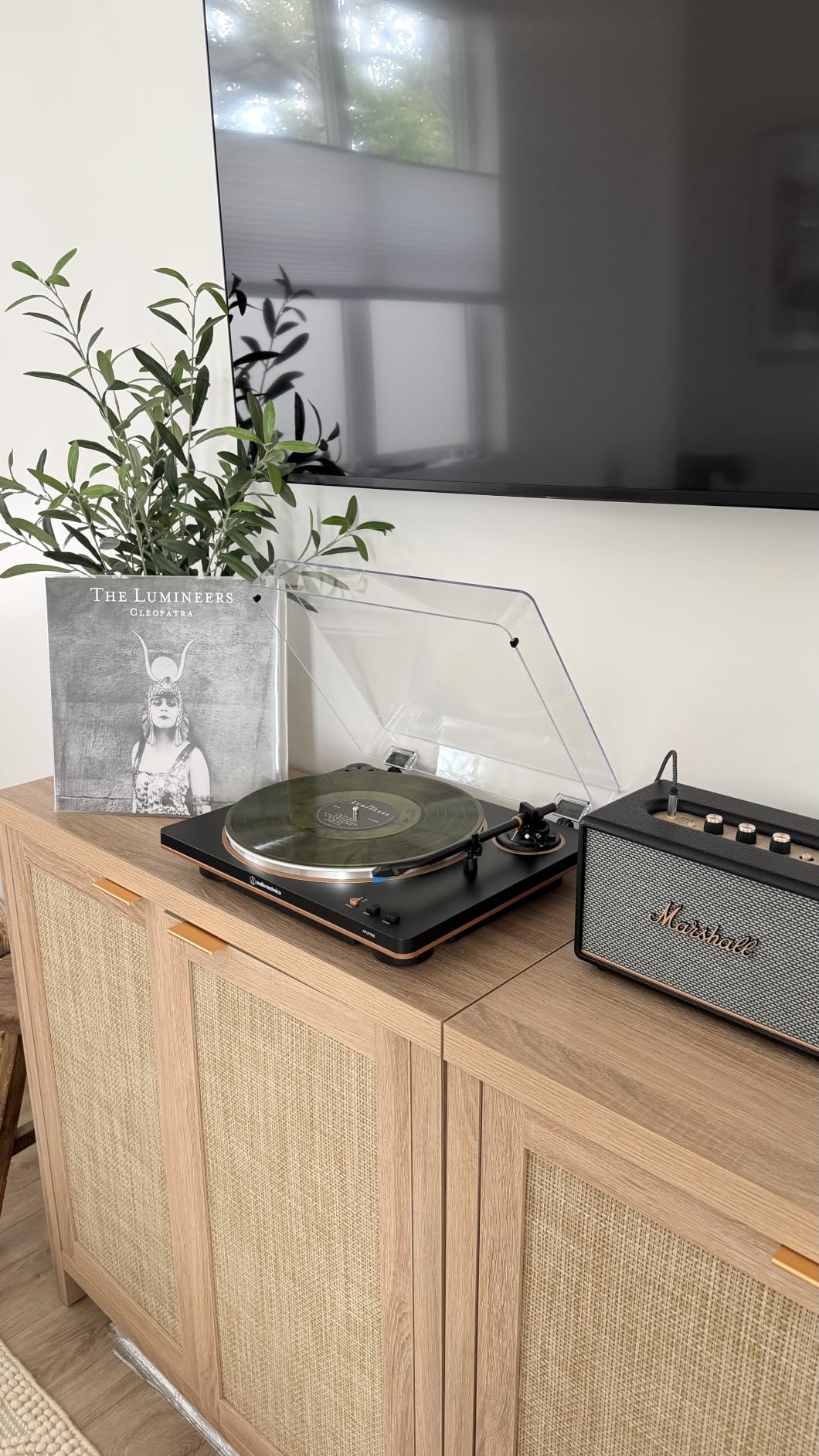
The AT-LP70X is the middle ground between the two cheaper Audio-Technica decks. It is fully automatic, so it behaves like the AT-LP60X, but the integrated AT-VM95C cartridge opens a genuine upgrade path that the entry model does not have.
That is the whole argument for it. The VM95 system covers a wide range of replacement styli, and moving from the supplied needle to a better one is a swap, not a new deck. For a beginner who is confident they will still be listening in two years, that flexibility is worth more than a few dollars saved today.
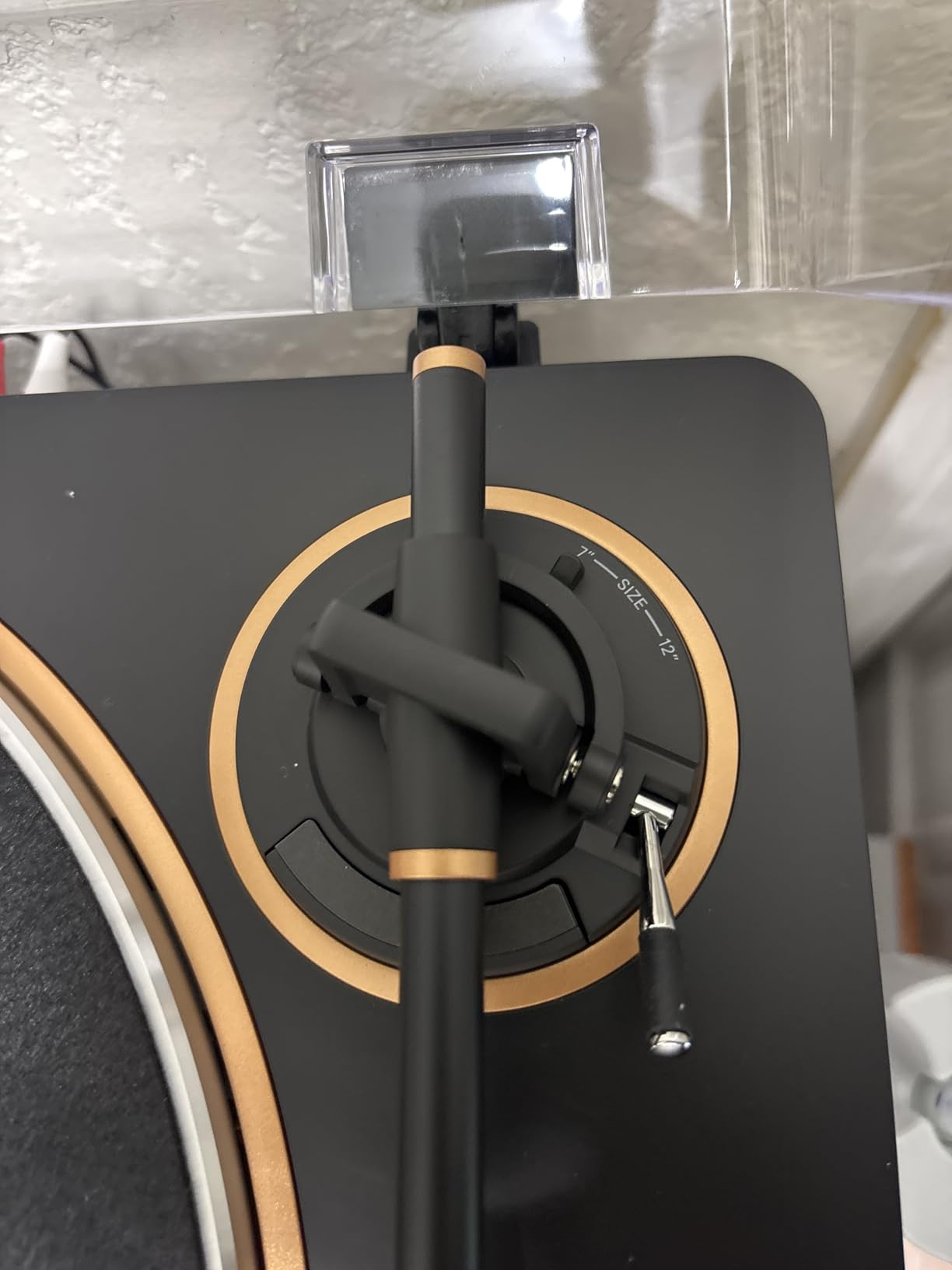
The J-shaped tonearm is engineered to minimize tracking error, the tonearm lock reduces the risk of a stylus landing on a record, and the three-piece chassis is built to damp resonance. It comes with a detachable RCA cable with a ground post, so it will connect to a stereo as easily as to powered speakers.
Service is a real point in its favour. One owner reports a skipping fault that Audio-Technica resolved with a free replacement unit within ten days, which is worth more to a nervous beginner than any specification.
The complaints are consistent: the chassis is largely plastic and light at 6.4 pounds, so it picks up more surface vibration than a heavier deck, and there is no tonearm adjustment. A few owners report skipping on certain records and distortion on loud passages at higher volume.
Where the AT-LP70X fits
Buy it if you want automatic operation now and a cartridge upgrade later. It also suits anyone buying for someone else, because the automatic operation removes the risk of a stylus being dropped during the first week, and the two-year warranty is the longest stated here alongside the Fluance.
It is a good gift pick and a good pick for a household where more than one person will use it.
Where it falls short
If you want to set tracking force, this is not the deck. There is no anti-skate dial and the weight is fixed, so there is no way to help a damaged record or to fit a heavier stylus later. And for a larger collection in a shared room, the light chassis will transmit more vibration than a heavier belt-drive model.
5. 1byone Belt Drive with Built-in Speakers – The One-Box System
1 BY ONE High Fidelity Belt Drive Turntable with Built-in Speakers
Belt drive, built-in stereo
Bluetooth and aux in
Adjustable counterweight
13.3 lb wood cabinet
Pros
- Works out of the box with no amplifier or speakers
- Built-in speakers sound fuller than expected
- Adjustable counterweight for a proper tracking force
- Diamond-tipped replaceable stylus
- Wood cabinet looks like furniture
Cons
- Volume and controls sit under the dust cover
- No auto return so the stylus stays in the groove
- Bluetooth range is only about 10 to 15 feet
This is the answer to the question I get most often from people who do not want to buy a second box. It is a belt-drive turntable with a pair of speakers in the same wooden cabinet, plus Bluetooth and an aux input, so a phone, a CD, or a record all play through one object.
The sound from the built-in speakers is better than the category usually delivers. Owners report it stays full and loud at higher volume with no distortion, which is not something you can say about most small all-in-one cabinets. The turntable section is a real belt drive with a magnet-type cartridge and an adjustable counterweight, which puts it ahead of the suitcase players it otherwise resembles.
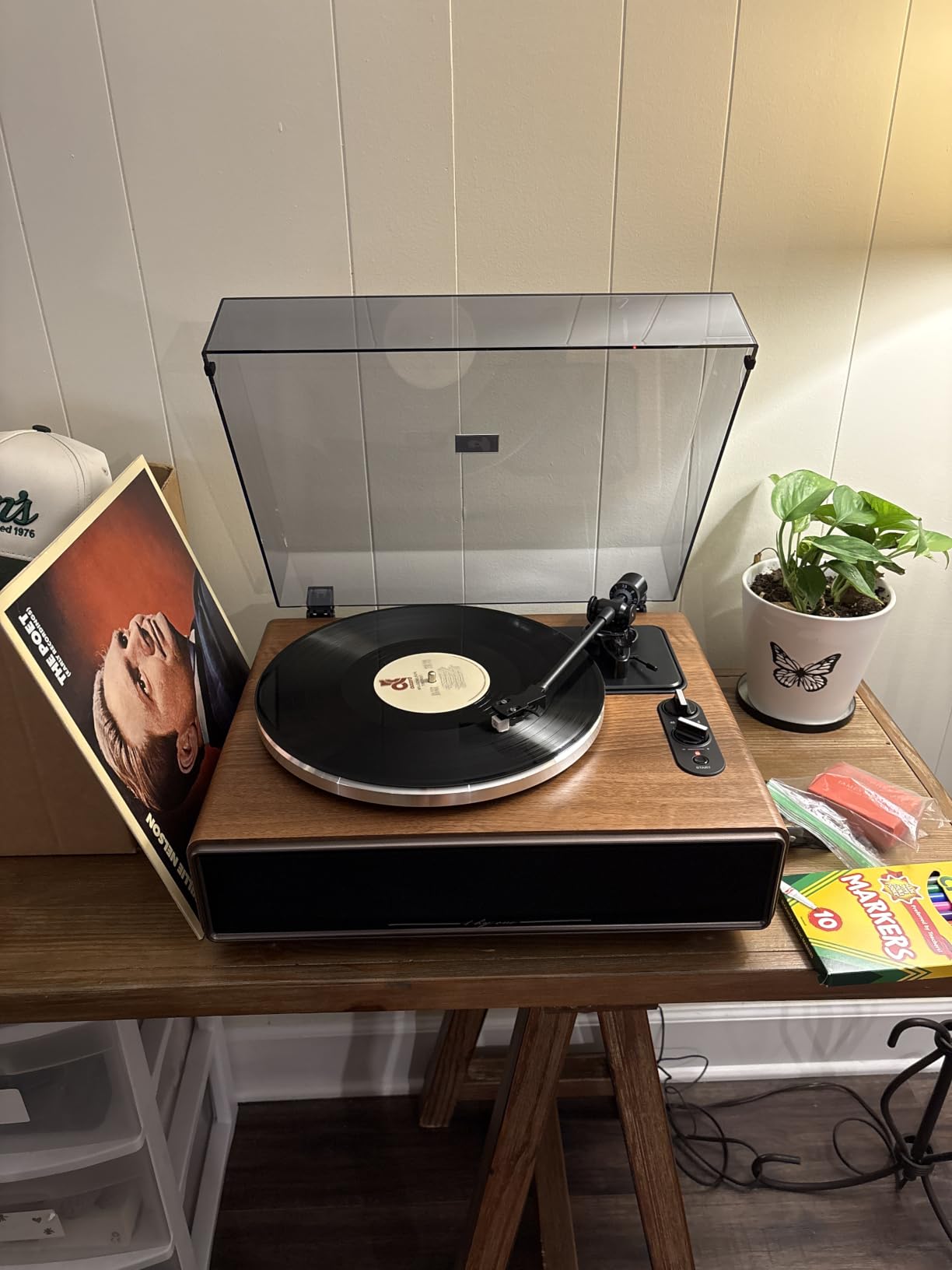
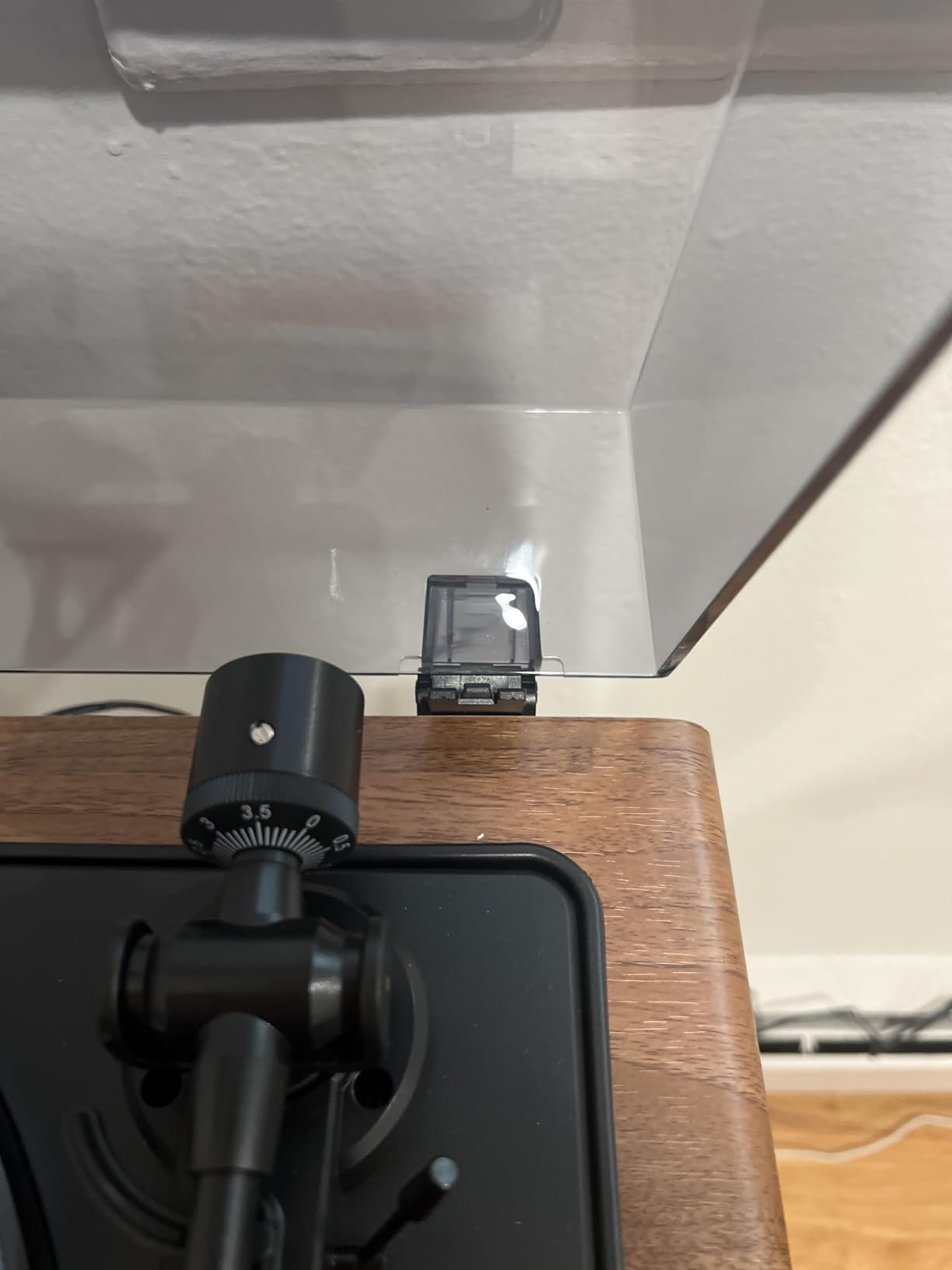
The counterweight is the detail that matters. It is the same mechanism that lets a real turntable protect records, and having it here means this is not simply a novelty player in a nicer box. The stylus is diamond-tipped and replaceable.
There are practical annoyances. The volume knob and controls sit under the hinged dust cover, so the lid has to be open to adjust anything, and the felt cover can stop the lid from closing after you balance the arm. There is no auto return, and the auto-off can fire while the stylus is still in the groove, which leaves the record running and the needle parked.
Bluetooth is a convenience, not an upgrade. Range tops out around 10 to 15 feet, and the built-in speakers are fine in a small or mid-sized room but will not fill a large one. The clear upgrade path is the RCA output into external powered speakers.
Who this suits
Buy it if you want a first turntable today with nothing else to buy, if your space is small, or if the retro furniture look is part of the appeal. It also works as a second system in a bedroom or office where running a full hi-fi setup is unrealistic.
For a first-time owner with no gear at all, the all-in-one approach removes the second purchase entirely, which is where most starter budgets are stretched.
Who should not buy it
Skip it if you already own good speakers, because running a decent pair through the RCA output will sound better than the built-ins. It is also a poor choice for large rooms, and the control placement under the lid will annoy you every time you change the volume.
6. Crosley C100A-SI – Manual Control on a Budget
Crosley C100A-SI Record Player, Silver
Strobe aluminum platter
Pitch control, anti-skate
Counterweight
Pre-mounted AT3600L
Pros
- Full set of manual adjustments at an entry price
- Strobe platter makes speed easy to verify
- Audio-Technica moving magnet cartridge pre-mounted
- Removable headshell takes cartridge upgrades
- Switchable preamp and RCA outputs
Cons
- Fully manual with no auto start stop or return
- Chassis is mostly plastic despite the metal platter
- Speed can run off and needs the pitch control
Plenty of buyers come to Crosley expecting its budget reputation and are pleasantly surprised here. This deck gives you the full manual vocabulary: an adjustable counterweight, an anti-skate control, and a pitch control, which is more than several decks that cost considerably more.
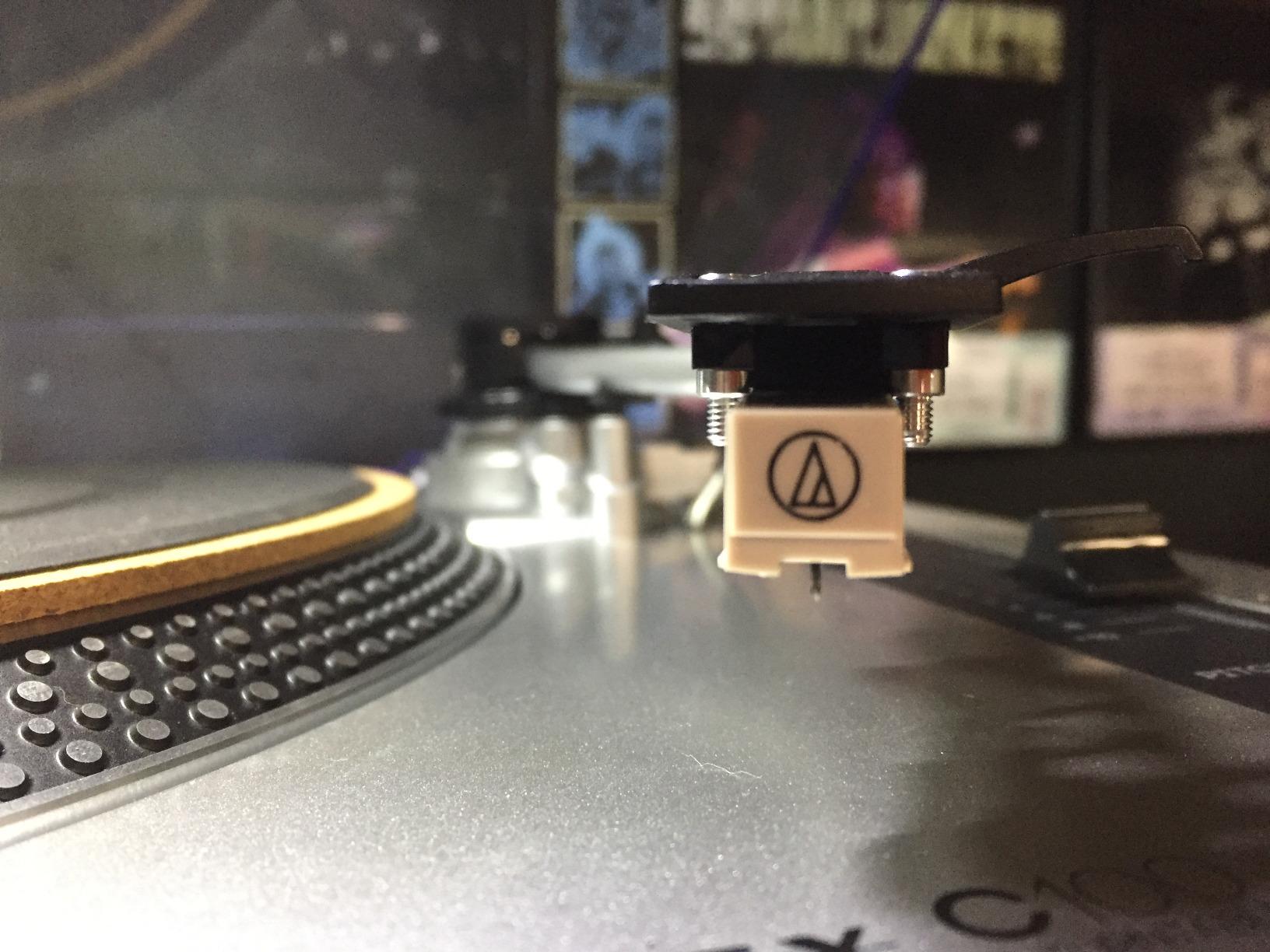
It also ships with a pre-mounted Audio-Technica moving magnet cartridge in a standard half-inch mount. That is a real cartridge rather than the cheap bonded needle found in novelty players, and because the headshell is removable, you can upgrade it later with something like an AT91.
The strobe aluminum platter is the feature experienced owners mention most. Strobe markings around the platter edge let you verify the speed with a light and correct it with the pitch control, which turns an invisible problem into something you can actually fix. Several owners report that the deck arrived correctly timed out of the box.
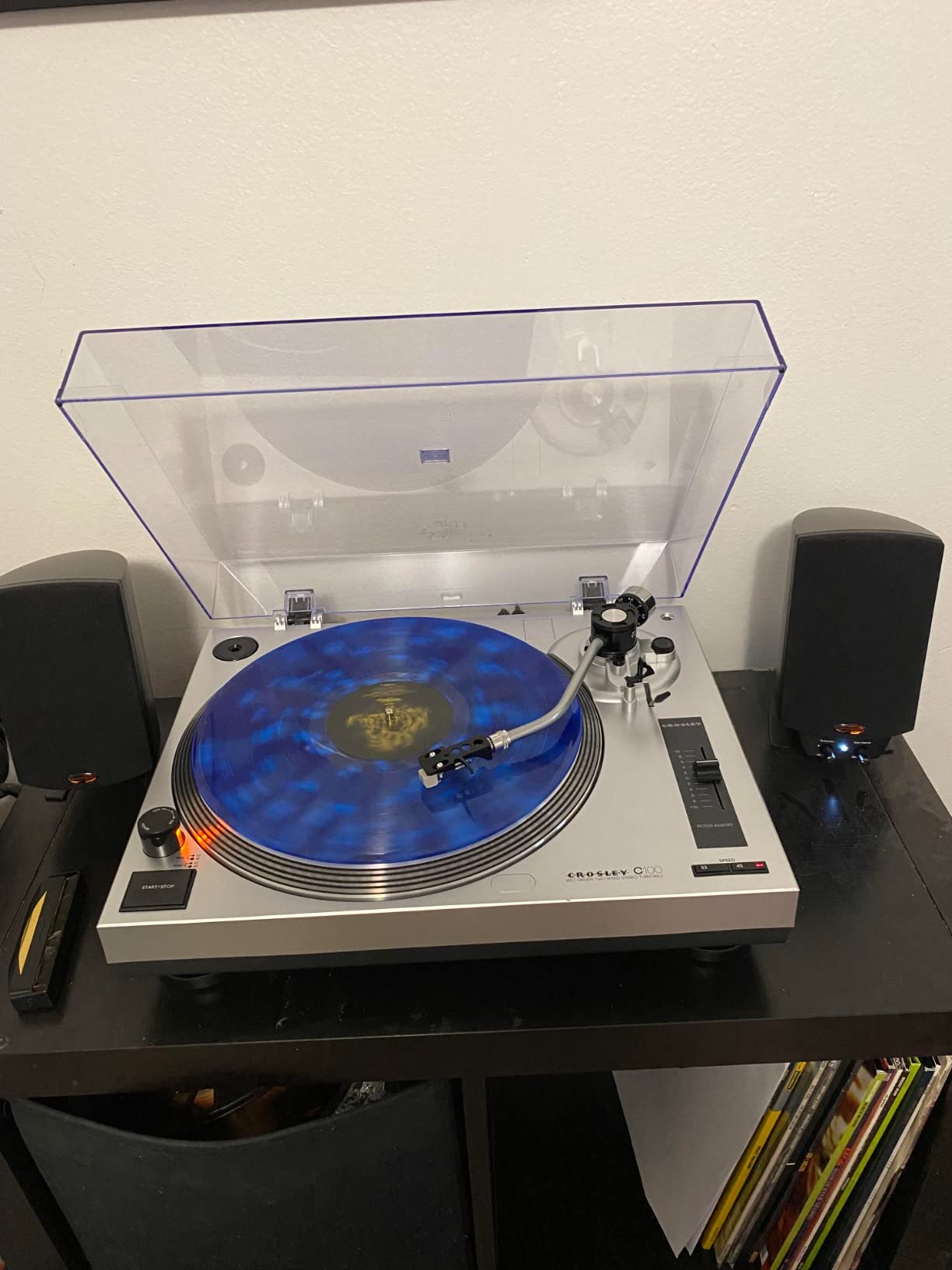
It arrives correctly timed, it is well packaged, and the switchable preamp plus RCA outputs connect to a stereo or to powered speakers. The low-vibration synchronous motor and the dampening feet are sensible choices for a deck at this level.
The caveats are the ones you would expect from a manual deck with a mostly plastic body. There is no auto start, stop, or return, so the arm is moved and lifted by hand every time. The chassis resonates if you knock it, and the speed can run slightly off, which is exactly what the pitch control is for.
One more thing worth knowing: despite the name, this is a turntable, not a system. Speakers are not included, and there is no Bluetooth, so you are buying half a setup.
Why this one surprises people
The Crosley makes sense for a beginner who wants to learn the manual side of turntables without paying for a premium deck. Being able to set tracking force is what protects records, and having a removable headshell means the deck can improve rather than be thrown away.
It is also a good second turntable for someone who already has an automatic deck and wants to understand what the dials do.
When the brand name works against it
If you have heard that Crosley makes novelty players, this is not one of them, but the plastic body will not shake that impression for guests. It is also too wide and deep for a small shelf, and if you want 78 RPM records or wireless listening, neither is here.
7. DIGITNOW Belt Drive Turntable – The Cheapest Real Turntable Here
Belt Drive Turntable for Vinyl Record Player and Bluetooth Output
Belt drive wood cabinet
AT3600L moving magnet
Adjustable counterweight
Preamp, USB and Bluetooth
Pros
- Lowest outlay in the roundup and still a proper belt drive
- Adjustable counterweight and anti-skate protect records
- Bluetooth output and USB for digitizing
- Built-in preamp removes the need for a phono input
- Wood cabinet reads as more upscale than the price suggests
Cons
- No built-in speakers so you need powered speakers
- Bluetooth output is compressed and sometimes unstable
- Will not drive passive speakers
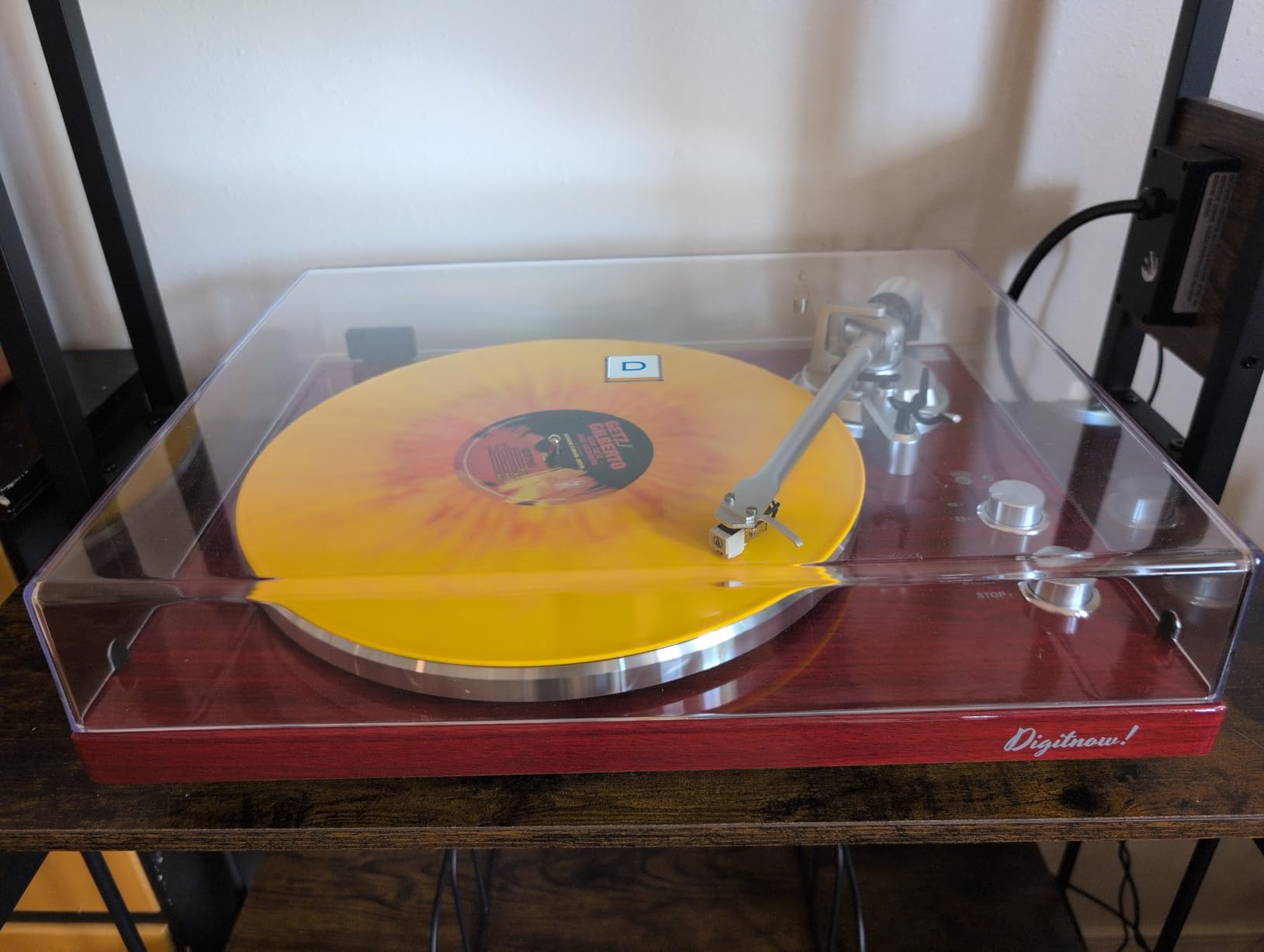
Measured by what it gives you per pound spent, this is the most generous deck in the group. It is a real belt drive in a wood lacquer cabinet, with an AT3600L moving magnet cartridge, an adjustable counterweight, an anti-skate system, a built-in phono preamp, and both USB and Bluetooth output.
Buyers who pair it with wired powered speakers are generally delighted. The sound is clean and steady with no speed fluctuation, and it is a clear step up from a suitcase player. The counterweight is adjustable, so records are tracked at a force you set rather than a force the manufacturer picked.
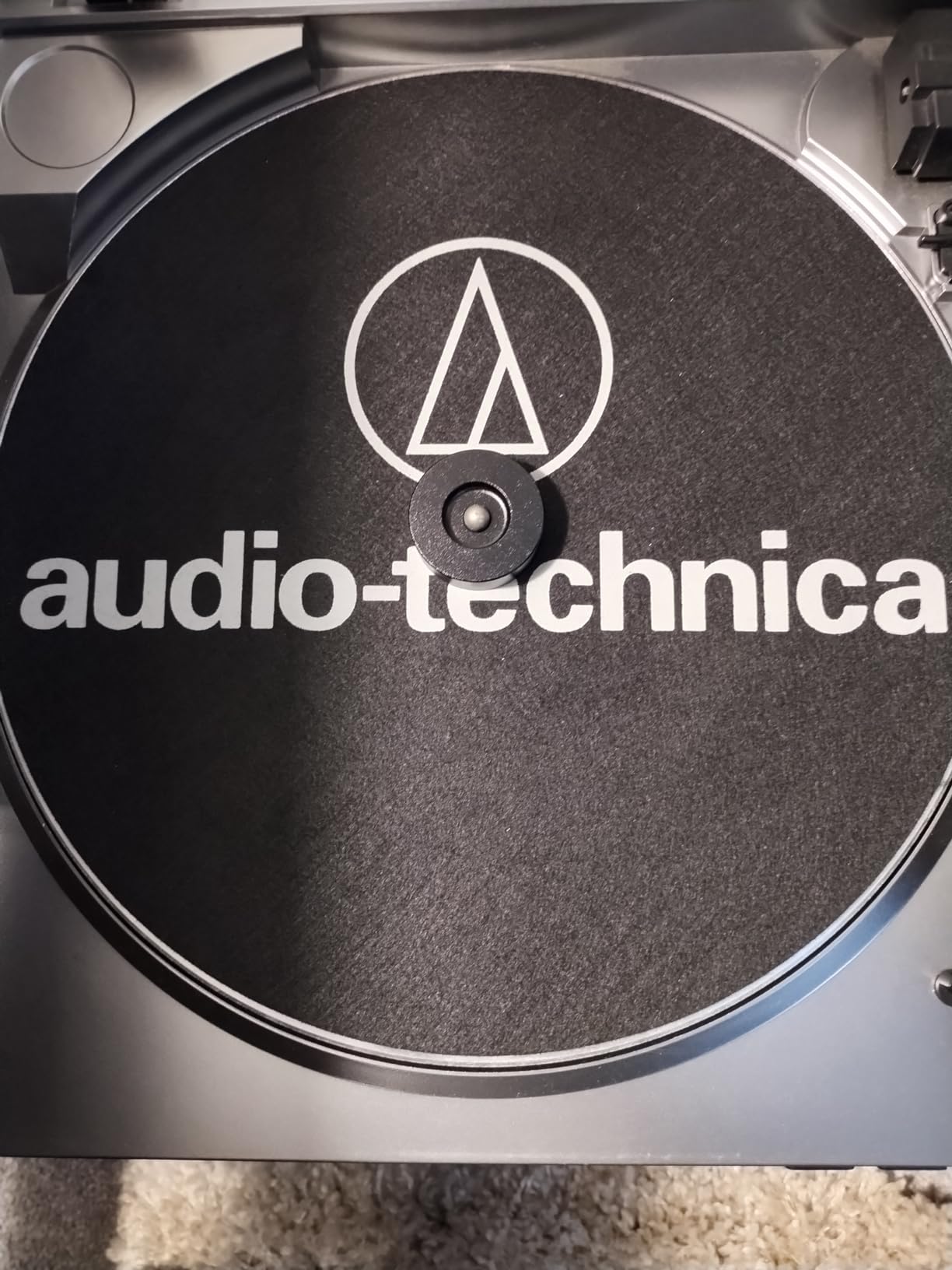
Bluetooth is the weak point, and it is worth being blunt about that. Several owners report static, connection failures to soundbars, or the Bluetooth and start stop controls failing within weeks, leaving the rear power switch as the only reliable way to stop playback. Treat wireless as a bonus feature, not a reason to buy.
Wired is where this deck performs. The RCA output into an amplifier or active speakers is stable, and the built-in preamp means you do not need a phono input on whatever you connect to. It will not drive passive speakers, which is a common and expensive misunderstanding.
Two other details: the 40 dB signal-to-noise ratio is the lowest in this roundup, so there is a little more hiss between tracks than the better decks, and the anti-skate hanging weight is fiddly to install the first time. Owners also note that the unit needs careful levelling to avoid skipping.
Where this deck makes sense
Buy it if the total budget is the dominant factor and you already have powered speakers. The combination of an adjustable counterweight, a moving magnet cartridge, and a built-in preamp is unusual at the bottom of the price range, and it is a sensible platform for a first stylus upgrade later.
The USB output also makes it useful if you want to digitize a small inherited collection without buying anything else.
Where to spend a little more
If you have no speakers at all, the all-in-one option below costs less than buying this plus a separate speaker pair. And if reliability of controls matters to you, the Audio-Technica automatic decks remove the manual balancing step and the manual stop.
8. Victrola Quincy 6-in-1 – One Cabinet for Vinyl, CD and Cassette
Victrola Quincy – 6-in-1 Bluetooth Record Player – Walnut
Six in one cabinet
Three-speed belt drive
Built-in stereo speakers
Bluetooth, headphone jack
Pros
- Plays vinyl CD cassette and radio from one box
- Runs within minutes with no extra gear
- Three speeds including 78 RPM
- 70 dB signal to noise is the strongest among the entry models
- Headphone jack and Bluetooth for flexible listening
Cons
- Turntable section is manual with no tonearm adjustment
- Engineered wood cabinet rather than a machined platter
- CD and cassette mechanisms add bulk
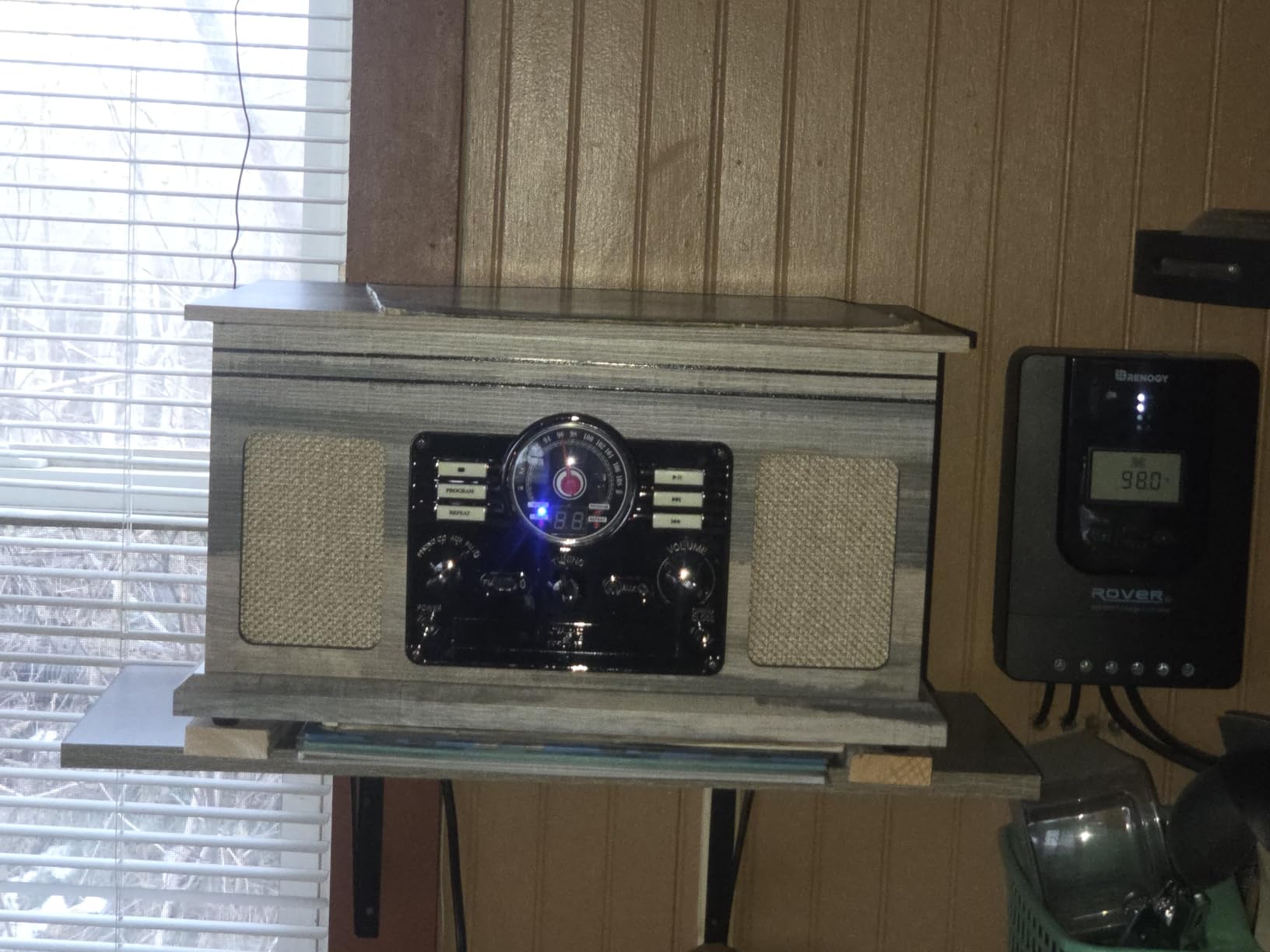
With close to 27,000 reviews, the Victrola Quincy is the most widely owned model in this roundup, and the reason is not sound quality. It is that it does everything. Vinyl, CD, cassette, AM and FM radio, Bluetooth, and an aux or headphone jack, all from one cabinet with its own speakers.
That makes it the natural pick for a dorm room, an office, a gift, or anyone who inherited a mixed-format collection. It runs within minutes of unboxing with no separate stereo, and the 70 dB signal-to-noise ratio is the highest of the entry-level models here, so it is not simply a novelty box.
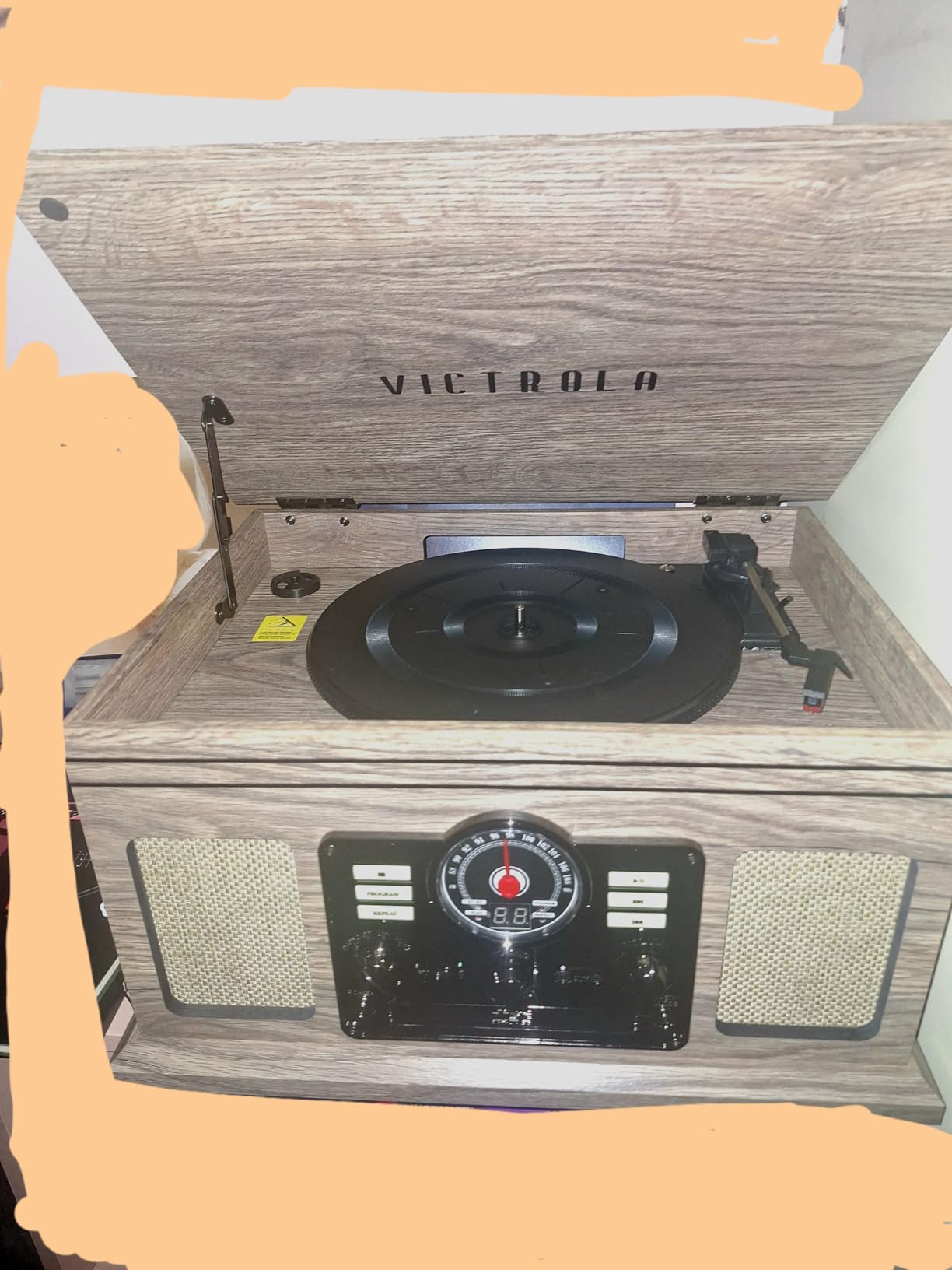
Three speeds including 78 RPM is unusual at this level and useful if you buy old singles. The RCA line outputs let you move to better speakers over time without buying a new deck, and the headphone jack is handy for late-night listening without disturbing a household.
What the cabinet cannot do is give you a proper turntable. The deck section is manual and the tonearm has no counterweight adjustment, so tracking force is whatever the cartridge delivers. Owners who want a serious listening setup pair it with better speakers over RCA, and the turntable becomes a secondary source rather than the main one.
Be honest with yourself about the bulk. At 14.9 pounds and nearly 19 inches long, this is a piece of furniture, and the CD tray and cassette mechanism are dead weight if you only listen to records.
Who buys this one
Choose the Quincy if you want one object to handle everything, particularly if you are furnishing a small space where a separate amp, speakers, and CD player are not realistic. It is also the easiest turntable to give as a present, because there is nothing else to buy with it.
Anyone who still has cassettes or CDs gets real use from the other formats, which is rare in a roundup otherwise made up of turntables alone.
Why serious listeners move on
The turntable section has no tonearm adjustment, so it sits below the Fluance, the Crosley, and the Audio-Technica manual deck in what you can do with it. If vinyl is the format you actually care about, a dedicated belt-drive deck plus a pair of powered speakers is a better use of the same money.
Turntable Buying Guide for First-Time Owners
What is a turntable versus a record player?
A turntable and a record player are the same object. Turntable is the term enthusiasts use, record player is the general consumer term, and vinyl player is a marketing variant of the same thing. All three describe a spinning platter, a tonearm, and a cartridge that reads the grooves cut into a record.
What a turntable does not include is everything else needed to hear sound. A cartridge converts groove vibration into an electrical signal so small that it has to be amplified and equalized before speakers can play it. That stage is the phono preamp, and it is the component beginners most often forget exists.
Belt drive or direct drive?
Belt drive uses a rubber belt between the motor and the platter, so the motor is isolated and you hear less motor noise and vibration. Direct drive mounts the motor under the platter, which means instant start, precise speed control, and a heavier spinning mass that is steadier when you nudge the platter.
For home listening at a normal volume, the difference in sound quality between a good belt drive and a good direct drive is small. The real difference is behaviour. Direct drive exists for DJs who need the platter to start and stop instantly and to be spun by hand for scratching and beat matching. Belt drive is quieter, simpler, and the right default for listening.
Six of the eight decks in this roundup are belt drive, and the two that are direct drive are the ones chosen for manual control and USB capture.
Do I need a phono preamp?
Only if your turntable does not have one you can switch on, or if you want to bypass the built-in one for a better result. The phono stage applies the RIAA equalisation curve that makes a record sound like the music rather than like a thumping, thin hiss, because that is how the groove is actually cut.
There are three setups. A built-in switchable preamp is the easiest and the most common in this roundup. A separate preamp box gives you control and a better result, at the cost of another component. A receiver or amplifier with a phono input does the job internally.
Here is the rule that solves most beginner problems. If your turntable has a switch labelled Phono or Line, set it to Line when you are plugging into powered speakers, because the built-in preamp has already done the work. Set it to Phono when you are plugging into a receiver or amplifier that has a phono input, because that receiver will do the work again. Leaving it in the wrong position is what produces a thin, quiet, hum-ridden sound, and forum threads are full of owners who assumed their turntable was faulty when the switch was simply wrong.
One more trap: a soundbar and most Bluetooth speakers have no phono input at all. If that is all you have, buy a deck with a switchable built-in preamp and connect over RCA.
Which cartridge should a first turntable have?
A moving magnet cartridge is the right answer for almost every beginner, and it is what you should look for. It is robust, forgiving of a slightly misaligned tonearm, and cheap to replace. Moving coil cartridges sound more detailed but cost more, need a stronger preamp, and are less tolerant of setup errors.
Avoid a ceramic cartridge. Ceramic needles are heavy and rigid, they are usually fixed at a high tracking force with no adjustment, and they wear grooves out faster than anything else on this list. This is not a stylistic preference, it is a physics problem, and it is the reason forum communities repeat one warning more than any other: do not buy a suitcase player as your first record player.
Stylus lifespan is usually given in play hours, and the figure most often quoted for a decent moving magnet is in the region of several hundred hours. Replacement styli for common cartridge families cost very little, which is why a cartridge system with a documented upgrade path is worth paying for.
Fully automatic or manual operation?
Fully automatic decks start, stop, and return the arm for you, which removes every risk of dropping a stylus and needs no counterweight balance. They are the right choice for a first turntable, for a gift, and for anyone who does not want to read a setup guide.
Manual decks give you a counterweight, an anti-skate dial, and a cueing lever, which means you control tracking force and can upgrade the cartridge. They are the right choice if you want to keep the deck for years, want to DJ, or already know how a tonearm works. There is a middle ground in semi-automatic decks that stop the platter at the end of a record but do not lift the arm, which is where the Fluance RT81 sits.
Be aware of one specific gotcha: a fully automatic deck is generally set up for 12-inch records and will not cue 7-inch singles without adjustment. If your collection is mostly 45s, check that the deck handles them before you buy.
What a complete beginner system actually costs
The turntable is half the system, and the other half is where first-time buyers get sticker shock. You need powered speakers, and in most cases nothing else, because the turntables in this roundup have a switchable preamp and RCA outputs.
Edifier-style powered bookshelf speakers are the most-repeated budget pairing in forum threads, and they are the right shape of answer: an amplifier and a pair of speakers in one box, with tone controls, powered by the turntable. Any decent pair will do the job. The pairing to avoid is a soundbar, which almost never has a phono input.
Add a carbon fibre brush and a proper anti-static sleeve, which cost very little, and you have a complete setup. Budget for a replacement stylus within a year or two, because a worn needle is the main cause of a record sounding dull and skipping.
Bluetooth turntables: what it fixes and what it does not
Bluetooth on a turntable solves exactly one problem, which is listening without a cable to speakers. It is genuinely useful for headphones, and it is useless as a way to improve sound, because wireless audio is compressed before it leaves the turntable.
Do not judge a deck by its Bluetooth. Judge it by the cartridge, the preamp, and the tonearm. Two of the decks here have Bluetooth output, and owners of both report that wired RCA output is where the sound is at its best, with wireless being a bonus that sometimes behaves unpredictably.
Seven Beginner Mistakes That Wreck Sound or Records
These are the errors that show up again and again, ordered roughly by how often they happen.
Leaving the Phono or Line switch in the wrong position. This is the number one cause of a turntable that sounds terrible. Line for powered speakers, Phono for a receiver with a phono input.
Plugging into hardware with no phono input. Soundbars and most Bluetooth speakers cannot take a phono-level signal. Use RCA into a proper pair of powered speakers.
Buying a suitcase player as a first turntable. A ceramic cartridge at a fixed heavy tracking force wears grooves out faster than anything else in this article.
Forgetting the second purchase. The turntable alone makes no sound. Plan for speakers in the same budget conversation.
Not levelling the deck. A turntable on a wobbly surface will skip. Put a fingertip on the platter edge and nudge: any perceptible wobble will show up as a skip on a quiet passage.
Leaving the felt mat off, or using a static-charging mat. A proper platter mat reduces static pickup, and owners often report swapping the supplied felt mat for a silicone one solves audible crackle.
Cueing a record badly on a manual deck. Raise the arm, move it into position, then lower the lift slowly. Dropping an arm from full height onto a record is how cartridges and records get damaged.
Should You Buy a Used Turntable Instead?
Forums are full of secondhand recommendations, and there is real value on the used market. The most repeated example is a Technics direct-drive deck from the 1970s and 1980s, which are frequently reported as excellent value and are built to be serviced indefinitely. Owners in these communities are clear that a service is recommended before use, because the belts, idler wheel, and tonearm bearings on a fifty-year-old deck are all consumable parts.
That route is genuinely appealing if you want manual control and durable construction. It is also a project rather than a purchase, so know what you are getting into.
If you go used, check these things before you commit. Listen for speed drift by playing a long sustained note and hearing whether the pitch sags. Look at the belt for glazing or a loose fit. Check the tonearm bearings for free play in the vertical axis, which is the most common reason a cheap used deck was sold. Inspect the headshell and confirm the counterweight threads cleanly. And confirm the pitch control reaches both 33 and 45 with adjustment to spare, because an exhausted idler wheel will not.
If you want the same characteristics without the servicing, a new manual deck in this roundup gives you adjustable tracking force and anti-skate with a warranty behind it.
Frequently Asked Questions
Do I need a phono preamp if my turntable has one?
No, not if the built-in preamp is switchable. Set the Phono or Line switch to Line when you plug into powered speakers, because the deck has already amplified and equalised the signal. Set it to Phono when you plug into a receiver or amplifier that has its own phono input, because that receiver will do the work again. Getting this switch wrong is the most common cause of thin, quiet, hum-prone sound.
What is a good but inexpensive record player?
The Audio-Technica AT-LP60X is the pick for most beginners at the lower end, because it is fully automatic and has a built-in switchable preamp, so it connects to gear you already own. The DIGITNOW belt drive deck is the cheapest option here that still has an adjustable counterweight and a moving magnet cartridge, which protects your records. Avoid ceramic-cartridge suitcase players at any price, because their fixed heavy tracking force damages grooves.
What are the top turntables for a first-time user?
For a first-time user who wants zero setup, the Audio-Technica AT-LP60X is the safest starting point. For a first turntable you intend to keep and upgrade, the Fluance RT81 adds a real counterweight and a removable cartridge. For manual control, USB digitizing, and three speeds including 78 RPM, the Audio-Technica AT-LP120XUSB is the one most owners keep for a decade.
What record players should I avoid?
Avoid suitcase-style players with a ceramic cartridge. The stylus is heavy and rigid, the tracking force is fixed with no adjustment, and there is no way to reduce the pressure on a delicate groove, so records wear out faster. The same applies to novelty all-in-one units sold as gift sets. If you want one box, choose a belt-drive model with a moving magnet cartridge and an adjustable counterweight instead.
Which is better, belt drive or direct drive?
For normal home listening, a good belt drive is quieter because the motor is isolated from the platter by a rubber belt. Direct drive spins up instantly, starts and stops on command, and is what you want for beat matching or scratching because the platter can be moved by hand. The audible difference in sound quality between a good example of each is small, so choose based on whether you intend to DJ.
Do I need an amplifier and speakers for a turntable?
Yes, unless your turntable has built-in speakers. A turntable outputs a tiny phono-level signal, so it needs powered speakers, or an amplifier with a phono input feeding speakers. Edifier-style powered bookshelf speakers are the most commonly recommended budget pairing because they combine an amplifier and a pair of speakers in one box. Avoid soundbars, since most have no phono input at all.
Which Turntable Should You Actually Buy?
The best turntables for beginners come down to one honest question: do you want a turntable that works, or a turntable you can grow into? If you want it to work, the Audio-Technica AT-LP60X is the pick. It is fully automatic, it will not damage your records, and it connects to speakers you already own. If you want to grow into it, the Fluance RT81 gives you a real counterweight and a cartridge you can change, and it will still be worth owning when your collection is twice the size.
Spend your money on manual control and cartridge quality rather than on Bluetooth or a larger cabinet. Every deck in this roundup that has an adjustable counterweight will keep your records in better condition for longer than any feature on this list, and that is the feature you cannot add later.
Whichever you choose, buy powered speakers in the same order, set the Phono or Line switch correctly on day one, and give the deck a flat surface with a proper mat. That is the whole beginner’s checklist, and getting it right on the first afternoon saves you a lot of confusion afterwards.