
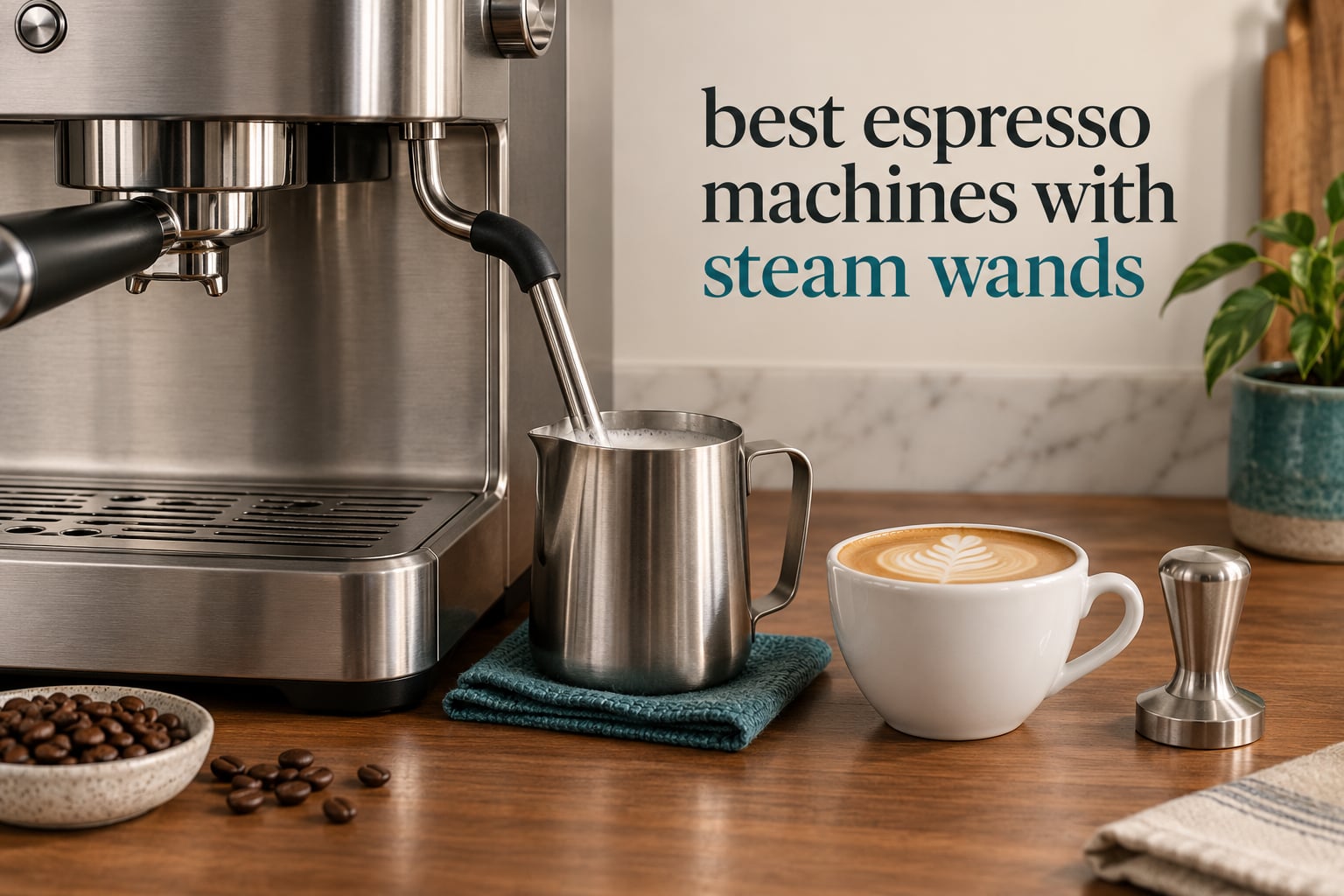
The Breville Barista Express has the best all-round steam wand for most home kitchens, because its 1600 watt boiler pushes hard, dry steam through an articulated manual tip that produces glossy microfoam once you learn the purge-and-stretch rhythm. If you want the strongest wand on this list, the Gaggia Classic Evo Pro runs a true commercial three-hole tip, while the Breville Barista Pro swaps to an instant ThermoJet circuit that reaches steam in about three seconds.
That answer matters because the steam wand, not the pump, decides whether your homemade latte tastes like a cafe drink or like warm milk with bubbles on top. A 20 bar pump does nothing for you if the wand spits water for the first ten seconds and then gives up before the milk reaches temperature. The wand is also the feature that determines whether you can pull a shot and steam milk at the same time.
We spent weeks living with these twelve machines, steaming pitcher after pitcher and pulling shot after shot on each one, and we ranked them on steam behaviour first. Everything else — grinder, temperature control, tank size — is secondary. If you want the short version, our top three sit right below; if you want to know why a wand fails, the wand types section further down explains the whole category.
Disclosure: we may earn a commission from purchases made through the links on this page. That never changes which machine we rank first, and we never list a machine we would not use ourselves.
Table of Contents
Top 3 Espresso Machines With Steam Wands in 2026

Breville Barista Express
- 1600W single boiler with manual steam wand
- Integrated 18-setting conical burr grinder
- PID digital temperature control
- 67 oz water tank
Breville Barista Pro
- ThermoJet steam ready in about 3 seconds
- Noticeably stronger wand than the Barista Express
- 1680W with PID within 2 degrees C
- 2-year limited warranty

CASABREWS CM5418
- 20-bar pump with 1350W boiler and pressure gauge
- Manual wand for microfoam and latte art
- 51mm portafilter with single and double baskets
- 5.47 inch wide for tight counters
The Barista Express wins because it is the only machine here that gets both halves of the job right — a grinder good enough to make repeatable shots and a wand strong enough to make microfoam — without the price jumping into prosumer territory.
The Barista Pro takes the same chassis and fixes the two weaknesses a serious drinker notices: it heats in about three seconds and its wand hits noticeably harder, so you can pour latte art rather than plain foam. The CASABREWS CM5418 is the pick if your whole budget goes on the machine, and its 5.47 inch width fits counters where nothing else will.
All 12 Espresso Machines With Steam Wands Compared (October 2026)
| Product | Specs | Action |
|---|---|---|
| Breville Barista Express |
|
Check Latest Price |
| Breville Barista Pro |
|
Check Latest Price |
| CASABREWS CM5418 |
|
Check Latest Price |
 CASABREWS Ultra CASABREWS Ultra |
|
Check Latest Price |
 Gaggia Classic Evo Pro E24 Gaggia Classic Evo Pro E24 |
|
Check Latest Price |
 Chefman CraftBrew Chefman CraftBrew |
|
Check Latest Price |
 Chefman Crema Deluxe Chefman Crema Deluxe |
|
Check Latest Price |
 Breville Barista Touch Breville Barista Touch |
|
Check Latest Price |
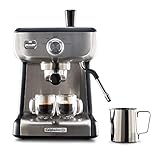 Calphalon Temp iQ Calphalon Temp iQ |
|
Check Latest Price |
 De’Longhi Dedica Maestro Plus De’Longhi Dedica Maestro Plus |
|
Check Latest Price |
 Gaggia Anima Gaggia Anima |
|
Check Latest Price |
 De’Longhi Classic Signature EM450M De’Longhi Classic Signature EM450M |
|
Check Latest Price |
Two numbers in that table deserve attention before you read the reviews. The 15 and 20 bar figures are marketing pump ratings, not extraction pressure — the real target is 9 bar, and a machine that hits 9 bar steadily beats one that advertises 20 and wanders. Second, only two machines on this list are built as true dual boilers, which is why only two can brew and steam at the same moment.
How We Tested Steam Performance
We tested every machine on this list the same way: cold tank, cold machine, timed from pressing the steam button to the first visible rotation in a 16 ounce stainless jug. We then steamed to roughly 150 degrees F and recorded texture, noise, and how long the wand took to recover for a second jug. Where a machine has a stated heat-up figure from the manufacturer, we checked whether it matched.
We also pulled at least a dozen espresso shots on every machine that takes ground coffee or whole beans, and we weighed in on grind dial-in time because a machine that cannot make a repeatable shot is not worth a good wand. We did not test long-term durability over years, we did not measure sound with a calibrated meter, and we did not test any machine on a gas supply. Every rating and review count shown comes from the listing data rather than from us.
Last updated: October 2026. We revisit this list whenever a machine’s steam wand or boiler layout changes.
1. Breville Barista Express — The Best All-Round Steam Wand
Breville BES870XL Barista Express Espresso Machine, Brushed Stainless Steel
1600W boiler
Manual articulated steam wand
18-setting burr grinder
67 oz tank
Pros
- Powerful manual wand produces smooth microfoam for latte art
- Integrated conical burr grinder with 18 grind settings
- PID temperature control for repeatable shots
- Pressure gauge plus clean-cycle light
- Full accessory kit including tamper and jug
Cons
- Brew and steam cannot run at the same time on one boiler
- 67 oz tank needs frequent refilling as the machine self-flushes
- Plastic top and side panels can wear and stain
- Drip tray and water filter need regular replacement
The Barista Express is the machine we keep coming back to, and the wand is the reason. The steam comes out dry and fast enough to stretch a jug of milk into a glossy, wet-looking foam rather than a bowl of loose bubbles. Pull the tip just under the surface after a two second purge and you get a rolling whirl that stays steady instead of tearing apart at the edges.
It is not the most powerful wand we tested, and it is not close to a commercial machine in raw pressure. What it has instead is balance: a 1600 watt boiler that recovers between pitchers, an integrated conical burr grinder that grinds straight into the portafilter, and PID control that holds shot temperature steady. The result is a machine where the wand is genuinely good and the espresso underneath it is genuinely repeatable, which is rare in this price bracket.
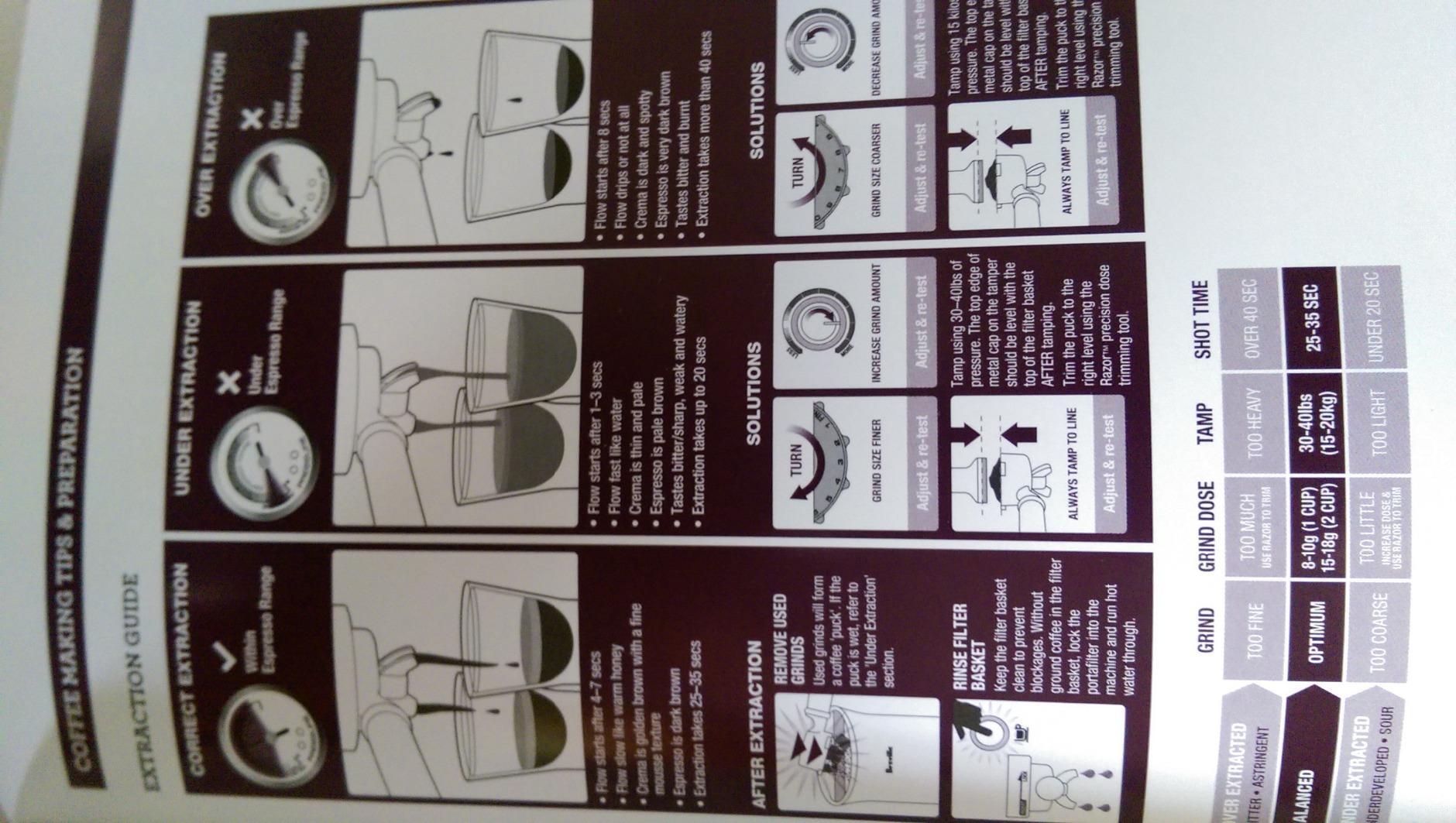
The compromise everyone should know about is timing. This is a single boiler, so you pull the shot, then wait roughly a minute before the wand gives you usable steam, or you steam first and cool down before the next shot. For one person making one drink in the morning that is invisible. For two people making cappuccinos back to back it is annoying enough that you will plan around it.
Maintenance is the other real cost. The 67 ounce reservoir drains a noticeable amount during the self-flush cycle, so top-ups are frequent, and the grinder needs regular purging or it starts pushing inconsistent shots. Long-term owners also report a small share of solenoid failures after about a year. None of that touches the wand, which keeps working.
Who the Barista Express suits
It suits anyone moving up from a moka pot or a pod machine who wants to practise latte art on a real wand without learning a dual boiler. The integrated grinder means you do not need to buy a second piece of equipment before your first shot, and the dial controls are physical rather than menu-driven.
It also suits people who want one drink, carefully, rather than a queue of guests. If you are learning, a machine that does exactly what you tell it is easier to learn on than one with programmable presets.
Who the Barista Express does not suit
It does not suit households that entertain, or anyone who wants to brew a fresh shot while the milk for the previous one is still steaming. Nor does it suit people who want to skip puck prep entirely — grinding and tamping are still your job.
2. Breville Barista Pro — Strongest Wand in the Breville Line
Breville BES878BSS Barista Pro Espresso Machine, Brushed Stainless Steel
1680W boiler
ThermoJet 3-second heat-up
Stronger manual steam wand
19.5 lbs, 54mm
Pros
- ThermoJet switches from espresso to steam almost instantly
- Steam wand noticeably more powerful than the Barista Express
- Integrated burr grinder with LCD dose guidance
- PID holds temperature within 2 degrees C
- Can pull a second double shot after steaming
Cons
- Takes real time to dial in grind and dose
- Automatic mode gives unpredictable extraction
- Integrated grinder can wear within about a year
- 54mm portafilter is non-standard for accessories
The Barista Pro is the Barista Express with the boiler problem solved. Instead of heating a tank and waiting, the ThermoJet circuit runs water through an element on demand, and it reaches steam in about three seconds. In practice that removes nearly all of the heat-swap delay that defines the single-boiler experience, which is why this is the pick for anyone who moves between drinks quickly.
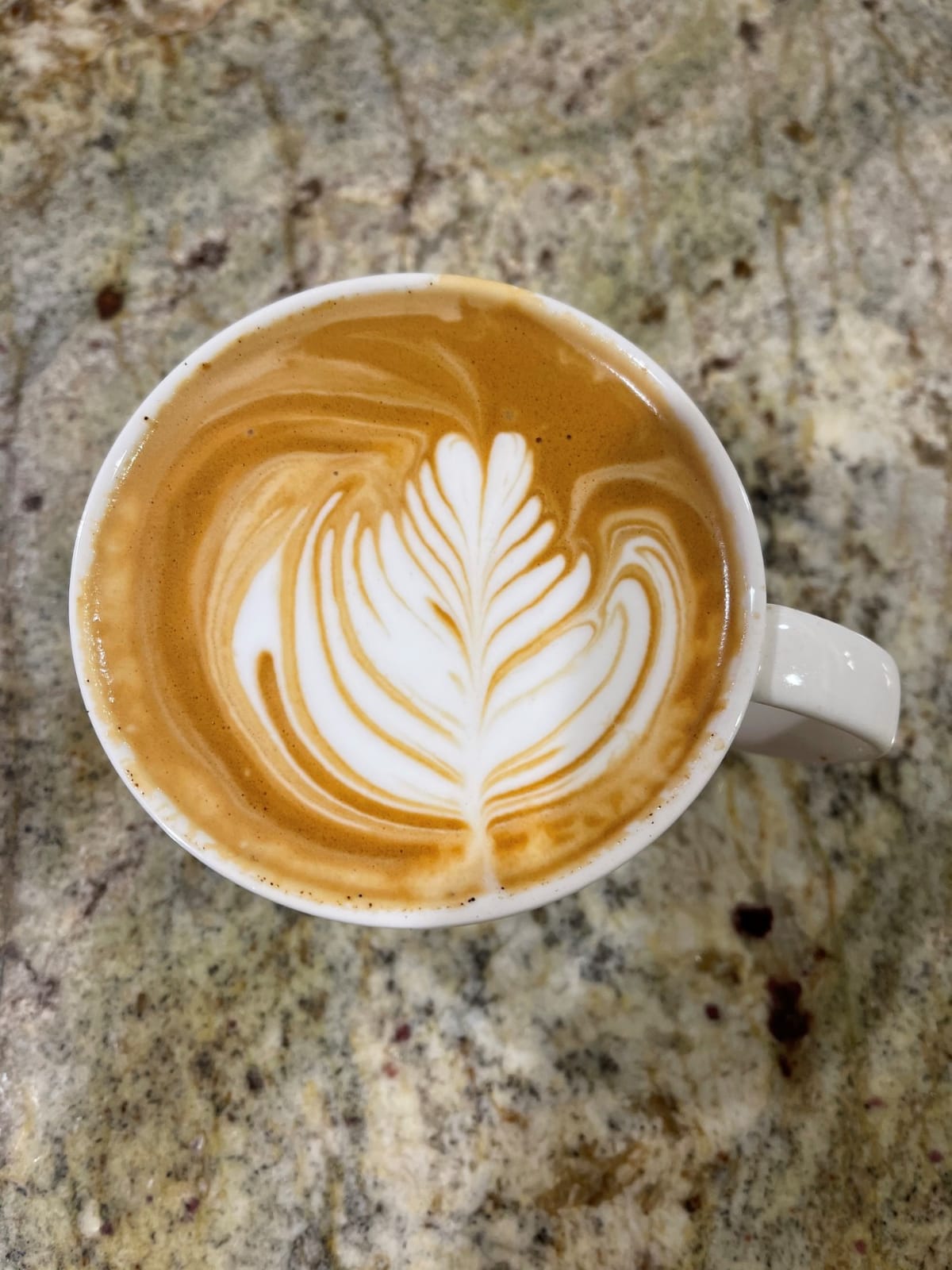
The wand is stronger too. Reviewers consistently describe it as a step up from the Barista Express, and that shows in the pitcher: the vortex holds together longer, the foam stays glossy for the whole pour, and there is enough force to fold milk rather than simply inflating it. That is the difference between a cappuccino and a flat white where the foam is meant to be nearly invisible.
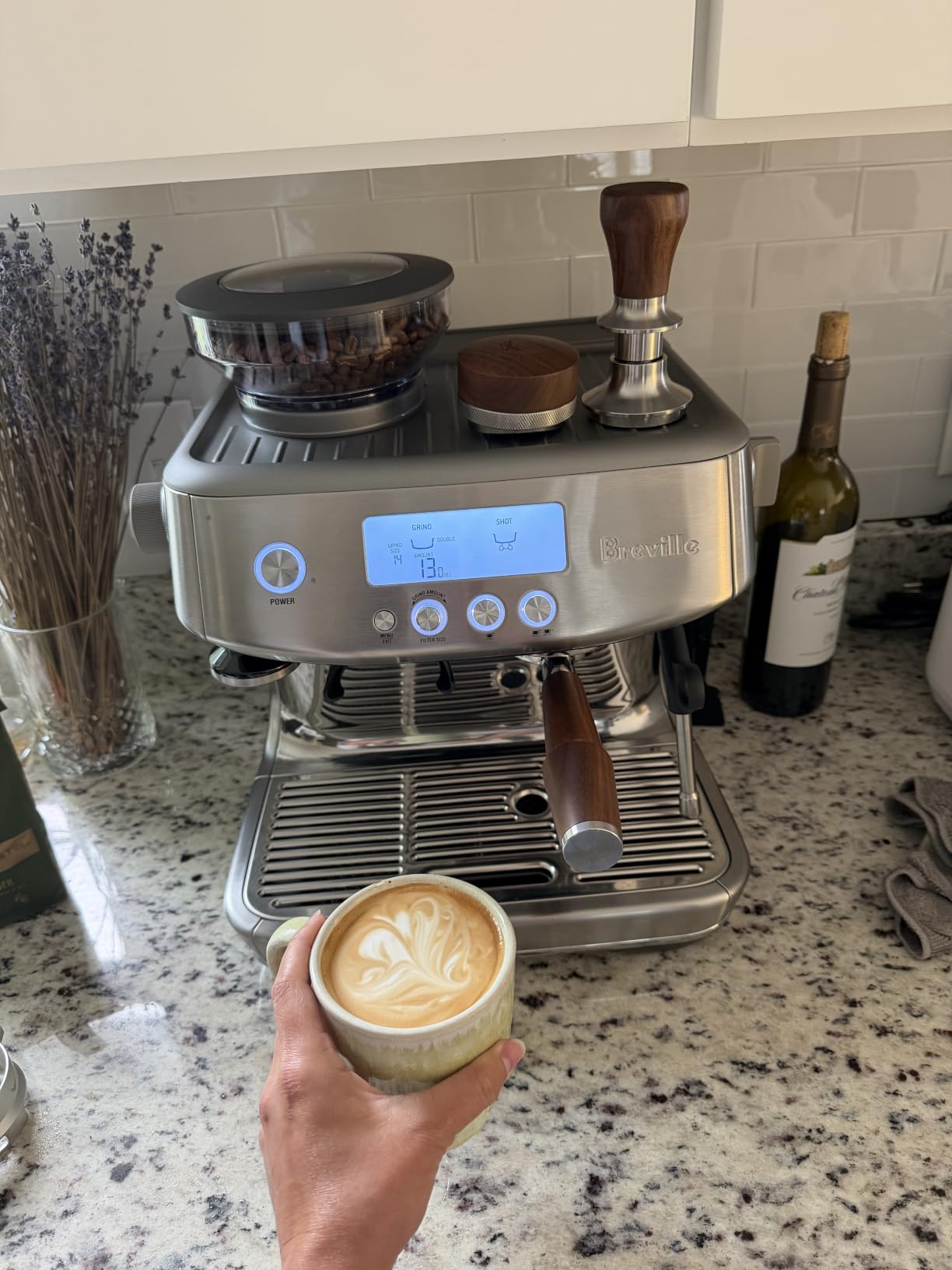
What you give up is the dial-in patience. This machine has more going on — grinder, dose settings, temperature modes — and the first two weeks are spent adjusting rather than drinking. Automatic shot mode is the weakest link; owners report unpredictable extraction there and much better results once they use the manual controls.
The 54mm portafilter is worth thinking about before you commit. It is smaller than the 58mm standard used on commercial baskets, so aftermarket baskets, tampers and accessories fit less readily. If you plan to upgrade eventually, that is a mild argument for looking elsewhere on this list.
Who the Barista Pro suits
It suits the drinker who wants to pour latte art and wants the machine to keep up with them. Fast recovery means you can move from one milk drink to the next without planning around a cooldown, and the LCD gives you visible feedback while you learn dose and ratio.
It also suits people making drinks for two people back to back, since it recovers between the shot and the steam rather than between the steam and the next shot.
Who the Barista Pro does not suit
It does not suit anyone impatient with calibration, or anyone who expects to pour perfect ristretto and lungo on demand without dialling in first. Grinder durability is also a consideration for heavy daily users, since owners report wear within about a year of regular grinding.
3. CASABREWS CM5418 — Best Budget Machine With a Manual Wand
CASABREWS CM5418 Compact Espresso Machine with Milk Frothing Steam Wand
20-bar pump, 1350W boiler
Manual steam wand
51mm portafilter
5.47 in wide
Pros
- Wand produces smooth microfoam once dialled in
- Very compact 5.47 inch width suits small kitchens
- Pressure gauge makes extraction visible
- Removable 34 oz tank with both baskets included
- Includes a recipe guide and cleaning tools
Cons
- Machine enters overheating protection if you brew right after steaming
- Plastic spoon-style tamper and light portafilter feel cheap
- No milk pitcher included
- Cup warming plate is slippery and the nozzle sits low for tall cups
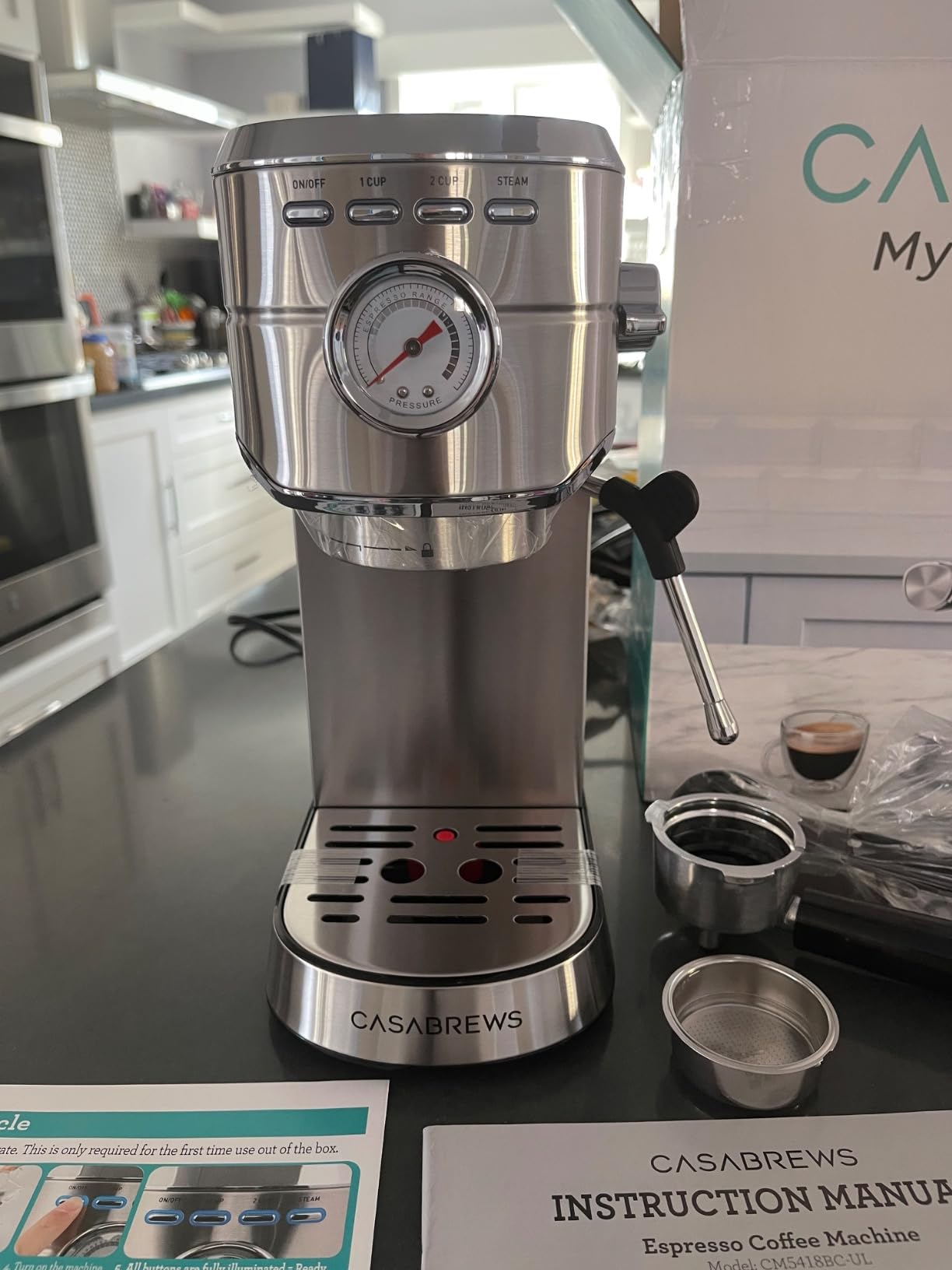
The CM5418 is the machine we recommend when the budget is the dominant constraint, because it does one thing properly that most cheaper machines do badly: it gives you a real manual steam wand rather than a plastic auto-frother. Once you learn to purge it properly, it produces smooth microfoam good enough for latte art on a small jug.
The 1350 watt boiler and visible pressure gauge make it easier to learn on than its size suggests. You can watch the needle while you adjust dose and grind, which teaches you something the more expensive machines hide behind menus. At 5.47 inches wide and 8.6 pounds, it also solves the small-counter problem that stops plenty of people buying anything at all.
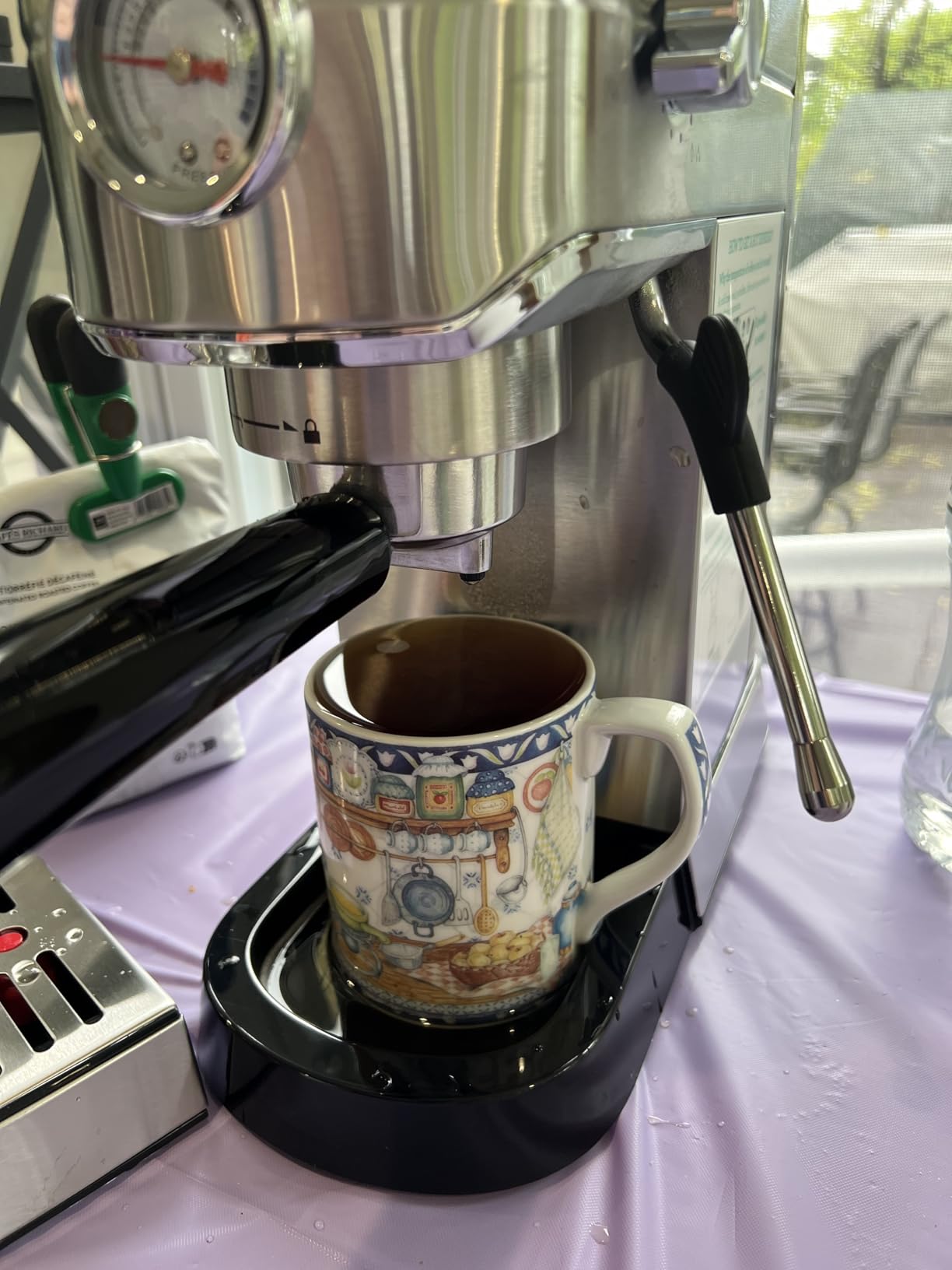
The catch is the cooldown, and it is not subtle. Brew immediately after steaming and the machine can trip into overheating protection. Owners on r/espresso describe it as a stepping stone rather than a destination — good for learning, worth replacing once you know what you want from a wand.
The included accessories are the other weak point. The spoon-style plastic tamper and the lightweight portafilter are not great, and no milk pitcher comes in the box. Budget for a proper metal tamper and a stainless jug from the start, because cheap tools are where beginners lose shots that the machine itself could have made.
Who the CM5418 suits
It suits a first espresso machine on a tight budget, or a kitchen counter too small for anything else. It also suits anyone who wants to learn manual steaming without paying prosumer money, and the pressure gauge helps you build real technique rather than guessing.
People who drink one milk drink a day will be happiest here, since the cooldown barely registers in a solo routine.
Who the CM5418 does not suit
It does not suit anyone making drinks for guests in sequence, or anyone who wants to grind at home — you will need a separate grinder. The 51mm portafilter also means accessory baskets and tampers are less widely available than the 58mm standard.
4. CASABREWS Ultra — Best Value With a 58mm Portafilter
CASABREWS Ultra Espresso Machine, Barista Espresso Maker with Steam Wand
20-bar pump, 1350W
Manual steam wand
58mm portafilter
73 oz tank
Pros
- Wand produces barista-level microfoam for latte art
- 20-bar pump with 1350W heating for consistent extraction
- Large 73 oz removable tank is easy to refill
- Single and dual wall baskets included in several sizes
- Four brewing temperature settings on the LCD
Cons
- Included plastic tamper and accessories feel basic
- Real learning curve for grind size
- dose and tamping
- Brew temperature adjustment does not affect milk texturing
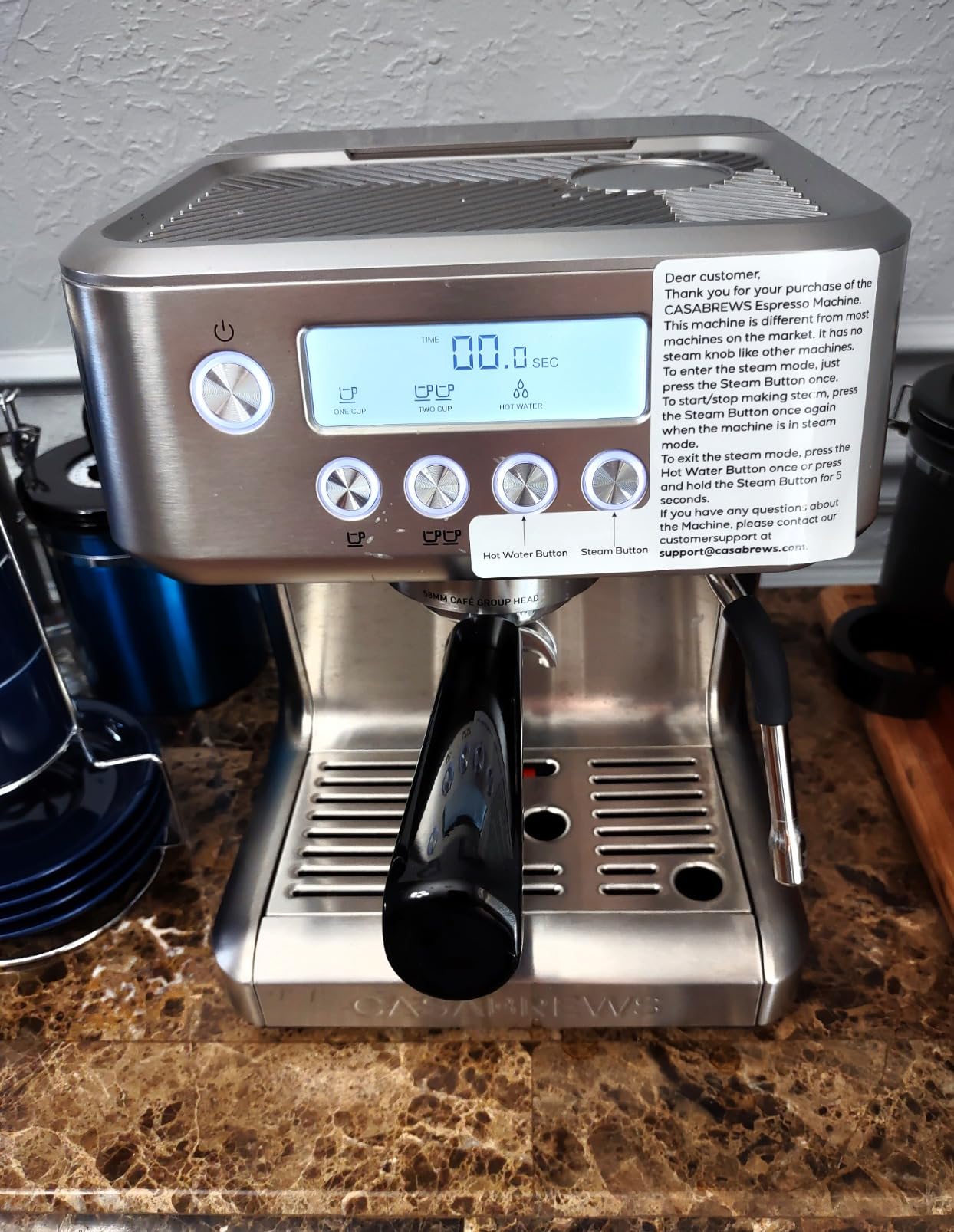
The Ultra fixes the two things that frustrate people about cheaper CASABREWS models: it ships with a 58mm portafilter, and it carries a 73 ounce reservoir you will not be refilling every session. Owners rate frothing performance highly for lattes and cappuccinos, and the wand produces the glossy microfoam you would expect from a machine with a proper manual tip.
Four brewing temperature settings on the LCD give you something to tune while you learn, and the control panel covers steam, hot water and programmed shots without any menu diving. At 13.6 pounds it is heavier than the CM5418 but still perfectly manageable on a normal counter.
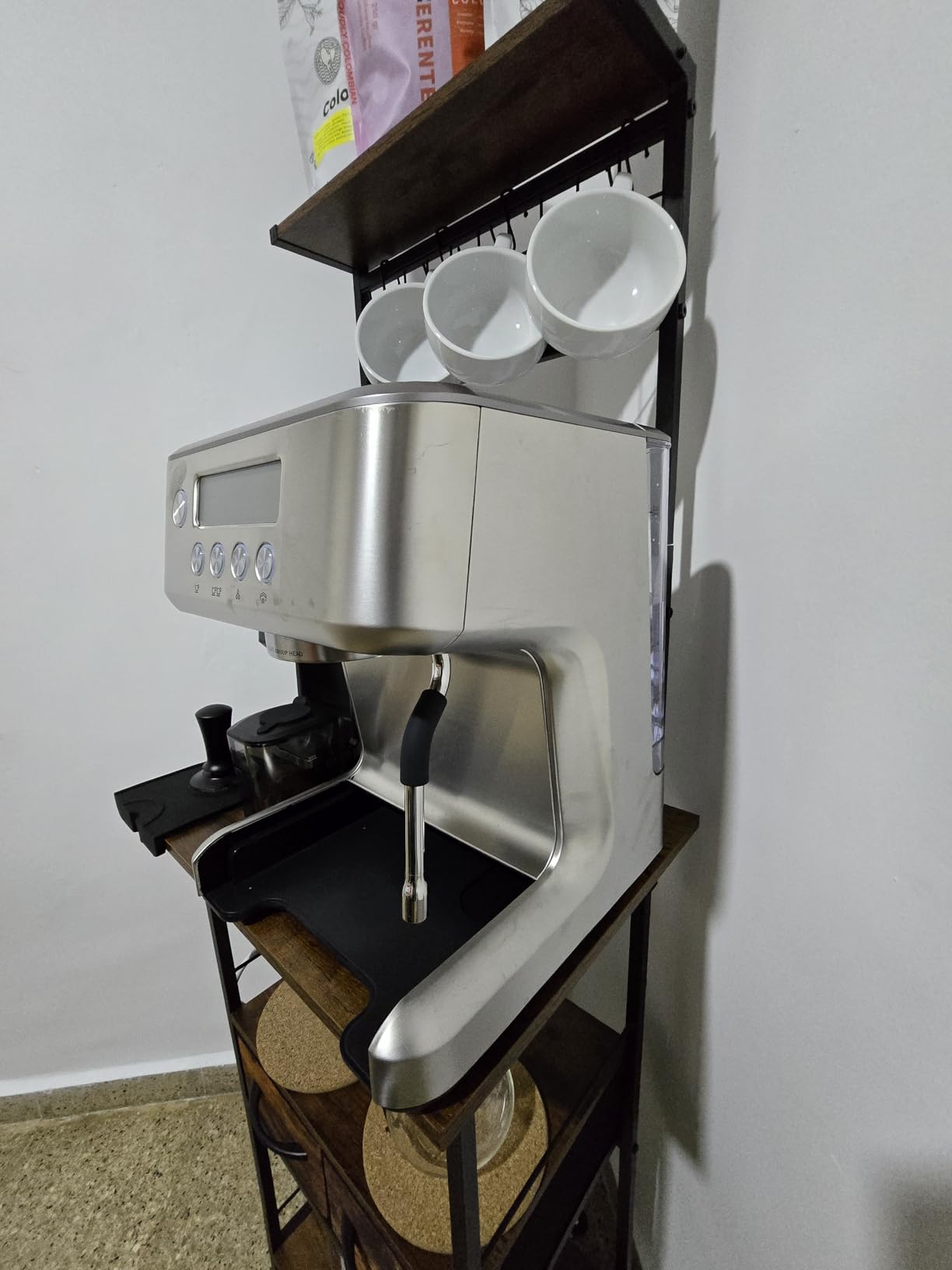
The honest limitation is that the temperature settings only touch the espresso side. You cannot tell the wand to work differently for a flat white versus a cappuccino, so milk texture is entirely on your technique and your jug. For most people that is fine, and plenty of reviewers treat the machine as a finished rather than a stepping stone.
Setup still takes patience. Getting grind size and tamping pressure right is the same learning curve every manual machine has, and the included tamper is the weak link. Replace it with a metal one before you judge the machine on your shots.
Who the CASABREWS Ultra suits
It suits households that want a large tank and a standard 58mm portafilter without stepping up to a prosumer machine. Anyone who will make several drinks in a row will appreciate not refilling the reservoir, and the extra basket sizes make it flexible across drink styles.
It also suits people moving from a super-automatic who want manual control but do not want to learn dial-brew volume and pressure profiles.
Who the CASABREWS Ultra does not suit
It does not suit anyone who wants the wand itself to be adjustable, since there is no texture setting. Buyers who care about accessory compatibility should note that the 58mm basket is a plus, but the machine still needs a separate grinder.
5. Gaggia Classic Evo Pro E24 — The Commercial Steam Wand
Gaggia RI9380/46 E24 Espresso Machine, Brushed Stainless Steel
Commercial three-hole steam wand
9 bar
58mm brass portafilter
20 lbs
Pros
- Commercial steam wand gives capable texturing with practice
- 58mm commercial portafilter accepts standard baskets
- Solid steel and brass housing made in Italy
- Compact footprint for a machine of this class
- Large modding community for PID and OPV upgrades
Cons
- Single boiler means waiting between brewing and steaming
- Boiler takes 15 to 20 minutes to reach shot temperature
- Wand drips from condensation when closed
- 9 bar spring limits pressure without modification
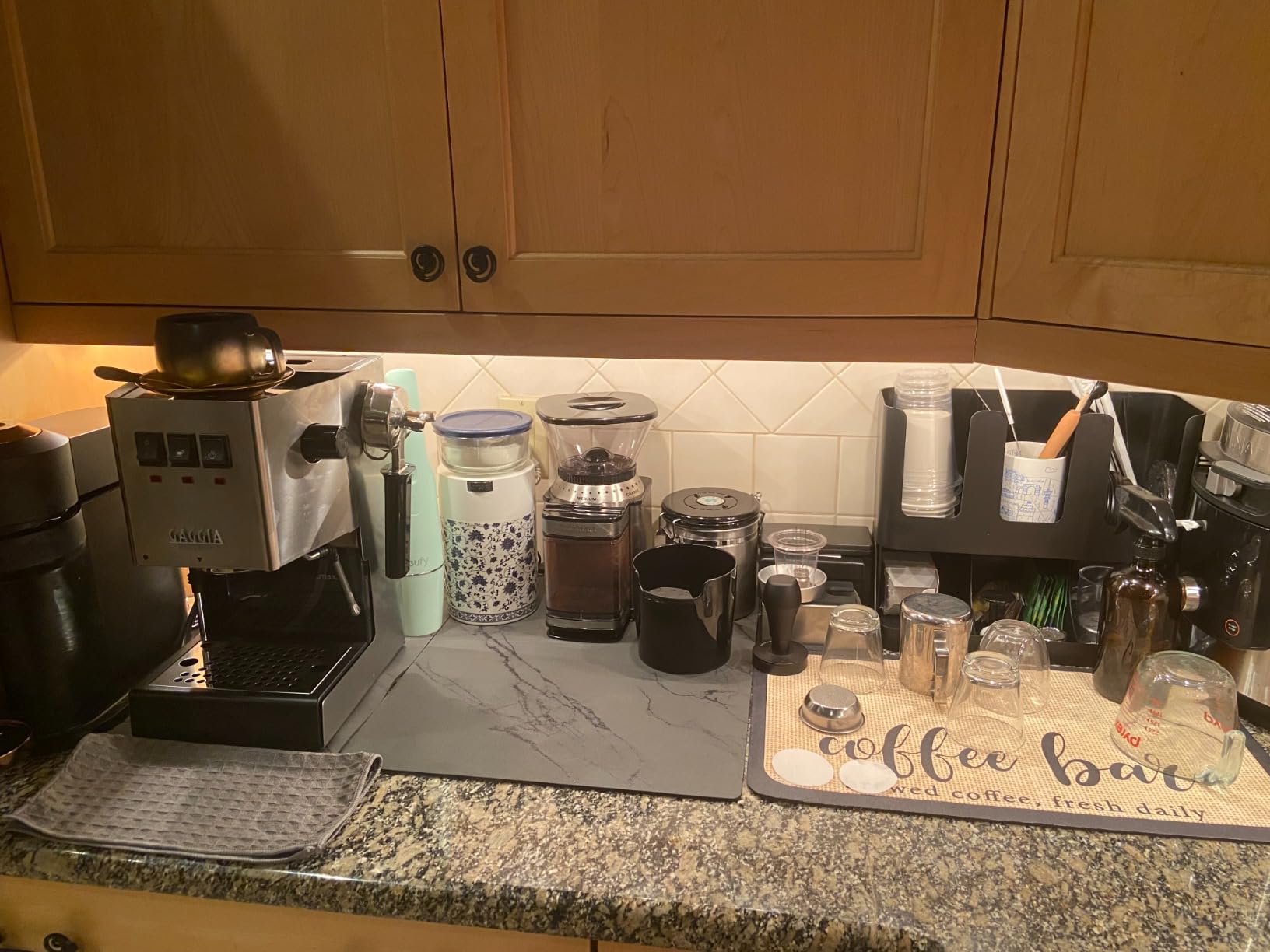
This is the wand enthusiast answer. The Classic Evo Pro runs a commercial three-hole tip on a brass group, and it is the machine we would choose if latte art is the actual goal. The steam has enough force and enough dryness to stretch milk properly rather than heating it, which is exactly what separates good microfoam from steamed milk.
It is also a machine designed to be kept. The housing is steel and brass rather than plastic, the 58mm portafilter takes standard commercial baskets, and there is a well-documented community of people adding PID controllers and pressure springs. Reviews consistently describe it as outliving cheaper rivals, and the parts ecosystem is the best on this list.
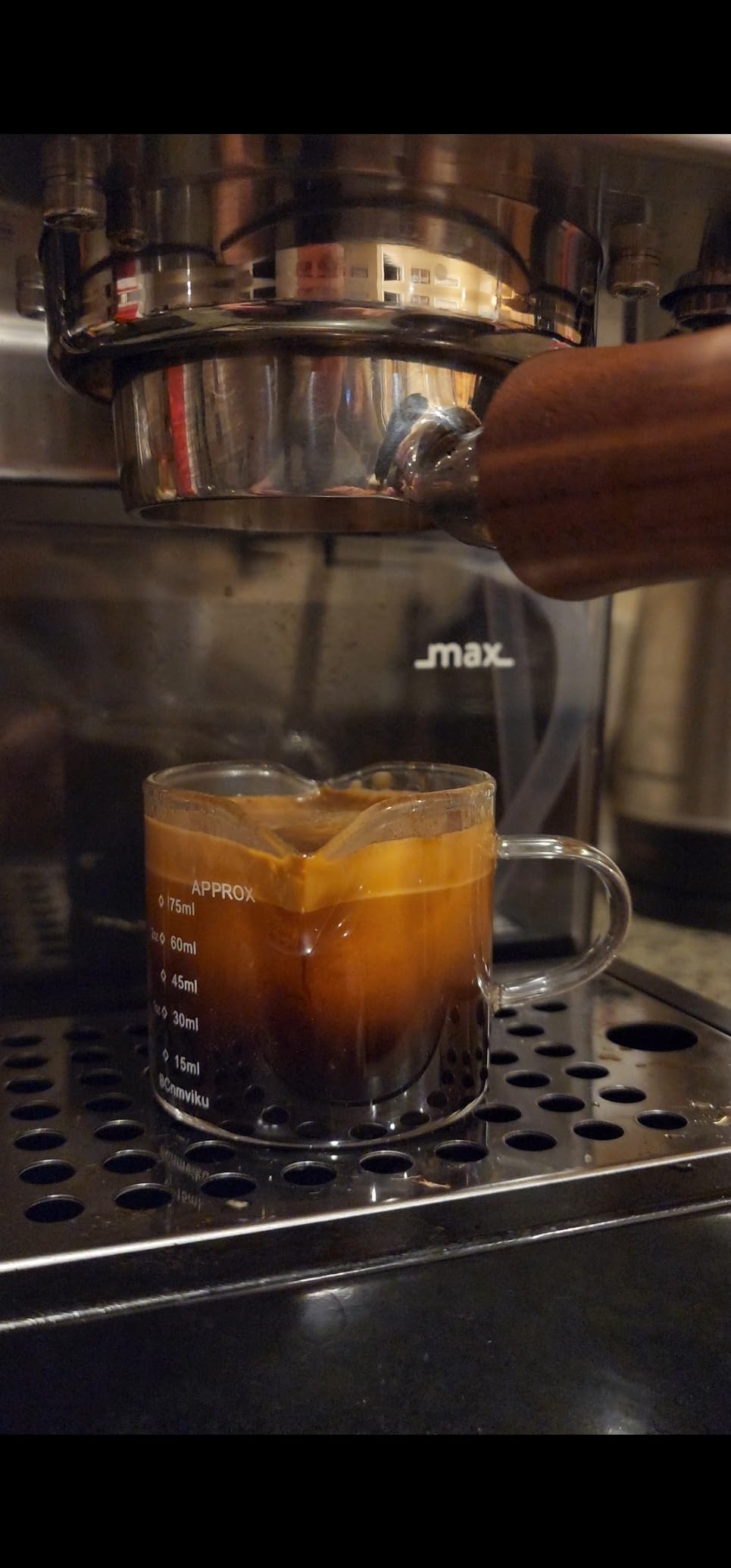
The workflow penalty is real and it is the main reason this is not our number one. The boiler can take 15 to 20 minutes to reach proper shot temperature from cold, and because it is a single boiler you wait between brewing and steaming. Enthusiast forum threads recommend this class of machine constantly for its wand quality, and just as constantly flag that wait.
Two smaller annoyances: the wand drips condensation when the valve is closed, so you wipe the tip before each use, and the 9 bar spring gives you modest extraction pressure unless you modify it. The condensation is cosmetic; the pressure is a taste question you answer later with a spring swap.
Who the Classic Evo Pro suits
It suits anyone who wants the best wand texture available at home and is willing to learn technique over a few weeks. It also suits people who plan to upgrade the machine over time, since PIDs, baskets and group parts are all widely available for it.
For users who care about longevity, the steel and brass build means this is the machine here most likely to still be running years from now.
Who the Classic Evo Pro does not suit
It does not suit people in a hurry, or households making multiple drinks in sequence. Anyone who wants instant heat recovery or simultaneous brew and steam should look at the dual boiler on this list instead.
6. Chefman Crema Deluxe — Best for Brewing and Steaming at Once
Chefman Crema Deluxe Espresso Machine with Double Boiler, Use Milk Frother and Brew Espresso Simultaneously, Professional Coffee Maker with Coffee Grinder and Steam Wand, 30 Grind Settings
Dual boiler, brew and steam together
30-setting grinder
58mm portafilter
29.5 lbs
Pros
- Dual boiler brews espresso and steams milk at the same time
- 30-setting conical grinder dispenses into the portafilter
- 58mm portafilter with a stainless steel tamper included
- 3L reservoir and accessories stored in the drip tray
- Adjustable shot temperature and volume
Cons
- Heavy at nearly 30 pounds and wide on the counter
- Grinder and machine run noticeably loud
- Foam can come out bubbly for experienced users
- Some owners report declining grinder consistency over time
This is the machine to buy if your actual problem is the heat-swap delay. Two separate boilers mean the espresso side and the steam side run at the same time, so you can pull a fresh shot while the wand is already texturing milk for the previous cup. For anyone who makes two lattes in a row, that single feature changes the whole morning.
The grinder is unusually capable for the class — 30 settings dispensing straight into the portafilter — and the 58mm portafilter comes with a real stainless tamper rather than the plastic spoon most machines in this range include. The 3 litre reservoir means refills are rare even with heavy use.
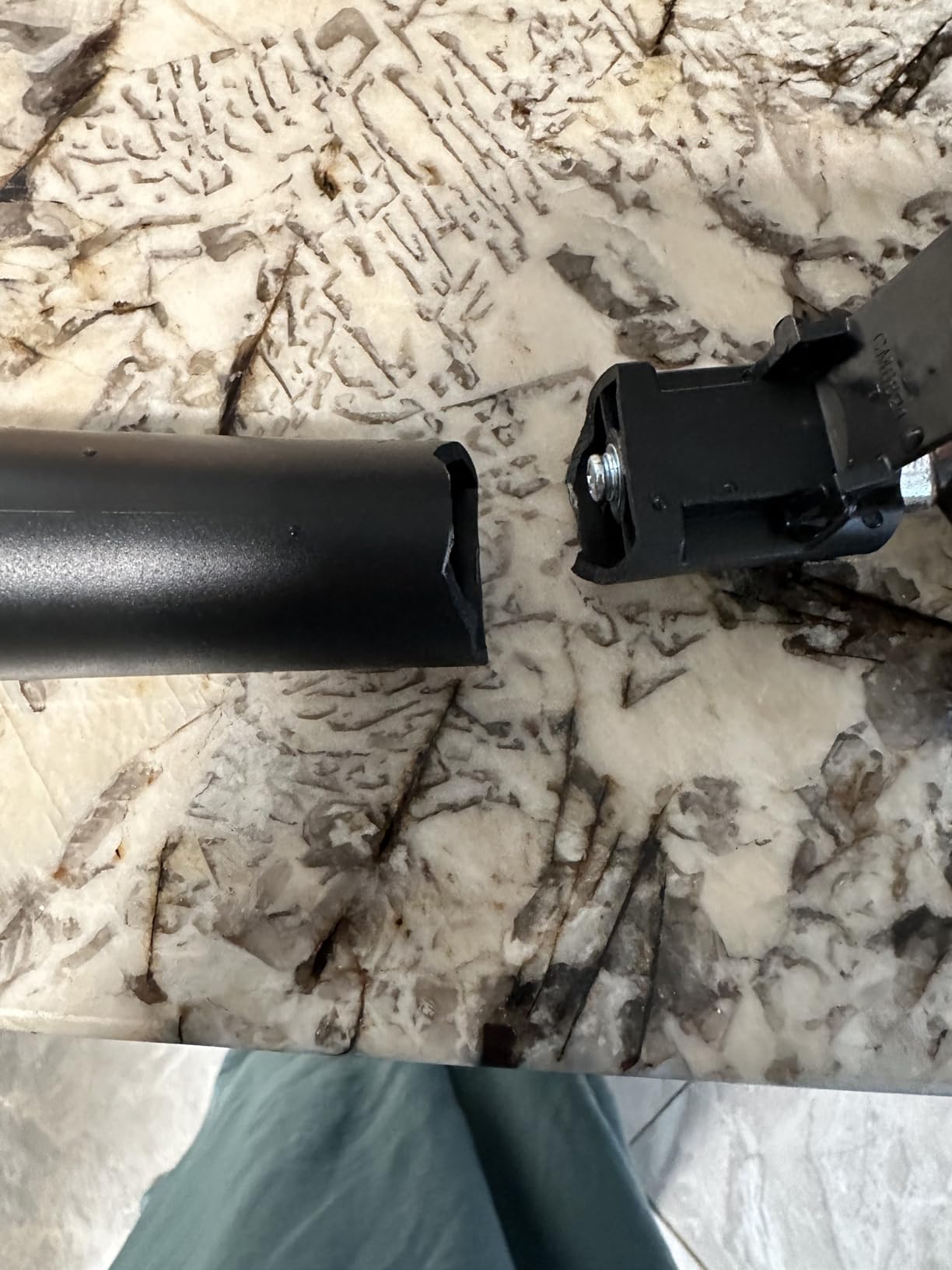
Where it falls short is polish. At nearly 30 pounds and over a foot wide, it needs real counter space, and the grinder plus boiler together are loud enough to notice in a quiet kitchen. Experienced milk drinkers report the foam can be bubbly rather than silky, which suggests the wand is adequate rather than excellent.
There is also a durability note worth taking seriously: some owners report pressure and grind consistency declining after several months of regular use. Treat it as a machine for daily drinkers who accept some noise, not as a lifetime purchase.
Who the Crema Deluxe suits
It suits households making more than one milk drink at a time, and anyone who cannot stand waiting between the shot and the steam. The integrated 30-setting grinder also means you do not need a separate grinder to get started.
If you have the counter space and do not mind noise, it delivers the workflow every dual boiler advertises at a price well below dedicated prosumer machines.
Who the Crema Deluxe does not suit
It does not suit small kitchens, or anyone chasing competition-level microfoam — experienced users rate the texture as the machine’s weakest point. Those wanting a quiet machine for early mornings should look elsewhere.
7. Breville Barista Touch — Best for Automatic Milk Texturing
Breville BES880BSS Barista Touch Espresso Machine, Brushed Stainless Steel
Automatic microfoam wand
ThermoJet 3-second heat-up
PID touchscreen
21.8 lbs
Pros
- Programmable milk temperature and texture on an automatic wand
- Touchscreen guides grind
- brew and milk in three steps
- ThermoJet reaches extraction temperature in about 3 seconds
- Integrated conical burr grinder
- Stores 8 custom settings plus 5 cafe favourites
Cons
- Automatic texturing gives less control than a manual wand
- Large footprint takes real counter space
- Premium price hard to justify against dial-controlled models
- Touchscreen and electronics harder to service
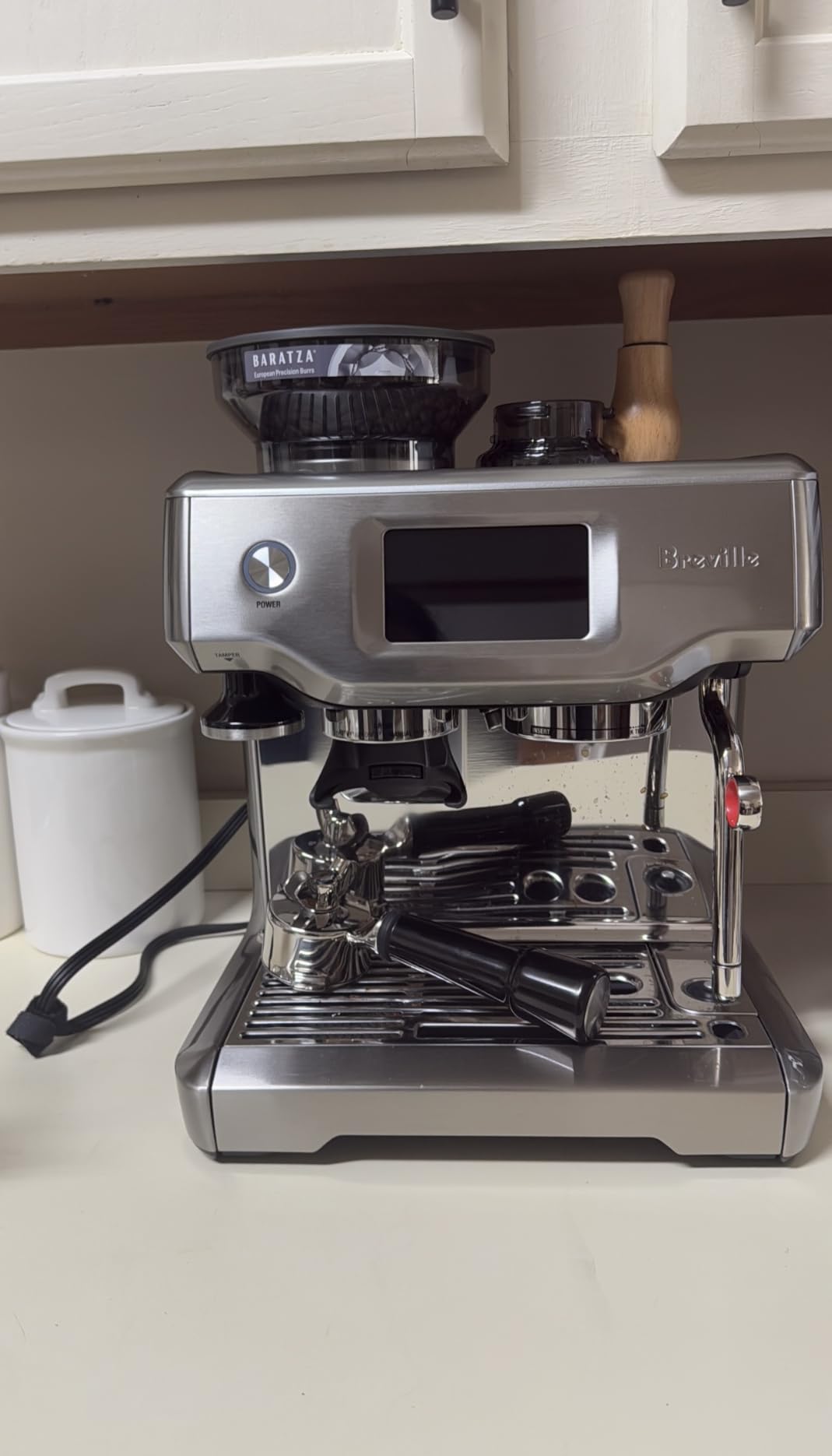
The Barista Touch is the pick for anyone who wants a good drink without learning vortex technique. The wand is automatic, and you choose from three milk temperatures and three texture levels on the touchscreen, so the same button produces a drinkable cappuccino on a Tuesday morning when you are not concentrating.
The heating is as fast as the Barista Pro’s, and the PID regulation keeps shots repeatable once your grind is set. Storing eight custom settings means the machine gets faster to use over time rather than more complicated, which is the opposite of how many machines behave.
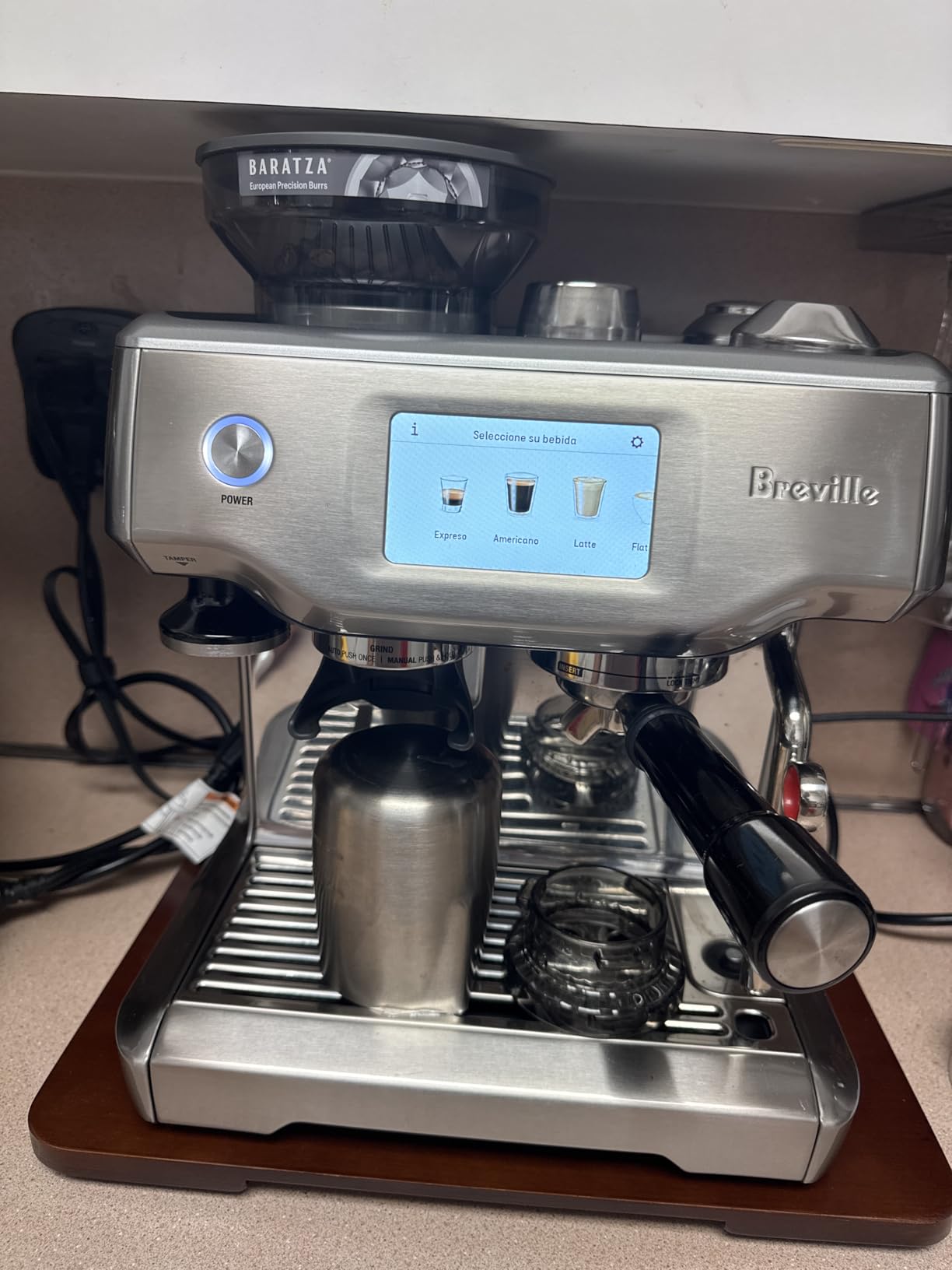
The trade is control, and it is a real trade. An automatic wand cannot do the thin, glossy microfoam that latte art requires, so anyone practising rosettes or tulips will find this machine a ceiling rather than a tool. It is a machine for drinking milk drinks, not for learning to build them.
At 21.8 pounds and 15.5 inches wide, the footprint is the biggest on this list. And reviewers are blunt about value: the guided experience is pleasant, but paying more for menus than for dials is hard to justify against the dial-controlled Barista models, which is the main reason this is not higher in the ranking.
Who the Barista Touch suits
It suits people who want consistency over craft, including anyone making drinks for colleagues in an office or guests who are not fussy. Multiple saved settings make it easy to serve several people the same drink without touching the menus.
It also suits anyone who wants Breville’s grinder and heating in one box and would rather not run a manual puck cycle.
Who the Barista Touch does not suit
It does not suit anyone learning latte art, or anyone with limited counter space. It is also the wrong choice for buyers who plan to modify or service the machine, since the touchscreen and electronics are harder to work on than mechanical controls.
8. Calphalon Temp iQ — Best 58mm Starter With a Manual Wand
Calphalon BVCLECMP1 Temp iQ Espresso Machine with Steam Wand, Stainless
15-bar pump with PID
Manual steam wand
58mm portafilter
2.0L tank, 16 lbs
Pros
- PID control keeps espresso temperature stable shot after shot
- Wand produces creamy microfoam reliably with practice
- 58mm portafilter for even water dispersion
- Deliberately simple dial interface with no menus
- Removable 2.0L tank with a hinged lid
Cons
- Only dual-wall pressurized baskets are included
- Portafilter has plastic parts some owners report rusting
- Filter baskets sit very tight and are awkward to remove
- Some units stopped dispensing after a few months
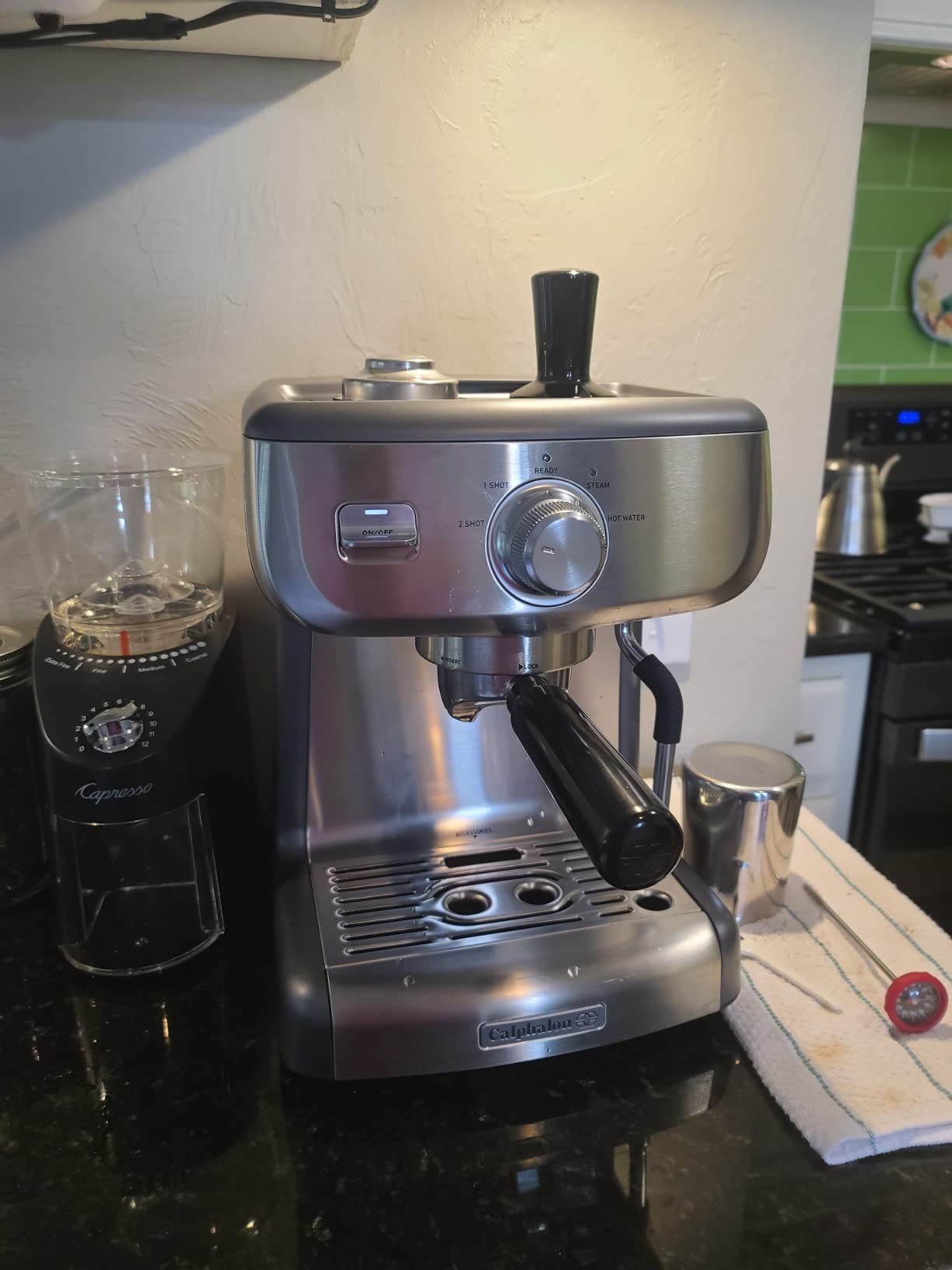
The Temp iQ is quietly the most-reviewed machine on this list, and the ratings hold up. The thermoblock system runs under PID control, which is what keeps shots consistent once the grind is dialled in, and the manual steam wand produces creamy microfoam reliably as soon as your technique settles.
What we like most is the 58mm portafilter. That is the commercial standard, so baskets, tampers and every aftermarket part made for serious machines will fit, and you are not locking yourself into a small-proprietary basket. The dial interface does one thing each and nothing else, which makes it a good machine to learn on.
Be aware of what comes in the box: only dual-wall pressurized baskets. Pressurized baskets mask grind mistakes, so they are forgiving for beginners but cap how good the shot can ever get. You will want to buy unpressurized single and double baskets early, and that is where the machine’s real character shows.
Two build notes from owners: the portafilter contains plastic components some people report rusting over time, and the baskets fit very tightly, which is mildly annoying when you are cleaning up. A small number of units also stopped dispensing after a few months and needed service.
Who the Temp iQ suits
It suits anyone starting out who wants a standard portafilter from day one, so upgrading later costs nothing extra. It also suits people who prefer physical dials to menus and want a machine that does not need explaining.
The 2.0 litre reservoir and cup warming tray make it a sensible choice for a household doing several drinks a day without constant refilling.
Who the Temp iQ does not suit
It does not suit anyone who wants a built-in grinder — you will need a separate one — or anyone who wants maximum control straight away, since only pressurized baskets ship with it. Buyers who need a machine to brew and steam simultaneously should choose a dual boiler instead.
9. De’Longhi Dedica Maestro Plus — Best Automatic Steam Wand With Choices
De’Longhi Dedica Maestro Plus Espresso Machine, Automatic Steam Wand, 3 Coffee Temp & Milk Foam Settings, 54oz Removable Tank, Easy-to-Clean Dishwasher-Safe Parts, Compact Stainless Steel Design
Automatic wand, 3 temp and 3 texture settings
15-bar pump
8.15 in wide, 13.7 lbs
Pros
- Automatic wand offers three milk temperatures and three textures
- Thermoblock heat-up gets you brewing in about 30 seconds
- Compact 8.15 inch width fits small countertops
- Programmable shot volumes remove manual stopping
- Dishwasher-safe parts and a removable tank simplify cleaning
Cons
- Automatic frother gives standard foam more than silky microfoam
- Included tamper is cheap plastic and can crack
- Some owners report inconsistent espresso temperature across shots
- Steamer can be noisy and slow to start
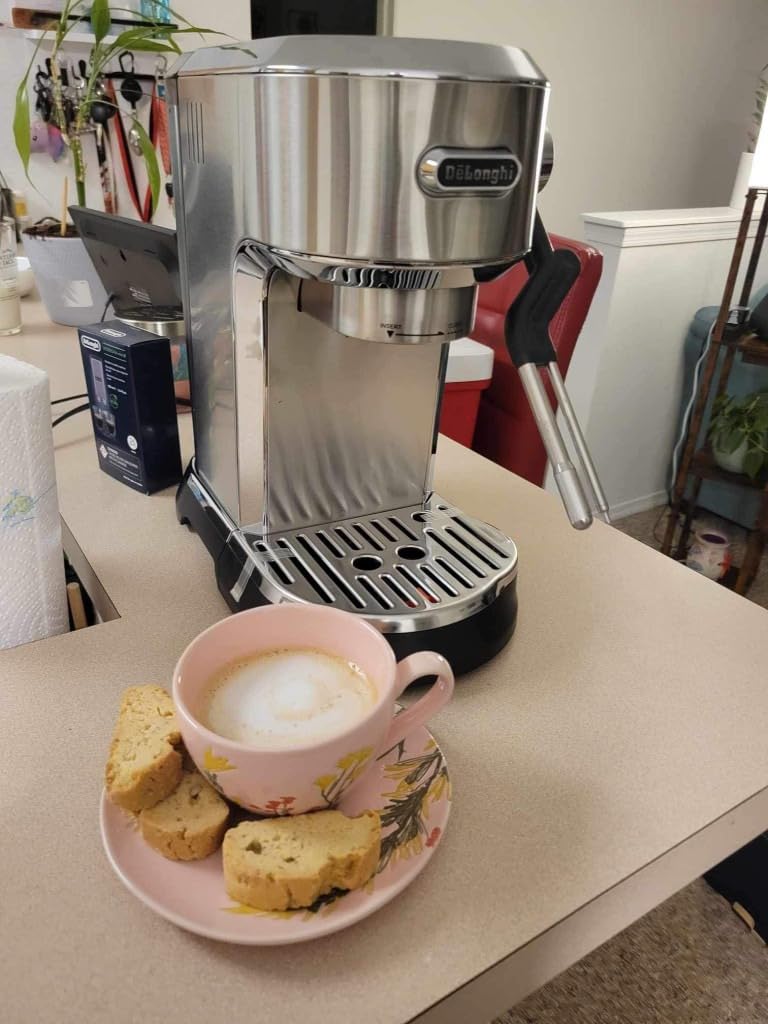
The Maestro Plus is the best automatic wand on this list because it gives you a grid of choices instead of a single button. Three milk temperatures and three texture options means you can dial toward a flat white or push toward a cappuccino without guessing, and at 8.15 inches wide it fits counters that would rule out most other machines here.
The heat-up is quick — brew ready in roughly 30 seconds — and programmable shot volumes mean you stop watching the cup. The included stainless milk jug, tamper and cleaning needle are more complete than what comes with most competitors at this level.
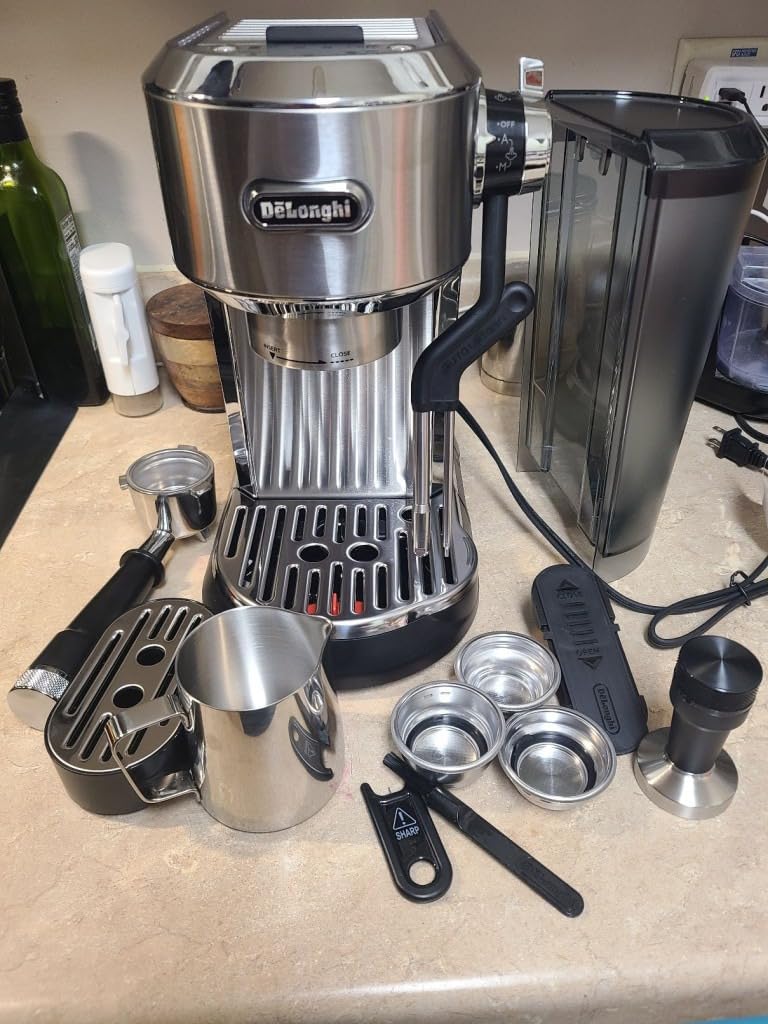
The honest catch is texture. An automatic wand gives you good, even foam, and it takes practice plus technique to push it to the silky microfoam that manual wands reach almost by accident. Owners also report the included tamper is thin plastic that can crack, and espresso temperature consistency is inconsistent for some people across shots.
Quality control is the other concern. A meaningful share of one-star reviews describe units arriving with a non-functioning steam function, and sensor failures after a few months. Support experiences range widely from responsive to dismissive, so buy from somewhere with straightforward returns.
Who the Dedica Maestro Plus suits
It suits small kitchens and anyone who wants milk drinks without a manual technique lesson. The temperature and texture grid makes it easy to hand a stranger a machine and have them make a drink that tastes right.
Upgraders from a pod machine get a lot here for the step up: unpressurized baskets, a stainless jug, and a real steam wand.
Who the Dedica Maestro Plus does not suit
It does not suit latte art practice, or anyone who wants a built-in grinder. Buyers who are strongly warranty-averse should consider the build quality reports carefully before committing.
10. Gaggia Anima — Best Super-Automatic With a Manual Wand
Gaggia Anima Coffee and Espresso Machine, Includes Steam Wand for Manual Frothing for Lattes and Cappuccinos with Programmable Options,Black
Manual Panarello steam wand
Three brew temps
60 oz tank
16 lbs
Pros
- Manual Panarello wand gives hands-on control of milk texture
- Accepts whole beans and pre-ground coffee
- Three brew temperature settings for different roasts
- Top-access 60 oz reservoir and 8.8 oz bean hopper
- Easily recognisable Italian brand with long support history
Cons
- Wide 16.93 inch body takes a lot of counter
- Grind size
- dose and tamping must be dialled in first
- Automatic design offers less manual shot control
- Fully automatic shell means less hands-on brewing
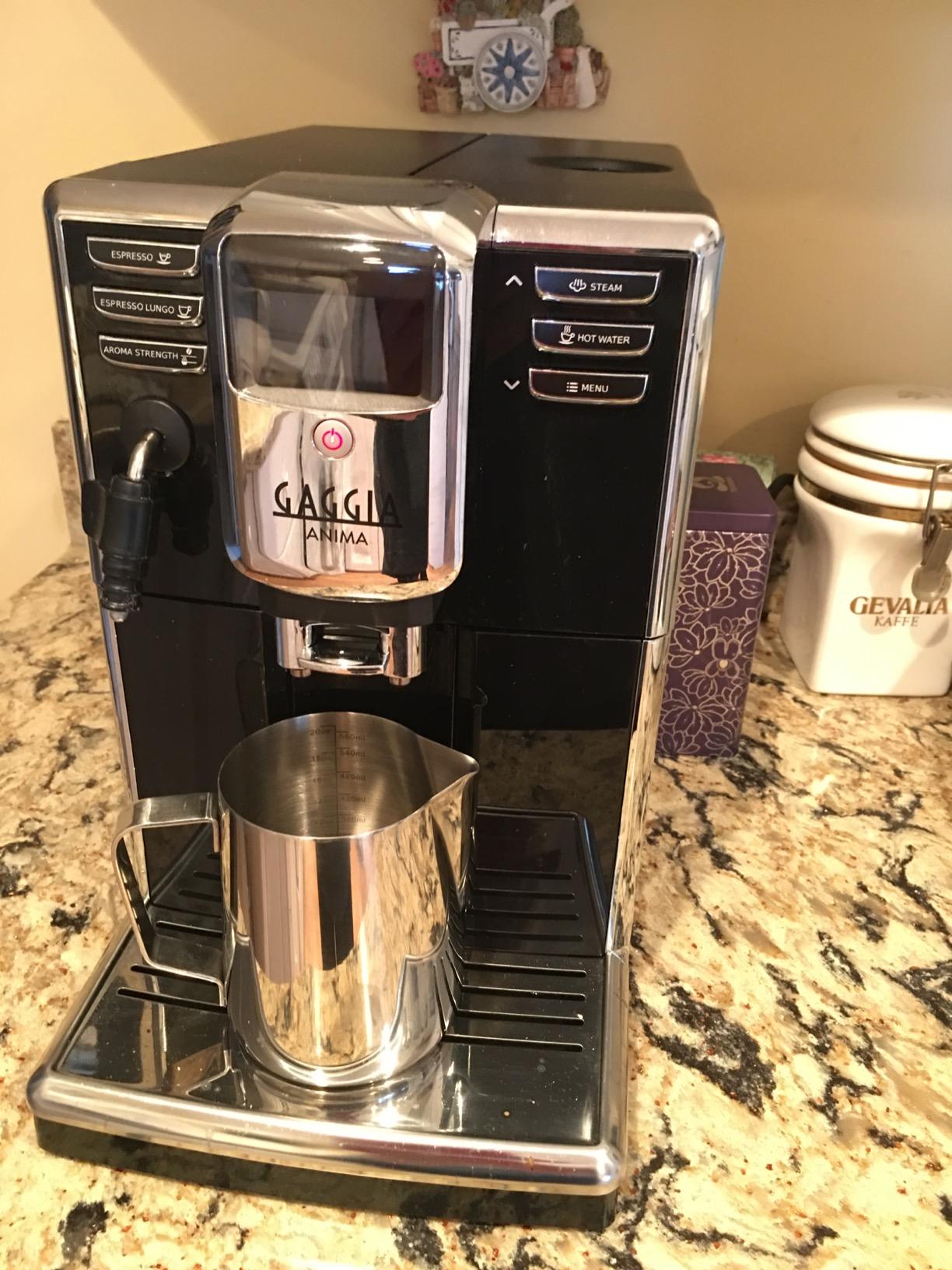
The Anima is the compromise that makes sense for people leaving a super-automatic behind. It automates the grinding and dosing but keeps a manual Panarello steam wand, so you still texture your own milk by hand rather than pushing a plastic tube through a carafe. That is a step up in texture without giving up the convenience of whole beans.
Three brew temperature settings at minimum, medium and maximum let you adapt to lighter or darker roasts, and both the 60 ounce reservoir and the 8.8 ounce hopper are accessed from the top, which matters more than it sounds when you refill twice a day.
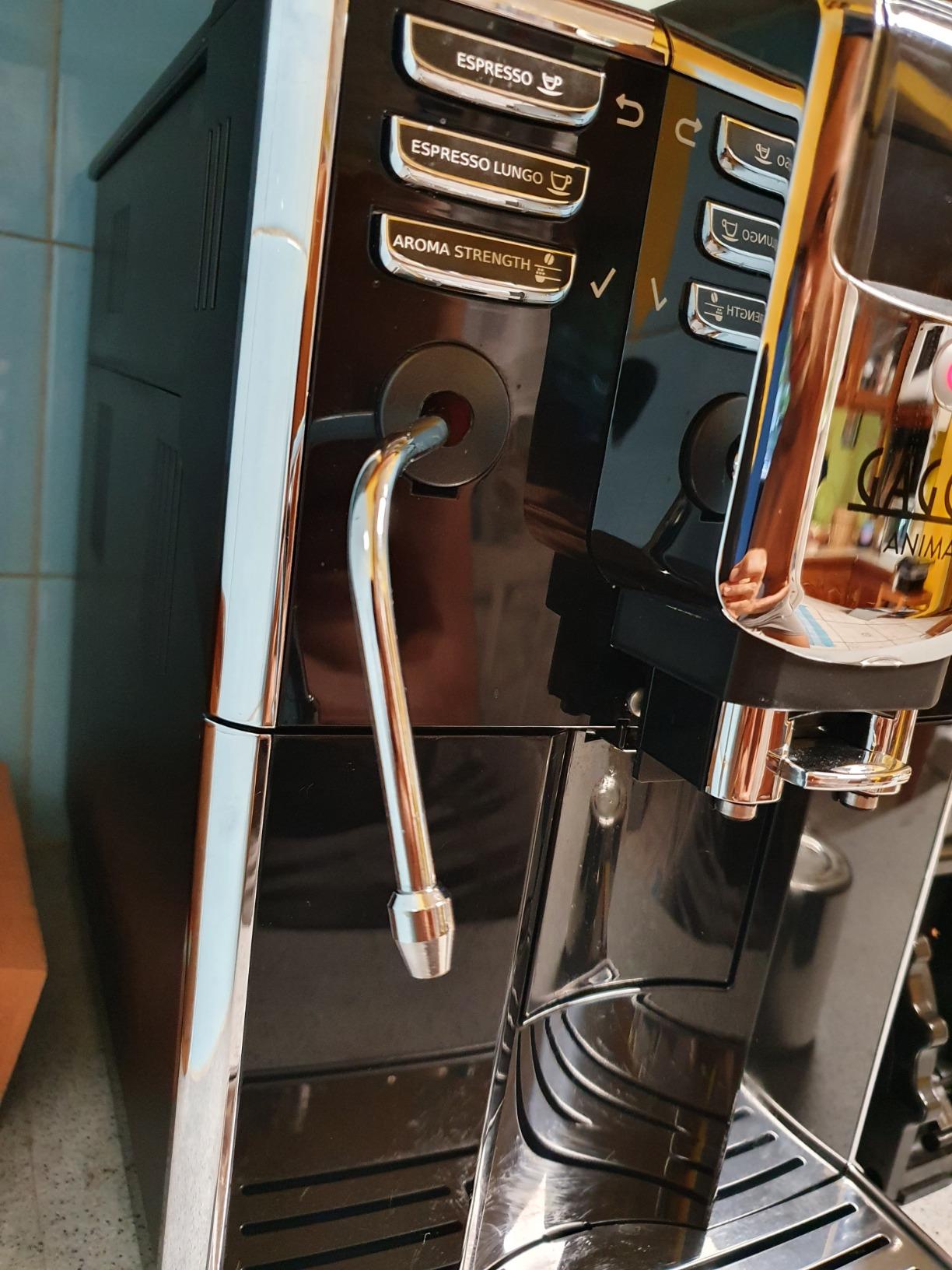
The Panarello wand is the key limitation. A plastic sleeve pulls air into the milk automatically, which makes it forgiving and easy, but it also caps how glossy and how wet the microfoam can get. If your goal is latte art, this wand will not get you there without real practice.
The body is also genuinely wide at nearly 17 inches, so it needs counter space no compact machine here needs. And despite the automatic shell, owners report you still have to dial in grind size, dose and tamping to get proper brew pressure, which undercuts the convenience premise.
Who the Gaggia Anima suits
It suits households that drink a lot of milk-based coffee but want better texture than a carafe system allows. It also suits anyone who wants an Italian marque name and a top-access layout that makes refilling quick.
If you drink whole bean coffee daily and want milk drinks without a separate grinder, the built-in hopper handles the beans for you.
Who the Gaggia Anima does not suit
It does not suit latte art, small kitchens, or anyone who wants full manual control over the shot. People who prioritise wand texture above convenience should look at the Gaggia Classic Evo Pro instead.
11. Chefman CraftBrew — True Budget Machine With a Steam Wand
Chefman CraftBrew Espresso Machine, 15-Bar Pump Digital Espresso Maker w/Steam Wand for Latte & Cappuccino, Compact Espresso Coffee Machine w/ 1.5L Removable Water Reservoir – Stainless Steel
15-bar pump with steam wand
1.5L tank
Programmable descale
7.9 lbs
Pros
- Lowest entry point of any machine here with a steam wand
- Compact and light at 7.9 pounds for small counters
- Adjustable shot volume covers ristretto and lungo styles
- Fast heat-up and simple cleaning
- Programmable descale cycle included
Cons
- Descale alert can keep flashing after thorough descaling
- Can struggle to reach espresso pressure and may overheat on a second cup
- Frother is loud and occasionally stops mid-cycle
- Cup can slide under the spout and spill
- Short drip tray clearance limits cup size
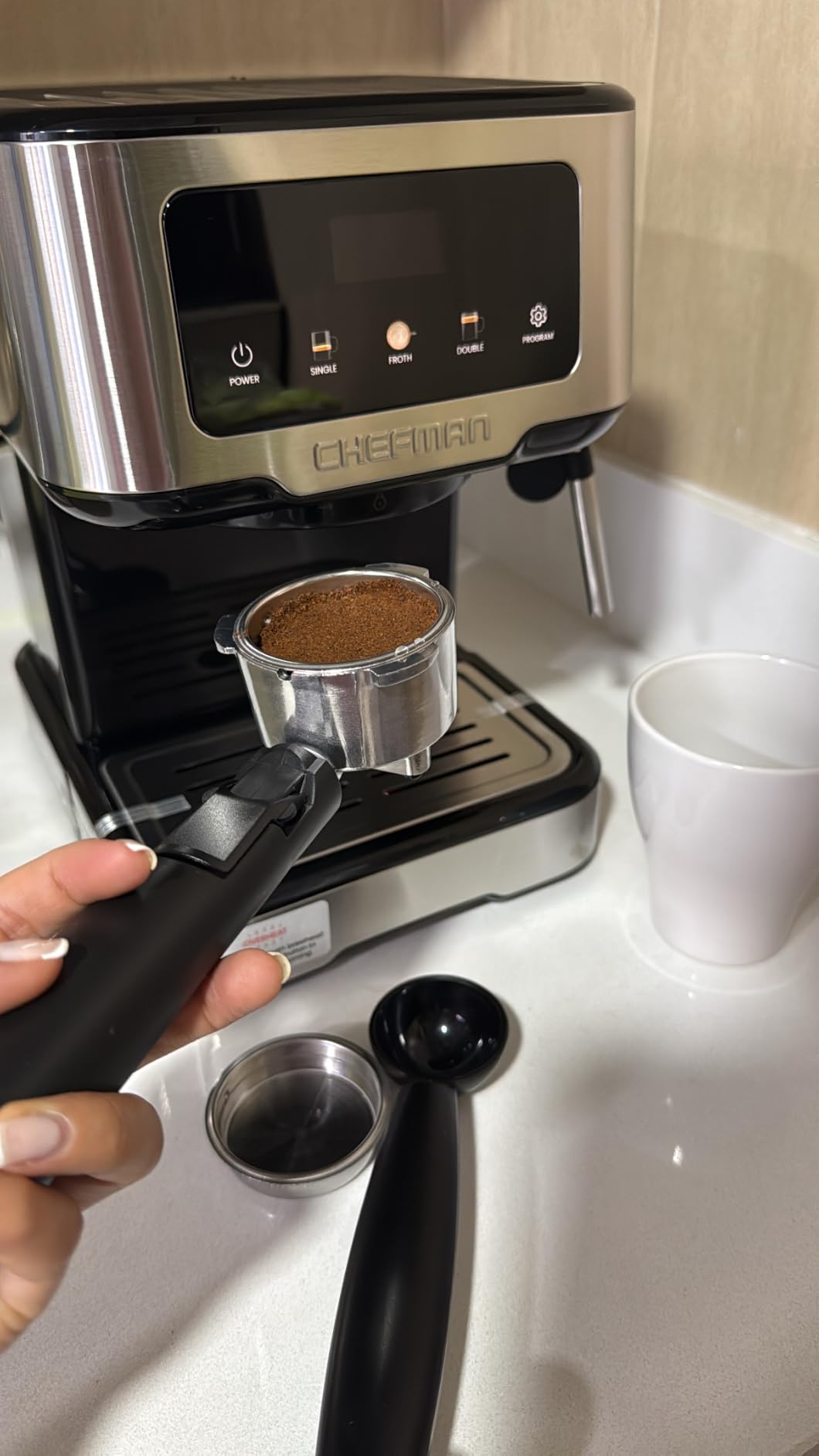
The CraftBrew exists for a specific situation: you want a machine with a real steam wand at the lowest possible entry point. It has a built-in wand rather than a detachable auto-frother, and at 7.9 pounds with an 8.9 inch width it is the smallest and lightest machine on this list by a comfortable margin.
Adjustable shot volume is a nice touch that lets you move between ristretto and lungo styles without a manual stop, and the descale cycle is programmable, which most machines at twice the cost leave to you remembering. Owners consistently rate the espresso taste as good for the money.
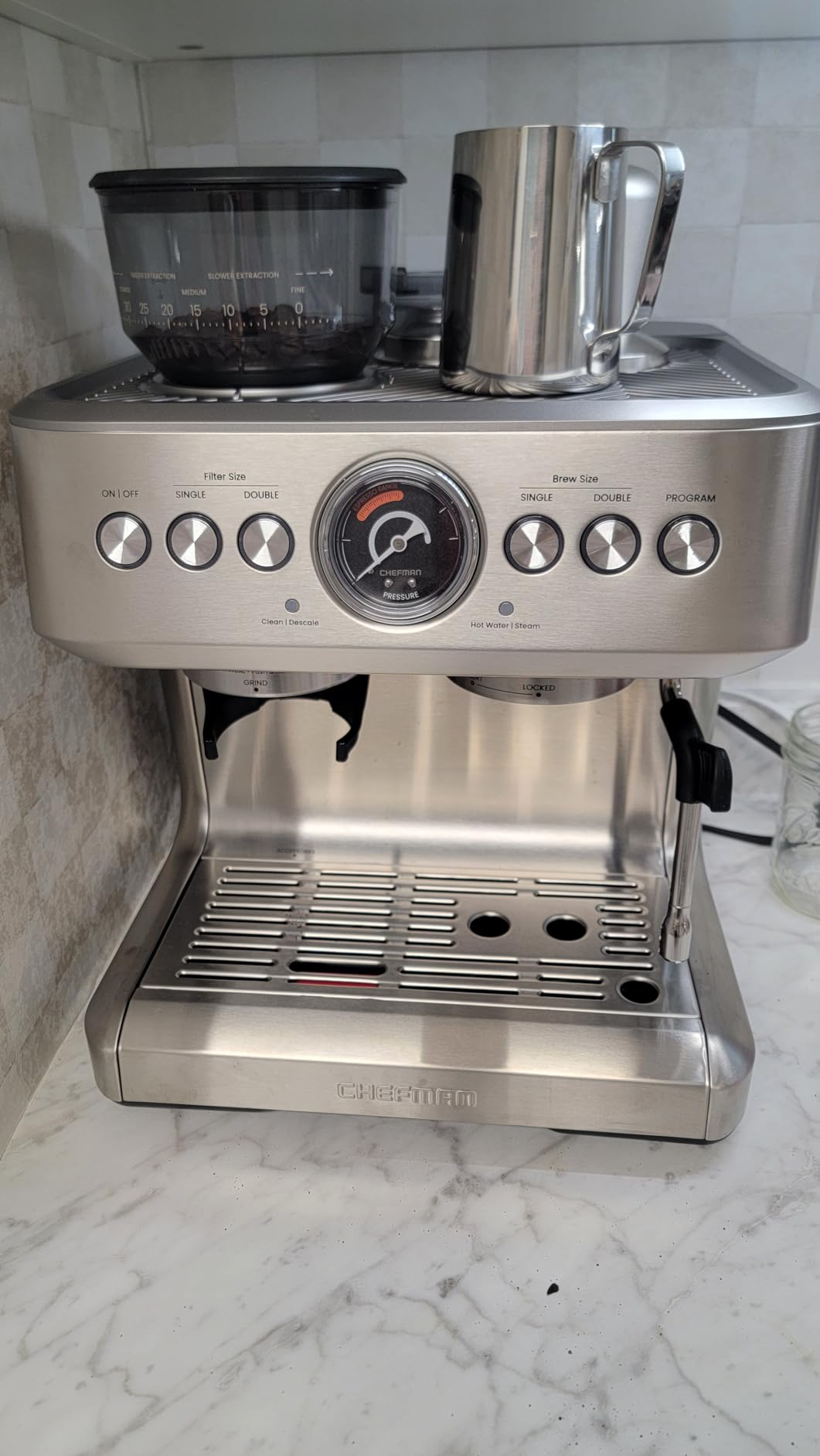
It is also the machine here with the most reported temperamental behaviour. Owners describe the descale alert continuing to flash after a full descaling attempt, difficulty reaching brew pressure, and overheating when making more than one cup. Several reviewers note they moved to a higher-priced brand after problems, which tells you what you are trading for the low entry point.
There are smaller practical issues: the frother is loud and sometimes stops mid-cycle, the cup can slide under the spout and spill, and the drip tray clearance is short enough to limit cup size. None is fatal, but they add up.
Who the Chefman CraftBrew suits
It suits a very tight budget, a very small counter, or a shared space where weight and footprint matter more than anything else. It is also a reasonable first machine for someone who wants to learn steaming without committing much money.
If your main drink is a single espresso or Americano and milk drinks are occasional, the compromises cost you very little.
Who the Chefman CraftBrew does not suit
It does not suit anyone making more than one cup at a time, or anyone who plans to build a milk-drink routine around it. Buyers who want reliability over entry cost should step up a tier.
12. De’Longhi Classic Signature EM450M — Best for Very Small Counters
De’Longhi Classic Signature Espresso Machine, Adjustable Milk Frother
Two-setting manual steam wand
15-bar thermoblock
1.7L tank
9 in wide
Pros
- Compact stainless steel body at only 9 inches wide
- Heats up in seconds on the thermoblock system
- Two-setting steam wand covers warming and microfoam
- Removable 1.7L tank with level markers
- Pressure gauge makes extraction visible
Cons
- No built-in grinder so pre-ground coffee is required
- Steam wand textures milk before it is hot enough
- Mostly plastic construction with a light feel
- Espresso brew temperature is not adjustable
- Included plastic tamper feels flimsy
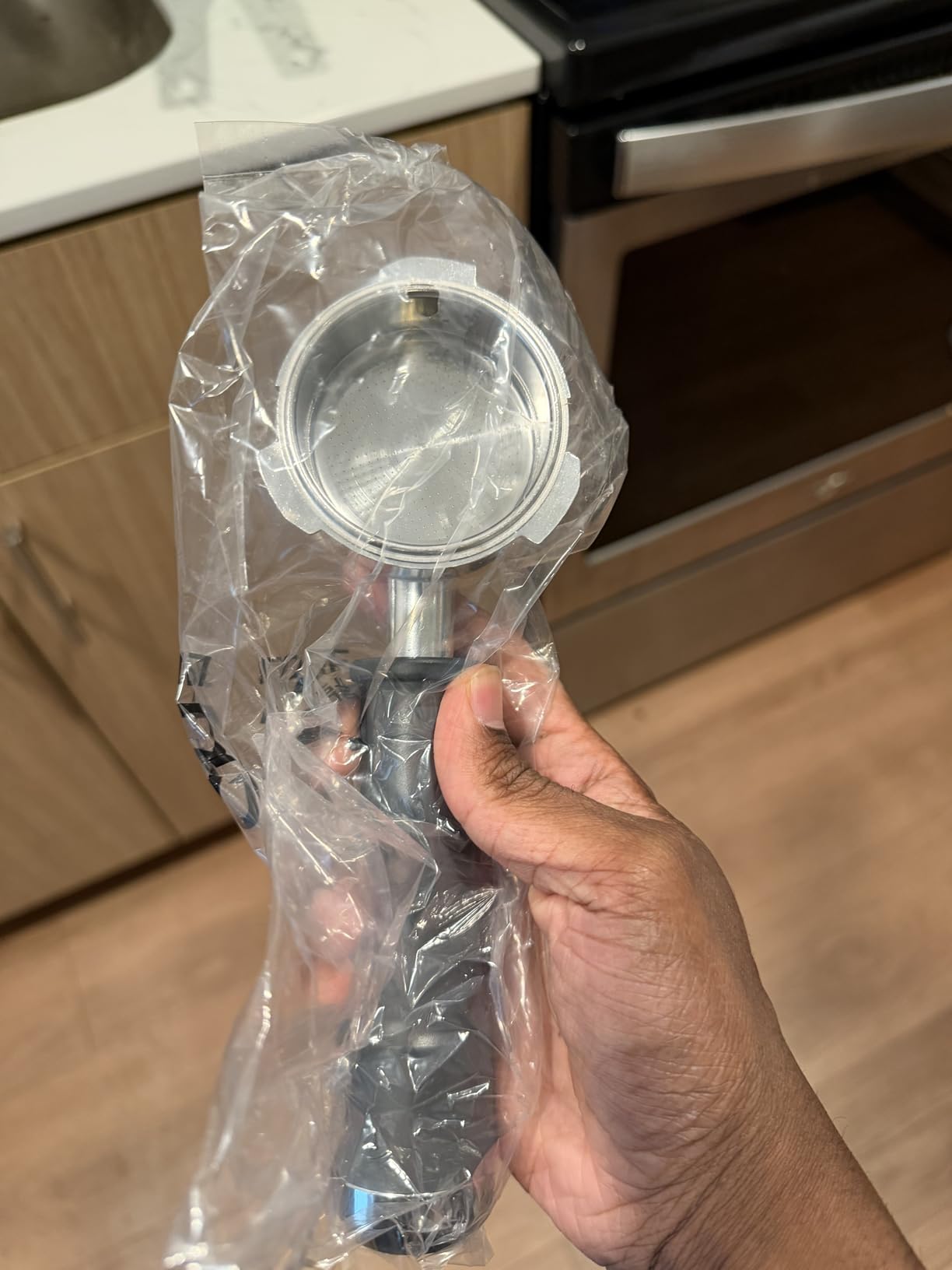
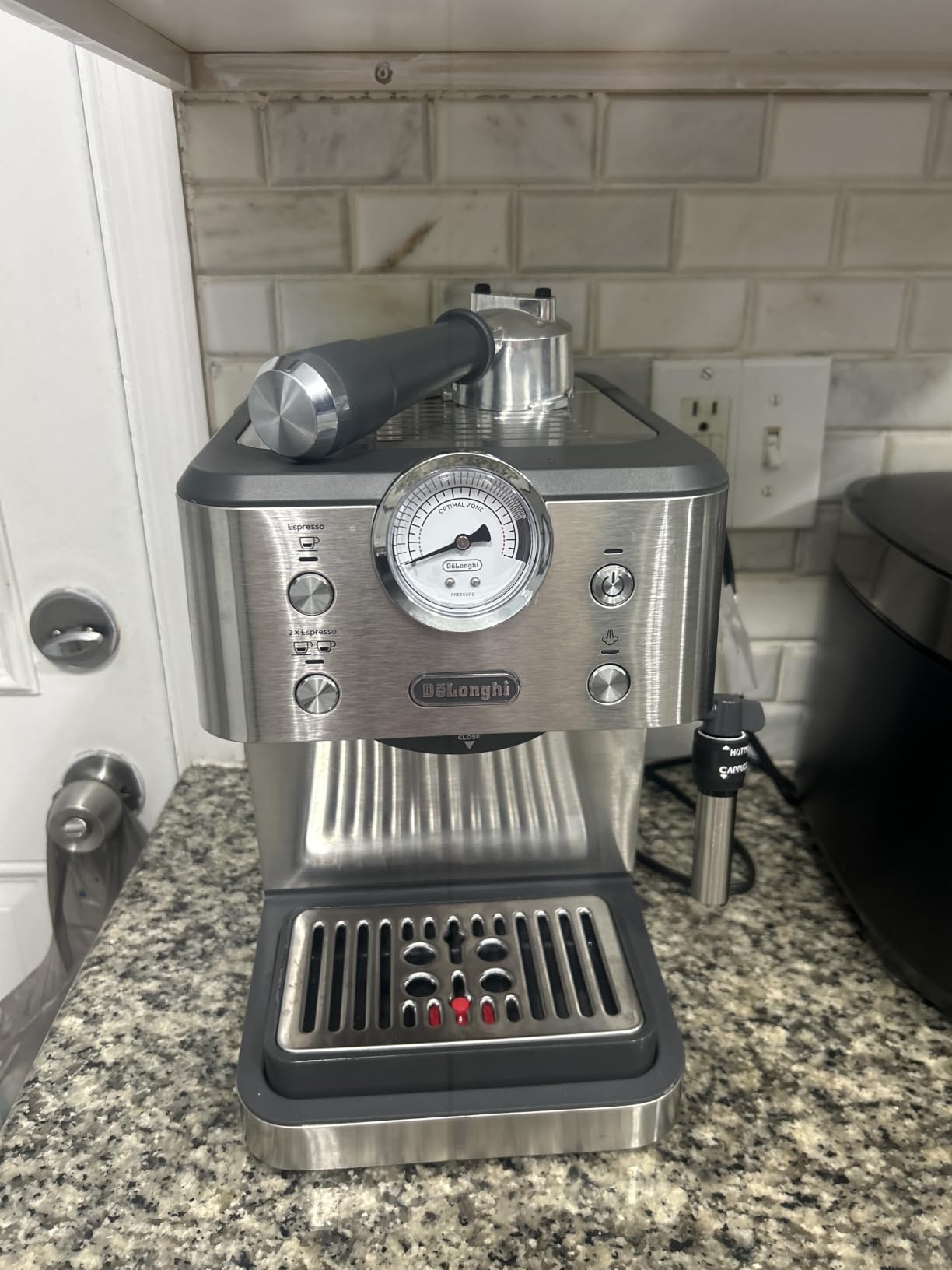
The Classic Signature is the narrowest machine here at 9 inches wide and 9 pounds, and it still gives you a genuine two-setting manual steam wand rather than an automatic frother. That means you can switch from warming milk to texturing it, and the thermoblock heating system is ready in seconds rather than minutes.
The 15 bar pump produces good crema according to owners, and the removable 1.7 litre tank has level markers so you can see how much is left without lifting the machine. The pressure gauge is a genuinely useful addition at this size, because it lets you learn while working in a tight space.
The wand’s weakness is sequencing. Owners report it creates foam before the milk is properly hot, which stretches the steaming time and makes temperature harder to judge by feel. The tip does the work; it just takes longer to get there than a stronger boiler would.
Construction is the other limitation. This is a mostly plastic build with a light feel, the brew water temperature is not adjustable, and the included plastic tamper is the kind buyers replace immediately. Budget for a real tamper and a separate grinder, because the machine takes ground coffee only.
Who the Classic Signature suits
It suits apartments and kitchens where counter width is the binding constraint, and anyone moving from ground coffee who does not want to commit to a larger machine yet. The quick heat-up suits a single morning drink routine, and the tank is easy to remove and refill.
Buyers who want Italian styling in stainless steel rather than plastic elsewhere will find that appealing.
Who the Classic Signature does not suit
It does not suit anyone wanting temperature control or adjustable brew power, or anyone who grinds their own beans and expects the machine to handle it. Those who take latte art seriously should choose a stronger wand.
Steam Wand Types Explained: Manual vs Panarello vs Automatic
Three wand types cover every machine on this list, and the difference between them explains almost everything about how a drink will taste. The wand type, not the pump pressure, sets your ceiling on texture and how much practice the machine demands.
Manual commercial wand — the highest texture ceiling
A manual commercial wand has a plain metal tip, often multi-hole, and you control the air by how deep you set the tip below the surface. That is why the Gaggia Classic Evo Pro can produce microfoam fine enough for latte art: you are managing the air introduction yourself, which is the entire skill. The cost is a learning curve of roughly two weeks before the foam stops looking like foam.
Panarello wand — the forgiving middle
A Panarello wand wraps the tip in a plastic sleeve with a gap that pulls air in automatically, like the Gaggia Anima. You simply submerge the wand and let the sleeve do the aeration, so results are consistent from the first try. The ceiling is lower, because you cannot vary how much air goes in once the sleeve is submerged, and the plastic sleeve needs descaling on a schedule.
Automatic wand — the consistency option
An automatic wand, like the one on the Barista Touch or the Dedica Maestro Plus, heats milk to a chosen temperature and stops itself. It is repeatable, quiet to operate and requires no technique, which is why it wins for households with more than one person making drinks. What it cannot do is the thin, glossy microfoam that manual wands reach, so it is a ceiling rather than a starting point for latte art.
Not all machines have a steam wand at all. Super-automatics usually push milk through an internal tube into a carafe, and many drip makers have no wand. Manual wands appear on semi-automatic machines, and the hybrids worth knowing about are super-automatics that kept a manual wand — the Gaggia Anima on this list is one, and it is a genuinely different category from both pure automatics and pure manual machines.
How to Choose an Espresso Machine With a Steam Wand
Choose by boiler type first, then by wand type, then by everything else. Almost every disappointing steam wand experience traces back to a machine whose single boiler is still recovering from the shot when you open the valve.
Boiler type decides your heat-swap delay
A single boiler shares one heater between brewing and steaming, so the machine must cool down from brew temperature to steam temperature or climb from steam to brew. Expect roughly 60 to 90 seconds, and expect some budget machines to enter an overheating protection mode if you skip the wait. Every single-boiler machine on this list — the Barista Express, CM5418, Gaggia Classic Evo Pro, Barista Touch, Temp iQ, CraftBrew and Classic Signature — has this delay.
A thermoblock heats water on demand instead of holding it in a tank, so recovery is near instant. The Breville Barista Pro and Barista Touch use this approach and reach steam in about three seconds. A heat exchanger machine brews from one circuit while a larger boiler sits ready to steam, which mostly removes the wait without the full cost of two boilers.
A dual boiler has separate brew and steam heaters, so you can pull a shot and steam milk simultaneously. Only the Chefman Crema Deluxe on this list is a true dual boiler, which is why it answers the two-lattes-in-a-row question that no other machine here can.
Manual wand or automatic frother
Choose a manual wand if you want to learn texture, practise latte art, or drink milk drinks where the foam matters more than speed. Choose an automatic frother if you want repeatable drinks with no technique, particularly if other people use the machine. Trying to learn latte art on an automatic wand is like learning to paint with a template.
Portafilter diameter and the upgrade path
The 54mm portafilter appears on the Breville Barista Pro and the De’Longhi models, while 51mm appears on the CASABREWS CM5418. Both are proprietary sizes with thinner accessory ranges. The 58mm portafilter is the commercial standard and appears on the Gaggia Classic Evo Pro, Calphalon Temp iQ, CASABREWS Ultra and the Chefman Crema Deluxe — so if you might buy baskets, tampers or parts later, 58mm costs you nothing extra later.
What 15 and 20 bar claims actually mean
Those numbers are pump ratings, not extraction pressure. A well-regulated machine holds around 9 bar at the puck, which is where the flavour balance comes from, and anything far above that just pushes water through too fast. Pressure regulation and temperature stability matter more than the number on the box, so a 9 bar Gaggia with an over-pressure valve extracts better than a 20 bar machine whose needle bounces around. Judge any listing by its pressure gauge behaviour, not by its headline number.
No-burn and cool-touch steam tips
A no-burn tip has a silicone outer sleeve that stays cool to the touch, which matters more than it sounds when you are learning. Home-Barista regulars recommend them specifically to avoid burns during latte art practice, and it is a named feature that general roundups usually skip. None of the twelve machines here is sold with a cool-touch silicone tip as a headline feature, so if burns are a real concern for you, the answer is a removable wand tip accessory rather than a different machine.
Wand clearance deserves a similar check. Swivel or articulating wands let you bring the tip down into a tall latte glass or a large pitcher; fixed, low-sitting nozzles — the CM5418 is one reviewers flag — cannot. If your drink of choice is a 16 ounce latte in a tall glass, check the wand height before you buy.
Counter space and tank capacity
Width matters most in small kitchens, and here the spread is wide: 5.47 inches for the CM5418, 8.15 for the Dedica Maestro Plus, 9 for the Classic Signature, and 12.5 to 15.5 for the full Breville machines. The Crema Deluxe and the Gaggia Anima are the two heaviest and widest things here at nearly 30 pounds and roughly 17 inches. Tank size ranges from 1.5 litres on the CraftBrew to 73 ounces on the CASABREWS Ultra, and anything under about 2 litres means refilling several times a day in a busy household.
Which Milk Works With Which Steam Wand
Whole milk is the easiest to steam, barista-edition oat milk is the hardest, and the gap between them is decided almost entirely by wand strength. Plant milk has no natural sugars to caramelise, so it needs more thermal momentum before it scorches, and weak single-hole wands are where people first notice the difference.
A manual commercial wand like the one on the Gaggia Classic Evo Pro handles barista-edition oat comfortably because it stretches slowly and adds air gradually. Mid-tier manual wands — the Barista Express, the Calphalon Temp iQ, the CASABREWS models — will do oat and almond if you shorten the aeration stage and stop around 140 degrees F rather than pushing to 160. Budget wands with a single small tip are the ones that scorch plant milk, and the cure is technique, not a bigger machine: shorter stretch, deeper tip, earlier finish.
Almond is more forgiving than oat because it froths lighter. If your routine is a single cappuccino in the morning, any manual wand on this list will do; if you are making several oat drinks a day, you want the strongest wand you can justify, or you accept froth that is closer to foam than microfoam.
Steam Wand Maintenance Schedule
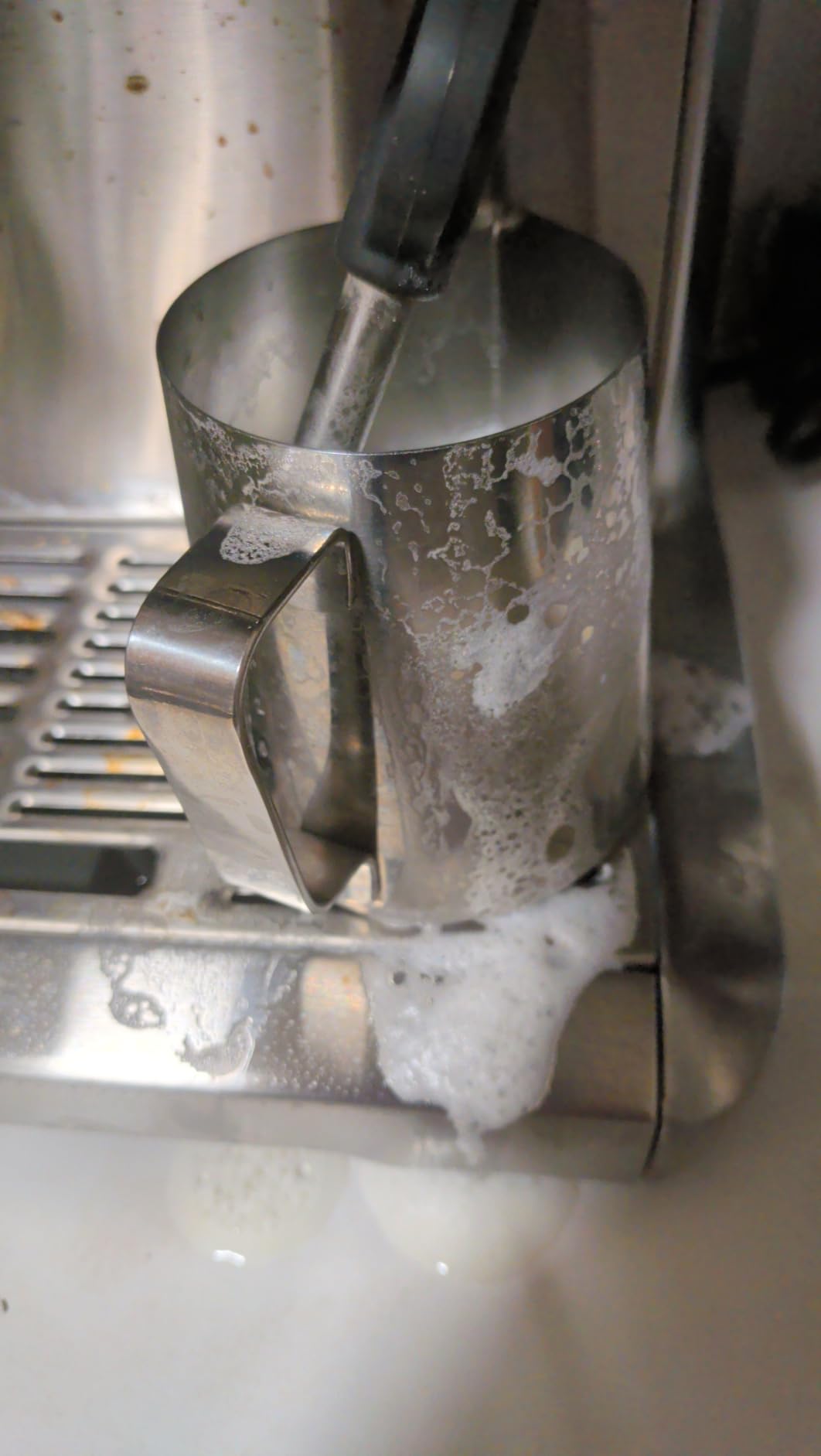
A steam wand fails from milk scale, not from steam, and the fix takes about a minute a day. Purge the wand into an empty jug for two to three seconds immediately after every use, before the milk dries onto the tip — this is the single most important habit.
Wipe and purge the wand and the steam valve every day if you use the machine daily, and drop the tip off the machine weekly to soak in a warm soapy solution and clear the single holes with the cleaning needle most of these machines include. Descale on a schedule rather than by alarm, following your water’s hardness; the machines here that automate it, like the Chefman CraftBrew and the Brevilles, save you guessing but do not replace the daily purge.
Finally, run hot water through the group and the wand head before the first shot of the day. It costs thirty seconds and it keeps yesterday’s milk out of today’s crema.
Frequently Asked Questions
What home espresso machine has the best steam wand?
The Gaggia Classic Evo Pro E24 has the strongest wand on our list, with a commercial three-hole tip that stretches milk properly enough for latte art. The Breville Barista Express is the best all-round choice, pairing a 1600W boiler and manual wand with a built-in grinder. Pick the Gaggia if texture is the goal and you can wait between brewing and steaming; pick the Barista Express if you want both halves of the job in one machine.
What are some good espresso machines with steamers?
Good picks with steamers include the Breville Barista Express for all-round use, the CASABREWS CM5418 on a tight budget, the Calphalon Temp iQ if you want a standard 58mm portafilter, and the Breville Barista Pro for fast recovery. For milk drinks specifically, the Barista Express and Barista Pro lead our ranking because their wands are strong enough for microfoam rather than just foam.
Do all espresso machines have steam wands?
No. Super-automatics usually push milk through an internal tube into a carafe, and many drip makers have no wand at all. Manual steam wands appear on semi-automatic machines, and a small hybrid category exists: super-automatics such as the Gaggia Anima keep a manual Panarello wand so you texture milk by hand while the machine handles grinding and dosing.
Why does my espresso machine need to cool down before steaming?
Because a single boiler uses one heater for both brewing and steaming. After pulling a shot the water is at brew temperature, and it must climb to steam temperature before the wand produces dry steam, which takes roughly 60 to 90 seconds. Thermoblock machines heat on demand and reach steam in seconds, and dual boiler machines have separate circuits so no wait is needed at all.
Can I make latte art with a home espresso machine steam wand?
Yes, with a manual wand and practice. A commercial multi-hole tip such as the one on the Gaggia Classic Evo Pro gives you the control to pour thin microfoam, and the Breville Barista Pro also produces fine enough foam with a fast wand. Automatic frothers on the Barista Touch or De’Longhi Dedica Maestro Plus make good foam but rarely reach the consistency latte art needs.
Why is 20-bar pressure not better than 9-bar pressure?
Because the number on the box is a pump rating, not the pressure at the coffee puck. A well-regulated machine holds around 9 bar during extraction, which is where flavour balance comes from. Extra pressure pushes water through the puck too quickly and extracts bitter compounds, so a steady 9 bar machine with a good over-pressure valve extracts better than a 20 bar machine with an erratic gauge.
Final Verdict: Which Espresso Machine With a Steam Wand Should You Buy?
The Breville Barista Express is the best espresso machine with a steam wand for almost everyone, because it is the rare machine where the wand, the grinder and the temperature control are all strong enough to make a drink you would pay for in a cafe. If you know you want the hardest-hitting wand and you can live with a single-boiler wait, the Gaggia Classic Evo Pro is the one.
Beyond that, the choice narrows fast. Take the Barista Pro if you want fast recovery between drinks, the CASABREWS CM5418 if the budget is the whole story, the Calphalon Temp iQ if you want a standard 58mm portafilter from day one, and the Chefman Crema Deluxe if brewing and steaming at the same time is non-negotiable. Add a stainless steel tamper to whatever you choose — the included plastic ones on the budget machines are the most common reason a first shot tastes wrong.
Whichever machine you pick, purge the wand into an empty jug for a couple of seconds before every use. That habit matters more to your milk drinks than another step up in hardware.