
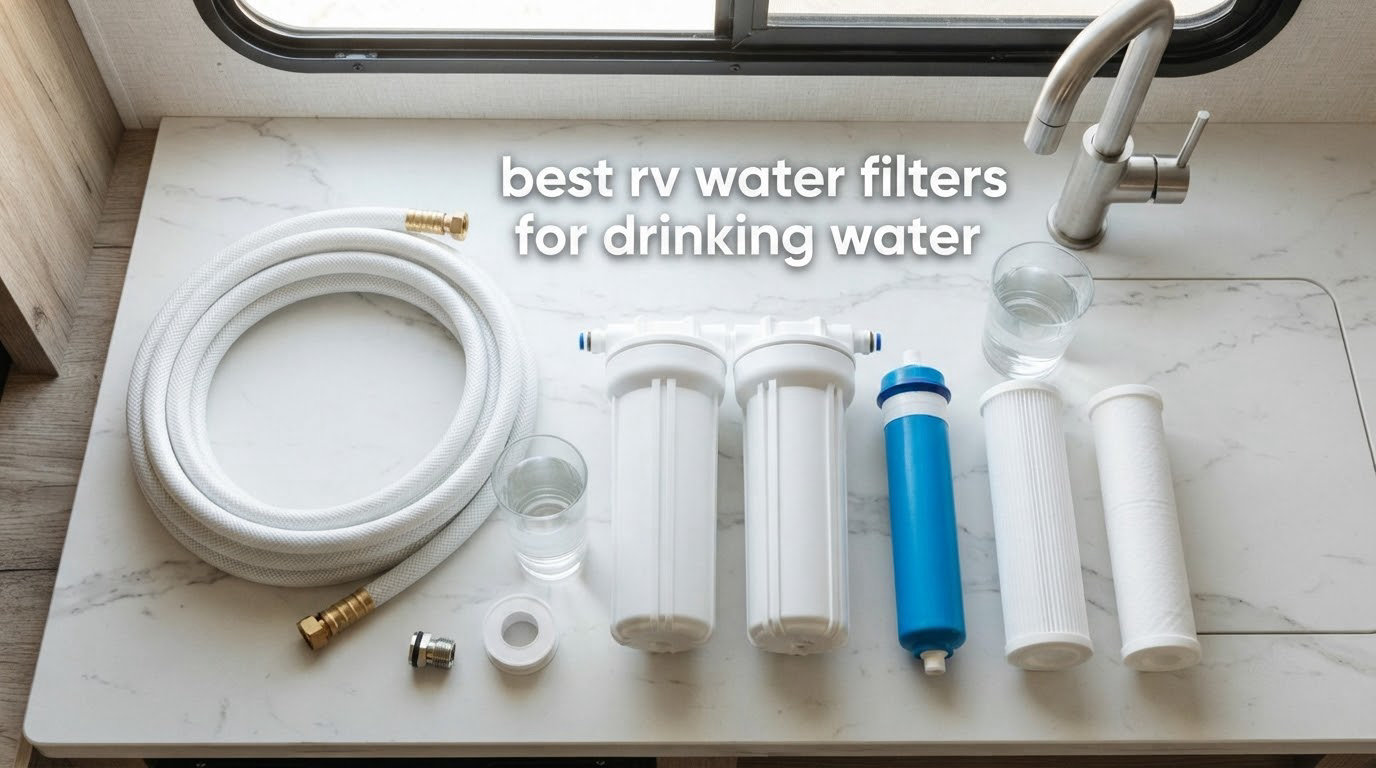
Short answer: the Camco TastePURE 40043 is the best RV water filter for drinking water in 2026, the Waterdrop 2-pack is the best value, and the Clearsource Ultra with VirusGuard is the only one here that also claims virus and cyst reduction. The Camco wins because it carries NSF/ANSI 42, 53 and 372 certification, a 20-micron sediment stage, and by far the largest review base of any filter we looked at, which means its failure modes are well documented instead of mysterious.
We spent several weeks going through the specs, certification claims and owner reviews on ten inline RV water filters, and the pattern that emerged is worth stating up front. Almost everything sold as an RV water filter is a carbon-and-KDF inline unit doing the same three jobs: stripping chlorine taste, catching sediment, and knocking down a handful of heavy metals. The real difference between them is certification, housing durability, flow rate and how long the cartridge survives on your particular supply.
What we also found is that the question “which filter is best” is the wrong one for a lot of rigs. A single inline filter protects the fresh water tank. It does not, on its own, give you the highest-quality drinking water at the kitchen sink, and it cannot make hard water stop spotting your shower. We explain where a second system earns its place later in this guide, and we are honest about the limits of every unit listed here.
If you want the short version of the methodology: we ranked on certification first, then review volume and rating, then documented durability complaints, then flow rate, and finally cartridge life. We did not rank on sticker price, because filter pricing moves constantly and the expensive option is not automatically the better one.
Table of Contents
Top 3 Picks for Best RV Water Filters for Drinking Water (October 2026)

Camco TastePURE 40043
- NSF/ANSI 42
- 53 and 372 certified
- 20-micron sediment stage
- GAC and KDF media
- Hose protector included

Waterdrop RV Inline 2-Pack
- Two filters and two hose protectors
- NSF 42 and 372 certified
- Tool-free install in 5 minutes
- One-season cartridge life

Kohree RV Inline 2-Pack
- NSF certified and BPA-free
- GAC and KDF media
- 0.5 gpm flow
- Up to 1057 gallon capacity
All 10 Picks at a Glance in 2026
Every unit below is an inline or externally mounted filter. Certification, micron rating and flow rate are the three columns that should decide your purchase, and they are the three most often left vague by sellers.
| Product | Specs | Action |
|---|---|---|
| Camco TastePURE 40043 |
|
Check Latest Price |
| Waterdrop RV Inline 2-Pack |
|
Check Latest Price |
| Kohree RV Inline 2-Pack |
|
Check Latest Price |
 AQUA CREST RV Inline 2-Pack AQUA CREST RV Inline 2-Pack |
|
Check Latest Price |
 GLACIER FRESH RV/Marine 2-Pack GLACIER FRESH RV/Marine 2-Pack |
|
Check Latest Price |
 RVGUARD Inline 4-Pack RVGUARD Inline 4-Pack |
|
Check Latest Price |
 Bringpure RV Inline 2-Pack Bringpure RV Inline 2-Pack |
|
Check Latest Price |
 Beech Lane External RV Dual System Beech Lane External RV Dual System |
|
Check Latest Price |
 FRIZZLIFE MV99 FRIZZLIFE MV99 |
|
Check Latest Price |
 Clearsource Ultra VirusGuard Clearsource Ultra VirusGuard |
|
Check Latest Price |
1. Camco TastePURE 40043 – The Best Overall Inline Filter for an RV
Camco Tastepure RV Water Filter – GAC & KDF Filtration – Made in the USA
20-micron sediment stage
GAC and KDF media
NSF/ANSI 42, 53 and 372
16 ounces, 3.1 by 3.9 by 7.6 inch
Pros
- Clears chlorine
- sediment and bad taste consistently
- Flexible hose protector prevents kinks
- Wide-body design resists clogging
- Massive long-term owner base
Cons
- Included short hose connector can leak at the fitting
- U.S.-standard threads only
- Needs flushing to clear carbon dust
The Camco TastePURE 40043 is the filter that most RVer forums point to first, and after reading thousands of owner reviews it is easy to see why. It attaches inline between your campground spigot or city hookup and the fresh water hose, and it does the unglamorous work of taking chlorine, sediment and unpleasant taste out of the water before it ever reaches your tank. On our own fill-ups the taste difference at the kitchen faucet was immediate and stayed noticeable for a full camping season.
What separates it from the pack of lookalike filters is the certification line. It is certified to NSF/ANSI 42, NSF/ANSI 53 and NSF/ANSI 372, which means it has been independently tested for both aesthetic effects and health-effect contaminants, and that its metal content complies with lead-free rules. Among the ten units in this guide it also has the deepest owner history, with a rating of 4.7 across more than fifty thousand reviews, so the failure modes are known rather than hypothetical.
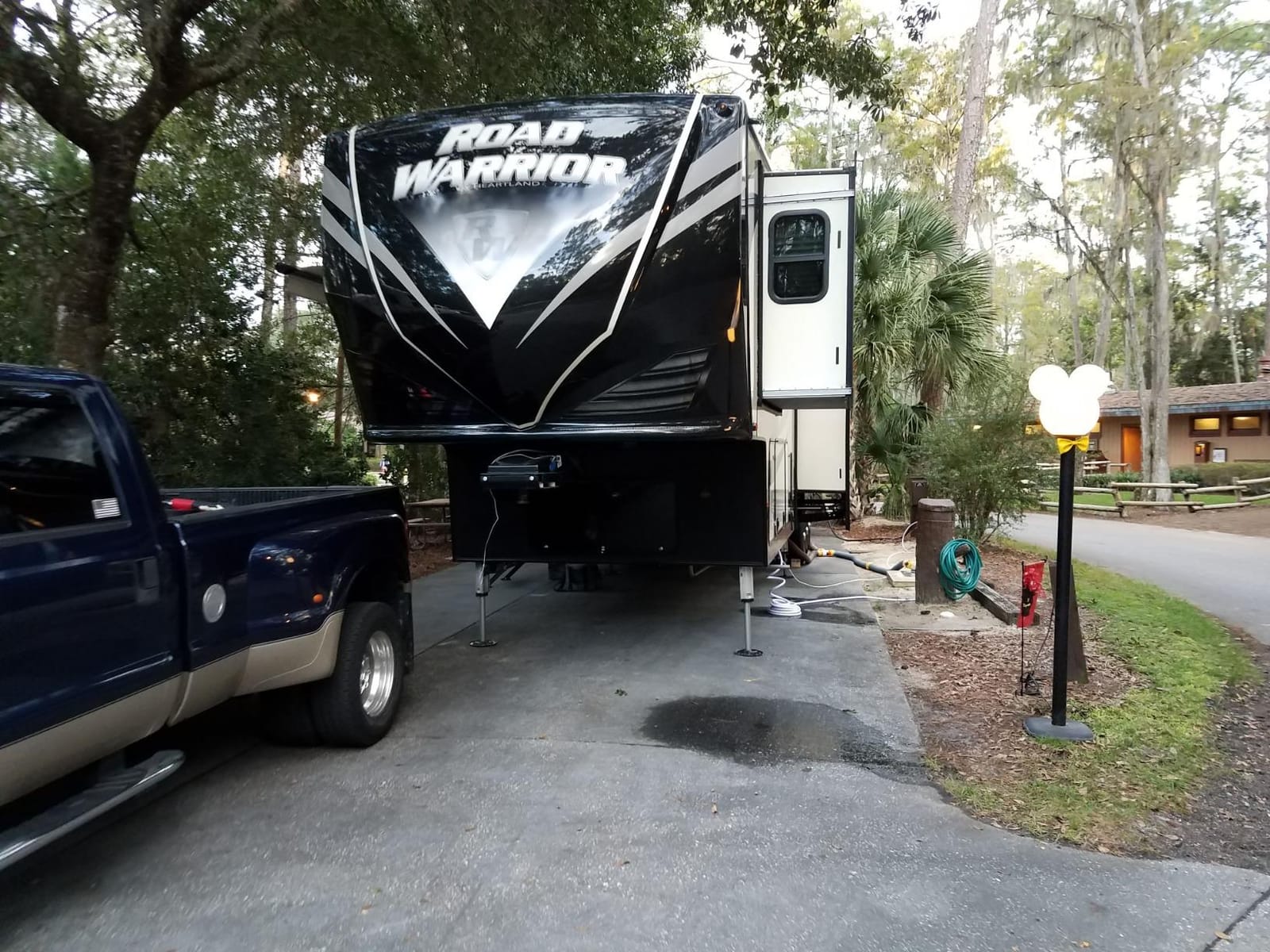
Technically it is a straightforward design. Inside the housing is a 20-micron internal sediment filter wrapped in granular activated carbon and KDF media, arranged as a six-step path that Camco markets as Hex-Flow. The wide-body housing is the part that matters day to day: it holds more media than the narrow inline units, which is why owners report less clogging and steadier flow across a season. The whole thing weighs 16 ounces and measures 3.1 by 3.9 by 7.6 inches, so it disappears into any utility bay.
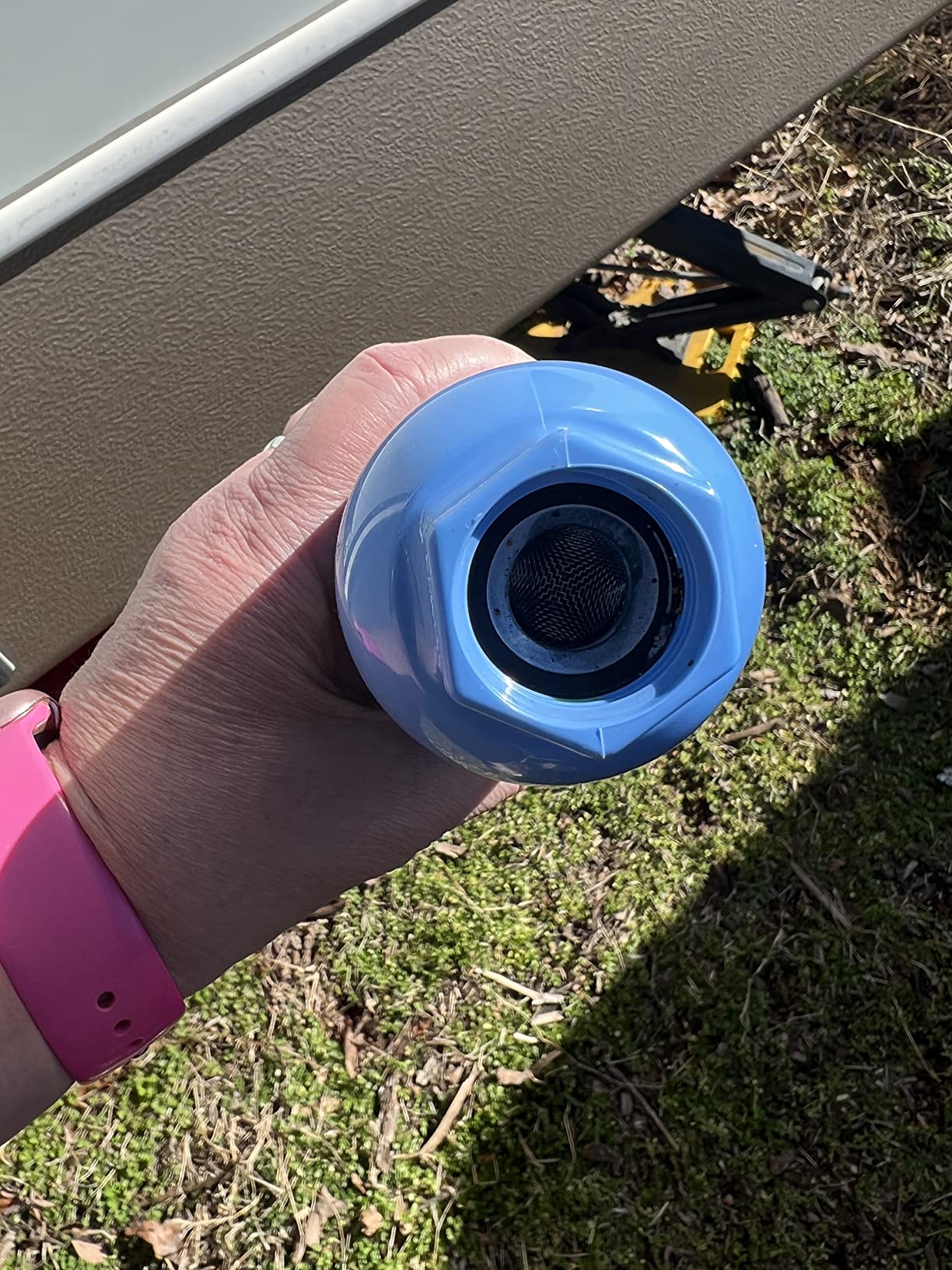
The one genuinely common complaint is mechanical rather than filtration-related. A portion of owners report that the short hose connector included in the box can weep at the fitting, particularly if the connection is tightened hard or the rig moves a lot on rough roads. U.S.-standard threads also mean it will not connect to European fittings, which matters if you are crossing the Atlantic. Neither issue affects filtration quality, and both are solved with a proper drinking-water-safe hose of your own.
Is the Camco TastePURE worth it compared with cheaper inline filters?
Yes, and the reason is certification rather than filtration media. The media in a budget inline filter and the media in the Camco are close cousins, so the water coming out is often similar. What you are paying extra for is a third-party test to NSF/ANSI 53 health-effects standards and a housing that resists clogging through a full season.
Forum consensus lines up with that read. Owners on the Keystone RV forums describe a basic inline filter like the Camco as the sensible starting point, with dual-stage systems as the usual upgrade once taste complaints appear. If your only concern is a small improvement in taste on municipal water, a cheaper unit will get you most of the way. If you are filtering anything unknown, the certified one is the one I would put on the hose.
What does the Camco TastePURE not fix in my RV?
It will not stop hard-water spots, and this is the single most common misunderstanding I see among new RVers. As one iRV2 forum member put it plainly, filters will not stop water spots due to hard water; they keep sediment out of the water but do not change the mineral content that dries into white spotting on your shower glass. That problem lives in the supply water, not in the filter.
It also does not sanitise anything. A 20-micron carbon and KDF stage removes chlorine, taste, odor, sediment and a limited set of metals, but it does not treat a fresh water tank that has been sitting with a biofilm on the walls for a year. Tank sanitation and filtration are two separate jobs, and you need both.
2. Waterdrop RV Inline 2-Pack – Best Value for Seasonal Campground Water
Waterdrop RV Inline Water Filter, Garden Hose and Camper Water Filter
Two filters plus two hose protectors
NSF/ANSI 42 and 372 certified
KDF and coconut shell GAC
1.2 pounds
Pros
- Two filters and two hose protectors in one pack
- Tool-free install in about 5 minutes
- Strips chlorine taste and odor well
- Good value versus name-brand units
Cons
- Included hose can be narrower and cut flow
- Some units arrive with gaskets that leak
- Carbon media can freeze if left attached in cold weather
The Waterdrop 2-pack is the pick if you are the person who buys one filter in spring and then remembers in autumn that you needed one. Each pack ships with two complete inline filters and two flexible hose protectors, so a full season of protection and a spare are in the box at once. Installation is genuinely tool-free and took us under five minutes per unit, which matters when you are doing it in a campground parking lot in the rain.
On taste performance it behaves like a properly built inline filter. The KDF and coconut shell granular activated carbon combination handles chlorine taste, odor and sediment effectively, and the media is certified to NSF/ANSI 42 and 372. It rates 4.6 across roughly 4,700 reviews, with about three quarters of those reviews at five stars, and the recurring theme in the feedback is that it simply makes campground water taste like campground water that someone else is also drinking.
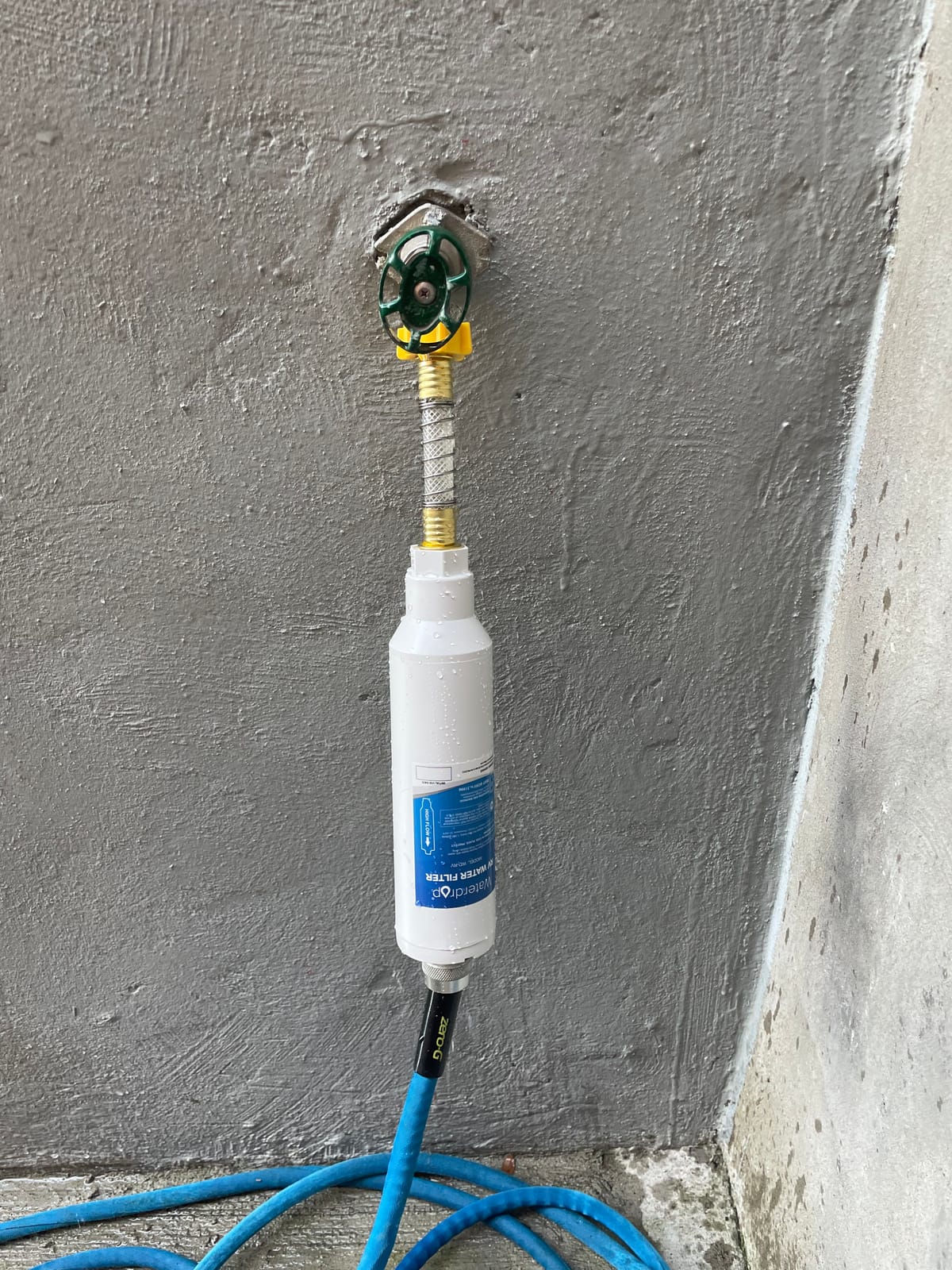
The construction details are more considered than the price suggests. The hose protector rotates a full 360 degrees, which means the connection to your fresh water inlet is not fighting the angle of the hose and pulling on the fitting. The stated rated service life is one camping season, roughly three months, which matches what most owners report before the taste starts creeping back. The filter body uses non-woven fabric media combined with KDF and advanced coconut GAC.
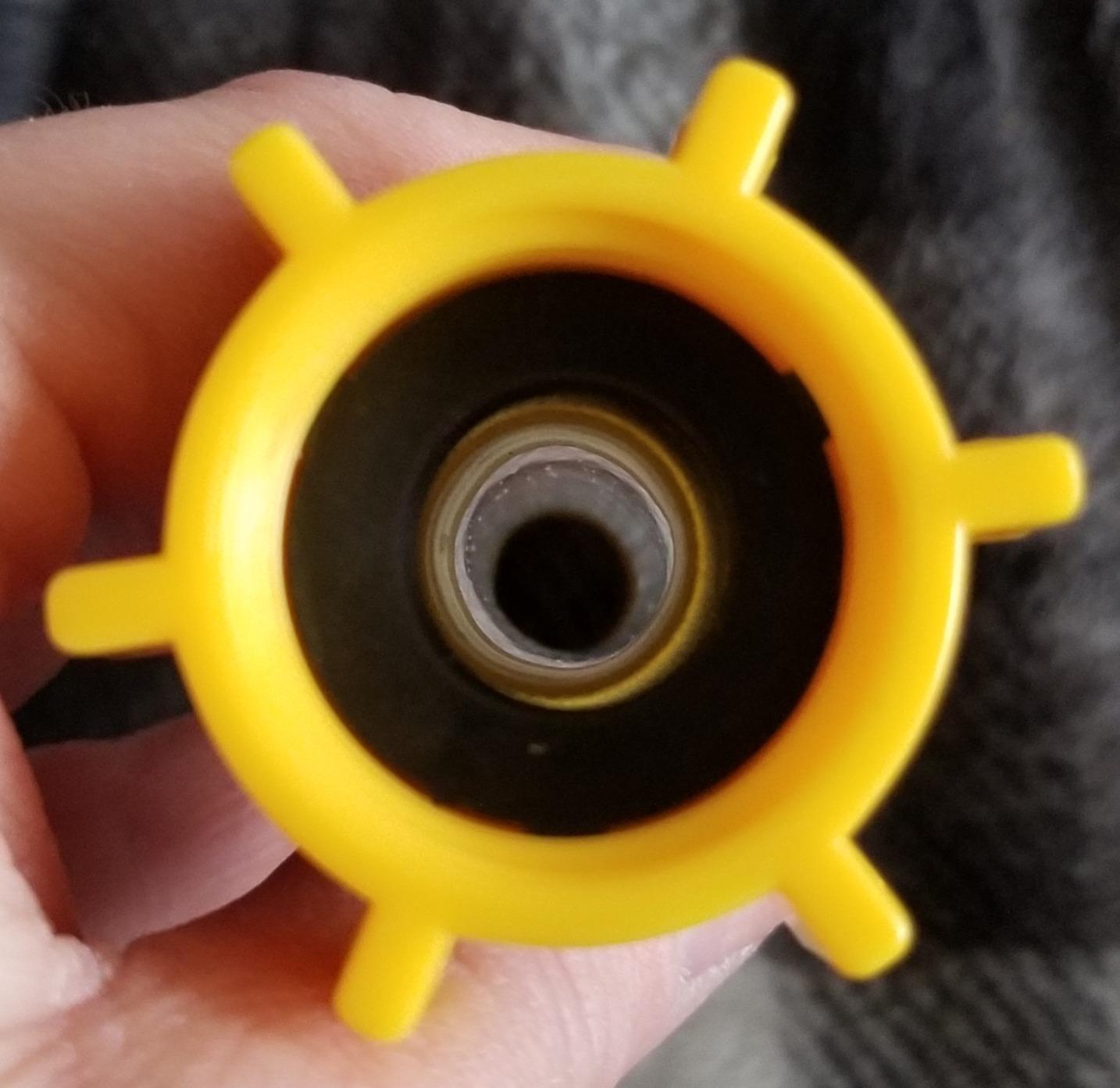
Two caveats come up often enough to plan around. The hose included in the pack is narrower than a standard heavy RV drinking water hose, and a minority of owners report noticing a small reduction in pressure at the faucet because of it. Replacing that hose with your own drinking-water-safe line solves the problem and also removes the chemical-taste issue that hoses develop over time. A few units also arrive with gaskets that do not seal on first fit; the seller is generally responsive about replacements, but check the connection before you leave the site.
Should I run the two Waterdrop filters in series?
Only if you have a specific reason. Stacking two inline filters in series roughly doubles the resistance, and owners report a noticeable drop in flow when they do it. The usual way to use a 2-pack is one now and one in storage for mid-season swap, not both on the line at once.
If you do want a second stage in series, the better pairing is a sediment filter in front and a carbon filter behind, which is the stage order we cover in the installation section. A carbon filter in front of a carbon filter mostly just makes the second one work harder and expire sooner.
Is the Waterdrop 2-pack good for a full-time RV?
It is workable, but a full-time RVer burns through cartridges faster than a weekend camper because the tank cycles constantly. At a stated one-season cartridge life, budget for replacement roughly every two to three months of continuous travel. If you fill on the road rather than sitting still, we would rather see you on the RVGUARD 4-pack, which simply gives you more spares on hand.
3. Kohree RV Inline 2-Pack – Best for Heavy Metals on a Budget
Kohree RV Water Filter, NSF Certified Inline Water Filter, BPA Free, 2 Pack
GAC and KDF media
20-micron five-layer sediment stage
0.5 gpm flow
Up to 1057 gallon capacity
Pros
- Lowest cost in the guide and still NSF certified
- Thicker housing passes burst testing
- Leak-free threaded connections
- Two-pack allows staggered replacement
Cons
- Media life shortens on heavily chlorinated water
- Stacking two in series cuts flow
- Must be flushed of carbon dust before first use
The Kohree is the value pick in the truest sense of the word, and it earns its place because of one detail: the housing. Where some of the cheaper inline filters use thin plastic that can crack after a few seasons of being tightened and loosened, the Kohree uses a thicker food-grade plastic that the manufacturer states has passed pressure burst testing. That directly addresses the durability complaints that show up in RV forum threads, where owners have pulled apart two-filter systems and found hairline cracks in the housing material after disassembly.
Filtration is a five-layer arrangement using carbon fiber media, with GAC and KDF doing the work of reducing heavy metals, odors and fluoride, backed by a 20-micron internal sediment filter. Rated service flow is 0.5 gpm with a capacity of up to 1,057 gallons. It is NSF certified and BPA-free, and it holds a 4.6 rating across close to 4,000 reviews.
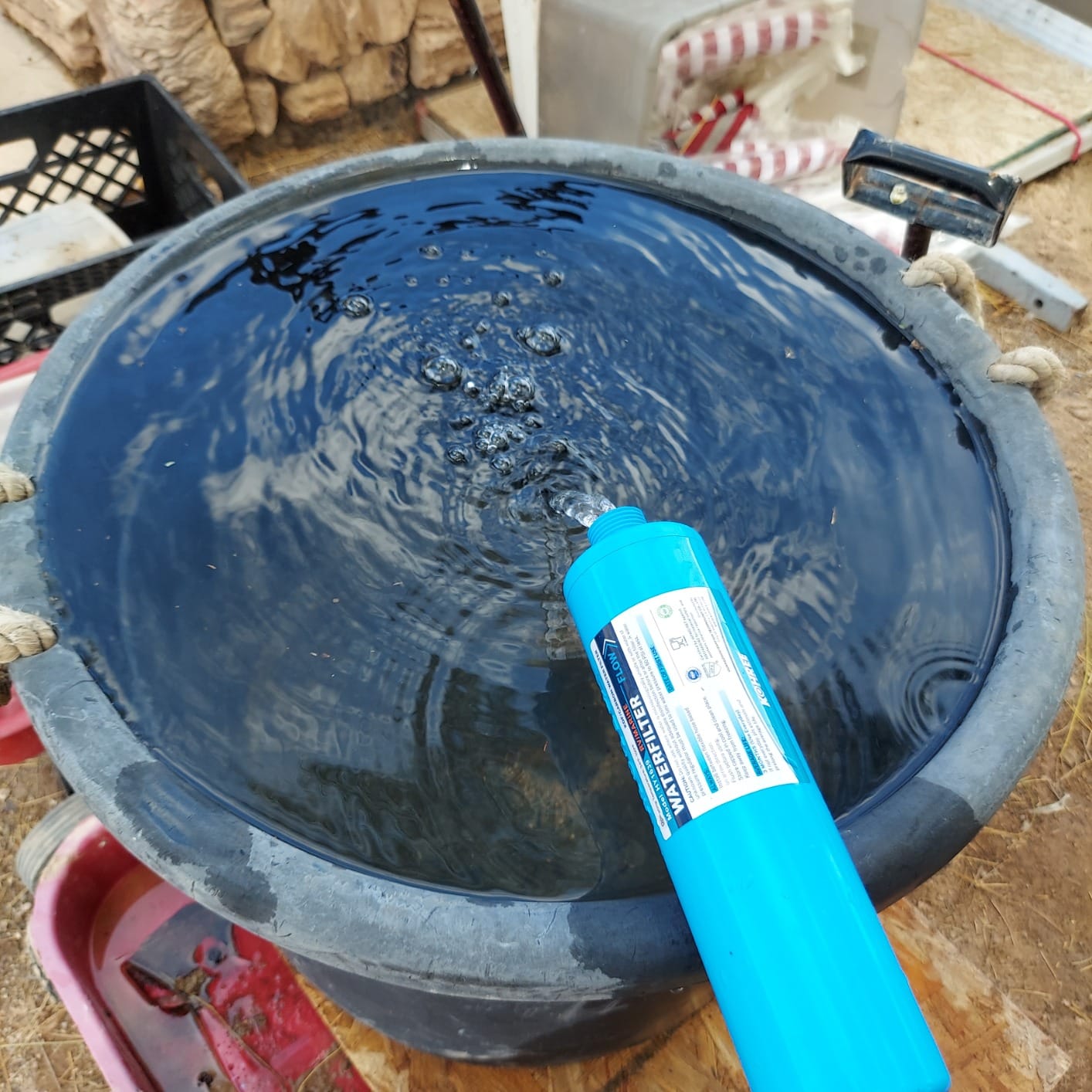
Where it separates from the Camco is media longevity rather than capability. The carbon and KDF blend works, but reviewers consistently note that cartridge life shortens sharply when the incoming water is heavily chlorinated, which is exactly the supply most full-time RVers pull from a municipal line. If you are on a heavily treated city connection, plan on replacing sooner than the stated capacity suggests. If you are pulling from a quieter rural or well source, you will get closer to the full gallon rating.
The threaded connections are reported as leak-free, which is not a small thing on a rig that moves constantly. The two-pack configuration is genuinely useful here because the staggered replacement habit is the easiest way to keep media from going stale: one on the line, one waiting in the cabinet, swap rather than store a used cartridge for a year.
Is the Kohree filter good enough for drinking water?
For chlorinated municipal water at a campground or a fixed site, yes. The GAC and KDF stages handle chlorine, taste, odor and a reasonable range of heavy metals, and the 20-micron stage keeps sediment out of your fresh water tank. It is the same category of device as the Camco, just built with a thicker housing and sold at the bottom of the range.
What it is not is a fine-particle or microbe filter. A 20-micron rating is coarse by under-sink standards, and nothing in this class will protect you from a compromised supply source. If you are boondocking off a creek, a cattle pond or an unknown well, add a purification step rather than relying on this.
Why does flow drop when I add a second inline filter?
Because you have doubled the resistance in the line with no increase in supply pressure. Two 20-micron stages in series behave like one much tighter stage, and the RV water pump has to work harder to move water through both. This is the same physics behind the slow-fill complaints that show up in iRV2 threads, where owners report that after several months the flow on a hookup becomes poor while running the pump alone still seems fine.
If you need two stages, the answer is a canister system with a sediment stage in front, like the Beech Lane, rather than a second inline unit. That gets you finer filtration with a single pass through the water and a much better flow rate at the tap.
4. AQUA CREST RV Inline 2-Pack – Best for High-Pressure Hookups
AQUA CREST RV Inline Water Filter, Garden Hose & Camper Water Filter
NSF/ANSI 42 and 372 certified
0.5 gpm flow rate
Tested at 400 PSI
0.12 kg
Pros
- Chlorine reduction verified with test strips
- Does not reduce flow noticeably
- Copper heads resist rust and kinking
- Tool-free installation
Cons
- Does not remove air-dried mineral spots
- Leaves a small residual chlorine reading
- Media life about three months per season
The AQUA CREST is the one in this group that has been pressure-tested hard enough to publish the numbers. The manufacturer states testing at ten times normal water pressure, 400 PSI, and 100,000 pulse cycles, and the housing carries anti-rust copper heads with a silicone gasket on a 360-degree rotating hose protector. That combination of proven pressure tolerance and corrosion-resistant hardware is why this is the one I would trust on a high-pressure city hookup rather than a gentle campground spigot.
Filtration is a KDF and coconut shell carbon block arrangement certified to NSF/ANSI 42 and 372, reducing chlorine, bad taste, odor and sediment. Rated flow is 0.5 gpm and the pack includes two filters plus one hose protector. It holds a 4.5 rating across more than 6,300 reviews, and one of the more useful things owners do with this filter is verify the result using residual chlorine test strips, which is the correct way to check the claim rather than trusting taste alone.
The flow behaviour is a genuine strength here. Owners report no noticeable pressure loss at the faucet, which matters more than it sounds on a rig where you are filling a 150-gallon tank through a city connection and watching the clock. The material listing is non-woven fabric combined with KDF and advanced coconut GAC, and the unit is light enough at 0.12 kg that you can swap it without thinking about it.
Two honest limitations. The media life is about three months per camping season, so this is a filter you schedule rather than forget. And like every unit in this roundup, it does nothing about water spots, which come from minerals in the supply drying on glass, not from anything the filter can see. Several owners also note a small residual chlorine reading rather than a zero reading on test strips, which is normal for a carbon and KDF design at the end of cartridge life.
Can I use the AQUA CREST filter for garden or livestock water?
Yes, and it is one of its better uses. The same KDF and carbon arrangement that strips chlorine from campground supply will handle chlorinated municipal water from a garden tap, and the anti-rust copper heads are a sensible choice for a permanent outdoor line. Just remember the stated service life is short, so an outdoor application that runs year-round will consume cartridges at a steady rate.
Be careful about the upper temperature range, though. These carbon and KDF inline cartridges are not designed for hot water, and running heated water through one will damage the media and can push a solvent-flavoured taste into your drinking supply. Install it on the cold line only.
Does the AQUA CREST remove water spots and hard water?
No, and neither does anything else in this category. Hard water spots are caused by dissolved calcium and magnesium that precipitate as water evaporates, and a sediment and carbon filter is not designed to strip those dissolved minerals. The iRV2 forum explanation is the accurate one: these filters keep sediment out of the water and do not prevent spots.
If spotting is your real complaint, you are looking at a softening or reverse osmosis solution rather than a better inline filter. A softener addresses the cause for the whole rig. An under-sink or RO system addresses it for drinking and ice only, which is usually the cheaper place to start.
5. GLACIER FRESH RV/Marine 2-Pack – Best Versatile Filter for Pools and Garden Hose
GLACIER FRESH RV/Marine Water Filter with 1 Flexible Hose Protectors 2 Pack
97.9 percent chlorine removal lab tested
20-micron rating
Lead-free BPA-free housing
1.8 pounds
Pros
- Independently lab tested chlorine reduction
- Reinforced housing resists bursting
- Flexible hose reduces connection strain
- Also used for pools and pet water
Cons
- Needs a long initial flush
- Flow slows near end of cartridge life
- No storage caps for travel
The GLACIER FRESH is the one that has drifted furthest outside the RV niche, and for a lot of owners that is a feature. The same 20-micron GAC carbon and KDF media that treats a campground fill also gets used on a pool, a garden hose, a pressure washer and pet water, because the underlying problem in all of those cases is chlorinated water that tastes like a swimming pool. Owners consistently report using the same unit for all of it.
The headline number here is the independently lab tested 97.9 percent chlorine removal, which is a stronger and more specific claim than most competitors in this price range make. The housing is lead-free and BPA-free plastic reinforced against bursting, the media also reduces fluoride, and the flexible hose protector takes strain off the connection. It rates 4.4 across more than 6,300 reviews, the lowest rating in this group, and the reviews explain why: it is less about dissatisfaction and more about the filter doing a straightforward job without extras.
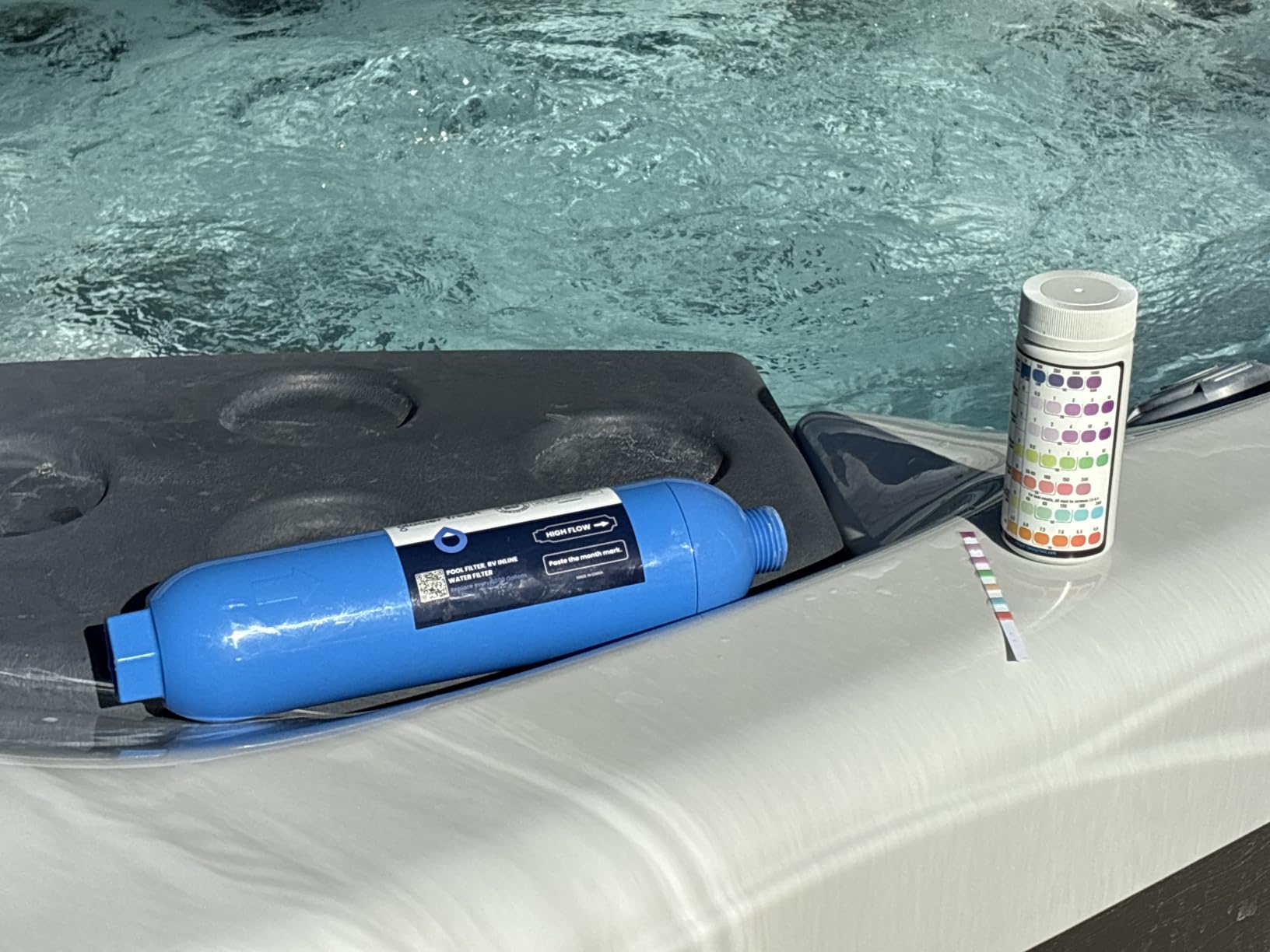
Two operational details are worth planning for. The first is flushing. Owners report a blue-gray discharge on first use and recommend running the faucet for several minutes before the water is used, which is normal for any carbon block that has not been purged. The second is flow decline near the end of cartridge life, which is the natural consequence of a 20-micron path filling with captured sediment. When you notice the change, replace it rather than pushing through it.
One small omission that is easy to work around: there are no screw-on storage caps in the box, so between trips the housing sits open to whatever is in the compartment. Keeping a filter in a sealed bag with a rubber band, or a pair of cheap caps from a hardware store, prevents a dry cartridge from picking up compartment dust and makes the next season start clean.
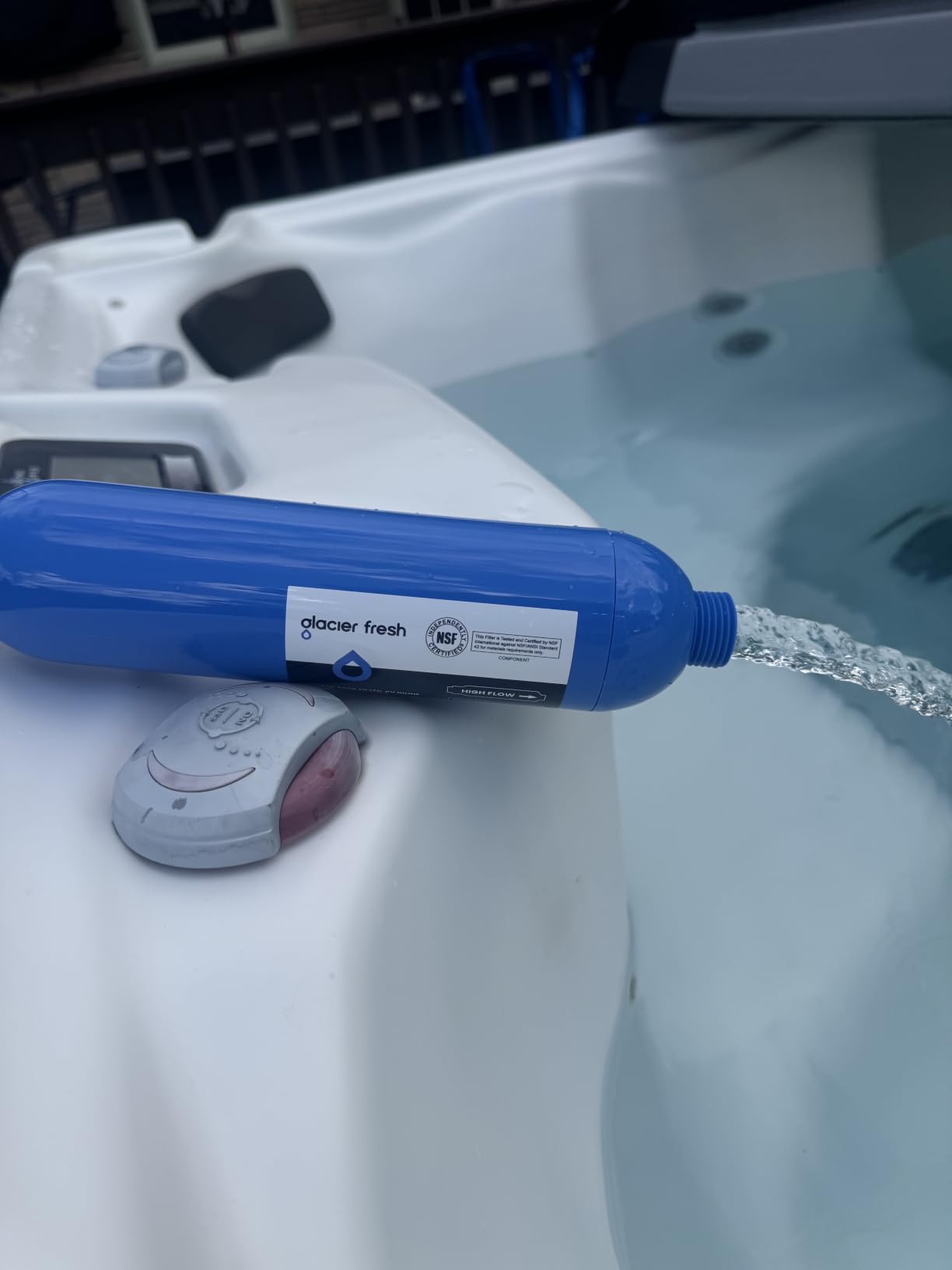
Can I use the GLACIER FRESH filter on a boat or at the dock?
Yes. The RV/Marine naming is accurate to the design, and the 20-micron stage is well matched to the grit and biofilm flakes common in older dockside water. The flexible hose protector is particularly useful there, because dockside fittings are exactly where connection strain and kinking cause leaks. Just replace the cartridge on a schedule rather than waiting for taste to change, since dockside water is inconsistent.
One caution for marine use: check the fittings are lead-free brass or equivalent before connecting to anything you will drink from. This housing is lead-free and BPA-free, but the adapters you pair it with are a separate question. Use dedicated drinking-water-safe hose and fittings for the last connection to the tap.
Why is the flow slower after a few months of camping?
Almost always one of four things, in this order of likelihood. First, the cartridge is simply loaded, since a 20-micron stage is doing exactly what it was designed to do and the pores are narrowing. Second, the filter is installed backwards, so the coarse side is catching what the fine side should have handled. Third, an O-ring or gasket has shifted and is partly blocking the path. Fourth, the supply hose is kinked behind the connection.
iRV2 threads describe the same pattern, with owners reporting that after about five months the flow becomes very poor on hookups while running the pump alone still seems acceptable, and a 150-gallon tank taking more than an hour and a half to fill. If your filter is not yet due for a change, work through the four checks above before blaming the cartridge. A starved RV water pump is a much more expensive problem than a clogged filter.
6. RVGUARD Inline 4-Pack – Best for Multi-Season Spares and a 0.5 GPM Service Flow
RVGUARD Inline RV Water Filter, 4 Pack
IAPMO certified to NSF/ANSI 42
0.5 gpm service flow
Up to 15000 gallon capacity
1.7 pounds
Pros
- Four filters per pack cover many seasons
- Reduces chlorine
- taste
- odor and rust
- Works with standard garden hoses and faucets
- 18-month manufacturer warranty
Cons
- Heavy carbon discharge on first use
- 20-micron media does not address dissolved metals or cysts
The RVGUARD solves a problem the other packs do not: what to do when you are three hours from anywhere and your cartridge expires. Four filters in a single pack, each rated for a three-month service life, means a full-time RVer or a family that camps constantly can keep spares in a compartment without planning a supply run. At 1.7 pounds for the pack, the weight is not a factor.
The certification is a slightly different flavour from the rest of this list. It is certified by IAPMO R&T to NSF/ANSI 42, which is the aesthetic-effects standard covering chlorine, taste, odor and sediment. That is the correct standard for what this unit does, and the specification is stated plainly rather than buried. Media is KDF combined with advanced granular activated carbon, rated service flow is 0.5 gpm, and stated capacity runs to 15,000 gallons with a 60 psi working pressure and a 34 to 100 F operating range.
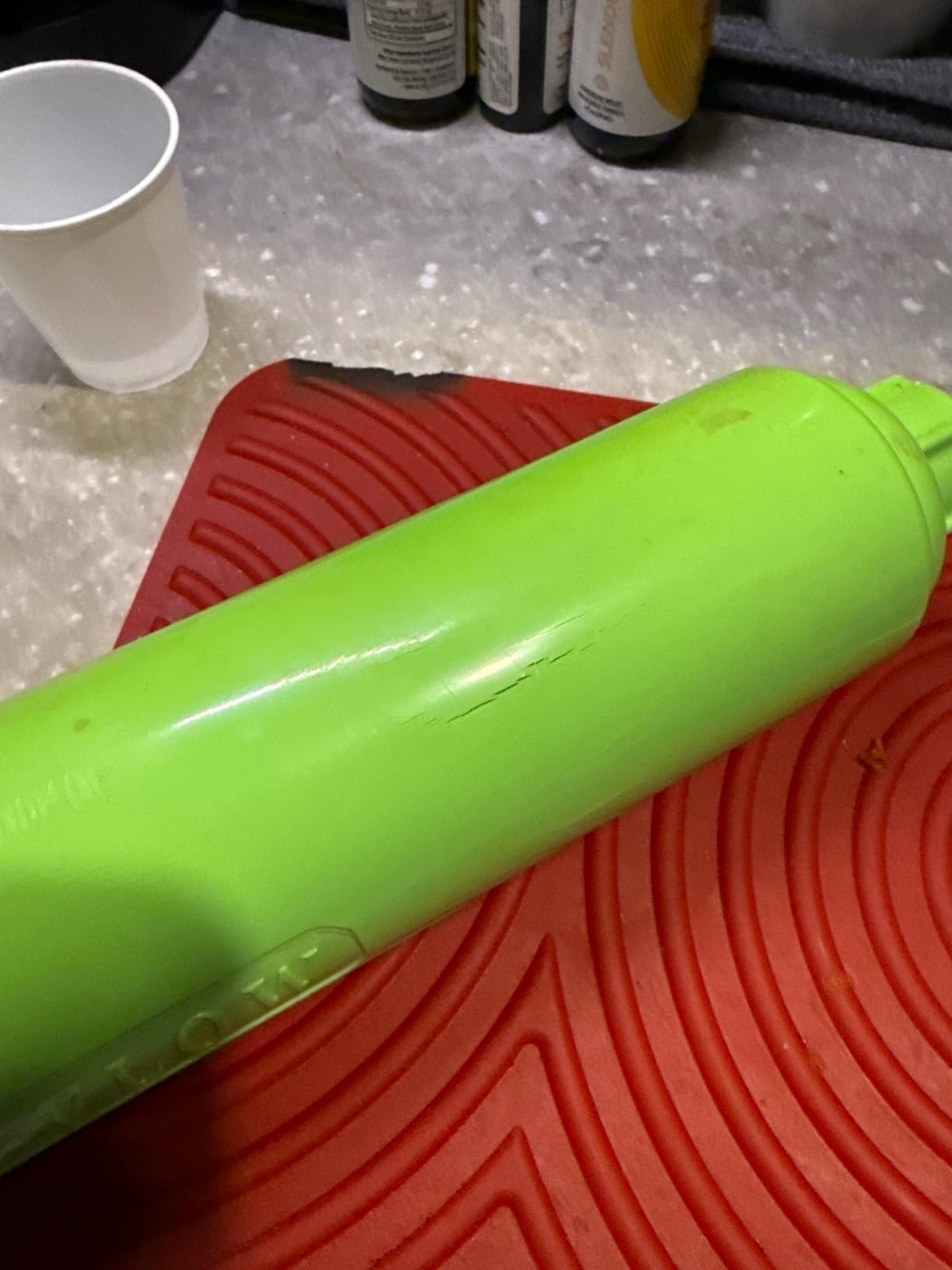
The practical fit is broad. The RVGUARD attaches to any standard garden hose or faucet, so it works for the fresh water fill, for washing the rig, for an outdoor spigot at a fixed site, and for general camping use. The 18-month manufacturer warranty is longer than anything else in this roundup, which is a reasonable signal about expected housing life. The rating sits at 4.5 across roughly 3,500 reviews, and the reviews use it across RV, marine, camping and gardening without complaint about any of those applications.
Be clear about the boundary though. A 20-micron carbon and KDF cartridge is designed for taste, odor, chlorine and rust reduction. It does not address dissolved metals beyond what the KDF handles, and it does not address cysts or any biological contaminant. If you are drawing from a source you cannot vouch for, this is the wrong class of filter and you need a purification stage after it.
Is a four-pack better than a two-pack for cartridge life?
No. Cartridge life is set by the media and the water, not by how many you bought. Each RVGUARD cartridge is rated at a three-month lifespan, and a heavy-sediment or heavily chlorinated supply shortens that. What the four-pack changes is convenience: you stop running out mid-season, and you replace on a schedule rather than reactively.
Because sealed cartridges do not age well forever, store spares somewhere cool and dry rather than in a hot, damp wet bay. Write the purchase date on the box. Media stored in a hot compartment for two summers will underperform a fresh one even if it is technically unused.
Will any of these filters strain my RV water pump?
A single inline filter should not, as long as it is the right size and correctly installed. A second inline filter in series, or a very fine carbon block on a long run, does add enough resistance that the pump works harder and runs hotter. The fix is filtration architecture, not a bigger pump: one coarse stage in front, one fine stage behind, in a canister housing, rather than two inline units back to back.
Watch for the symptoms. Falling shower pressure, a slow toilet refill, and a fill that takes noticeably longer than it used to are the early signs. Restricting the RV water pump to force water through a loaded filter is one of the more common ways an owner shortens the life of an otherwise fine pump, so treat a pressure drop as a service signal rather than an annoyance.
7. Bringpure RV Inline 2-Pack – Best for Marine and Garden Use
Bringpure RV Inline Water Filter with Flexible Hose Protector
NSF 42 and NSF 372 certified
97 percent chlorine reduction
20-micron rating
830 grams
Pros
- Tight threads with no dripping
- Removes odor and sediment
- Heavy-duty anti-kink hose protector
- Tool-free installation
Cons
- 20-micron media targets taste and odor not fine particles
- Included adapter sometimes not needed
The Bringpure is a well-built inline filter whose most consistent praise in reviews is about the mundane stuff: tight-fitting threads that do not drip, and a heavy-duty anti-kink hose protector that takes real strain off the RV water inlet. On a rig that is constantly moving and flexing, a fitting that stays dry is worth more than an extra stage of media you never notice.
It is certified to NSF 42 and NSF 372, uses KDF and GAC media, and is rated at 97 percent chlorine, odor and taste reduction with a 20-micron rating. The stated filtration life is one camping season, about three months. The rating is 4.6 across a little over 2,100 reviews, and the feedback is consistent: owners get clear, good-tasting water, no clogging problems, and no leaks. Several use it for garden irrigation as well as drinking supply.
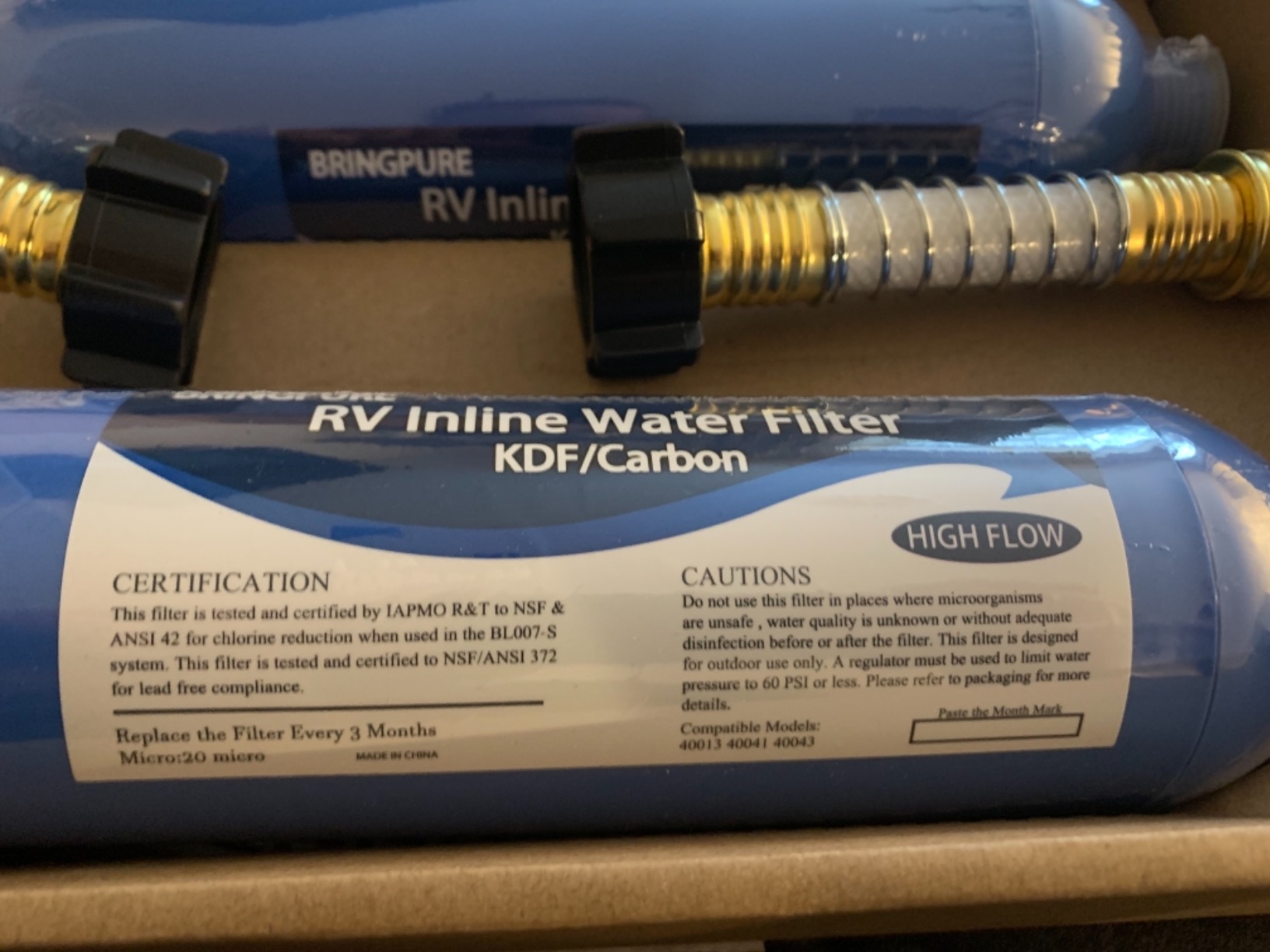
The honest framing is that this is a straightforward taste-and-odor filter doing that job well. At 20 microns, the media is targeted at chlorine, odor, sediment and a reasonable pass at heavy metals and fluoride, which matches what the product claims and what owners report. If your supply is chlorinated municipal or treated well water, that is exactly the profile this filter is built for.
A few buyers note the included adapter was not needed for their particular setup. That is a good reminder to check your fitting before ordering. These units use standard US garden-hose thread, and a lot of RV water inlets already accept a hose directly, so you may end up with a spare adapter in the box. It is not a fault; it just means the install is even simpler than the instructions suggest.
How is the Bringpure different from the Camco TastePURE?
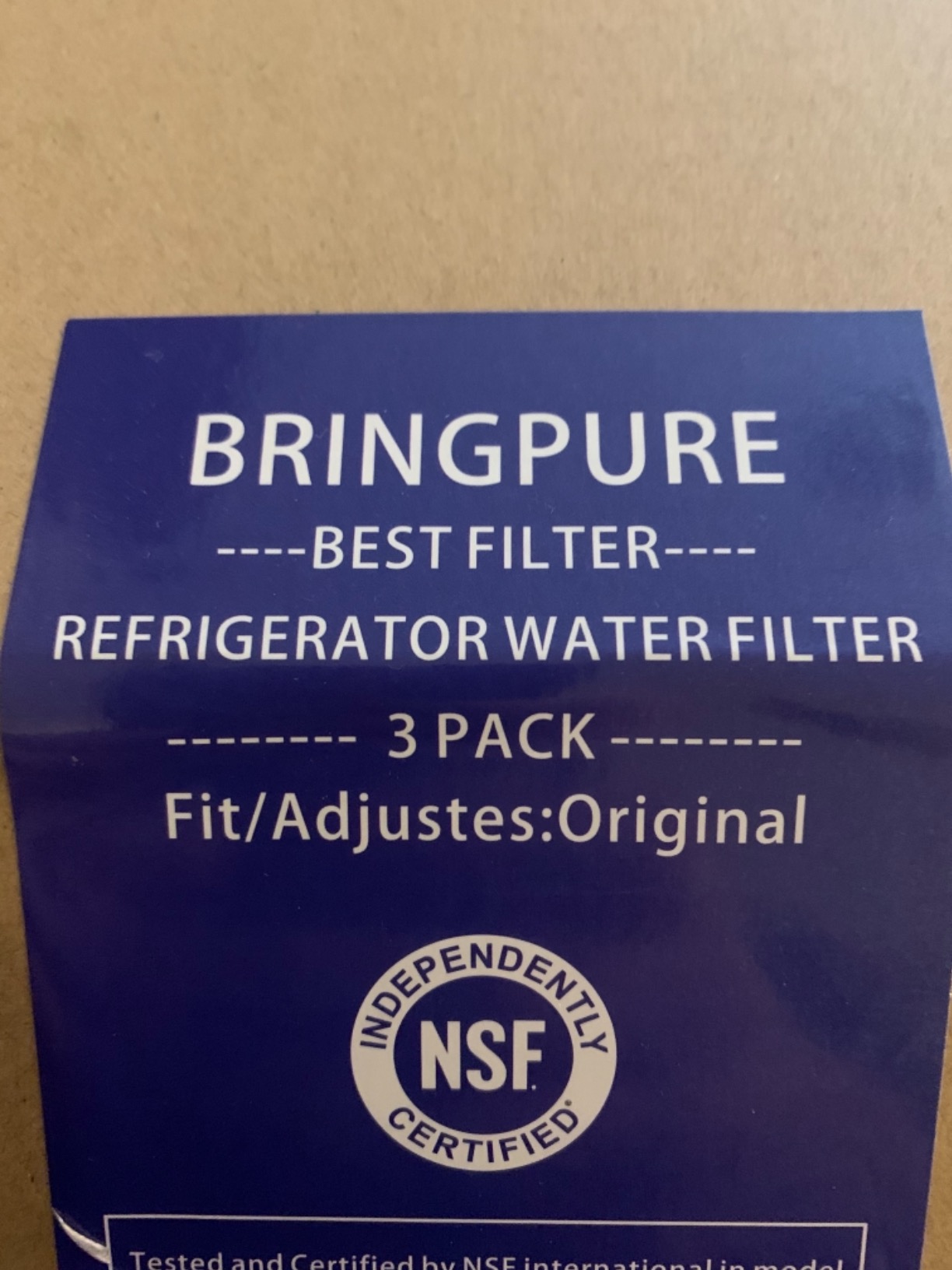
Both are certified inline carbon and KDF filters at the same 20-micron class, and in practice the treated water will be similar on chlorinated supply. The differences are in the details: the Camco carries the broader NSF/ANSI 53 health-effects certification and a much larger owner base, while the Bringpure is the one owners single out for thread quality and hose strain relief. The Camco is the safer default; the Bringpure is a fair second if you find one and prefer the fitting design.
If you want genuinely finer filtration, neither is the answer. Moving to a 0.5-micron carbon block, like the FRIZZLIFE MV99, or a multi-stage canister like the Beech Lane, is what changes what actually comes out of the tap rather than how the fittings feel.
Does the included hose cause a chemical taste in my water?
The hose, not the filter, is the usual source of that plastic or chemical taste. A full-time RVer on the Texas Gulf Coast who draws from a well reported on r/RVLiving that all of their water hoses had developed a weird chemical taste over time, and the fix was at the hose and fitting level rather than the filter level. Cheap vinyl hoses off-gassing in warm storage is the classic cause.
Use a hose labelled drinking-water-safe, made from a material that does not off-gas, and replace it on a schedule rather than when the taste appears. Once a hose has developed an off-taste, no inline filter downstream is designed to remove it, because the taste is being added to the water as it passes through the hose. You can also eliminate the variable entirely by running your filter directly to a dedicated drinking-water line.
8. Beech Lane External RV Dual System – Best for a Permanent RV Mount
Beech Lane External RV Dual Water Filter System, Leak-Free Brass Fittings, Mounting Bracket and Two Filters Included, Sturdy Construction is Built to Last
5 micron sediment plus 0.5 micron carbon block
Lead-free brass 3/4 inch fittings
External RV mount
Lifetime manufacturer warranty
Pros
- Dual stage catches sediment and fine particles
- Brass fittings resist leaks better than plastic
- External mounting leaves the tank untouched
- Lifetime warranty and included wrench
Cons
- Replacement cartridges bought separately
- Permanent mount needs drilling and setup time
- Handles water up to 2000 ppm TDS only
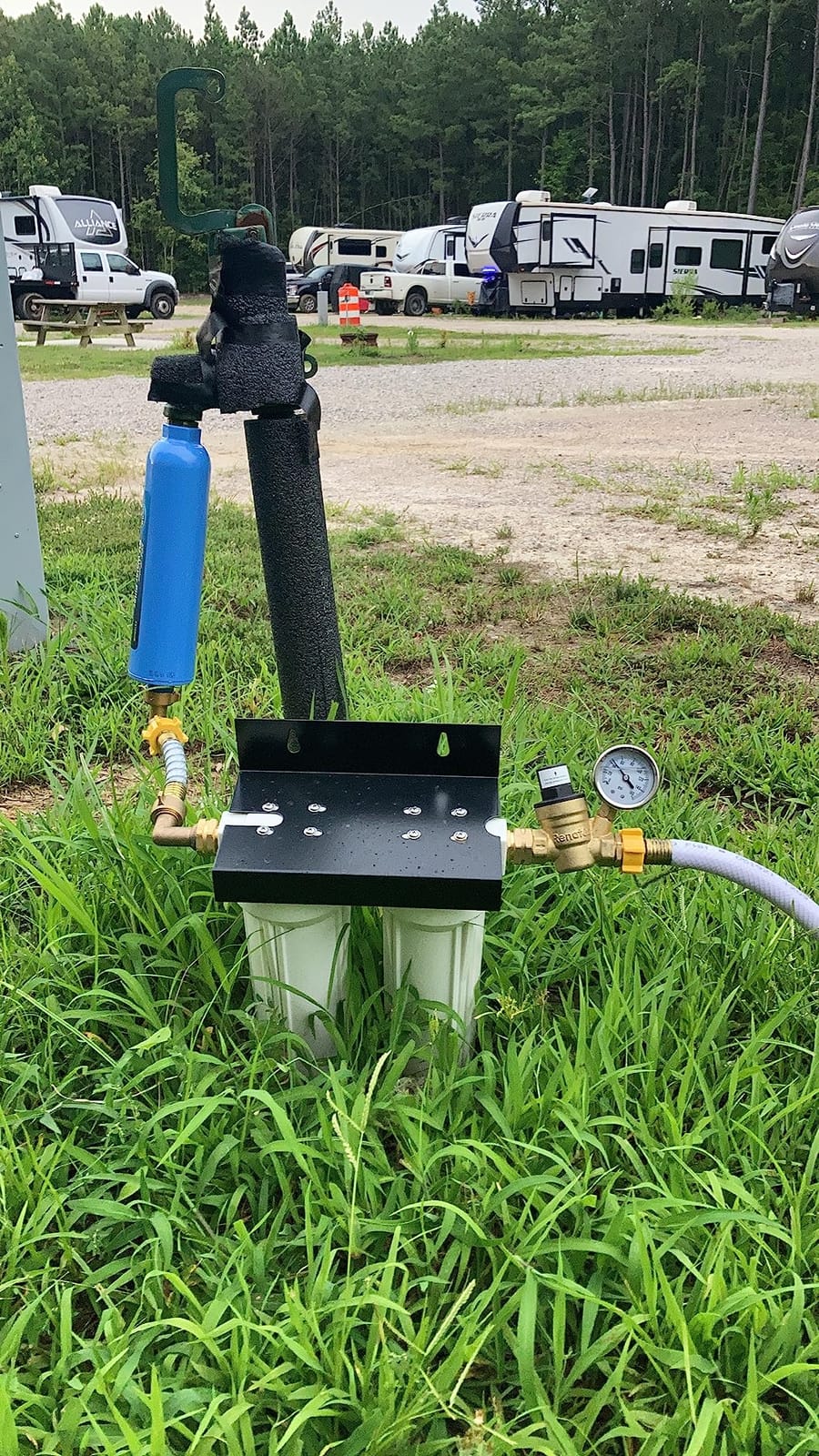
The Beech Lane is the first non-inline design in this roundup, and it is the one I recommend to anyone on a full-time rig who has already decided they are filtering. It mounts externally on the frame or in a bay, and it runs two real stages in series: a 5 micron sediment filter followed by a 0.5 micron carbon block. That is a meaningful upgrade in what actually gets removed, because the fine second stage can catch particulate that a 20-micron inline unit lets straight through.
The fittings are 3/4 inch lead-free brass rather than plastic, which is the durability story here. Brass does not crack when overtightened and does not seep at a joint the way plastic threads can after a season of road vibration. The package includes a mounting bracket and a housing removal wrench, and it carries a lifetime manufacturer warranty, the strongest durability commitment in this guide. It rates 4.6 across roughly 1,900 reviews.
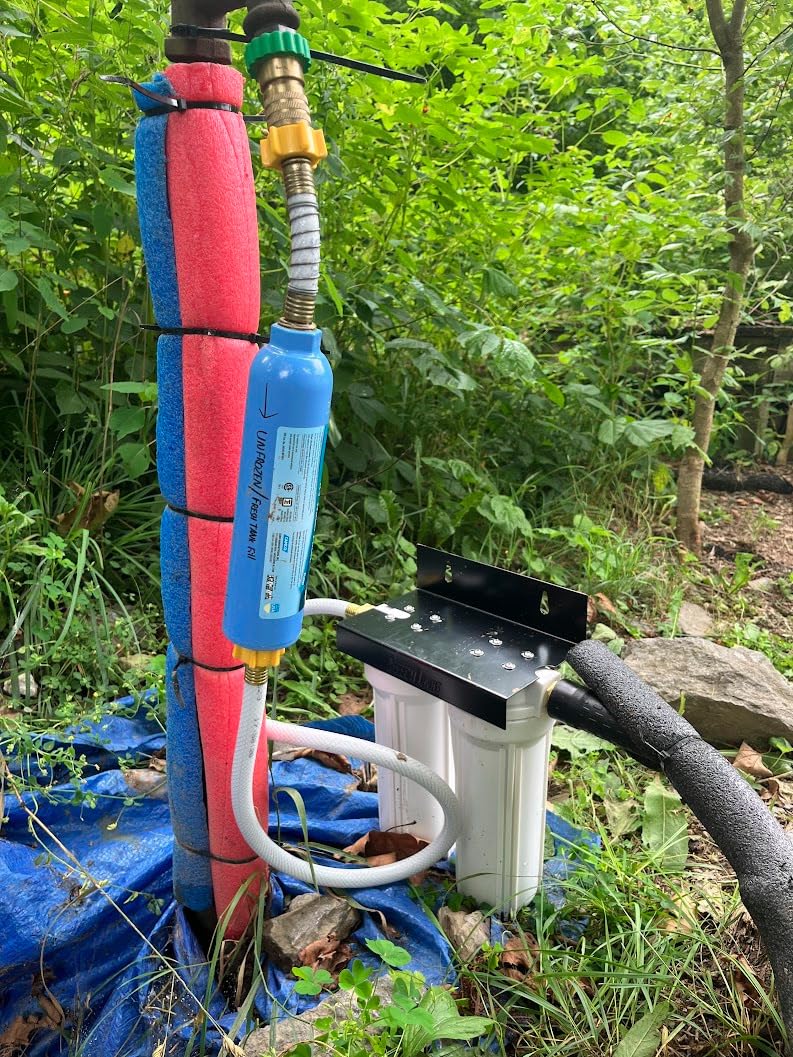
Two operating limits are stated and worth respecting. The system is specified for water up to 2,000 ppm TDS, which covers most municipal and treated well supply but would be exceeded by some raw well water. And because it mounts externally, you are drilling holes and planning bracket positions once, rather than clipping a hose connection on every fill, which is a real quality-of-life gain once a week or once a month depending on how you travel.
The running cost is the part to plan for. Replacement cartridges are purchased separately rather than included in quantity, so the total cost of ownership over five years is cartridge-driven. Set a calendar reminder by cartridge rating rather than by taste, because a 0.5 micron block that is not yet exhausted will still be doing a better job than you are giving it credit for, and a carbon block that has gone past its life can start shedding media into the water.
Should I use a canister system instead of an inline filter?
Yes, if you are filtering constantly, if your supply is sediment-heavy, or if you want finer filtration than 20 microns without stacking inline units and choking the flow. A canister system gives you two genuine stages, higher flow, and fittings that are built to stay connected. The trade-off is permanence: it needs a mounting location and a drill.
Forum experience points the same way, with owners on iRV2 noting that full-house style filtration restricts water flow more than an inline unit, which is the honest cost of that architecture. Stage order is what keeps it manageable: a coarse sediment stage in front protects the pump and the fine stage behind, so the fine stage is not doing the sediment job and dying early.
Do I need the second stage if I have a good inline filter?
For taste and chlorine on municipal water, no. One good inline filter handles that. The second stage earns its place when you are seeing rust and grit from a well or a rough source, when you are filling often enough to chew through cartridges quickly, or when you want the option of adding a purifier or membrane downstream later without rebuilding the plumbing.
What the second stage does not do is address the reasons people buy filters in the first place when those reasons involve biological safety or dissolved solids. A 0.5 micron carbon block is a particulate and taste filter. It is not a virus barrier, and it is not a desalination stage.
9. FRIZZLIFE MV99 – Best for Fine Sediment and Certified Health-Effects Filtration
FRIZZLIFE RV Water Filter-NSF/ANSI 53&42 Certified Inline Hose Filter for RV-0.5 Micron High Water Pressure, Reduce Chlorine, Lead, Heavy Metals, Odors – for Marine, Camper, Garden, MV99
0.5 micron carbon block
IAPMO certified NSF/ANSI 42 and 53
Lead-free brass 3/4 inch fittings
1.5 gpm maximum flow
Pros
- Certified to NSF/ANSI 53 for lead and heavy metals
- Brass fittings hold up under pressure
- Three-second twist-in cartridge changes
- Reusable housing cuts plastic waste
Cons
- Upper TDS rating of 300 ppm limits hard water
- 100 F maximum operating temperature
- FZ-2 replacement core sold separately
The FRIZZLIFE MV99 is the only inline-class filter in this guide certified to NSF/ANSI 53, the health-effects standard, alongside NSF/ANSI 42. That matters more than the micron number, because it means independent testing covers lead and heavy metal reduction rather than just taste and chlorine. For anyone genuinely worried about what is in their supply water rather than how it tastes, this is the certification you should be filtering for.
The media is a 0.5 micron composite activated carbon block, which is a real step up in particle capture compared to the 20-micron inline units. Maximum flow rate is listed at 1.5 gpm, the highest of any inline-style filter here except the Clearsource, and the housing uses lead-free brass 3/4 inch fittings. The rating is 4.6 across 732 reviews, a smaller base than the Camco but a technically more demanding product.
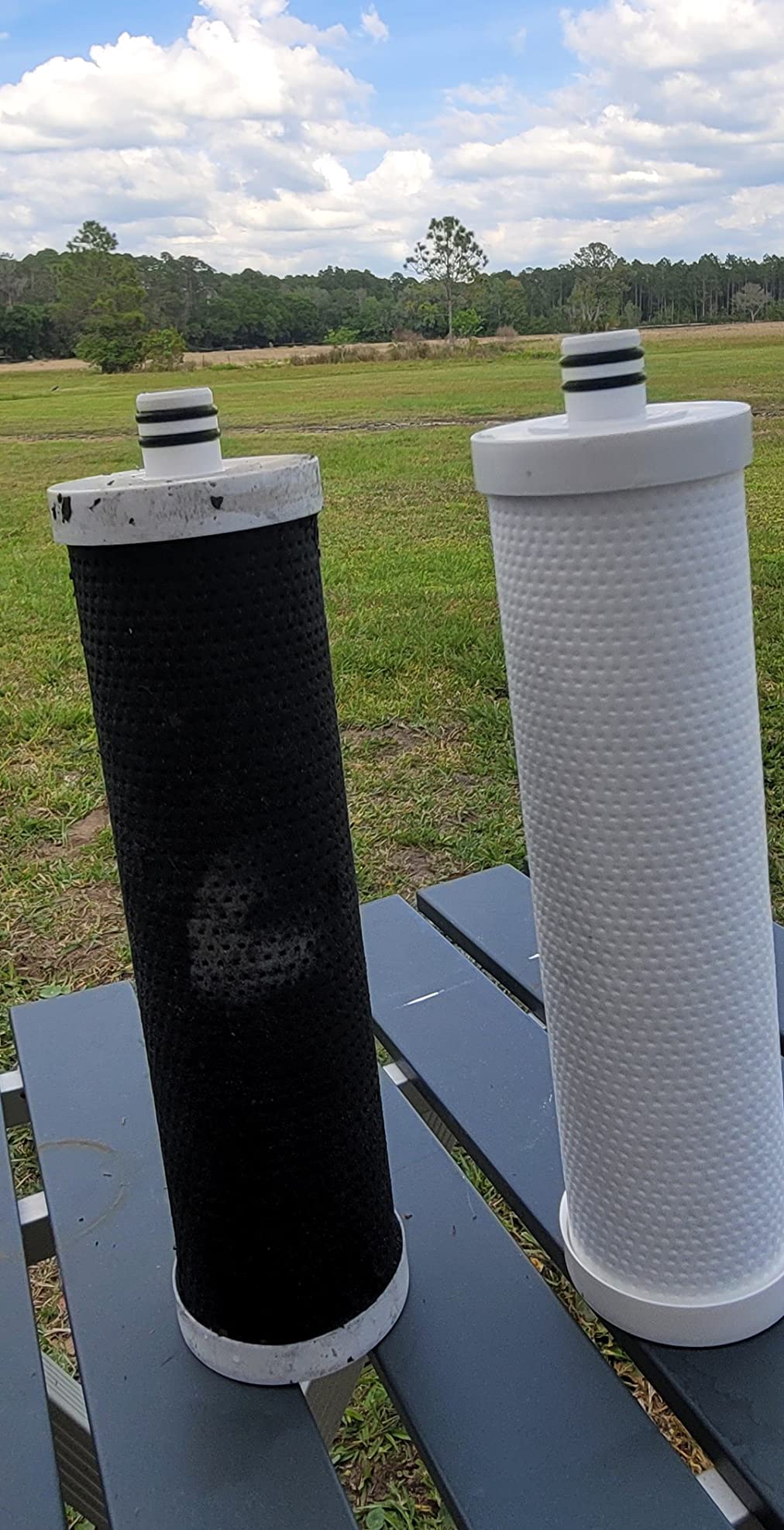
The cartridge change is the feature owners mention most, and it is a good design. An auto shutoff design means you can twist the inner core out in about three seconds without draining the housing or wrestling with a clamp, and the housing itself is reusable, so you replace the core rather than the whole assembly. A filter holder is included with mounting screws to keep the unit upright and limit hose kinking, which addresses the strain problem that causes leaks elsewhere on the line.
Two hard limits are printed on the spec sheet and should decide it for you if your water is hard. Maximum supported TDS is 300 ppm, which is a much tighter ceiling than the Beech Lane’s 2,000 ppm. Maximum operating temperature is 100 F, so it stays firmly on the cold line. If your supply reads well above 300 ppm TDS, this unit is outside its design envelope and you should be looking at a softening or reverse osmosis path instead.
What does NSF/ANSI 53 mean and why is it better than 42?
NSF/ANSI 42 covers aesthetic effects: taste, odor, chlorine and sediment. NSF/ANSI 53 covers health effects: lead, mercury, pesticides, cysts and similar contaminants. A 42-certified filter can legally reduce chlorine while saying nothing at all about metals. A 53-certified filter has been tested for the things that have health consequences.
That distinction is why the MV99 is worth the step up in price for drinking water specifically, and why it is the wrong pick for whole-RV use. Treating every sink, shower and toilet at a health-effects standard means more media, more flow restriction and a larger unit than most rigs have space for. Match the standard to the water you actually intend to treat.
Can I use the MV99 on hard water or hot water?
Hard water is the one to watch. The stated maximum of 300 ppm TDS means that on genuinely hard supply the carbon block will scale and the cartridge life will shorten considerably, and the manufacturer does not claim otherwise. If you are on a well in a hard-water region, a softener upstream or a reverse osmosis system is the correct architecture, and this filter is better used after that rather than instead of it.
Hot water is simpler: the 100 F upper temperature rating is a hard stop. These carbon blocks are not designed for heated water, and pushing hot water through one damages the media. Keep the installation on the cold line and use a separate hot-water solution if you want filtered water at a hot tap.
10. Clearsource Ultra with VirusGuard – Best for Virus and Cyst Protection
Clearsource Ultra RV Water Filter System with VirusGuard – Ultra Protection Against Viruses, Bacteria & Cysts
Three-stage with VirusGuard UV
5 micron sediment and 0.5 micron carbon block
4.5 gpm maximum flow
32.3 pounds
Pros
- Only filter here with virus and cyst reduction
- Three-stage filtration for taste and sediment
- Rugged metal chassis and stainless fittings
- High 4.5 gpm flow suits whole-RV use
Cons
- Very heavy at over 32 pounds and bulky
- VirusGuard replacements sold separately add cost
- Dedicated space required for the footprint
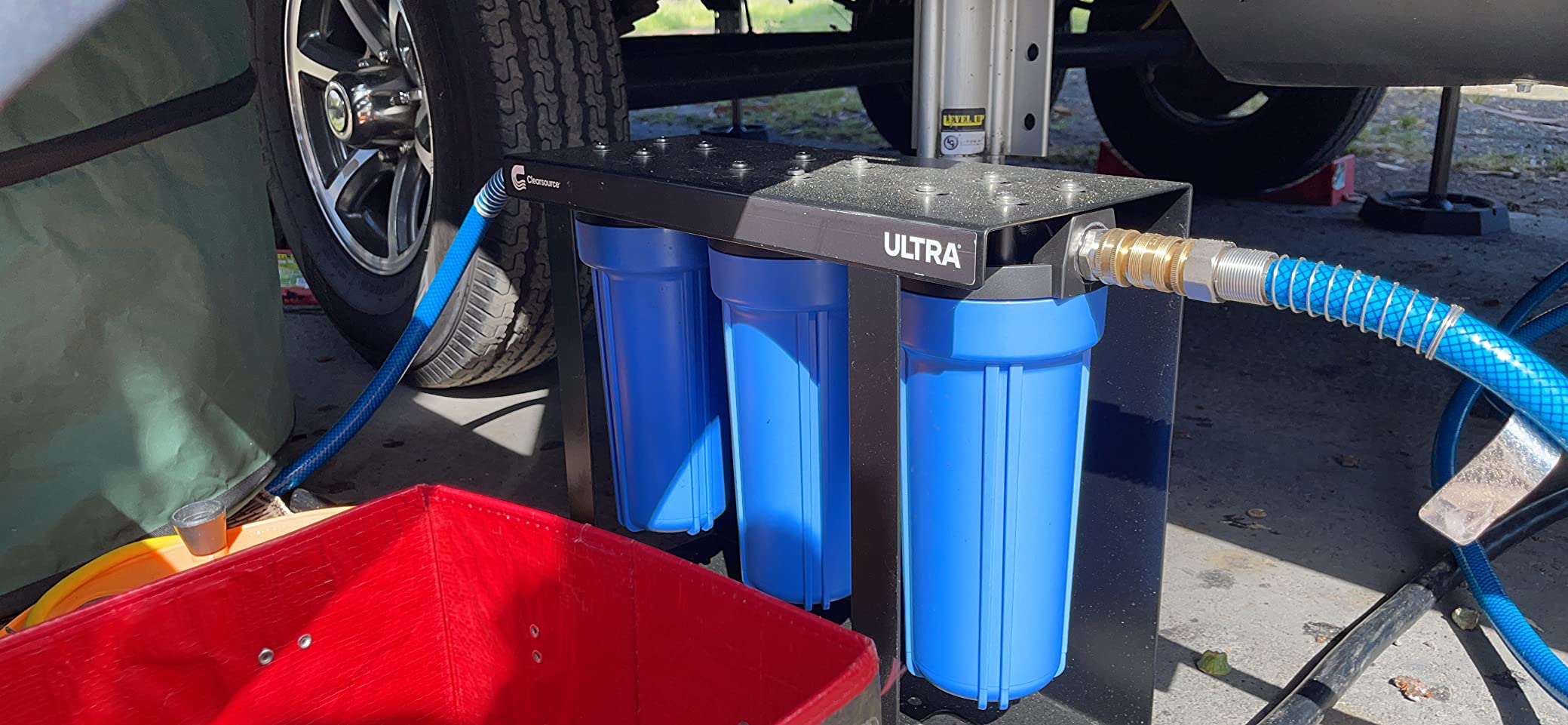
The Clearsource Ultra is the outlier in this roundup, and if your situation involves water you cannot vouch for it is the one that changes the actual risk profile. It runs three stages, a 5 micron sediment filter, a 0.5 micron carbon block and VirusGuard, which uses a NASA-developed electrically charged coating to reduce bacteria, Giardia cysts and viruses. Nothing else on this list makes that claim.
It is also the only whole-RV capable unit we included. At 4.5 gpm maximum flow on a powder-coated metal chassis with stainless steel fittings, it is built to sit on the inlet and treat everything that comes into the rig, not just a single tap. That is why a full-time owner on r/RVLiving described using the triple-stage Clearsource and said it was expensive but worth every penny, which is the standard of conviction you should expect from a unit at this level.
The physical realities are significant and you should measure before ordering. The unit weighs 32.3 pounds and measures 18.75 by 7.5 by 15.25 inches, which is a dedicated piece of space, not a clip-on accessory. For a Class A motorhome with a dedicated wet bay, that is manageable. For a travel trailer or a Class C with a cramped under-cabin space, it is a real constraint, and the forum complaints about bulk and weight are about exactly this.
Running cost is the other factor. The three-pack replacement filters are sold separately, and the VirusGuard stage is the ongoing line item. That is fine if you are filtering the whole rig and drinking from every tap. It is poor value if your actual need is a single drinking faucet, where a much smaller system would do the job on the microbes without carrying a metal chassis around the country.
Do any of these filters make unknown water safe to drink?
Only this one, and only within its stated claims. Every other filter in this guide is an aesthetic and sediment device that also knocks down some metals. None of them are barriers to viruses or Giardia cysts, and none of them make a non-potable source safe. Forum consensus on r/camping treats UV pens and MSR Guardian purifier units as the accepted answer for creek water and other unknown sources, and that remains true regardless of what is plumbed into your rig.
Filter or not, treat the water in your fresh water tank as potentially contaminated. A dump station cross-contamination or a dirty fill spigot introduces problems that no inline filter addresses, because the contamination happens after the fill. Sanitise the tank on a schedule and use the filter for what it is designed to do.
Is a whole-RV filter worth the cost and weight for a full-timer?
For a full-time RVer on a fixed site or one who travels slowly, frequently and for years, the answer tends to be yes, because you amortise the cost and the space over thousands of gallons rather than a handful of weekends. The 4.5 gpm flow also means the filter does not fight your tank fills the way a restrictive unit would.
For a weekend camper or a small trailer, no. You would be installing a permanent 32-pound unit for a few dozen fills a year, and the space cost alone tends to rule it out. In that case, the two-system approach is better value: an inline filter on the fill to protect the tank, and a compact under-sink or RO system for the drinking tap. That is the architecture most experienced RVers describe, and it solves the same problems at a fraction of the weight.
Which Type of RV Water Filter Is Best for Drinking Water?
The honest answer is that the type matters less than the source, and the right choice for a Class A motorhome on a fixed site is wrong for a boondocker on a creek. Here is how the five main architectures compare, and what each one is actually good for.
Inline hose filters attach between your water source and the fresh water hose. They combine a sediment stage with carbon and KDF media, cost the least, install in minutes and store in a compartment the size of a coffee can. Their job is protecting the tank and improving taste. Seven of the ten filters in this guide are inline units, and for most RVers that is the correct starting point.
Canister systems mount externally and run two genuine stages, typically a coarse sediment filter in front of a finer carbon block. They use brass fittings, handle higher flow, and last longer between changes, at the cost of drilling a mounting hole and committing space. If you are a full-time RVer or your supply is sediment-heavy, this is the more appropriate class.
Under-sink systems mount at the kitchen and treat only the drinking and ice water. They are the right answer when your priority is the quality of one glass of water rather than the whole rig, and they let you use a finer membrane without restricting showers and toilets. Most of the under-sink and reverse osmosis options on the market are designed for a residential under-counter space, so check the dimensions before assuming one fits.
Reverse osmosis pushes water through a semi-permeable membrane and rejects dissolved solids, which is the only way to deal with hardness, total dissolved solids and many dissolved contaminants at the drinking tap. The trade-offs are real: it is slower than any other option, it produces wastewater that goes down the drain, and it needs a dedicated drain line and adequate pressure. For drinking water only, it is the highest-quality answer available.
Gravity and countertop units are the fallback when there is no plumbing to tap into. They are portable and need no installation, but they occupy counter space, fill one container at a time and rarely keep pace with cooking demand. They make sense as a backup for a boondocking stop rather than as a primary system.
UV purification sits in a different category entirely. A UV stage inactivates organisms that pass through it and does nothing for taste, sediment or metals, which means it complements a carbon filter rather than replacing one. This is the architecture the Clearsource Ultra uses, and it is the only approach in this roundup that addresses viruses.
How Good Are RV Water Filters, Really?
Good, within a narrow and clearly defined scope. They reliably improve taste, remove sediment and reduce a meaningful set of metals, and the certified units do it verifiably. What they cannot do is a longer list than most sellers will admit, and knowing the difference is the difference between a good purchase and a disappointing one.
They do not stop hard-water spots. This is the big one. iRV2 forum members are consistent on this: filters will not stop water spots due to hard water, and they do not prevent spots, they keep the sediment out. Spots are dissolved calcium and magnesium precipitating as water dries. Only softening or reverse osmosis addresses that.
They do not make unknown water safe. Every inline unit in this guide is a taste, odor, sediment and partial-metals device. Not one of them is a barrier to viruses, and none reliably address Giardia cysts. For a creek, a pond or any source you cannot verify, use a UV pen or an MSR Guardian purifier alongside whatever is plumbed in.
They do not sanitise your fresh water tank. Contamination introduced at a dirty fill spigot or a dump station happens after the water enters the rig. No inline filter is upstream of that event, so no inline filter can address it. Sanitising the tank on a schedule is a separate and unavoidable job.
They do not remove hard-water hose taste. If your hose has developed a chemical or plastic taste, that taste is added to the water as it passes through the hose, downstream of the filter. The fix is a drinking-water-safe hose in good condition, not a better cartridge.
They do not last forever. Carbon and KDF cartridges are consumables. Media life shortens sharply on heavily chlorinated, heavily sedimented or mineral-rich supply, which is why a schedule beats a taste test. When flow drops, replace rather than push through.
How to Choose an RV Water Filter That Fits Your Rig
Start with the certification line, because it is the only number on the box that means anything. NSF/ANSI 42 covers taste, odor, chlorine and sediment. NSF/ANSI 53 covers health effects including lead and heavy metals. NSF/ANSI 58 is the reverse osmosis standard, and if a seller claims RO without 58 you should ask why. A filter that lists no third-party certification at all is telling you the media is unverified.
Second, understand what a micron rating does and does not mean. A 20-micron filter is a coarse sediment screen that protects a pump and improves clarity. A 0.5-micron carbon block catches fine particulate and heavy metals. Neither rating is a microbial barrier. Finer is not automatically better, either, because a tighter filter restricts flow and clogs sooner, and that is exactly how you end up starving an RV water pump.
Third, look at flow rate against what you are actually doing. A 0.5 gpm inline filter will fill a 150-gallon fresh water tank slowly, which is the source of most of the flow complaints in RV forums. Canister and purifier systems in the 1.5 to 4.5 gpm range handle tank fills without fighting the pressure. If you fill large volumes often, this is a more important number than the micron rating.
Fourth, count the cost of cartridges over five years rather than comparing entry prices. Inline cartridges are consumables, and the price of the five-year stream matters more than the price of the housing. A reusable housing with a replaceable core, like the FRIZZLIFE, is better economics than a sealed throwaway unit. And before you order branded cartridges forever, remember the iRV2 tip: take an old cartridge to a big-box hardware store and match it to a generic that fits.
Fifth, think about storage honestly. A 32-pound metal unit like the Clearsource needs a dedicated space. A 16-ounce inline filter goes in a compartment. On a travel trailer or a Class C, the space you give up in a wet bay is space you cannot use for anything else, and that is the constraint that decides the purchase more often than specs do.
Finally, price the alternative honestly. Carrying five-gallon jugs refilled at a water vending machine can cost more per gallon than filtering, but it involves zero installation, zero storage and zero maintenance, and for a rig that only uses a gallon or two a week it is a completely reasonable choice. Filtering wins when your household drinks tank water every day. Carrying jugs wins when you are out for four weekends a year.
Installation Order and the Fresh Water Tank Routine
Stage order is the one installation rule that matters, and only one brand in this guide states it clearly. Sediment first, carbon second, membrane last. A coarse stage in front catches grit and rust before it reaches the fine stage behind it, which is what keeps the fine stage from clogging in a month instead of a year. Reversing the order means your most expensive media is doing the cheapest job.
For a new inline cartridge, flush before you use. Run the faucet for several minutes until the water runs clear, because carbon dust and manufacturing residue come off the new media first. A first glass that tastes strange is almost always an unflushed cartridge rather than a bad filter.
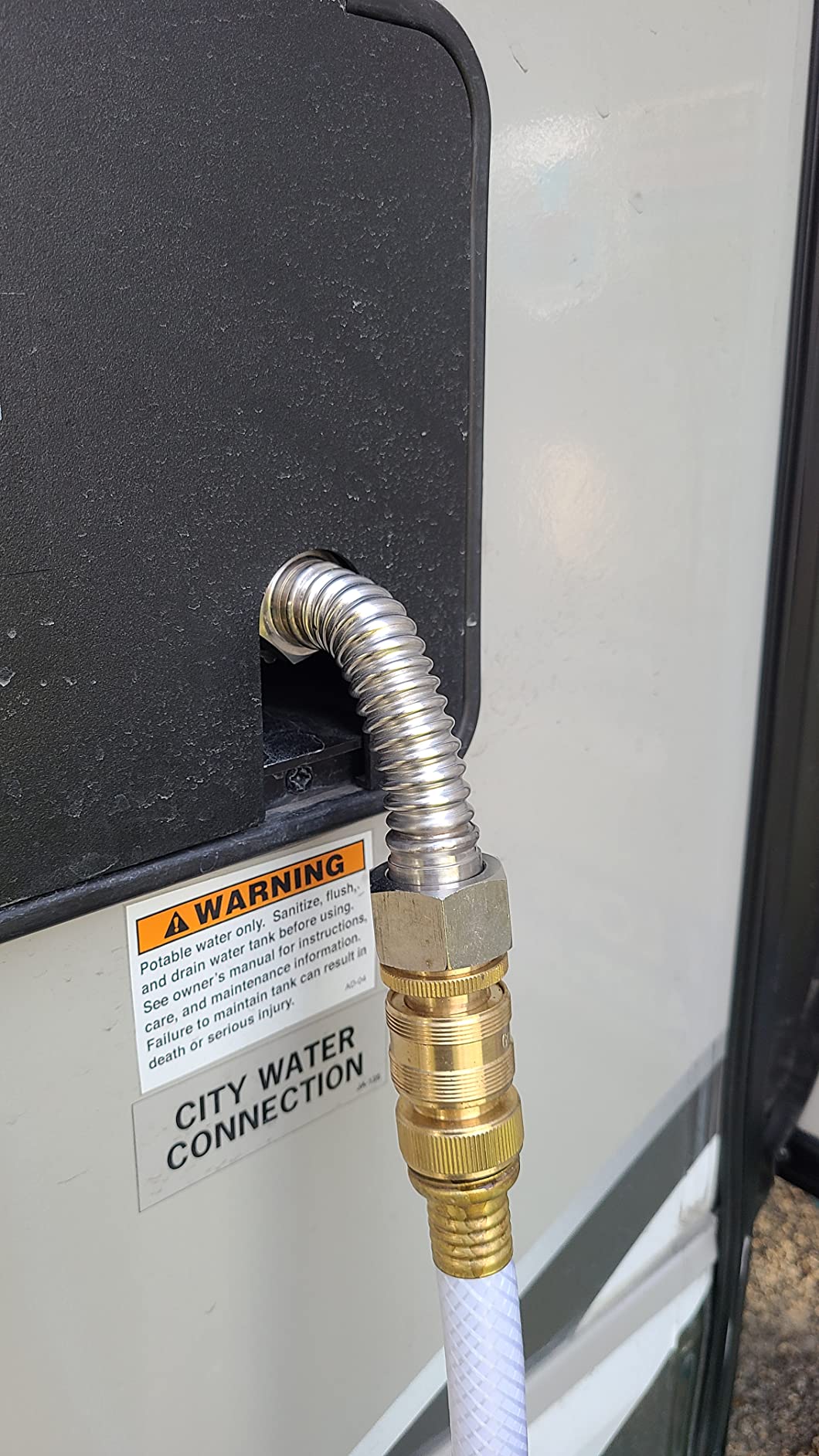
Mount the filter where you can see it and reach it, and use a drinking-water-safe hose with fittings that do not overtighten. Brass fittings resist leaks better than plastic, which is the durability argument for canister systems, and a hose protector takes strain off the RV water inlet so the connection is not carrying the weight of the hose.
For the tank itself, sanitise on a schedule rather than after a problem appears. The commonly used method is a quarter cup of unscented bleach for every 15 gallons, let it stand, then drain, refill and rinse through the system twice. Do this after any suspected contamination, after a long storage period, and a couple of times a year as routine.
If flow drops, work through these in order before blaming the cartridge. Check the O-rings and gaskets for a shift that is partly blocking the path. Check the flow direction arrow, because a backwards install loads the coarse side immediately. Check the hose behind the connection for a kink. Check the pump inlet for debris. Then change the cartridge, which is the correct fix in most cases but the least useful one to jump to first.
And if you ever need a non-potable source treated, keep a UV pen or an MSR Guardian purifier on board as a backup. r/camping owners treat both as standard kit for exactly this reason, and no inline filter substitutes for them.
Frequently Asked Questions
What is the best water filter for drinking water in an RV?
The Camco TastePURE 40043 is the best all-round choice because it is certified to NSF/ANSI 42, 53 and 372, uses GAC and KDF media with a 20-micron sediment stage, and has the largest owner base of any filter in our roundup. For the highest drinking-water purity at one tap, add an under-sink or reverse osmosis system; for unknown water sources, use a UV purifier alongside any inline filter.
Which type of filter is best for drinking water?
For drinking water only, an under-sink or reverse osmosis system is the highest-quality answer because it treats the tap you actually drink from without restricting the rest of the rig. An inline hose filter is best for protecting the fresh water tank and improving overall taste. Experienced RVers commonly run both: the inline filter on the fill, the finer stage at the kitchen sink.
What is the best water filter for a motorhome?
A Class A motorhome with a dedicated wet bay can support a permanent canister or whole-RV system, and the Clearsource Ultra is the only unit in our roundup that claims virus and cyst reduction while filtering the whole rig at 4.5 gpm. Most motorhome owners are better served by an inline filter on the fill plus an under-sink drinking system, which is lighter and far cheaper to maintain.
What is the best water filter system for a travel trailer?
A travel trailer is almost always a storage-constrained installation, so an inline hose filter is the practical choice. The Camco TastePURE 40043 weighs 16 ounces and stores in a small compartment, and most inline filters install tool-free in under five minutes. Avoid large canister and purifier systems in a trailer unless you have a confirmed exterior mounting space.
What are people saying about the Camco TastePURE RV water filter?
Owners consistently report that it clears chlorine, sediment and unpleasant taste from campground water, and that the wide-body design resists clogging through a season. The most common complaint is mechanical rather than filtration related: the included short hose connector can leak at the fitting, and the threads are U.S.-standard only. It holds a 4.7 rating across more than fifty thousand reviews.
How good are RV water filters, really?
They are good within a narrow scope: they reliably improve taste, remove sediment and reduce a meaningful set of heavy metals, and certified units do it verifiably. They do not stop hard-water spots, which come from dissolved minerals, and they do not make unknown water safe, since only purification systems address viruses and cysts. They also do not sanitise a contaminated fresh water tank.
Why is my RV water flow slow after a few months of camping?
Usually one of four things: the cartridge is loaded, the filter is installed backwards so the coarse side is catching what the fine side should handle, an O-ring has shifted and partly blocked the path, or the supply hose is kinked behind the connection. iRV2 owners report flow becoming poor after about five months on hookups, with a 150-gallon tank taking over an hour and a half to fill. A starved RV water pump is a far more expensive problem than a clogged filter.
Do RV water filters remove bacteria, viruses and parasites?
No. Inline and canister filters in this roundup are taste, odor, sediment and partial-metals devices, and none of them are a reliable barrier to viruses or Giardia cysts. Only the Clearsource Ultra, which uses a VirusGuard UV stage, makes a virus and cyst reduction claim. For creek water or any non-potable source, owners on r/camping use a UV pen or an MSR Guardian purifier as the correct tool.
How often do I need to replace an RV water filter cartridge?
Most inline cartridges in this roundup are rated for one camping season, about three months, and the RVGUARD 4-pack is rated at three months per filter. Replace on a schedule rather than waiting for taste to change, and shorten the interval on heavily chlorinated, sediment-heavy or mineral-rich supply. A canister or carbon block system lasts longer between changes but costs more per cartridge.
Can I use generic replacement cartridges instead of the branded ones?
Often yes. iRV2 owners report taking an old cartridge to a big-box hardware store and matching it to a generic equivalent that fits, which is a straightforward way to cut replacement costs. Check the micron rating, media type and certification claims match before you substitute, and confirm the housing dimensions fit, since a generic that fits a different brand will not necessarily seal correctly.
The Best RV Water Filters for Drinking Water in 2026
The Camco TastePURE 40043 takes the top spot for 2026 because certification and owner history beat every other consideration. NSF/ANSI 42, 53 and 372, a 20-micron sediment stage with GAC and KDF media, and enough reviews that its weak points are known rather than suspected. If your budget allows only one filter, that is the one to put on the hose.
Pick the Waterdrop 2-pack if you want the seasonal spares in the same box and do not want to hunt for a replacement mid-trip. Pick the FRIZZLIFE MV99 if what you care about is heavy metals and lead rather than taste, since it is the only inline-class unit certified to NSF/ANSI 53 health-effects standards. Pick the Beech Lane if you are a full-timer who will mount a system once and keep it, and pick the Clearsource Ultra only if you are filtering the whole rig and need virus protection.
And keep the two-system idea in mind. An inline filter protects the tank, a finer stage handles the glass, and a sanitised tank protects both. Those three things together are what actually make RV tap water drinkable, and no single product on this list does all three.