
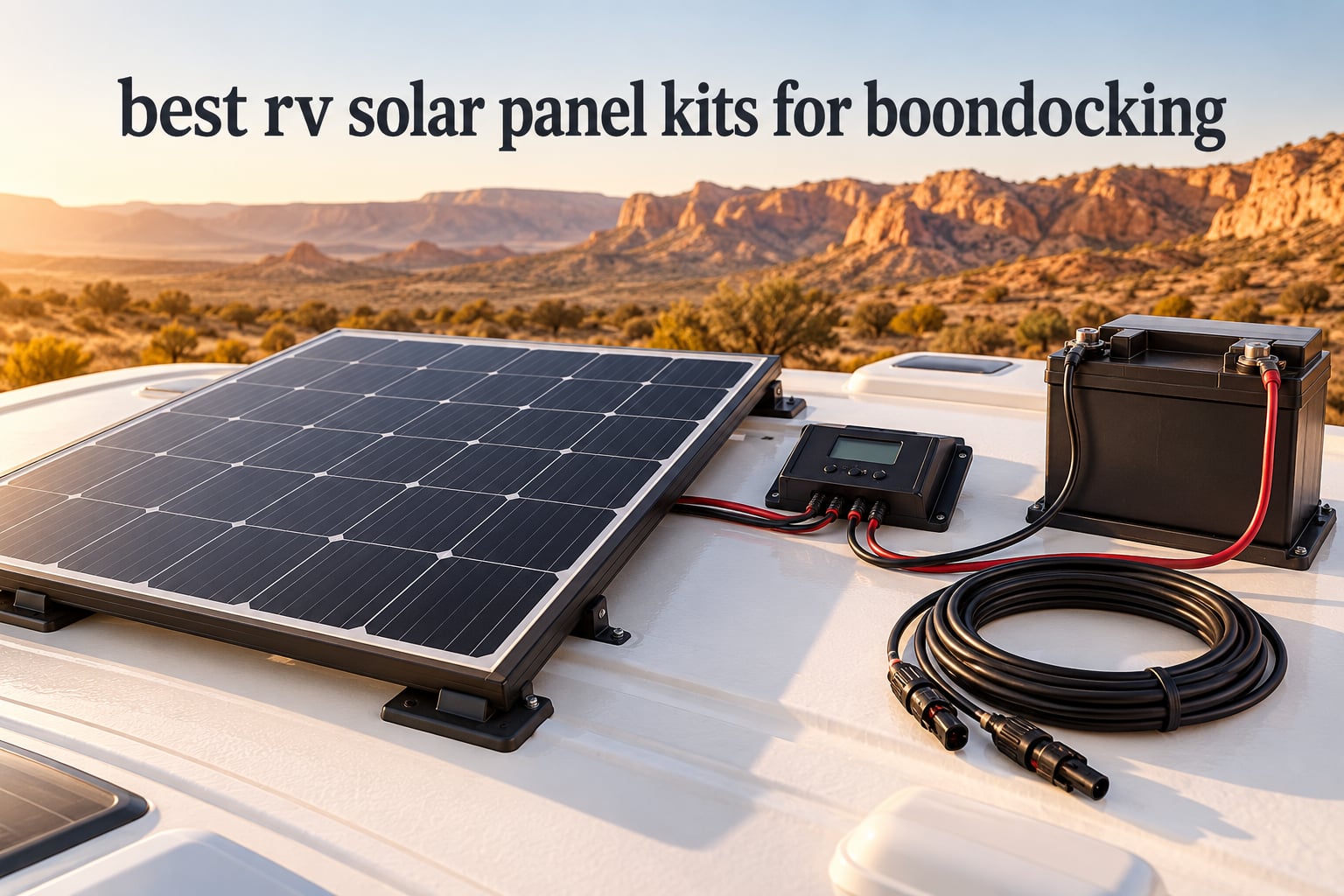
Boondocking is the only kind of camping where your roof becomes the power plant. There is no 30 amp pedestal, no 120V outlet at the site, and every watt your fridge, water pump, furnace fan and laptop draw has to come out of a battery bank that solar has to refill by the next morning. That is why the best RV solar panel kits for boondocking are not the ones with the biggest number printed on the box.
They are the ones that match your real daily load, your actual roof space, and the sun you are likely to see. A 400W array on a van with a curved roof and a shade tree is worse than 200W mounted flat in full sun. We went through twelve kits in the category, checked the panel specs, controller type, weight, connector standard and warranty terms on each one, and sorted them by what they can realistically do for someone living off the grid.
One thing worth saying up front: almost none of these kits include a battery or an inverter. Most are panel, charge controller, cable and mounting hardware in a box. That is a good thing if you already have a house bank and an inverter wired in, and a frustrating one if you are starting from a bare trailer. We flag which is which in every review below.
2026Table of Contents
Top 3 Picks for Boondocking in 2026

Renogy 100W 12V Starter Kit
- 100W mono panel at 22.5% efficiency
- 30A PWM controller with Bluetooth port
- Z brackets and cables included
- Expandable to 400W

Voltset 100W 12V Kit
- 100W mono panel at 500+ Wh per day
- 20A smart controller with LCD
- USB and Type-C ports
- IP67 frame with 4 Z brackets

Renogy 100W N-Type Foldable…
- 100W N-type cells at 25% efficiency
- Pre-installed 20A PWM controller
- Adjustable aluminum kickstand
- Padded carrying case
All 12 RV Solar Panel Kits Compared in 2026
| Product | Specs | Action |
|---|---|---|
| Renogy 100W 12V Starter Kit |
|
Check Latest Price |
 DOKIO 300W Foldable Kit DOKIO 300W Foldable Kit |
|
Check Latest Price |
| Voltset 100W 12V Kit |
|
Check Latest Price |
 Topsolar 100W 12V Kit Topsolar 100W 12V Kit |
|
Check Latest Price |
| Renogy 100W N-Type Foldable Kit |
|
Check Latest Price |
 Renogy 200W Foldable Kit Renogy 200W Foldable Kit |
|
Check Latest Price |
 ECO-WORTHY 200W 12V and 24V Kit ECO-WORTHY 200W 12V and 24V Kit |
|
Check Latest Price |
 ECO-WORTHY 200W All-In-One Kit ECO-WORTHY 200W All-In-One Kit |
|
Check Latest Price |
 XINPUGUANG 200W Flexible Kit XINPUGUANG 200W Flexible Kit |
|
Check Latest Price |
 ECO-WORTHY 400W MPPT Kit ECO-WORTHY 400W MPPT Kit |
|
Check Latest Price |
 ZOUPW 220W N-Type Kit ZOUPW 220W N-Type Kit |
|
Check Latest Price |
 ACOPOWER 200W Foldable Kit ACOPOWER 200W Foldable Kit |
|
Check Latest Price |
How Many Watts Do You Need to Boondock?
Start with your load, not the panel. A 12V compressor fridge freezer typically pulls 40 to 60Ah a day once you account for duty cycle. Add a 10 amp water pump used four times a day, LED lighting, a phone charger, a laptop and a furnace fan running overnight, and a typical two-person rig lands somewhere between 150 and 250 amp-hours a day. Multiply by 12 volts and a realistic figure is 1800 to 3000 watt-hours a day before you add an inverter.
Then divide by the peak sun hours you can count on. Desert sites in fall and winter can deliver 5 to 6 usable hours. A Pacific Northwest site in November might give you 2. After allowing for controller losses, orientation and soiling, a 400W array in good sun produces roughly 1600 watt-hours a day, and the same array in heavy overcast might produce 500.
Is 400W solar enough for RV?
For full-time boondocking of a typical Class C or travel trailer, 400W is the practical floor, not the comfortable target. It covers a 12V fridge, lights, water pump and phone charging in good sun, but an inverter running a microwave will eat that margin fast. Pair 400W with at least a 200Ah lithium bank, and add a portable panel on cloudy trips.
1. Renogy 100W 12V Starter Kit: The Reference Point for Compact Boondocking Setups
Renogy 100W 12V Solar Panel Starter Kit with 30A PWM Controller
100W mono panel at 22.5% cell efficiency
30A PWM controller
14.1 lb with brackets
Expandable to 400W
Pros
- Complete kit in one box with panel controller cables and Z brackets
- Highest rating and review count in this group at 4.7 stars across 4010 reviews
- 22.5% cell efficiency with 100% EL testing on every panel
- 10-year materials warranty and 25-year power output warranty
- Weather rated for 2400Pa wind and 5400Pa snow
- Expandable to 400W and works with AGM gel flooded and lithium banks
Cons
- PWM controller harvests less than an MPPT unit
- Basic wiring to the battery is required rather than plug and play
- MC4 connectors are not universal across every power station
I keep coming back to this kit because the number that matters most in a boondocking roundup is not efficiency, it is proof. More than 4000 owners have run this exact box, and the feedback pattern is consistent: it mounts on a roof, it connects, and it quietly tops off a house bank for years.
The panel is monocrystalline at 22.5% cell efficiency with electroluminescence testing on every unit, and average output is quoted near 500 watt-hours a day in decent sun.
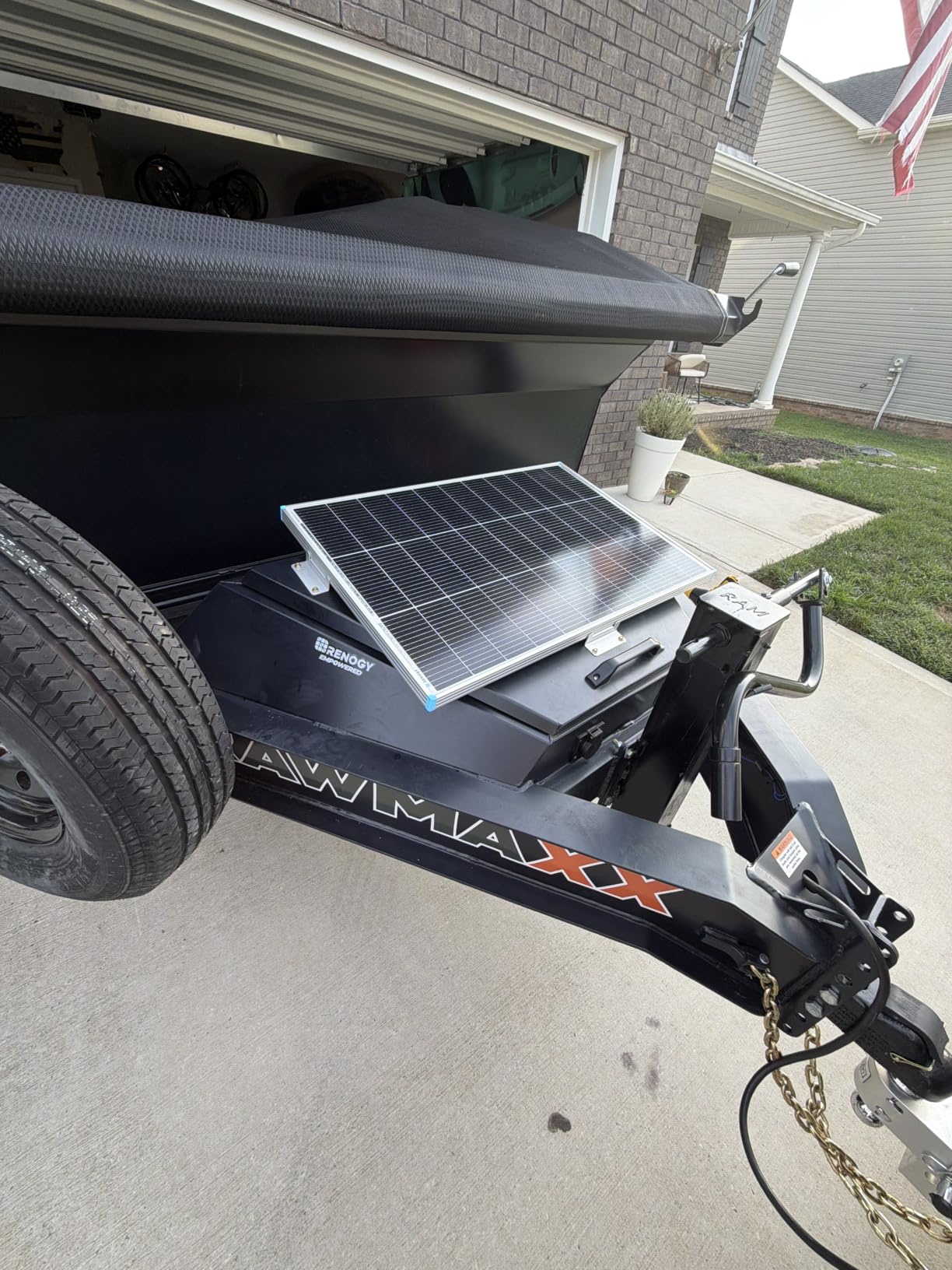
The build details are what set it apart from cheaper 100W boxes. The junction box is IP65 rated, the solar connectors are IP67, and the frame is tested for 2400Pa wind and 5400Pa snow loads. Those numbers matter when the roof is taking 60 mph gusts across a desert basin in spring.
Warranty is where this one separates cleanly. You get 10 years on materials and workmanship, 25 years on power output, and 2 years on the controller. Most competitors in this group offer a single year on everything, so for a permanent roof installation that is a real consideration.
What you get and how it performs in a real week
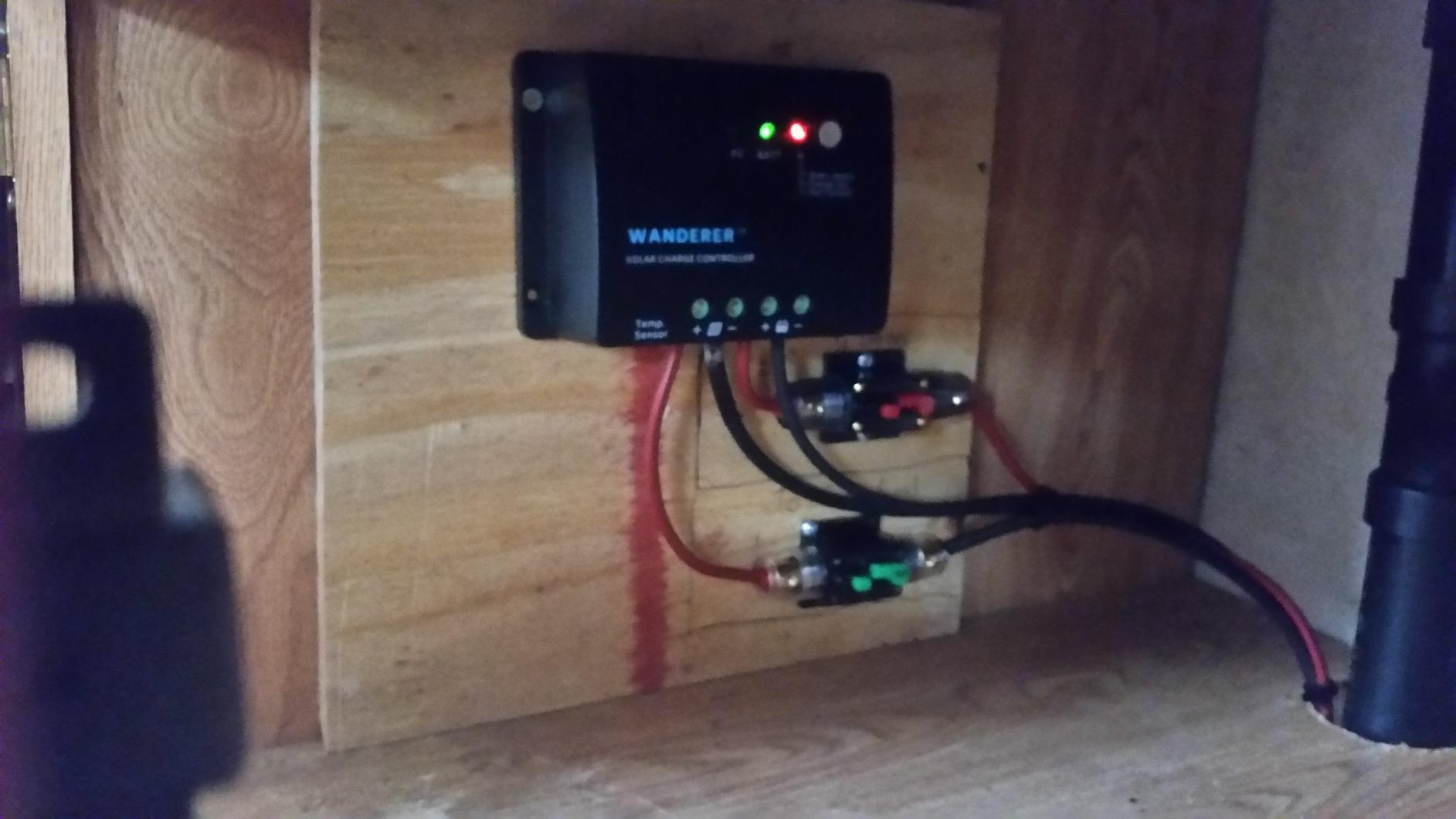
The Wanderer 30A PWM controller has an RS232 Bluetooth port, and with the optional BT-1 module you can watch charging current from your phone. The controller is compatible with AGM, gel, flooded and lithium chemistry, so it works whether you are on the battery the factory put in or a lithium swap you do later.
Reviewers repeatedly describe it as a maintainer rather than a generator. On a 100W panel the harvest is modest, and on a shaded or overcast day it may only put a few amps into the bank. If your plan is weekend dry camping with a 12V fridge, that is genuinely enough.
Where it falls short for full-time boondocking
PWM is the limitation to plan around. A PWM controller simply reduces the panel voltage to match the battery, so you lose the harvest difference between a 12V panel and a 18V or 21V panel that an MPPT unit would capture. The gap widens in heat and in low light, which is exactly when boondockers need the energy.
It also is not plug and play. You will be running the included cable to the battery and tightening a few ring terminals.
2. DOKIO 300W Foldable Solar Kit: The Most Watts You Can Deploy Without a Roof
DOKIO 300W Portable Foldable Solar Panel Kit with Charge Controller
300W foldable mono panel
15.2 lb packed
9.85 ft panel lead
Dual USB ports
Pros
- Largest single portable panel in this group at 300W
- Controller is separate and can be swapped or upgraded
- SAE XT60 alligator and DC barrel adapters all included
- 9.85 ft lead lets the panel sit in sun while the controller stays shaded
- Dual USB ports for phones and small devices
Cons
- Many power stations cap solar input well below 300W
- Fabric case should be kept out of heavy rain and prolonged direct sun
- USB output current fluctuates when running with no battery attached
The panel folds to 19.3 by 37.4 inches at 15.2 pounds, and that 300W figure is the highest nameplate output of any single portable panel in this roundup.
The controller is a separate box with a 9.85 foot cable, so the panel can sit in direct sun while the controller stays shaded.
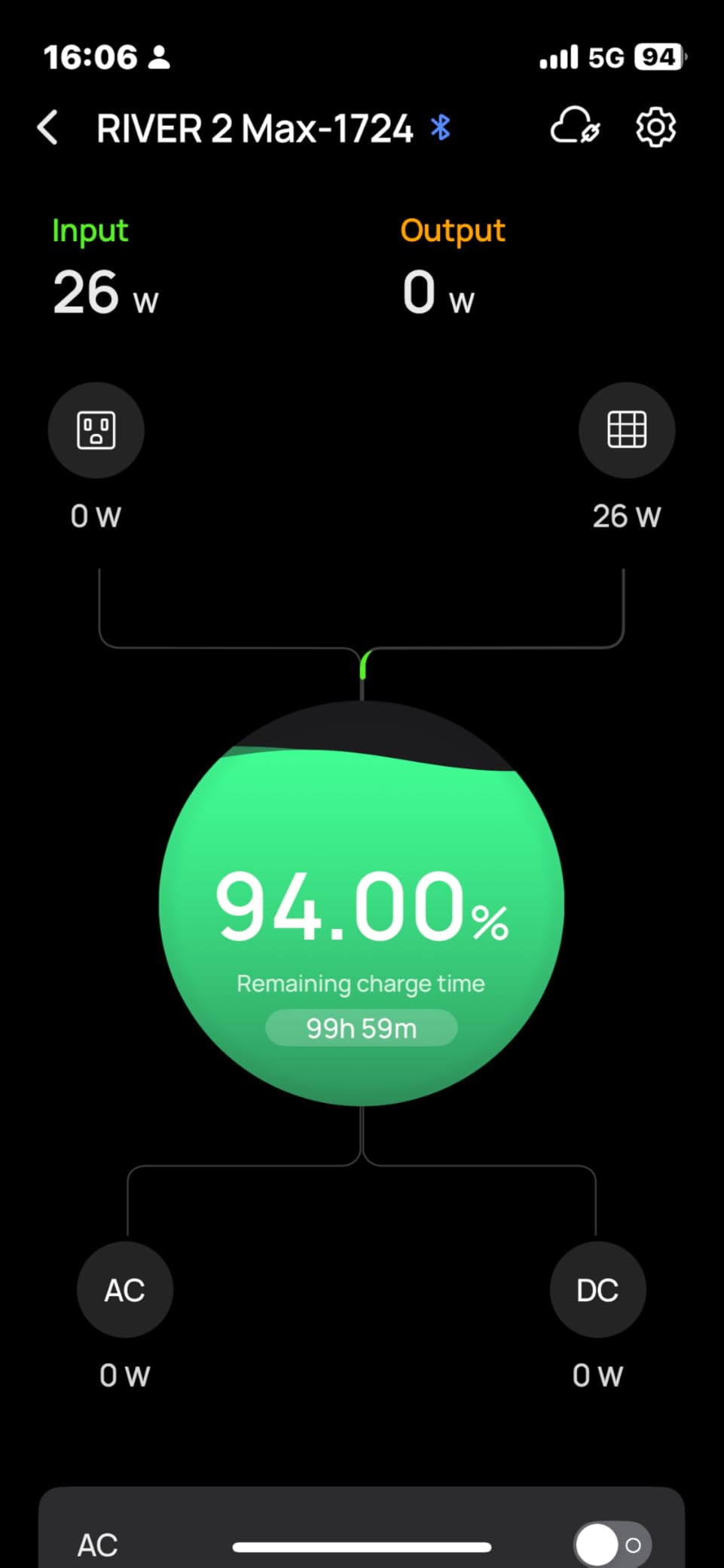
Connector coverage is the quiet strength here. The kit ships with SAE, XT60, alligator clip and several DC barrel adapters, so it will talk to most 12V batteries and many portable power stations.
The PWM controller carries reverse polarity, overcharge, overload and short circuit protection, which matters when a panel connector gets stepped on or a lead is pinched in a slide.
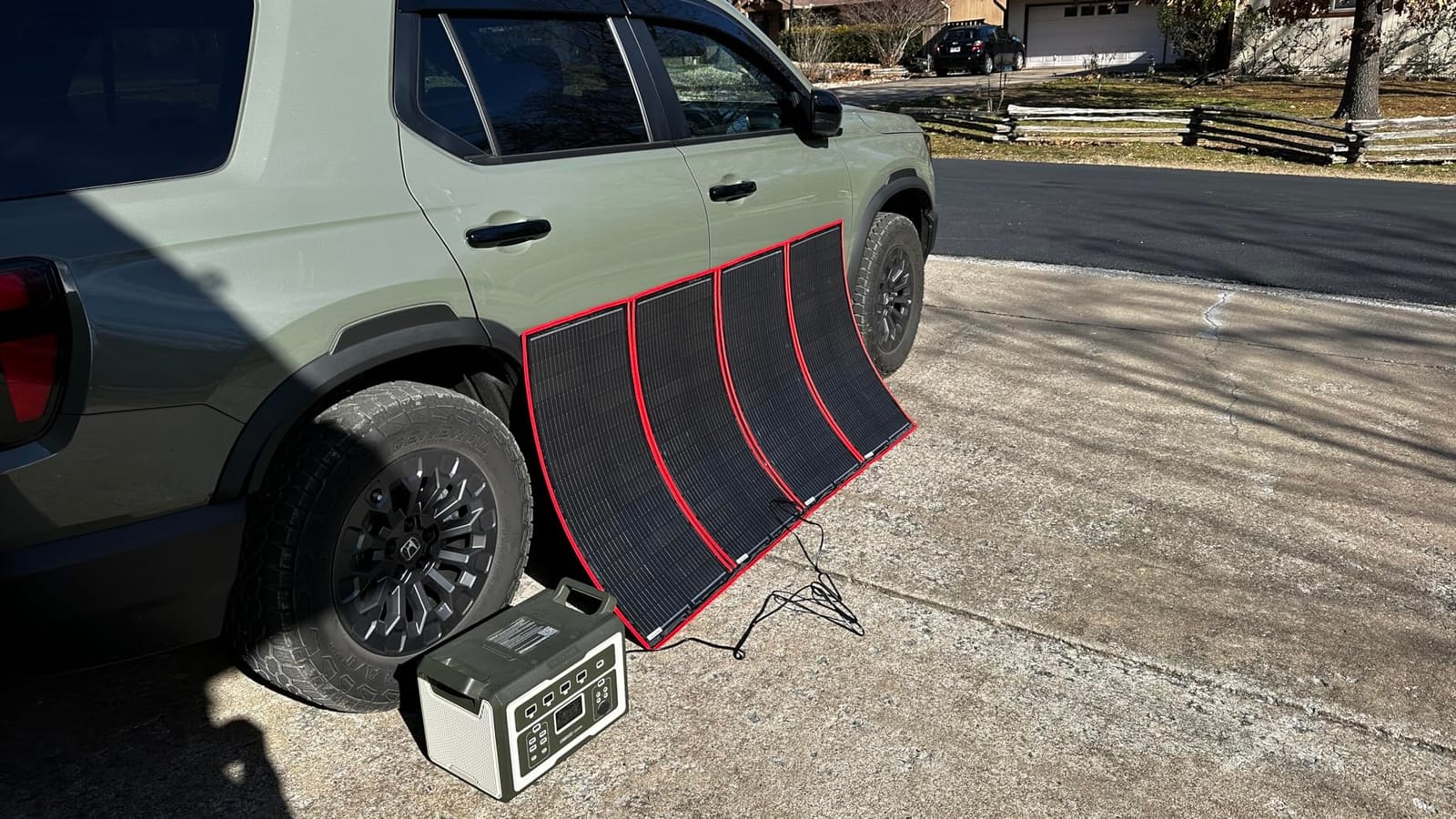
What you get in the bag
A 300W monocrystalline foldable panel, the standalone controller, the 3 meter lead, the adapter set and a storage bag. The panel is rated 18V maximum, the typical working point for a 12V charging system.
Owners like that the controller can be replaced. If you outgrow the PWM unit and want MPPT, you can keep the panel and swap the box rather than buying the whole system again.
Why 300W rarely means 300W
Here is the honest part. A 300W nameplate feeding a 12V bank through a PWM controller yields a realistic 5 to 6 amps, and many power stations cap their solar input at 100 to 200W regardless of what you plug in. Reviewers report this gap more than any other complaint on this kit.
Treat the 300W as an excellent afternoon top-up and a mediocre substitute for a full-time roof array.
3. Voltset 100W 12V Kit: The Easiest Permanent Mount in the Group
Voltset 100W 12V Solar Panel Kit with 20A Smart Charge Controller
100W mono panel at 500+ Wh per day
20A smart controller with LCD
IP67 frame
Pre-drilled holes
Pros
- 4.5 stars across more than 2300 reviews
- Top ranked kit in its Amazon solar panel category
- 20A smart controller with LCD readout plus USB and Type-C ports
- IP67 waterproof aluminum frame rated for wind and dust
- Works with LiFePO4 AGM gel flooded and lithium ion
- Pre-drilled holes and alligator clips make install fast
Cons
- PWM-class controller is less efficient than MPPT
- Alligator clip leads need periodic re-tighting on rough roads
- A single 100W panel needs long sun hours to refill a large bank
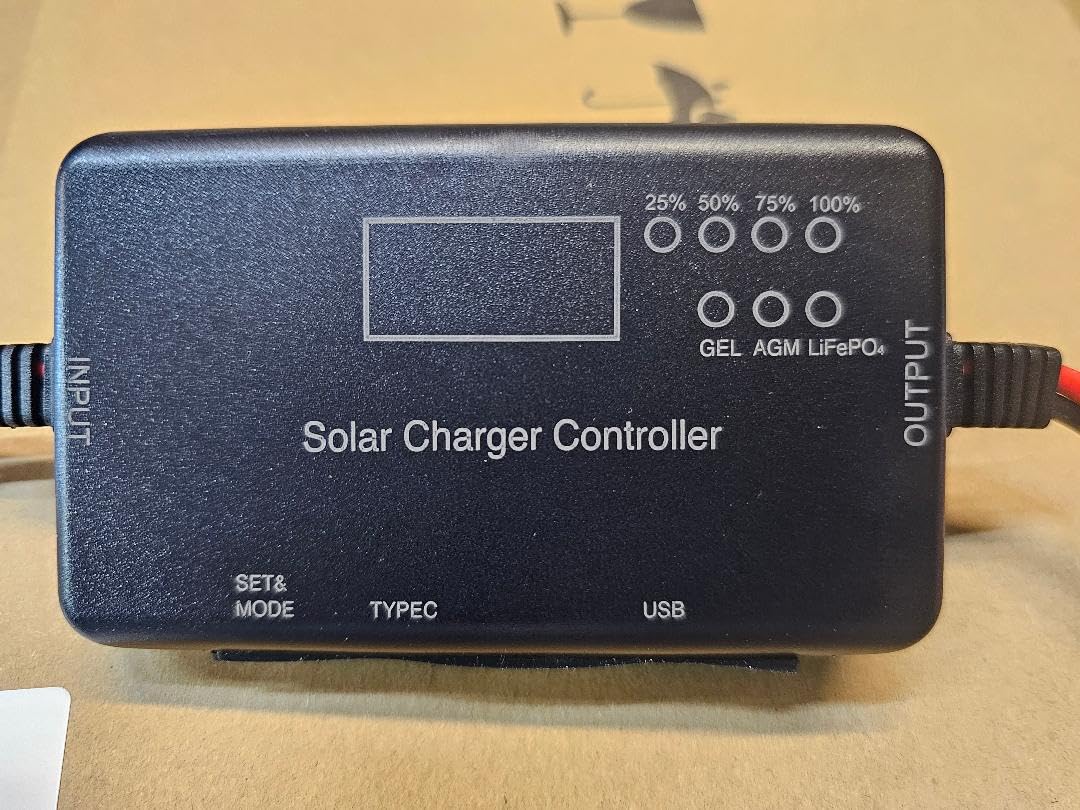
The Voltset kit wins on the things that annoy people most: drilling, wiring and wondering what the controller is doing. Pre-drilled holes, an alligator clip lead and a controller with a digital voltage display mean most installs are finished before the kettle boils.
Quoted output is 500 or more watt-hours a day in sufficient sun.
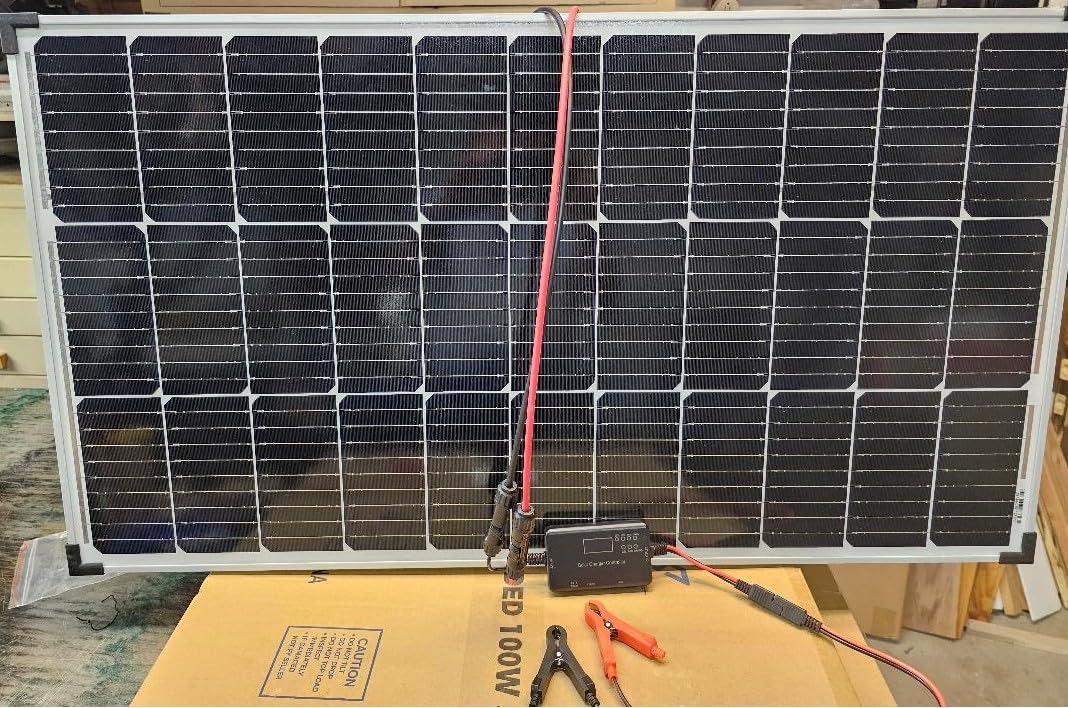
The USB and Type-C ports on the controller are a small touch that gets used constantly. Phone charging off the house bank instead of the power station is a habit that saves a lot of battery over a long trip.
Weather protection is rated IP67 on the frame, with dust, rust and wind resistance called out as well.
Why this suits first-time kit builders
The protection list on the 20A controller is long: overcharge, overvoltage, overcurrent, short circuit, reverse polarity and overheating.
It also handles lithium without a fuss, so a future LiFePO4 swap will not orphan the controller.
Where the 100W ceiling shows up
Reviewers are consistent about the limit: this is a trickle charger, not a replenisher. A single 100W panel on a 400Ah house bank would need far more usable sun hours than a typical fall camping trip provides.
The other recurring note is about the alligator clips. On smooth pavement they are fine, but on washboard and gravel they loosen, and an intermittent connection is a good way to find out your controller was never the problem.
4. Topsolar 100W 12V Monocrystalline Kit: Budget Starter With Expandability
Topsolar Solar Panel Kit 100 Watt 12 Volt Monocrystalline Off Grid System for Homes RV Boat + 30A 12V/24V Solar Charge Controller +Solar Cables + Z-Bracket for Mounting
100W mono panel at 19.5% efficiency
30A PWM controller
15.2 lb
Pre-drilled frame
Pros
- Panel controller cables and 4 Z brackets in one box
- Lowest cost per watt among the kits we reviewed
- 2400Pa wind and 5400Pa snow rated tempered glass and aluminum frame
- Pre-drilled mounting holes speed up installation
- Expandable to 260W on 12V or 520W on 24V
Cons
- 19.5% efficiency trails modern N-type panels
- Listing specs vary between Vmp Imp and dimensions
- Heavy at 15.2 lb for a 100W panel
- PWM controller limits harvest in low light
The Topsolar kit is the honest entry point. It is not the most efficient panel here and it is not the lightest, but the box contains a panel, a 30A PWM controller, cable and four Z brackets, and it will keep a pair of 12V deep cycle batteries alive indefinitely.
Cell efficiency is listed at 19.5% on a 38 cell panel, with Vmp near 23V and Imp near 4.3 amps.
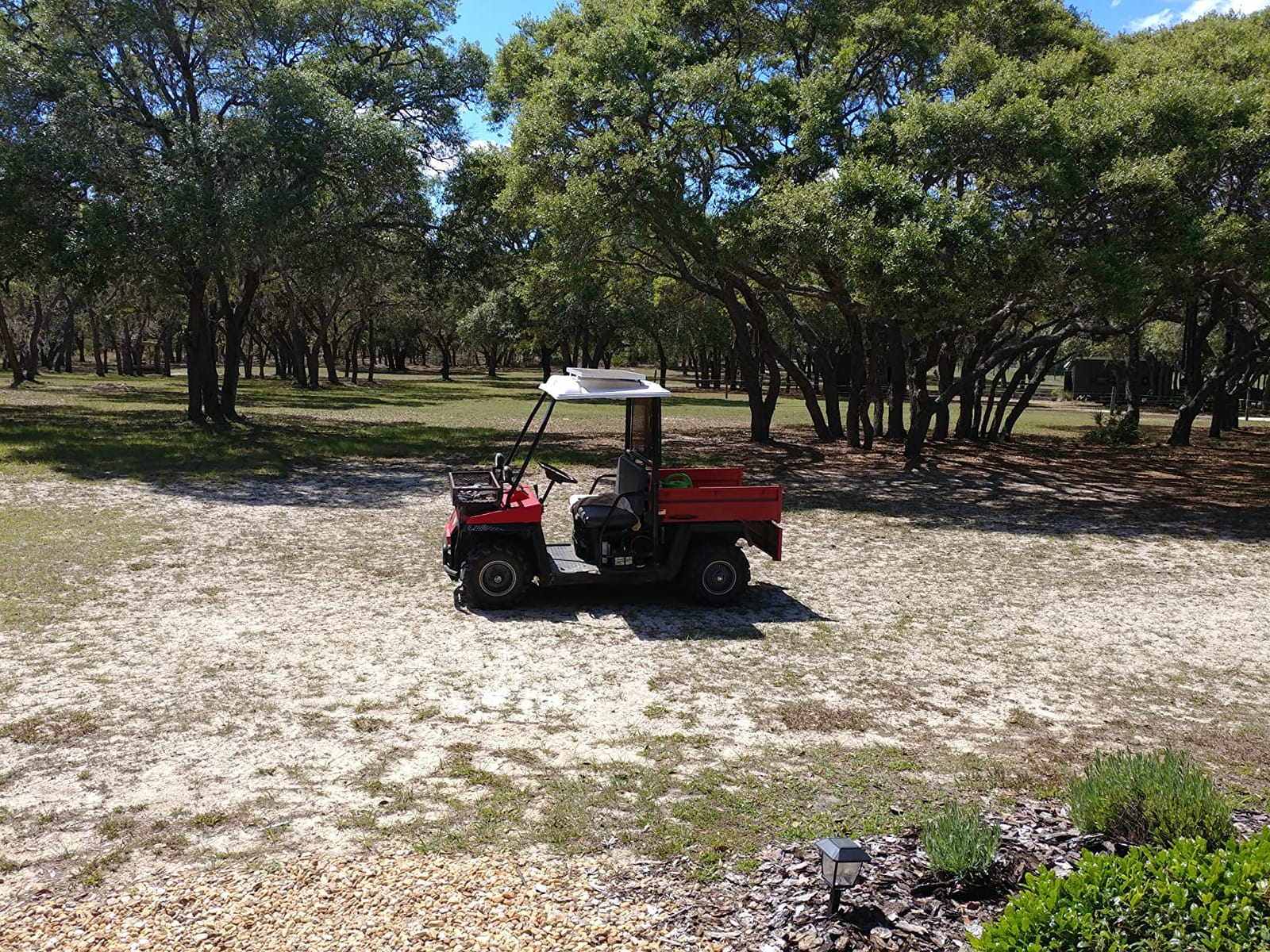
Expansion is the underrated part. The controller and the panel arrangement are set up to grow to 260W on a 12V system or 520W on 24V, which makes this a reasonable first step for someone who knows a bigger array is coming.
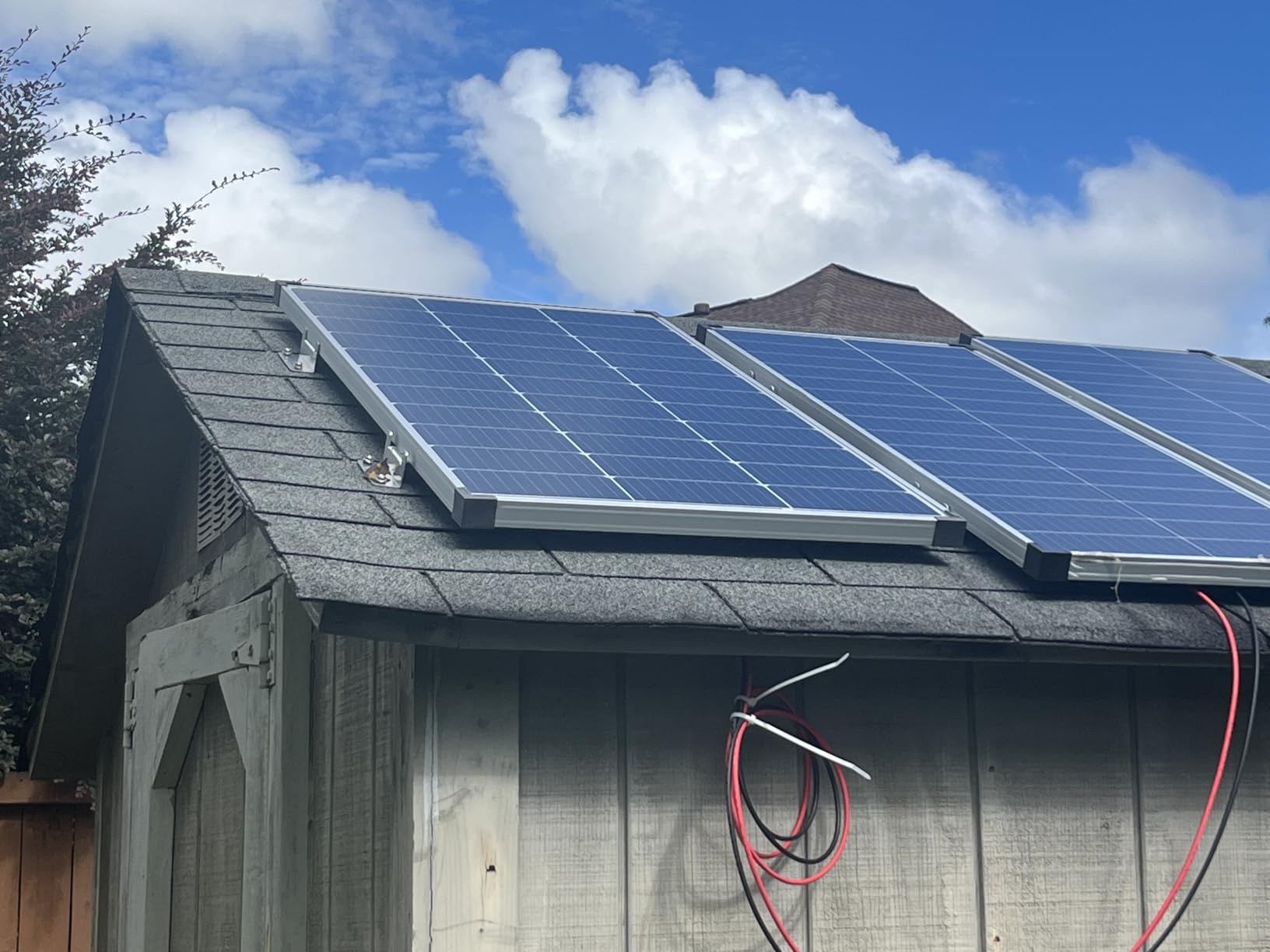
The 30A controller carries overcharge, overvoltage, discharge, short circuit and reverse polarity protection, and the tempered glass and aluminum frame is rated for 2400Pa wind and 5400Pa snow.
Where the value actually comes from
Owners consistently treat this as a budget starter kit: easy to mount, everything in the box, and enough current to top off small banks. For a pop-up or a small trailer running lights and a 12V fridge, that is the whole job.
At 15.2 pounds it is the joint heaviest 100W rigid panel here, and getting it onto a fiberglass roof on a hot day is a two-person job.
What to check before you buy
The listing itself carries inconsistent figures for Vmp, Imp and panel dimensions. Before you commit, pull the datasheet and confirm the actual panel size, because roof space is the constraint that kills more RV solar plans than wattage does.
And be realistic about PWM in low light. On a shaded site or a heavy overcast week, a 19.5% panel behind a PWM controller has very little in the tank by day three.
5. Renogy 100W N-Type Foldable Kit: Best Panel Technology in a Carryable Box
Renogy 100W Portable Solar Panel, 25% High Efficiency Solar Panel Kit with 20A Charger Controller for 12V Battery&Power Station, N-Type Foldable Solar Panels w/Tempered Glass for RV, Camping Off-Grid
100W N-type cells at 25% efficiency
20A PWM controller pre-installed
17.4 lb
Adjustable kickstand
Pros
- 25% N-type cell efficiency with up to 500Wh per day
- Kickstand lets you reposition the panel through the day
- Controller is pre-installed and waterproof so setup is clips only
- Low iron tempered glass with anti-corrosion frame and IP65 box
- Bypass diodes in the junction box limit hotspot effects
Cons
- Heavier than expected for a 100W foldable panel
- Practical harvest into a 12V bank is roughly 40 to 60W
- Light duty latches and support arms
- Included cable is just under 10 ft
Cell technology is the headline here. N-type cells at up to 25% conversion efficiency sit at the top of the range in this group, and the panel is rated to produce up to 500 watt-hours a day with five hours of sunlight.
The controller is already bolted to the back of the panel and sealed, so setup is alligator clips to a battery.
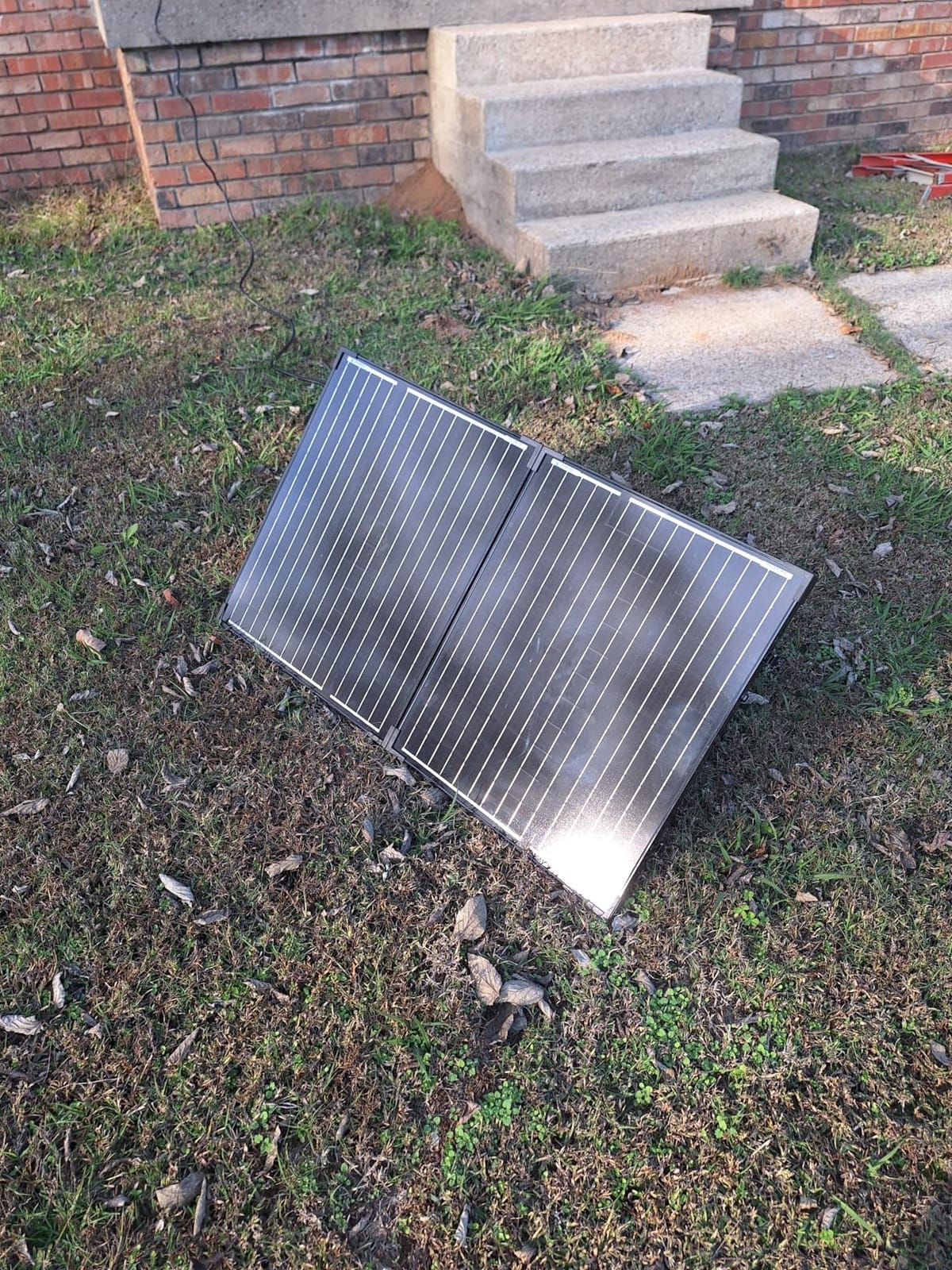
Build quality gets called out by long-term owners. The hinges, latches, kickstand and padded case hold up, and several reviewers report running multiple units for years without a failure. The 2-year warranty is short, which is the one place the spec sheet disappoints.
Bypass diodes in the junction box help when part of the panel is shaded, and the low iron glass with an anti-corrosion aluminum frame and IP65 junction box handles weather well.
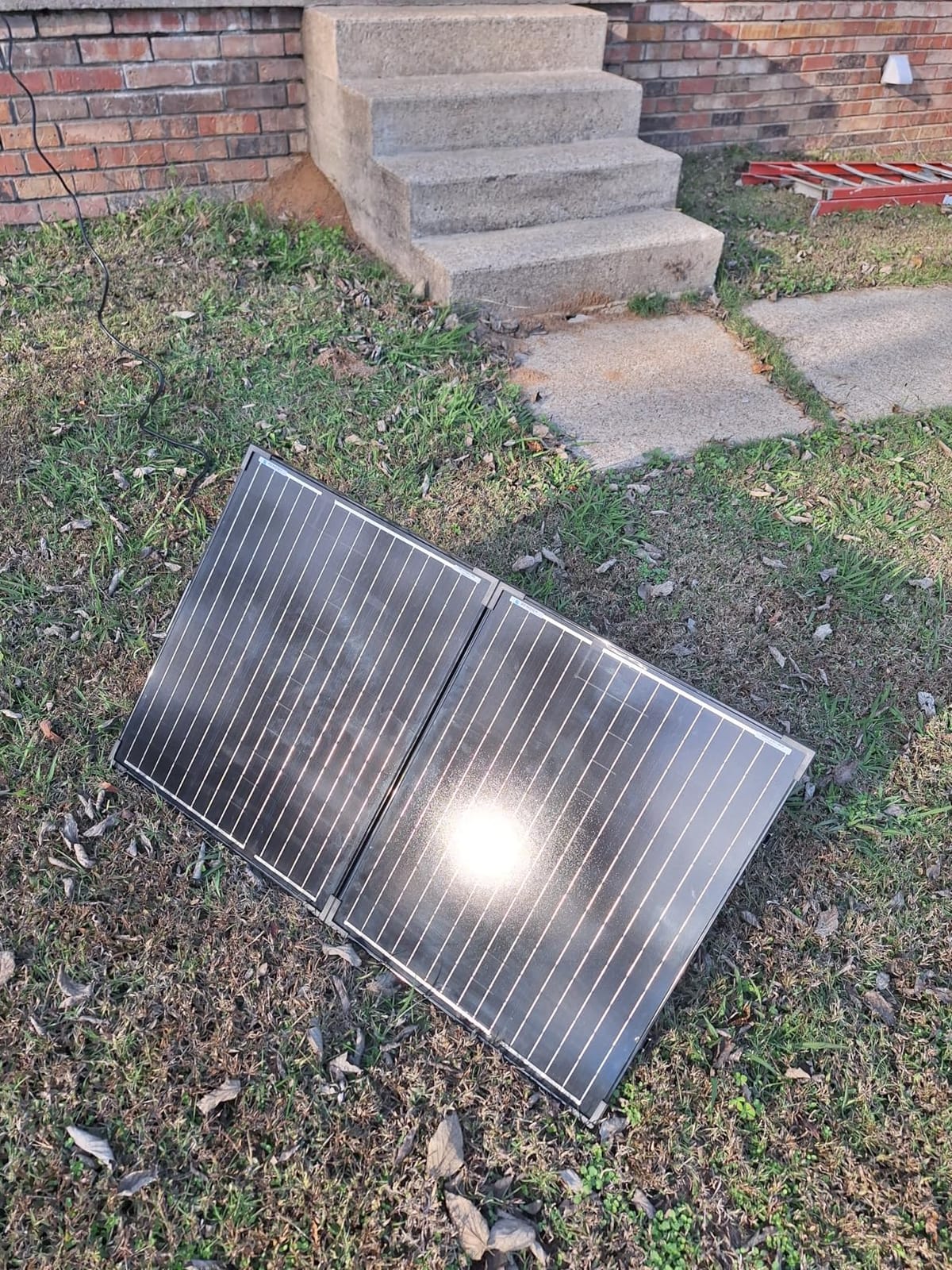
Managing the output expectation
This is the most important number in the review. A 100W N-type panel feeding a 12V bank through a PWM controller puts out about 5 to 7 amps, so plan on 40 to 60W realistically, not 100. Good cell technology does not change the physics of PWM.
What it does change is temperature behavior and low light performance.
Best used as a roaming supplement
The adjustable aluminum kickstand is what makes this a boondocking tool rather than a shelf item. You can move the panel to follow the sun, and long-term RV owners say that repositioning is exactly how they keep several units useful across a week.
At 17.4 pounds it is heavier than you expect, and the cable at just under 10 feet can be short if your only good sun is on the far side of the rig.
6. Renogy 200W Foldable Suitcase Kit: Portable Power With Real Current
Renogy 200W 12V Portable Solar Panels Suitcase with Waterproof 20A Charge Controller, Foldable 200 Watt Solar Panel W/Adjustable Kickstand, Solar Charger for Power Station, RV, Camping, SUV, Off Grid
200W N-type at 25% efficiency
20A PWM controller pre-installed
28.5 lb
Up to 1000Wh per day
Pros
- 200W N-type output in a self-contained folding case
- Users report 11 to 12 amps in full sun
- Pre-installed waterproof controller with a readable display
- MC4 output connects to many 12V power stations
- 5-year materials warranty and 3-year output warranty
Cons
- Heavy and bulky at 28.5 lb for roof carry
- PWM caps harvest and an MPPT upgrade would add roughly 40%
- Supplied lead has a 10A inline fuse on a 20A controller
- Panel catches wind when set up and needs anchoring
Doubling the panel to 200W is where portable solar starts to feel like a system rather than an accessory. Detailed long-term users report roughly 160W of real harvest at 12 to 13 amps on 12V AGM banks, which is the number that actually matters.
At that output you can run a furnace fan and keep a 12V fridge cycling for a full day of dry camping.
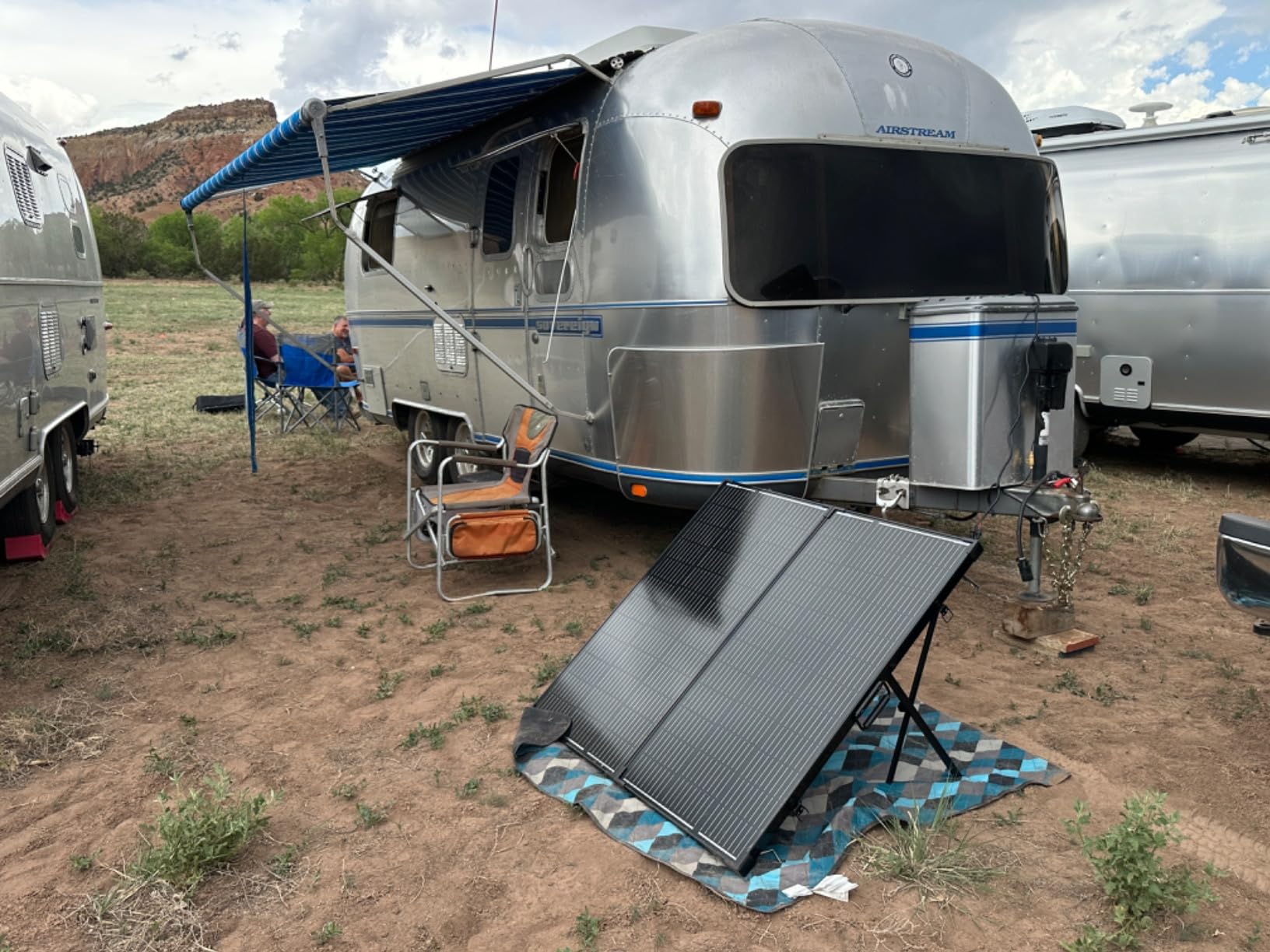
Warranty is better than the 100W version, with 3 years on output and 5 years on panel materials and workmanship. The controller still carries only 2 years.
The MC4 output means you can connect straight into many EcoFlow and Bluetti style power stations when you bypass the controller, which makes this a good companion panel for a portable power station setup.
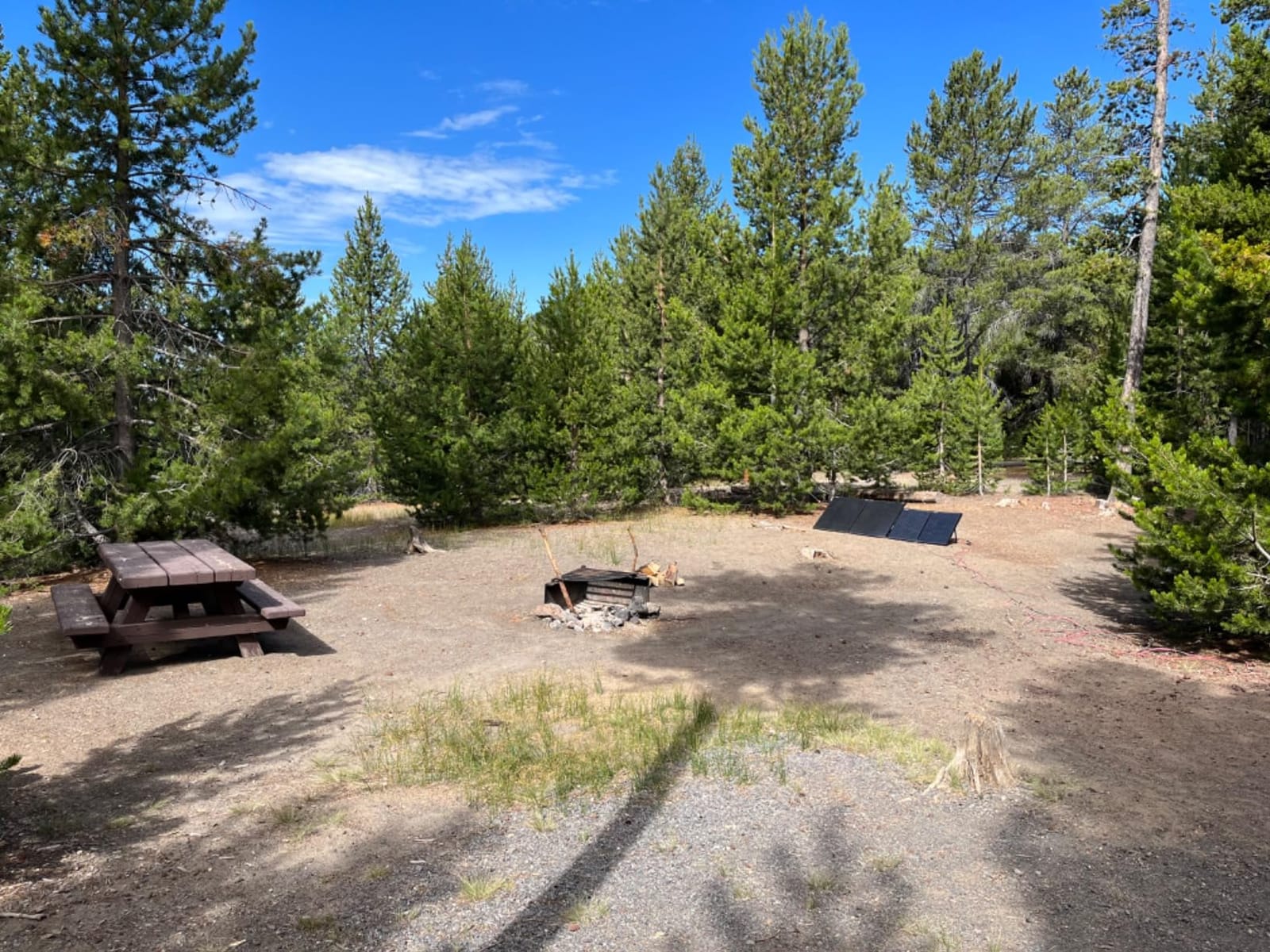
The fuse detail worth checking
The supplied lead has a 10 amp inline fuse on a 20 amp controller. Several reviewers flag this, and the logic is sound: if you ever run this into a battery bank that accepts the full controller current, replace the inline fuse with one sized for the wire and the controller.
Reviewers also note the MC4 and controller wires lack strain relief, which is where failures start on a kit unfolded every morning.
Is the weight worth carrying
At 28.5 pounds this is a two-handed load and genuinely awkward on an RV roof. For anyone whose rig already has a small rigid panel, the better use is a portable setup on a ground mount or a truck bed, kept out of the wind.
Foldable legs and latches are described as feeling cheap by some owners, and reviewers warn that the panel acts like a sail outdoors. Anchor it, and do not leave it unattended.
7. ECO-WORTHY 200W 12V and 24V Kit: Best Rigid Pair for a Small Roof
ECO-WORTHY 200 Watts 12 Volt/24 Volt Solar Panel Kit with High Efficiency Monocrystalline Solar Panel and 30A PWM Charge Controller for RV, Camper, Vehicle, Caravan and Other Off Grid Applications
Two 100W mono panels at 21.5% efficiency
30A PWM controller
31.6 lb total
About 800Wh per day
Pros
- Two rigid 100W panels plus a 30A controller in one box
- 4.6 stars across more than 1100 reviews
- Panels can be wired in series for 24V or in parallel for 12V
- Corrosion resistant aluminum frame rated 2400Pa wind and 5400Pa snow
- Complete wiring set including 16.4 ft 10AWG cables and Z brackets
Cons
- PWM controller with the MPPT version sold as a separate variant
- Rigid panels need real roof or rack space
- 31.6 lb total weight to handle during setup
- Only a 1-year warranty
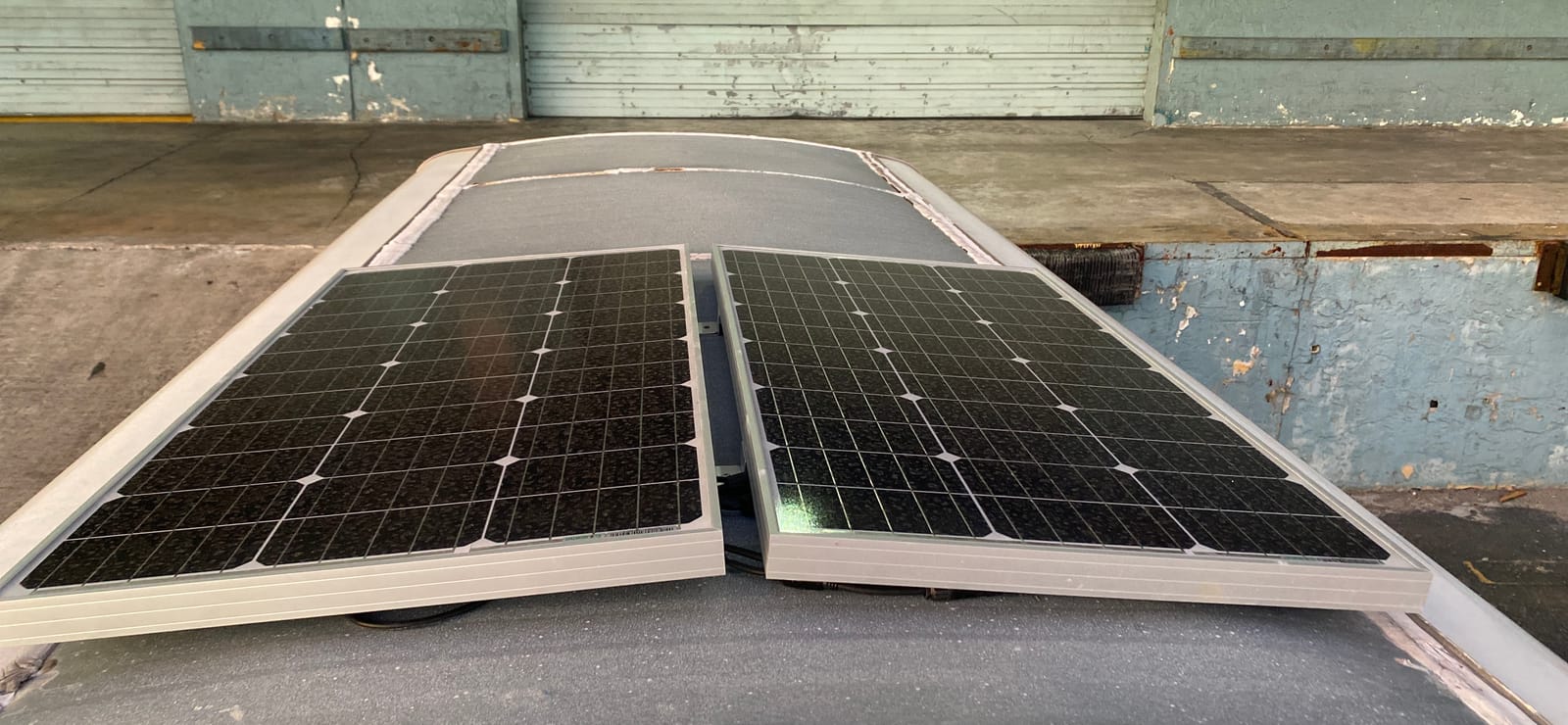
Two rigid panels on a proper aluminum frame is the classic permanent install, and this kit is a well-executed version of it. Rated up to 21.5% efficiency, the pair delivers about 800 watt-hours a day with four full sun hours.
The panels are pre-drilled with plug-and-play leads, so they can be wired in series for 24V or in parallel for 12V.
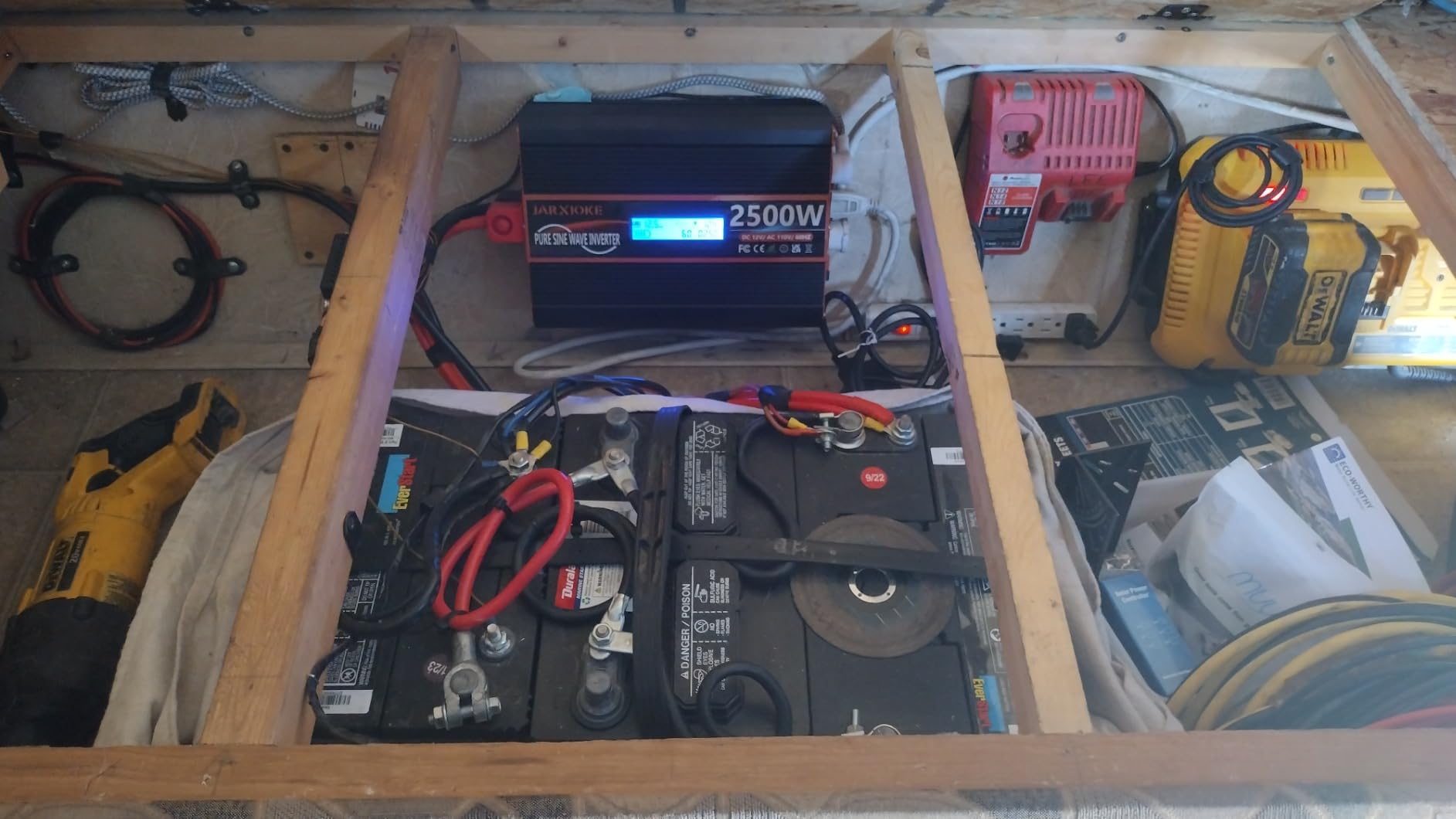
Everything needed is in the box: two sets of Z brackets, a 30A controller, a pair of 16.4 foot 10AWG solar cables, a pair of 2-in-1 connectors and a tray cable. That 10AWG gauge is the right call and avoids the voltage drop problem we get back to later.
The junction box is IP65 rated and the aluminum alloy frame is corrosion resistant, rated for 2400Pa wind and 5400Pa snow loads.
Why two rigid panels beat one flexible panel here
Rigid glass panels run cooler than flexible ones because they sit with an air gap under the frame, and cooler panels produce more. In desert boondocking where ambient temperature is the limiting factor, that gap is worth real watts over a day.
Two 100W panels also let you split the array across two roof sections, reducing shading loss if a vent shades one half.
The two things to plan around
The controller is PWM. ECO-WORTHY sells an MPPT version as a separate variant, and if you are going to a larger bank, choosing the MPPT version at the outset is cheaper than replacing hardware later.
The warranty is 1 year with 24/7 technical support. For a permanent roof-mounted array, that is the shortest warranty here, and 31.6 pounds of glass coming down onto an RV roof is a reason to mount it properly the first time.
8. ECO-WORTHY 200W Complete Kit With Battery and Inverter: The Single-Box Start
ECO-WORTHY 200 Watt 12V Complete Solar Panel Starter Kit for RV Off Grid
200W N-type panels
30A controller
600W pure sine wave inverter
12V 50Ah LiFePO4 battery
Pros
- Only kit here that includes a battery and an inverter with the panels
- 600W pure sine wave inverter with a 20ms UPS auto-switch
- Adjustable 5A to 40A charging current via app or button
- LiFePO4 battery rated 4000 to 15000 deep cycles
- N-type cells at 25% efficiency with dual sided output
- About 800Wh per day with 4 hours of sunlight
Cons
- 50Ah battery is small next to a 600W inverter
- Rigid panels must be permanently mounted
- XT60 interface is limited to 30A
- Smallest review base of the larger kits at 341 reviews
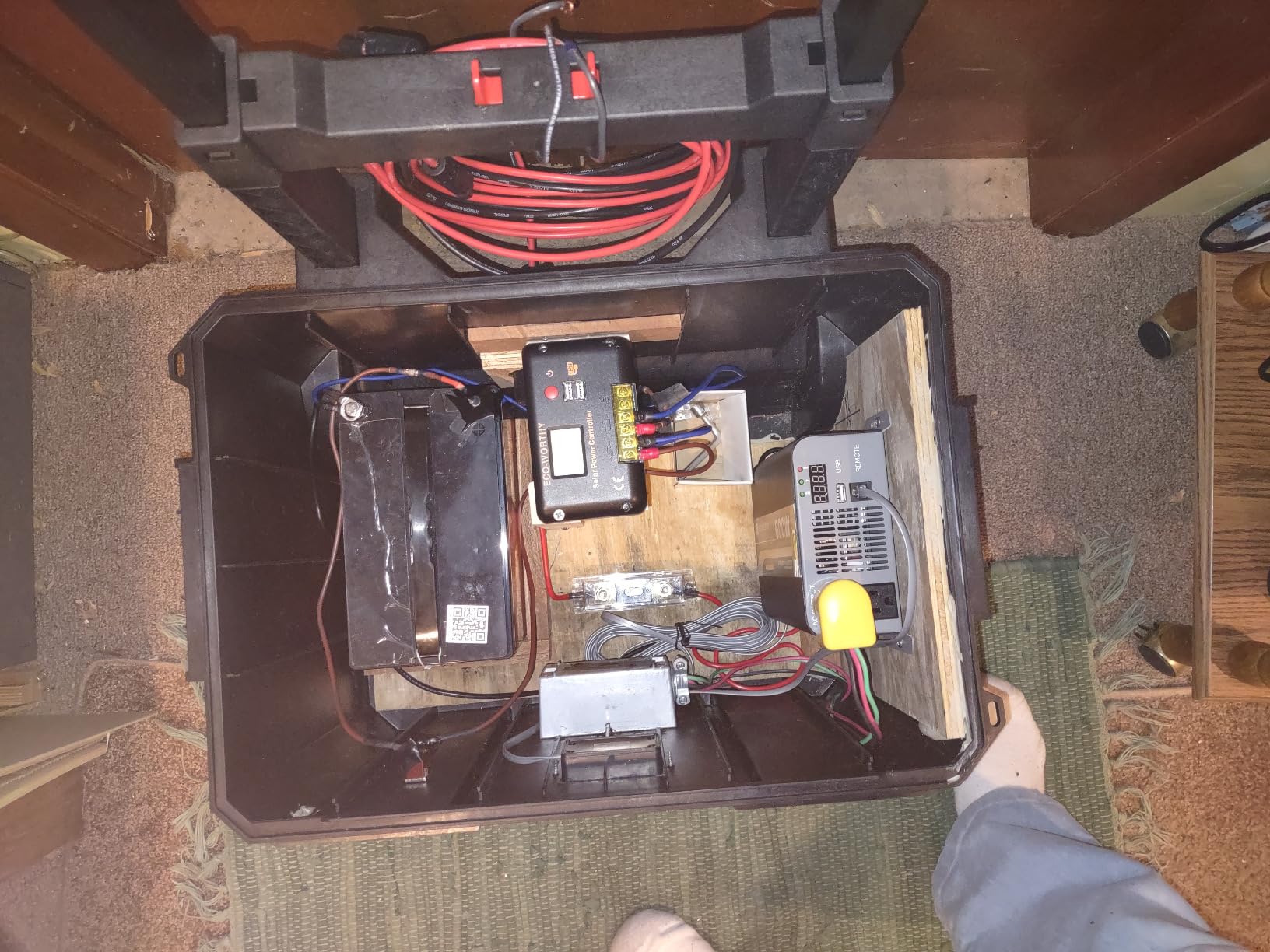
This is the only kit in the roundup that arrives as a working off-grid system. You get 200W of N-type panels, a 30A charge controller, a 12V 50Ah LiFePO4 battery and a 600W pure sine wave inverter, all matched to each other by the manufacturer.
For a bare trailer with no house bank and no inverter, the matched battery and inverter save a weekend of wiring.
The panels are the interesting engineering. They are N-type at 25% efficiency with a dual-sided design that can pick up reflected light for up to 15% extra output, which is a real gain on a bright sand or gravel site with a reflective surface nearby.
Charging current is adjustable from 5 to 40 amps through the app or the button, and the Anderson plug-and-play connectors mean you are not fabricating battery cables on day one.
What the battery can and cannot do
A 50Ah LiFePO4 battery is rated for 4000 to 15000 deep cycles, which is a genuine step up from lead acid. But 50Ah is a small bank to hang behind a 600W inverter, and it will not carry a microwave, a hair dryer and a compressor fridge through an evening.
Think of it as a demonstration battery. It proves the system works and carries light loads, and you would add a second bank in parallel before running an inverter hard.
Before you commit to a single-box system
Pre-matched systems trade flexibility for convenience. If your bank size is already decided, or you already own a pure sine wave inverter, the extra components here are duplicated spend and the XT60 interface caps at 30 amps.
Also check the panel mounting requirement. These are rigid panels that need real roof or ground space, not adhesive.
9. XINPUGUANG 200W Flexible Kit: Lightest Option for Curved and Drill-Free Roofs
XINPUGUANG Flexible Solar Panel 200W 12V Solar System kit for RV Boat Van
Two 100W flexible panels
About 4 lb each
0.098 inch thick
IP67 rated
Pros
- Lightest array here at about 4 lb per 100W panel
- Bends up to 260 degrees to follow curved RV roofs with no drilling
- IP67 waterproof and rated 5400Pa snow and 2400Pa wind
- Includes a 20A controller plus parallel and extension cables
- Installers report steady charging in overcast conditions
Cons
- Some buyers report output well below the 100W per panel nameplate
- Controller shows battery voltage only with no panel voltage readout
- Buttons are fiddly and settings take care to set
- Adhesive mounting on textured or ribbed roofs is tricky
Weight is the whole argument for this kit. Each 100W flexible panel weighs about 4 pounds and measures 0.098 inches thick, which makes this by far the lightest array in the roundup and the easiest to carry up onto a van or a fiberglass travel trailer roof.
The panels bend up to 260 degrees, so they conform to a curved roof, a pop-top or a ribbed aluminum surface without drilling a single hole. That single feature makes it the go-to choice for rigs where drilling is not an option.
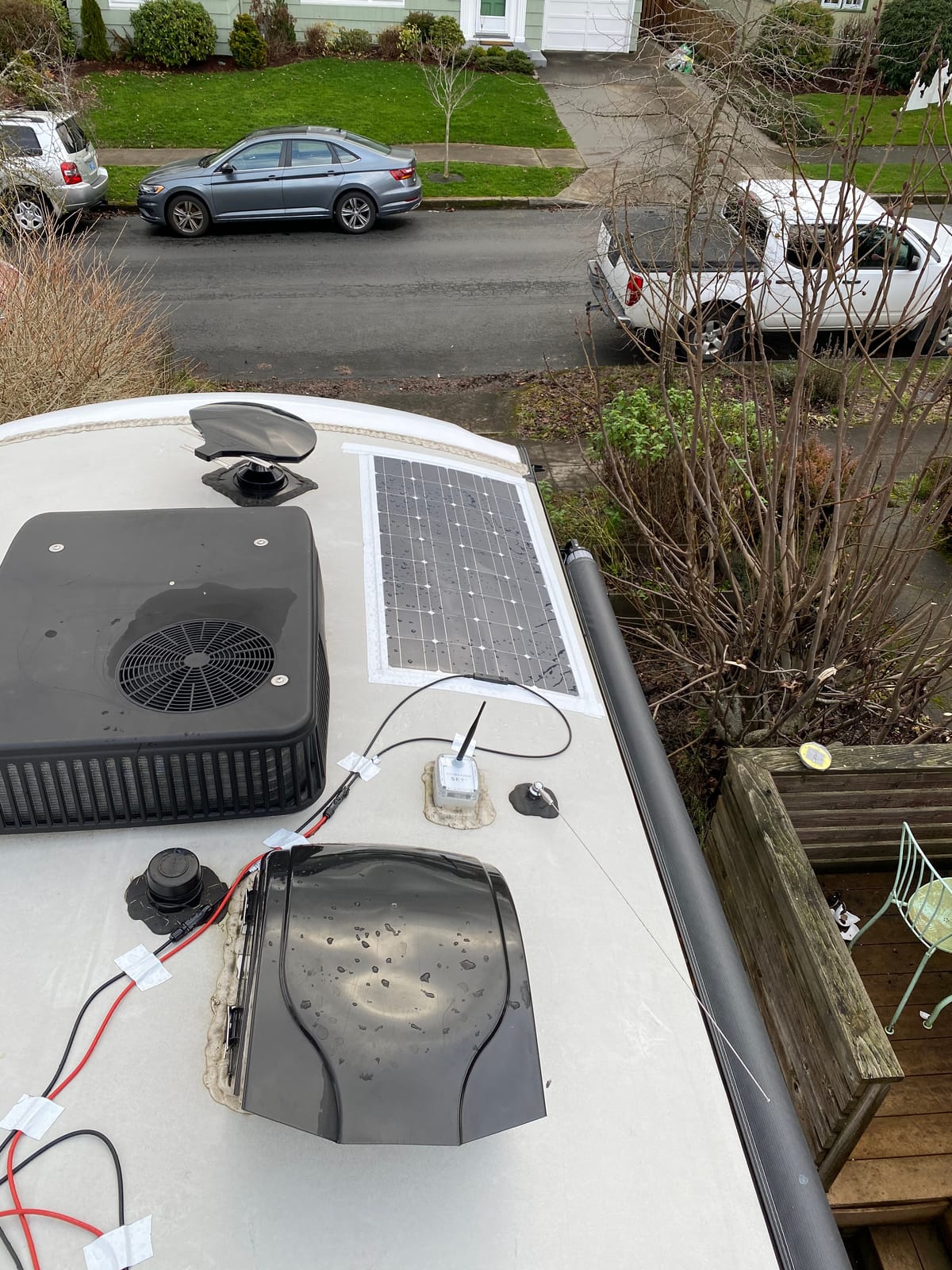
Each panel has a built-in bypass diode, an IP67 waterproof rating, and 5400Pa snow and 2400Pa wind load ratings. The 20A controller covers short circuit, open circuit, reverse and overload protection, and it works with lead acid, gel and lithium phosphate banks on 12V or 24V systems.
Owners mounting them on van and trailer roofs report that they keep small deep cycle banks topped up reliably, and a few note steadier charging in overcast conditions than expected.
Where flexibility earns its place
There are roofs where a rigid panel simply cannot go. A curved fiberglass cap, an air conditioner shroud, a reshingled section or a roof with a factory antenna mount can all rule out rigid panels. Flexible panels conform to all of them.
They also add almost no weight, which matters on a small trailer with a payload limit, and they can be peeled up and relocated when you move sites.
The output gap and the adhesive problem
Several buyers report real output well below the 100W per panel nameplate. Flexible cells run hotter, they have no air gap underneath, and there is no rigid glass to shed heat, so the same 24 to 25% cell efficiency converts less of the sun that hits them.
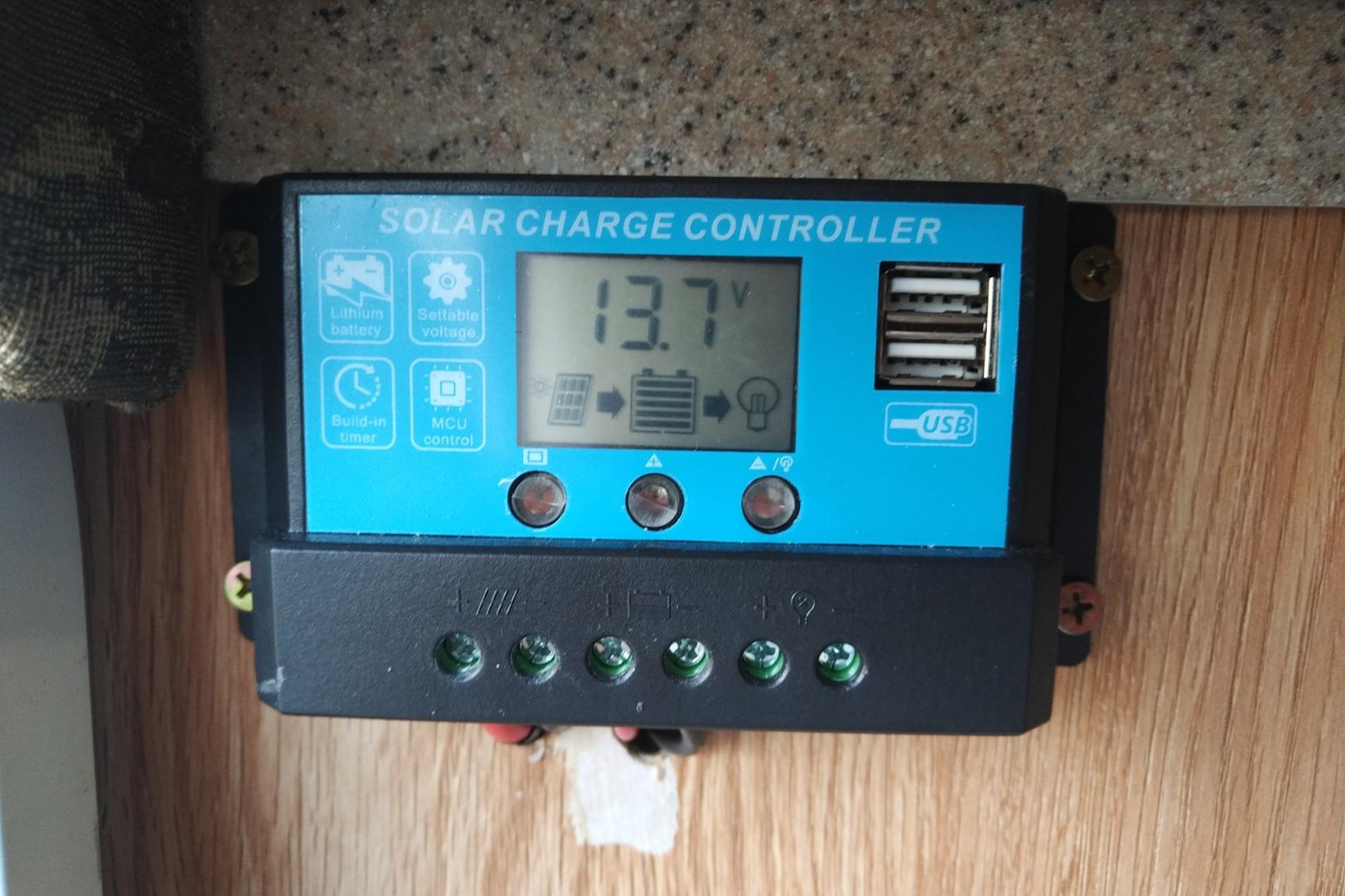
The controller is the other weak point. It reports battery voltage but not incoming panel voltage, which removes the diagnostic tool you need when output is lower than expected. Mounting adhesive on a textured or ribbed roof is also the step that decides whether the install lasts.
10. ECO-WORTHY 400W MPPT Kit: The Only True MPPT Array Here
ECO-WORTHY 400 Watt 12 Volt Premium Solar Panel Kit :4pcs 100W Solar Panel+ 40A MPPT Charge Controller+ Bluetooth Module+ Mounting Z Brackets, 400W 12V Solar Power Off Grid System for Home, RV, Boat.
Four 100W panels at 400W total
40A MPPT controller
Bluetooth monitoring
About 1.6 kWh per day
Pros
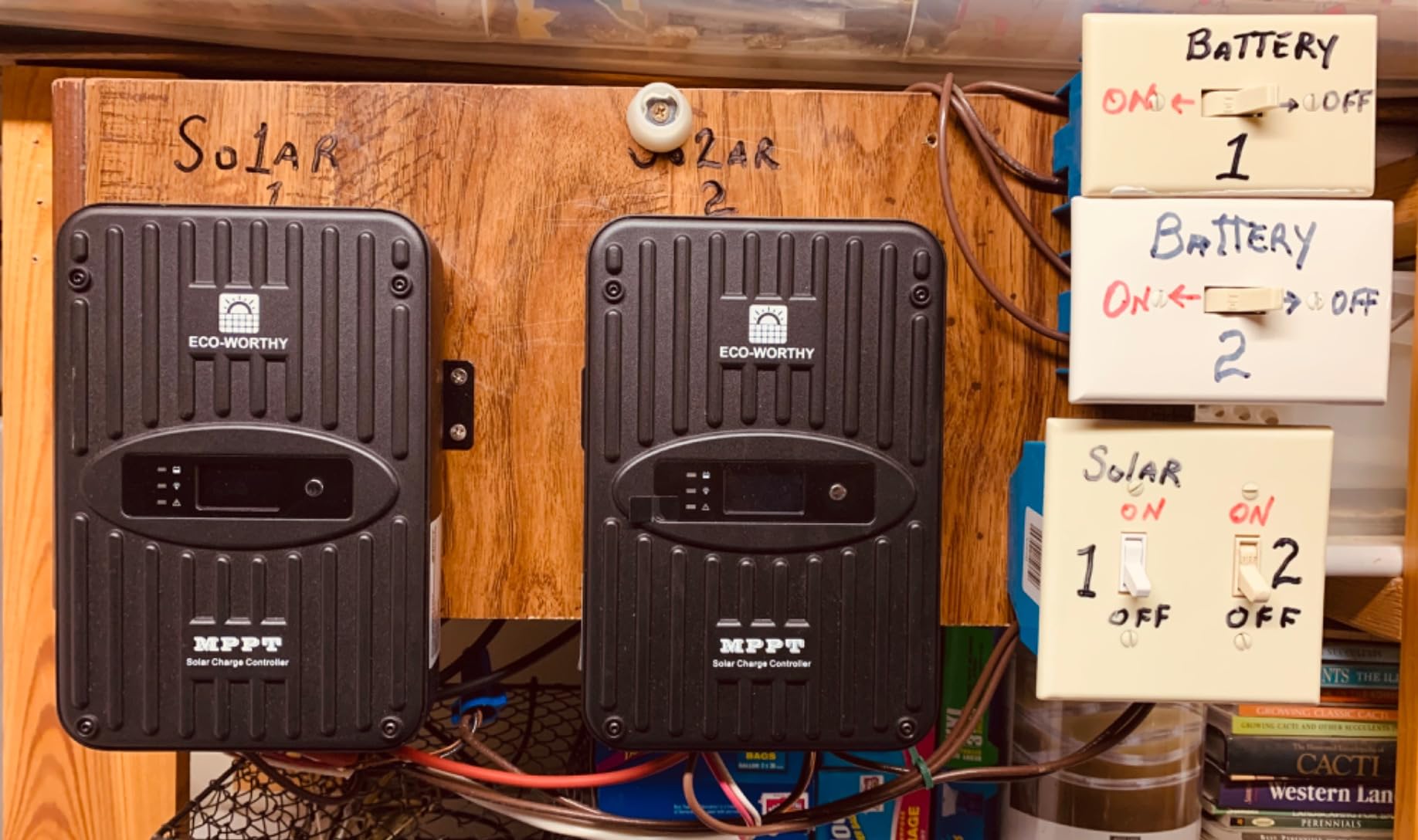
- Only kit in this group with a true 40A MPPT controller
- 400W across four panels for about 1.6 kWh per day
- 99% tracking and 98% peak conversion efficiency
- BT-02 Bluetooth 5.0 module with 82 ft range for app monitoring
- Pre-installed bypass diodes reduce shade related loss
- 3.2mm low iron glass with 35mm aluminum frames
Cons
- Heaviest and one of the most expensive kits in the group
- Needs substantial roof or ground mount space for four panels
- Smallest review pool of the larger kits at 120 reviews
- Monitored kit adds setup steps versus a bare system
Everything else in this roundup ships with a PWM controller. This one does not, and that single difference is why it produces meaningfully more from the same sunlight, especially in heat and low light when panel voltage rises above battery voltage.
Four 100W monocrystalline panels at 21% efficiency give 400W, quoted at an average of 1.6 kWh per day depending on sunlight. That is the largest array here and the only one that can meaningfully support a serious inverter load.
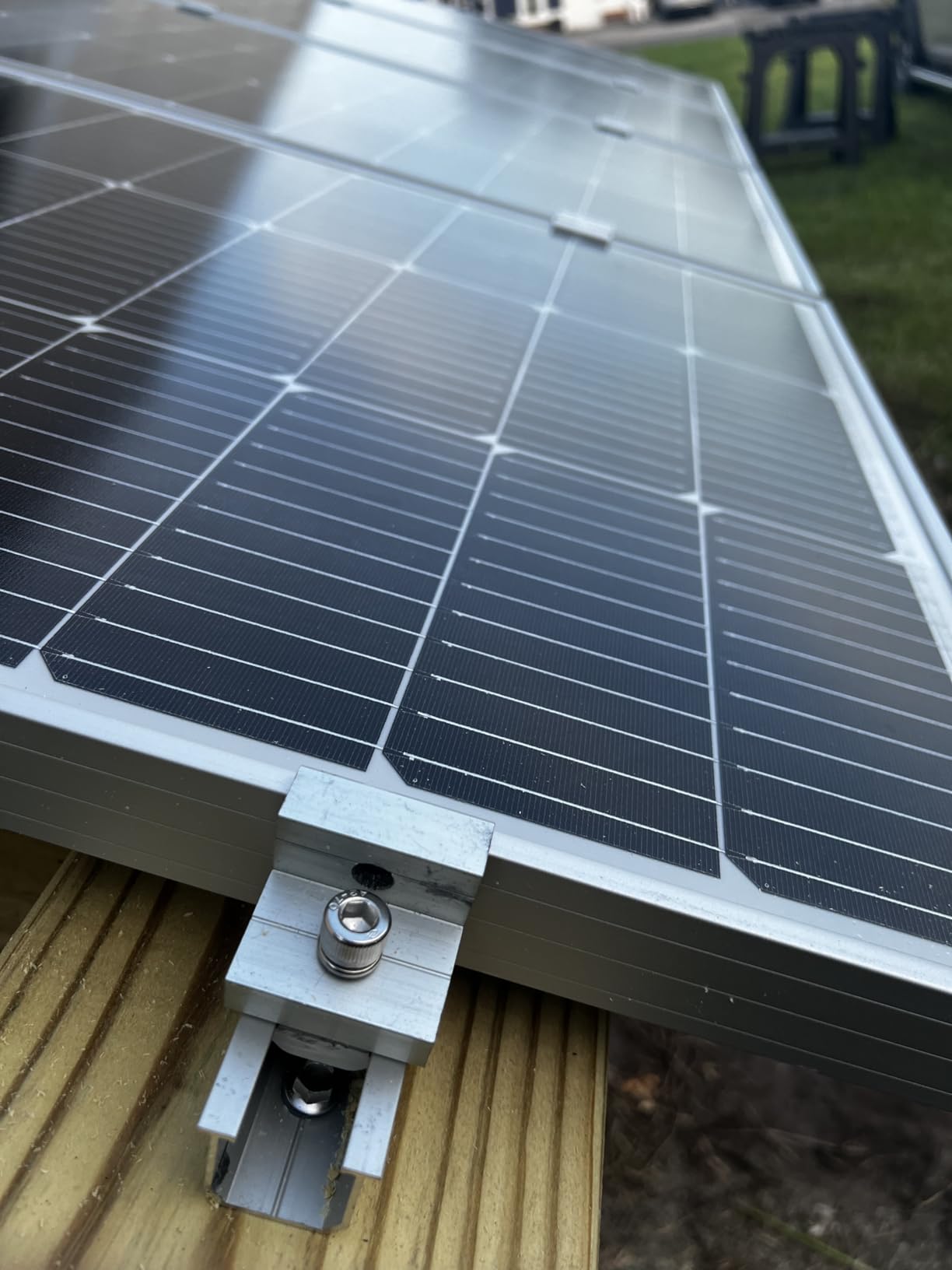
The 40A MPPT controller is quoted at 99% tracking efficiency and 98% peak conversion efficiency, which the manufacturer reports as roughly 40% better harvest than PWM. That is the gap that makes an MPPT controller worth the money on a permanently mounted array.
The BT-02 Bluetooth module gives you app monitoring of panel, battery and load data from up to 82 feet away. Bypass diodes are pre-installed in IP65 junction boxes, which helps when a vent stack shades one corner of the array in late afternoon.
Roof space is the real decision
Four panels at roughly 35 by 23 inches each need real estate. Count the usable area excluding vents, antennas, air conditioner units and the walkway you need for servicing, then measure the actual mount points. If the roof does not fit four, buy a 200W kit instead of forcing it.
At 32.66 kg the kit is heavy, and four glass panels on a fibreglass roof want a proper mounting pattern with sealant, not four brackets placed wherever is convenient.
Why MPPT pays off at this size
An MPPT controller harvests the difference between panel voltage and battery voltage. With 12V panels feeding a 12.8V charging battery in heat, that difference is where the missing amps live, and losing it compounds across four panels.
Reviewers single out the MPPT controller and the Bluetooth monitoring as the two features worth paying for, though the review pool here is the thinnest of the larger kits.
11. ZOUPW 220W N-Type Kit: Best Sealing and Longest Panel Warranty
ZOUPW 220 Watt Solar Panel Kit for 12V/24V Battery, 2Pcs 110W 25% High-Efficiency Monocrystalline PV Module Power Charger with 30A LCD PWM Charge Controller for Off-Grid RV Marine Boat Rooftop
Two 110W N-type panels at 220W
30A LCD PWM controller
IP68 frames
Up to 1.1 kWh per day
Pros
- 220W from two N-type 16BB panels at 25% efficiency
- Up to 1.1 kWh daily with 5 hours of full sun
- 30A controller auto-detects 12V or 24V with LCD and dual USB
- IP68 waterproofing is the highest sealing rating in this group
- Low temperature coefficient protects output in desert heat
- 10-year panel warranty and 2-year controller warranty
Cons
- PWM controller rather than MPPT
- Smallest review base here at 78 reviews
- Widest rating spread of any kit in the group with 12% three-star and 1 in 12 one-star
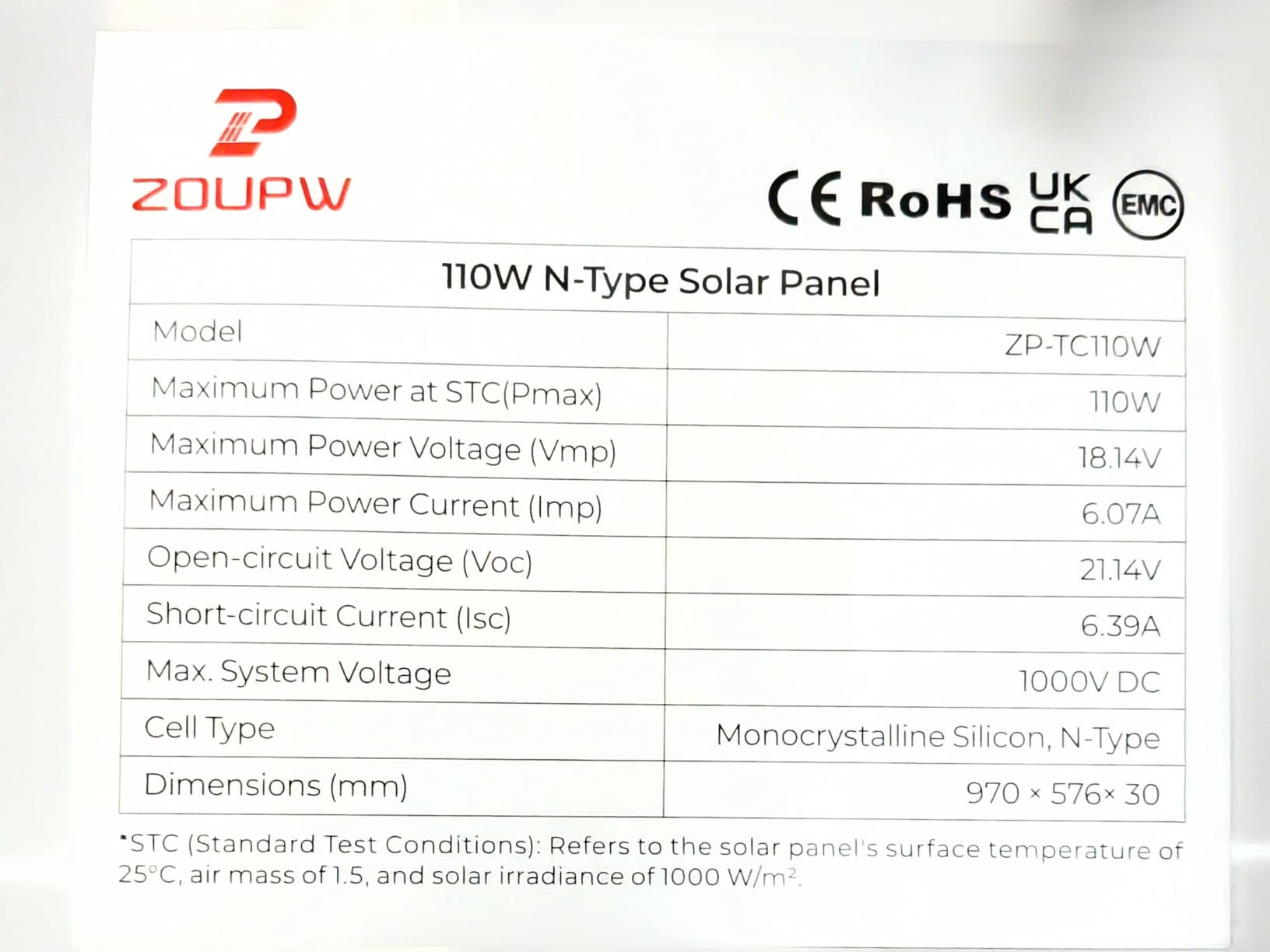
This kit does two things well that the others do not. The frames carry an IP68 rating, the highest sealing rating in this roundup, and the panels carry a 10-year manufacturer warranty, which matches the longest panel materials coverage in this roundup.
The cell technology is current. N-type 16BB monocrystalline at 25% efficiency, listed at 25.6%, gives 220W across two panels and up to 1.1 kWh a day with five hours of full sun.
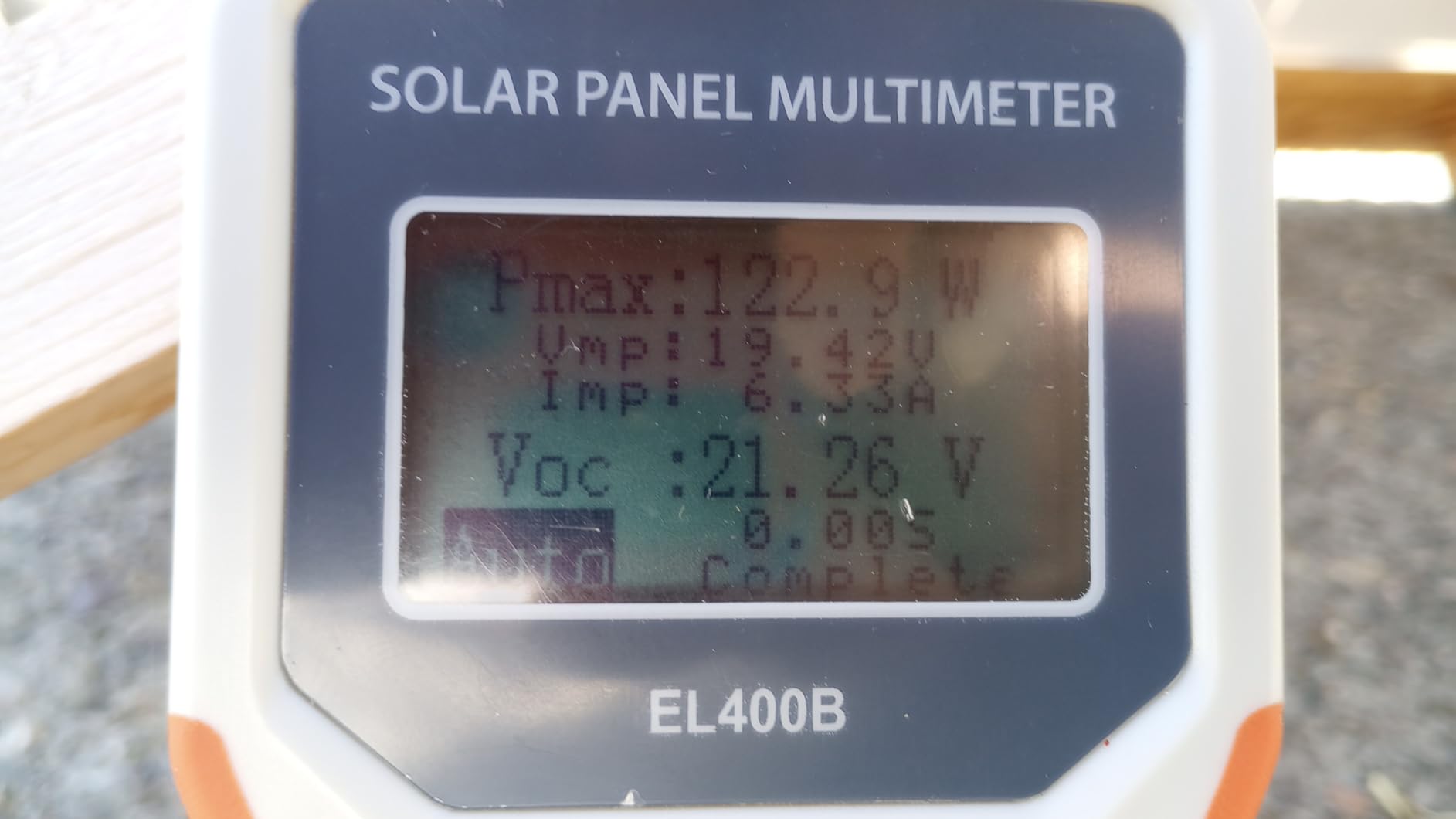
The 30A controller auto-senses 12V versus 24V, has an LCD monitor, dual USB ports and three-stage charging. For boondockers who move between systems, that auto-detection removes a genuinely common installation mistake.
A low temperature coefficient is a subtle but useful claim in the desert. It means output degrades less as panel temperature climbs, which is precisely the condition you will be in for a winter desert stay.
Where the sealing rating actually matters
IP68 means dust tight and protected against continuous immersion. On a washboard road, a sandstorm season or a coastal site with salt spray, that extra margin over IP65 and IP67 panels is real.
Anti-shade bypass diodes are included, and the PWM controller supports input up to 400W with series or parallel expansion using the included connectors, so there is room to grow.
The honest weakness is thin feedback
This listing has 78 reviews, the smallest pool here, and the rating spread is wider than the established kits with 12% of reviews at three stars. Newer listings have not accumulated the long-term failure data that tells you how a panel holds up over five years.
It also uses PWM, so plan realistic output for a 12V bank as described earlier.
12. ACOPOWER 200W Foldable Kit: Clean Portable Build With a Waterproof Controller
ACOPOWER 200W Portable Solar Panel Kit, Waterproof 20A Charge Controller for 12V Battery and Solar Generator for RV, Camper Trailer& Marine Black
200W foldable panel assembly
20A waterproof controller
11.61 kg
19.36V max
Pros
- 200W of folding panel plus a 20A controller in one package
- 4.5 stars with a 77% five-star share
- Waterproof controller with overcharge overload short circuit and reverse protection
- Folds compactly with a carrying handle for moving campsites
- MC4 and Anderson connectors work with most 12V batteries and power stations
Cons
- PWM controller rather than MPPT
- Heavier than comparable 200W portable kits
- Cell efficiency is not specified as precisely as N-type competitors
- Small review base of just over 100 reviews
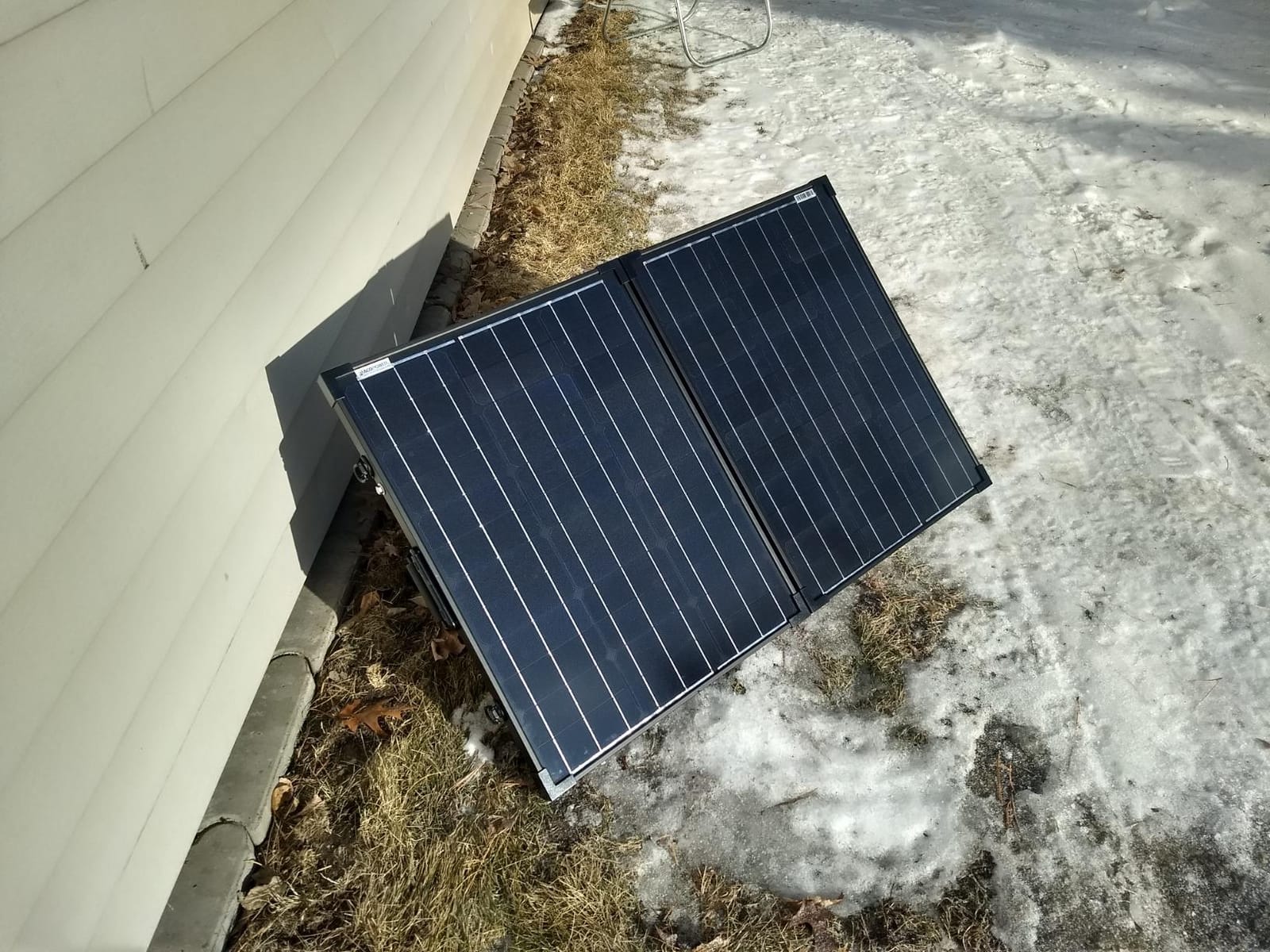
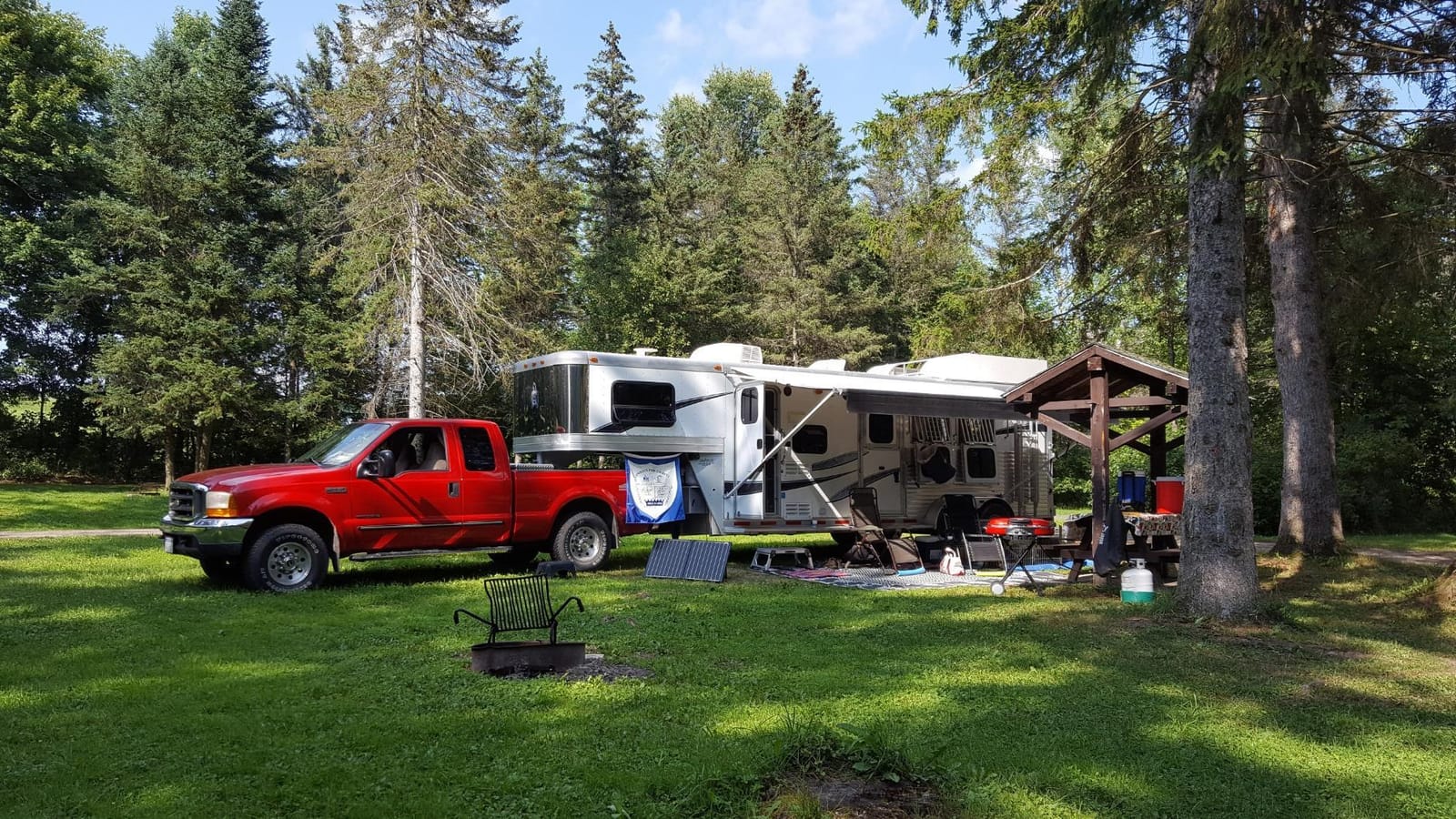
The ACOPOWER kit is aimed squarely at rigs that move. The panel folds flat with a carrying handle, and the 20A controller is described as waterproof, which is a differentiator for anyone running panels on a boat, a marine deck or an open trailer bed.
Panel specifications are 11.67 amps at 19.36 volts maximum, so 200W nominal. There is no published daily production figure, which is why we have placed it below the kits that state one.
Connector flexibility is good. MC4 and Anderson connectors cover both 12V batteries and most portable power stations, so you are not hunting for adapters when the site is already picked and the sun is going down.
Owner ratings for the build and folding portability are high, and the controller being included rather than sold separately is frequently called out as a plus.
Best for marine and trailer use
Splash and salt exposure is the reason to pick this one. A waterproof controller with overcharge, overload, short circuit and reverse connection protection is a sensible pairing with a boat or a trailer that lives outside in all weather.
The folding format means you can stow it in a cargo bay between trips instead of leaving glass on the roof for a rig you only use in summer.
What the smaller review base means
With just over 100 reviews, there is less long-term data than the established kits, and owners most often mention the PWM controller as the first upgrade they would make.
It is also heavier than comparable 200W portable kits at 11.61 kg, and the cell efficiency is not specified as precisely, which makes real output harder to predict.
Boondocking Buying Guide: Controllers, Batteries, Inverters and Mounting
MPPT or PWM for an RV?
MPPT, whenever your budget allows and the array is permanent. A PWM controller simply throttles the panel voltage down to the battery voltage and throws the difference away, so an 18V or 21V N-type panel loses roughly a quarter to a third of its potential harvest. An MPPT controller converts that difference into charging current, and the gain grows in heat and low light. PWM is only rational on a very small array feeding a small bank, where the cost difference is a meaningful part of the project.
How much battery bank do you actually need?
Size the bank for two days of bad weather, not one good day. If your measured load is 200Ah a day, a 200Ah bank gives you nothing to fall back on, so 400Ah is the realistic floor for full-time boondocking and more if you run an inverter. LiFePO4 gives you usable capacity for roughly a third of the rated amp-hours compared with lead acid, and tolerates daily deep discharge without damage, which is why it has become the default choice for boondockers. AGM remains fine for weekend trips and costs less, but it should not be regularly taken below half charge.
How big an inverter do you need?
Size it for the largest single load, not for everything at once. A 1000W pure sine wave inverter covers a CPAP machine, a laptop, a monitor and a small blender. A microwave, a hair dryer or a portable heater each need that much on their own. Modified sine wave units cost less and will make some electronics run hot or noisy, so use pure sine wave for anything with a motor or sensitive electronics.
Rigid or flexible panels for an RV roof?
Rigid for output, flexible for fit. Rigid glass panels run cooler with an air gap underneath, so they produce more per square foot, and they last longer. Flexible panels weigh a fraction as much, follow a curved roof and drill nothing, at the cost of running hotter and losing some of their rated output. If your roof is flat and clear, rigid. If it is curved, ribbed or already resurfaced, flexible may be the only option that fits.
Should you buy a kit or the parts separately?
Buy the kit if you are starting from nothing and want a weekend project rather than a month of sourcing. Buy separately if you already have a battery bank, an inverter and a charge controller, because kits are weighted toward panel plus controller and you would be paying twice. The mixed case is common: take the kit panels and brackets, then add an MPPT controller, which is the single upgrade that pays for itself fastest on a permanent array.
Boondocking Solar Mistakes That Show Up in the Forums
The most common complaint from RV owner forums is not the wrong kit, it is the array that was too small from the start. Owners describe the same pattern: the fridge holds for the first night, the bank is marginal by the second, and the furnace is what finally does it. Sizing from a measured daily load instead of a guess is the fix.
The second is thin wire. Undersized cable between the panels and the controller wastes voltage as heat, and the symptom is a system that looks fine on a clear day and disappears in the evening. Use 10AWG for runs on a 200W to 400W array, as the ECO-WORTHY 200W kit does, and keep the run short.
Third is shading, and it is worse than most people expect. A vent stack, an antenna or a single tree edge shading one corner of a rigid panel can cut output across the whole string, which is why bypass diodes and panel-level design matter. Fourth is panel temperature: a panel sitting flat on the roof in the desert loses a large share of its rated output to heat, so mounting it with an air gap is worth real watts.
Fifth, running without a battery monitor. You cannot tell how much is left in the bank without one, and depth of discharge is what kills lead acid fastest. Sixth, having no backup plan. Even a good solar setup has bad weeks, and a portable power station or a generator plan for two days a season costs far less than a ruined trip. On generator noise specifically, many owners moved to solar for that reason alone, and that trade is easier to live with when you know when the generator will run.
Frequently Asked Questions
Will a 200W solar panel run a 12V fridge?
Usually yes for a compressor fridge running on a 200W panel, provided the panel gets several hours of direct sun and the battery bank is at least 100Ah. A 12V fridge freezer commonly draws 40 to 60Ah a day, and 200W of panel in good sun produces roughly 800 to 1000Wh a day. In overcast conditions a 200W panel can fall to a quarter of that, so a 200W setup is a weekend and shoulder season answer rather than a full-time one.
Is 400W solar enough for RV?
For full-time boondocking of a typical Class C or travel trailer, 400W is the practical floor rather than a comfortable target. It covers a 12V fridge, lighting, the water pump and phone charging in good sun, but an inverter running a microwave will consume that margin quickly. Pair 400W with at least a 200Ah lithium bank and add a portable panel for cloudy trips.
What are the best portable solar panels for RV camping?
The DOKIO 300W foldable kit gives the most watts in a carryable format, the Renogy 200W N-type suitcase delivers the most measured current into a 12V bank at around 12 amps, and the Renogy 100W N-type foldable has the best cell technology and a kickstand for repositioning. All three use PWM controllers, so plan realistic output into a 12V battery.
What is the best solar RV kit?
The Renogy 100W 12V starter kit is the strongest all-round choice here, with a 4.7 rating across more than 4000 reviews, 22.5% cell efficiency, a 30A PWM controller and a 10-year materials and 25-year output warranty. It is a maintainer for weekend boondocking rather than a full-time supply, so full-time RVers should size up to 200W or 400W with a larger bank.
What size battery bank do I need with an RV solar panel?
For full-time boondocking with a measured daily load of about 200Ah, a 400Ah bank gives you two days of bad weather before you are in trouble. LiFePO4 is the better choice for daily deep cycling because roughly a third of its rated capacity is usable, while AGM should be kept above half charge and works best for weekend trips.
Can I run an RV air conditioner on solar?
A roof air conditioner typically draws well over 1000W running and far more on startup, and none of the kits reviewed here includes an inverter sized for it. Solar can maintain the battery bank that powers a small 12V unit in a travel trailer, but a standard roof AC needs a generator, a large inverter and an oversized array that most rigs do not have.
Which RV Solar Kit Should You Buy?
For weekend dry camping with a 12V fridge, the Renogy 100W 12V starter kit is the pick. It has the highest rating and the largest review base of anything we reviewed, a warranty that outlasts most competitors, and it expands to 400W when you outgrow it.
For full-time boondocking in good sun, size up. The ECO-WORTHY 200W 12V and 24V kit is the balanced choice for a small rig, and the ECO-WORTHY 400W MPPT kit is the only one here that recovers the harvest loss that heat and low light cause. Pair either with a 400Ah lithium bank.
For portability, the DOKIO 300W foldable kit carries the most watts in a bag, and the Renogy 100W N-Type foldable is the better choice if you want a panel you can move to follow the sun. For a curved or drill-free roof, the XINPUGUANG 200W flexible kit is the only one that will physically fit.
Check the current details for any of these before you order, then measure your roof and your daily load before you buy. Those two numbers decide more than any wattage on a box.
Updated for 2026.