
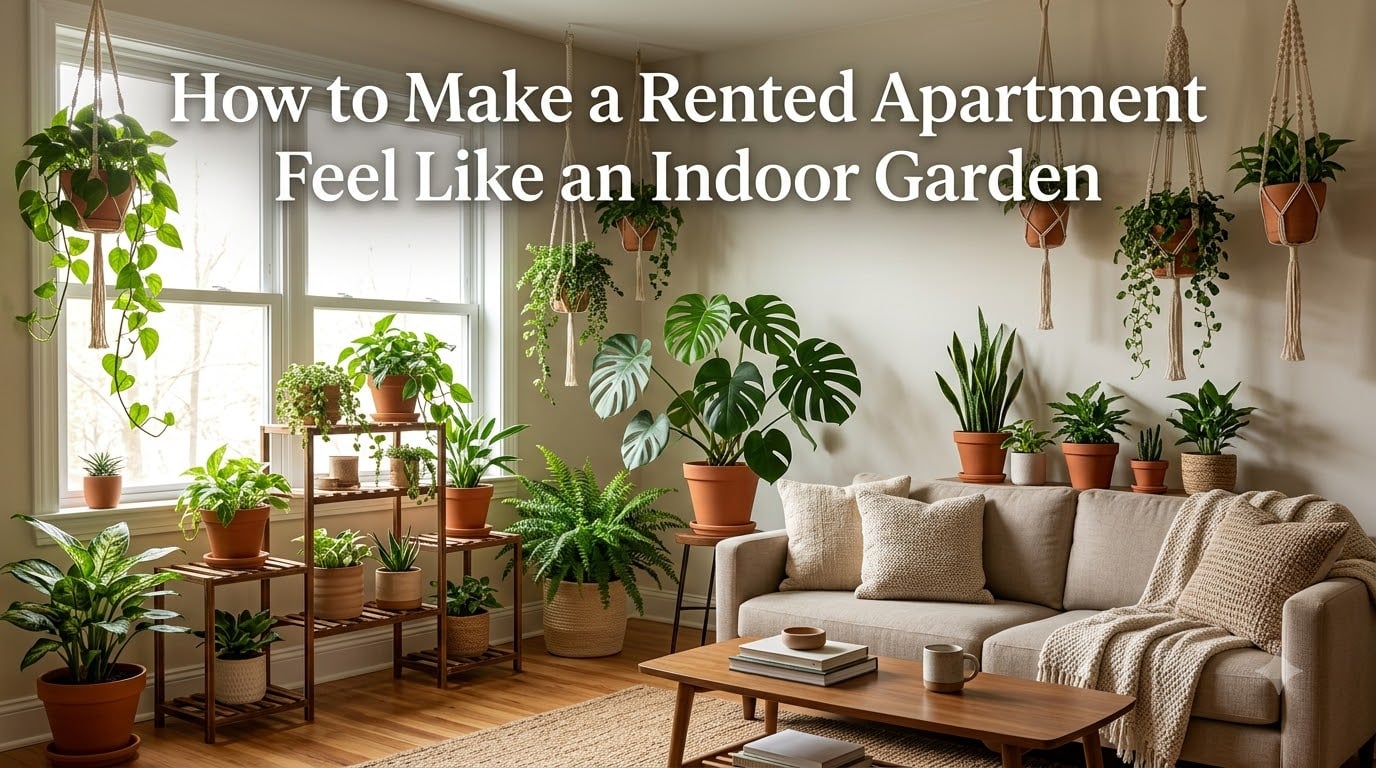
Living in a rental doesn’t mean you have to settle for sterile white walls and zero personality. With the right plants, some damage-free display tricks, and a bit of styling know-how, you can turn your apartment into a lush indoor garden that feels entirely your own — without losing a penny of your security deposit.
We’ve spent years testing renter-friendly plant hacks in our own apartments, and we’re here to show you exactly how to make a rented apartment feel like an indoor garden. This guide covers plant selection, damage-free mounting, styling techniques, and everything in between.
Table of Contents
Quick Picks: 5 Starter Plants for Rental Apartments
If you’re new to indoor gardening, start with these nearly indestructible plants that thrive in typical rental conditions:
- Snake Plant (Sansevieria) — Tolerates low light, irregular watering, and neglect. Grows upright and adds architectural structure to any room.
- Pothos (Epipremnum aureum) — The ultimate trailing plant. Grows in water or soil, thrives in low to bright light, and cascades beautifully from shelves.
- ZZ Plant (Zamioculcas zamiifolia) — Glossy leaves, drought-tolerant, and handles dim apartments with ease. One of the hardest plants to kill.
- Spider Plant (Chlorophytum comosum) — Produces baby plants you can propagate and share. Adapts to most light conditions and purifies air.
- Peace Lily (Spathiphyllum) — Blooms indoors even in low light. Tells you when it needs water by drooping slightly, then perks right back up.
These five plants are the foundation of most indoor gardens. They’re affordable, widely available, and forgiving enough for first-time plant parents.
How to Choose Plants by Light Condition
Matching plants to your actual light conditions is the single most important step. A “low light” plant placed in a dark corner will survive, but a “bright light” plant will slowly die there.
Low Light (North-Facing Windows or Interior Rooms)
Snake plants, pothos, ZZ plants, cast iron plants, and peace lilies all thrive with minimal natural light. These are ideal for hallways, bathrooms, and bedrooms away from windows.
Bright Indirect Light (East or West-Facing Windows)
Monstera deliciosa, philodendrons, rubber plants, and ferns love bright but filtered light. Place them a few feet back from the window or behind a sheer curtain.
Direct Sunlight (South-Facing Windows)
Succulents, cacti, fiddle leaf figs, and herbs (basil, rosemary, mint) need several hours of direct sun. A sunny windowsill is perfect for a small herb garden.
Not sure about your light? Spend a day observing which rooms get sun and when. East-facing windows get gentle morning light; west-facing gets harsh afternoon sun; north-facing stays dim all day.
Damage-Free Mounting and Hanging Solutions
This is where most renters get stuck — you want to hang plants, but you can’t drill holes. Here’s what actually works without damaging walls:
Command Hooks and Strips
Command hooks rated for 5-16 lbs handle most small to medium hanging planters. The key is following the weight limits exactly and pulling the strip straight down (not out) when removing. Renters on Reddit’s r/ApartmentHacks consistently report these “come off totally clean” when used correctly.
Tension Rods
Place a tension rod in a window frame or doorway and hang multiple planters from S-hooks. This works especially well in kitchen windows for herbs or in shower corners for humidity-loving plants.
Freestanding Plant Stands
A tiered plant stand creates vertical interest without touching the walls. Look for slim designs that fit in corners or beside furniture. They’re completely portable — perfect for renters.
Over-the-Door Hooks
Heavy-duty over-the-door hooks work for lightweight trailing plants. They’re invisible from the front and leave zero marks on the door.
Plant Grouping and Styling: Pot Colonies and Layered Vignettes
Designers use a technique called “pot colonies” — grouping plants in odd numbers (3, 5, or 7) at varying heights to create lush, collected-over-time displays. This is the secret to making a rental feel like a garden rather than a dorm room with a single sad plant.
The 3-5-7 Rule
Group plants in odd numbers. Three plants on a shelf, five in a corner cluster, seven as a statement vignette. Odd groupings feel natural and intentional; even numbers look staged.
Vary Heights and Textures
Place a tall snake plant behind a medium pothos, with a trailing string of pearls in front. Mix upright, mounding, and trailing forms. Use plant stands, stacked books, or overturned pots to create height differences.
Create Focal Points
One large statement plant (like a monstera or fiddle leaf fig) anchors a room. Surround it with smaller companions. This draws the eye and makes the space feel designed, not random.
Vertical and Hanging Displays for Small Apartments
When floor space is limited, go vertical. Hanging plants and wall-mounted displays add greenery without sacrificing square footage.
Macrame Plant Hangers
Macrame hangers are having a major moment. Hang them from ceiling hooks (use Command ceiling hooks for damage-free mounting) at varying heights near a window. Mix different cord colors and knot patterns for visual interest.
Shelf Gardens
Install floating shelves (damage-free adhesive versions exist) or use existing bookshelves to create a plant wall. Trailing plants like pothos and string of pearls look stunning cascading off shelf edges.
Plant Ladders
A leaning ladder shelf against a wall creates instant vertical garden space. No mounting required — just lean and fill with plants, books, and decorative objects.
Kokedama and Wall Planters
Kokedama (Japanese moss ball gardens) can hang from fishing line or sit on a tray. Wall-mounted pocket planters with adhesive backing hold air plants and small succulents without nails.
DIY Planters and Upcycled Containers
You don’t need expensive planters to create an indoor garden. Some of the most characterful displays use thrifted and repurposed containers:
- Thrifted ceramics — Vintage bowls, mugs, and vases become unique planters. Drill a drainage hole or add a layer of pebbles at the bottom.
- Baskets — Woven baskets hide basic nursery pots and add texture. Line them with plastic to protect from water damage.
- Colanders — Metal colanders have built-in drainage and look charming with trailing plants.
- Teacups and teapots — Perfect for small succulents and air plants on windowsills.
- Painted terracotta — Basic terracotta pots get a personality boost with acrylic paint, washi tape, or marker designs.
The beauty of DIY planters is that they’re portable. When you move, they move with you — no landlord complaints, no deposit deductions.
Grow Lights for Dark Corners
Many rentals have rooms with poor natural light — interior hallways, bathrooms, or north-facing bedrooms. Grow lights solve this problem completely.
Modern LED grow lights come in renter-friendly formats: clip-on desk lamps, adhesive strip lights for under shelves, and stylish floor lamps that double as decor. Look for full-spectrum LEDs with a color temperature around 5000-6500K for the most natural-looking light.
Place grow lights 6-12 inches from plants and run them 10-14 hours daily. Timer plugs automate this completely — set it and forget it. Plants that normally need bright indirect light (like monstera) can thrive in windowless rooms with proper grow lighting.
Why This Matters: The Biophilic Design Benefits
Biophilic design is the practice of incorporating natural elements into living spaces to improve well-being. Research consistently shows that indoor plants reduce stress, improve air quality, and boost mood — benefits that matter even more in rental apartments where you can’t make permanent changes.
A study from the University of Exeter found that employees in plant-rich offices were 15% more productive. While your apartment isn’t an office, the principle applies: surrounding yourself with greenery makes you feel calmer, more focused, and more at home.
For renters specifically, plants offer something paint and wallpaper can’t — they’re alive, growing, and uniquely yours. A trailing pothos you’ve nurtured for two years carries emotional weight that a peel-and-stick mural never will.
Pet-Safe and Child-Safe Plant Choices
If you share your apartment with cats, dogs, or small children, plant selection requires extra care. Many popular houseplants are toxic if ingested.
When in doubt, check the ASPCA’s toxic plant database before bringing a new plant home. Many “toxic” plants cause only mild irritation, but it’s worth knowing the risks.
Budget Breakdown: Indoor Garden Under $50, $100, and $200
You don’t need a big budget to create an indoor garden. Here’s what you can realistically achieve at three price points:
Under $50
Start with 3-5 small nursery pots (snake plant, pothos, spider plant) and one thrifted basket. Total cost: $25-40 for plants, $5-10 for the basket. You’ll have a small but real garden that grows over time.
Under $100
Add a tiered plant stand ($30-40), a few more plants including a medium-sized monstera or philodendron, and some decorative pots. Mix nursery pots with thrifted finds for an eclectic look.
Under $200
Invest in a statement plant (large fiddle leaf fig or monstera), a quality grow light for a dark corner, macrame hangers, and a collection of 8-12 plants at various sizes. This budget creates a genuinely lush indoor garden.
Pro tip: Buy small plants and let them grow. A $6 pothos cutting will be a full trailing plant within a year. Patience saves money.
Communicating with Your Landlord
Most landlords won’t care about plants — they’re temporary, removable, and generally improve the space. But if your lease has specific modification clauses, it’s worth a quick conversation.
Here’s what to say: “I’d like to add some indoor plants and use removable hooks for hanging planters. I’ll use damage-free adhesive products and restore the walls when I move out. Is that okay?”
Most landlords will say yes immediately. Some might even offer to help with minor improvements if you’re signing a longer lease. As one Reddit user noted: “Talking to the landlord directly is the single best move — some landlords will fund paint, hardware, or upgrades in exchange for longer leases.”
Document any agreements in writing (even a text message counts). This protects both parties and gives you confidence to personalize your space.
Maintenance Routine and Smart Watering
Keeping plants alive doesn’t require a green thumb — it requires a system. Here’s a simple routine that works for busy renters:
- Weekly: Check soil moisture by sticking your finger an inch deep. Water only if dry. Most houseplants prefer to dry out between waterings.
- Monthly: Dust leaves with a damp cloth. Clean leaves photosynthesize better and look healthier.
- Seasonally: Rotate plants a quarter turn so all sides get even light. Move plants away from cold drafts in winter and AC vents in summer.
For travel-heavy renters, self-watering pots and watering globes keep plants hydrated for 1-2 weeks. Alternatively, group plants on a tray with pebbles and water — the evaporation creates humidity while you’re gone.
Frequently Asked Questions
How to make a renter-friendly garden?
Start with low-maintenance plants like snake plants and pothos. Use damage-free mounting solutions such as Command hooks and tension rods for hanging plants. Group plants in odd numbers at varying heights to create visual interest. Keep everything portable so it moves with you when your lease ends.
What is the 3-5-7 rule in interior design?
The 3-5-7 rule is a styling principle that says groupings of odd numbers look more natural and intentional than even numbers. In indoor gardening, this means arranging 3, 5, or 7 plants together at varying heights. This creates visual flow and prevents displays from looking staged or symmetrical.
What are some ideas for indoor gardening in an apartment?
Popular apartment gardening ideas include creating pot colonies (grouped plants at different heights), installing a vertical garden with wall-mounted planters or floating shelves, starting a windowsill herb garden, using macrame hangers near windows, and building a plant shelf with a grow light for dark corners. Trailing plants on bookshelves and statement floor plants also work well in small spaces.
What are red flags for tenants?
Common lease red flags include vague language about ‘no modifications’ without defining what counts as a modification, excessive security deposit deductions for normal wear and tear, and clauses that prohibit any wall hanging including removable adhesive hooks. Always read the full lease before signing and ask specific questions about what’s allowed — including whether indoor plants and removable plant hangers are permitted.
Conclusion
Learning how to make a rented apartment feel like an indoor garden comes down to a few key principles: choose plants that match your light, display them without damaging walls, group them for visual impact, and keep everything portable.
Start with the five starter plants we recommended, add one new plant each month, and experiment with styling as your collection grows. Within a few months, your rental will feel less like a temporary space and more like a living, breathing sanctuary you’re proud to call home.
The best part? When your lease ends, everything comes with you — plants, planters, and all the greenery you’ve cultivated. No damage, no deductions, just a garden that travels with you wherever you go.