
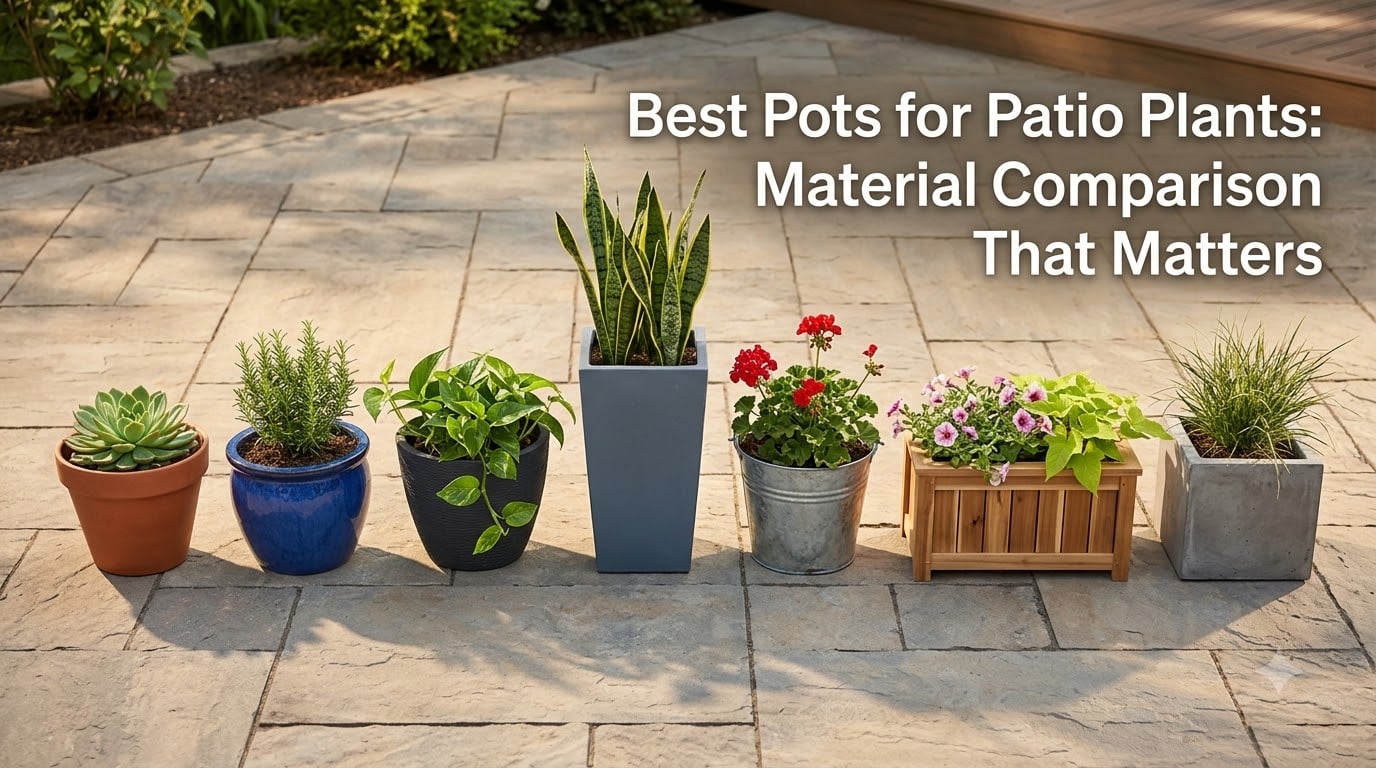
Choosing the best pots for patio plants comes down to one decision that matters more than size, color, or brand: the material. The wrong pot cracks in your first frost, fades in a single summer of full sun, or cooks roots on a 95°F day. After testing planters on our own patios in three different climate zones, and reading through hundreds of r/gardening, r/containergardening, and r/ArizonaGardening threads, we put together this material comparison so you can pick once and not regret it by next spring.
In this guide, you’ll see all 7 common patio pot materials ranked by weight, porosity, durability, climate fit, and best use. We’ll also cover drainage (the most-overlooked feature), climate matching, sizing rules, and a step-by-step buying checklist. Whether you’re working with a windy balcony, a hot southwestern patio, or a cold-winter rooftop, the right material makes the difference between plants that thrive and pots that fall apart.
Table of Contents
The 7 Patio Pot Materials Compared Side-by-Side
If you’re scanning for the short answer, here’s the at-a-glance comparison. Each row covers weight, porosity (how much the pot breathes), durability, climate fit, and what each material is genuinely best for. We based the climate-fit column on what gardeners actually report in forums, not marketing copy.
| Material | Weight | Porosity | Durability | Climate Fit | Best For |
|---|---|---|---|---|---|
| Terracotta (unglazed clay) | Heavy | High (breathes) | 3-5 seasons | Mild, dry climates | Mediterranean herbs, succulents, drought-tolerant plants |
| Glazed ceramic | Heavy | Low (sealed) | 5-10 seasons if frost-proof | Temperate; risky below 25°F | Decorative statement pieces, moisture-loving plants |
| Plastic and resin | Light | None | 2-4 seasons in full sun | Mild climates, shaded patios | Renters, balconies, windy patios, budget planters |
| Fiberglass | Light to medium | None | 10+ seasons | All climates, including freeze-thaw | Large statement planters, four-season patios |
| Metal (galvanized, cast iron, copper) | Medium to very heavy | None | 10+ years (cast iron); 5-8 (galvanized) | Temperate; heat risk in full sun | Modern industrial looks, large stationary planters |
| Wood (cedar, teak, redwood) | Medium | Low to medium | 5-15 years with treatment | All climates; needs liner | Vegetable patio gardens, raised planters, natural aesthetic |
| Concrete and stone | Very heavy | Medium | 15+ years | Cold climates, formal patios | Large trees, topiaries, permanent installations |
| Ficonstone and hybrids | Medium | Low | 8-12 seasons | All climates, including cold | Frost-proof ceramic look without the weight |
Now let’s walk through each material in detail, including the pros, cons, and the plants each one actually suits best.
Terracotta (Clay): The Breathable Classic
Terracotta is the porous clay pot most gardeners reach for first, and for good reason: it breathes. The unglazed fired clay lets air and moisture pass through the walls, which prevents root rot in plants that hate wet feet. Mediterranean herbs, succulents, and most drought-tolerant species absolutely thrive in terracotta because the soil dries evenly between waterings.
The trade-off is porosity works both ways. Terracotta dries out fast in hot, windy patios, which means you’ll water more often. In cold climates, water absorbed into the clay walls freezes, expands, and cracks the pot from the inside. Multiple r/gardening users report their terracotta pots cracking within a single winter if left out in zones 6 and colder.
Best for: rosemary, thyme, lavender, succulents, cacti, citrus in mild climates. Avoid for moisture-loving plants or any patio that drops below 25°F regularly.
Glazed Ceramic: Beautiful but Frost-Sensitive
Glazed ceramic pots give you the weight and visual richness of terracotta with a sealed surface that holds moisture longer. The glaze creates a waterproof barrier, which means your soil stays damp longer between waterings. For shade-loving plants, ferns, and tropical-looking species, glazed ceramic is often a better fit than plain terracotta.
The catch is frost. Cheap imported ceramics are the worst offenders: the glaze can flake over time, exposing plants to lead in older glazes and root issues from rough surfaces. Even high-quality glazed ceramic will crack if water seeps into a hairline chip and then freezes. If you live in a climate with regular freeze-thaw cycles, look for pots specifically labeled “frost-proof” rather than just “frost-resistant.”
Best for: ferns, hostas in shaded patios, decorative statement pieces, indoor-outdoor transitional spaces. Avoid for full-sun patios in cold-winter climates unless the pot is genuinely frost-rated.
Plastic and Resin Planters: Lightweight but Fade Fast
Plastic and resin planters are the workhorses of renter patios, balcony gardens, and windy rooftops. They’re cheap, light enough to move with one hand, and they don’t break when you drop them. For balconies with weight limits, or anyone who rearranges their patio every season, plastic and resin are hard to beat on practicality.
The downside is UV. Cheaper plastic planters fade, become brittle, and crack after two to three seasons in direct sun. Resin planters (a denser, often stone-filled plastic composite) hold up better but can still chalk and discolor. Reddit’s r/houseplants has hundreds of threads from users who moved from terracotta to plastic for weight reasons, then back again when their plastic pots fell apart in three summers.
Best for: herbs and vegetables on balconies, rental patios where you can’t leave permanent installations, windy locations where heavier pots would topple, anyone who wants to spend less upfront. Avoid for full-sun patios if you want the pot to look good for more than a few seasons.
Fiberglass Planters: The Modern All-Rounder
If we had to pick one material for a four-season patio, it would be fiberglass. Fiberglass planters are made from a composite of glass fibers and resin, molded into shapes that mimic ceramic, wood, or stone, but at a fraction of the weight. They don’t crack in freeze-thaw cycles, they don’t fade in UV the way plastic does, and they last 10+ seasons easily. Planter Resource calls fiberglass the top material for outdoor planters, and r/ArizonaGardening users consistently report fiberglass holding up best in extreme heat and intense sun.
The downsides are real but small. Fiberglass is more expensive upfront than plastic, and cheaper fiberglass planters can develop surface scratches. They’re also not breathable at all, so you’ll want to be careful about overwatering. For large statement planters that you want to leave in place year-round, the cost-per-year math actually favors fiberglass over plastic because you replace plastic three times before you’d replace one fiberglass planter.
Best for: large patio trees, four-season patios, hot or cold climates, anyone who wants a low-maintenance long-term solution. Avoid if you’re on a tight budget upfront or you need true breathability for succulents.
Metal Planters: Heat-Conducting and Modern
Metal planters, especially galvanized steel, cast iron, and copper, give a clean modern or industrial look that other materials can’t match. Galvanized zinc-coated steel is the most common and the most affordable. Cast iron is heavy, expensive, and essentially permanent. Copper develops a green patina over time that many gardeners love.
The big concern with metal is heat transfer. Metal conducts heat straight to the soil and roots. In direct sun, a dark metal planter can heat the root zone to temperatures that cook sensitive plants. r/gardening threads regularly show plants wilting in metal pots that aren’t even in full sun. The fix is simple: line the interior with bubble wrap or a plastic insert, and avoid dark metals in south- and west-facing exposures.
Best for: modern patios, large stationary installations, herb gardens in partial shade. Avoid for full-sun exposures unless you use a liner, and avoid for plants with sensitive root systems.
Wood Planters: Natural Warmth with a Maintenance Cost
Wood planters, especially cedar, teak, and redwood, give a warm natural look that fits beautifully into edible gardens and rustic patios. Cedar and redwood are naturally rot-resistant and can last 10-15 years even without chemical treatment. Teak is the gold standard for outdoor wood but is expensive.
The maintenance reality is that even rot-resistant wood needs help. Without a liner, soil moisture rots wood from the inside out, especially along the bottom and corners where water collects. Cheap pine or fir planters often fail in 3-5 years. Always use a heavy plastic or landscape fabric liner, and consider raised planting on a pallet so the wood base doesn’t sit in standing water.
Best for: vegetable patio gardens, raised planters, natural aesthetic, edible herbs. Avoid for plants that need perfect drainage without a liner, and avoid cheap untreated pine if you want the planter past a few seasons.
Concrete and Stone: Heavy, Cold-Proof, and Built to Last
Concrete and stone planters are the heaviest option on this list, but they’re also the most permanent. A well-made concrete planter will outlast every other material on the patio, often by decades. They insulate roots against both heat and cold better than any other material, which makes them especially good for USDA zones with extreme temperatures. Topiaries, small trees, and large shrubs do well in concrete because the mass buffers the root zone from rapid temperature swings.
The weight is the trade-off. A 24-inch concrete planter can weigh 80-120 pounds empty, and once planted and watered, you’re looking at 200+ pounds. They stain patio surfaces if you drag them, and they’re nearly impossible to move once placed. Budget for furniture pads or wheeled plant caddies underneath if you think you’ll ever want to rearrange.
Best for: large permanent installations, topiaries, small trees, cold-climate patios where insulation matters. Avoid for balconies with weight limits and for anyone who likes to rearrange the patio layout.
Ficonstone and Hybrid Materials Worth Knowing
Ficonstone is a composite of fiberglass, stone dust, and cement that gives you the look of carved stone or ceramic at about half the weight. Reddit’s r/gardening users recommend ficonstone as a lightweight, less brittle, frost-resistant alternative to traditional ceramic. It looks substantial, handles freeze-thaw better than terracotta, and costs less than full fiberglass or real stone.
Other hybrid materials worth mentioning: resin composites that mimic woven wicker or rattan for a more decorative look, recycled plastic planters made from post-consumer bottles (a genuine sustainability win), and hypertufa, a DIY concrete-peat-perlite mix that experienced patio gardeners use to build their own rustic-looking planters at very low cost.
Best for: anyone who wants the ceramic or stone look without the weight, cold climates, eco-conscious gardeners. Avoid if you want true stone authenticity or the absolute lowest price.
Drainage: The Most-Overlooked Feature in Patio Pots
More plants die from bad drainage than from any other single cause, and yet drainage is the feature most patio gardeners forget to check. The rule is simple: every patio pot needs drainage holes. Period. Decorative containers without holes are display covers, not planters, unless you’re willing to use them as a cover-pot with a nursery liner inside.
If your pot has no holes, you have three options. Drill your own holes using a masonry bit for ceramic or terracotta, and a standard bit for plastic. Use the pot as a cover-pot and drop a cheaper plastic nursery liner inside. Or use it for plants that genuinely tolerate wet feet, like certain bog plants, but this is a narrow list.
For hot patios, water can evaporate through terracotta walls, but the bottom drainage still matters. For glazed ceramic, plastic, fiberglass, and metal, drainage is the only path for excess water. Match your pot material to your watering style: porous terracotta for the overwaterer, sealed materials for the forgetful waterer.
How to Match Pot Material to Your Climate
Material choice matters most at the climate extremes. Here’s how to match the pot to where you actually live.
In cold-winter climates (USDA zones 3-6), skip plain terracotta unless you’re willing to move pots into a garage or shed every winter. Fiberglass, ficonstone, and properly rated frost-proof ceramic are your best friends. Concrete insulates roots well, but make sure the concrete is rated for freeze-thaw cycles.
In hot, dry climates (USDA zones 9-11, especially the Southwest), terracotta shines because it dries out fast and prevents root rot in intense heat. Fiberglass also performs well here, as r/ArizonaGardening users consistently confirm. Avoid dark metal planters that will cook roots in direct afternoon sun.
In coastal climates with salt air, galvanized steel can corrode faster than expected. Stainless steel, fiberglass, and quality resin composites hold up better. Wood planters need extra sealing to resist salt-driven rot. Terracotta can develop a white salt bloom on the outside, which is harmless but cosmetic.
For windy patios and balconies, weight matters more than climate fit. Plastic and resin won’t topple in a gust the way tall terracotta or glazed ceramic can. If you want the ceramic look on a windy balcony, fill the bottom third of the pot with sand before adding soil, or use a heavy fiberglass planter with a wide base.
How to Choose the Best Pots for Patio Plants (Step by Step)
Step 1: Match the pot to your climate first, not the plant. A perfect terracotta in a cold-winter climate is a cracked pot by spring. Pick a material that survives your weather, then refine for the plant.
Step 2: Size up by 1 to 2 inches in diameter when repotting. Going much larger leaves wet soil around roots that haven’t grown into it yet. Going the same size means you’ll be repotting again within weeks.
Step 3: Check for drainage before you fall in love with the look. No drainage holes means no planting directly in the pot, unless you’re prepared to drill.
Step 4: Use the cover-pot trick for decorative pots without holes. Drop a cheaper plastic nursery liner inside, water the plant in the liner, and lift it out to drain. This protects both the decorative pot and your patio surface from staining.
Step 5: Plan for overwintering before you buy. If you have more than four or five heavy pots, think about whether you’ll actually move them all into shelter each winter. If not, invest in materials rated for your lowest temperatures.
Step 6: For renters and balcony gardeners, weight matters. Check your balcony load rating if you’re placing large pots, and favor plastic, resin, or small fiberglass over concrete or stone. For edible patios, confirm the pot is food-safe and lead-free in the glaze, especially with imported ceramics.
Frequently Asked Questions
What is the best material for outdoor plant pots?
The best material depends on your climate. Fiberglass is the strongest all-rounder, working in both freezing winters and hot summers and lasting 10+ seasons. For hot, dry climates, terracotta is hard to beat because its porous walls prevent root rot. For cold-winter patios, choose frost-proof ceramic or ficonstone rather than plain terracotta, which cracks easily in freeze-thaw cycles.
What is the most durable material for outdoor planters?
Cast iron and concrete are the most durable materials by lifespan, often lasting decades. Fiberglass is the most durable lightweight option, easily hitting 10+ seasons without cracking, fading, or rusting. Quality resin composites are durable if you keep them out of direct, intense UV.
What are the best pots for patio plants?
The best pots for patio plants are made from materials matched to your climate and watering style. For most patios, that means fiberglass or quality resin for general use, terracotta for dry climates and Mediterranean herbs, glazed ceramic for shaded decorative spots, and concrete for permanent large installations. Always prioritize drainage holes and a frost rating appropriate for your lowest winter temperatures.
Which pots would you recommend: plastic or fabric?
Plastic pots are more durable and patio-appropriate, but they hold moisture longer and can fade in full sun. Fabric pots, like smart pots or grow bags, are excellent for vegetables and tomatoes because they air-prune roots and prevent circling, but they don’t have the patio aesthetic most people want. For edible patios, fabric is functionally better. For decorative patios, plastic and resin hold up longer outdoors.
Do pots need drainage holes?
Yes. Drainage holes are the single most important feature in any patio pot. Without them, excess water collects at the bottom, the roots suffocate, and root rot sets in within weeks. If you love a decorative pot without holes, use it as a cover-pot with a plastic nursery liner inside, or drill holes using a masonry bit for ceramic and a standard bit for plastic.
The Material Decision That Saves Plants and Money
After testing all seven materials on our own patios and reading what actually happens to them across climate zones, the through-line is simple: match the material to your climate and watering style, not to your aesthetic alone. The most beautiful glazed ceramic in a cold-winter climate is a cracked pot by spring. The cheapest plastic in a full-sun patio is a faded, brittle shell by year three.
For most people picking the best pots for patio plants, fiberglass is the safe long-term answer. For dry, mild climates and Mediterranean plants, terracotta still wins on breathability. For windy balconies and renters, quality resin and plastic carry the day. Pick once with your climate in mind, check your drainage, and your pots will outlast your plants.