
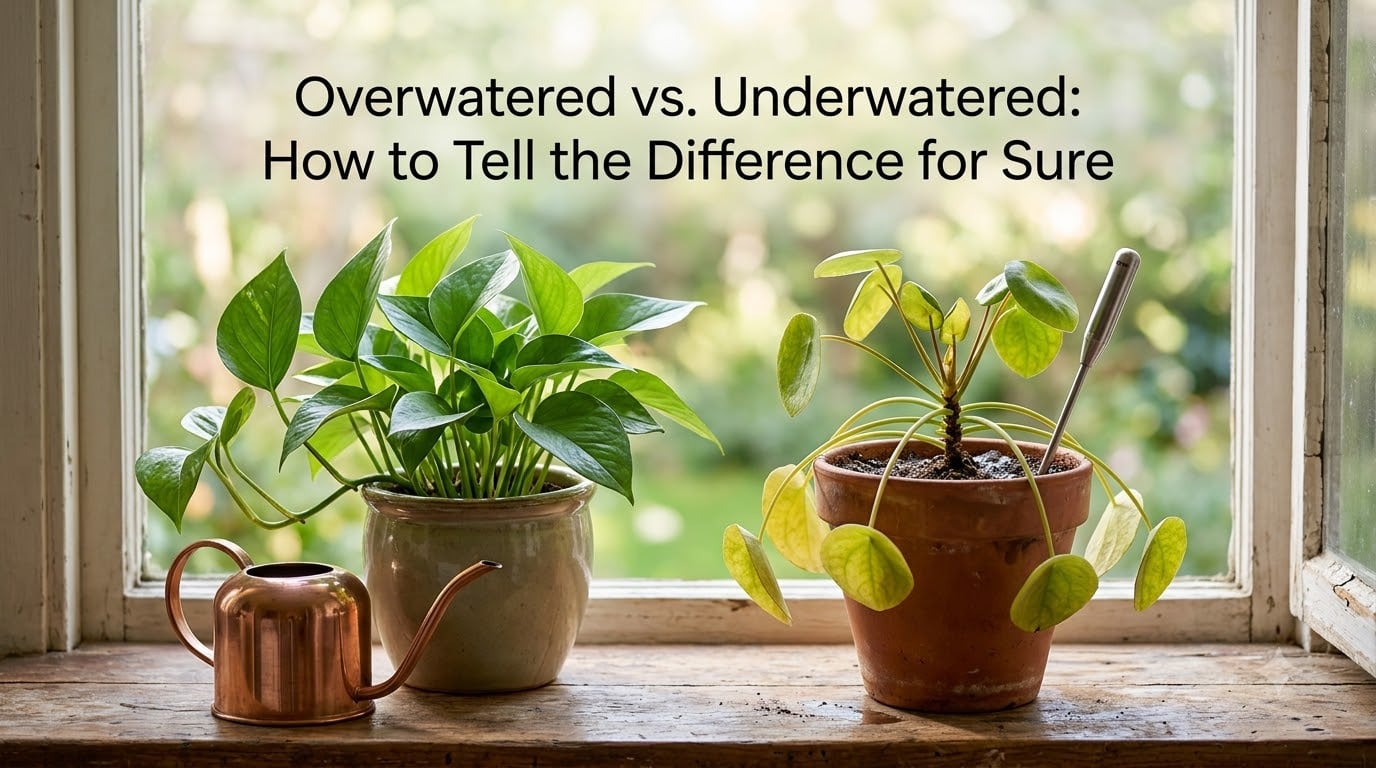
Overwatered vs. underwatered plants can look almost identical: both droop, both yellow, both seem to “need a drink.” That overlap is the single biggest reason houseplants die on living room shelves.
I’ve spent more than a few afternoons repotting rescue plants from friends who watered them “just to be safe,” and I’ve watched more Peace Lilies collapse from kindness than from neglect. The truth is, both watering mistakes are easy to make and hard to tell apart — until you learn what to look for.
This guide shows you exactly how to tell the difference between overwatered and underwatered plants using a simple four-part check: leaf feel, soil moisture, smell, and timeline. You’ll also get species-specific tells for the most common houseplants, a step-by-step recovery plan for each case, and answers to the questions Google gets asked most about this topic.
Table of Contents
Overwatered vs. Underwatered: Quick Comparison
If your plant looks stressed, this table is the fastest way to start narrowing things down. Match what you see against the symptom, then confirm with the soil and smell checks that follow.
| Symptom | Overwatered | Underwatered |
|---|---|---|
| Leaf feel | Soft, mushy, sometimes translucent | Dry, crispy, papery, brittle |
| Leaf color | Yellow from the bottom up; brown spots with yellow halos | Brown, curled tips and edges; dull faded green |
| Leaf shape | Dropping despite wet soil; edema blisters on undersides | Wrinkled, puckered, curling inward |
| Stem condition | Mushy, dark, collapsing at the base | Dry, woody, brittle |
| Soil moisture | Wet or soggy, even 2-3 days after watering | Bone-dry, pulling away from pot edges |
| Smell | Sour, swampy, musty | Neutral or dusty — no odor |
| Roots (if checked) | Brown/black, soft, slimy | Pale, dry, brittle |
| Timeline | Sudden collapse after a recent watering | Gradual decline over days or weeks |
| Recovery time | 2-6 weeks after you stop watering | Hours to 2 days after a good soak |
Signs of an Overwatered Plant
Overwatering is the most common cause of indoor plant death, and the reason is biological: roots need oxygen. When soil stays soggy, water fills the air pockets and roots suffocate. They stop taking up water, the tissue starts dying, and opportunistic anaerobic bacteria move in. The plant then loses its grip on water — even though there’s plenty of water in the pot — and the symptoms look a lot like thirst.
Here’s what overwatered plant symptoms actually look like, in plain terms.
Leaf changes
Leaves turn soft and limp, often starting with the lowest leaves first. They yellow (a condition called chlorosis) and develop brown spots ringed in yellow. In some species — Pothos, Begonias, and Cabbage Palms especially — you’ll see edema: tiny water-soaked blisters on the undersides of leaves, caused by roots taking up water faster than leaves can transpire it.
Stem changes
Stems go mushy near the soil line. Black or dark brown lesions appear at the base, and the whole plant may collapse under its own weight, even with moist soil.
Soil and smell
The soil stays wet for days. It smells sour, swampy, or like rotting vegetation — that’s the signature of root rot. Healthy soil smells earthy, not sour.
Root appearance
If you gently slide the plant out of its pot, overwatered roots are dark brown or black, soft enough to fall apart when you touch them, and sometimes coated in white fungal threads. Healthy roots are pale, firm, and flexible.
Signs of an Underwatered Plant
Underwatering is the opposite problem at the cellular level: plant cells lose turgor pressure, which is the internal water pressure that holds leaves upright. Without it, leaves droop, brown, and crisp. The plant is usually salvageable quickly because the damage is mostly dehydration, not infection.
Leaf changes
Leaves feel dry, papery, or leathery. They curl inward (a survival move that reduces surface area and water loss) and develop brown, crispy edges or tips. New growth may come in small or stunted.
Soil and pot
The soil is bone-dry, sometimes pulling away from the sides of the pot. If you poke a finger 2 inches down, it comes up completely dry. Water often runs straight through the drainage holes without being absorbed — this is called hydrophobic soil, and it happens when peat-based mixes dry out completely.
Stem and growth
Stems are dry, woody, and brittle. New leaves may emerge smaller than normal, and the plant’s overall growth slows dramatically.
Smell
Dusty or neutral. No odor at all — which itself is a useful tell, because the absence of a sour smell helps you rule out root rot.
The 4-Part Diagnostic Framework
Leaf and soil checks alone miss things. After watching dozens of rescues, I now run every plant through the same four-part check. It takes about 90 seconds and removes almost all of the guesswork.
1. Leaf feel
Pinch a symptomatic leaf gently. Overwatered leaves feel soft, almost wet, and may be translucent. Underwatered leaves feel papery, dry, and crisp. If the leaf snaps cleanly when you fold it, that’s dehydration.
2. Soil moisture at depth
The finger test only tells you about the surface. Push a finger 2 inches (about 5 cm) into the soil. If it’s dry down there, you likely have an underwatered plant. If it’s wet below the surface even though the top looks dry, you’re probably overwatering. A moisture meter is more accurate and worth the small investment if you keep a lot of plants.
3. Smell
Put your nose close to the soil. A sour, musty, swampy, or rotten-vegetation smell is the hallmark of anaerobic bacterial activity, which only happens in waterlogged soil. Healthy soil smells earthy — like a forest floor after rain. No smell usually means underwatering.
4. Timeline
When did the symptoms start? Overwatered plants often collapse suddenly within a day or two of a watering, sometimes even while the soil is still damp. Underwatered plants decline gradually, with symptoms worsening over a week or more. If the plant perked up dramatically after watering and then wilted again a few days later, that’s classic underwatering.
If three of the four checks point the same way, trust the majority. The smell and timeline checks together are especially reliable when the leaf and soil results seem to conflict.
Species-Specific Tells: What to Look For
Different houseplants show different symptoms first. Here are the classic warning signs for the five species we get asked about most.
Peace Lily (Spathiphyllum)
Peace Lilies are drama queens — they droop heavily at the first sign of thirst, then perk back up within hours of a good soak. If yours droops but recovers after watering, it was underwatered. If it droops and stays droopy despite wet soil, the roots are likely rotting.
Pothos (Epipremnum aureum)
Pothos is forgiving but tells you everything. Overwatered Pothos develops yellow leaves with black stems and edema blisters on leaf undersides. Underwatered Pothos curls its leaves inward and the stems go limp, but the plant bounces back within a day after a soak.
Monstera (Monstera deliciosa)
Overwatered Monsteras develop yellow leaves with brown spots and may ooze dark sap from the stems. Underwatered Monsteras curl their leaves inward and develop crispy brown edges. Monsteras prefer to dry out between waterings, so when in doubt, wait an extra day.
Snake Plant (Sansevieria / Dracaena trifasciata)
Snake plants store water in their leaves, so they’re extremely drought-tolerant and extremely prone to overwatering. An overwatered snake plant collapses suddenly, leaves turn yellow from the bottom up, and the base becomes mushy. Recovery is hard — prevention is much easier. An underwatered snake plant wrinkles along the leaf length and recovers within 48 hours of watering.
Succulents and Cacti
Overwatered succulents go translucent and yellow, with mushy black spots. Underwatered succulents wrinkle and pucker, but their leaves stay firm. If a succulent leaf feels soft, it’s almost certainly too much water, not too little.
How to Save an Overwatered Plant
Overwatered plants need fast action, because root rot spreads quickly. Here’s the recovery process that has worked for me on dozens of rescues.
- Stop watering immediately. Move the plant to a shaded spot where air circulates well.
- Remove the pot and inspect the roots. Slide the root ball out and gently shake off wet soil. Healthy roots are white or pale tan and firm. Rotted roots are brown or black and mushy.
- Trim the rot. Using sterilized scissors, cut away every soft, dark, or smelly root. Cut back to firm, pale tissue.
- Repot in fresh, dry soil. Use a well-draining mix appropriate for the species. Make sure the pot has drainage holes — no exceptions.
- Hold off on watering. Wait 5-7 days, then water lightly. The plant needs time to grow new root tips.
- Monitor for 2-4 weeks. New growth is the sign the plant is recovering. Yellow leaves may not recover, but new leaves will.
If the rot has reached the main stem, take healthy cuttings and propagate them. The mother plant may not survive, but you can start fresh from a healthy cutting.
How to Save an Underwatered Plant
Underwatered plants recover faster because the underlying mechanism is just dehydration. Within hours of a proper soak, most plants begin to perk up.
- Bottom-water if possible. Set the pot in a few inches of water and let it soak up from the drainage holes for 20-30 minutes. This rehydrates dry soil more evenly than top-watering and rewets hydrophobic peat-based mixes.
- If top-watering, water slowly. Pour a little, wait 10 minutes, then pour a little more. Dry soil needs time to rehydrate, otherwise water runs straight through.
- Mist the leaves. This raises humidity around the plant and helps leaves rehydrate, especially for ferns and Calathea.
- Trim dead growth. Brown, crispy leaves won’t recover. Snip them off so the plant can focus energy on new growth.
- Adjust your watering schedule. Check the soil every 2-3 days instead of watering on a fixed day. Water when the top 1-2 inches are dry.
Most underwatered plants recover within a day or two. Brown leaf tips and edges are permanent, but new growth will look normal again.
Prevention Checklist: Watering Right Every Time
Prevention is easier than recovery. Here’s the routine that keeps my plants out of trouble.
- Always use pots with drainage holes. Decorative pots without drainage are the single most common cause of overwatering deaths.
- Check soil before watering. The finger test (2 inches down) is free and reliable. A moisture meter is even better.
- Water less in winter. Most houseplants enter a slower growth phase and need 30-50% less water than in summer.
- Match the plant to the room. Bathrooms and kitchens are humid; plants there need less watering. Living rooms with dry air may need more.
- Use room-temperature water. Cold water shocks tropical plant roots.
- Empty saucers 15 minutes after watering. Standing water in the saucer soaks back up and waterlogs the roots.
The single most useful habit is to throw out the watering schedule. Plants don’t drink on a calendar. Check the soil, water when it’s dry, and walk away.
Frequently Asked Questions
How do I tell if my plant is dying from overwatering or underwatering?
Use the 4-part check: leaf feel (soft and mushy vs dry and crispy), soil at 2 inches deep (wet vs bone-dry), smell (sour or swampy vs neutral), and timeline (sudden collapse after watering vs gradual decline over days). Three out of four pointing the same direction is usually correct.
How to tell if underwatering vs overwatering?
The fastest tell is the soil at depth. Stick a finger 2 inches down. If wet below the surface but the plant looks thirsty, you’re overwatering and the roots are failing. If dry all the way through, you’re underwatering. A moisture meter removes the guesswork.
How do I know if I am overwatering?
Common signs include yellow leaves starting from the bottom, soft or mushy stems near the soil line, soil that stays wet for days, a sour or musty smell from the pot, edema blisters on leaf undersides, and fungus gnats hovering around the plant.
Is my plant underwatered or overwatered?
If the plant perks up within a few hours of watering and stays perky for days, it was underwatered. If it stays droopy despite wet soil, it’s overwatered and the roots are likely rotting. The recovery test is one of the most reliable diagnostic tricks.
Is it better for plants to be overwatered or underwatered?
Underwatering is almost always easier to fix. Underwatered plants usually recover within hours to a day of a good soak, while overwatered plants can take 2-6 weeks to recover, and many don’t survive severe root rot. When in doubt, wait a day before watering.
How to tell between overwatered and underwatered plants?
Combine four signals: leaf texture (soft vs crispy), soil moisture at depth (wet vs dry), smell (sour vs neutral), and how fast the symptoms appeared (sudden vs gradual). No single signal is reliable alone, but together they remove almost all ambiguity.
Can plants go 2 weeks without being watered?
Most tropical houseplants can survive 2 weeks without watering in mild indoor conditions, especially in winter. Succulents and cacti can go weeks or even months. Fast-growing or thin-leaved plants like ferns and Calathea may start wilting within 4-7 days. Always check the soil, not the calendar.
Conclusion
Knowing how to tell the difference between overwatered and underwatered plants comes down to four checks: leaf feel, soil at depth, smell, and timeline. Run them together and the answer becomes obvious within a minute.
When in doubt, don’t water. Underwatering is fixable in hours; overwatering can take weeks and may not survive. Check the soil, trust the four-part framework, and your plants will reward you with steady growth well into 2026 and beyond.