
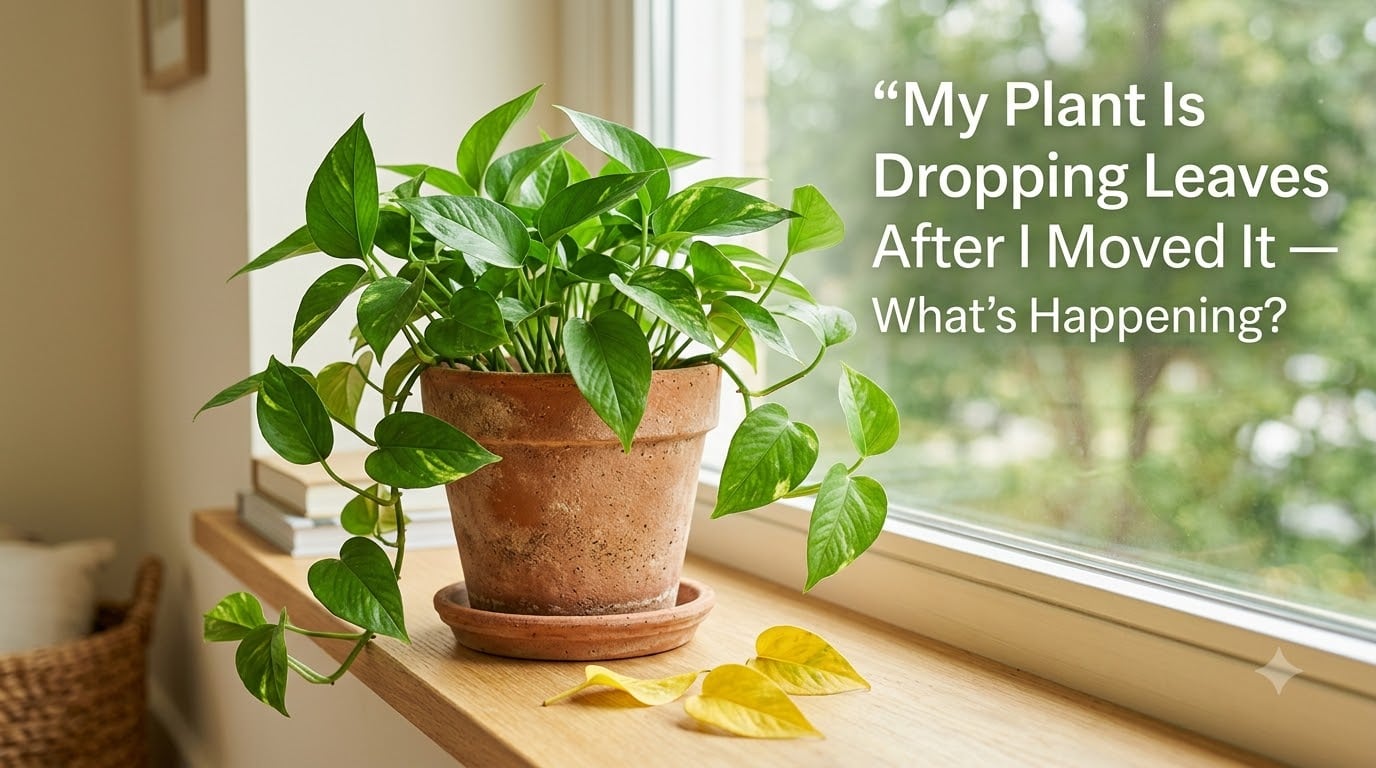
Your plant is dropping leaves after moving, and you’re worried it might be dying. I get it. After spending months caring for a houseplant, watching leaves fall off within days of relocating it feels terrifying. Here’s the good news: in most cases, this is completely normal. It’s called transplant shock, and it’s your plant’s predictable stress response to a sudden change in environment.
In this guide, I’ll walk you through exactly why this happens, what symptoms are normal versus concerning, and the specific steps you can take right now to help your plant bounce back. Our team has worked with thousands of plant parents facing this exact situation, and the plants that recover fastest are the ones whose owners stay calm and patient.
Table of Contents
Why Plants Drop Leaves After Moving
Plants drop leaves after moving because they’re adjusting to new light, temperature, and humidity conditions. When you relocate a plant, even across the same room, you’re changing the environmental signals it has spent weeks or months adapting to. Leaves are specifically built for the light levels where they grew, so when conditions shift, the plant sheds leaves it can no longer efficiently support and grows new ones better suited to the new spot.
This response is called transplant shock, and it affects roughly 7 out of 10 plants that get moved or repotted. The intensity depends on how drastic the change is. Moving a plant six inches from one windowsill to another causes mild stress. Moving it from a shady corner to direct sun, or from outside to inside, can trigger dramatic leaf drop within 48 hours.
Three primary factors trigger this response: sudden light change, root disturbance, and shifts in humidity or temperature. Understanding each one helps you respond correctly rather than panicking.
Light Adaptation Is the Biggest Culprit
Your plant’s leaves are essentially solar panels calibrated to specific light intensity. When you move a plant from a bright window to a darker corner, the leaves that grew in bright light suddenly can’t produce enough energy. Rather than waste resources keeping them alive, the plant drops them and prepares to grow leaves better suited to the lower light.
This is why even a “small” move can cause major leaf drop. The plant isn’t being dramatic. It’s being efficient with limited resources.
What Is Transplant Shock?
Transplant shock is a stress response that occurs when a plant’s growing conditions change suddenly. It commonly follows moving, repotting, or relocating a plant between indoor and outdoor environments. Symptoms include leaf drop, wilting, yellowing, and slowed growth.
At the biological level, transplant shock happens because root function temporarily decreases after a move. Roots may be physically disturbed, or they may need time to adjust to new soil moisture levels. When roots can’t uptake water as efficiently, the plant can’t maintain turgor pressure in its leaves, causing wilting and eventual leaf drop.
Simultaneously, the plant is recalibrating to new light levels. Old leaves may be optimized for light conditions that no longer exist. New leaves will grow better suited to the current environment, but the transition period often means the plant sheds what it can no longer support.
Signs Your Plant Is Stressed After Moving
Common signs of plant stress after moving include dropping lower leaves first, slight wilting during midday, yellowing of leaf edges, and a general “droopy” appearance that improves overnight. These symptoms typically appear within 3 to 7 days after relocation.
Here are the specific symptoms to watch for:
- Leaf drop starting from the bottom: Older, lower leaves yellow and fall first while new growth remains intact.
- Midday wilting: Leaves look droopy during peak sun hours but perk up by evening.
- Yellowing edges or spots: Discoloration appears on leaf margins before spreading inward.
- Slowed growth: New leaves stop emerging or grow much smaller than usual.
- Texture change: Previously firm leaves feel soft, thin, or papery.
One or two of these symptoms is normal. Seeing four or five at once may indicate the stress is more severe, but it’s still often recoverable with proper care.
How to Help Your Plant Recover After a Move
To help your plant recover after moving, keep the soil lightly moist, place it in stable indirect light, avoid fertilizing for 4 to 6 weeks, and resist the urge to repot again. Stability and patience are more effective than any intervention.
Follow this recovery sequence for the best results:
Step 1: Check Soil Moisture Immediately
Stick your finger one inch into the soil. If it feels dry, water thoroughly until excess drains from the bottom. If it’s still moist, wait. The biggest mistake plant parents make after seeing leaf drop is overwatering out of panic, which leads to root rot.
Step 2: Find a Stable Location
Move the plant to its final destination and leave it there. Avoid shuffling it between spots to “find the right light.” Every move resets the adjustment clock. Choose a location with consistent temperature (65 to 75°F is ideal for most tropicals) and away from heating or cooling vents.
Step 3: Skip Fertilizer
Do not fertilize a stressed plant. Fertilizer forces growth when the plant needs to conserve energy. Wait at least 4 to 6 weeks, or until you see clear new growth, before resuming your normal feeding schedule.
Step 4: Maintain Humidity
Most houseplants prefer 40 to 60 percent humidity. If your home is dry, especially in winter, group plants together, use a pebble tray, or run a small humidifier nearby. Low humidity worsens leaf drop.
Step 5: Remove Only Fully Dead Leaves
Yellow or partially damaged leaves are still photosynthesizing. Cut them only when they’re fully brown and crispy. Premature pruning removes energy-producing surfaces your plant needs to recover.
How Long Does Transplant Shock Last?
Transplant shock typically lasts 1 to 3 weeks for most houseplants, though some sensitive species like fiddle leaf figs may show stress for up to 6 weeks. Recovery begins when you see new growth emerging from the stem or top of the plant.
The timeline varies based on plant type and severity of the move:
- Hardy plants (pothos, snake plant, zz plant): 1 to 2 weeks
- Moderate plants (monstera, philodendron, rubber plant): 2 to 4 weeks
- Sensitive plants (fiddle leaf fig, calathea, ferns): 4 to 6 weeks
Reddit users consistently report their plants bouncing back within 1 to 3 weeks when they avoided overwatering and kept the plant in one stable spot. The community consensus is clear: patience works.
When to Worry About Leaf Drop vs Normal Adjustment
Worry if your plant loses more than 50 percent of its leaves within a week, develops soft black stems, smells like rot, or shows no new growth after 6 weeks. Normal adjustment involves gradual leaf drop over 1 to 3 weeks with some yellowing but no stem damage.
Here’s how to tell the difference:
Normal Adjustment Looks Like
- Gradual leaf loss (a few leaves per week)
- Some yellowing on older leaves only
- Stems remain firm and green
- New growth appears within 3 to 4 weeks
Warning Signs That Need Action
- Sudden mass leaf drop (20+ leaves in a few days)
- Soft, mushy, or black stems
- Foul smell from soil (indicates root rot)
- No new growth after 6 weeks
- White fuzzy growth on soil or stems (fungal infection)
If you see the warning signs, check the roots immediately. Healthy roots are white or light tan and firm. Rotted roots are black, mushy, and may smell sour. Trim any rotted sections with clean scissors and repot in fresh, well-draining soil.
Species-Specific Leaf Drop After Moving
Some plants are notorious for dramatic leaf drop after any change. Fiddle leaf figs can drop 50 percent of their leaves from a single move and still recover, while pothos barely notice a relocation. Knowing your plant’s sensitivity helps set realistic expectations.
Fiddle Leaf Fig
Fiddle leaf figs are the drama queens of the houseplant world. They can drop leaves from even a 30-degree rotation in the room. If you must move one, do it gradually over a week, shifting it a few inches at a time. Expect leaf drop but know that with stable conditions, new leaves will grow back within 2 to 3 months.
Rubber Plant
Rubber plants drop their lower leaves first when stressed. This is normal and doesn’t indicate a problem. New growth will emerge from the top once the plant adjusts, usually within 3 to 4 weeks.
Monstera and Philodendrons
These tropical plants are moderately resilient. Expect some yellowing of older leaves but minimal total leaf drop if you keep humidity stable and avoid direct sun during the adjustment period.
Calathea and Prayer Plants
Calatheas react strongly to humidity and light changes. Move them to their final spot immediately, maintain 50 percent humidity or higher, and use filtered water to prevent leaf browning.
Preventing Leaf Drop During Future Moves
To prevent severe leaf drop in future moves, acclimate your plant gradually over 7 to 10 days, water it well 24 hours before moving, and avoid relocating during peak summer or winter when temperature extremes add stress.
Best practices for moving houseplants:
- Water 24 hours before: Hydrated plants handle stress better than dry ones.
- Wrap pots in towels: Protects roots from temperature swings during transport.
- Acclimate over 7 to 10 days: Shift the plant a few feet closer to its new spot each day if moving across rooms.
- Avoid moving during bloom: Flowering plants drop buds faster than leaves.
- Move during spring or early fall: Active growth seasons help plants recover faster than winter dormancy.
If you’re moving to an entirely new house, transport plants in your car rather than a moving truck where temperatures can spike. Unpack them first so they can begin adjusting while you settle in.
Frequently Asked Questions
How long does it take for a plant to recover from transplant shock?
Most houseplants recover from transplant shock within 1 to 3 weeks. Hardy plants like pothos and snake plants bounce back fastest, while sensitive species like fiddle leaf figs and calatheas may need 4 to 6 weeks. You’ll know recovery has begun when you see new growth emerging from the stem or top of the plant.
Why are my leaves falling after repotting?
Leaves fall after repotting because the plant is experiencing transplant shock, a stress response to root disturbance and changes in soil moisture, light, or humidity. The plant sheds older leaves it can no longer efficiently support while it grows new ones adapted to current conditions. This is normal and usually resolves within a few weeks with stable care.
Is it normal for my plant to droop after repotting?
Yes, drooping is one of the most common symptoms of transplant shock and is completely normal. Drooping happens because root function temporarily decreases after a move, reducing water uptake to the leaves. The plant should perk back up within a few days to a week if you keep soil moisture consistent and avoid further stress.
Can plants recover from transplant shock?
Yes, the vast majority of plants recover fully from transplant shock with proper care. Keep the plant in one stable location, maintain even soil moisture, skip fertilizer for 4 to 6 weeks, and avoid repotting again. New growth is the clearest sign of recovery and typically appears within 3 to 4 weeks.
Can a plant recover from losing all its leaves?
Many plants can recover from complete leaf loss if the stems and roots remain healthy. Cut back on watering since the plant needs less water without leaves, keep it in stable indirect light, and wait. New growth usually emerges within 1 to 3 months for hardy species. If stems become soft or black, recovery is unlikely.
Final Thoughts
A plant dropping leaves after moving is almost always a normal stress response, not a death sentence. Your plant is recalibrating to new conditions, and that process takes time. The single most important thing you can do is leave it alone: no extra water, no fertilizer, no moving it again to “fix” things.
I’ve watched countless plant parents panic and make things worse by overwatering or repotting a stressed plant. The ones who succeed are the ones who give their plant 3 to 4 weeks of stable conditions and trust the process. Your plant knew how to grow before you moved it. It still knows. Give it time, and you’ll likely see new leaves within a month.