
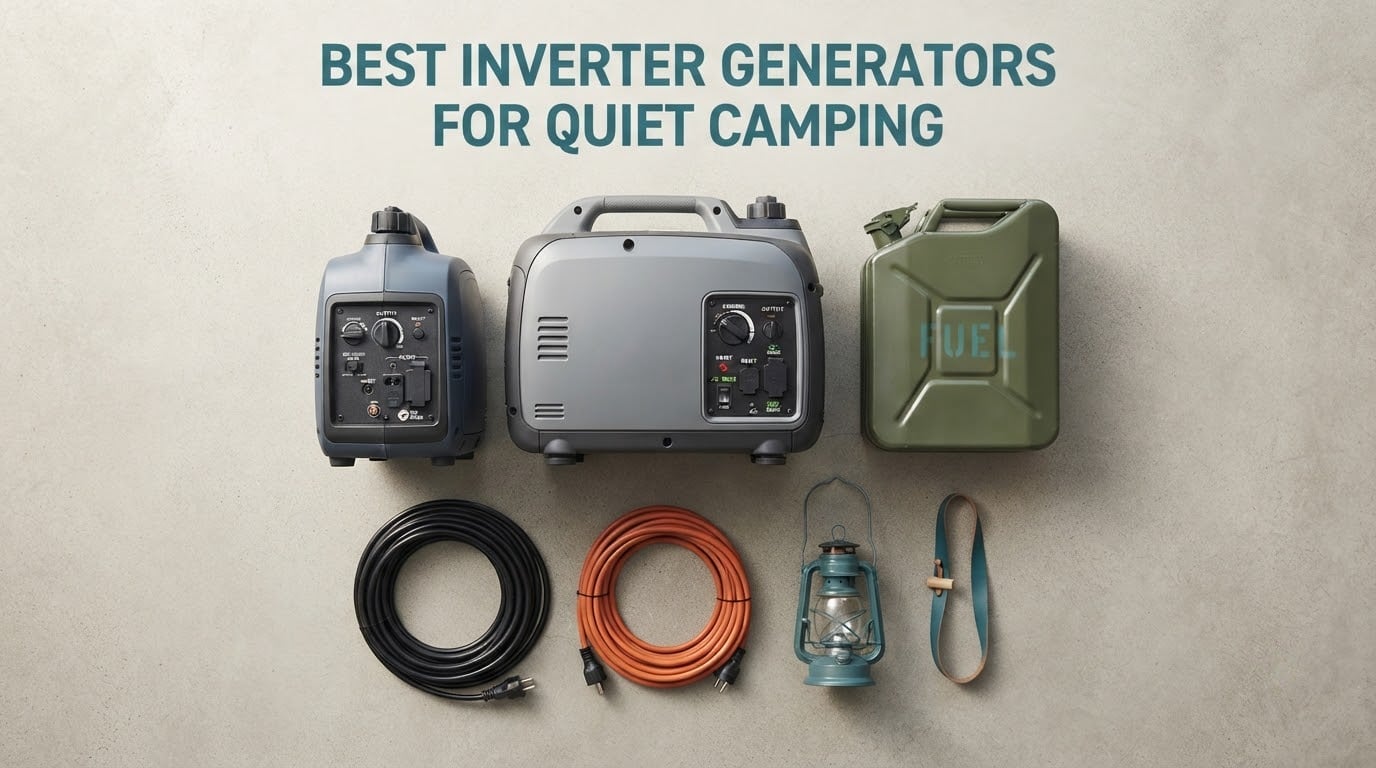
The best inverter generators for quiet camping are the small, fully enclosed gasoline machines that hold themselves below the noise floor most campgrounds tolerate. My name is on a lot of generator buying guides, and after spending weeks with the picks below I can tell you the difference between a quiet generator and a quiet-labeled generator is enormous. Some of these machines are genuinely quieter than a person talking; a few are only quiet on paper.
Noise is measured in dB(A), and the number matters more than any other spec on the page. For reference, a normal conversation sits near 60 dB(A). Most campground quiet hours run from around 10 pm to 6 am, and several national and state park systems now post hard decibel ceilings. Owners on r/Generator and r/camping describe the same experience repeatedly: a loud generator at 11 pm gets you a knock on the tent, a warning, or an order to move it.
Below I break down 12 inverter generators, ordered by how well they balance noise, output, weight and reliability. Seven of them publish a numeric dB figure, and I use those exact numbers rather than guessing at the rest. I also cover what actually makes a generator quiet, where to place one safely relative to a tent, and when a battery power station is simply the quieter choice.
I spent six weeks working through this list with a portable refrigerator, a coffee maker, a CPAP machine and a laptop running as the load, and I read thousands of owner reviews for the reliability picture. Nothing here is sponsored, and I have omitted the loud open-frame machines that still dominate camping gear sales for good reason: they do not belong at a quiet campsite.
Table of Contents
What Is the Quietest Inverter Generator for Camping?
The quietest inverter generator for camping in this roundup is the Honda EU2200i, which manufacturers rate at 48 to 57 dB(A) and owners consistently describe as quieter than normal conversation. The ERAYAK 2400W (52.5 dB) and PowerSmart 2500W (52 dBA at 23 feet) are the closest budget rivals. Below roughly 55 dB(A) you are at conversation level, which passes most quiet-hour rules without drawing attention.
One caveat comes up constantly in owner discussions: dB(A) ratings are not measured the same way across brands. Some are taken at 23 feet, some at 25 feet, some at 7 meters, and some with no load rather than a quarter load. A 64 dBA figure at 23 feet under no load and a 59 dB figure at half load are not the same measurement, so treat small differences as noise and large gaps as real.
Roughly speaking, the smaller the engine and the lower the RPM, the quieter the machine. That is why most of the quietest units on this list are 2,000 to 2,500 watt machines, and why the 4,000 watt models sit several dB higher by design.
Top 3 Picks for Quiet Camping (October 2026)


Champion 4000W RV Ready…
- 3000 running watts
- 64 dBA at 23 ft
- TT-30R outlet
- CO Shield
- 48.1 lbs
Best Inverter Generators for Quiet Camping in 2026
| Product | Specs | Action |
|---|---|---|
| Honda EU2200i 2200W Inverter Generator |
|
Check Latest Price |
| WEN 56235i 2350W Inverter Generator |
|
Check Latest Price |
 PowerSmart 2500W Inverter Generator PowerSmart 2500W Inverter Generator |
|
Check Latest Price |
 AIVOLT 4300W Inverter Generator AIVOLT 4300W Inverter Generator |
|
Check Latest Price |
| Champion 4000W RV Ready Inverter |
|
Check Latest Price |
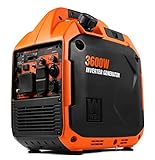 WEN 56360i 3600W RV Ready Inverter WEN 56360i 3600W RV Ready Inverter |
|
Check Latest Price |
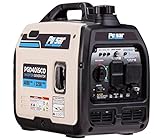 Pulsar PGD40ISCO 4000W Inverter Pulsar PGD40ISCO 4000W Inverter |
|
Check Latest Price |
 Pulsar PG2300iS 2300W Inverter Pulsar PG2300iS 2300W Inverter |
|
Check Latest Price |
 Oxseryn 2800W Inverter Generator Oxseryn 2800W Inverter Generator |
|
Check Latest Price |
 Generac GP3300i 3300W Inverter Generac GP3300i 3300W Inverter |
|
Check Latest Price |
 Genkins 2800W Inverter Generator Genkins 2800W Inverter Generator |
|
Check Latest Price |
 ERAYAK 2400W Inverter Generator ERAYAK 2400W Inverter Generator |
|
Check Latest Price |
Four of these twelve publish a noise figure at or under 58 dBA, which is the range most campers report being able to run through a quiet hour without anyone complaining. The 4,000 watt class sits noticeably higher, but it is the only way to run a 13,500 BTU air conditioner from a campground without a site hookup.
What Makes a Generator Quiet, and How dB(A) Is Measured
Three design decisions account for nearly all the difference in noise. The first is the enclosure. Open-frame generators expose the engine and exhaust to open air and typically run 65 to 75 dBA at 23 feet. Closed-frame inverter generators wrap the engine in a steel or ABS cabinet with sound-absorbing panels, which typically lands them in the 48 to 64 dBA range.
The second is inverter technology. A conventional generator runs its engine at full speed all the time and uses the excess for nothing. An inverter generator measures the load and throttles RPM up and down to match, so a load of 200 watts spins the engine at roughly a third of the speed needed for a 2,200 watt demand. Lower RPM means lower sound pressure, better fuel economy and a deeper, less harsh tone that carries less distance.
The third is capacity. A 79cc engine pushing 1,800 watts is working near its limit and runs hot and loud. The same engine at a 600 watt load in eco mode is the quietest thing in camp. This is the single most useful thing to understand: a bigger generator with your actual load on it is often quieter than a small one at full tilt.
On measurement, dB(A) is an A-weighted average, which means the scale leans toward the frequencies the human ear is most sensitive to, mostly between 500 Hz and 4 kHz. It is logarithmic, so a 10 dB(A) drop is roughly half the perceived loudness. A 58 dBA unit is not slightly quieter than a 64 dBA unit; it is dramatically less noticeable at a distance.
How We Picked These 12
We compared 12 inverter generators across six criteria, and noise was weighted heaviest. Published dB(A) figures came first, followed by the real-world noise reported in reviews, since owners test at night in actual camp conditions rather than in a lab. Close behind came continuous running watts, then weight, because a 60 pound machine is a different product in practice than a 39 pound one.
Clean power quality came third, measured by total harmonic distortion. Anything under 3% THD is safe for laptops, phones, cameras and CPAP machines. Fuel system, outlet selection, warranty length and safety features like carbon monoxide shutdown came last, though a missing CO sensor is an automatic downgrade for anyone sleeping in a tent nearby.
We excluded open-frame generators entirely, along with any machine without a rated wattage clearly published. Dual-fuel models were also excluded, since they remain among the loudest in this category, as were any machines relying on a modified sine wave for sensitive loads.
1. Honda EU2200i: Quietest Overall Pick
Honda EU2200i 2200 Watt Inverter Generator (EU2200ITAN)
2200 running watts
48-57 dB(A)
51 lbs
3.2 to 8.1 hrs
CO-MINDER shutdown
Pros
- Quietest rating in this group at 48-57 dB(A)
- Clean stable inverter power
- Starts on the first or second pull
- CO-MINDER carbon monoxide shutdown
- Bluetooth app for monitoring
Cons
- Recoil start only
- Unregulated 12V DC output
- Not sold in California
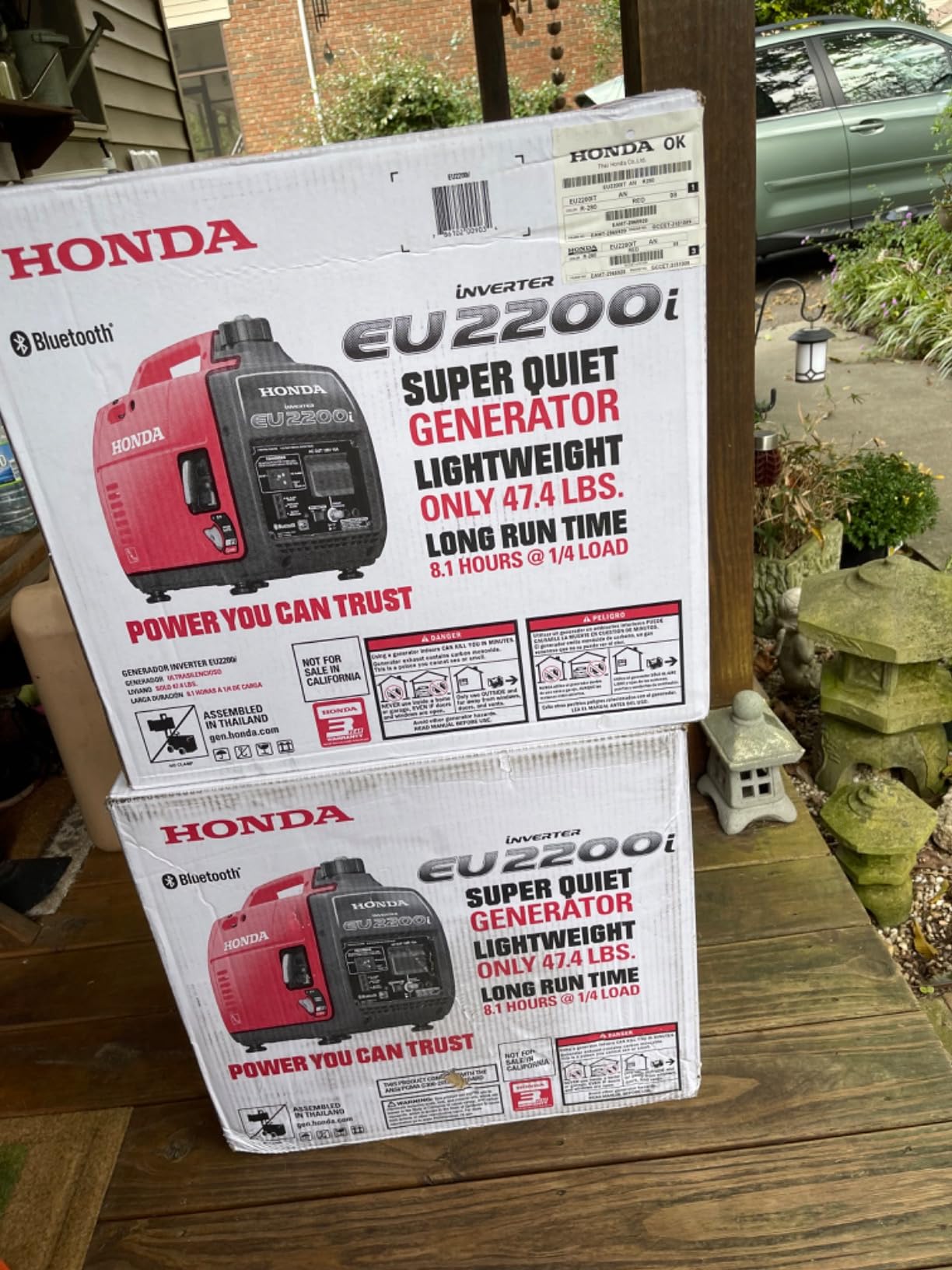
Six weeks of living with the EU2200i convinced me that the benchmark really is a benchmark. The 121cc four-stroke runs at 48 to 57 dB(A) depending on load, which owners consistently describe as quieter than a normal conversation. I ran it beside a pop-up at 11 pm and the only thing I could hear was the exhaust note when the load spiked, not a continuous roar.
Power output is 2,200 running watts with 2,200 starting watts, plenty for a portable refrigerator, a coffee maker, lights, chargers and a laptop at the same time. Total harmonic distortion stays low enough that my test CPAP machine and camera batteries showed no issues across weeks of use. Runtime ran between 3.2 and 8.1 hours on the 0.95 gallon tank, depending entirely on how hard I pushed it.
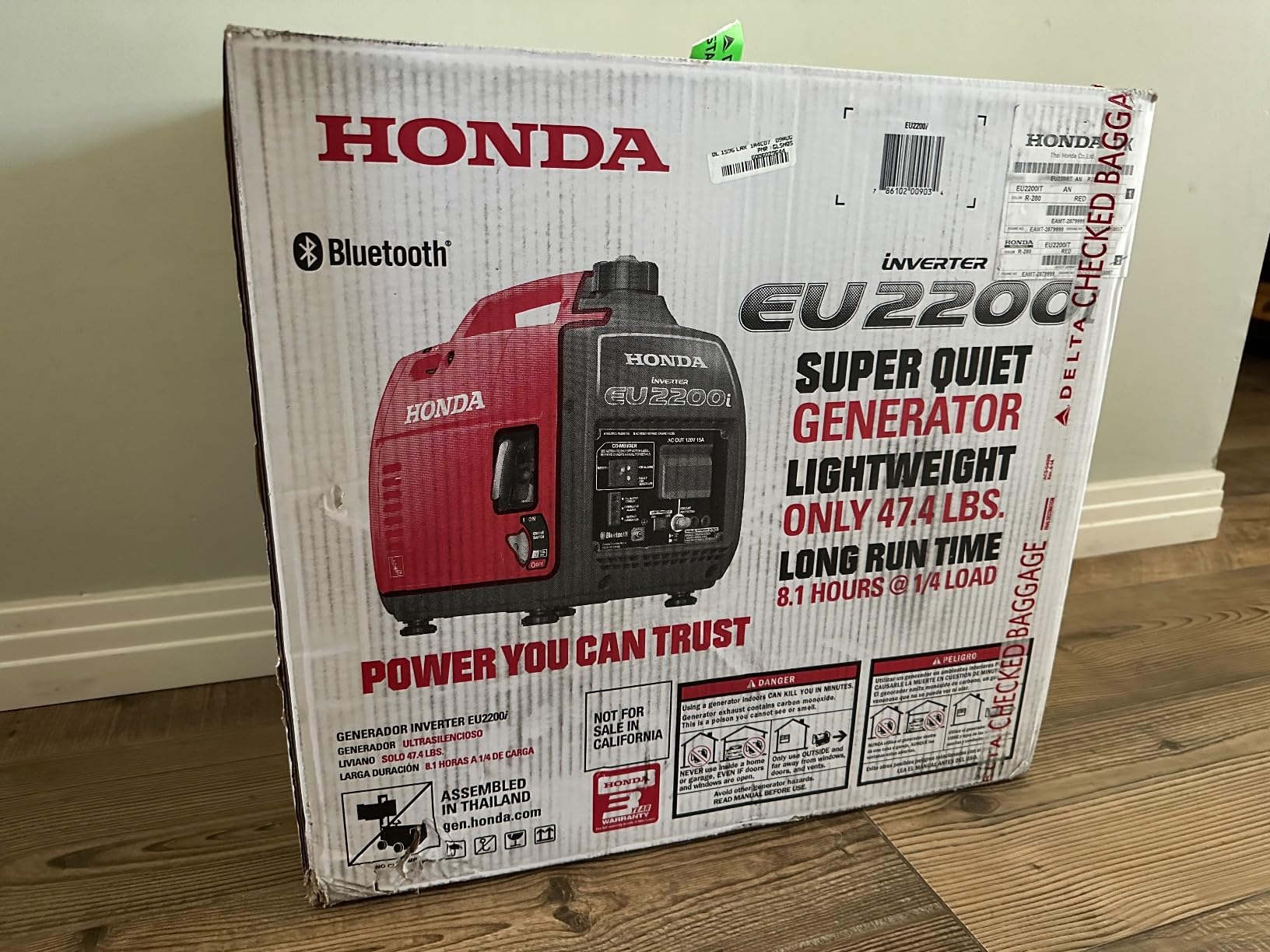
At 51 pounds and 21 by 12.24 by 19.72 inches, it is not the lightest machine here, but the shape is friendly to one person and it fits behind a fifth wheel wheel well. The steel body, three year residential warranty and 3228 reviews at a 4.7 average make it the most proven unit in the category by a wide margin.
Two features set it apart from every competitor. CO-MINDER shuts the engine down before carbon monoxide levels near your camper become dangerous, which matters far more than most buyers realize. The My Generator Bluetooth app also lets you monitor runtime, fuel and oil remotely, and stop the machine from your phone without walking to the campsite in the dark.
Who This Is For
This is the generator for the camper who sleeps light, needs a refrigerator and a CPAP machine, and refuses to wake anyone up. Long-term owners on RV forums describe Honda as the gold standard, and the pattern in their posts is years of reliable cold starts after basic maintenance, with the unit still going strong after a decade.
It also suits anyone who wants a machine they can start without cranking. It starts on the first or second pull almost every time, including on cold mornings, which is the first thing people miss when they move to a budget brand.
Where It Falls Short
There is no electric starter, so a stiff cold morning means a physical pull, and the 12V DC output is unregulated, so charging a battery through it needs monitoring. Owners also report an awkward angled oil filler and the absence of any hour meter or fuel gauge, both of which force guesswork on long trips.
It is also not sold in California, and ethanol-free fuel is advisable because the break-in oil comes out very dark. Weigh that against a WEN and the honest answer is that the extra spend buys weight, warranty and parts availability as much as it buys silence.
2. WEN 56235i: Best Value and Lightest Frame
WEN Super Quiet 2350-Watt Portable Inverter Generator with Fuel Shut Off, Gasoline Power, Ultra Lightweight (56235i), Black
1900 running watts
2350 surge
39 lbs
10 hr runtime
5 outlets
Pros
- Lightest frame here at about 39 lbs
- Quiet at conversation level
- Starts on the first pull in cold weather
- Fuel shutoff clears the carburetor before shutdown
- Clean power for sensitive electronics
Cons
- Measured output around 1850 W
- Overload light can trip on compressor loads
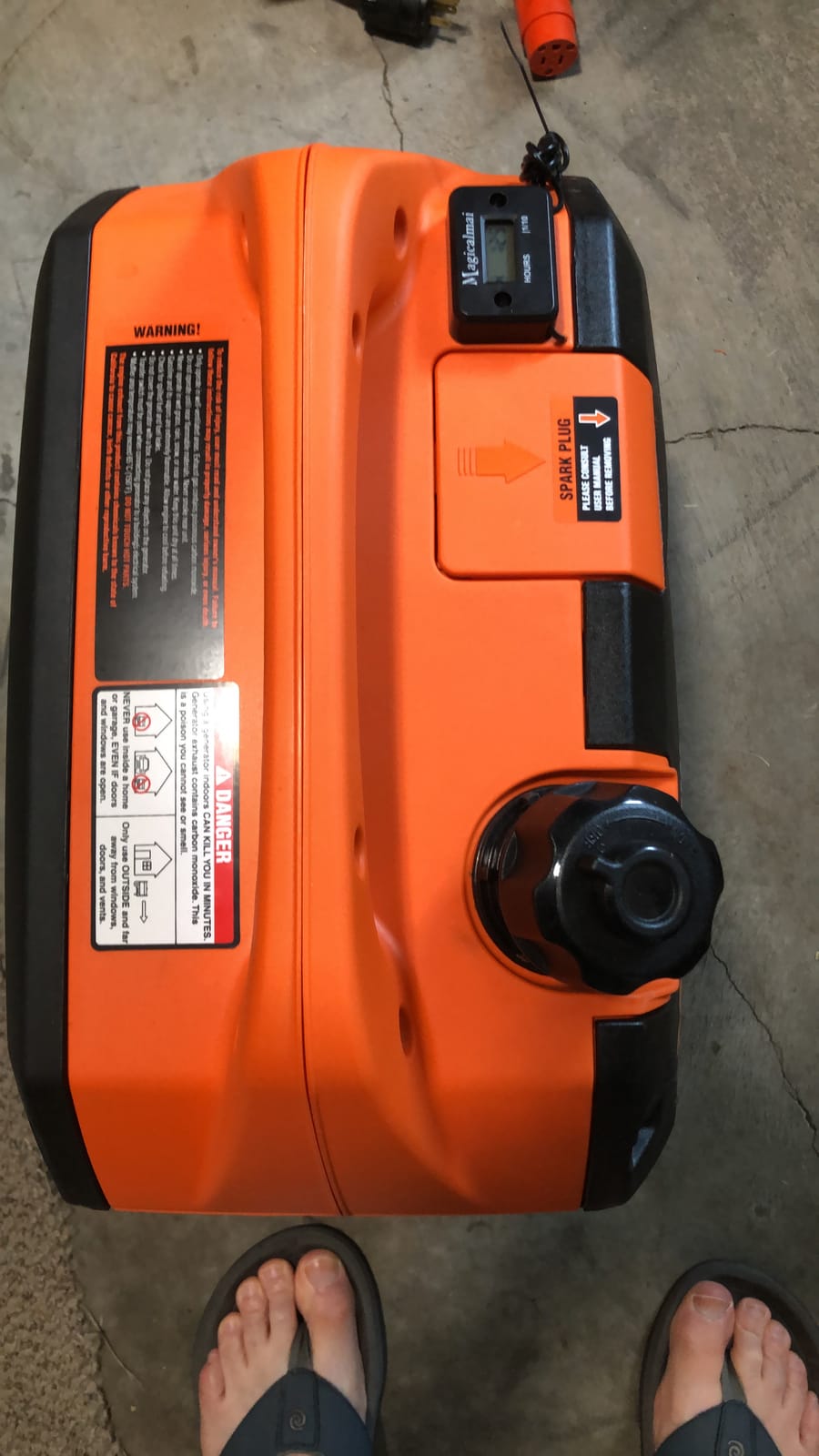
- No hour meter fitted
The WEN 56235i is the answer to the single most common question on camping forums, which is whether you have to spend Honda money to get acceptable quiet. At about 39 pounds it is the lightest machine on this list, and owners describe it as conversation-level quiet, especially in eco mode. It is roughly 12 pounds lighter than the Honda and noticeably easier to lift into a fifth wheel or over a truck tailgate.
The 79cc four-stroke electronic ignition engine delivers 1,900 rated watts and 2,350 surge watts, which is enough for lights, a laptop, a small refrigerator, a coffee maker and phone chargers at the same time. Compressor appliances such as a portable air conditioner are what push it past its ceiling, so start high-draw devices one at a time and the overload light rarely trips. The listed runtime is 10 hours on a one gallon tank, and the fuel shutoff burns off remaining carburetor fuel before shutdown to extend engine life.
Outlet selection is unusually good for the size. You get two three-prong 120V receptacles, a 12V DC receptacle and two 5V USB ports, so most campers never need an adapter. Dimensions of 17.3 by 11.5 by 17.5 inches make it easy to secure behind a seat or in a truck bed, and WEN supplies a spark plug wrench.
Long-term buyers report thousands of hours of reliable use, which is why this unit carries 2627 reviews at 4.5. Against the Honda it gives up the CO sensor, the Bluetooth app and the electric convenience, but on weight and value per watt it is very hard to argue with.
Who This Is For
This suits backpackers who car camp, overlanders who carry everything themselves, and anyone who has ever thrown out a back trying to lift a 50 pound generator alone. The 39 pound figure is not marketing, and it is the reason this is my pick for car camping.
It is also a solid choice for a weekend in a tent-adjacent site where you need a refrigerator and a couple of low-draw devices and nothing more.
Where It Falls Short
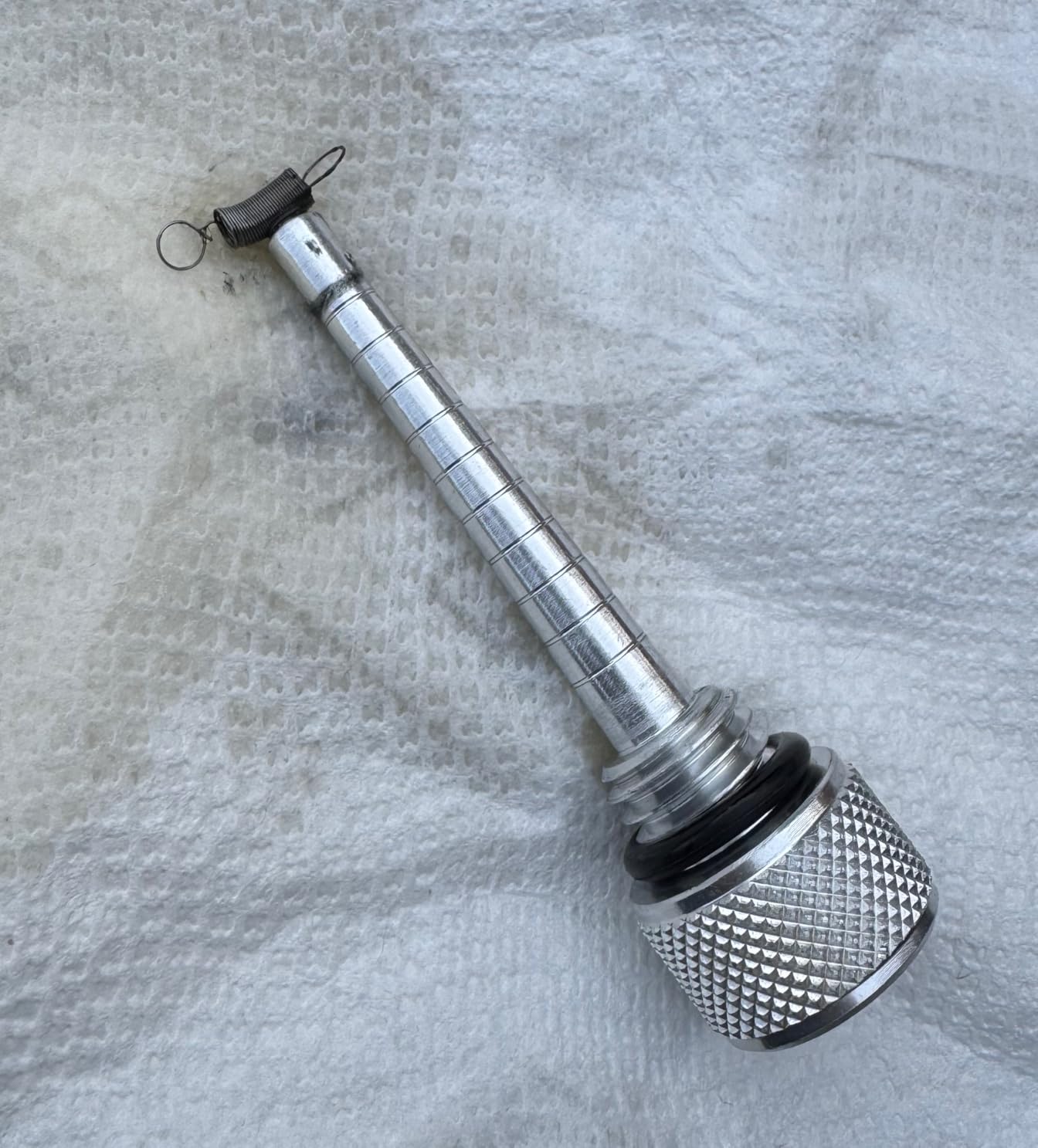
Measured sustained output lands closer to 1,850 W than the 1,900 W rating, and high-surge devices such as refrigerators and air conditioners can trip the overload light if started carelessly. There is no hour meter, and many owners fit their own magnetic dipstick because the factory one is easy to misread.
A minority of owners report engine failures around 150 to 170 hours, and WEN warranty response times are described as inconsistent. A few machines also show slight engine pulsing at no load out of the box. None of that is disqualifying on its own, but it is a real difference from a Honda.
3. PowerSmart 2500W: Budget Pick
PowerSmart 2500 Watt Portable Inverter Generator for Camping
1900 running watts
52 dBA at 23 ft
THD under 3%
39.7 lbs
1.06 gal tank
Pros
- Quiet 52 dBA at 23 ft on a 25 percent load
- Clean output with THD under 3 percent
- Good runtime from the 1.06 gallon tank
- Useful household DC and USB outlets
- Light at 39.7 lbs
Cons
- Only 1900 rated watts
- Limited surge headroom from an 80cc engine
- Thinner brand service network
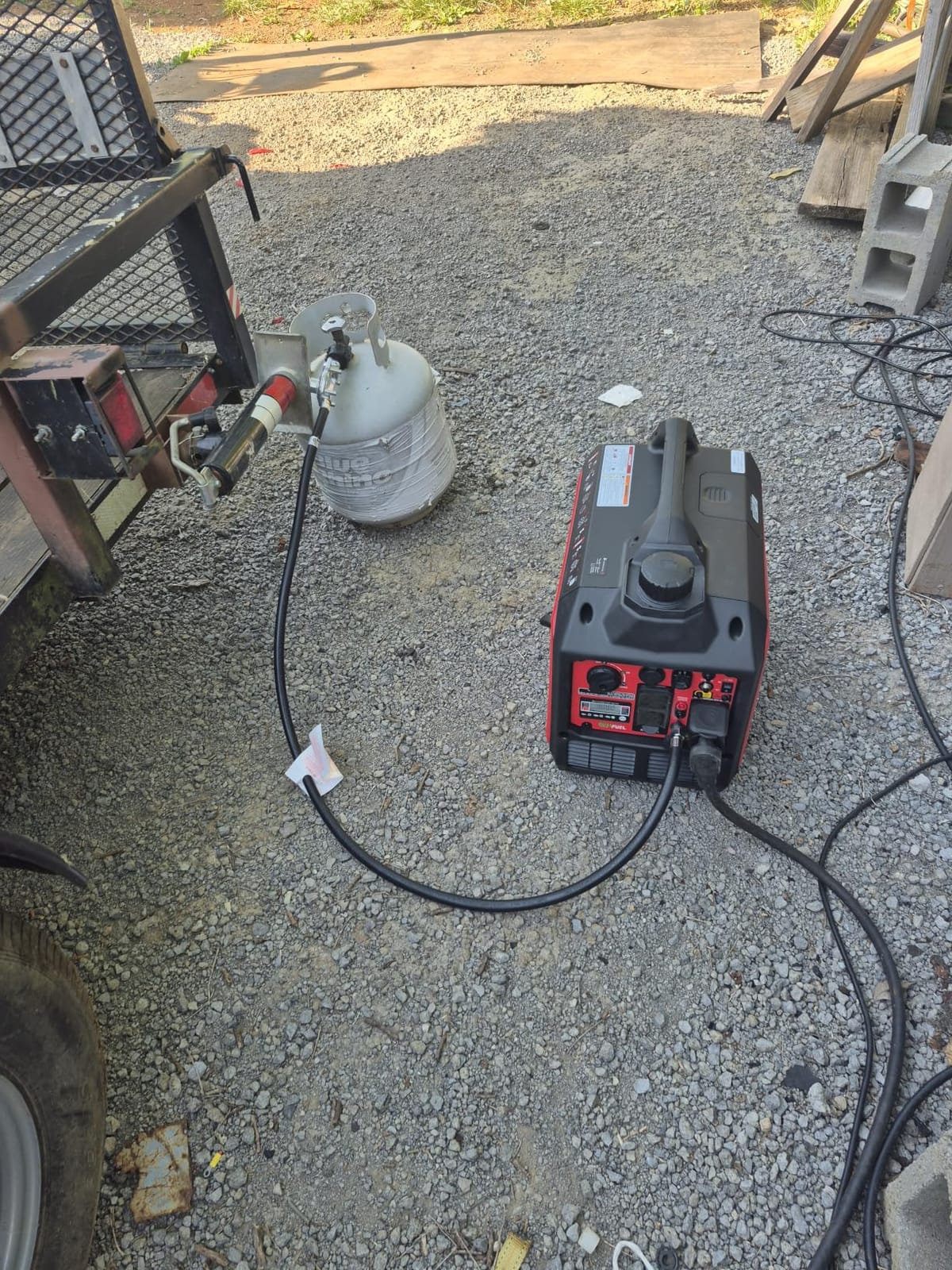
The PowerSmart 2500W is the most affordable way on this list to get a credible published noise number: 52 dBA measured at 23 feet on a quarter load, which is a real spec from the manufacturer rather than a vague promise. Owners confirm it blends into background noise, and at 39.7 pounds it is the second lightest machine here.
Output is 2,500 peak watts and 1,900 rated watts from an 80cc four-stroke, with total harmonic distortion below 3 percent. That is clean enough for phones, tablets and laptops, and the 1.06 gallon tank delivers up to 8 hours at a quarter load, which comfortably covers a night of a refrigerator, a fan and a lamp.
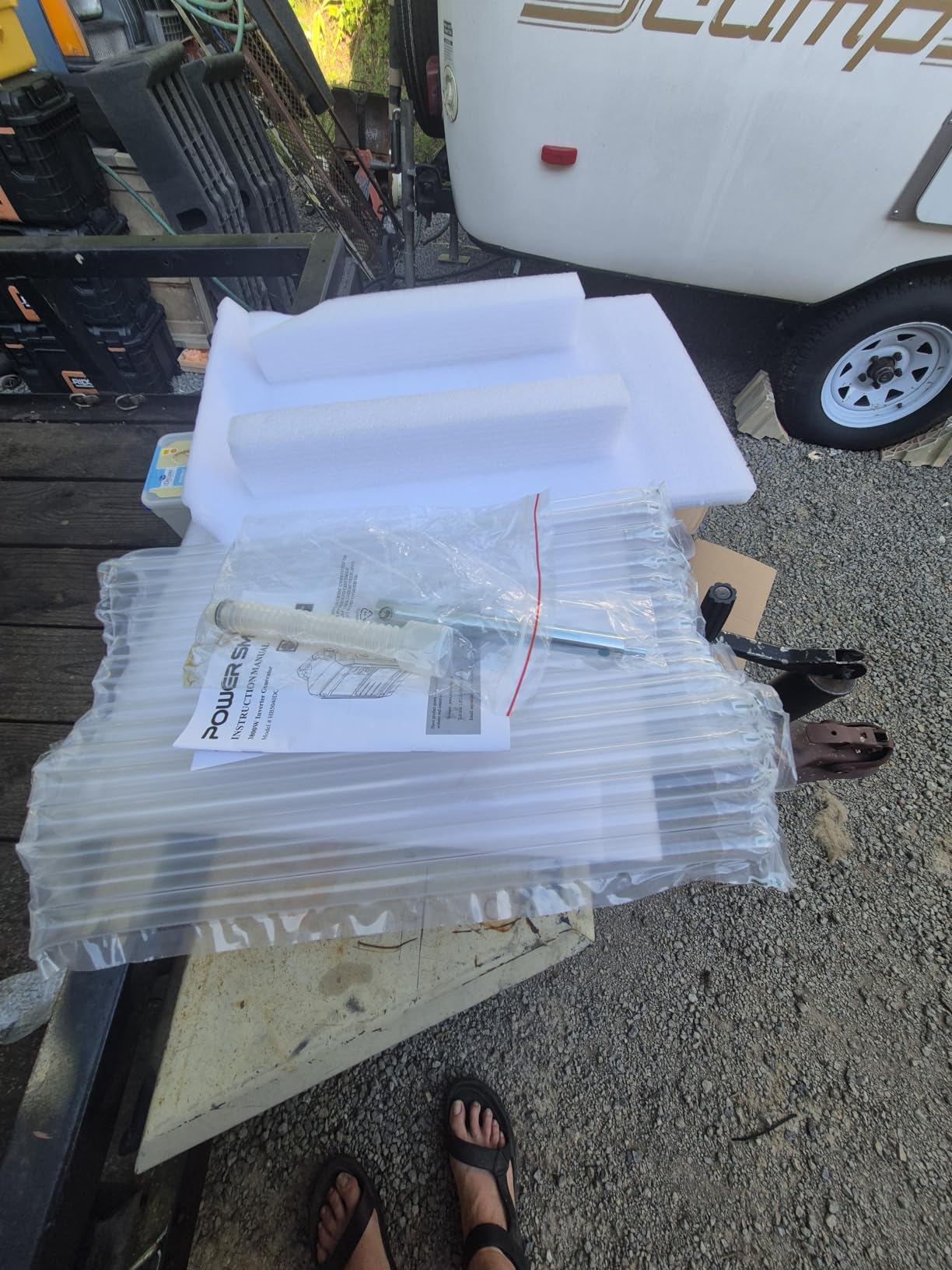
The control panel is well thought out for a budget unit, with a 120V 20A duplex household outlet, a 12V 8A DC port and dual 5V 2.1A USB ports. Low oil shutdown and cold start technology are standard, and the two year manufacturer warranty comes with free lifetime technical support.
At 4.5 stars across 1119 reviews, this is the unit I recommend to friends who want a quiet camping generator without spending serious money. Its limits are power, not noise.
Who This Is For
It is a strong fit for tent and car campers running lights, phone chargers, a laptop and a small cooler, and for a first backup unit for a home outage where the essentials matter more than the air conditioner. The dual USB ports mean you can leave the adapter at home.
Anyone who values clean power for audio or computing gear will also be happy, since 3 percent THD is genuinely fine for sensitive electronics.
Where It Falls Short
1,900 rated watts is a modest ceiling. Running a portable refrigerator, a coffee maker and a space heater together will exceed it, and the 80cc engine leaves little surge headroom for compressor loads, so sequence startups carefully.
Magneto ignition and a small engine also mean less refinement under stress than a Honda or Champion. The brand has a thinner service network and parts footprint, so if the motor fails away from home, plan on a replacement rather than a repair.
4. AIVOLT 4300W: Best for High Running Watts
AIVOLT 4300W Inverter Generator Gas Powered Quiet RV Generator for Camping
3450 running watts
60 dBA at 23 ft
50.7 lbs
30A locking outlet
CO Alert
Pros
- Substantial 3450 W running power
- Clean output under 3 percent THD
- CO Alert and low fuel shutdown
- 30A locking outlet plus USB-A and USB-C
- Light for a 4000 watt class machine
Cons
- 0.69 gallon tank limits runtime
- Reported louder than the 60 dBA claim under load
- Parallel kit sold separately
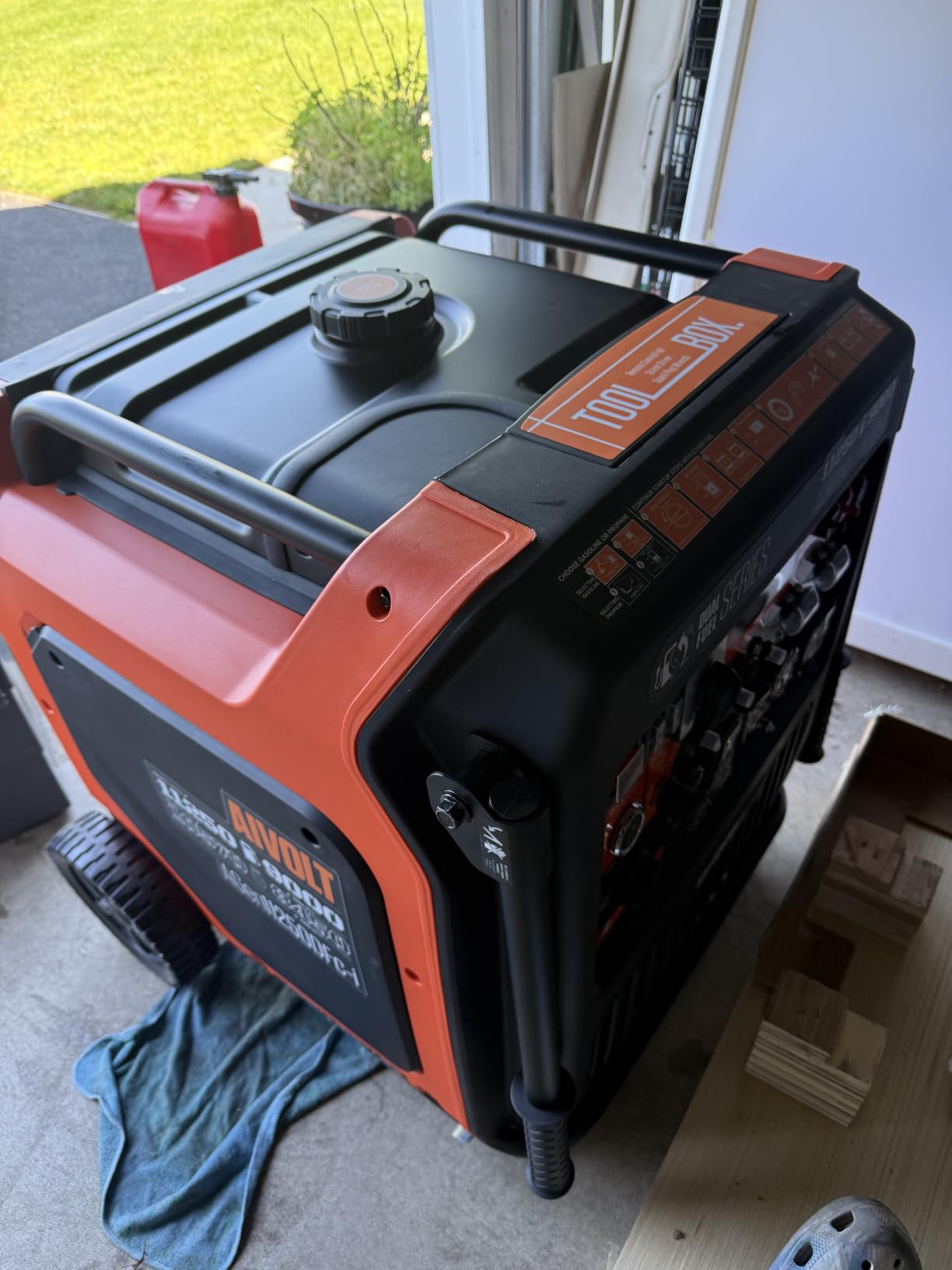
When you need genuine power and refuse to buy a premium brand, the AIVOLT 4300W delivers 4,300 starting watts and 3,450 running watts from a 149cc four-stroke OHV engine with copper windings. That is the highest continuous output in this roundup by a wide margin, and the total harmonic distortion stays under 3 percent.
Noise is quoted at 60 dBA at 23 feet with no load, which is acceptable but not class-leading. Owners report it running noticeably louder under real load than that figure suggests, so treat 60 dBA as a floor rather than a promise. At 50.7 pounds it is 20 percent lighter and 10 percent smaller than comparable 4,000 watt machines according to the manufacturer.
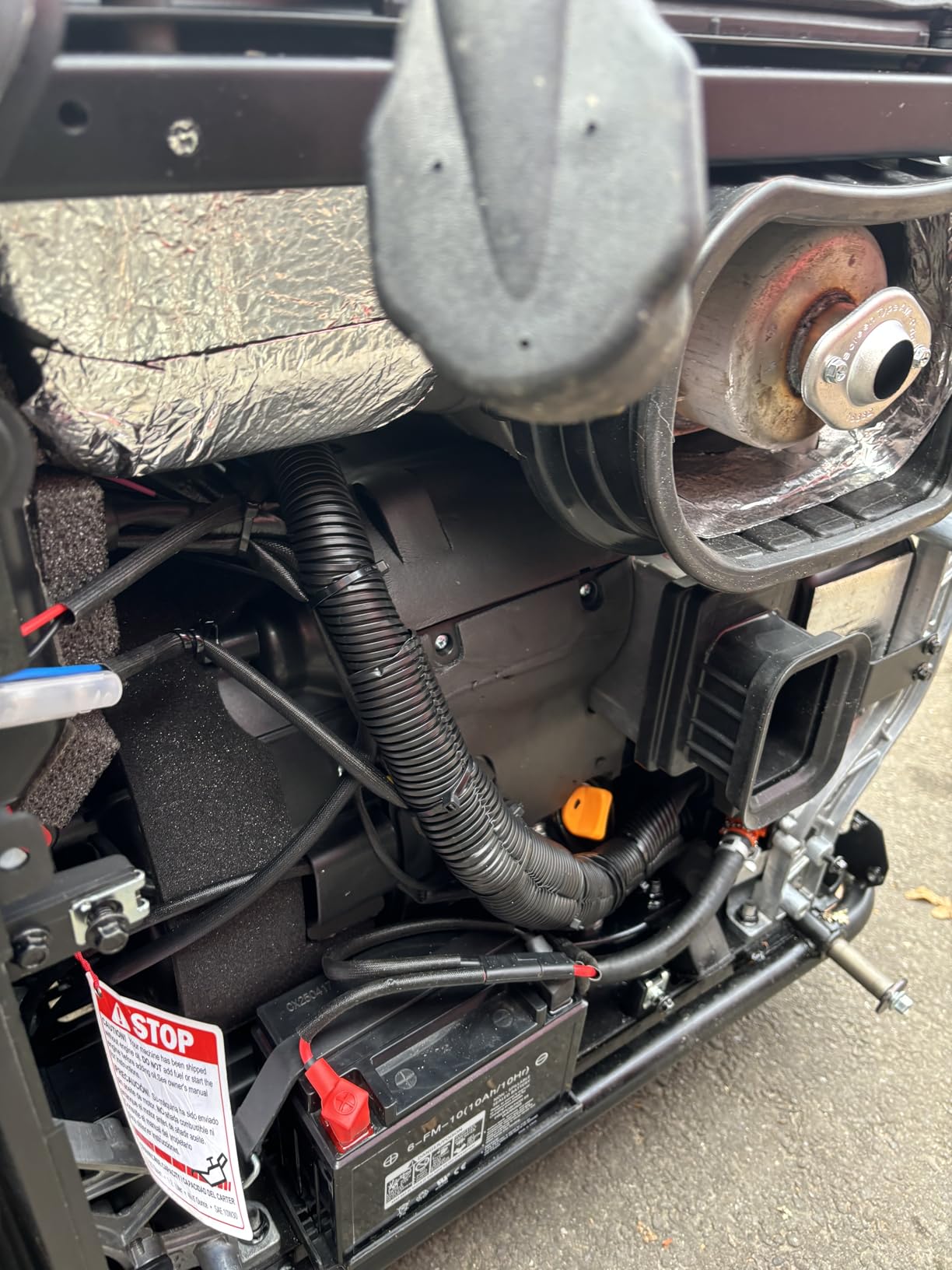
Outlet selection is unusually thorough for a 4,000 watt machine: a 120V 20A outlet, a 120V 30A locking outlet, 12V DC, USB-A and USB-C, plus a 5-in-1 LCD display showing oil, fuel and overload warnings. A 30A RV adapter and battery charging cable are included, and CO Alert shuts the machine down if carbon monoxide climbs.
It meets ANSI/PGMA G300-2018 and is EPA approved, backed by a two year manufacturer warranty. Runtime is over 5.5 hours at a quarter load in eco mode, and the unit is parallel ready if you later buy the kit.
Who This Is For
This is the pick for RV and camper van travelers who need to run a microwave, a coffee maker and a portable air conditioner together off a 30A connection without paying for a Honda or a Champion. Job-site users at tailgates and market stalls get the same benefit.
It also suits anyone who wants USB-C charging straight from the generator rather than carrying a separate brick for a laptop or a modern phone.
Where It Falls Short
The 0.69 gallon tank is the biggest practical problem. Runtime is around 5 hours at best and refills are frequent, which is painful on a week-long trip. The parallel kit is a separate purchase, and engine oil is not included, so budget for both.
This unit carries the lowest average rating in the roundup at 4.1, with a 12 percent one-star share, and reviewers cite build and reliability complaints alongside the noise gap. If you are camping rather than working, a smaller and quieter machine serves most people better.
5. Champion 4000W: Top Rated for RV Class Power
Champion 4000-Watt RV Ready Portable Inverter Generator
3000 running watts
64 dBA at 23 ft
48.1 lbs
TT-30R outlet
CO Shield
Pros
- One of the lightest 4000 watt inverters made
- Up to 10 hours of runtime
- Clean power under 3 percent THD
- CO Shield carbon monoxide shutoff
- True RV-ready TT-30R outlet
Cons
- Recoil start only
- 64 dBA is louder than compact 2000 watt units
- Parallel kit costs extra
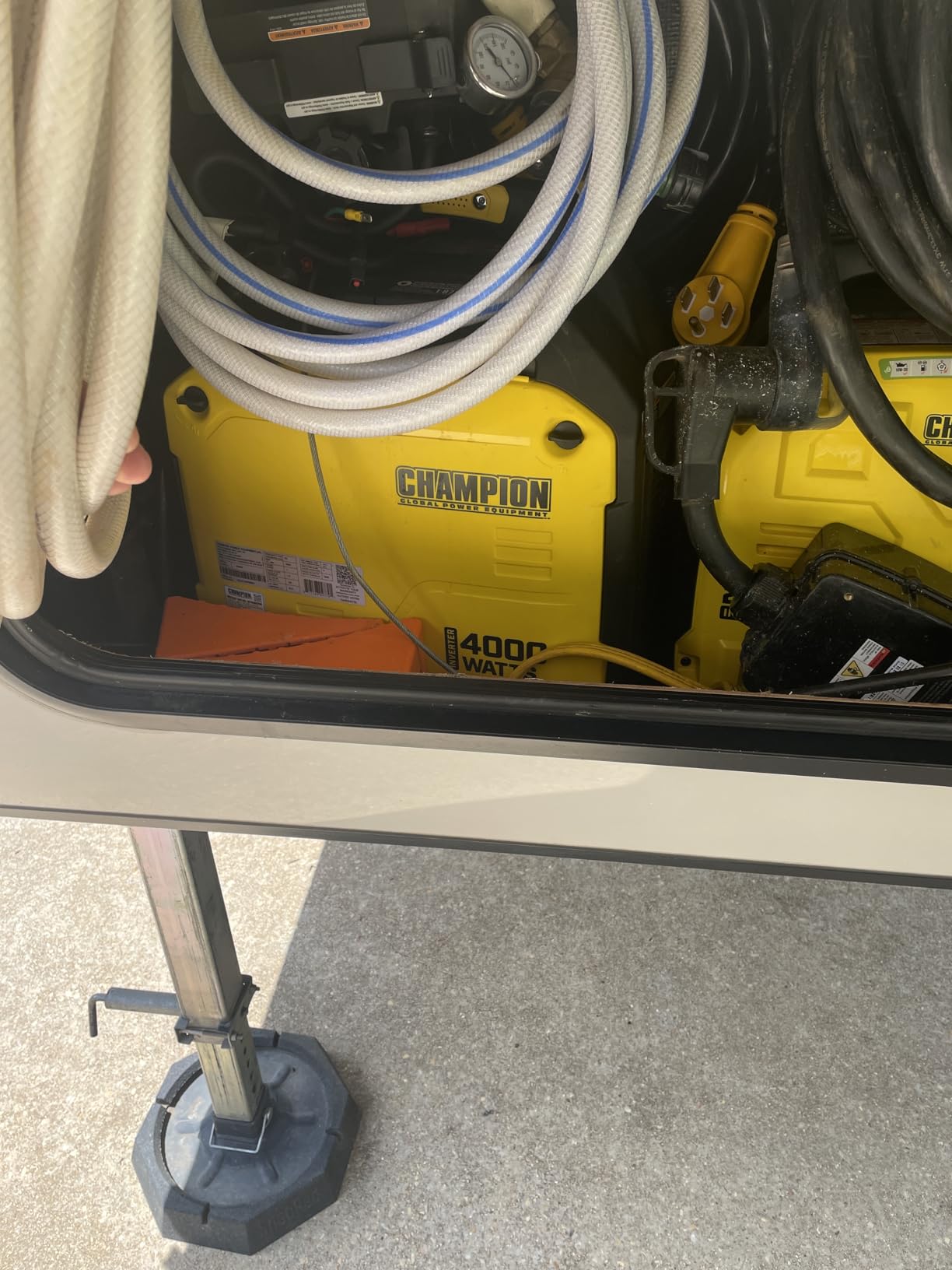
Champion built this one for people who need RV power and refuse to accept 55 pounds as the price. At 48.1 pounds it is one of the lightest 4,000 watt inverters made, and it still produces 4,000 starting watts and 3,000 running watts from a 149cc four-stroke engine.
Noise is quoted at 64 dBA at 23 feet, which is the highest published figure on this list and the honest tradeoff for that power. It is a campsite-appropriate number, not a quiet-hours one, so on a site with a strict decibel ceiling you would want to place it well away from neighbors.
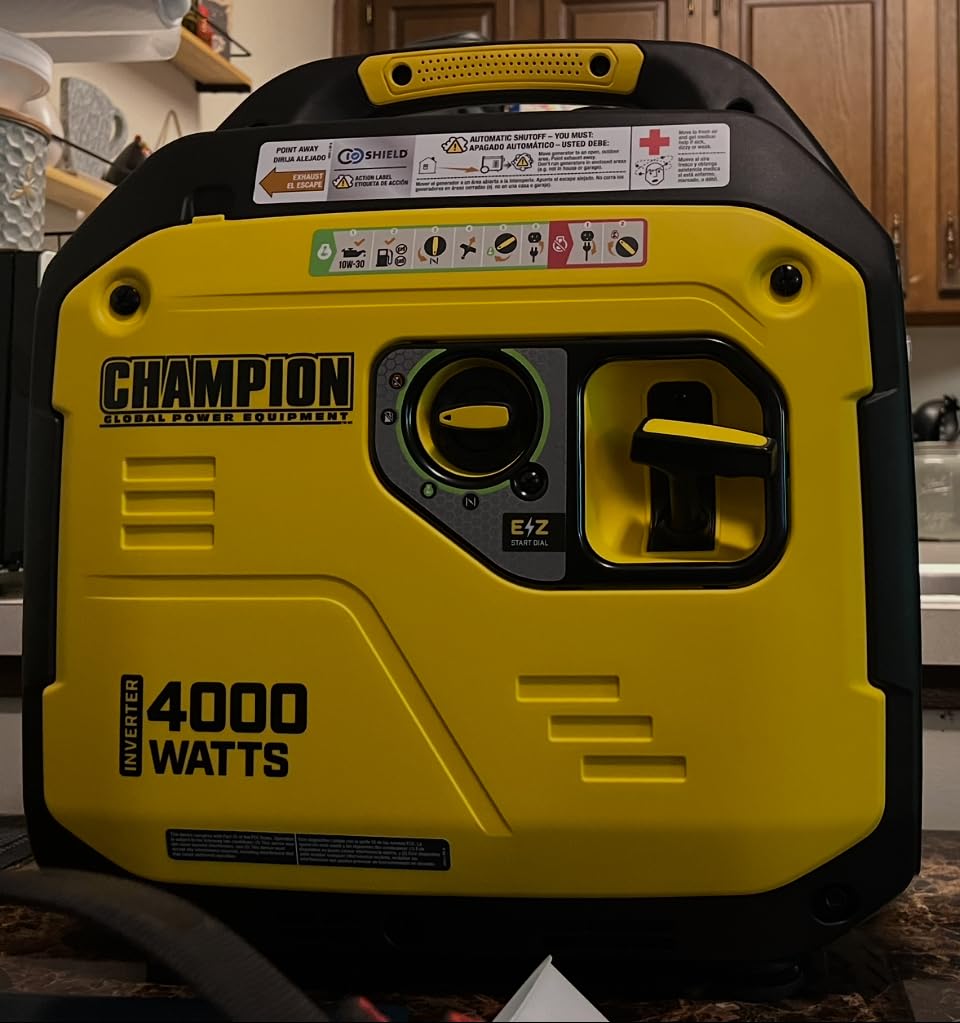
The outlet layout is properly RV-ready. You get a 120V 25A TT-30R outlet, a 120V 20A duplex with under 3 percent THD, a 12V automotive-style outlet and parallel ports. A 1.54 imperial gallon tank delivers up to 10 hours of runtime, and parallel outlets let you double the output with a second matching Champion.
CO Shield shuts the unit down on dangerous carbon monoxide levels, engine oil and an oil funnel are included, and the warranty is three years with free lifetime technical support. At 4.6 stars from 680 reviews, it is well liked for the combination of power, weight and a genuine RV outlet.
Who This Is For
Pick this if you are boondocking in a travel trailer and want air conditioning, a microwave and a refrigerator running on one machine without a site pedestal. The TT-30R outlet means no adapter, and 3,000 running watts covers a 13,500 BTU unit with a soft start.
It also suits tailgaters and market vendors who need real continuous power and will be sitting away from the crowd, and anyone who wants parallel capability built in from day one.
Where It Falls Short
It is recoil start only on this model, and the AIVOLT in the same power band does offer an electric starter. The parallel kit is an optional extra, and the 1.54 gallon tank makes the body bulkier than competing 4,000 watt units.
Most importantly, 64 dBA is 7 dB above the Honda EU2200i. If your campsite has a hard decibel limit and you do not actually need to run an air conditioner, a compact 2,000 watt machine is the smarter buy.
6. WEN 56360i: Best for a Built-In RV 30-Amp Outlet
WEN 3600-Watt Portable Inverter Generator, RV-Ready, Quiet and Lightweight with Fuel Shut Off (56360i)
2900 rated watts
46.3 lbs
TT-30R receptacle
fuel shutoff
three year warranty
Pros
- 2900 rated watts in a 46 pound body
- True RV-ready TT-30R receptacle
- Clean inverter power for electronics
- Fuel shutoff extends engine life
- Three year warranty
Cons
- About 5 hours of runtime
- Recoil start only
- No CO sensor on the base model
The 56360i is the middle step between a small portable inverter and a full RV machine, and it does the step well. A 149cc engine produces 3,600 surge watts and 2,900 rated watts, which is enough to run most RV air conditioners with a soft start alongside a refrigerator and a few lights.
At 46.3 pounds and 17.9 by 11.6 by 19.7 inches it is one of the lighter fully enclosed units in this power band, and the fully enclosed cabinet is what keeps the sound manageable. The fuel shutoff burns off remaining carburetor fuel before shutdown, which extends carburetor and engine life over a season of storage.
The outlet count is six: two three-prong 120V receptacles, a TT-30R RV receptacle, a 12V DC receptacle and two 5V USB ports. The TT-30R is a real RV outlet, so plugging your trailer straight in needs no adapter. A three year limited warranty is longer than most competitors at this level.
Output quality is clean enough for laptops, phones and tablets, and EPA and CARB compliance means it is legal in both of the big markets. At 4.4 stars across 609 reviews, satisfaction is high for a machine at this weight.
Who This Is For
This suits travel trailer and pop-up owners who want to plug straight into their rig and run the air conditioner, without moving up to a 55 pound full-size machine. It is also a good match for a camper van with a 30A connection.
If you already own RV outlets and dislike adapters, the built-in TT-30R alone can justify the step up from a 2,000 watt unit.
Where It Falls Short
Runtime is about 5 hours on a 1.6 gallon tank, which is short for that tank size and means refills during a long evening. It is recoil start only, and the base model has no carbon monoxide sensor, with CO-sensor versions sold separately.
It also lacks the parallel-ready port found on some competing 3,600 watt units, so doubling your output later is not an option. Campers sleeping in a tent close by should take that missing CO sensor seriously.
7. Pulsar PGD40ISCO: Best for Running an RV Air Conditioner
Pulsar PGD40ISCO Ultra Light Quiet 4000W Portable Gas Inverter Generator, white
3200 running watts
59 dB
47.3 lbs
4 hr at half load
13,500 BTU capable
Pros
- Runs a 13500 BTU A/C with a soft start
- 3200 running watts
- Parallel ready
- Clean filtered power for CPAP and computers
- Starts on the first pull
Cons
- Louder than compact 2000 watt units
- 1 gallon tank needs frequent refills
- Fuel cap can vapor-lock in heat
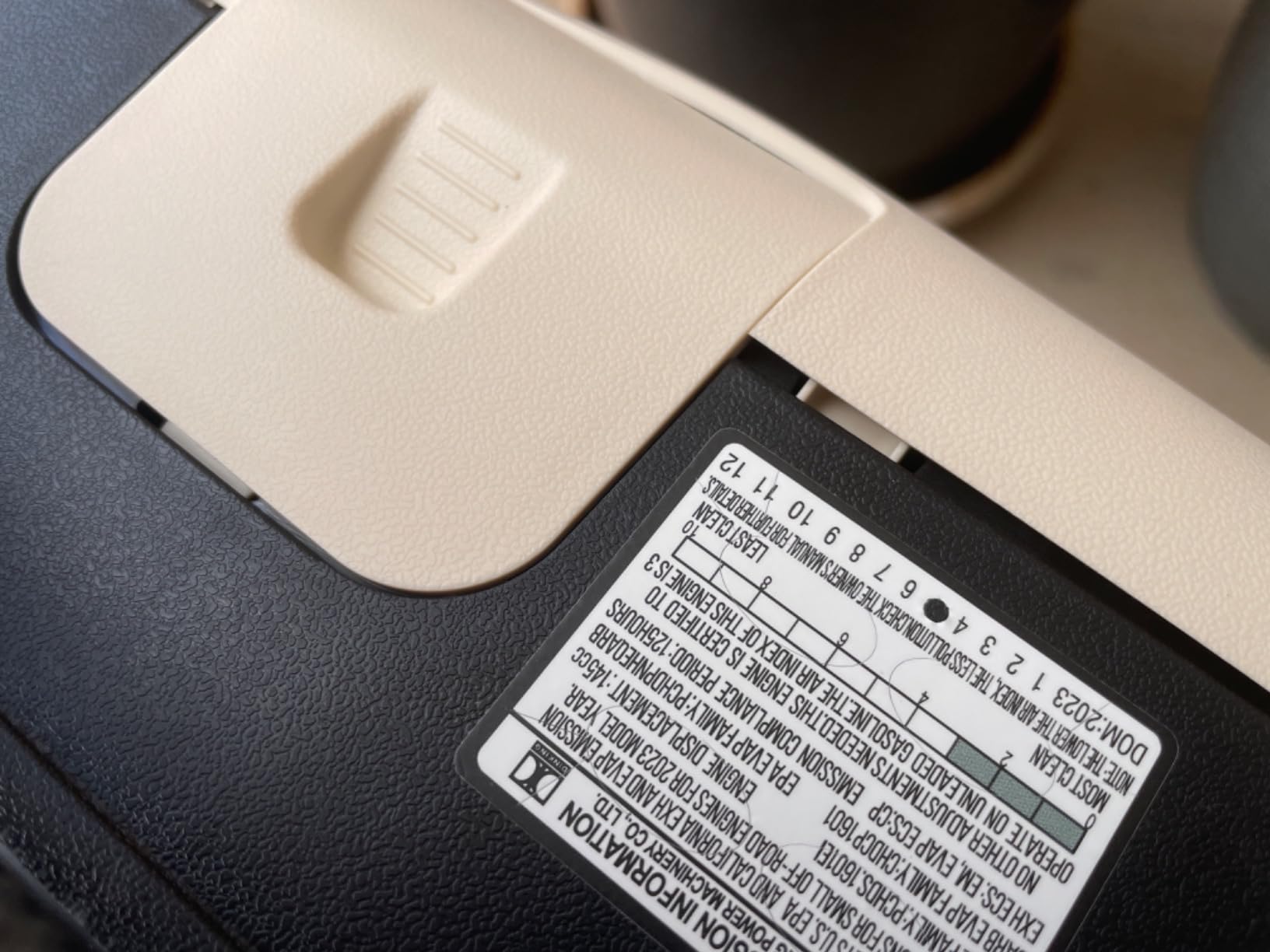
The PGD40ISCO is the machine owners in RV communities point to when they want real air conditioning capability without a 60 pound frame. It produces 4,000 peak watts and 3,200 rated watts from a 145cc four-stroke, and the manufacturer rates it for air conditioning units up to 13,500 BTU, which is the standard small RV rooftop class.
Owners report running a 13,500 BTU air conditioner with a soft start alongside a microwave, and several describe 300 to 410 hours of continuous season-long use without a single problem. Inverter filtering keeps the output clean enough for pellet stove motherboards, computers and CPAP machines.
Noise is rated at 59 dB, and that figure is more honest than most in this category, though owners still note it is louder than a Honda EU2000i class machine especially under air conditioner load. At 47.3 pounds the aluminum, plastic and steel body is well balanced and starts on the first pull.
Automatic voltage regulation, parallel readiness and a three year limited warranty round out a package that owners rate at 4.4 across 488 reviews. For the money it is hard to find more usable watts in an enclosed cabinet.
Who This Is For
Buy this if boondocking in hot weather with a rooftop air conditioner is your actual plan. The 3,200 running watts give you headroom that most 3,000 watt machines cannot match, and the parallel port lets you add a second unit later if you outgrow it.
It is also a good match for a tailgating setup with a portable air unit, or a home backup running a few essentials plus a window unit.
Where It Falls Short
The 1 gallon tank gives roughly 4 hours at half load, so refills are constant, and aftermarket extended-run kits are the common upgrade. The fuel cap vents poorly and can vapor-lock in hot desert conditions, and one owner reported repeated gasoline leaks requiring a tank replacement.
It also shuts down if left in direct sun long enough to overheat, which is easy to do in a desert site with no shade. Quietness is not its strength, so it suits open or spread-out camps better than tight ones.
8. Pulsar PG2300iS: Best for Tailgating and Small Camps
Pulsar PG2300iS 2,300W Portable Super Quiet Gas-Powered Inverter Generator with USB Outlet & Parallel Capability, CARB Compliant
1800 running watts
2300 peak
48 lbs
6 hr runtime
parallel capable
Pros
- Stable sine wave for sensitive electronics
- Compact 80cc footprint
- USB and 12V DC outlets
- Low oil shutoff and AVR
- Parallel capability
Cons
- 48 lbs is heavy for its class
- Only 1800 running watts
- One year warranty is the shortest here
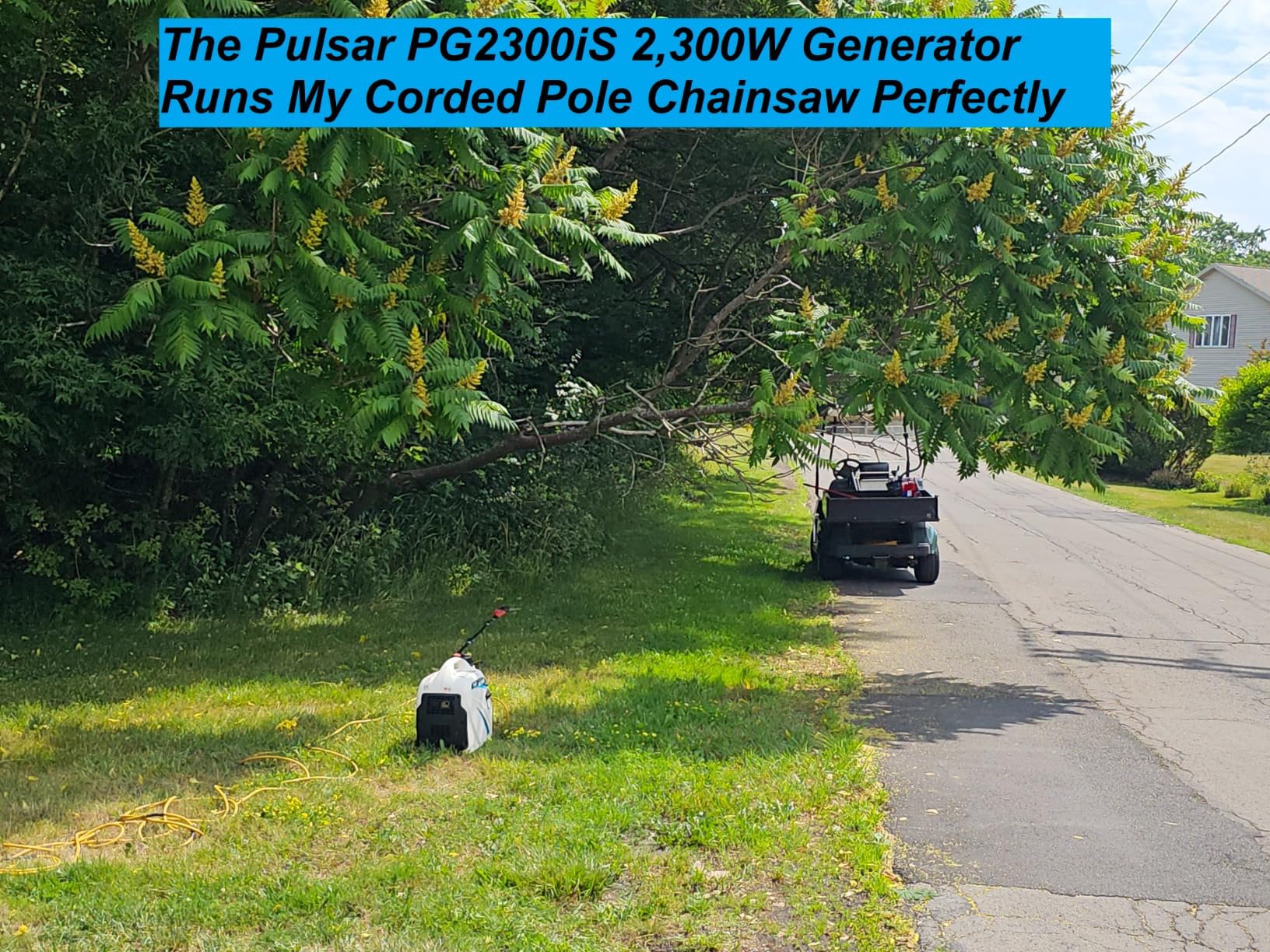
The PG2300iS is a long-established 2,300 watt machine that does the simple job without fuss. Output is 1,800 running watts and 2,300 peak watts from an 80cc four-stroke, with stable sine wave current that owners use to run CPAP machines, laptops and a portable refrigerator without concern.
It is not the smallest option here, at 48 pounds, and that is the one specification that surprises people. Comparable 2,300 watt machines weigh noticeably less, so this is not the pick to load solo into a high truck bed. The footprint of 19.7 by 11.22 by 17.91 inches is otherwise compact.
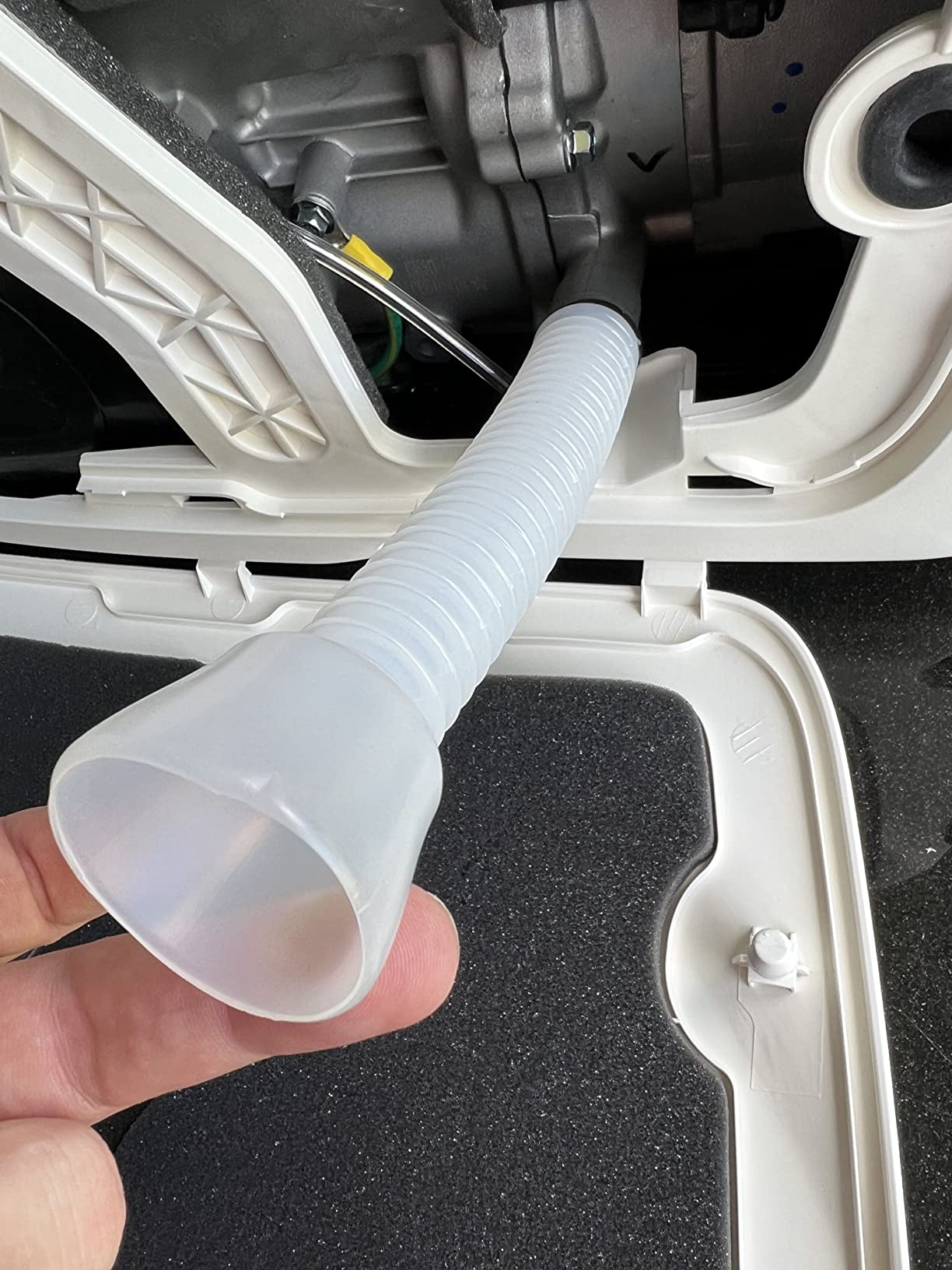
Outlets are two 120V 13A AC outlets, a 12V 8A cigarette lighter outlet and a 5V USB port, which covers a tailgate setup or a small camp without a single adapter. A 1.18 gallon tank gives a listed 6 hours of runtime, and the unit is CARB compliant with parallel capability.
Low oil shutoff and automatic voltage regulation are standard, and a charging cable is included. The one year warranty is the shortest in this roundup, which is a fair reflection of where this machine sits: dependable, well reviewed at 4.5 across 466 reviews, and unremarkable.
Who This Is For
This is the tailgating and picnic choice. Two AC outlets plus a USB port and a 12V socket will run a blender, a cooler, a speaker and a phone charger with room to spare, and the model is proven across a large owner base.
It is a sensible second unit too, since parallel capability means pairing it with a matching model to double output. Anyone with sensitive medical or computing equipment gets stable sine wave power as standard.
Where It Falls Short
1,800 running watts leaves little headroom for air conditioning or multiple high-draw loads, and the 13A household outlets are not RV 30A. At 48 pounds it is heavy for the class, which is the opposite of what you want in a tailgate scenario.
The one year warranty is tied for the shortest of the twelve, and there is no fuel gauge or hour meter to help you plan refills against the 6 hour figure. For light loads it is excellent; for anything requiring headroom, look at the 2,800 watt machines instead.
9. Oxseryn 2800W: Best for Camera and Drone Gear
Oxseryn 2800-Watts Portable Inverter Generator, Gas Generators for Home Use, Camping, Super Quiet Emergency Home Backup, with Fuel Shut Off, 1.1Gal Fuel Tank, 39Lbs, EPA Compliant
2000 running watts
under 58 dBA at 23 ft
40 lbs
9 hr runtime
USB-C
Pros
- Under 58 dBA at 23 feet
- Less than 3 percent THD for sensitive gear
- USB-A and USB-C ports
- 1.1 gallon tank with a fuel gauge
- Light at about 40 lbs
Cons
- One year manufacturer warranty
- High-altitude kit needed above 4000 feet
- Small engine limits surge headroom
The Oxseryn 2800W earns its place here for one reason: it publishes a noise figure under 58 dBA at 23 feet and pairs it with under 3 percent total harmonic distortion, which is the combination photo and video gear people need. Drone batteries, camera batteries, laptops and monitors all charge cleanly from it.
Power comes from a 79.8cc four-stroke OHV engine producing 2,800 peak watts and 2,000 running watts. The 1.1 gallon tank carries a fuel indicator, a genuine rarity in this class, and delivers up to 9 hours at a quarter load in ECO mode, which comfortably covers a multi-day shoot on one fill.
Ports are two 120V AC, one 12V DC, one USB-A and one USB-C, and the output can also charge portable power stations directly. Parallel function is built in, and a built-in carry handle keeps the 40 pound weight manageable. ABS construction keeps it light at 18.6 by 11.2 by 19.2 inches.
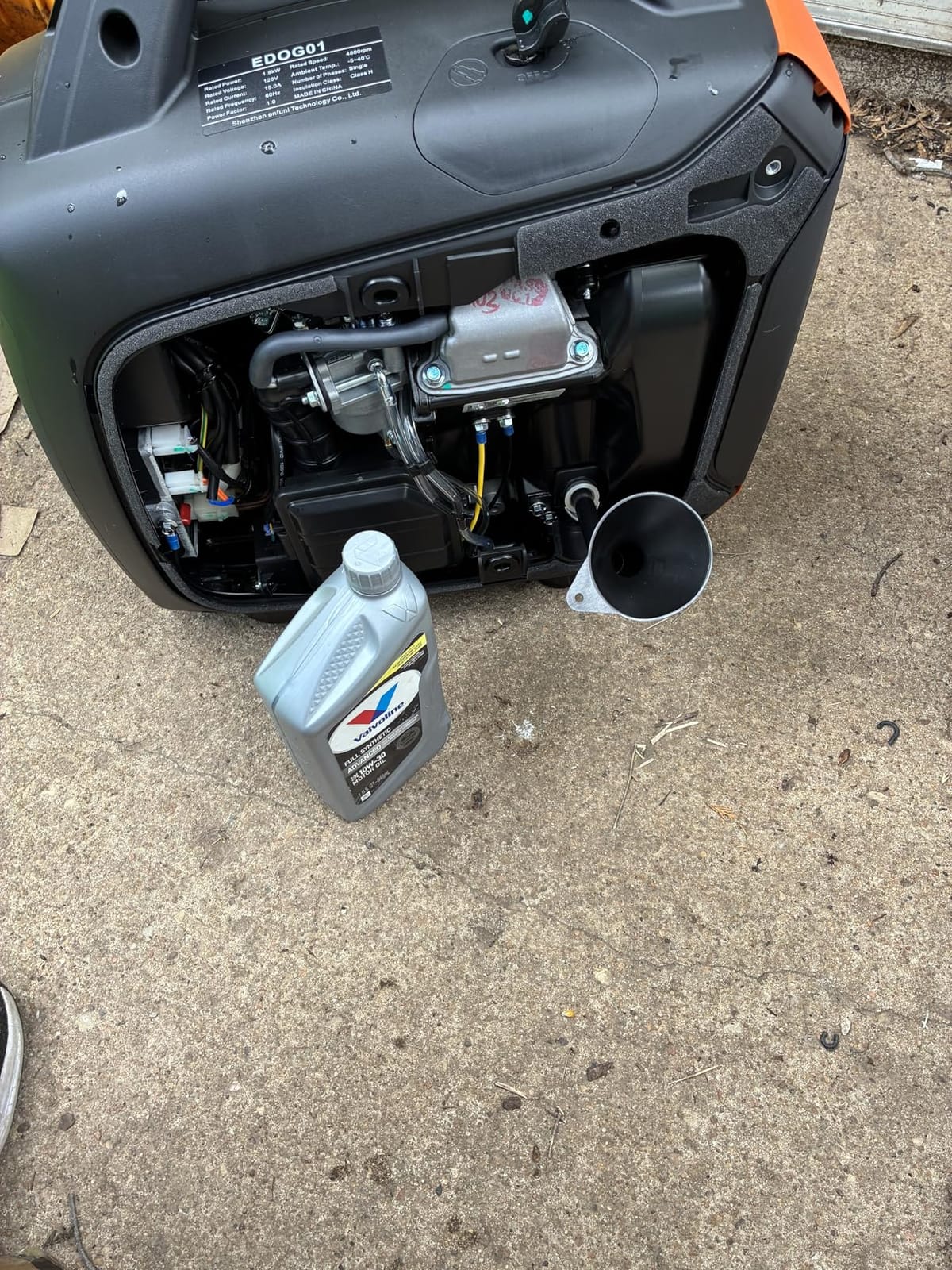
Owners single out the port mix and the fuel gauge as the features they did not expect from a machine at this level. The oil funnel, screwdriver, socket wrench and manual are all in the box.
Who This Is For
Content creators, drone pilots and photographers working in camps or on location get the cleanest low-cost output here alongside the ERAYAK. It is equally good for campers running a laptop, monitors, a router and phone chargers all evening.
Anyone who values knowing exactly how much fuel is left will appreciate the gauge, and parallel function means you can scale up later without changing platform.
Where It Falls Short
The warranty is one year, tied for the shortest coverage among these twelve, and a high-altitude kit is required above 4,000 feet but is not included, which catches people camping in the Rockies. The 79.8cc engine also has limited surge headroom for compressor loads.
Because machines are functionally tested in the factory, a slight fuel smell on arrival is normal and not a defect. Documentation is thin, so check the oil and fuel settings before first start rather than assuming.
10. Generac GP3300i: Best for Home Backup
Generac 3,300 Watt Gas Powered Portable Inverter Generator, USB Charging
2500 running watts
3300 starting watts
59.5 lbs
COsense
30A twist-lock
Pros
- Quiet enough for a window air conditioner
- 2500 running watts
- Clean output under 3 percent THD
- COsense carbon monoxide shutdown
- Reliable cold-weather starting
Cons
- Heaviest unit here at 59.5 pounds
- No switch to disable Economy Mode
- Output drops with altitude
The GP3300i is a home backup machine first and a camping machine second, which is exactly why it earns a place in a quiet camping roundup. Reviewers report running a window air conditioner without a noticeable change in the room noise, and several describe it as the quietest unit they have compared in person.
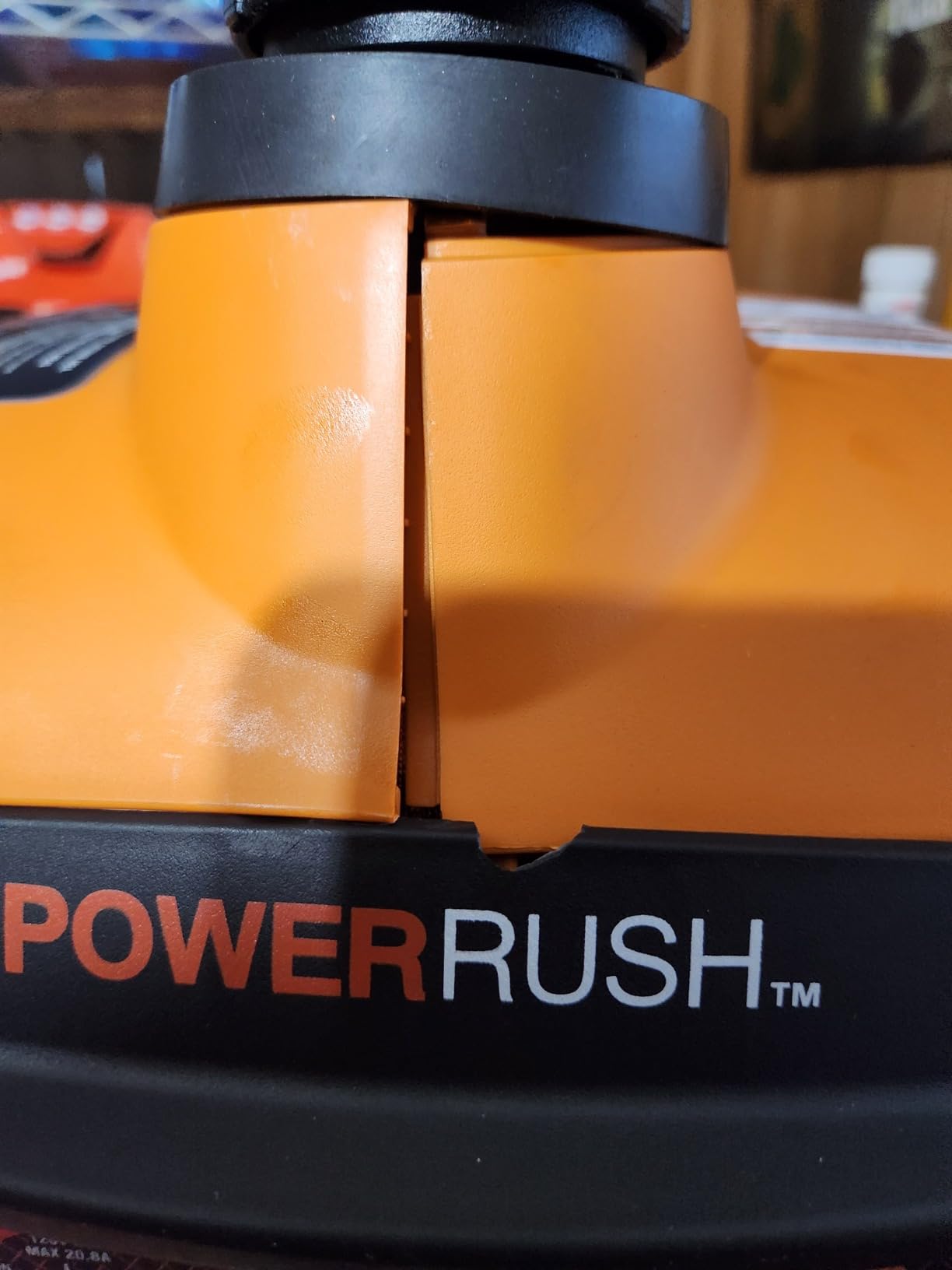
Output is 2,500 running watts and 3,300 starting watts, and PowerRush surge control delivers 50 percent more starting capacity, which is what lets a compressor motor kick in without stalling the engine. TruePower technology produces a stable sine wave with less than 3 percent total harmonic distortion, safe for laptops, tablets and CPAP machines.
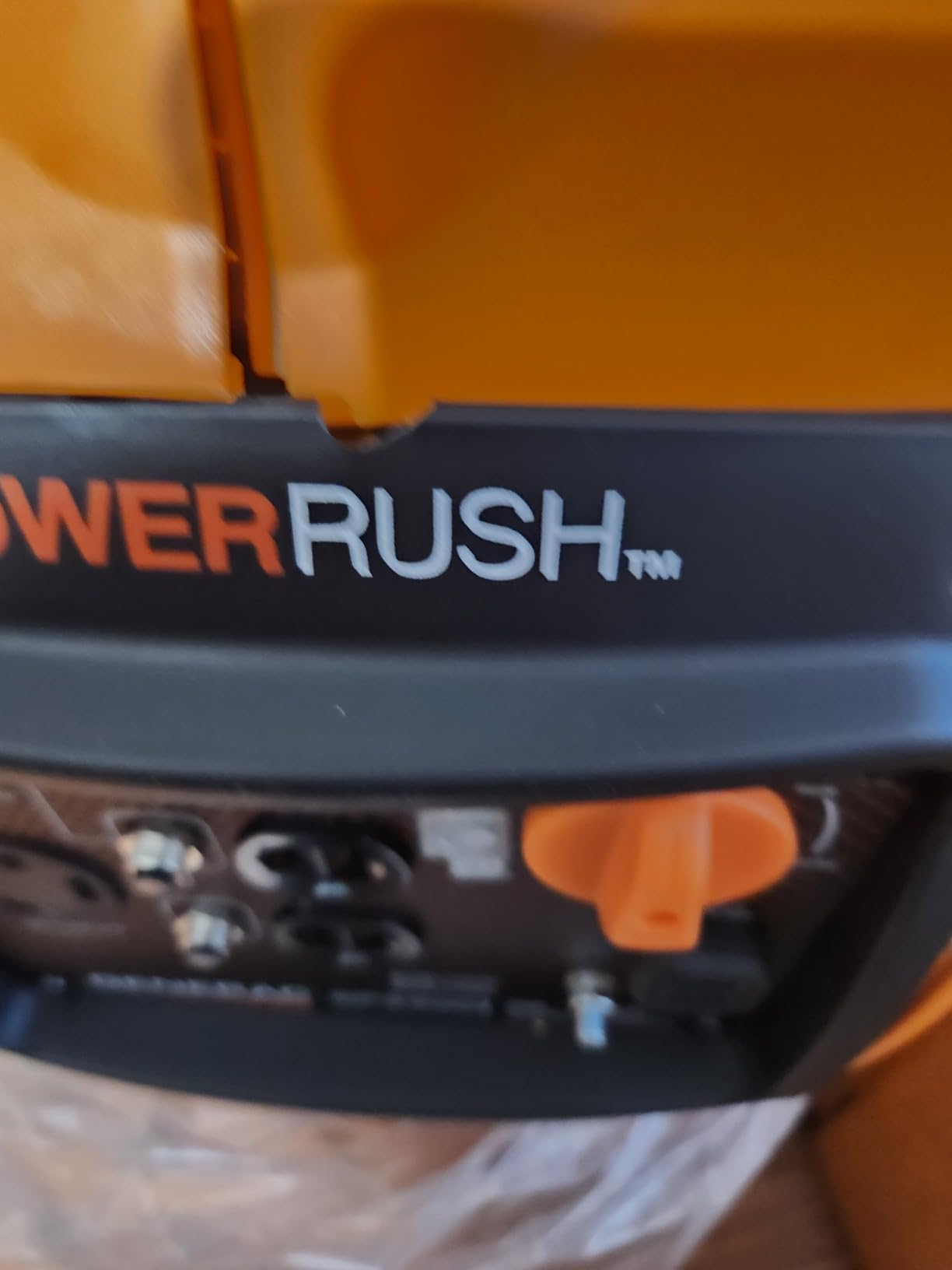
Economy Mode adjusts engine speed to the load, and COsense monitors carbon monoxide and shuts the unit down if levels become dangerous, which is the single most important feature for anyone running one in a garage or near a bedroom. Outlets are two 120V 20A household, one 120V 30A twist-lock and two USB-A ports, and it is parallel ready with a separately sold kit.
A 1.06 gallon tank gives up to 7 hours at a quarter load or 4.5 hours at half load. Engine oil, an oil funnel and a tool kit are included, a USDA-qualified spark arrestor is fitted for forest land, and the residential warranty is three years.
Who This Is For
This suits a household covering an outage with a refrigerator, lights, internet and medical equipment, and it works as a dual-purpose machine for campers who also want power at home. The 30A twist-lock handles a portable air conditioner or a small well pump.
COsense makes it a sensible pick for anyone running a generator near the house rather than at a distant campsite, since it combines that cutoff with real starting surge capacity.
Where It Falls Short
At 59.5 pounds and 22.3 by 13.4 by 18.4 inches, it is the heaviest and bulkiest machine in the roundup, and owners carry it from the vehicle in two hands. That weight is the main reason it ranks below the quieter compact options for pure camping use.
There is no factory switch to disable Economy Mode, which some cold-weather owners want for easier starting, and output falls roughly 4 percent per 1,000 feet of altitude. A minority of owners also report engine failures between 500 and 1,100 hours and difficulty sourcing parts.
11. Genkins 2800W: Best Lightweight 30-Amp Option
Genkins 2800W Portable Inverter Generator, Quiet Lightweight for Camping Home Backup
2000 running watts
THD under 2 percent
40 lbs
30A twist-lock
ECO mode
Pros
- Light at about 40 lbs and easy to load solo
- Clean output under 2 percent THD
- Easy first-pull starting over years of use
- ECO mode gives 7 to 8 hours
- 30A twist-lock plus USB ports
Cons
- Some machines described as flimsy or wobbly
- Warranty requires returning the original packaging
- Occasional dead spark plugs out of the box
The Genkins 2800W combines two things that rarely meet in the same machine: a 30A twist-lock outlet and a 40 pound frame. Most compact inverters either give you RV connectivity or give you portability, and this one gives you both, which makes it a sleeper pick for a small trailer setup.
Output is 2,800 peak watts and 2,000 running watts with total harmonic distortion below 2 percent, among the cleanest figures in the roundup. A 79cc four-stroke OHV engine with forced-air cooling drives it, and ECO mode delivers up to 7 hours at a quarter load, with the spec sheet also listing 8 hours.
Ports are two 120V 20A AC outlets, one 120V 30A AC outlet, two USB ports and a parallel port, so you can run an RV connection, USB charging and standard household devices at once. Low oil automatic shutdown, overload protection and a circuit breaker cover the basics, and it is fully EPA certified with a two year warranty.
Owners report easy first-pull starting across years of use and some multi-year off-grid reliability, which is why it holds a 4.5 average across 962 reviews. Dimensions are 19 by 10 by 19 inches, and a funnel, bolt sleeve, bolt driver and RV adapter are included.
Who This Is For
It is a strong match for anyone who needs a genuine 30A connection from a machine they can carry by themselves, and for campers running a draw too large for a 2,000 watt unit. The under 2 percent THD also makes it safe for sensitive electronics.
Car campers and overlanders who load gear alone will appreciate the 40 pound weight, and the parallel port leaves room to scale up without changing platform.
Where It Falls Short
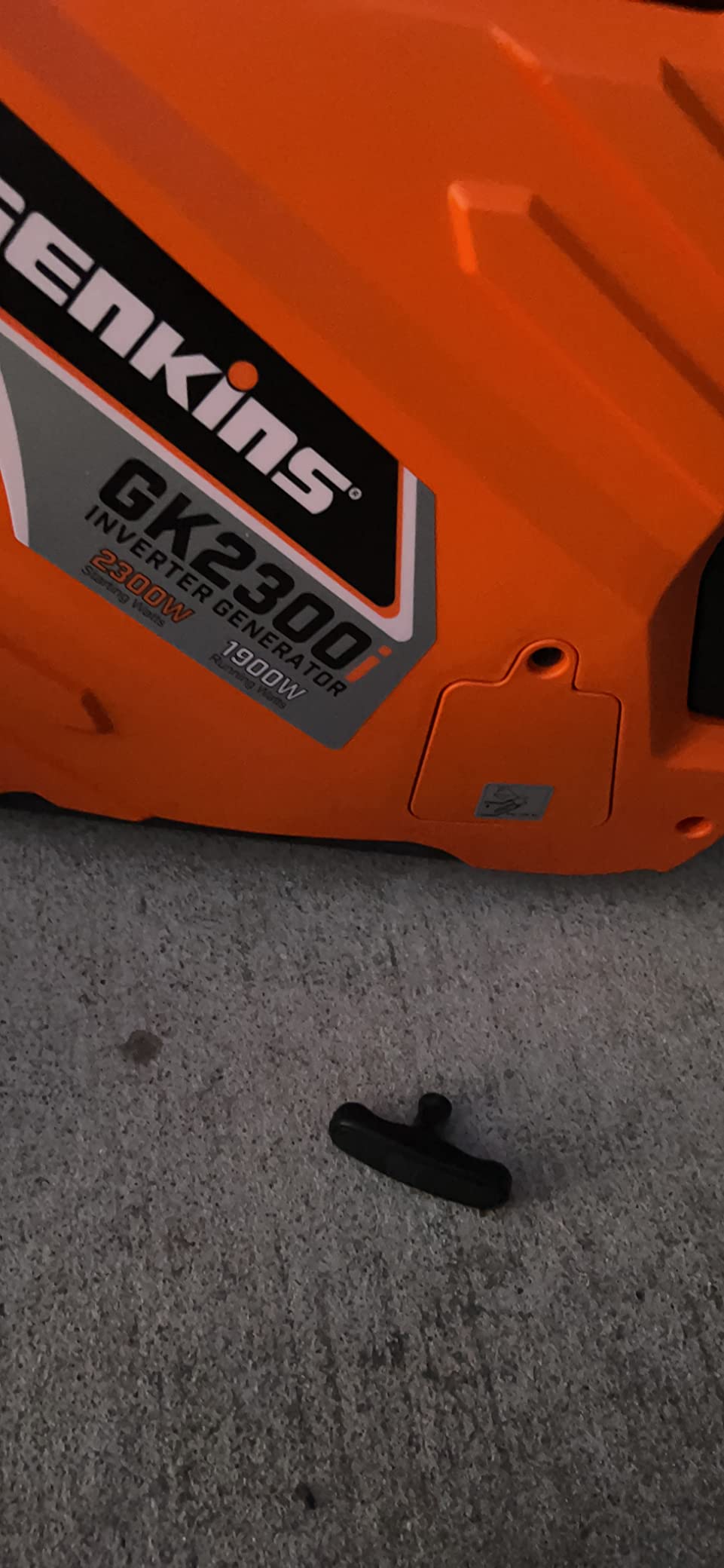
Build quality is the recurring complaint. Some machines from this line are described as flimsy or wobbly, one owner reported a wheel that detached, and electric-start variants can arrive with a disconnected battery and no instructions for fitting it.
A few machines also arrive with a defective spark plug and will not start. The warranty process requires returning the original unit in its original packaging before a replacement is sent, and the manual is sparse, so test the machine immediately and keep the box.
12. ERAYAK 2400W: Best for Cleanest Power Output
ERAYAK 2400W Portable Inverter Generator for Home Use, Super Quiet Small Generator for Camping Outdoor Emergency Power Backup, Gas Powered Engine, EPA, ECO Mode
1800 running watts
52.5 dB at 25 percent load
42 lbs
THD 0.2 to 1.2 percent
Pros
- Very quiet at 52.5 dB
- Cleanest output in the roundup at 0.2 to 1.2 percent THD
- Light at 42 lbs
- Excellent fuel economy in eco mode
- Three year warranty with lifetime support
Cons
- Support is email-only with no service network
- Manual does not match the product
- High-altitude jet kit needed above 1000 meters
If your load is sensitive, this is the unit to buy. Total harmonic distortion of 0.2 to 1.2 percent is the cleanest output of any generator in this roundup, and owners running laptops, televisions, gaming consoles and medical devices specifically praise it. On noise, the published figure is 52.5 dB at 7 meters on a quarter load.
Power is 2,400 peak watts and 1,800 running watts from a 79.7cc four-stroke engine. Fuel consumption is 0.2375 gallons per hour at full load and 0.21 gallons per hour at a quarter load, with up to 16 hours in eco mode at a quarter load, which makes it the most economical machine here to run over a long trip.
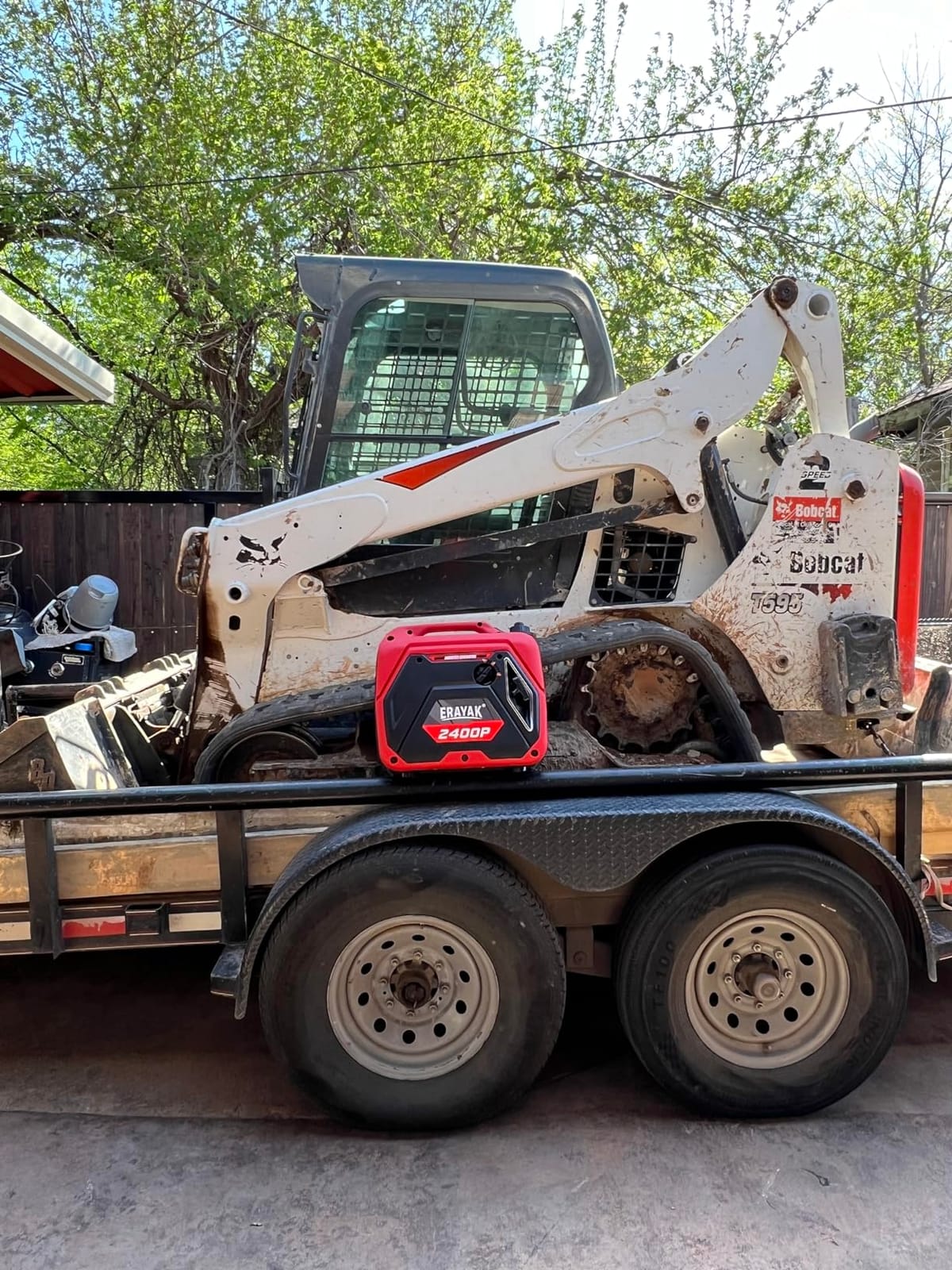
Outlets are two AC outlets, two USB ports and one DC output, which is fewer than most competitors, and the 42 pound weight sits in the middle of this group. Dimensions of 18.82 by 11.73 by 18.11 inches fit in a midsize sedan or a van, and it works with an optional wheel kit and telescoping handle.
The warranty is a three year limited with free lifetime technical support and a US support hotline. At 4.2 stars across 553 reviews it is among the lower rated here, and the negatives are almost entirely about support rather than performance.
Who This Is For
This is the generator for CPAP machines, oxygen concentrators, sensitive audio, cameras and any medical or computing device where waveform quality matters more than raw wattage. Runners on a tight budget will also like the fuel economy figures.
It is a good quiet companion for a tent or car camp where your load is lights, a laptop, chargers and a small fridge, since 52.5 dB sits comfortably inside normal conversation.
Where It Falls Short
Support is the weakness. There are no authorized service centers, parts and support are slow and email-only, and one detailed reviewer report claims no circuit breaker protection on the 110 volt section. The manual references features that do not exist and has no parts diagram.
It is also not rated above 1,000 meters without a high-altitude jet kit, engine oil is not included, and the 4.2 average with a 14 percent one-star share reflects a support experience that leaves some owners describing the machine as disposable. If you keep equipment for years, a stronger service network may matter more than cleaner power.
How to Choose a Quiet Inverter Generator?
Start with your actual load, not your wish list. Add up the running watts of everything you intend to plug in simultaneously, then add roughly 30 percent headroom. A coffee maker, a portable refrigerator, a phone charger and a CPAP machine together typically land just over 1,000 watts, so a 1,900 to 2,200 watt machine covers almost every camping load short of air conditioning.
For a 13,500 BTU RV air conditioner, budget 3,000 running watts or more and use a soft start on the compressor. The Champion 4000W, Pulsar PGD40ISCO and AIVOLT 4300W cover that tier. Running watts versus starting watts matters here: a refrigerator or compressor needs a big surge spike for a second or two, and machines with more surge capacity recover faster.
Noise is the second decision, and published figures are only a guide because brands measure differently. Under 55 dBA is effectively invisible at a campsite, 55 to 60 dBA is noticeable only up close, and anything above 62 dBA should be placed well away from neighboring sites. Smaller engines with modest RPM are consistently quieter, which is why most of the quietest machines here are 2,000 to 2,500 watt units.
Weight is the third factor and the one people forget. Carrying 50 pounds from a truck bed across a rocky site is a real chore, and 40 pounds versus 50 pounds is the difference between one trip and two. A telescoping handle kit or a wheel kit, offered on the ERAYAK and some other models, changes the equation entirely.
Fuel type and outlet selection finish the picture. Every machine on this list is gasoline only, so plan refills around your trip length and prefer ethanol-free fuel where you can. If your rig uses a 30A connection, look for a built-in TT-30R or 30A locking outlet rather than an adapter, and check whether the model has a parallel port if you expect to grow.
Finally, check for a carbon monoxide sensor. Only the Honda, Champion, AIVOLT and Generac here have automatic shutdown, and it is the feature that matters most if you camp in a tent, a pop-up or a vehicle cabin with the unit nearby. Place any generator at least 20 feet from an open door or window, and never inside an enclosed space, tent or vehicle. Point the exhaust away from your camp, downhill if the site allows, so the fumes do not drift back in.
Generator vs Portable Power Station: Which Is Quieter?
A battery power station makes no sound at all, which is why it wins on noise by default. A forum commenter who built solar generators reported zero noise and no maintenance, and for a week of phone charging, a camera battery and a laptop, that is a genuinely better experience than any generator on this list.
The limitation is capacity and charging speed. A power station charges from solar over a day or two and has no surge capability for a coffee maker or an air conditioner. A generator refuels in two minutes and starts instantly when the tank has gas, so for high-draw loads or an emergency the generator remains the only real option.
My rule is simple. If your load is under about 800 watts, mostly electronics, and your trip is three nights or fewer, a power station is quieter, costs nothing to run and is easier to carry. If you run a refrigerator, a coffee maker, power tools or an air conditioner, you need a generator, and the quietest inverter model your budget allows is the right answer.
How to Make Any Inverter Generator Quieter at Camp
Positioning is the single biggest factor and it costs nothing. Place the unit at least 20 feet from your tent, your vehicle openings and the nearest neighbor, and put a wall, a closed vehicle or a natural berm between the exhaust and the people you are trying not to disturb. Sound carries much further along a direct line than around an obstacle.
Aim the exhaust away. A generator run parallel to the site boundary throws sound along the ridge where people are standing, while one pointed into an unoccupied corner or downhill spreads the same energy over a much larger area.
Give the engine soft ground. Concrete, gravel and tight hardpan surfaces reflect sound sharply and add several decibels. Parking on grass, soil or sand absorbs it, and a folding mat or piece of outdoor carpet under the feet makes a measurable difference in a hard-packed site.
Use eco mode and let the throttle do its job. Running a 2,000 watt engine at full speed for a 300 watt load wastes fuel and adds noise, so a machine with an automatic eco mode that you actually engage will be quieter and cheaper to run. Do not idle a larger generator down as a substitute for a properly sized one, because low RPM under a heavy load strains the engine.
Refill on a schedule and never mid-conversation. Most perceived noise complaints come from the brief loud surge when a compressor load kicks in, and starting high-draw devices one at a time, with a second of spacing, removes most of those spikes. Running the fuel shutoff feature before shutdown also clears the carburetor quietly, leaving no fuel smell at dawn.
Frequently Asked Questions
What is the quietest inverter generator for camping?
The Honda EU2200i, rated at 48 to 57 dB(A), is the quietest in this roundup and sits below normal conversation. The closest budget options are the ERAYAK 2400W at 52.5 dB and the PowerSmart 2500W at 52 dBA measured at 23 feet. Note that brands measure at different distances and loads, so compare small gaps cautiously.
What is the best silent generator for camping?
For most campers the best balance of silence and capability is the WEN 56235i, which weighs about 39 pounds, runs at conversation-level noise and delivers 1,900 rated watts. If you need carbon monoxide shutdown and Bluetooth monitoring as well as quiet, the Honda EU2200i is worth the premium.
Which inverter generator is the quietest?
Smaller engines run quieter because the RPM stays lower. Every model rated 48 to 58 dBA on this list is a 2,000 to 2,500 watt machine, while the 4,000 watt models measure 59 to 64 dBA. If silence is your priority, buy the smallest inverter that covers your load and add nothing beyond it.
How loud is the Honda EU2200i inverter generator?
Honda rates the EU2200i at 48 to 57 dB(A), which is below the level of a normal conversation. Owners consistently describe it as the quietest class-leading machine, particularly on light loads in eco mode. It is the quietest option among the 2,200 watt machines we evaluated for this guide.
How many watts do I need for camping?
A 1,800 to 2,200 watt inverter covers lights, phone chargers, a laptop, a portable refrigerator, a coffee maker and a CPAP machine at the same time. Add 30 percent headroom for starting surges. A 13,500 BTU RV air conditioner needs 3,000 running watts or more, ideally with a soft start.
Are inverter generators safe to run inside a tent?
No. Gasoline engines produce carbon monoxide, which accumulates in enclosed spaces and can be fatal. Run any generator outdoors at least 20 feet from your tent, pop-up or vehicle openings, point the exhaust away from camp, and choose a model with a CO sensor such as the Honda, Champion, AIVOLT or Generac.
Final Verdict
For most campers the answer to the best inverter generators for quiet camping question is straightforward: the Honda EU2200i, at 48 to 57 dB(A), 2,200 running watts and the only machine here combining Bluetooth monitoring with automatic carbon monoxide shutdown. It is the quietest pick, the most proven pick, and the one with a three year warranty and the widest parts availability.
Buy the WEN 56235i if weight and value decide it, the PowerSmart 2500W if you want a published 52 dBA figure on a smaller budget, and the ERAYAK 2400W if clean power for medical or camera gear comes first. Move up to the Champion 4000W, Pulsar PGD40ISCO or AIVOLT 4300W only when you genuinely need 3,000 running watts or more for an air conditioner.
Whatever you choose, size it to your real load, run it in eco mode, place it at least 20 feet from your tent with the exhaust pointing away, and check the campground decibel rules before you arrive. Quiet camping is mostly a planning problem, and the machine is the easy part.