
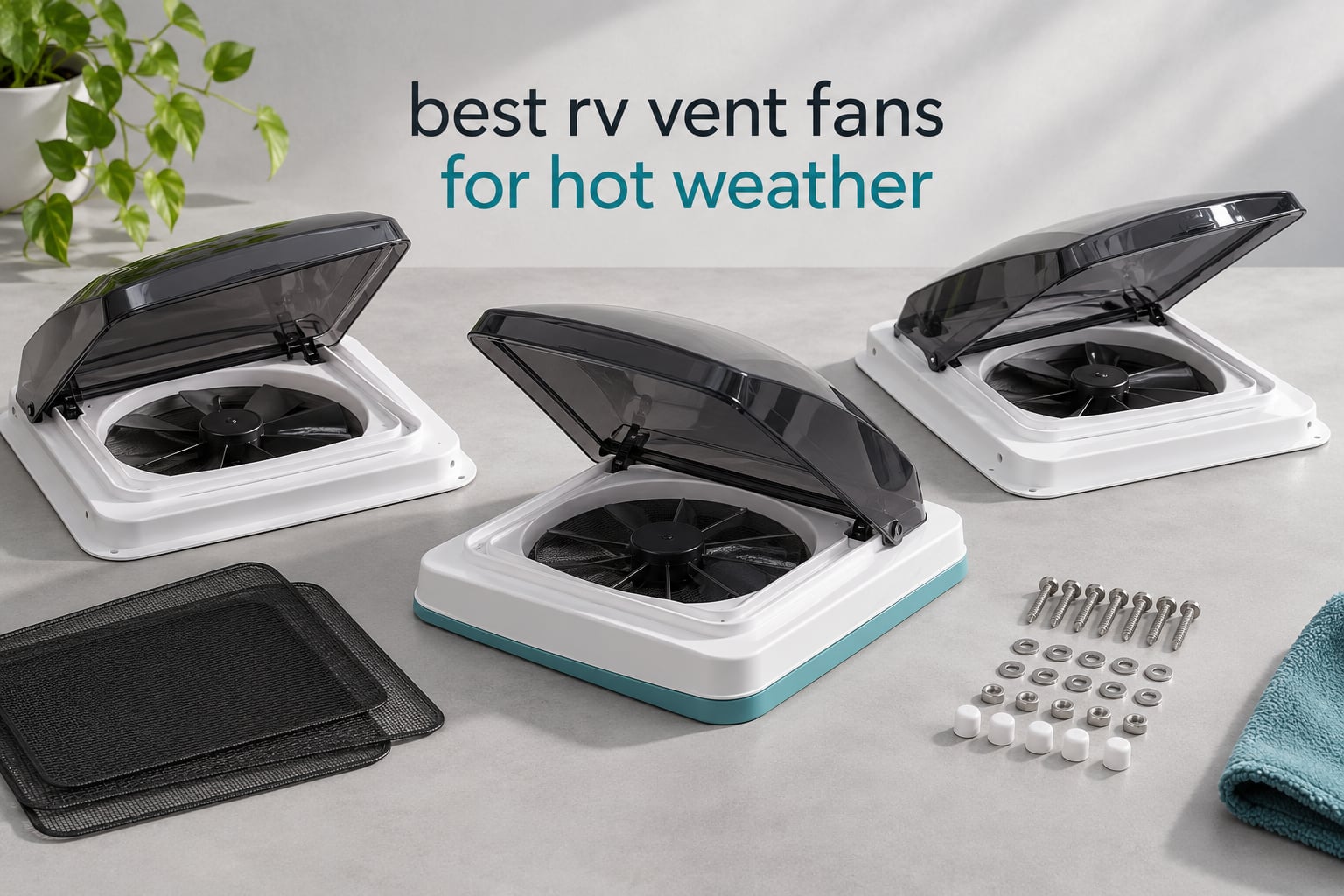
The best RV vent fans for hot weather move real air for almost nothing compared to a roof air conditioner, and the best of them let you keep the dome open through a summer storm. Our top pick is the MAXXAIR MaxxFan Deluxe (00-07500K), a 10-speed reversible unit with a built-in rain cover that needs no separate hood to stay open in weather. Below it sit twelve picks we grouped by category, so a boondocker in desert heat and a van owner upgrading one failed vent can both find the right fan in a minute.
Here is the problem those fans solve. A travel trailer or Class C parked in full sun traps a layer of superheated air directly under the roof membrane, and that layer is hotter than the shade temperature outside. A GoodSam member described walking into a 36.5-foot Class A parked in Florida heat all day as literally taking your breath away. Nobody wants that, and the instinctive fix is to run the air conditioner, which is exactly what you cannot afford to do all day on a small solar setup.
A roof vent fan changes the arithmetic. It runs on 12V, draws very little current, and physically removes the trapped air. In practice the pattern owners use is a daytime intake on low speed to keep heat from stacking up, then a switch to exhaust after sunset once the outside air drops below the interior temperature.
We looked at all twelve fans in this roundup side by side: airflow, speed count, wattage, roof fit, rain protection, remote access and reported noise. No prices are quoted here; use the check buttons to see current listings.
Table of Contents
Quick Picks for Hot Weather
Best Overall: MAXXAIR MaxxFan Deluxe (00-07500K) — Pros: vent, fan and rain cover in one unit; 10-speed reversible motor with thermostat; built-in rain cover means it runs in weather and while driving. Cons: the most expensive unit here; remote adds controls you only get at the ceiling otherwise.
Best Value: RVLOVENT 14-inch 10-Speed Manual Lift — Pros: up to 1000 CFM airflow; 24W low-power motor; spare screen and extra fuses in the box. Cons: manual crank only, no remote; some owners say it is louder than expected at high settings.
Top Rated for Reversible Airflow: MAXXAIR MaxxFan Plus (00-04500K) — Pros: 10-speed reversible motor on 28W; rain sensor closes the lid automatically; keeps circulating air internally with the lid shut. Cons: the FANMATE cover for full-weather running is sold separately.
Best for Sleeping: RV Roof Vent Fan with 4-Color LED (F36AR) — Pros: brushless motor rated at 25 dB or under; four speed levels; four-colour ambient lighting. Cons: only 674 CFM; documentation is thin.
Best for Airflow Control: Kohree 14-inch (KR5312) — Pros: 934 CFM across 10 speeds; built-in temperature sensor that starts above 78.8F; remote with LCD display. Cons: a minority of owners report blade cracking and a detaching manual knob.
Best Budget Replacement: BLACKHORSE-RACING 14-inch Vent with Fan — Pros: butyl tape and a mounting screw in the box; zero-leak mounting with weather stripping; 40 dB rated. Cons: all-plastic construction; crank assembly failures reported soon after install.
Best Lightweight Build: HENG’S 14-inch Universal Vent (74112-C) — Pros: alloy steel and plastic build at low weight; rack-and-pinion crank with no play; universal 14×14 replacement. Cons: single speed, exhaust only; no screws or instructions included.
Top 3 Picks for Hot Weather (October 2026)


All 12 Picks at a Glance in 2026
| Product | Specs | Action |
|---|---|---|
| MAXXAIR MaxxFan Deluxe 00-07500K |
|
Check Latest Price |
| MAXXAIR MaxxFan Plus 00-04500K |
|
Check Latest Price |
 RVLOVENT 14 in 10-Speed Manual Lift RVLOVENT 14 in 10-Speed Manual Lift |
|
Check Latest Price |
 Starvent 6-Speed Reversible Vent Fan Starvent 6-Speed Reversible Vent Fan |
|
Check Latest Price |
 BLACKHORSE-RACING 14 in Vent with Fan BLACKHORSE-RACING 14 in Vent with Fan |
|
Check Latest Price |
 14×14 Vent Fan with 4-Color LED (F36AR) 14×14 Vent Fan with 4-Color LED (F36AR) |
|
Check Latest Price |
 Heavy Duty 14 in Voice Control LED Fan Heavy Duty 14 in Voice Control LED Fan |
|
Check Latest Price |
 Kohree 14 in RV Vent Fan KR5312 Kohree 14 in RV Vent Fan KR5312 |
|
Check Latest Price |
 Leisure Coachworks 14 in Manual Riser Fan Leisure Coachworks 14 in Manual Riser Fan |
|
Check Latest Price |
 HENG’S 14 in Universal Vent 74112-C HENG’S 14 in Universal Vent 74112-C |
|
Check Latest Price |
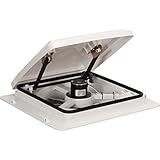 MAXXAIR Original MaxxFan 00A04301K MAXXAIR Original MaxxFan 00A04301K |
|
Check Latest Price |
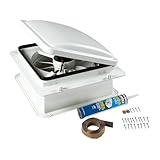 Furrion 14 in 10-Blade Rooftop Vent Fan Furrion 14 in 10-Blade Rooftop Vent Fan |
|
Check Latest Price |
How We Evaluated These Fans
Six criteria decided this ranking, and we applied the same six to every unit rather than letting a brand name carry a product.
Airflow and speed count. Higher CFM moves more air, and more speeds let you find the point where the fan is useful without being loud. Premium 10-speed models here land above 900 CFM.
Power draw. Every fan here is 12V. Wattage matters because it becomes amp-hours on a boondocking budget.
Rain protection. We looked for an integrated rain cover first, a rain sensor second, and treated a separate cover as a real cost in effort as well as money.
Fit and install. Almost every RV roof opening is 14×14 inches, but roof thickness and included trim depth vary enough to cause problems.
Control access. In a high-ceiling rig, a remote with a wall sleeve is close to mandatory.
Reported noise. We used owner reports rather than spec sheets, because spec sheets measure at a distance real users do not have.
1. MAXXAIR MaxxFan Deluxe 00-07500K — Best Overall for Hot Weather
MAXXAIR Maxxfan Deluxe Vent, Fan and Vent Cover All in One – Powerful 10-Speed Reversible Fan with Thermostat, Built-in Rain Cover, Remote Control, Intake & Exhaust Fan, Smoke (00-07500K)
14 in blades
10 speeds
60W
12V
Built-in rain cover
Remote control
Pros
- Vent
- fan and rain cover in one unit
- 10-speed reversible motor with thermostat
- built-in rain cover for all-weather running
- tool-free removable insect screen
- fits standard 14x14 roof openings
- 2-year unit warranty and lifetime lid warranty
Cons
- Highest price point of the 14-inch fans reviewed
- premium brand positioning puts it above most budget alternatives
This is the fan we would put on our own rig. The whole point of the Deluxe is that the rain cover is part of the lid assembly, so there is no second hood to bolt on and no sensor to fail before the dome comes down.
In a hot week that difference is the whole argument. You leave the dome open in the middle of the day, it rains at four, and the fan keeps moving air instead of shutting off. Owners report running it in all weather with a cover over it, which is a further layer of protection rather than a requirement.
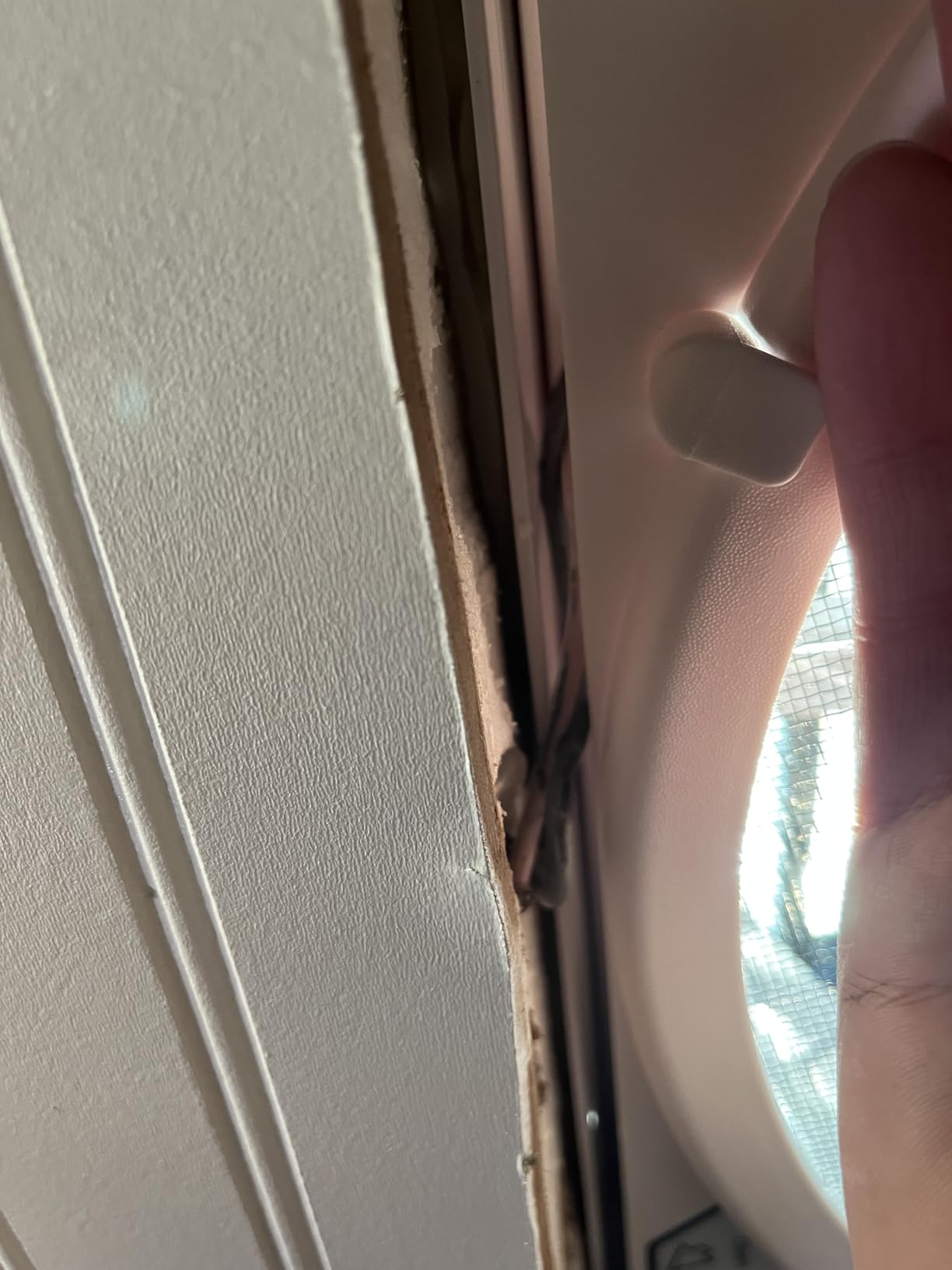
The 10-speed reversible motor is what separates it from cheaper units. Ten speeds let you run low enough to sleep under and high enough to pull a bathroom dry after a shower. The thermostat adds a second layer of automation for rigs left unattended.
It draws 60W, which is more than the mid-range models here. That is the honest trade: you pay in amp-hours for the integrated cover and the extra control electronics.
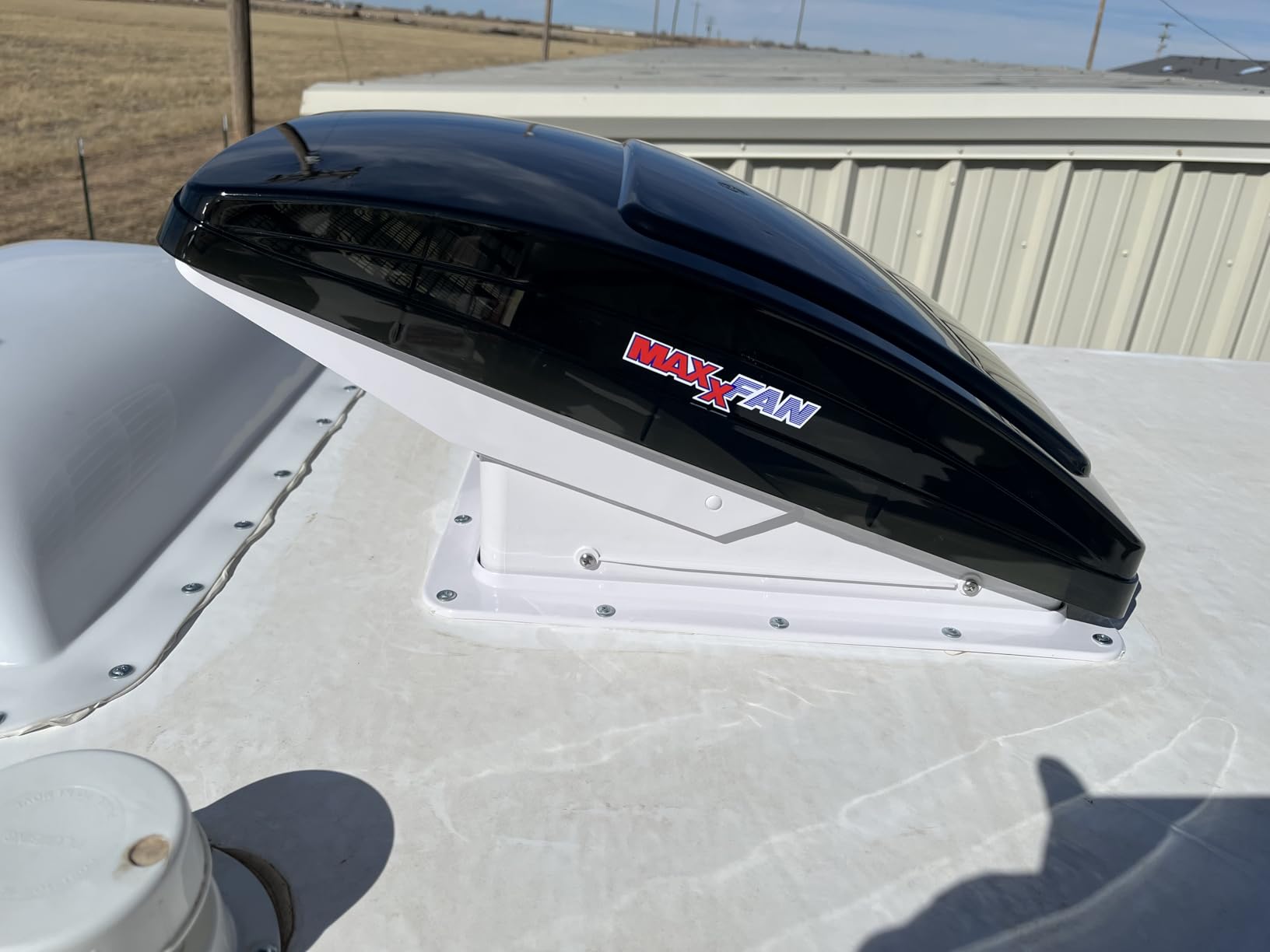
What you give up to get the built-in rain cover
The first sacrifice is budget. This is the priciest unit in the group, and the gap between it and the manual-lift options is large enough to matter on a fixed budget.
The second is weight and complexity. At 60W it is a heavier electrical load than the 24W and 28W models, so on a small solar setup you are watching your amp-hour budget more carefully.
Why it wins in genuine heat
Owners with years of use report it holds up, and the warranty terms back that up: two years on the unit and a lifetime limited warranty on the lid. That lid warranty is the part that matters most, because a failed lid is what turns a vent into a roof leak.
For a full-time or boondocking rig in sustained high heat, having a cover that is not a separate accessory is the single most useful feature here. If your rig spends weeks in the sun away from shore power, this is the one we would buy.
2. MAXXAIR MaxxFan Plus 00-04500K — Best Reversible Fan With a Rain Sensor
MAXXAIR Maxxfan Plus High Powered 10-Speed RV Intake and Exhaust Fan – Manual or Remote Control Electric Opening, Easy Ceiling Controls, Rain Sensor with Automatic Lid Closure, Smoke (00-04500K)
14 in blades
10 speeds
28W
12V DC
Rain sensor
Remote control
Pros
- High powered 10-speed intake and exhaust airflow
- electric opening with ceiling controls or remote
- rain sensor closes the lid when moisture is detected
- keeps circulating air internally with the lid closed
- waterproof molded tabs for tool-free cover installation
Cons
- FANMATE vent cover sold separately for full-weather running
- premium price bracket for the category
The MaxxFan Plus is the model most often named in owner threads about this category, and the reason is a combination of low draw and control access. At 28W it is less than half the electrical appetite of the Deluxe while keeping the same 10-speed reversible motor.
Owners on iRV2 describe the 4500K as practically noiseless in real use, and they single out the remote as simple and reliable. Several mention that the wall sleeve version matters because a shorter owner cannot reach ceiling controls in a high-ceiling trailer.
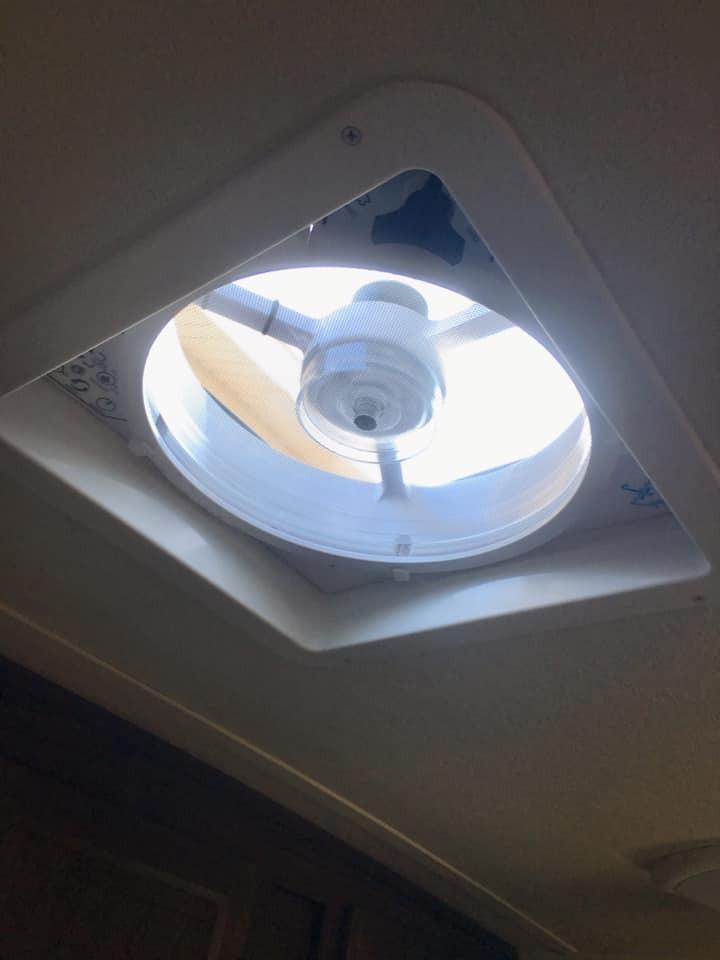
The rain sensor closes the lid automatically when the sensor surface gets wet. That is genuinely useful for an unattended rig, though owners are candid that sensors are not infallible and that a storm can still arrive faster than the dome travels.
It also keeps circulating air internally with the lid shut, which is a nice touch when you want the fan running for bathroom humidity without opening the roof.
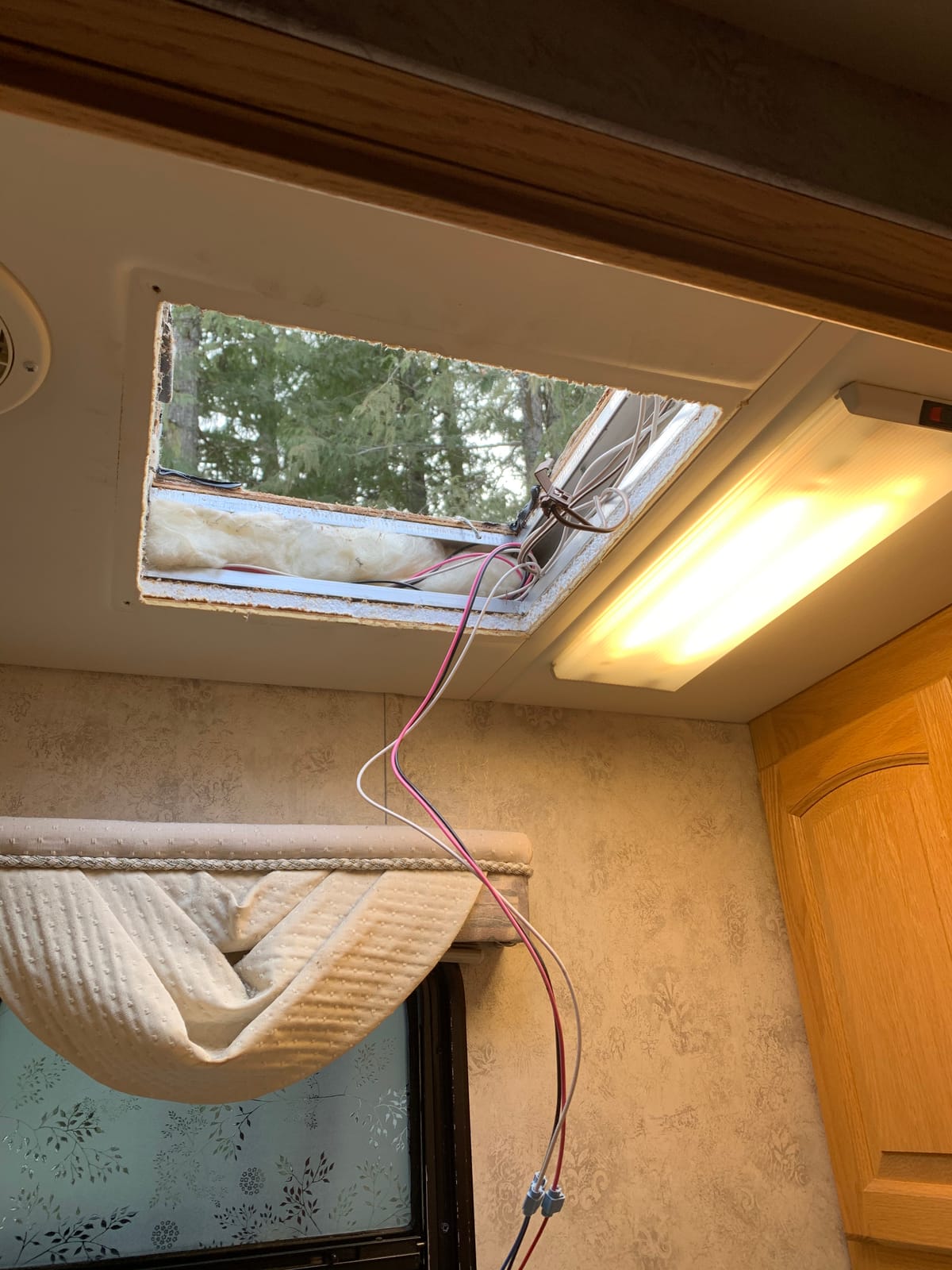
Where the rain sensor stops being enough
The sensor is a convenience, not a guarantee. Owners across several threads report the sensor failing to shut the dome in actual rain, which is precisely the situation where water gets in. Treating it as a backup rather than the primary protection is the sensible read.
For full-weather operation you need the FANMATE cover, and it is sold separately. If you are going to buy it anyway, work out whether the all-in-one Deluxe is the better single purchase.
Who this fits best
This is the fan for a rig that needs genuine reversible airflow at a moderate electrical load. Run it on low during the day for circulation, then reverse to exhaust after sunset when the outside air is cooler than the cabin.
Owners who replaced a noisy factory fan with this unit generally describe it as a night-and-day upgrade. If your issue is that the OEM fan is loud and weak, this solves both complaints at once.
3. RVLOVENT 14-Inch 10-Speed Manual Lift — Best Value
RVLOVENT 12V RV Roof Fan Vent 14” 10 Speed Reversible Manual Lift (NO REMOTE)
14 in blades
10 speeds
24W
12V DC
45 dB
Manual crank lift
Pros
- Up to 1000 CFM maximum airflow
- reversible 10-speed manual control
- 24W low-power motor
- extra replacement screen and spare fuses in the box
- UV-resistant polycarbonate cover
- straightforward install into a standard 14x14 cutout
Cons
- Manual crank only with no remote or powered lid on this variant
- some owners report more noise at higher settings
- wind can affect the constant fan speed
If you want the airflow of a premium unit without the electronics bill, this is the one. At up to 1000 CFM it moves more air than most models in the group, and the 24W motor keeps the amp-hour cost low enough to leave running all day.
Owners report the fan is quiet on low and medium settings, which is where you will live during the hottest hours. Multiple buyers say it cut or eliminated their air conditioner use on hot days, which is the outcome this roundup is really chasing.
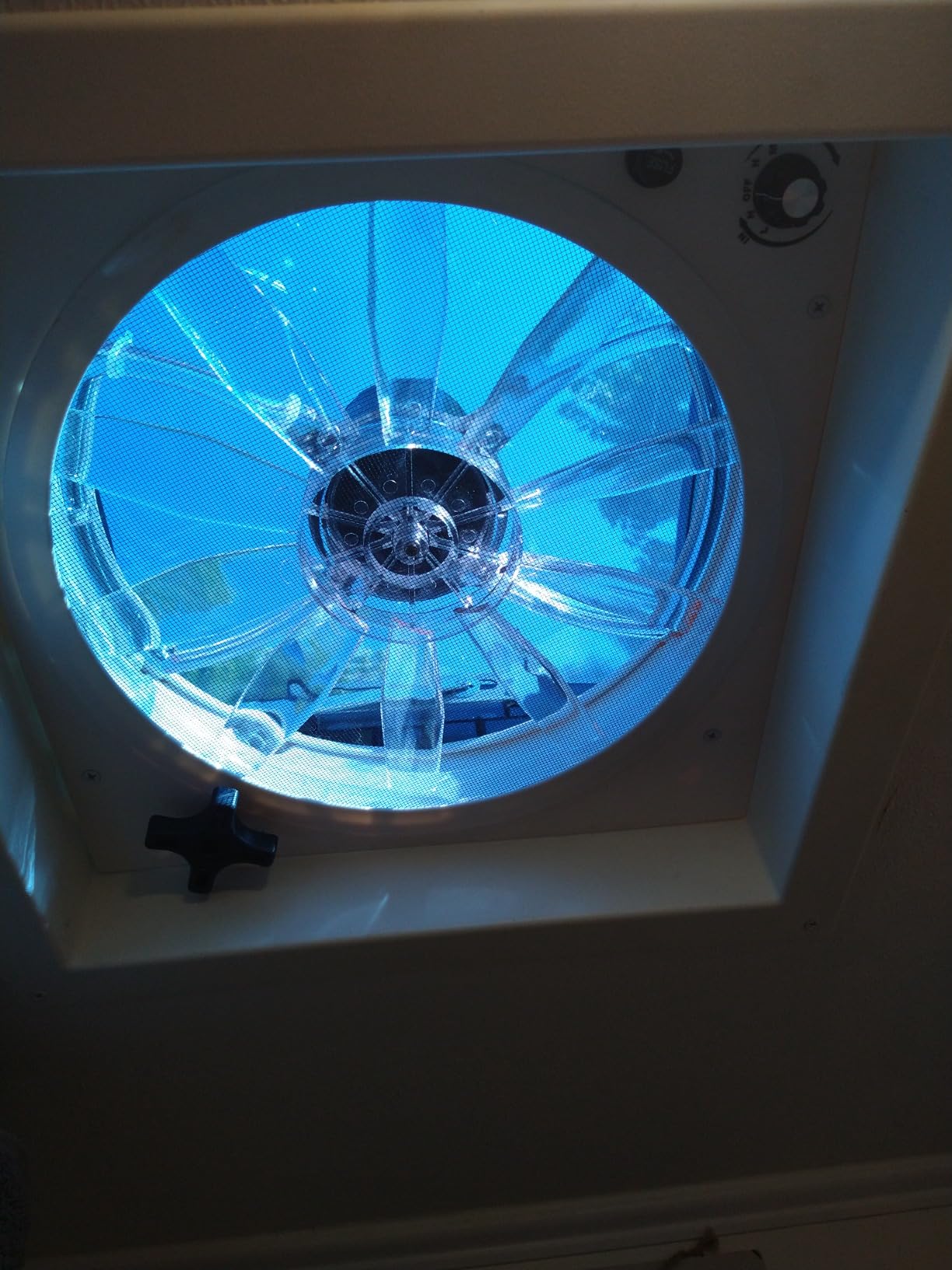
The box includes a spare screen, extra slow-blow fuses and a white interior garnish. Those small inclusions matter more than they look: a torn bug screen in the desert is a five-minute fix if you have a spare and an afternoon if you do not.
Manual crank control is the compromise. It works perfectly well from a ladder-free interior switch, but you cannot change speed from bed.
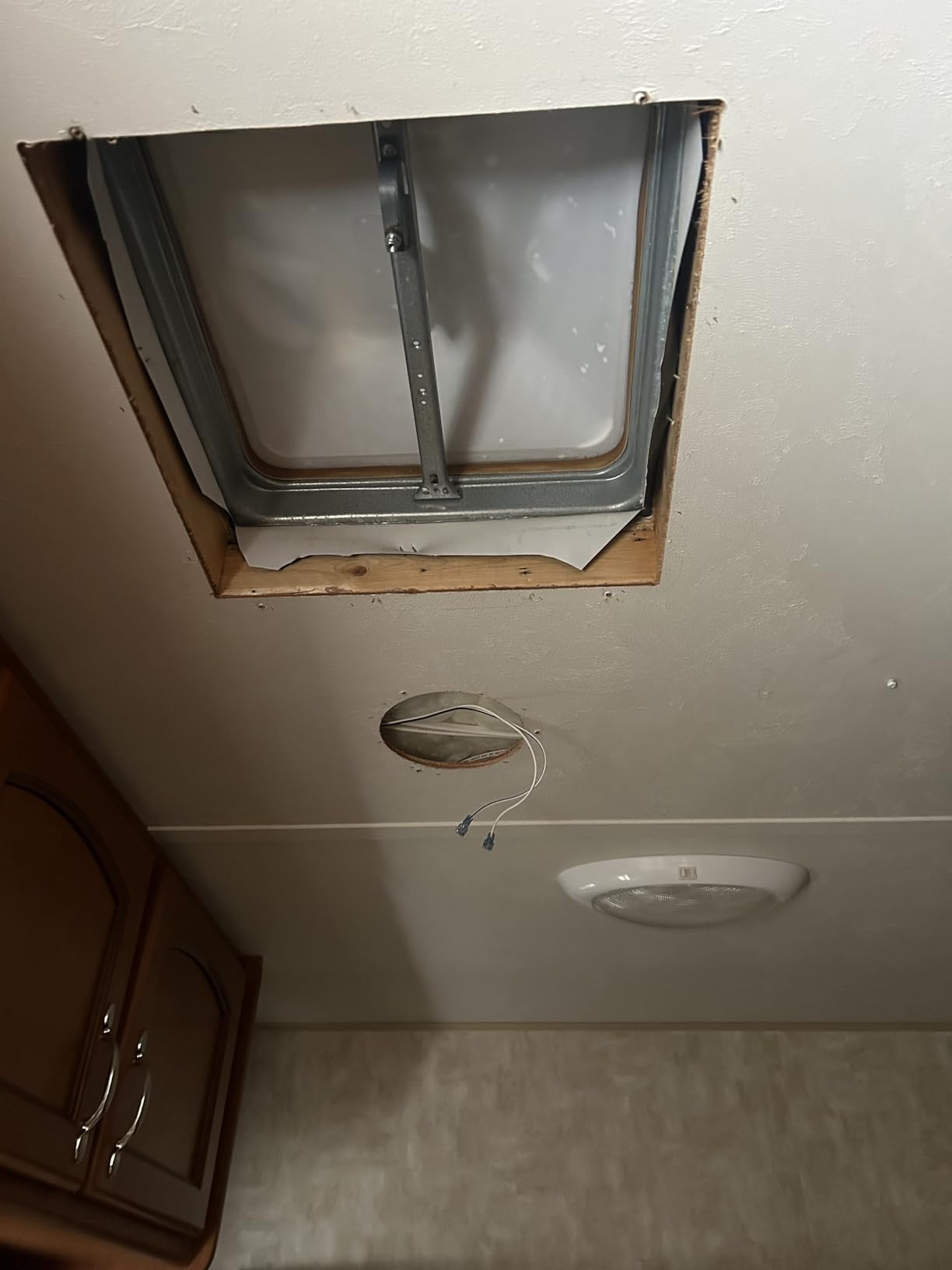
What the manual lift costs you
There is no powered lid, so opening and closing is a physical action every time the weather turns. Owners running this unit while travelling report that wind noticeably affects the constant fan speed, which is worth knowing before a highway run.
It also means you cannot set the fan and forget it from the ground. In a rig where the ceiling control is out of reach, budget for that friction.
Why it earns the value slot
At 1000 CFM and 24W, the numbers are simply better than most units here. Few rivals combine that airflow with a sub-25W draw.
For a boondocker who wants to run ventilation continuously on solar and does not need remote control, this is the efficient choice. The lack of a rain cover is the real limit: you will be closing it in rain by hand.
4. Starvent 6-Speed Reversible Vent Fan — Best for High Airflow
Starvent RV Roof Vent Fan 6-Speed-Reversible
1100 CFM
6 speeds
1350 rpm
59.5 dB
12V
Soft start ramp
Pros
- 1100 CFM airflow capacity
- 6-speed reversible variable speed fan
- soft start and stop ramp for quieter running
- removable screen for cleaning
- simple two-wire installation with white interior trim ring
Cons
- Highest speed settings are noticeably loud
- some owners report push-button controls sticking
- manual lid crank has reported durability issues
- requires modification to fit third-party rain covers
This is the highest airflow figure in the roundup at 1100 CFM, and at 1350 rpm with 17 blades on the rotor it has real headroom for a large rig or a stubborn bathroom.
Six speeds is fewer than the 10-speed units, but the soft start and stop ramp smooths the transitions in a way owners appreciate at bedtime.
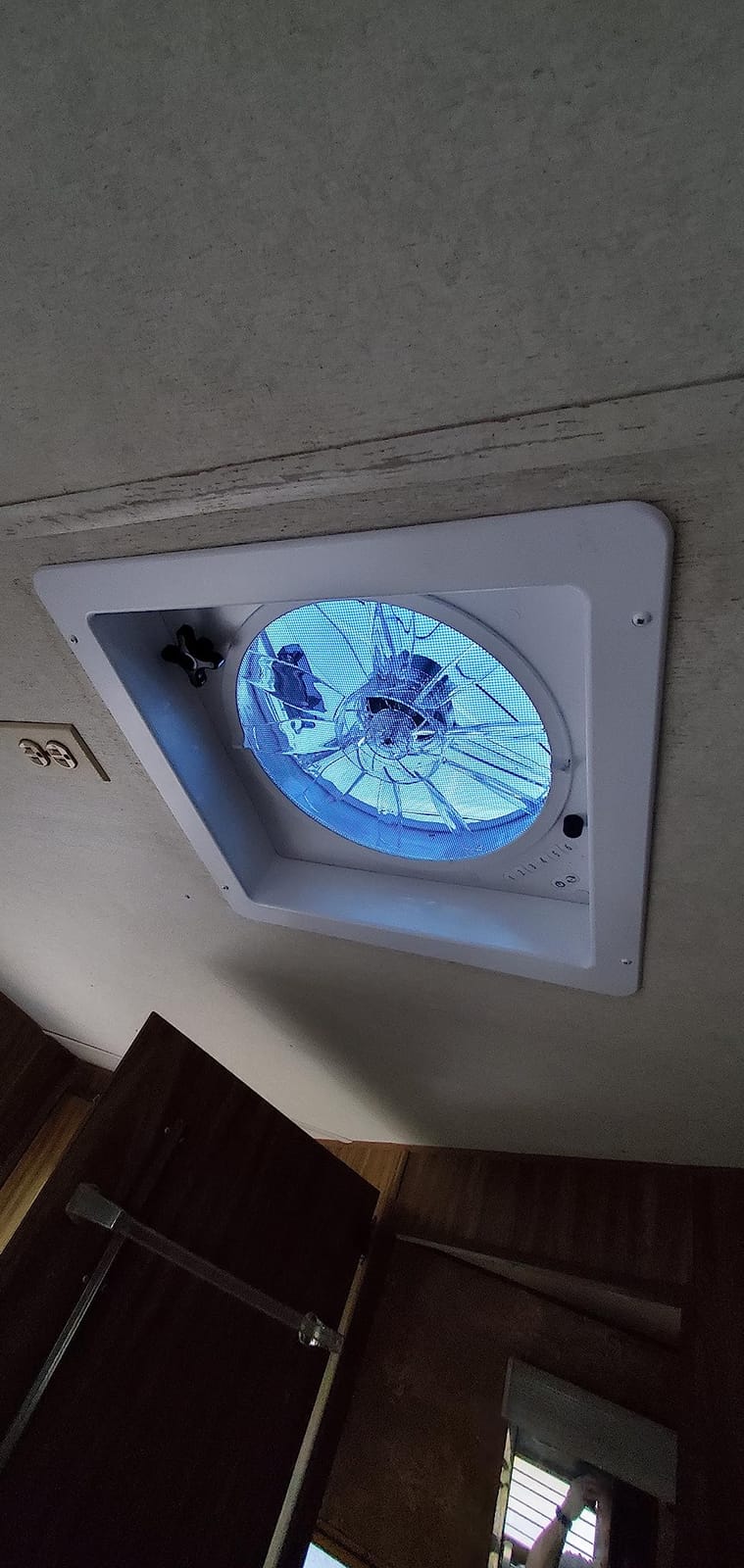
Installation is genuinely simple. It is a two-wire job and the trim ring and screws are included, which makes it a good weekend project for someone who has never opened a roof before.
The 59.5 dB figure is the honest catch. It is quiet on the lower settings and loud on the upper ones, so plan to live in the bottom half of the range.
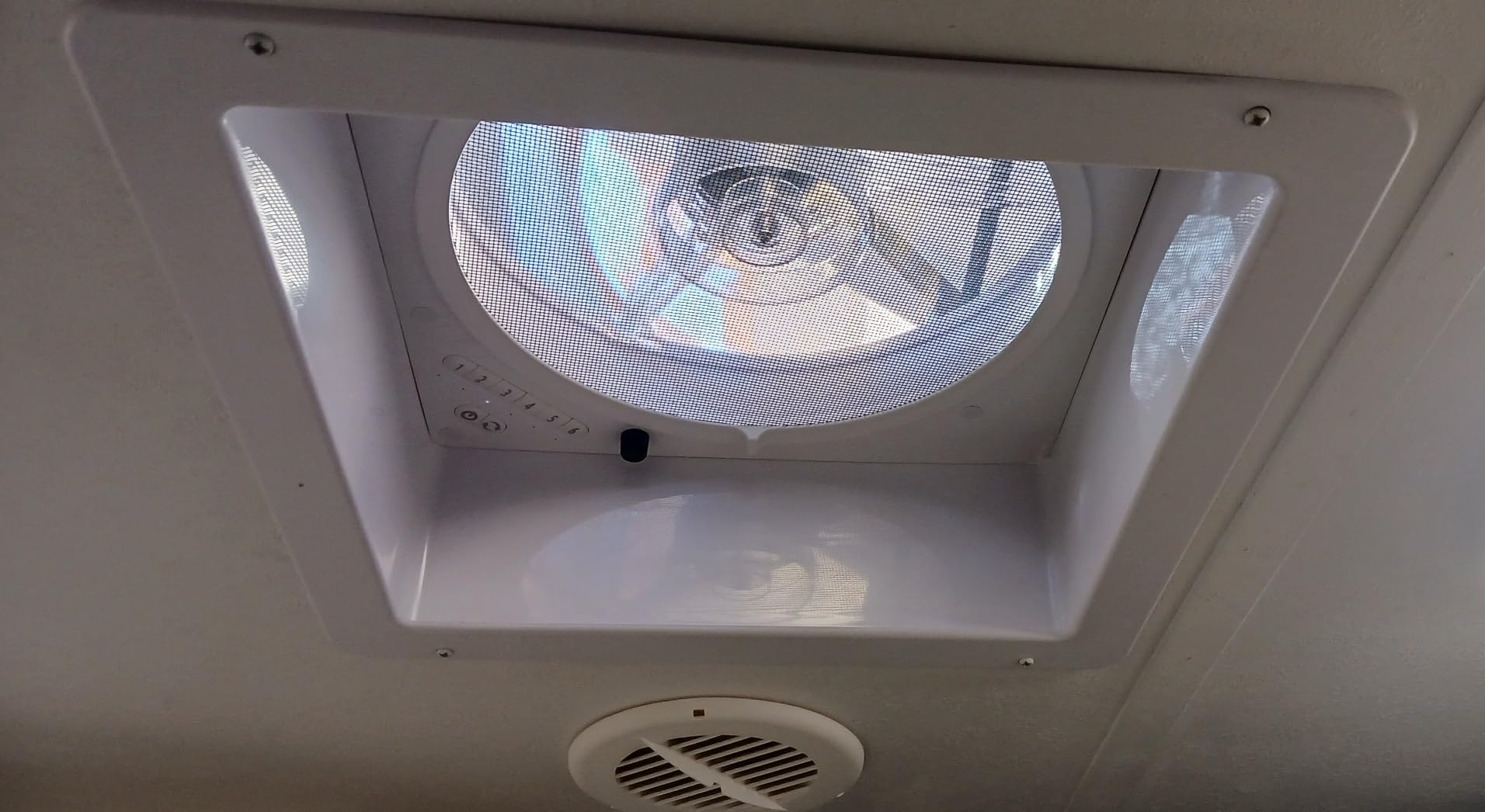
Check your roof thickness first
This unit fits 1.16-inch to 5.5-inch roof thickness and 14×14 openings. If your roof falls outside that band you need a different flange, and getting it wrong shows up as daylight around the garnish.
It also needs modification to accept third-party rain covers, which complicates the standard pairing owners use with the premium units.
Who it suits
Choose this if raw airflow outranks refinement and you can tolerate more noise at the top of the range. It suits larger trailers where you want to move air through several rooms.
The recurring complaints cluster around the manual lid crank and sticking push buttons. If you need the lid to open reliably on a schedule unattended, this is not the fan.
5. BLACKHORSE-RACING 14-Inch Vent with Fan — Best Budget Replacement
BLACKHORSE-RACING 14″ RV Roof Vent Fit for Camper Trailer Universal White Lid Roof Vent with 12V RV Vent Fan 6″ Blades White lid Inner for Garnish Ring
6 in blades
12V
1.5W
40 dB
Zero-leak mount
Butyl tape included
Pros
- Low-cost replacement for a standard roof vent
- butyl tape and mounting screw included for a fast install
- fits common older RV and trailer vent openings
- zero-leak mounting system with positive-seal weather stripping
Cons
- All-plastic construction may not hold up in intense desert sun
- fan is louder than expected for some users
- crank assembly failures reported soon after install
- may be too shallow for thicker camper ceilings
This is a straight replacement vent and fan rather than a high-output upgrade, and it is the sensible pick when an existing roof vent has failed and you want the leak fixed today.
The zero-leak mounting system with positive-seal weather stripping is the reason to look here at all. It includes 70 inches of 3/4-inch butyl tape and a mounting screw, so the seal is part of the kit rather than something you source separately.
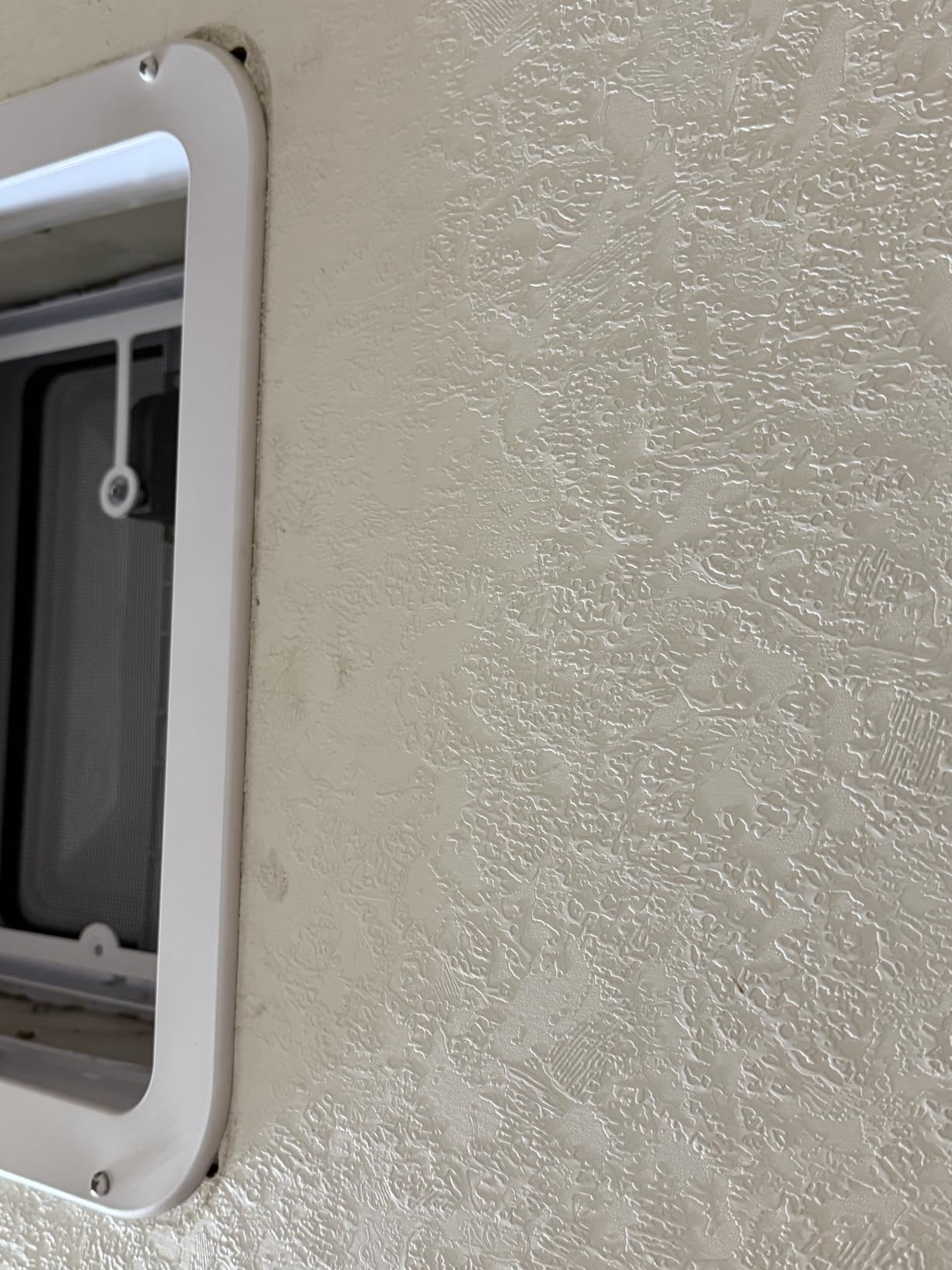
The 1.5W draw is the standout number. It uses so little power that you can leave it running as a background circulator without thinking about it.
At 40 dB it is among the quietest figures quoted in this group, though the six-inch blade size explains why it cannot move as much air as the larger fans.
Where the plastic construction bites
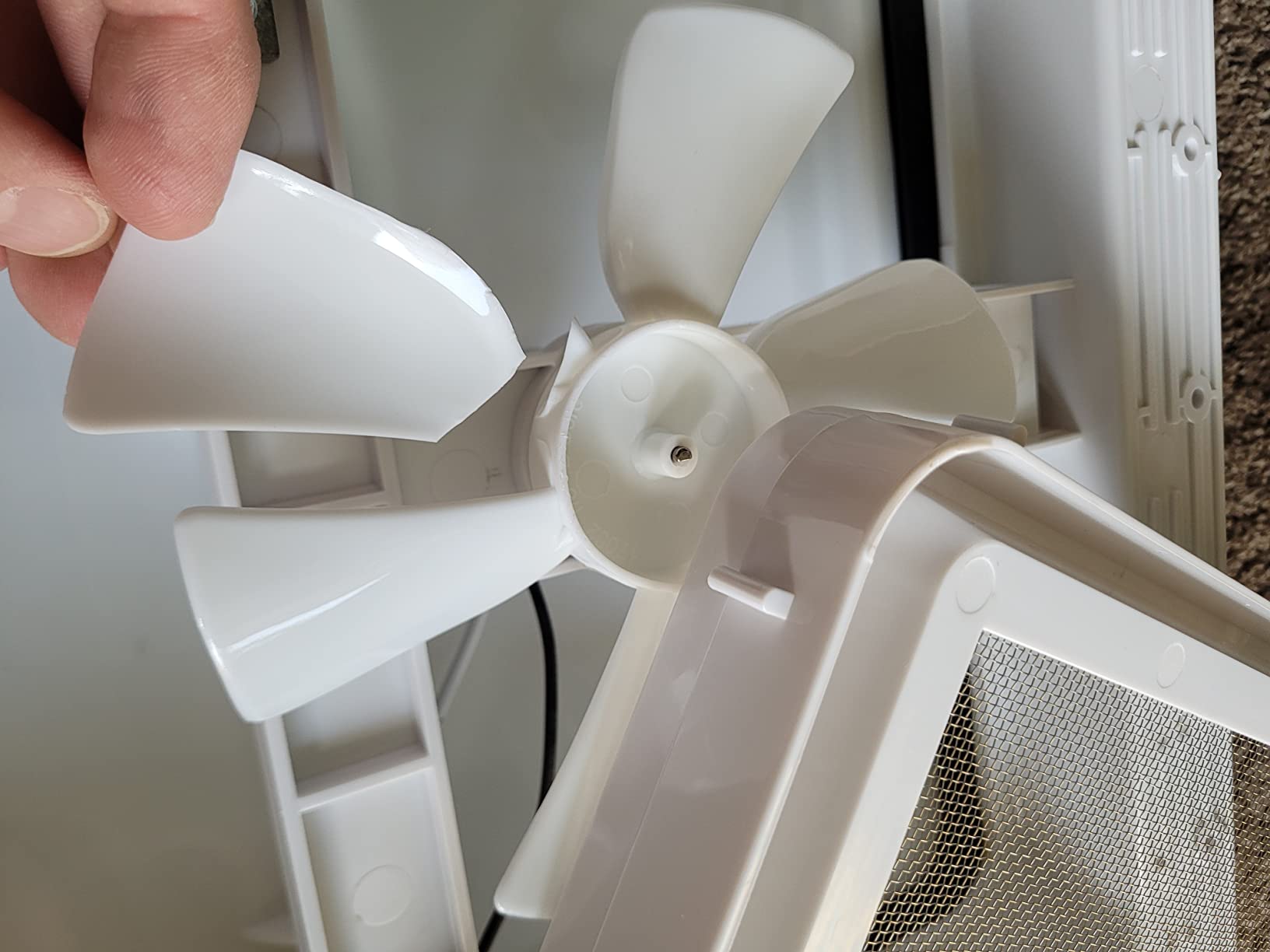
Owners are blunt that all-plastic construction may not survive sustained desert sun. UV exposure is the enemy of a roof part, and this is where a thicker material would earn its cost.
The unit is also only 2.48 inches tall, which can leave gaps on thicker camper ceilings. Measure before you commit.
Who it suits
This is a stopgap and a leak repair, not a hot-weather strategy. It works well as a first replacement on an older trailer where the factory vent has rusted through.
If your real problem is interior heat in July, spend the difference on a larger fan. If your real problem is water coming in, this solves that on its own terms.
6. RV Roof Vent Fan with 4-Color LED (F36AR) — Best for Sleeping
RV Roof Vent Fan 14×14 with 4 Color LED Ambiance Light, Reversible Airflow, Ultra-Quiet 12V (24V Max) Vent Fan with Remote & Rain Sensor
25 dB brushless motor
674 CFM
4 speeds
12V
40W
Rain sensor
Pros
- Very quiet brushless motor nearly inaudible on low speeds
- four-color LED ambient lighting
- reversible airflow with four speeds at 3W/10W/20W/40W
- patented curved blades reduce wind noise
- rain sensor closes the lid automatically
- 3-year parts warranty with lifetime support
Cons
- Limited installation and use documentation
- short interior trim flange may not suit thicker roofs
- fan continues running after the rain sensor closes the lid
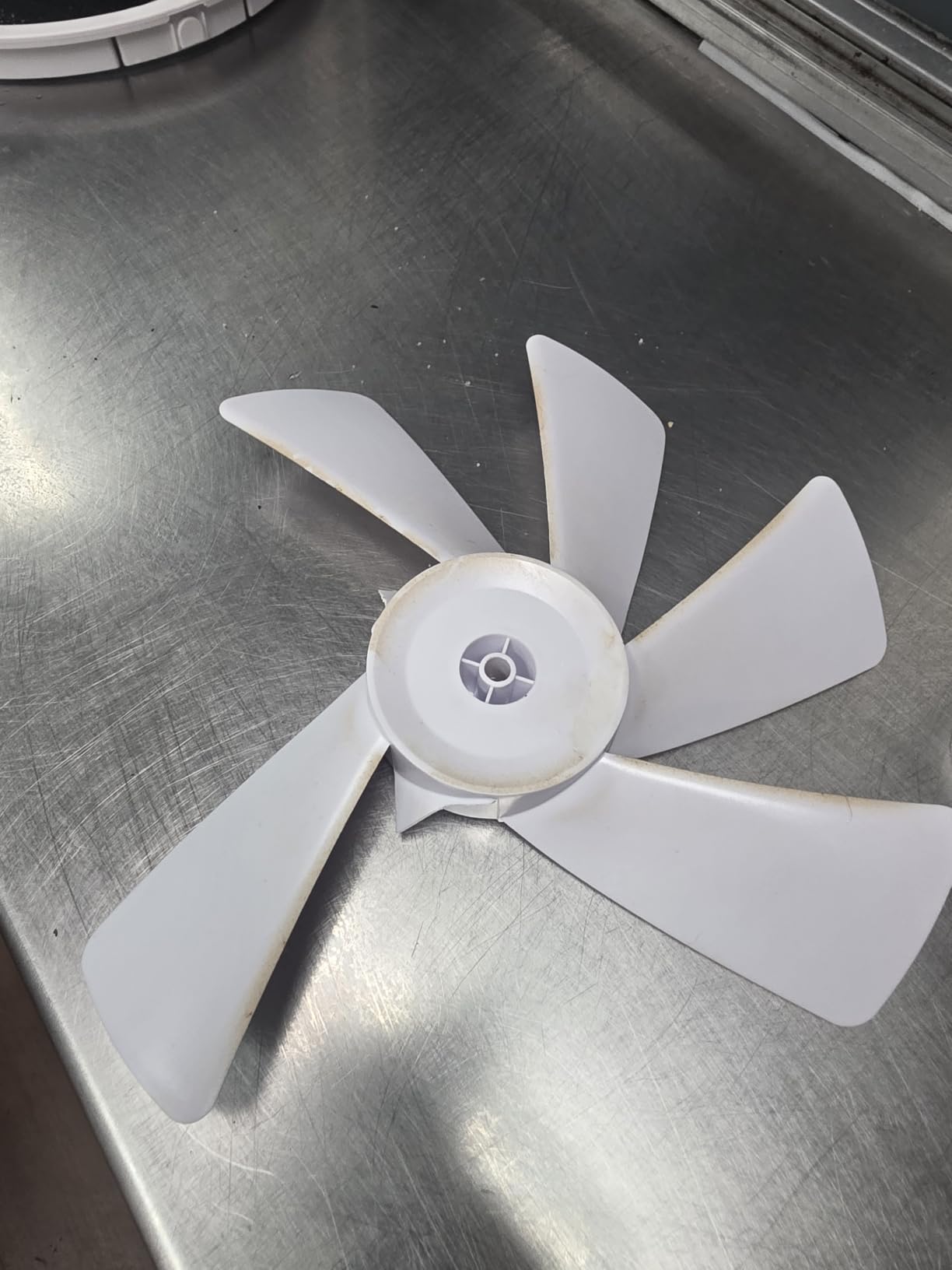
This is one of the quietest units we evaluated, with a brushless motor rated at 25 dB or under. If you sleep directly under the vent, that figure matters more than raw CFM.
Four speed levels run at 3W, 10W, 20W and 40W. The 3W setting is the one you will actually use overnight, and at that draw the fan is effectively free to leave running.

The four-colour ambient lighting in yellow, rose pink, blue and white is a small touch that owners mention repeatedly. It gives you a low light source without turning on the main ceiling fixture.
It fits 14×14 openings and 400x400mm cutouts, and handles roof thickness from 1.5 to 3.3 inches.
Two issues worth knowing before you buy
The fan keeps running after the rain sensor closes the lid. Owners report this clearly, and while circulating air internally is harmless, it is not what the closed-lid behaviour suggests.
The interior trim flange is short. On a thicker roof you will need an extra piece, and the documentation is thin on how to fit it.
Who it suits
Sleepers, shift workers and anyone running a rig where noise is the limiting factor. It is also a good match for boondocking, since the lowest speed draws 3W.
At 674 CFM it moves less air than the top three, so it is a bedroom fan rather than a whole-rig solution. Pair it with a higher-output unit elsewhere if you need both.
7. Heavy Duty 14-Inch Voice Control LED Fan — Best for Smart Control
Heavy Duty 14″ RV Roof Vent Fan, Whisper-Quiet Voice Control, Colorful LED
25W brushless motor
4 speeds
50-degree lid angle
Voice control ready
2-year warranty
Pros
- Brushless commercial-grade motor advertised as whisper quiet
- voice control compatibility plus included remote for speed timer and light colour
- four LED colours including amber and red night modes
- reinforced 1mm thicker ABS and polycarbonate housing
- built-in rain sensor
- adjustable 50-degree lid opening with reversible airflow
Cons
- Voice control requires pairing with a separate smart assistant
- heavier than most competitors at 12 pounds
- small 4-speed range compared with 10-speed models
This is the pick for anyone who wants their vent fan in the same voice routine as the rest of the rig. It pairs with a smart assistant, and the included remote still handles speed, timer and lighting without any of that.
The adjustable lid opening angle up to 50 degrees is quietly important. Many vents use a fixed opening, so on a hot still afternoon you can open the dome further to move more air without increasing fan speed.
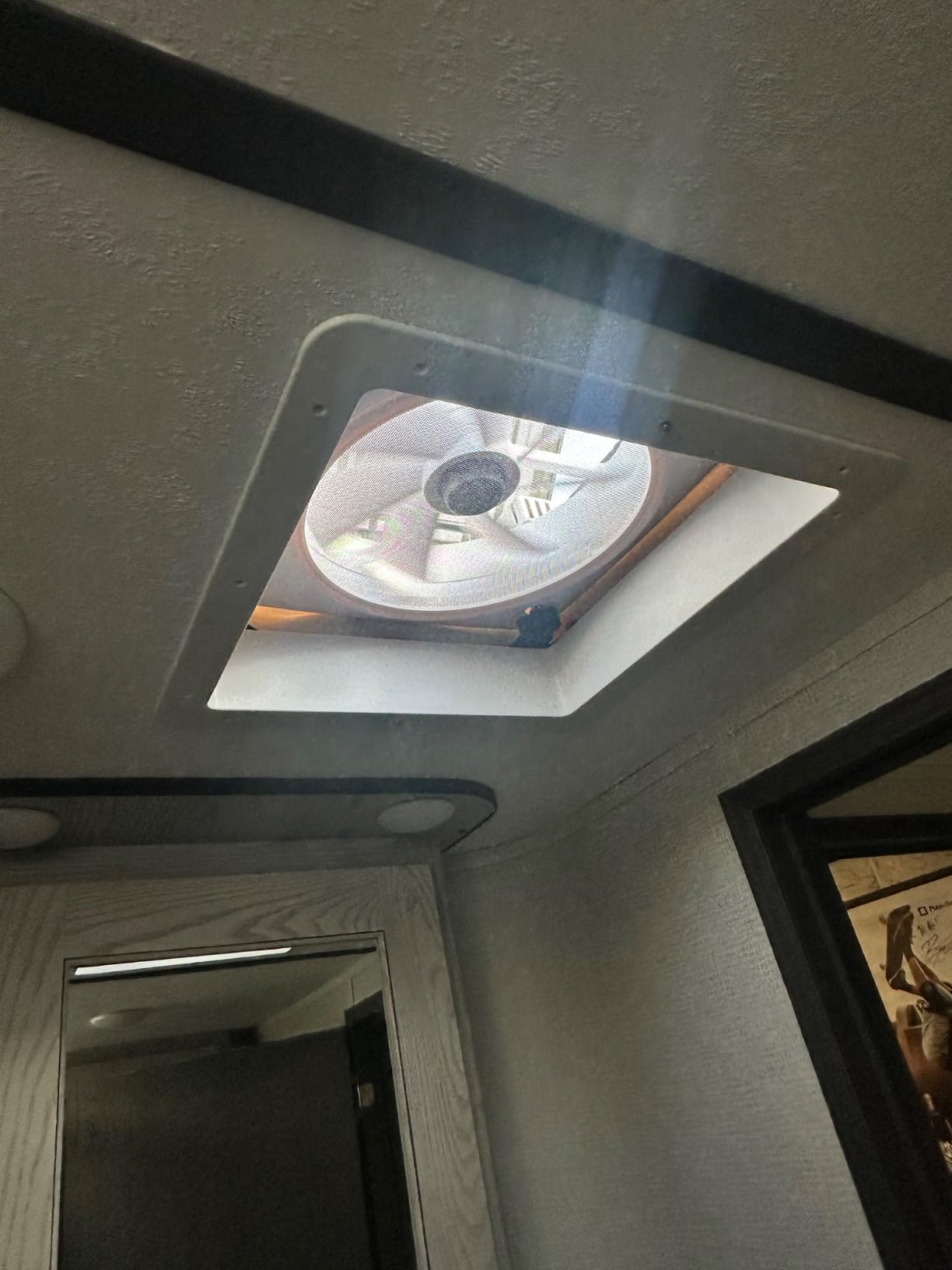
The reinforced housing uses 1mm-thicker ABS and polycarbonate, which is a deliberate answer to the rattling and cracking complaints we heard on lighter units.
There is a timer that runs from 1 to 8 hours before auto shutoff, useful for a bathroom fan cycle.
What the weight and the speed count cost
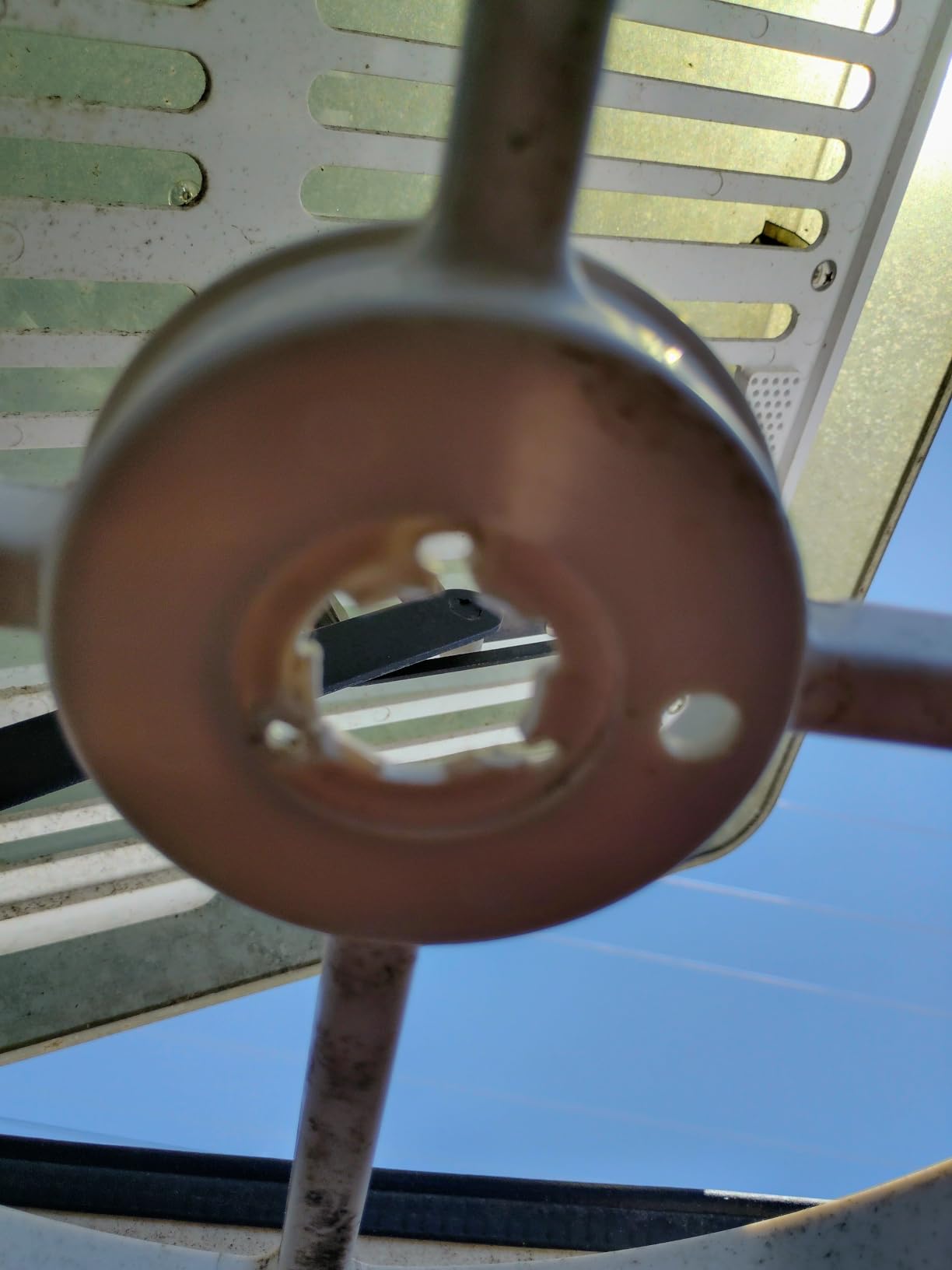
At 12 pounds this is the heaviest unit in the group by a wide margin. On a camper van or a lightweight trailer where roof load is calculated, that is a real consideration before you commit.
Four speeds is a narrow range. You lose the fine tuning that makes a 10-speed unit usable as a background overnight circulator.
Who it suits
Owners of a rig already running smart home systems get the most out of this. Voice control without a smart assistant is decoration, so the feature only pays off if you have one.
The 25W brushless motor and rain sensor make it a solid all-rounder otherwise, and the two-year warranty is a reasonable baseline for the category.
8. Kohree 14-Inch RV Vent Fan KR5312 — Best for Airflow Control
Kohree 14″ RV Vent Fan, 12V for Camper Vent, Green
934 CFM
10 speeds
25W
50 dB
Temperature sensor
Powered lift lid
Pros
- 934 CFM airflow across 10 speeds
- built-in temperature sensor that starts the fan above 78.8F
- powered-lift UV-proof lid with rain sensor auto-close
- quiet enough to run all night on low
- remote with LCD display removes on-roof adjustments
- includes sealing tape screws and removable screen
Cons
- Some owners report fan blades cracking within months
- manual knob has detached for some users
- lid can rattle or bounce in windy conditions
- remote lacks a backlight for nighttime use
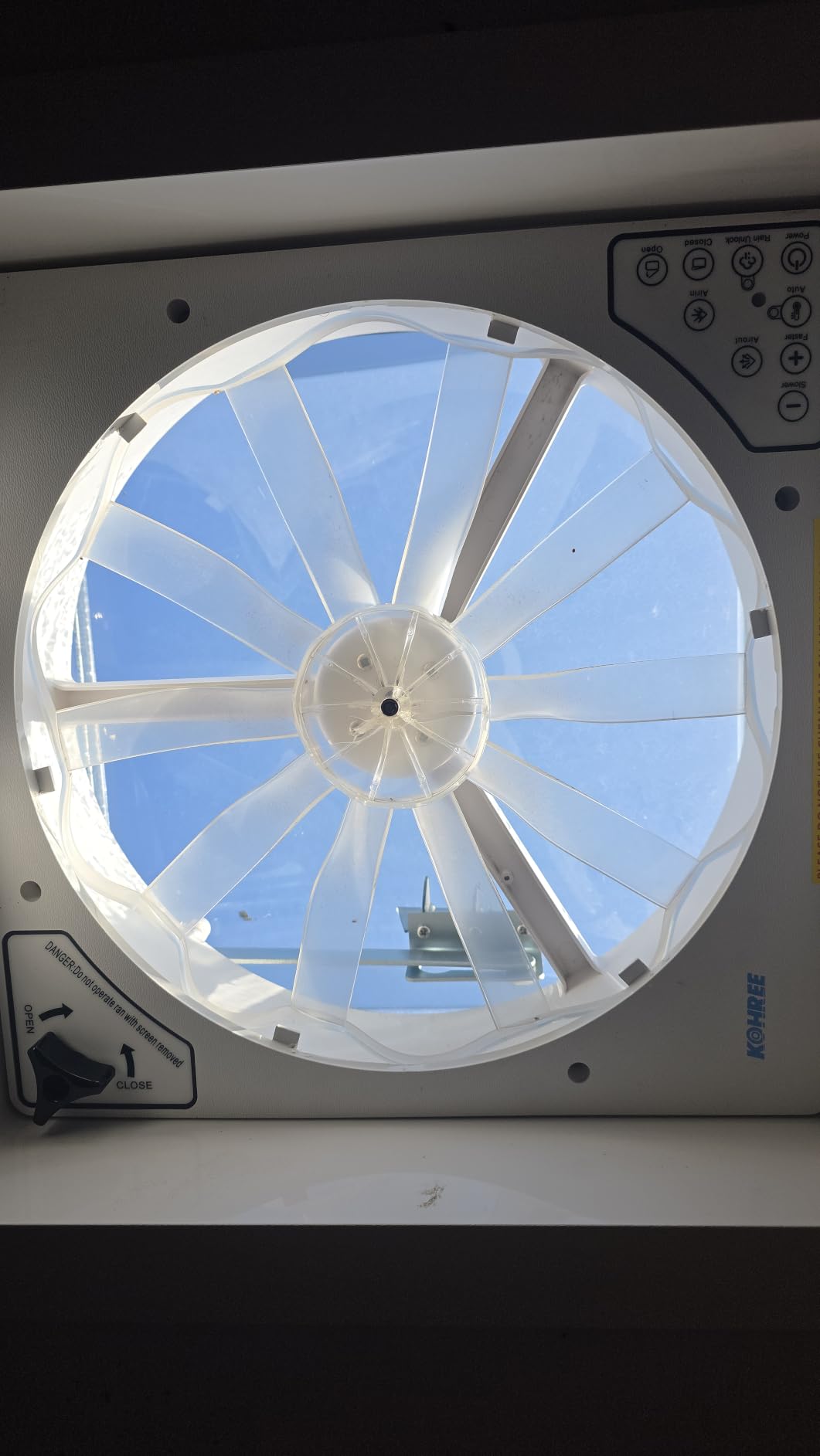
Nine hundred and thirty-four CFM on a 25W brushless motor is a strong combination, and the 10-speed range gives finer control than most of the mid-priced models here.
The built-in temperature sensor is the feature that makes it semi-automatic. It activates the fan above 78.8F, which is a reasonable threshold for keeping interior air moving on a warm afternoon without you touching anything.
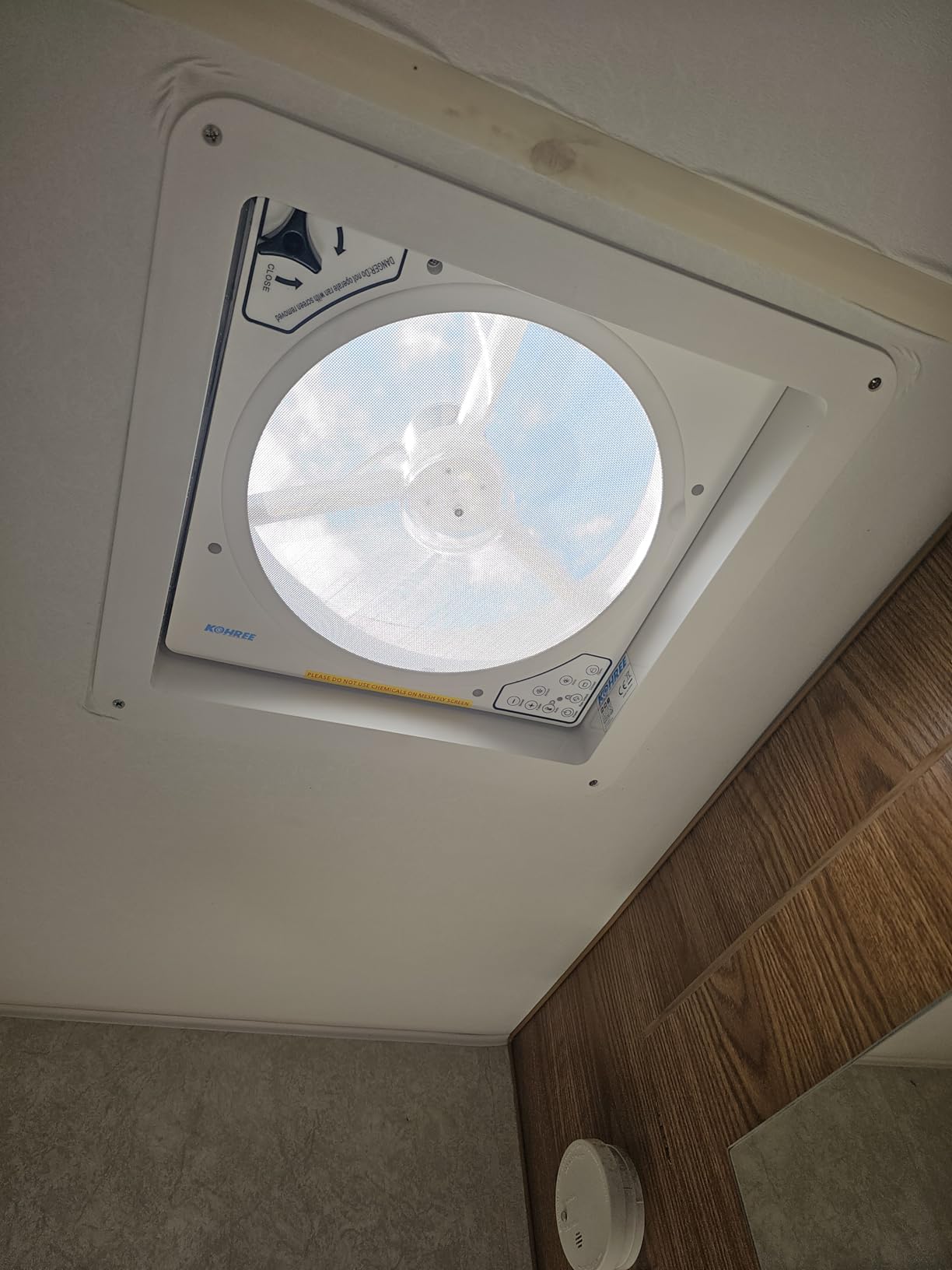
The remote has an LCD display, which means you can see the current speed and direction from the floor rather than guessing at a keypad in the dark.
The kit includes sealing tape, screws and a removable mosquito screen, so the install essentials are covered.
The durability reports you should read
A minority of owners report blades cracking within months, and others report the manual knob detaching. These are not universal themes, but they are consistent enough to weigh if you are buying for a decade of service.
Owners also mention lid rattle or bounce in wind, which matters for a fan that runs with the dome open through the afternoon.
Who it suits
If you want maximum airflow with the most speed settings and do not need a separate rain cover, this is a strong middle-ground pick. The temperature sensor is a genuine convenience for rigs left unattended part of the day.
The unlit remote is a small annoyance, and the durability reports argue for pairing it with a quality roof sealant at install rather than trusting the flange alone.
9. Leisure Coachworks 14-Inch Manual Riser Fan — Best for Low Power Draw
Leisure Coachworks 14″ x 14″ RV Roof Vent Fan 12V Manual Riser Reversible Manual Lift with Smoked Lid
530 CFM
5W
2 speeds
12V DC
Manual riser
Fits 2-4.5 in roofs
Pros
- Quiet operation for the volume of air it moves
- reversible fan with one speed in and one speed out
- manual riser opens and closes the smoked lid without stuttering
- seals securely when closed and has held up through rain storms
- fits standard 14x14 openings with included interior garnish
Cons
- Only two speed settings
- lower airflow output than higher-CFM competitors
- interior trim may be too shallow for thicker roofs
- mounting screws are not included
Five watts is the lowest draw of any reversible 14-inch fan in this roundup, and that is the entire reason to look at it. At 530 CFM it moves real air without meaningfully touching your battery budget.
Owners highlight the manual riser as the standout feature. It opens and closes the smoked lid smoothly, without the stuttering that plagues cheaper crank mechanisms.
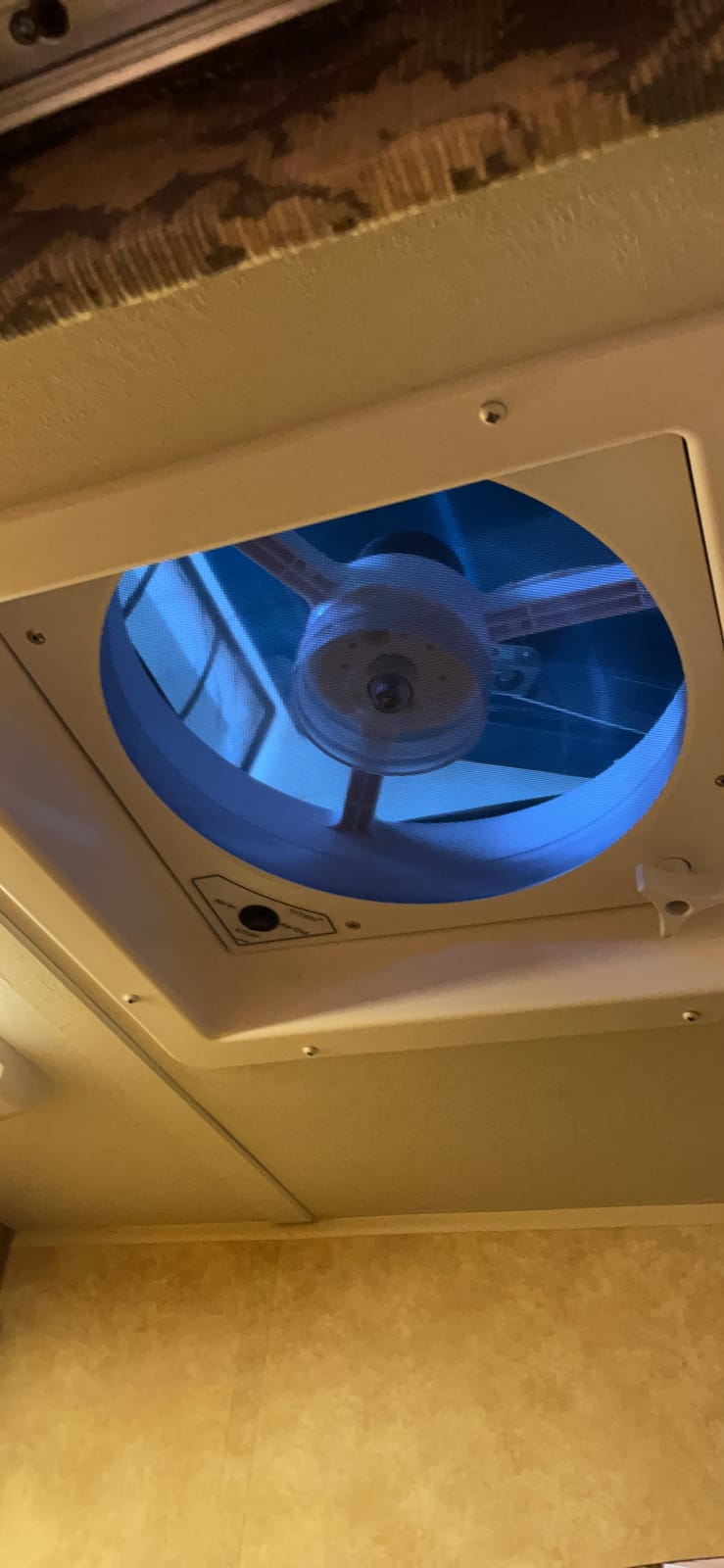
Sealing is another strength. Owners report it holds securely when closed and has stood up through rain storms, which is what you want from a vent that gets closed regularly.
The two-speed arrangement is one speed in and one speed out. It is not fine control, but it is a complete reversible setup.
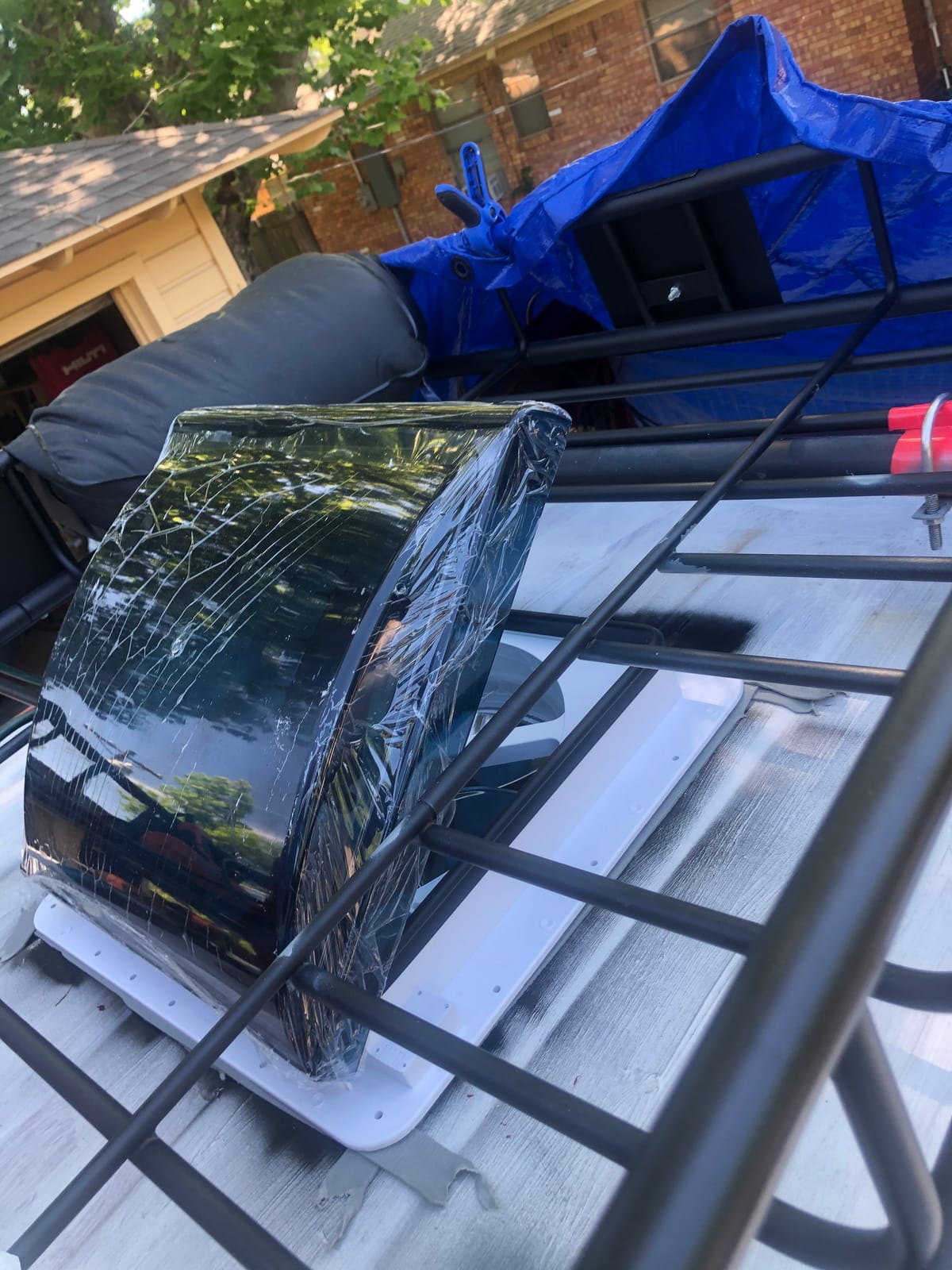
Two speed settings is the trade
You get no intermediate airflow. That rules it out for anyone who wants to run a gentle overnight circulation without a draft, and it is a meaningful limitation for hot-weather use.
Mounting screws are not included, and the interior garnish can be too short on thicker roofs. Both are small shop-supply items, but plan for them.
Who it suits
This is the fan for a boondocker on a small battery bank who needs ventilation running continuously rather than in bursts. At 5W, leaving it on all day and all night costs almost nothing.
It also fits 2-inch to 4.5-inch roof thicknesses, which covers a lot of older trailers with deeper roofs. The white interior garnish is included.
10. HENG’S 14-Inch Universal Vent 74112-C — Best for Lightweight Builds
HENG’S INDUSTRIES 14″ RV Camper Trailer Universal Smoke LID ROOF Vent with 12 Volt Fan 74112- C
12V single-speed
3W
Manual crank
14x14 universal
Alloy steel frame
Pros
- Very low cost replacement for an aging roof vent
- solid rack-and-pinion crank and riser with no stuttering or play
- lightweight construction suits teardrop trailers and weight-saving builds
- universal 14x14 direct replacement for common factory vents
Cons
- Fan is noticeably loud relative to larger premium models
- no installation instructions or mounting screws included
- wiring has no pass-through in the screen requiring modification
- single-speed exhaust only with no reverse
This is the teardrop trailer and lightweight build option. At a single speed and 3W with an alloy steel frame, it adds very little weight to a roof you have carefully kept light.
The rack-and-pinion crank and riser are the quality part. Owners call it solid, with no stuttering and no play in the mechanism, which is more than you can say for many generic crank vents.
It is a direct replacement for common factory 14×14 vents, so the swap is straightforward if your existing opening is standard.
What you give up for the low weight
It is exhaust only, single speed, and noticeably loud relative to the larger models. If noise is a factor in your rig, look elsewhere.
The wiring has no pass-through in the screen, so you need to drill or modify during install. There are also no screws or instructions in the box, which means a hardware store run before you start.
Who it suits
Anyone replacing an aging vent on a weight-conscious build, or anyone who just needs exhaust for a bathroom or kitchen and does not need reversible airflow.
At 3W you can leave it running indefinitely, and the simple design means fewer things to fail. For a fixed-purpose exhaust vent on a budget, it does the job.
11. MAXXAIR Original MaxxFan 00A04301K — Best Exhaust-Only Upgrade
MAXXAIR Original Maxxfan – Vent, Fan & Rain Protection All-in-One, High Powered 4-Speed Exhaust Only Fan, Manual Knob Control, 14″x14″, White (00A04301K)
4-speed exhaust only
14W
12V DC
Manual knob
5.2 pounds
2-year warranty
Pros
- Strong quiet airflow that noticeably outperforms stock RV fans
- lowest speed essentially silent with minimal current draw
- manual knob crank locks firmly and does not flutter while driving
- all-plastic frame avoids rust and leak issues of older metal vents
- easy drop-in fit into a standard 14x14 opening
- responsive customer service that supplied a replacement circuit board
Cons
- Exhaust only so the fan cannot pull air in through the roof
- does not circulate air internally when the lid is closed
- some units on high shore power voltage may need a buck converter
This is the straightforward exhaust upgrade. It is not the most capable fan here, but owners consistently describe it as a large improvement over the small factory fans most rigs ship with.
Four speeds at 14W, with the lowest setting effectively silent. Owners mention that the manual knob crank locks firmly and does not flutter while driving, which is a small detail that shows up on every single trip.
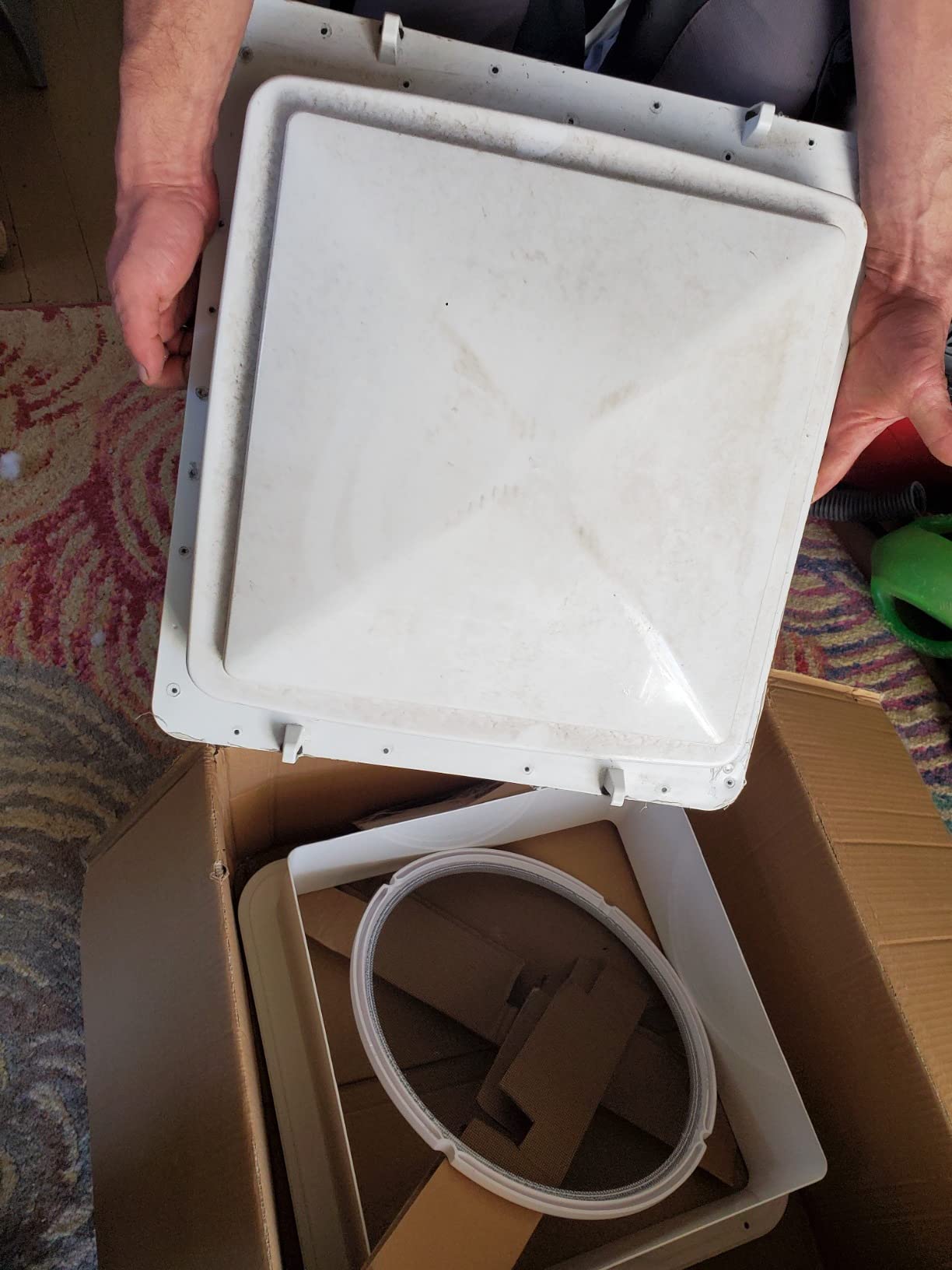
The all-plastic frame matters more than it sounds. Metal vents on older rigs are the leading cause of leaks and rust around the penetration, and this design sidesteps that entirely.
It drops into a standard 14×14 opening and carries a two-year limited warranty.

Exhaust only is a real limitation
Intake through the roof is not possible on this unit. Air has to come in through a window or door, so cross-ventilation depends on your rig having an opening on the other side.
Owners also note it does not circulate air internally with the lid closed, despite what the marketing suggests. If you want a closed-lid circulation mode, this is not it.
Who it suits
Choose this if you want a reliable, quiet exhaust fan without remote control or rain sensor complexity. Simplicity is the appeal, and fewer electronics means fewer failure modes over a decade.
If you plug into high shore power voltage, a minority of owners report needing a buck converter. That is a worthwhile check before a long trip on 50-amp service.
12. Furrion 14-Inch 10-Blade Rooftop Vent Fan — Best for Thick Roofs
Furrion 10-Blade, 14″ RV Rooftop Vent Exhaust Fan with Lid, Four Fan Speeds, Push-Button Controls, Removable Insect Screen, Flush-Mount Design for 2″ to 7″ Thick Roofs, White – FVF14D90R6A-PS-AM
10 blades
4 speeds
30W
12V DC
Fits 2-7 in roofs
Install kit included
Pros
- 10-blade design moves substantial air across four speeds
- speed 1 circulates outside air with low battery draw
- flush-mount profile suits very thick roofs up to 7 inches
- removable insect screen for easy cleaning
- complete install kit includes sealant butyl tape trim ring and hardware
Cons
- Newer listing with a smaller volume of owner feedback
- exhaust-focused design rather than full reversible venting
Roof thickness is the problem this solves. The flush-mount profile fits 2-inch to 7-inch roofs, which covers deeper ceilings that force other units to sit proud and leave a gap at the opening.
Speed 1 circulates outside air with a low battery draw, which makes a low-demand background setting available for overnight use.
The install kit includes sealant, butyl tape, a trim ring and hardware. Having the sealing materials in the box is what we look for in any roof penetration product.
Consider the thinner feedback pool
This listing carries far fewer owner reviews than the others in this roundup. Long-term durability reports simply do not exist yet for it, and that is a fair reason to hesitate on a ten-year purchase.
It is also exhaust-focused rather than fully reversible, so pairing it with an intake path through a window or another vent is part of the plan.
Who it suits
If you have measured your roof and it is thicker than most models accommodate, this is the one that fits. Very few competitors claim a 7-inch roof range.
The 10-blade rotor at 30W across four speeds gives good movement per watt for a complete roof vent kit, and the removable screen simplifies cleaning after a dusty season.
Vent Fan or Roof Air Conditioner in Hot Weather
A vent fan cannot cool a rig below outside air temperature. That is physics, and no fan on the market changes it.
What a fan does is remove the superheated layer that collects under the roof membrane, which is routinely hotter than the ambient shade reading. That alone often makes a parked rig survivable when no power is available for air conditioning.
The power difference decides the rest. A roof air conditioner is the only thing that actually chills the interior, and it is measured in battery-killing watts. A 12V vent fan in this roundup runs from 1.5W to 60W. Running air conditioning instead of a fan is a completely different energy conversation.
The operating pattern owners use reflects this: fan on low during the day to prevent heat build-up, then reversed to exhaust after sunset when the outside air cools below the interior. Air conditioning handles daytime heat; the fan handles everything else cheaply.
How Many Vent Fans Your Rig Needs
One fan in the living area handles the trapped heat, because that air rises and collects at the top regardless of which room the fan sits in.
A second fan over the bathroom is the most useful addition on most rigs. It handles humidity and odor that the living-area fan will never chase, and owners running it at around 30 percent speed report that is enough to keep the shower stall dry.
Two fans set to opposite directions create cross-ventilation, which moves far more air through the rig than two fans running the same way. One exhausts at the roof while the other draws air in low, or the reverse.
Placement beats count. A fan directly over where you sleep matters far more than a third fan in a corridor. If your rig already has a bathroom vent, replacing that with a powered fan is often a better use of money than adding another in the living area.
Rain Shield, Rain Sensor or Separate Cover
These three features solve the same problem and none of them solves it completely. Here is how we would decide.
Integrated rain shield. The MAXXAIR MaxxFan Deluxe has one built into the lid. This is the best option for a rig that must stay ventilated unattended in weather, because there is no second part to fail and no sensor to depend on.
Rain sensor. A sensor detects moisture and closes the dome automatically. It is a genuine convenience, but owners across multiple threads report cases where the sensor did not close the lid in actual rain. Treat it as backup.
Separate cover. A hood over the vent lets you keep the dome open in rain and while driving, and owners call the MaxxAir cover an absolute must. It is the cheapest way to add all-weather capability to a fan that lacks it, and it costs you a separate install step.
Our rule: if the rig is unattended in weather, choose the integrated shield or budget for a cover. Never rely on a sensor alone.
Buying Guide: Fit, Power, Speed and Noise
Measure before you buy. Most RV roof openings are 14×14 inches, but not all, and roof thickness is the variation that actually causes problems. Units here cover ranges from 1.16 inches to 7 inches of roof. Measure your roof thickness and confirm the interior garnish is deep enough to reach your ceiling before ordering.
Think in amp-hours while boondocking. Wattage divided by twelve gives you amps. A 5W fan pulling roughly 0.4A running 24 hours costs about 10 amp-hours, which is a meaningful fraction of a small battery bank but entirely manageable with solar. The 60W Deluxe is a different conversation entirely, so size your solar to match the fan you choose.
Pay for speed control. Ten speeds is the meaningful difference in this category. It is what lets you run a low overnight circulation setting and a high daytime exhaust setting from one unit. A two-speed fan has no such range.
Check noise in practice. Published decibel figures assume a measurement distance nobody sleeps at. Owner descriptions are more useful: the 25 dB brushless units are described as nearly inaudible, while manual-lift models are described as quiet on low settings and loud on high. Judge the bottom of the range, not the top.
Do not skip the remote. In a high-ceiling rig, ceiling-mounted controls are unreachable for many owners. A remote with a wall sleeve is close to mandatory, not a luxury.
Installation and Leak Prevention
Roof leaks around the vent penetration are the leading long-term reason these fans get replaced, and they are almost always a sealing problem rather than a product problem.
Use quality roof sealant under the flange and butyl tape on the screw pattern. Several kits here already include it: the BLACKHORSE-RACING unit ships with 70 inches of 3/4-inch butyl tape, and the Furrion kit includes sealant, butyl tape and a trim ring. When a kit does not include sealing materials, buy them separately before you start.
Check the flange depth against your roof thickness. A short interior trim leaves a visible gap at the opening, and owners report exactly that on thicker ceilings with some of the slimmer units.
If you are retrofitting onto factory pre-wire, expect confusion. Owners hit unexpected wire colour codes including three yellows, a white and a gray, and could not identify what the factory harness actually ran. Photograph the existing wiring before you remove the old fan and take the old unit with you to the parts counter.
Finally, test the seal before you close up. Run water over the flange after installation and watch the interior garnish from below before you put the bedding back.
Frequently Asked Questions
What are the best roof vent fans for RVs and campers?
The MAXXAIR MaxxFan Deluxe 00-07500K is the strongest all-round choice, pairing a 10-speed reversible motor with a built-in rain cover so it keeps running in weather. The RVLOVENT 14-inch 10-speed manual lift offers the best airflow per watt at up to 1000 CFM on 24W. For the quietest overnight running, the F36AR brushless unit is rated at 25 dB or under.
What is the best fan for hot weather?
The best fan for hot weather is one that can stay open while it rains, because a fan you have to close in an afternoon storm is not doing its job. The MAXXAIR MaxxFan Deluxe has the rain cover built into the lid, so there is nothing extra to fail. Pair it with a reverse-to-exhaust mode after sunset for the biggest cooling effect.
Which is better, MaxxAir or Fantastic fan?
MaxxAir units in this roundup lead on airflow figures, speed range and feature depth, and the MaxxFan Deluxe adds an integrated rain cover. Dometic Fan-Tastic units are a solid alternative, but none appear in this lineup, so we cannot compare them spec for spec here. Our advice: prioritise an integrated rain shield and 10 speeds over brand loyalty for hot-weather use.
Can you run an RV vent fan in the rain?
Only reliably if the fan has an integrated rain shield or is fitted with a separate vent cover. A rain sensor alone is a backup rather than a guarantee, because owners report cases where the sensor did not close the dome in actual rain. If your rig sits unattended in weather, treat the sensor as a convenience and add a cover.
How many amps does an RV roof fan draw?
Divide the fan’s wattage by twelve to get amp draw. The fans here range from 1.5W on the basic replacement unit through 5W and 24W on the mid-range models up to 60W on the MaxxFan Deluxe. On a 5W fan running 24 hours that works out to roughly 10 amp-hours a day, which is manageable on a boondocking setup.
Are all RV roof vents the same size?
Most are 14×14 inches, but not all, and roof thickness varies far more than opening size. Units here fit roof thicknesses from 1.16 inches up to 7 inches. A short interior trim flange on a thicker ceiling leaves a gap at the opening, so measure both the cutout and the roof depth before ordering.
Conclusion
The best RV vent fans for hot weather are not the ones with the biggest spec sheet; they are the ones that move air cheaply, stay quiet enough to sleep under, and can keep running when the weather turns. Our pick is the MAXXAIR MaxxFan Deluxe, and its integrated rain cover is the reason.
For pure airflow on a budget, the RVLOVENT 10-speed manual lift moves up to 1000 CFM on 24W. For overnight quiet, the F36AR brushless unit is hard to beat. Measure your roof first, then pick by how much you can afford to leave running.