
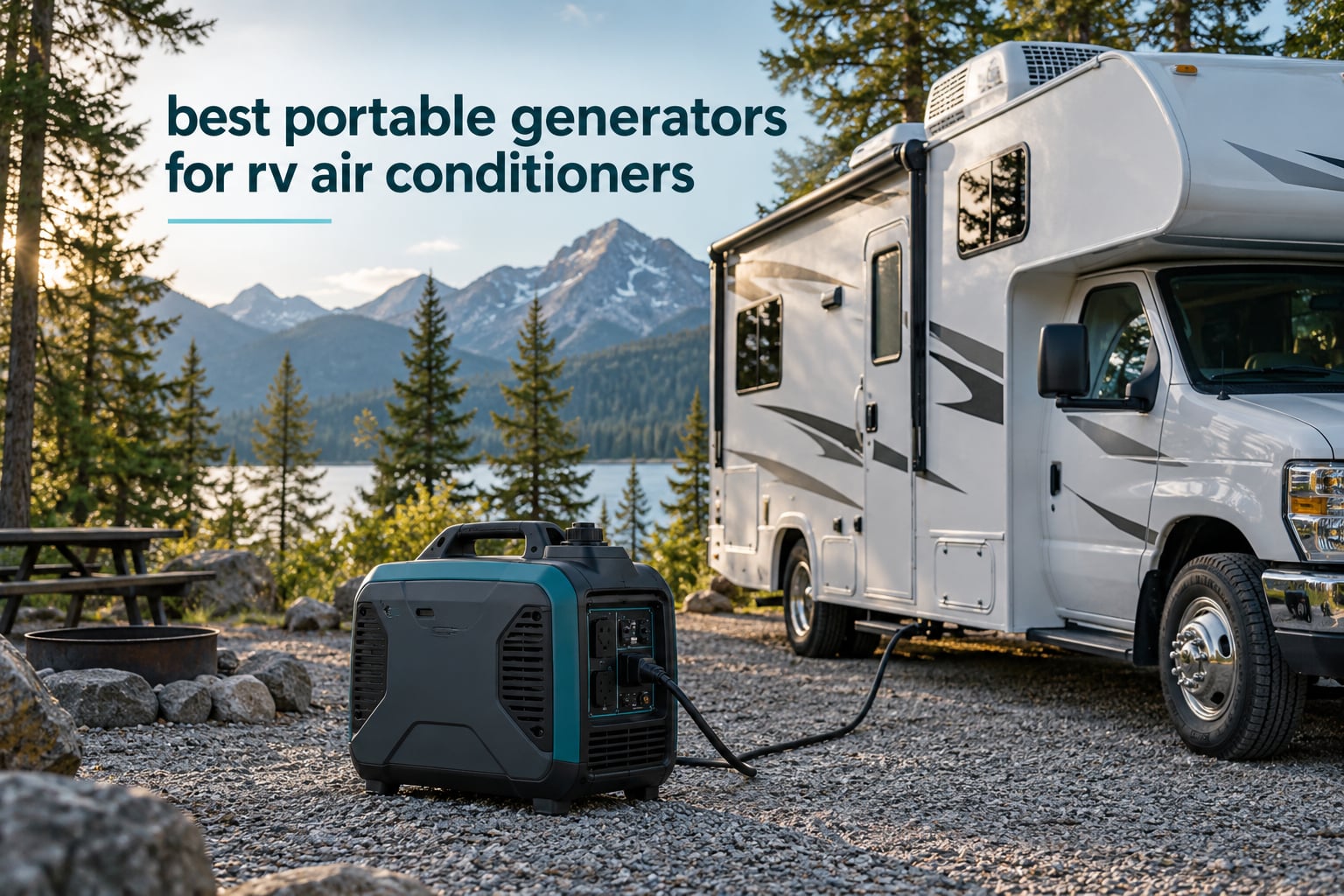
Short answer: the best portable generator for RV air conditioners is a 3,500 to 4,500 running watt closed-frame inverter generator with a dedicated 30-amp TT-30R RV plug. That combination covers nearly every rooftop AC on the market, from 10,000 BTU units up to 15,000 BTU models, without dragging dead weight around campground loops.
Most of the sizing confusion comes from one number. Every RV air conditioner has a running wattage and a much larger starting wattage, and only one of them decides whether your compressor wakes up. Get that relationship right and the buying decision takes about five minutes.
We spent weeks working through spec sheets, owner reports and forum threads on this topic, and compared ten portable generators that people actually use to run rooftop AC. This guide covers wattage sizing, soft start kits, plug matching, frame type and carbon monoxide safety, then breaks down each generator honestly.
One forum thread on rvforum.net captures the debate better than any spec sheet. Gary RV_Wizard, a frequent voice of practical experience there, put it plainly: portable gensets up to around 2400 watts are relatively small and light, and 2000 to 2400 is about the same size and weight as 1200. In other words, the step up in capacity that most RVers agonize over costs them almost nothing in portability terms.
That is the first thing to internalize before reading any roundup: buying a 2,200-watt unit to save weight is usually a false economy, while buying a 12,000-watt whole-home unit for a 13,500 BTU roof AC is pure dead weight. Sizing for the compressor, not for your ego, is the whole game.
Table of Contents
Top 3 Picks for RV Air Conditioners (October 2026)
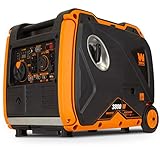
WEN 56380i 3800W Inverter
- 3400 running / 3800 starting watts
- TT-30R RV outlet
- 8.5 hour half-load runtime

Pulsar G12KBN Dual Fuel 9500W
- 9500 running / 12000 peak watts
- 30A and 50A RV outlets
- 12 hours at half load

PowerSmart 3800W Dual Fuel…
- 3300 running / 3800 starting watts
- 59 dBA in Eco Mode
- 30A twist-lock outlet
Those three cover the realistic range of needs. The WEN 56380i is the cleanest single-unit answer for a travel trailer or fifth wheel, the Pulsar G12KBN is the one to buy if your rig is a 50-amp Class A or you want two AC units, and the PowerSmart gives you a true dual-fuel inverter with an RV outlet at the entry end of the list.
Best Portable Generators for RV Air Conditioners in 2026
| Product | Specs | Action |
|---|---|---|
| WEN 56380i Super Quiet 3800-Watt RV-Ready Inverter |
|
Check Latest Price |
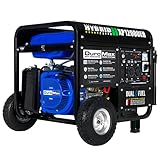 DuroMax XP12000EH Dual Fuel 12,000-Watt DuroMax XP12000EH Dual Fuel 12,000-Watt |
|
Check Latest Price |
| Pulsar G12KBN Heavy Duty Dual Fuel 9,500 Rated Watts |
|
Check Latest Price |
 Champion 4000-Watt Dual Fuel RV Ready Inverter Champion 4000-Watt Dual Fuel RV Ready Inverter |
|
Check Latest Price |
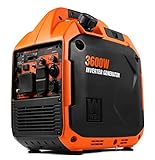 WEN 56360i 3600-Watt RV-Ready Inverter WEN 56360i 3600-Watt RV-Ready Inverter |
|
Check Latest Price |
 Champion 4500-Watt Electric Start Dual Fuel Inverter Champion 4500-Watt Electric Start Dual Fuel Inverter |
|
Check Latest Price |
 DuroStar DS13000MX 13,000-Watt Dual Fuel DuroStar DS13000MX 13,000-Watt Dual Fuel |
|
Check Latest Price |
 WEN GN400i 4000-Watt RV-Ready Inverter WEN GN400i 4000-Watt RV-Ready Inverter |
|
Check Latest Price |
| PowerSmart 3800-Watt Dual Fuel Inverter |
|
Check Latest Price |
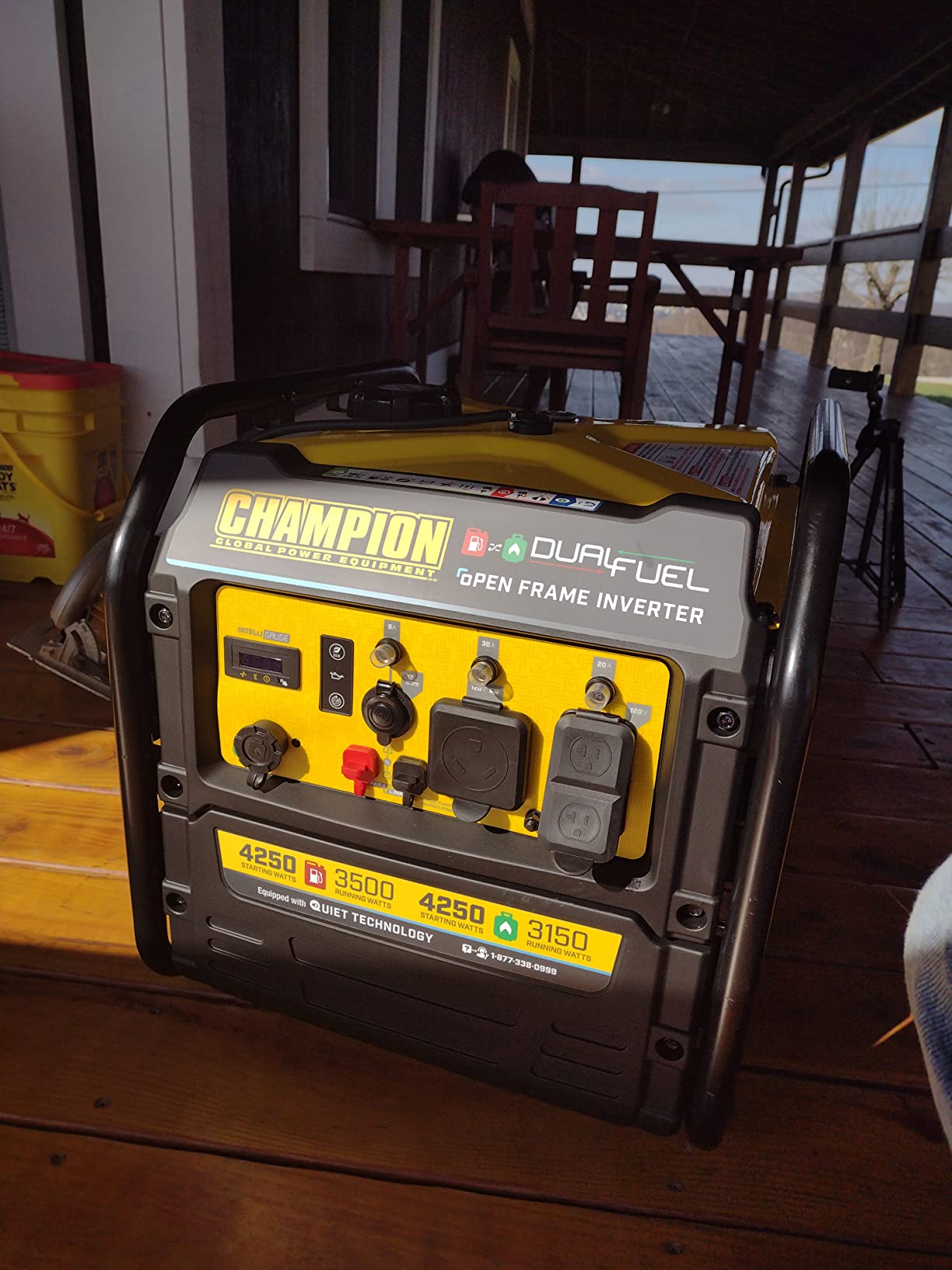
 Champion 4250-Watt Dual Fuel Open Frame Inverter Champion 4250-Watt Dual Fuel Open Frame Inverter |
|
Check Latest Price |
Everything below is ordered by how well it fits a typical RV air conditioner workload, not by price. Each entry includes a straight verdict on whether the unit starts and runs a 13,500 BTU rooftop unit, which is the size that splits most of this market in two.
1. WEN 56380i 3800-Watt RV-Ready Inverter – Our Top Overall Pick
WEN Super Quiet 3800-Watt RV-Ready Portable Inverter Generator with Fuel Shut-Off and Electric Start (56380i)
3400 running watts
3800 starting watts
TT-30R RV outlet
99.2 pounds
Pros
- 3400 running watts clear the bar for 13500 and 15000 BTU rooftop units
- TT-30R RV receptacle means a direct plug-in with no adapter
- 8.5 hours of half-load runtime from the 2.2 gallon tank
- Fuel shutoff burns off remaining fuel and extends engine life
Cons
- Gasoline only with no propane capability
- Heavier than most 3800W inverter competitors
This is the unit we keep coming back to. A 212cc four-stroke engine puts out 3400 running watts and 3800 starting watts, which sits right at the threshold where a 13,500 BTU rooftop compressor starts without drama. Owners in the review set describe the TT-30R receptacle as the deciding feature, and it is: the generator plugs straight into the RV’s shore power socket with no adapter and no gen cord.
The panel carries six outlets in total, including two standard 120V receptacles, a 12V DC receptacle, a 5V USB port, and a digital load and fuel display. That fuel gauge matters more than it sounds when you are boondocking, because a 2.2 gallon tank running to empty without warning turns into a trip to the gas station.
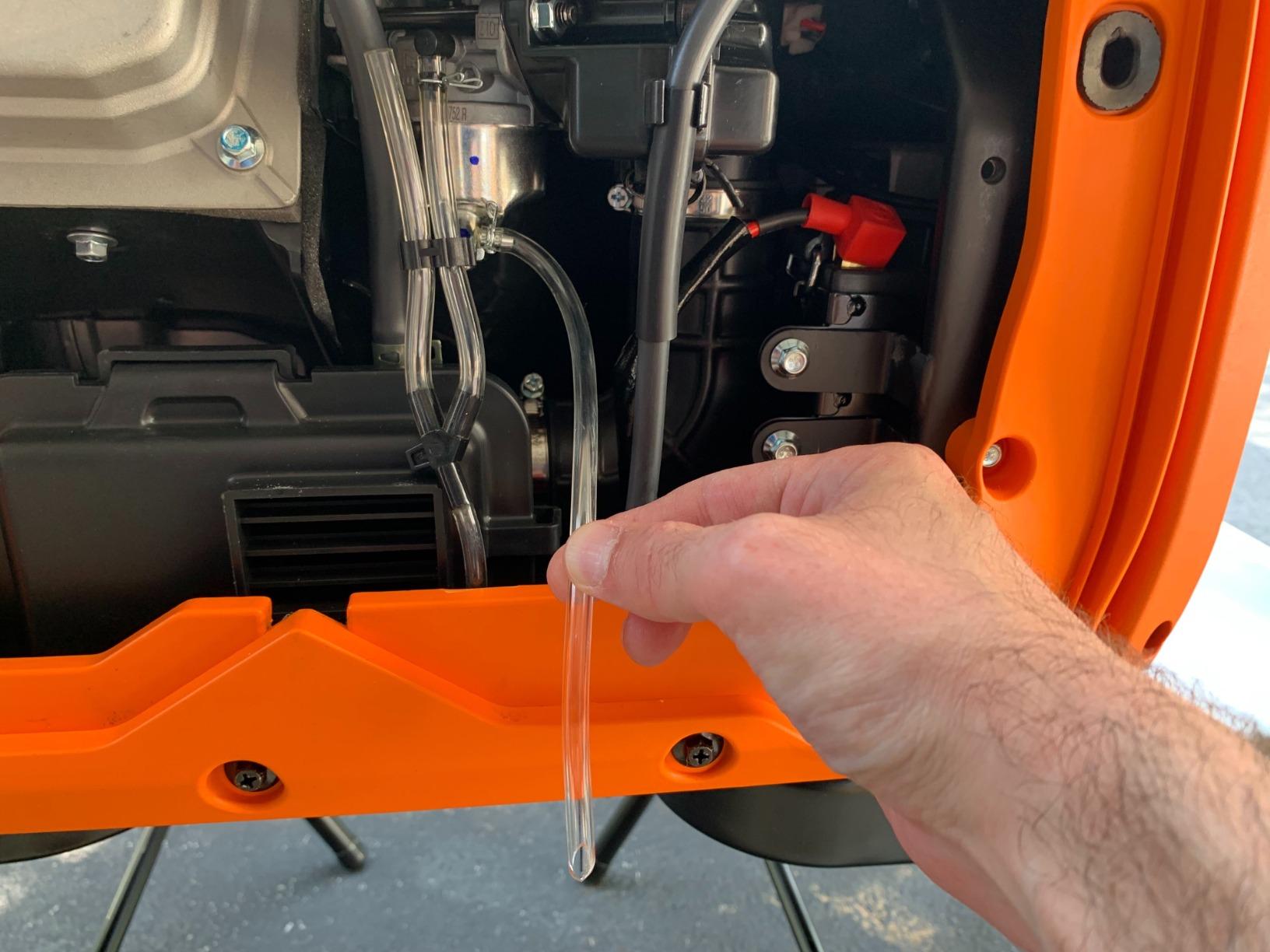
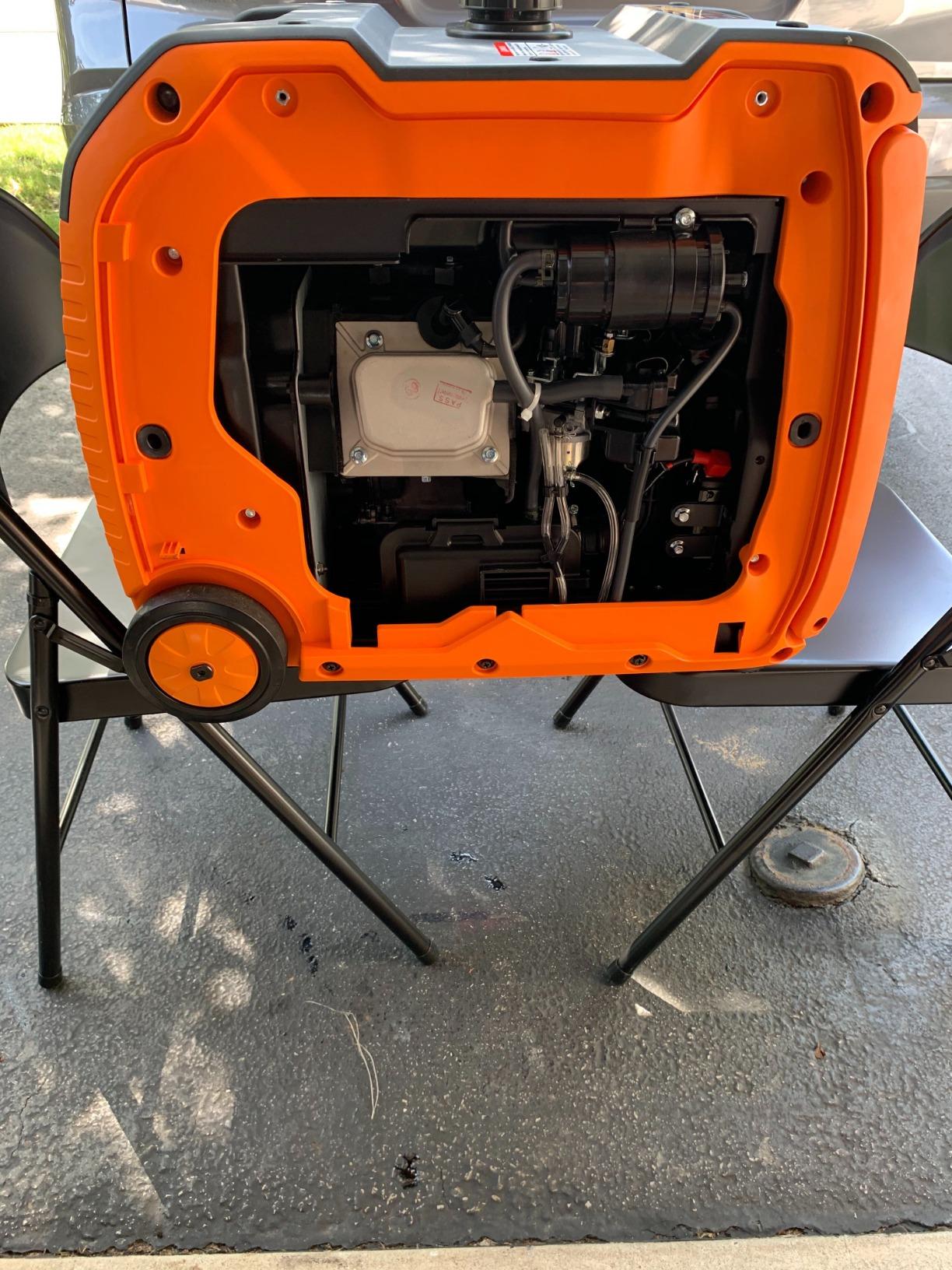
Reviewers repeatedly point to the fuel shutoff system as an underappreciated feature. When you shut the unit down, it burns off the gasoline sitting in the carburetor first, which is the single biggest cause of stale-fuel hard starting in small engines. This generator was engineered to avoid that problem.
Why it runs a 13,500 BTU AC with no drama
Starting watts are the constraint, not running watts. A 13,500 BTU unit is commonly cited at roughly 3,800 starting watts and about 1,300 running watts, so a 3,800-watt surge capacity is the honest minimum. This unit meets it exactly, and the 3400 running watts leave more than 2,000 watts of headroom for a 12V fridge, lights, and a battery charger.
If your rig runs a 15,000 BTU unit, which is common on larger fifth wheels, the margin narrows but holds. Keep the load light, run Eco Mode, and the compressor starts reliably every time.
Where it falls short for some owners
Gasoline only is the biggest limitation for full-time RVers who would rather not carry a jerry can through a national park. A 99.2 pound weight is also heavier than most competitors in the 3,500 to 4,000 watt inverter class, and you will feel that lift every time you load it into a generator compartment.
Two-year limited warranty coverage is on the shorter side here. It is a fair trade for the price, but not a selling point if you keep a unit for a decade.
2. DuroMax XP12000EH Dual Fuel – Best for Two Air Conditioners
DuroMax XP12000EH 12,000-Watt Dual Fuel Portable Generator – Gas & Propane, Electric Start, Whole Home Backup Power, Transfer Switch Ready, RV & Emergency Ready
9500 running watts
12000 starting watts
Dual fuel gas and propane
224 pounds
Pros
- Ample headroom for rooftop AC plus central air and well pumps
- Transfer switch ready 50A outlet plus 30A outlets suit RV hookups
- All-metal frame and 100% copper windings for durability
- MX2 Power Boost doubles 120V output for appliances
Cons
- Very heavy at 224 pounds and typically a two-person lift
- Arrives without engine oil so the first start requires adding oil
- Sensitive electronics may need a double-conversion UPS
Most of these ten units are sized for one rooftop AC. This one is sized for a Class A motorhome that runs two of them, plus a residential air conditioner during a summer outage. At 9500 running watts and 12000 starting watts on gasoline, the headroom is not close.
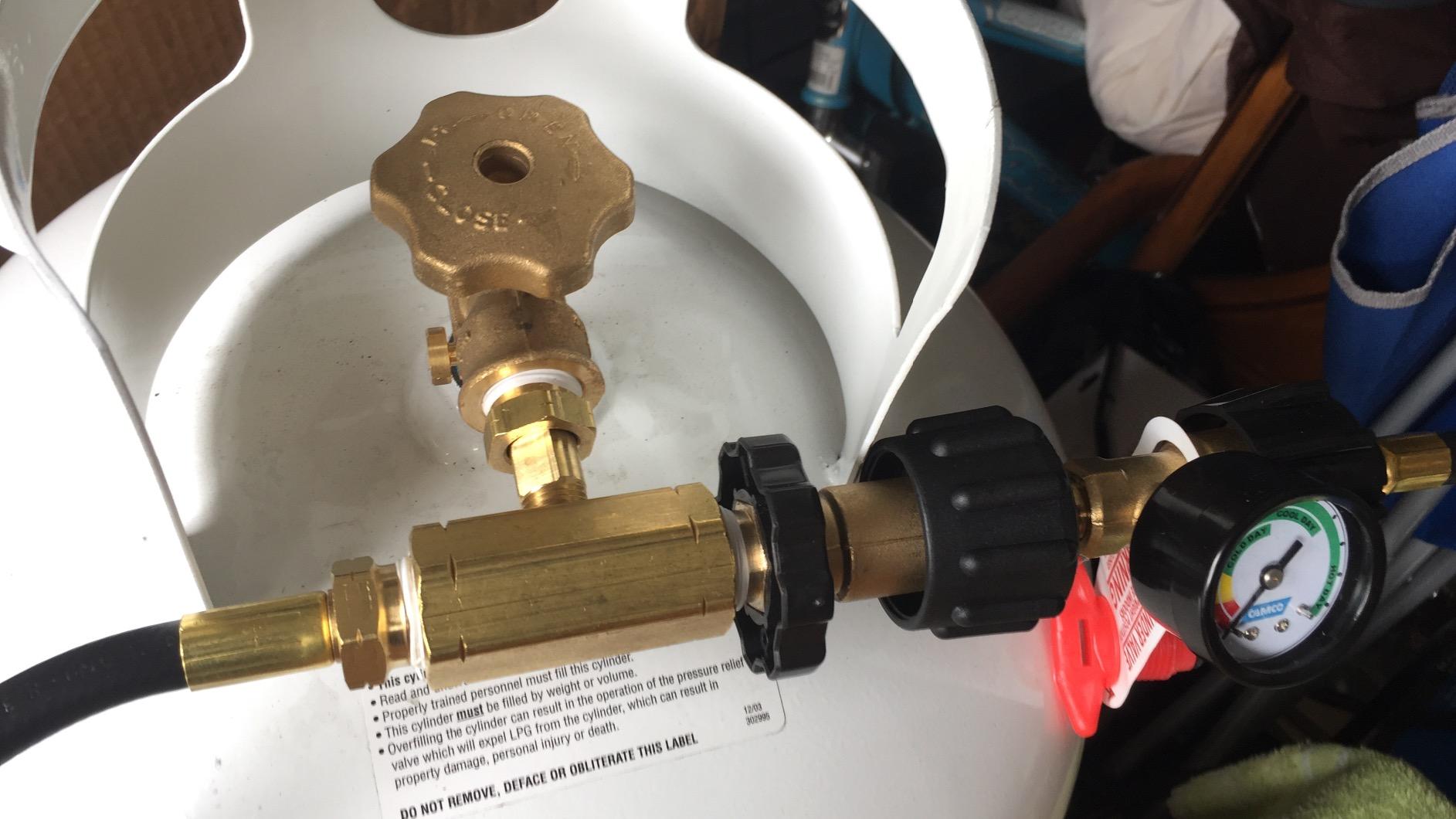
The dual fuel capability is genuinely useful in an emergency context. When a hurricane empties the gas stations, a 20-pound propane cylinder may be the only fuel left within a hundred miles, and this unit will run on it without complaint. The 8.3 gallon gasoline tank is large, and owners report running whole homes including central air and well pumps from it.
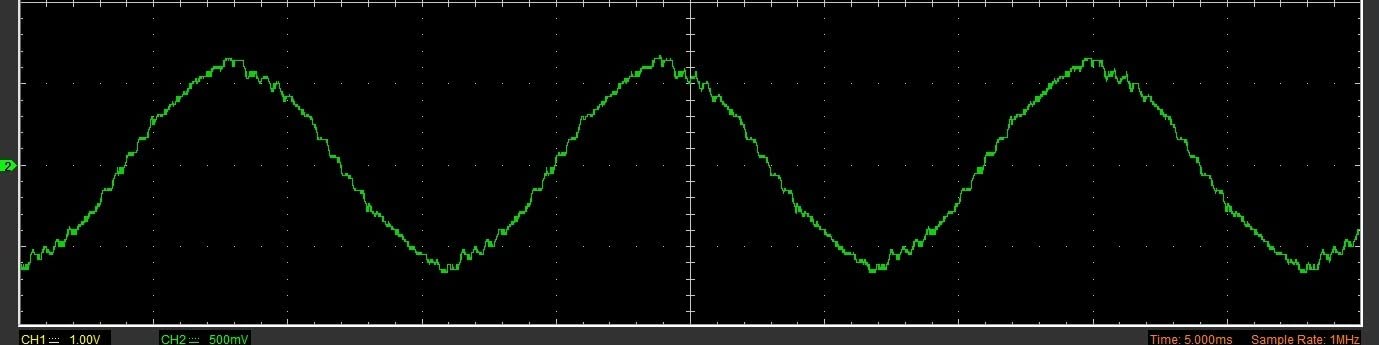
Output quality is the tradeoff. This is not an inverter unit, so the waveform is less clean than the smaller WEN or Champion models on this list. Sensitive electronics can be fine, but RV control boards and laptops occasionally need a surge protector or a double-conversion UPS in between.
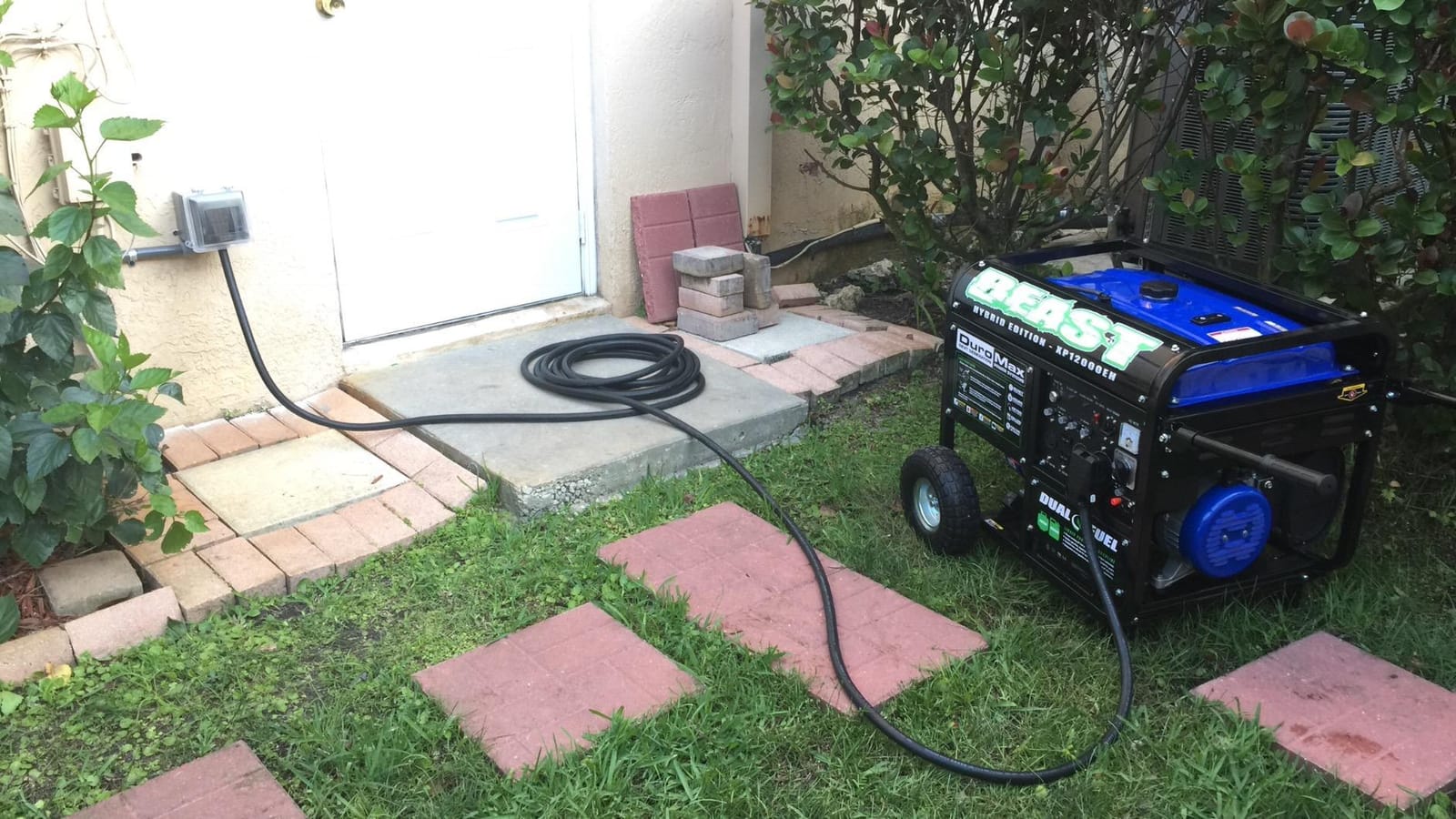
Who actually needs 9,500 running watts
Two 13,500 BTU rooftop units starting within seconds of each other is the scenario this machine exists for. One 50-amp toy hauler with a 15,000 BTU Class A system plus a residential air conditioner during a brownout is the other. If you have either, the alternative is two paralleled inverter units, which costs more and takes up two compartments.
For a single travel trailer AC, this is wildly oversized. You would carry 224 pounds of dead weight around campground loops to run a 1,300-watt compressor.
Setup friction you should plan for
This generator arrives without engine oil, so the first start requires adding oil and connecting the battery lead. Owners mention that step consistently, and it is the single most common early complaint. A three-year limited manufacturer warranty is better than most on this list.
The manual does not cover the auto-throttle idle adjustment for propane operation, which trips up first-time dual fuel owners. Budget a few minutes of research before your first propane run.
3. Pulsar G12KBN Heavy Duty Dual Fuel – Best Value for 50-Amp Rigs
Pulsar G12KBN Heavy Duty Portable Dual Fuel Generator – 9500 Rated Watts & 12000 Peak Watts – Gas & LPG – Electric Start – Transfer Switch & RV Ready – CARB Compliant
9500 running watts
12000 peak watts on gas
30A and 50A outlets
Electric start
Pros
- High running wattage gives comfortable margin for air conditioner startup
- Dedicated 30A and 50A RV and transfer switch outlets
- Up to 12 hours of half-load runtime on an 8 gallon tank
- Never-flat wheels and drop-down handles aid mobility
Cons
- Not an inverter unit so less friendly to sensitive electronics
- Louder than inverter-class alternatives
- Only a 1 year limited warranty
The Pulsar occupies an awkward spot in the market that happens to be great for RV use. It is a conventional frame unit with genuine RV-ready outlets at both amperages, which almost nothing else in the 9,500 watt class offers cleanly. The outlet panel includes four 20A 120V outlets, a 30A twist-lock, a 50A outlet and a 12V DC port.
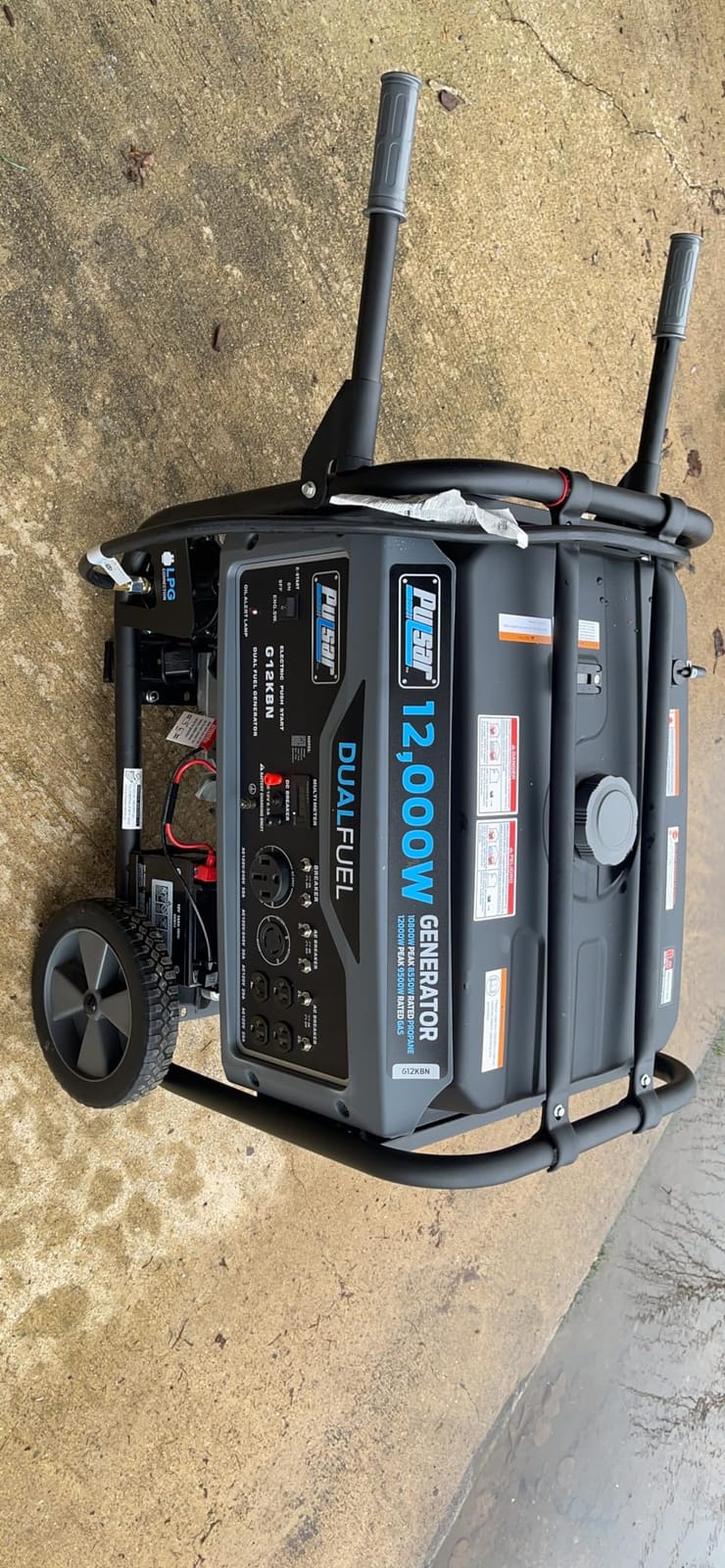
On gasoline you get 9500 rated watts and 12000 peak watts. Switch to LPG and that drops to 8550 rated and 10800 peak, which is the roughly 10 percent derate that every dual fuel generator carries on propane. Even at the lower number, the margin over a single rooftop AC is enormous.
A 3-in-1 digital meter tracks voltage, frequency and running hours, low oil shutoff is standard, and automatic voltage regulation handles the rest. The 457cc single-cylinder four-stroke engine starts electrically, which matters when you are tired and it is 95 degrees outside.
Why buyers rate this as strong value
Owners consistently describe the combination of 9500 running watts with true 30A and 50A outlets as unusually good value for running air conditioners and household loads at the same time. The 8 gallon tank delivering up to 12 hours at half load means one fill covers most camping days.
Never-flat tires and drop-down handles are small details that matter a lot when you are moving this size of machine across gravel and grass to the back of the rig.
The noise and warranty compromise
This is not an inverter, so expect more mechanical noise than the enclosed models on this list, and less tolerant behavior with sensitive electronics. Campground quiet hours are a real consideration here, and several owners mention noise as the main drawback.
The 1 year limited warranty is the shortest warranty here. For a machine with a 457cc engine, that is worth factoring into your decision if you plan to run it full-time.
4. Champion 4000-Watt Dual Fuel RV Ready Inverter – Best Propane Runtime
Champion 4000-Watt Dual Fuel RV Ready Portable Inverter Generator
3000 running watts
4000 starting watts
64 dBA at 23 feet
51.8 pounds
Pros
- Lightweight at under 52 pounds with a carry handle
- TT-30R 30A RV outlet included for direct air conditioner hookup
- Dual fuel lets owners run on propane to keep fuel stored
- Overload reset button keeps the unit running instead of shutting down
Cons
- Louder than smaller Champion inverter models at about 64 dBA
- 3000 running watts on gas is modest for larger rooftop units
- Cannot run the air conditioner and microwave at the same time
This Champion is the most interesting efficiency story in the group. It runs up to 10 hours on gasoline and up to 25 hours on propane from a 1.54 gallon tank, which makes it the unit on this list that most easily covers a multi-day camping trip without a refuel stop.
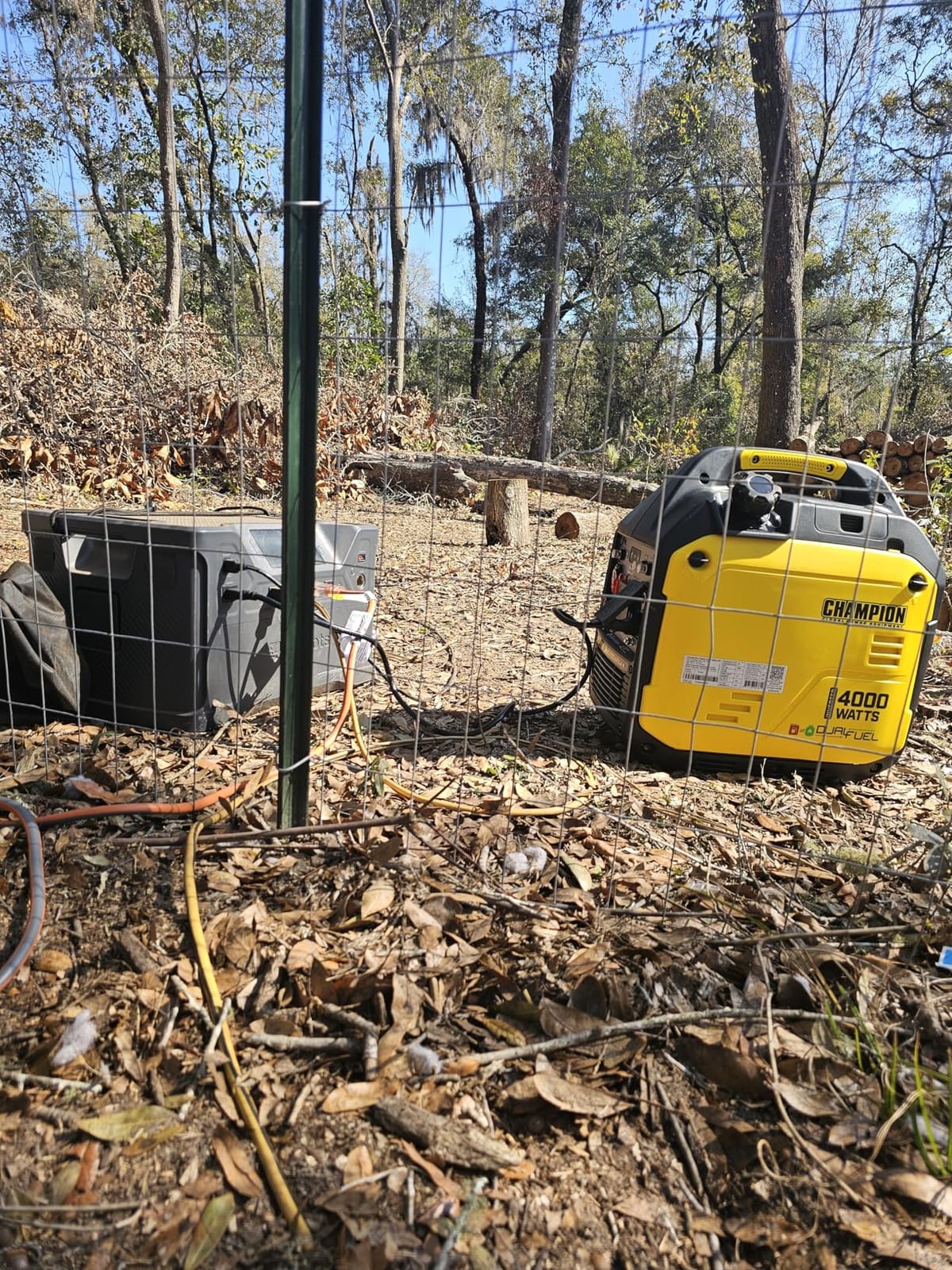
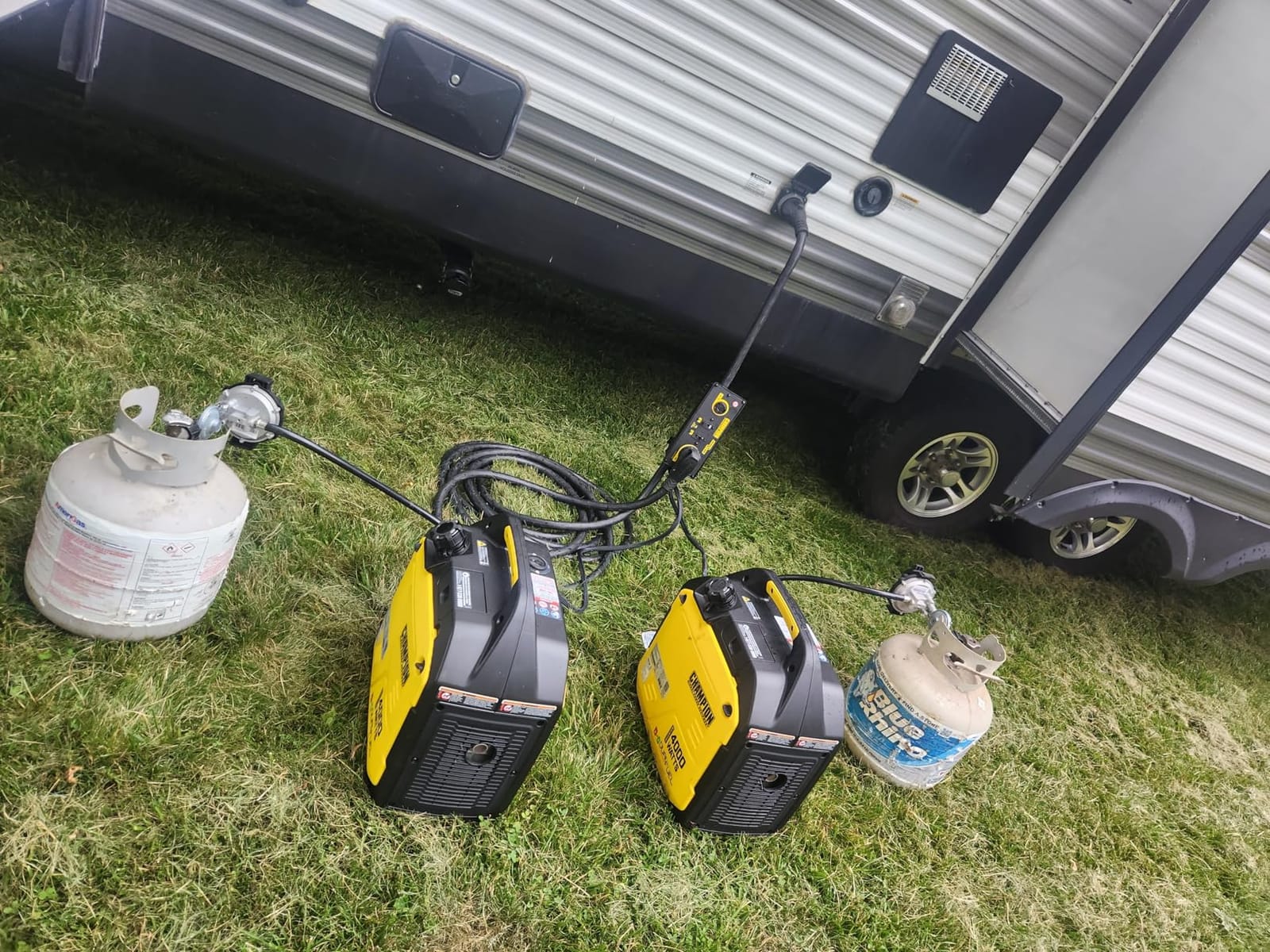
RVers report it starting 15,000 BTU rooftop units and running one air conditioner plus a 12V fridge for hours on a single tank. The 4000 starting watts and 3000 running watts pair with a TT-30R 30A outlet, so the hookup is direct. At 51.8 pounds with a carry handle, it is also one of the easiest to lift into a generator compartment.
CO Shield carbon monoxide auto shutoff is standard, and the unit is parallel ready with a separately sold kit. Clean power sits under 3 percent total harmonic distortion, which is well within tolerance for RV electronics.
The propane caveat nobody mentions up front
It needs a gasoline break-in before it will run on propane. Owners hit this, ran it on gas for an hour or two, and then switched fuels. The manual explains it, but the review set shows plenty of people discovering it the hard way.
Once broken in, the 25-hour propane figure is the reason to pick this unit. If you camp in places where gasoline storage is awkward, that efficiency outweighs everything else on this list.
Where the 3,000 running watts get tight
This is the most important limitation on the unit. With 3000 running watts, you have roughly 1,700 watts of headroom above a 1,300-watt AC compressor. That covers lights, a fridge and chargers, but reviewers are clear that you cannot run the air conditioner and a microwave simultaneously.
At 64 dBA it is also louder than the smaller Champion inverter models, so it sits right at the edge of what some campgrounds consider acceptable in quiet hours.
5. WEN 56360i 3600-Watt Inverter – Best for Small Travel Trailers
WEN 3600-Watt Portable Inverter Generator, RV-Ready, Quiet and Lightweight with Fuel Shut Off (56360i)
2900 running watts
3600 starting watts
46.3 pounds
TT-30R receptacle
Pros
- Very light at 46.3 pounds for easy loading into an RV compartment
- Quiet fully enclosed inverter design
- Clean power output for phones tablets and laptops
- Three-year limited warranty
Cons
- Gasoline only with no propane capability
- 2900 running watts is a tight margin for larger rooftop air conditioners
- Shorter runtime than higher-capacity models
At 46.3 pounds, this is the lightest fully enclosed inverter in our lineup, and weight is a genuine constraint for anyone loading a generator into a tight travel trailer compartment. The 149cc engine is a step down from the WEN 56380i, and you feel it in the output numbers: 2900 running watts and 3600 starting watts.
That capacity handles a 10,000 BTU rooftop unit comfortably. For a 13,500 BTU unit it works but leaves little room, and reviewers consistently describe the wattage as better matched to smaller rooftop units than large air conditioners. The outlet set includes two 120V receptacles, a TT-30R RV receptacle, a 12V DC port and two 5V USB ports.
The fuel shutoff system carries over from the larger WEN model, so the carburetor drain problem that causes hard starting after storage is handled at the design level rather than as an owner workaround.

Where 2,900 running watts is genuinely enough
If your rig has a 10,000 BTU unit, or you have added a non-rooftop window or portable AC as a secondary cooling option, this is comfortable territory. The 1.6 gallon tank means shorter runtimes than the bigger WEN models, so plan on a refill every few hours at half load.
Gary RV_Wizard on rvforum.net made the point that applies directly here: 2,000 to 2,400 watt units are about the same size and weight as 1,200 watt ones. That is the tier where adding a little capacity costs little in portability terms.
When to step up instead
If you have a 13,500 or 15,000 BTU rooftop unit, the 2,900 running watts leave roughly 1,600 watts of overhead, and the 3,600 starting watts fall a little short of the common 3,800 starting requirement. You will start it, but you will feel it working, and a soft start kit would close the gap.
Gasoline only and a three-year warranty round out a unit that makes the most sense for smaller rigs and lighter duty.
6. Champion 4500-Watt Electric Start Dual Fuel Inverter – Best for Two-Unit Parallel Setups
Champion 4500-Watt Electric Start Dual Fuel Portable Inverter Generator
3500 running watts
4500 starting watts
61 dBA
Parallel ready
Pros
- Runs a travel trailer air conditioner plus other camper appliances
- Very quiet at 61 dBA for campground and forest use
- Long 14 hour gasoline runtime and 21 hours on propane
- Parallel kit lets two units share loads for two air conditioners
Cons
- Heavier than the 4000W Champion model
- CO sensor may shut the unit down in an enclosed truck bed
- Warranty service may require transport to an authorized center
The 4500-watt Champion is the quietest of the higher-output enclosed inverters here, at 61 dBA, and it pairs that with the highest inverter running wattage on the list. 3500 running watts and 4500 starting watts give a 15,000 BTU rooftop unit real margin rather than a technicality.
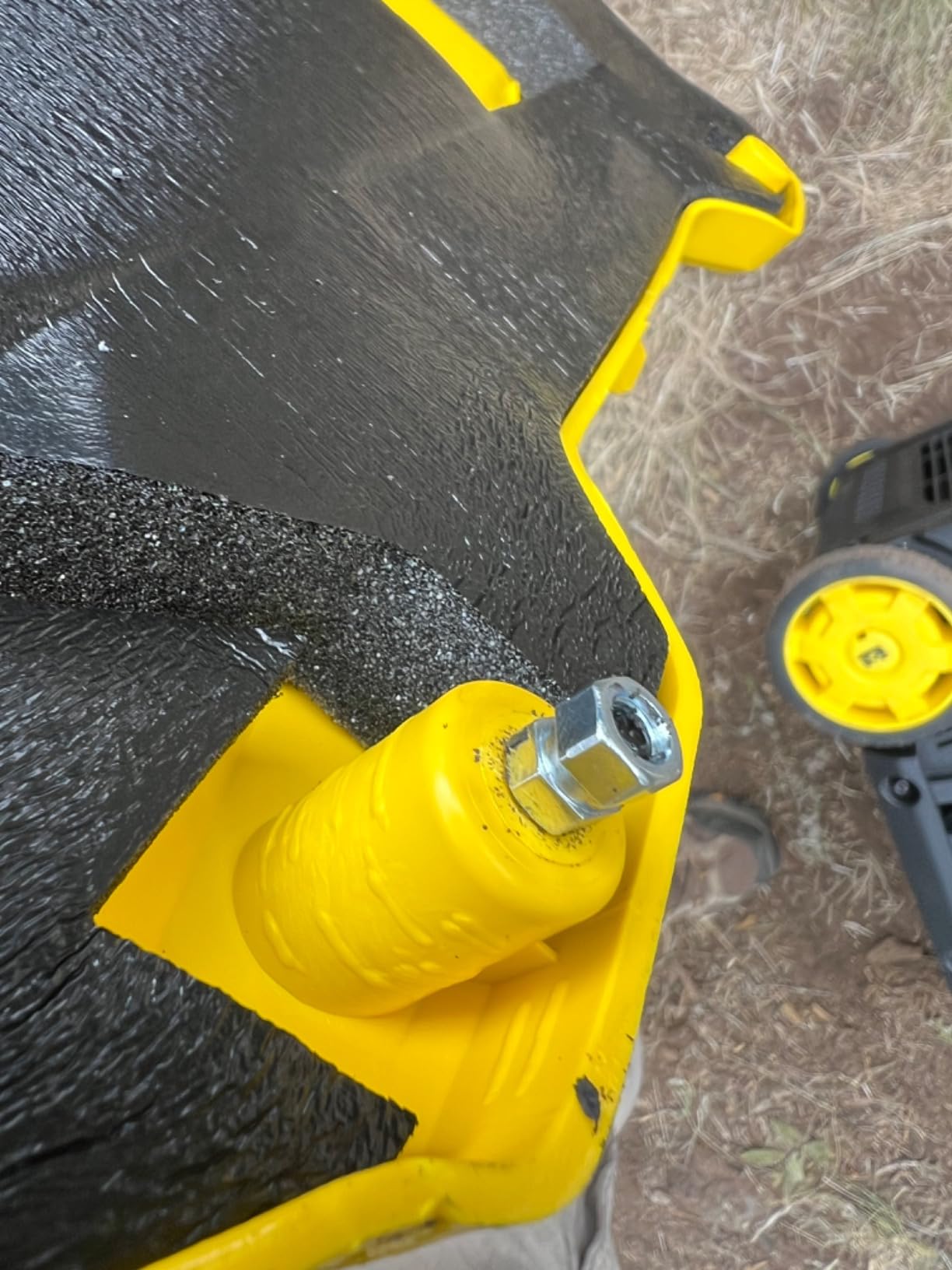
Campers and food-truck operators describe easy starting, low noise, and enough output for a rooftop air conditioner, with a handful of reports of oil leaks or a finicky CO sensor in enclosed setups. The Intelligauge power meter tracks voltage, frequency and operating hours, and the EZ Start dial handles cold mornings without a heroic pull cord.
Runtime is the sleeper feature: up to 14 hours on gasoline and 21 hours on propane from a 2.25 gallon tank. On a full-time boondocking schedule, that changes how often you have to drive into town.
What parallel ready actually buys you
Two of these units joined with a parallel kit become a 7000 running watt system, which covers two rooftop air conditioners or one AC plus a residential window unit. The panel is wired for it; the kit is sold separately.
That approach is popular with owners who want to carry two lighter machines instead of one heavy one. Seon on rvforum.net described exactly this setup with WEN 2,000 watt units, running a second one to power a 13k roof AC, and has used the arrangement for over five years with no complaints.
Weight and the CO sensor question
At 99.2 pounds, this is the heavy end of the inverter class, matching the WEN 56380i rather than beating it. The upside is capacity and quietness; the downside is the lift.
The CO Shield sensor has been reported to shut the unit down in an enclosed truck bed. That is the sensor working as intended, but it means you need to plan where the machine actually sits. Warranty service may also require transport to an authorized center.
7. DuroStar DS13000MX 13,000-Watt Dual Fuel – Best for Remote Start Convenience
DuroStar DS13000MX 13,000-Watt 500cc Dual Fuel Portable Generator – Gas and Propane, Remote Electric Start, Whole Home Power Backup, Transfer Switch Ready, RV & Emergency Ready
10500 running watts
13000 starting watts
Remote electric start
220 pounds
Pros
- Large 10500W running capacity easily handles air conditioner startup
- Remote electric start is convenient for whole home backup
- Dual fuel for longer propane runtimes and cleaner emissions
- 50A outlet allows direct transfer switch connection
Cons
- Not an inverter so output is less clean for electronics
- Very heavy at 220 pounds
- Loud open-frame design
The DS13000MX pairs a very large capacity with a feature you rarely see in this class: a remote electric start. A 500cc engine with key-fader start means you can start the generator from inside a coach or a house rather than walking outside in bad weather.
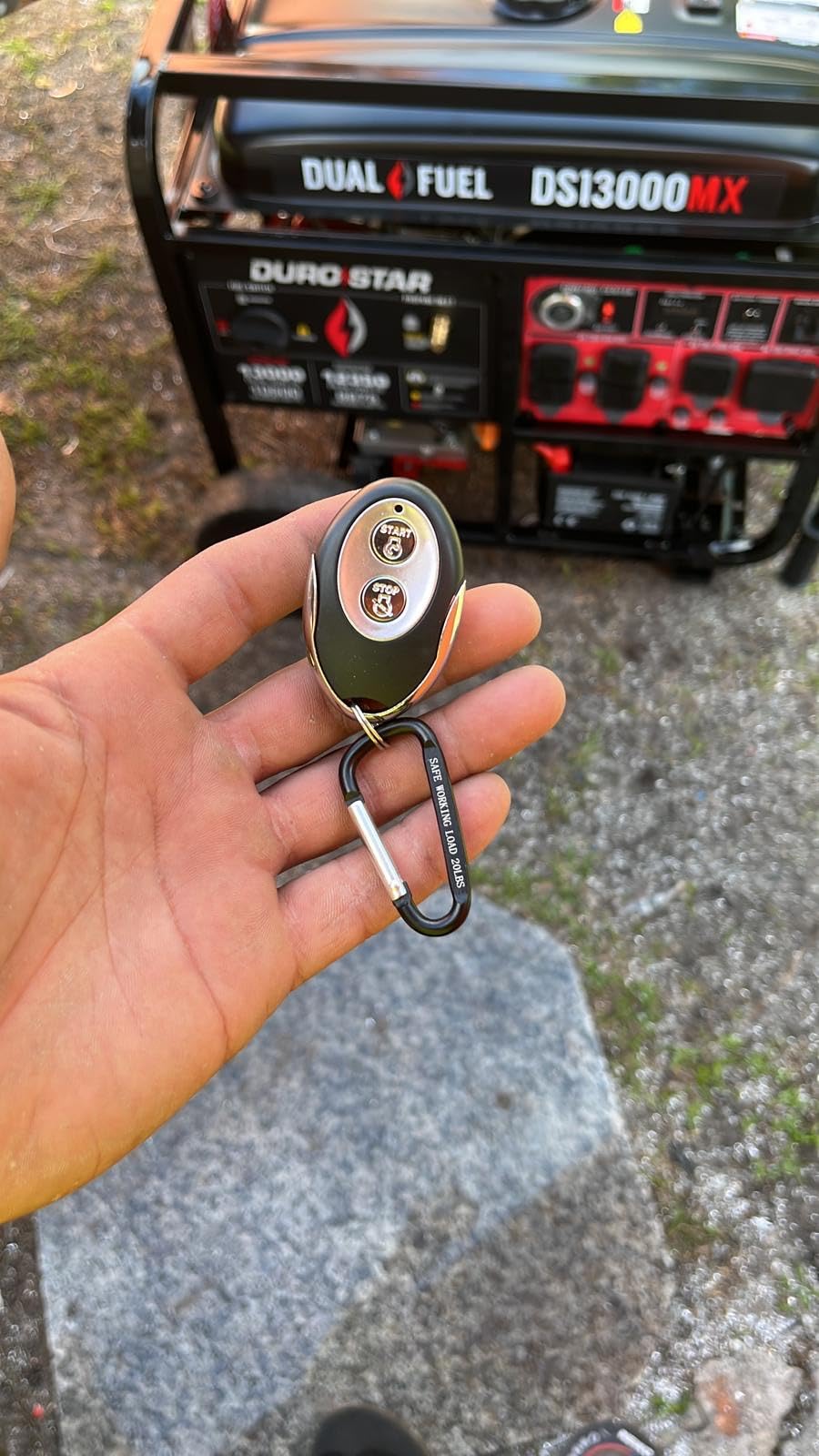
Owners cite the combination of high running wattage, remote start, and 50A transfer switch readiness as the deciding factors for whole-home and RV emergency power. At 10,500 running watts and 13,000 starting watts, it covers two rooftop units without strain and has capacity to spare for a well pump or a central air system.
CO Alert carbon monoxide auto shutoff, low oil shutdown, a front-facing fuel selector and push-button start round out the panel. The all-metal steel frame and power panel are built for a machine that gets moved around.
Where the capacity is worth the mass
Whole-home outage prep is the use case here. A Class A motorhome with two rooftop units, a 50-amp coach, or a family that powers an AC compressor and a refrigerator circuit during summer grid stress all justify 220 pounds in a garage or storage bay rather than in a truck bed.
Dual fuel extends that usefulness, since propane burns cleaner and lasts considerably longer per gallon for a stored reserve.
Why it is not a travel trailer pick
The loud open-frame design is the dealbreaker for boondocking, and the same open frame that helps with cooling airflow also means less weather protection for the electrical panel. Add non-inverter output quality, and sensitive electronics deserve a surge protector.
For a single 13,500 BTU rooftop AC, this is enormous overkill. Save your back and look at the inverter options above.
8. WEN GN400i 4000-Watt RV-Ready Inverter – Clean Power at a Lower Spend
WEN GN400i RV-Ready 4000-Watt Open Frame Inverter Generator, CARB Compliant, Black/orange
3500 running watts
4000 starting watts
Open frame
TT-30R receptacle
Pros
- Entry-level spend in this lineup with an RV-ready TT-30R outlet
- 3500 running watts gives reasonable headroom for a rooftop unit
- Clean inverter power for sensitive electronics
- Parallel ready for doubling output with a second unit
Cons
- Gasoline only
- Open frame design is louder than fully enclosed inverters
- Shorter runtime than larger-tank models
The GN400i sits in an unusual spot: inverter power, a real TT-30R RV outlet, and 3500 running watts from a 212cc engine. On paper that is the same capacity class as the Champion 4500 in a noticeably lighter and more compact package, at 66.1 pounds with a 1.85 gallon tank.
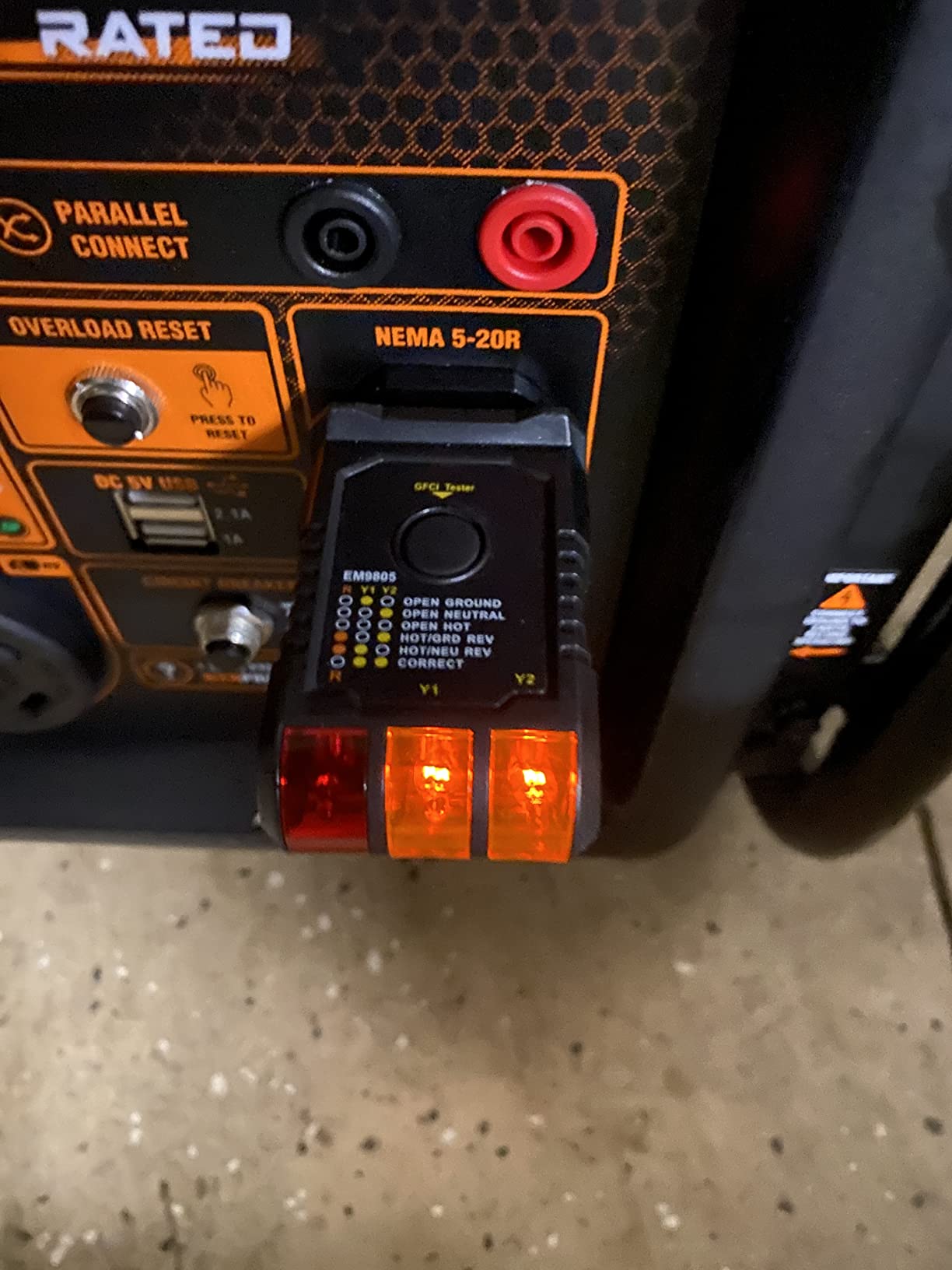
Reviewers treat it as a budget-friendly RV-ready inverter, praising the clean power and the parallel capability. The panel includes two NEMA 5-20R receptacles, two 5V USB ports and a TT-30R outlet, and the parallel-ready panel lets you double the output with a second WEN inverter.
At 26.6 amps rated output, 3500 running watts clears a 13,500 BTU compressor with real margin, and 4000 starting watts covers startup without needing a soft start kit.
The open-frame question is the whole decision
Open frame means the engine is exposed. It runs cooler and it is lighter, but it is louder than a fully enclosed inverter and it offers less weather protection. For a pop-up or travel trailer that camps in the open, that trade often makes sense. For boondocking where you and your neighbors are the only noise concerns, it makes less sense.
One rvforum.net member made the point about a new RVer who bought an open frame unit: nobody around you will be happy with your choice of generator. That is a real social cost, not just a spec-sheet difference.
What you give up versus the enclosed models
Gasoline only, and shorter runtime than larger-tank models, are the two practical sacrifices. A 1.85 gallon tank is a morning-and-evening fuel load rather than an all-day one, so this suits weekend camping better than full-time living.
Against that, the parallel-ready panel gives you a path to more power later without replacing the unit.
9. PowerSmart 3800-Watt Dual Fuel Inverter – Best Budget Dual-Fuel Pick
PowerSmart 3800 Watt Dual Fuel Inverter Generator for Camping or Home Use
3300 running watts
3800 starting watts
59 dBA in Eco Mode
Dual fuel
Pros
- Dual fuel inverter capability at an entry-level spend
- 120V 30A L5-30R twist-lock outlet included for RV use
- Clean output under 3 percent THD with Eco Mode for extended runtime
- USB-C and USB ports for device charging
Cons
- Small 1.3 gallon tank limits overnight gasoline runtime
- Access panels require a Phillips screwdriver for oil changes
- Gets noticeably louder as load increases
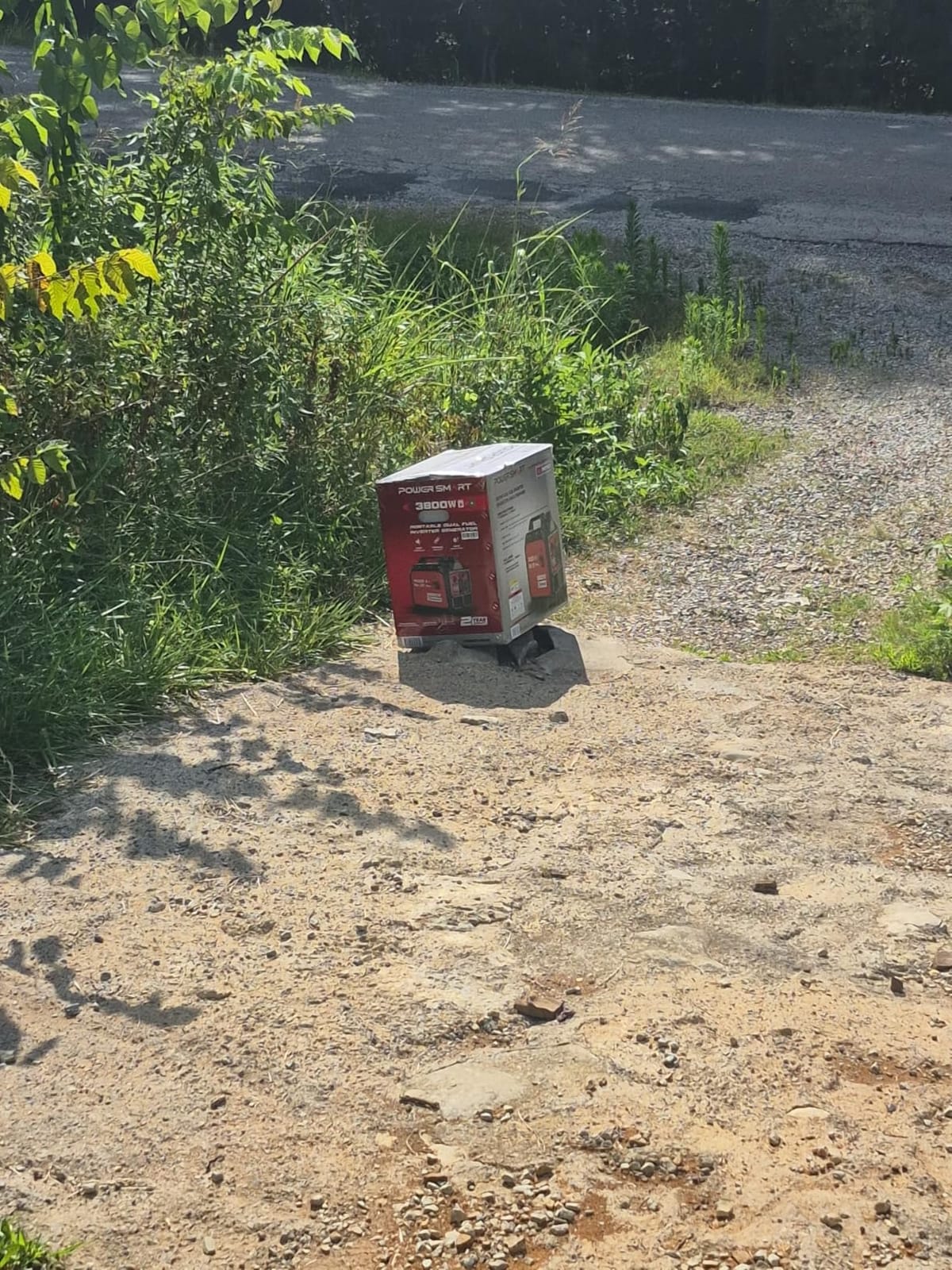
Dual fuel inverter capability at this capacity class is rare, and that alone puts the PowerSmart HB5040DC on the short list. A 149cc engine produces 3800 starting and 3300 running watts on gasoline, dropping to 3500 starting and 3100 running on propane.
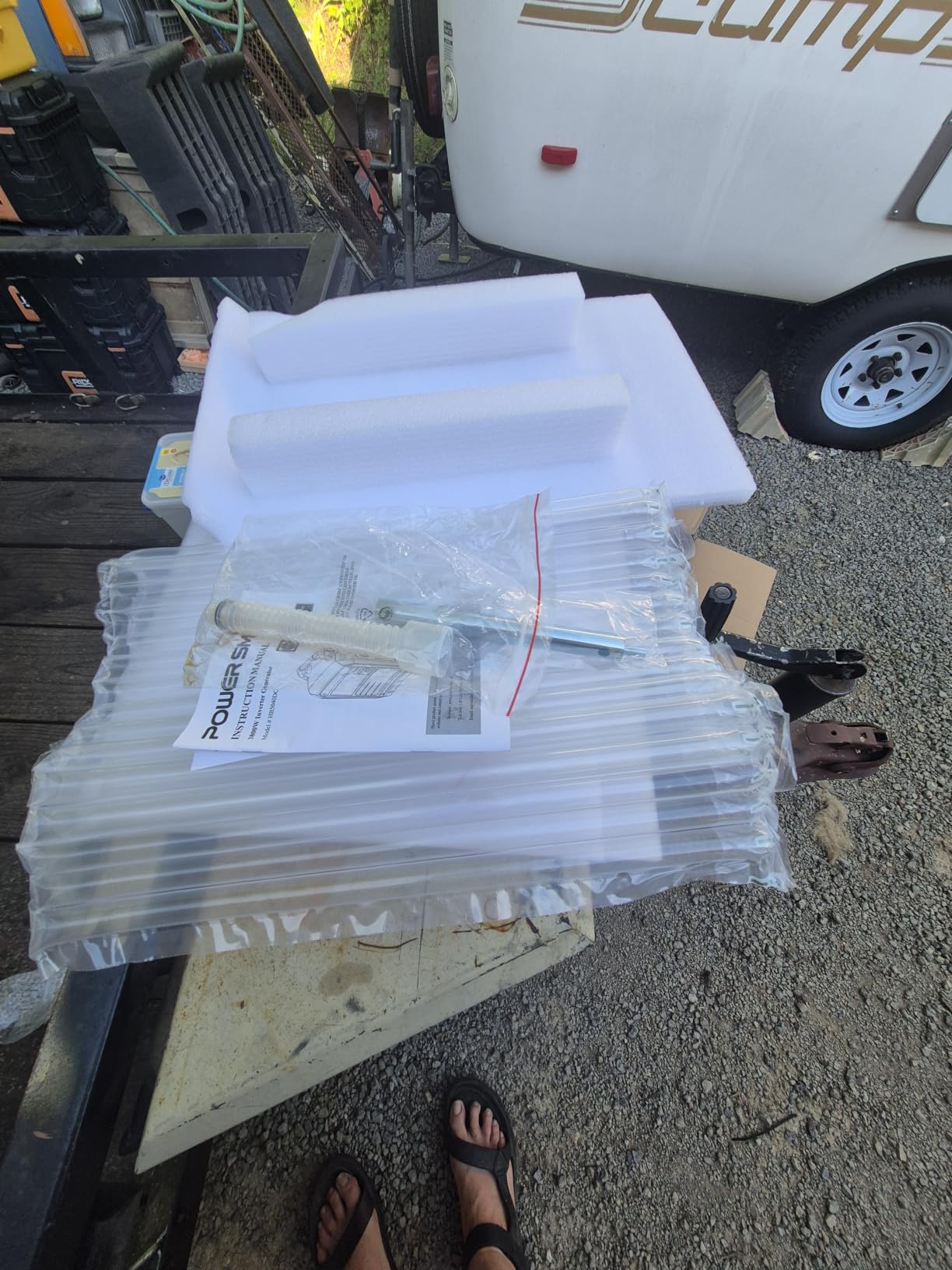
At 59 dBA in Eco Mode at 25 percent load, that is the lowest published noise figure in our lineup, though the noise climbs noticeably as load increases. Owners frequently praise the value, the quiet eco-mode operation, and clean power for sensitive devices, and the outlet set includes a 30A L5-30R twist-lock, a 20A duplex, 12V DC and dual USB ports.
Overload, short circuit, CO sensor and low oil shutdown protection are all present, and the unit is certified to ANSI/PGMA G300 and ANSI/UL2201 plus EPA standards.
Running a 13,500 BTU unit on this one
3,800 starting watts matches the commonly cited startup requirement for a 13,500 BTU compressor, and 3,300 running watts leaves comfortable headroom. It runs a 13,500 or 15,000 BTU rooftop unit without a soft start kit, which puts it ahead of the smaller 2,900-watt options on the AC question specifically.
The L5-30R twist-lock is a locking plug rather than the TT-30R flat blade design, so confirm your RV’s receptacle matches before buying.
Where the small tank bites
A 1.3 gallon tank gives 8 hours at 25 percent load on gas, which sounds generous until you remember the AC compressor keeps the engine well above 25 percent. In real rooftop AC duty, expect a refill during a long day. On propane you get up to 24 hours from a 20-pound cylinder, which is the stronger argument for this unit.
Access panels need a Phillips screwdriver for oil changes, and a small number of buyers report hard starting or units stopping shortly after start. The 2-year warranty is on the shorter side.
10. Champion 4250-Watt Dual Fuel Open Frame Inverter – Best for Overnight Runtime
Champion 4250-Watt Dual Fuel Portable Open Frame Inverter Generator, CARB
3500 running watts
4250 starting watts
Up to 22 hours on gas
64 dBA
Pros
- 120V 30A RV outlet plus two 20A household outlets and 12V DC
- Large 4 gallon tank with up to 22 hour runtime
- Economy mode saves fuel and extends engine life
- Parallel ready for combining with a second Champion inverter
Cons
- Open frame design is louder than enclosed inverter models
- Open frame reduces weather protection for electronics
The 4 gallon tank is what separates this Champion from everything else at this wattage. Up to 22 hours of runtime on gasoline means you fill once and stop thinking about fuel, which is the quiet luxury of full-time and multi-week camping.
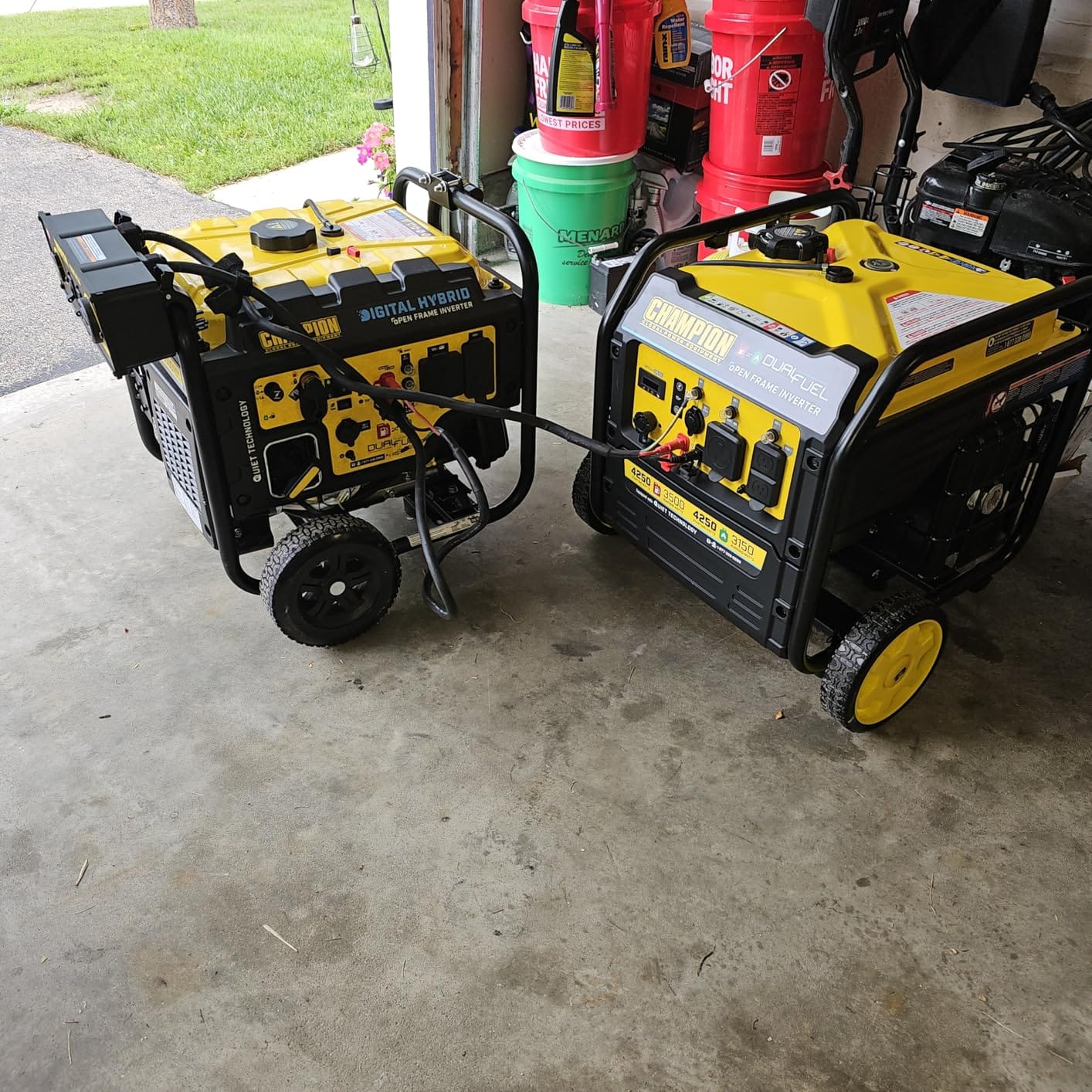
Power output is 3500 running watts and 4250 starting watts, which is a clean fit for a 13,500 BTU rooftop unit with room for a fridge and lighting. The 224cc engine, a 79 pound frame and a 3-year limited warranty with free lifetime technical support make it a complete package.
Owners favor the long runtime, the RV-ready 30A outlet, and easy dual fuel switching, noting it is quieter and lighter than older Champion open-frame models. The digital hybrid design is rated 50 percent quieter and 20 percent lighter than a traditional 3,500W unit, though it still sits at 64 dBA.
Who should pick this over the enclosed Champion
If fuel logistics are your main stress point, the runtime wins. If noise is your main stress point, the enclosed 4500-watt Champion is the better buy. Those are the two competing priorities, and this list is really a decision between them.
The parallel-ready panel works with the optional ParaLINK kit, so a second unit can be added later for a two-AC setup.
What open frame costs you
Noise at 64 dBA and reduced weather protection for the electronics panel, as reviewers note. The open frame also means exposed components that need more care if rain or blowing dust is a factor at your usual sites.
Gasoline only, with no propane capability in this configuration, is worth confirming before you commit.
How Big a Generator Do You Need to Run an RV Air Conditioner?
Start with the number printed on your AC label. A 13,500 BTU unit draws roughly 3,800 starting watts and about 1,300 running watts, and most rooftop RV AC units fall somewhere between 800 and 2,000 running watts with 1,600 to 4,000 starting watts. Those are the two numbers that matter, and the starting figure is the one that decides whether the compressor turns on at all.
Here is how the common sizes map, based on the most-searched sizing references for 2026:
5,000 BTU window or portable AC: about 400 to 1,200 running watts and 1,500 to 2,000 starting watts. A 1,000 to 2,000 watt generator handles this comfortably.
8,000 BTU rooftop AC: about 900 to 1,200 running watts and roughly 2,000 starting watts. A 2,500 watt class machine is enough.
10,000 BTU rooftop AC: about 1,100 to 1,400 running watts and 2,500 to 3,000 starting watts. A 3,000 to 3,600 watt unit works.
12,000 BTU rooftop AC: about 1,200 to 1,500 running watts and 3,200 to 3,500 starting watts. Look for 3,600 starting watts or more.
13,500 BTU rooftop AC: roughly 1,300 running watts and about 3,800 starting watts. A 3,800 to 4,500 watt inverter is the right target.
15,000 BTU rooftop or Class A AC: about 1,500 to 2,000 running watts and 4,000 starting watts or more. A 4,500 watt class unit, or 3,500 watts with a soft start kit.
A note on a widely repeated figure: most 13,500 BTU units need at least 3,000 watts of surge power to start reliably without a soft starter. That is the floor, not the target. Buying to the floor leaves nothing for a second appliance.
Now add your other loads. A 12V fridge running through a converter draws around 100 to 150 watts. A microwave pulls 1,200 to 1,500 watts. A coffee maker is around 1,000 watts. LED lighting and phone chargers are noise by comparison. The 2,000 watts of headroom above a typical 1,300 watt AC compressor disappears quickly if you plan to run a microwave and a coffee maker at the same time, which is why reviewers of the Champion 4000 note it cannot do both.
Finally, add a buffer of 200 to 400 watts above the starting requirement, and match the plug. That buffer is what keeps the generator from running at its limit every time the compressor kicks on, which is both harder on the engine and louder for your neighbors.
Inverter vs Conventional: Why Frame Type Matters for an RV Air Conditioner
Inverter generators produce a cleaner, steadier waveform, and RV electronics tolerate them better than conventional units. That includes your air conditioner control board, which is a sensitive computer as much as it is a motor. Every fully enclosed model in the picks above is an inverter.
Conventional units are cheaper per watt and often have longer runtimes on a big tank, which is why the DuroMax, Pulsar and DuroStar appear here. The trade is noise, weight of the cooling system, and less grace with electronics.
Closed-frame means the engine sits inside an acoustic enclosure. It is quieter, protects the panel from weather, and is the right call for camping near other people. Open-frame units expose the engine, run cooler, and weigh less, but they are noticeably louder, which owners on rvforum.net describe bluntly: an open frame genny purchase is the one that makes every neighbor on the loop unhappy.
The real cost of open frame is social. If you boondock, a loud generator draws the kind of attention that ends your invitation back.
Can a 2,200-Watt Generator Run a 13,500 BTU AC? Soft Start Explained
Yes, with a soft start kit, and owners have documented it over multi-year periods. A soft start capacitor ramps the compressor’s inrush current over a few seconds instead of demanding it all at once, which cuts the starting surge substantially. That is the whole mechanism, and it is why a 2,200 watt unit can start a compressor that nominally wants 3,800 starting watts.
Seon on rvforum.net described a long-running version of this setup: a WEN 2,000 watt generator for a travel trailer, paralleled with a second to power a 13k roof AC, used for over five years with no complaints. Another member, SMR, runs two 2,350 watt units with a parallel kit and reports being pleased with them across multiple trips.
Signs you should consider one:
Your generator’s starting watts fall short of your AC’s starting requirement.
Your compressor hums and stalls or the generator’s overload protection trips when you hit the AC button.
You want to run two air conditioners off a smaller combined setup.
You plan to parallel two small inverters rather than buy one large unit.
You are on a 30-amp rig and want to avoid upgrading the service.
One rvforum.net owner built his own parallel kit himself, picking up a kit on sale and adding an RV 30A outlet, for a small fraction of the price of a factory bundle. The same thread notes another member asking for soft start recommendations specifically so a Coleman Mach unit would run on a 2,200 watt generator, which tells you how common the workaround is.
With a soft start kit installed, a 3,000 watt inverter is often enough for a 13,500 BTU unit. Without one, aim for 3,800 starting watts minimum.
30-Amp vs 50-Amp: Matching the Plug and Running Two Air Conditioners
Most travel trailers and fifth wheels have a 30-amp shore power socket with a TT-30R receptacle. Class A and Class C motorhomes often have 50-amp service. A generator with a matching plug goes straight in; a mismatch means an adapter, and adapters are where people make expensive mistakes with amperage.
Check the receptacle before you buy, not after. Six of the ten units here carry a TT-30R or 30A RV outlet. The PowerSmart uses a locking L5-30R twist-lock, which is a different receptacle, so verify yours matches. The Pulsar, DuroMax and DuroStar go further with dedicated 50A outlets for transfer switch or 50-amp coach use.
For two air conditioners, you have three real options. Buy one unit with roughly double the capacity, which is what the DuroMax and DuroStar offer. Buy one larger inverter like the Champion 4500 and accept one AC plus light loads. Or parallel two matching inverters with a parallel kit, which is the approach owners document on rvforum.net and which spreads the weight into two lighter packages instead of one heavy one.
If you use a generator cord, it must be rated for the amperage and length. A 10-gauge cord is the practical minimum for 30 amps, and the cord is not a place to economize.
Carbon Monoxide Safety: Running a Generator Around Your RV
Never run a portable generator inside an enclosed space, including an enclosed RV interior or a generator compartment that is not open to outside air. Carbon monoxide is odorless and colorless, and it accumulates faster than most people expect in a small space with a ventilation opening.
Location: run the generator outdoors, at least 20 feet from your RV, with exhaust pointed away from doors, windows and vents.
Enclosed spaces: never in a storage compartment, a pop-up tent, a vehicle interior, a porch or a covered awning area.
CO sensor: choose a unit with an automatic carbon monoxide shutoff. Four models on this list include one: the Champion 4000 and Champion 4500 use CO Shield, the DuroStar uses CO Alert, and the PowerSmart includes a CO sensor shutdown.
While driving: never run the generator connected to the RV while the vehicle is in motion.
Exhaust and weather: keep the exhaust clear of dry grass, and be careful with open-frame units in wind-driven rain.
Alarms: install working CO alarms inside your RV even with a sensor-equipped generator, because the generator sensor protects the generator, not your coach.
First aid: know that CO poisoning symptoms mimic flu, and get everyone and pets into fresh air immediately if anyone experiences headache, dizziness or nausea near a running machine.
Never attach the generator directly to your RV in a way that backfeeds the coach wiring unless you are using a properly installed transfer switch. Backfeeding a shore power socket without one is a serious electrical hazard and a code violation.
Frequently Asked Questions
How big of a generator do I need to run RV AC?
For a typical 13,500 BTU rooftop RV air conditioner, you want a generator with at least 3,800 starting watts and about 3,500 running watts. Most 13,500 to 15,000 BTU units need 3,000 to 3,500 starting watts as a bare minimum. A closed-frame inverter in the 3,800 to 4,500 watt range is the safest all-around answer, and it leaves room for a 12V fridge, lights and chargers.
Will a generator run an RV air conditioner?
Yes. A portable generator runs a rooftop RV air conditioner comfortably as long as it covers both the starting and running wattage of the compressor. A 10,000 BTU unit needs roughly 2,500 to 3,000 starting watts, while a 13,500 BTU unit needs about 3,800 starting watts and 1,300 running watts. Match the plug to your RV and add 200 to 400 watts of buffer.
Can a 2000 watt generator run an RV air conditioner?
On its own, a 2,000 watt generator can run a smaller rooftop unit or a window unit, but a 13,500 BTU compressor usually will not start on that alone. Owners on rvforum.net run 13k roof AC units by paralleling two 2,000 to 2,350 watt inverters with a parallel kit, or by installing a soft start kit to reduce the inrush surge.
Will a 2200 watt generator run an RV air conditioner?
With a soft start kit, yes for most 13,500 BTU units. A soft start capacitor ramps the compressor inrush over a few seconds, cutting the starting surge enough for a 2,200 watt inverter to handle a unit that nominally wants around 3,800 starting watts. Without soft start, choose at least a 3,800 starting watt generator.
How many amps does RV AC use with soft start?
A 13,500 BTU rooftop unit draws about 1,300 running watts at 120 volts, which is roughly 11 amps steady state. On compressor start it can pull 30 amps or more briefly. A soft start kit spreads that starting draw across several seconds, so the generator sees a much lower peak, and the 30-amp circuit no longer stumbles when the compressor kicks on.
How many watts does it take to run a Dometic air conditioner?
Dometic rooftop units in the 13,500 BTU class typically draw about 1,300 running watts and need roughly 3,800 starting watts. Smaller 10,000 BTU Dometic units sit near 1,100 to 1,400 running watts and 2,500 to 3,000 starting watts. Check the BTU label inside your RV’s ceiling unit, because the running watts label is the definitive source.
Bottom Line: The Best Portable Generators for RV Air Conditioners 2026
For most RVers, the WEN 56380i is the right answer. 3400 running watts and 3800 starting watts clear a 13,500 BTU rooftop unit with margin, the TT-30R receptacle plugs straight into a 30-amp rig, and 4.7 stars across more than 2,400 reviews reflects a machine that simply works.
Buy the Champion 4500 instead if noise is your top concern at 61 dBA, the Champion 4250 if you want one fill per camping trip, or the WEN 56360i if weight is the constraint at under 47 pounds. Two-unit 50-amp rigs should look at the Pulsar G12KBN, the DuroMax XP12000EH, or the DuroStar DS13000MX, and the PowerSmart is the value pick if dual fuel matters more than tank size.
Before you buy anything, check the BTU label on your ceiling unit, confirm the receptacle on your shore power socket, and decide whether you are running one AC or two. Those three answers narrow this entire list down to one or two models, and the soft start kit option can let a smaller inverter handle more than its label suggests.
Whichever one you choose, run it outdoors at least 20 feet from the RV with the exhaust pointed away from openings, and keep an eye on the fuel and oil situation every few hours during your first few trips.