
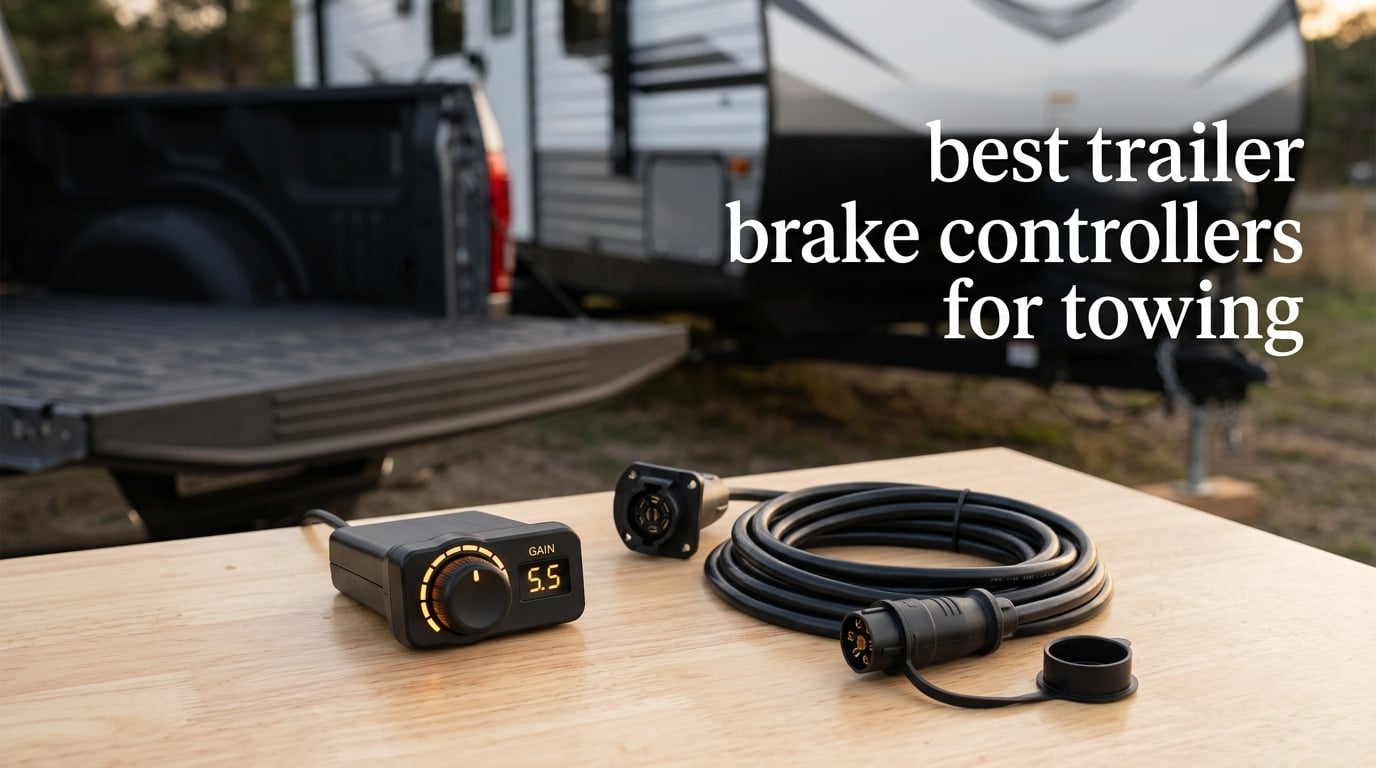
A trailer brake controller is the in-cab device that takes the signal from your brake pedal and sends the matching command to your trailer’s electric brakes, so the trailer stops with the tow vehicle instead of the tow vehicle stopping alone. If you tow anything braked — a travel trailer, a fifth wheel, a car hauler, a boat trailer, a camper or a utility trailer — you need one. The short version on the best trailer brake controllers for towing in 2026: a proportional controller with a visible manual override is the right answer for almost everyone, and a portable Bluetooth unit wins if you tow with more than one vehicle.
Without a controller, a braked trailer has no brakes at all. Your tow vehicle’s brakes must stop the entire combined weight, and the trailer’s breakaway system is the only braking left if it ever separates in your mirrors. That is why brakes are required by state law above a weight threshold that varies from state to state, and why so many owner threads on irv2.com, fiberglassrv.com and dieseltruckresource.com start with the same question: which unit should I actually buy.
We compared 12 controllers for this roundup, from an entry-level time-delay unit to a phone-configured Tekonsha. We did not install or tow with any of them ourselves. Instead we built the list from published manufacturer specifications and from aggregated verified-owner reviews, so you get the published figures rather than our estimates. Where a spec is not published, we say so rather than guessing.
One more note before we start, because it costs real money when you get it wrong: a large share of listings in this category are clones. A listing titled only by the part number it “replaces” is a red flag we come back to near the end.
Table of Contents
Top 3 Picks for the Best Trailer Brake Controllers in 2026

Tekonsha Primus IQ 90160
- Proportional inertia sensing
- LED display with diagnostics
- Boost with 3 levels
- 1-3 axles

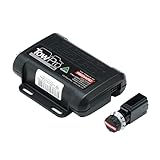
REDARC Tow-Pro Elite
- Proportional and off-road modes
- Self-calibrating
- 1-3 axles
- 12V and 24V
Best Trailer Brake Controllers at a Glance in 2026
| Product | Specs | Action |
|---|---|---|
| Tekonsha Primus IQ 90160 |
|
Check Latest Price |
 CURT Echo Mobile 51180 CURT Echo Mobile 51180 |
|
Check Latest Price |
| REDARC Tow-Pro Liberty |
|
Check Latest Price |
 CURT Spectrum 51170 CURT Spectrum 51170 |
|
Check Latest Price |
| REDARC Tow-Pro Elite |
|
Check Latest Price |
 Timilge 8508211 Timilge 8508211 |
|
Check Latest Price |
 briidea BR-121 briidea BR-121 |
|
Check Latest Price |
 CURT Venturer NEXT 51116 CURT Venturer NEXT 51116 |
|
Check Latest Price |
 Tekonsha Prodigy iD 90920 Tekonsha Prodigy iD 90920 |
|
Check Latest Price |
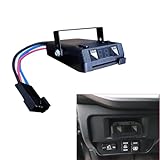 Towpower 8507111 Towpower 8507111 |
|
Check Latest Price |
 briidea BR-122 briidea BR-122 |
|
Check Latest Price |
 Kohree KR3588 Kohree KR3588 |
|
Check Latest Price |
How We Picked the Best Trailer Brake Controllers
Every controller here does the same core job, so the differences are in control quality, installation friction and whether the feedback tells you something useful while you drive. We scored all 12 on five criteria.
1. Braking type and control feel. Proportional units with an internal sensor react to how hard you actually brake. Time-delay units have no sensor and simply ramp to a preset level over a fixed number of seconds. Nearly every owner complaint we found traces back to a mismatch here, particularly on grades.
2. Axle and brake capacity. We confirmed each unit’s published axle range against typical rigs. A controller rated for two axles that gets asked to drive four is outside its design envelope.
3. Mounting and connection. Hidden-module designs keep the dash clean and clear the legroom. Portable in-line units need no drilling at all. We also flagged which units require a separately purchased wiring harness, because that is the most common surprise at install time.
4. Feedback and diagnostics. A manual override you can reach without looking down matters more than owners expect, because it is your first tool against sway. LED output readouts and short-circuit alerts came next.
5. Service path and warranty. Some controllers carry a limited lifetime manufacturer warranty. Others carry one year or two years. A brand with a real support line scored better than an unbranded unit with the same feature list.
Editorial disclosure: we did not install or tow with any of these controllers. Every specification comes from the manufacturer’s published listing, and every opinion attributed to buyers comes from aggregated verified-owner reviews attached to that product.
Best Proportional Brake Controller Overall: Tekonsha Primus IQ 90160
Tekonsha 90160 Primus IQ, Proportional Brake Controller for Trailers with 1-3 Axles, compatible with Ford, GM, Chevy, Dodge, RAM, Toyota, Jeep. Wiring Harness Sold Separately.
Proportional with internal inertia sensor
1-3 axles and 2-6 brakes
Snap-in dash clip
LED display and diagnostics
Pros
- Smooth proportional braking from an internal inertia sensor
- LED display shows settings diagnostics and alerts
- Boost adds up to three levels of extra stopping power
- Removable electrical connector for quick stow
- Works across Ford GM Chevy Dodge RAM Toyota and Jeep
Cons
- Wiring harness sold separately
- Can be sensitive out of the box and needs gain turned down
- Included flat screws are awkward to work with
Our picks for the best trailer brake controllers for towing start here because of a simple arithmetic: the Primus IQ carries a 4.7 rating across more than 7000 owner reviews, and no other controller in this roundup combines that rating with a review history that size. That is not a marketing claim, it is a volume of real stop-and-go experience spread across a decade of production.
The unit itself is a proportional controller with an internal inertia sensor, rated for 1 to 3 axles and 2, 4 or 6 brakes. The mount is a snap-in dash clip with a Plug & Play port for two plug adapters, and the electrical connector is removable so you can unplug the controller and stow it when the trailer is parked. The LED display is the reason it stays useful: it shows the setting you selected, real-time output and fault alerts.
What owners consistently describe is smooth, responsive braking that tracks the pedal rather than fighting it. The three-level boost function is the feature heavy towers notice first, because it adds stopping power on demand once a grade steepens or a load goes on the tongue.
Two practical notes. The wiring harness is not included, so budget for the vehicle-specific kit before the install day. And the unit can be twitchy straight out of the box, which means the first ten minutes of tuning matter more here than on most proportional units. The included flat screws are also genuinely awkward in a tight under-dash space.
Who this suits
If you tow a travel trailer or a camper on a half-ton or full-size truck and you want proven, adjustable braking with a readout, this is the controller. The 1 to 3 axle rating covers the overwhelming majority of rigs people actually tow, and the removable connector makes it painless to take out when you are not towing.
It also suits anyone who wants a phone-free controller. Nothing about setup requires an app, which for a safety device is a defensible preference.
Where it falls short
The missing harness is the real cost. Owners also note the unit can apply a varying voltage at standstill while the brakes are held, which matters most if you leave the brake pedal depressed in traffic.
For very heavy multi-axle loads you tow constantly, a unit with a wider axle envelope and a hidden module may serve you better. For trailers you only occasionally move, a cheaper proportional option may be enough.
Best Bluetooth Brake Controller for Multi-Vehicle Towing: CURT Echo Mobile 51180
CURT 51180 Echo Mobile Bluetooth Trailer Brake Controller, 7-Way, 1-2 Axles
Plugs in between the vehicle and trailer 7-way connectors
1-2 axles and 2-4 brakes
App control with saved profiles
Triple-axis accelerometer
Pros
- No permanent wiring at all
- Smart Control app manages settings profiles and status
- Triple-axis sensor keeps braking active if Bluetooth drops
- Stores multiple vehicle and trailer profiles
- Frees legroom and dash storage
Cons
- Supplied rubber strap is weak on rough roads
- Long body needs clearance above a low 7-way plug
- App and Bluetooth pairing problems on some phones
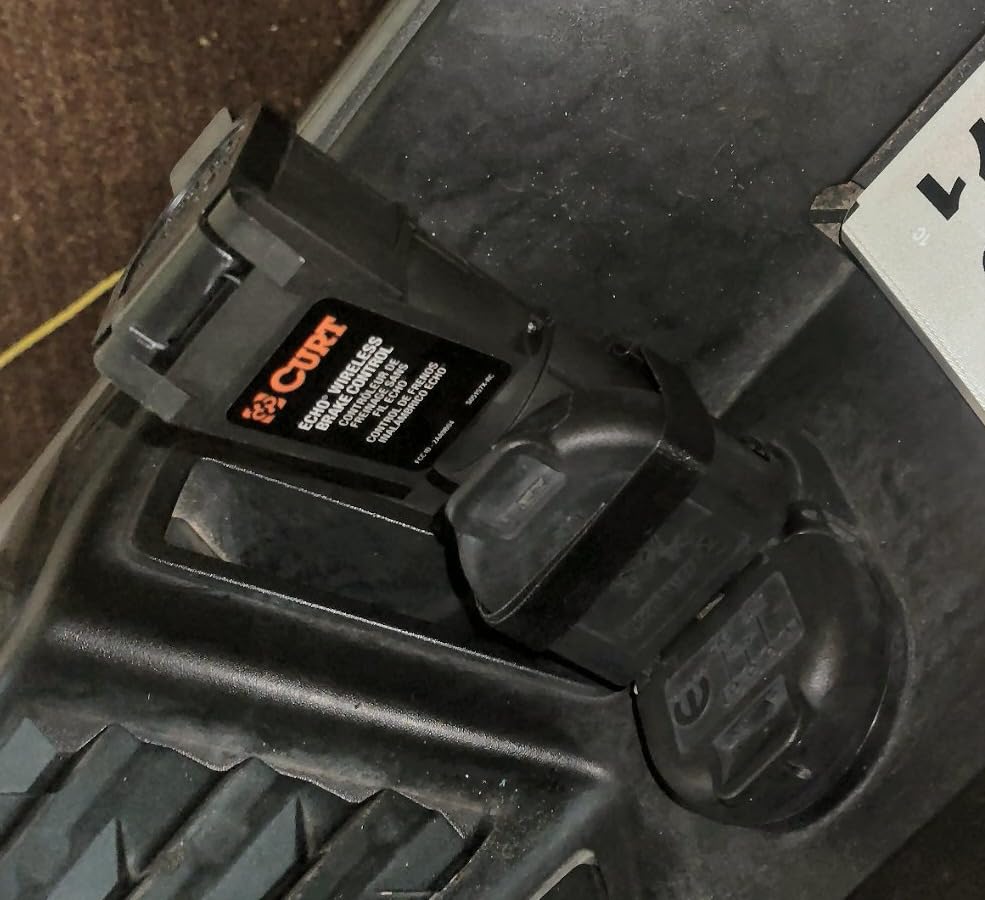
The Echo Mobile solves a problem no permanently installed controller can: the second vehicle. It plugs in between the truck’s 7-way outlet and the trailer’s 7-way plug, so nothing is drilled, nothing is wired, and the whole unit moves to the next truck in about a minute. For anyone who tows the same trailer with two different vehicles, that flexibility is the entire argument.
Braking itself is proportional, driven by a triple-axis accelerometer, and rated for 1 to 2 axles and 2 to 4 brakes. The circuit board is potted for weather resistance, which matters for a unit that lives behind the bumper. The Smart Control app holds vehicle and trailer profiles, so an empty pickup and a loaded travel trailer can each carry their own gain setting.

The most interesting engineering choice is what happens when the phone connection fails. Because the accelerometer handles proportional braking locally, a Bluetooth dropout does not mean the brakes stop working. You lose the app readout and the remote adjustment, not the braking. That is a meaningfully different failure mode from a controller that relies on a live link for everything.
Owner reviews are warm on the install and the portability, and blunt about the accessories. The supplied rubber retention strap is ineffective on rough roads and plenty of owners replace it with bungee cords or hook-and-loop tape. The body is also long, so with a low-mounted 7-way plug you need to manage ground clearance. Connection force at the 7-way fitting is firm, and the latch does not inspire confidence to everyone.
Who this suits
Owners with two tow vehicles, renters who cannot drill, and anyone moving between a truck and an SUV on the same weekend. It is also the cleanest install story on this list, because there is no install beyond plugging in.
Multi-axle towers above two axles are outside the published rating, and so are people who want a physical brake slider under the hand. This controller has no manual override lever.
Where it falls short
The 4.1 rating across more than 3000 reviews is the lowest of the name-brand units here, and the gap is almost entirely about the phone. App availability varies by region, and some devices pair unreliably. The strap and the length of the housing are the other recurring notes.
Buyers who want a controller that never touches a phone should look at the Primus IQ or the CURT Spectrum instead.
Best Hidden-Module Brake Controller for a Clean Dash: REDARC Tow-Pro Liberty
REDARC Tow-Pro Liberty Electric Trailer Brake Controller, Universal Fit for 1 to 2 Axle Cars, Trucks, SUVs, Proportional Braking, 12V Compatible to Tow RV, Camper, Trailer, Boat
Proportional braking with active calibration
1-2 axles
Remote head with module hidden out of sight
Ten adjustment levels
Pros
- Small dash dial mounts at almost any orientation
- Clean factory-style fit in a blank switch position
- Set-and-forget proportional braking with ten levels
- Active calibration and sway control
- Compact and simple installation
Cons
- Wiring harness sold separately
- Deep button assembly needs a right-angle cable in shallow dash spaces
- Some inertia-sensing adjustment needed after install
The Liberty is the controller people buy when they care what the dash looks like with the truck parked. The visible part is a small dial that drops into a blank switch position, and the main module disappears behind the trim. There is no box to bump with your knee and no lever hanging into your legroom.
Braking is proportional, universal for 1 to 2 axle cars, trucks and SUVs, with ten adjustment levels and active calibration that includes sway control behavior. Owners rate installation at roughly 30 minutes in most vehicles once the harness is in hand, and the 4.6 rating across 805 reviews reflects a settled, well-liked unit.
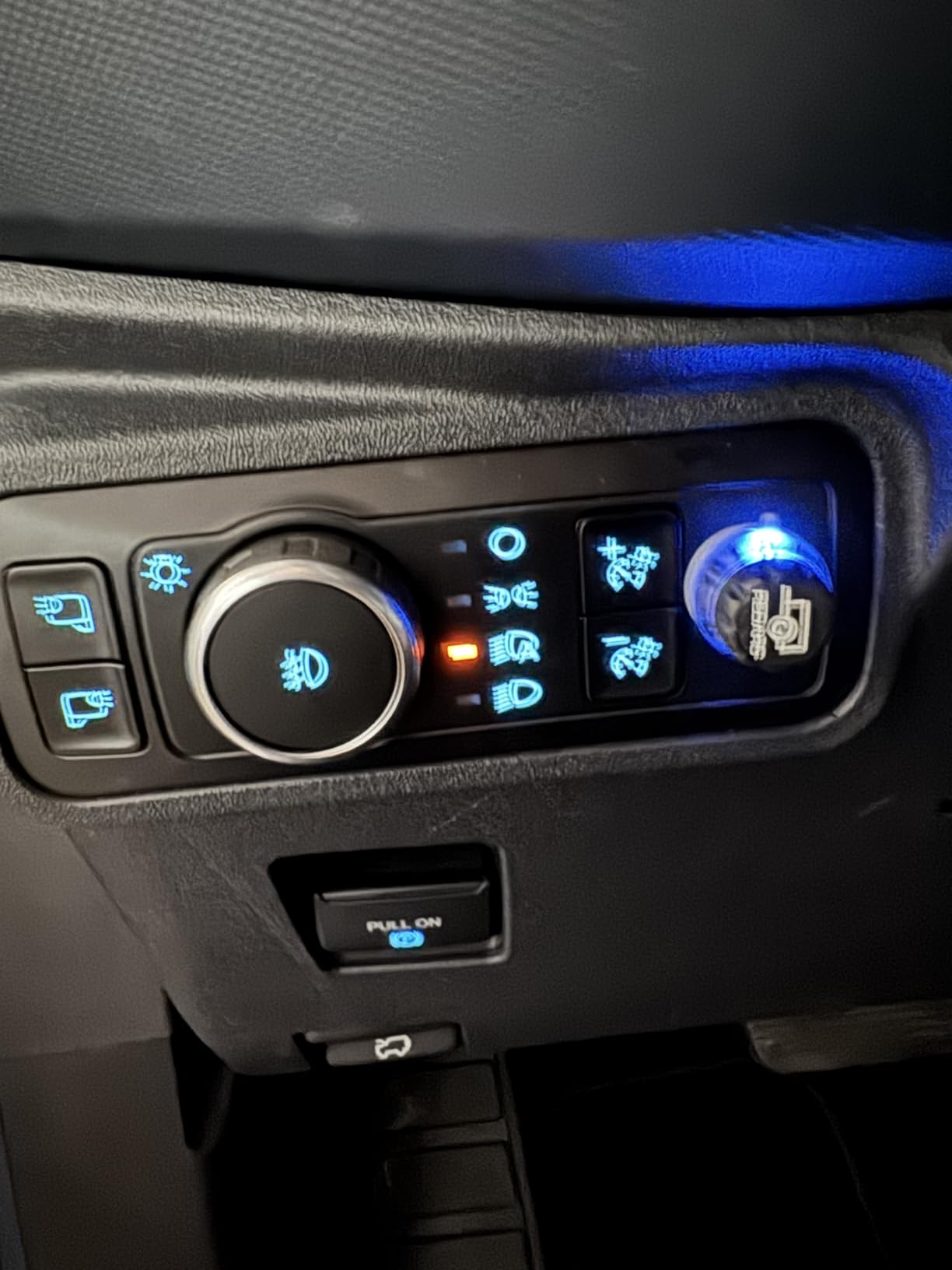
What makes it work in practice is that the module self-calibrates and can be installed at almost any orientation. Older proportional controllers demanded a level, correctly oriented mount or they read the deceleration wrong. This one forgives a sloped install, which matters in a truck where the switch panel is angled.
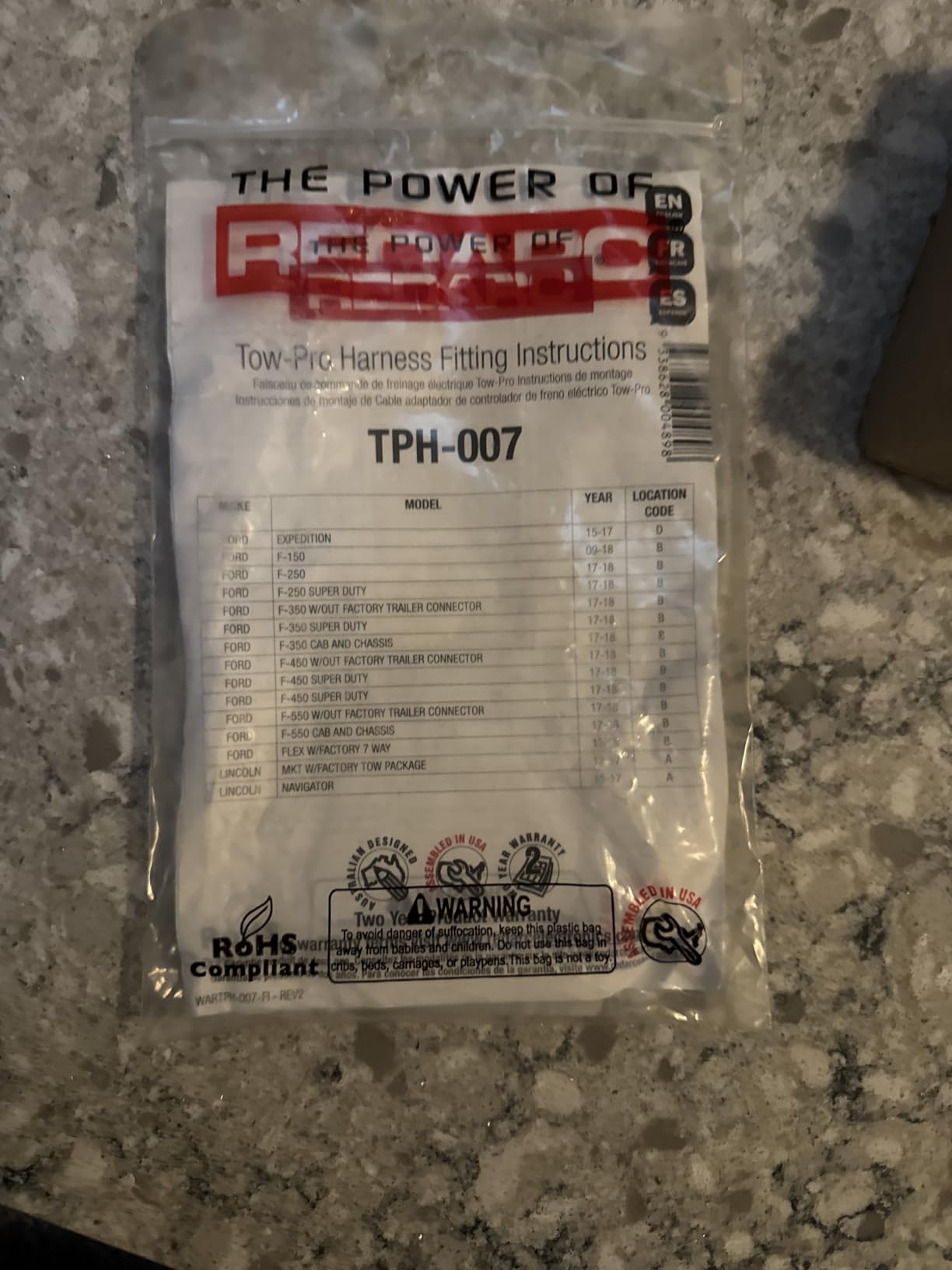
The recurring complaint is the harness, which is sold separately either as a universal pig tail or as a REDARC vehicle-specific kit. A second note worth planning for: the button assembly is deep, so in a shallow switch location you may need a right-angle cable. Instructions are also clearer with a video alongside them.
Who this suits
Owners who want the factory-clean look, especially in a vehicle with a blank switch position waiting for a knob. It is a strong match for 1 to 2 axle rigs, boats, campers and small travel trailers.
It also suits anyone who is sensitive to installation orientation. The self-calibration removes the most common source of proportional-controller frustration.
Where it falls short
Two axles is the ceiling, which rules it out for car haulers and big fifth wheels. The dash dial is also not a squeeze-tab controller, so some drivers find it slower to reach in a panic than a lever they can grab without looking.
Budget the harness and the optional right-angle cable at the same time, or the install stalls on parts alone.
Best Value Dash-Knob Brake Controller: CURT Spectrum 51170
CURT 51170 Spectrum Proportional Trailer Brake Controller, Dash-Mount Knob
Proportional with triple-axis accelerometer
1-4 axles and 2-8 brakes
Dash knob with out-of-sight module
10 tri-color LEDs
Pros
- Dash knob frees legroom and storage
- Main module mounts behind the dash trim
- Triple-axis motion-sensing accelerometer
- Easy-to-reach manual override
- Limited lifetime manufacturer warranty
Cons
- Quick-plug harness sold separately
- LEDs sometimes light with no trailer connected
- Blinking-light interface has a learning curve
The Spectrum is the middle of this list in every sense. It is proportional, it supports 1 to 4 axles and 2 to 8 brakes, and it splits into a dash knob and a module that mounts out of sight. That axle range is at the top of the dash-mount range, and it is backed by a limited lifetime manufacturer warranty that few competitors in this category offer.
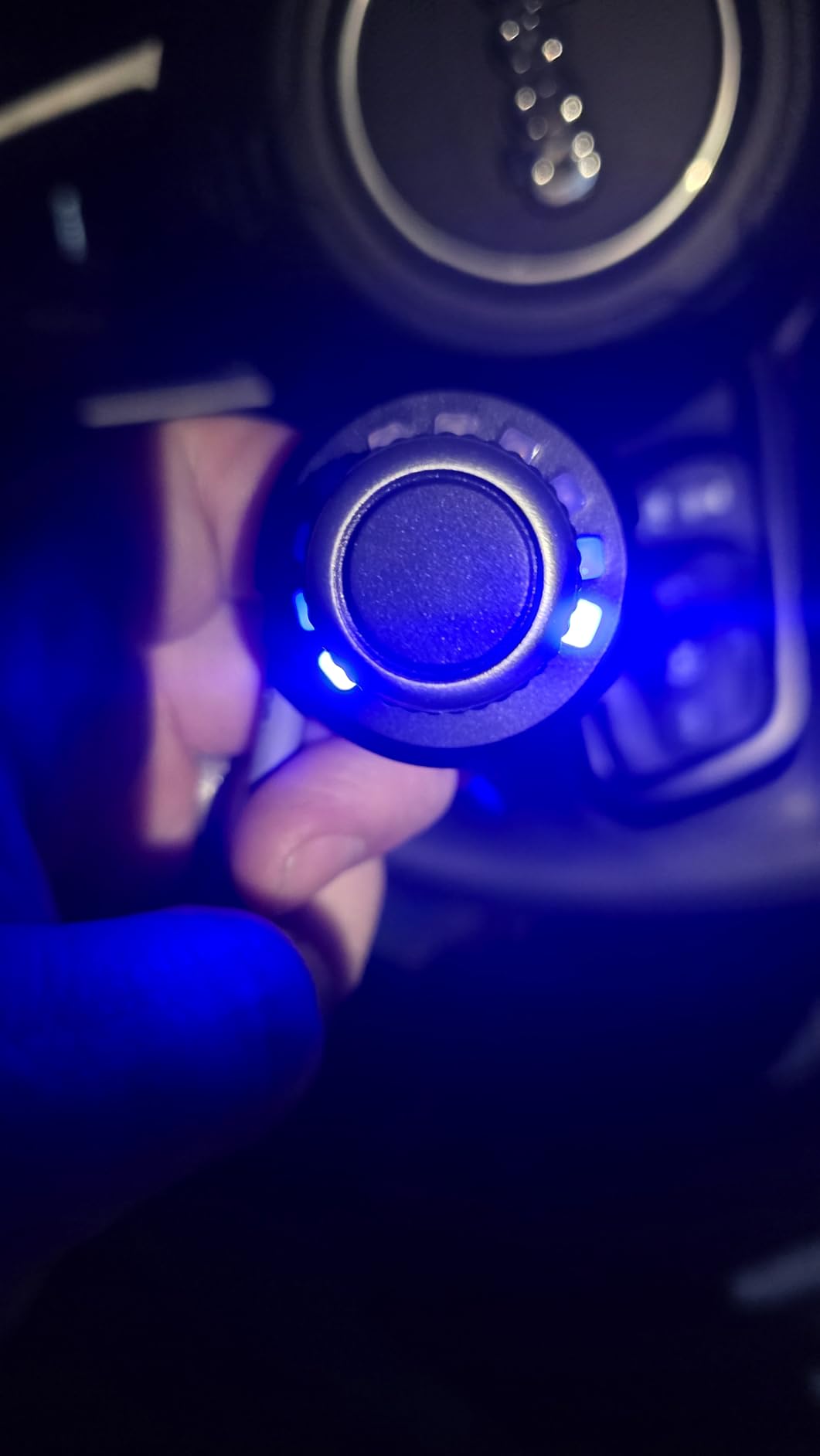
Control is a single push-button rotary knob with a manual override button placed for easy reach, which is the feature sway control depends on. The 10 tri-color LEDs carry the status readout, and a triple-axis motion-sensing accelerometer handles proportional braking with auto leveling. Most owners install it in under an hour with the correct vehicle-specific harness.
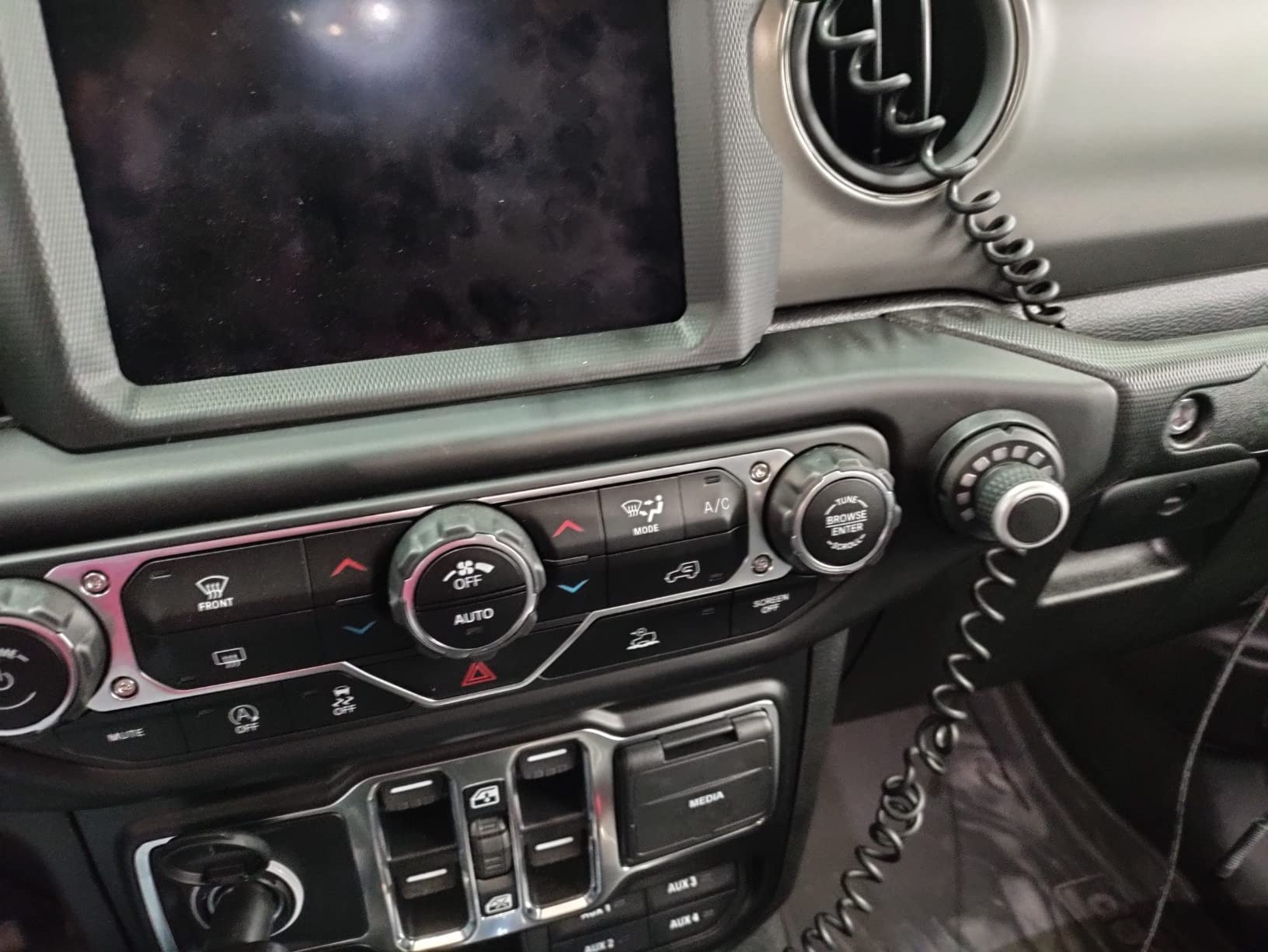
The feedback interface is the trade-off. Owners who tune it once and leave it report that it stays set indefinitely, which is exactly what you want from a controller. Buyers who move between a lightly loaded truck and a fully loaded trailer find the blinking-light readout takes practice to decode, since gain and brake output share the same LEDs.
A second note: some buyers see the LEDs illuminate with no trailer connected, which is distracting if your truck is your daily driver. The instructions are English only, and the knob does not integrate with a truck’s native center display.
Who this suits
Anyone with a multi-axle trailer who wants a permanent, clean install without moving up to a premium tier. The 2 to 8 brake range covers a car hauler or a loaded fifth wheel, and the limited lifetime warranty is the strongest ownership protection on this list.
It is also a good first controller for a truck that already has a factory brake-control port waiting, since the module hides completely when installed.
Where it falls short
The harness is a separate purchase, and the LED interface is the least intuitive feedback system here. If you would rather see numbers than lights, the Kohree kit or the Timilge 8508211 both put a digital display in front of you.
Daily drivers who park in view of the cab may prefer a controller whose display can be turned off.
Best Dual-Mode Brake Controller for Mixed Terrain: REDARC Tow-Pro Elite 331-EBRH-ACCV2
REDARC Tow-Pro Elite Electric Trailer Brake Controller, Universal Fit for 1 to 3 Axle Trucks, SUVs, Dual Braking Modes, Plug and Play Install, 12V/24V Compatible to Tow RV, Camper, Trailer, Boat
Proportional and user-controlled off-road modes
1-3 axles, 12V and 24V
Remote head with hidden main unit
Self-calibrating
Pros
- Dual braking modes for on-road and off-road use
- Remote head and hidden main unit for a factory-style install
- Self-calibrates and installs at almost any orientation
- Smooth consistent braking once calibrated with load
- Works with plug-and-play harnesses on many trucks
Cons
- Vehicle-specific harness sold separately
- Universal switch insert does not fit some vehicles
- Knob is stiff to press and adjust
The Elite is the pick if your towing splits into two very different jobs. In Proportional Mode it behaves like a normal road controller. In User-Controlled Mode you set the power yourself with the dial, which is the mode that makes sense on loose surfaces where a proportional sensor reading is less trustworthy.
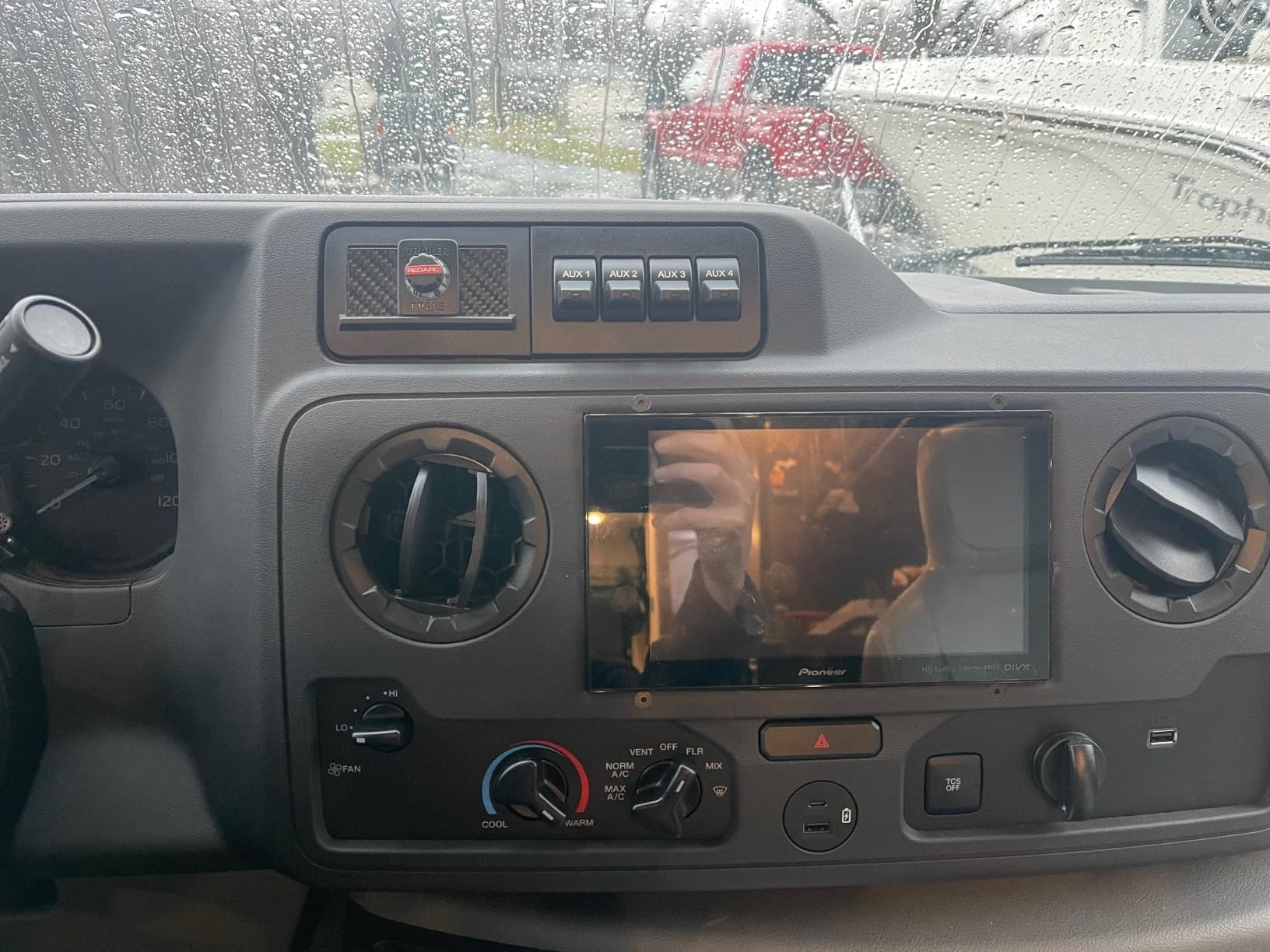
It is rated for 1 to 3 axle trucks and SUVs and is 12V and 24V compatible, which widens its reach compared with most of this list. The remote head mounts in the included universal switch insert and the main unit tucks out of sight, and the module self-calibrates at nearly any orientation. REDARC states the unit was torture-tested in the Australian Outback and carries a two year limited warranty.
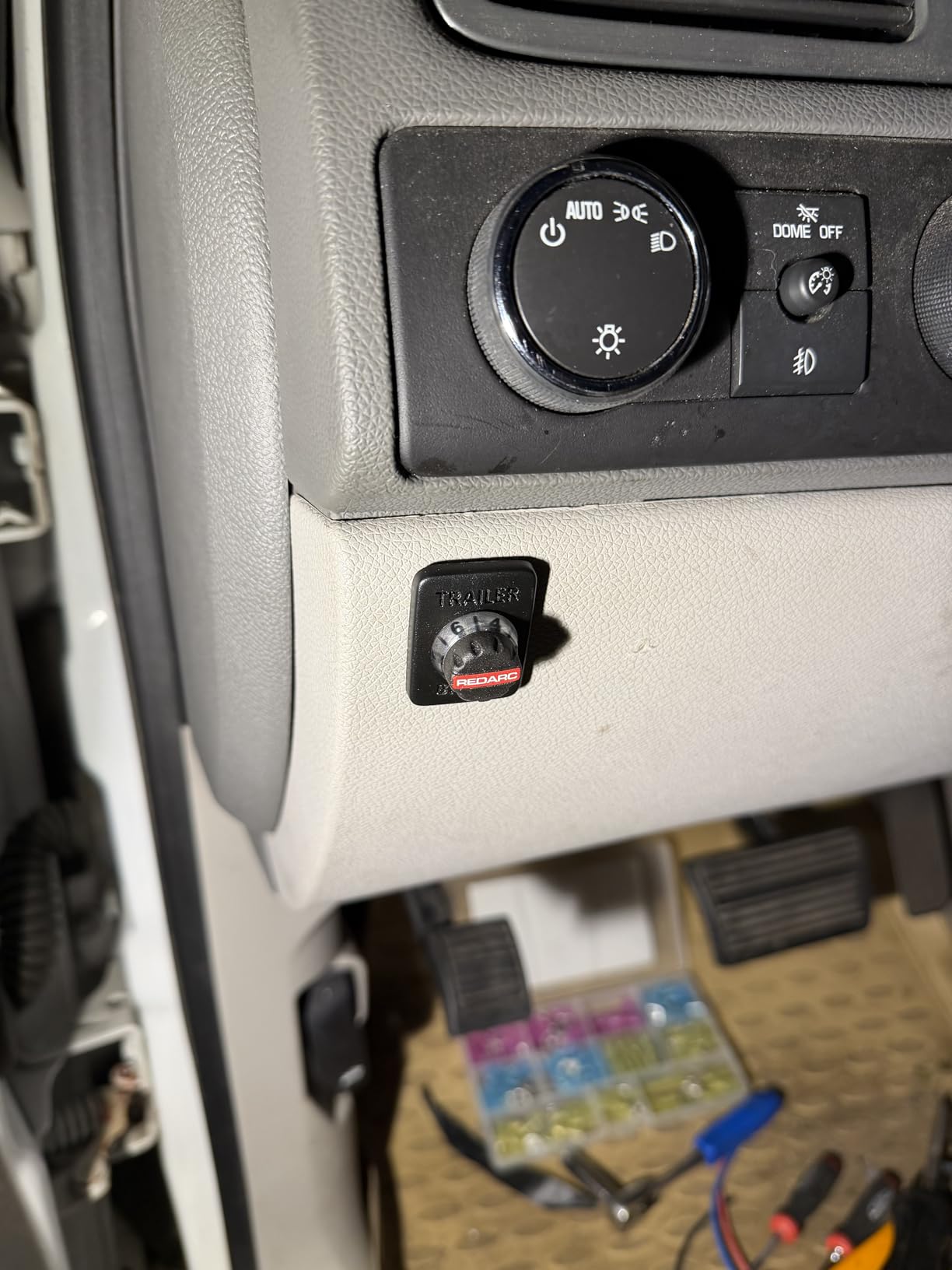
Owners treat it as a premium set-and-forget device. Braking is described as smooth and consistent once calibrated under load, and the plug-and-play harness path works on many trucks, so the install is often the least eventful of any hidden-module controller here.
Two cautions. The universal switch insert plate is not truly universal, and buyers report it not fitting certain Toyota models, so check your switch panel before ordering. The knob is also stiff to press and adjust, and it does not behave like the squeeze-tab controllers some drivers prefer in an emergency.
Who this suits
Anyone who tows off-paved roads as well as highway, and anyone with a duffel or a commercial rig running 24V. Three axles is enough for most heavy fifth wheel and car hauler combinations without going to a dedicated commercial unit.
It also suits owners who want one controller to cover both a highway trailer and a rough-access camp spot without changing settings between trips.
Where it falls short
Verify the switch insert against your dash before you buy, and budget separately for the vehicle-specific harness. The stiff knob is the other recurring note, and the dual-mode feature set carries a premium that lighter users may not earn back.
If you only ever tow on pavement and only one or two axles, the Liberty covers that ground for less.
Best Budget Proportional Controller With a Digital Display: Timilge 8508211
Proportional Trailer Brake Controller 8508211 Digital Electric LED Display
Proportional braking sensing tow vehicle deceleration
1-4 axles and 2-8 brakes
LED display of voltage delivery
No leveling required
Pros
- Proportional braking that needs no levelling
- LED display shows real-time voltage to the trailer brakes
- Covers 1-4 axles and 2-8 brakes
- Ports accept vehicle-specific harnesses for quick install
- Simple installation
- often under 15 minutes
Cons
- Color-coded wiring labels can confuse during install
- Some reports of units that lock up brakes or arrive non-functional
- Gain settings can need repeated adjustment
Most budget brake controllers are time-delay units, which is exactly the compromise we would rather not make. This one is proportional, needs no leveling, and shows live voltage delivery to the trailer brakes on an LED display. That combination of proportional control and a numeric readout at the entry end of this list is unusual, and it is why this unit makes the list despite being an unbranded name.
The capacity is generous for the money: 1 to 4 axles and 2 to 8 brakes, with adjustable braking power and response rate. It also takes vehicle-specific brake controller harnesses through its wiring ports, so a plug-and-play install is possible if you buy the matching kit.
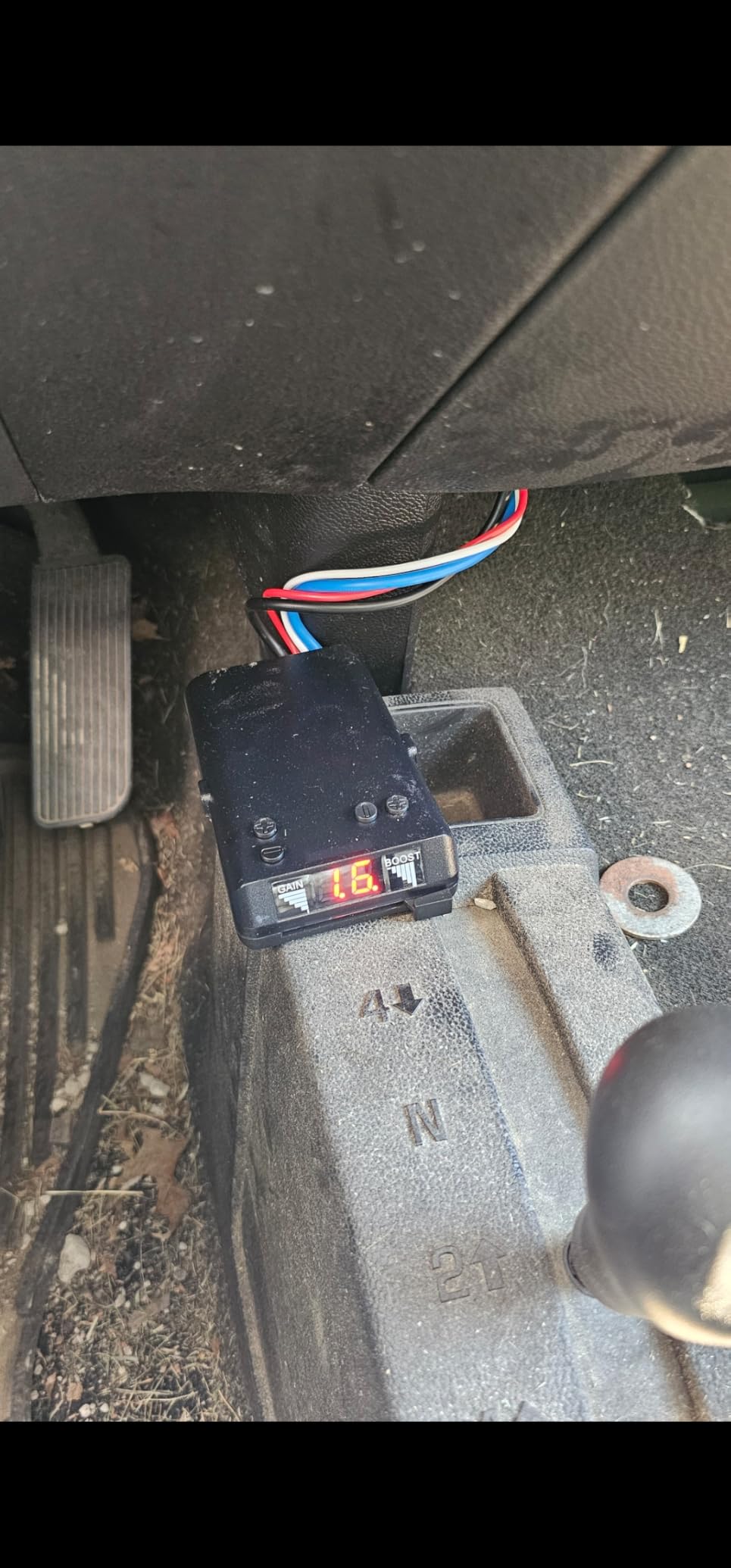
Owners like the self-leveling proportional behavior and report less trailer tire wear than they got from a time-delay unit, which makes sense given the smoother stops. Installation is regularly described as taking under 15 minutes.
The caution is build consistency. A minority of reviews report units that apply brakes continuously or arrived non-functional, and gain settings can need repeated adjustment. The color-coded leads are black for power, red for stop light, white for ground and blue for trailer brakes; get one of those wrong during install and the symptoms are confusing, so follow the labels closely.
Who this suits
A first trailer on a budget, an owner who occasionally tows a small utility trailer with 2 to 4 brakes, and anyone who wants a numeric readout rather than blinking lights. The 2 to 8 brake capacity also lets it cover larger rigs than its price suggests.
It suits DIY installers who already understand brake controller wiring, because the ports expect a vehicle-specific harness.
Where it falls short
Warranty and support are the weak points on any unbranded controller, and this category has real counterfeiting, so buy from a seller with an easy return path. The quality spread between units is wider here than with a name brand.
For anyone towing heavy loads where brake failure is not an acceptable risk, a name-brand controller with a real service path is the better decision.
Best Time-Delay Controller With Fault Alerts: briidea BR-121
briidea Trailer Brake Controller, Time-Delay Brake Controller for 1-4 Axle Trailers, Safety Protection with Overload/Short-Circuit Alerts for Light-Duty & Occasional Towing
Time-delay activation with adjustable power
1-4 axles and 2-8 brakes
Overcurrent and short circuit protection
LED settings and fault readout
Pros
- LED display shows gain setting and output voltage
- Overcurrent short circuit protection and fault detection
- Mounting bracket fits any position or angle
- Works with 2-8 brakes for light-duty towing
Cons
- Time-delay braking can be abrupt on steep grades
- Harness and vehicle adapter usually sold separately
- Entry-level build compared with name brands
Time-delay design is a deliberate choice here, not a compromise we would push on a heavy load. It fits a specific case: a light utility trailer, a small camper, a boat trailer on a level route, towed occasionally rather than constantly. The advantage is that it has no sensor to level and no moving parts, so it is simple, cheap and predictable.
The protection circuitry is what separates this from other entry-level time-delay units. It carries overcurrent protection, short circuit protection and fault detection, and the LED display reports settings, output voltage and the fault itself. Capacity is 1 to 4 braked axles, meaning 2 to 8 brakes, which covers far more than the light-duty use case it suits.
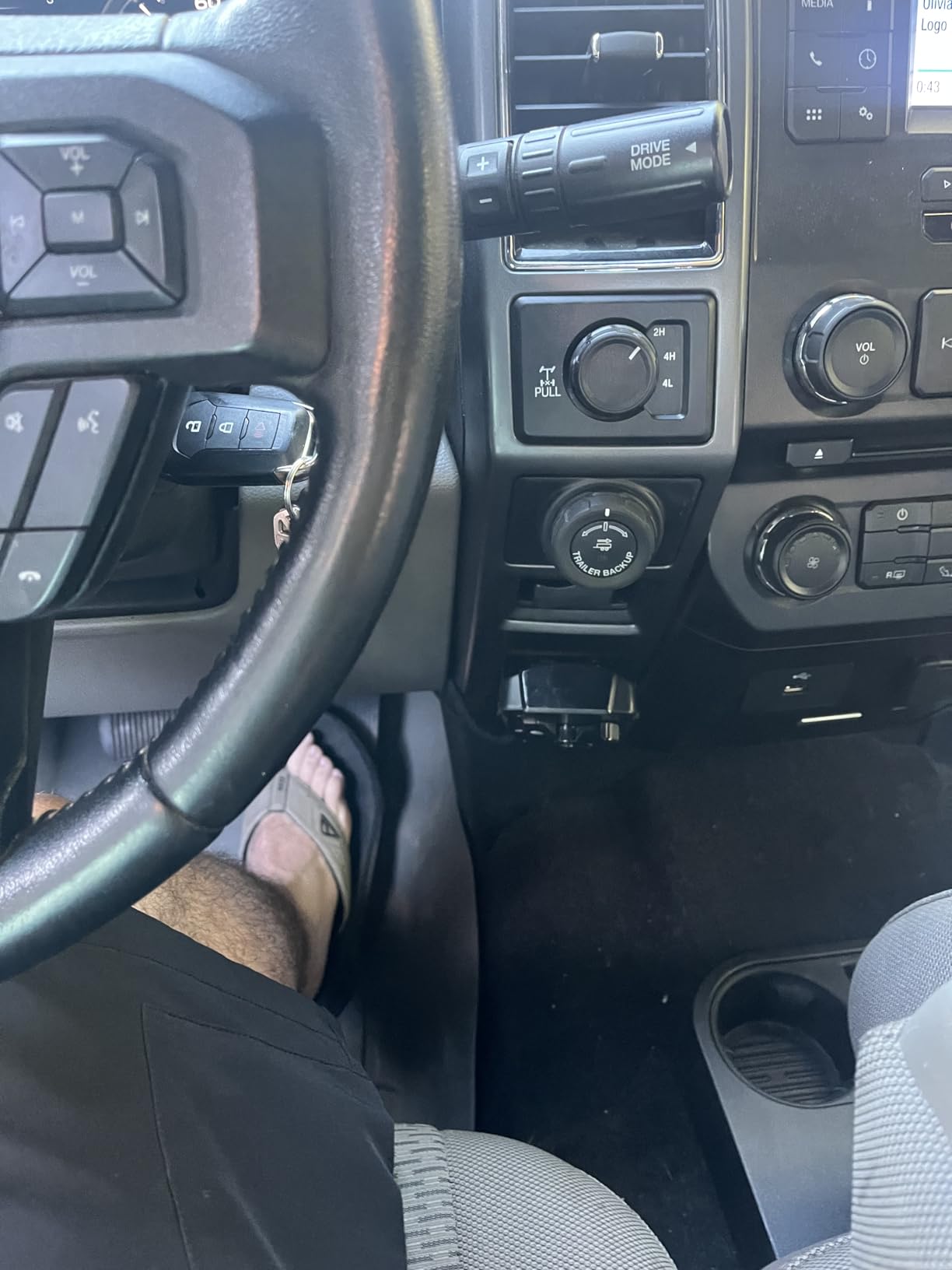
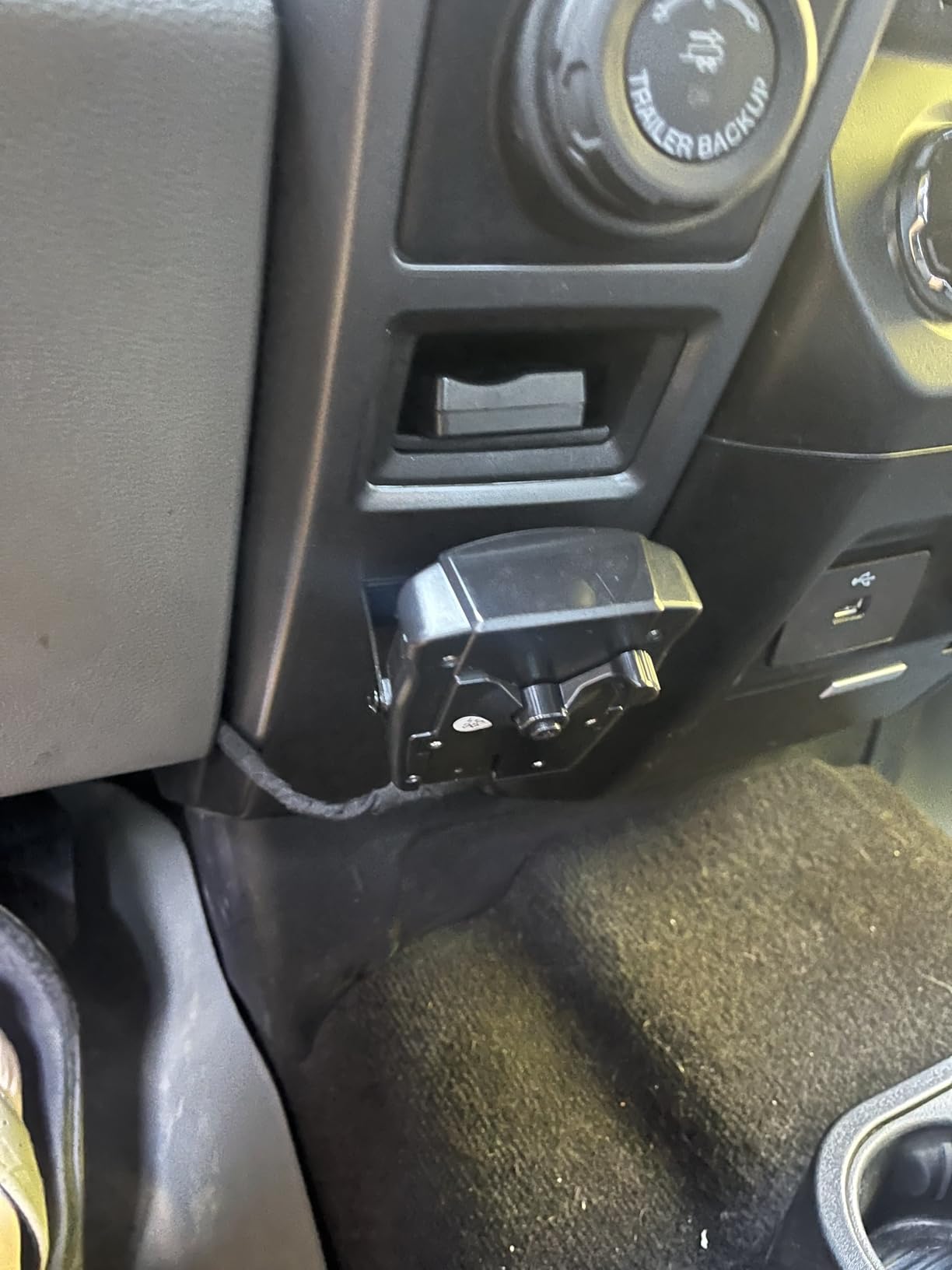
The mounting bracket is the other practical strength. It installs at any position or angle, which removes the leveling requirement entirely and makes it usable in vehicles where under-dash space is tight or awkward.
Buyer sentiment is honest about the trade-off. Time-delay braking is not proportional, so it can feel abrupt on a steep grade, and that is the same complaint that recurs across owner threads about this controller type in general. The vehicle-specific adapter is usually a separate purchase, and the build is lighter than a name-brand unit.
Who this suits
Occasional light towing on level roads, a boat or utility trailer, and anyone who wants fault diagnostics and a real readout without paying for a sensor. The any-angle bracket makes it unusually easy to place in an awkward vehicle.
Owners replacing a failed factory time-delay controller with something in the same class will find the form factor familiar.
Where it falls short
Do not put it on a heavy load that spends time on grades. That is precisely the scenario owners report as abrupt, and a proportional controller is the correct tool there.
The separately sold adapter and the lighter construction are the other two things to weigh before committing.
Best Low-Profile Time-Delay Controller: CURT Venturer NEXT 51116
CURT 51116 Venturer Next Electric Trailer Brake Controller, Time-Delay, Fully Adjustable, Low Profile, 1-3 Axles, Plug-and-Play
Time-delay with adjustable power and ramp time
1-3 axles and 2-6 brakes
Slim low-profile body
No internal moving parts
Pros
- Slim low-profile body clears the dash better
- Unique bracket system for dash clearance
- Fully adjustable power and ramp time
- No internal moving parts and no leveling
- Plug-and-play installation
Cons
- Time-delay rather than proportional braking
- Manual override is a button rather than a lever
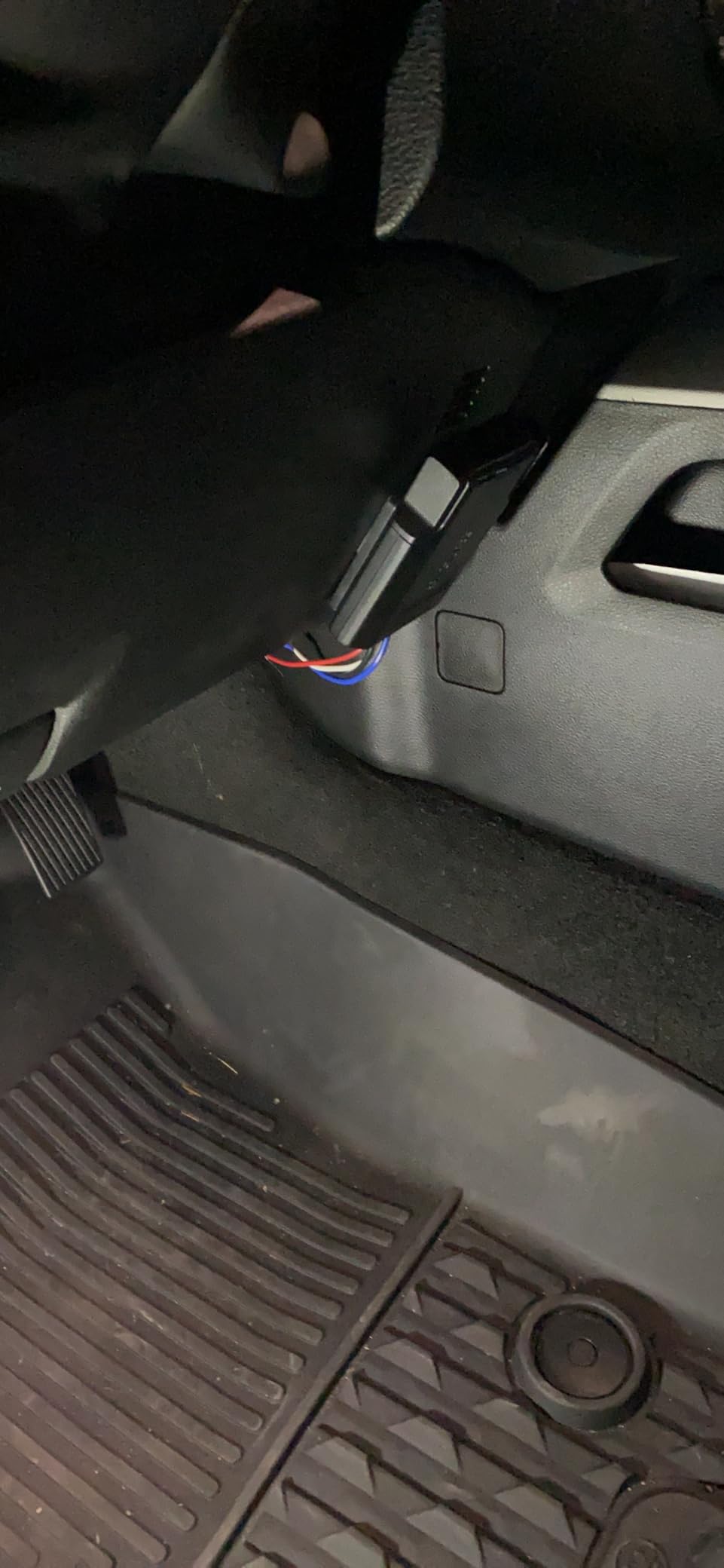
The Venturer NEXT exists for one reason: dash clearance. Its slim, low-profile body and purpose-built bracket system let it sit where a full-size under-dash controller simply will not, which in a truck with a deep dash is the difference between installing the controller and leaving the cavity empty.
It is a time-delay design, fully adjustable for both power and ramp time, operating 2 to 6 trailer brakes at a time for 1 to 3 axles. There are no internal moving parts and no leveling requirement, and the installation is plug-and-play. The 4.5 rating across 141 reviews is solid for a focused design like this.
Note that review text was not returned for this listing, so the strengths above are drawn from the published feature set and the rating rather than from owner commentary. That is worth stating plainly in a category where the difference between a time-delay and a proportional unit is felt every time you brake.
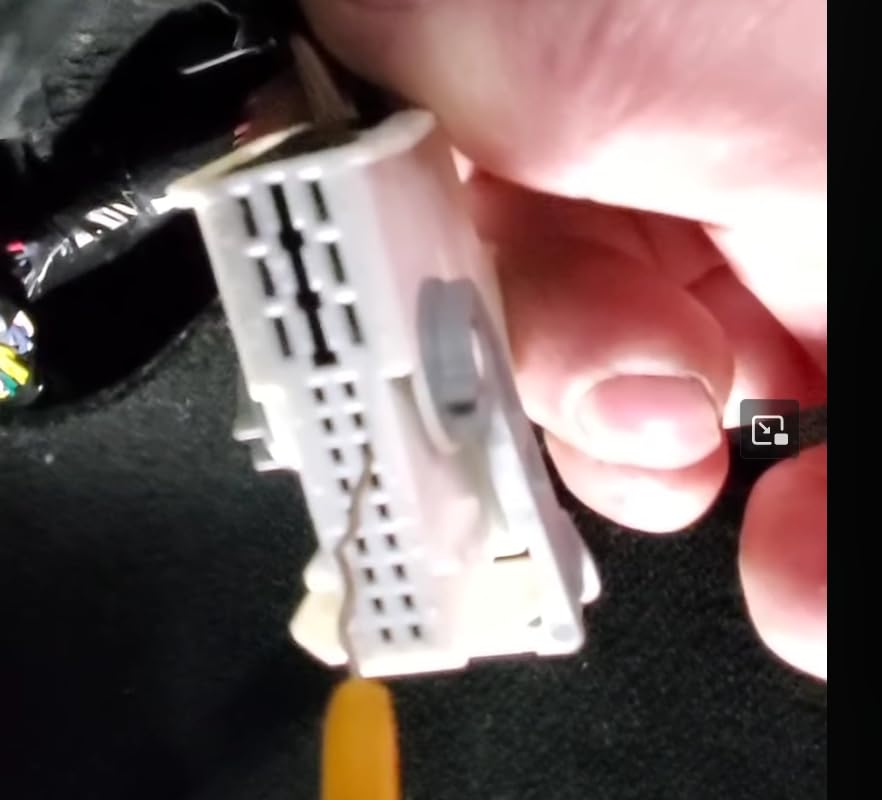
The override is a button rather than a lever, so if your priority is a fast physical response to sway you may prefer a model with a squeeze-tab. Fully adjustable ramp time does give you some control over how abruptly power comes on, which softens the usual time-delay complaint on grades.
Who this suits
Owners with a cramped dash, a factory blank where a large controller will not fit, and light to moderate 1 to 3 axle rigs. The plug-and-play path makes it a good first controller for an occasional tower.
If a button override is not your thing, this is not the one — but for a light trailer, the clearance win is worth a lot.
Where it falls short
Time-delay braking is the central limitation, and it is the reason we place it below the proportional picks. On grades or heavy tongue weight, the ramp-up is the wrong shape for the job.
Two to six brakes also puts it below the units that cover 2 to 8, so check your trailer’s brake count before buying.
Best App-Configured Controller for Phone-First Owners: Tekonsha Prodigy iD 90920
TEKONSHA 90920 Prodigy iD Smart Phone Configured Brake Controller for Trailers with 1-4 Axles, Compatible with Ford, GM, Chevy, Dodge, RAM, Toyota, Jeep (Please Verify Vehicle Compatibility
Proportional, configured through the Tekonsha EDGE app
1-4 axles and 2-8 brakes
In-dash knob with hidden power module
Front-facing color LED display
Pros
- Smartphone configuration for output boost and braking type
- Front-facing color LED display with diagnostics and alerts
- OEM-style in-dash knob with hidden power module
- Covers 1-4 axles and 2-8 brakes
- Built-in tech support with shareable alert logs
Cons
- Vehicle-specific harness sold separately
- Requires a compatible Apple or Android device for setup
- Vehicle compatibility must be verified before purchase
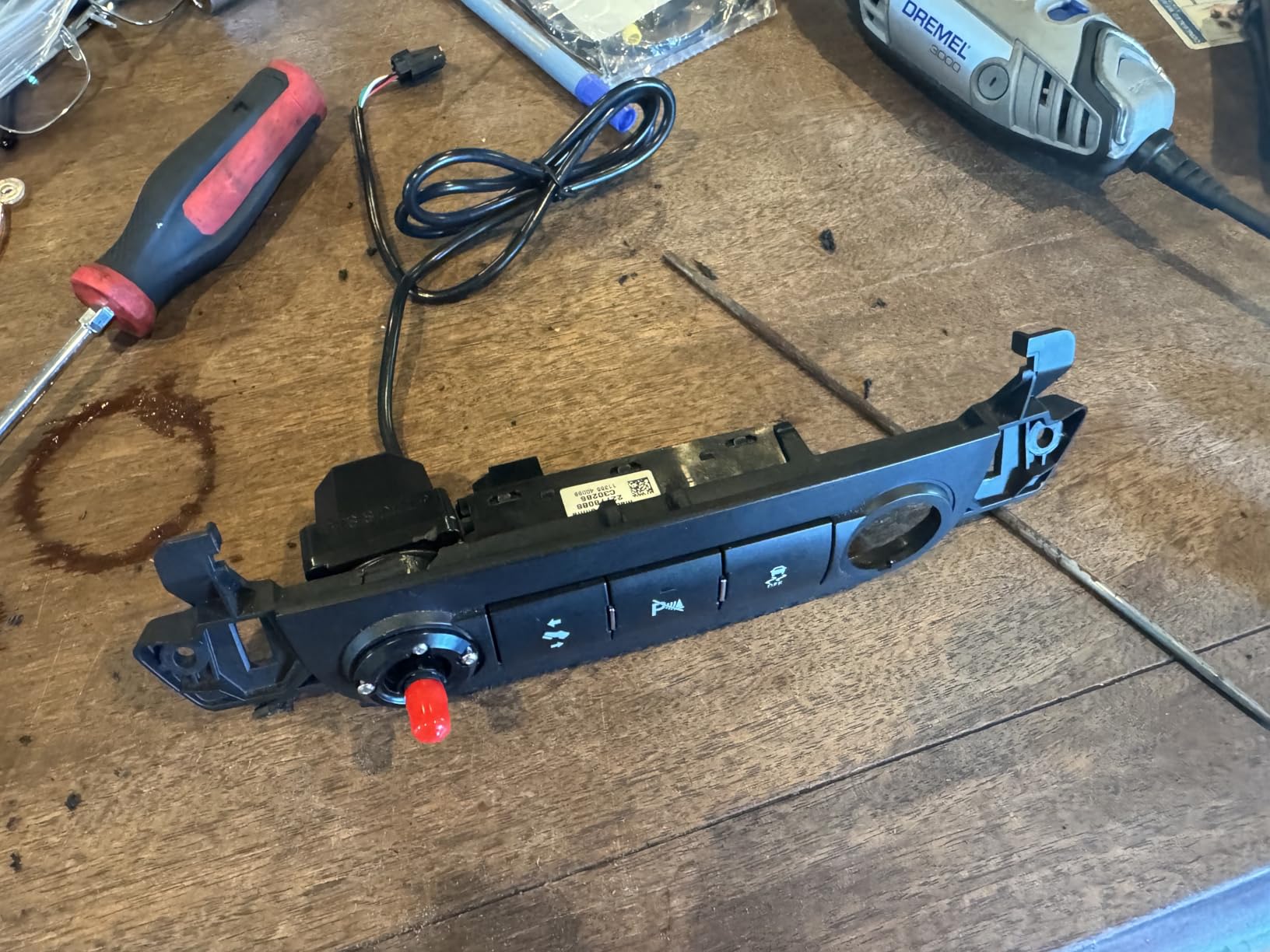
The Prodigy iD is the Tekonsha answer to the portable Bluetooth category, and it takes a different approach. It is a permanently installed proportional controller with a hidden power module and an in-dash knob, and the phone is used for configuration rather than for day-to-day control. You set power output, boost and braking type in the EDGE app, then drive.
Capacity is 1 to 4 axles and 2 to 8 brakes across Ford, GM, Chevy, Dodge, RAM, Toyota and Jeep. The front-facing color LED display shows settings, diagnostics and alerts, and built-in tech support can work from shareable alert logs, which is genuinely useful when a fault appears on a long road.
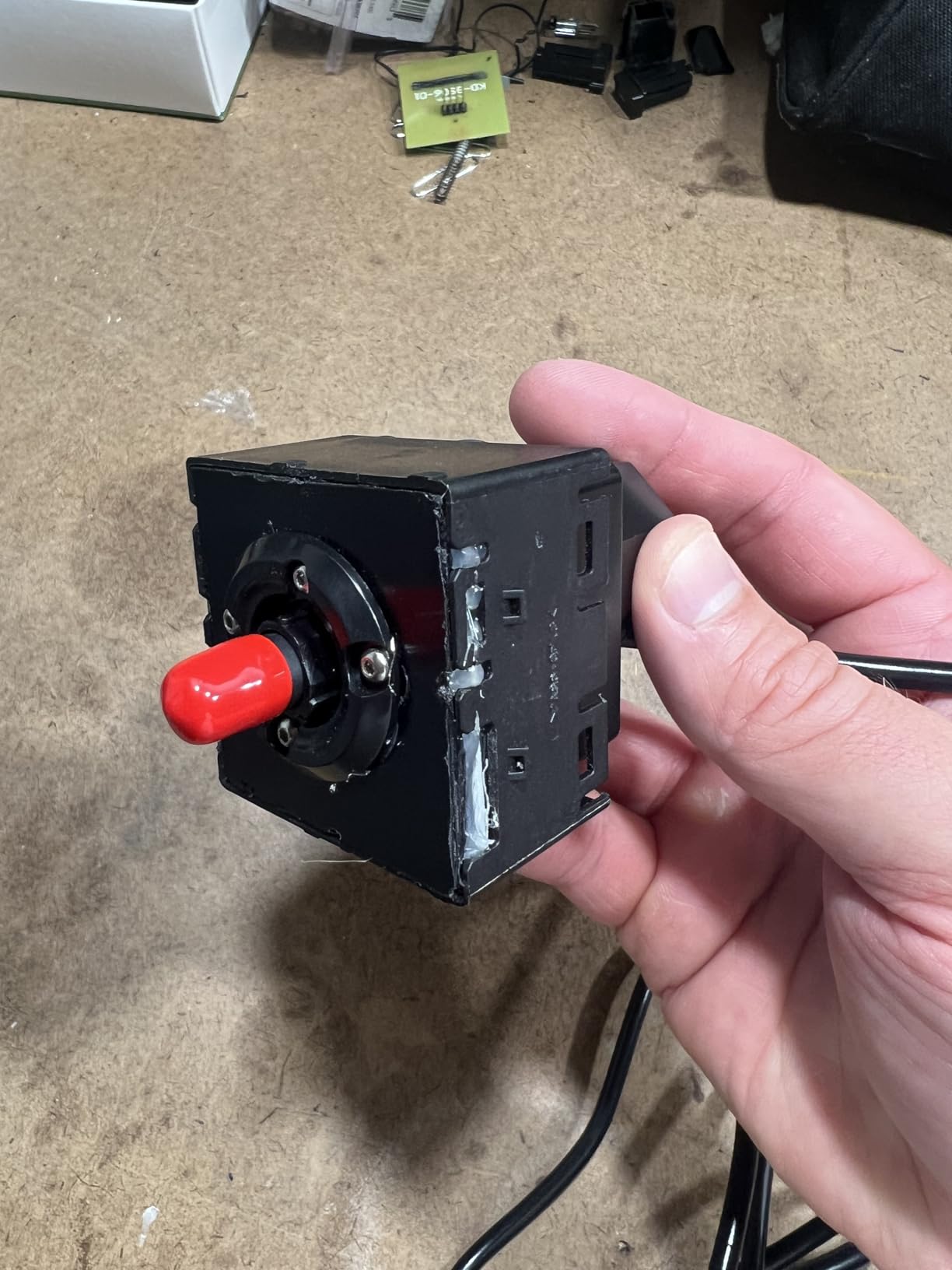
Review text was not returned for this listing, so the 4.4 rating and this feature set are the basis for the assessment. What stands out on paper is the diagnostic depth: alert logs you can send to support is a level of serviceability most controllers in this category do not offer.
Three things to check before buying. The vehicle-specific Plug & Play harness is sold separately. Setup requires a compatible Apple or Android phone or tablet. And the listing itself asks you to verify vehicle compatibility, which is worth doing rather than assuming.
Who this suits
Owners who like configuring with a phone but want the controller permanently installed and not dependent on a live connection while driving. The 1 to 4 axle and 2 to 8 brake range covers everything from a camper to a car hauler.
It also suits people who tow more than one trailer, since app configuration makes storing separate setups straightforward.
Where it falls short
It costs more than conventional dash-knob proportional units for the same core function, and you need the phone to finish setting it up. The 4.4 rating across 127 reviews is thinner evidence than the 7714 behind our top pick, so treat it as a less-proven choice in this category.
If you want to remove the phone from the process entirely, the Primus IQ does the same job without one.
Best Budget Replacement for a Failed Factory Unit: Towpower 8507111
Gihdfer Towpower 8507111 Time-Delayed Electric Trailer Brake Controller
Time-delay with adjustable brake force
1-4 axles and 2-8 brakes
LED display of braking force
Bracket and screws included
Pros
- Broad compatibility for 1-4 axles and 2-8 brakes
- LED display clearly shows current braking force
- Compact design that mounts with minimal effort
- Package includes bracket screws and instructions
- Works as a budget replacement for a failed OE unit
Cons
- Lightweight construction that some describe as cheap
- Time-delay braking is less precise than proportional
- Vehicle wiring harness is a separate purchase
Sometimes the right controller is simply a working controller in the hole where a factory unit died. This one covers 1 to 4 axles and 2, 4, 6 or 8 brake systems, mounts with minimal effort, and shows the current braking force on an LED display. The box includes the controller, a mounting bracket, six mounting screws and instructions.
It is a time-delay design with adjustable brake force, so it fits best where a time-delay unit was already in place. Owners describe it consistently as good value that does the job.
Who this suits
Replacing a failed original equipment unit in the same class, and owners with a small trailer on a budget who need braking restored rather than upgraded. The compact size helps in vehicles with a crowded under-dash area.
It is also a reasonable stop-gap while a better controller is on order, provided your trailer stays light and your routes stay flat.
Where it falls short
The feel of the unit is the honest drawback. Owners describe the construction as lightweight or inexpensive, and time-delay braking is less precise than proportional control. The vehicle wiring harness is a separate purchase and not every adapter fits.
Replacing a factory proportional unit with this one is a downgrade in behavior, not just in build. If the old unit was proportional, buy proportional.
Best Proportional Controller With Built-In Fault Diagnostics: briidea BR-122
briidea Proportional Trailer Brake Controller, Digital Electric Brake Control for 1-4 Axle Trailers, Smooth Stop Technology with Boost Mode, Compatible with Ford/GM/Chevy/Dodge/RAM/Toyota
Proportional braking with boost mode
1-4 axles and 2-8 brakes
LED settings voltage and boost readout
Overcurrent and short circuit protection
Pros
- High-precision motion sensors adjust braking to vehicle deceleration
- Boost function tunes braking for weight distribution
- LED display shows settings output voltage and boost
- Overcurrent and short circuit protection with fault detection
- Emergency manual switch and any-angle mounting bracket
Cons
- Included plug does not adapt to a standard 4-prong adapter
- Some units described as cheap or inexpensive
- Occasional reports of defective units or electrical interference
- Not compatible with some Toyota Sequoia model years
The BR-122 is a proportional controller with the most elaborate protection package among the entry-level units on this list. Alongside high-precision motion sensing and a boost function, it carries overcurrent protection, short circuit protection and fault detection, and the LED display reports settings, output voltage and boost level. That diagnostic layer is the reason it earns a place here.
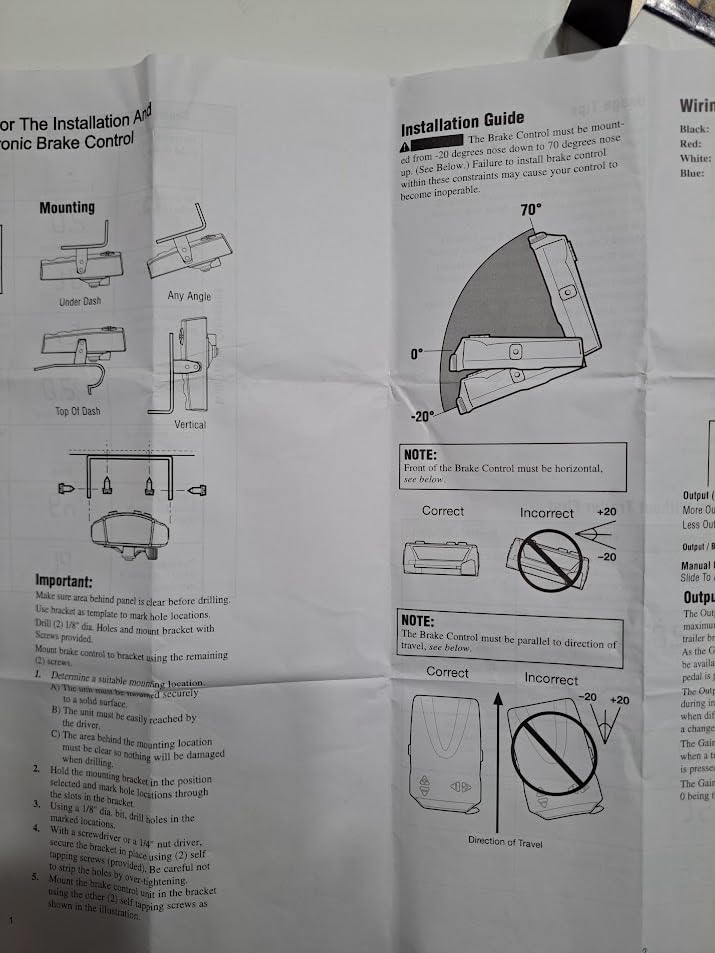
It is rated for 1 to 4 axles and 2 to 8 brakes for travel, cargo and boat trailers, with a bracket that mounts at any position or angle and an emergency manual switch on the unit.
Owners consistently like the smooth proportional stops and the boost mode, and many install it themselves quickly. The fault warnings that flag a short circuit or battery drain are the part that gives people confidence, because a brake problem on a descent is not the moment you want to discover it.
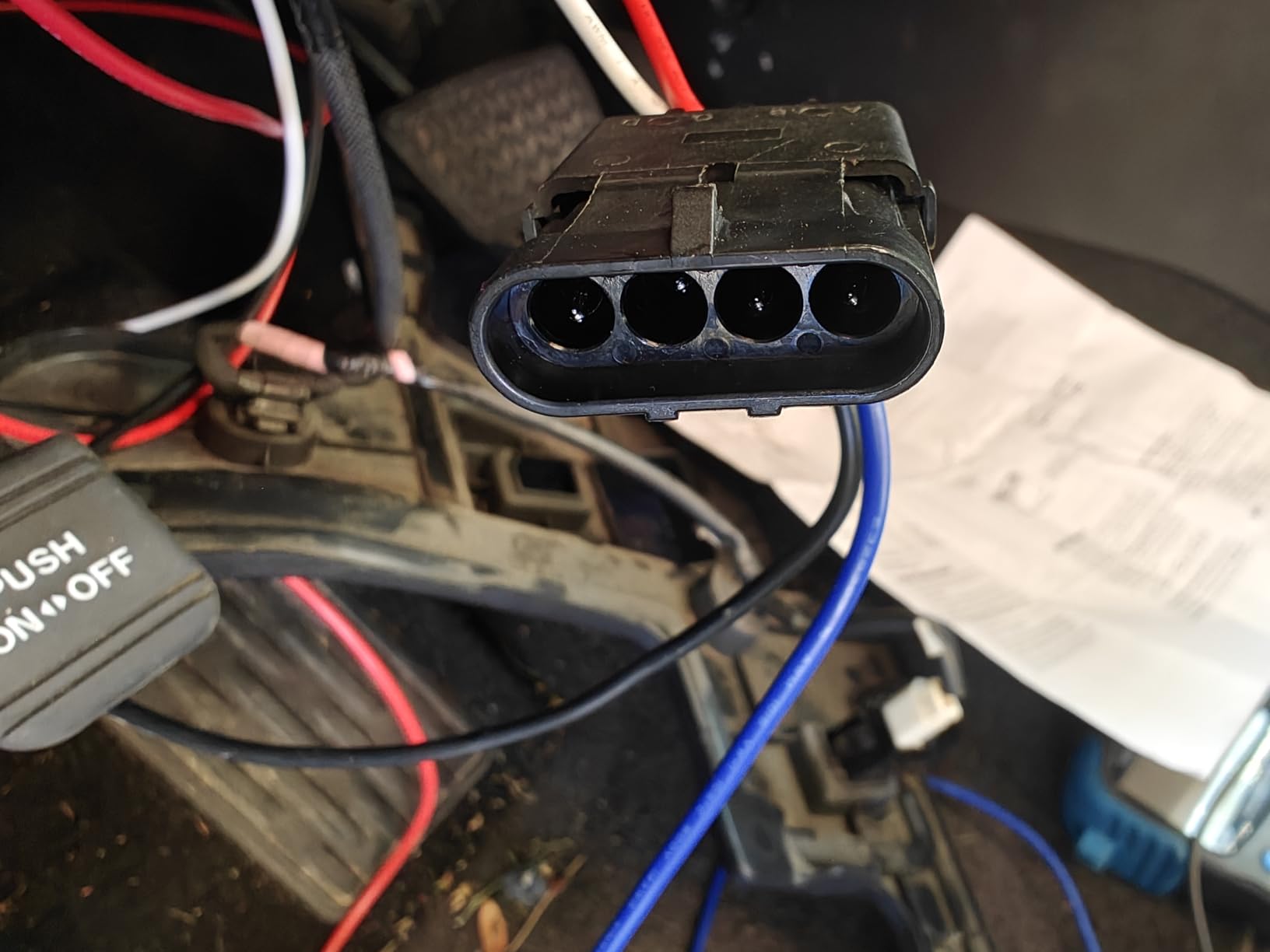
There are real compatibility notes. The included plug does not adapt to a standard 4-prong adapter, so you need the supplied connector block, and the unit is not compatible with some Toyota Sequoia model years. A small number of reviews also report units arriving defective or causing vehicle electrical interference, so check the connector fit before a long trip.
Who this suits
Owners who tow frequently enough to want fault diagnostics but do not want a name-brand price. The 2 to 8 brake range makes it viable for larger rigs than the price would suggest, and the boost function helps when tongue weight changes.
It also suits installers who are comfortable wiring directly, since the connector block approach is not a pure plug-and-play path.
Where it falls short
The connector arrangement is the biggest practical friction, and the Toyota Sequoia incompatibility is specific enough to check. The 4.1 rating is among the lowest here, which usually tracks the same consistency concerns seen in other budget units.
If your trailer is heavy or your routes are steep, spend up for a proportional unit with a stronger build record.
Best Split-Design Controller With an LCD Screen: Kohree KR3588
Kohree Upgraded Trailer Brake Controller Kit, Split Design, LCD Screen, Smart Chip, Proportional Braking, Electric Brake Controller for Trailers with 1-4 Axles
Proportional with automatic leveling
1-4 axles
Split design with LCD display and hidden module
Nine levels of boost
Pros
- Split design puts the LCD in view and the module out of sight
- Proportional braking with automatic leveling and no lengthy setup
- Nine levels of boost for trailer weight sensitivity
- Two 32-bit processor chips in each unit
- Three-wire hookup with generous cable length
Cons
- Display cannot be switched off and stays lit while driving
- USB-C cable required to run from display to module
- Install kit includes few zip ties and heat-shrink splices
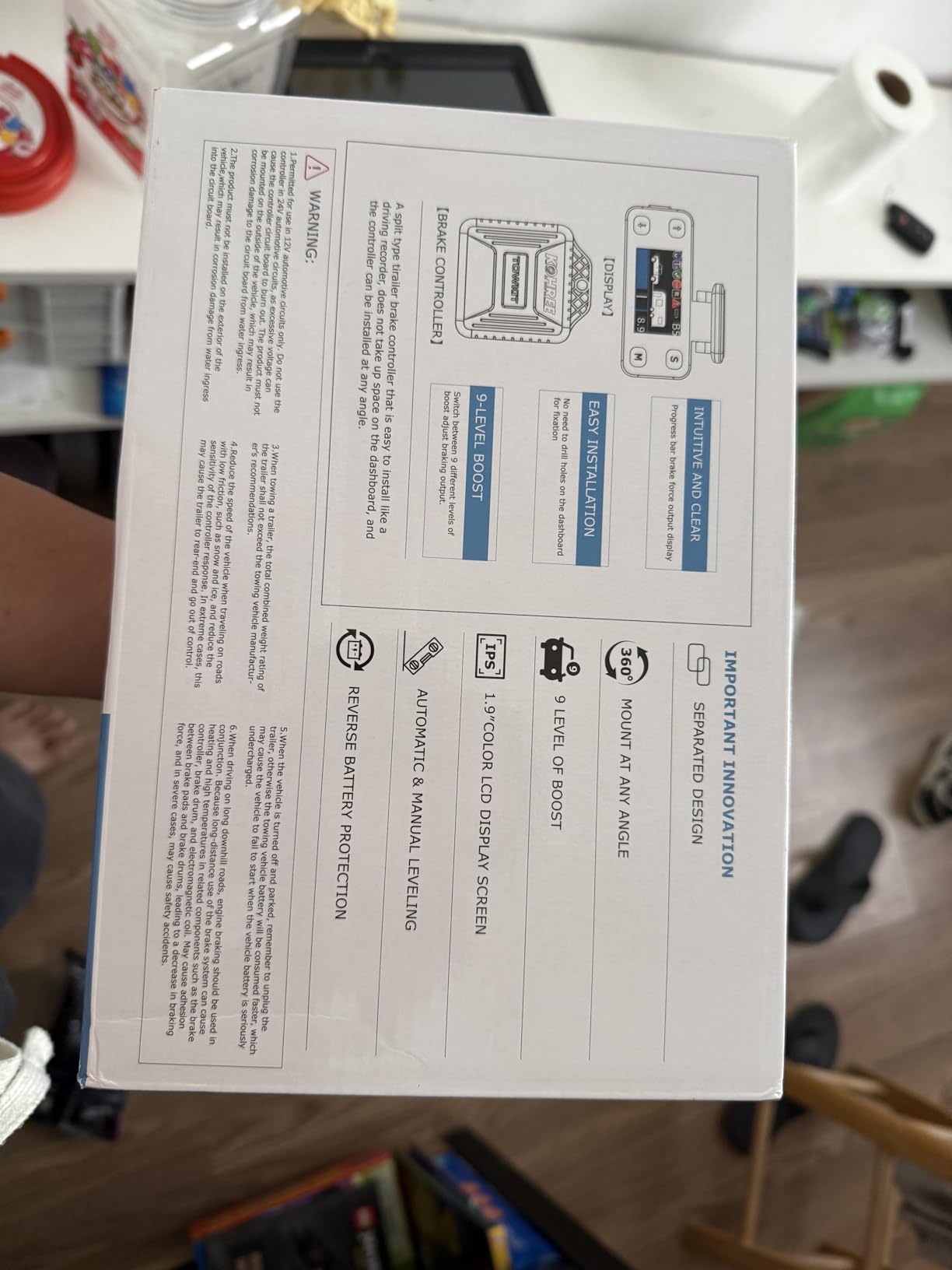
Most hidden-module controllers hide the module and leave a small knob in the dash. The Kohree kit inverts that idea: it puts an LCD display where you can read it, mounted on the dash or the windshield, and hides the control module behind the trim. For anyone who prefers a numeric readout to blinking LEDs, that is a real improvement.
Braking is proportional with automatic leveling, rated for 1 to 4 axles, and there are nine levels of boost for tuning sensitivity to trailer weight. The module can mount at any angle, which again removes the orientation problem that catches out older proportional units.
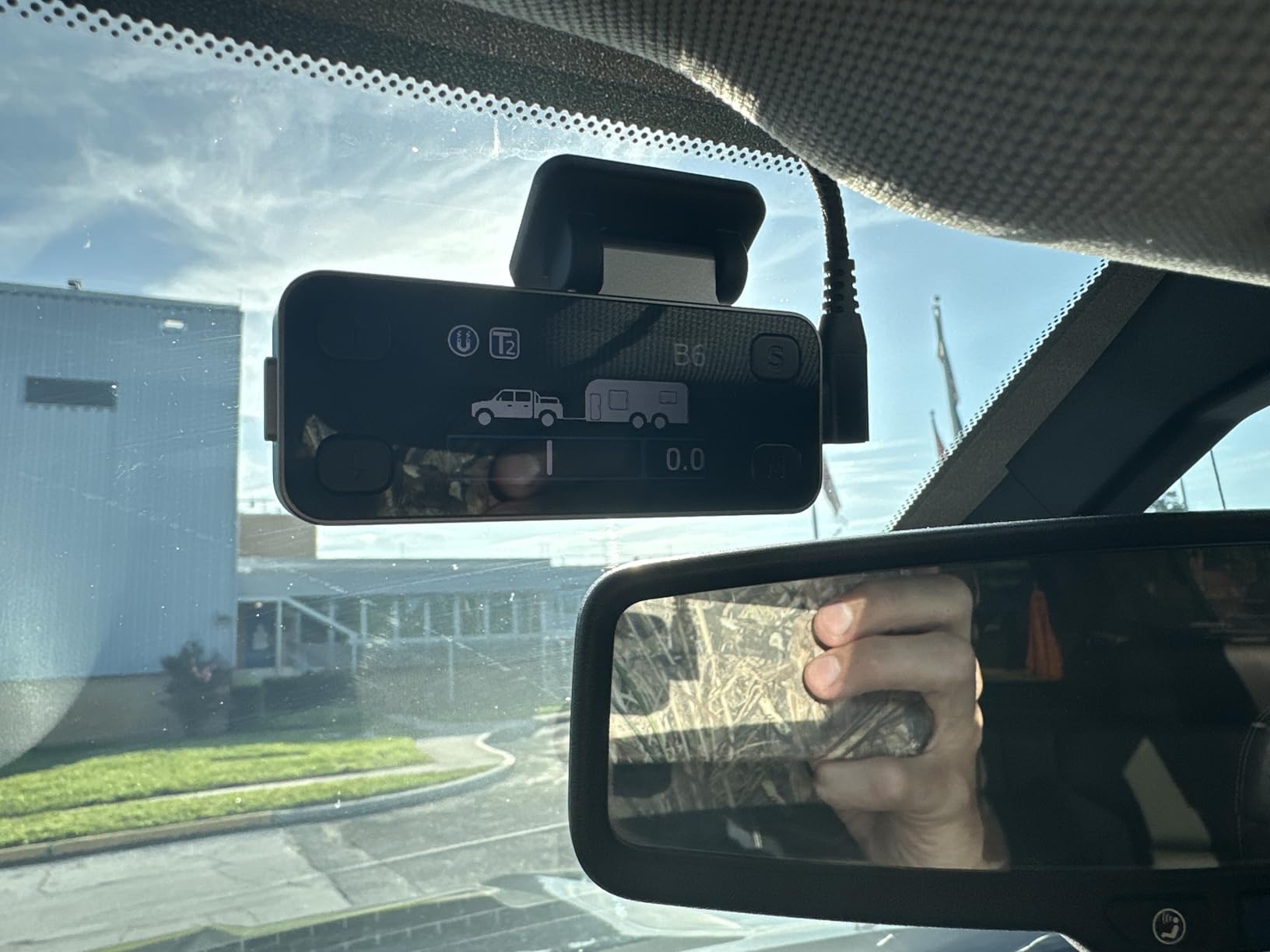
Owners praise the invisible module and report genuinely proportional braking that works well for campers and travel trailers. The three-wire hookup and generous cable length make routing behind the dash straightforward. There is also an instant-on brake button for testing the trailer brakes on their own, which is handy at the start of a trip.
The trade-offs are real. The display cannot be switched off, so it stays lit while you drive, and the USB-C cable has to run from the display back to the module, which complicates a windshield mount. The kit also arrives with few zip ties and heat-shrink splices, so plan on buying your own. One report flags incompatibility with 2008 and 2010 Toyota Sequoia, where it interfered with vehicle electronics.
Who this suits
Owners who want a readable display they can actually glance at, and who do not mind one cable run behind the dash. The 1 to 4 axle range and nine boost levels make it flexible for campers, travel trailers and light cargo trailers.
It also suits installers who want a self-leveling proportional unit without a port-mounting location, since the module goes anywhere behind trim.
Where it falls short
A permanently lit display is a genuine annoyance on night drives, and the USB-C run rules out some clean mounting positions. The warranty is one year, which is short next to the CURT Spectrum’s limited lifetime coverage.
Check your vehicle against the Sequoia note before ordering, and buy your own consumables for the install.
Do You Actually Need a Brake Controller?
You need a brake controller if your trailer has electric brakes and your tow vehicle is not already sending them a control signal. Electric brakes sit idle without a controller, so a 3000 lb braked trailer towed with no controller is functionally a trailer with no brakes at all. Your truck’s brakes carry the full combined weight, and the breakaway system is the only braking left in the trailer if it separates.
Check the trailer’s certification label for its gross weight and whether it is braked. The law is set state by state, and the threshold that triggers a brake requirement differs across jurisdictions, so verify your own state’s rule rather than assuming a national number. A tow vehicle’s factory tow package rating does not by itself mean the trailer is legal without brakes.
One exception: if the trailer uses surge brakes, you do not need an electric brake controller. Surge brakes are activated by the trailer’s own hitch coupler as the tow vehicle pushes, and they are not electrically controlled.
Proportional vs Time-Delay: The Decision That Matters Most
Proportional braking is better for almost every tow. A proportional controller reads your vehicle’s deceleration with an internal sensor and applies exactly that much braking at the trailer in real time. A time-delay controller has no sensor: it ramps to a preset power level over a fixed number of seconds every time you touch the brake, whether you touched it gently or hard.
Here is how they compare on the points that matter.
Sensing: proportional units use an internal inertia or motion sensor, and modern versions use a self-leveling or triple-axis accelerometer so mounting angle matters less. Time-delay units have no sensor at all.
Smoothness: proportional braking tracks the pedal, which means smoother stops and less trailer tire wear. Time-delay braking steps to a set level, which feels abrupt at low speed and on grades.
Maintenance: proportional units have more electronics and a sensor that can be knocked out of level. Time-delay units have no moving parts and nothing to level.
Cost: time-delay units sit at the bottom of the price range. Proportional units cost more, and premium proportional units with hidden modules cost more again.
Best use case: time-delay suits light, occasional, level-road towing. Proportional suits everything else, and specifically suits heavier loads and hill country, which is the complaint that recurs most across owner threads.
If you are torn, buy proportional. The decision you cannot easily reverse is the one you regret, and a proportional unit can be made gentler with its gain setting in a way a time-delay unit cannot be made more responsive.
Electric, Surge or Electric-Over-Hydraulic Brakes
The type of brakes on your trailer determines whether an electric brake controller is even involved. This comes up constantly in owner threads, including on a Honda Pilot forum thread where the owner was hunting for a 4-pin connector to install a controller on a vehicle that never had one.
Electric brakes are the standard on travel trailers, fifth wheels, car haulers and utility trailers. They need a controller, because the signal that applies them comes from your brake pedal.
Surge brakes are common on boat trailers and some small campers. The hitch coupler has a built-in actuator that presses the master cylinder as the tow vehicle pushes forward, so there is no electrical connection and no controller to install. If your trailer has surge brakes, an electric brake controller does nothing for you.
Electric-over-hydraulic brakes combine an electric actuator with a hydraulic master cylinder, common on heavier and hydraulically braked trailers. The wiring story is more complicated, and owners on etrailer.com report ongoing confusion about which controllers will actually activate their electric-over-hydraulic actuators. Before buying any controller for an electric-over-hydraulic trailer, confirm compatibility with the actuator manufacturer rather than assuming a universal controller will drive it.
Matching Axle Count, Brake Count and Tow Vehicle
Match the controller to the trailer, not the other way around. A braked axle carries two brakes, so one axle is two brakes, two axles is four brakes, three axles is six brakes, and four axles is eight brakes. That mapping is what the axle and brake ratings on these products are counting.
For one or two axles, essentially any controller on this list works. Three axles narrows the field to units rated to six brakes, which includes the Primus IQ, the Tow-Pro Elite, the Spectrum, the Prodigy iD and both briidea proportional units. Four axles or eight brakes needs a unit with the full 2 to 8 brake range, which in this roundup means the Spectrum, the Prodigy iD, the Timilge 8508211, the BR-121, the Towpower and the BR-122.
Then look at your tow vehicle. A half-ton truck towing a small travel trailer is well served by a 1 to 2 axle controller. A full-size pickup or SUV towing a loaded fifth wheel deserves a 1 to 3 or 1 to 4 axle range and a hidden module for legroom. A commercial or duffel setup may run 24V, and that narrows the field to 24V-compatible units like the Tow-Pro Elite.
Finally, check the connector. A 7-way RV blade connector carries the brake control signal and is what you need for a modern controller. A 4-pin flat connector generally does not, which is why several owner threads describe hunting for a factory brake-control port that their vehicle does not have.
Installation, Harnesses and Connectors
Most of the name-brand controllers on this list are not supplied with a wiring harness. Tekonsha, REDARC and CURT all sell vehicle-specific Plug & Play harnesses separately, and the product listings say so plainly. Budget for that kit before you schedule the install, not after.
A vehicle-specific harness plugs into the factory brake-control port under the dash and into the 7-way connector, which is a genuinely plug-and-play path when your vehicle has the port. If your vehicle has no factory brake-control port, a universal pig tail harness routes the brake light signal through a splice, which means cutting and taping wire under the dash. That is where a lot of self-install confidence gets tested.
The portable in-line approach, which the CURT Echo Mobile uses, sidesteps all of it. The controller sits between the vehicle 7-way and the trailer 7-way, so there is no splicing and nothing to remove when you unhitch.
Two practical installation notes. Mount the controller where the override is reachable without looking down, since that is your first tool in a sway event. And check the 7-way connector pins for corrosion before a long trip, clean them and add dielectric grease; a green pin is a brake problem that looks like a controller problem.
A video alongside the printed instructions is worth ten minutes, since several brands in this category ship documentation that owners find hard to follow on their own.
How to Set Brake Gain in Five Steps?
Gain is the single setting that decides how your trailer brakes feel, and it must be set with the trailer loaded. An unloaded trailer is lighter and will not give you an honest reading.
1. Park level. Level ground, hitched and connected, parking brake released so the vehicle can be moved. Most modern proportional units self-level, but starting level costs nothing.
2. Set gain low. Turn the gain to the lowest setting. The override lever or button is what you will use for the test, and low gain means you cannot over-brake during it.
3. Accelerate to about 20 mph. Get rolling to a normal towing speed so the controller sees real deceleration demand rather than a standing start.
4. Use the manual override and watch. Pull the override and see how the trailer brakes respond. No trailer lock-up, no fishtailing, and the brakes release cleanly? Your gain is about right. Locking wheels or a hard surge means turn it down. Barely any braking means turn it up.
5. Retest under load. With the trailer loaded to near its typical weight, repeat at the same speed. Boost levels can add a final increment for a heavy tongue weight on a descent.
If gain is right but the brakes still feel uneven, the issue is mechanical: brake pad wear or magnet gap on one wheel, not the controller. Owners in the referenced forum threads chase this one for weeks before checking the magnets.
Troubleshooting by Symptom
Most controller complaints are one of four symptoms, and each has a short list of likely causes.
No brakes at all. Check the trailer brake light first, since that isolates the 7-way and trailer brakes from the controller. Then check the gain and that the brake light signal is reaching the controller. A controller with no brake light input will never command brakes. Verify the harness is fully seated at both ends.
Weak brakes. Gain is set too low, or the controller is not receiving a brake light signal so it is under-commanding. On a time-delay unit, the power level itself is set too low. Also check trailer ground: a poor ground connection reduces braking force noticeably.
Grabbing or locking wheels. Gain is too high, or one brake is dragging while others do not. Check brake pad wear and magnet adjustment per wheel. If only one wheel grabs, the controller is not the problem.
Locking wheels or sway. Reach for the manual override immediately, and keep it applied until the sway stops. Sustained manual override at full power slows the combination far faster than trail braking. This is the technique that dominates current owner video on stopping sway, and it is why a reachable override is not a luxury feature. Once stable, back the gain down and re-run the calibration.
A fault light or diagnostic alert. Read the alert rather than clearing it. Overcurrent and short circuit codes on units like the briidea BR-121 or the BR-122 usually point at a wiring fault, a corroded connector or a dragging brake drawing too much current. The Prodigy iD can also send its alert log to Tekonsha support, which is worth doing before you start pulling wires.
How to Spot Counterfeit Brake Controller Listings
This category has a documented clone problem, and a cloned controller is a safety device that can fail without warning. Three checks catch most of it.
Check the listing title. A product named only by the number it “replaces” or the model it is “compatible with”, with no brand of its own, is a clone listing. A genuine product names its own brand and model.
Check the listing position. If a listing for a well-known model sits far below every other listing for the same model, you are looking at a different product wearing the same name, not a deal.
Check the details. Clones frequently ship without a warranty, with thinner documentation, and with no manufacturer contact. The units on this list from Tekonsha, REDARC and CURT each carry a stated warranty and a real service path, and that is part of why they rank where they do.
For a device whose failure means a loaded trailer pushes back on a downgrade, buy from a seller with an established return path and stick to named brands with published warranty terms.
Frequently Asked Questions
Do I need a brake controller for a 3000 lb trailer?
Yes, if the trailer has electric brakes. Without a controller those brakes never receive a signal, so the trailer stops contributing to braking at all and the tow vehicle must stop the full combined weight alone. The breakaway system is the only braking left in the trailer if it separates. The weight threshold where brakes are legally required differs by state, so check your own state’s rule.
Is a proportional or time-delay brake controller better?
Proportional is better for almost every tow. It senses your vehicle’s deceleration and applies matching braking at the trailer in real time, which gives smooth stops and less trailer tire wear. A time-delay controller has no sensor and ramps to a preset level over a fixed number of seconds regardless of how hard you braked. Time-delay is only worth it for light, occasional, level-road towing.
Are wireless trailer brake controllers any good?
Yes, and the CURT Echo Mobile is the strongest example here. It plugs in between the vehicle and trailer 7-way connectors with no permanent wiring and stores multiple vehicle and trailer profiles. Crucially, its triple-axis accelerometer keeps proportional braking working locally, so a Bluetooth dropout loses the app readout rather than the braking. Its main drawbacks are the supplied retention strap, its length, and phone app reliability.
Which trailer brake controller is better, Redarc or Tekonsha?
Both are strong, and the choice comes down to fit rather than quality. Tekonsha’s Primus IQ covers 1 to 3 axles with a snap-in clip and LED diagnostics, and has by far the largest owner review base of any controller we covered. REDARC’s Tow-Pro Liberty and Tow-Pro Elite hide the module and give a cleaner factory-style dash, and the Elite adds 12V and 24V compatibility plus an off-road mode. For multi-axle coverage, Tekonsha. For dash appearance and off-road work, REDARC.
What is the best trailer brake controller for the money?
The CURT Spectrum is the best value on this list. It is proportional, covers 1 to 4 axles and 2 to 8 brakes, splits into a dash knob and a hidden module, and carries a limited lifetime manufacturer warranty. Budget owners wanting the lowest-cost proportional option can consider the Timilge 8508211, though warranty and build consistency are weaker there.
Do I need a brake controller if my trailer has surge brakes?
No. Surge brakes are activated by the trailer’s hitch coupler as the tow vehicle pushes forward, with no electrical connection involved, so an electric brake controller does nothing for them. Surge brakes are common on boat trailers and some small campers. You need an electric brake controller only for electric or electric-over-hydraulic trailer brakes.
How do I set the gain on a new brake controller?
Level ground, hitched and loaded, parking brake released. Set gain to its lowest setting, accelerate to about 20 mph, then pull the manual override and watch the trailer. No lock-up and no surge means the gain is right; locking wheels means turn it down, barely any braking means turn it up. Repeat the test with the trailer loaded to its typical weight before you rely on the setting.
Final Verdict: The Best Trailer Brake Controllers for Towing in 2026
For most people reading this, the Tekonsha Primus IQ 90160 is the answer to the question of the best trailer brake controllers for towing. It is proportional, rated to three axles, it has diagnostics and a three-level boost, and its 4.7 rating across more than 7700 owner reviews is the deepest evidence in the category. Buy the vehicle-specific harness at the same time.
Pick something else when your situation is different. Tow with two vehicles and want zero wiring: the CURT Echo Mobile 51180, and accept that it has no manual override lever. Want the cleanest dash and only one or two axles: the REDARC Tow-Pro Liberty. Tow off-road or run 24V: the REDARC Tow-Pro Elite. Need four axles or eight brakes and would rather not step up to a premium tier: the CURT Spectrum 51170, which also has the strongest warranty here. Want the lowest-cost proportional control: the Timilge 8508211. For a failed factory unit, a light trailer or a very short trip, the time-delay options on this list will do the job at the entry level of the category.
Whichever one you choose, install it, calibrate the gain with the trailer loaded, and check the 7-way connector pins before the first trip. That last fifteen minutes is what separates a controller that works from one that works when you need it.