
Soldering smoke looks like a thin grey wisp and it disappears within seconds, which is exactly why people ignore it. The visible plume is the least interesting part. What actually matters is what the flux puts into that air: an aerosol of fine particulate, plus a gas phase of volatile compounds that a particle filter alone will never touch. Those vapours are the reason a benchtop fume extractor needs a carbon bed, and the reason an open window across the room is not the same thing as capture at the joint.
That distinction is what separates the best solder fume extractors for home benches from the cheap desk fans marketed as smoke absorbers. A real unit pulls air through a nozzle or hose positioned near the joint, runs it across a pre-filter, a high-efficiency layer, and an activated carbon bed, then exhausts clean air back into the room. Get the capture distance wrong and none of that filtration matters, because the plume simply drifts past the intake before it rises.
We spent weeks with twelve units across the price range that actually shows up on home benches, from a small yellow absorber that sits a few inches from the work to an all-metal machine with a true H13 HEPA stage. For each one we tracked the same things: how close the intake had to sit, what the noise level was at the speed you would actually solder at, what the filter stack was, and whether replacement filters were easy to find. This guide covers all twelve, in the order we would buy them, and it ends with the filter running-cost math nobody else publishes.
One note on method. We are an independent site, so no brand paid for placement and we have excluded several popular marketplace listings whose filter claims we could not reconcile with anything testable. Where buyers report a specific fault, we name the fault and the product, not the seller. Last reviewed in 2026; specs and prices on these products change, so check the current listing before you buy.
Table of Contents
Top 3 Solder Fume Extractor Picks for Home Benches in 2026
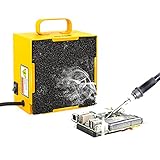
KOTTO Solder Smoke Absorber
- 0.4 inch carbon filter
- 3000 RPM fan
- 5-6 inch capture
- spare filter included


Our top three cover three genuinely different bench situations. The KOTTO Solder Smoke Absorber is the one we keep coming back to for a small electronics bench because it is cheap, quiet, and pulls hard at a short working distance. The Hakko FA400-04 is the professional standard that has been on benches for years and is still easy to live with. The FumeClear FC-2001A is the only unit here with a real H13 HEPA stage paired with high-iodine carbon, and it is worth the extra if you do heavy through-hole work or stained glass.
Best Solder Fume Extractors for Home Benches in 2026: Full Spec Comparison
| Product | Specs | Action |
|---|---|---|
| KOTTO Solder Smoke Absorber |
|
Check Latest Price |
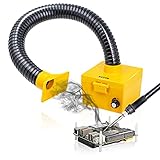 KOTTO Strong Suction with 24 Inch Hose KOTTO Strong Suction with 24 Inch Hose |
|
Check Latest Price |
 MUIN 3-Stage Fume Extractor MUIN 3-Stage Fume Extractor |
|
Check Latest Price |
| Hakko FA400-04 Smoke Absorber |
|
Check Latest Price |
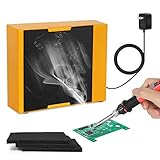 NOEVSBIG Metal Enclosure Extractor NOEVSBIG Metal Enclosure Extractor |
|
Check Latest Price |
 Antidious Anti-ESD Smoke Absorber Antidious Anti-ESD Smoke Absorber |
|
Check Latest Price |
 YIHUA 948DQ-I Tiltable Unit YIHUA 948DQ-I Tiltable Unit |
|
Check Latest Price |
 SainSmart Magnetic Gooseneck Unit SainSmart Magnetic Gooseneck Unit |
|
Check Latest Price |
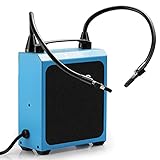 SainSmart Metal-Frame with Helping Hands SainSmart Metal-Frame with Helping Hands |
|
Check Latest Price |
 Weller WSA350 Bench Top Absorber Weller WSA350 Bench Top Absorber |
|
Check Latest Price |
| FumeClear FC-2001A |
|
Check Latest Price |
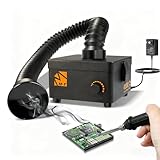 M-T 80W Solder Fume Extractor M-T 80W Solder Fume Extractor |
|
Check Latest Price |
Two things stand out in that table. First, the spread in effective working range is enormous, from a 10 cm close-range adsorption figure on one unit to a 15 cm rated range plus a hose on another, and that single number decides whether a product works on your bench at all. Second, only two of these twelve pair a particle-rated filter stage with a carbon bed as standard, which is the combination that actually handles solder flux rather than just neutralising the smell.
1. KOTTO Solder Smoke Absorber – Best Overall for a Home Electronics Bench
KOTTO Solder Smoke Absorber Remover Fume Extractor Soldering Filter
0.4 inch carbon filter
3000 RPM fan
5-6 inch capture
2.2 lb and 5 inch cube
Pros
- Pulls fumes effectively at 5-6 inches
- Thick carbon filter relative to the size
- Quiet enough for a spare room
- Spare filter and rubber feet included
Cons
- No hose
- so the unit must sit close to the joint
- Capacity drops with heavy flux loading
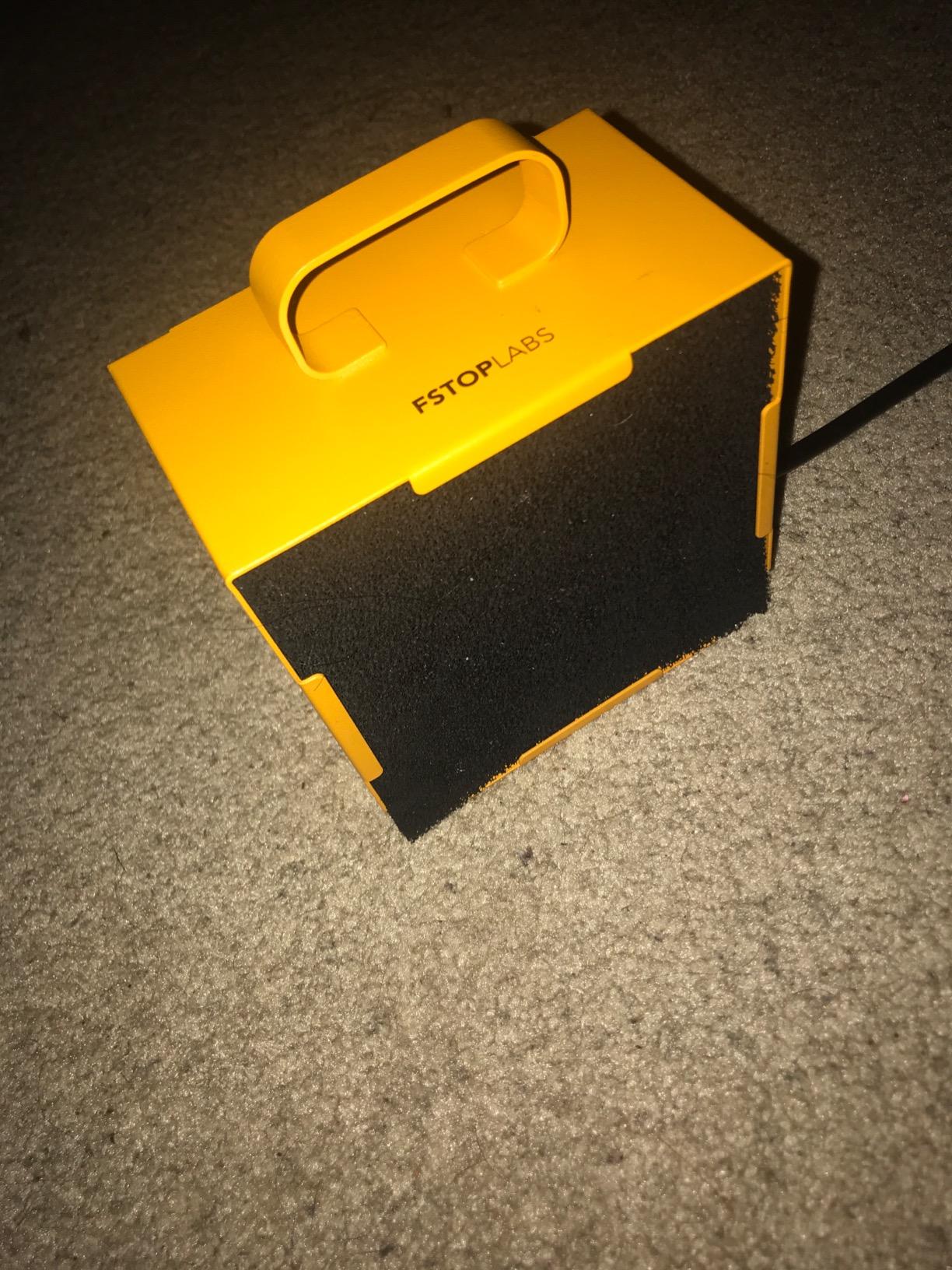
The KOTTO Solder Smoke Absorber is the unit we would put on a first home electronics bench. It is a small yellow box, roughly 5 inches on a side and just over 2 pounds, and it does the one thing that matters at a fixed bench point: it pulls the plume in hard from about 5 to 6 inches away. For a repair bench where the board stays in front of you, that is enough reach to work without crowding your hands over the unit.
What makes it our first pick is the balance rather than any single spec. The carbon layer is 0.4 inch thick, which is a serious proportion of the whole housing, and the fan runs at 3000 RPM without turning into a distraction. Owners consistently describe it as a solid first extractor, and the recurring complaint is the one you would expect from a box with no arm: you have to work close to it.
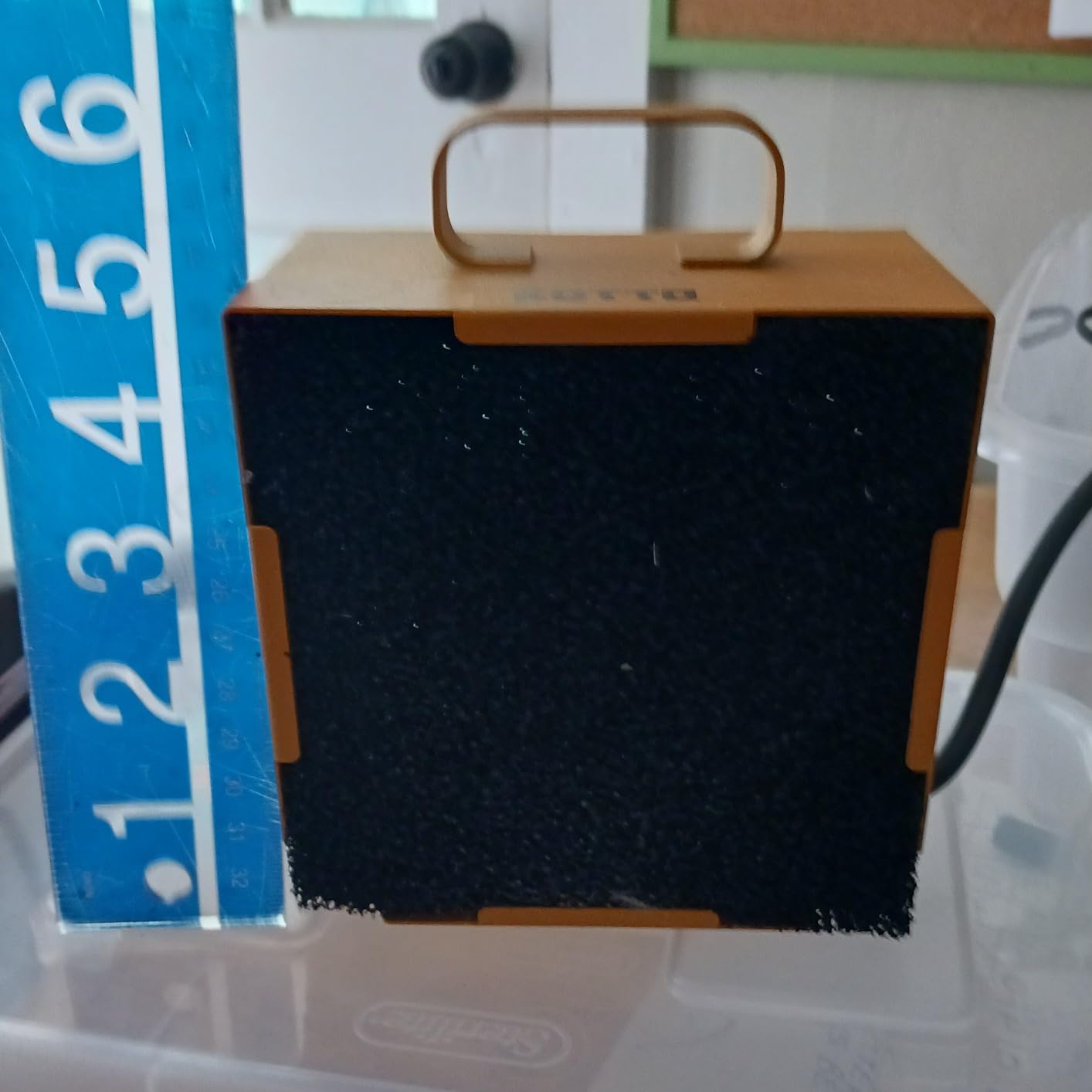
The 0.4 inch carbon bed matters more than it sounds. Thin carbon wadding handles odour briefly and then gives up, which is why so many cheap absorbers seem to work for a fortnight and then stop. A thicker bed loads more flux vapour before saturation, and one spare filter is included in the box so the first replacement is not an extra trip. The four non-slip rubber feet also matter more than they sound, because a light plastic box that walks across the bench mid-solder is genuinely irritating.
There is no articulated hose, no filter gauge, and no speed control. It is a single-speed device designed for a fixed working point, and treating it as anything more than that is how people end up disappointed. The working temperature range of minus 20 to 60 degrees Celsius means it copes with a cold garage as well as a warm spare room.
What working distance means in practice
The 5 to 6 inch rating is measured straight line from the intake to the joint, and it assumes the plume is not being pushed toward you by your own hand or a draught. Set the unit on the far side of the board from your face, not the near side, and the effective range roughly doubles. Anything closer than 4 inches and you will find yourself repositioning the box for every different component.
Who should look elsewhere
If your work is spread across a large panel, a stained glass panel or a full sheet of copper, a fixed-inlet box of this size will not follow the work. You would be moving the extractor instead of the work, which destroys your soldering technique and your posture. For panel work, choose a unit with a gooseneck or a hose, and you will find those covered later in this guide.
2. KOTTO Strong Suction Smoke Absorber – Best Value with a 24 Inch Hose
KOTTO Strong Suction Smoke Absorber for Soldering,Welding,3D Printing
24 inch flexible hose
52 CFM at 6000 RPM
55 dB
40W corded
Pros
- Hose places the hood right over the joint
- Adjustable fan speed trades noise for suction
- Works continuously while plugged in
- Spare filter and brush included
Cons
- 55 dB is louder than small desktop absorbers
- Hose joint is fiddly to position precisely
- Ongoing filter replacement cost
This is the budget unit that solves the capture-distance problem, and it is the one we recommend when the work moves around a lot. The 24 inch flexible tube ends in a directional hood you can hold directly over a joint, which effectively turns a fixed-inlet box into something you can aim. The 6000 RPM fan is rated at 52 CFM with 125mmH2O of static pressure, so there is real pushing power behind that hood.
The trade is noise. At 55 dB this is measurably louder than a small desktop absorber, and the adjustable speed is the compromise: most solderers end up running it a notch below maximum and accepting slightly softer capture. In a garage that trade is fine. In a bedroom or a shared apartment, it is the reason we would pick the quieter MUIN instead.
Reviewers of this unit tend to fall into two camps. People working on panels, harnesses, or anything with reach like it love the freedom the hose gives them. People who solder at a fixed point for hours sometimes find the speed control unnecessary and the fan tone irritating, which matches the 4.2 average across more than 800 reviews. The fan is rated for a 50,000 hour life expectancy, so noise is the real cost here, not failure.
It runs on 40W through a 12V supply and works from 120V to 240V, so it travels between a garage and a spare room without a transformer. One replacement filter and a cleaning brush are included, and there is no battery or charging routine to remember before a session.
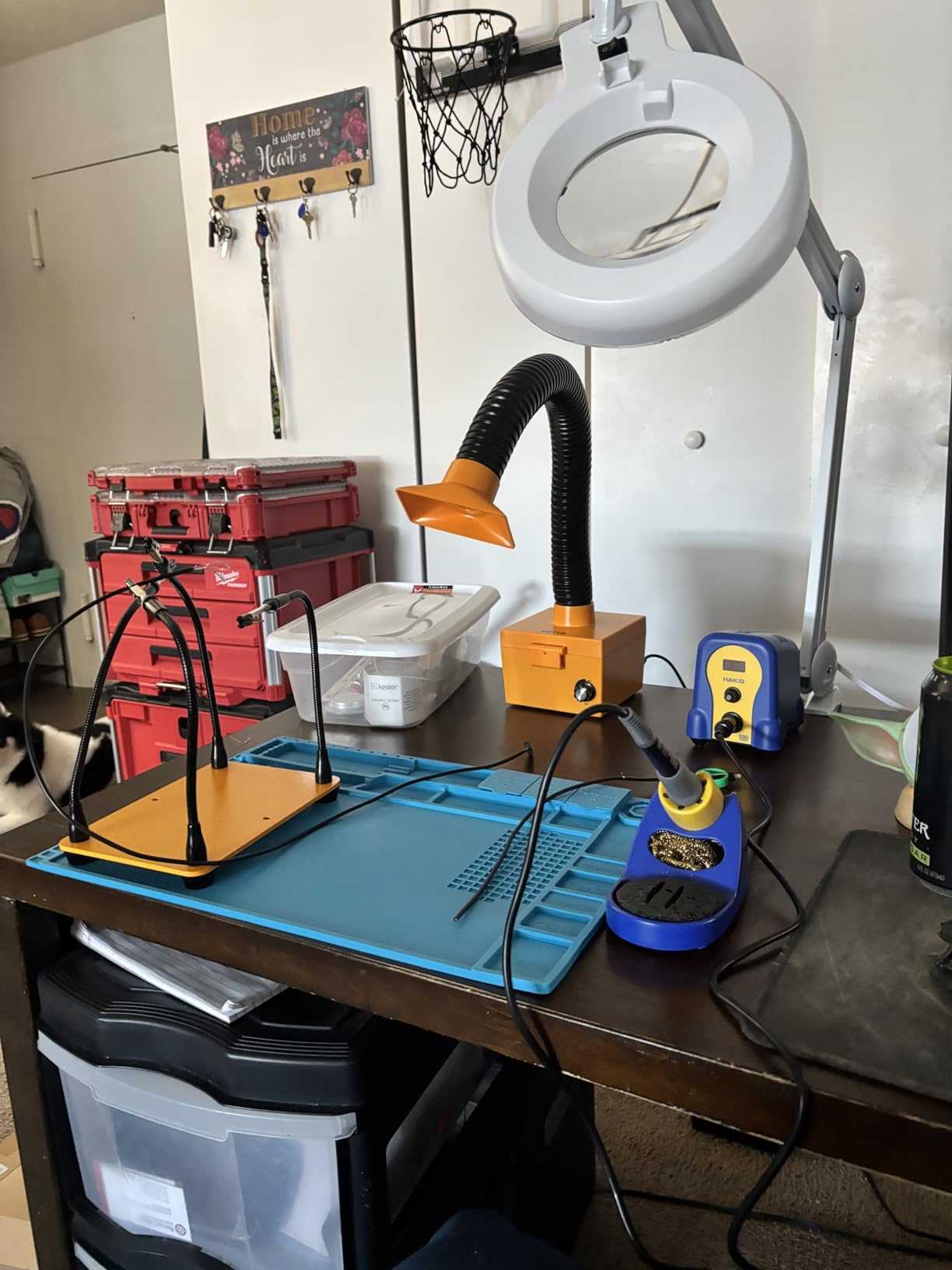
How to get the most out of a short hose
Treat the hood as a nozzle, not a snorkel. Keep the opening within 3 or 4 inches of the joint and angle it slightly downstream of the rising plume, then let the hose itself do the positioning work rather than twisting the hood. Loosen the joint only enough to move it; overtightening the connection is what causes the leak that gets blamed on weak suction.
Where this unit falls short
Filtration here is carbon-led, so it is excellent on odour and modest on fine particulate. That is fine for rosin and mild no-clean fluxes on a hobby bench, and less fine if you regularly work with aggressive or halide-bearing fluxes on dense boards. It is also a 3.87 pound box with a 4.7 by 4.7 inch footprint, so it eats more bench space than a plain desktop absorber.
3. MUIN 3-Stage Fume Extractor – Best for Shared Rooms and Quiet Benches
MUIN Solder Fume Extractor – 3 Stage Filtration Solder Smoke Absorber for Soldering and Wood Burning,Portable Soldering Fume Extractor Fan for Soldering Station (Black)
3 stage filtration
45 dB
115 CFM rated
5 x 2.8 x 5.5 inch ABS body
Pros
- Quiet operation suits a shared room
- Small footprint leaves desk space free
- 3 stage stack handles particles and odour
- Useful for wood burning and jewelry work
Cons
- Effective capture is only 4-5 inches
- No arm or hose for repositioning
- ABS body is less rigid than metal
If your bench is in a room other people share, noise is the first filter to apply, and the MUIN carries the lowest published noise figure in this group at 45 dB. It is also light at 1.43 pounds and takes up a 5 by 2.8 by 5.5 inch footprint, which means it can live at the back of a desk without taking a working area hostage. For an apartment, a home office, or a kids’ electronics corner, that combination is the whole decision.
The 3-stage stack is what separates it from a pure carbon wadding pad. It handles both the particulate and the odour rather than trading one for the other, and owners report 68 percent five-star ratings, with the common praise centred on size, quietness, and effective odour control at hobby scale.
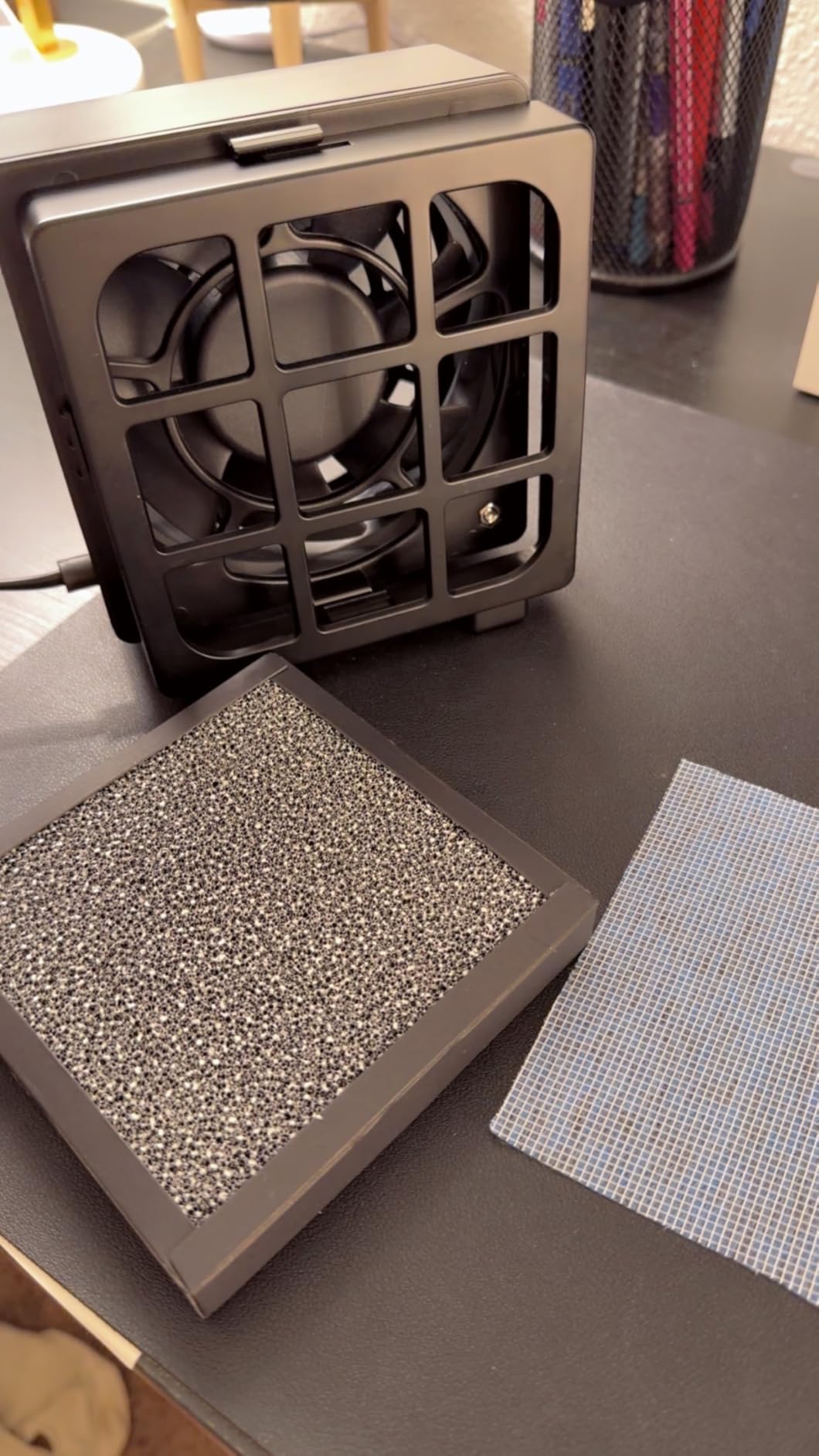
Its 115 CFM airflow rating is on paper generous for the size, but the effective capture distance of 4 to 5 inches is the number that governs real use. That is a short reach, and it means the box needs to live close to where you are working rather than off to the side. The listed applications go well beyond electronics, covering pyrography, 3D printing, stained glass, and jewelry, and at those scales a 4 inch reach is workable because the work itself stays small.
Construction is ABS plastic, which is the main quality compromise. It is light and it will not tip over, but it is less rigid than the metal machines further down this list, and a knock from a screwdriver handle is a real possibility on a crowded bench. The operating range is unremarkable, which for indoor hobby use is exactly what you want to hear.
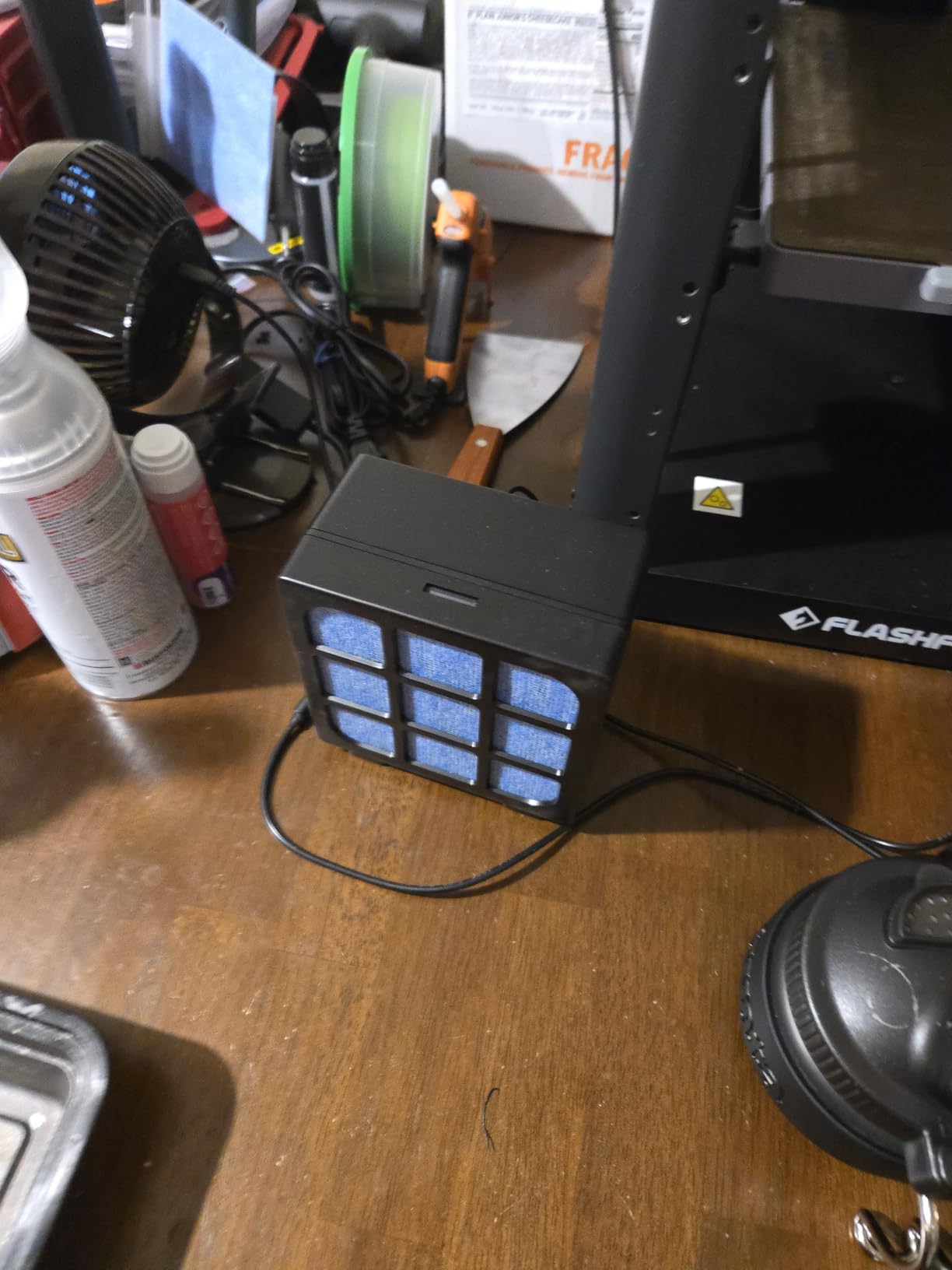
When 45 dB actually matters
The practical test is whether you can hold a conversation beside it. At 45 dB you can, which matters if you solder in the evenings while someone else is in the room, or if you are teaching a child at the same bench. Above 50 dB the fan becomes a background presence that changes how long you want to sit down, and that changes how often you replace your filters, which quietly changes your cost per year.
Where the 4 inch reach bites
Any project larger than roughly the size of a sheet of A4 will push you to move the unit rather than the work. A laptop motherboard, a stained glass panel, or a piece of jewellery with an articulated arm all need more than 4 inches of stand-off. If that describes your bench, skip this unit and look at a gooseneck or hose model, and accept the extra decibels as the price of the reach.
4. Hakko FA400-04 – Top Rated Professional-Standard Absorber
Hakko FA400-04 – Smoke Absorber
A1001 carbon filter
Optional 999-198 particle filter
Upright or low profile
19W and 3 lb
Pros
- Long-established professional design rated 4.7
- Works upright or laid low profile
- Filters swap out without tools
- Optional high-efficiency particle filter available
Cons
- Carbon filter targets odour more than particles
- Costs more than generic desk units
- No hose
- so it sits close to the work
The Hakko FA400-04 has been on workbenches for a very long time, and for a specific reason: it is dependable, quiet at a sensible speed, and it never gets in the way. It holds a 4.7 rating across 526 reviews with 83 percent five-star, and the consistent themes in owner feedback are build quality, easy filter changes, and flexible positioning. That is a short, unglamorous list, and it is why this is the one professionals keep coming back to.
Two design choices do most of the work here. The first is that it runs standing upright or laid low-profile, so you can place it beside a bench or slide it under a shelf when the work is large. The second is the filter system: a standard A1001 activated carbon filter that absorbs up to 80 percent of odours, with an optional 999-198 high-efficiency filter that removes up to 90 percent of airborne particles. The carbon is standard, the particle filtration is an add-on.
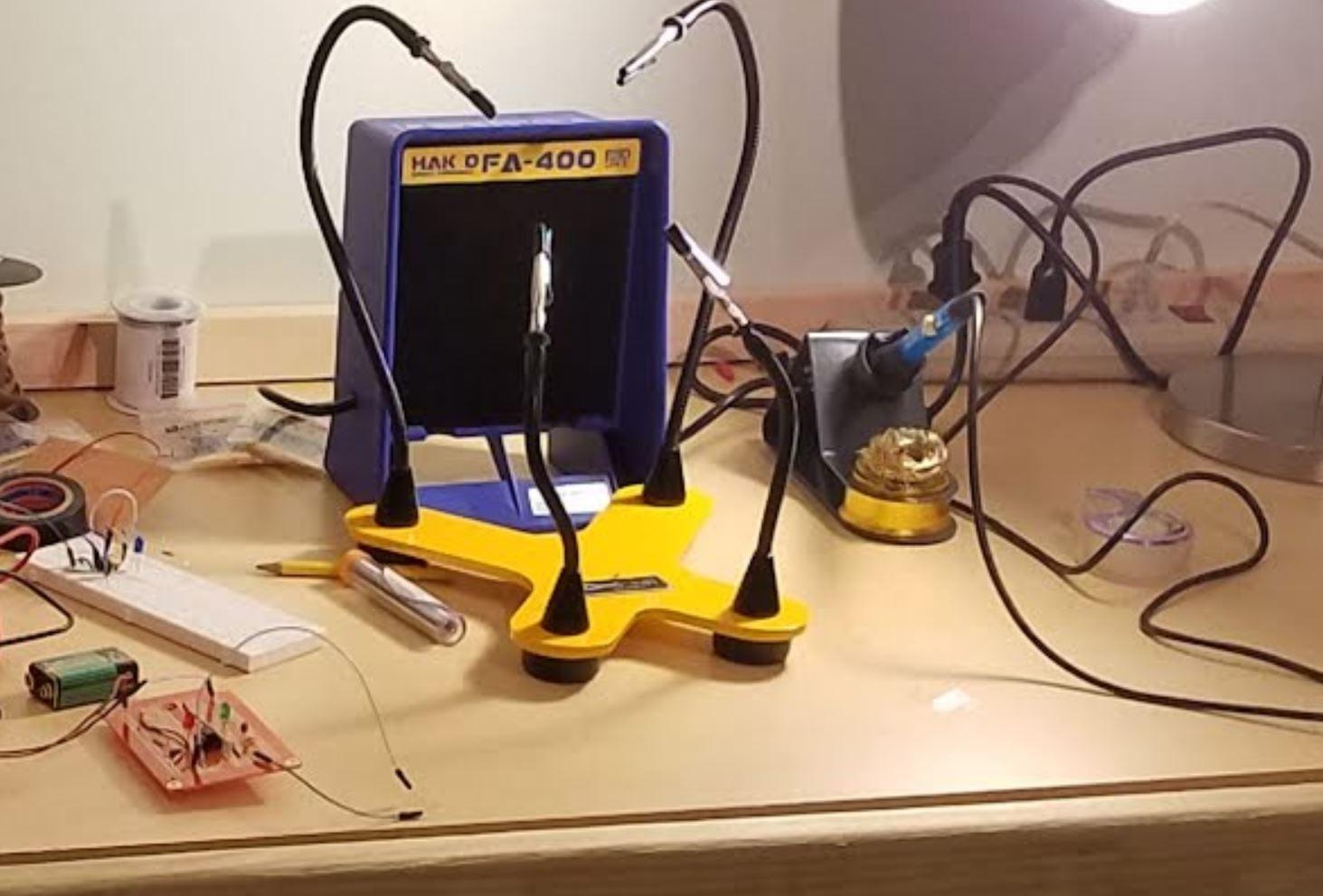
That distinction is worth being blunt about, because it is where the porous-looking marketplace units get misunderstood. A carbon layer is doing odour work. If your flux load is heavy or you work with active fluxes, the optional particle filter is the difference between masking smell and reducing what you breathe, and it is the reason we still rate this unit so highly despite its age. Owners also value that filters are replaced without tools, which is the difference between a 30 second swap and a job you put off for a year.
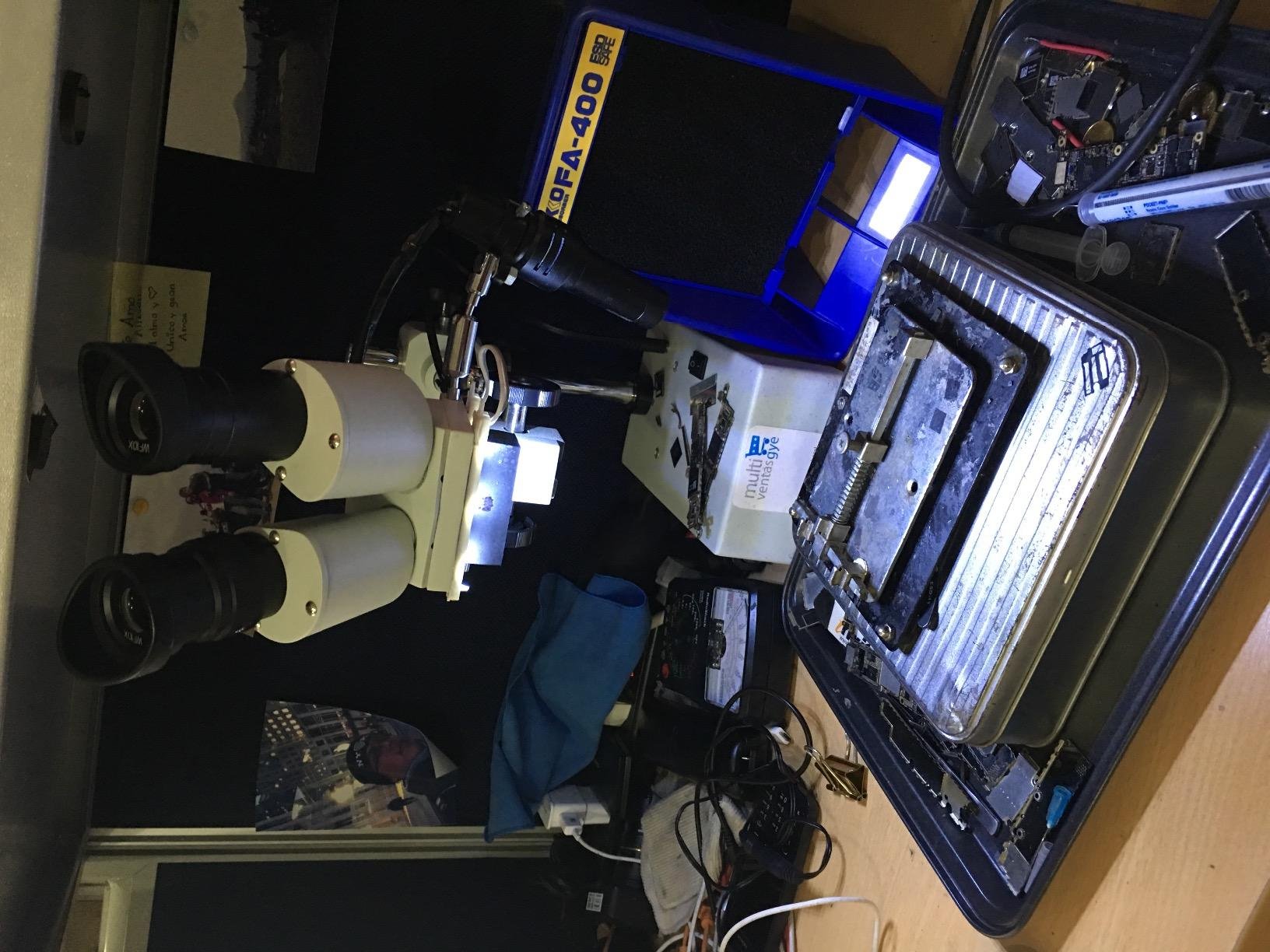
At 19W and 3 pounds it is among the least demanding devices here to run, and the 10.1 by 9 by 6.7 inch footprint is modest. The trade is cost, which is higher than generic desk machines, and there is still no capture hose, so it has to sit close to the joint. Forum regulars on diyAudio specifically recommend the Hakko FA-400 family for one reason: it can be mounted under the bench and the arm run up, which is a layout professional benches are built around.
Why this one outlives cheaper absorbers
There is no battery and no gimmick anywhere in the design. The motor draws 19W, the body is a plain moulded shell, and every wear part is a filter you can buy by part number for a decade. For a bench you intend to keep for years, that predictability is worth more than a headline CFM figure on a listing you cannot verify.
Where the standard filter falls short
Out of the box it is an odour machine. The A1001 carbon handles up to 80 percent of smells and does not claim particle removal, so on lead-free work with clean no-clean flux you may never need the optional filter. On leaded solder, active flux, or dense through-hole boards with a lot of resin, budget for the 999-198 from the start rather than discovering the gap later.
5. NOEVSBIG Solder Fume Extractor – Best Metal and Copper Motor Build
Solder Fume Extractor Smoke Absorber Remover Smoke Prevention Absorber Smoke Fan 12V Soldering Fan DIY Working Fan Fume Extractor for Soldering Station Stained Glass Laser Cutter Repairing DIY Hobby
2800 RPM copper motor
Metal enclosure
ESD safe
Two spare carbon filters
Pros
- Metal enclosure and copper motor outlast plastic units
- ESD-safe construction suits a repair bench
- Two spare carbon filters in the box
- Low noise at 2800 RPM
Cons
- Suction is lower than higher-RPM machines
- No hose
- so work stays close to the intake
The NOEVSBIG is the answer when you want a cheap unit that does not feel cheap. The build is a metal enclosure with a pure copper motor rather than the all-plastic construction most units in this price range use, and owners consistently single that out as the reason the unit feels better made than its price suggests. It holds 4.5 across 460 reviews with 72 percent five-star.
The metal frame and copper motor also make it quiet for what it does. At 2800 RPM it is among the softer-running devices here, which is a happy side effect of good bearings and a rigid chassis. It is listed as ESD-safe, and on a repair bench where you are handling boards that do not tolerate a stray charge, that is a real feature rather than a sticker.
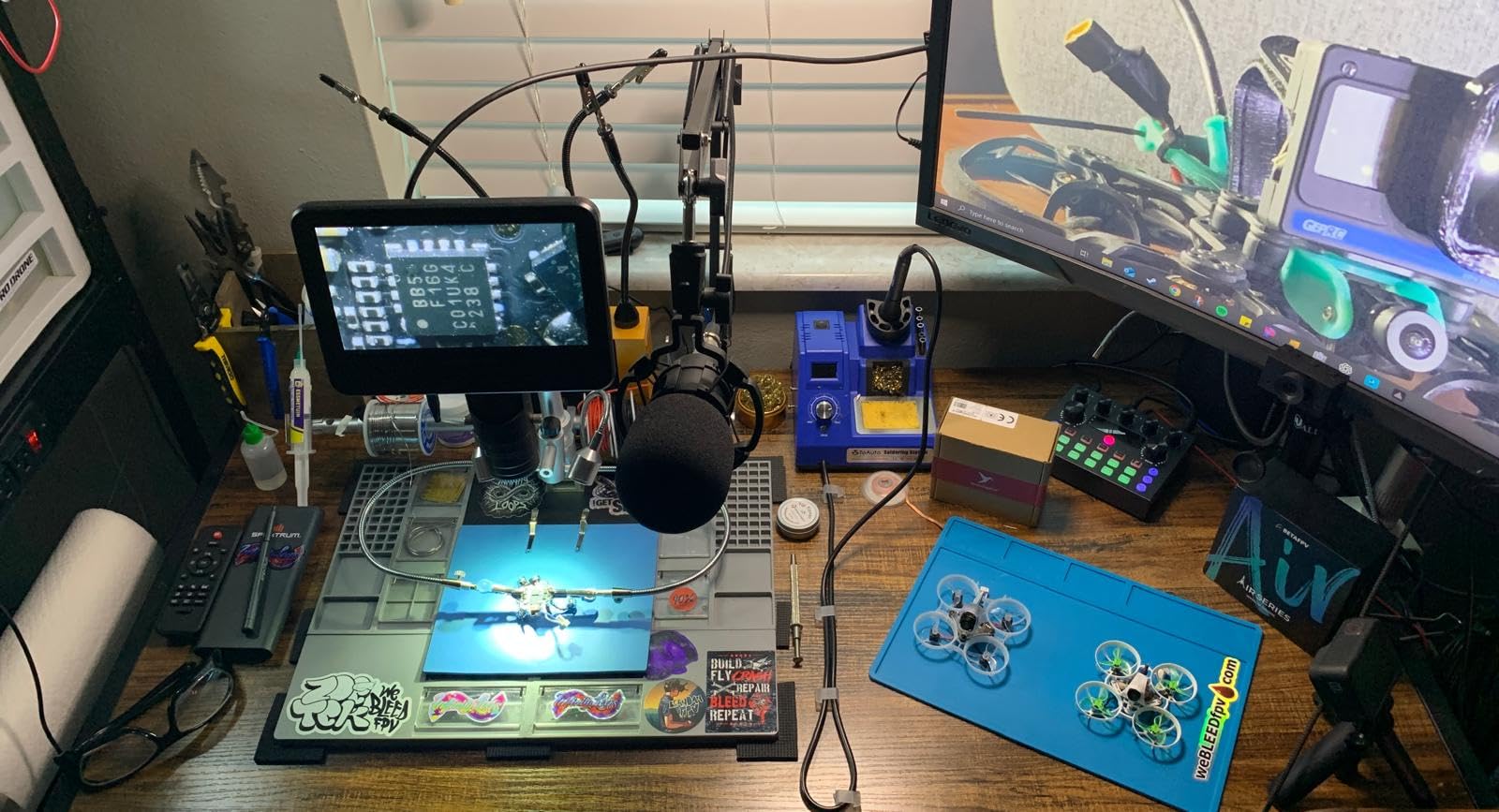
Two replacement carbon filters are included in the box, which is generous, and the four non-slip rubber feet plus integrated carrying handle make it easy to move between a bench and a shelf. The size is 6.3 by 5.3 by 1.96 inches, so it lies flat, and at 1.72 pounds it is easy to reposition one-handed while holding a board in the other.
What you give up is airflow. 2800 RPM with a small housing produces a gentler draw than the 6000 or 15000 RPM machines further down, and the limitation shows up as a shorter working distance. If you are doing fine board-level work with an iron tip held close, that is a non-issue. If you are soldering larger joints or working on a panel, you will find yourself leaning in.
What ESD-safe actually gets you
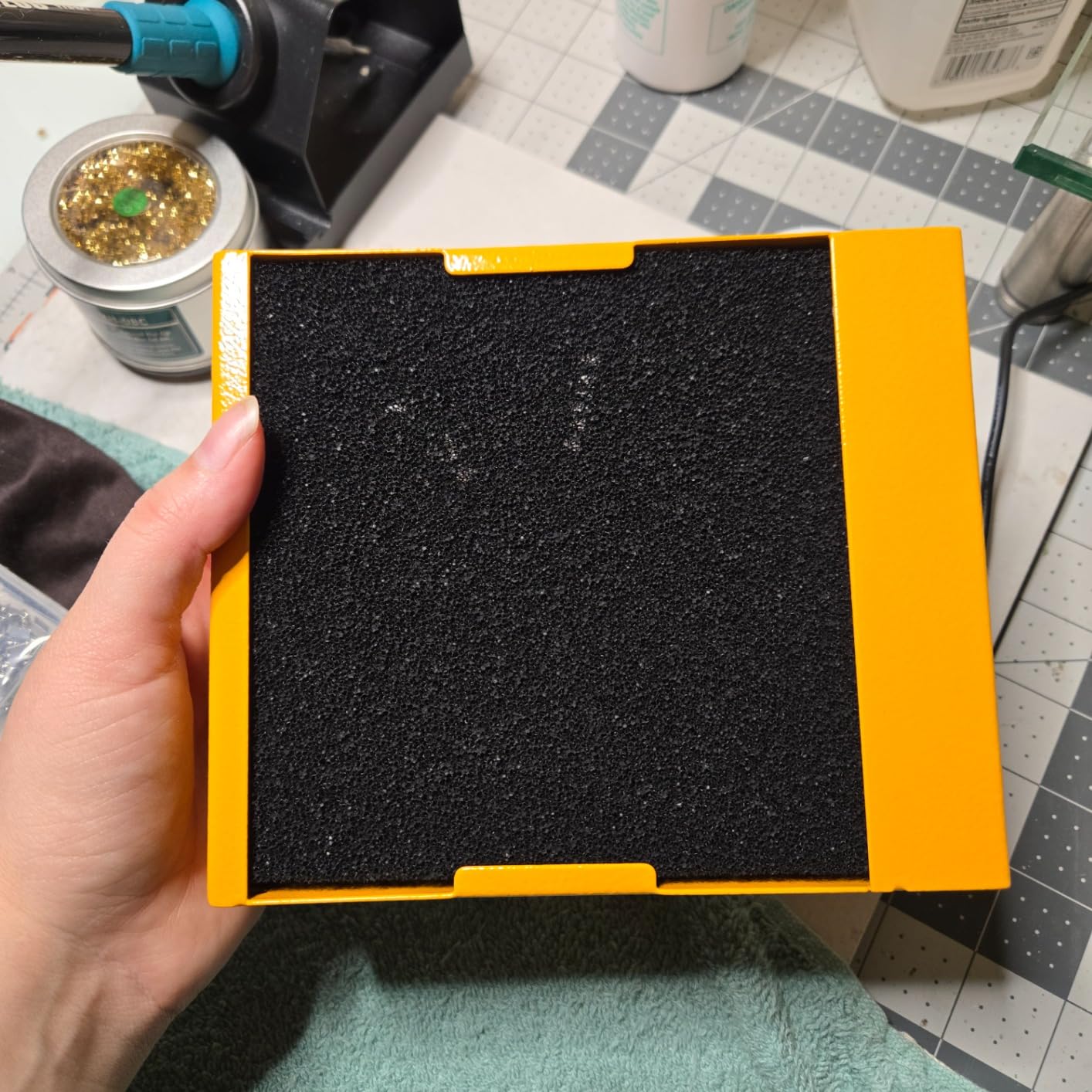
ESD-safe means the housing and internal materials do not build or discharge a static charge as air moves through the unit, which matters when the box sits right beside an open board. For repairing phone logic boards, cameras, or anything with a small CMOS package, that is worth paying attention to. For through-hole work on a scrap project, it is a nice detail rather than a deciding factor.
Where the low RPM shows up
Suction drops as the foam and carbon filters load, and because this unit has no pre-filter stage to protect the carbon from larger debris, the airflow declines over a filter’s life more visibly than it would on a 3-stage machine. Budget for a regular replacement rhythm and you will be fine; ignore it and the metal build will not save the airflow.
6. Antidious Anti-ESD Smoke Absorber – Best for Small Board-Level Work
Antidious Fume Extractor Anti-ESD Solder Smoke Absorber Portable Filter for Soldering DIY Fan Extraction Equipment with Spare Activated Carbon for Brazing Welding Soldering, Fume Prevention Remover
Anti-ESD with surge suppression
Foam plus carbon filters
4-5 inch capture
4.7 inch square profile
Pros
- Small and quiet for close-up electronics work
- ESD protection with surge suppression
- Spare foam and carbon filters included
- Works horizontally or vertically
Cons
- Some owners report weak airflow
- Footprint is wider than it looks
- Capture weakens as filters load
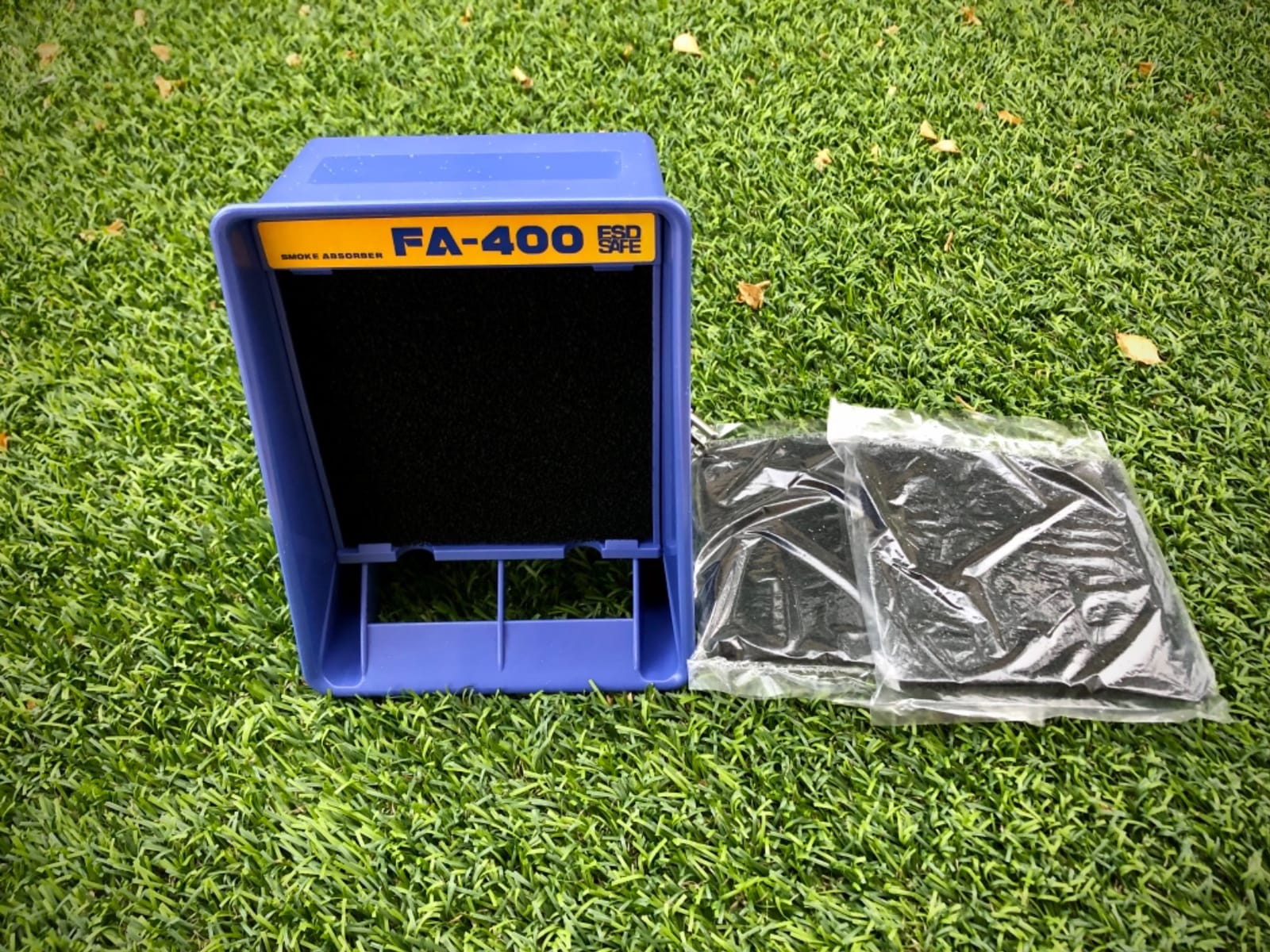
The Antidious is a flat, 4.7 inch square unit built for the specific job of sitting next to a board you are repairing. It works horizontally or vertically, which means you can stand it up when you are doing a through-hole build and lay it flat when you are leaning over a small PCB, and it pulls effectively at 4 to 5 inches with a large-tip iron. Several owners describe it as a Hakko lookalike in both shape and role.
It is also one of the few budget units here with genuine ESD protection, described as including surge suppression. That makes it a sensible default for a repair bench where static matters more than raw suction. Two spare filters of urethane foam plus activated carbon are included, so the first replacement is covered.
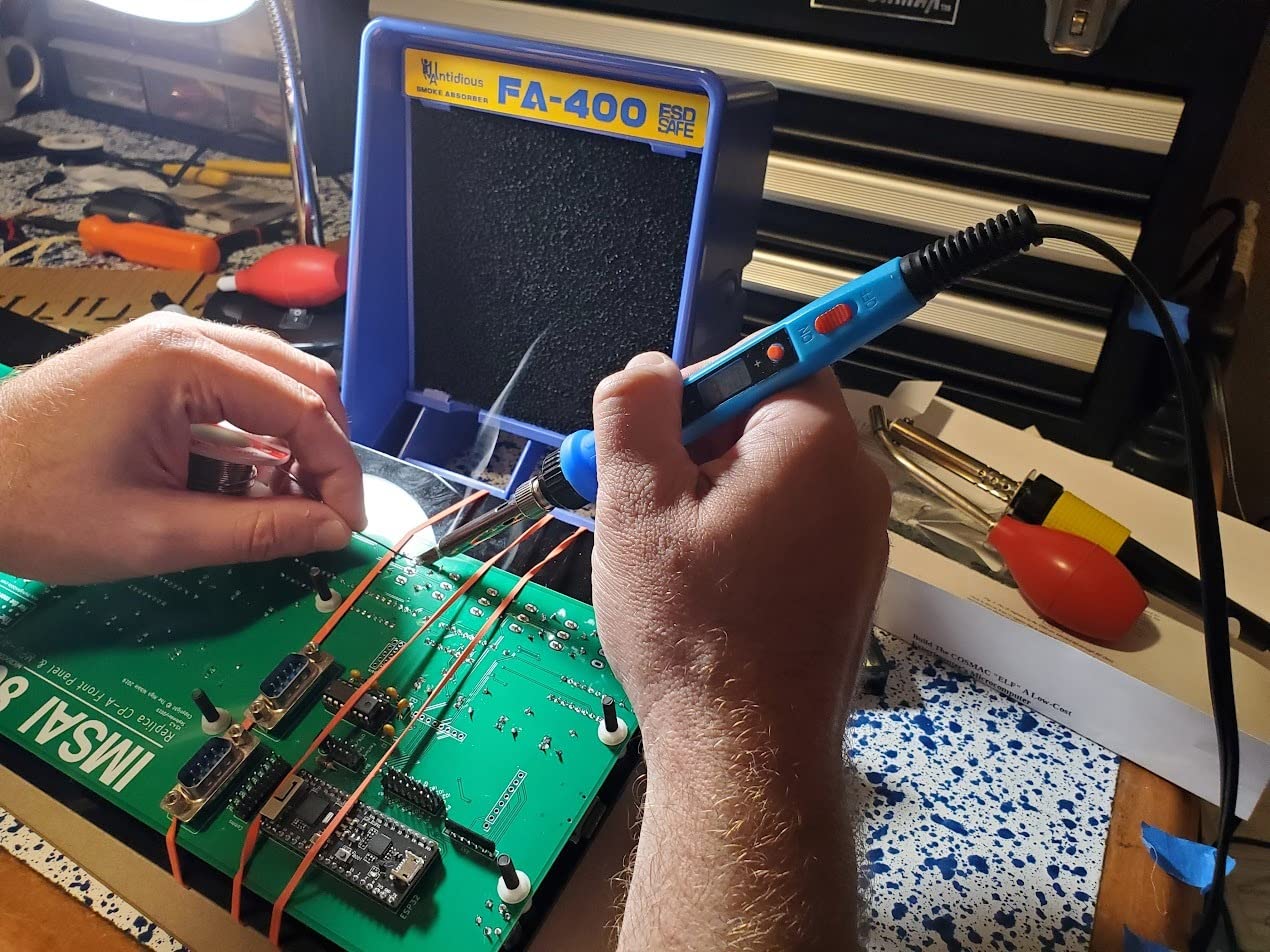
Its weakness is that the airflow is not strong, and a minority of owners say plainly that it does not move much air. That is consistent with the 4.3 average across 369 reviews, where most people find it does the job quietly for hobby soldering but a few find it wanting. If your work is heavy through-hole on a large board, read the next section before you commit.
The motor is rated for more than 57,000 hours and is described as low noise, and the high-grade ABS construction keeps the weight down on an already crowded bench. The body is foam-based, which is the one material choice that gives us pause: foam compresses as it loads, and a compressed pre-filter is a slow pre-filter.
Matching the unit to the work
This is a close-range unit, so give it a dedicated spot. Line the intake up with the area you are soldering rather than pointing it at the general direction of the bench, and a 4 to 5 inch standoff will do the job. If your board is larger than the unit itself, you will spend more time repositioning than soldering, and a hose model will pay you back immediately.
How to check filter quality before you buy anything else
A recurring worry in buyer threads is that marketplace filters look porous, and the worry is reasonable. Our rule is simple: look for a stated filter thickness in inches, a stated stage count, and a part number you can search for again in six months. A listing that gives you none of those is telling you the filter is a consumable mystery, and you will pay for that in annual running cost.
7. YIHUA 948DQ-I – Best for Stained Glass and Tilt-Aimed Capture
YIHUA 948DQ-I Solder Fume Extractor with Tiltable Angle, Dual-filtering
30 degree tiltable stand
Side fenders
8 spare adsorbers
5W and 2.35 lb
Pros
- Tiltable stand and fenders align the intake with the plume
- Dual front and rear filtration
- Eight spare adsorbers included for long term use
- Very low 5W draw and quiet running
Cons
- Effective adsorption is only about 10 cm
- No hose
- so placement options are limited
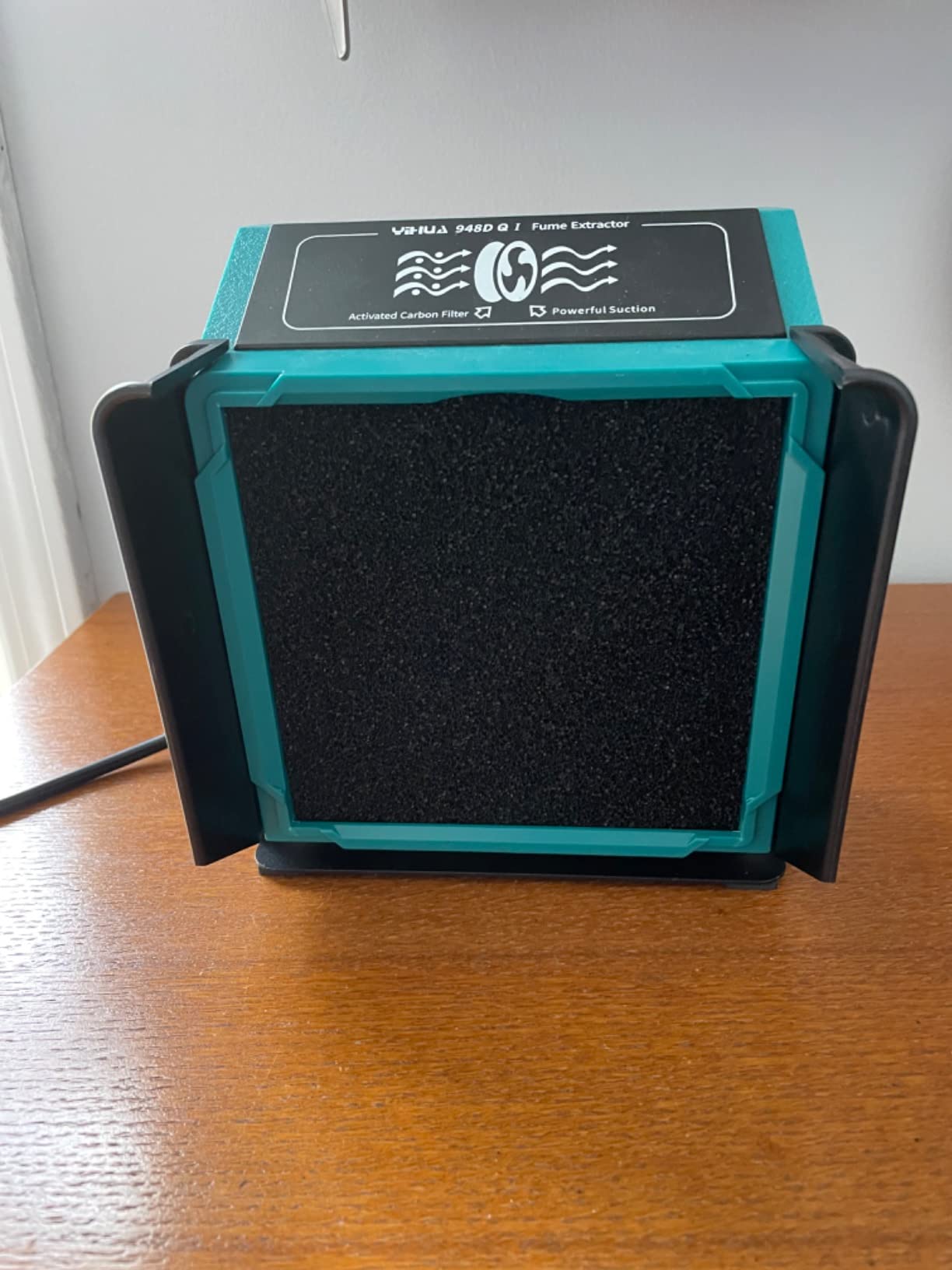
The YIHUA 948DQ-I solves a specific problem that most fan-shaped extractors ignore: getting the intake lined up with the plume. The 30 degree tiltable stand and the two side fenders let you aim the unit at the work rather than simply placing it nearby, and the fenders stop the airflow you generate from spilling into the room. For stained glass, jewelry, and any soldering done with the piece held at an angle, that is the difference between capture and almost-capture.
It also holds one of the strongest sales ranks of any desktop absorber here, which lines up with the owner satisfaction: 4.5 across 336 reviews with 75 percent five-star. Reviewers single out the tilt geometry and the generous spare filter supply, which is unusual at this level.
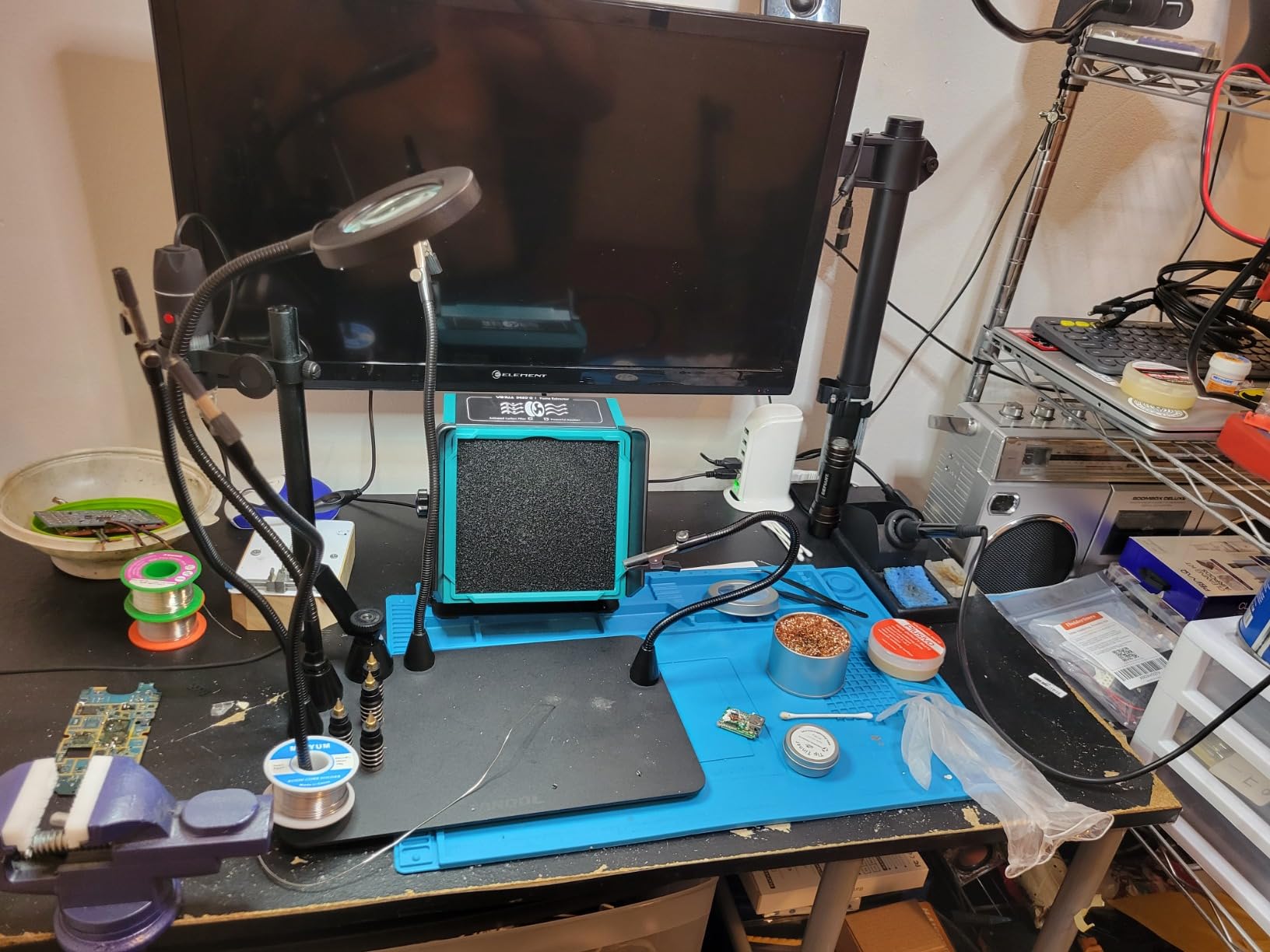
Eight filtration adsorbers in the box is a lot, and for a hobbyist who solder perhaps twice a week it effectively removes filter cost from the equation for a year or more. The 5W draw is the lowest here, and the 5-blade fan is described as low noise with a long operating lifespan, so this is also a sensible unit to leave switched on for a long stained glass session. The 3.54 by 5.71 by 6.46 inch footprint is small and stable.
Its hard limit is distance. Effective adsorption is quoted at about 10 cm, which is roughly 4 inches, and there is no hose. That is fine for copper foil on a small panel where you can bring the glass to the unit. It is not fine for a full-size panel laid across a table, which is why hobbyist accounts of stained glass studios describe pairing a desktop unit with a dedicated arm rather than relying on one box to cover the whole bench.
Why geometry beats raw CFM on a small bench
Aim beats raw CFM on a small bench. A loud unit with an intake pointed at the ceiling loses to a quieter one aimed at the joint, because capture depends on where the air is pulled from rather than how much of it moves. Tilt and fenders let you set the capture angle once and forget about it, which removes the fiddling that makes people abandon extraction entirely. If your work is hand-held, this geometry is worth more than any extra cubic meters per hour.
Where the 10 cm ceiling stops you
Work that spreads out is the problem, not work that is close. Once the joint is more than about 4 inches from the intake, or once you are working on a panel that forces you to reach across a wide surface, you need reach you can adjust. Spend your budget on an arm rather than on more fan power, and remember that stained glass sessions last hours, so a 5W, quiet unit earns its place over a louder one.
8. SainSmart Magnetic Gooseneck Unit – Best Flexible Arm with a Work Light
SainSmart Portable Fume Extractor Fan, Magnetic Solder Smoke Absorber
400mm memory steel gooseneck
Magnetic cone base plus clamp
3 mode LED lamp
3700 RPM fan
Pros
- Gooseneck brings the head right to the joint
- Magnetic base and clamp handle metal and non-metal surfaces
- Adjustable LED lamp genuinely helps low light work
- Memory steel arm holds position without sagging
Cons
- Louder than small desktop fan machines
- Carbon only filtration misses fine particles
- Filters add ongoing cost
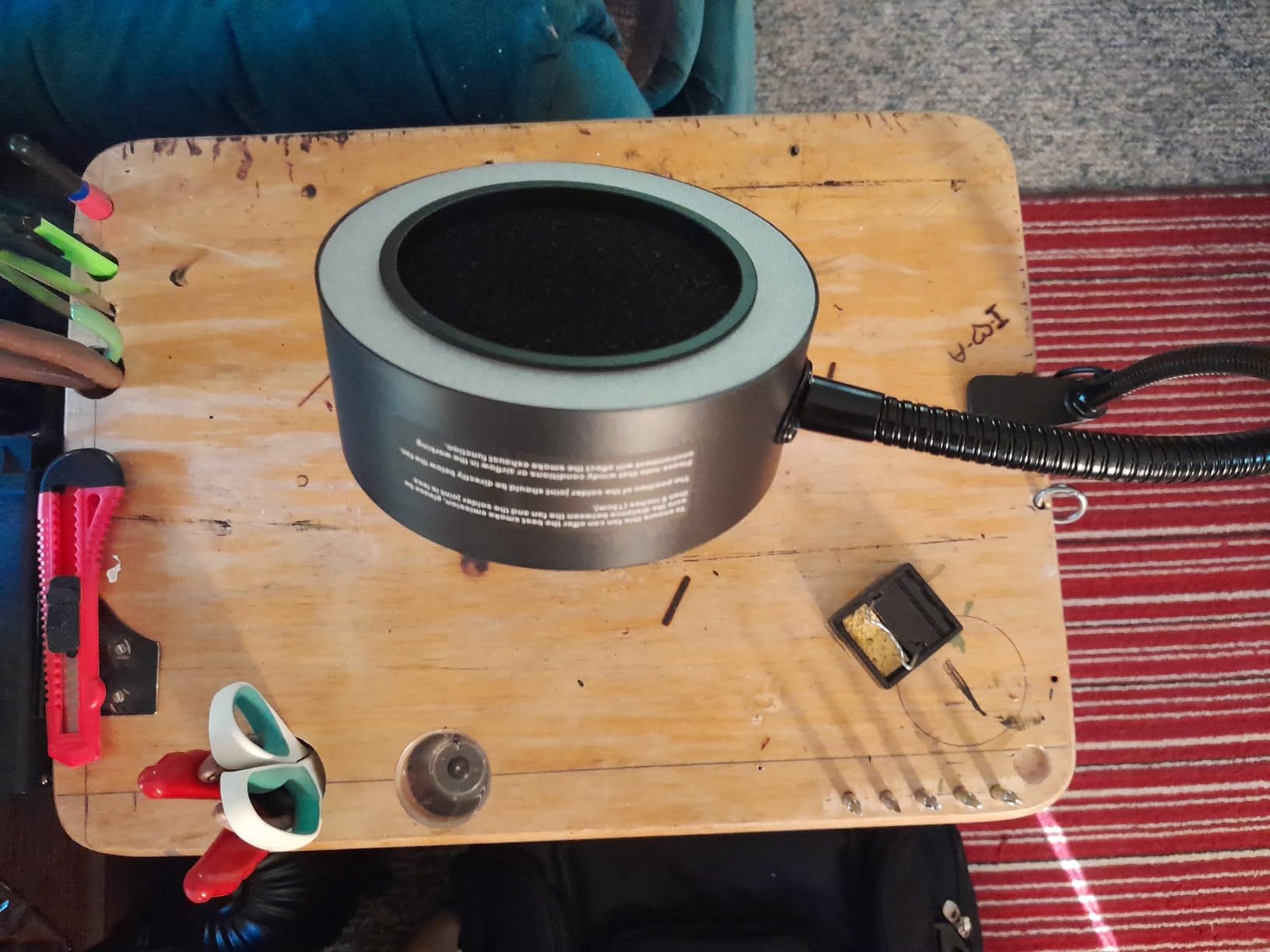
The SainSmart gooseneck unit is the most genuinely flexible mounting solution in this roundup. A 400mm by 12mm memory stainless steel tube reaches over the bench and holds wherever you leave it, and it comes with a magnetic cone base for vertical metal surfaces plus a table clamp for everything else. That is two mounting systems in one box, and it is what makes this unit work on a bench where nothing can be permanently fixed.
The other feature that gets called out is the integrated LED lamp, adjustable across 3000K, 4500K, and 6000K. On a dim bench, seeing the joint clearly is not a luxury, and having the light come from the same unit as the extraction means there is one thing to position instead of two.
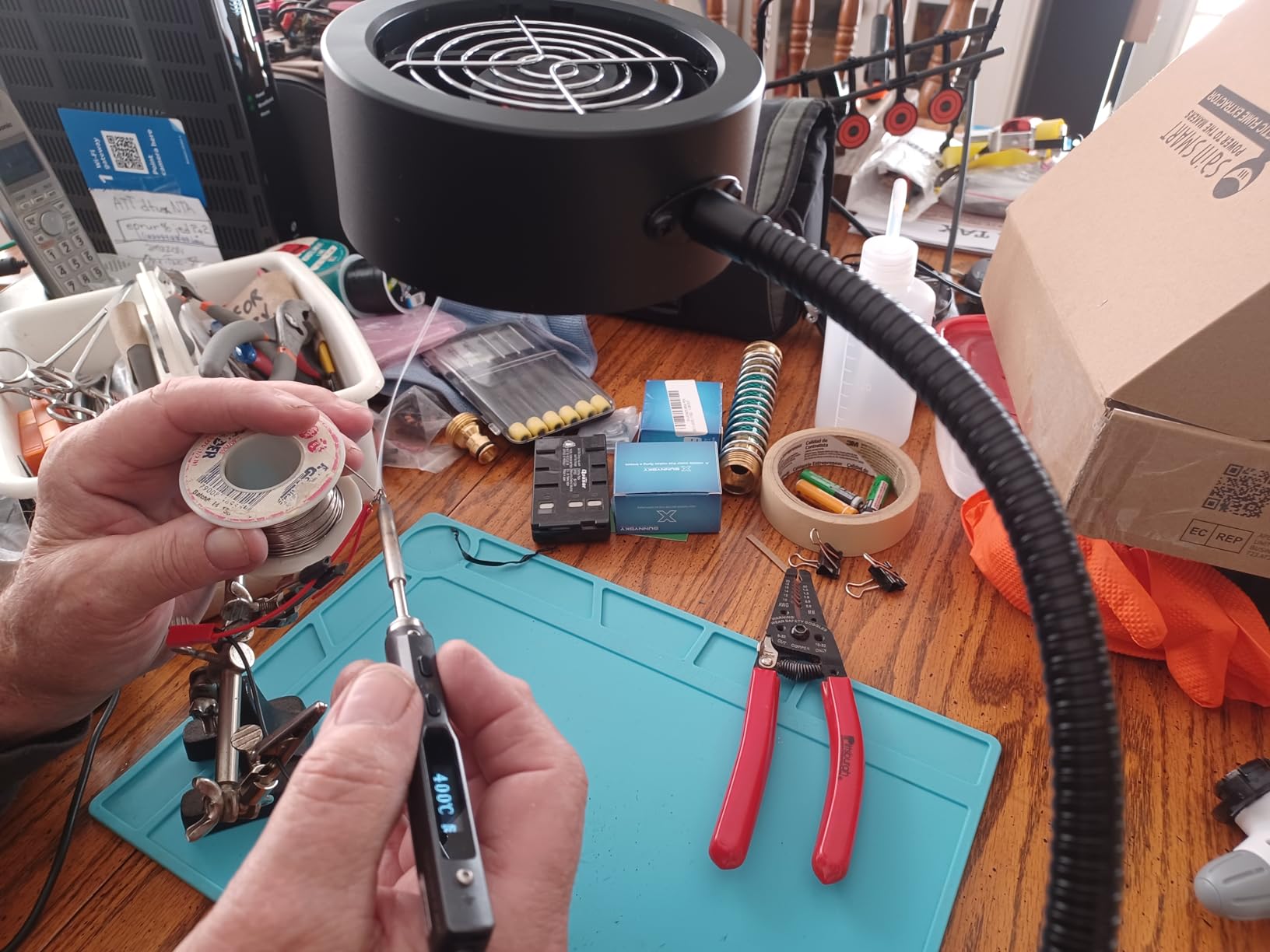
Effective absorption distance is quoted at up to 10 inches with a 3700 RPM fan, which is more reach than any fixed-inlet machine here. Reviewers value the positioning and the light, with 67 percent five-star across 200 reviews. The complaints are consistent: the fan is louder than a small desktop unit, and the activated carbon filter cotton does nothing for fine particulate, only odour.
At 38.4 ounces and 10.04 by 2.36 by 7.48 inches it is light and long rather than bulky, and the 12V supply keeps the power draw modest. The temperature rating of 85 degrees Celsius upper limit is the highest in the group, which is reassuring if the unit ends up near a hot work area.
Arm reach is a capture-distance multiplier
Ten inches of arm reach does not add ten inches of capture distance, because the airflow has to survive the bend, but it does let you place the intake 10 inches from the joint instead of 6. In practice that is the difference between capturing a plume and chasing it. If your bench is shared or your work is hand-held, the reach is usually worth more than the extra decibels.
Carbon-only filtration means you need a filter schedule
This unit filters with activated carbon cotton and nothing else, so it will neutralise a flux smell without removing the particulate. That is a real limitation, and the honest fix is not a different unit but a better habit: keep the arm close, use the lowest speed that still holds the plume, and change the filter on a schedule rather than when the smell returns. Owners also note the filters add a recurring cost you should plan for rather than discover.
9. SainSmart Metal-Frame Unit with Helping Hands – Best for Garage Benches
SainSmart Solder Fume Extractor Smoke Absorber, 4 PCS Carbon Filter
15050 copper motor at 3300 RPM
0.3 inch carbon cotton
ESD safe metal frame
7.9 inch effective distance
Pros
- Sturdy all metal ESD safe frame
- Effective capture at 8-10 inches
- Two magnetic helping hands included
- Spare carbon filters and clips in the box
Cons
- Noticeably loud at speed
- Power switch sits on the cord
- Clip screws loosen and need re tightening
In a garage where the unit will be knocked, sat on, and occasionally stepped on, the metal frame is the reason this one earns its place. The 15050 pure copper motor driving a 3300 RPM fan sits in a rigid ESD-safe chassis with four non-slip rubber feet, and owners rate the solidity highly, with 4.6 across 260 reviews and 77 percent five-star. It is a bench tool rather than a desk accessory.
Effective capture is quoted at 7.9 inches, which is genuinely useful reach for a unit with no arm, and the 0.3 inch thick carbon filter cotton is on the substantial side. Three extra replacement filter cottons are included with a suggested three-month replacement interval, which is one of the few units here that actually tells you the cadence.
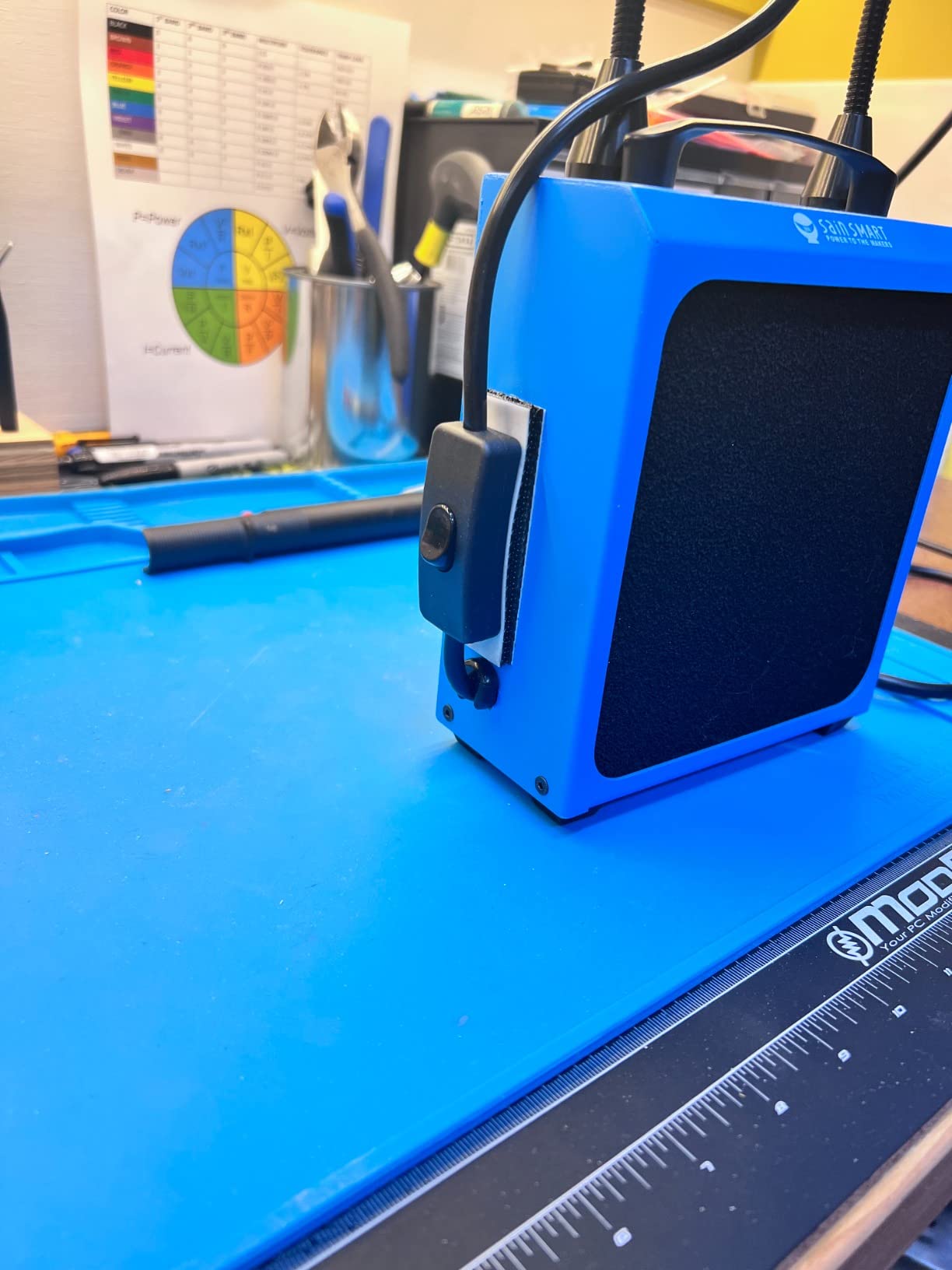
The included magnetic helping hands are a real bonus for a home bench. They rotate 360 degrees, the magnets are strong enough to hold a small PCB without a jig, and they remove a stand from the desk. Owners also use the unit for resin mixing and other dusty crafts, so it earns its space even in months when you are not soldering.
The dominant trade is noise. It is noticeably loud, and reviewers describe it as drowning out music or disturbing light sleepers, which is consistent with a bare 3300 RPM motor in a metal chassis with no acoustic lining. In a garage that is irrelevant. If your soldering happens in a spare room at night, read the noise section of the buying guide before ordering.
What the metal frame buys you in practice
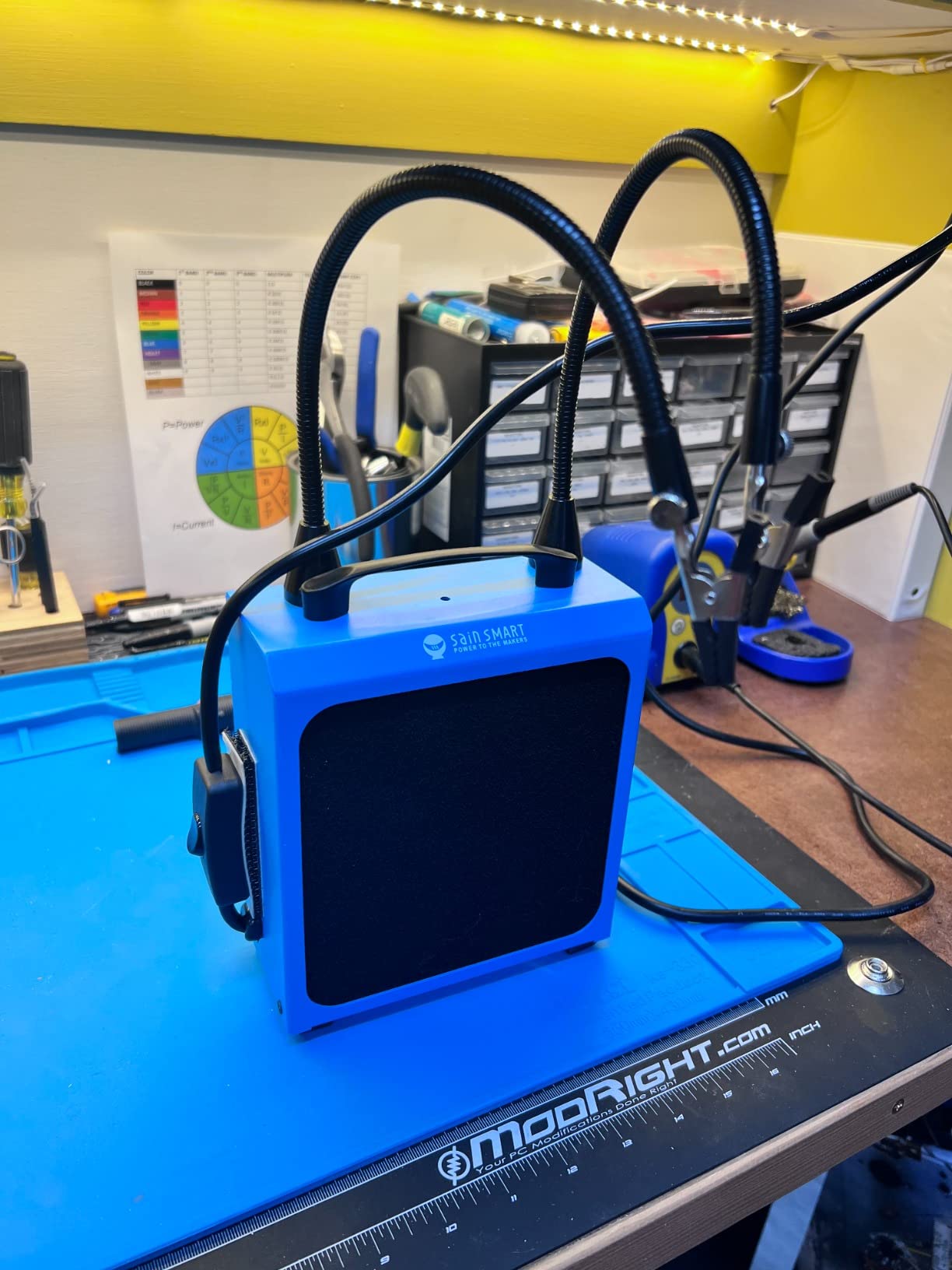
Rigid housings do not flex around the fan, which keeps airflow steady, and they do not crack when a tool lands on them. The ESD-safe frame also means you can place it directly beside a board without thinking about static, and the 1.3 metre cord with a carrying handle means you can move the whole thing as one object rather than unplugging and dragging a cable across the bench.
The small annoyances worth knowing
The power switch is on the cord rather than on the body, so you switch it off at the floor, which is mildly absurd and occasionally useful. The alligator clip screws loosen with use and want a re-tighten every few sessions. And owners have raised a fair safety point: the supplied carbon filters are described as flammable, which matters if you are soldering on a shared surface, so keep the unit off paper and cardboard.
10. Weller WSA350 Bench Top Absorber – Best for Leaded and Active Flux
Weller Genuine 120v Bench Top Smoke Absorber | WSA350
Carbon activated filter
ESD safe
20W at 120V
2 lb bench top body
Pros
- Quiet fan that adds little to room noise
- Designed specifically for active fluxes
- Replaceable filter with a spare included
- ESD safe for repair benches
Cons
- Carbon targets odour more than fine particles
- No capture hose
- so it sits close to the joint
- Costs more than generic desk units
The Weller WSA350 is specified by its manufacturer for workspaces using active fluxes, and that single line tells you more than any marketing copy. Active and strongly activated fluxes generate a heavier vapour load than no-clean rosin, so a small carbon-only absorber will saturate quickly. This unit is built and marketed for that harder case, which makes it the sensible pick if you still work with leaded solder or the older high-flux cores.
Owners describe it as a quiet, no-fuss absorber that handles flux fumes well for its size, with 73 percent five-star across 262 reviews. At 20W and 120V with a 2 pound body, it is among the least demanding devices in this guide to run, and it is ESD safe, which again matters when it sits inches from a live board.
One replacement filter, part number WSA350F, is included, and the filter is straightforward to swap. That matters more than it sounds: a filter you can order by part number in five years is a filter you will actually replace on schedule. The same discipline should apply to any unit you buy, and it is the single best defence against the porous-filter problem raised in buyer threads.
Its limits are the same as the Hakko’s, and honestly the same as most compact bench absorbers. There is no capture hose, so it has to sit close to the joint. The carbon-activated filter handles odour more effectively than it handles fine particulate. And it costs more than a generic desk unit, which for a part-numbered, decades-available professional design is a trade most repair benches accept.
Lead-free versus leaded: what changes
Modern lead-free solder with no-clean flux puts less into the air than classic leaded work, and a modest carbon absorber copes with it fine. If you are still cutting off leaded solder joints, cleaning rosin-core boards, or working anywhere in your process where the flux is more aggressive, the vapour load roughly triples. That is the case for a unit specified for active fluxes, and the case for budgeting a real filter rather than the thinnest one available.
Where this unit is at its weakest
It has no arm, so it is a fixed-point solution, and its filtration is single-layer by design. On large panels or hand-held work you will be repositioning constantly. And while the quiet running is genuinely pleasant in a shared room, the small 2 pound body means limited capacity, so on heavy flux days the filter will need changing sooner than a 3-stage machine with the same intake would need it.
11. FumeClear FC-2001A – Best Filtration Quality with H13 HEPA
FumeClear FC-2001A Solder Fume Extractor, 2-in-1 H13 HEPA Activated Carbon
True H13 HEPA plus 600-800 mg/g carbon
99.97 percent efficiency
120-180 m3/h
3 speed, 9 lb
Pros
- Only unit here pairing true H13 HEPA with high iodine carbon
- 99.97 percent filtration efficiency
- Metal housing is stable and does not shift
- Also useful for DTF printing and wood burning
Cons
- Louder than the stated claim on higher speeds
- Hose is shorter than originally listed
- Low exhaust can wash air back across the work
The FumeClear FC-2001A is the only unit in this roundup with a genuine H13 HEPA stage combined with a high-iodine activated carbon bed, rated at 600 to 800 mg/g iodine value, and that combination is the reason to buy it. HEPA handles the particulate down to 0.3 microns at a quoted 99.97 percent efficiency; the carbon handles the gas phase. A unit with only one of those is solving half the problem, and most of the cheap absorbers in this price range have only the carbon.
Owners broadly agree the filtration does an unusually good job, with 77 percent five-star across 113 reviews, and several point out it earns its keep well outside soldering, including DTF printing and wood burning. The metal housing does not tip or shift, and the hose holds position where you put it, which together remove the two most common complaints about hose-mounted machines.
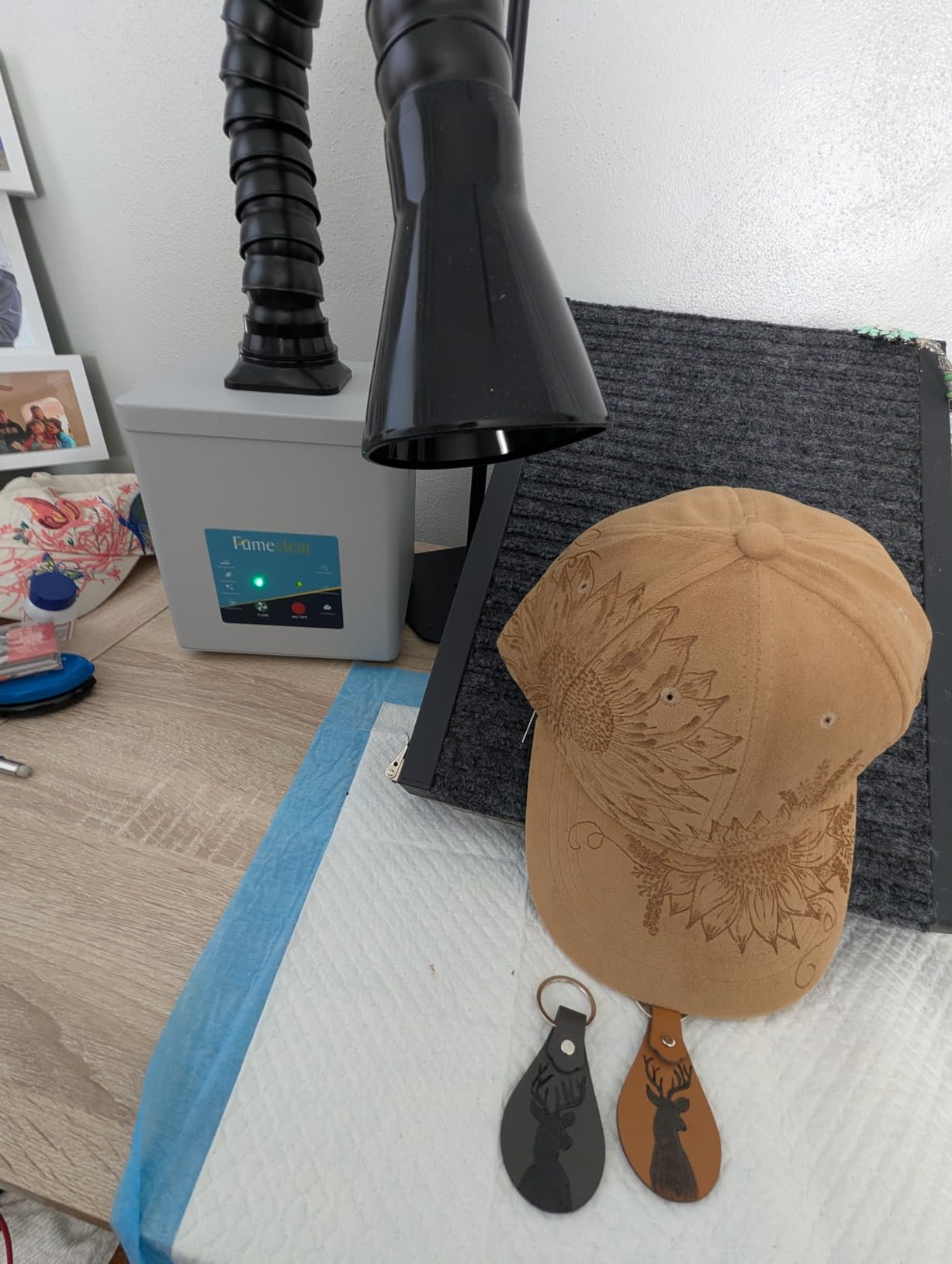
Purification capacity is rated at 120 to 180 m3/h with a 15 cm effective working range and a high-speed brushless motor, adjusted across three speeds. The filter is claimed to last three times longer than on compact units, and the box includes five pre-filters plus one two-in-1 main filter, a bamboo pipe, and a hood. Ultra wide voltage support means it runs on 110V and 220V, so it travels with you.
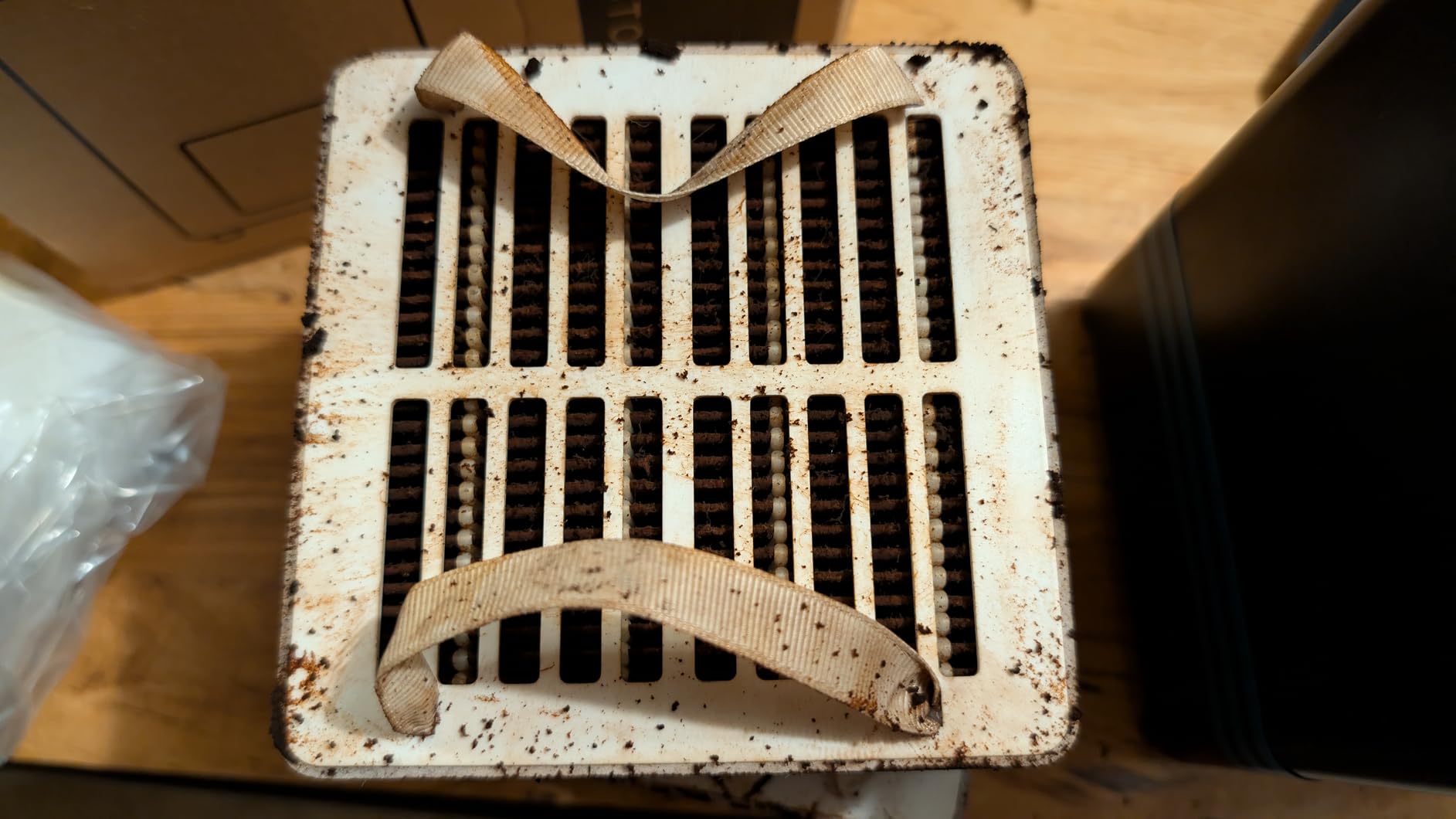
The criticisms are worth stating plainly. It is louder than the advertised noise figure, particularly on the higher speeds, and the high-pitched tone bothers some users. The hose measures about 58 cm, shorter than the listing originally implied. And the exhaust exits low, so unless you block the outlet or raise the unit, it can wash air back across the work area and toward you.
What H13 HEPA actually buys you
HEPA is rated on particle count at 0.3 microns, not on vapour. It captures the fine particulate and the aerosolised flux that a carbon layer lets through, and it is the reason this unit makes a real difference to a bench where you solder continuously and have other people in the building. The iodine value of the carbon bed is the second half of the story, because higher iodine value means more adsorption capacity before the bed saturates.
Fix the exhaust before you judge the noise
The low exhaust issue is a two-minute fix: block the outlet ports with the supplied covers or raise the body on a stand so the discharge goes up and away, not across the bench. Once that is sorted, run it on speed two for most work rather than speed three, and the noise complaint largely disappears. At 9.03 pounds it is the heaviest unit here, so give it a shelf of its own rather than a precarious stack of books.
12. M-T 80W Solder Fume Extractor – Strong Airflow with a Real HEPA Stage
M-T Solder Fume Extractor, 80W 168m³/h Strong Suction Smoke Absorber with Carbon or HEPA Filter, 3-speed Adjustment for Soldering, Welding, 3D Printing
15000 RPM motor at 168 m3/h
Triple layer with H13 HEPA
3 speed
3 year warranty
Pros
- Very high airflow for a 3.72 pound body
- Triple layer filtration includes a real H13 HEPA stage
- Adjustable hose directs airflow and holds position
- Compact metal body with a 3 year warranty
Cons
- Loud on full blast
- bottom exhaust washes air back across the bench
- Replacement filters are hard to source
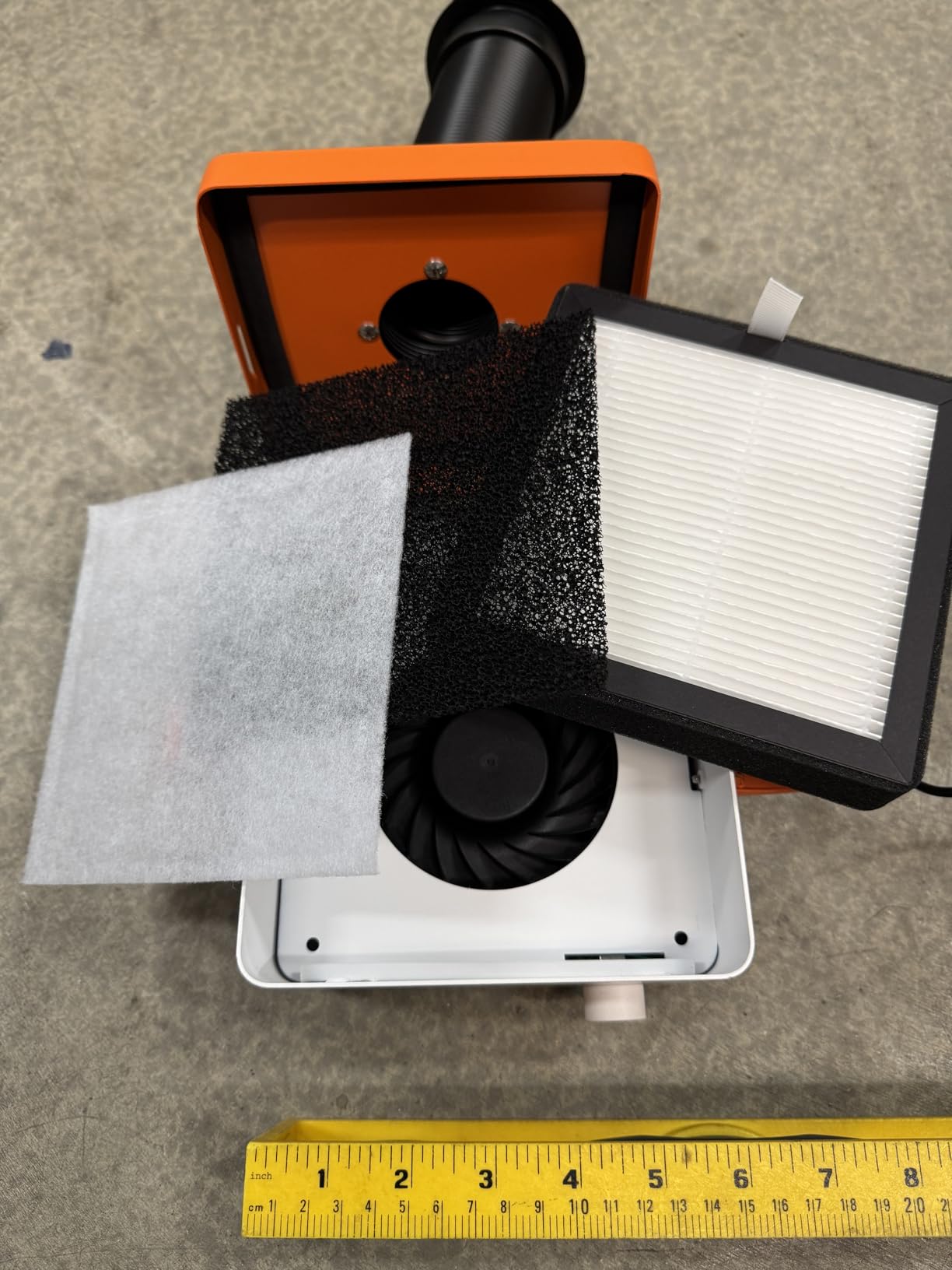
The M-T is the spec-sheet winner and the review-score loser, and we are including it because that contrast is informative. An 80W motor running at 15,000 RPM moves 168 m3/h, a lot of air from a body weighing under 4 pounds, and the triple-layer stack includes a genuine H13 HEPA stage alongside high-density fibre, carbon cotton, and activated carbon. On paper there is nothing cheaper here that does more.
Owner feedback tells a rougher story, and the 4.0 average across 161 reviews with 60 percent five-star reflects a cluster of design and quality-control issues rather than a bad core machine. Users still credit the airflow and the included HEPA stage. What they report is noise, exhaust direction, fitting problems, and filters.
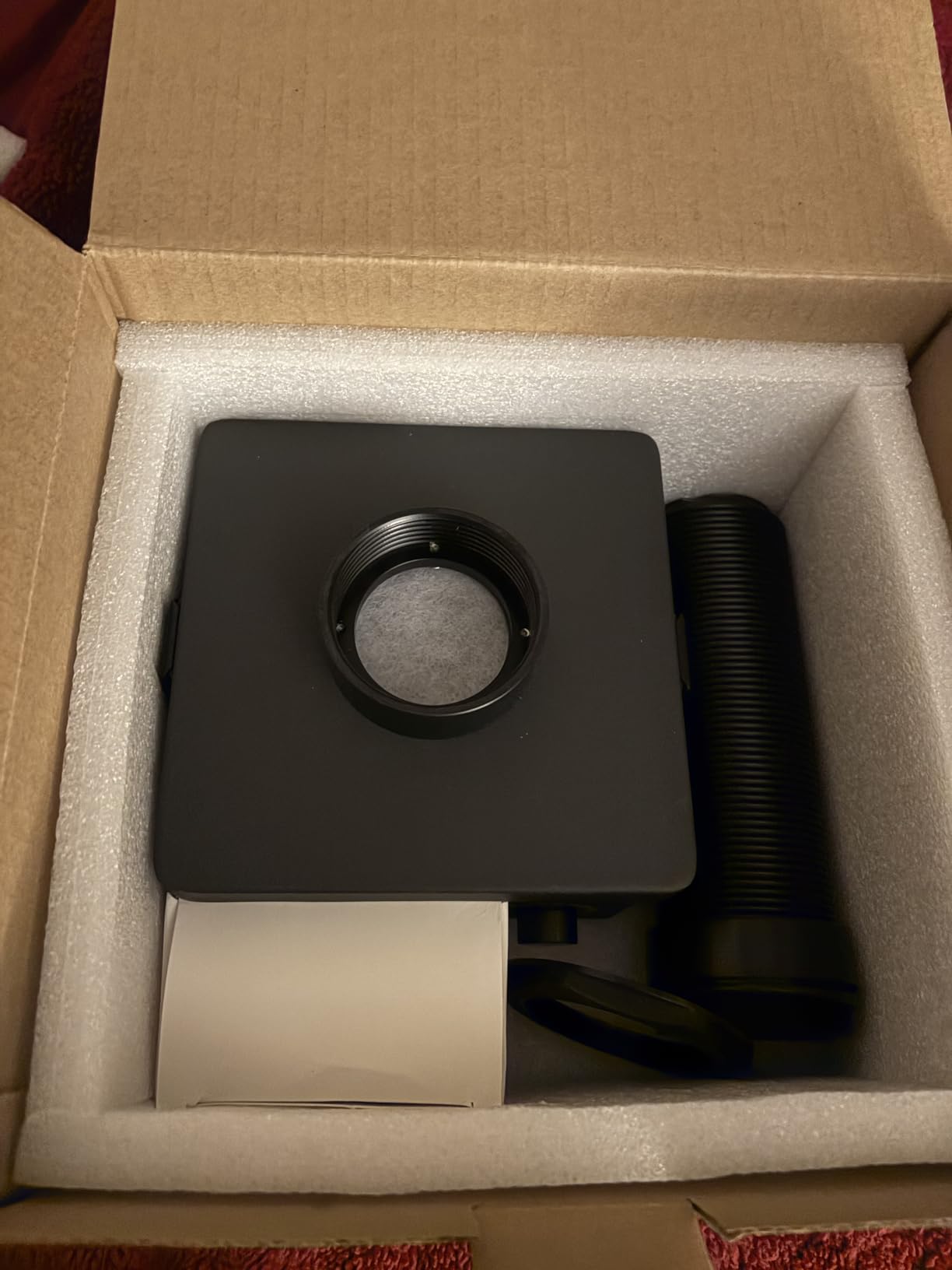
Specific complaints include a hose-to-housing connection that cross-threads and jams, some examples arriving with a non-polarized plug that will not seat in one outlet orientation, a fan that could be heard rubbing against the housing on arrival, and bottom exhaust that blows air back across the bench toward the user unless you block it. Each of those is fixable; the hose fitting is the one that most often ends up being dealt with directly after delivery.
The 3-year warranty and the stated quality inspection are real positives in a category where support is often thin, and the 100-240V adapter includes surge and spike protection. The 360-degree adjustable hose runs 7 to 25 inches, so the reach is good, and the metal body at 3.72 pounds fits a shelf or a crowded bench without tipping.
When the extra airflow is worth the rough edges
Long sessions and heavy flux are where the 168 m3/h figure earns its keep. If you solder several hours at a stretch, work on dense through-hole boards, or move between soldering and light welding or 3D printing on the same bench, the headroom is real. The mid speed setting is the sweet spot for airflow against noise, and running there smooths out most of the sound complaints.
Why we rank it last despite the specs
Replacement filters are hard to source and do not last long, which is the failure mode that matters most over a year of ownership. A cheap machine with an unobtainable filter is not cheap, and a fan rubbing against the housing on arrival is a return rather than a compromise. The 3-year warranty is the reason we would still consider it, but the M-T is the one to buy when you value the specification over the ownership experience.
How to Choose a Solder Fume Extractor for a Home Bench?
Capture distance matters more than CFM
CFM figures are the easiest number for a seller to inflate and the least useful number for you to shop on, because a machine with 300 CFM and a fixed inlet still fails if the joint is 8 inches away. What you need is the effective working range, stated in inches or centimetres, measured from the intake to the joint. In this group that number ranged from about 4 inches to a 15 cm range plus a hose, and that spread matters more than any fan rating. If your work sits in one place, 5 inches of reach is enough. If your work moves, you need an arm or a hose, and you should ignore the CFM entirely.
Understand what each filter layer does
A pre-filter catches large debris and flux residue so it does not choke the expensive layers behind it. A HEPA stage captures fine particulate down to 0.3 microns, and its rating describes particle count, not vapour. An activated carbon bed adsorbs the gas phase, which is the part of solder fumes that a HEPA layer will never touch. Odour control without a HEPA stage means you have reduced smell and not necessarily reduced what you breathe. The best outcome is a 2-in-1 HEPA plus carbon main filter, which is what the FumeClear unit uses, and the acceptable minimum for a hobby bench is carbon plus a stated particulate stage.
Budget for filters, because the first year understates it
Almost nobody states annual running cost, so here is the honest version. Machines that include eight or four spare adsorbers effectively have no filter cost for the first year, which is a real advantage for someone soldering twice a month. Machines that come with one spare filter need a steady cadence from month two, and carbon-heavy workloads saturate a bed far faster than occasional lead-free work. A useful rule: assume the main filter is replaced two to four times a year on moderate hobby use, and more often if you solder daily or use active flux. The parts of that cost that matter most are whether a part number exists and whether the filter is genuinely thick. A 0.3 or 0.4 inch carbon layer is not comparable to a thin wadding pad, and that difference shows up as odour returning weeks before the filter looks spent.
Match noise to the room, not to the spec sheet
Noise is where home benches differ most, and the gap is real: a 45 dB machine sits in a shared room without you thinking about it, while a 55 dB model with a bare motor is the first thing a housemate mentions. Map the numbers to the room rather than arguing about them. Under about 45 dB, a bedroom, home office, or open-plan living space works. Between 45 and 55 dB, a closed spare room is fine and a quiet evening in a shared flat is not. Above that, plan on a garage, a basement, or a workshop with a door you can close, and accept that a higher speed is part of the trade.
Decide between an arm, a hose, and a fixed inlet
A fixed inlet is the quietest, smallest, and cheapest option, and it works well when the work stays in one spot. An arm is the best compromise because it is rigid, holds position without drifting, and needs no power of its own. A hose is the most flexible and the fiddliest, and it is the right answer for panel work where the work moves. A gooseneck that holds position rather than springing back is worth a premium over one that droops, because a drooping arm means you reposition the unit instead of the work.
Check for ESD safety if you repair boards
On a repair bench the extractor sits inches from a board you cannot afford to zap, so an ESD-safe housing is not a nicety. Several machines here, including the NOEVSBIG, the Antidious, the Weller, and the SainSmart metal-frame model, specify ESD-safe construction. If you work on phones, cameras, or anything with a small exposed CMOS package, treat that as a requirement rather than a preference.
Decide honestly whether you need a unit at all
For casual board-level soldering, the honest answer in hobbyist forums is that a fan with an activated carbon filter plus a window fan is genuinely adequate. Forum consensus on eevblog leans the other way for heavy users, arguing that whole-house heat-recovery ventilation clears fumes better than a cheap desktop unit ever will, and for someone soldering several hours a day in a closed room, that is true. The decision rule is simple: if your room has an open window and your sessions are short, you can defer a dedicated extractor. If your sessions are long, your room is shared, or the work happens in winter with the window shut, buy the extractor and stop thinking about it.
Know when to skip buying
Do not buy a filterless smoke absorber and call it ventilation. A unit with no stated filter thickness, no stage count, and no replacement part number is a fan with a scent freshener attached, and you will buy a new one in six months. That is the specific disappointment described in a widely-cited AskElectronics thread, where the filter on a highly-reviewed marketplace unit looked porous enough to see light through. Our test is simple: a stated thickness in inches, a stated stage count, and a searchable part number. Miss any one of the three and walk away, whatever the rating says.
Match the unit to lead-free versus leaded work
Modern lead-free solder with no-clean flux produces a lighter load, and a modest carbon absorber handles it. Leaded solder, cleaning rosin cores, and active or strongly activated fluxes produce a much heavier vapour load, and that is when a unit with a genuine HEPA stage, or one specified for active fluxes, stops being an upgrade and becomes the requirement. Soldering for long stretches in an unventilated room is the same argument at a larger scale.
Allow for the non-soldering work that will happen
Anyone who owns a soldering bench ends up doing laser engraving, wood burning, acrylic work, resin mixing, or dusty crafts on the same surface. Several units here are already used that way by owners, which is a fair tiebreaker between otherwise similar machines. Just check that the air path is rated for dust, because a carbon and foam stack will clog faster on sanding residue than on flux, and a pre-filter buys you the time to notice.
Frequently Asked Questions
What is the best solder fume extractor for home use?
For a fixed home electronics bench, the KOTTO Solder Smoke Absorber is our pick: it pulls effectively at 5 to 6 inches, runs quiet, and holds a 4.7 rating across more than 2,400 reviews. If your work moves around a panel, pick a gooseneck or hose unit instead, because reach matters more than airflow. For heavy daily use or active fluxes, step up to a machine with a real HEPA stage.
Do soldering fume extractors work?
Yes, provided the intake is close enough to the joint. A benchtop extractor pulls the plume in before it rises, then traps the particulate and gas phase in replaceable pre-filter, HEPA, and activated carbon layers. Owners across hobby forums report the same result, with the recurring caveat that a unit with no arm must be positioned within its stated working distance of the work.
Can you solder without a fume extractor?
Sometimes. For short, occasional sessions in a room with an open window, a small fan with an activated carbon filter plus a window fan is adequate, and that is the common answer in hobbyist forums. If you solder for hours at a time, share the room, or work with active fluxes in winter with the window shut, a dedicated extractor is the better decision.
What does a solder fume extractor filter out?
A good unit filters three specific things. The pre-filter catches large flux debris and residue, a HEPA stage captures fine particulate down to 0.3 microns, and the activated carbon bed adsorbs the gaseous flux vapours and odour. HEPA alone does not remove vapours, and carbon alone does not remove fine particles, so the two together are what you want.
Is HEPA necessary for solder fumes?
Not strictly for light hobby work, but it is the layer that captures fine particulate rather than only masking odour. Carbon handles the gas phase, so if you only have carbon you are neutralising smell rather than reducing what you breathe. HEPA matters most with leaded solder, active fluxes, long sessions, and any bench where other people are nearby.
How often do you replace the carbon filter?
It depends on flux load rather than calendar time, and the honest answer is that nobody states it clearly enough. A useful assumption for moderate hobby use is a main filter change every three to six months, faster if you solder daily or use active fluxes. Pre-filters change far more often, and a machine that includes eight spare adsorbers gives you roughly the first year covered.
How loud is a solder fume extractor?
It ranges widely, and the spread matters more than the figure. In this group the quietest machines measured about 45 dB and the loudest sit around 55 dB, which is the difference between a unit you forget is running and one housemates comment on. Under about 45 dB works in a bedroom or shared room; above 50 dB, plan on a garage or a room you can close the door of.
Which Solder Fume Extractor Should You Buy in 2026?
For a fixed home electronics bench, buy the KOTTO Solder Smoke Absorber. For a shared room where noise decides things, take the MUIN at 45 dB. For panel work that moves, take a hose or gooseneck model. For heavy soldering or active flux, the FumeClear FC-2001A is the only unit here with a real H13 HEPA stage beside a high-iodine carbon bed, and the Hakko FA400-04 remains the professional standard that has quietly outlasted everything newer.
Whichever you pick, put the intake within its stated working distance of the joint, and check that the replacement filter has a part number you can search for later. Those two habits do more for your air than the model on the box. Review the current listings before you order, since specs on this category shift often.