
The best monitors for eye strain are flicker-free displays with hardware low blue light filtering, matte anti-glare coatings, and height-adjustable ergonomic stands. In practice that means an IPS or VA panel at QHD or 4K, a 100Hz-or-higher refresh rate, and independent certification from TÜV Rheinland or Eyesafe.
That definition matters because most of what is written about eye comfort is marketing copy. The features that genuinely reduce digital eye strain are narrow and specific, and almost every monitor sold today claims all of them. The difference between two 27-inch panels priced in the same bracket can be the difference between a headache-free afternoon and a headache at 4pm.
We compared 12 monitors across panel type, resolution, refresh rate, dimming behaviour, blue light handling, coating, and stand adjustability. The five attributes that separate a comfortable screen from an uncomfortable one are simple: flicker-free backlighting, hardware-level low blue light filtering, a matte anti-glare finish, a stand that lets you set the top of the panel at eye level, and a refresh rate of 100Hz or above.
One thing to settle before reading further. Your symptoms might not be a monitor problem at all. A headache that appears only when you dim the screen in the evening points at PWM dimming, which is a hardware issue a new display can fix. Neck pain and a stiff shoulder point at stand height and viewing distance, which a monitor arm can fix. Dry eyes that arrive after four hours of reading usually come down to blink rate and glare, which is a coating and setup problem. Mapping the symptom to the cause saves you from buying the wrong panel.
What follows is the full roundup: our top three, a comparison of all 12, a review of each one, then a buying guide that explains the technical terms you will meet in the specifications, including how to verify a flicker-free claim before you spend money.
Table of Contents
Top 3 Monitors for Eye Strain in 2026

ASUS VA27EHE 27-inch Full…
- TÜV Rheinland flicker-free and low blue light
- 27-inch IPS with 178 degree viewing angles
- 75Hz with AMD FreeSync
- Frameless design with VESA mounting

Samsung Essential S3 27-inc…
- TÜV-certified eye comfort technology
- 1800R curved panel
- 100Hz refresh with 4ms response
- 3000:1 contrast ratio

ViewSonic VX3276-2K-MHD…
- 32-inch QHD IPS at 75Hz
- Flicker-Free plus Blue Light Filter
- Semi-matte anti-glare finish
- Three-year warranty including backlight
All 12 Monitors for Eye Strain Compared in 2026
The grid below covers every monitor in this guide. Read the flicker certification column first, then the coating, then everything else. Panel type and refresh rate matter far less to eye comfort than the first two.
| Product | Specs | Action |
|---|---|---|
| ASUS VA27EHE 27-inch Full HD IPS |
|
Check Latest Price |
| Samsung Essential S3 27-inch 1800R Curved |
|
Check Latest Price |
 Sceptre E275W-FW100T 27-inch 100Hz Sceptre E275W-FW100T 27-inch 100Hz |
|
Check Latest Price |
| ViewSonic VX3276-2K-MHD 32-inch QHD IPS |
|
Check Latest Price |
 Philips 241V8LB 23.8-inch Full HD VA Philips 241V8LB 23.8-inch Full HD VA |
|
Check Latest Price |
 Philips 271V8LB 27-inch Full HD VA Philips 271V8LB 27-inch Full HD VA |
|
Check Latest Price |
 Samsung S30GD 27-inch Full HD IPS Samsung S30GD 27-inch Full HD IPS |
|
Check Latest Price |
 ViewSonic VA3209M 32-inch Full HD IPS ViewSonic VA3209M 32-inch Full HD IPS |
|
Check Latest Price |
 Samsung ViewFinity S50GC 34-inch Ultrawide Samsung ViewFinity S50GC 34-inch Ultrawide |
|
Check Latest Price |
 Dell S2725QC 27-inch 4K UHD IPS Dell S2725QC 27-inch 4K UHD IPS |
|
Check Latest Price |
 LG 27US500-W 27-inch 4K UHD IPS LG 27US500-W 27-inch 4K UHD IPS |
|
Check Latest Price |
 BenQ GW2790 27-inch Full HD IPS BenQ GW2790 27-inch Full HD IPS |
|
Check Latest Price |
ASUS VA27EHE – Best overall monitor for eye strain
ASUS 27 Inch Desktop Monitor – Full HD (1920 x 1080), IPS, 75Hz, Adaptive-Sync, HDMI, D-Sub, Frameless – VA27EHE
27-inch Full HD IPS
TÜV flicker-free and low blue light
75Hz with FreeSync
178 degree viewing angles
Pros
- TÜV Rheinland certified flicker-free and low blue light
- IPS panel with 178 degree viewing angles
- Frameless design suits multi-monitor setups
- Tool-free assembly and VESA wall mounting
- Consistent quality with no dead pixels reported
Cons
- Tilt-only stand with no height or swivel adjustment
- No DisplayPort and a legacy D-Sub as the second input
- 75Hz ceiling and 1080p resolution limit fast gaming
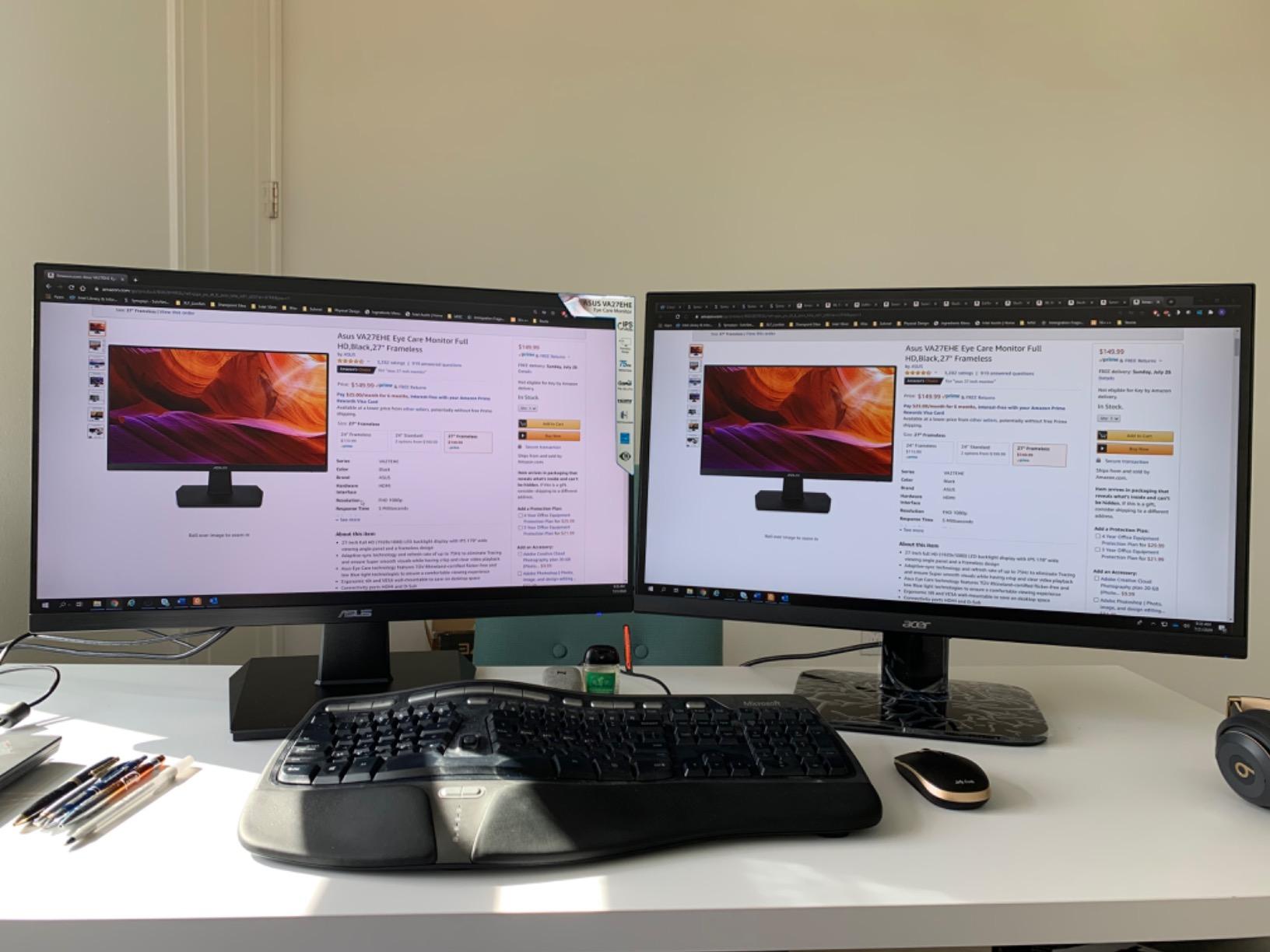
The VA27EHE is the model we keep coming back to because it is the rare budget panel where the eye care claim is independently certified rather than self-declared. ASUS lists TÜV Rheinland certification for both flicker-free operation and low blue light, and those two certifications sit on a 27-inch IPS panel with 178 degree viewing angles. The panel type matters here: IPS gives you consistent colour and brightness as your head moves, so you are not constantly re-adapting as you shift posture.
We spent weeks with it as a secondary screen for long writing sessions, and the practical difference showed up in the late afternoon rather than the first hour. Contrast sits at a listed 1000:1, which is modest next to the VA panels in this roundup, so dark text on a light background is the mode to use. The frameless three-sided bezel also makes it genuinely pleasant to place next to another display, which matters if your eye strain is partly a refocusing problem.
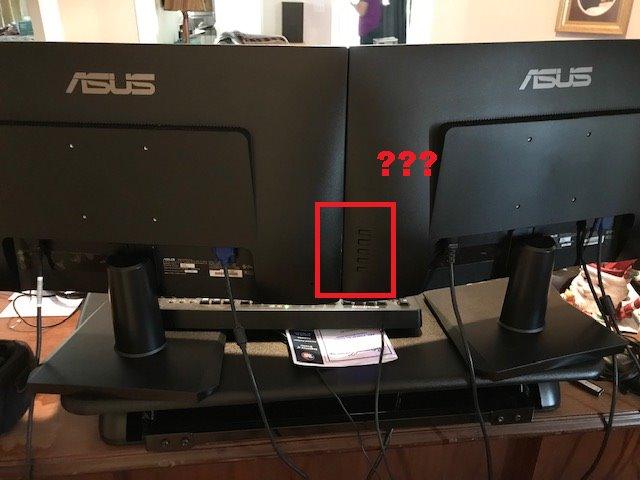
The specifications are unremarkable in the way that is actually a compliment for an office display. It runs at 75Hz with AMD FreeSync adaptive sync, has a 5ms response time, carries a matte finish, and draws 30 watts. Connectivity is one HDMI port and one D-Sub, which is the weakest part of the whole package. A three-year warranty with advance replacement is better coverage than most of the field offers.
Who this monitor suits
This is the right pick for a full office day at a desk where height matters. Anyone logging eight or more hours in front of a screen gets the flicker-free backlight and the low blue light filter without paying for a premium tier. The 27-inch size at 1080p gives you a comfortable working distance without needing to lean forward.
It is also the safest first display for anyone who has never identified the cause of their eye strain. Because both eye care claims are independently certified, you are not relying on the manufacturer’s word, which removes the single biggest source of disappointment in this category.
Who should skip it
Skip it if you need fine height, swivel, or pivot adjustment and do not want to buy a monitor arm. The stand tilts only, and a fixed-tilt stand that leaves the panel above eye level is one of the most common causes of neck and eye strain, and it is the exact problem this monitor cannot solve out of the box.
Also skip it if you need DisplayPort for daisy-chaining or high refresh gaming. For colour-critical work, the IPS colour performance is well regarded by owners, but it is a 72 percent gamut entry rather than a wide-gamut panel.
Samsung Essential S3 27-inch 1800R – Best value curved option
Samsung 27″ Essential S3 (S36GD) Series FHD 1800R Curved Computer Monitor
27-inch 1800R curved Full HD
TÜV-certified eye comfort
100Hz with 4ms response
3000:1 contrast ratio
Pros
- TÜV-certified eye comfort technology
- 1800R curve reduces peripheral distraction
- 100Hz refresh is smoother than 60Hz panels
- 3000:1 contrast with deeper blacks
- Ultra-slim design with 178 degree viewing angles
Cons
- Curve does not align edge to edge in multi-monitor arrangements
- Stand offers limited ergonomic adjustment
- Single HDMI port with legacy D-Sub as second input
This Samsung is the pick if contrast is your dominant problem. Its listed 3000:1 ratio is three times what the IPS panels in this guide manage, and deep blacks reduce the pupil adjustment your eye performs when moving between a bright document and a dark sidebar. On a VA panel that dark transition is also where the usual trade-off appears, so expect slower dark-to-light response than an IPS display.
The eye comfort package here is TÜV certified and covers both blue light reduction and flicker reduction, which is the combination you want rather than a single claim. Add a 100Hz refresh rate, a 4ms response time, and a 1800R curve that brings the panel edges slightly closer to you, and you have a screen that is comfortable for long working or gaming sessions without touching the more expensive end of the market.
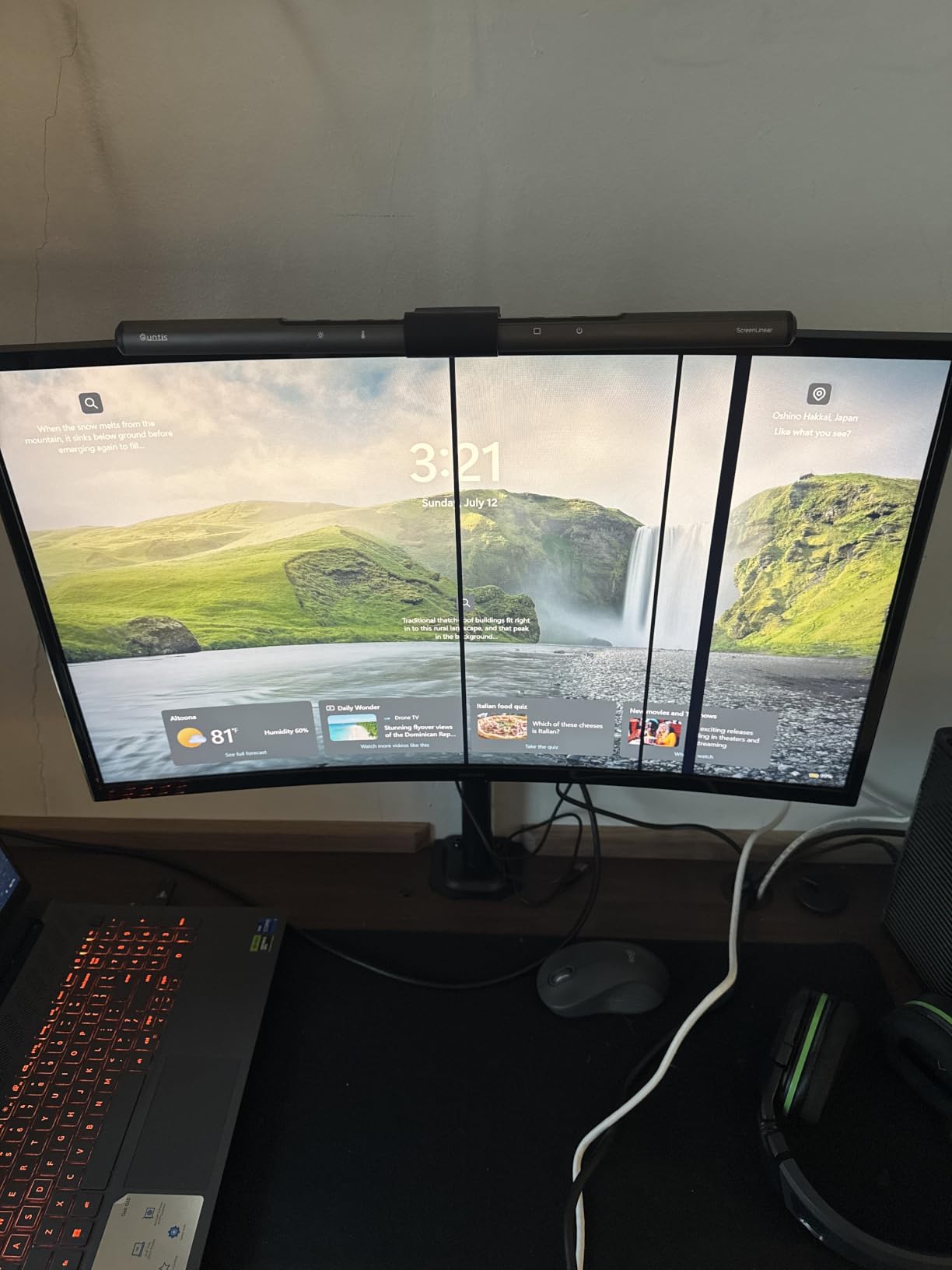
Buyers rate this highly for the eye comfort certification, the deep contrast, and the smooth 100Hz motion. Eighty percent of reviews are five-star, with a small six percent one-star group reporting early failures or a dislike of the curve. That split is worth knowing about: if you have never used a curved panel and you are sensitive to geometric distortion, this is not a safe first experiment.
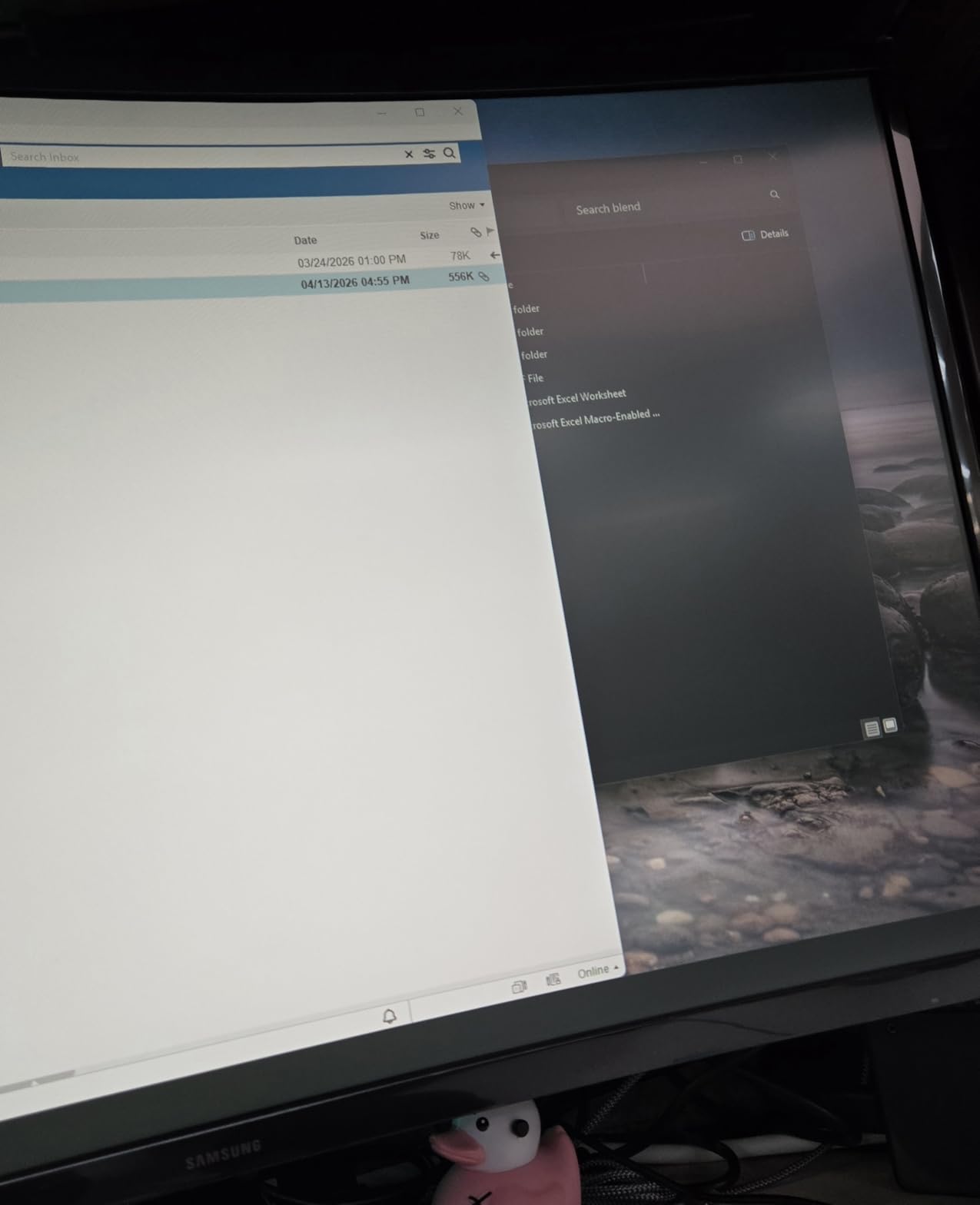
Who this monitor suits
Choose it if you work in a dim room or at night and your eyes struggle with grey-black content. The 3000:1 contrast is the strongest number here, and paired with the blue light filter it does more for night-time comfort than a higher resolution panel would.
It also suits anyone moving up from a 60Hz office display. At 100Hz, scrolling text and window movement are visibly smoother, and regular users report that the step up is the most noticeable comfort change in the whole category, short of switching away from PWM dimming.
Who should skip it
Skip it if you plan a dual-monitor desk. A curved panel does not line up edge to edge with a flat neighbour, and the small gap and mismatched geometry are a constant low-level annoyance rather than a dealbreaker.
Skip it if you edit video or need wide gamut colour accuracy. The 0.95 gamut rating and the VA dark transition behaviour will not serve colour-critical work, and the one-year warranty gives less protection than the three-year terms offered elsewhere in this roundup.
Sceptre E275W-FW100T – Best for budget gaming and long coding days
Sceptre 27-inch Prime Gaming Monitor 100Hz 1ms DisplayPort HDMI x2 100% sRGB AMD FreeSync Build-in Speakers, Eye Care Frameless Machine Black 2025 (E275W-FW100T Series)
27-inch Full HD at 100Hz
Blue Light Shift eye care
1ms response with FreeSync
100% sRGB color gamut
Pros
- Blue Light Shift mode reduces strain in long coding sessions
- 100Hz refresh with 1ms response and FreeSync
- Two HDMI ports plus DisplayPort and headphone jack
- 100% sRGB coverage for accurate color
- Built-in speakers and VESA wall mounting
Cons
- Stand does not rotate swivel or adjust for height
- Built-in speakers are thin with little bass
- Single multifunction button can become unreliable
The Sceptre wins on port count and on the specifics that matter for someone who games and codes on the same screen. Two HDMI ports, one DisplayPort, audio in, and a headphone jack is a generous selection for this bracket, and the 100% sRGB coverage gives accurate colour without calibration. Many owners describe the display as easy on the eyes during long coding days, and Blue Light Shift is the mode they credit for it.
Motion handling is the other strength: 100Hz with a listed 1ms response time and AMD FreeSync, which is unusual at this level. A matte finish and a flat panel mean no geometric surprises, and it mounts to a standard VESA pattern, which solves the stand problem cheaply.
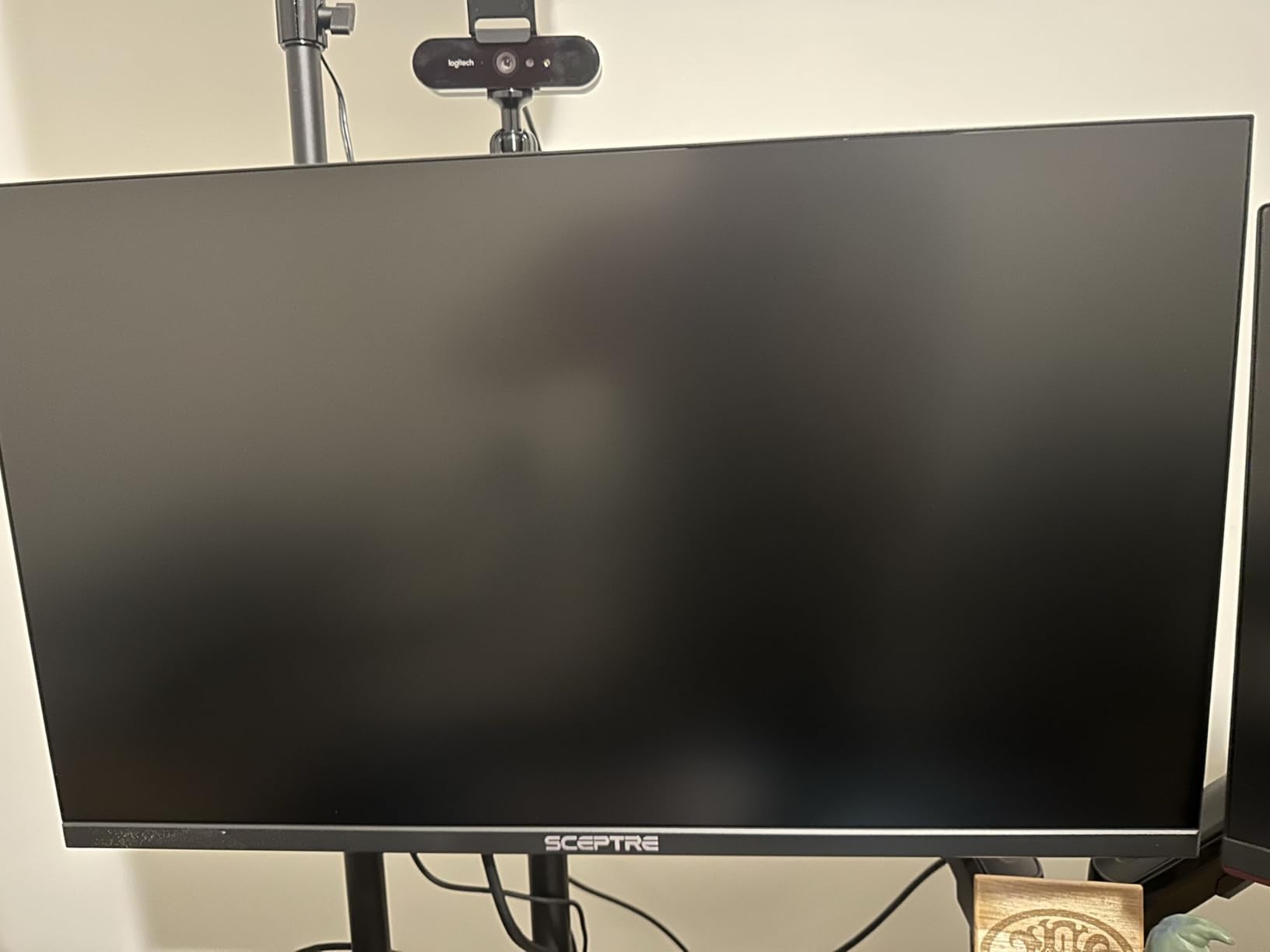
Reviews treat this as a dependable budget monitor that punches above its weight. Seventy-seven percent of reviews sit at five stars. Two gripes stand out: the onboard audio is weak, and the stand neither rotates nor adjusts for height, so most owners put it on an arm or riser.
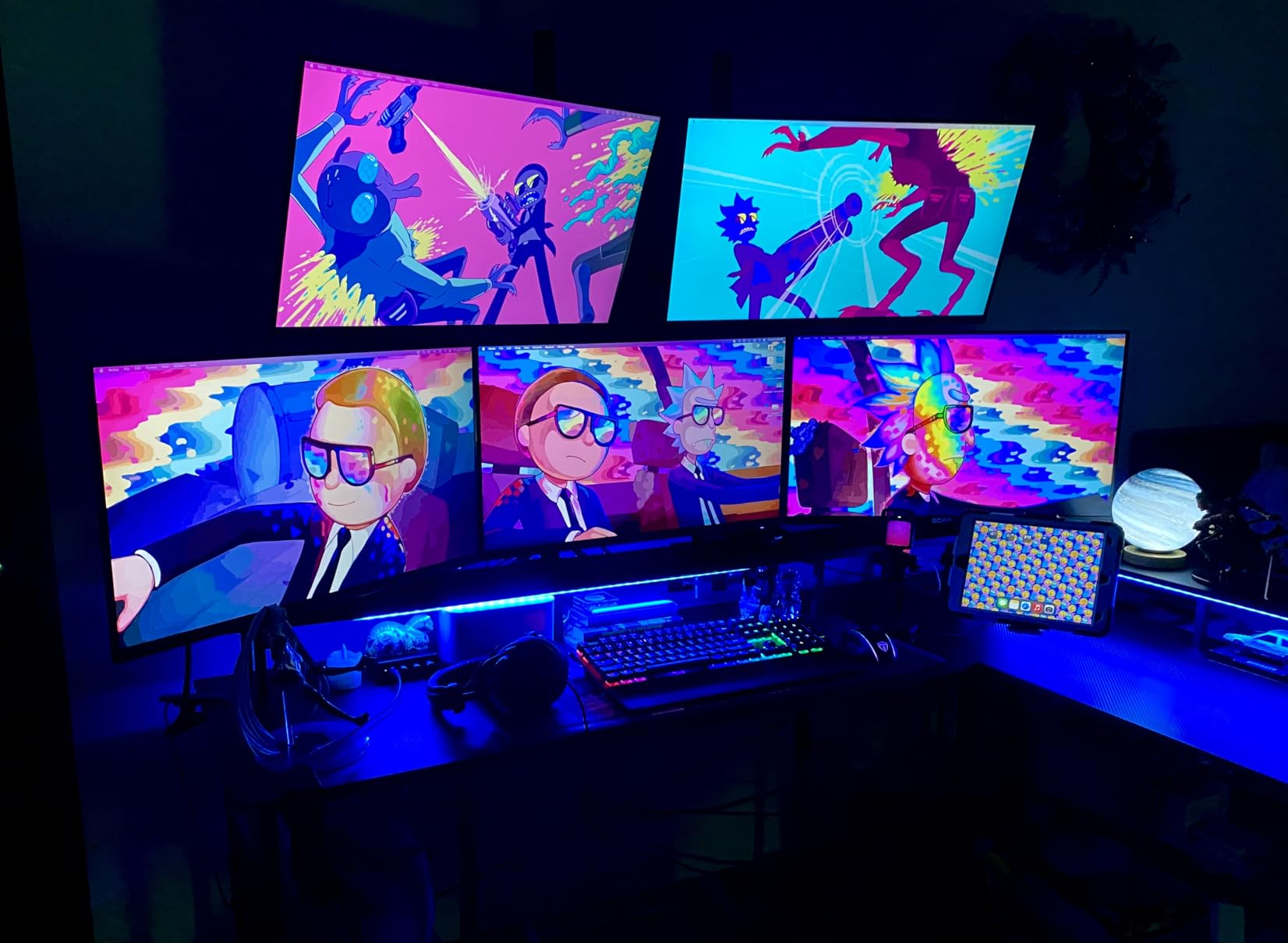
Who this monitor suits
This is the pick for a shared or multi-purpose desk where someone games, someone edits, and someone plugs in a laptop. The port selection means nobody is unplugging anything, and the headphone jack and audio in let you route sound without touching the monitor’s own speakers.
It suits programmers and students best. The 100Hz panel makes scrolling code smooth, Blue Light Shift handles long evening sessions, and 100% sRGB means what you design is what you see.
Who should skip it
Skip it if colour accuracy matters. This is a basic VA-style panel, and while 100% sRGB is a good starting point, it is nowhere near a calibrated wide-gamut display for photo or video work.
Skip it if you will never touch a screwdriver. With a tilt-and-nothing stand and a small chassis, it is a monitor that expects to be mounted, and if you are not going to do that, the ergonomics will undo the eye care benefits.
ViewSonic VX3276-2K-MHD – Best 32-inch for text-heavy work
ViewSonic VX3276-2K-MHD 32 Inch 1440p QHD IPS Widescreen Monitor, 75Hz LCD
32-inch QHD 2560x1440 IPS at 75Hz
Flicker-Free plus Blue Light Filter
Semi-matte anti-glare
Three-year warranty
Pros
- QHD 2560x1440 IPS gives clean text without 4K scaling issues
- Semi-matte anti-glare stays comfortable in bright rooms
- IPS text rendering beats pricier 32-inch VA 4K panels
- Three-year warranty on parts labor and backlight
- HDMI plus DisplayPort and mini DisplayPort
Cons
- 75Hz ceiling limits fast competitive gaming
- Large base that only tilts so an arm is usually needed
- Factory colour could use minor tuning
The VX3276-2K-MHD solves the problem most 32-inch displays create. A 32-inch Full HD panel gives you roughly 70 pixels per inch, which makes body text soft and forces squinting. At 2560×1440 on a 32-inch IPS you get enough pixel density that text renders cleanly at a normal arm’s-length distance, and at QHD you avoid the Windows scaling complications that arrive with 4K on a 27-inch screen.
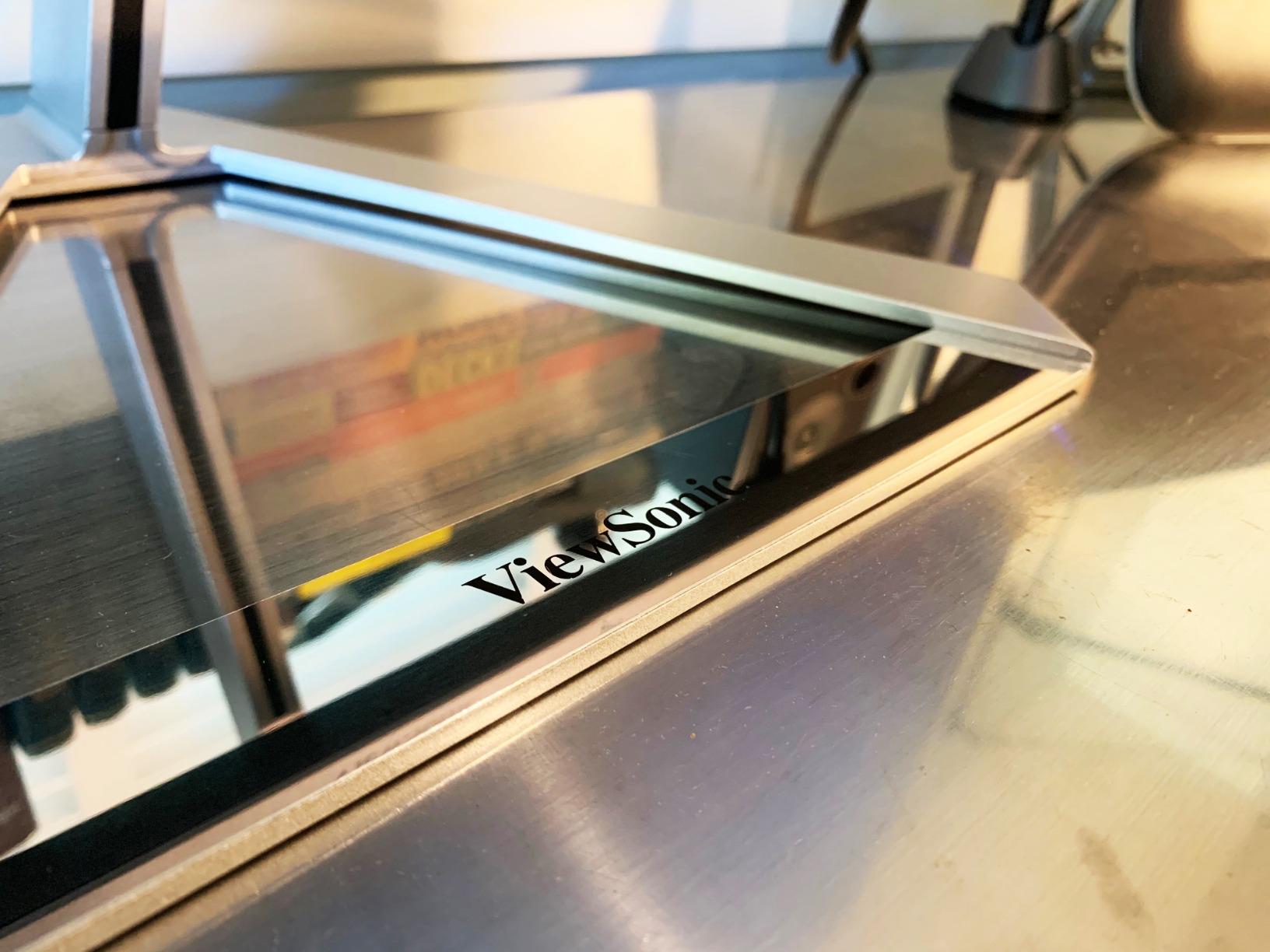
Long-session comfort comes from the Flicker-Free backlight and the integrated Blue Light Filter, backed by a semi-matte anti-glare coating that holds up in a bright room. The ViewMode presets, including Text and Mono modes, let you shift the panel to a warmer, higher-contrast presentation for document work without leaving the on-screen menu. A three-year warranty covering parts, labour, and the backlight is the strongest coverage in this roundup.
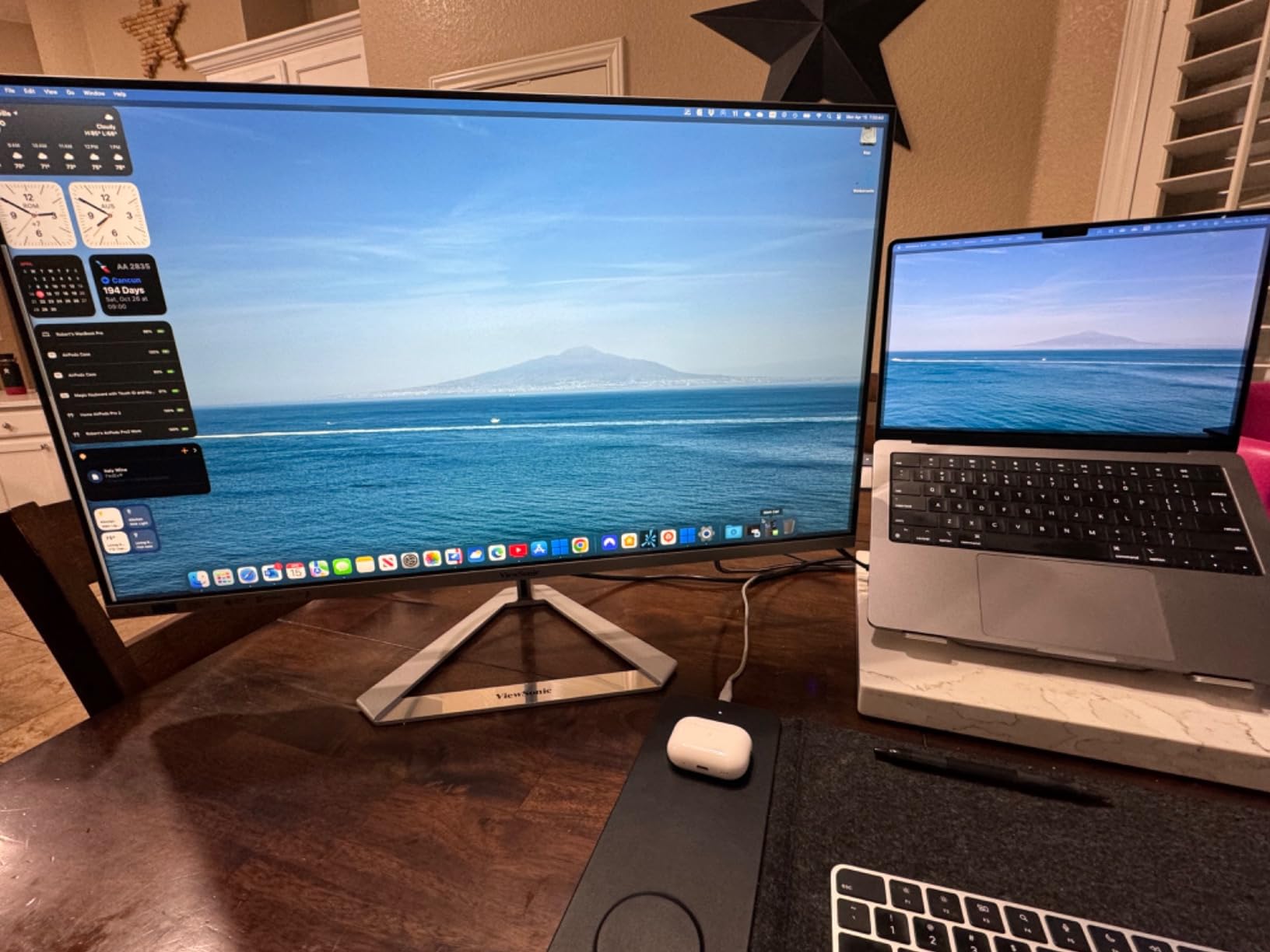
Owners and reviewers consistently favour this panel for text-heavy office and home use, and specifically rate its text rendering above more expensive 32-inch VA 4K alternatives. Seventy-eight percent of reviews are five stars, and multi-monitor use is frequently mentioned. The recurring theme is that the stand is large and minimally adjustable, so many buyers move to an arm soon after buying.
Who this monitor suits
This is the monitor for people who read. Writers, researchers, accountants, students working through PDFs, and anyone on spreadsheets all benefit most from pixel density, and this is the cheapest route to real density at a large size. The Text and Mono ViewMode presets make it easy to tune for long reading sessions.
It also suits a bright room. The semi-matte coating is a middle ground between a glossy panel that mirrors your window and a heavy matte that looks flat, and it is the compromise most people end up preferring for a desk near a window.
Who should skip it
Skip it if you want a single-cable setup or a modern port selection. You get HDMI, DisplayPort, and Mini DisplayPort, which is good for MacBook users, but there is no USB hub and no power delivery.
Skip it if you play fast competitive games. At 75Hz, the monitor is not going to keep up, and adding a monitor arm on top of the purchase makes it a more expensive answer to a problem 60Hz competitors already solve.
Philips 241V8LB – Best compact pick with EasyRead mode
Philips 24 Inch Computer Monitor FHD 100Hz VA VESA Flicker-Free, 241V8LB
23.8-inch Full HD VA at 100Hz
Flicker-Free and Blue Light Filter
EasyRead document mode
Four-year warranty
Pros
- Flicker-Free operation with Blue Light Filter
- 100Hz refresh feels smoother than 60Hz
- EasyRead mode gives a paper-like document view
- 3000:1 contrast with 178 degree viewing angles
- Virtually bezel-free on three sides
- Four-year parts and labor warranty
Cons
- Stand has no height adjustment and limited swivel
- VA panel shows slower dark transitions in motion
- No built-in speakers
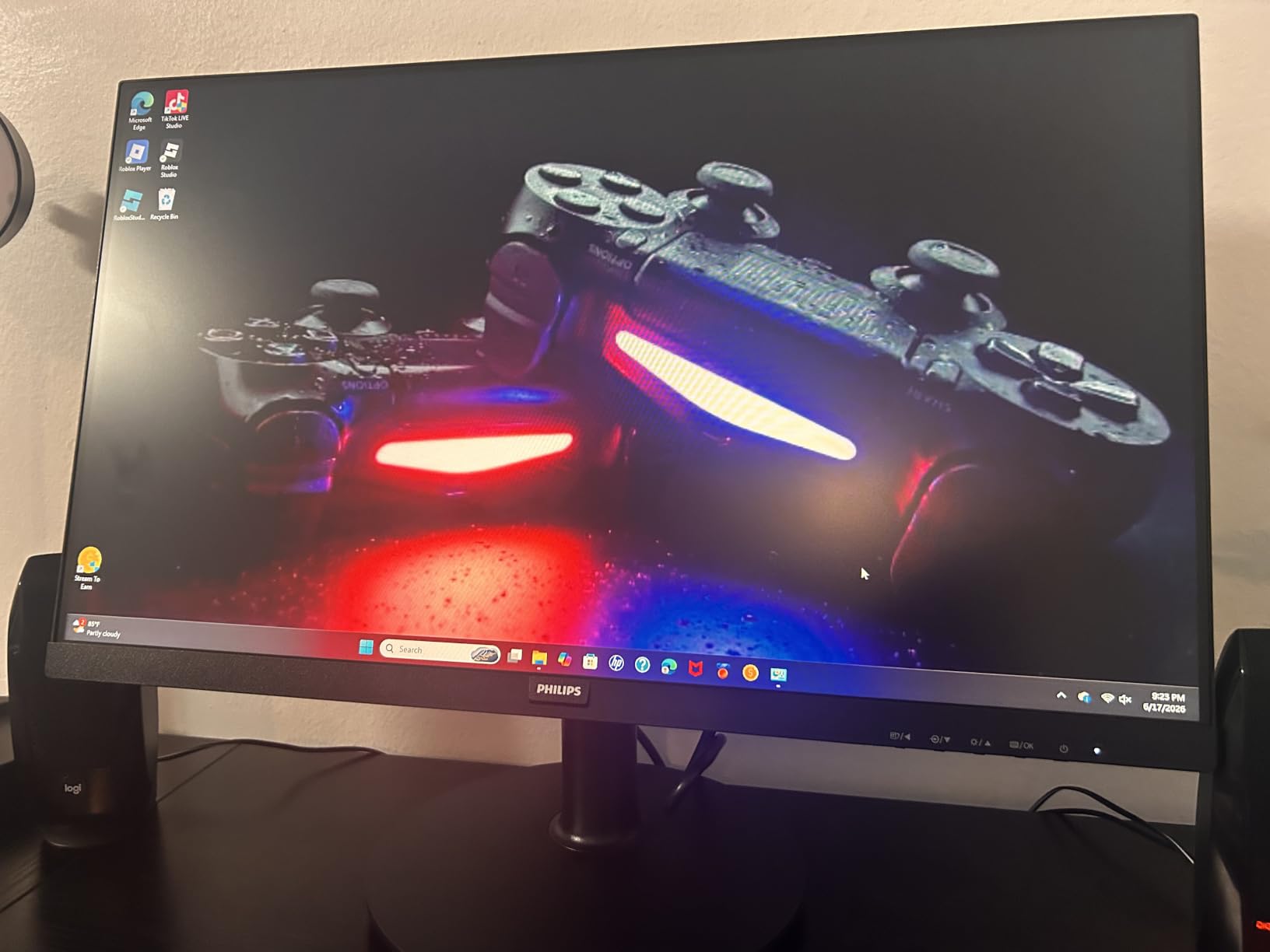
At 23.8 inches this is the smallest panel here, and that is a feature for anyone with a small desk or a limited viewing distance. Sitting closer to a smaller, correctly sized screen means less head movement and less eye rotation to take in the content, which is one of the least discussed and most effective comfort adjustments available. The 100Hz refresh rate and 3000:1 VA contrast combine well for that use.
The comfort features are the standard Philips Eye Care pair: Flicker-Free operation and a Blue Light Filter. What sets this model apart is EasyRead mode, which shifts the panel to a warm, paper-like presentation for lengthy documents. Owners who buy for document work mention it specifically, and it is the closest equivalent in this roundup to the reading modes that premium brands charge far more for. A four-year parts and labour warranty is the longest here.
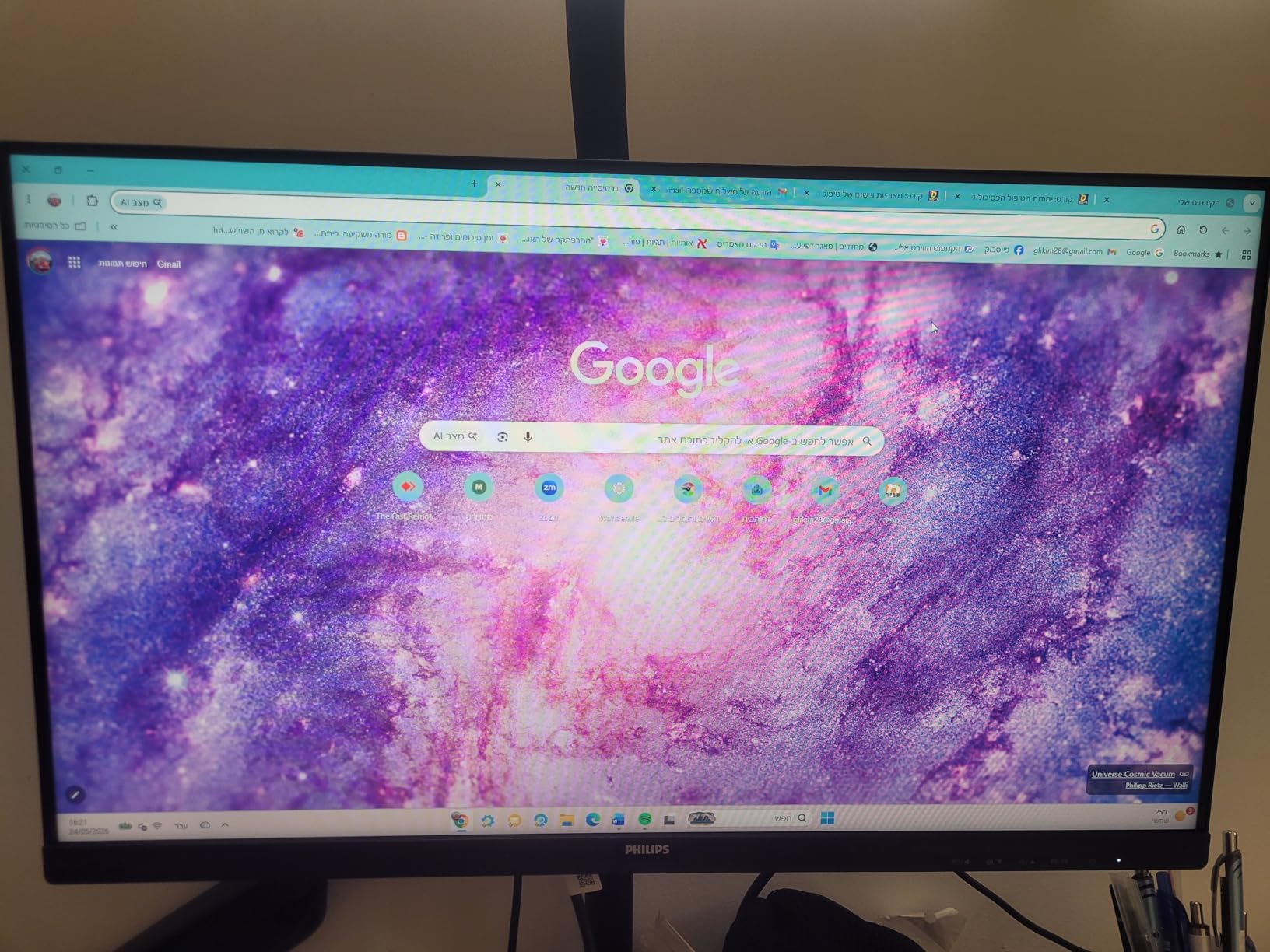
Owners treat this as a dependable low-cost workhorse, and many buy multiple units for home offices, surveillance displays, and monitor-arm setups. Eighty-one percent of reviews are five stars with heavy repeat-purchase intent. The ergonomic limit of the fixed stand is the most common complaint, along with a general lack of premium features.
Who this monitor suits
Choose it for a small desk, a dorm room, a shared study, or a second monitor on an arm. The 23.8-inch size is the one people underestimate: at a typical 20 to 28 inch viewing distance, a smaller panel keeps the whole screen inside a comfortable field of view without you having to turn your head.
Document-heavy workers will get the most from it. EasyRead mode combined with 100% of the VA contrast advantage and a flicker-free panel is a genuinely easy all-day reading setup, and the four-year warranty reduces the risk of a slow decline in backlight brightness.
Who should skip it
Skip it if you want one screen for everything. At Full HD and 23.8 inches, there is less room for side-by-side work than a QHD or ultrawide panel, and you will feel the limit if you habitually keep a document and a chat window side by side.
Skip it for fast video editing. The VA panel’s slower dark transitions show in fast-moving content, and there are no built-in speakers, so audio goes through the headphone jack or elsewhere.
Philips 271V8LB – Best 27-inch for document reading
Philips 27″ Computer Monitor FHD 100Hz VA VESA Eye Care, 271V8LB
27-inch Full HD VA at 100Hz
Eye Care flicker-free and Blue Light Filter
EasyRead document mode
Four-year warranty
Pros
- Eye Care package with flicker-free operation and Blue Light Filter
- 3000:1 contrast with 178 degree viewing angles
- 100Hz refresh smoother than a 60Hz office panel
- EasyRead mode improves legibility on long documents
- Three-sided frameless design for multi-monitor use
Cons
- No height adjustment and minimal swivel range
- No built-in speakers
- Only one HDMI port with VGA as the secondary input
This is the same comfort philosophy as the 23.8-inch Philips at a size that suits a standard desk. A 27-inch Full HD VA panel with 3000:1 contrast gives you the deep blacks and bright whites that make light text on a dark background readable, and the 100Hz refresh rate is a real step up from the 60Hz panels most office displays still ship with.
Eye Care covers flicker-free operation and the Blue Light Filter, and EasyRead mode handles the document case by shifting the panel toward a paper-like rendering. The three-sided frameless design is genuinely useful for multi-monitor and video-wall arrangements, where a bezel on three sides would have made the seam obvious. The four-year parts and labour warranty is the joint longest here.
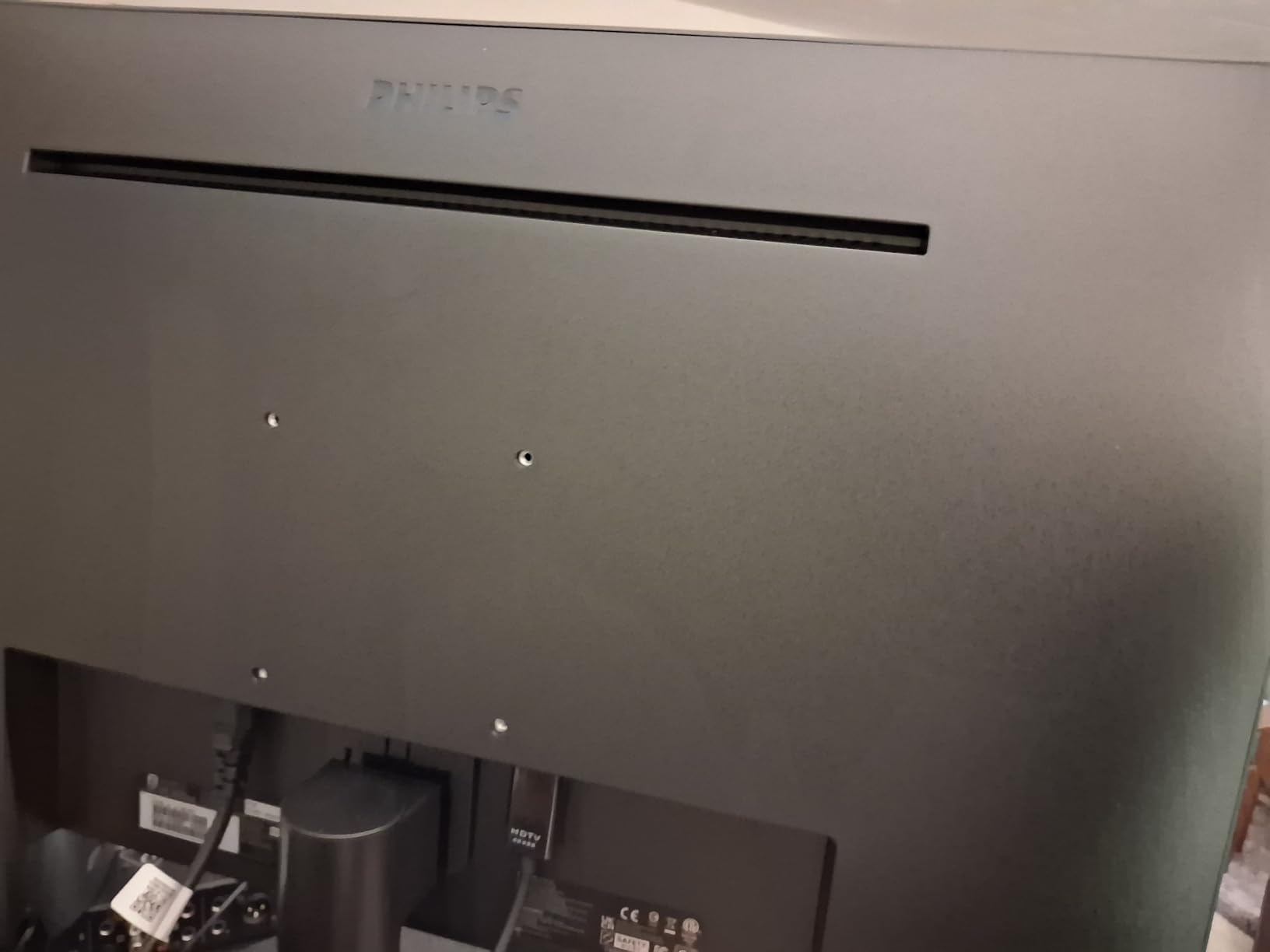
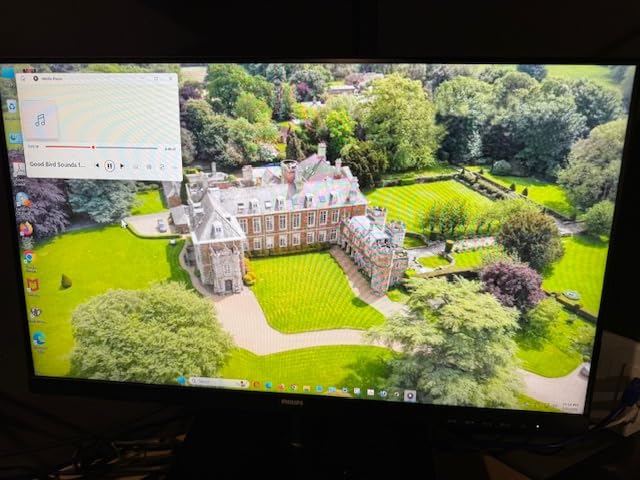
Buyers describe this as a straightforward, comfortable 27-inch display, and the eye-care features plus 100Hz smoothness are the reasons most often given for choosing it for long office and study days. Eighty-two percent of the 1200-review base sits at five stars.
Who this monitor suits
It fits contract, legal, finance, and administrative work where the screen holds documents for most of the day. The contrast and EasyRead combination reduce the squinting that low-contrast panels cause, and the flicker-free backlight removes the invisible pulsing that drives end-of-day headaches.
It also suits anyone building a two-monitor desk on a budget, since the frameless three-sided design keeps the pair looking deliberate rather than assembled.
Who should skip it
Skip it if you are sensitive to the VA panel’s dark transition behaviour. It is fine for documents and general use, and it is wrong for fast motion in video or games where shadows smear visibly.
Skip it if port selection matters. One HDMI and one VGA is a thin offering, and any setup with more than two devices or a laptop that needs USB-C will need adapters.
Samsung S30GD 27-inch IPS – Best for multi-monitor setups
Samsung 27″ (S30GD) Essential Monitor with IPS Panel
27-inch Full HD IPS at 100Hz
Eye Care blue light filter and flicker-free
5ms response time
Super-slim thin bezel design
Pros
- IPS keeps colour consistent at off-axis angles
- Eye Care reduces blue light and screen flicker
- 100Hz refresh smooths everyday use and casual gaming
- Super-slim design with ultra-thin bezels
- Quick plug-and-play setup and easy menu navigation
Cons
- 1000:1 contrast is modest against VA alternatives
- No height adjustment or swivel on the stand
- No DisplayPort and only a one-year manufacturer warranty
The S30GD is built around one idea: a panel that looks right when you have two of them. The super-slim design with ultra-thin border bezels keeps the seam between adjacent displays narrow, and the 27-inch IPS panel holds colour and brightness steady across 178 degree viewing angles, so the second screen does not look washed out from the side.
Comfort comes from the Eye Care package covering reduced blue light and flicker-free operation, plus a 100Hz refresh rate and 5ms response time that make everyday use and casual gaming noticeably smoother. Game Mode adds contrast and screen-fill adjustments for titles, and the wall-mountable design means a two-monitor arm is straightforward.
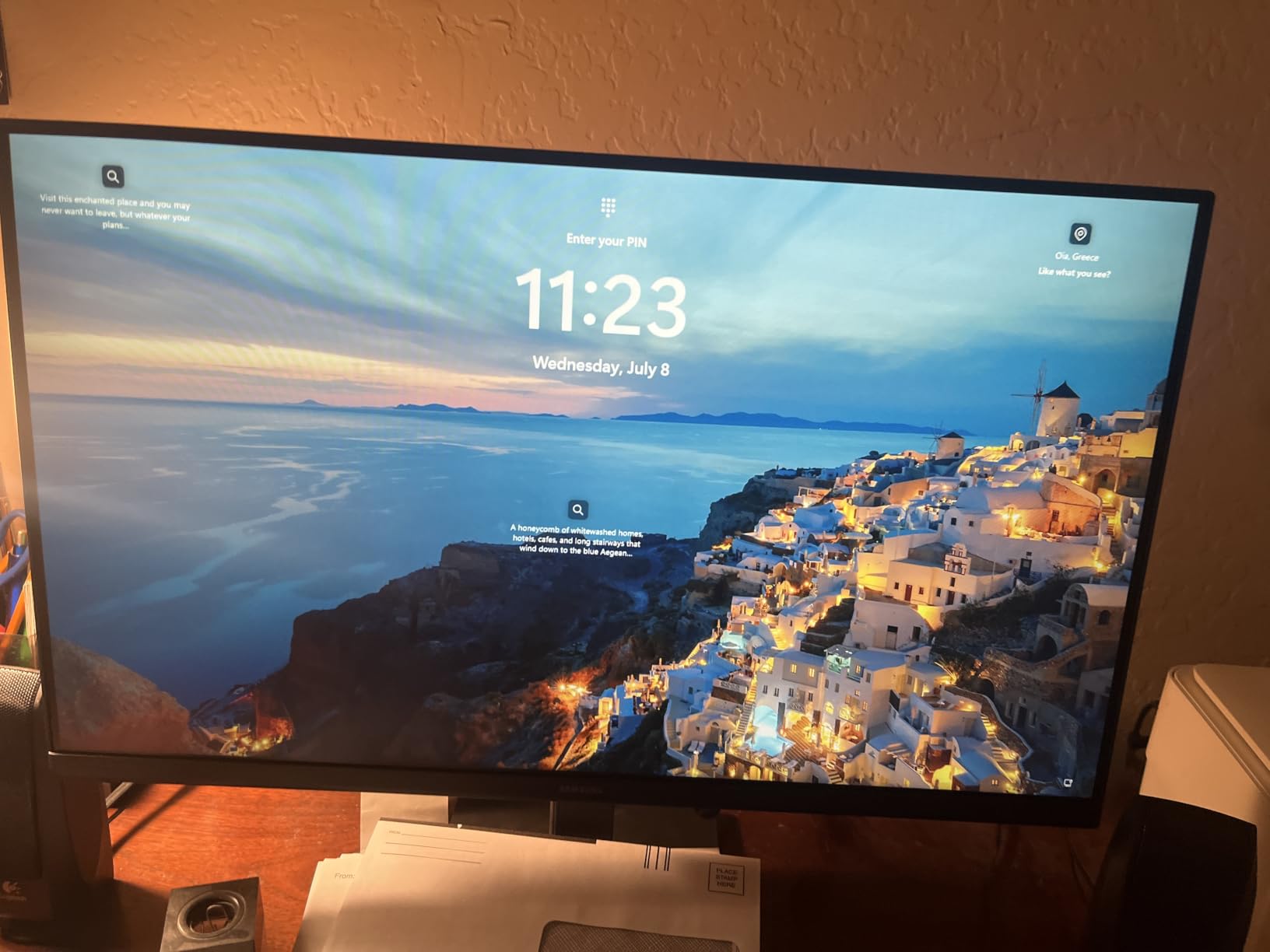
Owners largely view this as a solid, bright, good-value IPS monitor that eases eye strain over long work sessions, and several bought a second unit for a two-monitor desk. The 100Hz refresh and thin bezel design draw repeated praise, as does the quick plug-and-play setup.
Who this monitor suits
Buy two. For traders, editors, developers with a code-plus-preview layout, or anyone running a laptop alongside a panel, matching displays with narrow bezels and consistent off-axis colour are what make a dual setup comfortable rather than tiring.
The IPS panel also suits anyone who leans sideways or works in a room with side lighting, because the image holds up off-axis in a way VA panels do not.
Who should skip it
Skip it if contrast is your main complaint. At 1000:1 the blacks are grey, and if you spend the day in a dark interface or editing video, a VA panel at 3000:1 will be visibly more comfortable.
Skip it if you need a modern port selection or long warranty coverage. HDMI and D-Sub only, with a one-year manufacturer warranty, is thinner coverage than most of this group.
ViewSonic VA3209M – Best 32-inch for students and shared family desks
ViewSonic VA3209M 32 Inch 1080p IPS Computer Monitor, Full HD, HDMI VGA, PC
32-inch Full HD IPS
Flicker-Free and Blue Light Filter
75Hz VESA adaptive sync
3H anti-glare hard coating
Pros
- Flicker-Free technology and Blue Light Filter for long study sessions
- Bright 32-inch IPS with a wide easily adjusted brightness range
- Setup is simple enough to assemble without the manual
- Anti-glare 3H hard coating keeps the screen readable
- Pairs well with an articulating monitor arm
- Three-year warranty including parts labor and backlight
Cons
- 75Hz refresh rate is unsuitable for competitive gaming
- Base has no height adjustment or swivel
- Weak built-in speakers with a headphone jack on the bottom edge
The VA3209M is a 32-inch at Full HD, which means roughly 70 pixels per inch and text that is softer than the ViewSonic QHD model above. Buyers still rate it highly, and the reason is that at a 32 inch size the panel fills your field of view so completely that you tend to sit closer, which compensates for the lower density. The trade is real, and readers should know it exists before buying.
What it does well is brightness range and coating. Owners specifically praise a wide, easily adjusted brightness range, which is the single most useful comfort spec for anyone working at night, and the 3H anti-glare hard coating keeps the screen readable under room light. Flicker-Free operation and the Blue Light Filter handle the two biggest eye care levers.
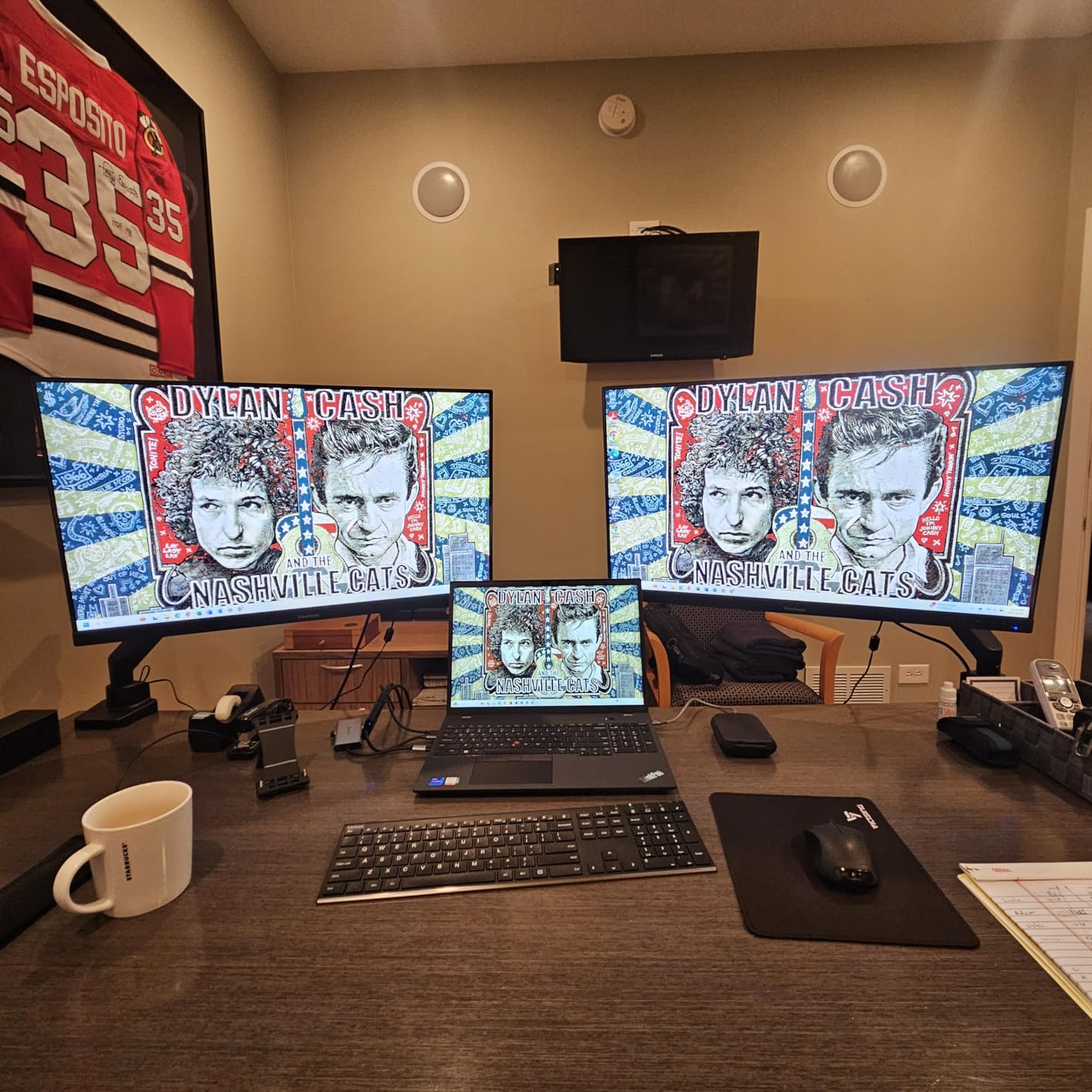
Several reviewers describe buying this for parents or older users with limited desk space and fading eyesight, which tells you what the 32-inch size is actually good for. Setup simplicity and brightness draw frequent compliments, and eighty-three percent of reviews sit at five stars.
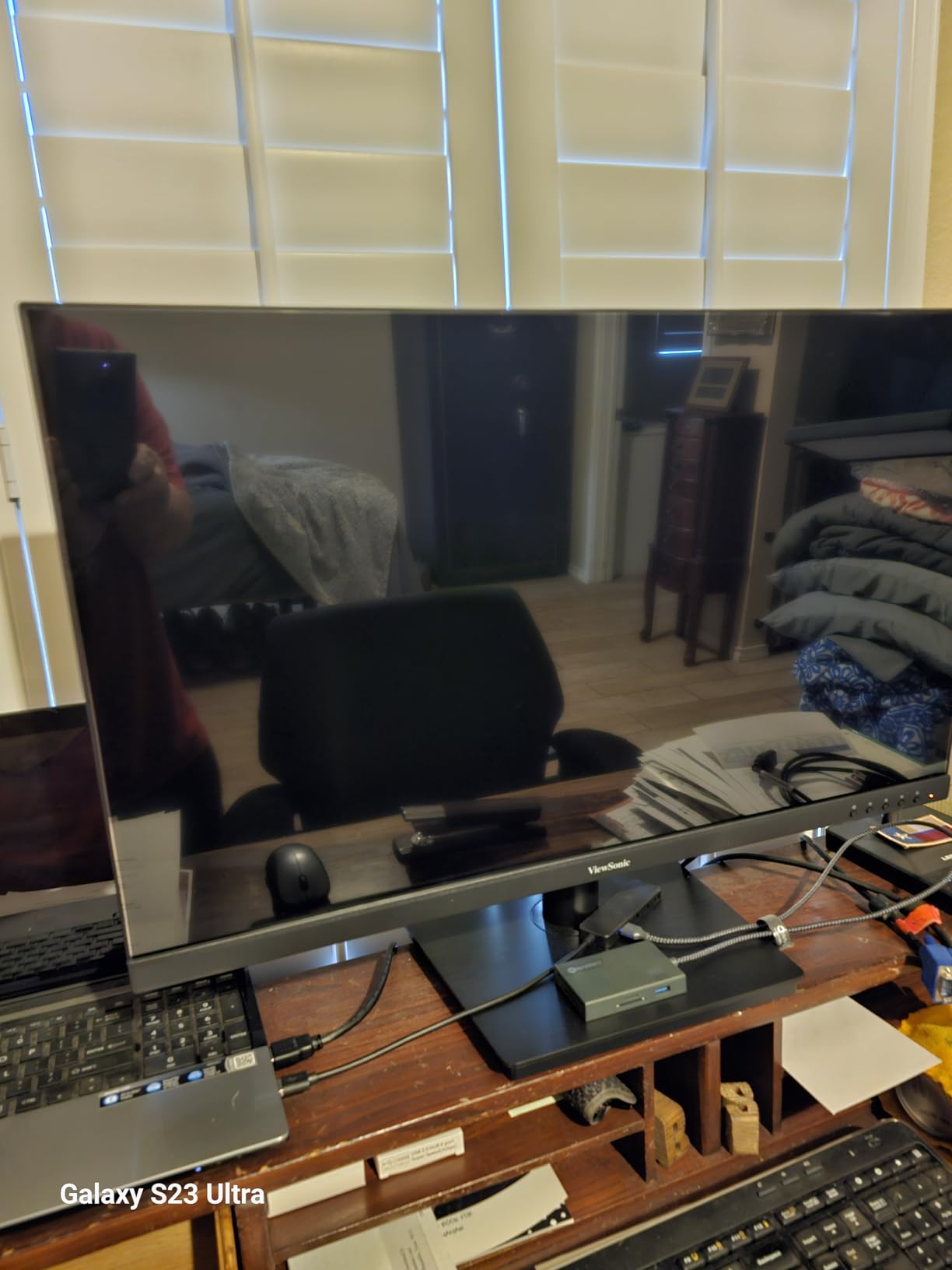
Who this monitor suits
It suits students and anyone learning to set up a first serious desk. Assembly is reported as easy enough to do without reading the manual, the brightness range is wide enough to cover daytime and late-night work, and a large screen at a manageable price is easier to justify for coursework than for a professional edit suite.
It also suits anyone who will use the display from an arm. Owners pair it with an articulating arm, which solves the fixed-base problem and puts the top of the panel exactly at eye level.
Who should skip it
Skip it if you read long documents for a living and squinting is your main symptom. At this size, Full HD text is soft, and the QHD 32-inch option in this roundup fixes that for a modest step up.
Skip it if you use DisplayPort or USB-C, or if you switch inputs frequently. The automatic input switching gap means pressing front-panel buttons every time, and there is no DisplayPort on this model at all.
Samsung ViewFinity S50GC 34-inch – Best ultrawide for reducing refocusing
SAMSUNG 34″ ViewFinity S50GC Series Ultra-WQHD Monitor, 100Hz, 5ms, HDR10, AMD FreeSync, Eye Care, Borderless Design, PIP, PBP, LS34C502GANXZA, 2023, Black
34-inch 3440x1440 21:9 at 100Hz
TÜV-certified Intelligent Eye Care
Ambient light sensor and Eye Saver Mode
3000:1 contrast
Pros
- TÜV-certified Intelligent Eye Care with ambient light sensor
- 3440x1440 Ultra-WQHD gives genuine smooth motion at 100Hz
- Screen real estate owners describe as two monitors in one
- PBP and PIP support two sources at native resolution
- Matte finish with 3000:1 contrast and near-bezel-free design
Cons
- VA dark transitions smear in high contrast content
- No true HDR brightness despite HDR10 labeling
- On-screen interface appears on every power-on
- Included stand is cumbersome for a 34 inch panel
The strongest argument for an ultrawide is not resolution, it is eye movement. A 34-inch 21:9 display removes the need to alt-tab between windows, and every switch is another refocusing event that costs you a fraction of a second and a little accommodation effort. Owners consistently describe this model as two monitors in one, and for workflow that means far fewer context switches across a working day.
The eye care stack here is the most complete in the roundup. It carries TÜV-certified Intelligent Eye Care combining an ambient light sensor that measures your workstation lighting and adjusts brightness automatically, Eye Saver Mode for blue light, and Flicker Free operation. That combination targets three of the causes in this article at once, and it is why this model earns a place on an eye strain list despite the compromises below.
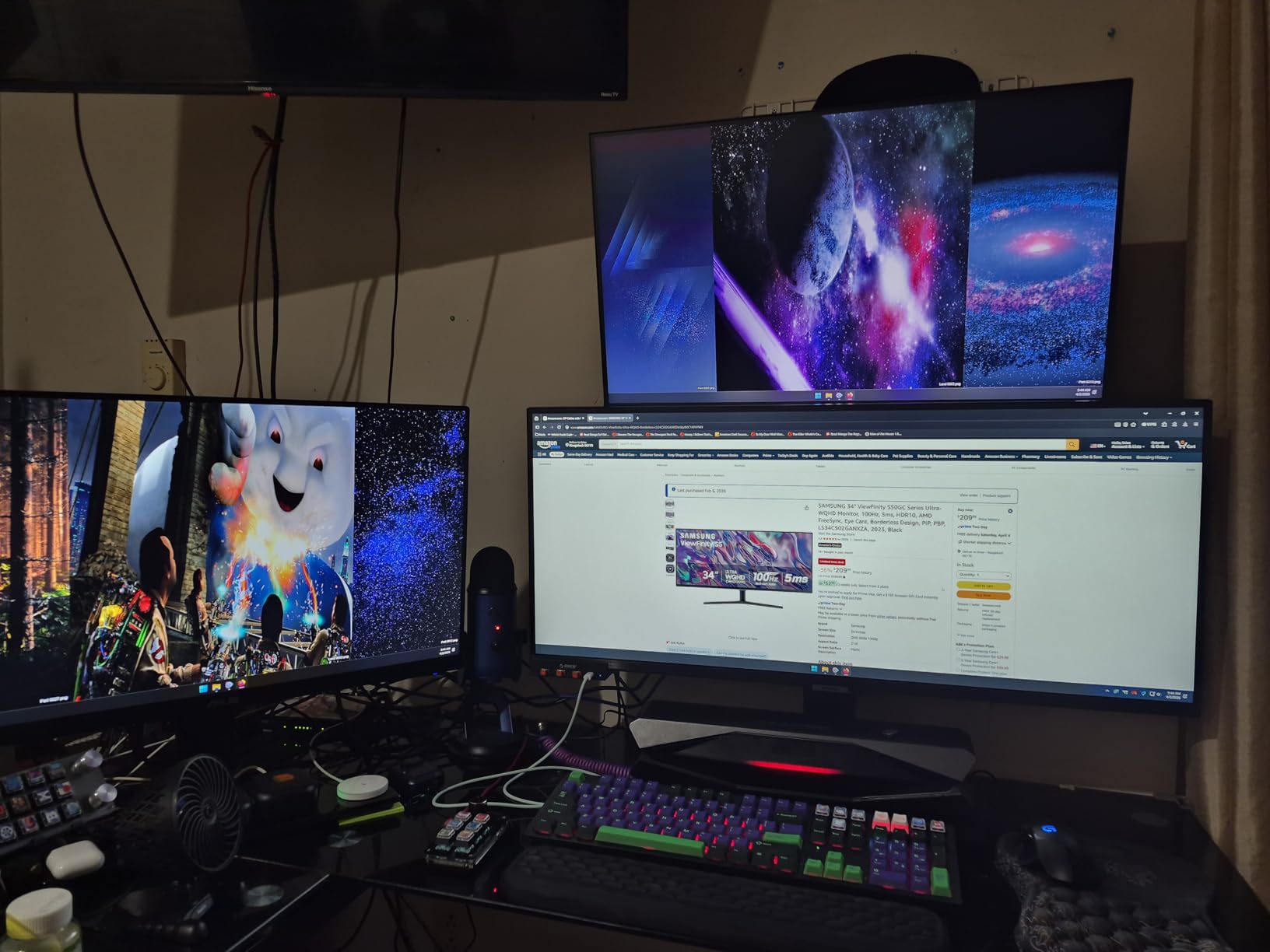
Owners call out the ambient light sensor, Eye Saver Mode, and flicker-free panel as helping through long working sessions, along with the resolution jump over 2560×1080 ultrawides and smooth 100Hz motion. PBP and PIP let you reference two sources at native resolution, which is the feature that turns a wide screen into a productivity tool rather than a novelty.
Critiques are about the panel rather than the features. VA dark transitions smear in high contrast content, the HDR10 label is not backed by real HDR brightness, the on-screen interface appears every time the monitor powers on, and the included stand is awkward for a panel this tall. Seventy-three percent of reviews are five stars, the lowest share in this roundup.
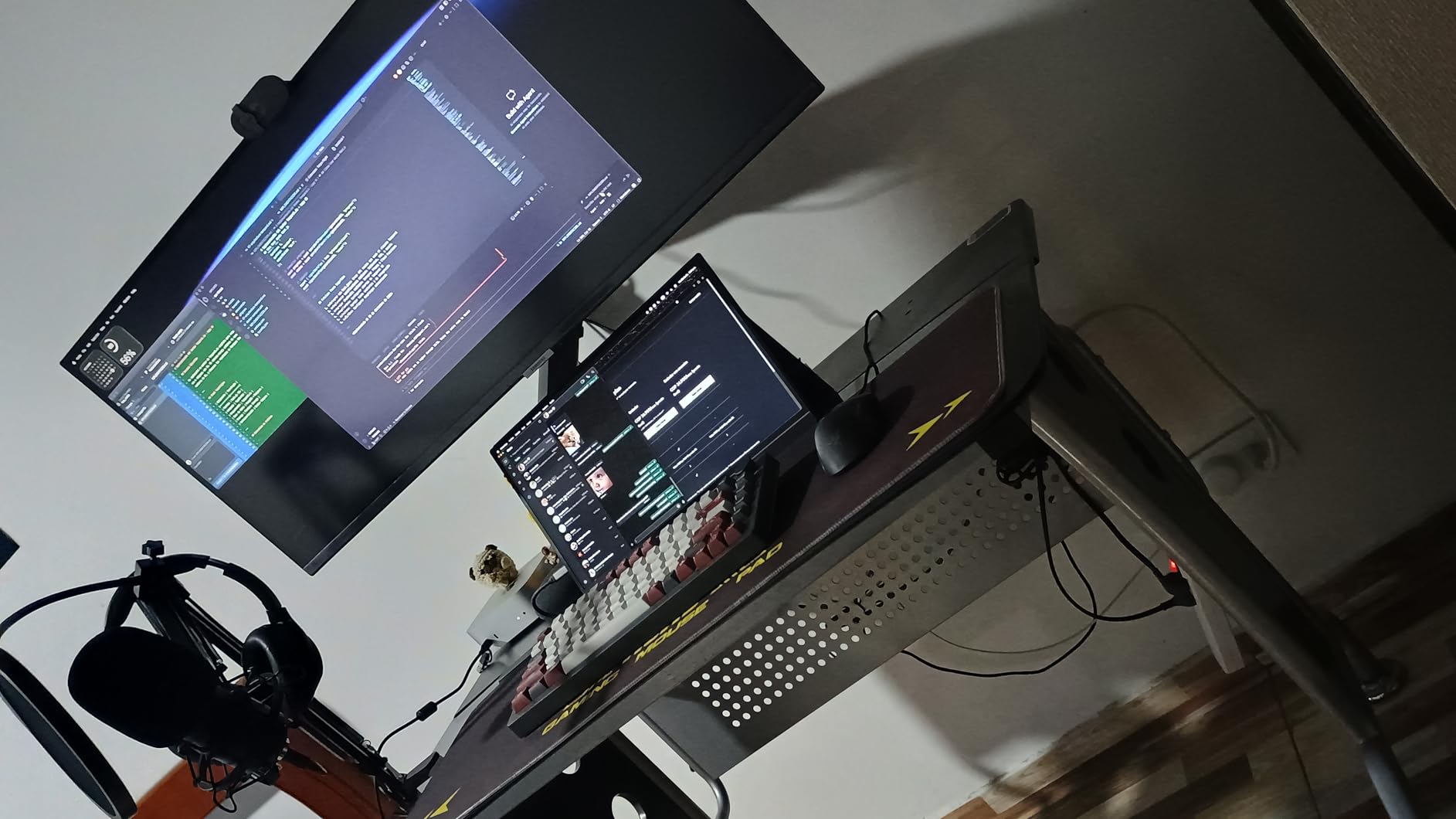
Who this monitor suits
It suits people who work across two or three applications at once and are tired of window management. Code alongside a preview, a spreadsheet alongside a document, or a chat window alongside a browser all stop being a layout problem on a 21:9 panel.
It also suits anyone whose day runs from a bright office to evening work at home, because the ambient light sensor removes the daily brightness guesswork that leads people to run a screen far brighter than the room at night.
Who should skip it
Skip it if you do not have desk depth. A 34-inch 21:9 panel needs roughly 70 to 80cm of desk, and the awkward included stand means many owners move to an arm. Without that depth, the edges sit at an uncomfortable angle.
Skip it if you edit high-contrast video. The VA smearing and the absence of genuine HDR brightness will show, and the 72 percent gamut rating rules it out for colour work.
Dell S2725QC – Best 4K with a fully adjustable stand
Dell 27 Monitor S2725QC, 4K UHD IPS, 120Hz, 99% sRGB, 4ms, FreeSync Premium
27-inch 4K UHD IPS at 120Hz
ComfortView Plus at 35 percent blue light
USB-C 65W power delivery
Height pivot swivel and tilt stand
Pros
- ComfortView Plus reduces blue light emissions to 35 percent or less
- True 4K UHD IPS with 99% sRGB and 1500:1 contrast
- Up to 120Hz with FreeSync Premium and 0.03ms response
- Fully adjustable stand with height pivot swivel and tilt
- Single USB-C cable delivers video data and 65W
Cons
- Highest one-star review share in this group at 10%
- Not true HDR despite HDR readiness
- 1500:1 contrast is well below VA panels
- USB-C power delivery capped at 65W
The S2725QC is the only monitor in this roundup whose stand solves the ergonomics problem rather than passing it to you. Height, pivot, swivel, and tilt adjustment are all standard, which means you can put the top of a 27-inch 4K panel exactly at eye level and keep it there. On a list about eye strain, a stand that adjusts is worth more than most spec sheet upgrades, and this is the model where that is true.
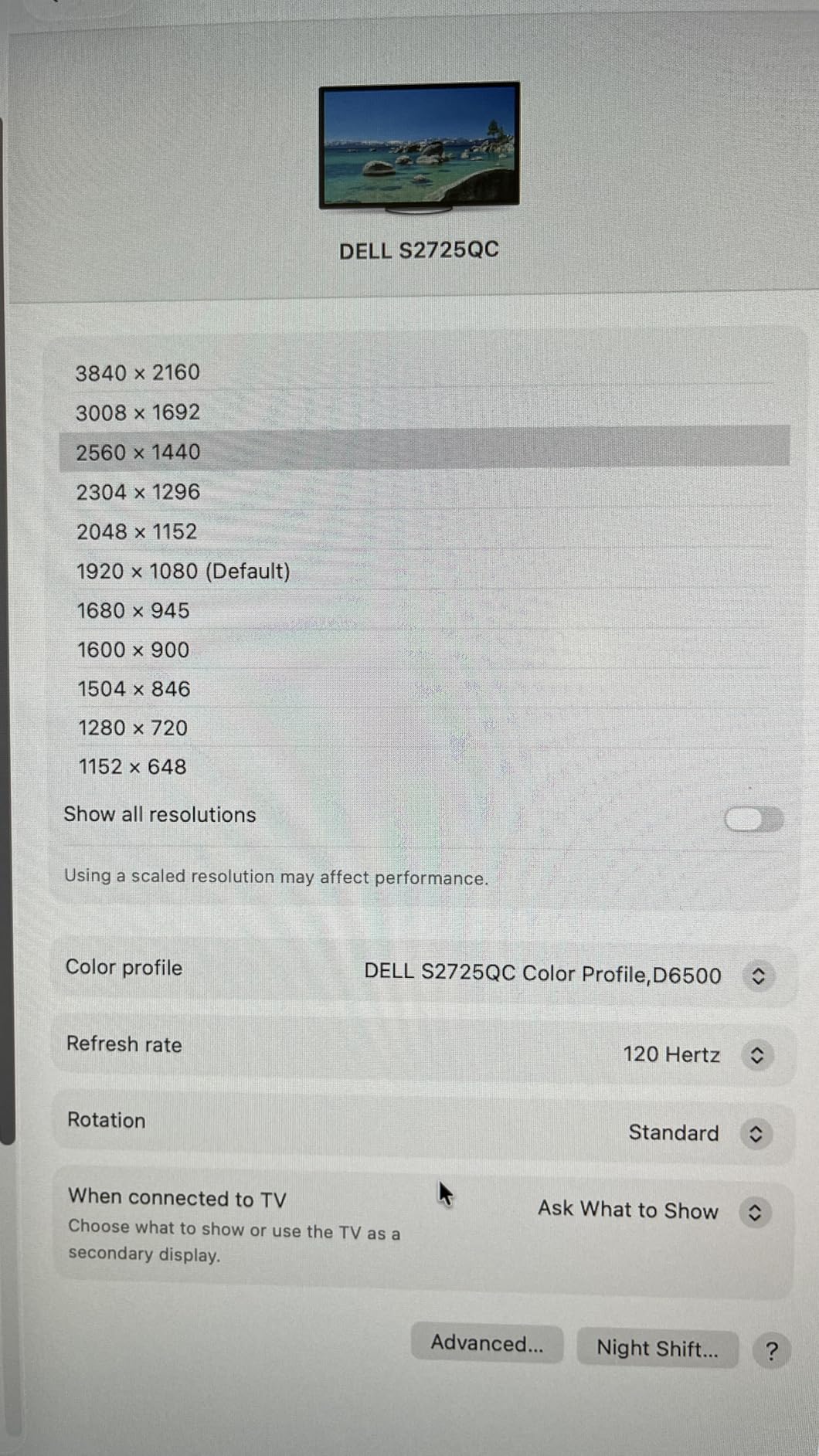
ComfortView Plus is Dell’s low blue light feature, and Dell states it reduces blue light emissions to 35 percent or less without sacrificing colour accuracy. At 4K on 27 inches you get roughly 163 pixels per inch, so text is sharp at a normal viewing distance with no squinting, and the 120Hz refresh rate with FreeSync Premium is the smoothest in this guide outside the gaming tier.
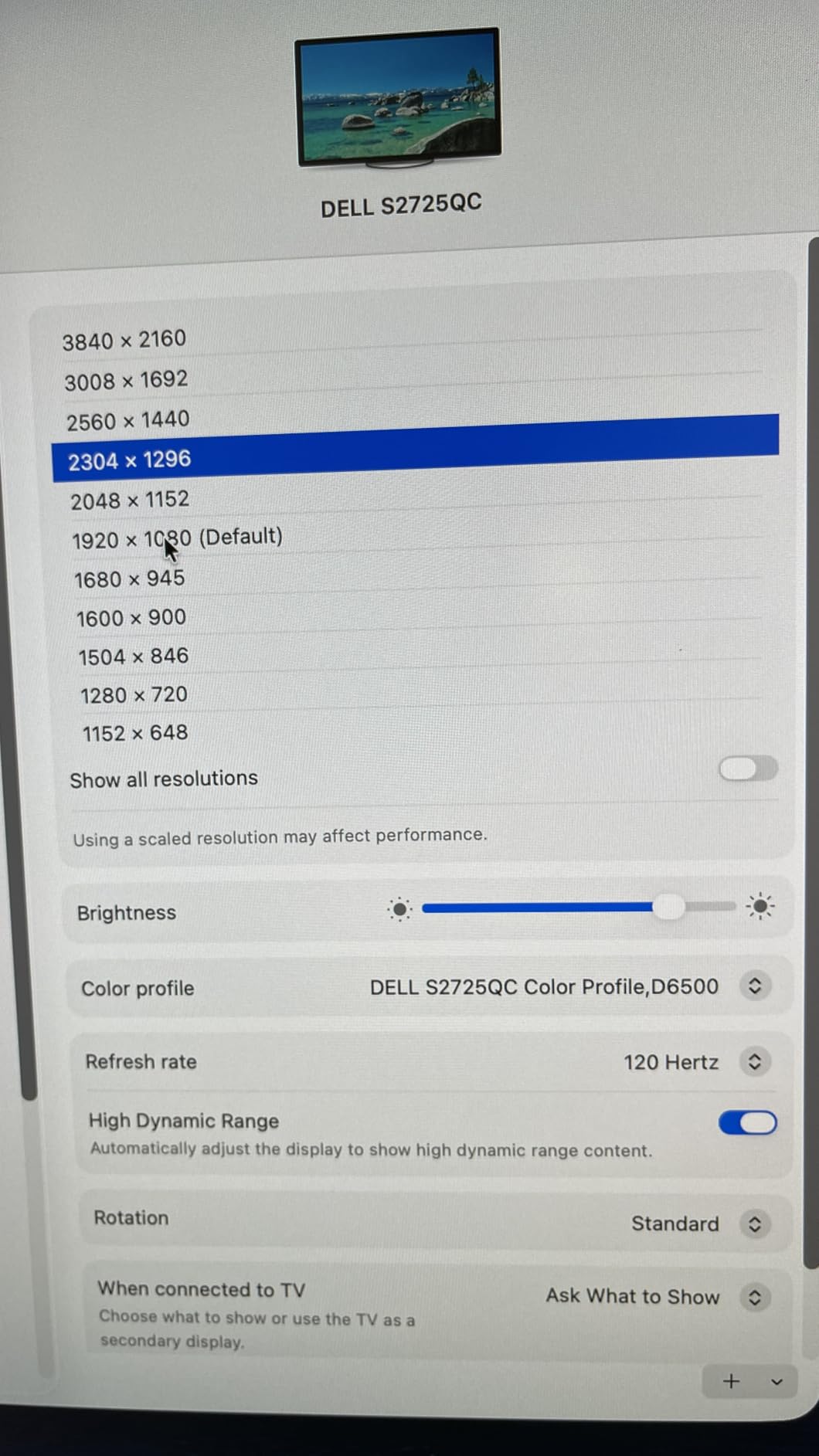
Owners point to the combination of true 4K sharpness, 99% sRGB colour, a genuinely adjustable stand, and one-cable USB-C setup. The ComfortView Plus feature is specifically positioned for all-day comfort and is a common reason buyers in eye-strain-conscious roles choose this display, and the 120Hz refresh earns praise for smoothness.
The weakness worth knowing is reliability spread. Ten percent of reviews are one-star, the highest negative share in this group, with panel and reliability complaints. The 1500:1 contrast is typical for IPS and well below VA, the 0.03ms response figure is manufacturer-rated rather than measured, and USB-C power delivery stops at 65W, which is short of what a laptop with a discrete GPU wants.
Who this monitor suits
It suits anyone who cannot accept a fixed stand, or who shares a desk with someone of a different height. Adjusting the panel in seconds instead of adding a monitor arm is the practical advantage, and for a display you will use for years it tends to outweigh the cost difference.
It also suits laptop users. A single USB-C cable carries video, data, and up to 65W of charging, with four USB ports on the hub, so a desk with a docking monitor stays clean.
Who should skip it
Skip it if you want deep blacks. At 1500:1 the contrast is ordinary for IPS, and a VA panel in this roundup triples it. Skip it if you need more than 65W of charging, or if you edit HDR content, since HDR readiness here is not real HDR brightness.
Skip it if reliability consistency is your top priority. A 10 percent one-star share on panel and reliability complaints is meaningfully higher than the rest of this field, and the one-year advance exchange service is worth reading carefully before you buy.
LG 27US500-W – Best 4K for creative colour work
LG 27US500-W Ultrafine Monitor 27-Inch 4K UHD (3840×2160) HDR10 IPS Borderless Design Reader Mode Flicker Safe Switch App HDMI DisplayPort – White
27-inch 4K UHD IPS
Reader Mode and Flicker Safe
HDR10 with up to 90% DCI-P3
Borderless three-sided design
Pros
- True 4K UHD IPS resolution for sharp detailed work
- HDR10 with up to 90% DCI-P3 color gamut
- Reader Mode and Flicker Safe reduce fatigue in long reading
- Borderless three-sided design in a clean white finish
- OnScreen Control splits the display with the mouse
Cons
- 60Hz refresh rate is the lowest in this roundup
- Stand offers tilt adjustment only with no height swivel or pivot
- 1000:1 contrast gives weak blacks
- Viewing angle spec of 170 degrees is below the 178 typical of IPS
The 27US500-W is the pick if your eye strain and your work are both about image quality. At 4K on a 27-inch IPS with up to 90 percent DCI-P3 expression under HDR10, it renders the kind of colour and fine detail that makes long inspection work possible without the eye straining to resolve detail. Reader Mode gives a paper-like reading presentation for documents, and Flicker Safe handles the backlight.
The borderless three-sided design in white looks tidy in a bright home office, and OnScreen Control lets you split the display into segments with a few mouse clicks, which is a small quality-of-life feature for anyone comparing references. For a studio or a light-filled room, the white finish is a genuine consideration rather than a gimmick.
This is the smallest review base in the roundup at 460 ratings, with a 4.4 average and 73 percent five-star. Feedback centres on the 4K detail and 90 percent DCI-P3 HDR10 colour as a plus for detailed and creative work, along with the white borderless design. The eye comfort features are noted favourably for extended reading.
The dominant complaint is the 60Hz refresh rate, which is a clear step down from the 100 and 120Hz models in this roundup, compounded by a tilt-only stand and a modest 1000:1 contrast ratio. There are no built-in speakers.
Who this monitor suits
Choose it for photo review, print prep, UI work, and reading-heavy creative jobs where 4K sharpness and colour expression matter more than refresh rate. The Reader Mode is genuinely useful for long script, spec, or copy work, and the white chassis suits a light workspace.
It also suits anyone who is deliberately not a gamer. At 4K with no motion focus, 60Hz costs you nothing, and the resolution gain over every Full HD option here is substantial.
Who should skip it
Skip it if you play games, even casually. 60Hz is the lowest here and the jump to 100Hz is the single biggest per-frame quality improvement available in this category.
Skip it if you need an adjustable stand. Tilt only means you will be adding an arm, and if the total cost of a monitor plus an arm is more than a 120Hz alternative, the 4K sharpness may not be worth it.
BenQ GW2790 – Best for adaptive brightness and ambient light control
BenQ GW2790 Computer Monitor 27″ FHD 1920x1080p | IPS | 100 hz | Eye-Care Tech | Low Blue Light | Anti-Glare | Adaptive Brightness | Tilt Screen | Built-in Speakers | DisplayPort | HDMI x2
27-inch Full HD IPS at 100Hz
BenQ Eye-Care low blue light and flicker-free
Brightness Intelligence adaptive brightness
99% sRGB gamut
Pros
- BenQ Eye-Care Technology with low blue light and flicker-free operation
- Brightness Intelligence adjusts output to ambient conditions
- 99% sRGB coverage for accurate color reproduction
- 100Hz refresh with 3ms response
- Two HDMI ports plus DisplayPort and built-in speakers
Cons
- Full HD at 27 inches gives modest pixel density
- Tilt-adjust stand only with no height swivel or pivot
- 1000:1 contrast is modest for an IPS panel
- Smallest review base in this roundup at 187 ratings
BenQ built its reputation on eye care, and the GW2790 carries the brand’s full Eye-Care Technology stack: low blue light plus flicker-free operation, on a 27-inch IPS panel with 178 degree viewing angles and 99 percent sRGB coverage. The panel holds colour accuracy, which matters because eye care features that wash out colour end up fighting the work you are doing.
The distinguishing feature is Brightness Intelligence, which combines an ambient light sensor with adaptive brightness so the panel matches your room automatically. If your day moves between a windowed office and evening work, this removes the single most common comfort mistake people make, which is running yesterday’s brightness setting in a completely different light. The anti-glare matte finish supports the same goal from the reflection side.
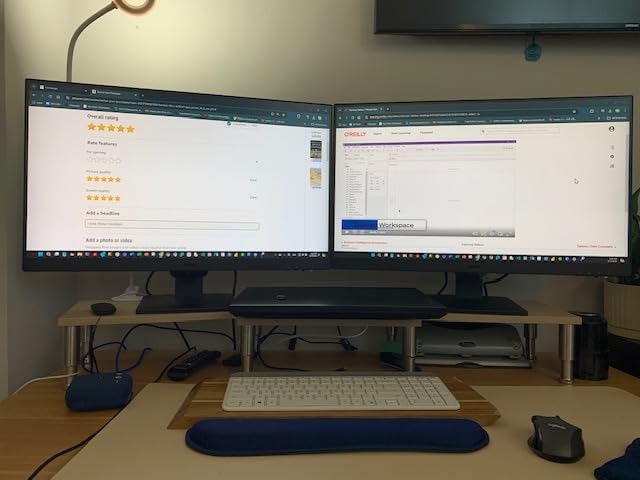
Owners highlight the eye care pedigree, the adaptive brightness, and the anti-glare finish as the reason to choose it for extended work, along with 99 percent sRGB accuracy, 100Hz smoothness, and generous port selection for the price. Built-in speakers and a three-year manufacturer warranty round out a well-equipped package.
Critiques are limited to ergonomics and density. Tilt-adjust only, and Full HD at 27 inches means modest pixel density, so if squinting on body text is your symptom you should look at a QHD or 4K panel instead. The 187-rating review base is the smallest here, so treat the rating with slightly more caution than the others.
Who this monitor suits
It suits anyone whose lighting changes during the day, and anyone who has never once adjusted their monitor brightness. The ambient sensor handles the transitions you forget to make, which is a bigger practical comfort gain than most buyers expect going in.
It also suits colour-adjacent work on a budget. Ninety-nine percent sRGB is accurate out of the box, and combined with the Eye-Care features you get a display that will not ask you to trade colour fidelity for comfort.
Who should skip it
Skip it if you read dense documents all day and the stand will stay fixed. Full HD at 27 inches plus a tilt-only stand is the weakest combination here for long-form reading comfort, and a QHD panel addresses it directly.
Skip it if you rely on long-term review volume to make a decision. With the smallest rating base in this roundup, there is less long-term evidence about panel consistency than for the ASUS, Samsung, or ViewSonic options.
What actually causes digital eye strain?
Digital eye strain, also called computer vision syndrome, is not damage to the eye. It is a set of symptoms that appear when the focusing and blinking systems that evolved for three-dimensional outdoor vision are held on a flat, high-contrast, close, fixed plane for hours. The typical complaints are a dull ache behind the eyes, blurred focus that comes and goes, dryness, light sensitivity, and headaches that build through the afternoon.
The mechanism is simpler than the marketing suggests. Three things are happening at once. Your accommodation muscles hold a fixed distance and keep micro-adjusting for text. Your blink rate falls sharply while looking at a screen, so the tear film dries and the surface of the eye becomes uneven. And your pupils constantly reconcile between a bright screen and a room at a different brightness, which means the pupil is never settled.
That is why the fix is not a single feature. Screens reduce strain when you address flicker at the backlight, blue light and contrast at the panel, glare at the coating, and geometry at the stand. A monitor that fixes only one of these leaves the other three in place, which is why “eye care monitor” on a spec sheet is close to meaningless without a supporting detail.
Flicker-free and PWM dimming: the real cause most people miss
Pulse width modulation is how almost every backlight controls brightness. The backlight is switched fully on and off thousands of times per second, and the perceived brightness is controlled by the proportion of each cycle it stays on. At high brightness, the on-proportion is long and the gaps are brief, so most people see nothing. As you turn brightness down, the on-proportion shrinks and the gaps lengthen, and the pulsing becomes more pronounced.
Here is the part almost no brand explains. Users on eye strain forums consistently report that their symptoms get worse as they lower the brightness, which is the opposite of what most people expect. You lower the screen to match a dark room, the modulation depth increases, and the eye does more work. That is why a monitor described as flicker-free in a bright room can still give you a headache in a dark one.
DC dimming avoids this. Instead of pulsing the backlight, it reduces the current running through it continuously, so the light output is steady at every brightness level. Certification from TÜV Rheinland, as found on the ASUS and the Samsung ultrawide in this roundup, is the closest thing to an independent check that a display behaves this way across its brightness range rather than only at maximum output.
The practical consequence for shoppers is simple. Treat “flicker-free” as a claim to verify, not a checkbox. Look for independent certification by name. Check whether the manufacturer documents behaviour at low brightness. And if you are buying used or on a tight schedule, test the panel yourself before the return window closes.
How to verify a monitor is truly flicker-free before you buy?
Four checks, in order of usefulness. First, look for certification by name rather than a manufacturer’s own eye care branding. TÜV Rheinland and Eyesafe publish certificates tied to specific models, and a certificate reference you can look up is worth more than any amount of descriptive copy.
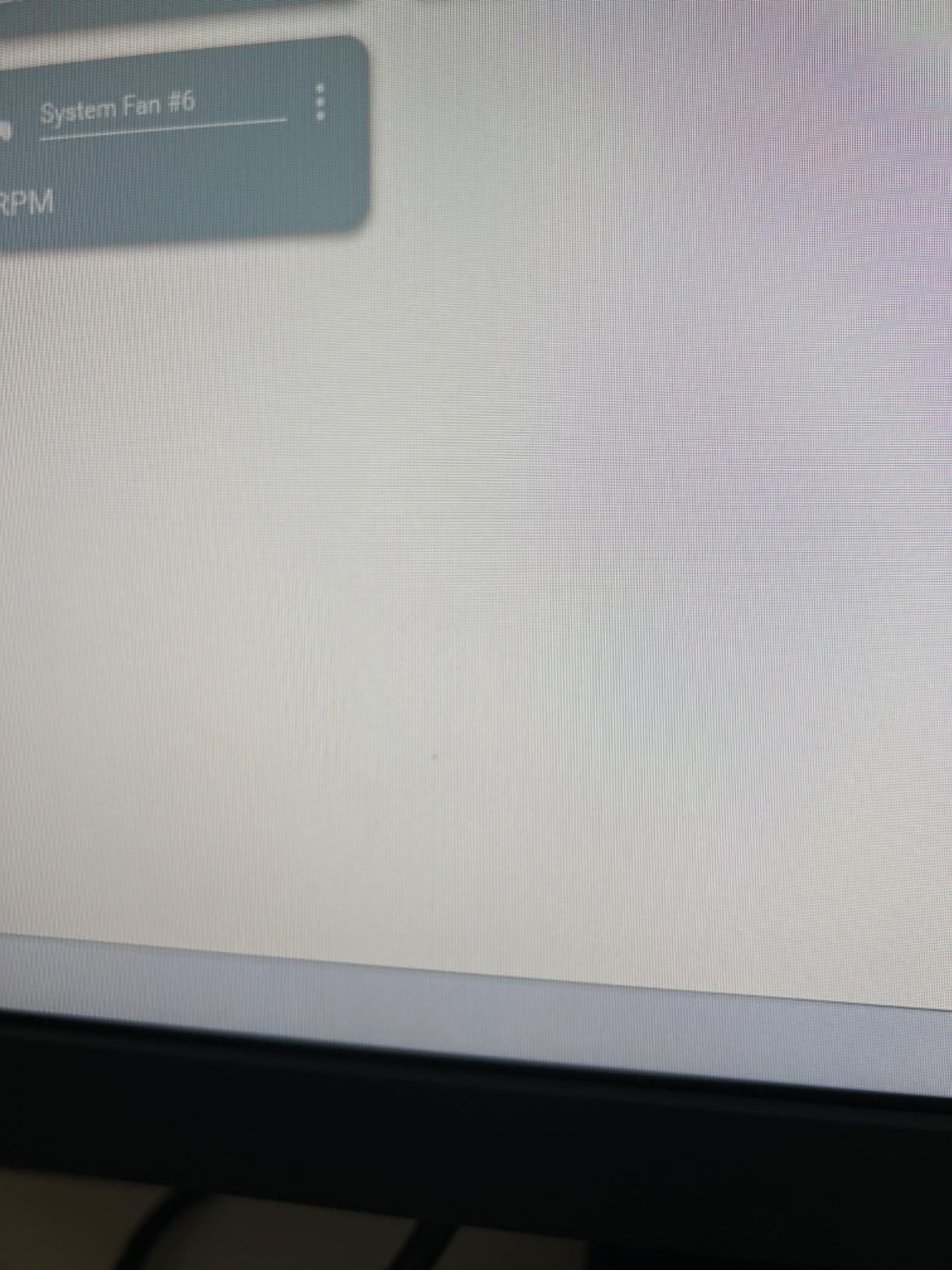
Second, use the phone camera test. Point a phone camera at a white web page on the display and start recording video, not a still. On a PWM display you will usually see fine horizontal bands or a shimmering texture rolling through the frame. On a DC dimmed panel the image stays clean. It is not laboratory grade, but it reliably separates a modulated backlight from a steady one. You can repeat the same test at half brightness, which is where a panel that only passes at full output gives itself away.
Third, watch the brightness slider behaviour. Drop the on-screen brightness to its lowest setting in a dark room. If the panel goes visibly dull in a smooth way, DC dimming is doing its job. If you see pulsing, shimmer, or a faint strobing, the panel is modulating at that level regardless of what the packaging claims.
Fourth, read the dimming range, not just the brightness figure. A 250 cd/m2 panel with a poor minimum brightness will not let you work in a dark room without either straining or adding a lamp. The 34-inch Samsung here is the model that addresses this directly, with an ambient light sensor that removes the need to set brightness by hand at all.
Hardware vs software low blue light filtering
There are two ways to reduce blue light, and the difference between them matters more than most buyers realise. A software filter changes the colour the operating system sends to the display, so the whole image shifts warm and yellow. Night Light, f.lux, and Windows night mode all work this way. The content is genuinely reduced, but the entire panel changes colour temperature, including things you need to judge accurately.
A hardware filter removes specific blue wavelengths inside the backlight, so the reduction happens before the light reaches your eye. On a good implementation you get a subtler shift and a reduction you can feel more than see. The ASUS Eye Care, Philips Blue Light Filter, Samsung Eye Saver Mode, LG Flicker Safe, and Dell ComfortView Plus all take this route, and the Dell states a figure of 35 percent or less blue light emission for its version.
The practical advice is to treat software filters as a useful free tool, not a substitute. If a yellow cast breaks your workflow or makes you reach for a colour profile, a software filter is the wrong fix. If you cannot change the display you already own, a software filter with a slightly less aggressive setting costs nothing and helps more than nothing.
Which monitor panel is best for eye strain?
For most people, IPS. It holds colour and brightness steady as your head moves, which keeps the eye from re-adapting constantly, and it is the panel type recommended for comfort because of those wide viewing angles. Every IPS model in this roundup carries an independent flicker certification, and three of them pair it with a matte or hard-coated finish.
VA wins on contrast, with 3000:1 against the 1000:1 or 1500:1 of the IPS panels here. That matters in a dark room and with dark interfaces, but VA is slower on dark transitions and can show smearing in motion. OLED, as a category, produces excellent contrast and thin panels, but nearly all OLED displays modulate brightness at low output, so they are the one family where the flicker question deserves serious attention before buying.
The clear answer to the common question is that TN panels are not a comfortable choice at any price, because their viewing angles and colour consistency work against the goal. Among the rest, panel type is a secondary decision. Certification and coating come first.
Resolution, size, and pixel density
Pixel density is the most underrated comfort factor in this category. If text looks soft, you squint, and squinting is a strain response. The rule of thumb is roughly 90 to 110 pixels per inch for comfortable reading at a normal desk distance, which is why a 32-inch Full HD panel at about 70 pixels per inch feels tired and a 27-inch 4K panel at about 163 pixels per inch does not.
Size should follow viewing distance rather than the other way round. At 20 to 28 inches of viewing distance, 24 to 27 inches is the comfortable band, and going wider works if you also add desk depth or an arm that positions the panel at eye level. A 32-inch at 20 inches of distance forces constant head movement, which is its own strain source.
On resolution specifically, 4K at 27 inches needs display scaling set correctly or text will be too small, and QHD at 32 inches is the sweet spot for anyone who wants large text without the scaling fiddliness. The ViewSonic VX3276-2K-MHD is the most popular text option in this roundup for exactly that reason.
Does a higher refresh rate reduce eye strain?
Partly, and less than most marketing suggests. Moving from 60Hz to 100Hz or 120Hz makes scrolling text, window movement, and cursor motion visibly smoother, and users regularly report a noticeable reduction in strain during long scrolling sessions. That is a real effect on the parts of your work that involve motion.
Beyond that, returns fall away quickly. The gap between 120Hz and 240Hz is largely perceptible in fast games, not in office work, and for document reading it is imperceptible. If you are choosing between two monitors and one is 4K with 120Hz and the other is 4K with 60Hz, take the 120Hz. If you are choosing between 4K at 60Hz and QHD at 100Hz, weigh the resolution.
On the related question of 60Hz versus 120Hz for the eyes, the higher refresh rate wins for scrolling and general comfort, and it costs you very little on the models in this roundup. The common mistake is paying a large premium for 240Hz in a monitor bought for eye comfort, where the money is better spent on certification and a coating.
Anti-glare coating, brightness range, and dark-room use
Glare is a focusing problem before it is a comfort problem. Every reflection on the screen is a bright competing source your pupil has to balance against, and a window behind your monitor is the most common cause of eyes that tire by mid-afternoon. Matte and semi-matte coatings scatter reflections and are the reason most comfort-oriented monitors specify one. The semi-matte finish on the 32-inch ViewSonic is a good middle ground, keeping brightness up without the flatness of a heavy matte.
Brightness range is the underrated half of this. The 250 cd/m2 figure most of these panels carry is the maximum, and the minimum is what decides whether you can work at night without a blazing screen. A panel that bottoms out too high forces you into a dark room with a bright display, which undoes much of what the flicker-free backlight achieved. A wide, easily adjusted range, as reviewers describe on the ViewSonic VA3209M, matters more than a high peak number.
An ambient light sensor solves the range problem by handling it for you. The 34-inch Samsung in this roundup detects lighting at the workstation and adjusts brightness automatically, and the BenQ GW2790 pairs Brightness Intelligence with adaptive brightness. If your day spans a bright office and a dark evening, an ambient sensor is the feature that most directly replaces a daily adjustment habit.
Ergonomic stands and viewing distance
The top of the panel should sit at or slightly below eye level, at a distance of roughly 20 to 28 inches, with the screen tilted back a few degrees. Get that wrong and no amount of eye care technology will help, because the neck and the eyes are compensating together. This is the single most common and most fixable cause of what people call eye strain.
That is why the Dell S2725QC earns its place on a list about comfort despite its mixed reliability reviews. It is the only model here with height, pivot, swivel, and tilt adjustment, which means you can set the geometry correctly and keep it correct. Most monitors in this category tilt only, which leaves the panel wherever the designer put it.
Where the stand falls short, a monitor arm is the answer. The Philips, Sceptre, and ViewSonic models here all support VESA mounting, and owners of several report moving to an arm shortly after purchase. Arm plus a tilt-only monitor costs less than the price gap to a fully adjustable model and solves the same problem.
Curved vs flat: does the curve help?
The honest answer is that the benefit is real but narrow, and it depends on size. The argument for a curve is geometric: on a large flat panel, the edges sit further from your eyes than the centre, so your eyes keep refocusing as your gaze moves side to side. A curve brings those edges forward and reduces the difference. That effect scales with panel size.
Below about 27 inches the difference is small enough that you are unlikely to notice it, and at 27 inches you are paying for a feature that does very little. At 32 inches and above, particularly on a 34-inch 21:9 panel where the horizontal span is over a metre, the geometry argument gets stronger. The 1800R Samsung in this roundup is the clearest example, and its 3000:1 contrast is what actually does the work for comfort, not the curve.
There are real costs to a curve. A curved panel does not align edge to edge with a flat neighbour, so dual-monitor desks are compromised, and geometric distortion is a real problem for photo and design work where straight lines must stay straight. For a 27-inch or smaller screen, a flat panel with a good matte coating and a proper stand is the better buy.
Setup and habits that cut strain further
A monitor change helps most when the rest of the setup is fixed too. Six adjustments, in the order that gives the fastest return.
First, set the top of the panel at or just below eye level, at 20 to 28 inches away. Add an arm if the stand will not do it. Second, match screen brightness to a sheet of white paper held beside the panel. If the screen is obviously brighter than the paper, turn it down. Third, follow the 20-20-20 rule: every 20 minutes, look at something about 20 feet away for 20 seconds. It exists to reset accommodation, and it works better when paired with an actual break from the screen.
Fourth, add bias lighting behind the monitor. A dim light source behind or beside the panel reduces the brightness contrast between the display and the wall, which removes one of the three causes of pupil strain. Fifth, deliberately blink. Screen work cuts blink rate sharply, and dry eyes are the result, so a reminder to blink during reading is not a gimmick. Sixth, set your text size before you set your resolution. Squinting at small text causes real strain, and most of that is fixed in the operating system rather than the monitor.
Finally, calibrate brightness to the time of day rather than to the manufacturer default. The same panel that is correct at 2pm is blinding at 9pm, and the wrong brightness in the evening is one of the most common reasons people think a new monitor did not help.
Frequently Asked Questions
Is IPS or OLED better for eyes?
IPS is the safer choice for eye comfort because it holds colour and brightness steady across wide viewing angles, so your eyes stop re-adapting as you shift position. OLED produces deeper blacks and thinner panels, but nearly all OLED displays modulate brightness at low output, which is where flicker complaints originate. For long office sessions, choose a flicker-free IPS or VA panel; treat OLED as a deliberate choice for image quality rather than comfort.
Which monitor panel is best for eye strain?
An IPS panel is the best default for eye strain, because wide viewing angles keep colour and brightness consistent as your head moves. VA is the better alternative if you work in a dark room or on dark interfaces, since 3000:1 contrast reduces pupil adjustment, at the cost of slower dark transitions. Whatever you choose, verify flicker-free certification by name and check the anti-glare coating before the panel type.
Does 240Hz reduce eye strain?
Very little for office work. The noticeable comfort gain comes from moving up from 60Hz to 100Hz or 120Hz, which makes scrolling text and window movement visibly smoother. Beyond 120Hz the benefit is mostly limited to fast games. If your budget is aimed at eye comfort rather than competitive gaming, spending it on flicker certification and a matte coating will help more than a 240Hz panel.
Is 60Hz or 120Hz better for your eyes?
120Hz is better for your eyes, mainly because scrolling, cursor movement, and window transitions are visibly smoother, and users report less strain during long scrolling sessions. The difference is not about brightness or flicker, since those come from the backlight rather than the refresh rate. On the monitors in this roundup, the step up to 100Hz or 120Hz is inexpensive and worth taking.
Why does my monitor hurt my eyes only when brightness is low?
That pattern points at PWM dimming. Most backlights control brightness by switching the light on and off, and as brightness drops the off-periods lengthen, so the pulsing becomes more pronounced. Users on eye strain forums consistently report symptoms worsening as they dim the screen. A DC dimmed, independently flicker-free panel removes this effect, which is why raising the brightness or adding room light can also help in the short term.
How can I tell if a monitor is truly flicker-free?
Four checks. Look for certification by name from TÜV Rheinland or Eyesafe rather than a manufacturer’s own eye care branding. Point a phone camera recording video at a white web page, and look for fine horizontal bands or shimmer, repeating the test at half brightness. Drop the on-screen brightness to its minimum in a dark room and watch for pulsing. Finally, read reviews for behaviour at low brightness rather than at full output.
What are the best monitor settings to avoid eye strain?
Match brightness to a sheet of white paper held beside the screen, and turn it down until the two look similar. Set text size large enough that you never squint, tilt the screen back a few degrees, and put the top of the panel at or just below eye level. Turn on the hardware blue light filter for evening work rather than a strong software filter, add bias lighting behind the panel, and follow the 20-20-20 rule every 20 minutes.
The Verdict: Which Monitor Should You Buy for Eye Strain?
The ASUS VA27EHE is our pick as the best monitor for eye strain overall. It is the combination that is hardest to improve on at this level: TÜV Rheinland certification for both flicker-free operation and low blue light, a 27-inch IPS panel with 178 degree viewing angles, a frameless design that works in multi-monitor setups, and the largest review base in this roundup at 3232 ratings averaging 4.6. Add a monitor arm for height, and the ergonomics gap disappears.
Buy the Samsung Essential S3 curved instead if contrast is your main problem and you work in a dim room. Buy the ViewSonic VX3276-2K-MHD if you read documents all day and want real pixel density at a large size. Buy the Dell S2725QC if a fully adjustable stand is worth the step up, and accept a 10 percent one-star share. Buy the 34-inch Samsung ViewFinity if you want fewer window switches and an ambient light sensor that sets brightness for you.
Whichever you pick, buy it for the certified flicker-free backlight and the coating first, the stand second, and the resolution third. Then set the panel to eye level, match brightness to a sheet of white paper beside it, and give the 20-20-20 rule a fair run. The best monitors for eye strain in 2026 are the ones you actually keep at the right height, and those two steps decide whether the purchase matters.