
If your factory stereo falls apart the moment a track drops below 80 Hz, the fix is a dedicated low-frequency driver, not a louder head unit. After putting ten of the most popular car subwoofers through their specs, owner feedback and enclosure math, here are the picks: the MTX Terminator TNE212D is the best overall for deep bass, the Rockford Fosgate P300-12 is the best all-in-one value, the Rockville RWS12CA is the pick for tight spaces, the American Bass XFL 12 inch is the choice when you want maximum output, and the Rockford Fosgate P3-2X12 reaches the lowest frequencies on the list.
That shortlist is the honest version of an answer most roundups get wrong. They list drivers and call it a day, which is how people end up with a subwoofer that is loud on paper and thin in the cabin. Deep bass comes from three things working together: cone excursion, enclosure volume and tuning frequency, and clean amplifier power at a matched impedance. The brand name matters far less than those three.
We built this guide around that idea. Every pick below has a stated impedance, a stated power figure, and an explicit enclosure recommendation, because the enclosure is what decides whether a driver sounds deep or merely boomy. We also separated high-excursion drivers, which move air far enough to play genuinely low notes, from SPL drivers, which buy raw output and carry a heavier motor for it. The two answer different questions, and the wrong one will disappoint you.
All ten picks are current 2026 options that are actively reviewed by owners, and every number below comes from the manufacturer spec sheet or aggregated owner feedback rather than from a marketing headline. Use the buttons to check current pricing and availability, since both move constantly in this category.
Table of Contents
Top 3 Picks for Deep Bass (October 2026)

All Ten Picks at a Glance in 2026
Every subwoofer in this roundup is a 12 inch driver, which is deliberate. Twelve inches is the point where car audio buyers stop trading excursion for mounting convenience, and all ten options below are the versions people actually install. The table lists each one with the numbers that decide how deep it plays.
What Actually Makes Car Bass Deep
Deep is not the same as loud. A subwoofer can hit you hard in the chest at 60 Hz and still have no answer below 40 Hz, and that is the exact disappointment most first-time buyers describe. Depth is frequency extension, and extension is set almost entirely by how much volume the driver has to work in and how low the box is tuned.
Sealed enclosures trade volume for control. A sealed 12 inch in roughly 1 cubic foot will roll off gradually and stay accurate, which is why it suits rock, jazz and film scoring. Ported enclosures move more air and reach lower, which is what trap, dubstep and hip-hop listeners want. Bandpass boxes are efficient in a narrow window and are rarely the right answer for music.
Then there is excursion, which is the physical travel of the cone. High-excursion drivers move much farther than standard designs and play lower with the same box volume, but they need a lot of clean power to get there. SPL drivers take a different route: an oversized magnet and a long voice coil push more air at higher volume, and the extra mass usually costs you the deepest extension. Both categories exist in this roundup, and each has a place.
One last thing worth saying plainly: the big number on a retail page is almost never the number that matters. Peak or maximum power is a marketing ceiling, not continuous output. Read the RMS figure, read the sensitivity in dB, and remember that a 2 dB sensitivity advantage is roughly equal to doubling your amplifier power in perceived loudness.
1. MTX Terminator TNE212D Dual 12 inch Loaded Enclosure
MTX Terminator Dual 12″ Subwoofers, Loaded Enclosure, 1200W Max, 400W RMS
Dual 12 inch sealed loaded box
400W RMS, 1200W max
2 ohm
37 Hz response
2-year warranty
Pros
- Dual 12 inch drivers in one carpeted MDF box
- no separate amp or custom enclosure needed
- 400W RMS total delivers real sealed low-end
- Manufacturer rates response down to 37 Hz
- Two-year warranty is the longest in this group
- Over 4000 owner reviews averaging 4.4 stars
Cons
- Enclosure is nearly 30 inches wide so trunk space disappears
- Each driver uses a single 2 ohm coil which limits multi-sub wiring options
- Sealed alignment prioritizes accuracy over raw volume
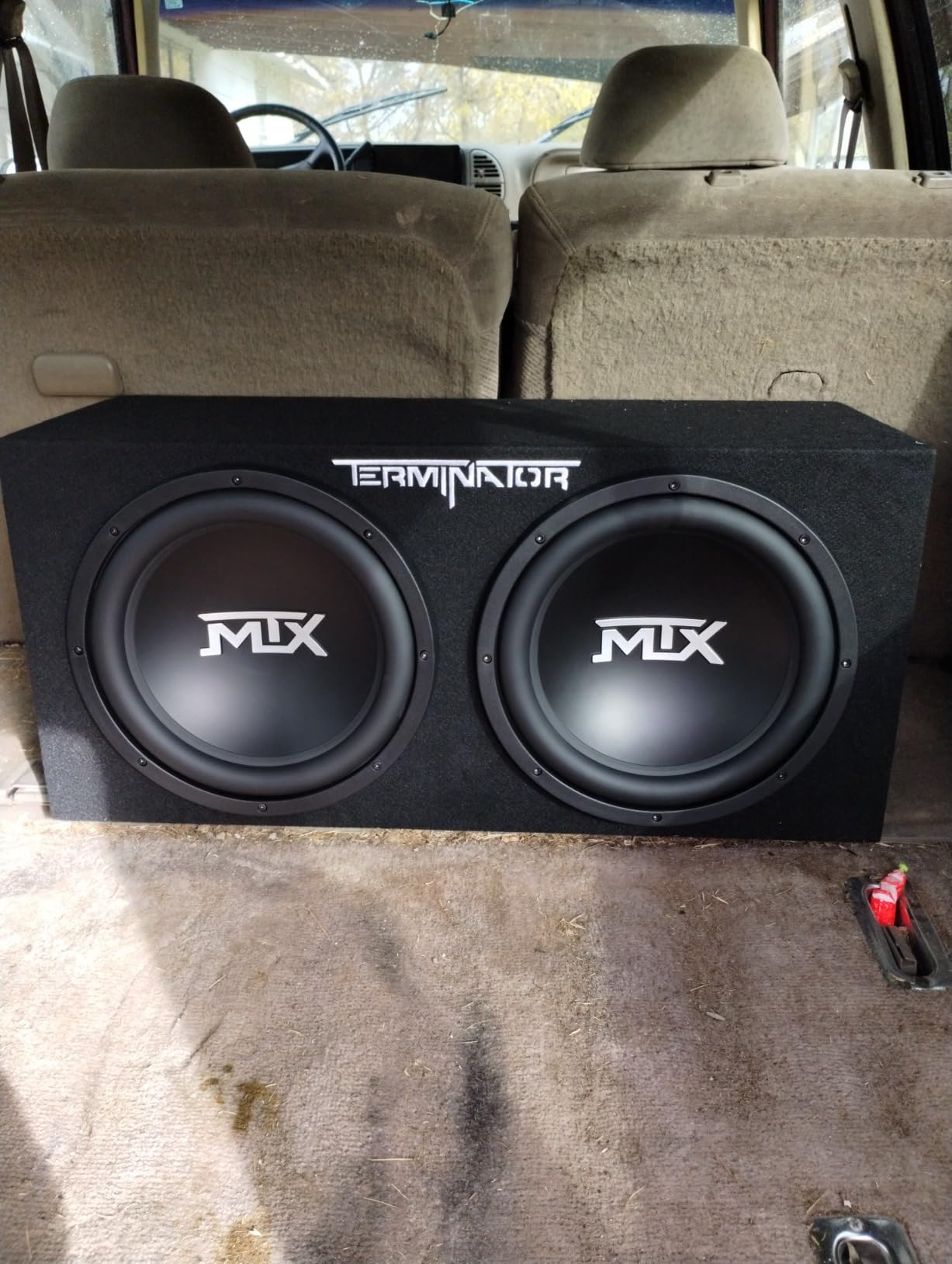
This is the one we keep coming back to. Two 12 inch drivers sit in a carpeted 5/8 inch MDF sealed box, and the whole assembly is rated at 400 watts RMS with a response that reaches down to 37 Hz. For a daily-driven car where you want the low end to arrive with the kick drum rather than before it, that combination is hard to argue with.
The drivers use a 2 inch aluminum voice coil with a 48 ounce magnet, which is a sensible amount of motor for a 400 watt RMS load. The rubber surround and polypropylene cone are not exotic, and that is precisely why this enclosure has accumulated more owner feedback than anything else on this list. It is a proven quantity rather than a gamble.
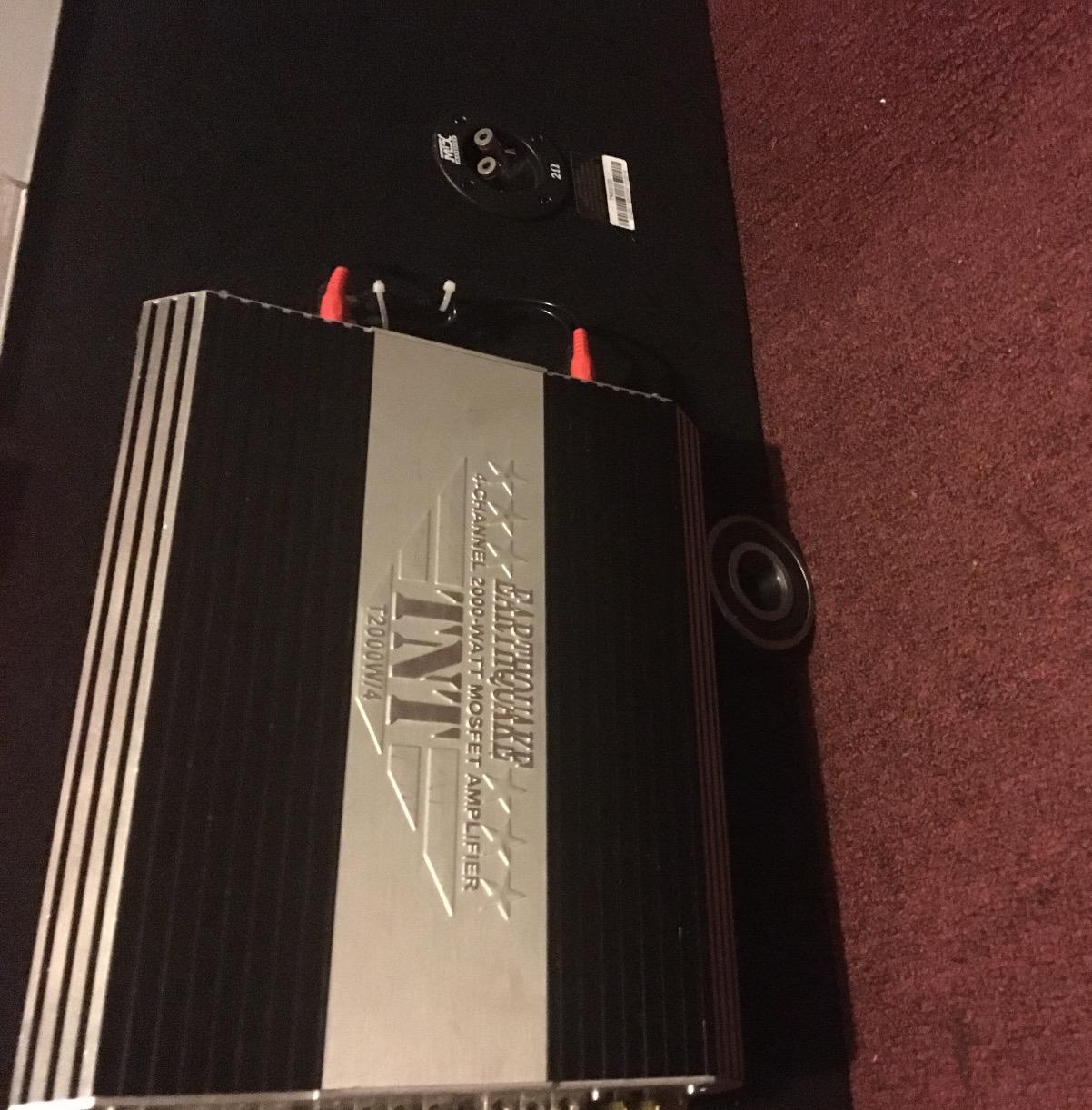
The tradeoff is cargo space, and it is not a small one. The enclosure measures about 29.63 inches wide by 14 inches tall by 13.5 inches deep, tapering to roughly 11 inches at the top. In a sedan trunk that is most of the width. In an SUV or truck bed it is a non-event.
Wiring is the second consideration. Each driver has a single 2 ohm voice coil, so you get either 2 ohm or 4 ohm from the pair, with no parallel or series options to blend. If your plan involves adding a second sub later, that is a constraint worth accepting deliberately rather than discovering after the box is in the car.
Who this enclosure suits
It suits someone who wants a complete, sealed, dual-driver system without sourcing an amplifier, building a box or tuning a port. One box, two drivers, three wires and a signal cable, and the factory-matched system means you are not balancing a 37 Hz response against a crossover setting that fights it.
It also suits anyone upgrading from a factory system that has no low end at all. The gain between nothing and this is enormous, and the two-year warranty gives you time to decide whether you want to go further.
Where it falls short
If your goal is maximum volume, a sealed box is the wrong architecture and this is not the deepest-reaching unit here. If your goal is the lowest possible frequency, the ported P3-2X12 below reaches considerably lower out of the box. And if cargo space is the binding constraint, a slim or shallow-mount design is a smarter fit.
2. Rockford Fosgate P300-12 Amplified 12 inch Subwoofer
Rockford Fosgate Punch P300-12 Amplified 12″ Subwoofer in Enclosure
Powered 12 inch sealed system
300W RMS built-in amp
Low-pass, bass EQ, phase switch
1-year warranty
Pros
- Driver
- sealed enclosure and 300 watt amplifier in one package
- Adjustable 12 dB per octave low-pass crossover plus built-in bass EQ
- Zero and 180 degree phase switch for cleaner blending
- Remote dash level control included
- Accepts RCA or speaker-level signal from a factory head unit
Cons
- 300W RMS leaves little headroom for very deep electronic bass
- Wedge enclosure is 11 inches deep at its tallest point
- Sealed alignment rolls off in the lowest octave
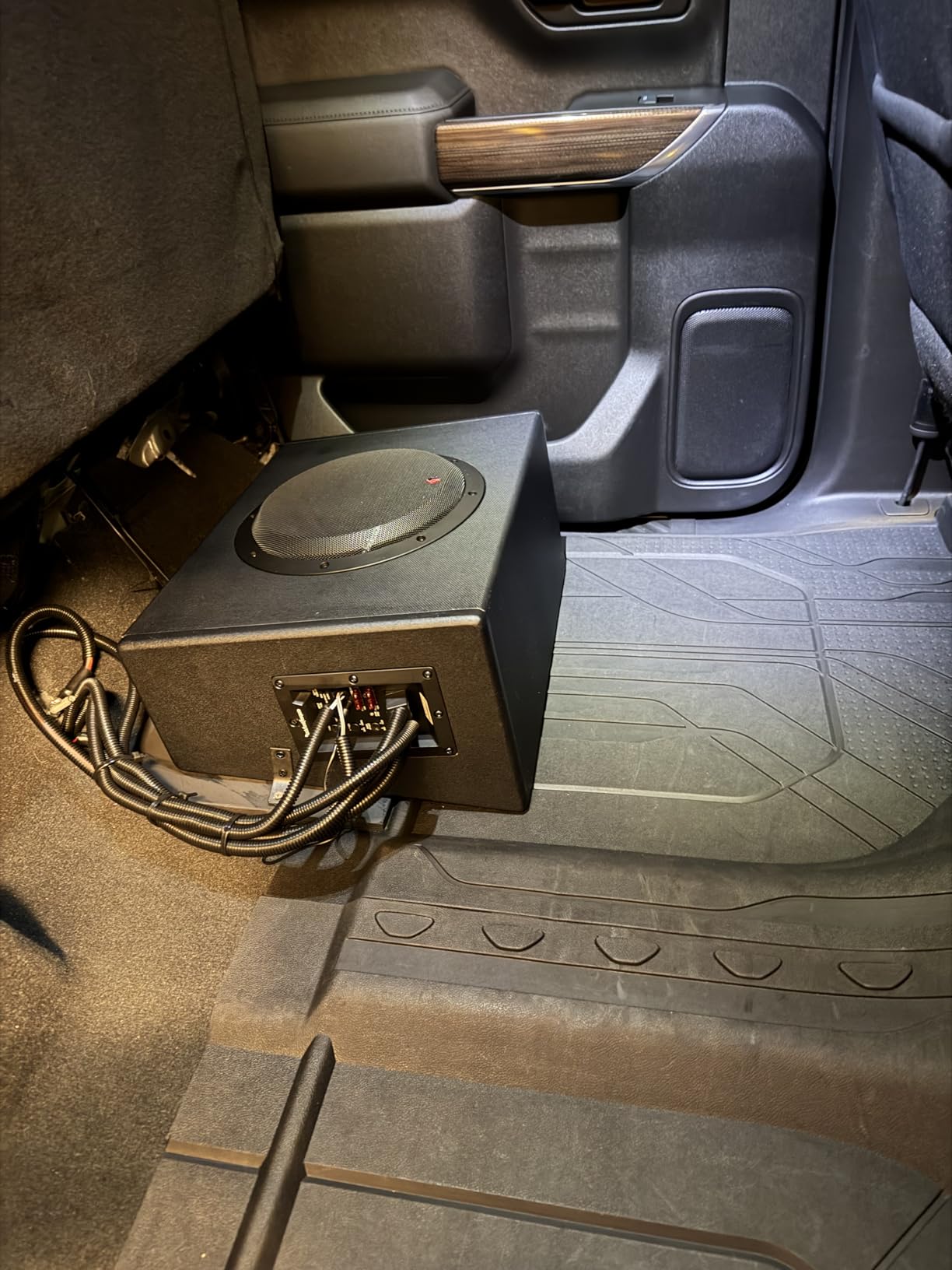
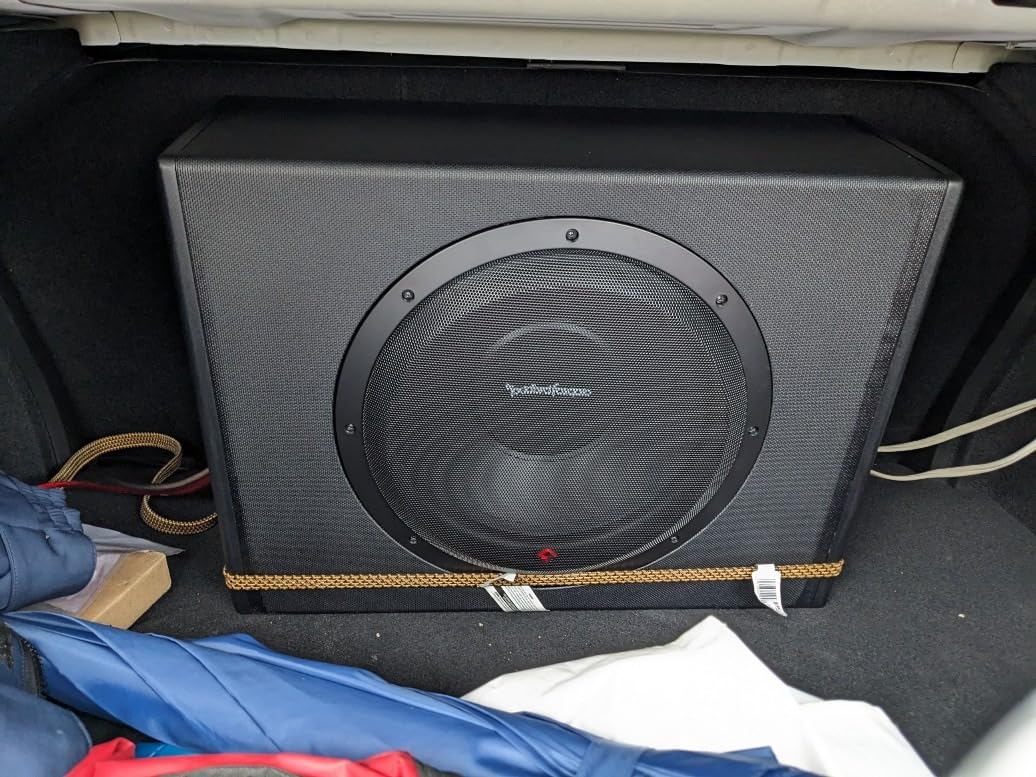
This is the most popular all-in-one approach in car audio and for good reason. You get a 12 inch driver, a purpose-built sealed wedge enclosure and a 300 watt amplifier in a single unit, and installation reduces to power, ground and a signal connection. The closed-loop design is what makes it worth recommending, because the enclosure geometry is matched to how the driver actually behaves.
Control options go beyond the usual on/off. There is an adjustable 12 dB per octave low-pass crossover, a built-in adjustable bass EQ, a zero or 180 degree phase switch, and a wired remote for the dash. The phase switch in particular is the feature people notice first, because getting polarity wrong is the most common reason a sub sits behind the front speakers instead of under them.
The 4.6 star average across more than 2,200 reviews is the highest in this powered group, and owner feedback repeatedly points at the turnkey nature of the install as the deciding factor. Buyers who planned a custom box and an amplifier frequently report that the P300-12 made the whole project unnecessary.
Enclosure dimensions are about 15 inches tall by 19.8 inches wide, with a taper from 11 inches deep down to 7 inches. That wedge shape is deliberate, since it allows a rear seat to sit over the shallow end while the deep end points forward toward the cabin.
Who this amplified system suits
It suits first-time installers and anyone who does not want to choose an amplifier, match impedance or build a box. It also suits factory systems, since the unit accepts both RCA and speaker-level input, so you can feed it from a factory amplifier or head unit without buying a line output converter.
The remote knob makes it a good daily-driver choice too. You can pull the level down for cruising and bring it up for a parking lot, without touching the gains.
Where it falls short
Three hundred watts RMS is a modest ceiling. Play it hard on dubstep or metal and you will run out of clean headroom before the driver runs out of excursion. The sealed box also means the very lowest octave is not where this unit is strongest, and the 16 pound weight makes it a two-person lift in some trunks.
3. Rockville RWS12CA Slim Powered 12 inch Subwoofer
Rockville RWS12CA 12″ Slim Powered Car Subwoofer with Enclosure
Slim powered 12 inch
300W RMS built-in amp
4.37 to 6.65 inch deep
38 Hz, 96 dB
Pros
- Only 4.37 inches deep at the shallow end so it fits under most rear seats
- 300W RMS amplifier with 50 Hz to 250 Hz low-pass and plus 12 dB bass boost
- 96 dB sensitivity means it plays loud on modest power
- High and low level inputs plus smart turn-on for factory systems
- 38 Hz response from a box this thin is unusual
Cons
- Composite pulp cone is the weak point under sustained high power
- 300W RMS is a modest ceiling next to its peak headline number
- Bass boost adds volume rather than low frequency extension
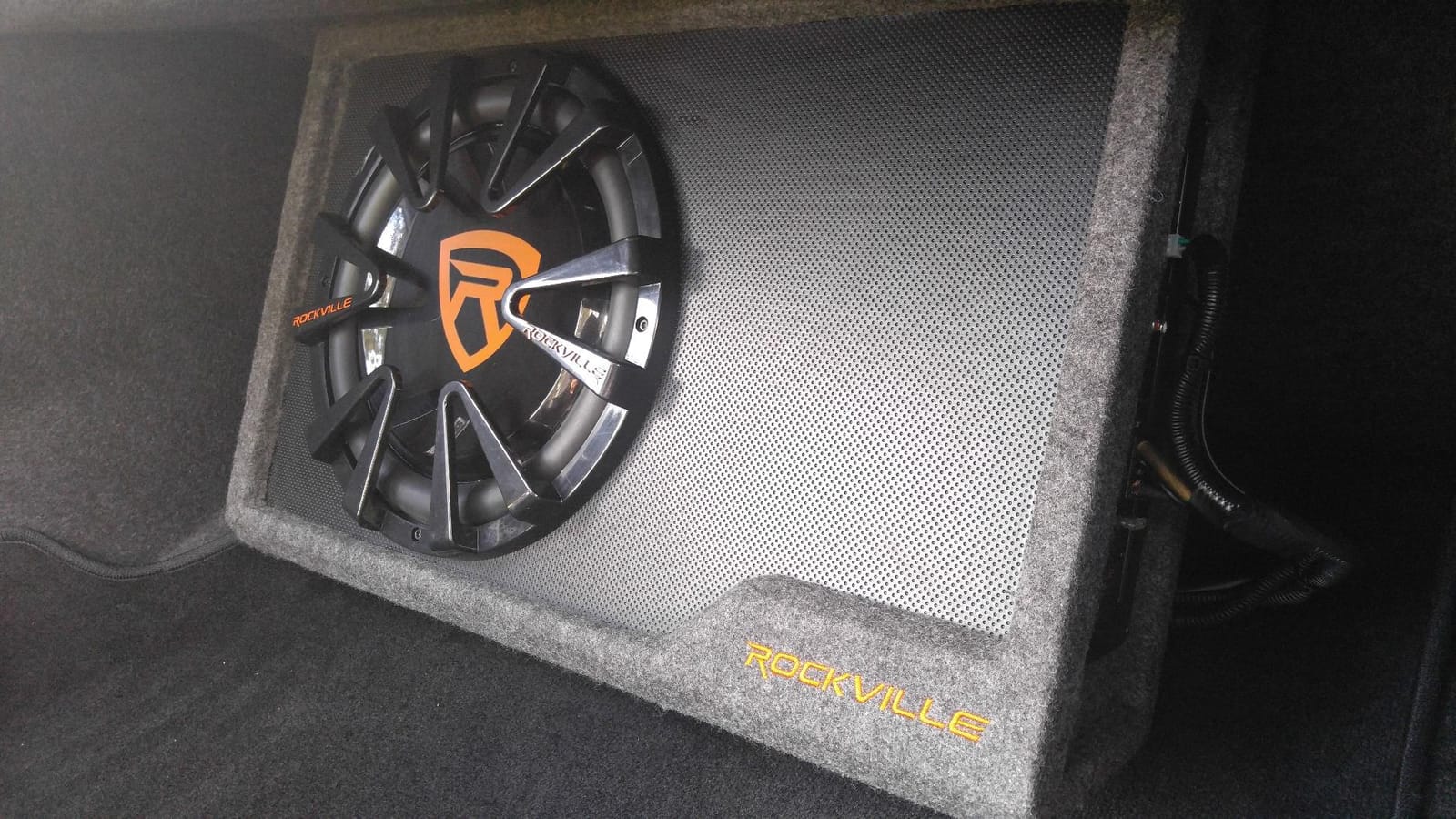
Slim powered enclosures solve a specific problem: the trunk is too short or the seat is in the way. This one measures 24 inches long by 15 inches tall and tapers from 4.37 inches to 6.65 inches deep, which is shallow enough to slide under a rear bench in most sedans and hatchbacks. That constraint drives every other decision in the design.
Under the carpet is a 300 watt RMS mono amplifier with a low-pass crossover adjustable from 50 Hz to 250 Hz, a plus 12 dB bass boost control and an RJ11 jack for a dash-mounted level knob. High and low level inputs plus smart turn-on circuitry mean it will wake up with a factory head unit without hunting for a remote trigger wire.
Where it impresses for its size is efficiency. Sensitivity is listed at 96 dB, and the response runs from 38 Hz to 500 Hz. High sensitivity means the amplifier does not have to work as hard, which is how a sealed box this small still produces output most people expect from something much bulkier.
Owner feedback reflects that. Reviewers consistently single out the profile as the reason they bought it, and the built-in amplifier and remote knob as the reason the install took an evening rather than a weekend.
Who this slim powered sub suits
It suits sedans, hatchbacks and small crossovers where a full-size box simply will not fit without cutting into passenger space. It also suits anyone upgrading a factory system quickly, since the high-level inputs and smart turn-on remove the hardest part of the wiring.
If you drive long distances and want bass you can trim from the seat, the remote knob makes this a better daily choice than a fixed-output install.
Where it falls short
The cone is a Kevlar-reinforced composite pulp, and composite pulp has less thermal margin than paper, aluminum or woven fiber. It is fine at sensible listening levels and less forgiving at sustained maximum volume. The bass boost control is also worth using carefully, since pushing it simply adds distortion rather than depth.
4. Pioneer TS-WX1210A Powered 12 inch Subwoofer

PIONEER TS-WX1210A Powered 12″ Subwoofer with Enclosure 1300W Max
Powered 12 inch sealed
300W Class D amp
114 dB sensitivity
Boost 40 to 100 Hz
1-year warranty
Pros
- 114 dB sensitivity produces loud output at low amplifier power
- Built-in high-bandwidth Class D amplifier with low distortion
- Wired bass boost knob and phase control included
- Rigid enclosure shape reduces internal standing waves
- Free-standing or under-seat placement options
Cons
- Sealed box gives less deep extension than a large ported enclosure
- Heaviest powered option here at 23.4 pounds
- Carries the largest share of one-star ratings among these ten picks
Pioneer built this around a 114 dB sensitivity figure, and that single number explains the design. A driver that efficient converts amplifier power into sound with far less heat, so a compact 300 watt Class D amplifier is enough to drive it hard. Efficiency is the metric that people buying a first sub should care about most, and this one leads the group on it.
Controls include an adjustable low-pass filter, phase control and a variable bass boost covering 40 Hz to 100 Hz, with a wired knob in the box. The enclosure shape is described as high-rigidity and standing-wave reducing, and it can sit floor-standing in the trunk or mount under a seat depending on your layout.
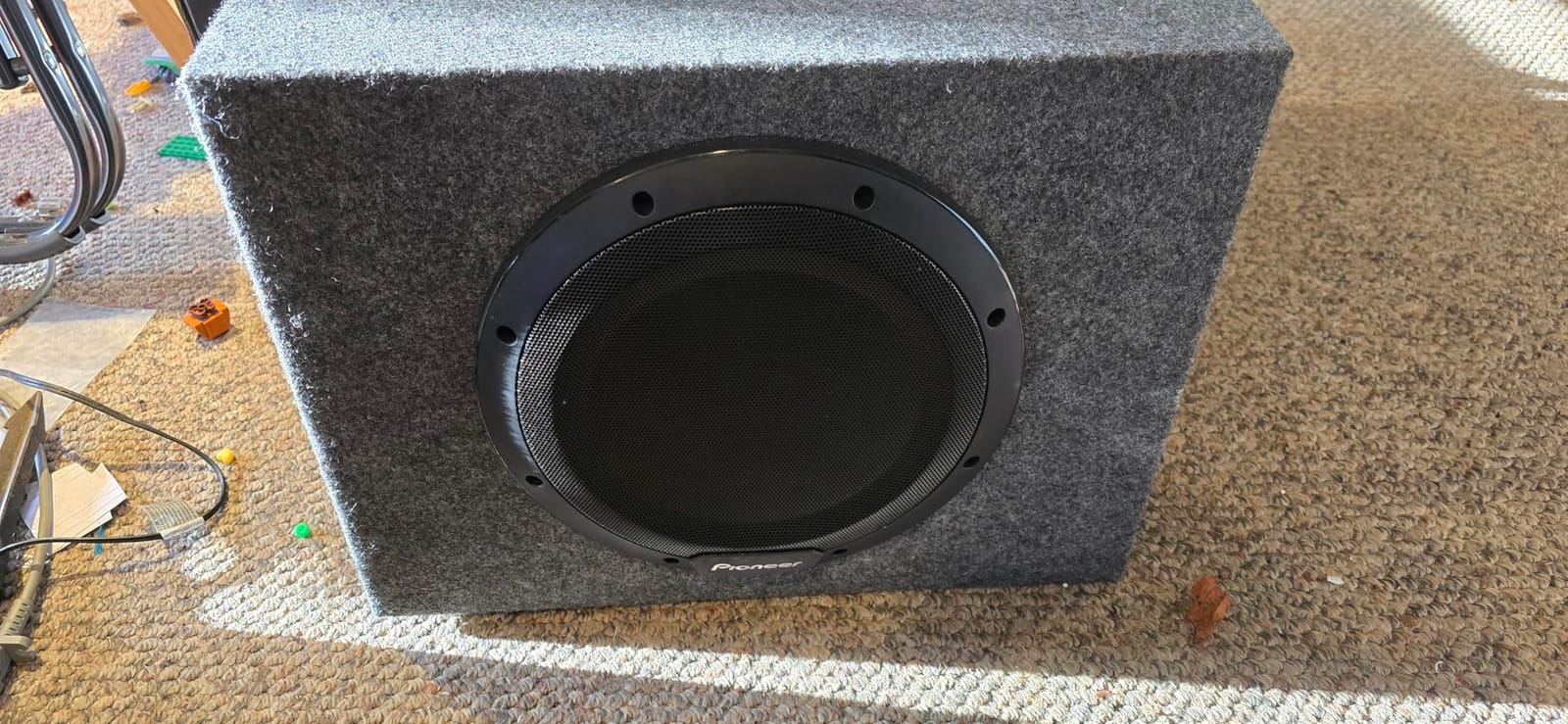
At 23.4 pounds this is the heaviest powered unit in the roundup by a wide margin, so plan the lift before you plan the placement. The footprint is about 20.75 inches wide by 15 inches tall by 11 inches deep, which is manageable in anything but a very small trunk.
Owner feedback is warm on the amplifier quality and the wired boost knob, and pointed about the sealed box limiting ultra-deep extension. It is also the pick here with the largest proportion of one-star ratings, which mostly trace to build and longevity concerns rather than to sound. If you keep it at reasonable levels and want a small, efficient, fully self-contained system, the trade is a good one.
Who this Pioneer powered sub suits
It suits anyone whose priority is audible output from a small amplifier footprint, particularly in a vehicle where electrical space is tight. It also suits under-seat installs in vehicles with a flatter floor, since the enclosure is designed to work in either orientation.
The 114 dB sensitivity also makes it forgiving of a modest amplifier, which matters if your plan is to start with the built-in amp and add a bigger one later.
Where it falls short
Sealed architecture is the ceiling here. If you want frequencies below roughly 40 Hz, this is not the unit that gets you there, and the 4.2 star average reflects a real split between people who wanted maximum depth and people who wanted a clean, efficient, powerful upgrade.
5. Rockville W12K9D2 12 inch High-Excursion Bare Driver
Rockville W12K9D2 12″ K9 V3 DVC 2-Ohm Car Subwoofer, 4000W Peak / 1000W RMS
Bare 12 inch driver
1000W RMS, 4000W peak
28 mm X-max
83 dB
Dual 2 ohm coils
Pros
- 28 mm X-max gives far more cone travel than a standard 12 inch driver
- 1000W RMS of genuine handling from a bare driver
- Cast aluminum basket and thick foam surround add durability
- Compact 12 inch footprint fits standard enclosures
Cons
- Bare driver
- so an amplifier and a correctly tuned box are on you
- 83 dB sensitivity is low so it needs serious amplifier power
- Non-pressed paper cone has less thermal margin than metal cones
- 33 pounds is an awkward lift into a trunk
This is the first bare driver on the list and the first one where excursion is the headline. A 28 mm X-max means the cone travels more than twice as far as a typical 12 inch, and that extra travel is what lets it play low frequencies in a reasonably sized box rather than requiring a warehouse of airspace.
Power handling is 1000 watts RMS with a 4000 watt peak ceiling, on a dual 2 ohm voice coil configuration. The two independent coils give you real wiring flexibility: parallel for 1 ohm, series for 4 ohm, or one coil alone for 2 ohm. That matters when you are pairing it with a monoblock that has a preferred stability.
The trade for all that excursion is sensitivity at 83 dB, which is the lowest figure among the bare drivers here. Low sensitivity means you need to push the amplifier hard to get the same perceived volume, so this driver genuinely benefits from a clean, powerful monoblock rather than a small one.
Thermal management is the other watch item. The dustcap, smaller pole vent and voice coil spacer are all designed to move heat, which is the right approach for a paper cone, but paper still has less margin than aluminum or woven fiber when you are at sustained maximum volume.
Who this high-excursion driver suits
It suits anyone building a proper custom box who wants genuine low-frequency reach without a 15 inch driver. The 28 mm X-max in a moderately sized 12 inch enclosure is a well-trodden path to sub-40 Hz output, and this driver is one of the more affordable ways into it.
It also suits a multi-sub build, since the dual 2 ohm coils make combining two of these straightforward on a single amplifier.
Where it falls short
It is not a beginner product. Bare driver means you supply the amplifier, the enclosure and the tuning, and 83 dB sensitivity punishes an underpowered amp with thin, strained output. At 33 pounds it is also a two-handed lift, so measure your mounting access before committing.
6. Rockford Fosgate P3D4-12 Bare 12 inch Driver
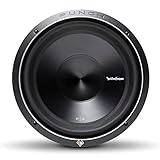
Rockford Fosgate P3D4-12 Punch P3 DVC 4-Ohm 12-Inch 600-Watt RMS 1200-Watt Peak Subwoofer
Bare 12 inch dual 4 ohm
600W RMS, 1200W peak
25 Hz
Anodized aluminum cone
11.2 pounds
Pros
- 4.8 stars across 882 reviews
- tied for the highest rating in this group
- Anodized aluminum cone resists the tearing that ends paper cone life
- Only 11.2 pounds
- making it the easiest 12 inch to handle here
- Hybrid stamp-cast basket adds strength without adding weight
- Manufacturer publishes recommended box volumes for sealed and vented builds
Cons
- Needs a 20 to 30 hour break-in at moderate gain
- Tight aluminum-cone character is less boomy on synthetic bass than paper
- 600W RMS is modest for very deep electronic music
- Warranty claims are handled directly with the manufacturer
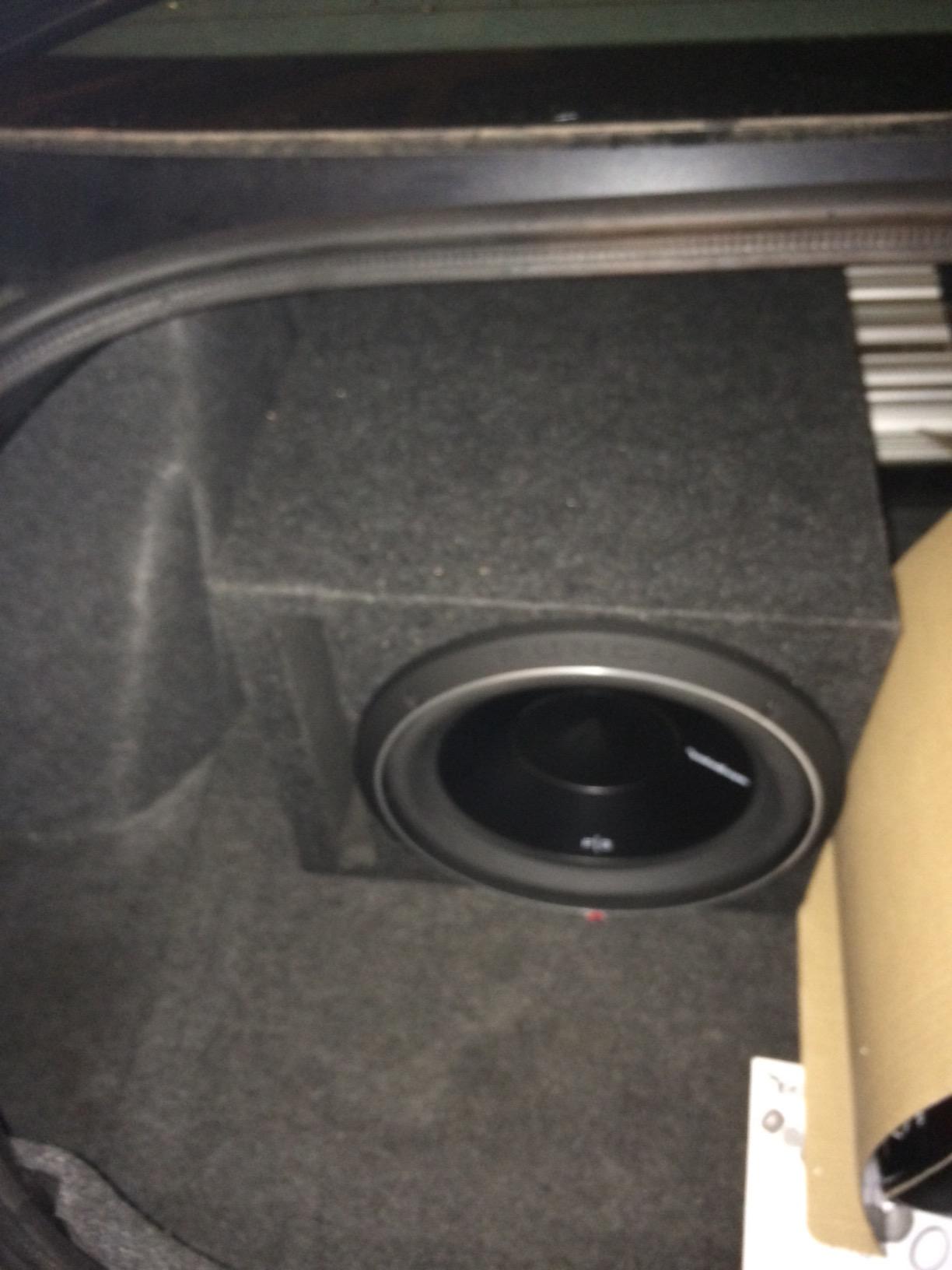
The P3D4-12 is the driver we would put in a car that gets driven every day. The anodized aluminum cone and dustcap are the reason: aluminum does not develop the tears and heat failures that end paper cone life after a few years of daily use, and that durability is what the 4.8 star average across 882 reviews is really measuring.
Power handling is 600 watts RMS and 1200 watts peak on a dual 4 ohm configuration, so one driver presents 8 ohm, or you can parallel the coils for 2 ohm. Rockford Fosgate publishes recommended net volumes, which is more than most manufacturers in this category do: roughly 1.02 cubic feet sealed and 1.79 cubic feet vented. Mounting depth is 6.66 inches with an 11.25 inch cutout.
Owners report running two of these on a single 1000 watt RMS monoblock for deep, even output, and that pairing is the reason this driver is on the list. At 11.2 pounds it is by far the easiest to handle into a tight install, which matters more than enthusiasts expect.
There is a caveat that catches people out. The driver needs a break-in period of 20 to 30 hours at moderate gain before it reaches full output, and if you judge it in the first week you may conclude it is underperforming when it is simply loose.
Who this bare driver suits
It suits daily drivers and anyone who plans to keep the car. The aluminum cone tolerates heat, the light weight makes installs simple, and the published box volumes mean you can build an enclosure without guessing.
It also suits owners who want accuracy over boomy low end. The tight, controlled character of an aluminum cone is a feature on rock, jazz and film soundtracks, where a loose 40 Hz bloom is a liability rather than a thrill.
Where it falls short
Six hundred watts RMS is modest for pushing very deep electronic bass, and owners who want that character often run two of them. The aluminum-cone sound is also less exaggerated than a paper driver, so if you are specifically chasing subs you can feel in your chest from across the parking lot, this is not the character you want.
7. Pioneer TS-A3000LS4 Shallow-Mount 12 inch Driver

PIONEER A-Series TS-A3000LS4 Shallow-Mount 12″ Subwoofer 1500W Max
Shallow mount 12 inch
3.5 inch mounting depth
400W nominal, 1500W max
88 dB
Single 4 ohm
Pros
- Only 3.5 inches deep so it mounts behind or under a rear seat
- Glass fiber and mica reinforced cone stays rigid at low volume
- Single 4 ohm coil keeps wiring simple
- Engineered to blend with Pioneer A-series full-range speakers
- Trim ring
- gasket and mounting screws included
Cons
- Requires an external amplifier and a 0.8 cubic foot sealed enclosure
- Shallow design trades box volume for depth so extension is limited
- 400W nominal power is modest for extreme deep bass
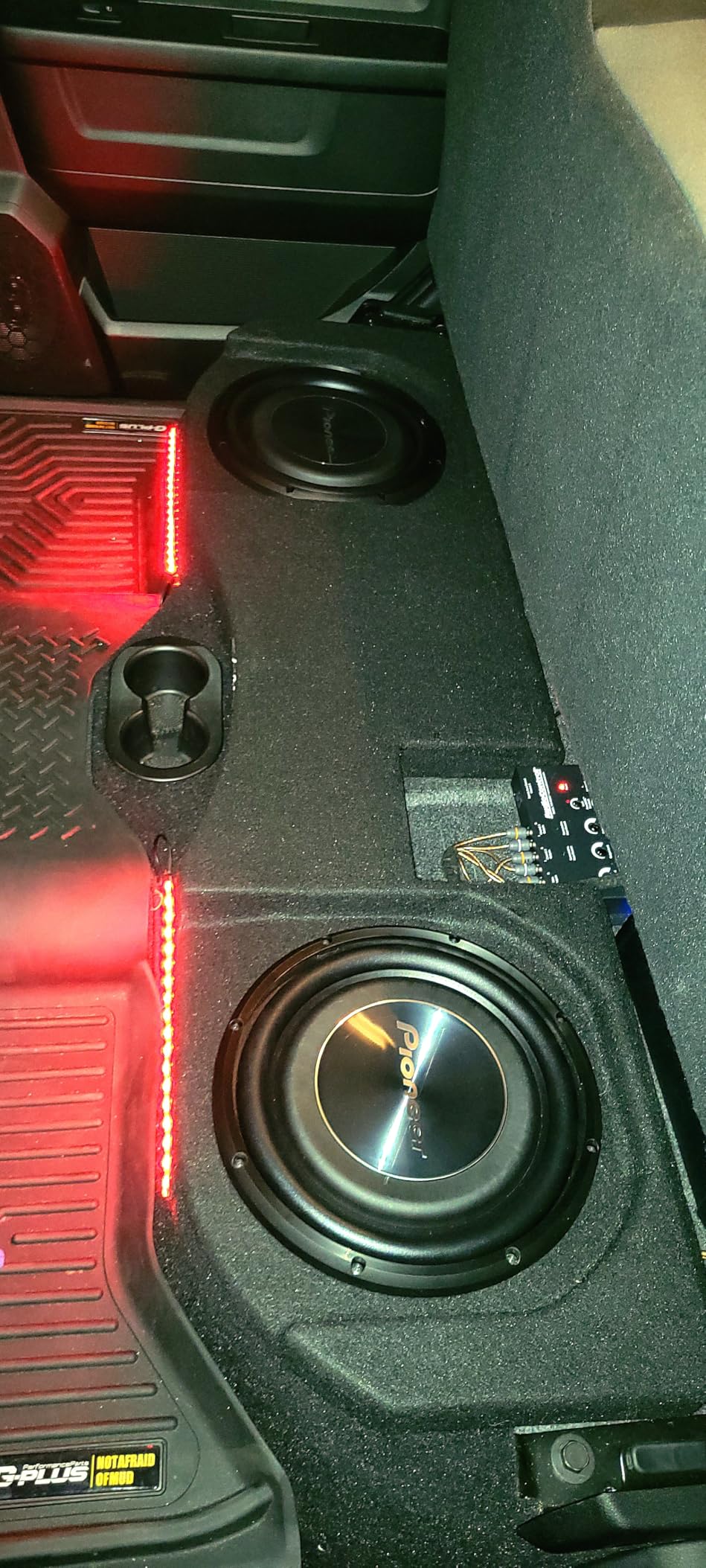
When a 12 inch subwoofer will not fit, the usual answer is an 8 inch driver, and the usual result is less bass. The TS-A3000LS4 is the better compromise: a full 12 inch cone at 3.5 inches of mounting depth, which is shallow enough to sit under a rear bench or behind it in a hatchback without eating the cargo area.
The cone is an IMPP design reinforced with glass fiber and mica, rated at 1500 watts max and 400 watts nominal, with an 88 dB efficiency figure. It uses a single 4 ohm voice coil, which is simpler to wire than a dual coil but leaves fewer configuration options on the amplifier side.
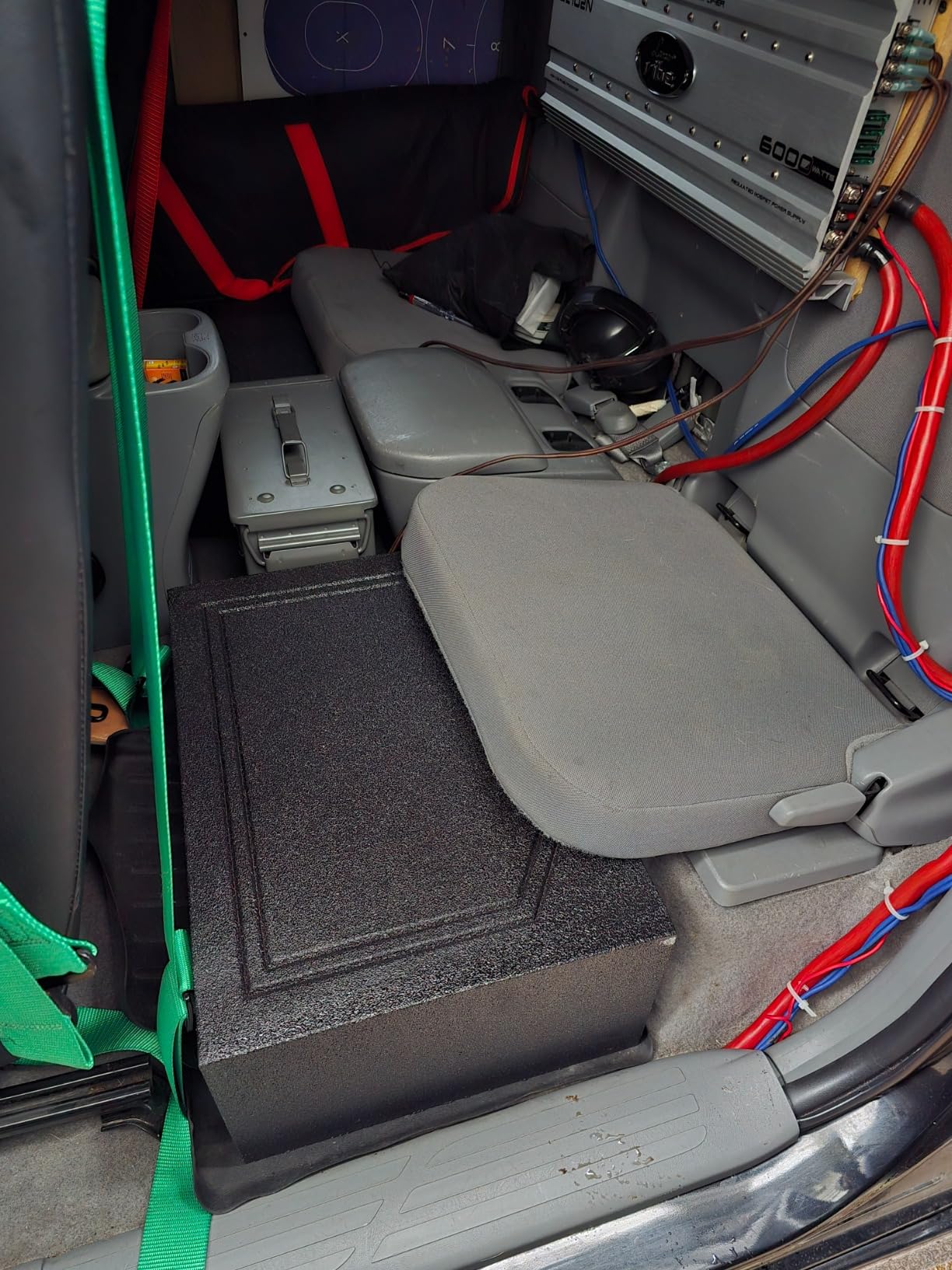
Pioneer designed it to sit alongside the A-series full-range speakers, and if your front stage is already Pioneer that coherence is a genuine benefit. You also get a trim ring and gasket in the box, which matters because a shallow mount mounted badly rattles.
The honest limitation is the same one the design creates. A shallow frame means a small recommended box, roughly 0.8 cubic feet sealed, and a small box means less low-frequency extension. This is a space solution that still produces real bass, not a route to the lowest notes on this list.
Who this shallow-mount driver suits
It suits owners of compact cars, hatchbacks and sedans who refuse to give up rear seat space or trunk depth. If you have measured your install and a normal 12 inch will not physically fit, this is the pick that keeps you at 12 inch rather than dropping to 8 inch.
It also suits a system build, where a 4 ohm single coil and 88 dB efficiency are easy to match to a modest monoblock without overcomplicating the wiring.
Where it falls short
It is a passive driver, so an amplifier and an enclosure are both extra purchases. And 400 watts nominal with a small recommended box will not chase sub-40 Hz output. If depth is the primary goal and space is a secondary concern, choose a full-depth driver instead.
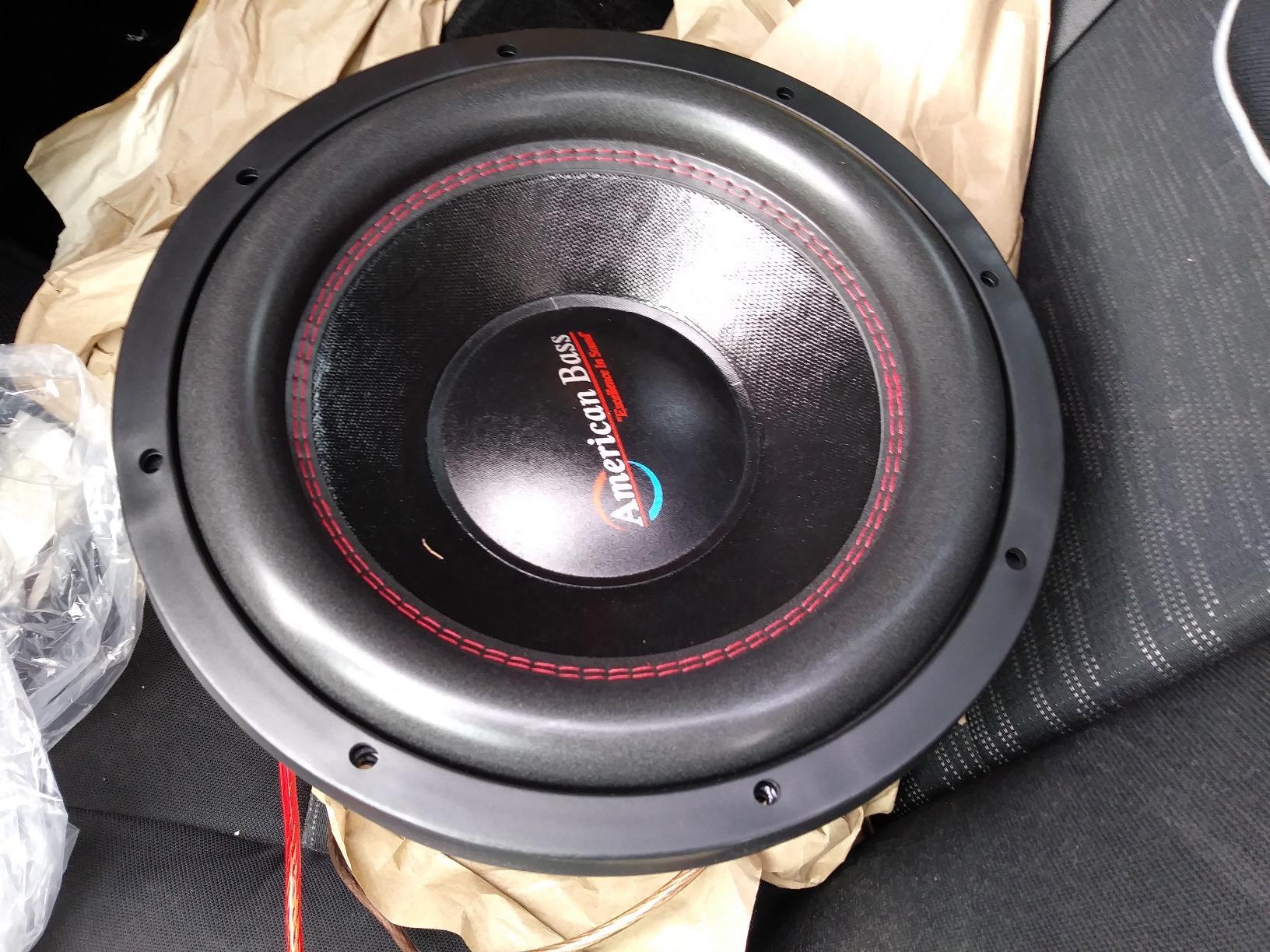
8. American Bass XFL 12 inch SPL Driver

American Bass XFL 12″ 4 Ohm 3000 Max Watts Car Subwoofer
Bare 12 inch SPL driver
1500W RMS, 3000W peak
200 oz magnet
3 inch voice coil
Dual 2 ohm
Pros
- 1500W RMS is higher than any other bare driver in this roundup
- Oversized 200 oz magnet and 3 inch voice coil take deep excursion cleanly
- Dual 2 ohm coils give flexible amplifier wiring options
- Push terminals hold high current reliably
Cons
- 38 pounds makes it a two-handed lift into a trunk
- Bare driver with no enclosure or amplifier included
- Needs a genuinely powerful amplifier to reach its rating
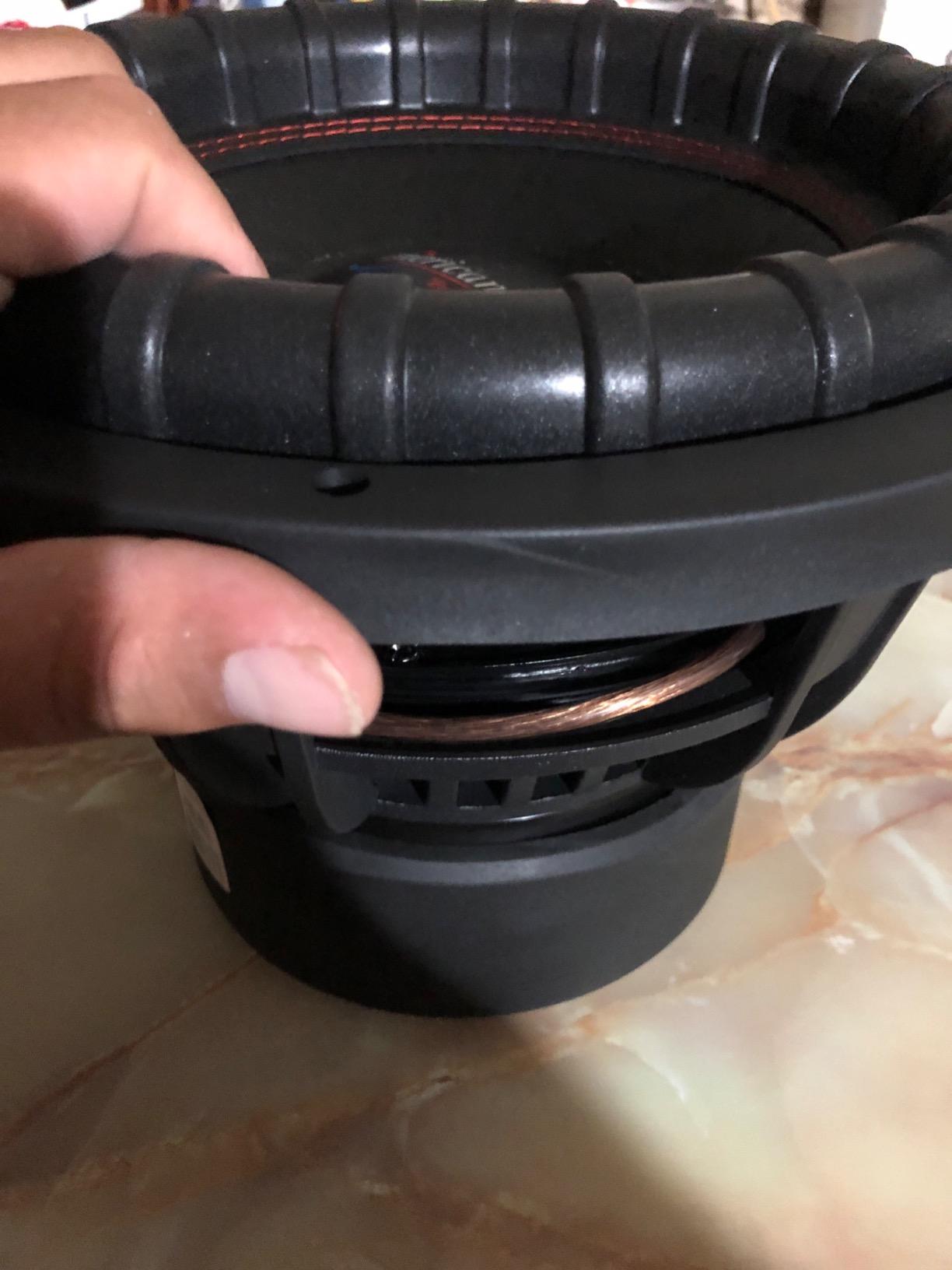
This is the max-output pick. Where most 12 inch drivers in this roundup sit between 400 and 1000 watts RMS, the American Bass XFL is rated at 1500 watts RMS and 3000 watts peak, and the motor is sized to match: a 200 ounce magnet with a 3 inch voice coil wound for sustained high current.
Those numbers exist for a reason. High-excursion suspension lets the cone move the large volume of air that raw output requires, and the oversized motor keeps the voice coil cool while doing it. The dual 2 ohm coil configuration allows 1 ohm parallel or 4 ohm series wiring, and push terminals give a more secure high-current connection than spring clips.
Owner feedback from SPL-focused buyers is consistent about the result: strong, clean low-frequency output that holds together when pushed. The 4.6 star average comes from people who bought this specifically to make noise, and they report the driver delivering on that brief.
The cost is weight and commitment. At 38 pounds this is a serious component, and you will need to plan how it gets into the enclosure before you plan where the enclosure goes. Nothing here is included except the driver, a decal and a manual.
Who this SPL driver suits
It suits builders who already have a serious monoblock and want the driver to keep up with it. The 1500 watt RMS rating is genuinely usable power handling rather than a marketing ceiling, which is why the pair holds up in competition-oriented builds.
It also suits anyone who wants headroom. A driver rated this high will not be the weak link when you eventually upgrade the amplifier.
Where it falls short
It is a bare driver, so the amp and box are entirely your problem, and a 1500 watt RMS rating demands a correspondingly large amplifier. The 38 pound weight is the other practical obstacle. If your goal is deep, accurate, controlled bass rather than maximum volume, a high-excursion driver in a properly tuned box will serve you better.
9. Rockford Fosgate P3-2X12 Ported Dual 12 inch Enclosure
Rockford Fosgate Punch P3-2X12 Loaded 12″ Subwoofer in Ported Enclosure
Dual 12 inch vented loaded box
1200W RMS, 2400W max
20 Hz response
Pre-wired to 1 ohm
1-year warranty
Pros
- Factory vented enclosure tuned to reach down to 20 Hz
- the deepest reach here
- Dual 12 inch drivers give even
- room-filling output
- High-flow low-noise port design keeps port noise in check
- Durable 5/8 inch MDF construction with anodized aluminum cones
- 4.8 stars from 265 reviews with 89 percent five-star ratings
Cons
- Pre-wired to 1 ohm so your amplifier must be 1 ohm stable
- Enclosure is 33.875 inches wide and adds 20 pounds to your cargo area
- The slotted port cover can create audible port noise if it stays installed
- Factory terminal cup can soften under high-current connections
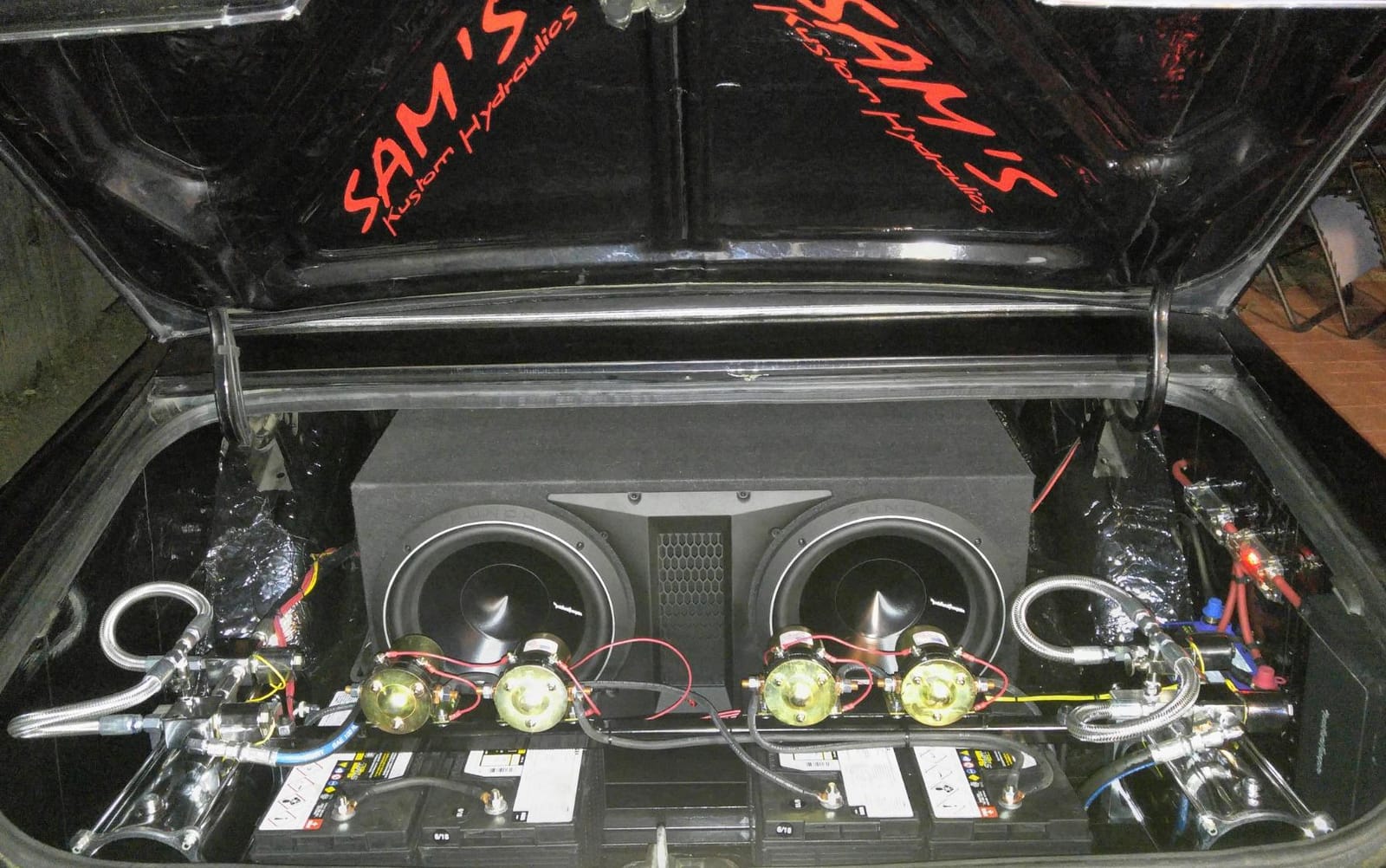
If you want the lowest frequencies without designing a box yourself, this is the unit. Two P3 series 12 inch dual voice coil drivers sit in a vented enclosure rated at 1200 watts RMS and 2400 watts max, with a stated frequency response reaching down to 20 Hz. No other turnkey enclosure in this roundup goes that low.
The port is described as high-flow and low-noise, and that detail matters more than it sounds. Port noise, where air turbulence becomes audible chuffing at high volume, is the most common complaint about ported boxes, and the port geometry here is specifically designed to reduce it. Owners with matching Rockford Fosgate amplifiers report clean, distortion-free output that physically moves the car.
There are installation details to respect. The enclosure is internally wired to a 1 ohm load, so your monoblock must be stable at 1 ohm, which is a check worth doing before you buy the amplifier rather than after. It measures 15.125 inches tall by 33.875 inches wide by 15.75 inches deep and weighs 20 pounds, so plan the cargo layout around it.
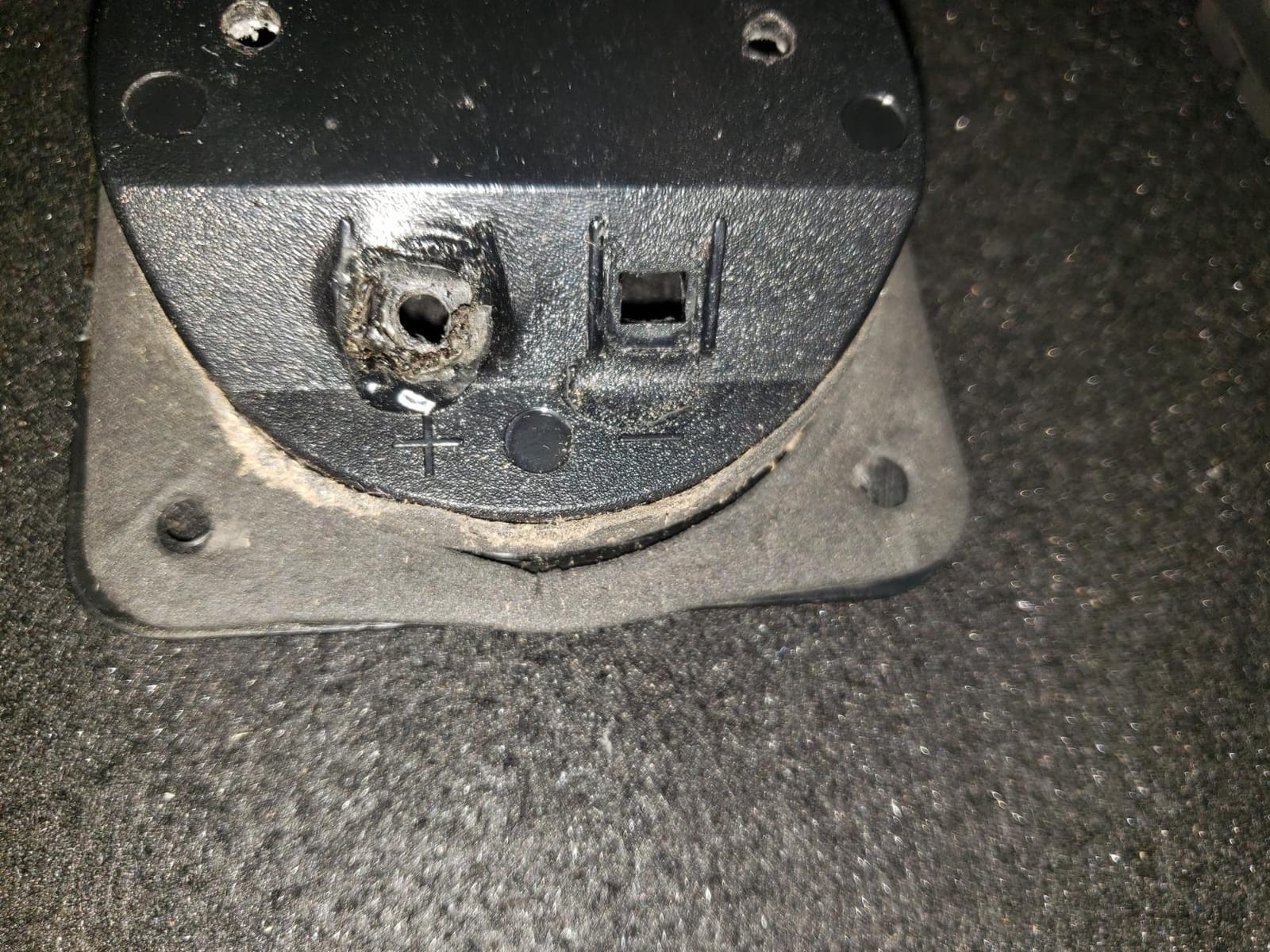
Two smaller owner-reported issues are worth knowing. The slotted port cover can add audible port noise if it stays installed, and the factory terminal cup has been reported softening under high-current connections, so installers often run new wire to the drivers. Both are fixable and neither affects the underlying performance.
Who this ported dual enclosure suits
It suits anyone who wants maximum low-frequency reach from a factory box without building one. Twenty hertz is genuinely sub-bass territory, and the ported architecture gives you the volume of air movement that a sealed pair cannot match.
Owners report effects that only come from serious output, including rattling mirrors and dimming headlights at moderate volume. If you drive a vehicle with a large cargo area, an SUV or a truck, the footprint is a fair trade for that.
Where it falls short
It is the least flexible unit here. The 1 ohm wiring requirement limits amplifier choice, the 33.875 inch width is genuinely large, and a system this capable will overwhelm stock door speakers, so a matching front stage upgrade is close to mandatory rather than optional.
10. Rockville Punisher 12D2 Competition 12 inch Driver
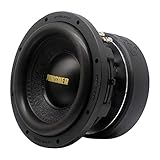
Rockville Punisher 12D2 12″ Dual 2-Ohm Competition Car Audio Subwoofer
Bare 12 inch competition driver
1400W RMS CEA, 5600W peak
3 inch aluminum voice coil
Dual 2 ohm
Pros
- 1400W RMS CEA rating with a 3 inch aluminum voice coil for sustained output
- High-excursion suspension built for competition-level bass
- Reinforced stitching and a cast aluminum basket reduce resonance
- Owners report it handling more than its rating at 1 ohm
Cons
- 42.5 pounds is the heaviest driver here and hard to maneuver
- Bare driver needing a high-power amplifier and a competition box
- Non-pressed paper cone has less thermal margin than metal cones
- A small number of buyers report failures and difficult warranty resolution
The Punisher 12D2 is the budget entry into competition-style drivers, and the numbers are the argument: 1400 watts RMS CEA rated with a 5600 watt peak ceiling, an oversized 3 inch aluminum voice coil and a high-excursion suspension design. Few drivers at this level of affordability publish a CEA rating at all.
Construction is heavy duty. The cone is an ultra-stiff black non-pressed paper with a thick foam surround and reinforced stitching, hung in a rugged cast aluminum basket designed to reduce resonance. That stitching is a detail you see on competition parts because it stops the cone joint from separating under sustained excursion.
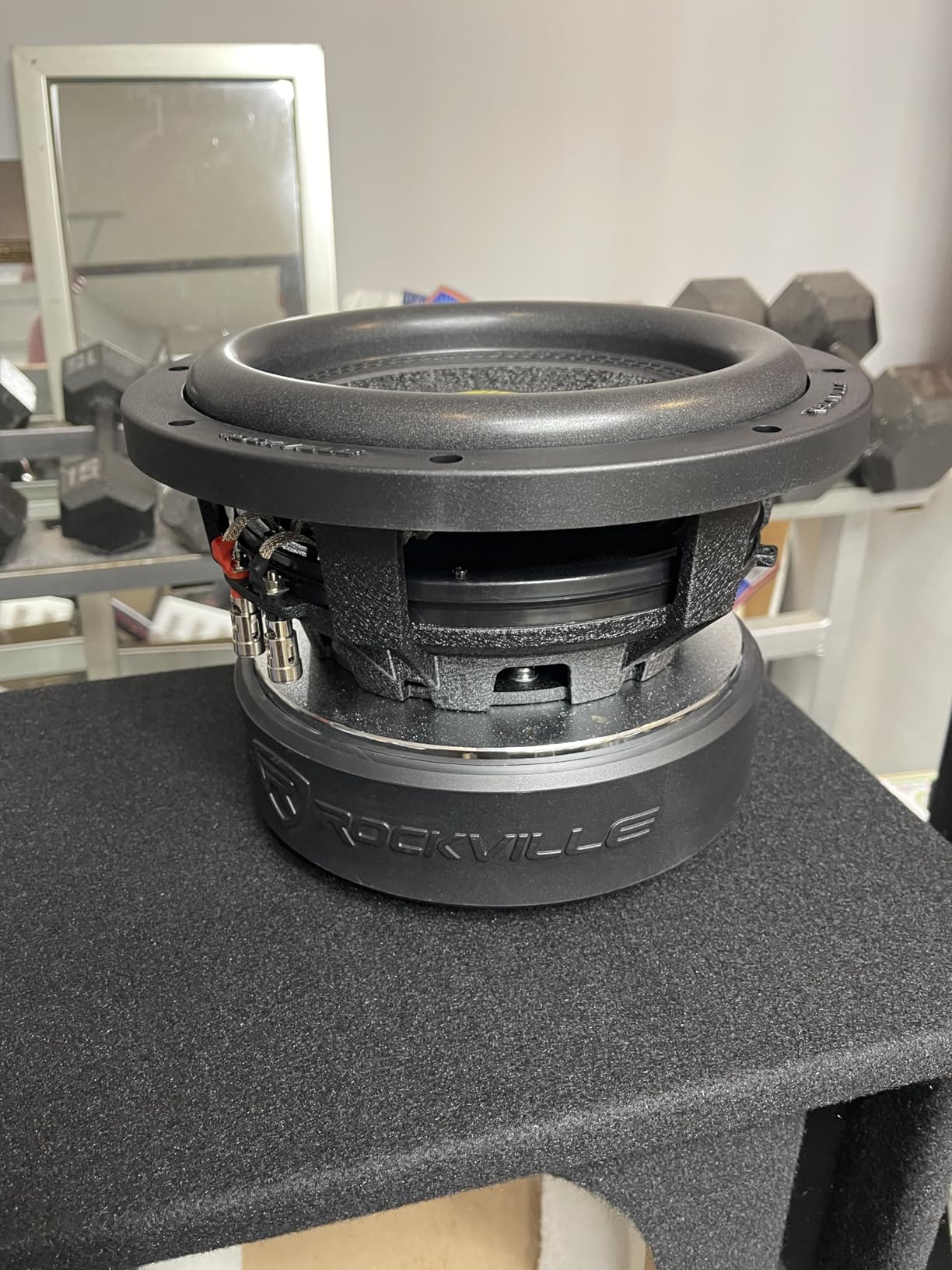
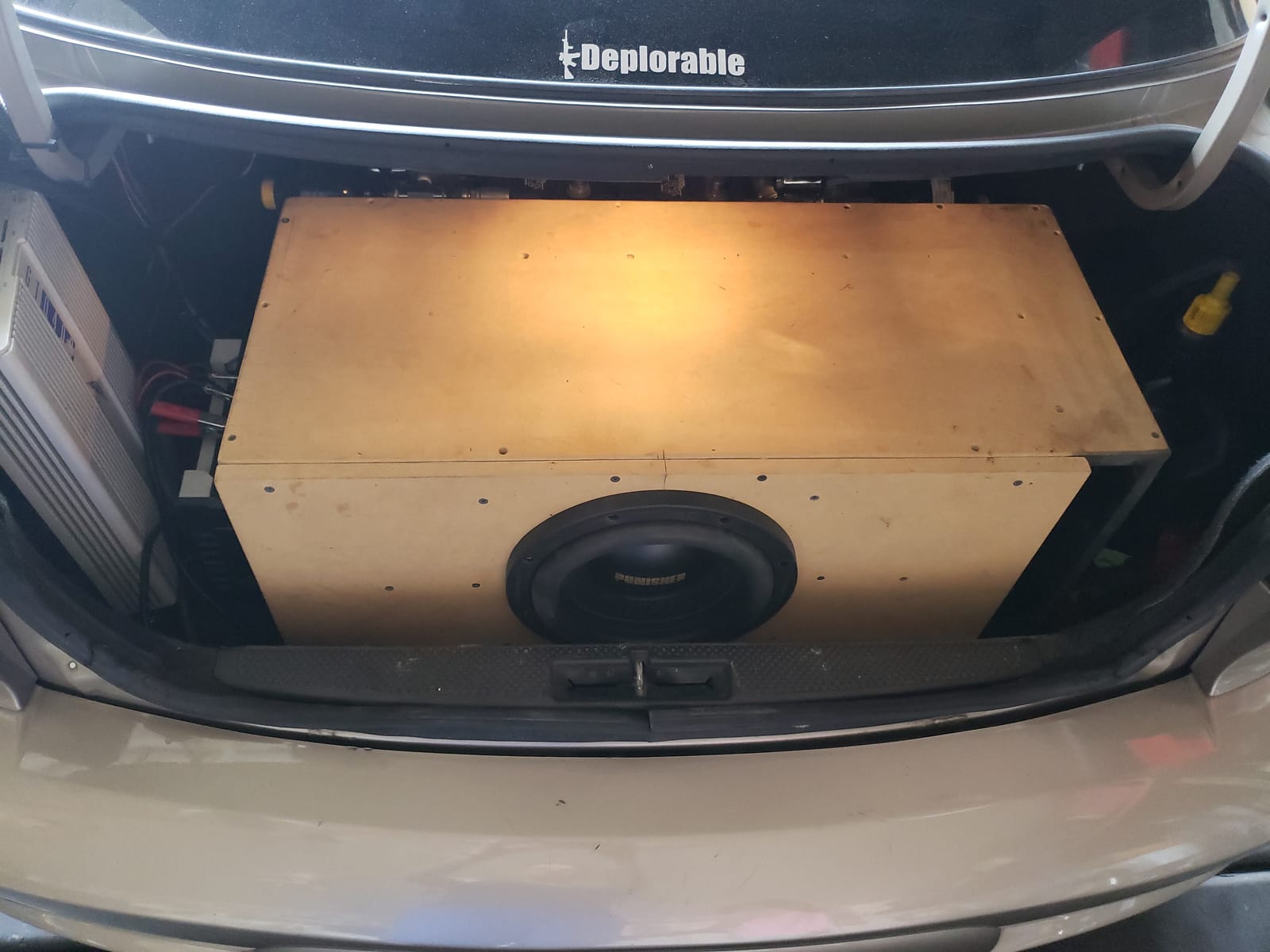
Owner feedback reports that the driver takes more power than its rating without complaint, and several buyers describe owning multiple units. At 42.5 pounds, though, this is the heaviest driver in the roundup, and handling it into a custom enclosure is a genuine two-person job.
The paper cone is the trade for that affordability, and it has less thermal margin than an aluminum or woven fiber cone when you are at sustained maximum output. A small number of buyers also report failures and frustration resolving warranty claims, so the one-year warranty is worth understanding before you commit to a large quantity.
Who this competition driver suits
It suits builders who want competition-level power handling without stepping up to a premium brand, and who already have a high-power monoblock and a properly built enclosure to put it in. The dual 2 ohm coils make it straightforward to wire to a 1 ohm stable amplifier for maximum output.
It also suits buyers who plan to add a second sub later, since the wiring configuration and the enclosure volume requirements are well documented for this class of driver.
Where it falls short
It is the least finished product here: bare driver, no enclosure, no amplifier, and the highest handling burden of the ten. For a daily-driven car where you want controlled and accurate low end, a lighter driver like the P3D4-12 is a much saner starting point.
How to Choose the Right Car Subwoofer?
Most disappointing installs are not driver failures. They are mismatches between a driver, an enclosure and an amplifier, or an enclosure that was never designed for the space it ended up in. Work through these decisions in order and the choice becomes straightforward.
Measure the space before you pick a size
Measure the actual opening, not the nominal trunk volume. You need the enclosure width against the narrowest point of the trunk or hatch, the depth against the seatback, and the height against the parcel shelf. Then check the driver’s mounting depth and cutout diameter against the panel thickness you plan to use. A 3.5 inch shallow mount solves a problem a 7 inch frame cannot.
On driver size, the practical rule is that a bigger cone moves more air for less excursion, which means deeper bass from a smaller box. A 15 inch is not automatically better, though. It needs a much larger enclosure, and most car enclosures are too small to let one work properly.
Decide sealed or ported before you buy anything
Sealed boxes are smaller, more accurate and better controlled, which makes them the right default for rock, metal, jazz and film soundtracks. Ported boxes move more air, reach lower and play louder, which makes them the right choice for hip-hop, trap, EDM and dubstep. Bandpass designs are efficient within a narrow frequency window and are almost never the right answer for music.
Box tuning frequency is the variable people skip. A ported box tuned lower plays lower, and a box tuned too high for the driver will not deliver the depth you paid for. This is why an enclosure from a manufacturer who knows the driver is worth more than a cheaper generic box, and why forum builders treat box design as the deciding factor rather than the brand.
Match the amplifier to the voice coil
The rule of thumb is to run an amplifier delivering roughly the same RMS power as the subwoofer’s rating, at the impedance the wiring presents. A 600 watt RMS sub wants a monoblock that puts out close to 600 watts RMS at the resulting load. Underpowering is the most common first-install mistake, and the symptom is a sub that gets quiet and then suddenly distorts at higher levels.
Understand the impedance before you wire anything. Dual 2 ohm coils can be wired parallel for 1 ohm or series for 4 ohm. Dual 4 ohm coils give 2 ohm or 8 ohm. Wiring a driver below the amplifier’s minimum stability is how people end up with a blown sub or a tripped protection circuit, and it is entirely avoidable with five minutes of reading.
Plan the rest of the system
The subwoofer is half the installation. You also need a monoblock amplifier, heavy-gauge speaker wire, an RCA cable or a line output converter if you are taking signal from a factory system, a fused power cable run through a firewall grommet, and an inline capacitor or sound deadening if you care about rattles. Sound deadening is not optional in our view. Community consensus treats it as roughly as important as the subwoofer itself, and it is the cheapest way to make an existing system sound dramatically deeper.
One common trick from experienced installers is worth knowing. An MDX owner in r/CarAV reported that facing the subwoofers up toward the cabin delivered noticeably better deep bass and more air than firing them rearward, because the pressure wave is aimed at the listening position rather than out the back of the car.
One large sub or two smaller ones
Two smaller subs give more even output across the cabin, distribute the load on your amplifier and give you more total cone area without needing one enormous enclosure. One larger sub concentrates the output and can be simpler to fit. For deep bass in a daily-driven car, two moderate 12 inch drivers in a properly tuned box is the more reliable choice, which is why dual-driver loaded enclosures appear twice on this list.
The music also matters. Hip-hop, EDM and trap reward volume and extension, so ported and SPL-leaning designs suit them. Rock, metal and anything with acoustic instruments rewards accuracy, so sealed boxes and metal-cone drivers suit them. If your listening is mostly spoken word or podcasts, you probably want a small sealed system set to a modest gain, not any of the competition parts in this roundup.
Frequently Asked Questions
Which car subwoofer has the deepest bass?
Among turnkey enclosures, the Rockford Fosgate P3-2X12 reaches the lowest frequencies, with a stated response down to 20 Hz from its ported dual 12 inch box. The MTX Terminator TNE212D follows at 37 Hz, and the Rockville RWS12CA manages 38 Hz in a much slimmer powered package. If you are building your own box, a high-excursion driver like the Rockville W12K9D2 with its 28 mm X-max will play lower for a given box volume than a standard design.
What car subwoofer hits the hardest?
For sheer output, the American Bass XFL 12 inch has the highest RMS power handling of the bare drivers here at 1500 watts, with a 200 oz magnet and a 3 inch voice coil. The Rockville Punisher 12D2 is close behind at 1400 watts RMS CEA rated. If you want the most out of the box with no separate amplifier, the Rockford Fosgate P3-2X12 ported dual enclosure produces the most cabin-level output in this roundup.
Is a sealed or ported box better for deep bass in a car?
A ported box reaches lower frequencies and plays louder because the port lets the enclosure move more air. A sealed box is smaller, more accurate and better controlled, and it rolls off more gradually. For hip-hop, EDM and dubstep, ported is usually the better answer. For rock, metal, jazz and film soundtracks, sealed is usually the better answer. The tuning frequency of the box matters as much as its type.
How much amplifier power do I need for a 12 inch subwoofer?
Match the amplifier to the subwoofer’s RMS rating, not its peak number. A driver rated at 600 watts RMS wants a monoblock that delivers close to 600 watts RMS at the impedance your wiring presents, and running a larger amplifier is fine as long as gain is set correctly. Underpowering is the most common first-install mistake, and the usual symptom is output that stays clean at low volume then distorts suddenly when turned up.
Do subs hit harder in a bigger box?
Yes, within reason, because a larger enclosure gives the driver more volume of air to work with, which lowers the tuning frequency and extends how low it plays. Oversizing is not automatically better, though, because a box far larger than the driver is designed for can sound loose and imprecise. The best approach is to use the manufacturer’s recommended net volume for your chosen driver, and the Rockford Fosgate P3D4-12 publishes those figures for both sealed and vented builds.
Can I run a car subwoofer off my factory amplifier?
You can, but the result is usually modest, because most factory amplifiers are designed for door speakers rather than a subwoofer. A line output converter takes a clean full-range signal from your factory system and feeds your own monoblock, which is the standard solution. The powered enclosed options in this roundup, such as the Rockford Fosgate P300-12 and the Rockville RWS12CA, accept high-level speaker input directly and can be installed without a converter.
Our Verdict on the Best Car Subwoofers for 2026
Ten options, one winner. The MTX Terminator TNE212D is the best car subwoofer for deep bass in this roundup because it delivers two matched 12 inch drivers, a 400 watt RMS rating, a 37 Hz stated response and a two-year warranty inside a box you do not have to build, and more than 4,000 owner reviews back that up.
Pick the Rockford Fosgate P300-12 if you want the simplest possible install with real control over crossover and phase. Pick the Rockville RWS12CA if the space is tight. Pick the Rockford Fosgate P3-2X12 if you want the lowest frequencies without building anything. Pick the American Bass XFL 12 inch or the Rockville Punisher 12D2 if you already have a serious amplifier and want maximum output.
Measure your space, choose sealed or ported based on the music you actually listen to, match an amplifier at the impedance your wiring presents, and treat sound deadening as part of the budget. Those four decisions matter more than the badge on the cone.