
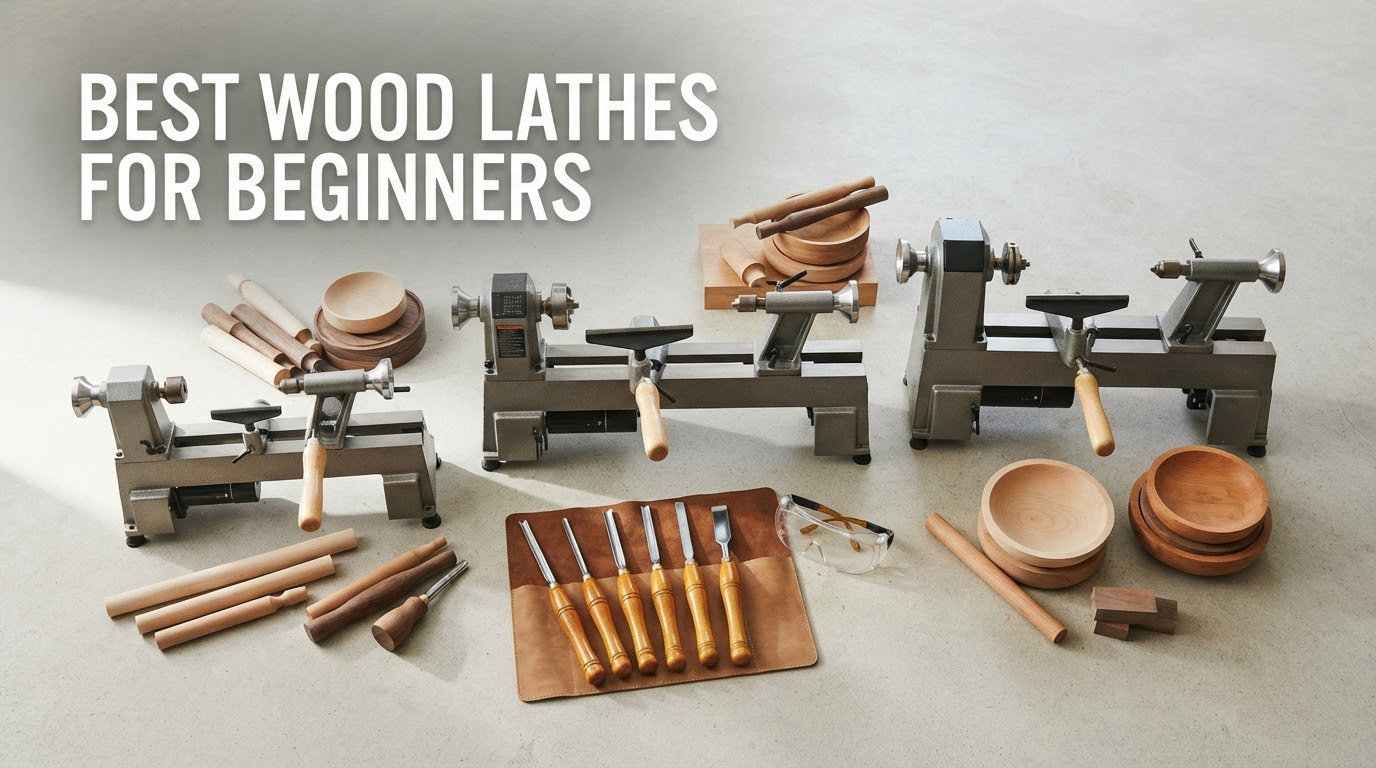
Most people do not regret learning woodturning. They regret the first lathe they bought. A machine that is too small, too light, or too slow to change speed turns a first project into an argument with the machine instead of a lesson in holding a gouge, and after two bad evenings the lathe ends up in a closet where it stays.
That is the whole reason this guide exists. We went through the current crop of benchtop and midi wood lathes and compared the numbers that actually decide whether a machine is pleasant to learn on: swing over bed, distance between centers, how speed changes, how much the motor can push, whether the bed is cast iron, and which taper standard the spindle uses. Our shortlist covers nine machines, from an 8 by 12 inch mini lathe that fits on a small apartment bench to a 12 by 21 inch variable-speed lathe that serious hobbyists buy as their last step up.
If you only read one thing, read this: a good entry-level wood lathe has a 10 to 12 inch swing over the bed, 12 to 18 inches between centers, cast iron in the bed and headstock, a motor of at least half a horsepower, and a way to change speed without constantly moving belts. Everything else on the spec sheet is secondary to those five things.
There are also two different purchases hiding inside the phrase beginner wood lathe. The first is a hobby machine for pens, small bowls, spindles, and chess pieces that you may keep forever. The second is a first serious lathe you expect to grow into, one that will not need replacing in a year. We flag which is which on every pick below, because buying the wrong one of those two is the expensive mistake.
Table of Contents
Top 3 Beginner Wood Lathes (October 2026)
Our top three cover the three most common starting points: the machine most beginners actually buy, the machine enthusiasts end up keeping, and the machine that scores highest with owners who rate their machines carefully. All three ship with the accessories you need on day one, and none of them asks you to learn a belt system before your first cut.

WEN 3421 Mini Benchtop Lathe
- 8 by 12 inch capacity
- 750-3200 RPM soft start
- 3.2 amp motor
- Two tool rests included

JET JWL-1221VS 12 x 21 Lathe
- 1 HP cast iron build
- Three speed ranges to 3600 RPM
- 24 indexing positions
- Digital readout
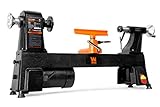
WEN LA3424 12 x 18 Lathe
- 12 by 18 inch capacity
- Five speeds 520 to 3400 RPM
- MT2 head and tailstock tapers
- 3-1/8 inch face plate
Best Wood Lathes for Beginners at a Glance in 2026
Here is the full field side by side. We ordered the picks the way most beginners should shop, not strictly by rating: capacity and build quality first, then the ratio of what the machine does to what it asks of your bench and your wall outlet.
| Product | Specs | Action |
|---|---|---|
| WEN 3421 8 x 12 Mini Variable Speed Lathe |
|
Check Latest Price |
| JET JWL-1221VS 12 x 21 Variable-Speed Lathe |
|
Check Latest Price |
 Delta 46-460 12-1/2 Inch MIDI Lathe Delta 46-460 12-1/2 Inch MIDI Lathe |
|
Check Latest Price |
| WEN LA3424 12 x 18 5-Speed Lathe |
|
Check Latest Price |
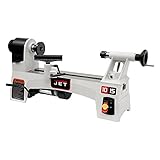 JET JWL-1015VS 10 x 15 Variable-Speed Lathe JET JWL-1015VS 10 x 15 Variable-Speed Lathe |
|
Check Latest Price |
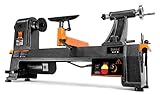 WEN 34035 14 x 20 Variable-Speed Lathe WEN 34035 14 x 20 Variable-Speed Lathe |
|
Check Latest Price |
 ArtyMaster WM101A Plus Mini Wood Lathe ArtyMaster WM101A Plus Mini Wood Lathe |
|
Check Latest Price |
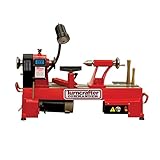 PSI KWL-1218VS 12 Inch Variable Speed MIDI Lathe PSI KWL-1218VS 12 Inch Variable Speed MIDI Lathe |
|
Check Latest Price |
 Shop Fox W1836 12 x 15 Benchtop Lathe Shop Fox W1836 12 x 15 Benchtop Lathe |
|
Check Latest Price |
Two things stand out. Only one machine here weighs under 20 pounds, and only two use the older MT1 taper, which matters when you start shopping for chucks and faceplates. Everything else runs on standard 110V household power.
1. WEN 3421 Mini Benchtop Lathe: the Most-Bought First Lathe
WEN 3421 3.2-Amp 8″ by 12″ Variable Speed Mini Benchtop Wood Lathe
8 in by 12 in capacity
750-3200 RPM soft start
3.2 amp motor
MT1 taper, 44.7 lb
Pros
- Around 1400 owner ratings to learn from
- Soft start variable speed across 750-3200 RPM
- Two interchangeable tool rests plus a 2.3 inch face plate
- Lightest bench in the group at 44.7 lb
Cons
- 8 inch swing rules out larger bowls and long spindles
- MT1 fittings pair poorly with common MT2 accessories
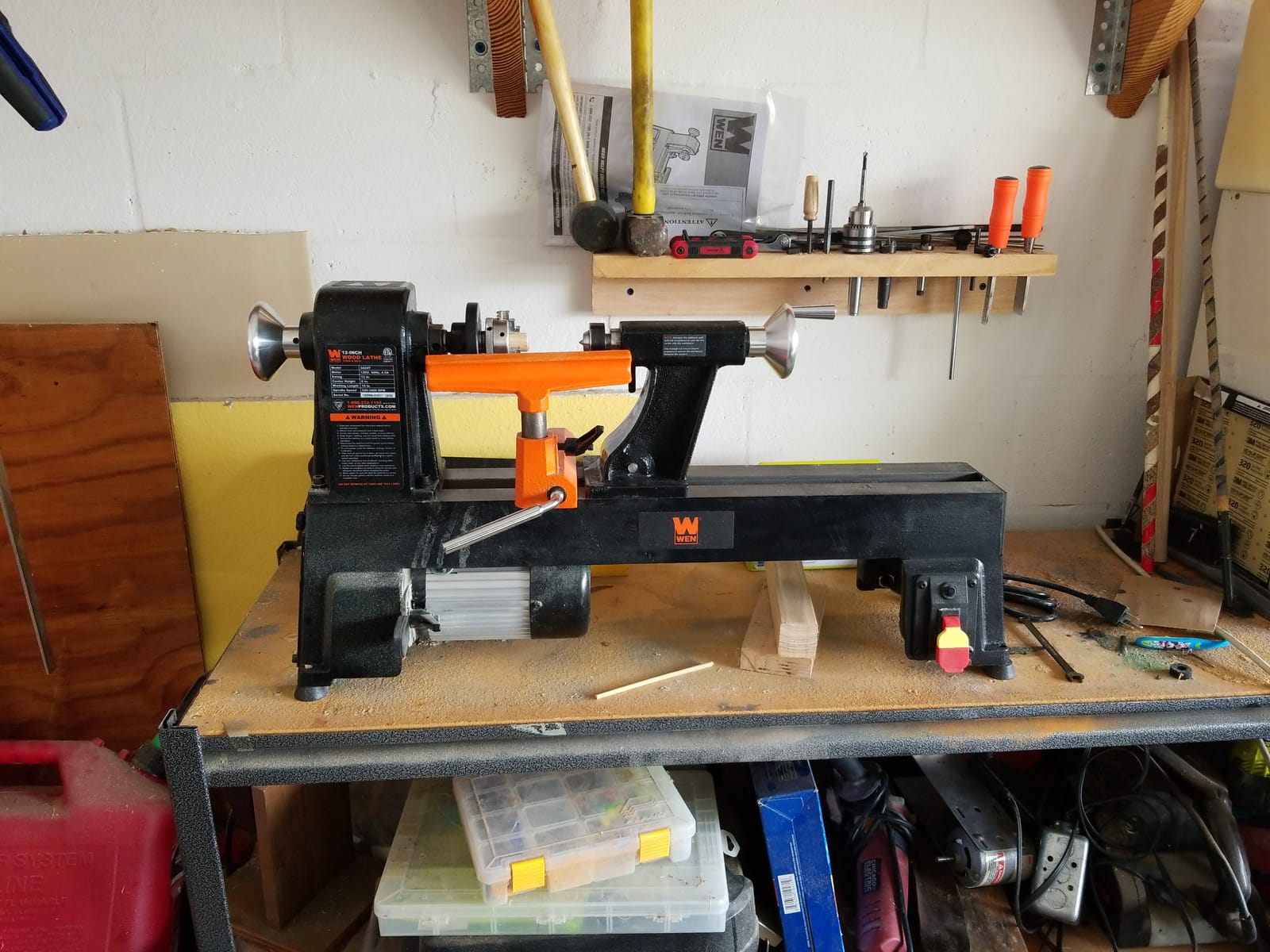
The WEN 3421 is the machine most people end up buying first, and the reason is simple: at around 1400 owner ratings it has the deepest review pool of any beginner wood lathe we evaluated. When a machine has that many owners, the common complaints are well documented, and for the 3421 they are consistent and easy to plan around. It is a genuinely capable little machine, not a toy.
Out of the box you get the lathe, a 2.3 inch face plate, an MT1 spindle and tailstock taper, and two interchangeable tool rests. That tool kit matters more than it sounds. A beginner with one rest is constantly stopping to reposition it, and the second short rest is what makes a spindle turning project possible at all.
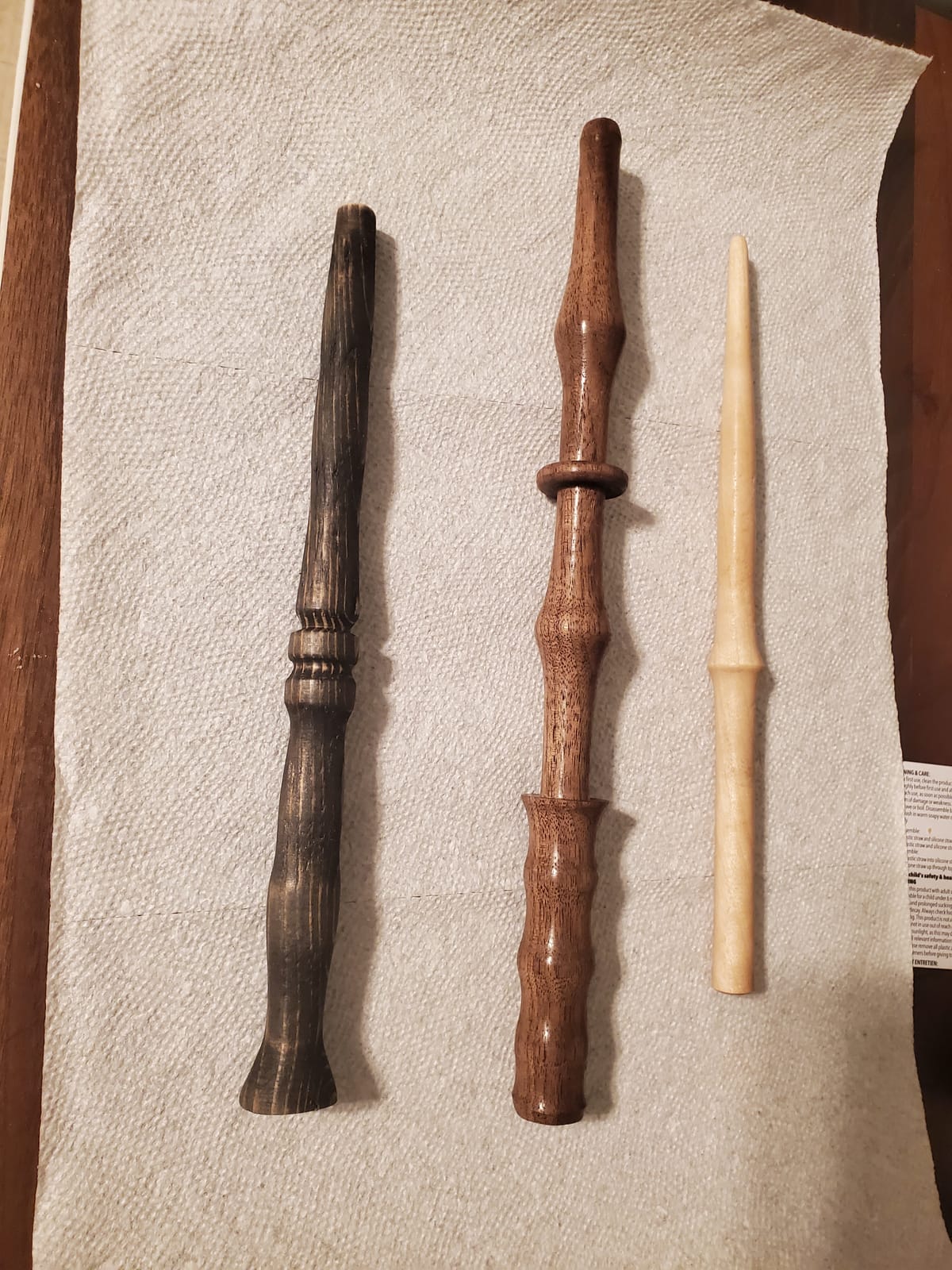
Speed control is the part that separates it from older mini lathes. The soft start motor adjusts anywhere from 750 to 3200 RPM, and the soft start itself means the spindle ramps up rather than snapping to speed, which reduces the chance of a catch when you are still learning to present a gouge. The 3.2 amp motor is described by the manufacturer as delivering more than 50 percent more power than most 8 inch wood lathes, and reviewers back that up on small hardwoods.
Workpiece capacity is 12 inches long by 8 inches wide. For pens, chess pieces, small cups, side plates, and small bowls that is plenty. For a 10 inch salad bowl, a table leg, or a rolling pin, it is not, and no amount of clever technique changes that arithmetic.
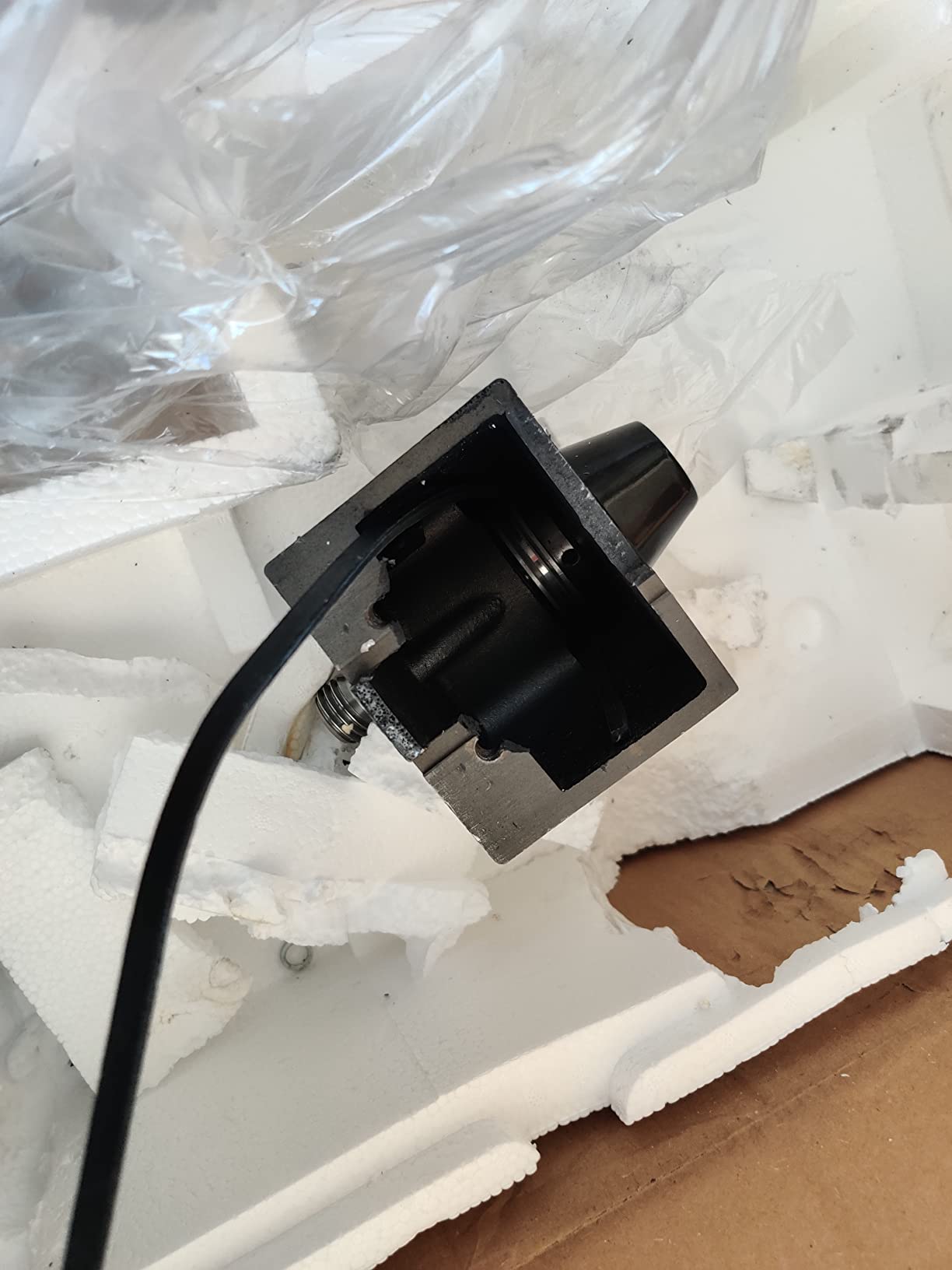
Is the WEN 3421 big enough to keep?
It is big enough if your projects stay under about 8 inches of diameter. Owners who stick to pens, small bowls, and turned handles tend to rate it highly for years, and the accessory bundle means the tool costs are near zero at the start. If your goal is a 10 inch bowl on the first attempt, look at the 12 inch swing machines further down this list instead.
One more caution: the MT1 taper on both the spindle and the tailstock is the older, smaller standard. Chucks and faceplates are sold mostly in MT2, so a beginner who later buys a 4 inch chuck will find it does not fit and will need an adapter or a different machine. Plan accessory purchases around MT1 or buy a mini lathe that shares a standard with the bigger machines you might buy later.
Is it a serious lathe or a stopgap?
It is a legitimate first lathe, not a stopgap, provided you are honest about project size. The 44.7 lb weight and 3.2 amp motor handle small hardwood turning without drama. What it will not do is accept a large uneven log, which is exactly the job people picture when they imagine a wood lathe.
Owners on woodworking forums frequently report that a budget WEN keeps working years later with no problems, which matches what we see in the ratings. Set the lathe on a solid bench and bolt it down, because a light benchtop machine with an off-center chuck is the classic vibration complaint.
2. JET JWL-1221VS 12 x 21 Variable-Speed Lathe: the Gold Standard
JET 12″ x 21″ Variable-Speed Woodworking Lathe, 1 HP, 115V 1Ph (JWL-1221VS)
12 x 21 in capacity
1 HP 115V cast iron
60-3600 RPM in three ranges
24 indexing, 121 lb
Pros
- 1 HP motor handles large uneven blanks
- Three speed ranges with a ratchet belt tension system
- 24 indexing positions plus a spindle lock
- Includes 6 inch and 10 inch tool supports and two tool caddies
Cons
- At 121 lb it needs a dedicated stand
- Digital readout can misread on low-voltage shop power
- Some owners report headstock bolts loosening over time
Turners on r/turning repeatedly name the JET 12 inch class as the beginner gold standard, and the JWL-1221VS is the top of that line. Forum owners who moved up from a small lathe describe it as a step change in power and features rather than an incremental upgrade, and the 1 HP motor here is double what most entry machines offer.
Capacity is 12 by 21 inches, which covers a real bowl blank and a decent length of spindle stock in one setup. The bed, headstock, and tailstock are built from cast iron and alloy steel, and at 121 pounds the machine does not move across the bench when you take a heavy cut. That is not a small thing: vibration is the number one complaint on lighter machines.
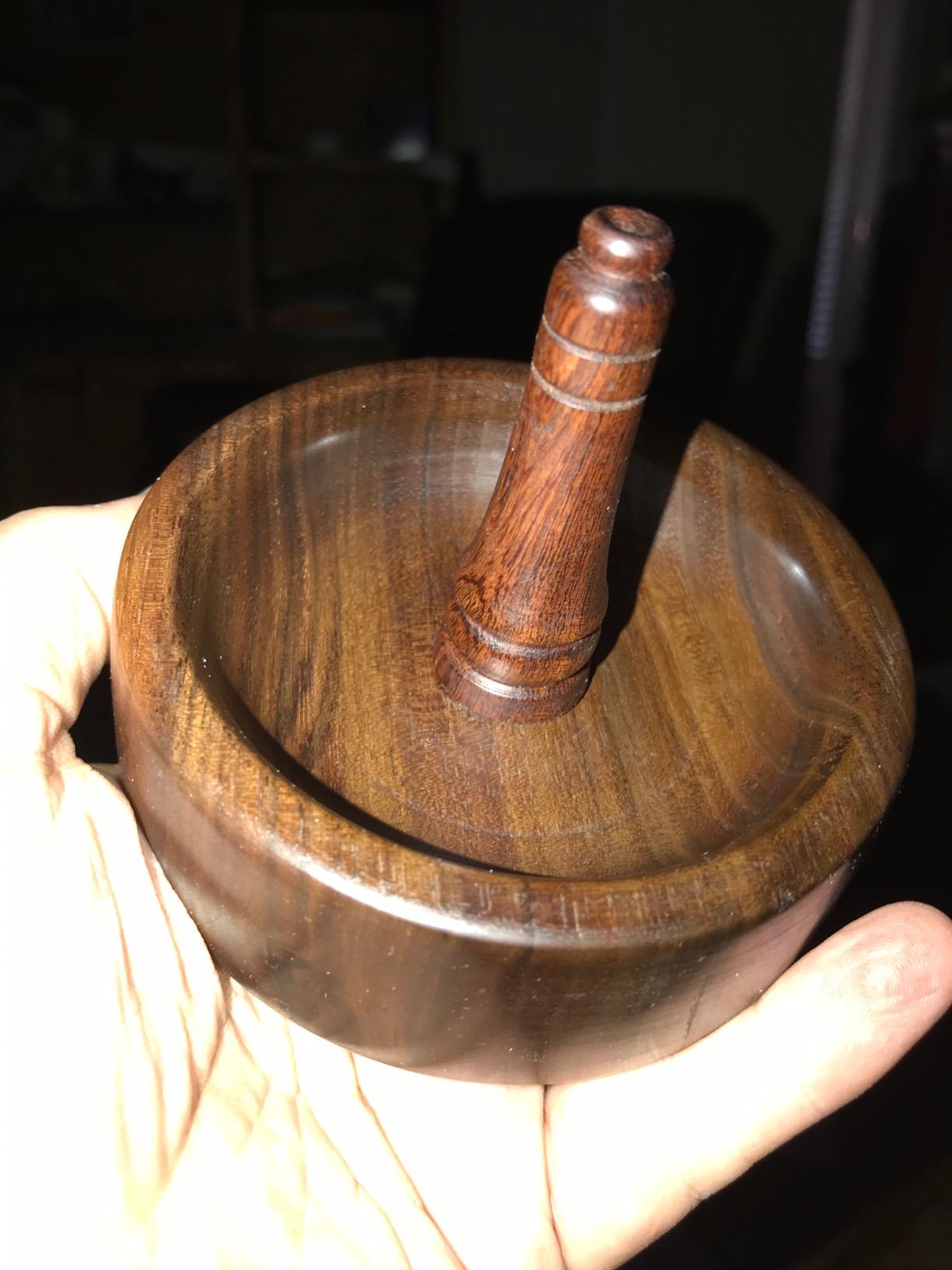
Speed control is what separates this from fixed-speed lathes. There are three belt-selected ranges, 60 to 900, 110 to 1800, and 220 to 3600 RPM, so you can rough out a large blank slowly, then finish a small spindle fast without stopping. A patent-pending ratchet-style belt tension system keeps belt tension consistent between range changes, which means more power transfer and longer tool life.
Other details show this was designed by people who turn. The controls carry a larger digital readout and a recessed power switch, forward to reverse is a smooth transition for sanding against the grain, there is an integrated spring-loaded spindle lock, 24 indexing positions for flute work and evenly spaced drilling, and the tailstock uses an Acme thread. The box includes 6 inch and 10 inch tool supports, two tool caddies, and a knockout rod, backed by a 5 year JET warranty.
Is a 121 pound lathe reasonable for a first machine?
Only if you have somewhere to put it. This is a floor-standing weight class even though it is sold as a benchtop unit, and most owners bolt or stand it in a fixed spot. The benefit is that the machine feels solid at speed in a way that nothing lighter can match, and 1 HP will handle dense hardwood and a rough blank that would stall a 3.2 amp mini lathe.
Owners upgrading from small machines call the added features decisive: variable speed, reverse, a speed indicator, a spindle lock, and standard attachment compatibility. The recurring negatives are practical rather than mechanical, mostly shipping damage to a heavy machine and tool rests that need a polish before first use.
Should a beginner buy this as a first lathe?
If your plan is bowls, furniture parts, and turning for years, this is the machine most beginners end up wanting, and buying it first saves you a second purchase. If your plan is a first weekend with a small lathe and a 44 pound footprint, it is more machine than the hobby needs.
Turners on r/turning who came from a JET Comet II or a small variable-speed benchtop model describe the 1221VS as much beefier throughout. Expect to buy a stand, a chuck, and a dust extraction hood as add-ons rather than standard equipment.
3. Delta 46-460 MIDI Lathe: the Widest Swing for Bowl Turning
Delta Industrial 46-460 12-1/2-inch Variable-Speed MIDI Lathe, Gray
12-1/2 in swing over bed
16-1/2 in between centers
1 HP 120V
250-4000 RPM, MT2
Pros
- Widest swing in the group at 12-1/2 inches
- Full 1 HP motor handles large uneven blanks
- Patented belt tension lever sets tension every time
- Comes with 3 in face plate plus 6 in and 10 in tool rests
Cons
- Included tool rests feel flimsy to some owners
- Supplied spur center is described as rudimentary
- Supplied knockout bar does not fit the hollow live center
The Delta 46-460 is the pick to look at if bowls are your goal. Its 12-1/2 inch swing over the bed is the widest in this group, and swing over bed is the single number that decides whether a bowl blank fits between the headstock and the bed. Long-time turners rate it at the top of the mini and midi class for stability and finish quality.
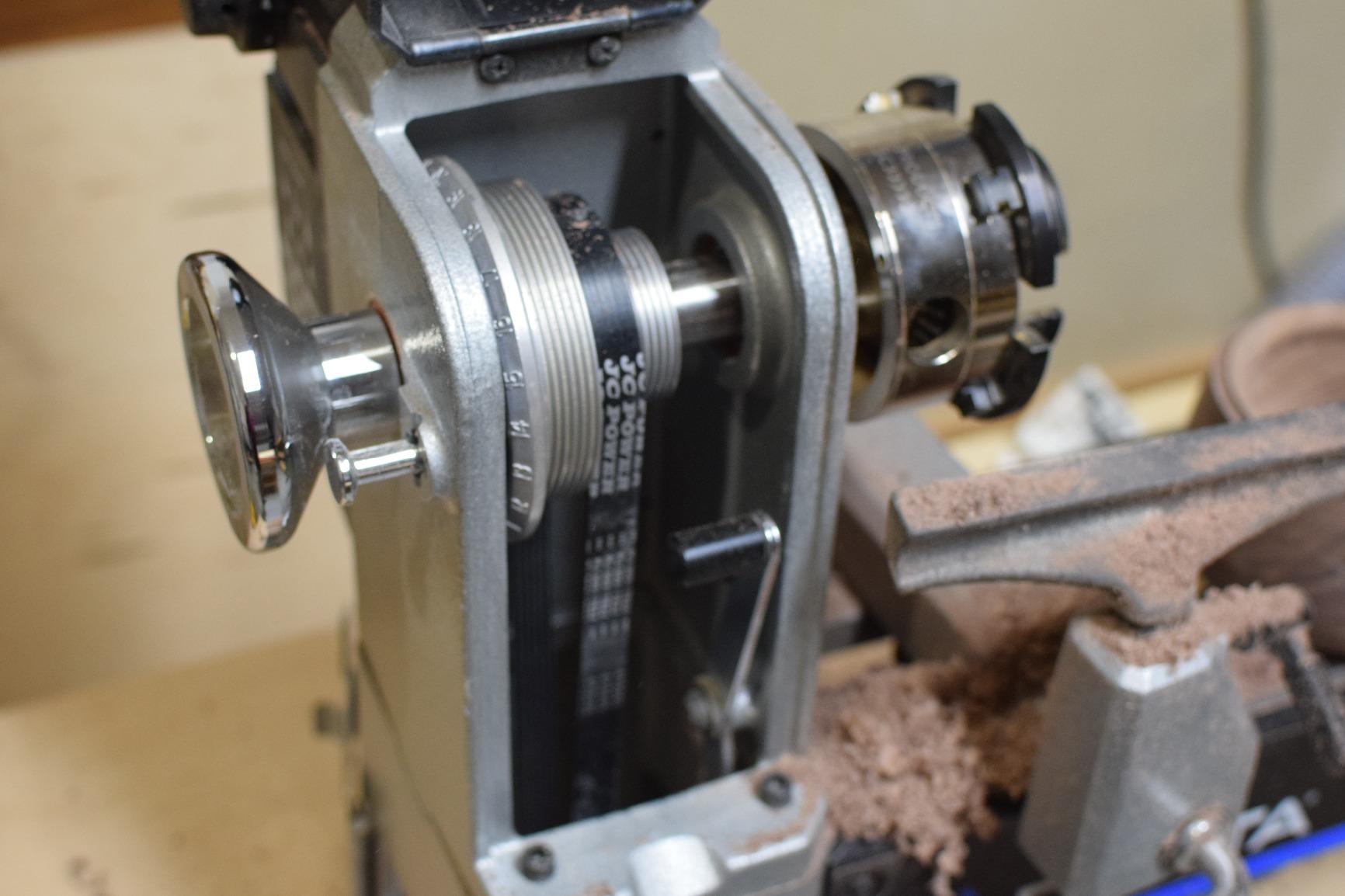
It is a full cast iron machine with a patented belt tensioning system that sets the correct belt tension on every shift, which means the same power transfer every time you change range. The electronic variable speed control gives three pulley ranges at 250 to 700, 600 to 1800, and 1350 to 4000 RPM. Owners describe operation as quiet and vibration free across that whole span.
Distance between centers is 16-1/2 inches, and Delta lists that figure as extending to 42 inches with an optional bed extension. That is a meaningful detail for anyone who plans to turn a long spindle later, because most benchtop lathes in this roundup top out at 15-1/2 inches and cannot be extended.
Both the headstock and the tailstock use a number 2 MT taper, so the entire library of standard MT2 chucks, faceplates, and live centers fits. The drive spindle is 1 inch by 8 threads with a self-ejecting 15/32 inch through hole, and the tailstock offers 2-1/4 inches of quill travel. Reverse operation is a genuine plus for sanding a turned form against the grain.
Is the Delta worth the step up from a mini lathe?
If you are moving past pens and small cups, yes, and the 12-1/2 inch swing means you will not hit a wall on your first real bowl. The 1 HP motor and the cast iron bed do the heavy lifting, turning a rough blank that would bog a small machine into an ordinary job. At roughly 97 pounds it still fits a bench with a proper stand.
The extras are useful rather than gimmicky: a 3 inch face plate, both 6 inch and 10 inch tool rests with on-board storage, and 24-style indexing work through the headstock. Several owners cite Delta service replacing an entire lathe after a motor failure, which is a meaningful support story in this category.
What do owners complain about?
The most common criticism is that the supplied 6 inch and 10 inch tool rests feel flimsy, which is normal for factory accessories and easy to improve later. Owners also describe the stock spur center as rudimentary, and several note that the supplied knockout bar does not work with the hollow live center mandrel.
Lower-rated reviews focus on transit damage to the switch or the casting rather than on a design fault, plus some difficulty sourcing parts. A 4.3 rating across 338 ratings with 69 percent five-star is a solid, unexcitable score for a machine built to last.
4. WEN LA3424 12 x 18 5-Speed Lathe: the Best Capacity Step Up
WEN LA3424 4.5-Amp 12-Inch by 18-Inch 5-Speed Benchtop Wood Lathe
12 by 18 in capacity
Five speeds 520-3400 RPM
4.5 amp motor
MT2 tapers, 70.3 lb
Pros
- Second-highest owner rating here at 4.5 across 298 ratings
- Handles 12 by 18 inch workpieces
- MT2 headstock and tailstock tapers accept standard accessories
- Includes 3-1/8 in face plate
- MT2 centers
- 8 in tool rest and accessory holder
Cons
- Speed changes mean moving the belt
- Heavier 70.3 lb than the 8 by 12 inch mini lathes
The LA3424 is the middle of the lineup and the easiest recommendation we make. It takes workpieces up to 18 inches long and 12 inches wide, jumps from mini class straight into genuine bowl and spindle territory, and it does so without moving you into floor midi-lathe weight. At 70.3 pounds it still looks like a benchtop machine.
What you give up for that capacity is dial-based fine speed adjustment. The five speeds are 520, 900, 1400, 2150, and 3400 RPM, which means changing cutting speed means moving a belt. Owners who rated it highly still do it, because the steps are sensibly spaced and the range covers both roughing and finishing.
The accessory package is where this machine quietly outclasses the field. It ships with a 3-1/8 inch face plate for bowls and cups, an MT2 headstock spur center, an MT2 tailstock live center, an 8 inch tool rest, and an on-board accessory holder. Because both the headstock and tailstock are MT2, you can buy any standard chuck later and it will fit, which removes the single most common beginner accessory mistake.
The 4.5 amp motor is a real step above the 3.2 amp mini machines. It is not a 1 HP motor, so an aggressive cut on a large dense blank will still make the spindle bog, but for normal bowl and spindle work it is not the limit point.
Who should buy the LA3424?
Buy this if you are convinced you will be doing more than pens, if your bench can hold 70 pounds, and if you would rather not learn the belt system to change speed. It is the pick for someone who wants a first serious lathe without a 100 pound commitment.
It is also the pick for anyone who plans to buy a 4 inch chuck or a larger face plate in the next year. MT2 on both ends means the accessory ecosystem of the bigger lathes applies to a mid-range machine, which is exactly what makes a first lathe a useful long-term purchase.
Is five-speed control a real drawback?
It is an inconvenience, not a flaw. Changing a belt takes a minute, and beginners typically change speed far less often than experienced turners do, because early on the safe practice is to pick a speed and stay at it while you learn the tool. The complaint in reviews is consistent and honest: you will move the belt, and once you have the technique it stops mattering.
The 4.5 rating across 298 ratings with 72 percent five-star is unusually consistent for this category, and owners point to the same thing: capacity and MT2 compatibility for the money.
5. JET JWL-1015VS 10 x 15 Variable-Speed Lathe: the Highest-Rated Pick
JET 10″ x 15″ Variable Speed Wood Lathe, Cast Iron, 1/2 HP (JWL-1015VS)
10 in swing, 15-1/2 in between centers
1/2 HP cast iron
200-3600 RPM, 24 indexing,72.6 lb
Pros
- Highest owner rating in the roundup at 4.7
- Electronic dial fine-tunes speed without moving the belt
- Cast iron bed
- headstock and tailstock damp vibration
- Live center
- spur center
- 6 in tool support and 3 in face plate included
Cons
- No reverse function for sanding against the grain
- 15-1/2 in between centers is short for table legs
On raw owner satisfaction the JWL-1015VS wins, with a 4.7 rating and 87 percent five-star results. The rating is on a smaller base than most of this list, but the pattern in the comments is specific and consistent: owners who came from cheaper lathes call the electronic variable-speed dial the decisive upgrade.
The build is the story here. The bed, headstock, and tailstock are all solid cast iron rather than stamped sheet metal, which is why it stays stable and quiet without needing to be bolted down. At 72.6 pounds it is heavier than the mini lathes and lighter than the 100 pound midi machines, which is a sensible middle for a garage bench.
Speed control works through three belt-selected ranges, 200 to 1050, 300 to 1750, and 600 to 3600 RPM, with an electronic dial that fine-tunes within each range. In practice that means you rough a bowl blank at the bottom of the low range and finish a slender spindle near the top of the high range without touching a belt. The spindle is 1 inch by 8 TPI with an MT2 taper and 24 built-in indexing positions.
It ships ready to turn: live center, spur center, 6 inch tool support, 3 inch face plate, and a knockout rod, all under a 5 year JET warranty. The owner’s manual also includes turning-technique guidance aimed at first-time turners, which sounds minor and turns out to be useful when you have never had a tool rest in front of you.
Is half a horsepower enough for a beginner?
For a 10 inch swing and 15-1/2 inches between centers, yes. Half a horsepower on a machine with a cast iron bed will handle walnut, maple, and most hardwood bowls at sensible depths. It is not enough to hog a large log, and if your ambition is furniture-scale work you should look at a 1 HP midi lathe instead.
The half horsepower motor is the reason the cast iron matters so much on this machine. Torque through a rigid bed turns an average motor into an adequate one, and that is where the 4.7 rating comes from rather than from the headline horsepower figure.
What is missing, and does it matter?
Two gaps show up repeatedly. There is no reverse function, so you cannot sand a form against the grain the way you can on the Delta or the JET 12 inch. For most beginners that only becomes relevant once they are refining a bowl exterior, which is a good problem to have.
The other gap is length: 15-1/2 inches between centers is short for a table leg unless you add the optional bed extension. If your target project is a spindle longer than about 15 inches, choose the 12 by 18 or 18 inch machine instead.
6. WEN 34035 14 x 20 Variable-Speed Lathe: the Longest Bed in the Group
WEN 34035 6-Amp 14-Inch by 20-Inch Variable Speed Benchtop Wood Lathe
14 by 20 in capacity
6 amp motor
250-3550 RPM variable speed
4 in face plate, MT2 tapers
Pros
- Largest capacity here at 14 by 20 inches without moving to a floor lathe
- Infinitely variable 250-3550 RPM so the belt rarely moves
- Quiet motor with ample power for spindle work
- MT2 tapers and 1 inch by 8 spindle thread accept standard accessories
Cons
- Supplied knockout tool bent during use
- Rounded headstock and tailstock tops block accessory mounting
- Small tailstock handwheel
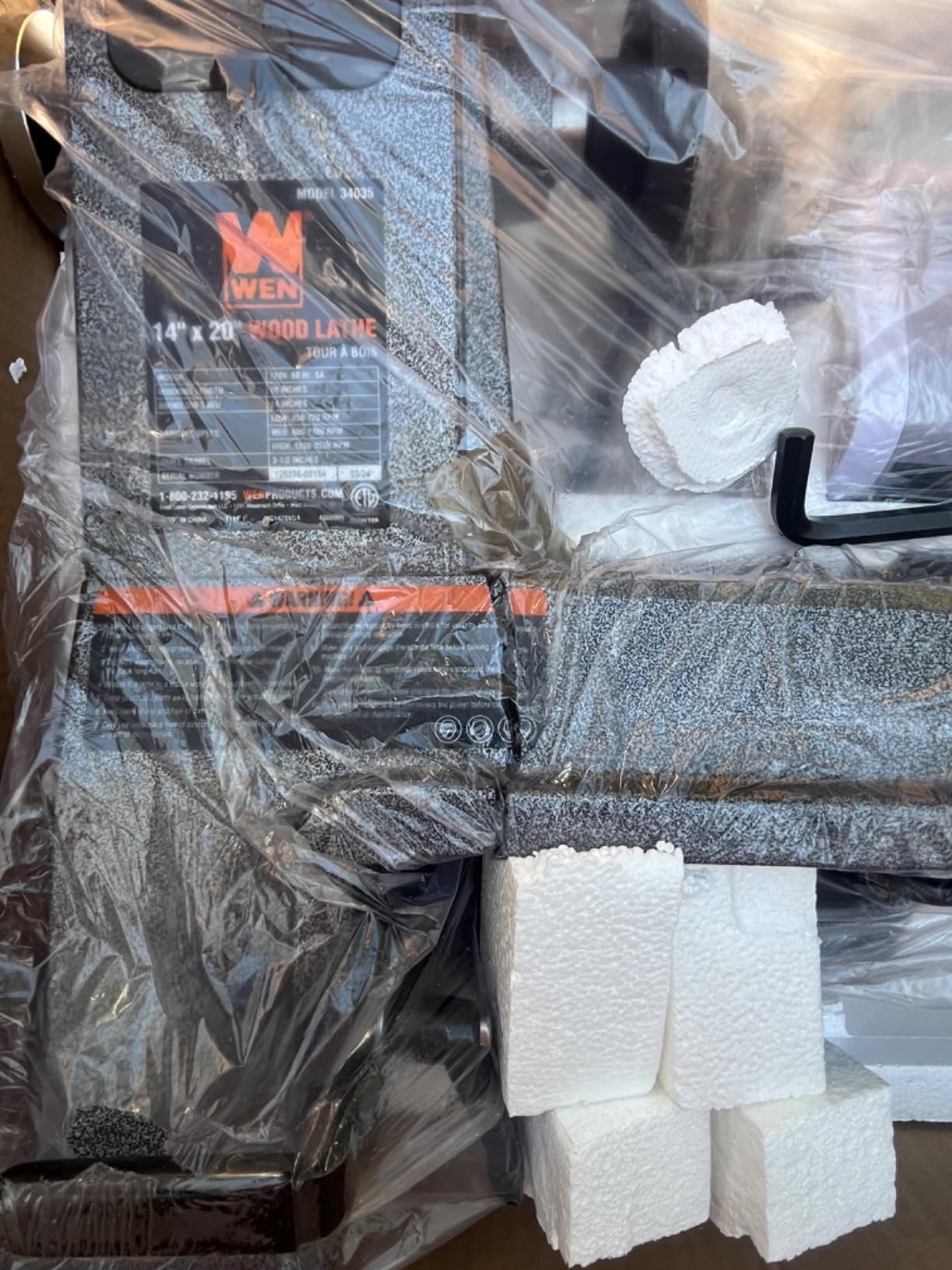
The WEN 34035 is the capacity outlier in this list. At 14 by 20 inches it is the largest machine here that still lives on a bench, and it is the only one of the WEN models with a genuinely long bed. Owners who own the smaller WEN lathes single this one out as the most capable of the three.
Speed control is infinitely variable from 250 to 3550 RPM, so unlike the LA3424 you will almost never move the belt. The 6 amp motor is the strongest in the WEN line and reviewers describe it as quiet and solid, with enough power for small logs as well as longer spindle work.
Both the headstock and the tailstock use MT2 tapers and the spindle is 1 inch by 8, so the standard chuck and faceplate library applies. The included 4 inch face plate is a generous size that suits most bowl work, and you get an MT2 spur center, an MT2 live center, an 8 inch tool rest, and an on-board accessory holder. Tool holders at the head and tailstock are a small convenience you will appreciate mid-project.
At 38 by 11.8 by 22.6 inches, plan the footprint before buying. This is not a small apartment machine, and the length of the bed is the reason you need a bench with a clear run of 20 inches or more.
Is the extra capacity worth the bench space?
If you plan to turn spindles, fence posts, table legs, or large bowls, yes, and this is the cheapest way to get that capacity without stepping up to a floor midi lathe. If you are making pens and small bowls, the extra 4 inches of swing and 2 inches of length will never be used, and the LA3424 or the 3421 will serve you better.
Reviewers who own all three WEN sizes make the same point: this one is the capable one. The variable speed range and the long bed are what separate it, and both pay off as skills grow rather than on day one.
What do owners criticize?
The complaints are about small hardware. The supplied knockout tool is described as flimsy and bent during use, the rounded tops of the headstock and tailstock prevent mounting accessories such as a work light, and the small tailstock handwheel makes drill bit work fiddlier. One owner reported a loose motor to speed-control cable plug causing intermittent stopping.
None of those are structural problems, and all of them are cheap to work around. The 4.4 rating across 110 ratings with 71 percent five-star reflects a machine owners like despite the small print.
7. ArtyMaster WM101A Plus Mini Wood Lathe: the Lightest and Most Portable
Mini Lathe, WM101A-Plus Mini Wood Lathe Machine, 24VDC 96W Power Lathe, Small Benchtop Lathe with Wood Turning Lathe Tools Kits, Infinitely Variable Speed, Professional for DIY Woodworking
3 in diameter by 8 in long
96W 24V high-torque motor
Infinitely variable speed
17 lb with full accessory kit
Pros
- Lightest machine in the group at 17 lb and the smallest footprint
- Infinitely variable speed rather than stepped or belt-only
- Comes with a turning tool set
- 2 in chuck
- drive and live centers
- ruler and drill chuck
- Steady at speed with low vibration and noise under 65dB
Cons
- 3 in by 8 in turning envelope limits it to pens
- rings
- small bowls and vases
- 96W motor is modest against larger hardwood blanks
The ArtyMaster WM101A Plus is the smallest and most portable machine here at 17 pounds, with a body measuring 5 by 16.5 by 5.5 inches. That means you can carry it to a shared workshop, a classroom, or a table in an apartment, and it is the natural first machine for a child or an adult who is not sure turning will stick as a hobby.
What makes it interesting is the accessory bundle. It includes professional disposable turning tools with round, square, and diamond-shaped changeable heads, a 2 inch chuck set with a 0.1 to 2.16 inch clamping range, a drive center, a live center, a centering ruler, a drill chuck, and three adjustment wrenches. That is a complete starter kit for roughly the cost of one bowl blank on a bigger machine.
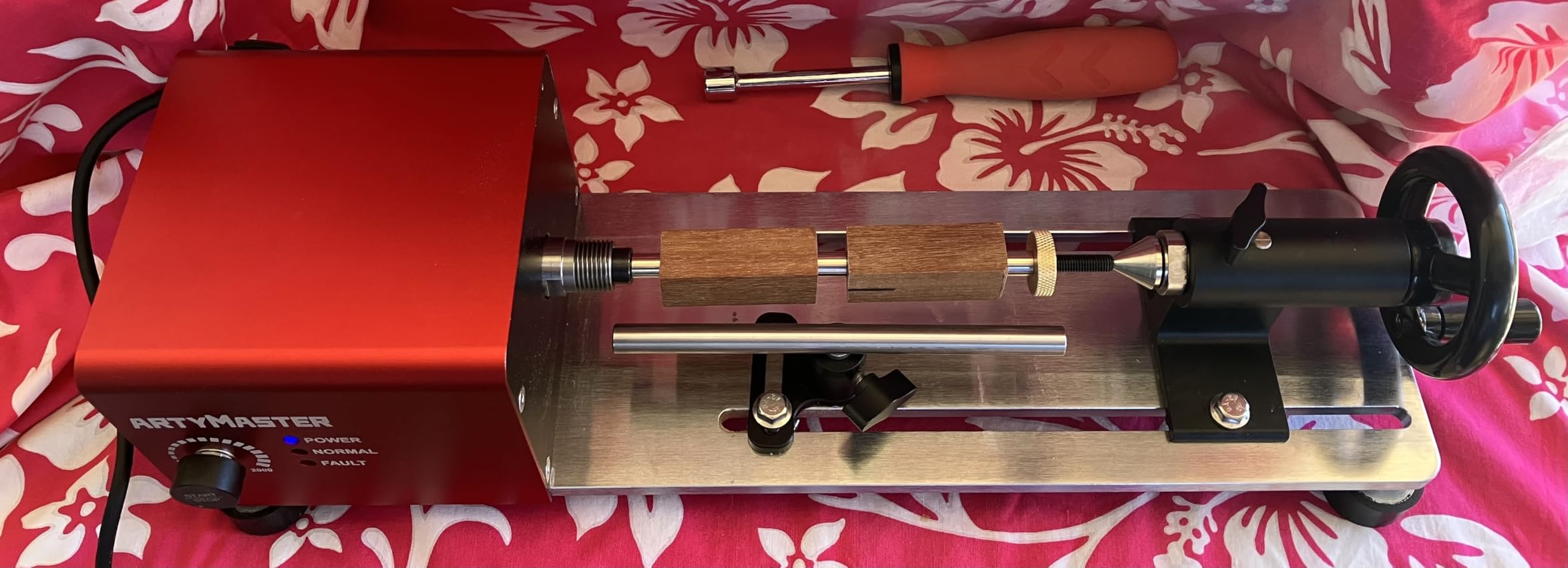
Speed is infinitely variable rather than stepped, which is unusual in a machine this small. The 96W high-torque motor drives a 0.4 inch spindle through hole with an MT1 spindle interface, and the manufacturer rates it for over 2000 hours of continuous full-load operation on a UL certified 24V power supply. Reviewers note it handles hard woods, POM, and copper, not just softwood, and stays under 65dB.
The turning envelope is 3 inches in diameter by 8 inches long. That is a pen, a chess piece, a ring, a bracelet, a small vase, or a small bowl. The tool rest adjusts in position, height, angle, and length, which is more adjustment than most machines this size offer.
Will a first machine this small be wasted if I upgrade?
No, and this is the point that most mini-lathe buyers get wrong. A 17 pound pen-turning lathe is not a stepping stone you throw away; it is a machine that handles a category of work the big lathes handle badly. Nobody wants to carry a 100 pound midi lathe to a craft fair to make 50 pens, and this one is the reason the hobby is portable.
What to be honest about is the motor. A 96W motor is modest against larger hardwood blanks, and the 3 inch envelope is fixed hardware, not a technique problem. If you already know you want to turn 10 inch bowls, this is not the machine.
Is the accessory kit a real saving or gimmick?
Mostly a real saving. A separate chuck, a drive center, a live center, and a set of turning tools on a bigger machine are separate purchases with separate fit risks, and the included 2 inch chuck here handles workpieces from just over 0.1 inches to 2.16 inches, which covers most pen blanks.
The one thing to check is the MT1 spindle interface, which is the older standard. If you later buy a bigger lathe, the tools and centers you own may not carry over, though the chuck itself is the piece you will use most.
8. PSI KWL-1218VS Turncrafter MIDI Lathe: 18 Inches Between Centers
PSI Woodworking KWL-1218VS Turncrafter 12″ Variable Speed Midi Lathe
12 in swing, 18 in between centers
1 HP induction motor
500-3800 RPM
MT2 taper, ETL listed
Pros
- 18 inches between centers is the longest stock capacity here
- 1 HP induction motor in two belt positions at 500-1800 and 1950-3800 RPM
- 24 indexing positions with spindle locking
- Cast iron base and ETL certification from Intertek
Cons
- 3/8 in tailstock and spindle bore is narrower than some rival midi lathes
- At 106 lb it needs a stand and a two person lift
The KWL-1218VS is the spindle turner’s answer. Its 18 inch distance between centers is the longest in this roundup, paired with a 12 inch swing over the bed and a 1 HP induction motor. If the picture in your head is fence posts, table legs, or long balusters, this is the machine that does not need a second purchase in a year.
It is a cast iron machine at 106 pounds with a 1 inch by 8 TPI headstock thread and number 2 MT tapers on both the headstock and the tailstock. A single belt move selects between 500 to 1800 RPM and 1950 to 3800 RPM, and an SBC microprocessor handles the variable speed control within each range.
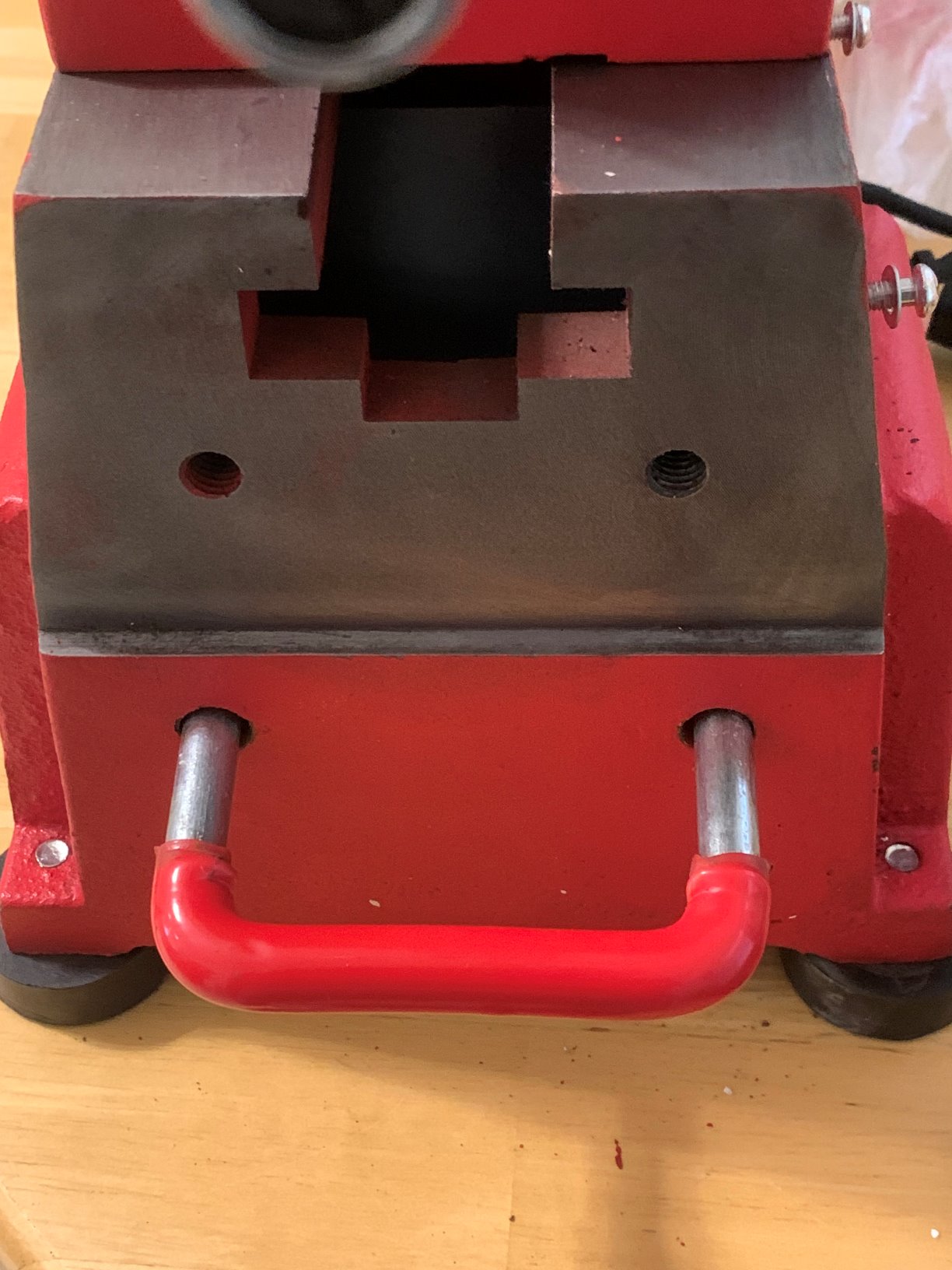
Twenty-four indexing positions with a spindle locking mechanism let you lock the spindle at fixed angles for flute work and evenly spaced drilling, which is one of those features that sounds decorative until you need it. The tailstock and spindle bore are 3/8 inches with 1-5/8 inches of quill travel, and built-in handles make repositioning more manageable than the weight suggests. It carries a 3 year warranty and ETL certification from Intertek.
Owners typically pair this lathe with a separate stand and a chuck, which is worth planning into the budget on day one rather than discovering later. A 4.5 rating across 84 ratings with 77 percent five-star and only 3 percent one-star is one of the most favorable distributions in the whole group.
Is an 18 inch center distance overkill for a beginner?
Only if your projects are small, and there is a real cost to under-buying here. Under-buying means the first large spindle project stalls, and the machine goes unused while you shop for a bigger one. Over-buying just means a long thin spindle is easier to handle between centers.
The 12 inch swing is standard for the class, so this is a machine for long slender work rather than wide bowls. Compared with the Delta 46-460, which reaches 42 inches between centers with an optional bed extension, the KWL-1218VS is more compact out of the box and less expandable.
What are the trade-offs at this weight?
The 3/8 inch tailstock and spindle bore is narrower than the 15/32 inch hole on some rival midi lathes, which limits the size of drill bit you can run through the headstock. That is a narrow but real constraint for anyone planning to bore rather than turn.
At 106 pounds, plan on a stand and on getting help lifting it into place. The switch to variable speed from the previous TCLC12VS model means you will not find this one on a used market, which is worth remembering when you decide whether a used midi lathe is a better buy.
9. Shop Fox W1836 12 x 15 Benchtop Lathe: a Digital Readout on a Smaller Frame
Shop Fox W1836 Bench Top Wood Lathe, 12″ x 15″
3/4 HP 110V universal motor
Electronic variable speed with digital RPM readout
12 in swing over bed
500-3800 RPM, 85 lb
Pros
- Digital RPM readout is the feature most often praised
- Two overlapping speed ranges give broad 500-3800 RPM coverage
- 12 inch swing suits bowls and faceplate work
- 3/4 HP universal motor handles general purpose woodturning
Cons
- Lowest owner rating here at 4.0 with 11 percent one-star reviews
- Smallest review base at 31 ratings so long-term data is thin
- Universal motor tends to be noisier under load
The Shop Fox W1836 is a 12 by 15 inch benchtop lathe built around a digital RPM readout and electronic variable speed control. The feature owners praise most is exactly that readout, which lets a beginner match the machine to a recommended speed for a given wood species rather than guessing from a sound or a belt position.
The motor is a 3/4 HP, 110V single-phase universal motor, with two spindle speed ranges at 500 to 1800 RPM and 1000 to 3800 RPM. The overlapping ranges are a good design choice, because the overlap means you rarely land on a gap with no usable speed. Swing over bed is 12 inches and the machine weighs 85 pounds at 38.5 by 15.5 by 17 inches.
Is the universal motor a problem?
It is the honest weakness here. A universal motor is noisier under load than the induction motors used in the JET and PSI machines, and noise matters in a small workshop or an apartment. It is still more than adequate for general woodturning, and at 3/4 HP it has more torque on paper than the half horsepower entry machines.
Another consideration is uncertainty. With 31 ratings, the long-term reliability picture is genuinely thin, and the 4.0 average is the lowest in this group. The one-star reviews point to general dissatisfaction rather than one documented defect, which usually means an expectations mismatch rather than a broken machine.
Who should consider the W1836?
If the digital readout is the feature that will keep you turning, and you want a 12 inch swing in a benchtop footprint, this is a fair pick. It sits in the awkward middle of the market, closer to a floor lathe in weight than to the mini machines it outclasses in size.
If you are undecided, weigh it against the JET JWL-1015VS, which is a similar size class with a cast iron build, a 24-position indexing head, and a much larger body of owner feedback. The Shop Fox wins on the readout; the JET wins on the number of people who have already proven it.
How to Choose a Beginner Wood Lathe Without Regretting It
A good entry-level wood lathe is a compact benchtop or midi machine with a 10 to 12 inch swing over the bed, 12 to 18 inches between centers, variable speed control, and a cast iron bed that absorbs vibration. Those four qualities are what let a new turner make pens, bowls, and spindles safely without moving heavy equipment around the shop.
Swing over bed and distance between centers
Swing over bed is the diameter of the largest bowl you can turn, measured as the clearance between the headstock and the bed. Distance between centers is how long a spindle workpiece can be. Beginners routinely confuse the two, then discover mid-project that their bowl is too wide or their spindle is too long.
For pens, chess pieces, and small bowls, 8 inches of swing is enough. For a real 10 inch bowl, you need 12 inches. For furniture spindles, 16 to 18 inches between centers is the useful range. Buying for the largest project you can imagine rather than the largest you expect to make in year one is the single best way to avoid a second purchase.
Variable speed or five-step speed?
Variable speed control changes RPM with a dial or switch, while a five-speed machine changes speed by moving a belt between pulleys. For a beginner, variable speed is easier to learn because the control is right there and you can creep down to a safe speed when a cut feels wrong, which is precisely when a beginner needs to slow down.
That said, five-speed machines are perfectly workable, and the WEN LA3424 in this roundup shows the compromise clearly. Five well-spaced speeds cover roughing through finishing, and since beginners should pick a speed and hold it while they learn the tool, the belt rarely moves. If your heart is set on a five-speed machine, choose one with a straightforward pulley layout.
Motor horsepower and torque
Half a horsepower is a reasonable floor for a machine with a cast iron bed. One horsepower is the point where a lathe stops being a hobby machine and starts handling large uneven blanks and dense hardwoods without stalling. Underpowered motors bogging down on hardwood is one of the most common complaints from first-time owners, and the fix is always a lighter cut, not more pressure.
Do not over-index on the horsepower number alone. A rigid cast iron bed transmits torque better than a light stamped frame, which is why some half horsepower machines out-perform heavier ones. Look at the bed material first, then the motor.
Cast iron, weight, and mounting
Cast iron in the bed, headstock, and tailstock is the single biggest quality signal in this category. It damps vibration, holds alignment, and adds mass that stops the machine walking across the bench mid-cut. Most machines under 20 pounds and many mid-size imports use lighter materials, and that is where vibration complaints originate.
Whatever you buy, bolt it down. Forum users who chased a wandering benchtop lathe found the fix was not a better machine but four bolts through the base into a heavy top. A rubber mat between the machine and the bench helps with the last bit of chatter, but mounting is the real cure.
MT1 versus MT2 taper: the accessory trap
The taper standard is the cone at the nose of the headstock spindle and inside the tailstock, and it determines which chucks and faceplates fit. MT2 is the modern standard used by nearly every accessory sold today. MT1 is the older, smaller standard still used on a few mini lathes, including the WEN 3421 and the ArtyMaster in this roundup.
This is the most common expensive beginner mistake. Buy an MT1 mini lathe, get excited, order a 4 inch chuck, and discover it does not fit. If there is any chance you will buy a bigger lathe later, start with MT2 so your chuck, faceplate, live center, and spur center all carry over.
Mini, midi, or full-size?
A mini lathe under about 8 inches of swing is for pens, small bowls, rings, and craft work. A midi lathe with a 12 inch swing and a 1 HP motor is where most beginners should land, because it covers bowls, spindles, and small furniture without becoming a floor machine. A full-size lathe is a workshop commitment with a dedicated outlet and a dedicated corner.
Here is the upgrade path we recommend. Start on a mini lathe only if you are certain you will stay with small work. Otherwise buy one midi-class machine and skip a generation, because a 12 inch swing lathe can do everything a mini lathe does and roughly three times as much besides. Forum discussions about whether a cheap first lathe is a waste of money land on the same answer every time: it is only a waste if you buy it twice.
Why your lathe vibrates and how to fix it
Vibration is the number one complaint in beginner woodturning, and it almost always has one of three causes. The first is an RPM mismatch: you are running faster than the diameter and species of your blank allow, which puts the workpiece into a harmonic. Slow down and the vibration usually disappears. The second is a hollow or unbalanced blank, common when a small lathe is asked to spin a piece wider than its swing. The third is an unbolted machine, and it is the easiest to fix.
Work through them in order. Match RPM to diameter, use a sharp tool to take a light consistent cut, and confirm the blank is sound and centered. Then bolt the lathe to a heavy bench. If vibration persists on a light machine, the honest answer is that the machine has reached the limit of its bed weight, and the upgrade is a bigger lathe rather than a better technique.
Safety, dust, and the first five projects
Before the first power-on: wear a face shield, not just glasses, and a respirator rated for wood dust. Do not wear loose sleeves, a scarf, or a beard that hangs free. Tighten every tool rest and center bolt before you start, and check the tool rest gap constantly, because it is the only thing between a caught chisel and your hands. Never turn a workpiece that is not securely mounted between the centers or on a face plate.
Wood dust is the hazard people ignore. Fine dust from hardwoods collects on the motor housing, in the belt covers, and in your lungs. A dust extraction hood or a shop vacuum with a flexible hose taped to the headstock cover is a cheap addition that makes a small workshop livable. The machines here have no built-in collection, so it is on you to add it.
For the first five projects, work in this order: a cylinder between centers with a roughing gouge, a pen with the same tool, a small bowl on the face plate using a bowl gouge, a cup or handled mug, then a spindle with a skew. Sharp tools are the real safety mechanism here, not caution alone, because a dull edge catches and a sharp edge shears the wood cleanly.
Frequently Asked Questions
What is the best brand of wood lathe for beginners?
JET is the most consistently recommended brand for beginners, and the JWL-1015VS and JWL-1221VS are its two most-cited models in woodturning communities. The 10 x 15 JWL-1015VS carries a 4.7 owner rating with a cast iron bed and three-range variable speed, while the 12 x 21 JWL-1221VS adds a 1 HP motor and 24 indexing positions for larger work. WEN is the most popular budget brand, and Delta is a respected alternative in the midi class.
What is a good entry-level wood lathe?
A good entry-level wood lathe has a 10 to 12 inch swing over the bed, 12 to 18 inches between centers, cast iron in the bed and headstock, at least half a horsepower of motor, and variable or stepped speed control. Those five specifications determine whether a machine is comfortable to learn on. Models that meet all five in this roundup include the WEN LA3424, the JET JWL-1015VS, and the JET JWL-1221VS.
What are some good entry-level lathes?
Our picks are the WEN 3421 for a compact 8 by 12 inch hobby machine, the WEN LA3424 as the best capacity step up, the JET JWL-1015VS as the highest-rated variable-speed benchtop, the JET JWL-1221VS as the long-term standard, the Delta 46-460 for the widest swing at 12-1/2 inches, the WEN 34035 for 14 by 20 inch capacity, the ArtyMaster WM101A Plus for pen turning, the PSI KWL-1218VS for long spindles, and the Shop Fox W1836 for a digital readout.
Is the Harbor Freight wood lathe any good?
The question comes up constantly in turning forums because Harbor Freight sells benchtop lathes at a low price. The honest answer is that a low-cost benchtop lathe can teach you the fundamentals if it has a cast iron bed and enough motor, but budget machines most often fail in the areas that matter most: light frames that vibrate, tailstocks whose quill will not lock tight, and MT1 tapers that limit your accessory choices. A mid-range machine with a 4.5 amp motor and MT2 tapers is a better first purchase than a cheaper one you will replace.
What is the best wood turning lathe for a beginner?
For most beginners, the best all-round choice is a midi-class lathe with a 12 inch swing over the bed, a 1 HP motor, cast iron construction, and MT2 tapers. That combination covers pens, bowls, spindles, and small furniture without becoming a floor machine. In this roundup the JET JWL-1221VS fits that description, and the WEN LA3424 delivers the same capacity class with a lighter frame and a 5-speed control.
What is the best budget wood lathe for beginners?
The best budget wood lathe for beginners is one with a cast iron bed, an MT2 taper, and enough motor to avoid stalling on hardwood. Below that line, the most common complaints are vibration from a light frame and an MT1 taper that will not accept standard chucks. Among the picks here, the WEN LA3424 offers 12 by 18 inch capacity, MT2 tapers, and a 3-1/8 inch face plate, while the WEN 3421 remains the cheapest route into pen and small bowl turning.
Which Beginner Wood Lathe Should You Buy in 2026?
Start with what you want to make. If it is pens, small bowls, and chess pieces on a small bench, the WEN 3421 is our top pick and the most widely owned beginner wood lathe in this roundup, with the deepest body of owner feedback to guide you. If you are convinced you will stay with bowls and spindles, skip the mini class and buy a 12 inch swing midi lathe, where the WEN LA3424 and JET JWL-1015VS are the two strongest options on different budgets.
Whatever you choose, buy the biggest machine your bench and your ambition support, choose MT2 tapers if you can, and bolt it down before the first cut. Those three decisions remove most of the regret that brings people back to this question a year later.