
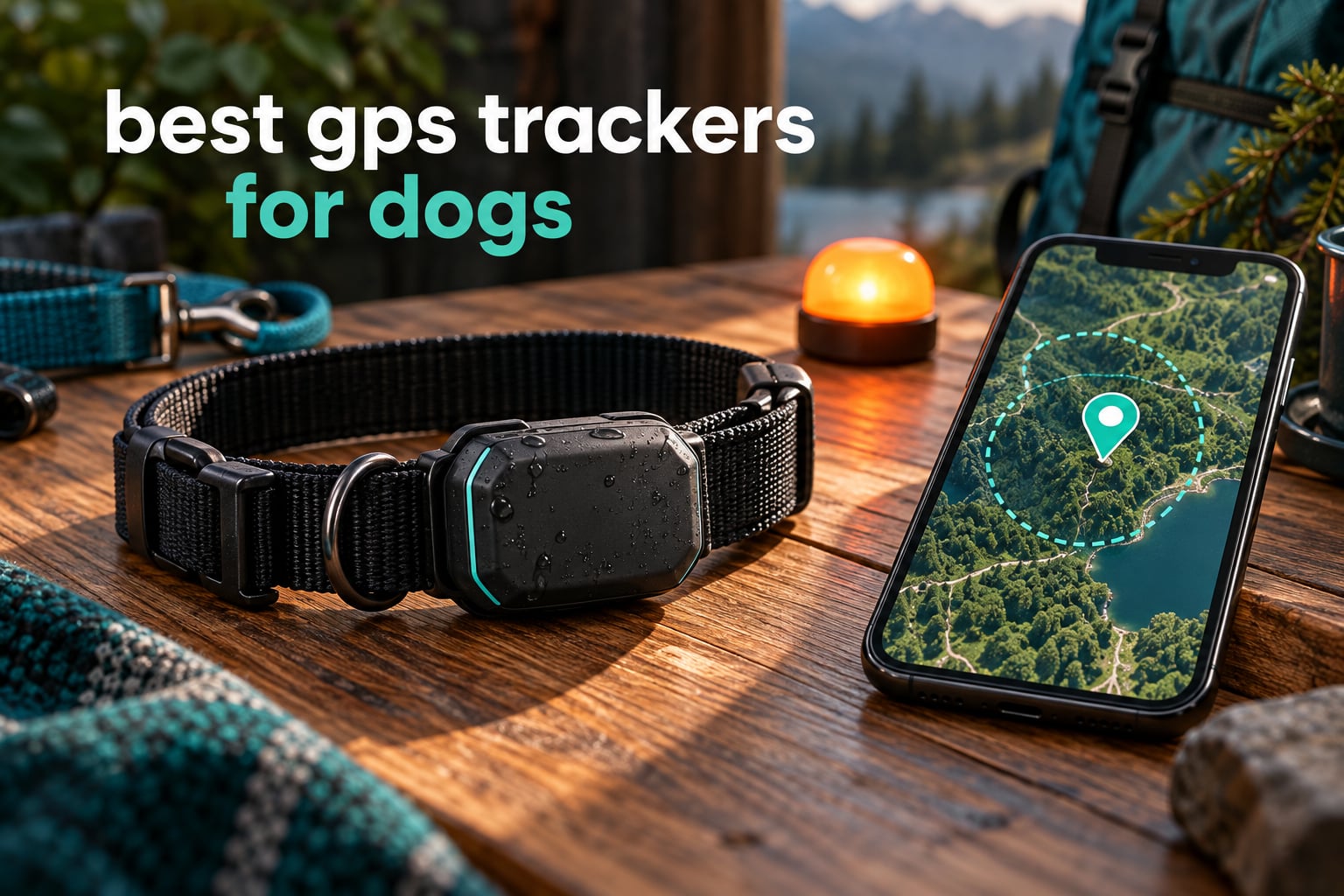
The best GPS trackers for dogs in 2026 are the Petcube GPS Tracker for most households, and the Garmin Alpha TT 25 for people who work their dogs off-grid. The Petcube clips onto any collar, refreshes position every 3-5 seconds and costs no more than most rivals, while the Garmin tracks to 9 miles with a user-replaceable battery that runs up to 136 hours. Both need a companion device or, in the Petcube case, a cellular plan.
We put 10 devices through the same checklist: real-time update speed, battery life under load, whether the app works without a subscription, water rating, collar fit and what happens when the cellular signal drops. We read every spec sheet, then cross-checked it against the pattern in thousands of owner reviews, because the gap between a manufacturer’s battery claim and what owners report is usually where the disappointment lives.
Two things shape almost every recommendation below. First, there are three distinct pricing models in this category, and they are not interchangeable: a cellular tracker that needs a monthly data plan, a radio tracker that works off-grid with no plan and a limited range, and a one-time-fee virtual fence collar that contains rather than merely locates. Second, no tracker is a rescue service. A tracker narrows the search radius. It does not find your dog for you.
One note on cost: hardware and plan pricing change constantly, so we do not print figures here. Use the check buttons to see current pricing, and instead of a price column we rate each device on what it costs you over time, which is the number that actually decides this purchase.
Table of Contents
Top 3 GPS Tracker Picks for Dogs (October 2026)
Three devices cover the widest range of real needs, from an everyday collar clip-on to off-grid working equipment. These are the three we would actually buy.
Petcube GPS Tracker for Dogs
- Real-time updates every 3-5 seconds
- Escape alerts with safe zones
- IP67 waterproof case with LED and buzzer
- Steps and sleep tracking

Garmin Alpha TT 25 Collar
- 9-mile range
- 68-136 hour batteries
- 18 training modes
- Bright LED locator

Tractive XL Dog GPS Tracker
- Updates every 2-3 seconds
- Heart and bark monitoring
- Up to 6-week battery
- Virtual fence
All 10 GPS Trackers for Dogs Compared Side by Side in 2026
This table covers every device in the roundup. The connection column is the one to read first, because it decides whether a tracker works in your neighbourhood at all.
| Product | Specs | Action |
|---|---|---|
| Petcube GPS Tracker for Dogs |
|
Check Latest Price |
 Dogtra PATHFINDER2 Compass Dogtra PATHFINDER2 Compass |
|
Check Latest Price |
| Garmin Alpha TT 25 Collar |
|
Check Latest Price |
| Tractive XL Dog GPS Tracker |
|
Check Latest Price |
 SpotOn Nova GPS Dog Fence SpotOn Nova GPS Dog Fence |
|
Check Latest Price |
 BOMERAHE No-Fee Tracker Collar BOMERAHE No-Fee Tracker Collar |
|
Check Latest Price |
 XINGGUANG MINGREN GPS Tag XINGGUANG MINGREN GPS Tag |
|
Check Latest Price |
 DBDD GPS Dog Tracker DBDD GPS Dog Tracker |
|
Check Latest Price |
 Molly&Cody Smart GPS Tracker Molly&Cody Smart GPS Tracker |
|
Check Latest Price |
 eMACROS Off-Grid Tracker eMACROS Off-Grid Tracker |
|
Check Latest Price |
1. Petcube GPS Tracker for Dogs – Best Overall Clip-On Tracker
Petcube GPS Tracker for Dogs – Real-Time GPS Tracking & Escape Alerts
Updates every 3-5 seconds
IP67 waterproof
LED light and buzzer
About 30 days battery in saver mode
Pros
- Fast 3-5 second updates over LTE
- Small and light with a silicone sleeve that fits most collar widths
- Bright LED and buzzer you can trigger from your phone
- IP67 waterproof and quick to recharge
- One plan can cover several dogs
Cons
- Accuracy drifts a couple hundred feet when the dog is lying still
- Setup has to happen outdoors because GPS will not reach indoors
- Collar mount can be knocked loose by a determined escape artist
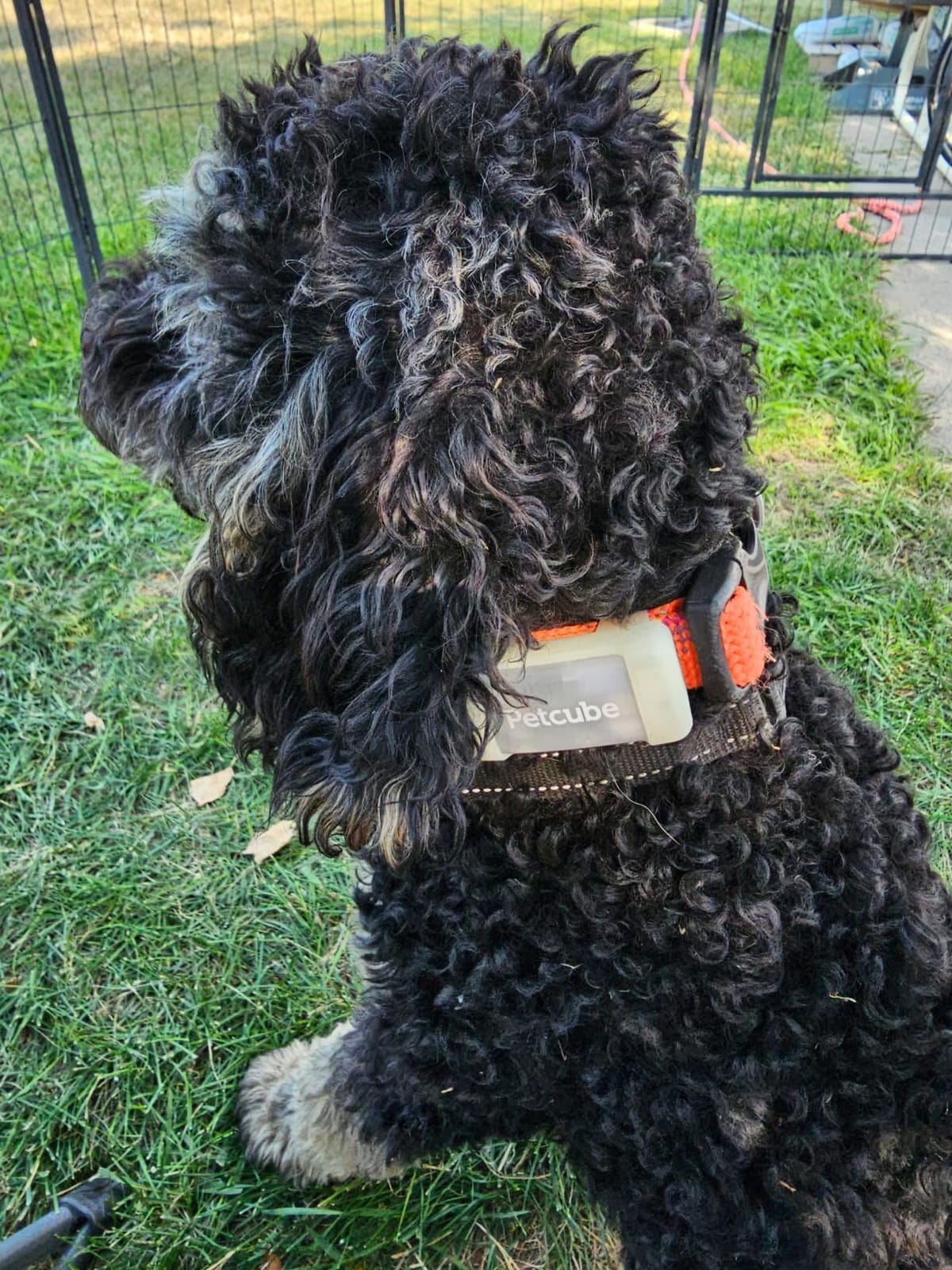
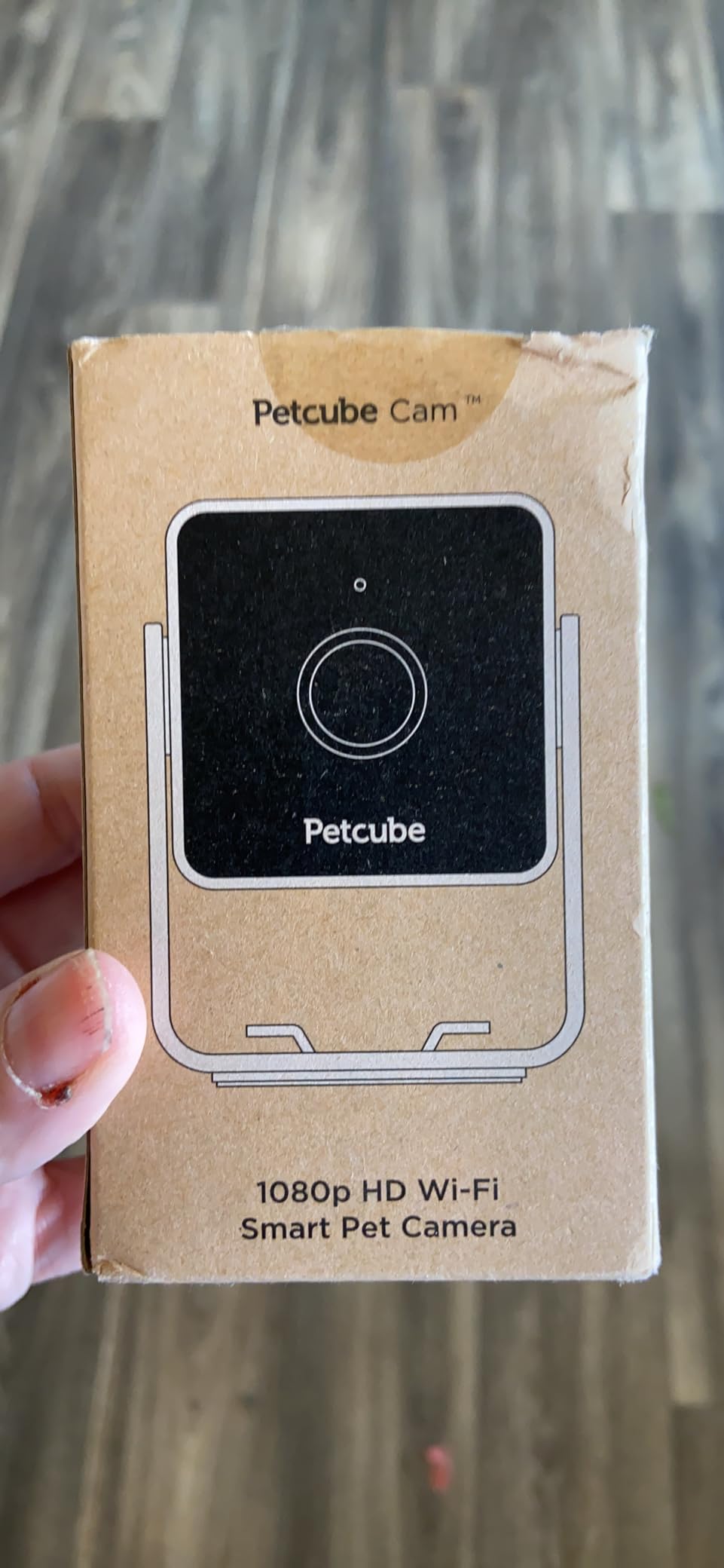
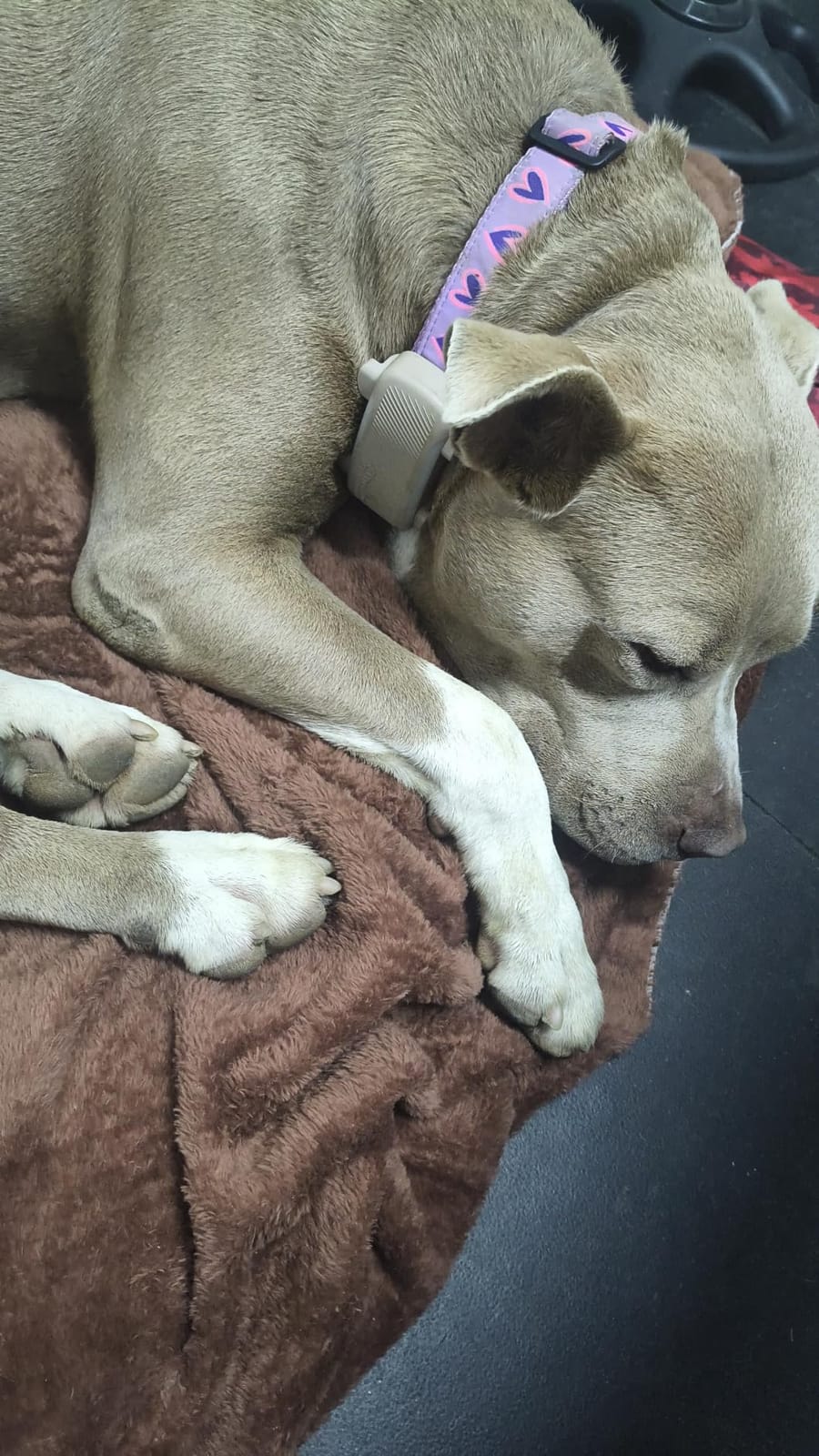
This is the tracker I recommend to almost anyone who asks me a single question about dog GPS. It is a small silicone-sleeved module that clips onto a collar or harness, and it does the two things that matter most: it refreshes position every 3 to 5 seconds, and it gives you a light and a buzzer you can fire remotely when the dog has already gone quiet. That second feature is more useful than it sounds. At dusk, or in heavy cover, a tracker that shows you a dot is a tracker that shows you a dot.
Battery is where the real behaviour differs from the box. The stated figure is up to 30 days, but owners running the fast-update mode report closer to 7 to 10 days between charges with roughly an hour of charging time. That is still the best balance in this roundup for a dog that wears a collar daily.
There is one packaging quirk worth knowing. The rating is pulled from a large pool that mixes in reviews of Petcube’s camera products, so the 4.2 average blends two different product lines. Set that aside and read the specific comments, which are consistent and detailed.
What the Petcube handles better than the rest
The light-and-sound recovery kit is unmatched here. Combined with the quick recharge, it means a dog found at night does not have to wait for morning. The silicone sleeve also solves the fit problem better than most, since it grips a range of collar widths without needing a specific bracket, and the unit comes off without removing the collar.
Where it falls short
Accuracy when the dog is stationary is the honest limitation. Owners report the pin drifting a couple hundred feet or jumping to a nearby street while nothing is actually happening, and safe zones are drawn as circles only, which is a real problem on a small city lot. If your dog is a bolt-and-run escape artist, reinforce the collar attachment with a secondary strap before you rely on it.
2. Dogtra PATHFINDER2 Compass – Best for Working and Training Dogs
Dogtra PATHFINDER2 Compass Live GPS Dog Tracking & Training System – 9-Mile Range E-Collar Handheld with No Subscription, Offline Maps, GPS Fence, Expandable up to 21 Dogs, for Dogs 35+ lbs
2-second GPS updates
9-mile range
No subscription
IPX9K waterproof
Expands to 21 dogs
Pros
- Works with no smartphone and no cellular service
- Two-second updates give very responsive position and direction
- IPX9K build and a bright 2-inch screen readable in the field
- Scales to 21 dogs with four shown at once
- Full e-collar training control on the handheld
Cons
- High total system cost versus app-based trackers
- Base configuration is intended for dogs 35 lbs and up
- You carry and charge a separate handheld controller
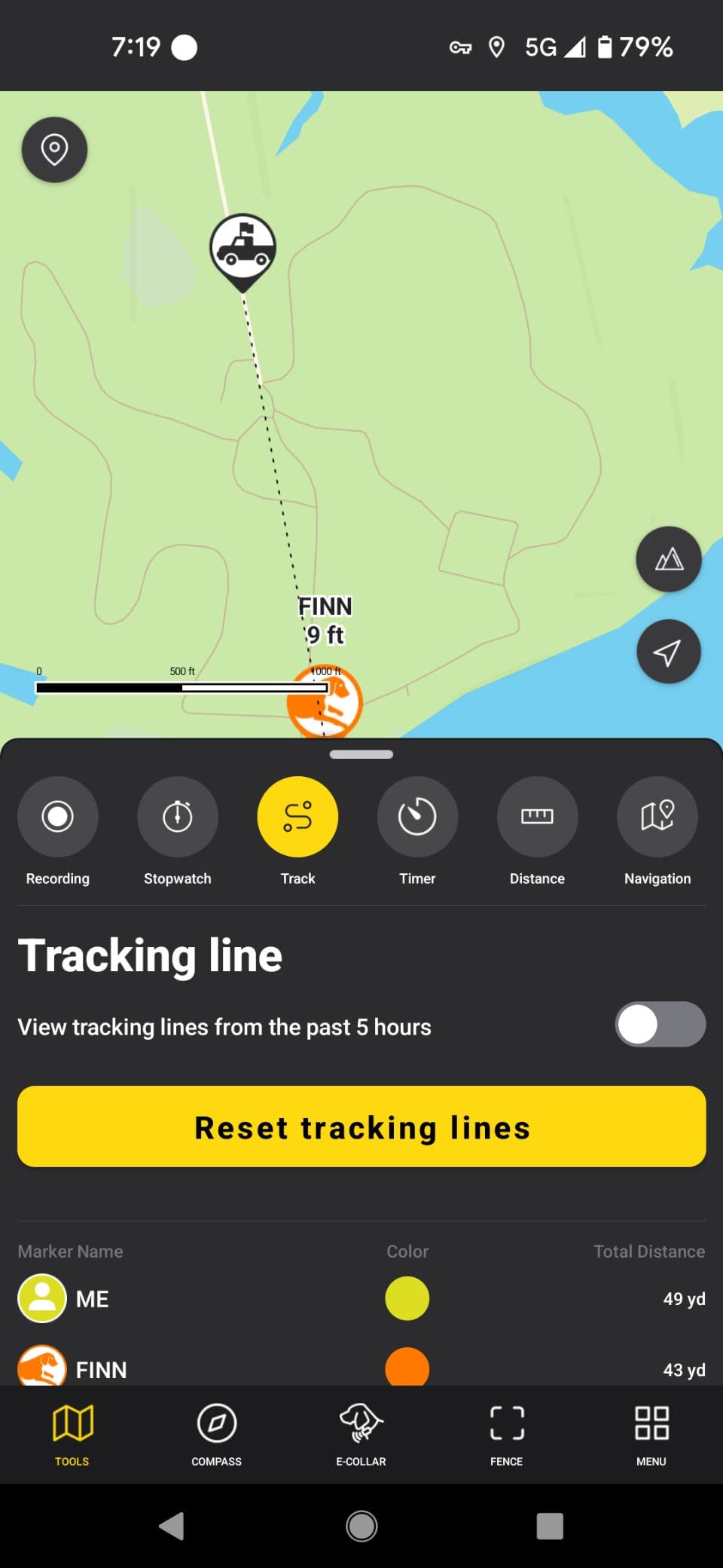
Every other tracker on this list depends on a cell tower. This one does not. The Dogtra sends position over a radio link to a handheld receiver that draws a direction arrow and a distance, and it works in the back forty with no signal at all. For a hunting dog, a working dog on a ranch, or anyone whose dog genuinely leaves coverage, that single fact outweighs everything else on the list.
The receiver carries a 2-inch LCD with a built-in compass and refreshes every two seconds. It is a complete training remote too, with Nick and Constant stimulation, tone, pager and an LED locate mode, so you are not carrying two boxes into the field.
Owners also like that it scales. The system expands to 21 dogs and shows four at a time, which is the only device here that handles a serious multi-dog working setup. Offline maps are included in the free app, and there is no subscription at any point.
Who this system rewards
Anyone with acreage, a bird-hunting dog, a search-and-rescue volunteer, or a dog that works in places with no bars. Two-second updates and directional guidance are genuinely easier to act on in the field than a phone screen you have to hold up and interpret while also watching your dog work.
When to look elsewhere
Skip it if your dog lives in a suburb and never leaves wifi range, and skip it if your dog weighs less than 35 pounds in the base configuration. There are lighter variants listed, but check the weight class carefully. It is also a system, not a gadget, which means a handheld to store, charge and remember to bring.
3. Garmin Alpha TT 25 Collar – Best Premium Collar for Sport and Work
Garmin Alpha® TT 25, GPS Dog Tracking & Training Collar
9-mile range with 2.5s updates
68-136 hour batteries
1.3 oz collar
18 training modes
Pros
- Highest average rating in this roundup at 4.6
- Slim rugged collar sized for large and small breeds
- Very long battery life from movement-based dynamic tracking
- Bright multicolor LED for night identification
- Replaceable batteries and a replaceable flex band extend service life
Cons
- Needs a separate compatible Garmin handheld for tracking and training functions
- Collar-only purchase costs more than app-based trackers
- The 1-inch orange strap may not suit dogs who pull hard
The Alpha TT 25 carries the highest average rating of any device here, at 4.6 across 189 reviews, and the reason is endurance. With the standard battery pack you get up to 68 hours, and the expanded pack pushes that to 136 hours. No subscription tracker comes close, because no subscription tracker is asked to hold a signal for five days at a time.
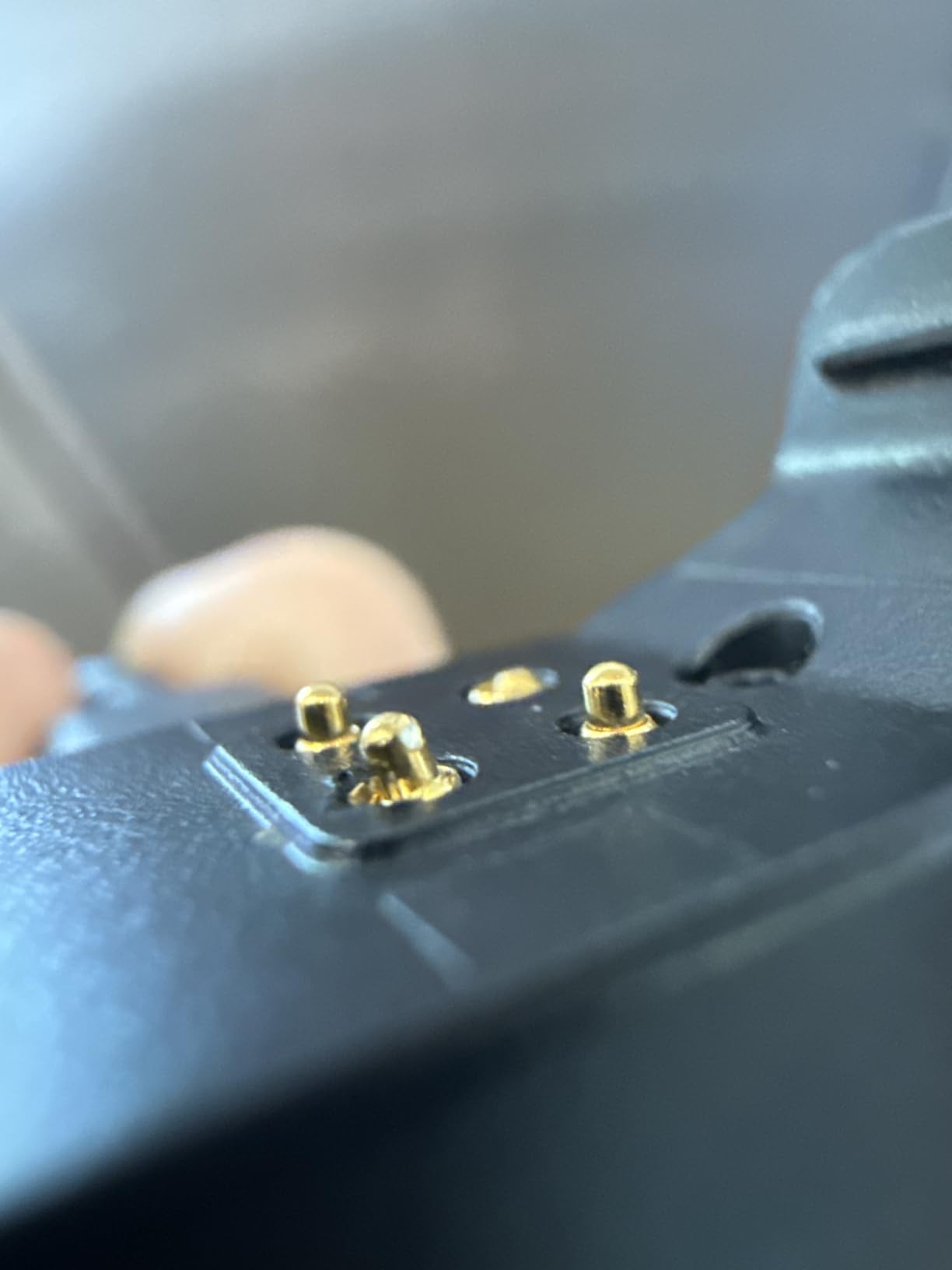
The collar itself weighs 1.3 ounces and is trimmed to fit, which is unusually light for a full tracking and training collar. The flex band and the batteries are both user-replaceable, so the thing you are most likely to chew through is not a permanent expense.
Tracking runs up to 9 miles with updates as fast as 2.5 seconds when paired with a compatible handheld, and there are 18 levels of stimulation plus tone and vibration for training. The large multicolor LED locator is genuinely visible at distance after dark.
Why it earns the premium badge
Dynamic tracking is the quiet hero. The collar uses movement to manage its own reporting rate, so a resting dog costs less battery than a running one. For a dog that works six days a week, that is the difference between charging on a schedule and charging when you remember.
The catch that matters most
The collar does not track on its own. It needs a compatible Garmin handheld, sold separately, and until you have one it is an inert training collar. This is the single biggest reason people regret buying it, so buy the handheld and the collar as a set rather than the collar alone. A dog that pulls hard may also need a martingale-style setup rather than the included 1-inch strap.
4. Tractive XL Dog GPS Tracker – Best for Battery Life and Health Data
Tractive XL Smart Dog GPS Tracker | Live Pet Tracker with Virtual Fence | Vital Signs Monitoring of Heart & Respiratory Rate | Up to 6-Weeks Battery Life | Dog Collar Attachment (Black)
2-3 second updates
Heart and bark monitoring
6-week battery
70 g unit
Pros
- Owners report 6 to 9 weeks between charges
- Live updates every 2-3 seconds
- Heart rate and bark monitoring add wellness value
- Compact housing with a standard USB port
- Unlimited range with no distance limit
Cons
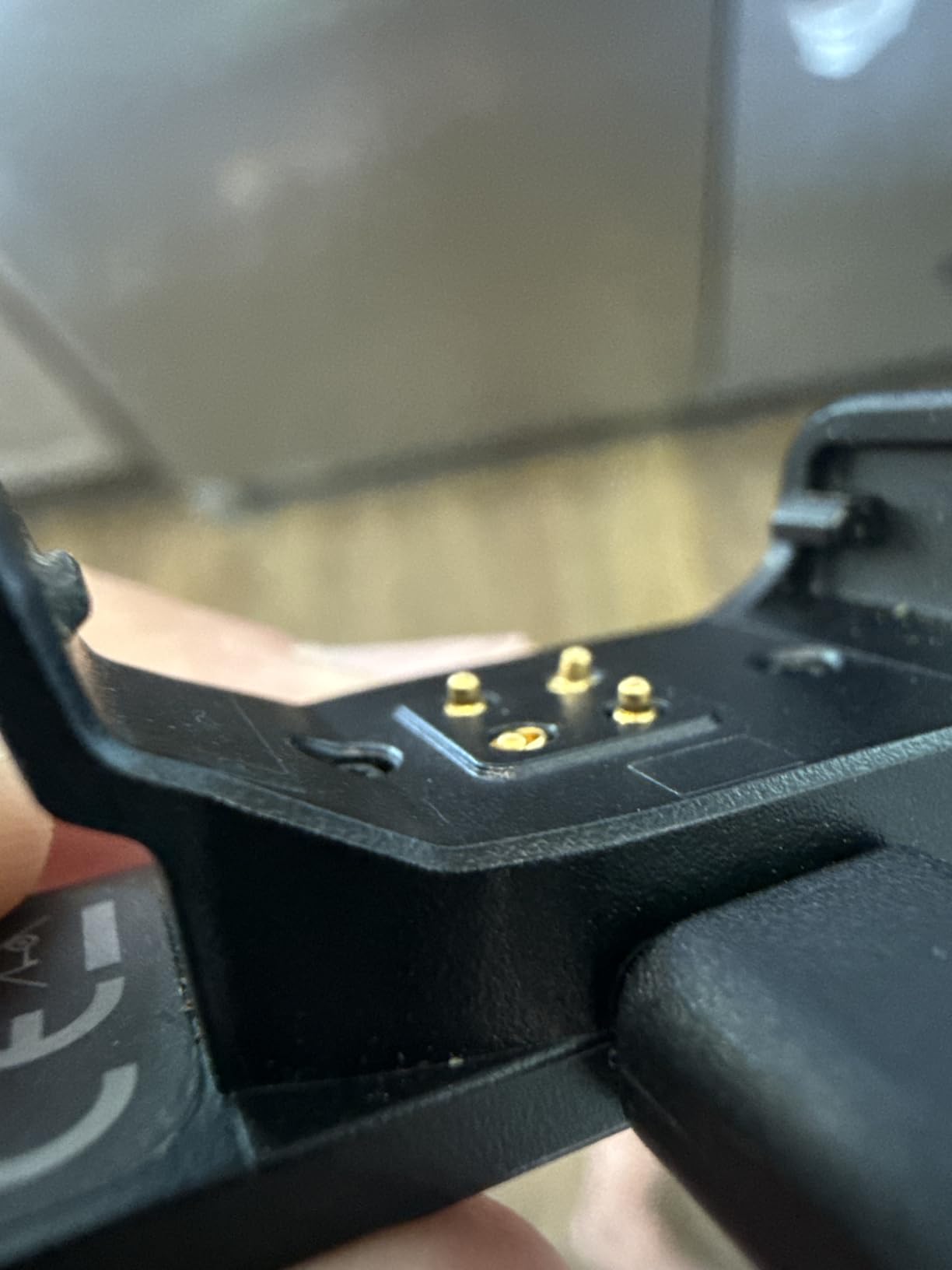
- Collar band and mounting points have broken for some owners and the unit then fails to charge
- Power-saving mode will not pair with modern 2.5 GHz-only routers without a base station
- Virtual fence can trigger false escape alerts indoors or in the yard
If battery life is the number you care about, the Tractive XL wins this roundup outright. The stated figure is up to six weeks, and owners report between six and nine weeks between charges in real use. That is the difference between a tracker you charge on Sunday and one you forget about for a couple of months.
It also refreshes position every two to three seconds with unlimited range, and it is one of only two devices here that reports heart rate and respiratory rate alongside location. Bark monitoring and anomaly alerts are built around a learned baseline, so the alerts mean the dog is behaving differently from normal rather than simply moving.
A r/dogs thread put it plainly: Tractive and Fi were the two options owners considered viable for daily wear. Of the ten devices here, this is the one that thread is talking about, and the battery figures are the reason.
Where the extra data earns its keep
Resting heart rate and respiration trends are genuinely useful as an early warning system, particularly for senior dogs, and the bark baseline tells you when a dog that usually is quiet has suddenly stopped. The USB charging port is another small daily convenience, since you do not need a vendor dock.
Where owners report trouble
Durability is the recurring complaint. The collar band and mounting points have broken for some owners, and a broken mount has left units unable to charge. The virtual fence also fires false escape alerts when the dog is indoors or moving within the yard, and the power-saving mode will not pair with a modern 2.5 GHz-only router unless you add a base station. This unit is built for dogs over 44 pounds.
5. SpotOn Nova GPS Dog Fence Collar – Best for Large-Property Containment
SpotOn Nova GPS Dog Fence Collar, App-Controlled Wireless Fence
Unlimited custom fences
Keep Out Zones
Dual-band GPS
Fits 10-26 inch necks
Pros
- Custom fences of any shape and size plus separate Keep Out Zones
- The most flexible boundary editor in this roundup
- Dual-band GPS holds the boundary accurately across wooded terrain
- Reliable cue timing in dense tree cover and weak-signal areas
- Certified 1:1 trainer support included
Cons
- The most expensive device in the roundup
- Cue-based containment needs repeated training and reinforcement to work
- No wireless charging or included handheld; everything runs through the phone app
SpotOn is a different category of product from everything else here. Rather than promising to tell you where the dog went, it tries to keep the dog from leaving, using a wireless collar and a boundary you draw yourself. Unlimited custom-shape fences and separate Keep Out Zones mean you can exclude a road, a pond or a neighbour’s field rather than settling for a circle.
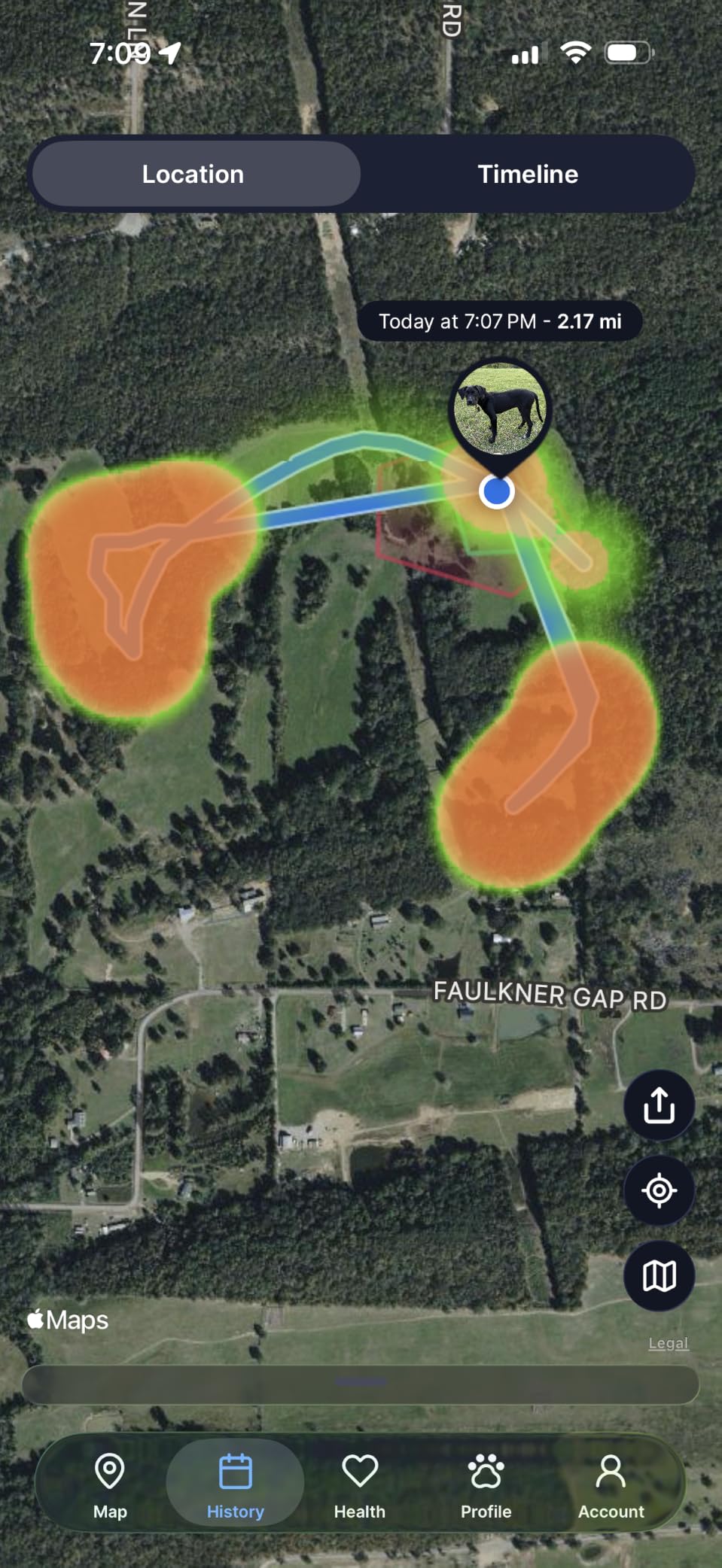
Positioning uses dual-band, dual-feed GPS, which is what keeps the boundary honest across uneven, wooded ground instead of wobbling. Owners also credit consistent cue timing in dense tree cover, where cheaper devices stutter, and the app shows containment activity so you can confirm the fence is doing something.
The collar is 13.44 ounces and fits necks from 10 to 26 inches. It is the heaviest device in this roundup, which tells you what kind of dog it is designed for.
Why it beats a plain tracker on big land
If you have acreage and the actual problem is a dog ranging a mile past the tree line, a locator is the wrong tool. You want containment, not coordinates. SpotOn also bundles certified one-to-one trainer support, which matters because this is a system that has to be trained into the dog, not just switched on.
Who should pass on it
It is the most expensive device in the roundup by a wide margin, and the learning curve is real. Cue-based containment only works if you reinforce it, and a dog that has never been trained on cues will run straight through it for weeks. There is also no wireless charging and no handheld, so the phone app is the whole interface.
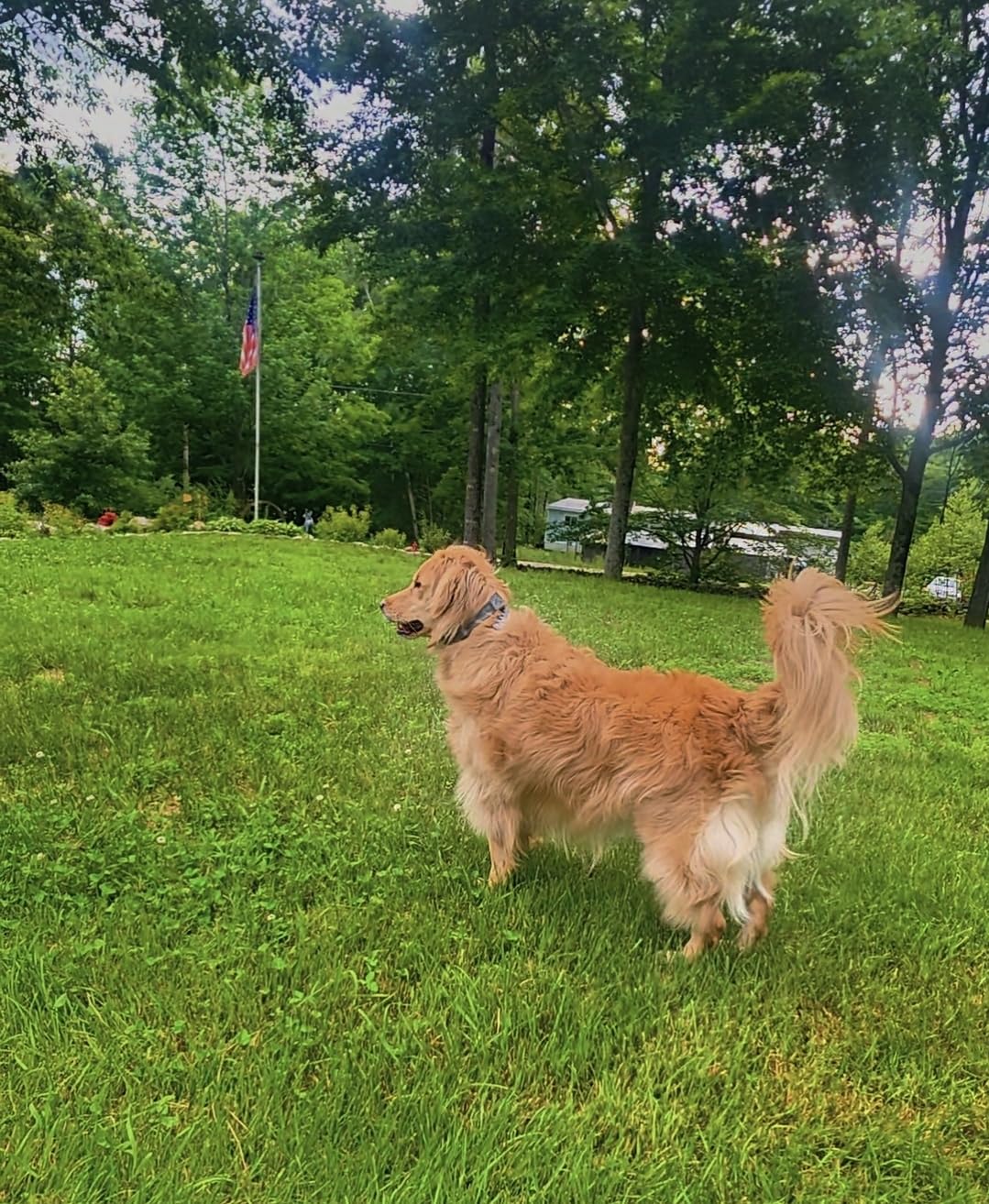
6. BOMERAHE No-Fee Tracker Collar – Best Without a Subscription
GPS Tracker for Dogs – Smart Dog Collar & Pet Tracker with Real-Time Location, No Monthly Fee, Unlimited Range (iOS & Android) – Fits Small to Large Dogs(Locator Included)
No subscription fees
Find My network
IP67 waterproof
S and L collar sizes
Pros
- No subscription
- one of only two no-fee options here
- Works inside Apple's existing Find My network with no third-party app or account
- Lightweight durable nylon collar with IP67 waterproofing
- Anti-loss alerts reach every device on the owner's account
Cons
- Relies on nearby phone and Bluetooth beacons rather than true GPS
- Only two collar sizes
- so very large dogs fall between them
- Small review base of 24 for a newer listing
This is the tracker for people who will not accept a monthly fee, and it does that cleanly. There is no subscription, no activation charge and no separate account. It pairs with Apple’s Find My network on iOS, and with Find Hub or the equivalent network on Android, and it raises anti-loss alerts to every Apple device signed into your account.
At 4.7 across 24 reviews it scores well, though that figure rests on a thin sample and you should weigh it accordingly. The collar is nylon with a PU surface, IP67 waterproof, and trims to fit. Location history is available in the app.
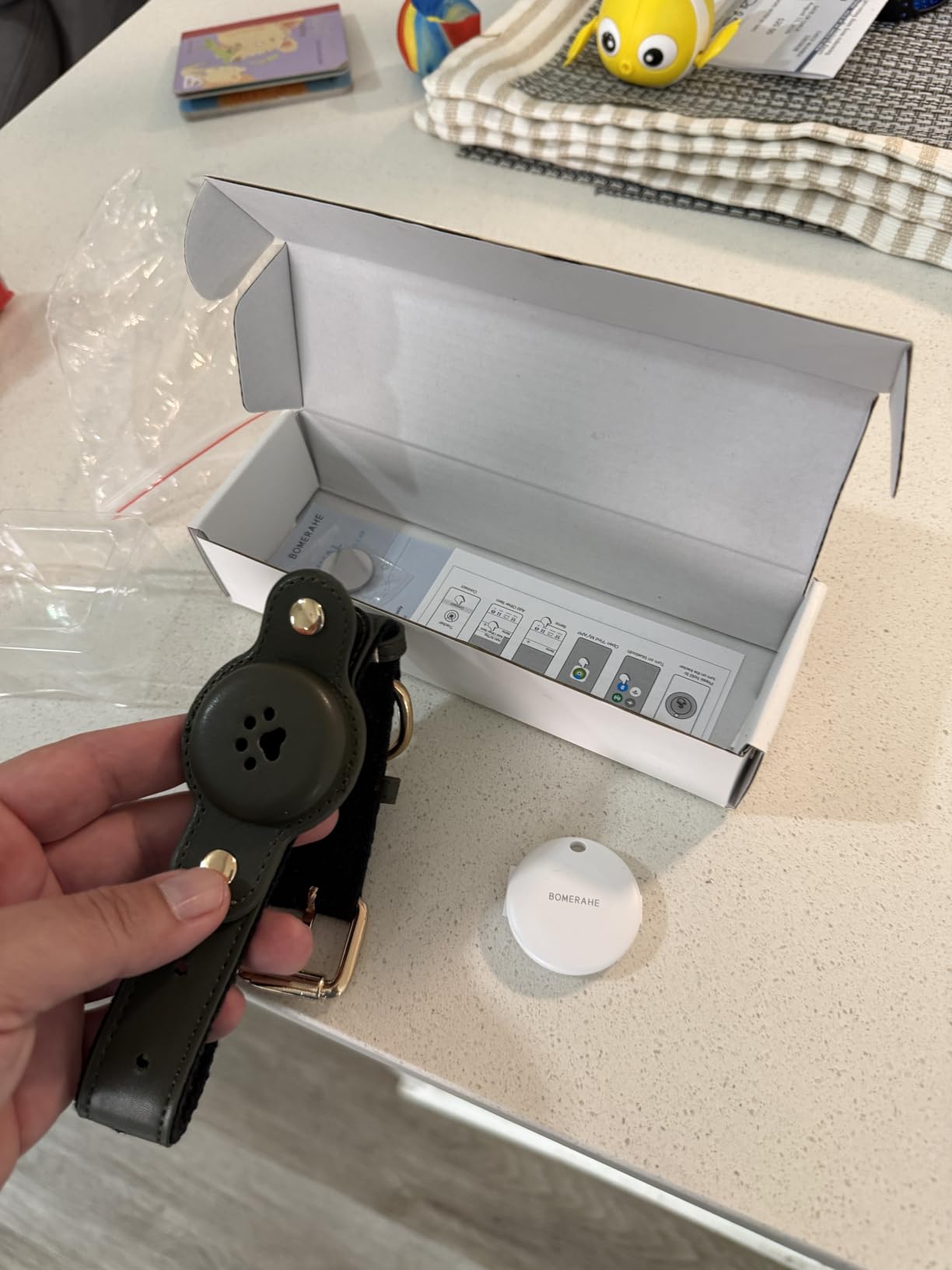
The honest framing is that this is a network-beacon tracker, not a satellite tracker. It finds your dog when a phone or beacon is nearby, which is exactly what you want for a dog that bolts out of the front door.
When no-subscription genuinely works
The first hours of a lost dog are almost always local. A dog that slips a gate or tears out of a door is found within a few streets, which is precisely the radius where Bluetooth beacons and nearby phones do their job well. For that scenario, paying nothing per month is a legitimate choice rather than a compromise.
Why it is not a substitute for real GPS
Once your dog is beyond the beacon network, this collar cannot help you, and no amount of app polish changes that. Size is the second issue: only S and L sizes are offered, so a very large dog can fall between them. Set your expectations as backup coverage inside a built-up area, not as a search tool.
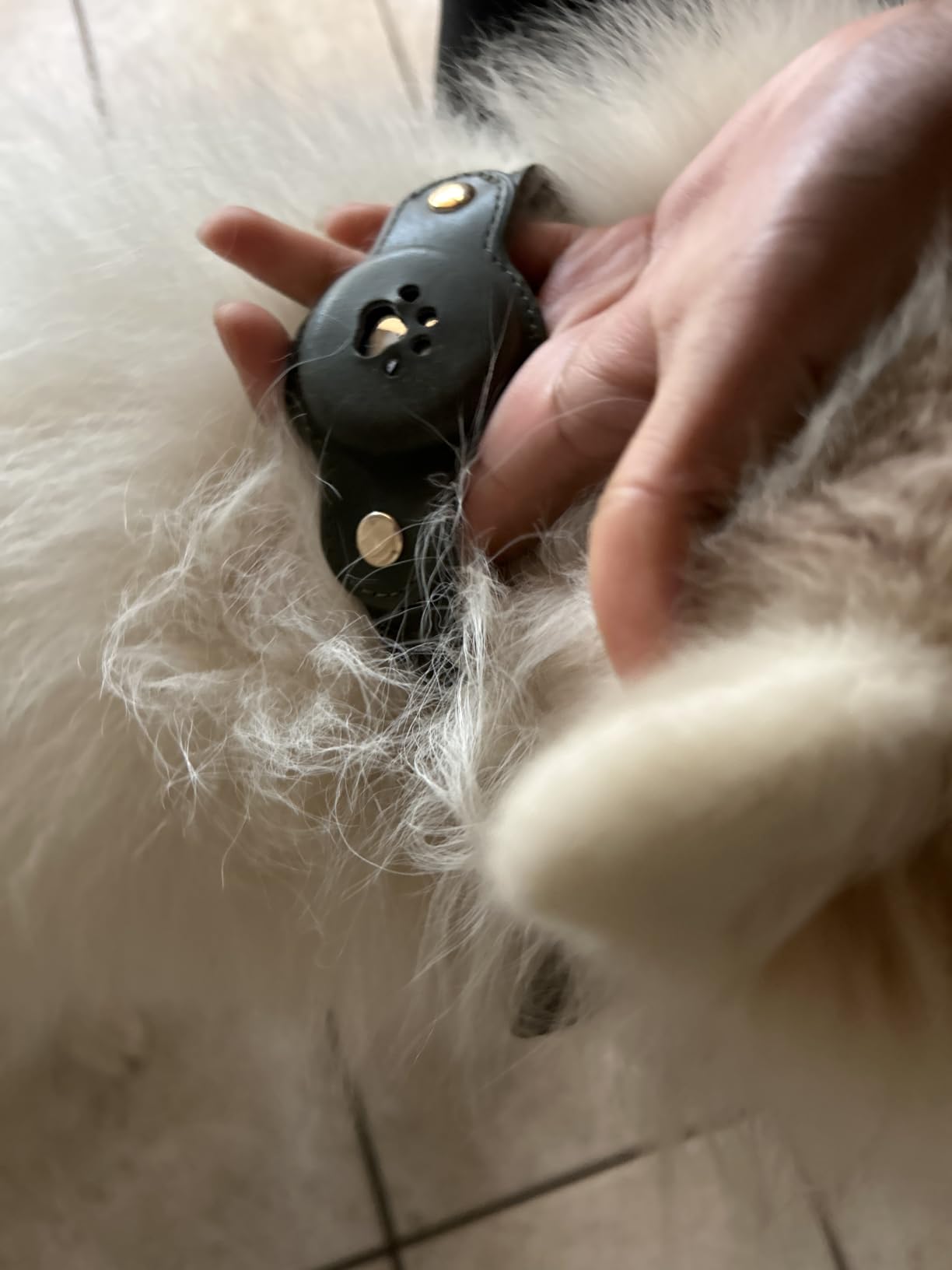
7. XINGGUANG MINGREN GPS Tag Collar – Best Budget Pick for Cats and Small Dogs
GPS Pet Tracker for Dogs & Cats, Smart Collar with Real-Time Location
One-time payment, no subscription
Apple Find My
IP68 waterproof
0.4 oz unit
Pros
- Lowest-cost tracker here and the collar is included at no extra charge
- Truly one-time payment with no ongoing fees
- Extremely light at 0.4 oz for cats and small dogs
- Loud built-in speaker makes finding a pet in bushes easy
- Sets up in under a minute through Apple Find My
Cons
- Apple-only
- so pairing must be done on an iPhone or iPad
- Collar runs small and suits cats and slim-necked dogs better
- Network-beacon tracking rather than independent cellular GPS
At 0.4 ounces this is the lightest device here, which makes it the one to look at if your dog is a Chihuahua, a Yorkie or a Yorkie-type mix, or if you are tracking a cat. The rating is 5.0 across 17 reviews, the highest single score in the roundup on the smallest sample.
The economics are the real story. One payment covers the tracker and the reflective collar, there is no subscription and no paywall, and the standby life is stated at more than ten months. For a second dog, or for a cat that lives outdoors, that ratio is hard to argue with.
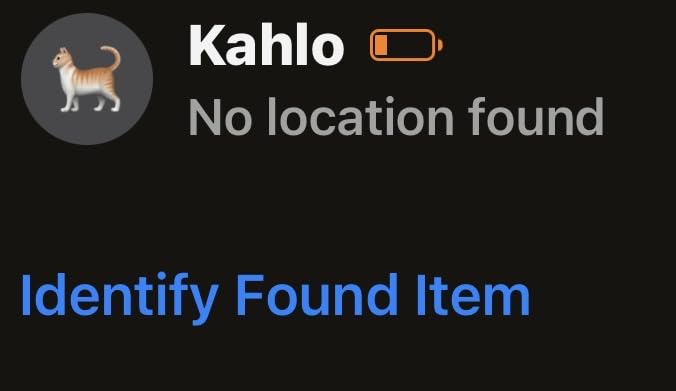
The built-in high-decibel speaker is triggered from the app to sound an alarm, which is genuinely useful when the animal is in a hedge or under a deck rather than at the end of a street. The 360-degree reflective collar is a sensible inclusion at no extra cost.
Best use cases for this tag
Indoor-outdoor cats, small dogs, and any second animal where a monthly fee would be hard to justify. It doubles as a general-purpose tag for wallets, luggage, keys and vehicles, and the IP68 rating means rain and swimming are not concerns.
Where it will disappoint
Pairing must happen on an iPhone or iPad, so Mac-only households cannot add it, and the collar runs small for anything with a thick neck. Like the previous pick, it locates through the beacon network rather than an independent cellular connection, so it is a close-range finder. Some buyers also found the listed colours did not match the photographs.
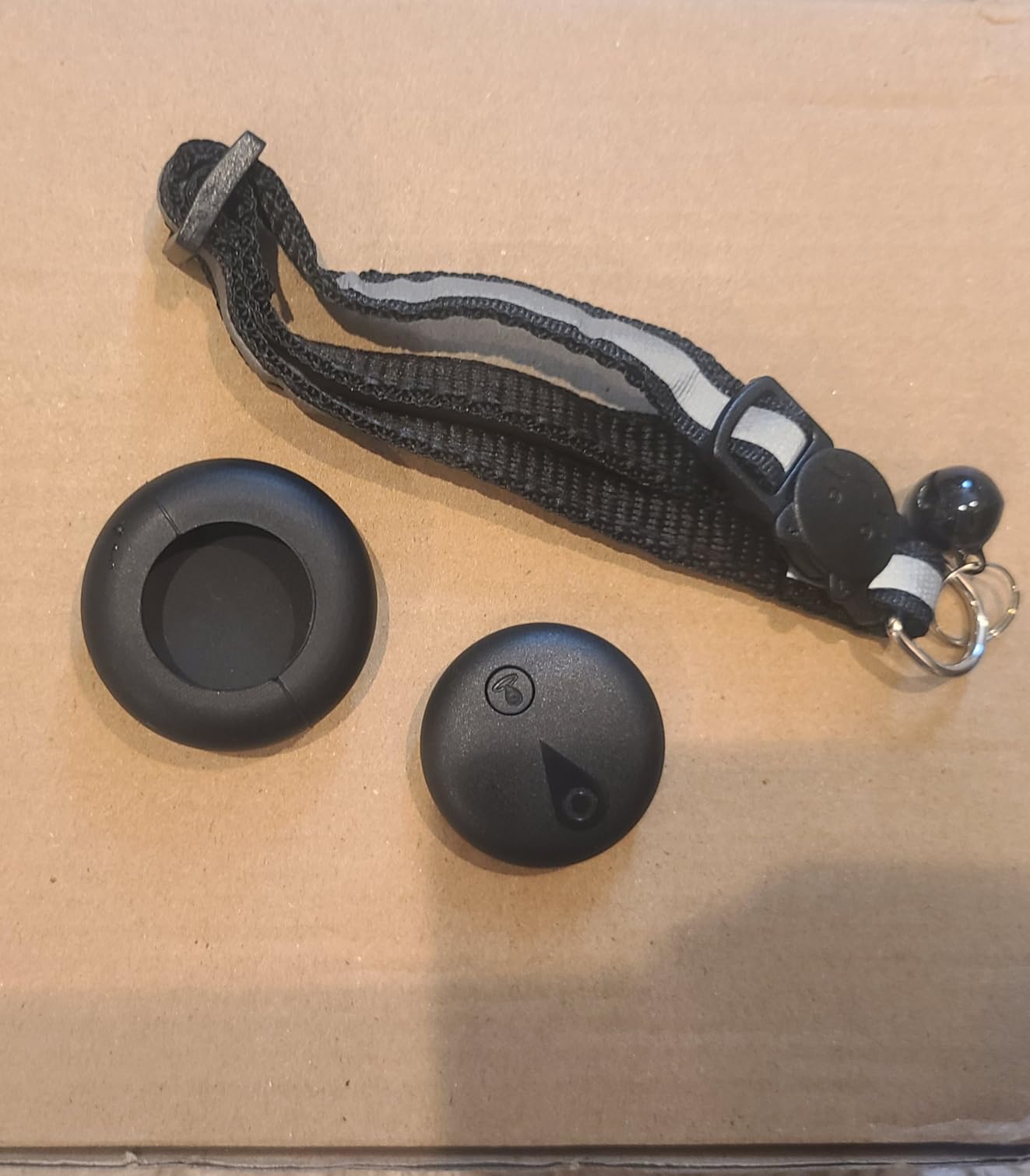
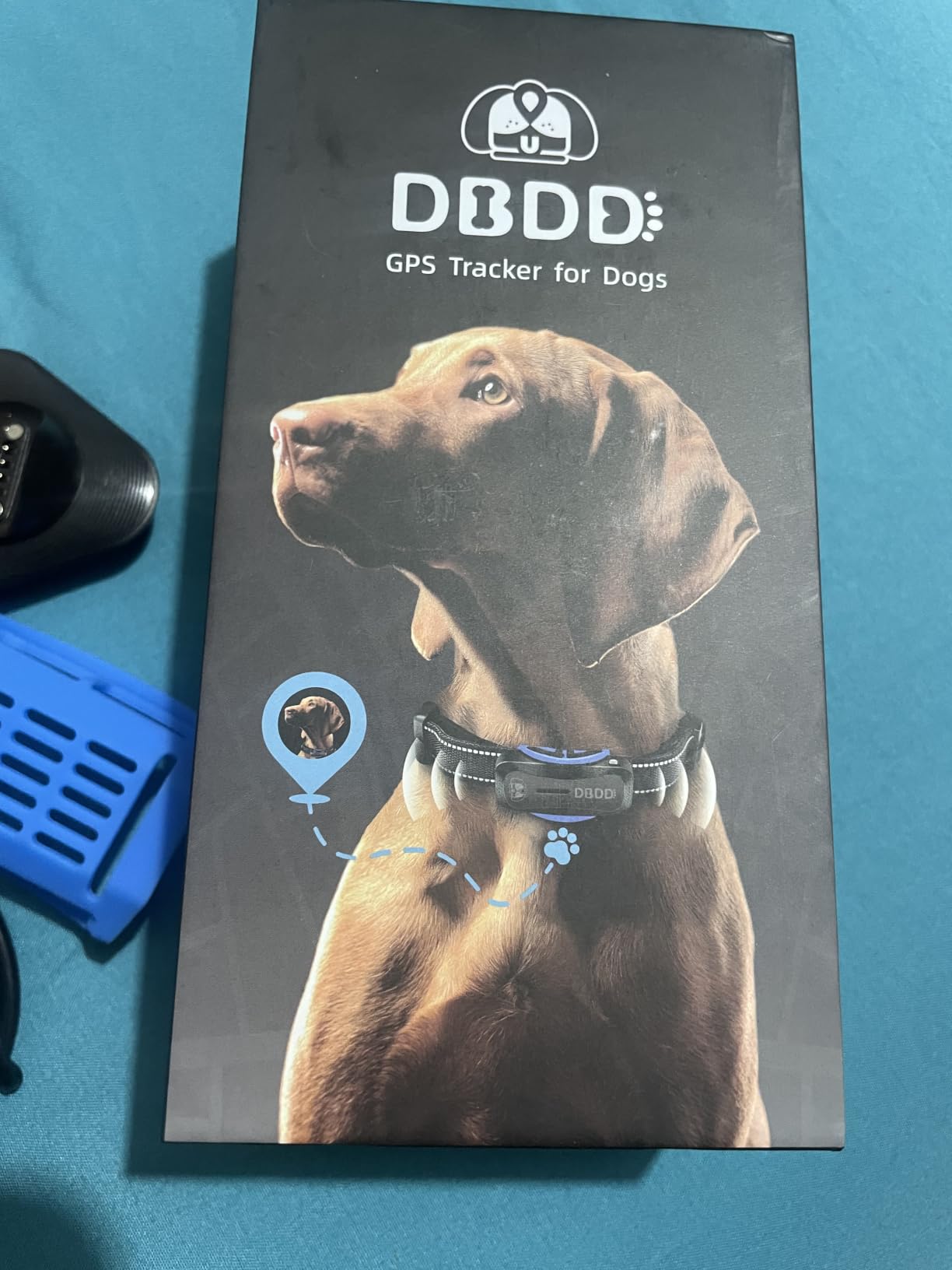
8. DBDD GPS Dog Tracker – Best Virtual Fence for Escape Artists
DBDD GPS Dog Tracker with Subscription,Virtual Fence&Health Monitor,IP67,BK
Custom virtual fence
Instant boundary alerts
IP67 waterproof
For dogs 30 lbs and up
Pros
- Simple
- attractive app that owners find genuinely pleasant to use daily
- Virtual fence escape alerts work well for escape-artist dogs
- including a 110-lb dog
- Accurate live location in many reviews
- Customer service replaced a defective unit quickly with no hassle
Cons
- Subscription is required and owners repeatedly call it expensive
- Some units report a battery lasting only 12-24 hours and one stopped charging entirely
- Fence alerts arrived hours late in rural areas with weak cellular coverage
The DBDD’s fence editor lets you draw a custom boundary and push a notification the moment the dog crosses it, and for an escape artist that is the feature that actually prevents the emergency rather than documenting it afterwards. At least one owner reports a 110-pound dog held inside a working fence.
Pair that with real-time location, movement trajectory history and an AI wellness module watching activity and rest, and you have a broad feature set. Setup is QR-code based on both iOS and Android, which is about as painless as this category gets. The rating is 4.6 across 51 reviews.
Why the fence is the draw
Unlike the circular safe zones used by several cheaper trackers, this one takes a drawn shape, so it can follow a property line, a driveway or the edge of a yard rather than a circle that is either uselessly wide or uselessly tight. The lighter hardware also matters here, because a comfortable collar is one the dog does not try to remove.
The complaints to read before buying
The subscription is mandatory and owners repeatedly call it expensive, particularly outside the US once currency conversion is applied. More seriously, some units reported battery lasting 12 to 24 hours and one stopped charging before completing its first cycle, fence alerts arrived hours late in rural areas with weak coverage, and a few owners disputed the health readings against advice from their vet. This is aimed at dogs of 30 pounds and up.
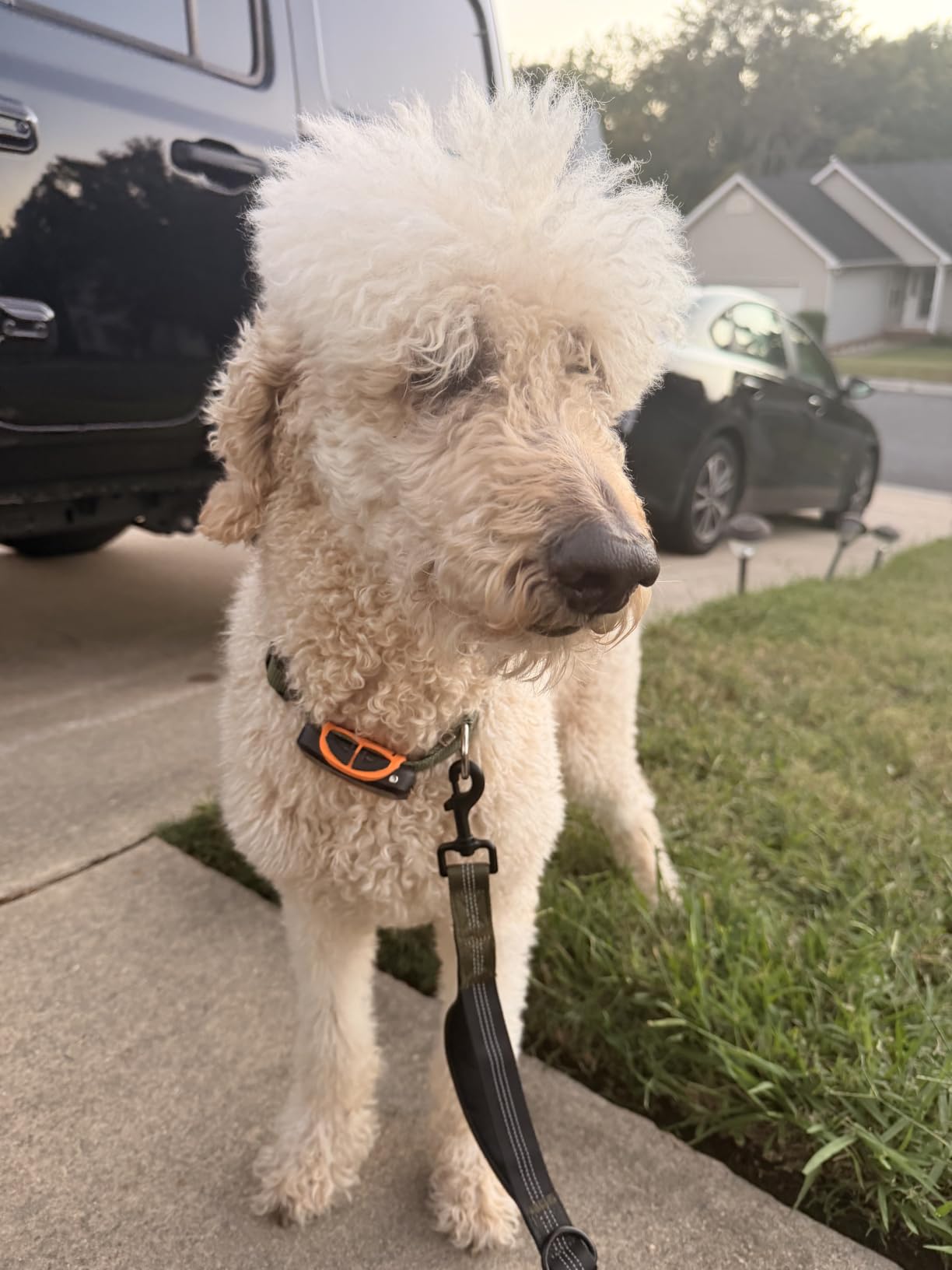
9. Molly&Cody Smart GPS Tracker – Best for Small Dogs and Cats
Molly&Cody Smart Dog & Cat GPS Tracker, 4 Smart Modes Real-Time Pet Tracker with Custom Virtual Fence IP67 Waterproof Location History & 365-Day Health Data Monitoring, Subscription Required
4 smart tracking modes
Up to 8 days battery
0.88 oz
IP67 waterproof
365-day health history
Pros
- Four smart modes noticeably extend battery by conserving power at home and overnight
- Very light at 0.88 oz
- so pets barely notice it
- Virtual fence alerts arrive quickly and reliably in most reviews
- Protective case keeps the tracker secure during running and play
- 365-day activity and health trend data
- Buzzer helps locate a pet already nearby
Cons
- Subscription required and live tracking stops once the trial ends
- Modest 8-day battery compared with longer-lasting alternatives
- Only 24 reviews
- so long-term reliability is not well established
The interesting idea here is the four-mode system: Home, Outdoor, Sleep and Tag. Rather than one setting for everything, the tracker shifts its reporting behaviour based on context, conserving power overnight and at home while tightening up outdoors. Owners say that difference is visible in the charge interval.
It weighs 0.88 ounces in a 1.75-inch housing, so it works for small dogs and cats. The box includes a protective case that keeps the unit attached during running and play. Storage runs to 365 days of activity and health trends, which is a longer history than most rivals keep.
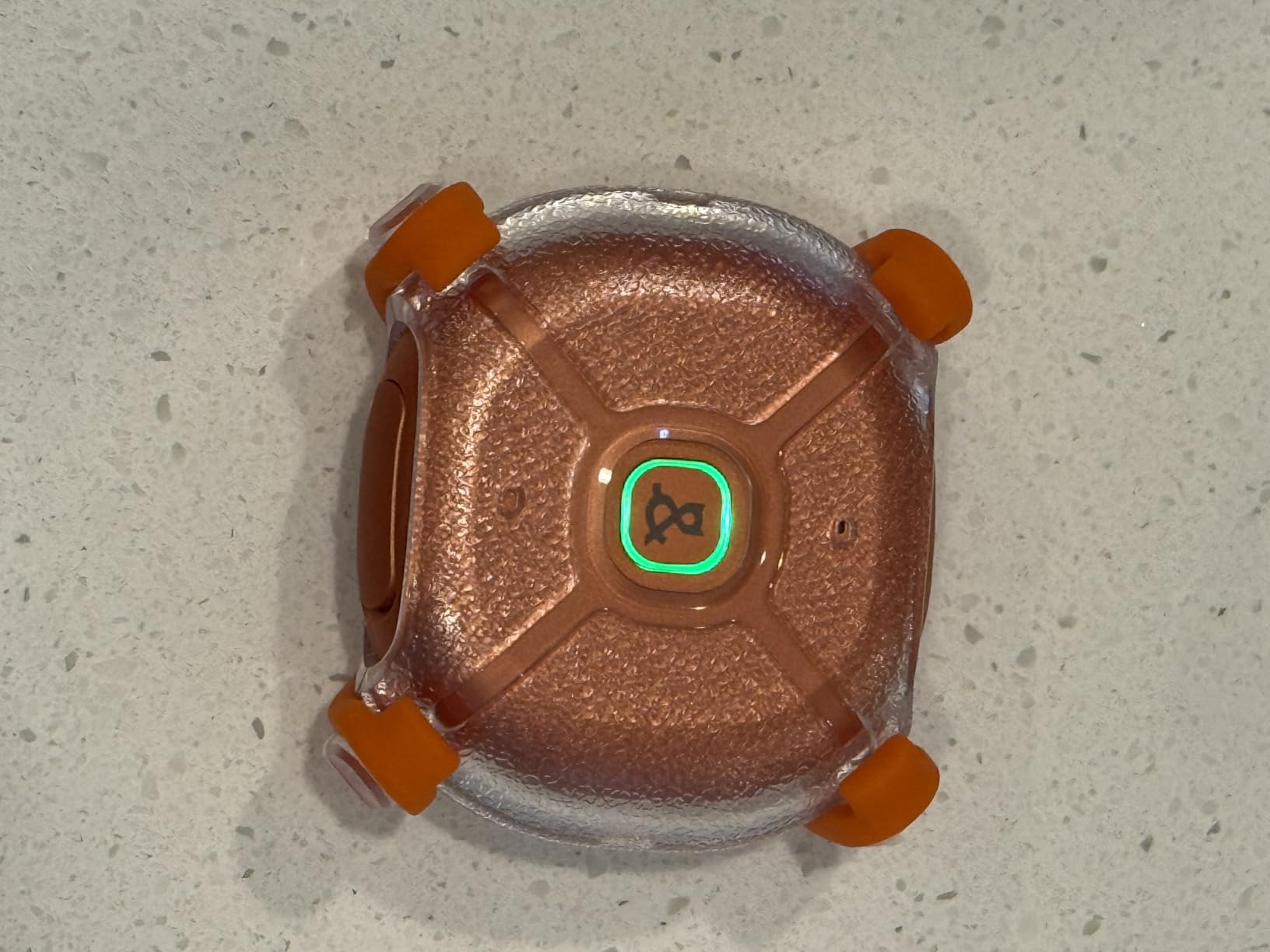
Connectivity covers Bluetooth, cellular and wifi, so it can pick up a position indoors near your router as well as outside. There is a built-in buzzer for locating a pet that is already close.
What the smart modes buy you
Most trackers make you choose between a long interval and knowing where the dog is. The mode approach sidesteps that for the largest part of a dog’s day, when it is asleep in a room, which is exactly when eight days becomes a week rather than a chore. The 540 mAh battery and the two-year manufacturer warranty are both solid on paper.
What to watch for
Eight days is modest next to the Tractive XL, so expect a regular charging rhythm. The subscription is required and once a trial ends it gates live tracking, which is the part you would actually be paying for. With only 24 reviews, long-term reliability is not well established, and one owner received a unit that arrived dead and had to seek a refund.
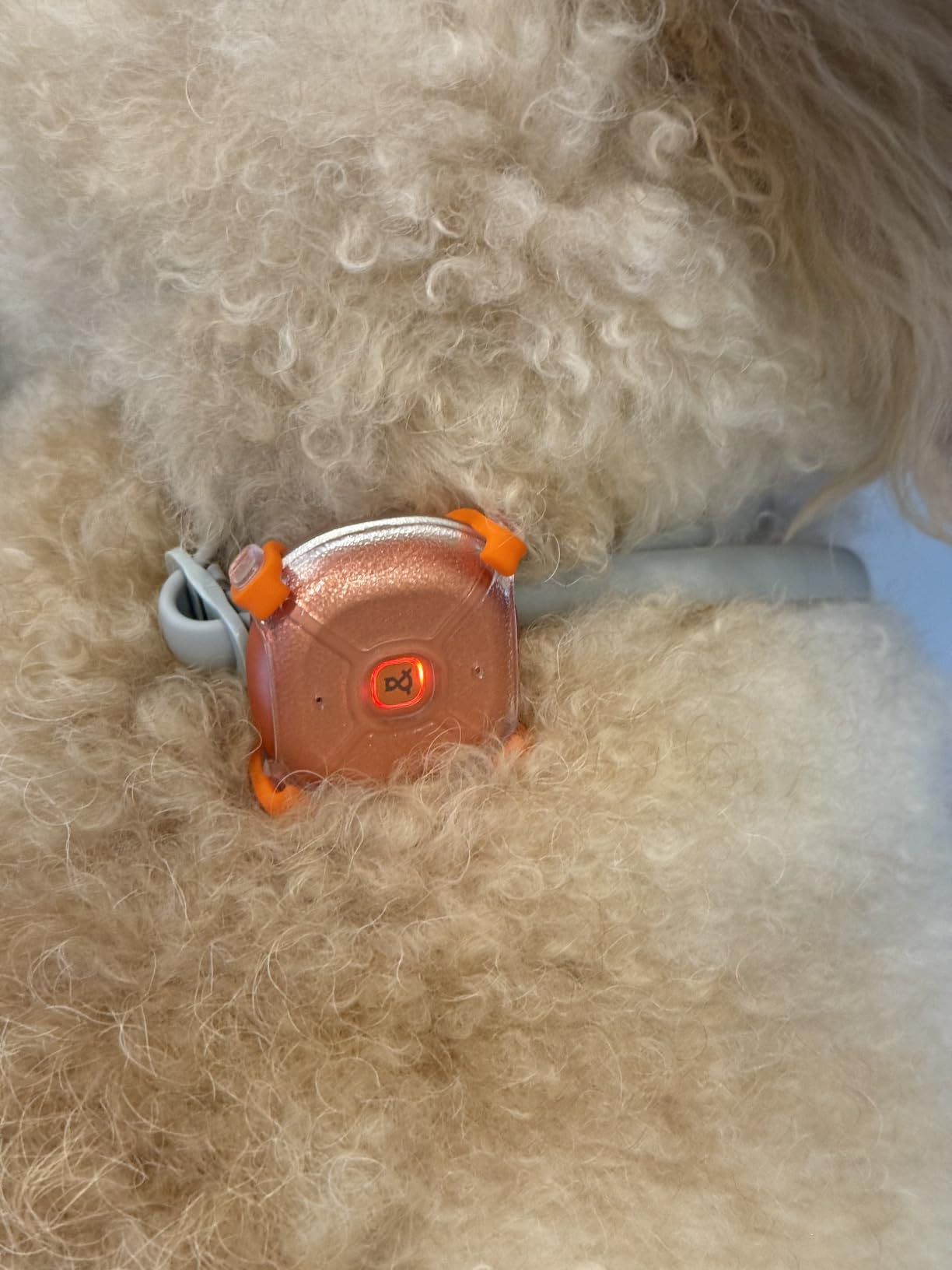
10. eMACROS Off-Grid Dog GPS Tracker – Best for Off-Grid Hiking
eMACROS Dog GPS Tracker No Subscription, Off-Grid, Up to 3 Mile Long Range
No-subscription RF tracking
Range to 3 miles
IP67 waterproof
For dogs 35 lbs and up
Pros
- No subscription and no dependence on cell coverage
- Highest average rating in the roundup at 4.8
- Up to 5 days of tracker battery with a clear charging indicator
- Three-level adjustable electronic fence works as an invisible leash
- Arrow-and-distance guidance is simple with no app to configure
Cons
- Range drops to about 0.5 mile in forested terrain with slower GPS acquisition
- No app
- no maps and no location history; guidance is directional only
- Only 12 reviews
- so the 4.8 average rests on a thin sample
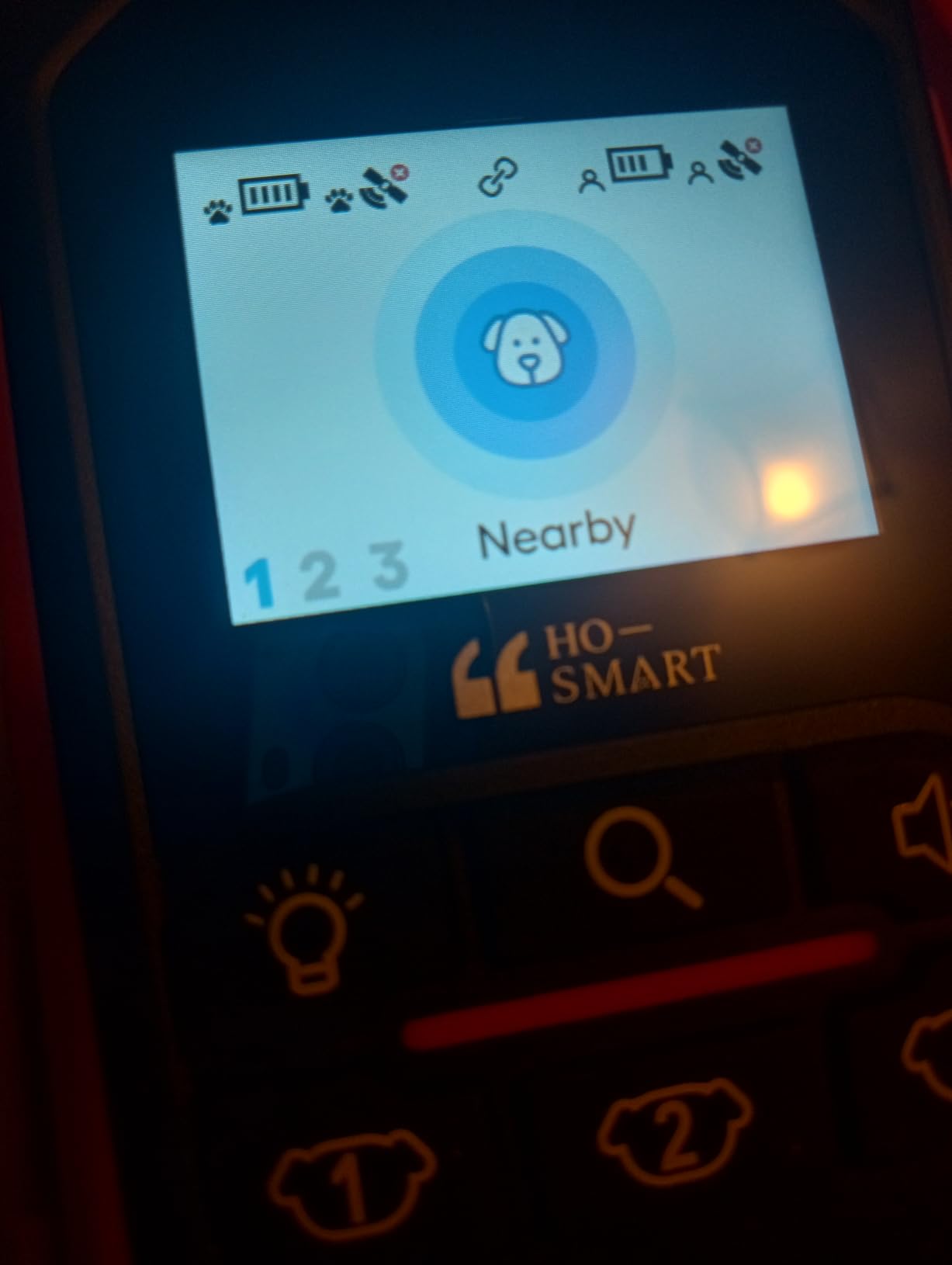
This is the simplest thing here and that is exactly the point. It tracks over radio frequency, which means no subscription, no app, no account and no cellular coverage. You carry a handheld receiver that shows a direction arrow and a distance, and you walk toward the arrow.
Range is up to 3 miles in open or seaside terrain, about 2 miles rural and roughly 0.5 miles in forest. That last number is the one to plan around. The electronic fence has three levels at 200, 500 and 1000 feet, which gives you a workable invisible leash for campsites.
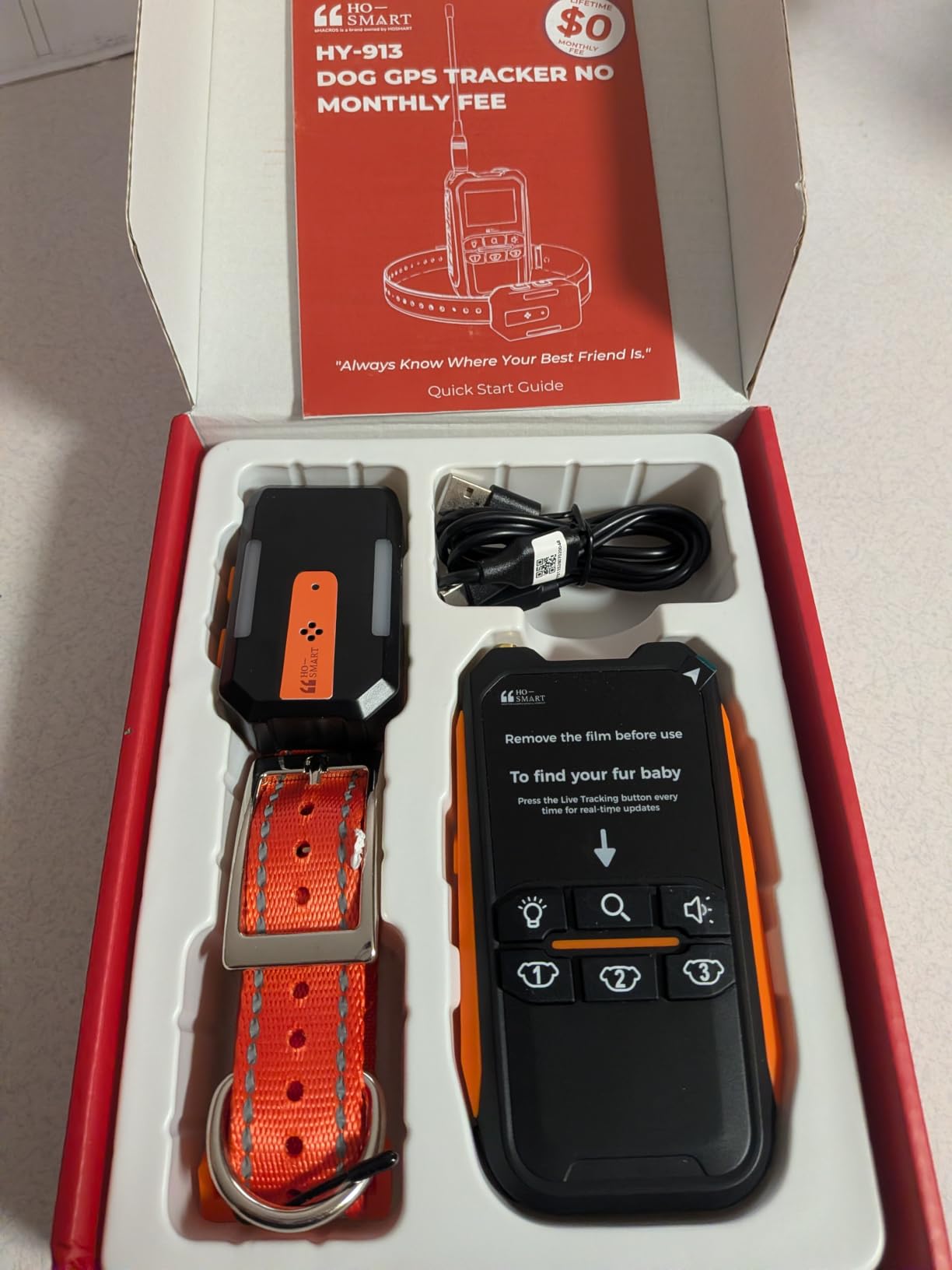
Tracker battery runs up to five days with a clear charge indicator, and the controller holds about two days. Remote light and sound plus a reflective collar make night and brush searches far easier. At 4.8 across 12 reviews it has the highest average in the roundup, on the smallest sample here.
Why it beats a phone app off the trail
Nothing beats a radio link when there is no signal. No dead zone, no last-known-location guess, no waiting for a bar to appear. The arrow-and-distance display takes about a minute to learn and needs no configuration, which is worth something when you are cold and it is getting dark.
Where the simplicity costs you
There is no map and no location history, so you cannot review where the dog was an hour ago. Forest cover cuts range to about half a mile and slows GPS acquisition. It is built for dogs of 35 pounds and up, and with only 12 reviews the rating is less reassuring than the number suggests.
How to Choose a GPS Tracker for Dogs: 6 Criteria That Matter
Most buying mistakes in this category come down to six things. Work through them in order and the right product usually announces itself before you have compared a single spec sheet.
1. Update frequency, measured honestly
Update speed is the number that determines whether live tracking is genuinely live. In this roundup the range runs from 2 seconds on the Dogtra, to 2.5 seconds on the Garmin, 2-3 seconds on the Tractive XL, 3-5 seconds on the Petcube, and slow intervals on several of the lower-cost units. If your dog genuinely bolts, anything slower than five seconds makes the tracking feel like guesswork.
2. Battery life with the caveat attached
Published battery figures are measured in the quietest possible mode. Owners report the real numbers: the Petcube drops from a stated 30 days to roughly 7-10 in fast-update mode, while the Tractive XL holds six to nine weeks and the Garmin runs 68 to 136 hours on replaceable batteries. Ask how long it lasts when you care about the dog, not when it is asleep on the sofa.
3. What happens when the signal dies
Every cellular tracker eventually enters a dead zone. The app will show a last known location and a stale timestamp, not a live fix, and the honest way to treat that dot is as a starting point for a search rather than an answer. If your dog regularly leaves coverage, this is the point at which a radio tracker like the Dogtra or eMACROS becomes the correct purchase.
4. Fit, especially for small breeds
Weight matters more than owners expect. Devices here run from 0.4 ounces to 13.44 ounces, and the heaviest is a GPS fence collar meant for large dogs. Several trackers are specified for dogs of 35 pounds or more, and one unit is only offered in two collar sizes that leave very large dogs between them. Check neck range before anything else, and never size a collar that restricts breathing.
5. Which of the three pricing models you are buying
There are three models and they are not comparable. A cellular tracker needs a data plan and gives you live updates anywhere with coverage. A radio tracker needs no plan and works anywhere with line of sight, but only within a few miles. A one-time-fee fence collar charges nothing ongoing and tries to keep the dog inside the boundary rather than reporting where it went. Buying the wrong model is the most expensive mistake available here.
6. Water rating and real reliability
IP67 means dust-tight and waterproof to one metre for 30 minutes. IP68 means deeper immersion for a stated duration, and the Dogtra PATHFINDER2 Compass carries an IPX9K rating for high-pressure, high-temperature water. Separately, look at what owners say about failure: broken collar mounts that then stop charging, units arriving dead, and apps that lose pairing are all more common than flat battery failure.
GPS Tracker Vs Apple AirTag: Which One Does Your Dog Need?
Use a GPS tracker for a dog that runs. Use an AirTag-style tag only as a backup layer for a dog that stays in a built-up area. The reason is the network, not the price: a GPS tracker gets its own cellular connection and reports its own coordinates, while an AirTag broadcasts and is only located when a nearby Apple device or Find My beacon sees it.
That distinction decides everything. A dog that bolts and covers ground fast will outrun a Bluetooth beacon network almost immediately, which is why owners describe AirTags for dogs as unreliable. One Guernsey dog owner in the search results put it directly, saying they have used an AirTag and do not find it very reliable.
The practical rule: buy the GPS tracker as your primary device, and add a cheap AirTag-style tag inside the collar as a second layer that costs nothing ongoing. That combination covers the common case of a dog slipping a gate in a neighbourhood without asking you to pay monthly for two devices.
Frequently Asked Questions
What is the best GPS tracker for dogs?
The Petcube GPS Tracker is the best all-round choice, refreshing position every 3 to 5 seconds over LTE, clipping to any collar or harness, and adding a remote LED light and buzzer for night recovery. For off-grid work, the Garmin Alpha TT 25 tracks to 9 miles with user-replaceable batteries.
What is the most accurate GPS tracker for dogs?
Accuracy depends more on location type than on brand. Dual-band hardware such as the SpotOn Nova holds a boundary accurately in wooded, uneven terrain, while cellular units like the Petcube and Tractive XL refresh every 3 to 5 seconds and 2 to 3 seconds respectively. Expect a pin to drift a couple hundred feet when the dog is stationary.
What is the best dog tracker without a subscription?
Two options here charge nothing monthly. The BOMERAHE collar uses the Apple Find My and Android Find Hub beacon networks for anti-loss alerts, and the XINGGUANG MINGREN tag adds a 0.4 oz tracker with a 10-month standby life and IP68 waterproofing. Both locate through nearby devices rather than a dedicated cellular connection.
Which is better for tracking my dog, an AirTag or a GPS tracker?
A GPS tracker, if your dog runs. A GPS tracker has its own cellular link and reports coordinates continuously, while an AirTag is found only when a nearby Apple device or beacon sees it. Use an AirTag-style tag as a cheap backup layer inside the collar, not as your primary device.
Is AirTag or GPS better for dogs?
GPS is better for dogs that roam. AirTags rely on a Bluetooth beacon network, so a fast-moving dog quickly leaves the range where it can be detected, and owners regularly report AirTags as unreliable for this use. For a dog that stays close to home, an AirTag is a reasonable low-cost backup.
Do GPS dog collars actually work?
They work, with two honest limits. They need cellular coverage, so outside coverage the app shows a last known location with a stale timestamp rather than a live fix. And they help you narrow a search; they do not find your dog for you.
Are GPS trackers safe for dogs to wear all the time?
Yes, if you size them correctly. Devices here range from 0.4 ounces to 13.44 ounces, and several are specified only for dogs of 35 pounds and up. Check the neck range, keep the collar two-finger snug, and remove the unit before swimming if your model is only water resistant.
Can I use a dog GPS tracker while hiking or traveling?
Yes with the right model. A cellular tracker works anywhere with coverage and the Tractive XL offers unlimited range. Where there is no signal, a radio system such as the Dogtra PATHFINDER2 Compass or the eMACROS tracker is the correct choice, with ranges of up to 9 miles and about 3 miles respectively.
How long does a dog GPS tracker battery last?
It depends on the mode. The Tractive XL reports 6 to 9 weeks in real use, the Garmin Alpha TT 25 runs 68 to 136 hours on replaceable packs, and the Petcube falls from a stated 30 days to roughly 7 to 10 when running fast updates. Cheaper units often manage 8 days or less.
Is a waterproof GPS dog collar necessary?
For most dogs, yes. IP67 is the common standard and covers immersion to one metre, while IP68 ratings tolerate deeper or longer submersion and IPX9K handles high-pressure, high-temperature water. If your dog swims or digs, choose a device at IP67 or above.
Final Verdict: The Best GPS Trackers for Dogs to Buy in 2026
The Petcube GPS Tracker is the one I would put on a collar today. It refreshes every 3 to 5 seconds, fits almost any collar width, survives swimming, and carries a light and buzzer you can trigger from your phone, which is the feature I have found myself using most.
Buy something else when your situation demands it. Take the Garmin Alpha TT 25 if your dog works off-grid and you will pair it with a handheld. Take the Dogtra PATHFINDER2 Compass or the eMACROS tracker if there is no cell coverage anywhere your dog goes. Take the SpotOn Nova if the real problem is containment across acreage rather than locating a specific animal. Take the Tractive XL if you want the longest battery interval and heart-rate data. Take the BOMERAHE collar or the XINGGUANG MINGREN tag if a monthly fee is not something you will actually keep paying.
Whatever you choose, test it before you need it. Charge it, pair it outdoors, draw a fence, and walk your dog past it once so you know the alert works. The time to find out a tracker is not set up is before the day you need it.