
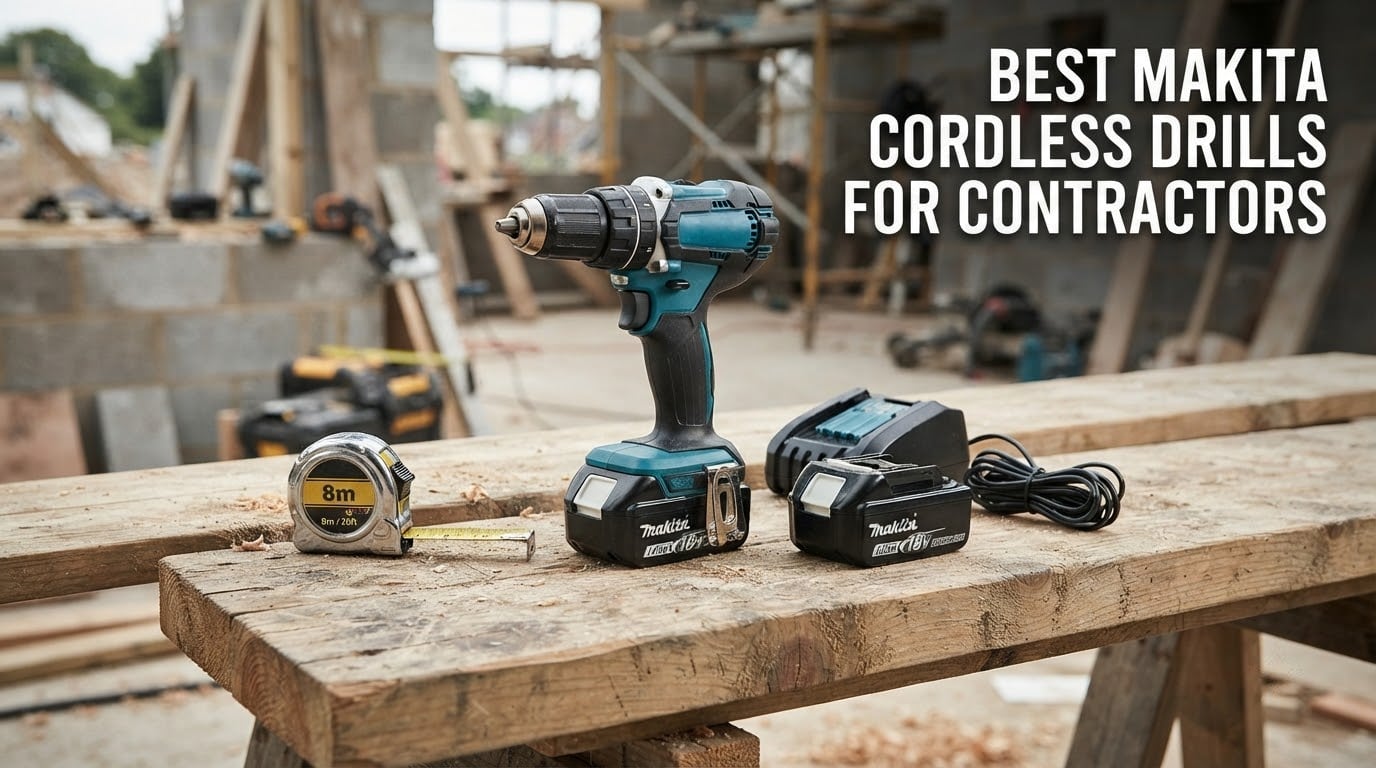
The best Makita cordless drills for contractors are not all the same tool, and the difference matters on a job site in a way it never does in a garage. A framer driving structural screws all morning needs raw torque and a chuck that will not slip. An electrician working overhead in a finished ceiling cares almost entirely about tool-only weight and head length. A remodeler setting anchors into concrete needs hammer action, and a lot of it.
What makes Makita interesting for a contractor is not any single drill. It is the size of the 18V LXT platform, the depth of the model range inside it, and how much of a crew’s tool inventory can run off the same battery. We went through the eight Makita cordless drills that carry the most owner feedback and separated them by the job they do best, not by their position in the catalog.
Every drill below is an 18V LXT tool, which means a pack you already own for your impact driver or recip saw will drive it. That is the whole argument for standardising on Makita rather than mixing ecosystems across a crew, and it is why the best Makita cordless drills for contractors are all 18V LXT rather than the 40V XGT range. We explain that platform decision in detail further down, along with the torque, weight and battery trade-offs that decide which one belongs in your hand.
Specs quoted throughout come from the manufacturers’ own product data, and pros and cons come from the owner reviews behind each tool. We do not claim lab results we did not measure.
Table of Contents
Top 3 Makita Cordless Drills for Contractors in 2026

Makita XFD131 Driver-Drill Kit
- 440 in-lb max torque
- 0-500 and 0-1900 RPM
- Kit includes 3.0Ah battery and charger

Makita XPH12Z Hammer Driver…
- 530 in-lb max torque
- 0-30000 BPM hammer mode
- Only 7-1/8 inch long

Makita XPH14Z Hammer Driver…
- 1250 in-lb max torque
- 0-31500 BPM hammer mode
- All-metal 1/2 inch chuck
All 8 Makita Cordless Drills Compared in 2026
| Product | Specs | Action |
|---|---|---|
| Makita XFD131 Driver-Drill Kit (3.0Ah) |
|
Check Latest Price |
| Makita XPH12Z Compact Hammer Driver-Drill |
|
Check Latest Price |
| Makita XPH14Z Hammer Driver-Drill |
|
Check Latest Price |
 Makita XFD10Z Driver-Drill Makita XFD10Z Driver-Drill |
|
Check Latest Price |
 Makita XPH10Z Hammer Driver-Drill Makita XPH10Z Hammer Driver-Drill |
|
Check Latest Price |
 Makita XFD12Z Brushless Driver-Drill Makita XFD12Z Brushless Driver-Drill |
|
Check Latest Price |
 Makita XFD13 Brushless Driver-Drill Makita XFD13 Brushless Driver-Drill |
|
Check Latest Price |
 Makita XFD15ZB Sub-Compact Driver-Drill Makita XFD15ZB Sub-Compact Driver-Drill |
|
Check Latest Price |
How We Picked These Eight Makita Drills
We narrowed a much larger catalog to eight models using four criteria that only matter if the drill is used for money.
Owner feedback volume. Every tool here has hundreds of reviews, and two of them have well over a thousand. A drill with a thin review history can be perfectly good, but a contractor is not gambling a production day on an unproven SKU.
Torque class and speed spread. We recorded each drill’s published max torque in inch-pounds, its no-load speed range, and whether it has hammer action. Those three numbers separate a cabinet screw driver from a lag driver faster than any feature list does.
Weight with and without a battery. Tool-only weight tells you how it feels in the hand at the bench. Weight with a battery attached is what your shoulder feels at hour six of an overhead install. Both numbers appear below wherever the manufacturer publishes them.
What actually ships in the box. Seven of these eight are bare tools. A bare tool is the right buy for a crew that already has LXT batteries and a charger, and the wrong buy for a first-time Makita owner. We flag it on every card so you are not caught out at the counter.
One thing we deliberately left out: we do not rank these on price. Tool pricing moves constantly and has little relationship to how a drill performs over a five-year service life.
1. Makita XFD131 Driver-Drill Kit – Best Overall for Contractors
Makita XFD131 18V LXT® Lithium-Ion Brushless Cordless 1/2″ Driver-Drill Kit (3.0Ah), Variable Speed
440 in-lb max torque
0-500 and 0-1900 RPM
2-speed brushless
3.0Ah battery and charger included
Pros
- Brushless motor delivers 440 in-lb torque in a compact body
- Mechanical 2-speed transmission from 0-500 to 0-1900 RPM
- Well-balanced grip that stays comfortable over long shifts
- Kit includes battery
- charger and tool bag so it works out of the box
- Owners report units lasting a decade or more of heavy use
Cons
- No hammer function
- so masonry and concrete need another tool
- Work light casts a shadow over the point of use for some users
- Included 3.0Ah packs are smaller than the 5.0Ah options
The XFD131 is the drill we would hand a contractor who wants one tool that works from the first morning. It is a brushless 1/2 inch driver-drill producing 440 in-lb of max torque across a mechanical two-speed transmission, 0-500 RPM in low and 0-1900 RPM in high. That spread is the reason it handles both a 3 inch screw into a pressure-treated post and a 1/4 inch pilot hole in the same shift without a gear change.
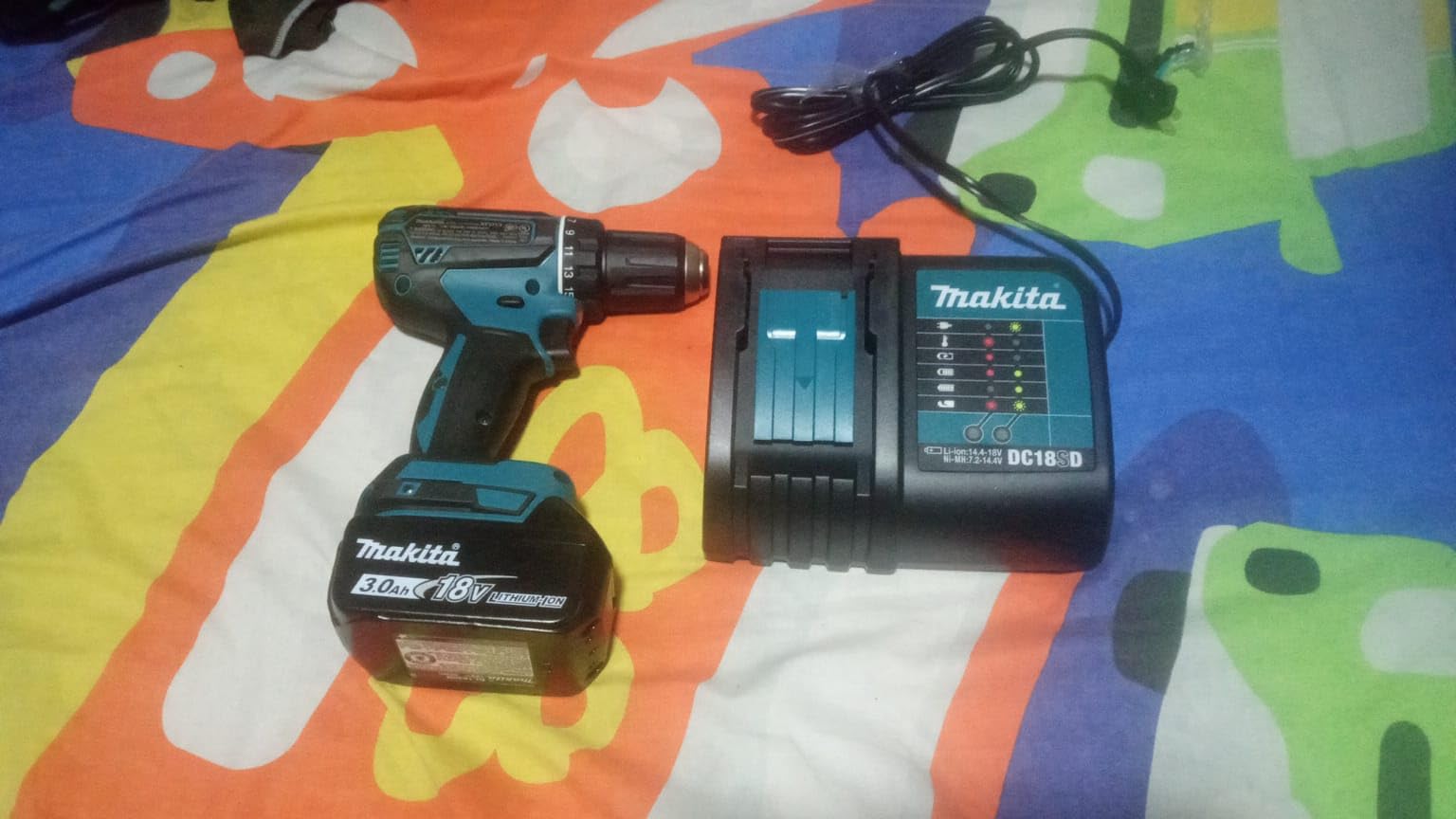
What separates it from the rest of the roundup is packaging. This is the only model in the top three that arrives as a complete kit: an 18V LXT 3.0Ah battery, an 18V LXT charger and a tool bag. For a sub or a solo operator building a first Makita kit, that is three fewer separate decisions and one warranty covering tool, battery and charger for three years.
Owners consistently single out the power-to-weight balance rather than raw power. The electronically controlled brushless motor is tuned to deliver up to 50% longer run time per charge than a comparable brushed motor, and the mechanical clutch gives repeatable, stepped torque for setting screws without stripping heads.
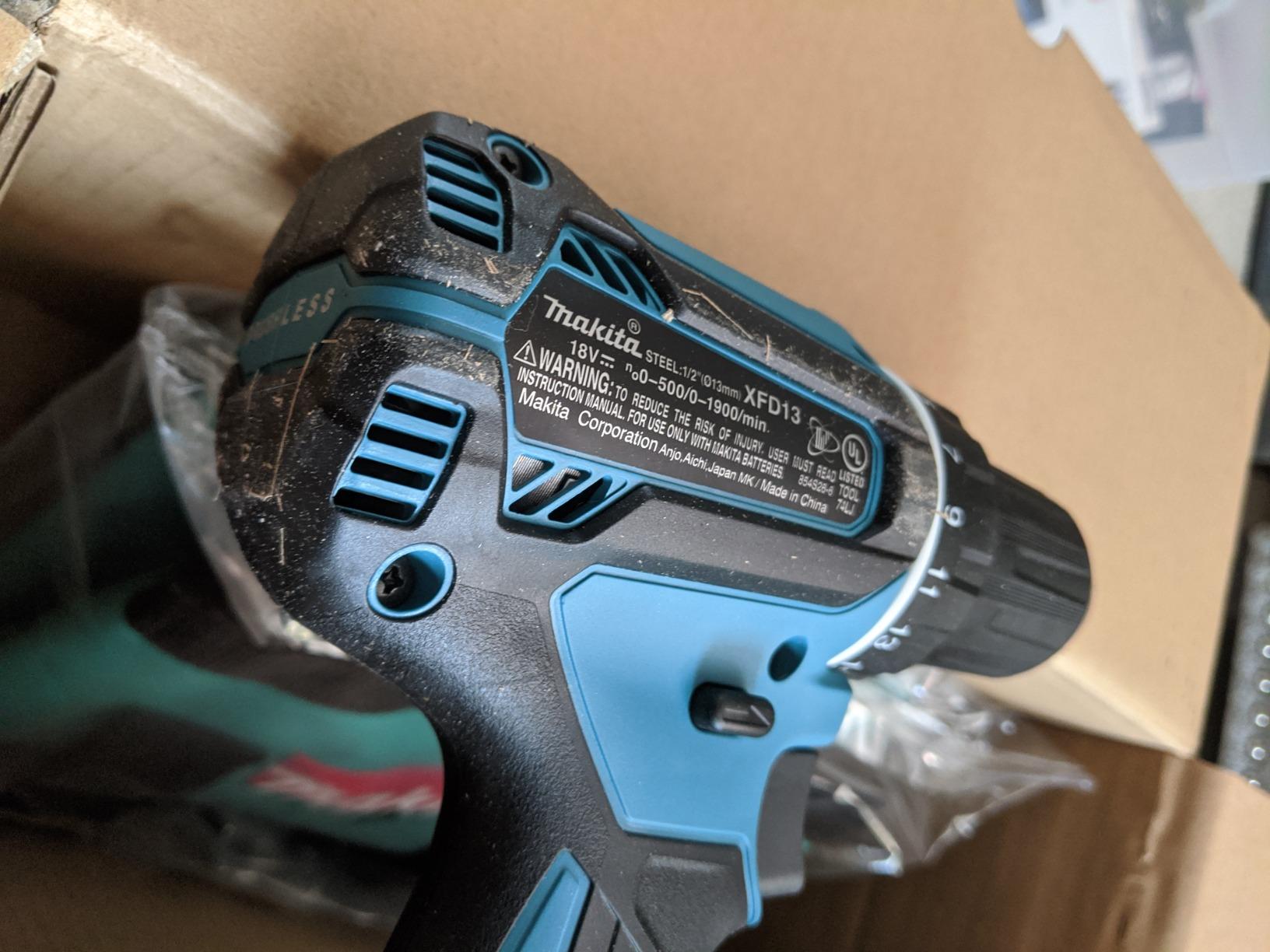
Long-term durability is the most common theme in the owner feedback, with reports of units still running after years of daily use. The light on the top of the housing is bright enough for a dark basement or a panel cavity, and the rubberised grip section is one of the more comfortable in this size class across all the brands we looked at.
The honest limitation is that this is a driver-drill, not a hammer drill. It has no hammer setting, so a concrete anchor job means borrowing or buying a different tool. If your week includes setting wedge anchors or drilling masonry regularly, the XPH12Z or XPH14Z further down will serve you better despite being sold bare.
A second, smaller gripe: the work light sits high enough that it throws a shadow forward onto the bit for some users. It is a one-minute habit to angle your head or use a headlamp, and it is the kind of complaint that only shows up after thousands of hours of use.
What the XFD131 does well on a real schedule
This is a framing and finish carpenter’s drill. Over a full day of stud layout, predrilling through plate, and driving structural screws, the 2-speed spread means you stay in one gear for most operations and drop to low only for the big fasteners. Owners rarely mention the 500 RPM low gear being slow, because in practice the bulk of driving happens in high.
The 3.0Ah battery in the kit is the point most buyers underestimate. It is a genuine middle-ground pack, larger than the 2.0Ah compact cells and smaller than the 5.0Ah bricks, and it gives you a full working day of intermittent drilling without swapping. If you already own 5.0Ah packs, they fit the same tool and roughly double the time between charges.
Where the XFD131 will frustrate you
If you are a concrete or masonry contractor, the missing hammer mode is a hard stop rather than a minor inconvenience. Makita’s own XPH series exists precisely to cover that gap, and the XPH12Z is the natural companion to this drill rather than a replacement for it.
There is also a fleet question. The included 3.0Ah packs are not the packs most established LXT users have accumulated over the years, so if your crew standardises on 5.0Ah you will end up with two battery sizes in the truck. Nothing breaks, but it defeats the point of platform standardisation.
The other thing worth knowing is that this is a kit SKU, not a bare tool. If you already have four LXT batteries and two chargers, buy the bare XFD13 further down instead and save the money you would spend on a pack you do not need.
2. Makita XPH12Z Compact Hammer Driver-Drill – Best Value
Makita XPH12Z 18V LXT Lithium-Ion Compact Brushless Cordless 1/2″ Hammer Driver-Drill, Tool Only
530 in-lb max torque
0-500 and 0-2000 RPM
0-7500 and 0-30000 BPM
7-1/8 inch long, 4.2 lb with battery
Pros
- 530 in-lb of torque with 0-30000 BPM hammer action for masonry
- Compact at 7-1/8 inch long for confined framing and cabinet work
- Lightweight body reduces fatigue on long jobs
- Wide 2-speed range plus adjustable clutch for fine control
- XPT sealing improves dust and water resistance on site
Cons
- Tool only
- battery and charger must be purchased separately
- Lower hammer BPM than the XPH14Z
- so heavy concrete work runs slower
- Only two mechanical speed settings
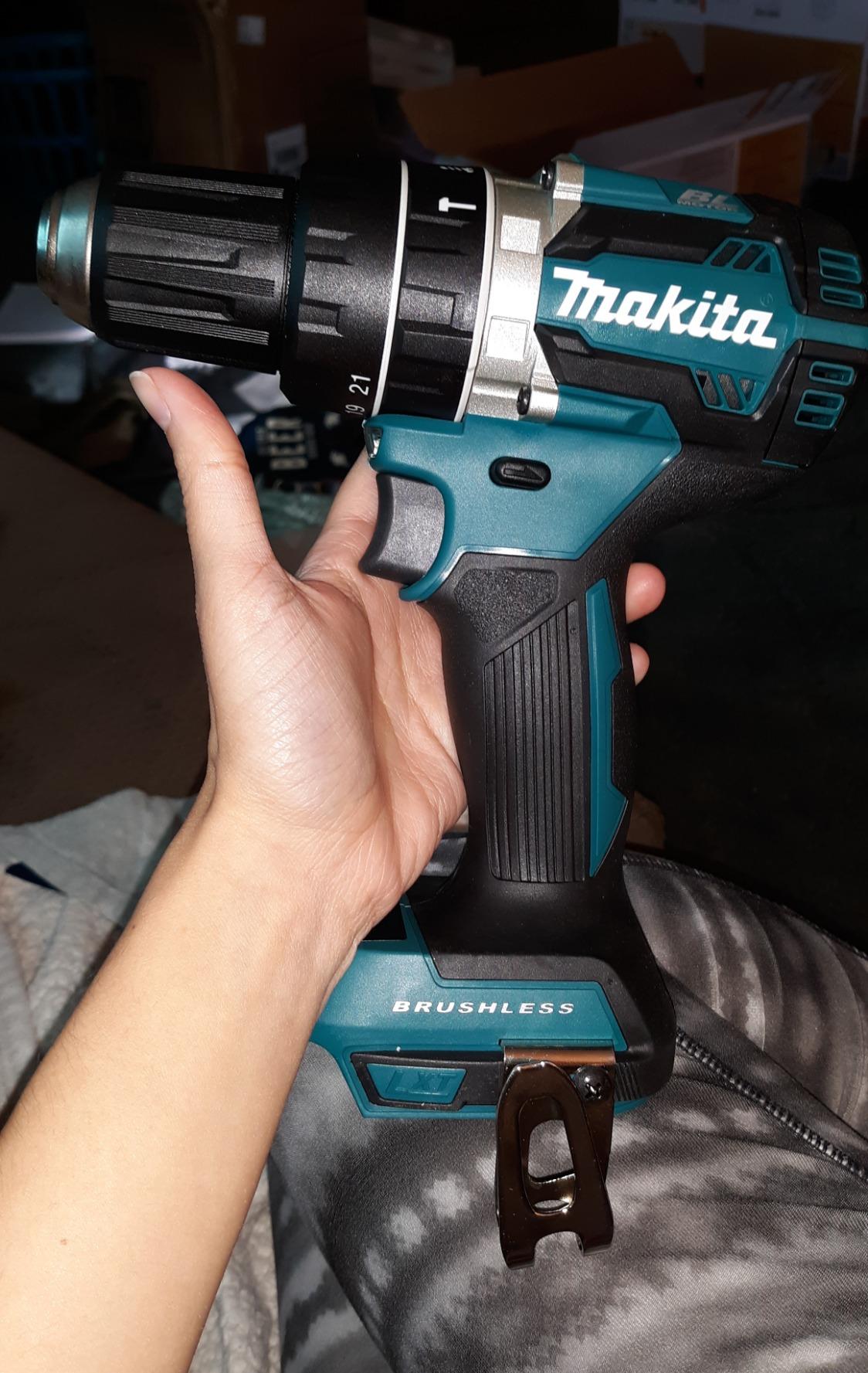
The XPH12Z is the drill that answers the question most crews actually ask, which is whether one Makita can cover both wood and light masonry. It adds a hammer mode to the same 18V LXT battery ecosystem as the XFD drivers, producing 0-7500 BPM in low and 0-30000 BPM in high alongside 530 in-lb of max torque and a 0-500 to 0-2000 RPM spread.
Where it wins is size. At 7-1/8 inches long and 4.2 pounds with a battery fitted, it is short enough to get a drill into a stud bay or a joist cavity that a full-size hammer drill simply will not enter. The marketing calls it compact, and on a site where you are working inside finished walls that word carries real weight.
Reviews describe the brushless motor as running cool and efficiently, with the electronically controlled design matching torque and speed to the load rather than running flat out. Makita’s XPT sealing on this model is aimed at dust and water ingress, which matters if your drill lives in a dusty van rather than a closet.
For a crew standardising on LXT, this is a genuinely flexible tool. A framer can carry it as the only drill on a rough-in day, an electrician can use hammer mode to set a box into masonry, and a finish carpenter can use the clutch to set small fasteners without over-driving. It is the drill that gets passed around a two-person crew without anyone complaining about the tool they were handed.
The 530 in-lb of torque is a meaningful step over the brushed-generation drills it replaces, and combined with the two-speed range it covers 1.5 inch holes in wood and half inch holes in metal according to the published capacity figures.
Owners do raise one point about sustained masonry work: 30000 BPM is lower than what the heavier hammer drills in this lineup deliver, so a long run of concrete drilling will feel slower than it does with the XPH14Z. For anchor setting and occasional predrilling that difference never becomes an issue.
Why contractors pick this one over a plain driver-drill
Hammer mode is the reason this drill earns its place on a truck that already has a driver-drill. Concrete anchors, brick, block and stone stop being a job you decline or a second tool you have to keep charged. The impacts break the aggregate loose and the rotation carries the bit, which is the difference between a productive afternoon and a ruined masonry bit.
The clutch still works normally in the same tool. You switch back from hammer to a numbered clutch setting and drive cabinet screws all day without the hammer mechanism engaging, which is a common complaint about drills that lock you into one mode.
Where the XPH12Z falls short
It ships as a bare tool. Battery and charger are not included, so if you are starting from nothing the XFD131 kit is the more honest starting point. If you already run LXT packs, the bare format is exactly what you want and you avoid paying for a second battery.
Only two mechanical speed settings is the other limitation, and it is worth weighing against what you actually do. Three-speed drills give finer control in high-torque driving, but Makita’s electronic motor management handles a lot of what the third gear would have been doing, and reviewers do not treat the two-speed layout as a significant drawback.
Finally, this is not a heavy-duty concrete drill. It is a wood-and-light-masonry tool that happens to have hammer action. If your day is anchor installation, you want the torque class in the next section instead.
3. Makita XPH14Z Hammer Driver-Drill – Most Torque in a Half Inch Chuck
Makita XPH14Z 18V LXT® Lithium-Ion Brushless Cordless 1/2″ Hammer Driver-Drill, Tool Only
1250 in-lb max torque
0-550 and 0-2100 RPM
0-31500 BPM hammer
7 inch long, 4 lb net weight
Pros
- Exceptionally high 1250 in-lb max torque for a 1/2 inch hammer drill
- 0-31500 BPM hammer setting handles concrete brick and anchor work
- All-metal self-ratcheting chuck grips bits firmly and resists wear
- Compact 7 inch length and 4 lb net weight reduce fatigue
- Owners report it handling concrete lags and deck and fence work
Cons
- Tool only
- battery and charger sold separately
- Chuck can arrive frozen in the fully open position on some units
- Only two speed settings compared with older three-position models
- Some buyers report underwhelming hammer performance versus competing brands
The XPH14Z is the most powerful drill in this roundup by a wide margin, and the number that settles the question is 1250 in-lb of max torque. That is roughly two and a half times the output of the sub-compact at the back of this list, and it is the figure that matters when you are driving structural screws into laminated lumber or pulling lag bolts out of a pressure-treated post.
It is also short. At 7 inches long, Makita made this hammer drill 14% shorter than the model it replaced, and reviewers repeatedly note that the compactness is surprising for a tool in this torque class. The chuck is the other differentiator: an all-metal 1/2 inch self-ratcheting sleeve that grips the bit harder and survives more abuse than the plastic sleeves on lighter drills.
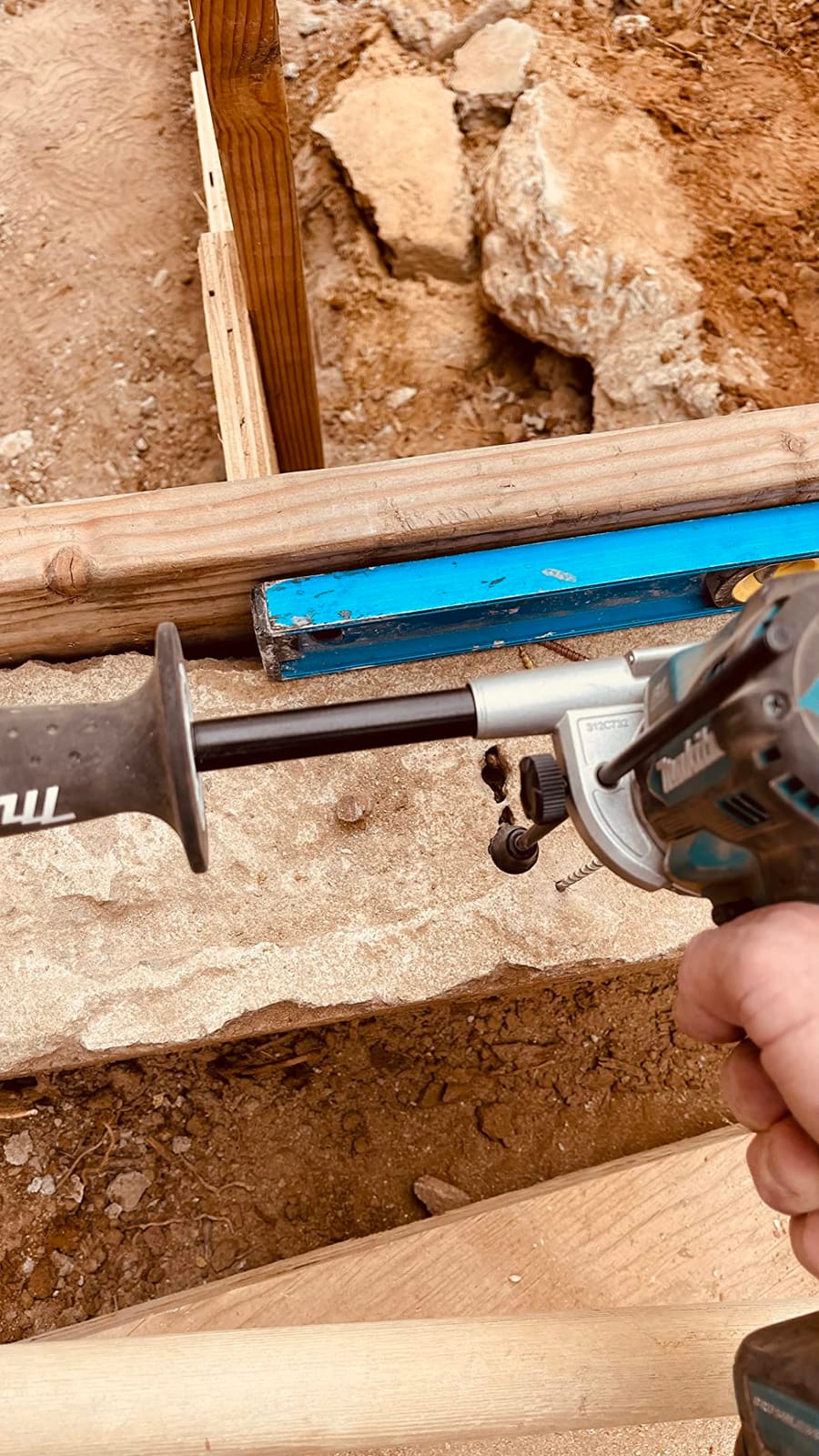
Hammer performance runs to 0-31500 BPM, the highest blow rate of the three hammer drills here, on a 0-550 and 0-2100 RPM transmission. Owners report using it for concrete, brick, masonry anchoring, deck frames and heavy timber without complaint on power.
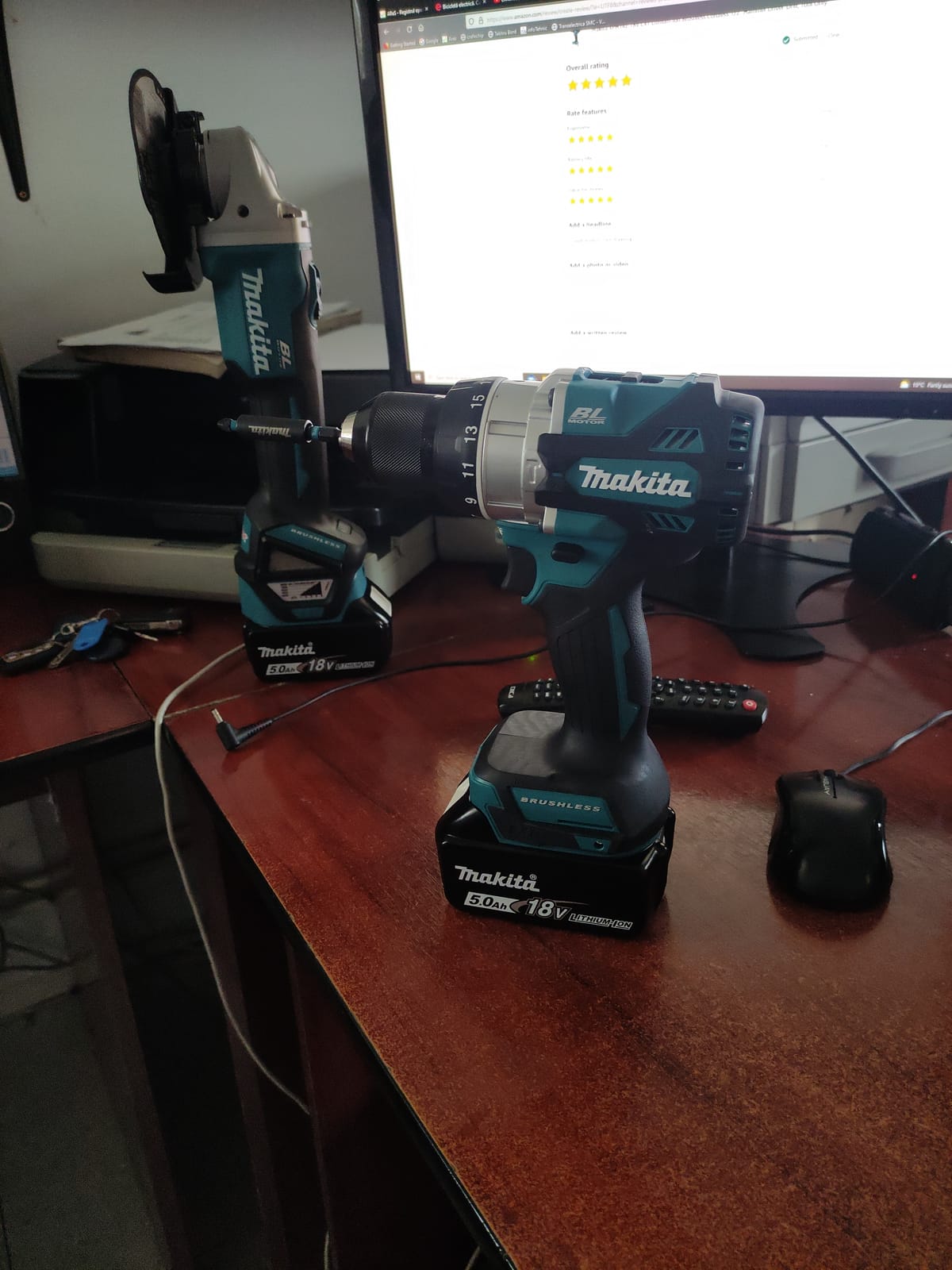
Despite the torque figure, the net weight is only 4 pounds, or 6 pounds with a battery fitted. That is the trade-off that makes this drill carryable for a full shift when a full-size hammer drill of equivalent power usually is not. The published drilling capacity runs to 3 inches in wood, which covers ordinary site timber without a second tool.
There is one specific complaint that recurs and is worth knowing before you buy: some units arrive with the chuck locked in the fully open position. Owners work around it by running the chuck down manually, but it is a genuine first-day annoyance on an expensive tool and it is a fair question for any seller.
A minority of reviewers also feel the hammer function is not as aggressive as competing brands at similar prices. If concrete drilling is your primary work rather than framing with occasional anchors, that is a fair reason to read the other reviews carefully before committing.
Where 1250 in-lb actually earns its keep
Torque figures are easy to over-read, so here is the practical version. Below roughly 500 in-lb you are fine for cabinet screws, deck boards and pilot drilling. Around 800 to 1000 in-lb you can start driving structural screws without worrying about the clutch stalling. Above 1200 in-lb you are into the range where a single drill handles lag screws, structural screws and auger boring without a second tool on the belt.
That last category is what makes this the pick for a framing contractor or a deck builder. One drill in the belt covers the whole day rather than covering 80% of it, and the 2100 RPM high speed keeps large drill bits moving fast enough to stay efficient in softwood.
Where it is the wrong drill
If your work is finish carpentry or electrical rough-in with no masonry, the torque is dead weight in the hand and the bare-tool format means you are buying capability you will not use. The XFD12Z or XFD10Z cover that work with less fatigue over a long shift.
It is also a bare tool. Battery and charger are separate purchases, and it is compatible with 18V LXT batteries, so crews running LXT packs already have the right fit. First-time Makita buyers should budget for batteries before ordering this one.
Two mechanical speeds is a small step back from older three-position designs. On a tool this torque class, the low gear handles high-torque driving and the high gear handles everything else, so the missing third setting rarely becomes the reason a job stalls.
4. Makita XFD10Z Driver-Drill – Budget Pick for a Second Drill on the Truck
Makita XFD10Z 18V LXT Lithium-Ion Cordless Driver-Drill, Tool Only, 1/2″, Variable Speed
480 in-lb max torque
0-600 and 0-1900 RPM
2.9 lb tool weight
XPT dust and water sealing
Pros
- Mechanical clutch gives precise controllable torque for driving fasteners
- Lightweight at 2.9 lb and well balanced for all-day carry
- XPT sealing improves dust and water resistance for site work
- Dual LED work lights with afterglow illuminate dark spaces
- Owners report years of daily use with strong backward battery compatibility
Cons
- No hammer function for masonry drilling
- Tool only
- battery and charger must be bought separately
- Keyless chuck can bind with heavy long-term use on some units
The XFD10Z is the older-generation drill in the LXT line, and that is both its strength and its limitation. It uses a Makita-built four-pole motor delivering 480 in-lb of max torque on a 0-600 and 0-1900 RPM two-speed transmission, and it predates the brushless models above it. For a contractor who already has LXT batteries from a previous decade, it is an unusually capable second drill.
Reviewers are most enthusiastic about the mechanical clutch. It gives a stepped, repeatable torque from large structural fasteners down to small delicate screws, and the mechanical feel is more consistent under load than a purely electronic clutch. Several owners describe it as the drill they reach for specifically when they do not want to strip a screw head.
At 2.9 pounds, it is light and well balanced, and the dual LED work lights with afterglow mean the work area stays lit for a short period after the trigger is released. That afterglow is genuinely useful when you stop to swap a bit or read a marking in a dark cavity.
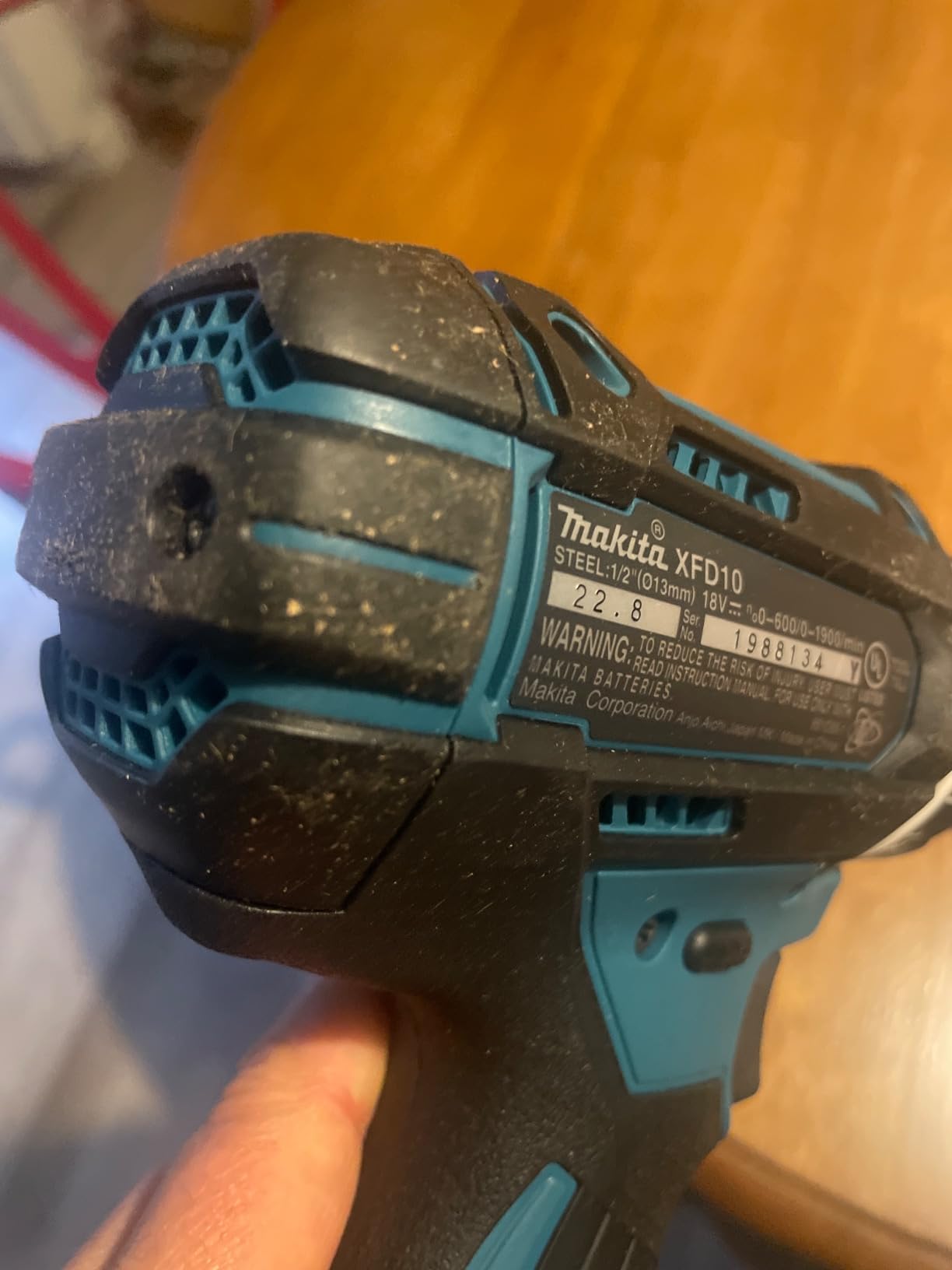
XPT, Makita’s Extreme Protection Technology, is engineered into this housing for increased dust and water resistance in harsh site conditions. It is a spec that matters more than it sounds: a drill that survives a season of drywall dust and rain in an open truck bed ages differently from one that does not.
The backward compatibility is the quiet advantage. Owners with long-standing LXT battery collections report that this drill runs on the older packs they have been keeping, which makes it a natural second body for a crew that already has a battery inventory but needs another tool on every truck.
The reviews describe years of daily use with no degradation, and the rubberised soft grip on the handle is designed for comfort over long shifts. Where it falls short is the chuck: a small number of owners report binding after heavy long-term use, which is the wear point to watch if you buy one second-hand.
When a second drill on the truck makes sense
A crew with three or four people does not need one drill per person, but it does need more than one drill if two people are framing at once and a third is on rough-in. The XFD10Z is a sensible, well-supported second body precisely because it costs less than a full brushless kit and does exactly the same job on wood.
For electrical and finish work in particular, 480 in-lb is more than enough torque for the fasteners those trades drive. It is also light enough that it becomes the drill you grab without thinking, which for a tool that lives in a bag for eight hours a day matters as much as the spec sheet.
Why you might look elsewhere
There is no hammer mode, so masonry work is out. It is a basic drill, and the basic drill category exists because the majority of site drilling is in wood and metal.
The 4-pole motor is not brushless, which means more heat and wear over a decade of daily use compared with the brushless models above it. If you are buying the one drill your crew will keep for five years, the brushless options are the better long-term investment. If you are filling a gap, this is the sensible spend.
It is also a bare tool, so budget for a battery and a charger if you do not already own LXT packs.
5. Makita XPH10Z Hammer Driver-Drill – Entry Hammer Drill for Smaller Crews
Makita XPH10Z 18V LXT Lithium-Ion Cordless 1/2″ Hammer Driver-Drill (Tool Only)
480 in-lb max torque
0-600 and 0-1900 RPM
7-3/4 inch long
3.4 lb with battery
Pros
- Adds hammer-drill capability to the LXT line at an entry-level price point
- Compact 7-3/4 inch length and light 3.4 lb weight for tight spaces
- 480 in-lb of torque is adequate for everyday wood drilling and fastener driving
- Dual LED work lights with afterglow for low-light setups
- Works with existing Makita 18V LXT batteries and chargers
Cons
- Tool only
- battery and charger sold separately
- Lower torque and lighter duty than the XPH12Z and XPH14Z brushless hammer drills
The XPH10Z is the cheapest way to get hammer action into an 18V LXT toolkit, and for a solo tradesperson or a two-person crew that is often the entire decision. It delivers 480 in-lb of max torque from a four-pole motor on a 0-600 and 0-1900 RPM two-speed design, with a 0.4 inch capacity in steel and 0.5 inch in wood according to the published figures.
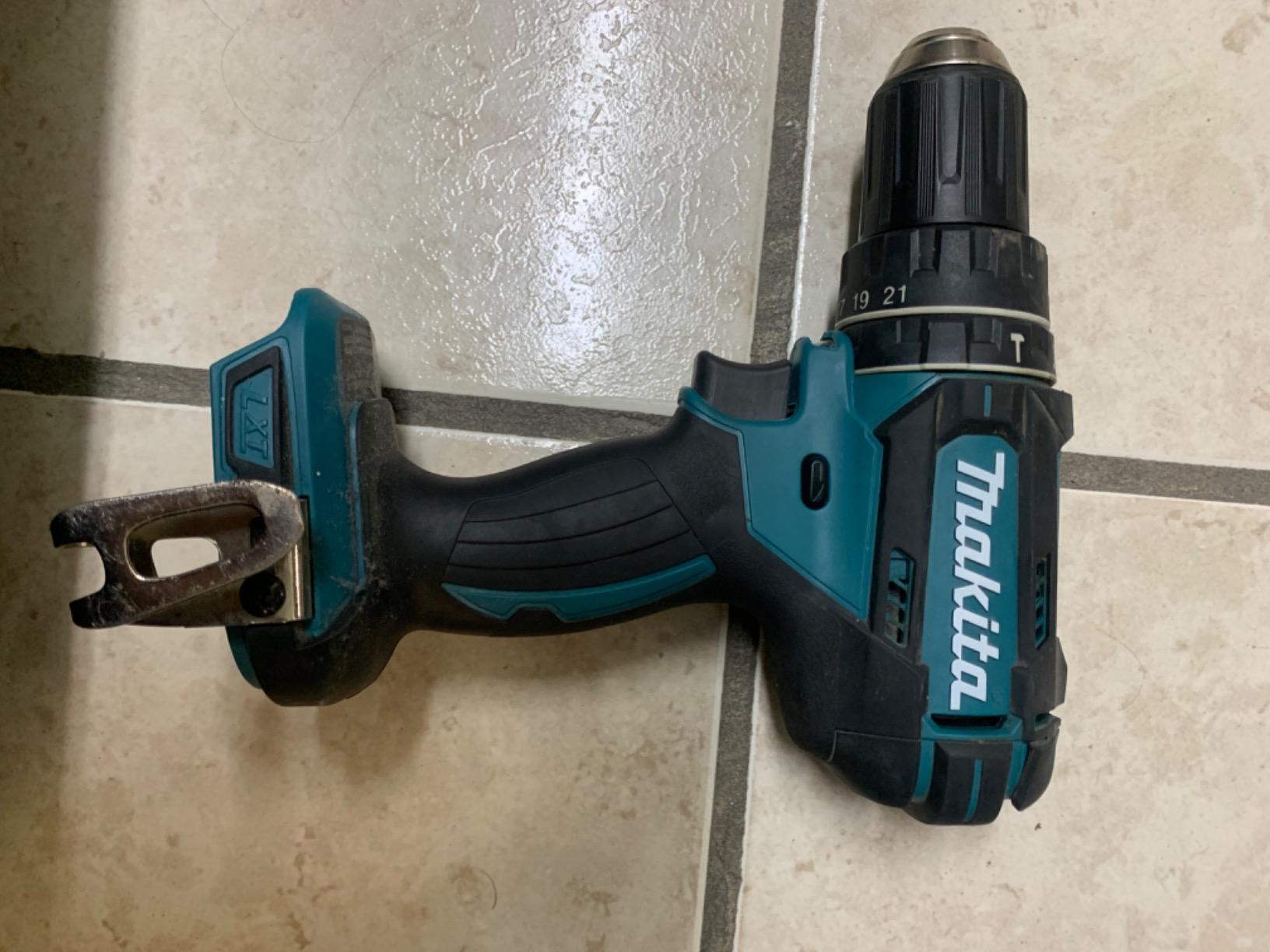
Size is its real strength. At 7-3/4 inches long and 3.4 pounds with a battery fitted, it is one of the more compact hammer drills in the range, and that is what makes it useful inside stud bays, above ceilings and in joist cavities where a longer body simply will not fit.
Buyers who already own LXT batteries and chargers appreciate the compatibility directly, and the dual LED lights with afterglow handle the low-light work that overhead installation always involves. The rubberised grip is a Makita trait and it carries through here.
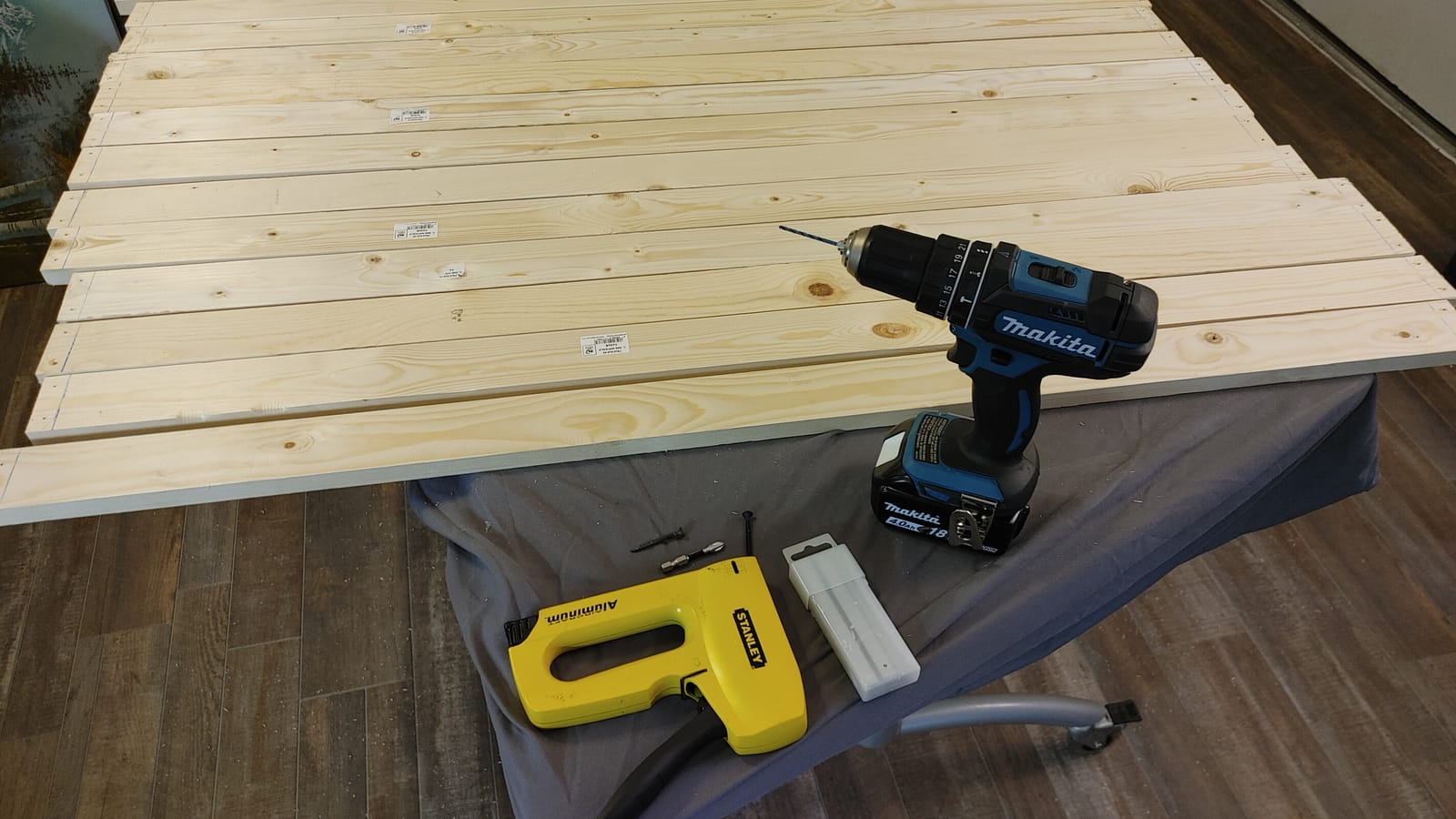
The honest read on this drill is that it is an older design being undercut by newer brushless models in the same platform. Both the XPH12Z and the XPH14Z deliver more torque, more speed and a longer service life, and reviewers consistently position the XPH10Z as a budget entry point rather than a first choice.
That does not make it a bad tool. For predrilling into brick or block for a few anchors, for fitting a back-box into masonry, for a light hammer-drill task twice a week, it does the job at a lower cost of entry.
Reviewers consistently note the limitation in the same terms: it is outclassed for heavy duty by the newer brushless hammer drills. If you are framing with lag screws, you will feel that difference immediately. If you are setting anchors and blocking, you likely never will.
What this drill is genuinely good for
It covers the middle of the duty range well. Everyday wood drilling, fastener driving, and light masonry work are all inside its envelope, and the compact body means it becomes the default drill for finish and fit-out work in a small crew.
There is a fleet argument for it too. If a crew already owns a full complement of LXT batteries, adding a bare hammer drill is cheaper than adding a second battery and charger alongside a more capable tool. For crews with a limited tool budget, that arithmetic often decides the purchase.
Where the compromises show
Torque is the honest limit. At 480 in-lb it sits in the same band as the plain driver-drills in this roundup, which means the hammer function is doing the work rather than the torque. That is fine for masonry and wrong for large structural fasteners.
It is a bare tool, so battery and charger are additional purchases. And if you are building a new LXT toolkit rather than supplementing one, the XPH12Z gives you more torque, more hammer rate and brushless longevity for a similar outlay, which is a better place to start.
6. Makita XFD12Z Brushless Driver-Drill – Best for Overhead and Repetitive Driving
Makita XFD12Z 18V LXT Lithium-Ion Brushless Cordless 1/2″ Driver-Drill, Tool Only,
530 in-lb max torque
0-500 and 0-2000 RPM
2.9 lb tool weight
Brushless motor, no hammer mode
Pros
- 530 in-lb of torque
- the strongest figure in the non-hammer XFD line
- Brushless motor runs cooler and more efficiently than brushed predecessors
- Light 2.9 lb body with good balance for overhead and repetitive work
- Mechanical 2-speed transmission and adjustable clutch give dependable fastener control
- No hammer mode means it will not stick in hammer setting
Cons
- Tool only
- battery and charger sold separately
- Chuck can be finicky about engaging or releasing bits
- Spindle lock mechanism can weaken over time
- Brake produces a noticeable ratcheting noise at stop
The XFD12Z is the drill we would put in the hands of an electrician doing second-story work, and the reasoning is simple: 530 in-lb of torque with a 2.9 pound body. That is the highest torque figure in Makita’s non-hammer driver-drill line at this weight, and it is paired with a 0-500 and 0-2000 RPM mechanical two-speed transmission.
The brushless motor eliminates carbon brushes, so it runs cooler and more efficiently, and the electronically controlled design matches torque and speed to the changing demands of the job. Makita claims up to 50% longer run time per charge from that efficiency, which matters when you are driving device screws and box screws for four hours straight at arm’s length.
Owners rate it as a strong, light, long-lasting driver that pairs well with batteries they already own. Several mention that the complete absence of a hammer mode is a deliberate positive rather than a shortfall, because a driver-drill will never accidentally engage hammer and stall in a fastener the way some hammer drills can.
Published drilling capacity runs to half inch in metal and 1 inch in wood with a 13 mm chuck. That is a working driver for electrical rough-in, drywall fastening, cabinet installation and finish carpentry, which is the majority of a finish contractor’s drilling.
Two complaints come up repeatedly. The chuck can be finicky about engaging or releasing bits, and the spindle lock mechanism can weaken over time on older units. The brake also produces a noticeable ratcheting noise when the tool stops, which is cosmetic but audible in a quiet occupied building.
Neither complaint touches the motor, and both are the kind of issue that appears after several years rather than in the first month. For a tool that gets handled hundreds of times a day, the light body and balanced grip are what owners keep coming back to.
Why weight beats torque for overhead work
An hour of overhead work is a static hold, not a dynamic lift. The load is your arm and the drill’s own mass, held at shoulder height or above, and that is the situation where shaving weight off the tool pays back immediately. At 2.9 pounds this is one of the lighter bodies in the roundup, and the 530 in-lb rating means you are not compensating with a bigger tool.
For repetitive driving on one material, which is what overhead installation actually is, torque above what the fastener needs buys nothing. You set the clutch, hold the speed steady and repeat. That is the workflow this drill is built for.
When a driver-drill is the wrong choice
If you hit concrete or masonry at all, this drill stops. It has no hammer mode by design, and the fix is one of the XPH models above rather than a compromise on this one.
It is also a bare tool. For crews with an established LXT battery fleet that is exactly the right format, since the money goes into a tool rather than a pack you already have four of.
If you are buying your one drill, weigh whether 530 in-lb of non-hammer torque is really the number you need. Plenty of contractors find themselves borrowing a hammer drill for one task a week and decide the XPH12Z is the better single purchase.
7. Makita XFD13 Brushless Driver-Drill – Light Bare Tool for an Existing Battery Fleet
Makita XFD13 18V 1/2″ Brushless Drill Driver (Bare Tool)
440 in-lb max torque
0-500 and 0-1900 RPM
2.4 lb bare tool weight
Battery and charger sold separately
Pros
- Very light 2.4 lb brushless drill with 440 in-lb of torque
- Good power-to-weight ratio for overhead cabinet and finish work
- Adjustable clutch settings give control from large fasteners down to small delicate screws
- Uses standard Makita LXT 18V batteries so it fits an existing battery fleet
- Owners who use it daily report consistent dependable operation
Cons
- Bare tool only
- battery charger and case all sold separately
- Chuck grip is weaker than older higher-quality chucks and can be hard to remove for replacement
- Some units stall under high torque and low-speed control is less refined
- Work light casts a wide beam that can shine into the operator's eyes
The XFD13 is the bare-tool version of the drill in our number one position, and it carries the same core specification: 440 in-lb of max torque on a 0-500 and 0-1900 RPM two-speed brushless transmission. What changes is the weight at 2.4 pounds bare, and the fact that no battery, charger or case is included.
That combination makes it a strong second-body option for anyone with an established LXT battery inventory. You are buying the drill without paying twice for power you already own, and the light bare weight is a genuine advantage for bench work and installation where the pack is already in the tool.
Reviewers describe a good power-to-weight ratio and a drill that suits overhead, cabinet and finish work. The adjustable clutch gives control across a wide fastener range, and users who rely on it daily report consistent, dependable operation without drama.
The dominant complaint is the chuck. Owners describe the grip as weaker than the higher-quality chucks on older Makita drills, and note that it can be difficult to remove for replacement if it ever needs to be. That is a serviceability issue rather than a performance one, but it is worth knowing before you commit.
A second group of reviews notes occasional stalling under high torque and less refined variable speed at low RPM. If your work is heavy driving rather than fitting and finishing, that is a fair reason to step up to a model with more torque in reserve.
The work light also gets called out for casting a wide beam that can shine into your eyes at certain angles. Annoying rather than disqualifying, and easy to work around by angling the body.
Why the bare-tool format suits an existing fleet
Battery inventory is the hidden cost in a contractor’s tool budget. Once a crew holds four or five LXT packs and two chargers, every additional bare tool is pure tool spend, and the money saved by skipping a bundled 3.0Ah pack can go into a second charger or a higher capacity battery instead.
It also means your drill choice is not constrained by whatever pack happens to be bundled. You can run 2.0Ah cells for light fitting work and 5.0Ah cells for a production day, in the same tool, without carrying two drill bodies.
At 440 in-lb this is a driver-drill, not a hammer drill, and pairing it with one of the XPH models is a common and sensible two-drill configuration for a crew that does mixed work.
Where it is not the right buy
Buy this if you already own LXT batteries. If you do not, the XFD131 kit in position one is the same drill with everything you need to use it, and it carries a three-year limited warranty covering tool, battery and charger.
Avoid it for heavy driving and masonry. The torque figure and the absence of hammer mode both put it firmly in the fitting and finish category, and the chuck complaint becomes more relevant the more torque you ask of it.
8. Makita XFD15ZB Sub-Compact Driver-Drill – Best for Confined Spaces
Makita XFD15ZB 18V LXT Lithium-Ion Sub-Compact Brushless Cordless 1/2″ Driver-Drill, Tool Only, Black
350 in-lb max torque
0-500 and 0-1700 RPM
5-7/8 inch long
Metal gear-jampot design
Pros
- Very short body at 5-7/8 inch long and 2.9 lb with a battery fitted
- Ideal for work inside cabinets wall cavities and other confined spaces
- Metal gear-jampot design adds durability to the compact head
- Brushless motor and mechanical 2-speed clutch for consistent fastening control
- Shares the standard Makita 18V LXT battery platform
Cons
- Lowest torque in this lineup at 350 in-lb so it is unsuited to heavy masonry lags or large stock
- Tool only
- battery and charger sold separately
- Top speed of 1700 RPM is lower than the full-size XFD models
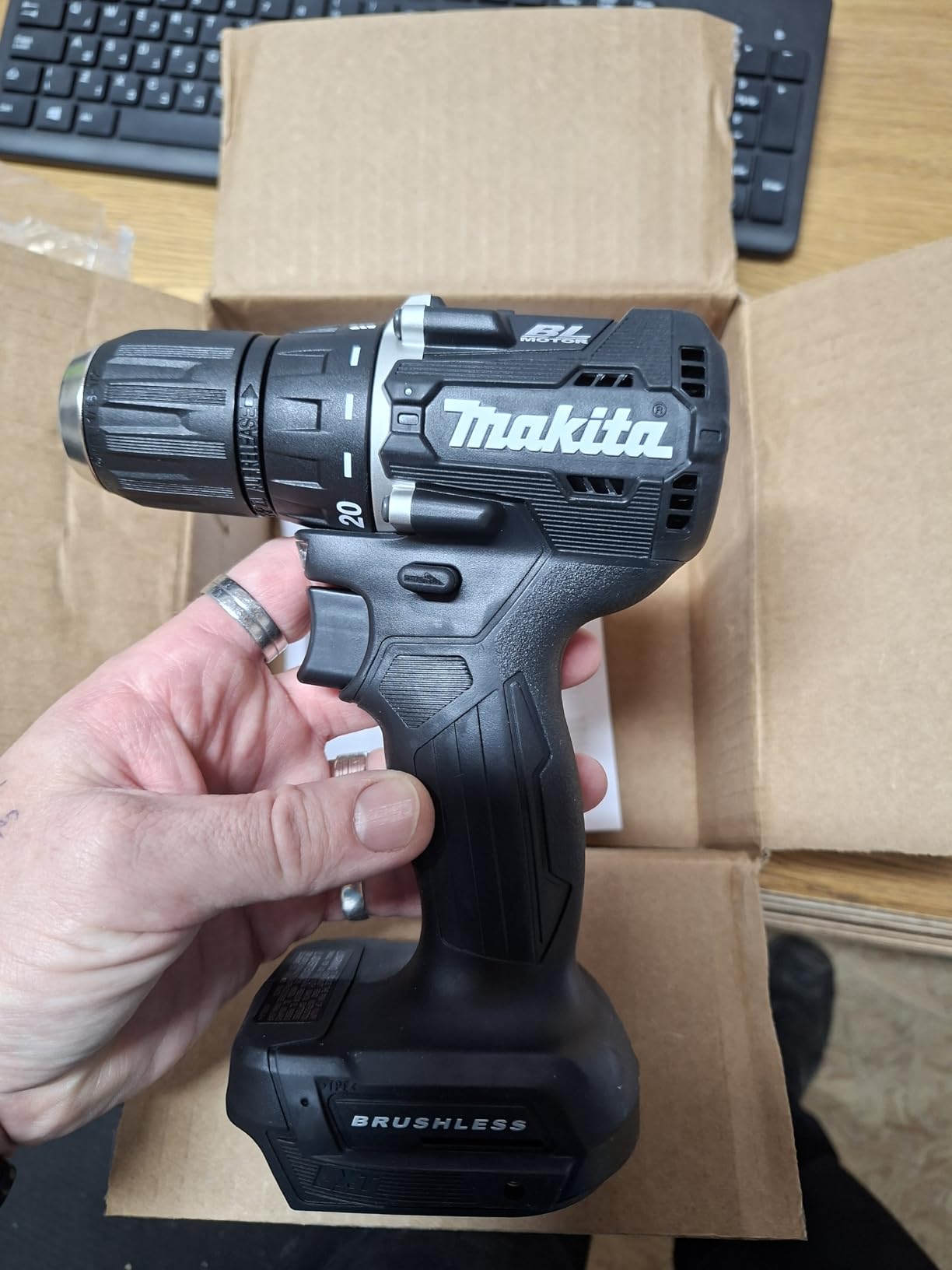
The XFD15ZB exists to solve a physical problem: getting a drill into a space where a drill does not fit. At 5-7/8 inches long it is the shortest body in this roundup, and at 2.9 pounds with a battery fitted it is easy to hold one-handed in a wall cavity or above a run of cabinet boxes.
The mechanical variable 2-speed transmission runs 0-500 and 0-1700 RPM, and the brushless motor is paired with a mechanical clutch for consistent fastening control. Makita engineered the head with a metal gear-jampot design specifically to add durability where a compact body would otherwise be the weak point.
Reviewers treat it as a companion to a full-size Makita drill rather than a replacement for one. The value is that it shares the standard 18V LXT battery platform, so it slots into an existing battery fleet without a second ecosystem and without a second charger.
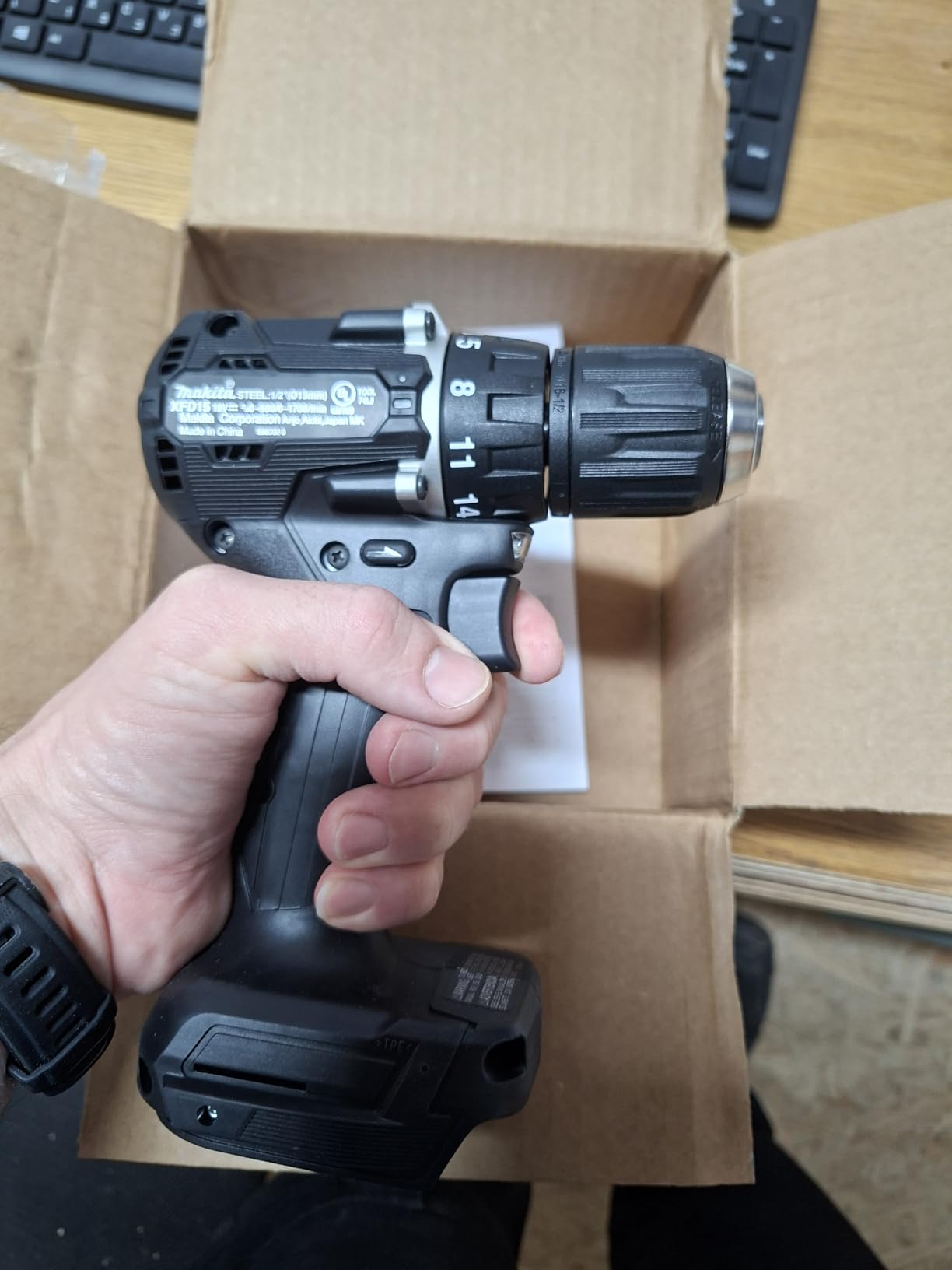
The trade-off is stated plainly in the reviews: 350 in-lb is the lowest torque figure in this lineup and 1700 RPM is the lowest top speed. That makes it a light and medium duty fastening tool, not something you would use for masonry, lags or large stock.
There is a muscle-memory point worth raising. Makita’s sub-compacts are small enough that rotating the clutch ring to reach a high setting can feel awkward, and owners report that the small clutch ring can be frustrating to find with a gloved hand. It is a real usability quirk rather than a defect, and it is one reason the compact is a second drill rather than the only one.
For a finish carpenter fitting crown, an electrician working inside a wall cavity or an installer working overhead in a tight plenum, none of that matters. The body fits, the battery is the one you already own, and the job gets done.
When a sub-compact changes the job
There are tasks where a compact drill is not a convenience but the difference between doing the job and not. Cabinet interiors, soffits, tight ceiling cavities, window jambs, and anything behind a finished wall fall into that group. A full-size body simply will not go there, and forcing a larger drill into a confined space is how tools get damaged.
At 5-7/8 inches and 2.9 pounds with a battery, this is comfortable for one-handed work in those spaces, and the brushless motor gives you the same drive quality as the larger drills on fasteners within its range.
When it is the wrong tool
Do not try to make it your primary driver. At 350 in-lb, the first thing you give up is driving larger structural fasteners, and the second is speed on big drill bits. It is a fitting tool, and treating it as a framing tool ends in frustration.
It is also a bare tool, so battery and charger are separate. For a crew with LXT batteries already in the truck, that is the right economics. For anyone starting fresh, the driver-drill kit in position one covers the same role with far more headroom.
If you need confined-space capability and hammer action in the same body, this drill is not that tool. Nothing at this size in the roundup combines both.
LXT 18V vs XGT 40V vs XPT: Which Platform Should a Crew Standardise On?
This is the highest-intent question in the category and it is answered badly almost everywhere, so here is the direct version. For the overwhelming majority of contractors, 18V LXT is the right platform to standardise on. It has the deepest tool range, the cheapest entry point, and enough headroom in the drill line to cover framing, finish and light masonry without leaving the battery family.
Every one of the eight drills in this roundup is 18V LXT. That is not a limitation of our selection. It is the shape of the platform: LXT covers the broadest range of cordless tools at the most accessible pack sizes, so it is where a contractor’s standardisation decision actually lands.
XGT is Makita’s higher-capacity platform for heavy work, where you need more power per tool than 18V provides. The trade-off is the same one every high-voltage platform presents. You get more capability and you pay for it twice, once in the tools and again in the battery inventory, because XGT packs do not run LXT tools. A crew splitting itself across two platforms ends up carrying chargers, packs and mental overhead for both.
XPT is different again. In this lineup it appears as Makita’s Extreme Protection Technology, a dust and water resistance specification engineered into tool housings rather than a separate battery family. The XFD10Z and the XPH12Z both carry it, and it is worth checking for on any tool you buy for dusty or wet site conditions.
Our recommendation for a crew standardising now is to go deep on 18V LXT and treat the drill line as the core, adding a sub-compact and a hammer drill as secondaries. Revisit the higher platform only when a specific job genuinely exceeds what your LXT tools can do, rather than at the start as a statement of intent.
How to Choose Torque, Speed, Weight and Head Length for Site Work?
Torque. Think in bands. Below 400 in-lb is fit and finish. 400 to 600 in-lb is general carpentry and electrical work. 600 to 1000 in-lb covers structural screws and heavier timber. Above 1200 in-lb you can handle lag screws and large auger bits in one tool. Buy the lowest band that reliably covers your heaviest fastener, because every extra pound of torque is a pound in your hand all day.
Speed. The two-speed spread matters more than the headline max speed. Low gear at 0-500 RPM gives you the control to drive a screw without over-driving it and to drill a pilot hole accurately. High gear at 1700 to 2100 RPM is where you spend the day. A drill with a narrow spread forces you to choose between control and speed all shift long.
Weight. Always read the tool-only figure and the with-battery figure separately, because they tell you different things. Tool-only weight tells you how the drill feels in the hand at a bench. With-battery weight tells you what your shoulder feels at hour six of an overhead install. On this roundup the range runs from 2.4 pounds bare on the XFD13 to 6 pounds with a battery on the XPH14Z, and that difference is felt.
Head length. The least discussed spec and one of the most useful. A 7 inch hammer drill and a 5-7/8 inch sub-compact differ by little more than an inch, but that inch decides whether the tool fits inside a stud bay or between a joist and a wall. If you work in finished spaces at all, check the length before anything else.
Hammer or not. Decide this from your materials, not from the feature list. Wood and metal need no hammer mode, and a driver-drill will not accidentally stall in a fastener the way a hammer drill set to hammer can. Concrete, brick, block and stone need hammer action. Beyond light anchors, you want an SDS rotary hammer rather than any drill in this roundup, because no 1/2 inch chuck drill is the right tool for sustained concrete drilling.
Brushless. A brushless motor eliminates carbon brushes, runs cooler and lasts longer than a brushed equivalent. For a tool you buy once and keep for a decade, brushless is worth the step up. It is the main reason the XFD12Z and XFD13 outperform the older XFD10Z despite similar torque figures.
One more thing that speeds up everyday driving: an impact driver. Makita’s XDT impact drivers are far better than any drill in this roundup for driving long screws because the impact action multiplies torque per turn. A drill handles drilling and light fastening, and the impact driver handles production driving. Most contractors who standardise on Makita end up with both.
Battery and Charger Economics for a Working Crew
With seven of these eight drills sold as bare tools, the battery question is really the battery fleet question. Makita packs come in 2.0Ah, 3.0Ah and 5.0Ah capacities on the 18V LXT platform, and each has a job.
The 2.0Ah packs are the right choice for overhead and fit-out work where the tool is held at arm’s length. The lower capacity keeps the whole tool light, and the shorter run time does not matter on a task where you change batteries between rooms anyway.
The 3.0Ah pack in the XFD131 kit is the general-purpose middle ground, and it is why that kit works as a first purchase for a solo tradesperson. The 5.0Ah packs are the production-day answer for framing and concrete, where the extra capacity beats the extra weight because you are not holding the tool overhead.
Count chargers, not just batteries, before standardising. A crew running three people on one charger spends real time waiting. Makita’s rapid chargers are the practical bottleneck in an otherwise well-balanced LXT fleet, and a second charger is often a better spend than a third battery.
On storage, owners of older LXT packs report batteries that sit dead after weeks in a van, and the fuel gauge is often suspected as a contributor. The practical mitigation is to keep partially used packs off extended storage, top them up before a long break, and treat the fuel gauge on a neglected pack as an indicator rather than an accurate measurement.
Finally, decode the SKU before you order. A part number ending in Z is a bare tool, a numeric suffix like 131 is a kit, and the letter after the number often indicates the pack capacity included. Five of the eight drills here end in Z, which is why the same drill appears more than once at different configurations.
Who Should Not Buy Makita
A roundup that only recommends is not much use to a contractor, so here is the case against.
Makita’s full-size drills are heavy. The XPH14Z weighs 6 pounds with a battery fitted, and pros describe Makita tools as requiring adjustment when moving between brands. If your work is almost entirely overhead or in confined spaces, a lighter platform may serve you better than any drill in this roundup.
Makita also carries a price premium against DeWalt, Milwaukee and Ryobi in equivalent classes. For a solo operator buying one tool, a competing brushless hammer drill can cost materially less, and the total-cost argument only starts favouring Makita when a crew standardises and spreads battery cost across multiple tools.
The 40V XGT line has also fragmented the range and created real confusion about which platform is current. If you are starting fresh and want one obvious answer rather than an ecosystem decision, a brand with a single voltage class is simpler to buy.
And Makita has no modern sub-compact entry in this lineup that pairs a small body with high torque. The XFD15ZB is small but limited to 350 in-lb, which means a contractor who wants both compact size and real driving capability ends up carrying two different bodies.
With that said, ergonomics, vibration control and grip comfort are repeatedly reported as Makita strengths, and crews that standardise on it report that the batteries outlast the tools. For multi-trade crews working all day on the same platform, that consistency is the reason to pay the premium once.
Frequently Asked Questions
What is the best Makita cordless drill to buy?
The Makita XFD131 is the best all-round choice for contractors, with 440 in-lb of brushless torque across a 0-500 to 0-1900 RPM two-speed transmission. It is the only drill in our roundup that arrives as a complete kit with a 3.0Ah battery, charger and tool bag, so a first-time buyer is ready on day one. If you already own LXT batteries, the bare XFD13 gives you the same drill for less.
What is better, Makita LXT or XGT?
For most contractors, 18V LXT. It has the broadest tool range, the most accessible pack sizes and the lowest entry cost, and it covers framing, finish and light masonry without leaving the battery family. XGT delivers more power per tool but requires a separate battery and charger inventory that does not cross over to LXT. Standardise on LXT and add a higher platform only when a specific job exceeds it.
Is Makita better quality than Dewalt?
Both build tools that hold up, and the honest answer depends on the metric. Makita is repeatedly praised for ergonomics, grip comfort and lower vibration over a full shift, and crews running LXT report batteries that outlast the tools. DeWalt is often cheaper in equivalent classes. For a single-buyer, DeWalt costs less; for a multi-trade crew, Makita’s grip and platform breadth tend to win on all-day comfort.
What is the most powerful Makita cordless drill?
Among the models we reviewed, the XPH14Z is the most powerful, with 1250 in-lb of max torque, a 0-550 to 0-2100 RPM range and 0-31500 BPM hammer action. It reaches 3 inches of drilling capacity in wood and uses an all-metal 1/2 inch self-ratcheting chuck. It is a bare tool, so budget for LXT batteries and a charger if you do not own them.
Should I buy a kit or a bare tool?
Buy a kit if you are starting a Makita platform, because a part number ending in Z is a bare tool and you will need batteries and a charger regardless. Buy a bare tool if you already run LXT packs, since the money saved goes into a second charger or a higher capacity battery. Seven of the eight drills in this roundup are sold as bare tools for exactly that reason.
The Bottom Line for Makita Cordless Drills
The best Makita cordless drills for contractors come down to three choices. Buy the XFD131 as your primary driver if you want a complete kit that works out of the box. Add the XPH12Z if you need hammer action for anchors and light masonry in the same battery family. Add the XPH14Z if you frame for a living and want 1250 in-lb and a 0-31500 BPM hammer mode in one tool.
Everything else in the LXT drill line is a supplement. The XFD10Z is a cheap second body, the XFD12Z is the light overhead driver, the XFD13 is the bare-tool version of our top pick, and the XFD15ZB is the sub-compact for spaces the others will not fit.
Standardise on 18V LXT, buy two chargers before you buy a third battery, and check the head length against your tightest working space. That last check alone eliminates more bad purchases than any torque figure on this page.